



Likes
5
Share


@cookingwithninja
Follow
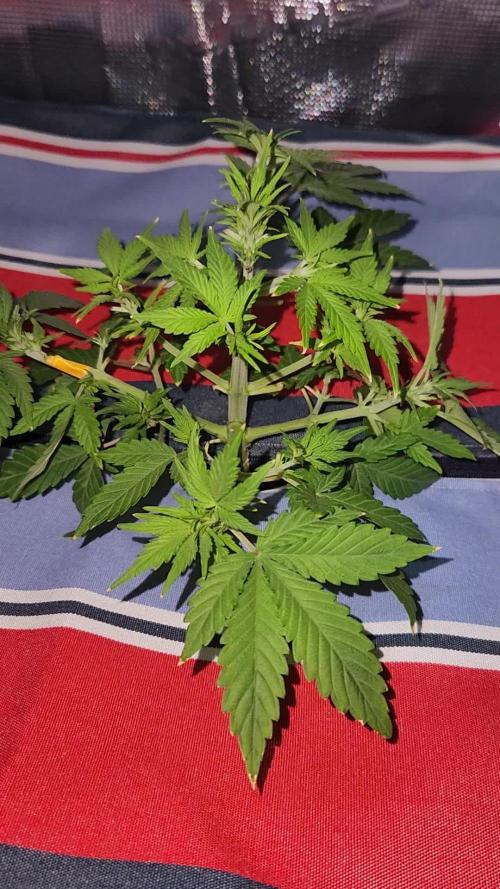
this is week 5. will make fem pollen from this genetics and seeds. crossing with the queen to make AU79. both bridals very strong. this is very very special, already showing me extreme trics in veg. will veg max time 15-20 weeks. I had issues with neglecting my ph, too nigh causing k issues, not phing down, added a few drops b+ nutrient and will be good with my ph. My rh lowest was 23%, so added more red romaine lettuce seeds, dill to grow so I am not wasting my light. It is dimmed to 60% only CW diodes on, NW IR R UVA are off. Only controlling cool white diodes for veg. More red longer wavelengths light for flower, along with uv. Everything is good, extremly positive with this grow!
2 queens on the right topped

Likes
149
Share


@CBD_Sweden
Follow
Hi all the happy people here in GrowDiaries.
This is my second cultivation ever and it will be fun to try a bigger space than my closet grow.
First, I'm just going to say I'm done with the construction of my new growroom.
I put some pictures on the construction here in week one.
The room is 2.14 meters by 1.7 meters and has a ceiling height of 2 meters.
It provides a floor area of 3.6 square meters.
I use a 54 Watt Lightwawe T5 for germination and 2 Pcs 400 Watt HPS lamps.
I have a channel fan that replaces the room air about 40 times an hour to get a comfortable theme in the room, the air enters a fresh air intake from the outside.
The air is purified through a carbon filter to then leave the room to the rest of the basement.
Then I use that heat to heat the rest of the basement.
I will use 8 pcs 15 liter Autopots to grow with and a 100 liter water tank that supplies the pots of water and nutrition.
I will grow completely organically in soil and will watercure my buds to get the best possible medicine for me.
But there are no cultivation rooms to be displayed here, so I continue with what is most important.
Today I have put my seeds in my moisture dome and hope the seeds have germinated within a few days.
I am very excited to see how the new growroom will work and how this Blue cheese Auto from Royal queen seeds will turn out.
Blue Cheese automatic cannabis seeds are a cross of Blueberry Automatic and Cheese Automatic that has been perfected over five years of breeding and careful selection. The result is a feminized, autoflowering strain with superior yield, flavor, and effects to either of its distinguished parent strains.
THC: 16%
CBD: Low
Yield Indoor : 325 - 375 gr/m2
Yield Outdoor: 60 - 110 gr/plant
Height Indoor: 40 - 70 cm
Height Outdoor: 60 - 110 cm
Flowering: 7 - 8 weeks
Harvest month: 9-10 weeks after planting
Genetic Background: Blueberry x Cheese x Ruderalis
Type: Sa 35% In 40% Ru 25%
Effect: Cerebral and uplifting
Climate: Mild
..............................................................................................................................................................................................................................................................................................................................................
Update 2017-08-15. All 4 seeds have germinated and planted in small pots inside the humidity dome.
I'm so glad it worked so well and now it's just hoping they'll start growing and become 4 big healthy girls :)
...............................................................................................................................................................................................................................................................................................................................................
Update 2017-08-16. I have mixed my own soil today. Its 40% sieved peat harrow H2-H4 0-30 mm, 45% sieved peat harrow H4-H6 0-30 mm. 5% sand and 10% of compost soil. And i use 15% of perilite and mix it all together.
................................................................................................................................................................................................................................................................................................................................................
Update 2017-08.20. Nr1 and 2 grow and thrive.
Number 3 just got rid of the seedpod and is folding out the sheets.
Number 4 is a bit shy and can only be seen if you look carefully into the soil.
.........................................................................................................................................................................................................................................................................................................................................
Update 2017-08-21. Nr 1 and 2 is doing well. Nr3 is trying to catch up and Nr4 is still shy.
--------------------------------------------------------------------------------------------------------------------------------------------------------------------------------------------------------
2017-08-23. Transplanted 2 girls from humidity dome and the small germinating pots to 15 liter autopots. The other 2 girls have to wait a little more before transplant to the autopots.
................................................................................................................................................................................................................................................................................................................................................................................
2017-08-27. The girls have settled in to there new home of the 15 liters autopot after a little transplant chock. Now the real week 1 starts for me and the girls.
--------------------------------------------------------------------------------------------------------------------------------------------------------------------------------------------------------
2017-08-28. New pic and movies.
---------------------------------------------------------------------------------------------------------------------------------------------------------------------------------------
2017-08-28. Nr3 is transplanted in 15 liter autopot.
-------------------------------------------------------------------------------------------------------------------------------------------------------------------------------
2017-08-29. New movie of the girls. Its no water for 3 days now for Nr1 and 2 so the roots develop more and match the plant above the soil. The temp controlled fan is awesome, its easy to set what temp you like to have in the room. Right now its 28 celcius. And humidity is 56%.
------------------------------------------------------------------------------------------------------------------------------------------------------------------------------------------
2017-08-29.
Hello to you who read my diary, I just want to say that I am pleased that you have chosen to check in with me and in my diary.
I just want to say that I do this for myself and for a steady flow of my medicine.
Everything you read and see in my diary is 100% honest and I will never distort or beautify anything here.
I document my crops so that I can learn from my mistakes and also to look back at those different crops.
I try to update with pictures every day and with text if something special has happened in the garden.
This is my strainhunt for the best medicine and the beginning of my journey with cannabis and the cultivation of it.
-----------------------------------------------------------------------------------------------------------------------------------------------------------------------
2017-08-30. Cleaned the room this morning, just vacuuming and cleaning with chlorine solution. Im testing the fan to control temp and humidity, it works great.
Added some pics with measurements and movie. Everything is looking great right now.
---------------------------------------------------------------------------------------------------------------------------------------------------------------------------
2017-08-31. New pics and videos.
---------------------------------------------------------------------------------------------------------------------------------------------------------------------------------
2017-09-01. New pics and videos. Gave each of the girls with 2 ml Alg-A-Mic, 4ml Bio-Grow, 4ml Bio-Heaven and 10 ml Formulex mixed in 2 liters of water.
I hope they like it :)
-------------------------------------------------------------------------------------------------------------------------------------------------------------------------------------------------------------------------------------------
2017-09-02. New pics and the girls liked the water and nutrients yesterday.
-------------------------------------------------------------------------------------------------------------
2017-09-03. New videos of the girls this morning. Nr1 and 3 looks great and nr 2 is looking a little funny, maby a little stressed.
Kl. 16.00. Did some defoliation on the girls. Added video.
Kl.. 23.00. New videos, defoliation and leaftucking.
-----------------------------------------------------------------------------------------------------------------

Likes
50
Share


@Hou_Stone
Follow
👋
Here I am with 5 Nori cake seedlings, I want to grow 3 plants of this variety, I will keep the prettiest seedlings and continue the adventure with them🙏🌲
After a short week of growth I place my seedlings in their final 7Liters pot with a mixture that I made. I use unfertilized soil as a base.
And I add organic nutrients from GreenHouseFeeding that I mix at the top of the pot (35Grams BioGrow 14Grams Biobloom)
Then I water each pot with 1L of water.
I use tap water. I lower the pH and sometimes add a little BioEnhancer😘
My Instagram 🌱❤️️ :
https://www.instagram.com/hou_stone420/
------------------------------------------
Equipment used :
Light FC3000 Mars hydro. power 25% at 30cm
Extractor 6 inch Mars Hydro. power 1/10. ON 24/24h
No other fan this week
Heating mat Romberg 95x95cm. ON half an hour every hour
👌
☄️🌠🌠🌠🌟
Have a nice day buddies, thanks for your visit 🤩👋

Processing
Likes
34
Share


@LockDownGrow
Follow
My first time making alcohol tintcure
Using the c1 ,
Hold on tight gonna be a trip

Likes
10
Share


@SmokieMcPot
Follow
Time for the "Party Weed", the Booshberry. It's a cross of orange push pop and method OG. nicknamed the party weed due to all the colors in the finished flower. Was told it has some different growths with plants reaching WAY out there, it's a light eater, doesn't stretch much, and stinks the whole way through. I can tell ya I smell this little fucker already lol.
Day 1- Starting this one off on a low dose of nutes while it settles in its new home.
5gal water
4mL FloraMicro
4mL FloraGrow
4mL FloraBloom
RES totals - 310ppm @5.8
Day 2- little LST to start spreading it out some. Need more gardening wire ASAP to keep the shoots low for now. Trimmed the lower node off, and placed it in some mineral rich water under a light and dome to keep the strain going in my tent.
Day 3- lil more LST using silicon coated small electronics wire cause I'm broke asf 🤣🤣. Really haven't had the time to get out and get some tbh.. it's like five bucks at lowes. Too busy cooking coke/lsd on Eclipse 🤣.
Day 4- adjust LST and tied her down some more. So far just ph adjusting the RES and topping off if needed. Couple days and this cut is gonna start blowing up. Already stinks like it's in flower... this is gonna be fun


Likes
248
Share


@OrganicNature420
Follow
Germination date 🌱 12/07/2021
Day 57 09/09/2021
Strain 🍁 Humboldt Purple Matcha (2nd time
(Sherbinski x HSO)
THC% • Unknown
💡 Mars Hydro FC4800
• Power draw 480W + 5%
• Max coverage 5 x 5
• LED 2070pcsSamsungLM30B1&Osram660nm
• Max Yield 2.5g / watt
• Noise level 0 DB
• Removable Driver +2m cable
• Daisy chain (multiple lights)
https://marshydroled.co.uk/products/mars-hydro-fc-4800-led-grow-light-samsunglm301b-commercial-greenhouse-medical-indoor-kit 🇬🇧
https://www.mars-hydro.com/buy-fc-4800-480w-4x4-energy-saving-full-spectrum-commercial-led-grow-light-mars-hydro-for-sale 🇺🇸
PROMO CODE • (ORG420) DISCOUNT 👍🏻 marshydroled.com
⛺ Mars Hydro 120 x 120 x 200cm
📤📥 AC infinity 6inch
💧 10lt dehumidifier
❄️ 3.1kw air con system
💉 Nutrients GreenBuzzLiquids
Organic Grow Liquid • 1-4ml until 2wk flower
Organic Bloom Liquid • 2-4ml flower stage
Organic More PK • 2-4ml +wk3 of flower
Organic Calmag • 1-2ml/lt whole grow
Fast Plants Spray • first 3days at night lights off
More Roots • 2-5ml veg +2wks flower
Fast Buds • 5ml +wk2 of veg until 1wk flower
Humic Acid Plus • 2-5ml whole grow
Growzyme • 2-5ml whole grow
Big Fruits • 2-5ml flower stage
Clean Fruits • 5ml flush 1wk
Ph powder
Root Gel
Living Organics
PROMO CODE • organicnature420 15% off ✌️🏼
https://greenbuzzliquids.com/
🥥 Growing Media • Coco Coir
Notes 📝
1st week of flower done. Girls looking good, temps are good and humidity is spot on but think i will struggle to get it under 40% without buying a new dehumidifier. Ac on dry mode won't stay at desired temp so running it on cool mode. I will have to get Manuel out and have a nosey to see what I'm doing wrong
Happy growing fam ❤️🌱🍁👍🏻

Likes
12
Share


@Chubbs
Follow
What up fam, weekly update on these lovely ladies. I put the scrog net out this week for support and am I glad I did. Only after a couple days they grew right through it. The greenhouse is 6'5 feet tall and they're pushing 5'6. I'll go in there and take off some of the lower fan leafs at the bottom but not to much defoliation needed. I'm seeing preflowers so I'll also switch the nutes from grow to bloom. All in all Happy Growing.
Likes
2
Share


@Ctrellis90
Follow
So it's the end of week one after germination and we have a little mutation going on from the looks of it....I'm sure she's going to grow out of it but it looks like she doesn't have a main stem lol. I'm curious to see how this one grows in the next week or two.
Very interesting 🤔.
Anyways we started the alfalfa Ferment from Growing Organic and they have BAS Craft already mixed into their soil. The autos we're running organic so I really don't see us adding anything until around late veg.
Thanks for stopping by and we'll see ya next week.

Likes
2
Share


@Ninjabuds
Follow
My little skunk apple runtz lady man I am disappointed so far with this plant not much can be expected from a pollen chuck seed I made myself but I think it will have nice smoke in the end just not alot most likely
The day has come and it's time to flip these ladies to flower. I was planning on letting them go untill Friday and let the smaller ones grow just a bit more but they will be fine. I have the eternity cup contest in mind and I'm thinking timing so I need to get these lady done and out my tent lol. This past week I turned the light up alot getting them ready to flower they have grown a bunch inhavendone lst maybe 5 it 6 times on the branchs and they arw nit bendy anymore that will help durring flower.
Likes
26
Share

@SkunkyDog420
Follow
Hallo zusammen 🤙.
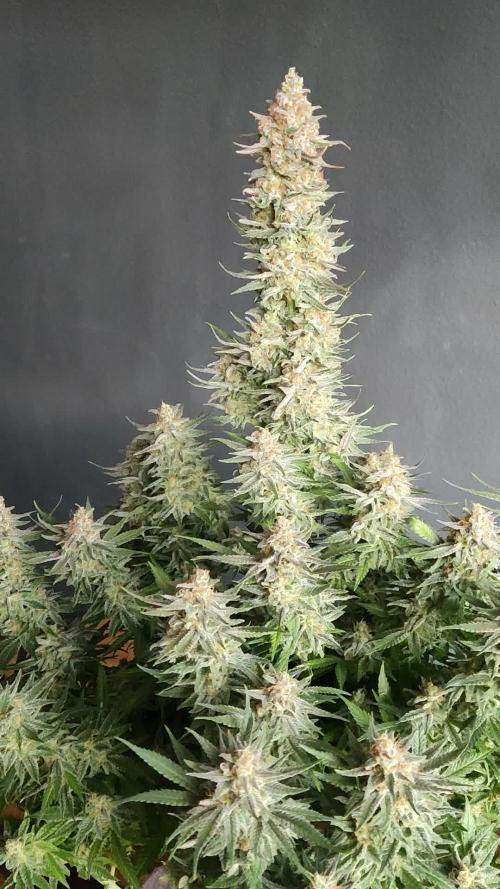
Habe sie heute geerntet.
Wir hören uns in 3 Wochen mit dem Erntebericht.

Likes
4
Share


@Dylannthoo
Follow
Day 70: Want to know how the trichomes are looking on my OG Kush, they look pretty clear to me but not 100%🤷♂️🏼 any feedback would be great, this OG is about 10 weeks old from seed, there was some temp issues, and nutrients locks but still going strong I believe.

Likes
12
Share


@sensistar9
Follow
Overall grow cycle was easy,strain reacts very good to topping and will work great in a scrog,smell tastes and effects are on point,more sativa to it.
Likes
13
Share


@YOUNGSTERBR
Follow
apenas 1 das que estavam na tela de SCROG conseguiu sustentar até essa semana mesmo com problema de PH do solo, as outras 3 tive que colher na semana passada, a descoloração das folhas já começando a indicar que o fim está próximo, pouquíssimos tricomas ambar, cheiro maravilhoso!

Likes
8
Share


@ALittleDabWillDo420
Follow
day of cleaning and preparing the next run , excited to grt this auto run going for divine.seeds aswell


Likes
29
Share


@GrownwithLED
Follow
The single plant I grew harvested only 45 gram and was therefore the plant with the lowest yield out of my HOMEBOX tent. The SUPER LEMON HAZE grew very healthy with dark green colored leaves and developed very dense nugs with lots of trichomes in flowering. She has a STRONG HAZE AROMA all thru the cycle...simply smelling DELICIOUS!


Likes
9
Share


@Deceptive
Follow
This last week has been a good one. I've been watching the girls get so much fatter, it's actually awesome haha
All 3 ladies look beautiful & are starting to display signs of the end in the leaves. I imagine next weeks flush will exacerbate these signs too.
I dropped my feed down slightly as per the Professors Nutrients feeding schedule & pumped up the watering to 1L per day. The plants had no issues with taking the extra water & I would imagine it's helping the buds get that much thicker.
I started defoliating mid week & particularily on Plant 3 to clear out any bigger leaves & leaves gaps to hopefully be filled + give the bigger buds some air. She's gotten the least amount of defoliation this grow as she's at the back of my tent. But she also has by far the bigger buds... so a good lesson learned for future grows.
I also cut all LST wires at the end of this week & now all plants are holding their own.
All plants trichs are looking nice & Plant 3 has more amber in the colouring, it also happens to have the bigger colas 😏 Plant's 1 & 2 trichs however appear to be more dense.
The change of light cycle from last week has seemed beneficial with no negatives sighted, which has been good.
It's hard to believe that this coming week is the start of the flush & my next post will be harvest. It's exciting!
Check back for the harvest ✌️🏼
Likes
12
Share


@Fleetwood
Follow
I got a few seeds from the hermie Purple Maroc, but most of the buds seem dense but small. I planned on smushing a bunch of the lower buds, but it didnt work, so I have a bunch of poorly trimmed buds to give to friends :)


Likes
3
Share


@Bwright_315
Follow
No complaints so far. Started lst for the first time and she is responding beautifully. I did a little defoliation by cutting 3 fan leave to get more light to the root.
