Check the winners The Grow Awards 2026 🏆
Likes
Comments
Share
@rhodes68
Follow
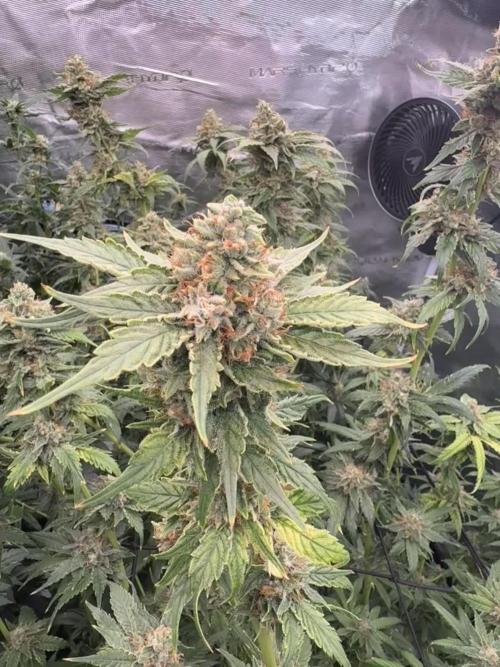
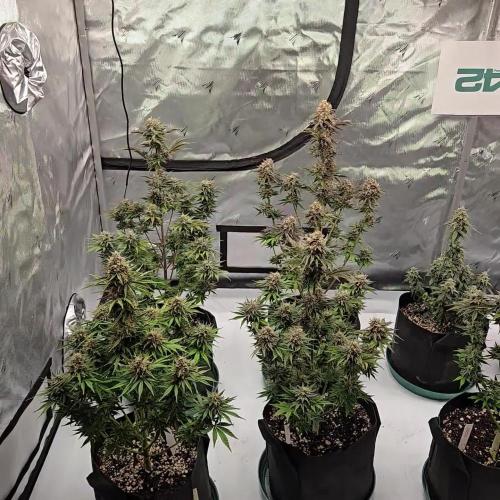
Harvest and grow was easy just too much going on around her for good yield cant blame the plant nor genetics as she did produce. Not expecting too much here 128 grams... 128... SMH damn fungus gnats
Likes
3
Share
Transplanted her to a 5 gallon pot. Gave her some root stimulator, fed her some nitrogen and just look how lovely they are taking off, my plans are to veg her for a very long time.
Likes
29
Share
I had so much fun learning how to grow, and how many different ways there are to grow! I love the community here!
Likes
14
Share
@Cannabot
Follow
Plants taking shape ,nice canopy forming.One of the phenos is super purply.Seeing the growth by the week now.Weathers been great.Should be getting another feed soon
Likes
35
Share
Excited for next attempt. Learned a lot this time. Thank you all on here who helped!!!!!!!!!
Likes
15
Share
The plants doing very well. Since the topping they already filling out all the space again. I will give them around one more week before i send them into flower. I am still surprised that my soil coco wormcasting mix still gives them all they need and that I can’t see any nutrient deficiencies at all. I guess the pot size is the key for it. The clones not having any roots so far but still doing well. In the next upcoming days they will show up. Update: All looks kind of ok but since I water with rainwater the plants look like they missing cal. Mag. …. Coco problem with soft water. The RH is still too high but I think I really need to get a dehumidifier. All the cuttings/clones are alive but still don’t have any roots so put down the ph from 6,4 to 5,6 and I also put some root fertiliser into the tank…
Likes
Comments
Share
I took these on my Snapchat is why there is so many of them 😅 I'm currently doing the 48 hours of darkness to help produce more trichomes. I did SO MUCH to this plant, it looks like it will DEFINITELY have some weight to it, but you will have to wait until it's dry 😄
Likes
14
Share
Likes
55
Share
What's in the soil? What's not in the soil would be an easier question to answer. 16-18 DLI @ the minute. +++ as she grows. Probably not recommended, but to get to where it needs to be, I need to start now. Vegetative @1400ppm 0.8–1.2 kPa 80–86°F (26.7–30°C) 65–75%, LST Day 10, Fim'd Day 11 CEC (Cation Exchange Capacity): This is a measure of a soil's ability to hold and exchange positively charged nutrients, like calcium, magnesium, and potassium. Soils with high CEC (more clay and organic matter) have more negative charges that attract and hold these essential nutrients, preventing them from leaching away. Biochar is highly efficient at increasing cation exchange capacity (CEC) compared to many other amendments. Biochar's high CEC potential stems from its negatively charged functional groups, and studies show it can increase CEC by over 90%. Amendments like compost also increase CEC but are often more prone to rapid biodegradation, which can make biochar's effect more long-lasting. biochar acts as a long-lasting Cation Exchange Capacity (CEC) enhancer because its porous, carbon-rich structure provides sites for nutrients to bind to, effectively improving nutrient retention in soil without relying on the short-term benefits of fresh organic matter like compost or manure. Biochar's stability means these benefits last much longer than those from traditional organic amendments, making it a sustainable way to improve soil fertility, water retention, and structure over time. Needs to be charged first, similar to Coco, or it will immobilize cations, but at a much higher ratio. a high cation exchange capacity (CEC) results in a high buffer protection, meaning the soil can better resist changes in pH and nutrient availability. This is because a high CEC soil has more negatively charged sites to hold onto essential positively charged nutrients, like calcium and magnesium, and to buffer against acid ions, such as hydrogen. EC (Electrical Conductivity): This measures the amount of soluble salts in the soil. High EC levels indicate a high concentration of dissolved salts and can be a sign of potential salinity issues that can harm plants. The stored cations associated with a medium's cation exchange capacity (CEC) do not directly contribute to a real-time electrical conductivity (EC) reading. A real-time EC measurement reflects only the concentration of free, dissolved salt ions in the water solution within the medium. 98% of a plants nutrients comes directly from the water solution. 2% come directly from soil particles. CEC is a mediums storage capacity for cations. These stored cations do not contribute to a mediums EC directly. Electrical Conductivity (EC) does not measure salt ions adsorbed (stored) onto a Cation Exchange Capacity (CEC) site, as EC measures the conductivity of ions in solution within a soil or water sample, not those held on soil particles. A medium releases stored cations to water by ion exchange, where a new, more desirable ion from the water solution temporarily displaces the stored cation from the medium's surface, a process also seen in plants absorbing nutrients via mass flow. For example, in water softeners, sodium ions are released from resin beads to bond with the medium's surface, displacing calcium and magnesium ions which then enter the water. This same principle applies when plants take up nutrients from the soil solution: the cations are released from the soil particles into the water in response to a concentration equilibrium, and then moved to the root surface via mass flow. An example of ion exchange within the context of Cation Exchange Capacity (CEC) is a soil particle with a negative charge attracting and holding positively charged nutrient ions, like potassium (K+) or calcium (Ca2+), and then exchanging them for other positive ions present in the soil solution. For instance, a negatively charged clay particle in soil can hold a K+ ion and later release it to a plant's roots when a different cation, such as calcium (Ca2+), is abundant and replaces the potassium. This process of holding and swapping positively charged ions is fundamental to soil fertility, as it provides plants with essential nutrients. Negative charges on soil particles: Soil particles, particularly clay and organic matter, have negatively charged surfaces due to their chemical structure. Attraction of cations: These negative charges attract and hold positively charged ions, or cations, such as: Potassium (K+) Calcium (Ca2+) Magnesium (Mg2+) Sodium (Na+) Ammonium (NH4+) Plant roots excrete hydrogen ions (H+) through the action of proton pumps embedded in the root cell membranes, which use ATP (energy) to actively transport H+ ions from inside the root cell into the surrounding soil. This process lowers the pH of the soil, which helps to make certain mineral nutrients, such as iron, more available for uptake by the plant. Mechanism of H+ Excretion Proton Pumps: Root cells contain specialized proteins called proton pumps (H+-ATPases) in their cell membranes. Active Transport: These proton pumps use energy from ATP to actively move H+ ions from the cytoplasm of the root cell into the soil, against their concentration gradient. Role in pH Regulation: This active excretion of H+ is a major way plants regulate their internal cytoplasmic pH. Nutrient Availability: The resulting decrease in soil pH makes certain essential mineral nutrients, like iron, more soluble and available for the root cells to absorb. Ion Exchange: The H+ ions also displace positively charged mineral cations from the soil particles, making them available for uptake. Iron Uptake: In response to iron deficiency stress, plants enhance H+ excretion and reductant release to lower the pH and convert Fe3+ to the more available form Fe2+. The altered pH can influence the activity and composition of beneficial microbes in the soil. The H+ gradient created by the proton pumps can also be used for other vital cell functions, such as ATP synthesis and the transport of other solutes. The hydrogen ions (H+) excreted during photosynthesis come from the splitting of water molecules. This splitting, called photolysis, occurs in Photosystem II to replace the electrons used in the light-dependent reactions. The released hydrogen ions are then pumped into the thylakoid lumen, creating a proton gradient that drives ATP synthesis. Plants release hydrogen ions (H+) from their roots into the soil, a process that occurs in conjunction with nutrient uptake and photosynthesis. These H+ ions compete with mineral cations for the negatively charged sites on soil particles, a phenomenon known as cation exchange. By displacing beneficial mineral cations, the excreted H+ ions make these nutrients available for the plant to absorb, which can also lower the soil pH and indirectly affect its Cation Exchange Capacity (CEC) by altering the pool of exchangeable cations in the soil solution. Plants use proton (H+) exudation, driven by the H+-ATPase enzyme, to release H+ ions into the soil, creating a more acidic rhizosphere, which enhances nutrient availability and influences nutrient cycling processes. This acidification mobilizes insoluble nutrients like iron (Fe) by breaking them down, while also facilitating the activity of beneficial microbes involved in the nutrient cycle. Therefore, H+ exudation is a critical plant strategy for nutrient acquisition and management, allowing plants to improve their access to essential elements from the soil. A lack of water splitting during photosynthesis can affect iron uptake because the resulting energy imbalance disrupts the plant's ability to produce ATP and NADPH, which are crucial for overall photosynthetic energy conversion and can trigger a deficiency in iron homeostasis pathways. While photosynthesis uses hydrogen ions produced from water splitting for the Calvin cycle, not to create a hydrogen gas deficiency, the overall process is sensitive to nutrient availability, and iron is essential for chloroplast function. In photosynthesis, water is split to provide electrons to replace those lost in Photosystem II, which is triggered by light absorption. These electrons then travel along a transport chain to generate ATP (energy currency) and NADPH (reducing power). Carbon Fixation: The generated ATP and NADPH are then used to convert carbon dioxide into carbohydrates in the Calvin cycle. Impaired water splitting (via water in or out) breaks the chain reaction of photosynthesis. This leads to an imbalance in ATP and NADPH levels, which disrupts the Calvin cycle and overall energy production in the plant. Plants require a sufficient supply of essential mineral elements like iron for photosynthesis. Iron is vital for chlorophyll formation and plays a crucial role in electron transport within the chloroplasts. The complex relationship between nutrient status and photosynthesis is evident when iron deficiency can be reverted by depleting other micronutrients like manganese. This highlights how nutrient homeostasis influences photosynthetic function. A lack of adequate energy and reducing power from photosynthesis, which is directly linked to water splitting, can trigger complex adaptive responses in the plant's iron uptake and distribution systems. Plants possess receptors called transceptors that can directly detect specific nutrient concentrations in the soil or within the plant's tissues. These receptors trigger signaling pathways, sometimes involving calcium influx or changes in protein complex activity, that then influence nutrient uptake by the roots. Plants use this information to make long-term adjustments, such as Increasing root biomass to explore more soil for nutrients. Modifying metabolic pathways to make better use of available resources. Adjusting the rate of nutrient transport into the roots. That's why I keep a high EC. Abundance resonates Abundance.
Likes
3
Share
@BLAZED
Follow
Week 16 (30-9 to 6-10) 30-9 Temps: 18.8 to 24.6 degrees Humidity: 54% to 69% Watering: Both 500 ml. Dry Weight #1: 3.1 kg. #2: 3.3 kg. 1-10 Temps: 19.9 to 24.3 degrees Humidity: 59% to 71% Watering: Both 500 ml. Dry Weight #1: 3.3 kg. #2: 3.5 kg. 2-10 Temps: 19.2 to 23.8 degrees Humidity: 60% to 72% Watering #1: 1000 ml. #2: 800 ml. Dry Weight #1: 3.5 kg. #2: 3.7 kg. 3-10 Temps: 18.2 to 23.3 degrees Humidity: 57% to 65% 4-10 Temps: 18.5 to 24.2 degrees Humidity: 54% to 66% Watering: Both 500 ml. Increased the light's intensity from 60% to 65% Dry Weight: Both 3.6 kg. 5-10 Temps: 18.2 to 24.1 degrees Humidity: 55% to 69% Watering: Both 500 ml. 6-10 Temps: 18.4 to 24 degrees Humidity: 53% to 65% Watering #1: 700 ml. #2: 500 ml. Dry Weight #1: 3.7 kg. #2: 3.9 kg.
Likes
15
Share
AUTO MOON ROCK / DIVINE SEEDS Week #13 OVERALL WEEK #8 FLOWER This week we are getting close to harvest you can see the plant has a crazy fade already going on. Buds are getting denser and super sticky. Stay Growing!! Thank you for stopping by and taking a look it's much appreciated!! THANK YOU DIVINE SEEDS!! AUTO MOON ROCK / DIVINE SEEDS
Likes
16
Share
The plant has become really massive and the fruity smell it gives off is perhaps one of the most pleasant I've ever smelled. The plant drinks almost 2L of water per day. I changed the fertilizers by removing those not strictly necessary for the flower's energy, in order to make the plant use the vital lymph of the leaves, which will lose them further favoring the growth of the inflorescences. At the same time I added ADV Overdrive, a magnesium, phosphate and potassium based fertilizer which stimulates the weight gain of the flowers. For the hundredth day I decided to make a video, I'm definitely satisfied! I expect to cut the plant around the 10th week of flowering.
Likes
15
Share
After 24 hours in the large fabric pots alot of improvement from a few errors in the germination stage they were streching for light so i had to rush the seedlings to the tent and get it all set up u will see the difference from when i put in pots to now
Likes
15
Share
Gracias al equipo de Seedsman y XpertNutrients sin ellos esto no sería posible. 💐🍁 Alaskan Do-Si-Dos: Alaskan Do-Si-Dos ha sido desarrollada por expertos como una versión mejorada de la siempre popular variedad Alaskan Purple de Seedsman. La introducción de la genética Do-Si-Dos en la Alaskan Purple ha creado un híbrido índica/sativa que aumenta la potencia y el rendimiento al mismo tiempo que mejora el perfil de sabor y sigue siendo versátil en lo que respecta al cultivo en exterior. La Alaskan Do-Si-Dos está destinada principalmente al cultivo al aire libre y en invernaderos. Las plantas crecen altas y prosperan en climas fríos, templados, cálidos y secos, al mismo tiempo que se desempeñan bien en altitud. Esto no impide que se cultive en interior, pero estas plantas grandes necesitarán mucho espacio. Las plantas muestran una resistencia moderada al moho pero, si se cultivan en interiores, hay que tener en cuenta que son RUIDOSAS, por lo que se beneficiará del uso de filtros de aire de carbón. En exterior, en latitudes septentrionales, la cosecha está prevista para finales de septiembre, mientras que en interior las plantas tardarán entre 8 y 10 semanas en completar la floración. Los rendimientos en exterior son muy altos y pueden superar fácilmente los 750gr/planta, mientras que en interior los rendimientos son elevados, hasta 600gr/m2. Los cogollos maduros tienen una densidad media y mantienen un color verde medio. 🌻🚀 Consigue aqui tus semillas: https://www.seedsman.com/eu-es/alaskan-do-si-dos-feminised-seeds-sman-aldsd-fem 🍣🍦🌴 Xpert Nutrients es una empresa especializada en la producción y comercialización de fertilizantes líquidos y tierras, que garantizan excelentes cosechas y un crecimiento activo para sus plantas durante todas las fases de cultivo. Consigue aqui tus Nutrientes: https://xpertnutrients.com/es/shop/ 📆 Semana 3: Ha sido una buena semana, ella ha dado un gran cambio en su lugar definitivo 😎. Se le ha aplicado un tratamiento insecticida con agua + tierra de diatomeas ( 1 cucharadita por litro de agua), también se le aplica un tratamiento fungicida con una infusión de cola de caballo para evitar futuro moho. A partir de ahora se riega manualmente con las dosis recomendadas por el fabricante.
Likes
150
Share
I welcome all my like-minded people who are in different parts of the world. I thank everyone who provides moral support to Russian plant growers. 👍 It's me again-an underground Russian grower with some experience with different strains of cannabis. Subscribe to my diary if you want to follow my progress and learn a lot about the life Of Russian growers, and the difficulties they face every day👊 Today my have my plants 62 day life. 9 weeks. today I visited my underground production. As I will have difficulties in financial investments, I had to collect from improvised materials additional ventilation and air filtration. In addition, I installed forced ventilation at the entrance with a computer power supply. Bubblelicious Auto-with the genetics of this cannabis variety I was familiar before, so knew what to expect from these plants. I can say one thing, it is the most delicious and sweetest sort of marijuana I grow. Also, it produces a lot of oils which I think it is suitable for extraction or cooking cannabis food. I look forward to the harvest Neville's Haze Auto - this variety of cannabis shows an unprecedented strength in growth, its flowering only in the early stages, and should take a long time before its full sexual maturity. In addition, I made my girls an intimate haircut, so that their genitals become like full-fledged women. In General, I'm doing well, thanks to this resource and the advice received here, I manage to fight with the stench, I'm free and I'm not going to finish my activities. Until next time. 😉
Likes
224
Share
Ok so i'm pretty sure i'm screwed......these plants are now going to be over the fence but it is what it is, had some help measuring the plants this time so the tape did fold and i know that it got to the base of the stalk as it's really hard to do by yourself with plants of this size: PP #1-74 inches #2-80.5 inches #3-82 inches OS #1-78 inches #2-75 inches #3-70 inches So i believe i'm running into a MG deficiency with these girls as well, i'll fill out the grow question for one lucky person to get some point for GOTM. Still waiting on my bag of gaia green 4-4-4, but i did give them some Basalt rock dust 1 cup and some Glacial rock dust 2 cups to try in help what i believe to be an MG deficiency. I didn't have enought to give them what i wanted to so i'll have to wait for that to come in as well or just pick up some rock dust on my way home from Halifax Seed. I under estimated fertilizers for this grow wasn't expecting them to get this big...... Woke up the other morning to a little bit of wind come from the west and the tops were doing some swaying so i had to run into town to the grow shop and pick up some trellis to secure the tops that arn't in the cage. I figured the best was to trellis them as i could only get two 5x30 nets what to just run one each over the tops and secure to the fence. I did work on cleaning some of the inside out but theres just so much it's hard to get everything done in two week with real life going on as well. So i've set up an automated curing system for when these ladies are done. I'll have an air pump hooked up to a timer, then the pump will run into a 12 valve manifold, there will be 12 bucket. each valve will have it's own bucket. each bucket has a one way check valve going into the bottom of the bucket into a perforated hose that will cure around the bottom of the bucket. so the fresh air will rise up thru the bucket. at the top of the bucket will be an outlet with a one way check valve. the buckets have Gama seal lids that screw on with gaskets so it gives you an air tight seal. So having the timer set to twice a day for the first two weeks then adjust to once a day everyday for a few more weeks everything should be on cruse control, no more burping jars if everything works like it's supposed to!
Likes
2
Share
Vegetative steering Aiming for: leaf Temp -70f CO2 300 VPD +.93 Planning for: MJ and bras foilar 60%+1.5/-71f set to 68f+1.5 Leaf Temp is about 3f higher than ambient temp At 68f outside, grow room still wont hit 68 with lights off Day 24 No Co2 50-55klux 15inch from light Leaf Temp 71-73f 60%/72F Veg steering Coconut water Uneven canopy(11 at 29inch, 3ag 31 inch ———————— Day 26 56%68f(humidity dropped because i havnt watered in two days 🤡) 23inch-34inch tal. Arranged in order. 52-59klux Sprayed 5Bras,(23inch)70 leaf temp 4Jas,(29inch) 70 leaf temp 4Bras&Jas(34inch)72f leaf temp ——————— Day 27 Watered once ————- Day 28 Im pretty sure the sprays worked. Noticed leaf burn with 3 plants sprayed with MJat 147ppm(.5ml) No leaf burn with the .1Bras sprays I wonder how long both are good for. Also, can i pour the unused spray in the medium? I just dont want to waste it. Plants are noticeably more vigorous. I am wondering if now is a good time for my defoliation. i was planning for Week 5. I feel like the buds are to developed for me to be pruning off lower buds and makes me feel like i should have pruned beginning of week4 __________
Likes
2
Share
Coming along nicely seems to take longer to bloom than most Autos maybe 11-13 weeks but looks like it will be worth it. Buds are gong to be many not sure how big they will be but looking like they will be huge.
Likes
2
Share
Starting to see some frost not much but the smell is dank. Can’t wait to exhale the smell and hope it get me high as hell. This stage of growing is slow. I guess because you are always looking at the clock. “Is she ready yet”