







Processing
Likes
15
Share


@ElegantBuds
Follow
Hello
This week was a ideal week for temperature and humidity.
Perfectly balanced.
I looked at the trichomes with a scope and I saw some amber pistols already.
I saw alot of clear trichomes to so I do know i am right on track.
This week they got their first pk 13/14. Finally the buds/cola’s can start getting fatter!
I think I will give a week pk 13/14.
After that normal nutrition week again. One or two and after I start flushing!
See you growers next week!


Processing
Likes
4
Share


@RobinHoodGrows
Follow
Nothing new to report, plants are growing well.
I'm giving the plants filtered water at ph 6.0. I don't know the PH of my soil or my run off etc.
This is my first grow so I'm not too far into the weeds (pun intended) on the PPM and those particular factors.

Likes
5
Share


@Reaper
Follow
next time i will veg this longer as i am very happy with the buds from top to bottom. very dense and dank. i cant explain the smell, i reccomend this strain to every pro and beginner even small plants yield very good buds and no much stretch during flower. very easy to control 🤙🏻 def one of my top 3 favorites !
Likes
4
Share


@Finsfan
Follow
Finally in full flower mode. Ready to start putting on some serious size. I turned the lights up to 80% a couple days ago and they both are taking it well. No light burn yet that I notice.
I'm not sure if I should start bringing the lights closer at 80% or keep the distance but instead
Increase power to 90%. Going to feel it out as we go. Happy so far for sure.
Update: increased light to 100% . No lead burns or weird looking leaves yet.. Just bulking up and very thirsty!
Doing a nutrient/nutrient/water feeding schedule now.


Likes
4
Share


@PatMcCrotch
Follow
I'm having a hard time judging an approximate finish time with this plant. Its definitely in its final push though. Starting to yellow off quite a bit. I've never grown a plant that has stayed this small. Makes me wonder if I did something wrong along the way. I'll honestly be very happy once this thing is out of my tent. No issues to report this week. Happy growing everyone!!

Likes
3
Share


@JuanPablo5280
Follow
Final week before chop. She is looking and smelling incredible at this point.
Likes
8
Share


@TreeFarmerCharlie
Follow
I'm very happy with how these came out. They finished right in the breeders estimated flowering time and they smell great. The back plant came out smaller, as expected, due to the watering issues I had, but it still came out very nice.
Update 6/20: Just finished trimming the plants and they are now going into a curing bucket. Total dry weight is 210g and the bud smells really nice!


Processing
Likes
6
Share


@mRJ519
Follow
Watering/ feeding every 4 day's... Alternating feed and water... Keeping it simple

Processing
Likes
15
Share


@LittleBigTrees
Follow
Topped them end of last week, still not given them feed as the farmyard manure they were planted straight into seems to be giving them what they need so far, I've given them rain water when they needed it.
Hopefully the sun will return this coming week 🌞

Likes
8
Share


@DogDoctorOfficial
Follow
💙 Project Blue Tent – Week 11
🥒 Pickle Lemon Haze F1 – Pheno A
🌸 When The Best Intervention Is No Intervention
Hello everyone, and welcome back to another chapter of Project Blue Tent! 💙🌱
And honestly...
I think this might be one of my favourite stages of the whole project.
Not because we're doing more.
Quite the opposite.
Because we're finally at the point where we don't need to.
😂
Pickle Lemon Haze F1 Pheno A is looking absolutely beautiful.
The structure is established.
The canopy is open.
The second SCROG is doing its job.
The irrigation is running beautifully.
The drainage system is working flawlessly.
The nutrition is consistent.
The under-canopy lighting is now part of the equation.
And the flowers?
Oh my God...
The frost levels across this tent are something else. 🌸❄️
So this week isn't about another big intervention.
It's about observation.
It's about appreciating what we've built.
And most importantly...
it's about letting this beautiful girl do what she knows how to do.
Grow.
Flower.
And shine.
💙🥒🌸
🌸 WEEK 11 – THE GIRL IS JUST DOING HER THING
Pickle Lemon Haze F1 Pheno A is still sitting at approximately 145 cm.
The stretch has settled.
The structure is established.
And now we're watching the flowers develop across the entire plant.
One of the things that continues to impress me is just how even everything looks.
The flowering sites are developing remarkably consistently.
The canopy is extremely even.
The bud formation is happening at very similar stages throughout the plant.
And the frost...
well...
the frost is absolutely beautiful.
😂❄️🌸
This is one of those moments where you walk into the tent and think:
"Okay...
I really like what I'm seeing."
And honestly, that's exactly where I want to be at this stage.
The major work has already been done.
Now the plant is showing us the result.
💡 THE UNDER-CANOPY LIGHTING GETS SERIOUS
Last week we introduced the first LumiFlora under-canopy light into the project.
This week, we decided to bring a second one into the game.
And looking at the size and density of this room...
it just made sense.
The main LEDs continue providing the primary light from above.
But these plants have developed a very substantial structure.
There are flowering sites throughout the middle and lower portions of the canopy that naturally receive less direct light from the fixtures above.
So instead of continuing to remove more foliage just to chase light penetration...
we're bringing supplemental light to the lower canopy.
And I really like what we've created.
But we didn't simply place the two bars side by side.
That would have been too easy.
😂
Instead, we decided to play a little.
The LumiFlora bars are approximately 1.20 metres long, with the central section around one metre, and because of that length we were able to arrange them in an X-cross configuration underneath the canopy.
From corner to corner.
And honestly?
It looks fantastic.
😂💡🌱
It's functional...
but it also looks really cool.
The two bars cross through the lower portion of the tent, creating a much more interesting distribution of supplemental light underneath the plants.
The idea remains simple:
Don't replace the overhead lighting.
Complement it.
Give the lower canopy another source of usable light.
And then...
watch what happens.
🌿 TWO LIGHTS. ONE EXPERIMENT.
This is one of the parts of Project Blue Tent that I really enjoy.
We're not simply installing equipment because it looks impressive.
We're introducing something because we have a reason for it.
The plants have become tall.
The canopy has become substantial.
The lower portions naturally receive less direct light.
So instead of fighting the structure...
we adapt the environment around it.
That's cultivation.
Observe.
Adapt.
Measure.
And then observe again.
And now that the second under-canopy light is installed...
I'm extremely curious to see what the lower flowering sites do with that additional light over the coming weeks.
That's the experiment.
And Pheno A gets to be part of it.
🕸️ THE SCROG IS DOING EXACTLY WHAT WE WANT
The SCROG structure is also looking fantastic.
The first net helped us build and distribute the canopy.
The second SCROG is now providing additional support as the flowering branches continue developing.
And at this point?
We're not really touching it.
That's intentional.
The structure has been created.
The branches are where we want them.
The flowering sites are developing.
And the support is there.
Now we let the plant use it.
This is another one of those moments where doing less can actually be doing more.
We don't need to constantly move branches.
We don't need to keep pulling everything around.
We don't need to keep opening something we've already opened.
The architecture is there.
Let her work.
✂️ DEFOlIATION – NOW WE WATCH THE RECOVERY
The major defoliation from the previous weeks has also become part of the story now.
When we performed that work, the difference was dramatic.
The plants went from extremely dense to much more open.
And now we're seeing the result.
The flowering sites are much easier to see.
Air movement through the plant is much better.
The branches are easier to follow.
And the plant has had time to recover and redirect her energy toward continued flowering.
This is exactly why I don't believe in constantly interfering with a plant.
There is a time to train.
There is a time to defoliate.
There is a time to support.
And there is a time to stop touching things.
We're at that last one now.
😂
The plant doesn't need us to keep proving that we have scissors.
She needs stability.
So stability is what she gets.
🌬️ AIRFLOW – TWO LEVELS, ONE HEALTHY CANOPY
The airflow setup is also continuing exactly as planned.
We have movement through the upper portion of the canopy and additional circulation underneath.
With the under-canopy lighting now running through the lower structure, maintaining good air movement down there becomes even more important.
The goal isn't to create a hurricane.
😂
It's about avoiding stagnant pockets and keeping air moving through the entire plant structure.
The canopy has opened beautifully.
The flowers are developing.
The lower lighting is now active.
And the air is moving.
That's exactly what I want to see.
💧 IRRIGATION & DRAINAGE – ZERO COMPLAINTS
And I have to give some love to the irrigation and drainage system this week.
Because honestly...
there is nothing to complain about.
😂
The irrigation is working beautifully.
The plants are drinking well.
The water distribution is consistent.
The drainage system is working absolutely spotless.
No drama.
No complaints.
Just doing its job.
And that's exactly what good equipment should do.
It should quietly do its job while we concentrate on the plants.
The girls are drinking.
They're developing.
And the system is keeping up with them perfectly.
I'm extremely happy with how this part of the project is performing.
⚗️ NUTRITION – SAME RECIPE, DIFFERENT EC
Interestingly, despite not changing the reservoir recipe, this week's EC came out slightly lower.
And honestly...
I don't have a definitive explanation for it.
😂
The recipe itself hasn't changed.
We're still running:
PLAGRON Hydro A — 2.2 ml/L
PLAGRON Hydro B — 2.2 ml/L
PLAGRON Hydro Roots — 1 ml/L
PLAGRON Power Buds — 1 ml/L
pH Plus — 0.03 ml/L
pH Min — 0.03 ml/L
pH adjusted as required
Yet the measured EC came out around 2.24 mS/cm instead of the approximately 2.49 mS/cm we saw previously.
My guess?
Possibly the rainwater source was simply a little softer this time.
But I'm not going to pretend I know exactly why.
Sometimes the numbers simply move.
😂
And that's another reason I like documenting everything.
We don't have to invent an explanation every time something changes.
We record it.
We observe the plants.
And we continue watching.
The important thing is that Pheno A looks happy.
She's drinking.
She's flowering.
She's building.
And visually...
she's absolutely loving life.
❄️ THE FROST LEVELS ARE INSANE
Now let's talk about the obvious.
The frost.
😂❄️
Seriously...
look at these flowers.
The amount of visible trichome development across the tent is absolutely beautiful.
And Pheno A is certainly not being shy about showing hers.
The flowers are developing with a heavy, frosty appearance, and the sugar leaves are absolutely covered.
This is one of those stages where photography becomes dangerous.
Because every time I take a close-up...
I end up staring at it for five minutes.
😂📸
The flower formation is progressing beautifully.
The structure is becoming more defined.
And the frost levels are getting better and better.
We're still not at the finish line.
But we're getting into that really exciting part of the journey where the flowers begin looking less like early flowering sites...
and more like proper flowers.
And I absolutely love it.
🌿 SAME TENT. SAME CONDITIONS. REMARKABLY SIMILAR PLANTS.
This is probably one of the most fascinating parts of the entire experiment.
All four girls are sharing the same tent.
Same reservoir.
Same irrigation.
Same lighting.
Same environmental conditions.
Same nutrition.
Same cultivation approach.
And when you look at them...
it's honestly incredible how similar they are becoming.
Very similar canopy development.
Very similar flowering stages.
Very similar bud formation.
Very similar frost levels.
And yet...
each plant still has her own personality.
That is what makes this project so interesting.
We're not comparing four completely isolated grows.
We're watching different cultivars experience essentially the same environment.
And the response is fascinating.
A LITTLE CULTIVAR LESSON
And since we're documenting this properly, I want to take a little moment to explain something I often mention in these diaries.
I like using the word:
"Cultivar."
You'll sometimes hear people call every plant a "genetic" or simply say "the genetics."
And I understand what they mean.
But technically, they're not quite the same thing.
Genetics refers to the genetic makeup and inherited characteristics of an organism.
A cultivar is a plant variety that has been selected and maintained through cultivation for particular characteristics.
So when we're talking about these F1 plants in this project, I prefer referring to them as cultivars rather than simply calling them "genetics."
And honestly...
if you already knew that?
Fantastic.
If you didn't?
Now you do.
😂🌱
There's never too much information when we're talking about cultivation.
I love learning.
And if something we mention here teaches somebody something new, even better.
That's another reason I enjoy documenting these projects.
We're growing plants...
but we're also learning from them.
🌸 PHENO A – HER OWN PERSONALITY
And although the four plants are looking remarkably similar right now, Pickle Lemon Haze Pheno A still has her own story.
She's been through the stretch.
She's been through the major canopy management.
She's been through the defoliation.
She's been through the SCROG.
She's been through the structural adjustments.
And now she's simply showing us what all of that work has created.
Her canopy is beautifully organized.
The flowering sites are developing evenly.
The frost is impressive.
And the plant is drinking beautifully.
She's not asking for another intervention.
She's asking for time.
So that's what we're giving her.
🌸 THE TOPPING AND CANOPY STRUCTURE
Looking closely at Pheno A, one of the things I really enjoy is seeing how well the topping and training have opened the plant.
The structure is no longer fighting itself.
The branches have space.
The flowering sites are exposed.
And the canopy has developed into a very even structure.
The work we did earlier in the project is now becoming visible in the flowering architecture.
This is the part of cultivation that makes all the earlier work worthwhile.
You train a plant weeks ago...
and then later you stand there looking at the flowering structure and realize:
"That's why we did it."
😂🌱
And Pheno A is showing that beautifully.
💙 NO UNNECESSARY INTERVENTION
So what are we actually doing this week?
Honestly?
Not much.
😂
And that's a good thing.
We're monitoring.
We're checking the environment.
We're watching irrigation.
We're checking drainage.
We're watching the flowers.
We're watching the frost.
We're observing the response to the under-canopy lighting.
We're maintaining the reservoir.
And we're letting the plant do the rest.
There's a temptation in cultivation to always do something.
Change something.
Adjust something.
Move something.
Cut something.
Add something.
But sometimes the best decision is:
Don't.
If everything is working...
don't fix it.
If the plant is healthy...
let her be healthy.
If the flowers are developing...
let them develop.
If the irrigation is working...
let it work.
If the drainage is spotless...
leave it alone.
😂💙
Observation is also part of cultivation.
🌡️ CURRENT BLUE TENT CONDITIONS
🌸 Flowering: Week 11
📏 Height: approximately 145 cm
💡 Light schedule: 12/12
☀️ Day temperature: 28°C
🌙 Night temperature: 27°C
💧 Relative humidity: 63%
⚗️ pH: 6.01
⚡ EC: approximately 2.24 mS/cm
🌡️ Solution temperature: 24.9°C
🌱 Substrate temperature: 24°C
💨 CO₂: approximately 666 ppm
? Pot size: 8 L
💦 Watering: approximately 1.6 L per plant / 24h
💡 Under-canopy lighting: LumiFlora 150W full-spectrum fixtures
💡 Under-canopy arrangement: X-cross configuration
🔬 SAME VARIABLES. DIFFERENT EXPRESSIONS.
One of the things I'm really looking forward to over the coming weeks is seeing whether these similarities continue.
Because right now...
it's impressive.
The plants are developing at remarkably similar stages.
The canopy is extremely even.
The flowers are forming beautifully.
The frost levels are high.
And yet, if you look closely enough, each cultivar still gives you little details that make her recognizable.
That's exactly what we wanted from Project Blue Tent.
A shared environment.
A consistent approach.
And individual plants telling their own stories.
🔭 LOOKING AHEAD – LET'S SEE WHAT THE FUTURE HAS FOR US
At this point, I'm genuinely excited to see where these girls take us.
We've built the structure.
We've managed the canopy.
We've supported the branches.
We've established the airflow.
We've got the irrigation and drainage working beautifully.
The under-canopy lighting is now in place.
The nutrition is consistent.
And the flowers are developing incredibly well.
Now...
we wait.
How much more will these flowers swell?
How much further will the frost develop?
How will the lower canopy respond to the supplemental lighting?
How much weight will those supported branches eventually carry?
And most importantly...
what will Pickle Lemon Haze Pheno A ultimately become?
Those are questions I don't need to answer today.
The plants will answer them for us.
And that's the beautiful part.
💙 FINAL THOUGHTS – LET THE PLANT SPEAK
Week 11.
And what a beautiful week.
There were no dramatic interventions.
No major restructuring.
No big defoliation.
No desperate attempts to control the plants.
Instead...
we watched.
We introduced a second LumiFlora under-canopy light.
We arranged the two long bars in an X-cross configuration underneath the canopy.
We kept the irrigation running.
We kept the drainage running.
We maintained the same reservoir recipe.
We observed the slightly lower EC.
We kept the airflow moving.
And we admired the flowers.
😂💙
And those flowers deserve some attention.
The bud formation is beautiful.
The canopy is incredibly even.
The frost levels are absolutely insane.
And Pheno A is looking healthier and happier by the week.
What's perhaps most impressive is how similar these plants are becoming under the same conditions.
Different cultivars...
same room...
same environment...
same reservoir...
and remarkably similar results.
That makes me even more curious about what we're going to see later in flowering.
Because if this level of consistency continues...
we could be looking at something very special.
But we're not going to rush it.
We're not going to force it.
We're not going to keep changing things simply because we can.
We've reached the stage where patience becomes the most important tool in the room.
So for now...
we watch.
We listen.
We measure.
We maintain.
And we let Pickle Lemon Haze F1 Pheno A do what she does best.
Grow.
Flower.
Frost up.
And shine.
💙🥒❄️🌸
The future is looking very, very interesting.
Let's see what this beautiful girl has waiting for us.
🙏 A HUGE THANK YOU
A huge thank you once again to Zamnesia for making Project Blue Tent possible and for giving us the opportunity to explore these beautiful Pickle Lemon Haze F1 cultivars individually.
Thank you to PLAGRON for the Hydro nutrient line supporting these vigorous girls throughout their flowering journey.
A massive thank you to Zamnesia for the Phytonaut LED lighting, curved scissors and clip fans that continue playing such important roles inside this project.
Thank you to Mars Hydro for the irrigation and drainage system that continues working flawlessly and keeping these girls consistently supplied.
And a special thank you to LumiFlora for the under-canopy lighting we're now using as another part of this experiment.
We're very curious to see how these supplemental lights influence the lower portions of the canopy as flowering progresses.
And of course...
thank you to GrowDiaries for giving us this platform to document everything.
The successes.
The mistakes.
The experiments.
The surprises.
And all the little lessons along the way.
And finally...
thank you to everyone following Project Blue Tent. 💙
Four plants.
One tent.
Shared conditions.
Shared reservoir.
Shared environment.
And somehow...
four individual personalities developing right in front of us.
Pickle Lemon Haze F1 Pheno A is looking absolutely beautiful.
The frost is there.
The flowers are forming.
The canopy is even.
The irrigation is working.
The drainage is spotless.
The lighting is in place.
And now...
we let her shine.
Until next week...
Keep growing.
Keep learning.
Keep observing.
And most importantly...
keep shining, beautiful girl. 💙🥒🌸❄️
Growers Love, happy growing, and take care everyone! 🌱💙




Likes
13
Share


@Corwinism
Follow
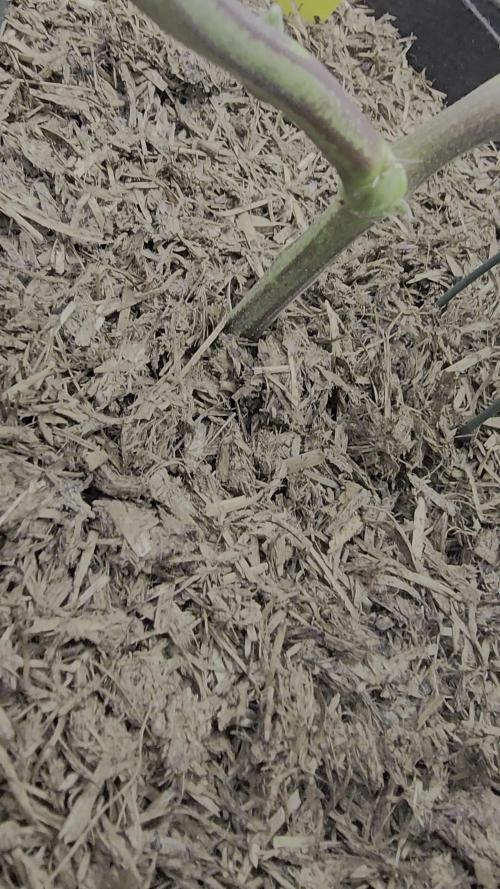
So it has begun... I've had to start utilizing string to hold up branches by tying them to the ceiling rods and surrounding equipment. These plants are healthier and happier than my first grow, so I wasn't quite expecting them to blow up like they did, therefore my single-layer screen was not enough to support the branches. Not to mention the net used was store-bought and kind of sucks. I prefer my double-layer from the first harvest.
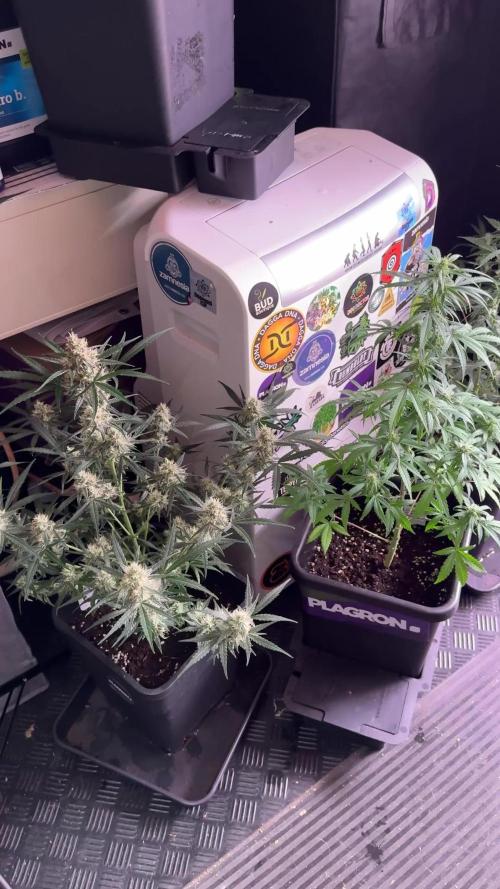
The Mimosa is packing on some major frost, followed closely by the Glookies. American Pie trichomes seem to appear and ripen much closer to the ending stages of flower.


Likes
Comments
Share
@DogDoctorOfficial
Follow
🌿 Frosted Guava Auto by Zamnesia | Pheno B | Week 8 (Flower Week 5) 🌿
Small Plant. Big Personality. And Now… A Little Less Green.
There are plants that follow the plan.
And then there are plants that write their own story.
Frosted Guava Pheno B has been doing the latter from the beginning.
She has never been the biggest plant in the room. She hasn't chased height, hasn't tried to dominate the canopy, and hasn't demanded much intervention.
Instead, she has quietly developed her own personality.
Compact.
Elegant.
Beautifully structured.
And increasingly covered in flowers.
Now, entering her fifth week of flowering, she has reached another important moment in her journey.
This week, she joined the group receiving a selective flowering defoliation.
Not because she was struggling.
Not because she was unhealthy.
And certainly not because every plant needs to be defoliated.
Quite the opposite.
She was looking fantastic.
But after looking carefully at her structure, her development, and the way light and airflow were moving through the plant, I felt that removing some unnecessary foliage was the right decision.
So we went in.
We cleaned her up.
And now we're going to see what she does with the extra space.
🌸 Week 5 Flower – Her Own Story
Frosted Guava Pheno B is currently around 108 cm tall.
That still makes her one of the more compact plants in the room.
But honestly?
I don't think she cares.
😂
She has found her own architecture and she's sticking with it.
The flowers continue developing beautifully, with increasingly visible frost and those characteristic white pistils reaching outward from the developing buds.
Her foliage has remained lush and healthy, with that beautiful deep green colour we've been following since the beginning.
The plant looks comfortable.
The flowers are developing.
And now we're starting to see more definition between the different parts of the plant.
This is exactly the kind of moment where stepping back and looking at the whole plant becomes important.
Because sometimes the question isn't:
"Can I remove this leaf?"
The better question is:
"Does this leaf still have a useful job to do here?"
And that's where this week's defoliation came from.
✂️ Defoliation – What We Actually Did
This wasn't a complete strip.
It wasn't a race to make the plant look naked.
And it wasn't about removing leaves simply because they were large.
The approach was selective.
I removed most of the fan leaves carrying their own petioles, particularly where they were contributing to unnecessary shading or creating congestion inside the plant.
I also cleaned the lower and interior portions of the plant where some flowering sites were positioned so far below the productive canopy that I didn't expect them to develop into meaningful flowers.
Those areas are what I would consider the true bottoms on a compact plant like Frosted Guava.
And that's an important distinction.
Because this plant is small.
Her lower sites really are lower.
Even with the Lumiflora under-canopy lighting helping bring additional photons into the lower canopy, the primary productive zone of the plant remains higher up.
So rather than allowing the plant to spend resources maintaining foliage and very low sites that are unlikely to contribute much, I decided to clean those areas selectively.
But I didn't remove everything.
Some lower flowering sites remain.
I want to see what they can actually do.
That's part of the experiment.
🌿 What Is Defoliation?
For anyone new to growing:
Defoliation is the intentional removal of selected leaves from a plant to alter the structure of the canopy.
The goal isn't simply to have fewer leaves.
The goal is to create a better balance between:
light penetration + airflow + canopy structure + productive flowering sites.
Leaves are extremely valuable.
They're the plant's solar panels.
So removing them should never be treated as something automatically beneficial.
Every leaf removed is a piece of photosynthetic machinery removed.
That's why I don't approach defoliation as:
"Flower started. Time to strip the plant."
Instead, I look at the plant in front of me.
Is the canopy becoming too dense?
Are leaves heavily shading developing flowers?
Are there congested areas where airflow is poor?
Are there leaves that are doing very little because they're buried underneath several layers of foliage?
Are there lower sites that realistically have very little opportunity to develop?
If the answer is yes, then selective defoliation can make sense.
If the answer is no...
Leave the plant alone.
🚫 What Defoliation Is NOT
This is probably even more important.
Defoliation is not:
❌ Removing every fan leaf
❌ Trying to expose every single flower to direct light
❌ A substitute for good plant structure
❌ A guaranteed way to increase yield
❌ Something every plant needs at the same time
❌ An excuse to strip a healthy plant simply because you can
The objective isn't to make the plant look clean for the sake of appearance.
The objective is to improve the functional canopy.
And there's a big difference.
A beautiful green leaf isn't a problem simply because it's a beautiful green leaf.
If it's healthy, receiving light, contributing to photosynthesis and helping the plant, I have no reason to remove it.
But when the canopy becomes crowded and certain leaves are contributing more obstruction than productivity, that's when selective removal becomes interesting.
✂️ How I Approach It
My approach is simple:
I observe first.
I don't start with a predetermined number of leaves that must disappear.
I start by looking at the structure.
Then I work from the outside toward the interior and from the top toward the lower portions, looking for unnecessary congestion.
Leaves that are heavily shading productive flowering sites can be candidates.
Leaves buried underneath several other leaves can be candidates.
Leaves occupying congested interior areas can be candidates.
And lower growth that is so far beneath the productive canopy that it has little realistic opportunity to develop can also be considered.
But I always keep the plant's overall health in mind.
The goal is balance, not maximum removal.
That's why Pheno B still has plenty of green.
She's not naked.
She's simply better organized.
💡 The Under-Canopy Question
This is particularly interesting with Frosted Guava Pheno B because we're running Lumiflora under-canopy lighting.
Someone might reasonably ask:
"If you have light underneath, why remove the lower growth?"
That's a very fair question.
And the answer is that under-canopy lighting doesn't magically make every lower flower equal to a top flower.
On a compact plant like this, the very lowest parts are still extremely low relative to the main productive canopy.
The under-canopy lighting is helping reinforce the lower and interior areas, but I still want to observe where the plant naturally allocates its energy.
That's why I deliberately left some lower flowering sites behind.
I don't want to assume.
I want to watch.
Will those remaining lower sites develop?
Will the extra light make a noticeable difference?
Will the upper flowers continue dominating?
That's exactly the kind of question this project allows us to explore.
And the harvest will eventually give us the answer.
☀️ More Light Where It Matters
The Future of Grow Black Series LED continues providing the primary light from above, with approximately 1,000 PPFD across the upper canopy.
Frosted Guava may be compact, but she certainly isn't short on photons.
She's been sitting underneath that light throughout flowering, converting those photons into leaves, flowers, structure and now increasingly visible resin.
And with the selective defoliation, we're changing how some of those photons move through her architecture.
We're not creating more photons.
We're simply trying to make better use of the ones already available.
That's the idea.
Don't waste energy chasing light.
Build a canopy where the available light can actually do its job.
❄️ And The Frost Is Getting Serious
The name Frosted Guava continues becoming more appropriate every week.
The flowers are developing beautifully, and the resin production is becoming increasingly visible.
Those white pistils are still everywhere, creating an incredible contrast against the deep green foliage.
And underneath all those hairs, the flowers are beginning to gain more structure and density.
This is the stage where I love looking at the same plant from week to week.
Because the change isn't always dramatic overnight.
But compare the plant to where she was a few weeks ago...
And suddenly you realize:
She's building.
She's filling out.
She's gaining flower volume.
She's becoming increasingly defined.
She's becoming Frosted Guava.
🌿 Small Plant. Big Character.
I've said this about her before, but this week makes it even more obvious.
Frosted Guava Pheno B doesn't need to be the tallest plant in the room.
She's already found something more interesting.
Character.
Her sister Pheno A has followed a different path.
And that's one of the beautiful things about running phenotypes together.
Same genetics.
Same room.
Same light.
Same nutrition.
Same philosophy.
Different personalities.
Pheno B has chosen to remain compact and elegant.
And now, as flowering progresses, she's showing us exactly what that compact structure can become.
💧 Nutrition & Hand Watering
We're continuing with hand watering throughout the room.
Current feeding remains centered around the Plagron flowering program:
Terra Bloom — 2.2 ml/L
Power Buds — 1 ml/L
Sugar Royal — 1 ml/L
Green Sensation — 1 ml/L
Lemon Kick — 0.03 ml/L
Current recorded parameters are around:
pH: 6.0
EC: approximately 2.0 mS/cm
Solution temperature: 21°C
Root-zone temperature: 21°C
Watering: approximately 1.2 L per 24 hours
Hand watering has also given me another opportunity to observe this plant closely.
Every time I water her, I get another chance to look at the flowers, inspect the leaves, check the structure and notice those tiny changes that are easy to miss when everything is automated.
It takes more work.
But it also brings you closer to the plants.
And sometimes that's where the best observations happen.
🌡️ Environment
The room continues running under stable conditions:
Day temperature: 29°C
Night temperature: 25°C
Relative humidity: approximately 72%
Solution temperature: 21°C
Root-zone temperature: 21°C
CO₂: approximately 639 ppm
With the canopy becoming increasingly dense, airflow and humidity management become even more important.
That's another reason selective defoliation can be useful at this stage.
Not because leaves are inherently bad.
But because a dense flowering canopy can create small pockets where air movement becomes less effective.
Opening selected areas gives the room a little more breathing space.
And that's particularly valuable as the flowers continue developing.
🔭 Looking Ahead
Now comes the interesting part.
We've changed the architecture.
We've removed some unnecessary foliage.
We've cleaned the lower sections.
We've opened some of the interior.
And now...
we wait and observe.
I want to see how quickly she responds.
I want to see how the flowers develop with the improved canopy structure.
I want to see what happens to those lower sites we deliberately left behind.
And most importantly, I want to see how Frosted Guava Pheno B continues writing her own story.
Because she's already made one thing very clear:
She doesn't need to follow anybody else's timetable.
❤️ Final Thoughts – Let Her Shine
Frosted Guava Pheno B has been one of those plants that quietly earns your attention.
She didn't arrive in the room demanding the spotlight.
She didn't become the tallest.
She didn't become the biggest.
She simply kept growing.
And week after week, she became more beautiful.
Now she's entered another chapter.
A little less foliage.
A little more breathing room.
A little more light moving through the canopy.
And plenty of flowers left behind to show us what she's capable of.
The important thing about this week's defoliation isn't how many leaves we removed.
It's why we removed them.
Because good cultivation isn't about following a recipe blindly.
It's about looking at the plant in front of you and making decisions based on what she's actually telling you.
And Frosted Guava Pheno B was telling me:
"I'm ready."
So we listened.
Now let's see what she does.
A huge thank you once again to Zamnesia for these beautiful genetics, Plagron for the nutrition, Future of Grow for the Black Series lighting, Lumiflora for helping illuminate the lower canopy, TrolMaster for environmental control and of course to everyone following this 8×8 Adventure on GrowDiaries.
Every week, every phenotype tells us something different.
And that's exactly why I love this project.
Until next week...
Let her shine. She has earned her spotlight. ✨🌿❄️
Growers love and happy growing! 🌱💚
Likes
8
Share


@Brugedibrug
Follow
ppfd is up to 900-1000 pretty much all these amazon lights can offer. vpd about 1.3