


@JBsTastyBudz
Volgen
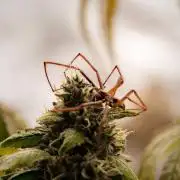
Sorry for the late video post.. I was assaulted and 2 of my 23 year old cats passed away 2 days ago.. So it's been a rough few weeks... Couple of yellow leaves.. Never had that problem using just RO water... Can't go to the grow store to get RO water right now. Transplanted 6-18-2020 switched to 12/12 🕒




@DogDoctorOfficial
Volgen
💙 PROJECT BLUE TENT – WEEK 15 💙
🌿 BLUE WAFFLE F1 – PHENO B
🍂 AUTUMN IS HERE! BEAUTIFUL LIGHTER COLOURS, INCREDIBLY DENSE FLOWERS, AND THE FINAL CHAPTERS OF OUR JOURNEY!
Hello everyone, and welcome back to another chapter of Project Blue Tent! 💙🌱
My friends, my friends...
WHAT A BEAUTIFUL WAY TO APPROACH THE FINISH! 😂🌈❄️
The season is changing, the colours are appearing everywhere, and the girls are showing us their individual expressions as they approach the end of their flowering journey.
And today, it's all about Blue Waffle F1 Pheno B!
Her sister has been showing us some beautiful darker colours, with pronounced purple, reddish, and brown tones.
But Pheno B?
She's telling a slightly different story!
We're seeing lighter green tones, beautiful colour transitions, and fading throughout the plant. Her flowers are incredibly dense and compact, with an outstanding structure that makes her every bit as interesting as her sister.
Two phenotypes from the same F1 cultivar.
The same tent.
The same ecosystem.
And two beautiful individual expressions!
We're now in Week 15 of flowering, and after observing the flowers, the trichomes, the aroma, and the overall development, I've decided that it's time to move to plain water.
We're bringing the EC down to approximately 0.2 mS/cm, which is our starting-point water reading.
The pH is naturally around 6.8, and we're not using pH Plus or pH Minus.
We're keeping things simple and giving the girls a little time as we approach what I genuinely believe will be the final stage of this journey.
But there's plenty more happening inside this room!
Matilda, our little spider friend, is making another appearance.
We're continuing our macro photography adventures, experimenting with some 3D-printed irrigation accessories for the next run, and observing the results of our under-canopy lighting setup.
And when I look at the flowers throughout this tent, I can't help feeling that all those weeks of work are coming together beautifully.
So, let's give Pheno B the attention she deserves!
🌿🌈💙
🌱 A QUICK LOOK BACK – HOW DID WE GET HERE?
Before getting into this week's observations, let's take a moment to remember the adventure behind Project Blue Tent.
We're growing four individual plants from two different Zamnesia F1 cultivars:
🌈 Blue Waffle F1 – Pheno A.
🌈 Blue Waffle F1 – Pheno B.
🥒 Pickle Lemon Haze F1 – Pheno A.
🥒 Pickle Lemon Haze F1 – Pheno B.
Four plants, two cultivars, and one shared ecosystem.
All four girls have been sharing the same tent, the same general environmental conditions, the same reservoir, the same irrigation system, and the same nutritional program.
Throughout this journey, we've documented their development individually, following the plants from their early stages through transplantation, topping, LST, canopy management, SCROG, defoliation, and flowering.
We've spent considerable time establishing the structure, organizing the branches, managing the canopy, and experimenting with different aspects of our growing environment.
We've also introduced supplemental under-canopy lighting using two LumiFlora 150W full-spectrum fixtures arranged in an X-cross configuration.
Nutritionally, we've been working with the PLAGRON Hydro line, gradually adjusting the program as the girls progressed through flowering.
And now, we're approaching the end.
The major structural work is behind us.
The flowers have developed throughout the canopy.
The plants are showing their individual characteristics.
And we're beginning to see the beautiful changes associated with this final stage.
One of the most interesting aspects of this project is that sharing the same environment doesn't mean every plant will express itself identically.
Even two plants from the same cultivar can show differences in structure, pigmentation, flower formation, and other characteristics.
And that's exactly what we're seeing with our two Blue Waffle F1 sisters.
Pheno A has been showing us some darker, more dramatic colours.
Pheno B is displaying a different visual expression, with lighter greens and her own beautiful combination of colours.
Same genetics.
Same room.
Same general approach.
Different expressions.
And that's precisely why every phenotype deserves her own diary!
💙🌱
🌿 BLUE WAFFLE F1 PHENO B – HER OWN BEAUTIFUL EXPRESSION!
Let's talk about this girl!
Because although her sister has been stealing plenty of attention with those darker colours, Pheno B is certainly not staying behind!
She's looking absolutely beautiful.
The first thing that catches my attention is the overall flower structure.
The flowers are incredibly compact, dense, and beautifully formed.
Looking throughout the plant, we're seeing those little golf-ball-like flowers from the lower sections towards the top of the canopy.
And that's one of the things I've been particularly enjoying during these last weeks.
The plant has developed within the structure we've established throughout the earlier stages, and now we're able to appreciate the results.
The flowers are taking centre stage.
The surrounding foliage is changing.
And the overall appearance is becoming increasingly interesting.
Compared with Pheno A, this girl is showing lighter green tones.
Her sister is moving towards a darker colour palette, while Pheno B retains a more pronounced green appearance throughout parts of her flowers and foliage.
But that doesn't make one more interesting than the other.
They're simply expressing themselves differently.
And honestly, I love having the opportunity to document those differences.
It's easy to look at two plants from the same cultivar and expect them to behave or look exactly alike.
But that's not always what happens.
Individual phenotypic expression can produce noticeable differences, even when plants share the same general environment.
And Pheno B is giving us another beautiful example.
💚🌈
🍂 THE FADING – WHY DOES PHENO B LOOK DIFFERENT FROM HER SISTER?
This is one of the most interesting things happening throughout the tent right now.
We're seeing fading across the plants, but the way that fading appears isn't identical between the two Blue Waffle F1 sisters.
Pheno A has been showing us more pronounced darker colours, including purple, reddish, and brown tones.
Pheno B, on the other hand, is retaining lighter green tones while also showing yellowing and other changes throughout her foliage.
So, why does this happen?
There are several factors involved in the colour changes we observe as plants progress through their life cycle.
One of the main contributors to the green appearance of leaves is chlorophyll.
As chlorophyll levels decline, other pigments can become more visible.
Carotenoids contribute yellow and orange colours, while anthocyanins are associated with red, purple, and blue shades.
Genetics play an important role in how these pigments are expressed.
Environmental conditions, including temperature and light exposure, can also influence the colours we observe.
This means that two plants growing side by side can display different colour combinations, even when they're exposed to the same general conditions.
And that's precisely what we're documenting.
We shouldn't assume that every colour change has the same cause, nor should we use fading alone as proof that a plant is ready for harvest.
Instead, we're looking at the complete picture.
The flower development.
The trichomes.
The pistils.
The aroma.
The overall condition of the plant.
And the changes we've observed throughout the previous weeks.
For Pheno B, the fading is becoming increasingly visible, but her overall appearance remains beautifully green compared with her sister.
And I genuinely love that contrast!
Two sisters, two colour palettes, and two individual stories.
🍂💚🌈
❄️ FLOWERS – DENSE, COMPACT, AND BEAUTIFULLY FORMED!
Now, let's appreciate those flowers!
Because this is where Pheno B really shines.
The flower structure is outstanding.
We're seeing beautifully compact flowers, with a dense appearance throughout the canopy.
And the consistency of the development is particularly interesting.
From the lower flowering sites to the upper sections, we're finding plenty of beautiful flowers to admire.
The photographs show the different angles, the overall structure, and the details that make this phenotype so enjoyable to document.
When we step back, we can appreciate the shape of the plant and the distribution of the flowering sites.
When we get closer, there's an entirely different world waiting for us.
The textures.
The pistils.
The trichomes.
The intricate details of the flowers and surrounding sugar leaves.
And that's one of the reasons I enjoy macro photography so much.
It allows us to explore the details that we might otherwise overlook.
Pheno B has developed a beautiful structure, and the compact appearance of her flowers is particularly impressive.
Combined with the changing colours and the visible frost, she's giving us plenty of reasons to keep the cameras ready.
And just like her sister, she's making it difficult to walk into the room without taking another photograph!
😂📸❄️
👃 THE AROMA – TWO SISTERS, ONE BEAUTIFUL ROOM!
Now, let's talk about something that our photographs cannot communicate.
The aroma!
The room smells absolutely incredible, and the overall aromatic experience is becoming another memorable part of this final stage.
One of the interesting observations is the similarity between the two Blue Waffle F1 sisters.
Visually, they're showing different expressions.
But the overall aromatic impression is remarkably similar.
Of course, without proper analytical testing, I'm not going to invent a terpene profile or assign specific aromatic compounds to either phenotype.
What I can tell you is what I'm experiencing.
The smell is beautiful, the room is wonderfully aromatic, and spending time around these girls has become an absolute pleasure.
And that's something I wish I could share through the photographs!
Unfortunately, you'll have to use your imagination for that part.
😂🌸💙
💡 UNDER-CANOPY LIGHTING – A HIGHLIGHT OF PROJECT BLUE TENT!
I really want to dedicate a section to our supplemental lighting experiment.
Throughout this project, we've been using two LumiFlora 150W full-spectrum fixtures beneath the canopy.
They're arranged in an X-cross configuration, supplementing the main overhead lighting.
And now, as we approach the final stage, we're able to appreciate the flowers developing throughout the different sections of the plants.
The lower flowering sites are particularly interesting to observe.
We're seeing compact flowers throughout the canopy, and the overall development has made this experiment one of the highlights of Project Blue Tent.
The main lighting system provides our primary illumination from above, while the LumiFlora fixtures add supplemental light beneath the canopy.
It's important to remember that several variables contribute to the final result.
Genetics, plant structure, canopy management, environmental conditions, nutrition, and the complete lighting arrangement all play their respective roles.
We cannot attribute every result to one piece of equipment.
But we can document the setup, follow the development, and evaluate what we're observing.
And that's precisely what we've been doing.
I'm particularly interested in reviewing the complete photographic record once the project is finished.
Having individual diaries for all four plants will also give us an opportunity to compare their development and identify interesting differences.
A massive thank you to LumiFlora for making this experiment possible!
These two 150W fixtures have certainly given us plenty to explore.
💡💙🌱
🌡️ ENVIRONMENT – SAME ROOM, SAME CONDITIONS!
Now, let's look at the environmental conditions.
As we've explained throughout Project Blue Tent, all four plants share the same general growing environment.
And this week, we're maintaining the established conditions.
Outside temperatures have increased slightly again, particularly during nighttime.
We're seeing readings above 22°C outside, with one measurement reaching approximately 22.4°C around midnight.
Fortunately, with the air conditioning running, we're managing to maintain the conditions inside the tent without allowing those outside fluctuations to push our internal temperatures higher than intended.
Our current environmental reference is:
🌡️ Day air temperature: approximately 25°C.
🌙 Night air temperature: approximately 20°C.
💧 Relative humidity: approximately 55%.
💧 Solution temperature: approximately 21°C.
🌱 Substrate temperature: approximately 21°C.
We're also keeping an eye on the other environmental readings throughout the room.
CO₂ reference: approximately 666 ppm.
The important thing is maintaining consistency.
We don't want sudden environmental changes simply because the weather outside has decided to become warmer again.
The AC is helping us manage those fluctuations, and we're continuing to monitor the room.
It's quite funny when you think about it.
Outside, summer is trying to make another appearance.
Inside, our girls are giving us a beautiful autumn display!
😂🍂🌈
💧 IRRIGATION – THE ESTABLISHED SYSTEM CONTINUES
The irrigation and drainage arrangement remains unchanged.
All four plants continue sharing the same reservoir and irrigation system.
The recorded watering volume remains approximately 1.6 litres per plant over 24 hours.
As always, this is our recorded reference value rather than a guarantee that every individual plant consumes exactly the same amount.
Individual plants can behave differently, even when they're sharing the same system.
That's another reason why we're continuing to observe each phenotype separately.
At this stage, we're concentrating on keeping the established system consistent while monitoring the plants and their individual development.
We're not introducing unnecessary changes to an arrangement that's already been established throughout the project.
And as we're now moving to plain water, we'll continue documenting the reservoir readings and the changes in our irrigation approach.
💧🌱
⚗️ THE NUTRITIONAL CHANGE – PLAIN WATER FROM HERE!
Now, let's talk about this week's biggest change.
As mentioned in our previous report for Pheno A, I've decided that it's time to move away from our previous nutritional recipe and introduce plain water.
We're now doing the same for Pheno B.
All four plants share the same reservoir, so this change applies to the entire room.
Our current readings are:
💧 EC: approximately 0.2 mS/cm.
💧 pH: approximately 6.8.
The EC represents the starting-point water reading.
The pH is naturally around 6.8, and we're not using pH Plus or pH Minus.
We're no longer adding:
PLAGRON Hydro A.
PLAGRON Hydro B.
PLAGRON Power Buds.
PLAGRON Green Sensation had already been discontinued earlier in flowering.
Why the change?
Simply because, after observing the plants, I feel we're approaching the end of the journey.
The flower development, the density, the aroma, the trichomes, and the overall appearance are all contributing to that impression.
Since this project isn't following an organic nutritional program, I've decided to introduce a period using plain water.
For now, I'm thinking about a few days, potentially around one week.
We'll continue observing the girls and decide how things progress.
I'm not putting an exact date on it because I want to keep the final decisions based on the actual condition and maturity of the individual plants.
And one important clarification: plain water doesn't magically remove nutrients from the flowers or guarantee a particular flavour outcome.
This is simply the nutritional change I've chosen for this stage of this particular project.
The important thing is to document exactly what we're doing and why.
So, from this week onward:
EC approximately 0.2 mS/cm.
pH approximately 6.8.
No additional nutrients.
Let's see how the final chapter unfolds!
💧💙
🕷️ MAHTILDA RETURNS – OUR LITTLE MACRO MODEL!
Well, my friends, apparently Matilda isn't finished with us yet!
Our little spider friend is making another appearance inside Project Blue Tent.
For anyone who missed the previous update, Mathilda is the little spider I spotted wandering around the room.
I decided to give her a temporary starring role in our photography session, and she turned out to be a fantastic subject.
And this week, we're continuing the photographic adventure!
I've included more photographs of Mathilda, because I genuinely enjoy the opportunity to capture these little details.
Look at those legs!
The textures!
The incredible structure!
The details that become visible when we move closer!
It's fascinating how different the world looks through a macro lens.
Something that might otherwise go unnoticed suddenly becomes an entirely different photographic subject.
And that's what I love about macro photography.
It encourages us to slow down, look closer, and appreciate details that we normally overlook.
Matilda has officially become part of the Project Blue Tent photographic collection.
😂🕷️💙
Of course, she's only a little guest appearance, but she's certainly making the most of her time in the spotlight!
📸 MACRO PHOTOGRAPHY – GETTING CLOSER TO THE DETAILS
Photography has always been an important part of documenting these projects.
And during these final weeks, there's so much to appreciate.
The flower structures.
The changing colours.
The trichomes.
The textures.
And our unexpected little spider visitor!
I've been enjoying getting closer to the subjects and capturing details that aren't always visible in ordinary photographs.
I'm also continuing to experiment with macro photography and focus stacking.
For anyone unfamiliar with the technique, focus stacking involves combining multiple photographs taken at different focus distances to create an image with a greater depth of field.
It's particularly useful when working with small subjects at high magnification, where only a limited area can remain sharply focused in a single photograph.
And between the flowers and Matilda, we've had plenty of opportunities to experiment!
I hope you enjoy the photographs as much as I enjoy taking them.
Sometimes the smallest details make the biggest difference.
📸💙
🖨️ BEHIND THE SCENES – NEW 3D-PRINTED IRRIGATION EXPERIMENTS!
Now, let's move away from the flowers for a moment and introduce something I've been working on behind the scenes.
I've been experimenting with 3D printing and have produced a number of prototype bases that I'm currently testing.
The idea is to create a small distribution plate beneath the watering points.
Instead of having water fall directly onto one concentrated area of the coco surface, the plate is designed to help distribute the incoming water more evenly.
The objective is simple:
A more even distribution of water across the surface.
I've printed several prototypes, and I'm currently evaluating their design and how they behave during small tests.
Will the water distribute as intended?
Will the design need adjustments?
Will the final version be suitable for the next run?
That's exactly what we're trying to find out!
I'm not making any claims about the results yet because this is still an experiment.
At the moment, I'm only carrying out a few small tests and checking how the water flows across the plates.
The proper evaluation will come with the next project.
I've included some photographs so you can have a little preview of what I've been working on.
And that's one of the things I enjoy most about this hobby.
There's always something to improve, something to experiment with, and something new to learn.
Project Blue Tent might be approaching its finish, but the next adventure is already taking shape!
😂🖨️💙
🔭 WHAT TO EXPECT NEXT WEEK – IS THIS THE LAST WEEK BEFORE HARVEST?
And here comes the big question!
My friends, I genuinely feel we're very close to the finish.
Looking at the flowers, their density, the trichomes, the aroma, and the overall development, I have the feeling that we're approaching the final days of this journey.
We've now introduced plain water, and we'll continue observing the plants over the coming days.
Perhaps this is the last weekly update before we move into harvest.
Perhaps we'll have one more chapter.
Let's see!
What I don't want to do is promise a harvest date simply because we're excited to reach the finish.
We'll continue looking at the individual plants and assessing their maturity.
Remember, we're growing two different cultivars in the same tent, and even the individual phenotypes can progress differently.
So we need to remain patient and allow each plant to reach her own finish.
What should you expect from the next update?
More observations.
More photographs.
More attention to the trichomes and overall flower maturity.
And potentially the beginning of our harvest documentation!
What shouldn't you expect?
Major environmental changes.
New training sessions.
A new nutritional recipe.
Or unnecessary interventions.
The girls have already done their part.
Now it's time to observe, document, and prepare for the next chapter.
We're getting there!
💙🌸🍂
💬 COME JOIN OUR DOGDOCTOROFFICIAL DISCORD COMMUNITY!
Before we finish, I want to invite everyone to join our Discord family!
If you're already part of the community, you know what we're building together.
And if you haven't joined yet, you're more than welcome!
We've created a place where growers can share their experiences, exchange knowledge, discuss equipment, show their gardens, share photography, and learn from each other.
We also organize our community photo championships, cups, and giveaways!
There's always something happening, and one of the things I appreciate most is the opportunity to learn from people with different experiences, setups, and approaches.
You don't need to be an expert.
You don't need expensive equipment.
You don't need years of experience.
Everyone is welcome!
Come and introduce yourself, share your photographs, join the discussions, and become part of the adventure.
And don't forget to check out our giveaway channels!
👽 Mr. Baggy and other surprises are waiting for you!
💙 JOIN US HERE:
https://discord.gg/dogdoctorofficial
Growers helping growers.
Sharing knowledge.
Learning together.
And having a little fun along the way!
We'd love to have you with us!
💙 FINAL THOUGHTS – TWO SISTERS, TWO EXPRESSIONS, ONE BEAUTIFUL JOURNEY!
My friends, Week 15 has been another beautiful chapter for Blue Waffle F1 Pheno B.
She's looking fantastic.
The flowers are incredibly dense and compact, the structure is outstanding, and the changing colours are giving us another beautiful expression of this F1 cultivar.
Compared with her sister, Pheno B is retaining lighter green tones, while Pheno A is showing us more pronounced darker colours.
And that's precisely what makes documenting individual phenotypes so interesting.
They share the same environment, the same general conditions, and the same nutritional program, yet each plant brings her own characteristics to the table.
We've also introduced plain water this week, bringing our EC down to approximately 0.2 mS/cm, with the natural water pH sitting around 6.8.
The environmental conditions remain stable despite the warmer temperatures outside.
Our irrigation arrangement remains in place.
And our two LumiFlora 150W under-canopy fixtures continue to be an important part of this project's lighting experiment.
We've had Matilda making another appearance, enjoyed more macro photography, and started testing some 3D-printed irrigation prototypes for our next adventure.
And now, we're approaching the finish.
I genuinely feel that this may be the final weekly chapter before harvest, but we'll let the plants guide us.
No rushing.
No guessing.
Just observation, patience, and good documentation.
Two Blue Waffle F1 sisters.
Two beautiful individual expressions.
And another reminder of why every plant deserves her own story.
Same tent.
Same ecosystem.
Different expressions.
Same passion.
Same love.
And another beautiful chapter of Project Blue Tent! 💙🌈🍂❄️
🙏 A HUGE THANK YOU – THE PEOPLE BEHIND PROJECT BLUE TENT!
A project like this doesn't happen alone, and I want to take a moment to thank everyone who has been part of this adventure.
A massive thank you to ZAMNESIA for providing the genetics and making it possible for us to document these beautiful Blue Waffle F1 and Pickle Lemon Haze F1 plants individually.
Thank you to PLAGRON for the Hydro nutrient line supporting the project throughout the journey.
A huge thank you to MARS HYDRO for the irrigation and drainage equipment helping us maintain consistency throughout the room.
Thank you to ZAMNESIA for the Phytonaut LED lighting, curved scissors, and clip fans that continue playing important roles in our setup.
A special thank you to LUMIFLORA for the two 150W full-spectrum under-canopy fixtures. This has been one of the most interesting experiments in Project Blue Tent, and I'm looking forward to exploring the results further.
Thank you to HEMP HOOKS for joining our adventure and providing our community with an exclusive discount opportunity.
🌐 https://hemphooks.com/
Discount code: DogDoctor
15% OFF YOUR ENTIRE ORDER!
We're looking forward to exploring your products further in upcoming projects and sharing our experiences with the community.
Thank you to GROWDIARIES for providing the platform where we can document the plants, share our photographs, and record the lessons we learn along the way.
And finally, a massive thank you to everyone following Project Blue Tent, reading our diaries, supporting the reports, sharing comments, and enjoying the photographs.
Your support makes sharing these individual chapters even more enjoyable.
And to our Discord family, thank you for making this community such a fantastic place to learn, share, and grow together.
If you haven't joined us yet, come and say hello, check out our cups and giveaways, and become part of the adventure!
💙 https://discord.gg/dogdoctorofficial
Until the next chapter, my friends...
Keep growing.
Keep learning.
Keep documenting.
Keep experimenting.
And never lose that passion for the little details that make every run special.
GROWERS LOVE, HAPPY GROWING, AND TAKE CARE, EVERYONE! 🌱💙🌈🍂❄️



@DrLaggis
Volgen
Day 64 - Beginning of the Final Flowering Week 🌱
Hello, my grow friends! We’re entering the last flowering week, and it looks like I’ll be harvesting the plant around Friday, which will be roughly Day 68.
💭 Harvest Decision:
It’s a tough decision because while the buds are still growing, the trichomes in the middle and lower parts of the plant are already about 80% milky and 10% amber. I’ll keep an eye on things and plan to check the trichomes again on Day 65, two days before harvest, to make a final decision.
🌿 Trichome Considerations:
I have a feeling that even after cutting the plant and hanging it upside down to dry, some nutrients might still move into the buds, potentially causing them to swell a bit more. This is something I’m curious to see.
💧 Humidity, Water, and Temperature:
As I mentioned in my last update, I flushed the plant yesterday, just before the start of the final week, with 4 liters of water. This should help flush out any remaining nutrients, and I likely won’t need to water again before harvest since the pots are thoroughly soaked.
The humidity and temperature are holding steady between 52-58% and 20-24°C, which I find ideal. I’ve got my exhaust system and fan running continuously to ensure no mold develops.
📸 Final Updates:
I’ll check in again with an update just before harvest to let you know how things are looking. Remember, I’m posting new pictures and videos of my plant every day.




@Philhsy
Volgen
Studio 54 Stardust Auto – Bloom Has Begun! 🌸🌱
She’s finally entered bloom and started stretching! 🚀 I was getting a little worried for a while since she seemed determined to stay short and compact, but it looks like she’s finally catching up! 😁💚
The root mass has increased exponentially, turning into a serious jungle beneath the surface! 🐙 Healthy growth, pistils popping up everywhere, and she’s finally showing some real signs of flowering.
💧 Gave the reservoir a fresh change and made a few upgrades to the tent! Added some UCL/ICL lighting to reach deeper into the canopy, along with some CO₂ supplementation. Excited to see how she responds!
📊 Current conditions:
* 🌡️ Tent temperature: 25°C
* 💦 Humidity: 55% RH
* EC: 0.8
* 💧 Reservoir temperature: 21.5°C
* 🌸 Stage: Early bloom / Stretch
Added power buds and green sensation.
Now let’s see if we can turn this little Stardust into a big, bushy monster loaded with flowers! 🌳
Still learning with every DWC grow, experimenting and enjoying the journey. Fingers crossed for some explosive growth in the coming weeks! 🤞💚
Happy growing, everyone


@Ultraviolet
Volgen
Flattened canopy a little by bending and gently cropping stems over several days. Dropped hours of light to 16 and switched to a spectrum more suited to flowers. Will give her one more week to prepare and develop.
INFINITY
Dodecahedron is the only platonic solids that has infinite numerical pathways. The Aether.
Saturday I switched to 12, I forgot for a second this strain is 100% Sativa, I thought she wouldn't stretch much because the PPFD was high. Never noticed such an obvious change in temperament from a plant overnight, it has been a sleepy, lazy leaf veg cycle for the most part, there are no signs of flowers yet ofc, but just the way she exploded into a more satellite disciplined formation, ITS TIME, so it begins, no turning back now....... my poor electricity bill.


@Green_Hornet
Volgen
those pictures are from day 22 of flowering
added some additive PK 13 / 14 from Plagron
And a small closet tour video :)
enjoy


@asstonmartian
Volgen
Fourthish week of flower and they have begun to pray 🙏🏼 well, most of them anyways. The largest still is suffering from an untreated overwatering and over nuteing condition but the others are looking nice! The ones on the roof were in full prayer and loved the hot afternoon direct sun.
At this point, giving the flowers a squeeze rewarded you with sticky fingertips and a smell of stinky gouda cheese or similar. Crystals were starting to form on the sugar leaves which was exciting to watch for the first time. I was thoroughly impressed with the prayer formation that these plants assumed when conditions were prime. Very cool! You could see how the plant was able to maximize leaf surface area exposure while blocking the least amount of light from the leaves below.
The light was being run on 100% and temps would be between 83 and 85 degrees. I was OK running it a bit hotter as it's an LED light. I like the light a lot - especially it's precision. Each 25% dim increment correlated to 2 degrees temp change. Nice!
shorts_status_processing


@Rangi_Kijani
Volgen
I harvested 24 cuttings from the White Shark mom this week, which was the first time she donated! She recovered fully within a few hours. Some ongoing maintenance pruning/training on deck for later this week.
The 2 new moms (XXL & 8 Ball) are looking beautiful. I’ll be topping them soon to start working on structure.


@rihaksi
Volgen
Grow is on cruise control plants are doing well. 4 of the 5 should flower out it 2 weeks but the fifth is only in week 2 of flower. Will just be watering plants for the remainder of the grow to flush out the last of the nutrients in the coco. Colas are starting to pack on some size and smell and look great. Mid week a few of the plants have started to turn purple and red and have added some color to the tent!


@DeepRootsGrowTrees
Volgen
GORILLA MELON / 420FASTBUDS
WEEK #5 OVERALL
WEEK #4 VEG
This week she's going good no issues growing in a small pot she has been growing at a nice rate and she got topped at the end of this week! Stay Growing!!
Thank you for stopping by and taking a look it's much appreciated!!
Thank you 420FASTBUDS!!!
GORILLA MELON / 420FASTBUDS



@BlaKX
Volgen
Die Ente hat sich relativ einfach gestaltet da ich nur Blätter abgeschnitten habe die kein Harz Besatz hatten. Die anderen zuckerblätter wenn sie trocken sind da es einfacher ist und sich so auch die Blüten schöner beschneiden lassen ich freue mich schon darauf.
Mein erster Grow mit Divine Seeds Genetik macht Lust auf mehr!

shorts_status_processing





@Maincard
Volgen
Sometimes watered only with water, three plants were already ready in the seventh week from germination. A week of watering with only water and I cut them down


@CityFarmer
Volgen
Hello everyone,
I've had a busy week, so this is what I have for you guys
See y'all next week 🤘🤘


@Yiyis_Grow
Volgen
Usted By Toledo Again
Buenos humos amigos cultivadores y ojos rojos
Ya dos semanas , se ven compactas y nada de bichos o plagas.
Fumen fumen


@Fatnastyz
Volgen
2-1
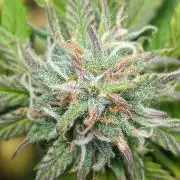
Got her first water in new home. Was not watered in during x plant. Let her dry what she had first.
7ml EM1 will get a bigger dose soon. Just to kick things off.
Around 1/2 tsp recharge, 1ml drops of balance.
1.5 ml Silica. Ph 6.0 500 ml.
2-3
Wish I would have watered 250-300. 500 was a bit much, should be fine.
Looks very happy and perky.
2-4
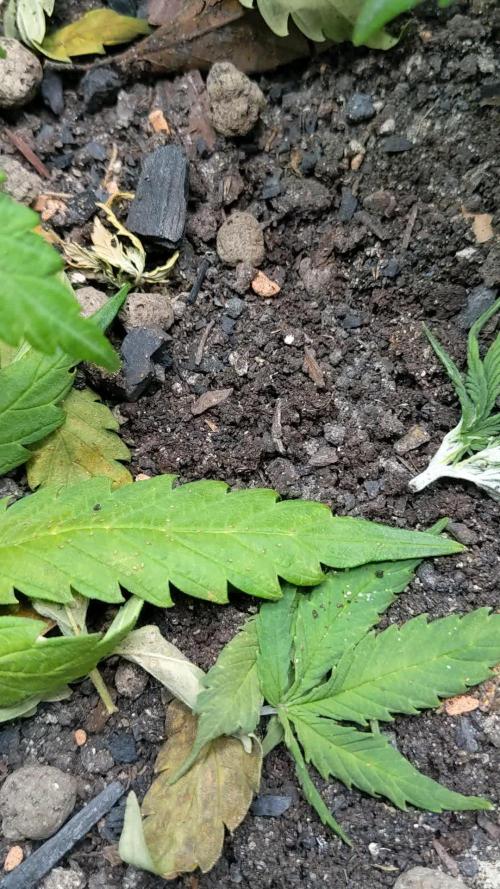
Looks like she may have the fungus. Removed first leaves.
2-5
Peroxide spray at lights out. Slight possibility on 2nd set of leaves.
2-6
Removed 3rd set up leaves. Oh my goodness not again! Foliar spray, Canncontrol 300ml water .8 ml CannC. As a precaution.
Enlisted Valiotoro, light may have burnts when lights came on from foliar. I dont remember checking. Focused more on if spread. 😂
Hope this helps. 🤞
Sad that the leaf removal will slow her down.
.

@poloq_mauriceloetel
Volgen
*Growdiaries deleted this section (don't ask me why). So everything in this week is from the top of my head (like 2 weeks later):
_Environment
This week, I went back to watering (gently) to get the soil used to a ‘normal’ assimilation rate again. As a result, the temperature dropped slightly, while the relative humidity increased at the same time (which was of course elevated by the fact that I removed the sand at the end of last week).
_Plants + Training
Gentle defoliation continued this week. However, it became apparent that Mimosa Cake Auto requires significantly more attention than Gorilla Z Auto, as it grows incredibly densely and intertwines. It also seemed like the Mimosa Cake Auto was about to crack due to the high forces (no space to bend and stretch because everything is just nodes and side branches).
*Gorilla Z Auto was ??? cm tall, Mimosa Cake Auto ??? cm.
_Organisms
As you can see, microbial life is still in full swing. Numerous springtails can be seen (yellow sticky traps), Oribatida are decomposing organic material, etc.
_Living Soil
To check the most important indicator of healthy soil life, I carried out a pH test this week. This showed a value of 7, which is slightly too high but definitely within an acceptable range. [Living soil should be between 6 and 7, ideally 6.4–6.6.]
_(Pre)Flower
Mimosa Cake also started showing its first pistils (it seems like both plants are 5 - 10 days apart).


@Kagesan
Volgen
👋👋👋
➖➖➖➖➖➖➖➖➖➖➖➖➖➖➖
Time marches on and we are already in flowering week three. The lady has stopped gaining height and is now putting all her energy into the buds.
➖➖➖➖➖➖➖➖➖➖➖➖➖➖➖➖
💚💚💚


@DreamIT
Volgen
Sponsored by:
💫PARADISE SEEDS💫-💡VIPARSPECTRA💡-💐GREEN BUZZ LIQUIDS💐-🛠️WEDRYER🛠️
10/7 I hadn't started this diary yet. after the various dead seeds of this run I decided to start another paradise seeds seed, and here we are, already vegetative. A lot of indica in those leaves
12/7 everything is going well, it stretches and expands, already showing the classic indica traits, with large rounded leaves
__________________________________________
Personal advertising (contains affiliate links)
__________________________________________
🦄 winners and holders of the most prestigious awards, since 1994 they offer genetics of the highest quality! Anonymous shipping!
✅https: //bit.ly/Paradiseseeds_
__________________________________________
Did you know that Green Buzz Liquids fertilizers are 100% vegan? A complete line of products ready to give the best to each of your plants! Visit the site and see my journals to see how they work 🦄
🤯 And with the code "dreami t" you will immediately receive a 15% discount on your purchases
✅https: //bit.ly/GreenBuzzLiquidsPro
__________________________________________
👀 Are you looking for a good lamp to start with? 👀
🌞Viparspectra has something more than the others, take a look at their site.
⏩ Use "GDVIP" for an extra discount or "DREMIT3" for an extra 5 %% discount
👀 Search for it on Amazon
✅Amazon USA: https://amzn.to/30xSTVq
✅Amazon Canada: https://amzn.to/38udUVe
✅Viparspectra UE: bit.ly/ViparspectraUE
✅Viparspectra USA: bit.ly/ViparspectraUS
______________________________________________
🌈 Tired of blowing on your weed hoping it dries quickly? Check out the Wedryer website! You will find a well-made accessory that will help your weed dry in just 8-10 days without the annoying risk of finding mold or other annoyances! (no affiliate links)
✅https: //bit.ly/Wedryer_
______________________________________________
📷🥇Follow the best photos on Instagram 🥇📷
https://www.instagram.com/dreamit420/
Backup
https://www.instagram.com/dreamit4200/
🔻🔻Leave a comment with your opinion if you pass by here🔻🔻
🤟🦄💚 Thank you and good growth 💚🦄🤟
