


Likes
Comments
Share

@German_GrowLab
Follow
Grüßt euch, liebe Grow-Community!
Zur 9. Woche / Blütewoche 6 dieses betreuten Grow-Projekts.
Und wie ihr seht, ist es doch etwas lichter in der Box geworden. Und ihr könnt euch ja sicherlich denken, was das heißt …
Letzten Montag (31.08.26) haben sich die Mephisto’s Wedding #1 und die Orange Diesel #1 für die größere Sache geopfert. Und mit „größerer Sache“ meine ich, bald von ein paar Studis gesmoked zu werden.😝 (Wir wissen dieses Opfer doch sehr zu schätzen.)😇
Also ran mit der Schere und ab dafür! Die Kleinen wurden nach einer kleinen Entlaubung im Ganzen aufgehängt und trocknen nun munter vor sich hin.
Da die Jungs doch tatsächlich keine Kohle für eine Klimaanlage locker machen konnten, da dies – Zitat – „doch etwas zu viel des Guten wäre“, trocknen die zwei nun bei etwas suboptimalen 20 °C und immerhin 60 % Luftfeuchtigkeit.😒
Was vielleicht gar nicht mal so verkehrt ist, da neuere Untersuchungen eher darauf hindeuten, dass es durchaus Vorteile haben kann, den Blüten zu Beginn der Trocknung etwas schneller Feuchtigkeit zu entziehen. Dadurch verlassen sie schneller den mikrobiell kritischen Feuchtebereich, was das Risiko eines Pathogenbefalls reduzieren kann. Gleichzeitig bedeutet eine möglichst lange Trocknung nicht automatisch eine bessere Terpenerhaltung – schließlich können sich flüchtige Aromastoffe auch über die zusätzliche Trocknungszeit weiter verflüchtigen.
Also ein State-of-the-Art-Ansatz, wenn man so will... 😅
Ich habe dazu mal ein Paper angeheftet, für diejenigen, die es interessiert.
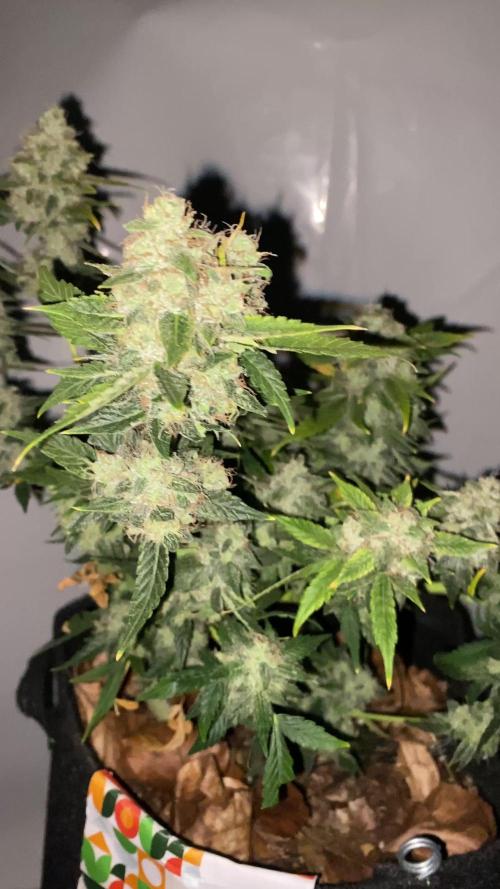
Nach einem kurzen Blick in die Box muss ich sagen, dass ich über das, was ich sehe – und vor allem rieche – doch sehr verzückt bin.
Der andere Phäno der Mephisto’s Wedding hat sich zu einer wahren Frost-Factory entwickelt und besticht durch ein kräftiges Chem-Aroma. 😋Der andere Phäno braucht noch etwas länger, spiegelt dafür aber doch eher den Wedding-Cake-Elternteil wider.
Die zwei etwas unterernährten Orange Diesel machen zwar optisch nicht ganz so viel her, weisen dafür aber ein angenehmes Diesel-Orangen-Aroma auf, was der ersten geernteten Diesel doch etwas gefehlt hat. Ich hoffe nur, dass mein Erde-Topdress noch etwas Futter bereitstellt.🙏
Sooo, an dieser Stelle wünsche ich viel Spaß mit den Bildern/Videos. Wie ihr seht, haben wir hier keine Produktionskosten gescheut. 😂
Ich wünsche euch wie immer ein schönes Wochenende! Genießt die letzten Sommertage, bevor die Winterdepression wieder kickt.😅
Adios!

Likes
18
Share


@Dunk_Junk
Follow
What the hell happened here???????????
A solid 50cm vertical growth this week!!!!!!!!!!
I thought the weird split this plant had a few weeks ago would be the talking point of this plant not her epic height!!
I have bent over her main cola now because of headroom issues.
First watering with 6-12-36 powder mixed at 1g/Litre

Likes
3
Share

@Rare_Terps_5280
Follow
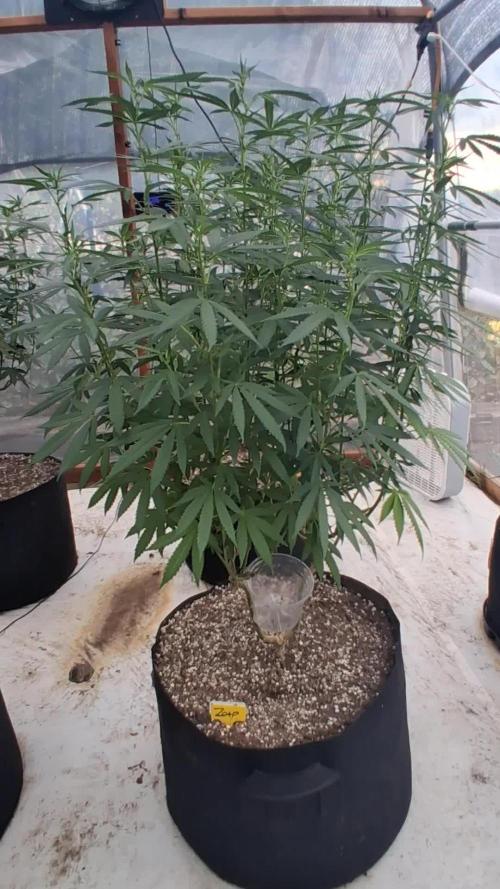
She is growing well, has been a few weeks of hot weather and shes a bit dramatic but doing good. Has great sativa structure, long skinny leafs, but thick sturdy stems. I'll scrog next week and spred out the growth even more.

Likes
16
Share


@Ultraviolet
Follow
Refurbished soil HVAC system, and increased airflow.
To maximize your yield, always aim for 40 moles, or 40,000,000 μmol, per day. Here is how much PPFD is needed per second for each phase of cannabis growth to achieve the DLI of 40 moles of light per day.
I picked up a Quantum PAR Meter, very happy!😁 PAR Meter will show me how much useful radiation between 4-700nm the plant is getting from any given direction.
Seedling phase (18hr cycle): 200–300 μmol m-2 s-1
Vegetative phase (18hr cycle): 617 μmol m-2 s-1
Flowering phase (12hr cycle): 925 μmol m-2 s-1, (1500 μmol m-2 s-1 @1500ppm co2) (ballpark). Anything above 2000 PPM is harmful to both the grower and the crops.
The tent is currently reaching 3-400umol ms 1s at soil level (42" inches from light) and 1100umol-1300umol @ 25" Inches.
The Corpus Hermeticum
translated by G.R.S. Mead
V. Though Unmanifest God Is Most Manifest

Likes
72
Share


@HighFromHome
Follow
Pleased with how this plant is doing. Lots of stretch this week and looks like she's still got more in her. Still been training the tops where i want them but the branches are getting stiff now so that's nearly it.
The cooling fan on my grow light is really noisy and the loudest thing of my setup by far. So i have changed it for a much higher quality one and it's amazing! Night and day difference for noise and performance too! See before and after videos.
I have a feeling i might run out of space in the middle with the 4 buds. Also that the outside ones are too close but we will see. Any comments welcome or suggestions. As i keep saying, all a learning process to get better each time. I am already planning my next grow which will either be do si dos auto or gorilla zkittlez auto both from Barney's Farm.
Have a possible weeks fishing trip on 7th Aug. So has it not finished by then I will buy a water pump and set it on a timer. As i expect i will be flushing around then so just ph water through the pump.
Thanks for looking
P.s. Planted 2 more outdoors today - 1 went with the other 5 and 1 in its own spot. See last photo of the now 6 outdoors!

Likes
2
Share

@420DeepGrow
Follow
📆 Semana 7
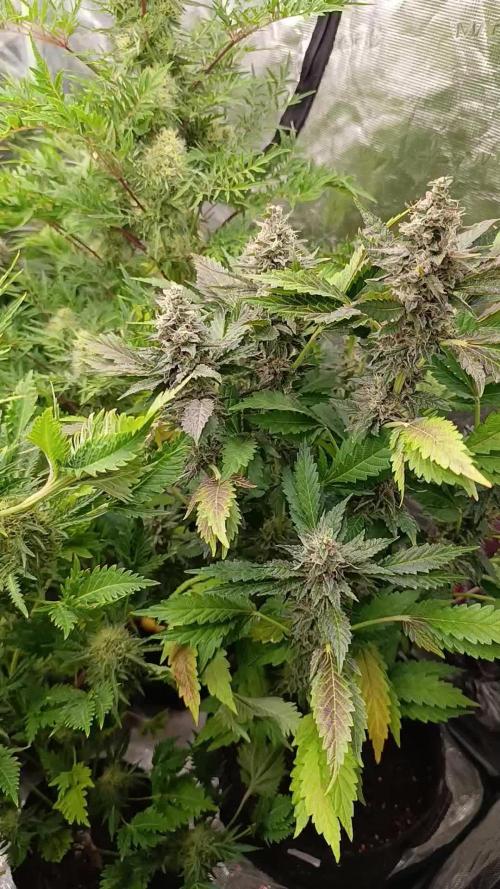
La Sticky Queen de Royal Queen Seeds entra en su fase final de engorde, con cogollos más compactos y cubiertos de una gruesa capa de resina. Los pistilos comienzan a anaranjarse y los tonos morados se acentúan en las zonas más iluminadas, destacando su belleza genética.
El aroma se intensifica, mezclando notas dulces, terrosas y afrutadas. Los riegos se moderan y la nutrición se centra en fósforo y potasio, favoreciendo el desarrollo final de flores y resinas, mientras la ventilación mantiene el ambiente sano y equilibrado.
🌸 La floración alcanza su punto álgido, mostrando potencia, color y carácter.
¡Seguimos creciendo fuerte 💪!

Likes
8
Share


@JohnnyBarrel
Follow
Correct result for Sweet Gelato Auto.
Easy growing: dynamic and healthy vegetative period. Short, solid and bushy plant, it need 11 or 12 weeks from seed to harvest.
Flowers are very resinous and thick with a strong and aggressive aroma. The Cookies genetic is very recognizable.
The yield could be bigger with a good training (LST) instead of having a big central bud.


Likes
12
Share


@Basementganja
Follow
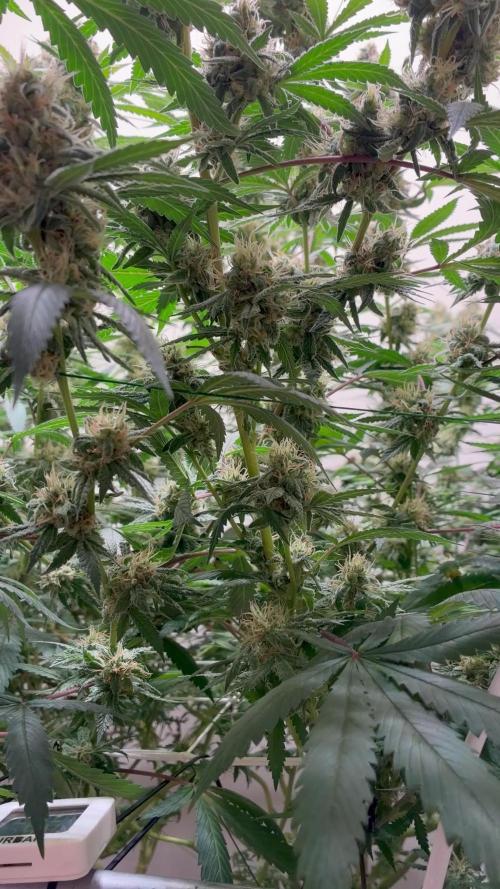
Went for a true 8 main manifold with this girl! She flowered a week earlier than I gambled for, causing a small yield, for the intense training. Fantastic smell and strength to this strain!

Likes
49
Share


@MadeInGermany
Follow
Hey everyone 🤗
It's getting full of buds 😍.
When you open the tent, an extreme smell of Sour Diesel wafts through the room 😍.
They develop super fast, look beautiful and hardly stop :-).
Next week I'll go down a bit with the Ec.
I wish you a lot fun with the update, stay healthy and let it grow 🌱👌
Strain : Sour Diesel
☝️🏼😍
Genetic:
Diesel x Northern Lights
👍
Vega Lights : 2 x Todogrow Led
Quantum Board 100 W
💡
Flower Lights : 2 x Todogrow Led
Cxb 3590 COB 3500 K 205 W
💡 ☝️
Soil : Canna Terra Professional +
☝️
Nutrients : Canna Terra Vega, Canna Terra Flores, Rizotonic, Cannazym, CANNA Boost, Pk 13/14,
Canna Cal/Mag, Canna Ph - Grow,
Canna Ph - Flores
☝️ 🌱
Water:
Osmosis water mixed with normal water (24 hours stale that the chlorine evaporates) to 0.2 EG. Add Cal / Mag to 0.4 Ec Ph with Organic Ph - to 6.0
💦 💧

Likes
91
Share


@Greenwolvesfarmer
Follow
Me encantó la cepa y su facilidad de cultivo ! Aun que tuve muchos problemas ambientales y climáticos . Me atrasé unas 3 a 5 semanas con estas nenas , pero nos recuperamos bien ! Usamos malla scrog chilena #kanovicultivo , lo mejor que he usado en malla scrog , no se le comparan , su espacio preciso! .
Las 4 comenzaron en pequeños vasos , luego de 1 a 2 semanas , trasplanté a macetero de 5.8lts , finalizaron 3 en maceteros textil 19lts y 1 en macetero de 20lts AirPot !
Comencé a brindarle 20hrs de luz / 4 hrs oscuridad , a la 3era semana 19hrs de luz y a la 5ta semana bajé hasta el 18 / 6 .
Usé un panel QB de 480w regulables , chips marca Samsung de 3500k , chips epistar UV 660nm iR , el mix completo gracias a mi bro MKleds chile ! Se pasó ! De todas maneras recomiendo una potencia mínima de 600w ( QB LED ) para espacio de 120x ..
Usé un bio estimulante chileno , que a mi parecer fue uno de los mejores que he visto y usado ! El grande #trichomemania , te cuento que este producto activa un mecanismo de defensa en la planta (SAR) , haciendo que reaccione y se trate de defender con mayor producción de resina , terpenos y tricomas ! Es increíble ! A los 24hrs tienes resultados , un saludo grande a los hermanos ! El mejor producto 10000000%....
Grande eva seed , buenisima esta cepa , me dí cuenta que si se deja madurar un poco más , su sabor es más frutal candy , exquisita cepa !....
Estamos probando con un papel de blunt organico 100% libre de tabaco marca *jamaican buzz*...al fumarla su efecto es notorio , enseguida viene el efecto psicoactivo y cerebral , se viene a la vista un tanto distorsionado el entorno ...la vision un poco más brillante , y a la vez relajado ..
Hoy 18 de agosto estamos probando con un papel de celulosa organico marca lion rolling circus ( foto al final del album ) , quema bastante bien , al parecer ya está casi en su totalidad secado , combustión lenta , buen sabor afrutado citrico con toques candy diesel ...uuff efecto despues de 3 quemadas ya por los cielos , totalmente cerebral y estimulante , un gusto charlar con amigos !
Al manipular su fruto , la planta expele un olor afrutado con limon maduro y skunk , con finales de candy terra , una delicia , muy buena cepa , ahora mientras escribo me siento un tanto "mareado" con esa mitad de blunt ! Buenisinaaa!...
____
La verdad cuando comencé a cortar cada planta era como llenar "infinitamente" el armario donde dejaría secandola , se llenó casi la mitad y un poco más sólo con 1 planta cortada ! Increíble producción , yo estimo unos 90g por planta aprox , ya he consumido un buen peso además ...veremos en estos días que esté por completo su secado ! Esta riquísima , sus efectos fuertísimos ...100% ...
___
Una cosecha buenísima, muy parecido como obtengo resultados en comparación con el sodio , todo bien me gustó la experiencia !....
Además tuve la oportunidad de hacer extracción en seco de su materia vegetal . Obtuvimos entre un 18 a 20% de retorno ! Para mi primera vez , geniaaaal ! Su utilizó prensa de 12 toneladas , de apretó a 80°C por 4 minutos .
.
.
Usen lemon king ! Una delicia .

Likes
16
Share


@ChronicFinest
Follow
Wow what a strong weed. The yellowing stopped immediately after repotting and she wasn't stunted at all. I give her 3 liter water every other day. The temps are higher in this season I hope that will not be too much of an effect on yield.
Humidity is OK so mold should stay out too.


Likes
34
Share


@Bread_n_Buds
Follow
Our Rainbow Sherbet has started to flower, the main lining here worked really well. Unlike the other plants I cut at the second internode to create the mainfold.
This is a smart choice because autoflowering plants flower more or less at the 5th / 6th internode, if you have to do topping it is better to start as soon as possible to delay flowering as much as possible.
Another reason for topping / mainfold at the second internode is that the plant is lower and you can work the mini brunches much better. In fact here we managed to create a T-minlining. In the sense that the mini brunches form a perfect 90 degree T with the main stem which is not easy at all.
To do this you have to use the arches with the wire it is much more complicated and the cut at the second internode helps a lot.
So topping at the second internode, mainfold and then continue for another three internodes and topping again. You can decide to cut something along the way I left perhaps too much stuff here. However, for better or worse, everything that can see a fair amount of light enough to flower well is left.
The plant is a specimen with a medium internodal distance and I managed to work it reasonably well.
We are still using soil, feeding and all the recommended additives from Plagron 100% organic. We have moved on to the flowering start card that maintains the same Power Roots additives - Sugar Royal, Pure Zym and adds the flowering stimulant dear in my house for obvious reasons of Biscotti. Of course the basic fertilizer now is Alga Bloom.
The Green Sensation when the flowers are already a little swollen, do not start immediately. The Power Buds must immediately stimulate the initiation and development of the buds.
---- Decide on the right soil and calculate your fertilizer schedule based on the soil on the official website.
-- www.plagron.com
Try a seed of this variety that drives us crazy..
---- https://www.zamnesia.io/en/11230-zamnesia-seeds-rainbow-sherbet-automatic.html
Zamnesia Description //A cross between Pink Guava, Sunset Sherbet and a hint of ruderalis, Rainbow Sherbet Auto offers a wide range of flavors, effects and more. This 70% indica-dominant strain reaches considerable THC levels (24%) and is suitable for both experienced growers and those taking their first steps in the world of cannabis cultivation.
All the best that mother nature has to offer is on ---- www.zamnesia.com
Likes
3
Share


@Jaschkoo0
Follow
On Day 30 i gave each 200ml of water with some melasse. One Day later i gave them some sf nemathodes.
On Day 32 i gave them 500ml water each with a cup of brennesseljauche mixed in the 1.5l of water .
On Day 33 i transplantet them into their living soil beed placed some Mykoryzha. I mixed 1l with 2ml calmag 1ml alfa boost 2ml powerzyme 1ml bio grow and some supervite.



Likes
14
Share


@fivegrow
Follow
Top leaves are turning yellow probably due to excess light and heat. Temperatures are very high above 30oC in southeastern Brazil. I increased the lighting distance 30cm from the top. QB LM301H 120W
Likes
Comments
Share


@Yiyis_Grow
Follow
Se usó pk1314 de Canna esta semana.
Las plantas tienen muy buen aroma y están pegajosas.
En cuanto al tamaño, si han aumentado de tamaño, pero no lo que esperaba. Hay dos que van un poco más retrasadas y espero que en semana 10 aumenten más de volumen.
La planta que no estaba tomando agua ahora está bien, volvió a la normalidad.
La planta con manchas en la hojas se quemó con el pk1314, no estaba lista. Nunca lo estuvo, no debí echarle.
Semana con nutriente de floración al 100% y potenciadores.
- Luz: Bestva Pro 2000W / 18 h/d
-FloraNova Bloom G.Hydroponics: 0.7ml/l
- Bio Bud G. Hydroponics 2.5ml/l
- Armour SI G. Hydroponics 0.4ml/l
- C4 Mills 1ml/l
- Everest: 0.5 ml/l

Likes
3
Share


@Inertia_Collective
Follow
Really starting to take off. Hoping they settle out but I am off on vacation next week gonna let them run while I'm gone to test my setup. Wish them luck! Just worried about humidity.