


Likes
Comments
Share

@Nillenium
Follow
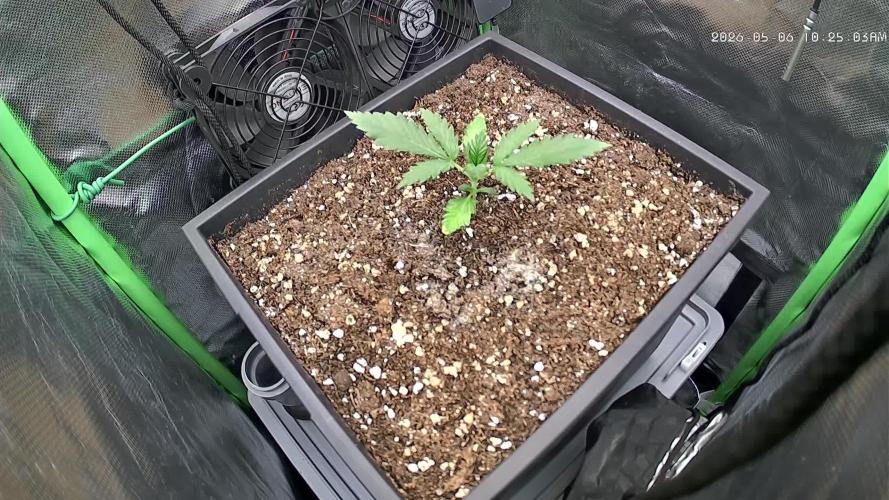
Woche 3
Dieses mal habe ich die Pflanze getoppt.
Ein bißchen LST gab es auch zum Ende der Woche und der Tank wurde komplett aufgefüllt.
Nun muss die gute 10 Tage alleine auskommen.

Likes
3
Share


@doglas
Follow
Just continue to use canna nutritions and seems like biobizz all mix and canna have a lot of leaf growth other than light mix soil but all growing nicely some leafs yellowing at the bottom but might be light issues its only 2x 150w ts1000 and cant penetrat through the top leaves
Ph 6.2-6.5
Ppm 1100
Humidity during rainy days 70% dry days 60%
Temps not going over 26 and below 17


Likes
1
Share


@PalmaGrow
Follow
29 - 4 noviembre
Completamente recuperada de la poda
31/10 se aplica riego nutricional con fitohormona y fertilizante orgánico NPK y micro elementos

Likes
27
Share


@Smokepurple137
Follow
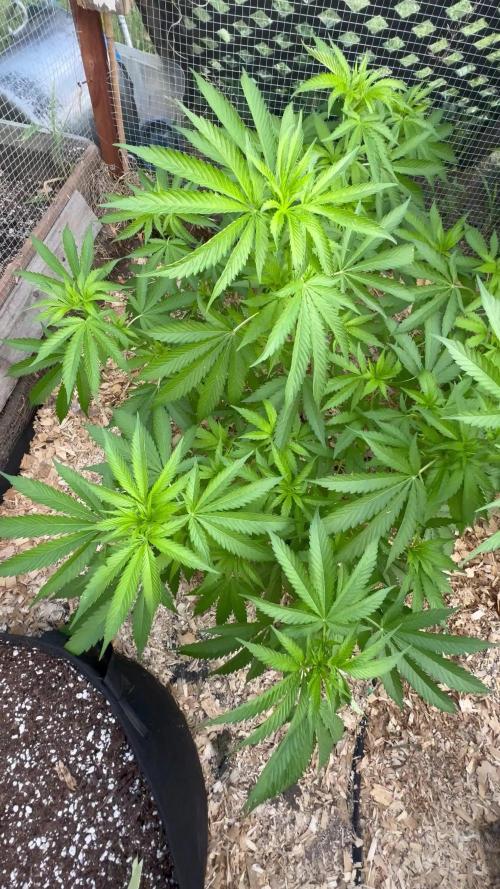
All doing perfect not alot to say, defoliated on 18/1/21 and tied a few branches where I could to make a little more room. Maybe 3weeks then ripen +flush Daily updates




Likes
35
Share


@Mega420
Follow
Day 64 : Week 10, I'm near of the end !! I give her less nutrient to 'wash' her and the last watering will be without nutrient.
I think I will harvest in around 10 days, I can't wait to smoke her after she will have dried 😍

Likes
10
Share

@eldruida_lamota
Follow
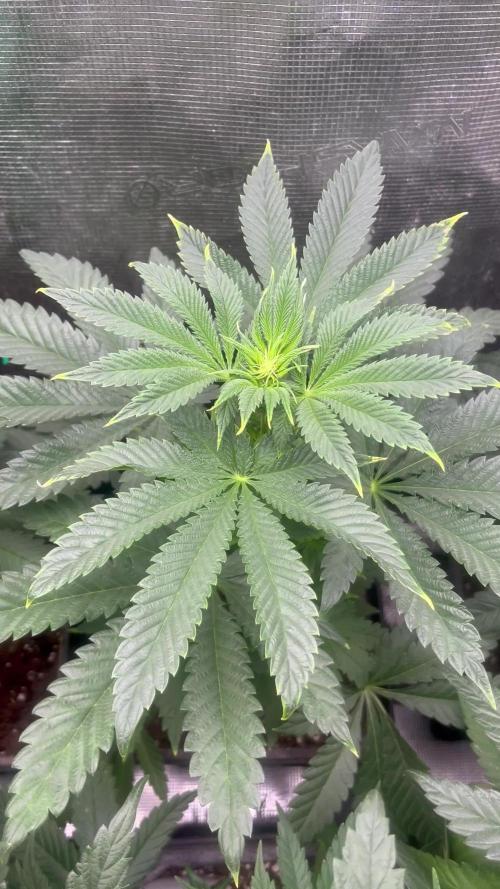
Que pasa familia, vamos con la segunda semana de floración de estas Purple Lemonade FF de Fastbuds.
Vamos al lío, las plantas se trasplantaron en macetas de 7 Litros, con tierra top crop y plagron mezclada con un poco de coco.
El ph se controla en 6.5, la temperatura la tenemos entre 24/22 grados y la humedad ronda el 50%.
El ciclo de crecimiento puse 12h de luz, el foco está al 50% de potencia.
1 de 4 salió hermafrodita y quitamos el ejemplar, a ver si me recupero estas próximas semanas y puedo estar al 100%.
- os dejo por aquí un CÓDIGO: Eldruida
Descuento para la tienda de MARS HYDRO.
https://www.mars-hydro.com
Hasta aquí todo, Buenos humos 💨💨💨


Likes
19
Share


@1juan420
Follow
All pictures were taken on day 43
She is definitely in 1st week of flowering and stretched a lot the last couple of days
She grew a massive stem. It is many times thicker than the photoperiodic stems🙀
I gave her 600ml tap water with 1ml/l BioBloom, 1ml/l TopMax, 0.3ml/l BioGrow added end of the week
Likes
18
Share


@Ultraviolet
Follow
*Pre-flowers have micro trichomes upon formation, LOL. Based on my early observation, I predict that these will be frosty frosty on the trichomes.
Added 20lbs of black lava rock as mulch, raising soil temp around 1 and a half degrees to 72.8F.
Some nice little bud formations are creeping up already. Nice little foliar spray of some aminos to the underside of the leaf. Hard to guage or know how much the aminos help, but after reading how energy intensive it is for the plant to make them from scratch its something I feel I need to do as a habit.
An EC (Electrical Conductivity) meter, one that's made for the soil, it's so useful, as it indirectly indicates soil moisture as well as salt mineral nutrient levels. Just pop your metre stick in the soil and if ec is low, then it's time to water. Once there is water to assist in the conduction of electricity, the EC" will kick back up. 0.3-1.8, if it stays low, then you know it's time to add more mineral salt ferts! While Electrical Conductivity primarily indicates the overall salt content in soil, pH provides information about the relative proportion of cations (positively charged ions) in the soil's salt capacity. High EC signifies a higher salt concentration, while pH reflects the balance of cations like calcium, magnesium, potassium, ammoniacal nitrogen, sodium, and hydrogen.
Smaller leaves have less surface area for stomata to occupy, so the stomata are packed more densely to maintain adequate gas exchange. Smaller leaves might have higher stomatal density to compensate for their smaller size, potentially maximizing carbon uptake and minimizing water loss. Environmental conditions like light intensity and water availability can influence stomatal density, and these factors can affect leaf size as well. Leaf development involves cell division and expansion, and stomatal differentiation is sensitive to these processes. In essence, the smaller leaf size can lead to a higher stomatal density due to the constraints of available space and the need to optimize gas exchange for photosynthesis and transpiration. In the long term, UV-B radiation can lead to more complex changes in stomatal morphology, including effects on both stomatal density and size, potentially impacting carbon sequestration and water use. In essence, UV-B can be a double-edged sword for stomata: It can induce stomatal closure and potentially reduce stomatal size, but it may also trigger an increase in stomatal density as a compensatory mechanism. It is generally more efficient for gas exchange to have smaller leaves with a higher stomatal density, rather than large leaves with lower stomatal density. This is because smaller stomata can facilitate faster gas exchange due to shorter diffusion pathways, even though they may have the same total pore area as fewer, larger stomata
Sugars, classified as carbohydrates, are composed of the elements carbon (C), hydrogen (H), and oxygen (O). They are characterized by the general formula (CH2O)n, where 'n' represents the number of carbon atoms. The most basic units of sugars, called monosaccharides, have this ratio of carbon, hydrogen, and oxygen. For example, glucose and fructose, both monosaccharides, have the formula C6H12O6.
The reality of your typical plant. After harvest, with all water remove,d you are left with. (Ballpark)
Mother-nutrients: Carbon 47%, Oxygen 43%, Hydrogen 4%.
Macro-nutrients: Nitrogen 3%, Phosphorus1%, Potassium1%, Calcium1%, Magnesium0.5%, Sulfur0.5%.
Micro-nutrients: All the rest combined 1%
Nothing good can happen in a soil that can't breathe. The aerobic zone in soil is crucial.
Microorganisms can break down sugars into their constituent atoms, though they don't typically do so completely to the individual elemental level (carbon, hydrogen, oxygen) in one step. Microorganisms utilize sugars through metabolic pathways like glycolysis and fermentation, converting them into simpler molecules like pyruvate and then potentially to other compounds like lactic acid, ethanol, or carbon dioxide, releasing energy in the process.
Glycolysis:
This is a central pathway where a glucose molecule (a common sugar) is broken down into two molecules of pyruvate. This process generates some ATP (energy) for the cell.
Fermentation:
If oxygen is limited, some microorganisms can ferment pyruvate, producing various end products like lactic acid (in lactic acid fermentation), ethanol and carbon dioxide (in alcoholic fermentation), or other organic acids.
Further Breakdown:
The products of glycolysis and fermentation can be further broken down through other metabolic pathways, potentially leading to the release of carbon dioxide and water, and the extraction of more energy.
Not Always to Atoms:
While some microorganisms can completely oxidize sugars to carbon dioxide and water, releasing all their energy, others may stop at intermediate stages, producing various organic compounds.
Role of Enzymes:
Microorganisms use specific enzymes to catalyze each step in these breakdown pathways.
In summary, while microorganisms don't typically reduce sugars to individual atoms in one go, they break them down into simpler molecules, releasing energy and potentially forming new compounds as part of their metabolism.
In conditions of high CO2 concentration, the pH of a solution or system will decrease, becoming more acidic. Conversely, low CO2 concentrations lead to an increase in pH, making the solution more alkaline or basic. This relationship is due to the chemical reactions involving CO2 and water, which produce carbonic acid and influence the concentration of hydrogen ions, ultimately determining the pH
Likes
3
Share


@Patillac31
Follow
Ended week three with a flush. I haven't flushed her since purchase. Switched over from FF Open Sesame to FF Beastie Bloomz. Going to add molasses to the next feeding cycle. Any comments or suggestions ste always welcome. ✌️ Happy Holidaze and Happy Growing

Likes
13
Share


@Huntress007
Follow
She is looking good growing bigger and bushier! I am working hard to get her nice and big!

Likes
7
Share


@SzkolaZiola
Follow
7 weeks behind us. Goin' gooooooooood.
No more feeding. Last 1.5 weeks will be water-only.
I did just yesterday remove some top-layer canopy leaves to increase light penetration to lower budsites.
They smell amazing and are beautiful - but I still hope for more resin production in the last week. Every day they get thicker and thicker, yum 😋😋😋
Likes
46
Share


@The_Bearded_Grower
Follow
welcome to 📅 Day 29 of the grow Day 1 of flower 7/5/2021 sorry for the late update I just found out my wife is pregnant with our first 👶.
the girls are doing great under the new grow feeding and coming along great. see you all on Thursday for my next update. Happy growing and keep your stick on the ice 🏒
Update: 📅 Day 4 of flower 7/9/2021 the girls are coming along very good and I have done the last of the pruning from here on out its just feeding
I would like to say a few words about Mars Hydro. the TS 1000 is a great light and I love the fact that the power supply is capable of being separated from the light and located outside of the tent to keep the heat down. I also like the fact that you can control the light intensity and daisy chain with another light witch is what I plan on doing.

Likes
40
Share


@Totogrowuk
Follow
Dry weight of quality buds was 34g. I don’t wet weigh as it’s completely pointless.
Quite a lot of trim for the hash bag.
Tastes great
Likes
8
Share

@CannaWolf420
Follow
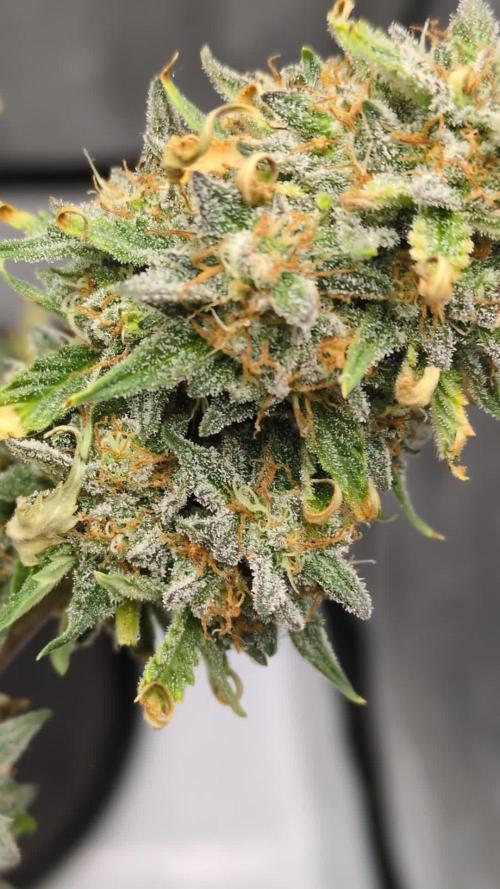
She's almost ready to come down and the flowers are pretty nice size, with good trichome build-up. She smells funky but creamy sweat.

Processing
Likes
Comments
Share


