


Likes
Comments
Share

@BLAZED
Follow
Week 3 (27-11 to 3-12)
What's good everyone?
We started this week off with removing the 2 bottom shoots.
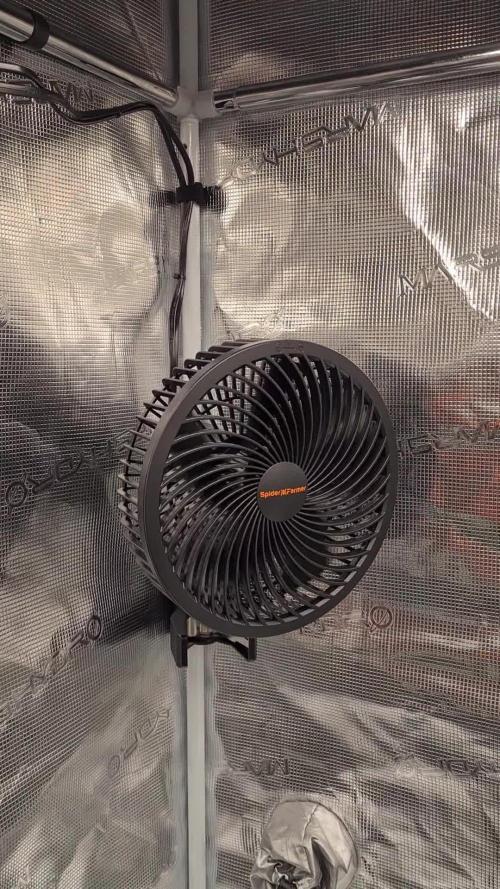
The next day Santa came early 😁 Got 2 new clip fans and the AC5 Power strip from Spider Farmer.
The power strip has 5 outlets you can control in the app, they can be turned on based on a time cycle, humidity or temps.
It comes with a sensor that monitors light, temperature, and humidity.
And a soil sensor that monitors soil moisture (VWC), temperature, and electrical conductivity (EC).
It also has a light adapter to connect 2 lights, that can be controlled in the app aswell.
The app shows the current VPD, i try to keep this around 1.0
In the middle of the week we topped her aswell.
The next day we increased the light intensity from 30% to 35%.
LUX: 13.000/13.500 to LUX: 15.000/15.500
This week's growing conditions were 17.9°C to 22.4°C with a humidity of 55.5% to 67.6% and watered 2 times with 0.5L.
See you next week!

Processing
Likes
26
Share


@AsNoriu
Follow
Day 50. Girls still on water diet, one more watering, or maybe even two more left. In video tried to highlight, most N hit plants, others are more than fine, thinking to throw out all who still in veg or didn't made through canopy, its still jungle at mines ...
Nothing special, supercroped plant recovered well, think i have two new objects for HST ;)))) they fly, but stretch patern that they got from to high lights is repeated even when they reached optimal height, mistakes are bad and have long lasting consequences...
One third of flower is done i guess, only couple plants will be bigger than an ounce, but i think i have like 40 of them ;)))))))
Next time i count !
Day 54. Girls are very dry, some leaves still curled now from that, not only excess of Nitrogen...
My night shifts don't leave me time, whenever i am back - they sleep... 12 hours shift, bike, train ... no time left at all, but ..
Today they got still water , but i added 2ml of silica acid to it, ph after all - 6.6.
Thinking to defoliate them sooner or later, maybe even today ...
Next watering full feed or maybe not, if i rip all that leaves away, still valuating plants, would do it last week, but had no time ...
Likes
62
Share


@Santica_Garden
Follow
I have uploaded a video Update as usual guys, not much changes at the moment, 1st week of Flower done 👍🏾, any questions just ask away in the comments 🌱💚


Likes
55
Share


Likes
51
Share


@420DeepGrow
Follow
Gracias al equipo de Anesia Seeds, XpertNutrients y Marshydro sin ellos esto no seria posible.
💐🍁 Smashberry Fumez:
Adéntrate en la humeante bruma de nuestra nueva Smashberry Fumez, donde la dulzura de las calles se encuentra con el octanaje del oráculo. Esta iniciadora de incendios feminizada es una mezcla de Candy Fumez y nuestro éxito de ventas Oracle Octane, que logra una armonía increíble con un 60% de Indica que te permitirá relajarte profundamente mientras mantienes la cabeza en las nubes.
🚀 Consigue aqui tus semillas:
💡FC6500: Eficiencia líder en el mercado: la lámpara de cultivo LED FC-E6500, que ostenta un estatus líder en el mercado, es una solución rentable con un PPE de 2,8 µmol/J y un rendimiento máximo de 2,5 g/vatio. Ofrece un PPF alto de 2026 umol/S y es adecuada para una cobertura de vegetación de 1,50 m x 1,50 m y una cobertura de flores de 1,20 m x 1,20 m.
Iluminación versátil y uniforme.
https://marshydro.eu/products/mars-hydro-fc-e-6500-730w-commercial-led-grow-light/?gad_source=1&gclid=Cj0KCQjw1qO0BhDwARIsANfnkv9IIrYSbmJqz8PqpJOIyWwJfp5bc3SGJgUV68USLQ4tjmXDYwoBuAsaAue3EALw_wcB
🚥 MarsHydro ADLITE UV/IR/RED:
Para lograr un crecimiento óptimo de las plantas y maximizar los rendimientos es un arte simple que depende en gran medida de las condiciones ambientales adecuadas. Reconociendo las limitaciones de la iluminación natural y las soluciones de iluminación tradicionales para satisfacer estas necesidades únicas, lanzamos ADLITE. Estas luces especiales UV, IR y roja están diseñadas para llenar áreas del espectro, proporcionando las altas longitudes de onda que las plantas necesitan para un crecimiento y desarrollo óptimos.
🚀 Consigue aqui tu Adlite:
https://marshydro.eu/collections/adlite-supplemental-lights/
🏠 : Marshydro 1.50 x 1.50 x 1.80, carpa 100% estanca con ventanas laterales para llegar a todos los lugares durante el grow
https://marshydro.eu/products/diy-150x150x200cm-grow-tent-kit
🌬️💨 Marshydro 6inch + filtro carbon para evitar olores indeseables.
https://marshydro.eu/products/ifresh-smart-6inch-filter-kits/
🍣🍦🌴 Xpert Nutrients es una empresa especializada en la producción y comercialización de fertilizantes líquidos y tierras, que garantizan excelentes cosechas y un crecimiento activo para sus plantas durante todas las fases de cultivo.
Consigue aqui tus Nutrientes:
https://xpertnutrients.com/es/shop/
📆 Semana 12:
Última semana de lavado de raíces y cosecha la siguiente semana, ha quedado una planta muy compacta y totalmente cargada de resina.

Likes
21
Share


@Felloffthegrid420
Follow
Feed them twice might see a lil burn next week or just over water there still going up thought they would have stop by now looks like going have nice hard both going have hard rock Nuggets on them

Likes
17
Share


@Chucky324
Follow
Hello this is the end of week 6 and the beginning of week 7 of flowering.
Still 4 weeks to go, and we are getting some color on these plants. 3 plants are showing some purple.
Man, these plants smell good now. When they were young I was getting very little smell on my fingers with the rub test.
But now, these plants smell wonderful. They have cookie and cake parents. So it smells like some sort of sweet treat in here.
The seed description says, Sweet, creamy, vanilla, desert with a touch of butter and fruit cake. Sounds delicious. 😃
Have Fun. Chuck.

Likes
Comments
Share

@420abbybox
Follow
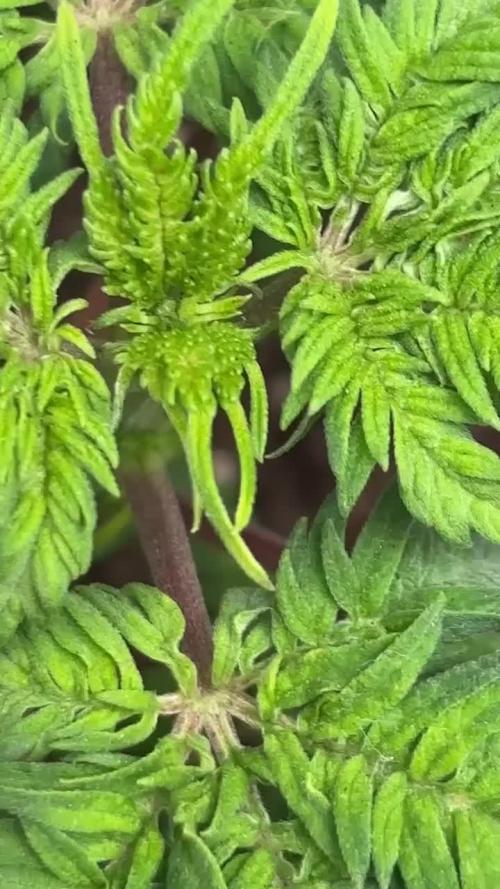
On week 7 of the vegetative stage the plant is stretching more & the root system seems to be expanding in the 14L pot nicely along with some side branches coming from the lower nodes and on the 8th-10th set of leaves



Likes
8
Share


@RainerWinklerGrow
Follow
Very Beautiful, Purple Buds, nice smell, smooth smoke and good high, can only recommed growing 3 more rn

Likes
8
Share


@sunshinegroww
Follow
Just starting to form some nice buds very little stretch on this ine but looking good and healt
Likes
119
Share


@DogDoctorOfficial
Follow
And the time to flip her out came and here is day one on a 11/13 light shuttle lol she is looking amazing to my eyes and so , but so ready to flowers and deliver big fruits, lets see.
I topped 2x and they are all clean up to the top, from now on i will give her a defoliation some point on, like day 15 something like that, depending on her needs , if needed before it will b if after, after will b, she will decide if and wen i defoliate her .
I gave her still in this watering some root booster (start booster in my case) but from now on i will not give it tho her any more, started my P on them and my fruit booster ( in my case topbooster)
Gave her her last training and from here on she is capable of doing her thing, i believe in her and in the power of Aptus Nutrient line.
Tomorrow or so i will take some more pictures and post here to see how she is going, so stay happy stay tuned and i hope surrounded with love and good weed to smoke 😆💚💚💚🙏🙏🙏✊✊✊🙌🙌🙌💨💨💨💪💪💪
Day 2 and they are loving the fact that i change it to 11-13 , they wore desperate for that i think 😆 loving how they are praying like there is no t tomorrow
Day 5 and she looks happy AF and always praying to the Gods , thank you girl you doing great and im so proud of you ✊💪💪💪
As always thank you guys for your love , your time, your support and it all, i fell blessed and i am truly thankful 💚💚💚🙏🙏🙏🙌🙌🙌
All i grow is medicine for myself, for me and for my best friend with is me 😆 nothing to sell, so don’t even ask 😅💚💚💚
All info and full product details can be find in can find @
https://viparspectra.eu/collections/grow-lights DISCOUNT CODE 5% - DOGDOCTOR ( all store )
https://www.zamnesia.com DISCOUNT CODE 10% - GROWITGD ( just for seeds )
https://aptus-holland.com/
#aptus #aptusplanttech #aptusgang #aptusfamily #aptustrueplantscience #inbalancewithnature #trueplantscience #viparspectra #zamnesiaseeds #growerslove
With true love comes happiness 💚🙏 Always believe in your self and always do things expecting nothing and with an open heart , be a giver and the universe will give back to you in ways you could not even imagine so 💚💚💚
More info and updates @
https://growdiaries.com/grower/dogdoctor
https://instagram.com/dogdoctorofficial
https://youtube.com/channel/UCR7ta4DKLFMg2xxTMr2cpIg
💚💚💚Growers love to you all 💚💚💚
Likes
6
Share


@masterofsmeagol
Follow
5/11 I DID NOT WATER. A COUPLE LOOKED DRY BUT STILL HAD HEFT AND I COULD FEEL MOUSTURE IN THE SOIL. I should've taken more pictures. I forgot it's a new week. Oh well. I'll be back over and I'm planning to bring the girls outside for the first time if it warms up a little more. It's windy as fuck but I can put them in the garage with the doors open. As long as that's not the direction of the wind. I raised the L.E.D light and lowered the hps. I also TRIED to FIM a 10th planet and an mk ultra. I may have just topped them. We'll see how it turns out before I do anything to the others. Pink kush grows slow and compact. Very similar to my experience with purple punch. I have two plants that have slightly twisted leaves. Nothing else is wrong with anything. Looking at the stippling on the leaf I think it might just be either low humidity or slight wind burn or a combination of the two. Now that I've looked again I think it might just be the first 5 finger leaf on those pink kush that I mat have mistaken. I'll keep an eye out. I feel better having done some research. I'll put some more pictures up and I'll update what it is that I get done.
EDIT: WENT BACK OVER AROUND THREE. EVERUTHING LOOKED GREAT AND THE LEAVES WETE PRAYING ON SOME. I MAY NEED TO WATER SELECT PLANTS TOMORROW. I'LL PLAY IT BY EAR. LOWER THE HPS AND RAISING THE LED WAS A WISE CHOICE I THINK. OH AND THE "TWISTED" LEAF I WAS WORRIED ABOUT IS NOTHING. JUST THE FAN TO CLOSE AND A FOMBINATION OF LOW HUMIDITY AND MINOR HEAT STRESS. ITS BEEN TAKEN CARE OF. I WANTED TO BRING THE GIRLS OUT TODAY. ITS SUNNY AND 60° BUT THE WIND IS WHIPPING! WE'VE GOT GOOD WEATHER COMING UP THOUGH WITH TEMPS IN THE 70'S. I THINK TOMORROW ILL CLEAN/SANITIZE THE CAGE AND WASH/SANITIZE THE GROW BAGS.
5/12 Looking and lifting some of the pots I found some that were pretty much totally dry. I watered the majority of all the plants. If soil was moist I left it alone. If it looked a little dry I gave it a little water. I didn't measure the water but it wasnt even ALL of what I had left from LAST WATERING (which was like a qtr gallon If that). I just don't want to over water. The ones that I went light on last time were the ones that were dry. Plants seem to explode after watering but this wasn't nearly as much. Everything is looking great. It's easy to tell these are all indicas due to the structure and leaf shape. Much different than even the Chem Dog #4 which doesn't LOOK as "indicay" as some of the others. I wanted to bring them outside today but it's only 50 out. I'm not going to make the same mistake as years past and stress the plants. When we get a nice warm day I'll bring them out. Other plants are ready to be topped or fimmed but I haven't done it yet. Also need to clean the cage and wash the bags.
5/13 It's 60° at 9am so I think the girls will be going outside for a little bit. Didn't fully water but I used what was left of the gallon and gave them that. Some are much drier than others. I'll probably give them a full watering tomm. I only gave them a little today because I didn't want them drying out. I FIMMed a Special Kush today. WE'LL see how the hst turns out.
EDIT: WENT AND BROUGHT THE GIRLS OUT FOR FOUR HOURS IN INDIRECT SUNLIGHT. THE TENTH PLANETS WERE THE ONLY ONES THAT LOOKED LIKE THEY HAD AN ISSUE. JUST MINOR HEAT OR LIGHT ISSUES WITH A COUPLE FAN LEAVES. EVERYTHING ELSE SEEMED LIKE THEY SHOT UP IN SIZE. THE LARGER CONTAINERS STILL SEEM KINDA MOIST BUT SOME ARE DRY. I NEED TO GET ON A STABLE WATER SCHEDULE. ITS HARD WITH DUFFERENT PLANTS OF VARYING SIZES. STILL HAVE A LOT OF WORK TO DO.
5/14 One plant was super light today and was a little droopy. I WATERED EVERYTHING TODAY USING APPROX A HALF GALLON. I brought them outside for the second day. I left them out for about 3hrs. It's hot today. I'm still floored that chatgtp gave me exact directions for hardening my plants off at my exact location taking the weather into consideration! That is awesome. They're all doing good. Pink kush is the slow starter this year. Kind of like purple punch was. The only plants that had ANY damage on them was the two 10th planet's and its not really damage. It's just a LITTLE mottling on the leaf and the serrations pointing down. It's weird because this strain did great here last time. The Special Kush #1 and the Pink Kush would probably be fine to leave out soon. Hindu Kush parents make those strains extremely resilient. The one chem dog #4 looks out of place with all tjis big fat indica leaves. I'm hoping the topping and fim-ing will take. It looks like it will.
5/15 Everything is looking great! I have some work to do bit then I'll be over to bring the girls out for a few hours. I'll edit this when I do.
EDIT: BROUGHT THE GIRLS OUT FOR THREE HOURS TODAY. I THOUGHT THE TENP WENT DOWN TO 73 BUT TUAT WAS INDOORS. OH WELL. THEY STILL DID GREAT! THEY WERE ALL LOOKING OUT OF THE LEAN-TO LIKE SUNFLOWERS! THE STRAIGHTEN OUT AFTER BEING UNDER THE GROW LIGHTS. I'M PLANNING TO CONTINUE TO HARDEN THROUGHOUT THE WEEK. STILL NEED TO CLEAN BAGS AND GROW AREA. I HAVE 'A' CAMERA DOWN. TRIED TO FIX IT TODAY BUT I WOULD GET RO THE LAST PART BUT THE CAMERA WOULDNT READ THE QR CODE ON MY PHONE. I EMAILED THE COMPANY BUT IF I DONT HEAR BACK BY TOMORROW AND I CANT FIX IT ILL JUST BUY ANOTHER CAMERA TO ADD TO THE SYSTEM. ITS THE OLDEST CAMERA I HAVE AND ITS DONE ME 5 GOOD YEARS. MAYBE ITS TIME TO RETIRE IT.
5/16 I watered a few of the girls this morning with a small ring around the pot. I brought them outside and am leaving them for 3.5 hours today in the lean-to. They get indirect light without all the wind this way. I'll slowly increase the hours outside until there is enough daylight for them to go outside without revegging. When I put them out I noticed that a few were light and since it was close to 80° I watered most everything. I used under a half gallon. I'll see how they do from here and then move forward. I fixed my down security camera and secured my cage. Now I just need to finish hardening off, clean/sanitize bags/environment and put them in tjeir final homes. I'm not rushing it though. I've learned my lesson with that.
5/17 Plants did great yesterday and were perky and praying this morning. It was HOT yesterday too. Got into the low 80's. It's 57° degrees at 9am and it's overcast and sprinkling. I haven't decided if I'm going to bring the girls out today. It might be a good day to try some direct sunlight. I'll update whatever I decide to do.


Likes
15
Share

@Stoney_Stark
Follow
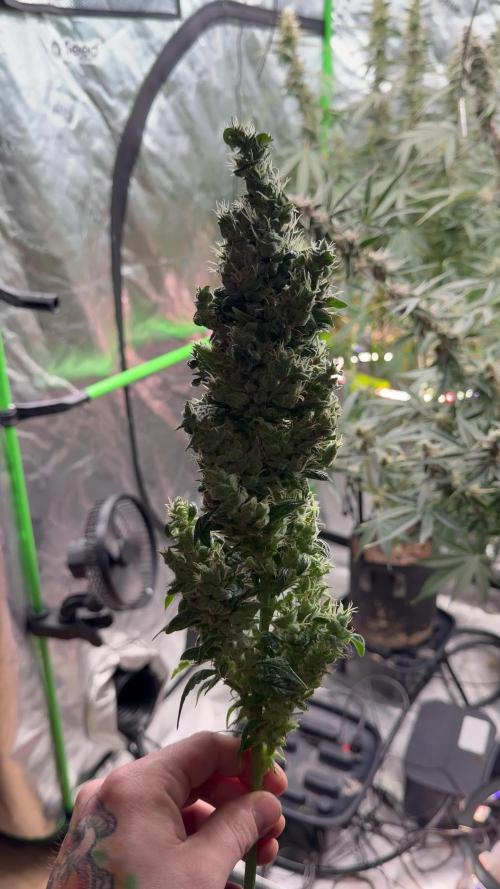
Week 10 Update – Sticky Broccoli Auto
Late Flower / Staggered Harvest Begins
This week marked the start of harvest. One plant had to come down early due to size and structural issues, but overall quality is still looking strong. The remaining plants are being staggered for harvest to dial in peak ripeness.
⸻
Drying / Post-Harvest Note
• One harvested plant nearly filled the Cannatrol Cool Cure C
• Space is now a real concern for the remaining harvest
• May need to stagger loads or get creative with drying strategy
⸻
Lighting & Canopy Management
• Installed under-canopy lighting (3/25)
• ~24W per light
• Producing 200–300 PPFD under canopy
• Helps push lower bud development late into flower
• Likely contributed to improved lower-site density
⸻
Feeding Strategy Shift
• Fully transitioned to hand feeding
• Removed emitters to prevent overwatering and improve control
• Beginning staggered flush approach:
• 2 plants switched to plain RO water
• Final plant continues light feeding before final flush
⸻
Feeding Log
3/26 – Standard Feed
• 4 gallons mixed, ~2.5 gallons used
• ~5% runoff per plant
• 5.8 pH
Per gallon:
• 0.5ml Silicium Bloom
• 2ml MagCal
• 4ml Green Sensation
• 2ml Cocos A
• 8ml Cocos B
• 4ml Pure Zym
⸻
3/27 – Accidental Heavy Feed (Adjusted)
• Mixed wrong schedule, used ~50%
• 900 ppm / 5.8 pH
Per gallon:
• 0.5ml Silicium Bloom
• 2ml MagCal
• 4ml Green Sensation
• 3ml Cocos A
• 12ml Cocos B
• 4ml Pure Zym
⸻
3/28 – No Feed
⸻
3/30 – Light Feed / Transition Phase
• Fed at lights on (~2:30 AM)
• ~5% runoff
• 430 ppm / 6.0 pH
Per gallon:
• 0.5ml Silicium Bloom
• 2ml MagCal
• 4ml Green Sensation
• 2ml Cocos A
• 8ml Cocos B
• 4ml Pure Zym
⸻
Trichome & Ripeness Check
• Majority: cloudy dominant
• Some amber beginning to show
• Small percentage still clear
• Right in the harvest window depending on desired effect
⸻
Observations
• Bud weight is seriously stacking – causing structural issues
• Under-canopy lighting seems to be helping lower development
• Plants are finishing strong with good resin coverage
• Staggered harvest should help maximize overall quality
⸻
Next Steps
• Chop 2 plants this weekend
• Let final plant push another week for increased amber
• Monitor Cannatrol capacity and drying timing
• Continue RO water on finishing plants
Likes
18
Share


@Budhunter
Follow
Week 8 of flowering, Biscotti mints 2 looks more close to the end than Biscotti mints 1.
Both very frosty, smelling really good. It’s been 1 week since I flushed them 😍
Looking at the trichomes they are close to the stage I like(around 20-30% amber) so I will harvest them.. probably 1 more week.
Overall really happy with what I am seeing 🤩 can’t wait to smoke it 🤪


Likes
490
Share


@Legendaryseedthumb
Follow
Day 29: not much is going right now.
Day 31: boosted with some more nutes 2,3ml per liter canna coco a&b
Mars hydro SP3000
High PPFD at 2.8 umol/j, average yield at 2.5g/w, increasing your yield 50% or more compared with old blurple and HPS lights, 300 watts output.
Dimmer knob added, more convenient to adjust the brightness. Up to 30 lights can be daisy-chained and control together on just one light, or just have one light in a 120x60 tent.
https://www.instagram.com/marshydro_aliexpress2/


Likes
Comments
Share
@Budhunter
Follow
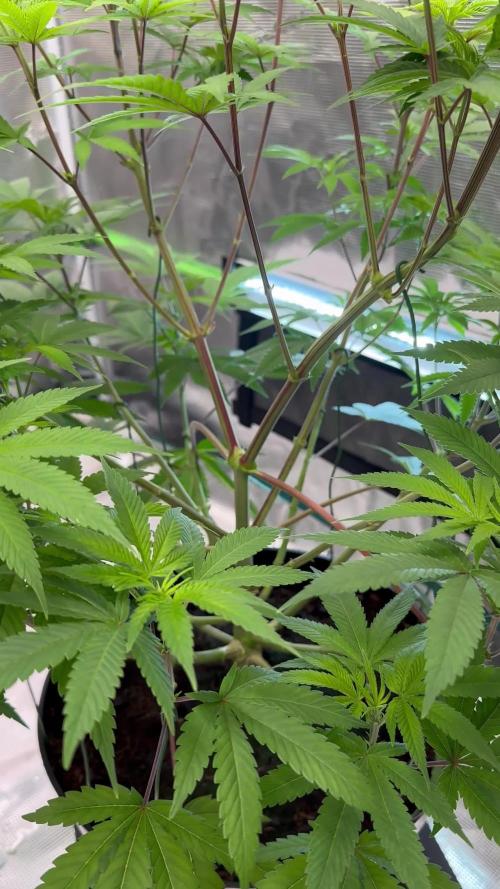
Week 1 flowering - Day 5 of flowering & Day 61 of life
Finally flowering here. It’s been 5 days on flowering, still pre flowering but finally the best is coming.
Jealousy is happy and looking healthy. Bud formation seems not that big but I am optimistic about it.
Let’s go 💪🏼🙏🏼🔥
