


Likes
Comments
Share

@Elpicor
Follow
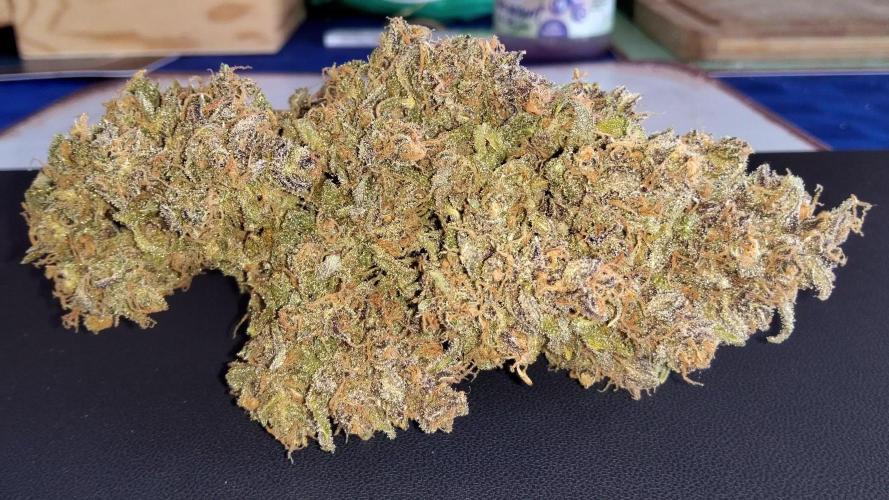
Strong plants with a lot of sugar on buds, it's a pleasure to grow and smoke, for sure one of my favorite str

Likes
16
Share


@valiotoro
Follow
Hello everyone week 2 has passed for this Tropicana Cookie auto by Fast Buds 😎
this plant is doing very well growing at fast pace and with a beautiful green colour on the leaves.
Topping & LST for my girl 😎
wish you all happy growing!

Likes
11
Share


Likes
4
Share


@Ryno1990
Follow
All these beautiful girls are going thre flush now getting ready to harvest up they are all very resiny an covered in trichromes all the nugs are nice an dense an are smelling amazing can't wait to be able to dry an start curing them

Likes
11
Share


@GrowSmith
Follow
Starting strong, need to and alternative way of watering as I was using a jug and some of the soil sunk which made the stem bend down a little. This was quickly corrected
A few changes on 27th
I removed the oil heater that was really to big for the size of the tent.
By doing this alone I could bring the light closer which is the reason for the slow growth.
I also bought a humidifier as I was manually spraying the tent and now I can keep the levels up all the time
I could now either use a smaller fan heater in or outside blowing through intake vents (without drying the plant up now I have the humidifier) or……
I could put the oil heater on outside the heat and insulate it

Likes
10
Share


@JiminyCricket
Follow
Been doing a lot of tweaking with the new gear and multiple sets of plants. Been quite a busy week and probably behind a bit on keeping track of everything. I'm currently working on trying to get better charts made to keep track of things like light schedules, detailed feedings, height change per day, etc.
My current setup is my oldest 1st set of plants (5plants) and my 3rd set (6 seedlings), in my new 4x4 Vivosun grow tent equipped with a Spider Farmer SF-1000.
I have kept my 2nd set of plants (4plants) in my original 4x2 Vivosun equipped with 600W Vivosun LED. These plants had been extremely stressed due to not having soil or containers available with shipping constraints. They've been doing a lot better since then and I'm hoping they make a full recovery. Fingers crossed!
Running 24hr light schedule.
Both tents equipped with temp/hygro high and low ranging from about 71-81°F with an average of about 78°F.
Watering by plant pot weight, according to GH FloraTrio + CalMag Schedule.
Mild LST via tucking of leaves blocking developing sites. No more than 3 leaves removed per plant, per day to avoid stress.
______________________________________
Can't wait to start upgrading the quality of my journals and to hear you all's feedback! Happy growing and good vibes as always 🌱
______________________________________
4/29/20 - Update
Okeydoke! Feel like I've been doing too much running around everywhere. Sorry for being so hectic the past week or so if anyone has been keeping up with this 😂
For the time being, I'm currently running all three sets of my plants in my 4x4 tent. It's running all three of my fans, both lights and has the carbon filter system and humidifier hooked up to it as well. I basically have the other 4x2 just sitting as a shell for the moment. Either planning to save it for climate control when curing the first harvest or sell it to invest in another Spider Farmer SF-1000 LED or equivalent and possibly another 4x4 tent.
I have started a grow chart that's still a little sketchy but if nothing else having it here hells me keep up with it that much better.
[April 24th @ 3pm]
Plant 1- (11in.)
2- (9in.)
3- (14.75in.)
4- (13in.)
5- (10.75in.)
[April 26th @ 1:30pm]
Plant 1- (11in.)
2- (9.5in.)
3- (18in.)
4- (14in.)
5- (11.5in.)
[April 27th @ 12pm]
Plant 1- (11.5in.)
2- (10.5in.)
3- (20.5in)
4- (15.25in.)
5- (11.5in)
[April 29th @ 4am]
Plant 1- (12in.)
2- (10.5in.)
3- (23in.)
4- (16in.)
5- (11.75in.)
[April 30th @ 3:30pm]
Plant 1- (12.25in.)
2- (10.5in.)
3- (25.75in.)
4- (16.75in.)
5- (12in.)
______________________________________
The most current batch of nutrient mixes for was made this morning about (2am 4/29/20) for the 1st and second set of plants.
The first set of plant's nutrients was made to 4gal of water. The mix is a ratio of
(Cal-Mag/GHMicro/GHGro/GHBloom)
It's mixed (for the 4gal) in order; 10mL, 5mL, 10mL, 10mL.
440ppm @ 98.5°F
890EC @ 2.2°F us/cm
This new nutrient mix was applied for the first time tonight and will run about a week. I'm running a bit behind according to the GH schedule I was following due to stunting the growth I felt like over a couple issues to where I have them an extra week of veg nutrients. As I have defoliated them and they have seemed to take it pretty well, I'm hoping the increase in bloom nutrients will kick the buds into overdrive for production and the plants will start to thicken up again.
The second mix follows the same order as the first set in regards to nutrient usage. This mix is only mixed to one gallon. It as follows; 2.5mL, 2.5mL, 1.25mL, 2.5mL.
500ppm @ 98.6°F
992EC @ 0.4°F us/cm
This is mostly following the same GH nutrient schedule as the first set only about 2 weeks behind. These plants suffered from being in too small of containers for too long and I believe this stunted their growth. I've had them in suitable new containers for a couple days now and hoping this new mix of increased nutrients will bring them back to life a bit and get them back in schedule.
I'm honestly not too sure still about the ppm and EC numbers but a few bud-dies have mentioned that it plays important roles in plant health. So until I can better research good numbers and how to control it for my set up, I'm at the very least trying to keep track of the data.
I apologise about this large chunk of text! I hope you enjoy the diary anyway in spite of the fact. I'm loving the look of the buds and everything seems to be going great. Only a few months to go! 😎


Likes
12
Share


@DrShotzUK
Follow
Week 10 / 11
Starting the flush smells absolutely amazing
Big thanks to 420 fast buds for the seeds.
DRSHOTZUK💚💚🍀🍀
Likes
80
Share


@Silky_smooth
Follow
At the start of week 13 she’s looking great removed Some fanleaves last week and she recovered nicely from that
Buds are fatning up beautyfully and smelling very citrus like mixed with something pine and fuell
I’m bending her down day by day so she opens up a little more i’m doing this for the past week so air can flow better arround her leaves cause was transpirating more since about 10 days but now with opening her up her condence between the leaves is gone i’m so happy with that cause i was a little worried about mold or rot
Likes
7
Share


@Soskar69
Follow
This baby is going good, thricoms production and smell on point👌
The main cola is growing very big, I'm so hyped about it 😝
Some of the leaves are becoming yellow and i saw some signs od deficiency of some sort but I'm not worried because she is near the harvest, I think another 2 weeks and I'll chop it:
Sorry for the low quality of the photos, next time I'm gonna use a better camera.

Likes
17
Share


@Naujas
Follow
To tell the truth, I am very surprised myself, how amazing she is FastBuds Gorilla cookies, she copes well with a small space:) she drinks 1 liter every day :) everything looks better than expected:) good luck to everyone.
Processing
Likes
93
Share


@Ferenc
Follow
12th week. I removed some unwanted yellow leaves. I really like this plant, nothing changed, watering happens the same way and same amount of water. I am so excited. Really nice flowers on it and stinky like citrus smell and sweet very well coated with THC. Beautiful plant and really short.😅 I just checked the trichomes and they are still immatured, not even milky. Very strong smell and big buds. Beautifully coated with THC everywhere. I love this plant. Fan leaves started getting yellow as well. I think it is 4 weeks more approximately to be finished. I removed some fan leaves the biggest ones as it started turning yellow because the plants takes the energy out of it. Better airflow and more light to the flowers, and good tea for me from the leaves 🥂🤪😇 I also set the lamp distance to be 20 cm. End of the week Purple Punch is 43 cm.

Likes
6
Share


@GERGrowDesigns
Follow
Welcome to Flower Week 5 of Fast Buds Lemon Cherry Cookies Auto
I'm excited to share my grow journey with you from my
FastBuds Project . It's going to be an incredible ride, full of learning, growing, and connecting with fellow growers from all around the world!
For this Project , I’ve chosen the Feminized Auto strain Lemon Cherry Cookies :
Here’s what I’m working with:
• 🌱 Tent: 120x60x80
• 🧑🌾 Breeder Company: Fast buds
• 💧 Humidity Range: 60
• ⏳ Flowering Time: 8 Weeks
• Strain Info: 28,5%THC
• 🌡️ Temperature: 26
• 🍵 Pot Size: 12
• Nutrient Brand: Hy-Pro
• ⚡ Lights : 200w
A huge thank you to Fast Buds for allowing me to try my Best with this amazing collection from Automatic and Photo Strains they managed to Sponsore . Big thanks for supporting the grower community worldwide! Your genetics and passion speak for themselves!
I would truly appreciate every bit of feedback, help, questions, or discussions – and of course, your likes and interactions mean the world to me as I try to stand out in this exciting competition!
Let’s grow together – and don’t forget to stop by again to see the latest updates!
Happy growing!
Stay lifted and stay curious!
Peace & Buds!


Likes
23
Share


@Piorkeed
Follow
Week 7 (27/04 - 03/05)
D43: -
D44: -
D45: added 0.5 ml of Calmag, 1 ml of Bio-grow and 2 ml of Bio-bloom to 1 liter of tap water @ pH 6.3
D46: -
D47: -
D48: -
D49: added 0.5 ml of Calmag, 1 ml of Bio-grow and 2 ml of Bio-bloom to 1 liter of tap water @ pH 6.1
Likes
12
Share


@B4niTa
Follow
Very easy to grow, this is my second Gorilla Zkittlez and both grew without problems
Likes
21
Share


@TheStrainAlchemist
Follow
To me the ladies always look so small but they grow at an impressive pace.
I’m in love with those nutrients, is my first full organic grow and Guanokalong is impressive, I never seen a similar root development, I transplant the plant from a 0,5L pot to a 1,5l and in 3 day I moved them again to the final 20L Plastic pot because already clogged.
Enjoy fellow growers , I wish abundant harvest ☮️♥️

Likes
8
Share


@FairyFarm
Follow
The banana mango must be on roids! It’s doubled the size
Of the others. If you are looking for a desert plant that handles 100plus F without being bothered - this could be your gal!


Likes
9
Share

@Riseandshine
Follow
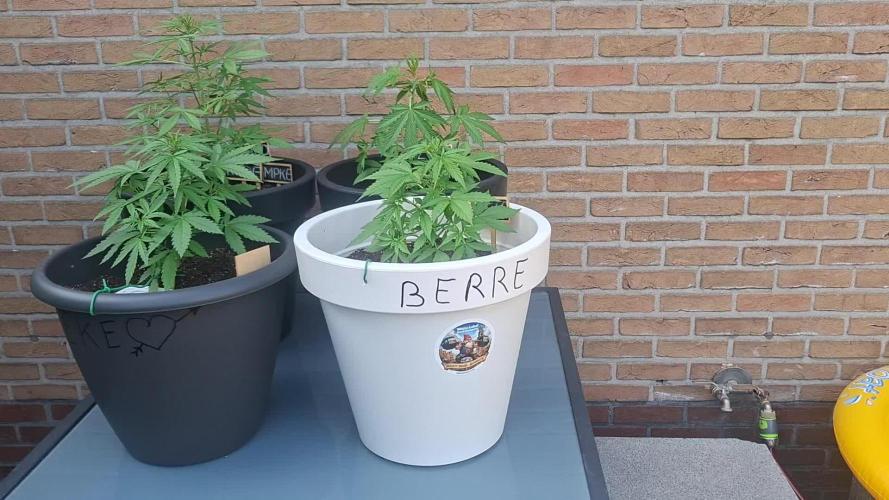
Dag 28 van mijn dames.🤩🤩🤩
Jongens wat een start van deze nieuwe week.
Bij zjan en gaadkloempke heb ik witte haartjes gespot, dus mijne voorbloei is bij 2 langzaam aan het starten.😍😍😍 Het vertrouwen, dat ik weed ga gekweekt hebben voor de eerste keer, is er langzaam
aan het komen.
Beir en Mel zijn eigenlijk echt struikjes aan het worden. Is echt een groot verschil met de andere 2.
Ben benieuwd.
In ieder geval zien ze mooi groen en lijken ze me hier echt wel chill. Temperaturen gaan hier ook hard!
Vandaag max 35 op hun kopje😁😎?
Laat ze dus ook gewoon bij nacht buiten staan overdekt, minima van 17 graden. ?
Dag 29 en 30 van mijn dierbaren😁
Ik heb het allemaal nog nooit langs deze kant bekeken, maar ik hou echt van dat kweken.
Gaadkloempke is vandaag 7 cm gegroeid en haar zusje al bijna even hard. Ze beginnen ook te ruiken net of ik kom in de coffee shop binnen.
Heerlijk.
Ik zie ook overal witte haartjes te voorschijn komen.
Er is hier elke dag zoveel verandering, dat mijn mondje geregeld open valt.
We geloven er kei hard in, alle 4 die dames netjes aan de eindmeet.
Nog geen water gegeven, probeer ze zo droog mogelijk te krijgen, want vrijdag krijgen ze voeding van deze jongen.😁
Dag 31 van de prachtige dames.
Ze blijven elke dag echt goed groeien en de witte haartjes verschijnen bij gaadkloempke met de tientallen. Zjan, die als laatste is ontkiemd, doet echt flink haar best om de kleine zus voorbij te knallen. Maar da wordt lastig denk ik. 😂😂😂
Beir, die is geen plant meer, maar wordt meer en meer struik. Net zoals mel.
Temperatuur vandaag 25 graden en droog.
Deze nacht minima van 13 graden dus ook gelijk terug in de berging. Nu neem ik zeker geen risico's meer😅 Ik wordt nerveus als ik nog maar aan denk dat fout zou lopen nog. Geef ook vandaag geen water, want morgen voor de eerste keer echte voeding.
Vanaf morgen gaan ze overdag ook echt de tuin in.
Hebben ze heel de dag zon en dat zou zich moeten belonen in meer opbrengst.
En da hoor ik graag.😁
En vergeet het niet he!!!
Dag 32 van de kanjers😁
Vanaf deze morgend hebben ze voor de eerste keer openlucht en in de zon gestaan mensen. Lekkere wind en toch een milde 25 graden op hun bol.😁
Zo hebben ze alle 4 hun laatste water reserves verloren en stonden ze lekker droog.
Eerst 0.25 gegeven voor in te zuigen.
30 min later 1 Liter water met een verhouding van 2/3 moestuin en 1/3 substral.
Lekker cave spelen, omdat ze nog volop aan het stretchen zijn en aan het voorbloeien ofzoiets.😅
Dus geen risico's, morgen weet ik weer meer.
Verder kleuren ze alle mooien tinten van groen en zie ik alleen maar levens lust!
En dat stelt me oprecht gerust.
Fijn weekend mensen😁
Dag 33 van mijn dames.
Vandaag 30 graden en mijn dames hebben er de hele dag in staan zonnen. Heb wel witte tape rond de donkere pitten gedaan, zo blijven ze toch fris aan hun onderkant. 😁
De 2 potten met lst hebben hun liter van gisteren met mengeling helemaal leeg, dus die krijgen opnieuw ne liter lauw zuivet water. Zjan en gaadkloempke die krijgen een halve liter zuiver water, puur om hun te belonen. Het was warm en ik zie de main cola komen. Ik had zelfs deze nacht gedroomd verdomme dat ik haar had opgegeten!😅😂😂😂😂😂
Het zit diep dit! Wat een hobby. ???
Verder gaan ze deze nacht terug binnen, want wordt maar 13 graden en het koelt heel hard af.
Dus dat ga ik ze niet aandoen. No way dokter dre😎
Morgen 43 kaarsjes dus ik hoop dat ze wat extra groei in petto hebben.
Dag 34 van the ladyyyys.
Go Shirley, it's your birthday! It's you birthday 🤠
Deze jongen ging deze morgend zijn berging in en gaadkloempke had een stretch gemaakt van 9 cm!
9 cm, das bijna zo groot als mijn piemel😅
Ik zag echt topjes komen(toppen in mijn hersenen) en das het mooiste cadeau dat ik kon krijgen van die schatjes.
De dames heb ik vandaag alleen maar schaduw kunnen geven. Een feestje voor mijn 43 en de doop van berre hier thuis. Dus ik ze veilig op de kamer boven! Jawel, ik ging ze net halen en wat een geur en aroma's ???🤩🤩🤩
Love this smell 🤤🤤🤤
Vanaf morgen officieel in de bloei en ik had nooit gedacht dat ik dat met alle 4 ging halen.
Sensi seeds, ik hoop dat ik met mijn liefde, alles hier uit jullie genetica kan sleuren.
Maar 1 ding weet ik zeker!
I am made for loving this 4 girls🤫
Fijne avond en blijf bloeien en groeien😉😁😎😎😎
Rise and shine people😎🤪😎

Likes
68
Share

@Ultraviolet
Follow
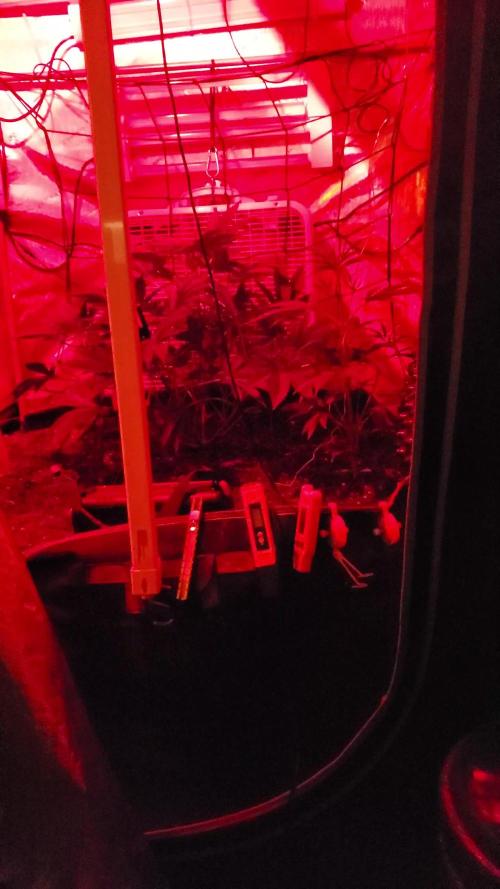
Removed autoflower and put her in her own pot outside the tent.
Foliars applied in strong blue 430nm with 4000Hz tone. 20-minute dose prior to application.
In essence, you're seeing a combination of the infrared light reflected by the plant, which the camera perceives as red, and any residual visible blue light the plant reflects, which results in a purple hue.
I was doing more stretching of the stems, adjusting weights, just a little too much, and it snapped almost clean. I got a little lucky in that it was still connected, wrapped her almost instantly while holding her in place with yoyo's. The core framework is now in place.
If your soil has a high pH, it's not ideal; you want a pH of 6.4, 6.5, or 6.6, which is ideal. If you are over a pH of 7, you have no hydrogen on the clay colloid. If you want your pH down, add Carbon. If you keep the pH below 7, you will unlock hydrogen, a whole host of new microbes become active and begin working, the plant will now be able to make more sugar because she has microbes giving off carbon dioxide, and the carbon you added hangs onto water. Everything has electricity in it. When you get the microbes eating carbon, breathing oxygen, giving off CO2, those aerobic soil microbes will carry about 0.5V of electricity that makes up the EC. The microorganisms will take a metal-based mineral and a non-metal-based mineral with about 1000 different combinations, and they will create an organic salt! That doesn't kill them, that the plant loves, that the plant enjoys. This creates an environment that is conducive to growing its own food.
Metal-based: Could include elements like iron, manganese, copper, or zinc, which are essential nutrients for plants but can exist in forms not readily accessible.
Non-metal-based: Examples like calcium carbonate, phosphate, or sulfur are also important for plant growth and potentially serve as building blocks for the organic salt.
Chelation in a plant medium is a chemical process where a chelating agent, a negatively charged organic compound, binds to positively charged metal ions, like iron, zinc, and manganese. This forms a stable, soluble complex that protects the micronutrient from becoming unavailable to the plant in the soil or solution. The chelate complex is then more easily absorbed by the plant's roots, preventing nutrient deficiency, improving nutrient uptake, and enhancing plant growth. Chelation is similar to how microorganisms create organic salts, as both involve using organic molecules to bind with metal ions, but chelation specifically forms ring-like structures, or chelates, while the "organic salts" of microorganisms primarily refer to metal-complexed low molecular weight organic acids like gluconic acid. Microorganisms use this process to solubilize soil phosphates by chelating cations such as iron (Fe) and calcium (Ca), increasing their availability.
Added sugars stimulate soil microbial activity, but directly applying sugar, especially in viscous form, can be tricky to dilute. Adding to the soil is generally not a beneficial practice for the plant itself and is not a substitute for fertilizer. While beneficial microbes can be encouraged by the sugar, harmful ones may also be stimulated, and the added sugar is a poor source of essential plant nutrients. Sugar in soil acts as a food source for microbes, but its effects on plants vary significantly with the sugar's form and concentration: simple sugars like glucose can quickly boost microbial activity and nutrient release. But scavenge A LOT of oxygen in the process, precious oxygen. Overly high concentrations of any sugar can attract pests, cause root rot by disrupting osmotic balance, and lead to detrimental fungal growth. If you are one who likes warm tropical high rh, dead already. Beneficial, absolutely, but only to those who don't run out of oxygen. Blackstrap is mostly glucose, iirc regular molasses is mostly sucrose. Sugars, especially sucrose, act as signaling molecules that interact with plant hormones and regulate gene expression, which are critical for triggering the floral transition. When sucrose is added to the growth medium significantly influences its effect on floral transition.
Probably wouldn't bother with blackstrap given its higher glucose content. Microbes in the soil consume the sugar and, in the process, draw nitrogen from the soil, which is the same nutrient the plant needs. Glucose is not an oxygen scavenger itself, but it acts as a substrate for the glucose oxidase (GOx) enzyme, effectively removing oxygen from a system. Regular molasses (powdered if you can), as soon as she flips to flower or a week before, the wrong form of sugar can delay flower, or worse. Wrong quantity, not great either. The timing of sucrose application is crucial. It was more complicated than I gave it credit for, that's for sure. When a medium's carbon-to-nitrogen (C:N) ratio reaches 24:1, it signifies an optimal balance for soil microbes to thrive, leading to efficient decomposition and nutrient cycling. At this ratio, soil microorganisms have enough nitrogen for their metabolic needs, allowing them to break down organic matter and release vital nutrients like phosphorus and zinc for plants. Exceeding this ratio results in slower decomposition and nitrogen immobilization, while a ratio below 24:1 leads to faster breakdown and excess nitrogen availability.
Carbon and nitrogen are two elements in soils and are required by most biology for energy. Carbon and nitrogen occur in the soil as both organic and inorganic forms. The inorganic carbon in the soil has minimal effect on soil biochemical activity, whereas the organic forms of carbon are essential for biological activity. Inorganic carbon in the soil is primarily present as carbonates, whereas organic carbon is present in many forms, including live and dead plant materials and microorganisms; some are more labile and therefore can be easily decomposed, such as sugars, amino acids, and root exudates, while others are more recalcitrant, such as lignin, humin, and humic acids. Soil nitrogen is mostly present in organic forms (usually more than 95 % of the total soil nitrogen), but also in inorganic forms, such as nitrate and ammonium. Soil biology prefers a certain ratio of carbon to nitrogen (C:N). Amino acids make up proteins and are one of the nitrogen-containing compounds in the soil that are essential for biological energy. The C:N ratio of soil microbes is about 10:1, whereas the preferred C:N ratio of their food is 24:1 (USDA Natural Resource Conservation Service 2011). Soil bacteria (3-10:1 C:N ratio) generally have a lower C:N ratio than soil fungi (4-18:1 C:N ratio) (Hoorman & Islam 2010; Zhang and Elser 2017). It is also important to mention that the ratio of carbon to other nutrients, such as sulfur (S) and phosphorous (P) also are relevant to determine net mineralization/immobilization. For example, plant material with C:S ratio smaller than 200:1 will promote mineralization of sulfate, while C:S ratio higher than 400:1 will promote immobilization (Scherer 2001).
In soil science and microbiology, the C:S ratio helps determine whether sulfur will be released (mineralized) or tied up (immobilized) by microorganisms.
A carbon-to-sulfur (C:S) ratio smaller than 200:1 promotes the mineralization of sulfate, when the C:S ratio is low, it indicates that the organic matter decomposing in the soil is rich in sulfur relative to carbon. Microorganisms require both carbon and sulfur for their metabolic processes. With an excess of sulfur, microbes take what they need and release the surplus sulfur into the soil as plant-available sulfate
A carbon-to-sulfur (C:S) ratio higher than 400:1 will promote the immobilization of sulfur from the soil. This occurs because when high-carbon, low-sulfur materials (like sawdust) are added to soil, microbes consume the carbon and pull sulfur from the soil to meet their nutritional needs, temporarily making it unavailable to plants.
200:1 C:S 400:1: In this range, both mineralization and immobilization can occur simultaneously, making the net availability of sulfur less predictable.
This dynamic is similar to how the carbon-to-nitrogen (C:N) ratio regulates the availability of nitrogen in soil. Just as microbes need a certain amount of nitrogen to process carbon, they also require a balanced amount of sulfur. Both mineralization and immobilization are driven by the metabolic needs of the soil's microbial population.
Sulfur is crucial for protein synthesis. A balanced ratio is particularly important in relation to nitrogen (N), as plants need adequate sulfur to efficiently use nitrogen. A severely imbalanced C:S ratio can hinder the efficient use of nitrogen, as seen in trials where adding nitrogen without balancing sulfur levels actually lowered crop yields.
Maintaining a balanced carbon-to-sulfur (C:S) ratio is highly beneficial for plant growth, but this happens indirectly by regulating soil microbial activity. Unlike the C:N ratio, which is widely discussed for its direct effect on nutrient availability, the C:S ratio determines whether sulfur in the soil's organic matter is released (mineralized) or temporarily locked up (immobilized).
Applied 3-day drought stress.
Glucose will hinder oxygenation more than sucrose in a solution because glucose is consumed faster and has a higher oxygen demand, leading to a more rapid decrease in oxygen levels. When cells respire, they use oxygen to break down glucose, and this process requires more oxygen for glucose than for sucrose because sucrose must first be broken down into glucose and fructose before it can be metabolized.
In a growth medium, glucose is a more immediate and universal signaling molecule for unicellular and multicellular organisms because it is directly used for energy and triggers a rapid gene expression response. In contrast, sucrose primarily acts as a signaling molecule in plants to regulate specific developmental processes by being transported or broken down, which can be a more complex and slower signaling process.
Critical stuff.
During wakefulness (DC electric current) life can not entangle electrons and protons. During the daytime, the light is sensed as multiple color frequencies in sunlight. Coherence requires monochromatic light. Therefore, at night, IR light dominates cell biology. This is another reason why the DC electric current disappears during the night. The coherence of water is maintained by using its density changes imparted by infrared light released from mitochondria in the absence of light. This density change can be examined by NMR analysis, and water is found to be in its icosahedral molecular form. This is the state that water should be in at night. This is when a light frequency is lowest and when the wave part of the photoelectric effect is in maximum use.
3600
Processing
Likes
13
Share


@Green_Blood
Follow
On the final few days of a 10 day flush.
Will be chopping down this week to harvest and hang dry.
Really excited to try this one. The smells in the room are unreal.

Likes
Comments
Share


