


Likes
Comments
Share


@BC_Green
Follow
Fruity Freak 2 and 3 are 57” tall and 48” across. They are both shedding any remaining premature flowers and sugar leaves. Their re-veg / pre-flower stretch looks like it is slowing, so they should be showing flowers soon.
The top four branches that had been LST’d have sprouted new shoots along the branches, and it looks like there will be several apical bud sites, which is great! Additionally, the growth tips on those four branches have now split into multiple shoots since the re-veg. It is also interesting to look at these plants as a whole–there are no secondary branches on any of the lower branches, so no need to prune! They also have a nice open shape that permits plenty of airflow. So, despite my delayed and reactive pruning/training, the plants look like they have great potential. I went ahead and took a video of them as it is hard to really capture them in pictures.
Fruity Freak 1 is up to 45”. She’s currently a backup plan, so if everything goes well, it is unlikely I will need any of her yield.
Fruity Freak E’s clone is taking off, now 14”, up 5” from last week.
I received my Mono-Potassium Phosphate this week and designed a new fertilizer blend using it. Now that these plants are about to flower, I am discontinuing the use of the liquid 4-10-3 fertilizer as it has a small amount of Auxin in it. The new recipe is:
Mono Potassium Phosphate - 0.5 grams per gallon
Potassium Nitrate - 1.36 grams per gallon
Soy hydrolysate - 3.52 grams per gallon
(Which still hits my targets of 160 ppm N, 30 ppm P, and 175 ppm K)
I will update the nutrient section once I have a good guess for tsp/gal conversion.


Likes
31
Share


@DudeGrowsWeed
Follow
Diesel Automatic is doing OK, growing slowly and still with the mosaic pattern on the leave. @James from RQS took a look and said:
I would say that you might have a potassium deficiency on your plants. the deficiency might be caused by an excess of fertilizers and nutrients. Excess salt is especially common as it tends to build up in the growing medium. Nutrient lockout is a very common cause of most deficiencies. When the pH of the soil is too low, it makes the medium too acidic. This causes stress in the root zone and prevents the uptake of potassium. Here you have an article that might be helpful:
https://www.royalqueenseeds.com/blog-potassium-deficiency-in-cannabis-plants-a-how-to-guide-n671
I gave her some Recharge and Espoma Organic Grow 2-2-2. Lets see what happens. 👍

Likes
131
Share


@Wastent91
Follow
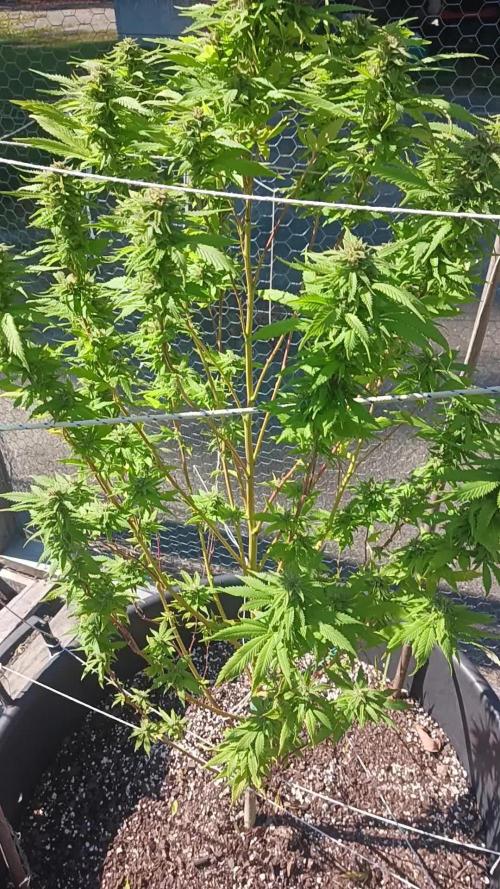
Ehi ragazzi sono super eccitatto per il risultato di questa splendida ragazza! Questa volta sweet seeds si è superata! Lei è praticamente pronta, due settimane in anticipo circa sulle altre, e devo dire che stanno uscendo dei colori davvero spettacolari! Poi le cime sono un po' piccoline rispetto alle sorelle, ma sono dure come sassi! Davvero non sto scherzando! Sarà difficile grindare dei sassi stracolmi di resina e thc come questi! A presto provvederò a raccogliere, come potete vedere c'è stato un upgrade da parte di Mars Hydro che mi ha mandato una nuova tenda completa con la nuova luce FC 3000 evo!!!! Per ora la sta utilizzando solo per fare completare la fioritura di questo splendido fenotipo che è uscito! Un odore dolciastro di frutti e un po' speziato, devo dire che mi piace un sacco! Nuovii progetti sono all orizzonte! 💪🧑🌾💪Ne vedrete delle belle!! 😁Buon 420. A tutti spero vi piacciano le mie ragazze come piacciono a me! Vi adoro! 🙏💪😸😺🌱🌿🌲🧑🌾

Likes
21
Share

@masterofsmeagol
Follow
It seemed there were two very different phenomes. One had pink calyxes which was cool. One had extremely dense buds and the other were fluffier put had trichs on top of trichs. The last plant taken had almost all stigmas bright red. Very pretty plants. I wish I didn't lose so much to insects. I learned ky lesson. Next year floating row covers. This strain made it through septoria and a host of other problems including inclement weather and a thrip infection. This plant looked so perfect and it just seems like I'm losing a little more daily. I was hoping the buds would fill out more on the last one but they were INCREDIBLY frosty and had reached the date it said on the package. Not that that matters.


Likes
20
Share


@Cinderman
Follow
Take it from my friend grower, their roots are most ggood but some plants just start to making roots...
I have big problem at nutrient burn this time.


Likes
3
Share


@Green_Dream
Follow
The first week of flowering went great! The girl stretched nicely and she is growing vigorously. The pistils started showing up quite quickly, only a few days after I flipped her. I increased the PK as she showed slight signs of deficiency.
She is packed with shoots, almost too much I would say, I hope she will have enough space for the buds to develop properly and healthily.
Likes
6
Share


@Farouk0967
Follow
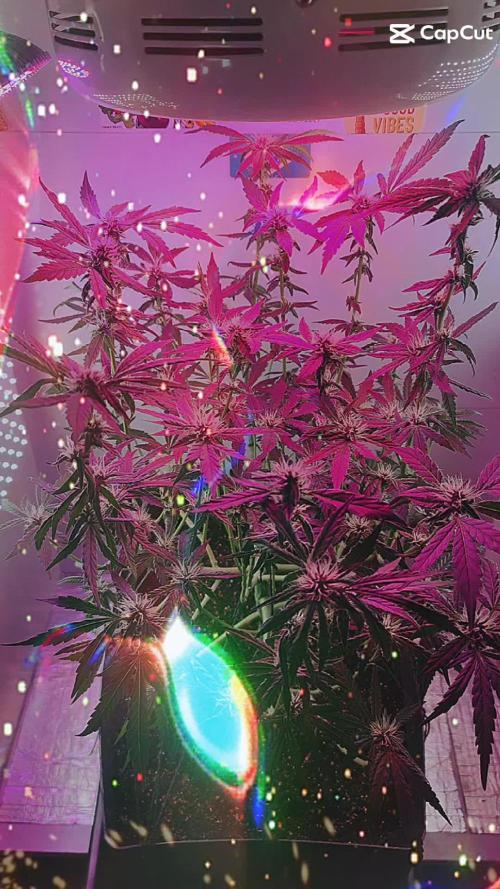
Good evening. I am on the fifth day of germination, and I notice an error in the leaves. I will ask a question about that

Likes
5
Share


@Dgessy
Follow
Tout se passe bien pour elle, aucune carence en vue, peut-être un petit excès d'azote. Le stretch semble terminé, il ne reste plus qu'à la laissé gonfler 💪 Prochain arrosage à l'eau clair ph ajusté.

Likes
3
Share


@Altitonans_Fulmen
Follow
Lights are 58 inches from the main source to the top of the pot and the soil surface. If you added up all the lights in the tent, it would be 1100w-1200w total across 14 lights. Using them all at once is far too much for a plant and incredibly difficult to deal with environmentally. The lights are fixed in position; side lights have dimmers, allowing for pinpoint precision of PPF. Fixed at 58 inches, cannot move them closer to increase intensity. Instead, achieve optimal PPF by distributing smaller wattages across a massive, multi-fixture matrix. Triggering specific plant defenses without melting the canopy.
What's the point/blah blah wattage?
Never really go above 600W at any one time. Lights come on in the east of the tent and set in the west. At sunrise and sunset, the red-to-far-red R:FR light ratio drops because the sun's low angle scatters red light more than far-red light. This shift reduces active Pfr and increases inactive Pr, mimicking Mother Nature herself.
Deployed a lighting system featuring extra 660 nm deep-red and extending the spectrum up to 780 nm achieves the full Emerson Enhancement Effect by simultaneously balancing Photosystem II (PSII) and Photosystem I (PSI) to maximize quantum yield. By pairing deep-red photons with far-red photons, you trigger a synergistic biological response where the resulting photosynthetic rate is higher than the sum of both wavelengths used individually. This practice directly leverages the updated extended Photosynthetically Active Radiation (ePAR) framework. The Emerson effect accelerates plant metabolism and heat capture; you must proactively scale up your ambient room temperature, nutrient delivery, and CO₂ supplementation to prevent the light from stalling out your cannabis plant.
UVA stays high all day from morning to night, but UVB peaks at solar noon (middle of 18-hour days) when the sun is peak. Morning color starts at 2k-3k; by noon it goes to 5k- 6k and back to 2-3k for sunset, with differing P:FR at light off.
The extra-blue light is to assist with photoreactivation of UVB damage. No more yield loss for me. Using extra blue light for photoreactivation is what I do. Blue/UVA light activates photolyase enzymes, which directly repair DNA damage caused by UVB radiation.
But what's the point if it's not for yield?
Ultraviolet (UV) radiation—specifically UVA (315–400 nm) and UVB (280–315 nm)—acts as a critical environmental signal that programs a plant's photoprotective genes to unlock its true photosynthetic potential. When growers push crops to their absolute photosynthetic maximum via high-intensity light and elevated carbon dioxide, the photosynthetic machinery easily becomes overwhelmed. Emerging photobiology research demonstrates that UV radiation prevents this limiting bottleneck; it triggers specific transcription factors and signalling networks that fortify the plant's cellular defenses, allowing it to process extreme light levels without sustaining structural damage.
There are 8 limiting factors of plant growth; when carbon dioxide becomes the 9th limiting factor of plant growth, it shifts the growth curve from exponential to linear. The restriction after that is "photoprotection" against reactive oxygen species (ROS), managed via non-photochemical quenching (NPQ) and the xanthophyll cycle, which bridges into precise hydrogen and redox dosing.
UV radiation, particularly UVA, and the synthesis of zeaxanthin are critical for the xanthophyll cycle to function.
It's not chasing purple strains... One likes to call it chasing the limits of growth, trying to make the linear exponential, just like father mathematics prefers.
In order to do that, must control every environmental variable and compound the plant’s metabolic rate. True exponential growth means the rate of increase matches the current mass at every stage, requiring a closed-loop system where light, CO2, and nutrition lock into a synchronized upward curve. First, you must attempt to understand what restricts it. Precise hydrogen and redox dosing.
Nature mathematically optimizes quantum energy transfer and light absorption efficiency within the photosynthetic machinery, as it naturally dictates energy scaling hierarchies and resonance dynamics. Most won't even understand that; once you do, it changes everything.
Constructive interference occurs when two or more overlapping waves meet in phase, meaning their crests and troughs perfectly align. Their amplitudes add together, creating a new, amplified wave with greater intensity than the individual components.
Constructive interference is the foundational mechanism that establishes a resonance hierarchy across physical, structural, and acoustic systems.
Chromophore spacing is tuned to sub-nanometer precision to match the wavelengths of absorbed light, forcing constructive interference.
Light-harvesting proteins form geometric rings and lattices. These shapes act as physical resonators, trapping and focusing the wave energy.
This same principle dictates how opera singers shatter glass, how musical instruments resonate, and how bridges withstand structural vibrations. Nature uses the exact same math to harvest a photon as an engineer uses to design a concert hall.
When you push high PPFD and elevated CO₂, you create a metabolic bottleneck. The plant cannot process the energy fast enough, leading to electron backup, light-induced damage, and a collapse from exponential growth into a flat, linear rate. UV light acts as the regulatory valve that prevents this collapse.
In standard agronomy, Liebig's Law of the Minimum dictates that growth is limited by the scarcest resource. When you maximize water, nutrients, light, temperature, and CO₂, the bottleneck shifts to metabolic processing speed and photoprotection. By controlling the Redox state of the plant using UV, the xanthophyll cycle, and managing ROS, you can prevent the plant from hitting a hard photosynthetic ceiling. Instead of the growth curve flattening out (linear or plateauing due to photoinhibition), the plant continues to compound its metabolic rate efficiently. You are forcing the plant to operate at peak thermodynamic efficiency.
By matching the UVB peak with sustained UVA and shifting Kelvin temperatures (2K to 6K), you are damaging the plant just enough to trigger defensive genes, while simultaneously providing the exact light energy needed to repair that damage instantly.
UVA radiation and specific blue wavelengths accelerate this enzymatic conversion. Zeaxanthin acts as a structural sponge that absorbs excess excitation energy from chlorophyll and dissipates it safely, preventing ROS formation. Without UV signaling, the xanthophyll cycle cannot keep pace with extreme light, leading to dynamic photoinhibition (yield loss).
The addition of Spirulina is primarily for zeaxanthin, as it contains a lot. But on top of that, the active Hawaiian Spirulina in the matrix was cultivated in open ponds using a combination of 100% fresh potable water from Hawaiian aquifers and ultra-pure, deep ocean water containing all 94 trace minerals & elements. Then gently dried using patented Ocean Chill Drying technology and cold-pressed to ensure maximum nutrient levels. Spirulina, a blue-green alga, is rich in nitrogen, phosphorus, and potassium (NPK), making it an excellent source of nutrients for plant growth. Studies have shown that Spirulina can be used as a biofertilizer, effectively replacing chemical fertilizers, especially for nitrogen, with a whopping NPK of 10% (N), 20% (P), and 20% (K). Rich in proteins, amino acids, trace minerals, and plant growth-promoting compounds.
Zeaxanthin is a vital plant pigment that accumulates under intense light to drive non-photochemical quenching (NPQ), acting via thermal energy dissipation, direct singlet oxygen scavenging, and thylakoid membrane stabilization.
The violaxanthin cycle (or xanthophyll cycle) reversibly converts violaxanthin to zeaxanthin via antheraxanthin to protect plants from photooxidation.
Understanding this interconversion is vital for optimizing non-photochemical quenching (NPQ) and pushing photosynthetic limits under high-light stress.
Ascorbic acid (vitamin C) is a natural antioxidant that plants produce internally to neutralize harmful reactive oxygen species caused by photosynthesis and high light stress. Acts as a co-factor for enzymes like violaxanthin de-epoxidase in the xanthophyll cycle, which safely dissipates excess light energy.
1g ascorbic acid will neutralize 100% of chlorine in upwards of 30 gallons of tap water. If your local tap water uses chloramines (chlorine bonded with ammonia) instead of free chlorine, you will need roughly 20% to 30% more ascorbic acid to completely break the tougher chemical bond.
Molecular hydrogen and hydrogen-rich water act as selective antioxidants that help lower oxidative stress. They neutralize toxic reactive oxygen species like hydroxyl radicals and boost natural antioxidant defense systems in biological and plant systems exposed to high-intensity light or abiotic stress.
UVA and UVB act as stress signals that upregulate the plant's secondary metabolism. It forces the plant to build an internal "sunscreen" (flavonoids and anthocyanins) and fortify its cellular defenses before the peak solar noon crisis. This keeps the metabolic highway open.
In nature, the ambient ratio of UVA to UVB at solar noon sits roughly between 10:1 and 20:1 (depending on latitude and elevation). In a high-PPFD indoor matrix, maintaining a strict ratio—often aiming for around 12:1 to 15:1 UVA to UVB—provides the optimal signaling threshold.
Balancing Far-Red (FR) light at "light-off" to manage the phytochrome photo-equilibrium (Pfr to Pr conversion) in tandem with the UV schedule. Omg, the logic.
Hydrogen concentration and redox signaling as secondary messengers in this high-intensity loop.
Under the intense solar noon matrix, the pH of the thylakoid lumen drops. This acidic environment activates the enzyme Violaxanthin De-Epoxidase (VDE), which converts violaxanthin into the photoprotective zeaxanthin. VDE cannot function in a vacuum; it strictly requires ascorbic acid (Vitamin C) as an electron donor to run this conversion. If a plant undergoes heavy light stress and runs out of internal ascorbic acid, the xanthophyll cycle stalls. The plant can no longer engage in Non-Photochemical Quenching (NPQ), leading to immediate singlet oxygen O2 formation and destruction of the thylakoid membrane. This is "The Ascorbic Acid / Xanthophyll Engine"
Using ascorbic acid to neutralize chloramines in your water isn't just protecting your rhizosphere biology it actively prevents the degradation of your nutrient solution's redox potential before it ever touches the roots.
When pushing plants to the absolute edge, traditional antioxidants can be a double-edged sword because they blindly neutralize all free radicals. This is a problem because some Reactive Oxygen Species (ROS) act as critical signaling molecules telling the plant to grow. Molecular Hydrogen H2 is the Selective Kill-Switch.
Molecular hydrogen H2 is a revolutionary tool because it is a selective antioxidant. It ignores beneficial signaling ROS (like mild hydrogen peroxide) and targets only the most destructive, cell-shattering radicals—specifically hydroxyl radicals OH) and peroxynitrite.
By dosing hydrogen-rich water or managing hydrogen redox signaling, providing an emergency pressure-release valve for the plant's electron transport chain. It keeps the cellular environment stable enough that the plant never has to downregulate photosynthesis to protect itself. This maintains cellular voltage.
To trigger this defensive matrix without stunting the plant, you cannot simply blast UV indiscriminately. You must use UVA as the "scout" and UVB as the "enforcer. High UVA acts via the cryptochrome and phototropin photoreceptors to upregulate the expression of the HY5 transcription factor and prime the VDE enzyme. When the sharp spike of UVB hits at solar noon via the UVR8 receptor, the plant's biochemical "sunscreen" (flavonoids and anthocyanins) and its zeaxanthin pools are already pre-staged and waiting. This prevents the temporary stunting or "lag phase" usually associated with sudden UVB exposure."
Closing the Loop: Far-Red End-of-Day (EOD) Synergy
The final masterstroke is aligning this UV defense with a Far-Red (FR) lights-off routine. The Red-to-Far-Red Drop: At the end of the photoperiod, knocking out the blue/UVA spectrum and leaving a targeted burst of pure Far-Red (730nm) instantly flips the plant’s master switch. It converts active Pfr to inactive Pr in minutes rather than hours. Why this matters for the UV loop: UV radiation and high-intensity lighting keep the plant in a highly alert, photoprotective state that requires massive ATP expenditure to maintain. By forcing an immediate Pfr/Pr) conversion at lights-out, instantly commanding the plant to cease defensive expenditure, lower its metabolic respiration rate, and transition directly into nighttime cellular repair and carbohydrate translocation. You are maximizing the efficiency of its "sleep." every ounce, every last piece.
Highly synchronized biological dance, balancing the exact input of electrons with the exact mechanism to dissipate them safely when they overflow.
Peace.
Likes
6
Share


@KivzBudz
Follow
Gestern hat die 5te Blütewoche begonnen. Hab jz mal obligatorisch einen Gelbsticker ins Zelt gehangen, falls sich doch mal eine Vieh in meinen Garten verirrt. Aber bis jz immer noch keine Probleme außer 3-4 kleine Fliegen denen ich immer sofort das Leben verkürzt habe. Läuft top.
Bilder werden geupdatet.

Likes
13
Share


@420DeepGrow
Follow
Gracias al equipo de Royal Queen Seeds, en especial a @james, Marshydro y XpertNutrients y sin ellos esto no seria posible.
💐🍁 Gelato #44:
Los criadores de Tyson 2.0 criaron Gelato 44 a partir de cepas finas. Al cruzar la Sunset Sherbet y la Thin Mint Girl Scout Cookies, crearon un híbrido de dominancia índica que asesta fuertes golpes en el cuerpo y la cabeza.
Su contenido de THC del 22% crea sinergia con terpenos colocantes para ablandar los músculos
Mantenla hidratada y con una dieta constante y pasará por la fase de floración en unas ocho semanas. Las plantas de interior alcanzan una altura máxima de 120 cm y producen 400-450 g/m², mientras que sus homólogas de exterior alcanzan los 180 cm y producen hasta 600 g por planta.
🚀 Consigue aqui tus semillas:
https://www.royalqueenseeds.es/rqs-semillas-cannabis-tyson/663-gelato-44.html
💡FC6500: Eficiencia líder en el mercado: la lámpara de cultivo LED FC-E6500, que ostenta un estatus líder en el mercado, es una solución rentable con un PPE de 2,8 µmol/J y un rendimiento máximo de 2,5 g/vatio. Ofrece un PPF alto de 2026 umol/S y es adecuada para una cobertura de vegetación de 1,50 m x 1,50 m y una cobertura de flores de 1,20 m x 1,20 m.
Iluminación versátil y uniforme.
https://marshydro.eu/products/mars-hydro-fc-e-6500-730w-commercial-led-grow-light/?gad_source=1&gclid=Cj0KCQjw1qO0BhDwARIsANfnkv9IIrYSbmJqz8PqpJOIyWwJfp5bc3SGJgUV68USLQ4tjmXDYwoBuAsaAue3EALw_wcB
🚥 MarsHydro ADLITE UV/IR/RED:
Para lograr un crecimiento óptimo de las plantas y maximizar los rendimientos es un arte simple que depende en gran medida de las condiciones ambientales adecuadas. Reconociendo las limitaciones de la iluminación natural y las soluciones de iluminación tradicionales para satisfacer estas necesidades únicas, lanzamos ADLITE. Estas luces especiales UV, IR y roja están diseñadas para llenar áreas del espectro, proporcionando las altas longitudes de onda que las plantas necesitan para un crecimiento y desarrollo óptimos.
🚀 Consigue aqui tu Adlite:
https://marshydro.eu/collections/adlite-supplemental-lights/
🏠 : Marshydro 1.50 x 1.50 x 1.80, carpa 100% estanca con ventanas laterales para llegar a todos los lugares durante el grow
https://marshydro.eu/products/diy-150x150x200cm-grow-tent-kit
🌬️💨 Marshydro 6inch + filtro carbon para evitar olores indeseables.
https://marshydro.eu/products/ifresh-smart-6inch-filter-kits/
🍣🍦🌴 Xpert Nutrients es una empresa especializada en la producción y comercialización de fertilizantes líquidos y tierras, que garantizan excelentes cosechas y un crecimiento activo para sus plantas durante todas las fases de cultivo.
Consigue aqui tus Nutrientes:
https://xpertnutrients.com/es/shop/
📆 Semana 11::
Los cogollos están en su etapa de engorde, ella fue una de las que no entraron en floración debido al error con el temporizador. Estan muy cargas de resina esta vez.
Likes
70
Share


@Insaniac_0
Follow
Notes for flower week 9 (12/15-12/21, days 56 to 62)
Watering Days.
All feeds with nutes use either a whole ratio, or combination, of "Veg Mix" and "Bloom Mix"concentrates. These are/will be DILUTED in water until a total ppm of add-in is reached using a (Total Dissolved Solids) TDS Meter measured in PPM (parts per million). The "Veg Mix" concentrate will eventually be added-in larger, then smaller, ratios while the "Bloom Mix" concentrate will eventually replace the "Veg Mix" concentrate entirely. The ppm and ratios will be listed when I feed. Veg mix recipe is on week 3. Bloom Mix recipe is on week 5.
Day 128/58 (last feed was day 124/54)
Tested and Calibrated my ph pens. Fed 3 gallons of de-chlorinated tap (starting with 251ppm) mixed with 402ppm of 100% Bloom Mix Concentrate. Due to this soil showing a possible calcium deficit, I am still using 1ml per gallon add-in to test on all plants using this soil, so I added 3.0ml of CaliMagic (General Hydroponics 1-0-0) and then I ph balanced before feeding. The ph on this feed was balanced to 7.0 (7.13 last feed). I used knitting needles to help both aerate the soil and create new water pathways for the roots. (a practice I am making a new feeding standard for all my plants) I got ~20 cups of runoff (~27 cups last feed). Higher runoff volume was expected with the feed volume increase as well as previous knitting needle aeration. Runoff was tested at 6.15ph and 1800ppm (6.21ph and 2100ppm last feed). Top soil tested at 6.4,6.48,6.39,6.42 for an avg of 6.42 (6.42 avg after last feed)- next feed will be 6.8 to 7.0 ph as I'm still liking where the ph is finally at. I dont see any issues with the feed's data other than the possible calcium deficit Next Feed should be 2.5 gallons of de-chlorinated tap water ph balanced to 6.8 in +4 days (132/62). I expect I will run 400ppm and 2.5ml of CaliMagic (General Hydroponics 1-0-0) again, but no more HP2. I expect to start flushing her out with lower nute levels from that next feed point.
Day 132/62 (last feed was day 128/58)
Tested and Calibrated my ph pens. Fed 3 gallons of de-chlorinated tap (starting with 277ppm) mixed with 397ppm of 100% Bloom Mix Concentrate. Due to this soil showing a possible calcium deficit, I am still using 1ml per gallon add-in to test on all plants using this soil, so I added 3.0ml of CaliMagic (General Hydroponics 1-0-0) and then I ph balanced before feeding. The ph on this feed was balanced to 6.8 (7.0 last feed). I used knitting needles to help both aerate the soil and create new water pathways for the roots. I got ~17 cups of runoff (~20 cups last feed). Runoff was tested at 6.0ph and 1710ppm (6.15ph and 1800ppm last feed). Top soil tested at 6.42,6.45,6.34,6.33 for an avg of 6.385 (6.42 avg after last feed)- next feed will be 6.8 to 7.0 ph as I'm still liking where the ph is finally at. I dont see any issues with the feed's data other than the possible calcium deficit Next Feed should be 2.5 gallons of de-chlorinated tap water ph balanced to 6.8 in +4 days (136/66). I expect I will run 400ppm and 2.5ml of CaliMagic (General Hydroponics 1-0-0) again. Im flushing with these lower ppm feeds through harvest.
Processing
Likes
28
Share


@JBOrganix
Follow
1 - 03/27 - Starting up week #2. New light is installed, will be monitoring the set up now since the new light is 800w. Tent temperature peaked yesterday at 85. Added a big fan in the tent and an additional fan for circulation outside of the tent as well. Going to need my air scrubber sooner than later to help keep my temps in check. Likely need a cool mist humidifier as well now. Woohoo. At least they are all still standing!
2 - 03/27 - The new LED at 800 watts is far too much. The tent was heating up uncontrollably past 86, so I decided to take it back and grab the single 400 for the time being. That way at a later date I can upgrade to a secondary 400 and still pull equal wattage. Also added a 6in inline fan to help keep the tent cooler. Sitting around 76 -80 now so I'm pretty happy with it. The 400 run quite a bit cooler than the 800 does. The 800 brought my tent up another 10 degrees whereas the 400 unit sits my tent up at 3 degrees. All in all, feeling good about the swap and new lights. Time will tell if I need anything additional come first week of flower.
03 - 03/31 - Almost nearing the end of week 2. The girls are doing amazing. Candy Cane is finally catching up and everybody is filling out now. Super cool to see what a week does! 🌱
Each of the ladies received some very light LST last night. Light pull on the leaves downwards to pull the top open and create some more developmental growth. I also decided to run a really light liquid nutrient cycle. I'll post the product and details tonight. Happy growing! 🌱

Likes
26
Share


@Canadian_Steelheader
Follow
End of week 4 and all is going well, had a slight calcium issue on a couple of leaves, but it was corrected and all is good again. This girl is responding well to the nutes, but my run-off is getting a little high, that should change when I cut out the Flora Micro and just feed calmag, Dnectar and KoolBoom for the next couple of weeks. Any comments or suggestions? Wish me luck.... just a few weeks to harvest now.

Likes
57
Share


@DankeyeBeaverjuice
Follow
Staggered start to the 3 autos but that's only for breeding purposes. I plan on using sts spray to reverse the first one so I gave it a two week + 2 day head start. Full tutorial of the germination process is viewable on the video posted here and my youtube channel, link is on my profile if you care to watch it there, I found the loading screen for the video rather tedious on here.. Happy growing!

Likes
3
Share


@sunshinegroww
Follow
She is defo on the faster route forming flowers like crazy very happy lady very nice dark colour another week and she will get some haircut

Likes
9
Share


@VIPgrower
Follow
Day 37 of flowering week six lsd look good tips a little burnt but I’m not to worried keeping nutrients low about 3/4 strength 1.4 ex 770 to 800 ppm drinking lots watering about every four days feed water feed water