


Processing
Likes
Comments
Share


@Tryhard1988
Follow
Happy Christmas every one
Growths been good topped all plants topped a couple multiple times
Only feeding them roots water and enzymes for now giving them 500ml everyday
There looking a bit on the skinny side so will be adding some silicon at some point this week
Ad quite a thew problems with the other diaries so it's nice when this one going right you know what they say you can't make the same mistake

Likes
11
Share


@Cortez_The_Konqueror
Follow
Got 2305 into her final home in a 3 gallon pot, I used grow dots at 1 table per gallon of medium and made the bottom 3rd of the soil a little hot with fresh ocean Forrest soil, and purple cow non manure compost.. and moved her to my new ac infinity 3x3 tent!

Likes
8
Share


@eldruida_lamota
Follow
Que hay fumetillas, terminamos el primer mes de floración, pensé que serían algo más rápidas pero bueno, tengo tiempo, aun así hay que ver hasta el final que es lo que sucede.
Controlamos ph humedad por debajo de 45% temperatura media de 24.5 grados, aumentó una vez por semana la cantidad de ml por producto, último cultivo con advancednutrients, los próximos proyectos los trabajaré con AgroBeta.
Buenos humos fumetillas 💨💨💨

Likes
20
Share


@DreamIT
Follow
-Sponsored by:
🎆ANESIA SEEDS🎆-💡VIPARSPECTRA💡-💐GREEN BUZZ LIQUIDS💐-🛠️WEDRYER🛠️
🏁18/6 hello growerz, with today I start the resumption of diaries on GD. I have 13 new genetics in germination and as many diaries. I start by putting the seeds in water for 24 hours, after a day I will put the two seeds in two different jiffies, one with humic acid from greenhouseseeds and the other with just plain water. Get comfortable and follow the updates 😉👋🦄
19/6 The seeds were divided and placed in two different jiffies, one with humic acid and one with water only.
21/6 after another 24 hours in the dark the jiffies were moved under the lamp. let's start the dances!
23/6 nothing to report
24/6 still nothing to report
25/6 still no news
30/6 it was a really long wait, but the second one was finally born, just when I had lost hope. yeeeeee
__________________________________________
Personal advertising (contains affiliate links)
__________________________________________
🦄 The varieties of Anesia seeds all have an extremely high content of THC and cannabinoids. They were bred specifically for the effect and therefore find wide applications for medical purposes as well.
✅https://bit.ly/Anesiaseeds_
__________________________________________
Did you know that Green Buzz Liquids fertilizers are 100% vegan? A complete line of products ready to give the best to each of your plants! Visit the site and see my journals to see how they work 🦄
🤯 And with the code "dreami t" you will immediately receive a 15% discount on your purchases
✅https: //bit.ly/GreenBuzzLiquidsPro
__________________________________________
👀 Are you looking for a good lamp to start with? 👀
🌞Viparspectra has something more than the others, take a look at their site.
⏩ Use "GDVIP" for an extra discount on amazon or "DREAMIT3" for an extra 5 %% discount
👀 Search for it on Amazon
✅Amazon USA: https://amzn.to/30xSTVq
✅Amazon Canada: https://amzn.to/38udUVe
✅Viparspectra UE: bit.ly/ViparspectraUE
✅Viparspectra USA: bit.ly/ViparspectraUS
______________________________________________
🌈 Tired of blowing on your weed hoping it dries quickly? Check out the Wedryer website! You will find a well-made accessory that will help your weed dry in just 8-10 days without the annoying risk of finding mold or other annoyances! (no affiliate links)
✅https: //bit.ly/Wedryer_
______________________________________________
📷🥇Follow the best photos on Instagram 🥇📷
https://www.instagram.com/dreamit420/
Backup
https://www.instagram.com/dreamit4200/
🔻🔻Leave a comment with your opinion if you pass by here🔻🔻
🤟🦄💚 Thank you and good growth 💚🦄🤟

Likes
20
Share


@RonnieB
Follow
The differences between sativa and indica really surprised me..I had no idea they were so different. I thought 2 of my plants were just bad seeds LOL!! but they are mostly sativa and my other 2 are mostly indica...Talk about a difference!!! WOW!!!

Likes
12
Share
@eldruida_lamota
Follow
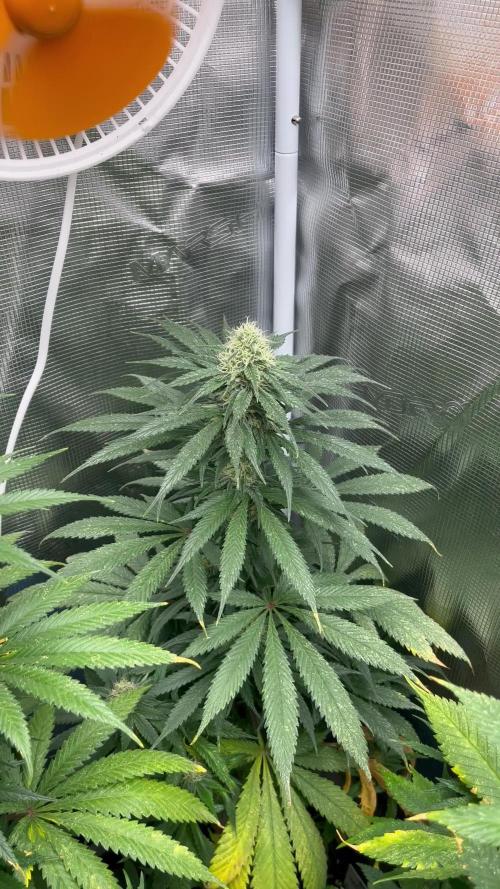
Que pasa familia, vamos con la sexta semana de floración de estas Gorilla Girl F1 de Sweetseeds.
Vamos al lío, las plantas se trasplantaron a macetas de 7 litros.
El ph se controla en 6.5, la temperatura la tenemos entre 24/21 grados y la humedad ronda el 50%.
El ciclo de crecimiento puse 12h de luz, el foco está al 100% de potencia.
Tengo visitantes, trips que combatiremos con control biológico.
Me gustaría estar más encima este cultivo pero la salud me está impidiendo un poco este 100% con el proyecto.
- os dejo por aquí un CÓDIGO: Eldruida
Descuento para la tienda de MARS HYDRO.
https://www.mars-hydro.com
Hasta aquí todo, Buenos humos 💨💨💨

Likes
27
Share


@LSchnabel
Follow
This plant was amazing from start to finish.
I will update a final comment soon as well as final weigh and a review of the smoke once sent out to a group of testers.
Likes
6
Share


@BigGGrows
Follow
I have a few week 3's in here but they were literally a couple daya from coming into week 4....and i forgot to put them into the last veg journal, soooo....to sum up week 4 in 1 word, that would be " EXPLOSIVE"!!! THE GROWTH IS UNREAL. i had to train the plant about 4 times this week alone. I am seriously regretting putting this in a 1/2 gallon pot...should of kept her in the 3 gallon. Oh well we gonna roll with the punches!


Likes
211
Share


@PapaNugs
Follow
Been tying these girls down over the week. Trying to spread them out more. They are looking healthy at least. No issues. No fungus gnats or any critters at all. Happy with it right now
Likes
4
Share


@DogDoctorOfficial
Follow
# 💙 Project Blue Tent – Week 12
## 🥒 Pickle Lemon Haze F1 – Pheno B
### 🌸 Another Girl, Another Story, Another Ridiculously Frosty Week! ❄️📸
Hello everyone, and welcome back to another chapter of Project Blue Tent! 💙🌱
And honestly, my friends...
WHAT IS HAPPENING INSIDE THIS TENT?! 😂❄️
Every week, I think we're going to run out of ways to describe how beautiful these girls are becoming.
And every week, they prove me wrong.
The flowers are developing beautifully, the frost is becoming increasingly impressive, and the whole ecosystem is looking absolutely fantastic.
This week, we're giving Pickle Lemon Haze F1 Pheno B her individual spotlight.
And she certainly has something worth showing!
We spent some time behind the camera again, creating three detailed photo stacks from hundreds of individual photographs. We ended up with stacks containing 299, 299, and 333 photographs respectively.
That's 1,931 individual frames across the three stacks.
Yes, my friends, that's a lot of photographs for one girl! 😂📸
We also made a few environmental adjustments this week. We've brought the temperatures down slightly and increased the output power across the lighting setup.
The overall approach remains the same: observe, adjust when necessary, document the results, and give the plants the stability they need to continue developing.
So, let's take a closer look at Pheno B and see what she's showing us this week!
## 🌸 WEEK 12 – PHENO B IS LOOKING OUTSTANDING
Pickle Lemon Haze F1 Pheno B continues to impress.
She's approximately 145 cm tall, and the plant structure we've established over the previous weeks is now supporting the flowering development beautifully.
The major training work is behind us. The canopy is established, the SCROG nets are providing support, and the flowering sites are developing throughout the plant.
We're no longer in the stage of trying to build the structure.
We're watching the structure do its job while the flowers continue to develop.
And that's one of my favourite transitions in a grow diary.
You spend weeks working on the plant's architecture, making decisions about topping, training, canopy management, and defoliation.
Then you reach a point where you can step back and appreciate the result.
That's where we are now.
The plant is looking beautiful, the canopy remains organized, and the flowers are giving us plenty of reasons to keep the camera close.
And the frost?
Oh, the frost! 😂❄️
## ❄️ THE FLOWERS ARE STEALING THE SHOW
Let's get straight to the obvious.
These flowers are becoming seriously photogenic!
The close-up photographs reveal the intricate details of the developing buds, the prominent pistils, and the trichomes covering the flowers and surrounding sugar leaves.
There's something special about reaching this stage of flowering.
From a distance, you can appreciate the plant's overall structure and how the flowering sites are distributed throughout the canopy.
But when you get close enough to examine the flowers properly, there's an entirely different level of detail to appreciate.
And that's precisely why I enjoy macro photography.
It lets us document the small details that are easy to miss when we're simply looking at the whole plant.
Pheno B is giving us some beautiful subjects to work with, and I wanted to capture that as clearly as possible.
So, instead of taking a handful of photographs and moving on, we spent more time creating detailed photo stacks.
And I think you'll understand why when you look at the results.
😂📸🌸
## 📸 THREE PHOTO STACKS – 931 PHOTOGRAPHS IN DETAIL
This week, we created three separate photo stacks of Pickle Lemon Haze F1 Pheno B.
Here's the breakdown:
- Photo stack 1: 299 photographs.
- Photo stack 2: 299 photographs.
- Photo stack 3: 333 photographs.
That's a combined total of 931 individual frames!
Each stack represents a considerable amount of work, both behind the camera and during post-processing.
And this is where patience becomes essential.
Focus stacking involves combining photographs taken at different focus distances to increase the depth of field in the final image.
When working with macro subjects, the area in focus can be extremely narrow. A small change in focus can bring one section of a flower into sharp detail while leaving another section outside the focus plane.
By combining multiple frames, we can capture more of those details in a single final image.
Of course, the results depend on the source photographs and how well the stacking process handles them.
But when everything comes together, the finished image can reveal a remarkable amount of detail.
And that's what I wanted to achieve with Pheno B this week.
Three stacks.
Hundreds of frames.
One very photogenic girl.
And plenty of frosty details to appreciate! 😂❄️
## 🌿 SAME TENT. SAME ECOSYSTEM. HER OWN STORY.
One of the defining features of Project Blue Tent is that we're documenting the plants individually while keeping their shared growing environment consistent.
The plants share the same tent, reservoir, irrigation system, lighting environment, nutritional program, and general cultivation approach.
That gives us an opportunity to observe their development side by side.
And the similarities remain fascinating.
The plants have developed remarkably similar structures, and their flowering progression has been impressively consistent.
But that doesn't mean the individual diaries are interchangeable.
Each plant deserves her own record, photographs, observations, and development history.
That's why we're documenting Pheno A, Pheno B, and the other cultivars separately.
Even when the plants look remarkably similar, their individual details remain worth recording.
For Pheno B, this week's story is about her continued flower development, the close-up photography, and how she looks following the latest environmental adjustments.
She's sharing the same ecosystem as her sisters, but she's still the star of this particular report.
And today, we're giving her the attention she deserves!
💙🥒🌸
## 💡 LIGHTING – INCREASING THE OUTPUT
We made another adjustment to the lighting setup this week, increasing the output power across the lighting equipment.
The main LEDs continue to provide the primary illumination from above, while the two LumiFlora 150W full-spectrum under-canopy fixtures supplement the lower portions of the canopy.
The under-canopy bars remain arranged in the X-cross configuration beneath the plants.
With the structure now established, this arrangement gives us another aspect of the growing environment to observe as flowering progresses.
We're interested in how the different parts of the canopy develop under the combined lighting arrangement.
At the same time, we've increased the lighting output, so we're keeping an eye on the overall environment and the plants' response.
It's important to remember that increasing light output doesn't automatically guarantee a particular result. The response depends on the conditions around the plants and how they develop over time.
That's why we're documenting these adjustments rather than assuming what the outcome will be.
We make a change, monitor the conditions, and observe.
And Pheno B will continue to be part of that story.
## 🌡️ ENVIRONMENT – SLIGHTLY COOLER CONDITIONS
Alongside the increase in lighting output, we reduced the temperatures slightly this week.
It's a small but meaningful part of the latest environmental adjustments.
Lighting and temperature are connected, so whenever we change the lighting setup or its output, we need to consider the wider environment rather than looking at each setting in isolation.
We're keeping an eye on the day and night temperatures, relative humidity, solution temperature, and substrate temperature while the plants continue flowering.
The idea isn't to keep changing everything for the sake of it.
It's to make deliberate adjustments and then observe how the environment settles.
The latest readings have been updated in the GrowDiaries record, so the conditions listed there are the reference for this week's report.
And that's another reason I appreciate keeping detailed records.
When we look back at the end of the project, we'll be able to see not only how the plants developed, but also which environmental changes took place along the way.
## 🕸️ SCROG AND CANOPY STRUCTURE – THE FRAMEWORK IS THERE
The SCROG structure continues to provide support as the flowering branches develop.
The first net helped us distribute the canopy, while the second net provides additional support to the established structure.
The earlier topping, training, and defoliation also remain important parts of this plant's story.
Those interventions helped us create the architecture we're looking at today.
And now, we're allowing that structure to do its job.
We don't need to keep moving branches simply because we can.
We don't need to keep reshaping a canopy we've already established.
The important thing now is to monitor the plant, observe how the flowers develop, and make adjustments only when there's a genuine reason.
Sometimes the most satisfying part of cultivation is seeing the results of work you completed weeks earlier.
You train the plant, give her time to respond, and eventually you get to appreciate the structure that training helped create.
That's exactly what we're seeing with Pheno B.
## ✂️ DEFOliATION – LETTING THE EARLIER WORK SPEAK
The substantial defoliation performed in the earlier weeks also remains part of this story.
At the time, opening the dense canopy made a dramatic difference to the plant's appearance.
Now, we can appreciate the structure that remained after that work and how the plant has continued developing.
The flowering sites are visible throughout the canopy, the branches are supported, and the plant has had time to respond to the earlier interventions.
This is why I believe it's important to think carefully about timing.
There is a time to train.
There is a time to remove foliage.
There is a time to provide support.
And there is a time to stop interfering and observe.
For Pheno B, the major structural work has already been done.
Now we're concentrating on the flowering development and the way the plant responds to the environment we've established.
## 🌬️ AIRFLOW – SUPPORTING THE ENTIRE CANOPY
The airflow arrangement remains an important part of the shared ecosystem.
With a substantial canopy, we want air moving through the upper, middle, and lower portions of the plants rather than allowing stagnant pockets to develop.
The earlier canopy management helped open the structure, while the circulation equipment supports air movement throughout the tent.
The under-canopy lights also make it important to keep the lower portion of the growing space in mind when assessing the overall environment.
We're looking at the complete picture.
Lighting, temperature, humidity, and airflow all interact.
The goal is to maintain a balanced environment rather than focusing on one parameter in isolation.
And as the plants continue developing, we'll keep monitoring those conditions and making adjustments when needed.
## 💧 IRRIGATION AND DRAINAGE – KEEPING THINGS CONSISTENT
The irrigation and drainage systems remain part of the established setup.
The recorded watering volume is approximately 1.6 litres per plant over 24 hours.
Because the plants share the reservoir and irrigation system, maintaining a consistent approach across the tent is an important part of this project.
We continue observing how the plants are responding and monitoring the system's operation.
The idea is simple: maintain the established setup, record what happens, and avoid unnecessary changes when everything is working as intended.
Good equipment should make our lives easier.
It should help us maintain consistency while allowing us to concentrate on the plants themselves.
And that's exactly the approach we're continuing with this week.
## ⚗️ NUTRITION – THE CORRECT PLAGRON RECIPE
The nutritional program remains unchanged this week.
We're using the PLAGRON Hydro line, with Green Sensation included in the current recipe.
The previous reports are also being corrected where necessary to ensure that Green Sensation is recorded accurately instead of Hydro Roots.
For this week's report, the recipe is:
- PLAGRON Hydro A — 2.2 ml/L
- PLAGRON Hydro B — 2.2 ml/L
- PLAGRON Power Buds — 1 ml/L
- PLAGRON Green Sensation — 1 ml/L
- PLAGRON pH Plus — 0.03 ml/L, as recorded
- PLAGRON pH Minus — 0.03 ml/L, as recorded
The recorded pH is 6.01, and the EC is 2.24 mS/cm.
As the recipe has remained unchanged, we're continuing to record the measurements and observe the plants rather than inventing an explanation for every variation.
The important thing is to document what was actually used, keep the record accurate, and monitor how the plants develop.
That's what makes these diaries useful when we eventually look back at the complete project.
## 🌡️ CURRENT BLUE TENT CONDITIONS
The GrowDiaries record for this week has been updated with the latest environmental readings.
The reference measurements shown in the current record include:
- Cultivar: Pickle Lemon Haze F1
- Phenotype: Pheno B
- Flowering: Week 12
- Height: Approximately 145 cm
- Light schedule: 12/12
- Day air temperature: 27°C
- Night air temperature: 27°C
- Relative humidity: 59%
- pH: 6.01
- EC: 2.24 mS/cm
- Solution temperature: 25°C
- Substrate temperature: 24°C
- CO₂: Approximately 666 ppm
- Pot size: 8 litres
- Watering volume: Approximately 1.6 litres per plant per 24 hours
- Under-canopy lighting: 2 × LumiFlora 150W full-spectrum fixtures
- Under-canopy arrangement: X-cross configuration
- Nutrient line: PLAGRON Hydro
- Green Sensation: 1 ml/L
The temperatures have been reduced slightly, and the lighting output has been increased for this week's update.
The values above reflect the updated record rather than the older Week 11 measurements.
## 🔬 FOUR PLANTS, FOUR STORIES
This is something I want to keep emphasizing throughout Project Blue Tent.
Yes, the reports share some common elements.
That's intentional.
The plants share the same ecosystem, so it makes sense that their reports will cover the same environmental systems, lighting arrangement, irrigation setup, and nutritional program.
But the individual reports are not simply copies of one another.
Each one focuses on a different plant and documents her own development.
For Pheno B, we have the three photo stacks, her individual flower development, and her response within the shared growing environment.
For her sisters, we'll continue documenting their own characteristics and the details that make each plant worth following.
The shared conditions provide context.
The individual observations give each diary its purpose.
And that's what makes the project interesting.
We're not trying to manufacture differences where there are none.
We're documenting what we actually see.
Sometimes that's variation.
Sometimes it's remarkable uniformity.
And sometimes it's a tent full of plants that look so similar you have to remind yourself that they're not clones!
😂💙
## 🔭 LOOKING AHEAD – MORE TO OBSERVE
As we continue through flowering, I'm particularly interested in watching how the flowers develop under the updated lighting arrangement and slightly cooler environmental conditions.
We'll keep observing the canopy, the flowering sites, and the details that become visible through the macro photography.
We'll also continue recording the environmental measurements and maintaining the shared nutritional program.
The next stage will bring more opportunities to document the plants and compare their development over time.
But we're not going to rush ahead.
We have the structure.
We have the established ecosystem.
We have the equipment in place.
And now we have the time to observe the results.
That's what we're here for.
## 💙 FINAL THOUGHTS – ANOTHER BEAUTIFUL WEEK FOR PHENO B
My friends, Pickle Lemon Haze F1 Pheno B is looking absolutely outstanding.
The flowers are beautiful, the frost is impressive, and the close-up photography has given us another opportunity to appreciate the intricate details of her development.
We created three photo stacks from 931 individual photographs, made some environmental adjustments, increased the lighting output, and continued maintaining the established ecosystem.
Nothing about this week required us to reinvent the entire setup.
Instead, we made deliberate adjustments, updated the records, and continued observing.
And that's an important part of cultivation.
You don't need to make dramatic changes every week to make progress.
Sometimes you simply need to understand what you're seeing, record it properly, and give the plants time to respond.
Pheno B is sharing her environment with her sisters, but her individual story is still unfolding.
And I'm looking forward to documenting every step of it.
The canopy is established.
The flowers are developing.
The trichomes are giving us plenty to admire.
The photography is looking beautiful.
And the whole ecosystem continues to be the foundation of this project.
So, for now, we're going to keep doing what we've been doing.
Observe.
Measure.
Document.
Adjust when necessary.
And appreciate the beautiful plants we're fortunate enough to follow.
💙🥒🌸❄️
## 🙏 A HUGE THANK YOU
A huge thank you to Zamnesia for making Project Blue Tent possible and giving us the opportunity to document these Pickle Lemon Haze F1 cultivars individually.
Thank you to PLAGRON for the Hydro nutrient line supporting the project, including Green Sensation as part of the current nutritional recipe.
Thank you to Mars Hydro for the irrigation and drainage equipment helping us maintain consistency throughout the tent.
A massive thank you to Zamnesia for the Phytonaut LED lighting, curved scissors, and clip fans that continue playing important roles in the project.
And a special thank you to LumiFlora for the under-canopy lighting that we're exploring as another part of our cultivation setup.
Thank you to GrowDiaries for providing the platform where we can document the experiments, share the photographs, and record the lessons we learn along the way.
And finally, thank you to everyone following Project Blue Tent! 💙
Your support makes sharing these individual chapters even more enjoyable.
Pickle Lemon Haze F1 Pheno B is looking beautiful, and I'm delighted to have another week of her journey documented.
Until next week...
Keep growing.
Keep learning.
Keep observing.
And keep appreciating the details!
Growers Love, happy growing, and take care everyone! 🌱💙🥒❄️

Likes
5
Share


@Bluethum94
Follow
Plants are taking off but started showing signs of stress not for sure what the issue it is but since I’ve noticed I moved the light up and have only been giving clean water phed to around 6.5 I’m watching new growth to seen if the stress has lightened up
Likes
31
Share




Likes
4
Share


@Huckleberry39
Follow
This Strawberry Banana is really taking off!! She has a few rust spots so I flushed last night and just fed her some cal-mag, well see how she does. Her buds are really really starting to stack up.
Likes
31
Share


@DevelGrow
Follow
Hallo Freunde 👋 die Reise ist nach 72 Tagen zu Ende! Es hat sehr viel Spaß gemacht und es ist eine sehr schön gewachsene Pflanze mit Statue entstanden! Danke an Patricia und Zamnesia Seeds!✌️🍀💚🍀 Shiva ist für Zamnesia only! Also werden wir schauen was als nächstes schönes kommt! Growers Love keep Green and grow High ✌️🍀💚🍀
Likes
3
Share

@lasonda
Follow
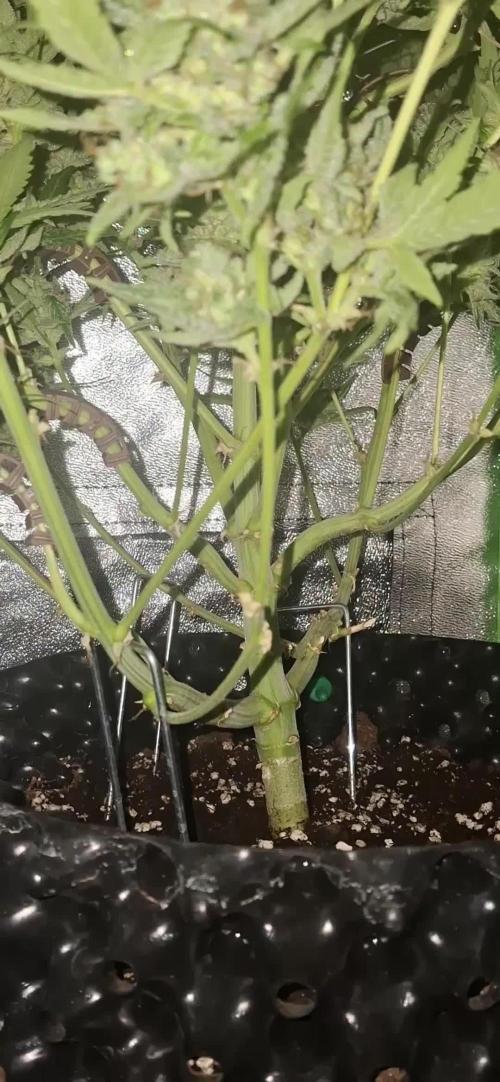
We're getting closer to harvest time, today I flushed with Flawless Finish from Advanced Nutrients. The scent is excellent and the trichomes at least 80% milky. It will definitely be at least 1 week (or two) before harvesting. 😻😻💪
Likes
14
Share


@RealPuffDaddy
Follow
End of Week 5B, pics are chronological since the last update. Hard not to take daily pics these days. Zero issues this week. Flushed her good before the midweek feed with about 5 gallons ph to clear out any buildup. Buds are becoming rock hard and I also changed her to 13 dark hours daily. Introducing Overdrive the next feeding so expect some bloom blowup for the next update. Till next week.
Likes
9
Share


@JoeyGonz
Follow
Plant was easy grow.. Kept it small so I got a decent return two thick budded no stem ounces..
