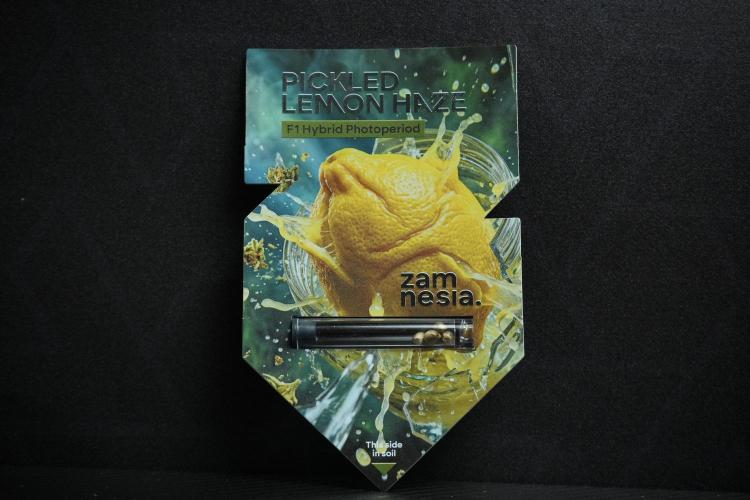
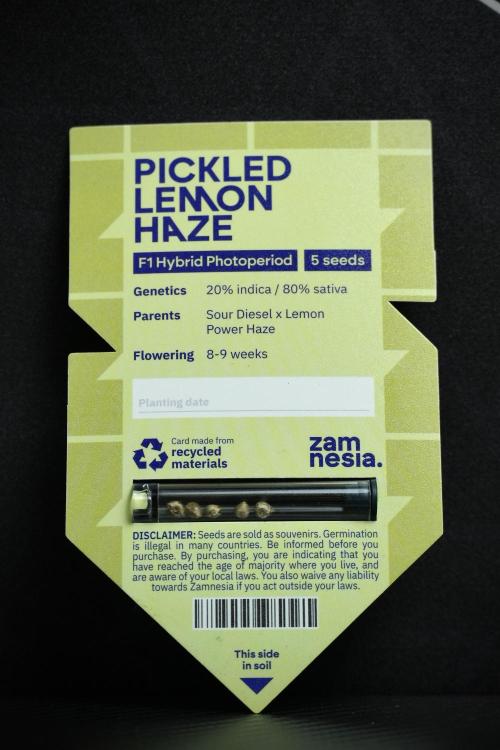
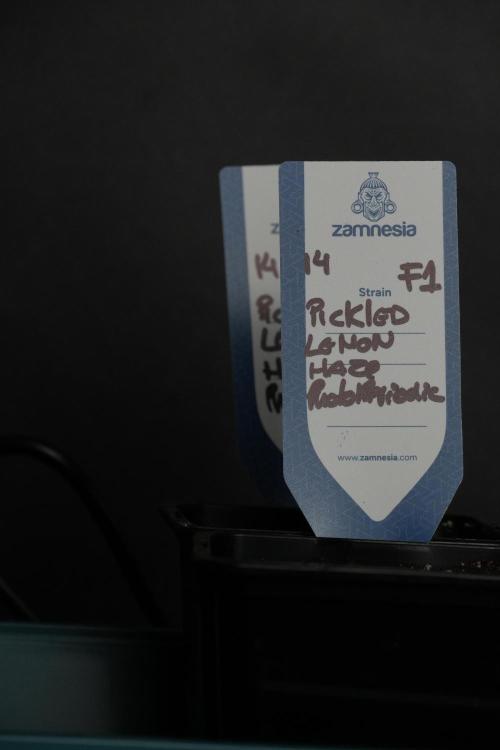
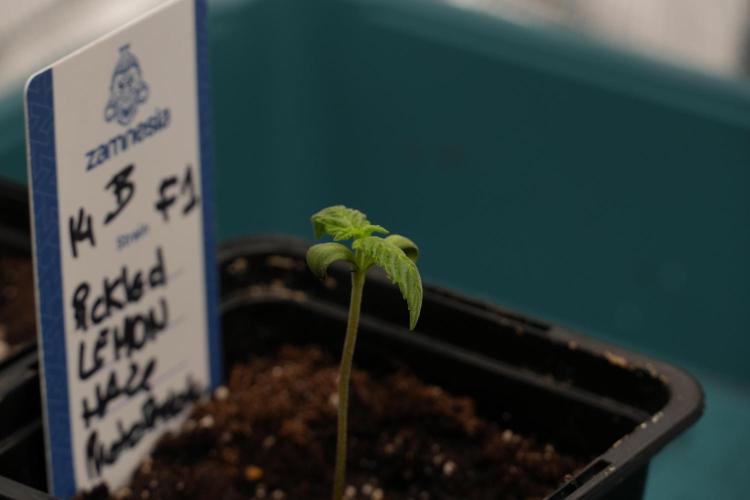
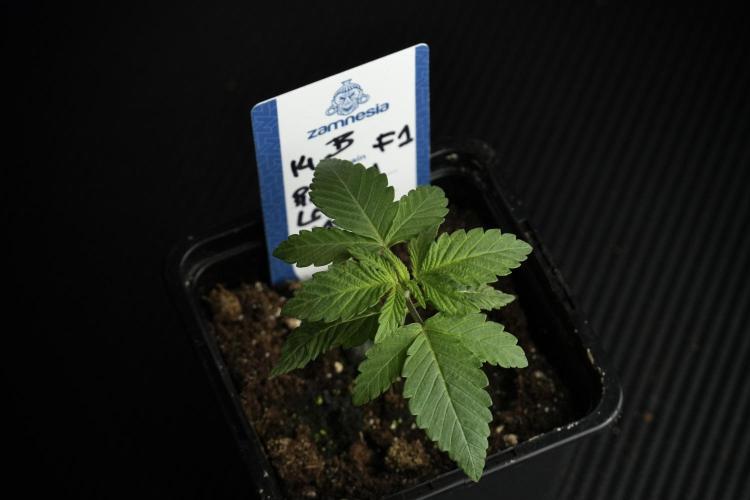
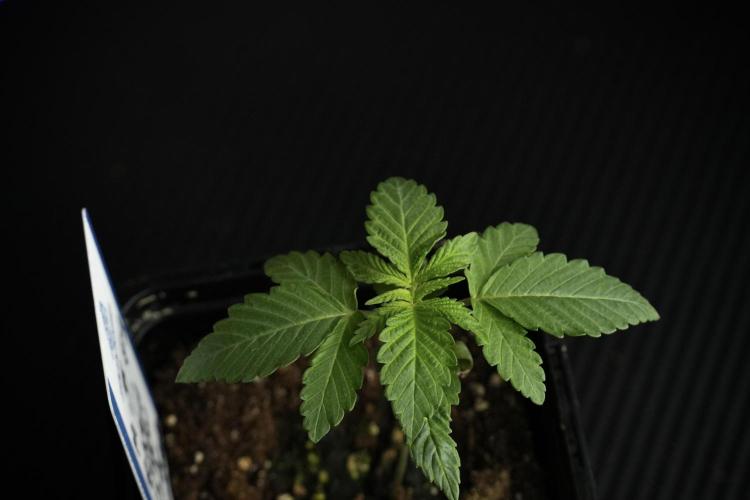
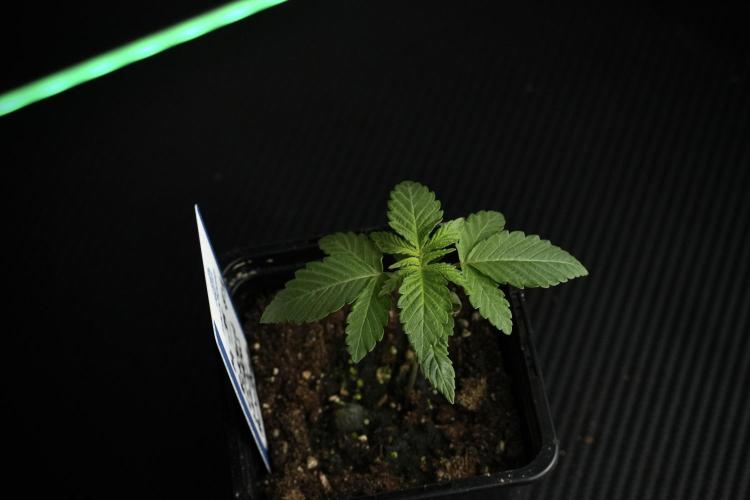
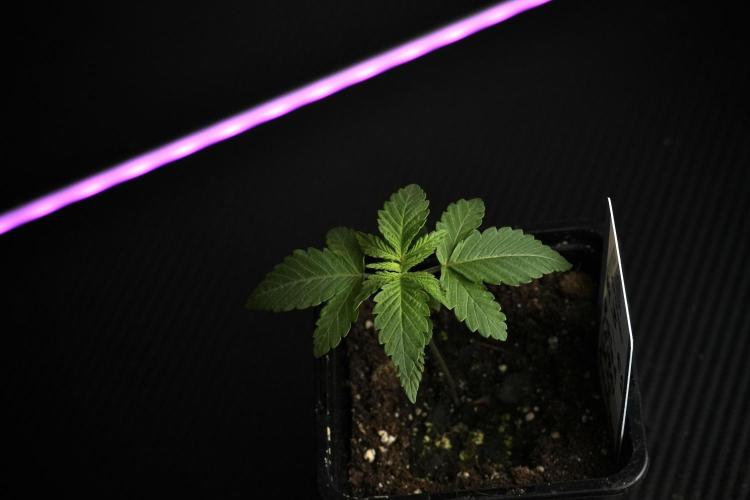
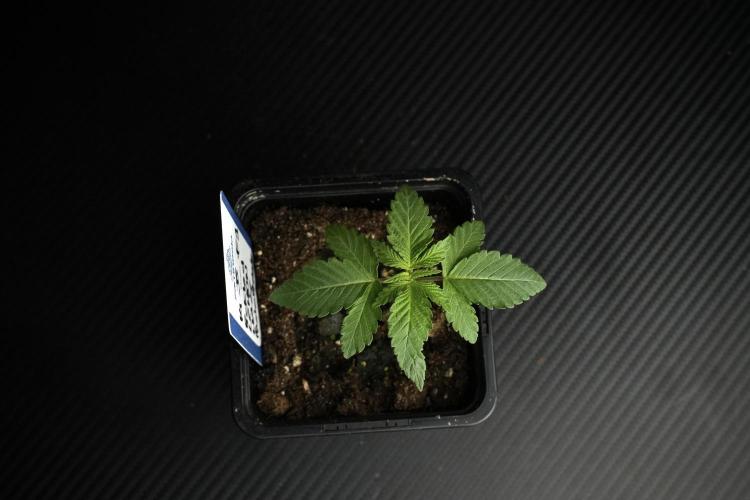
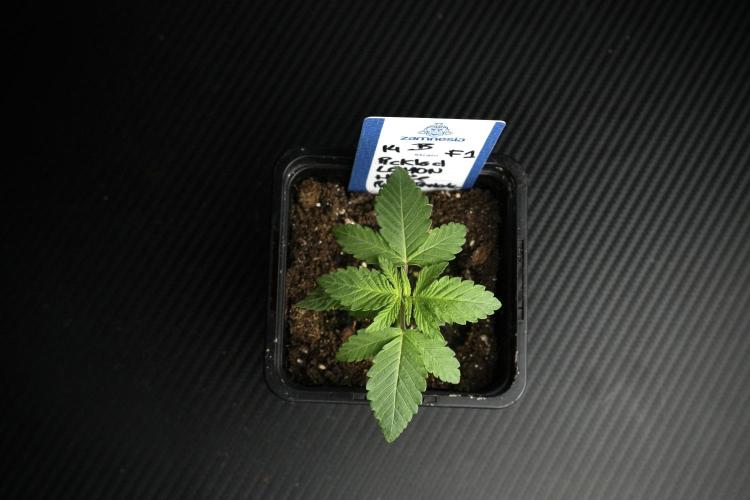
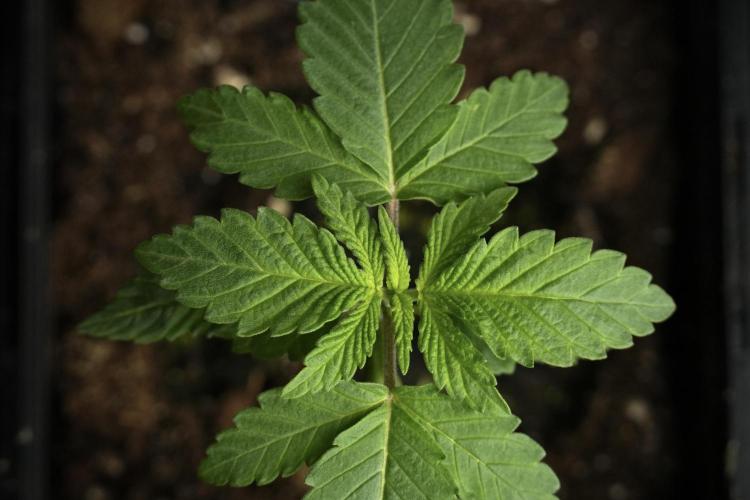
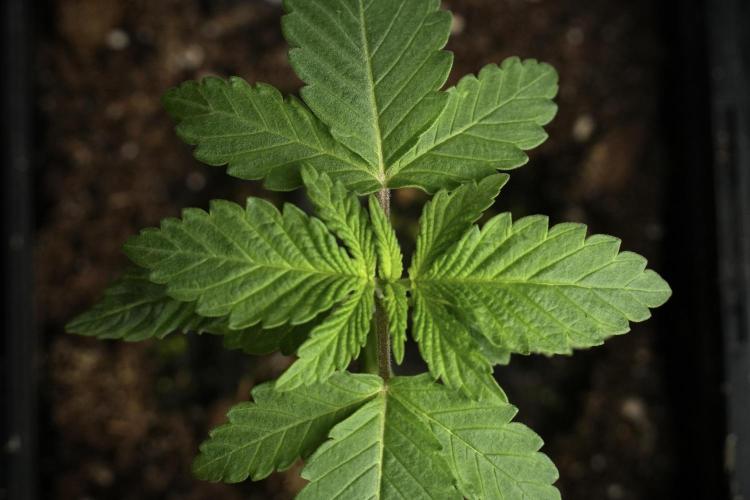
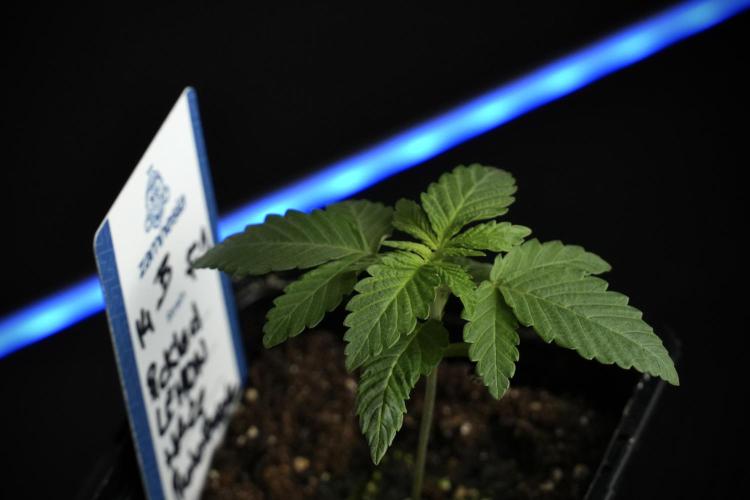
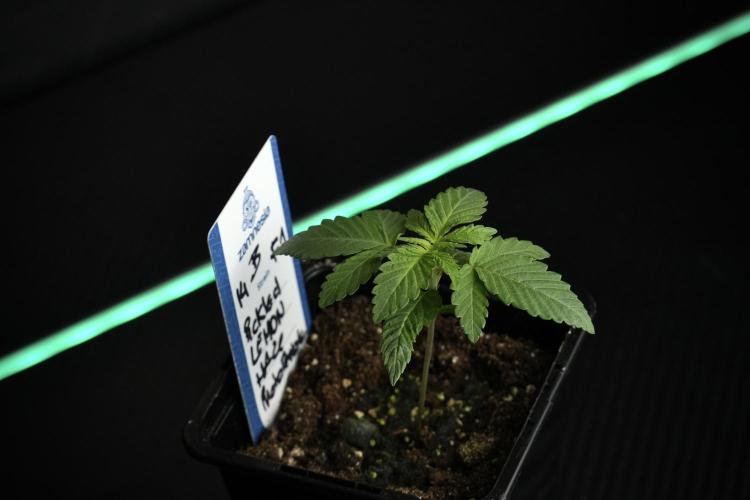
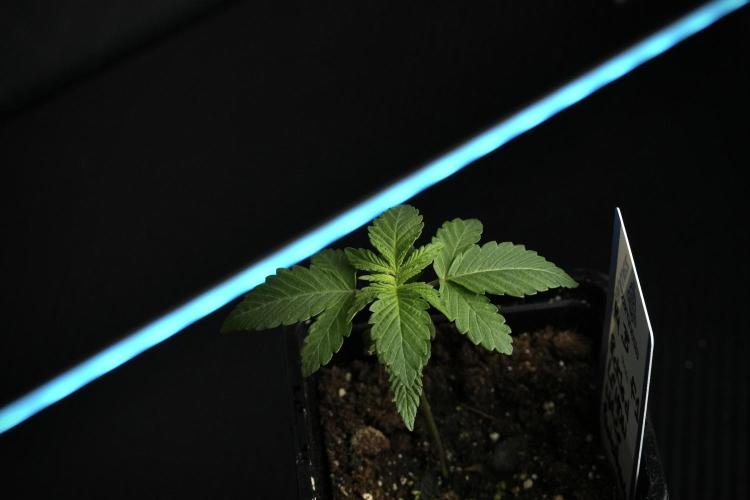
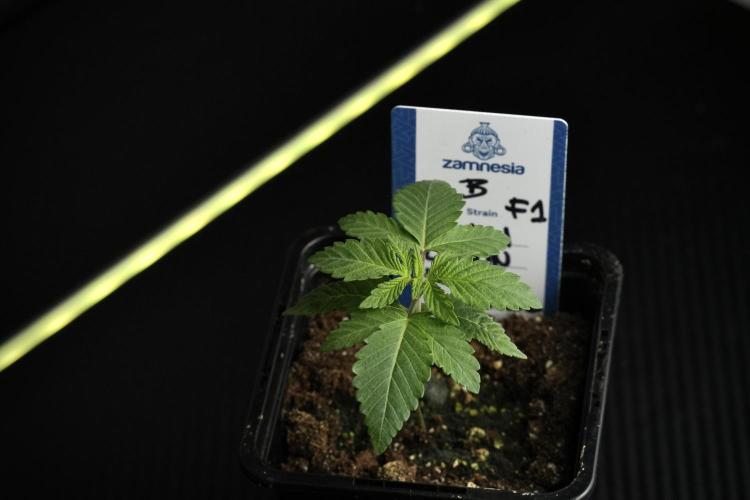
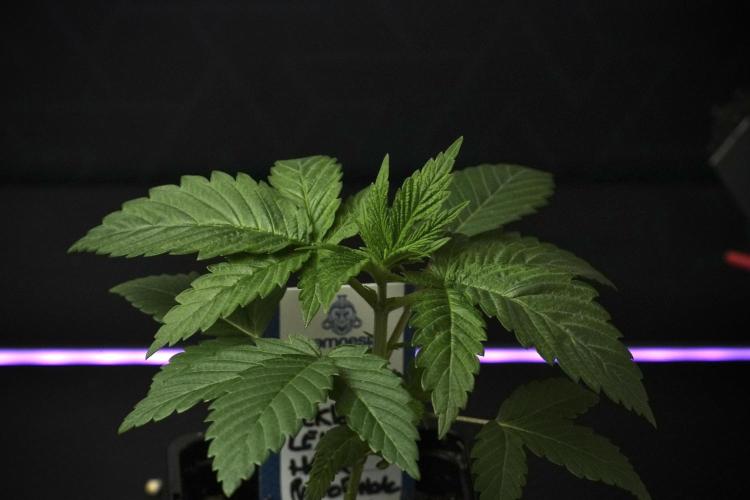
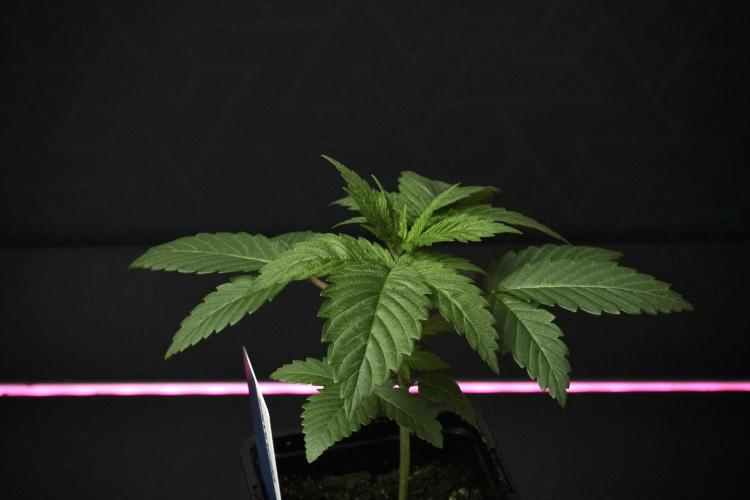
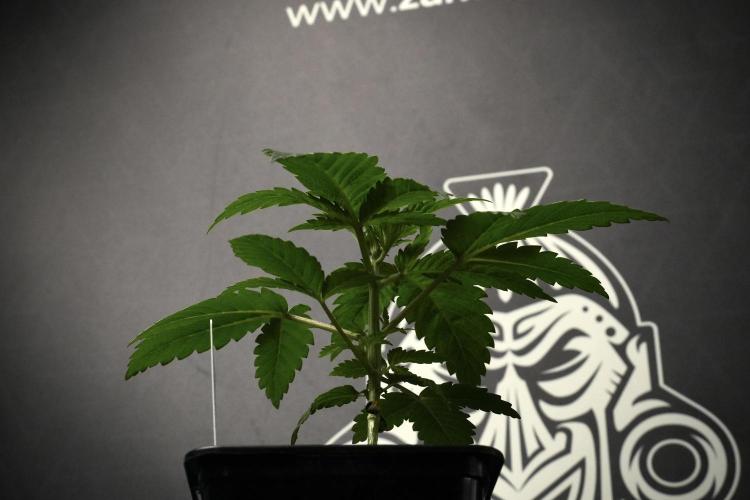
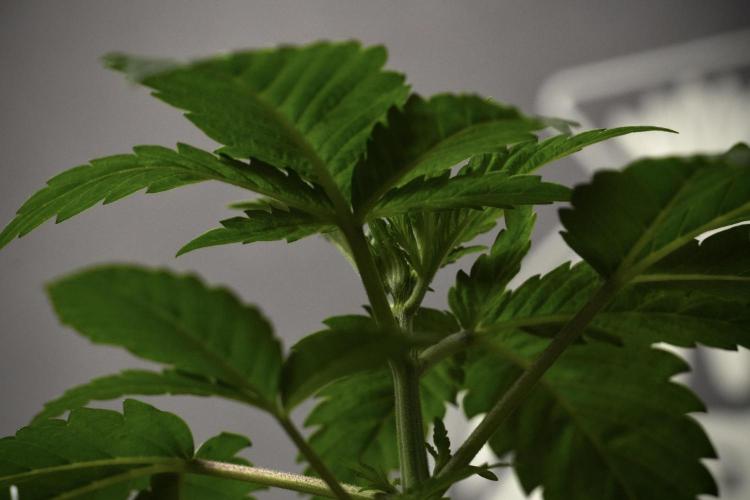
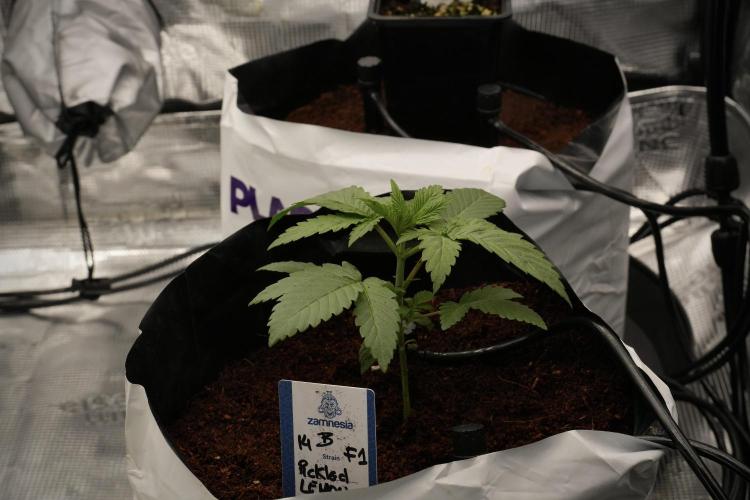
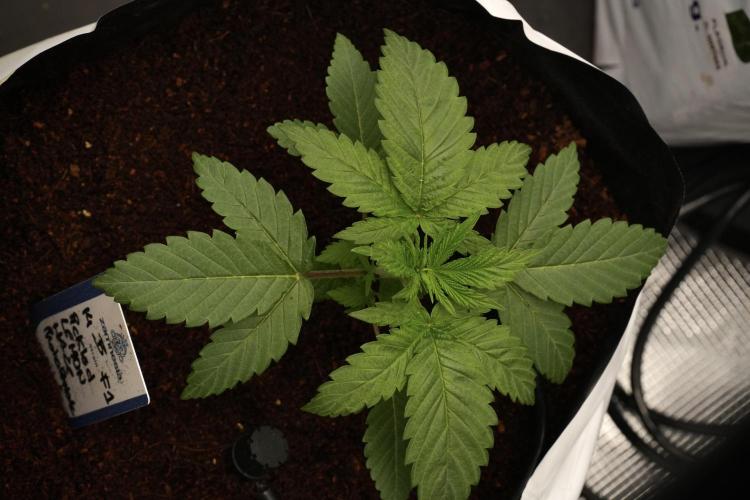
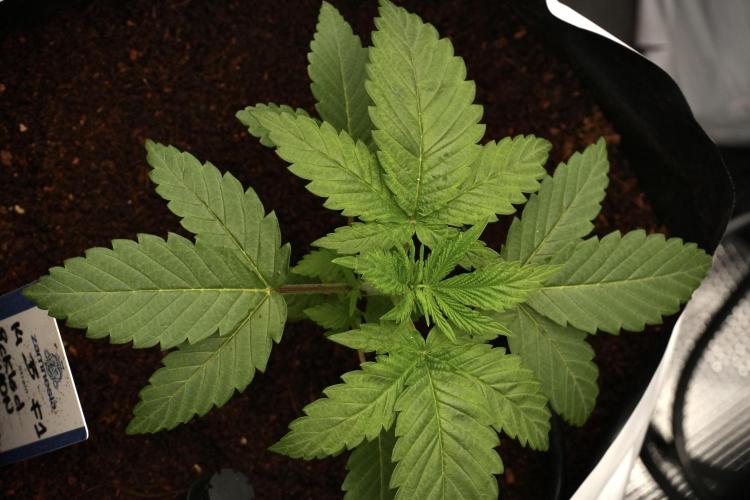
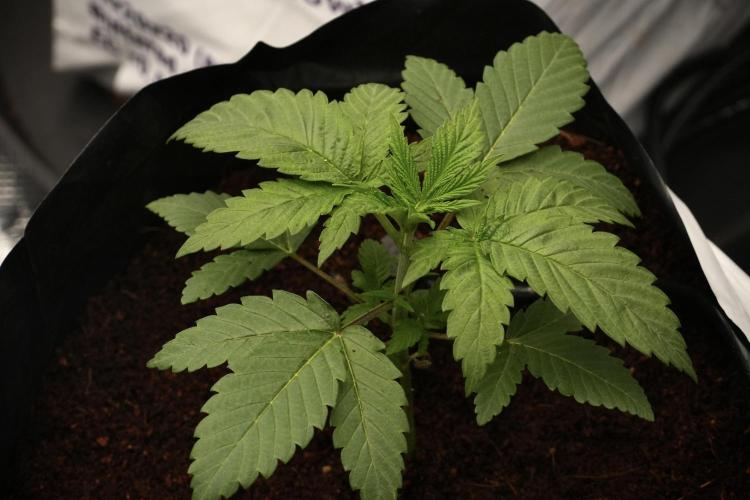
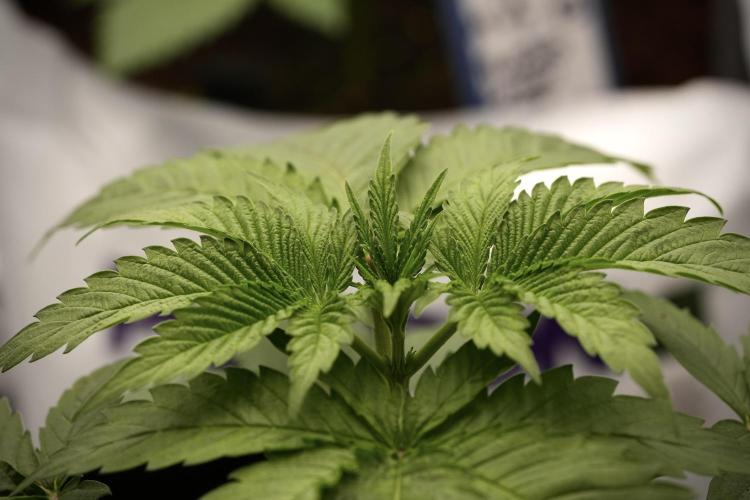
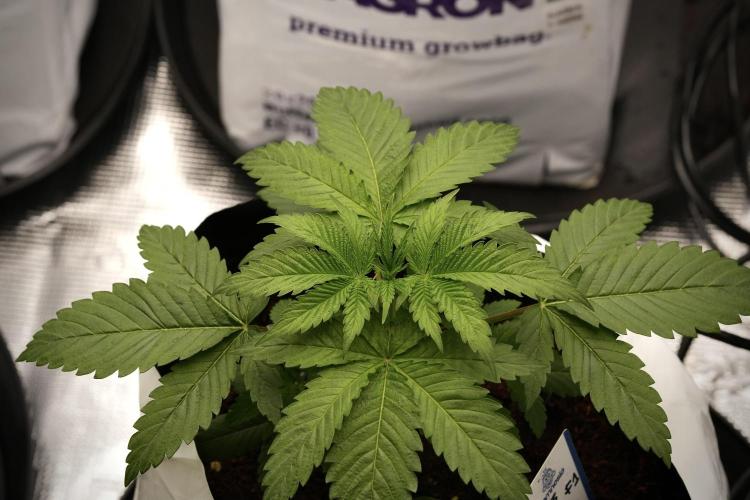
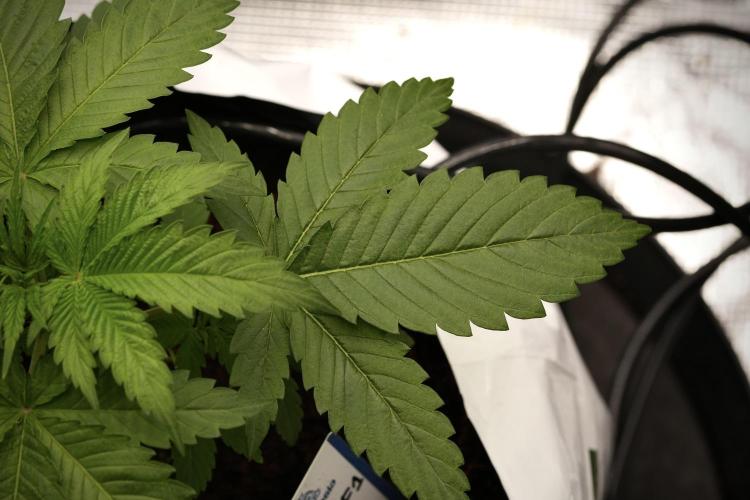
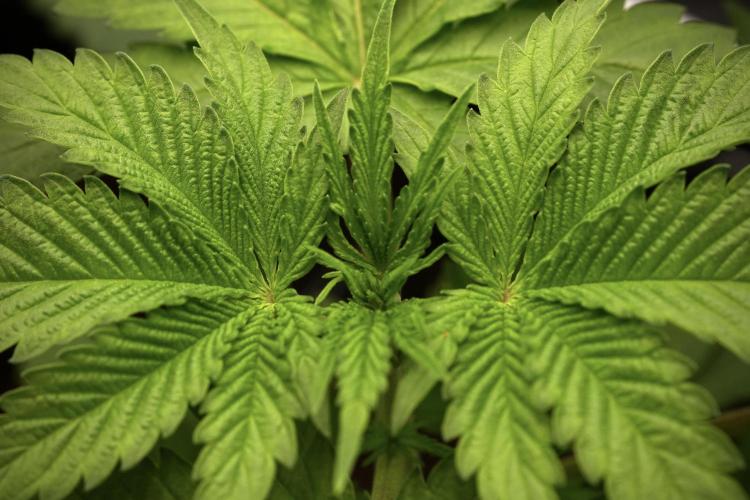
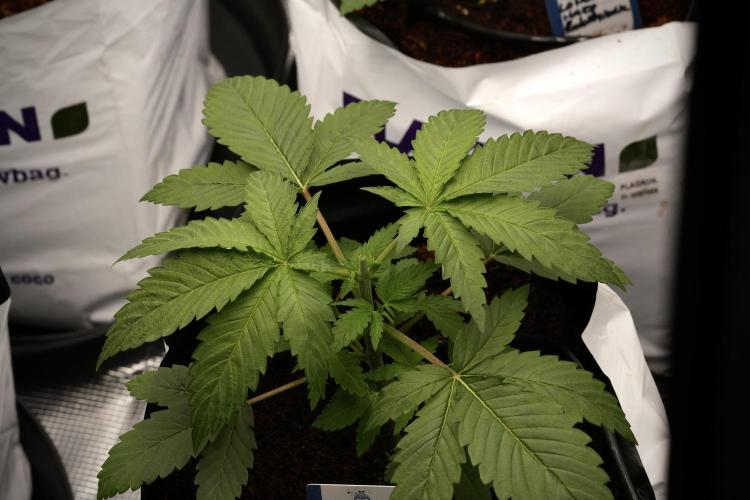
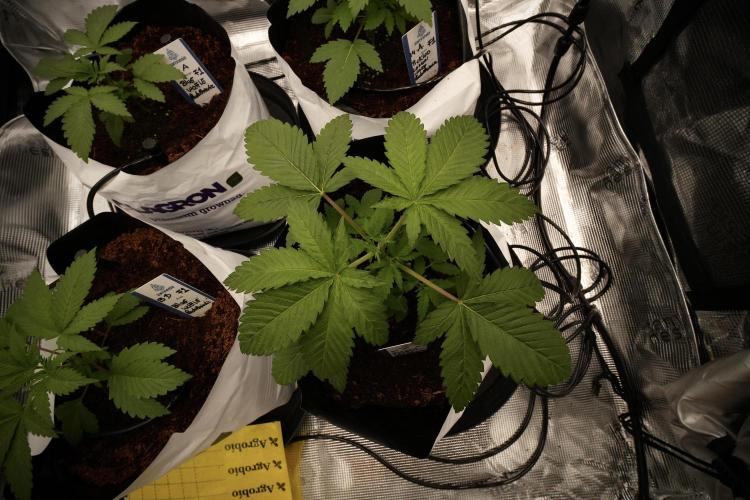
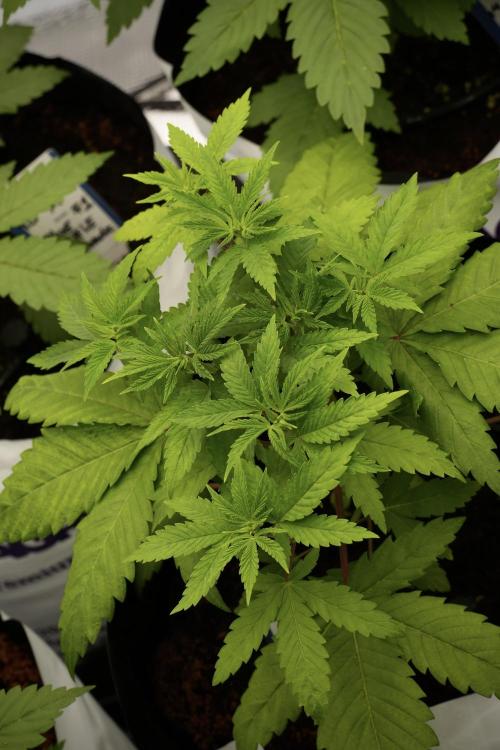
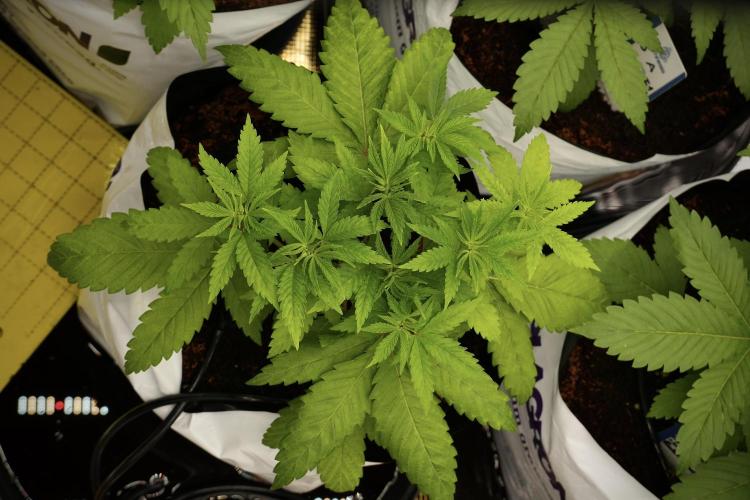
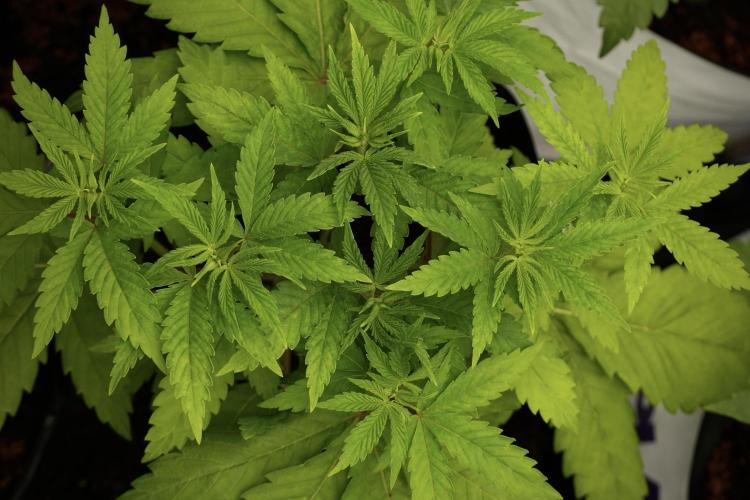
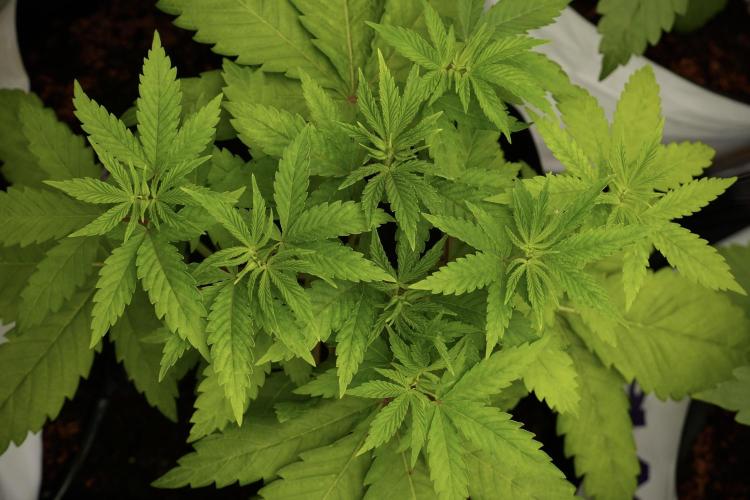
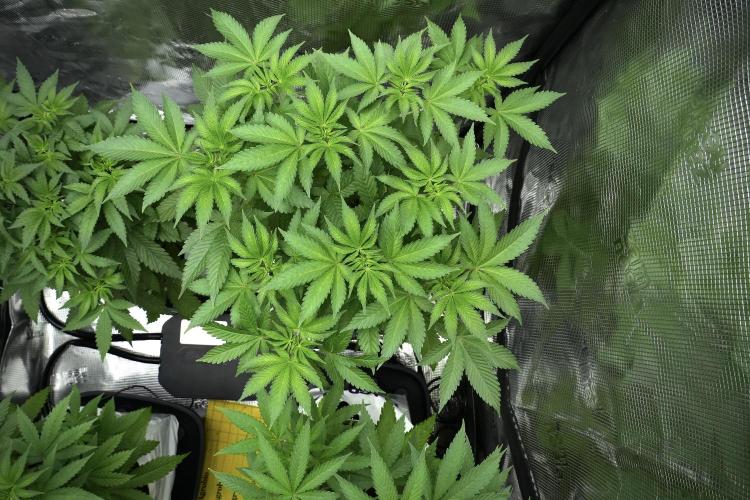
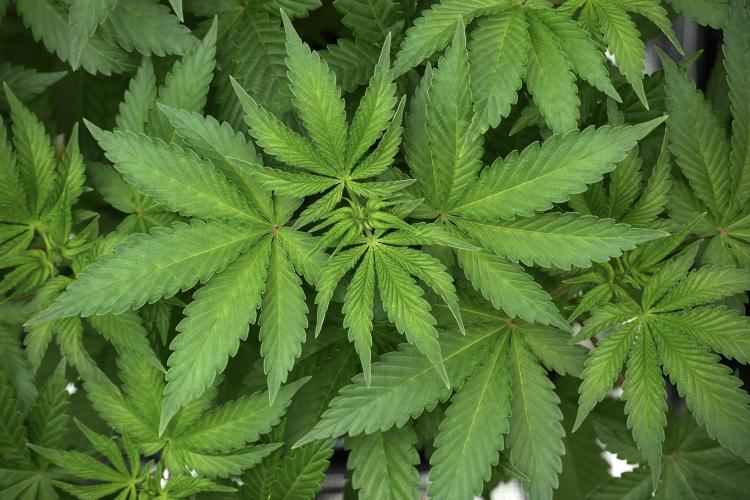
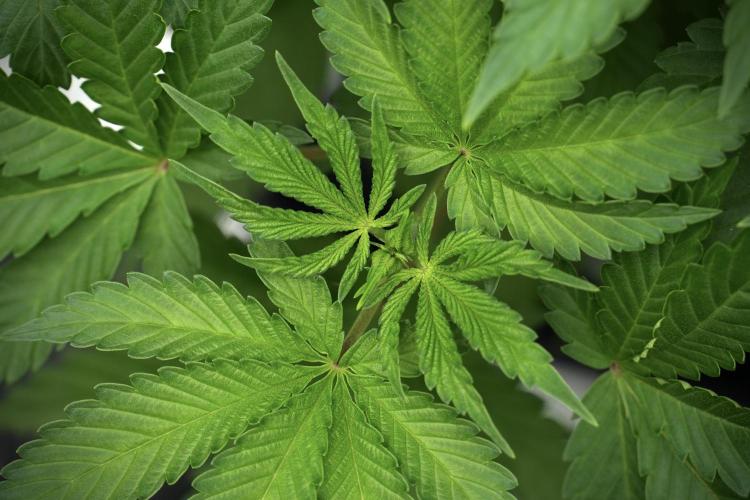
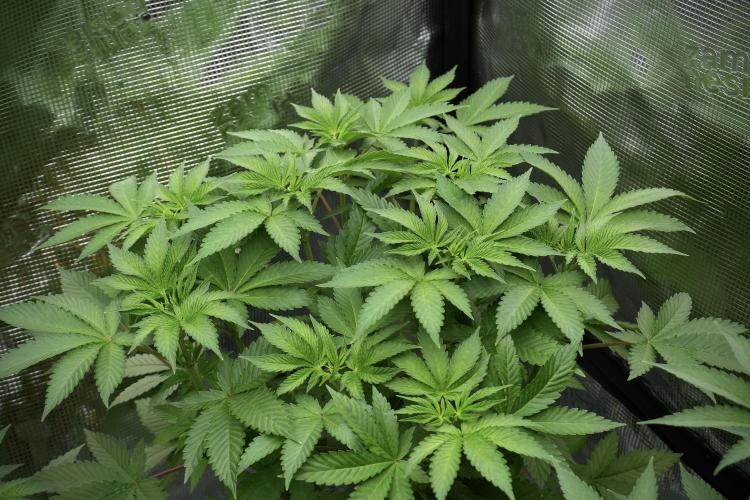
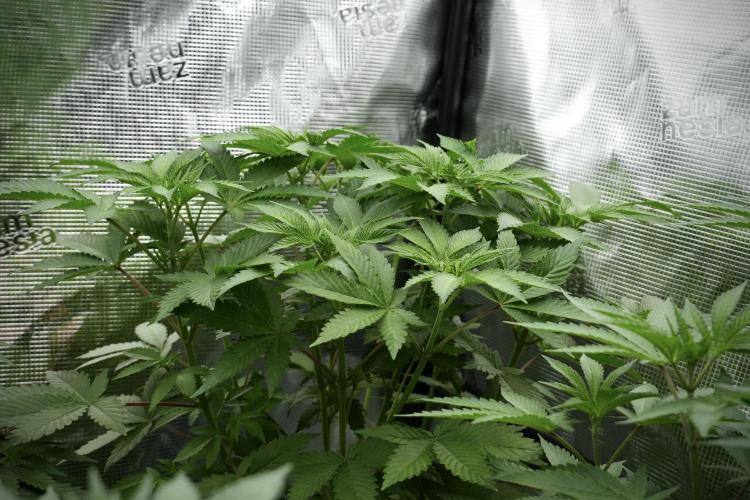
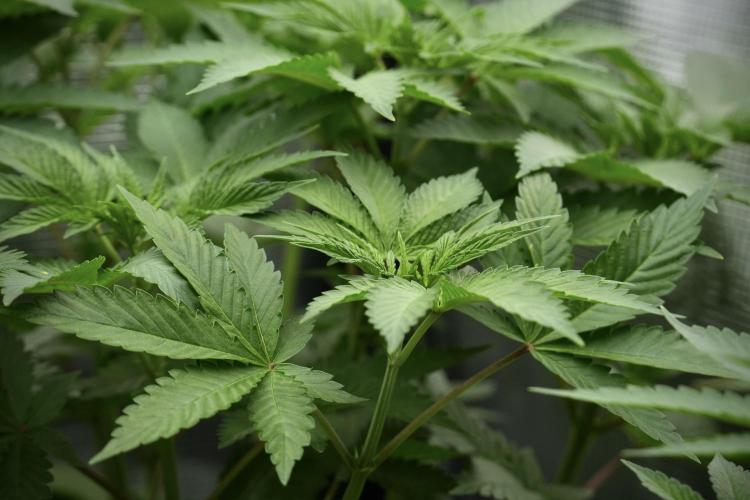
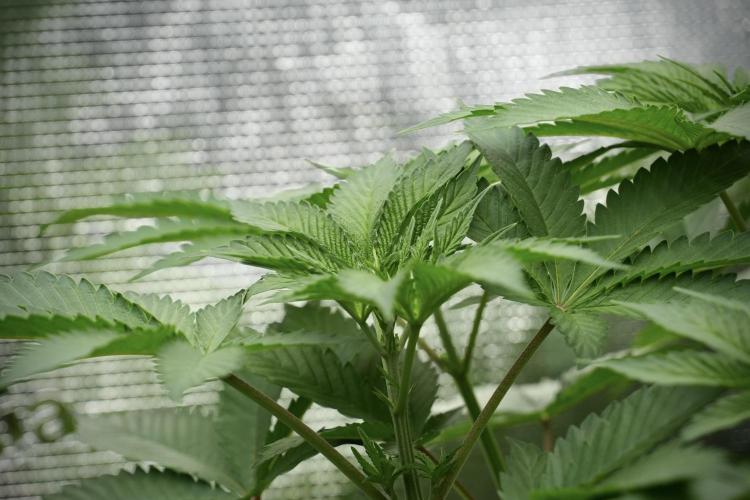
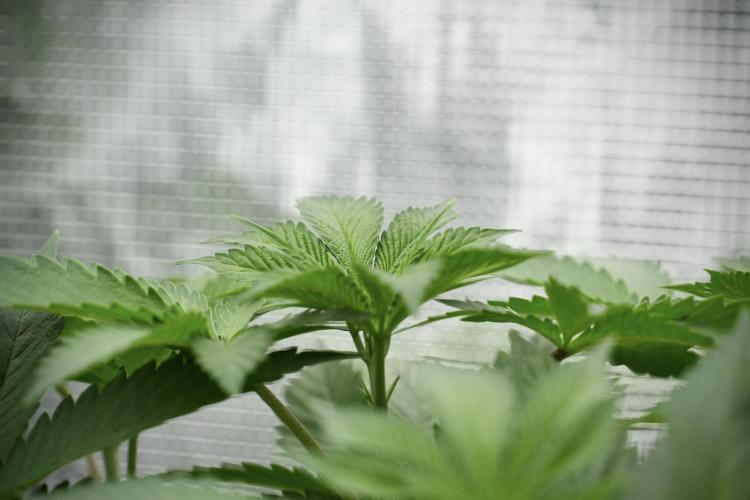
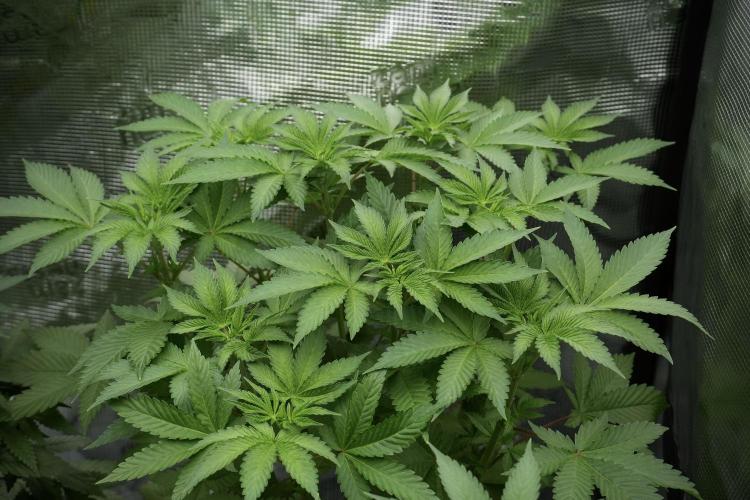
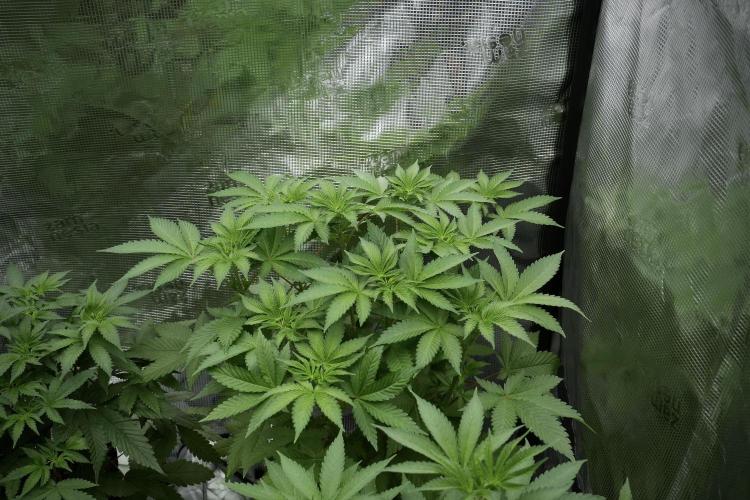
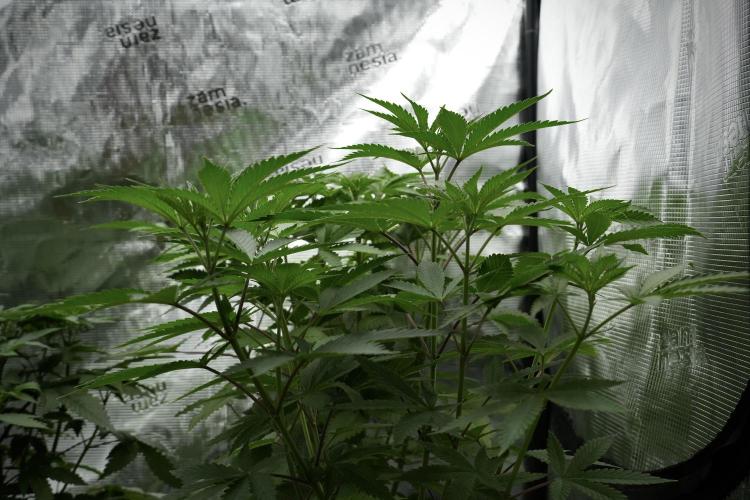
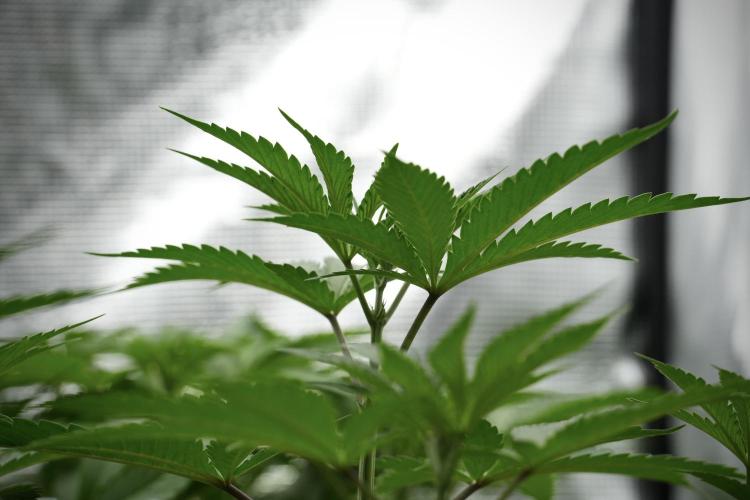
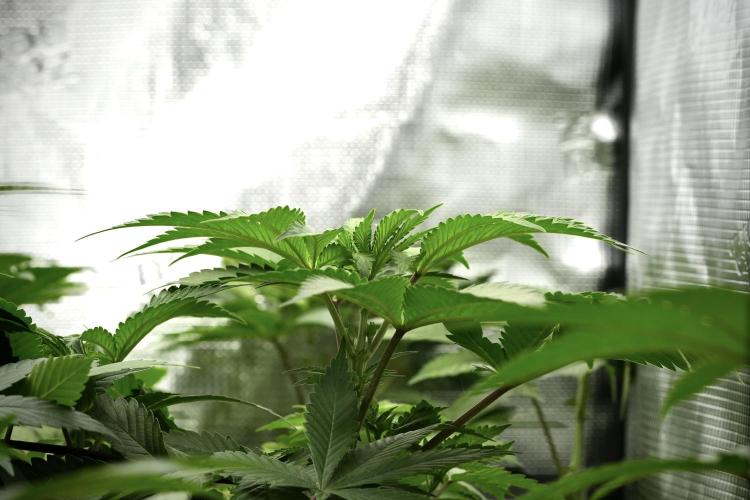
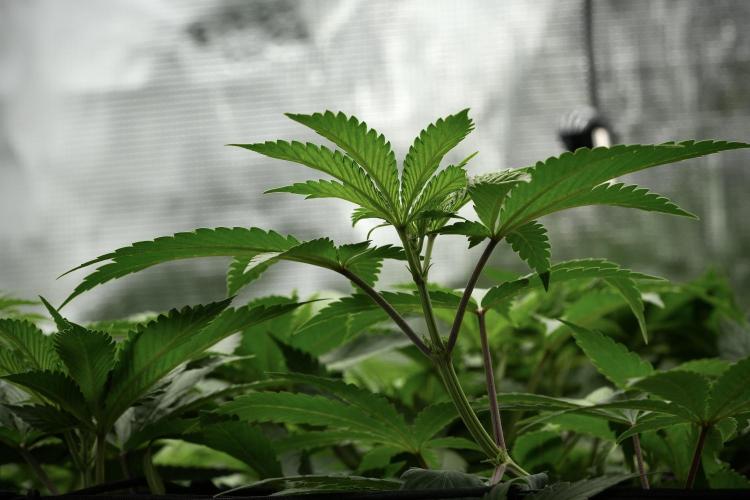
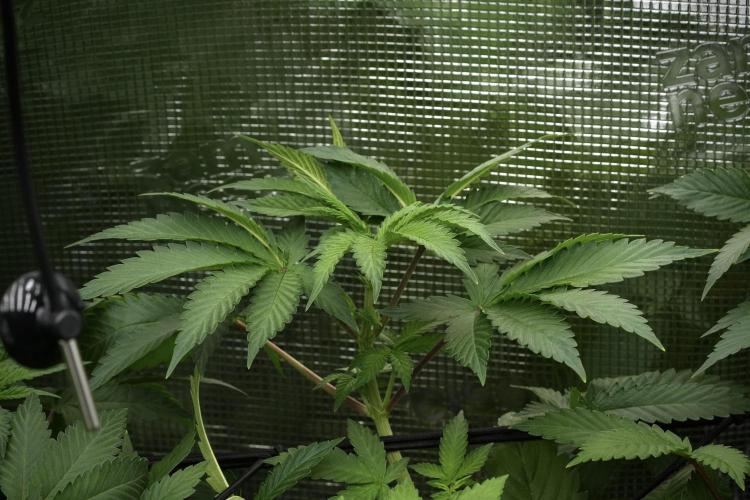
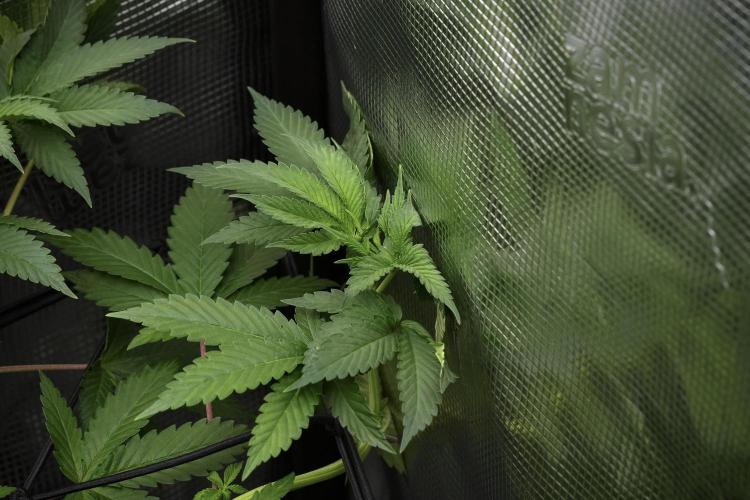
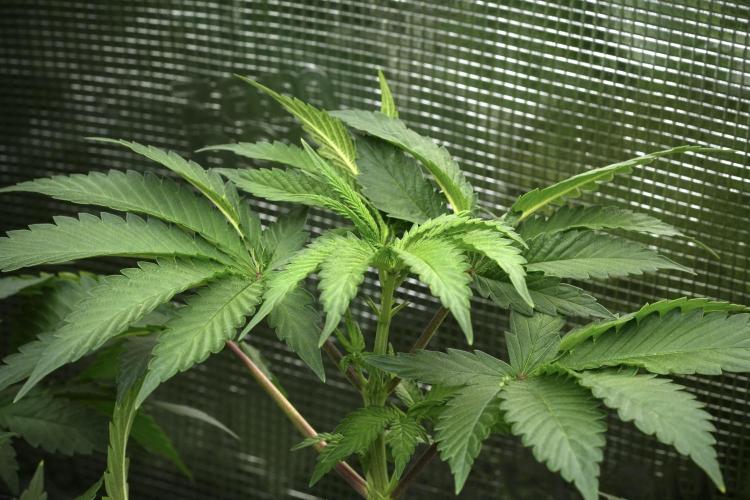
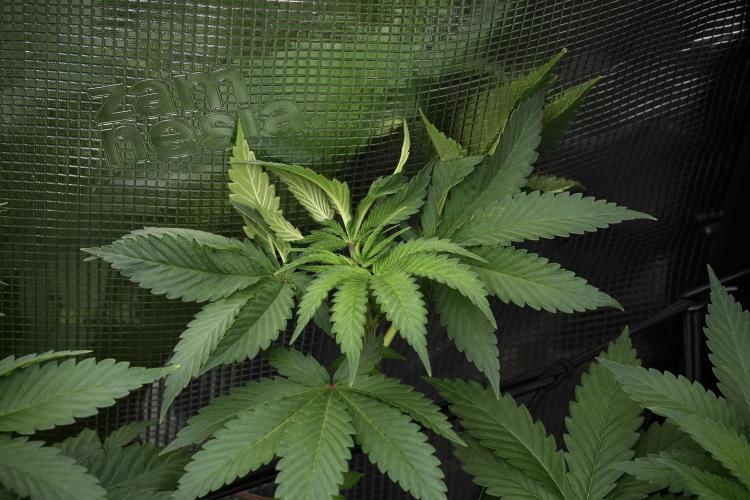
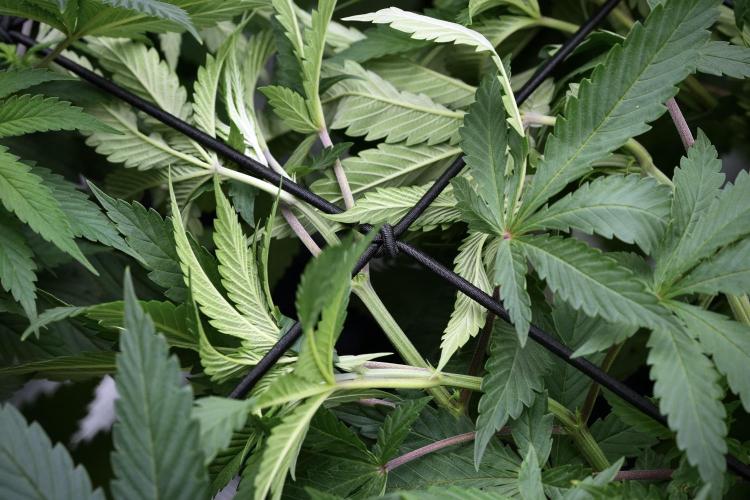
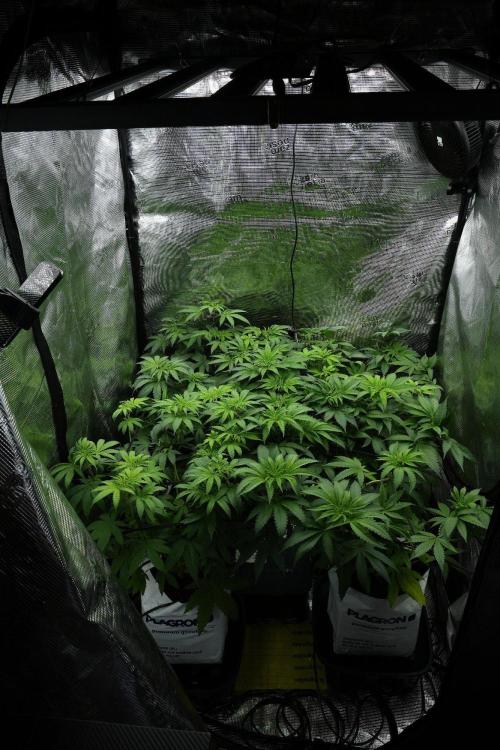
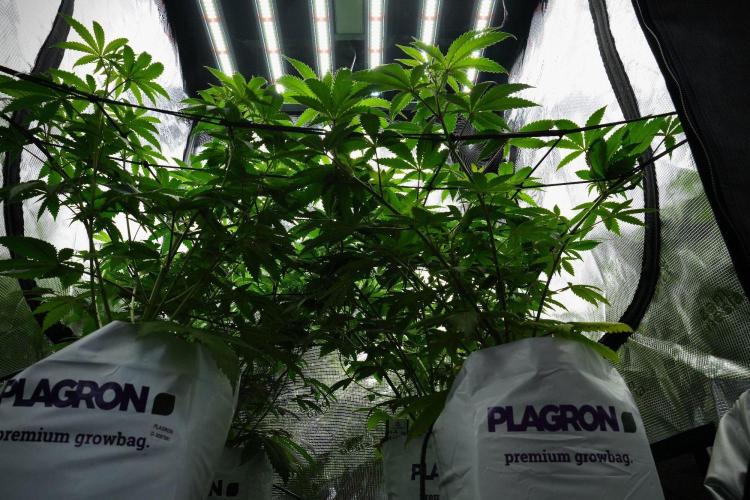
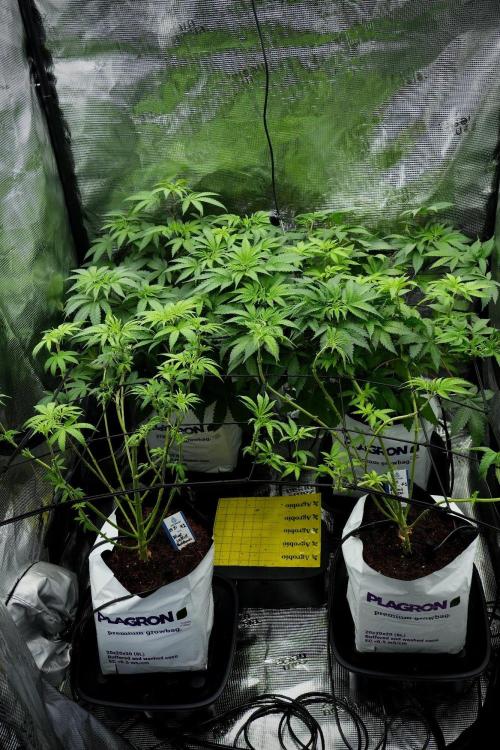
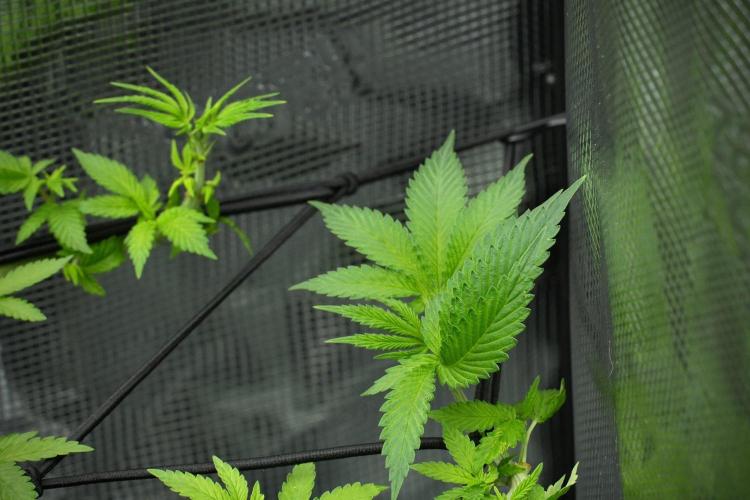
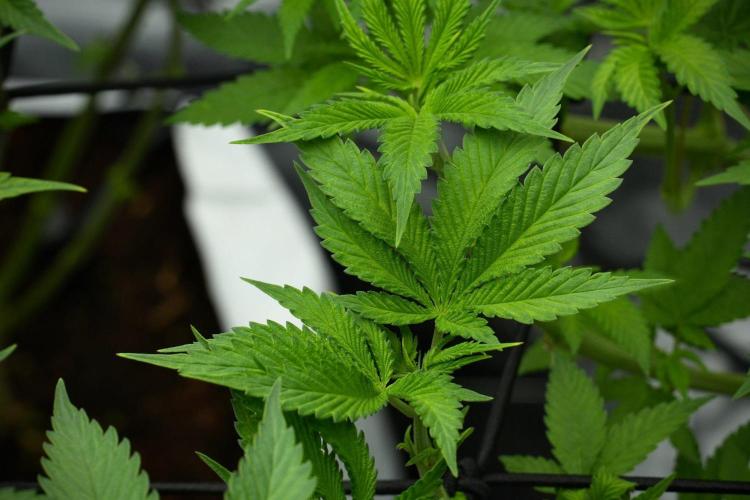
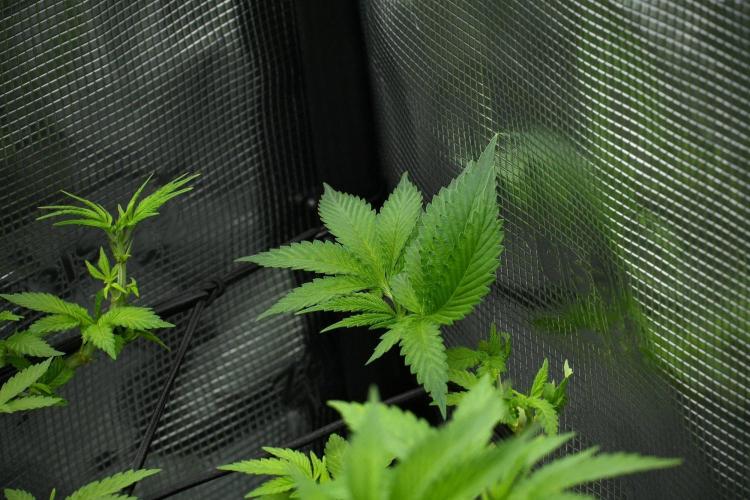
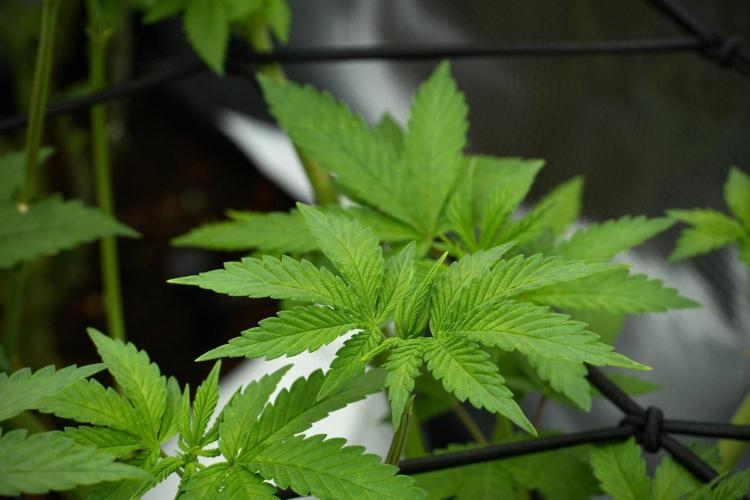
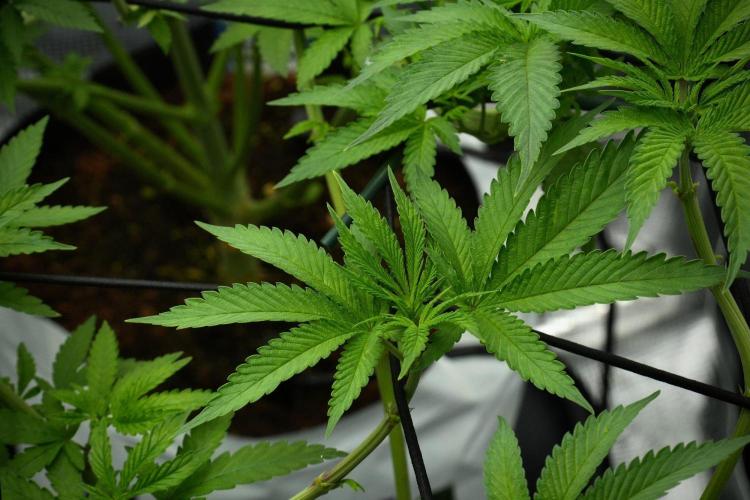
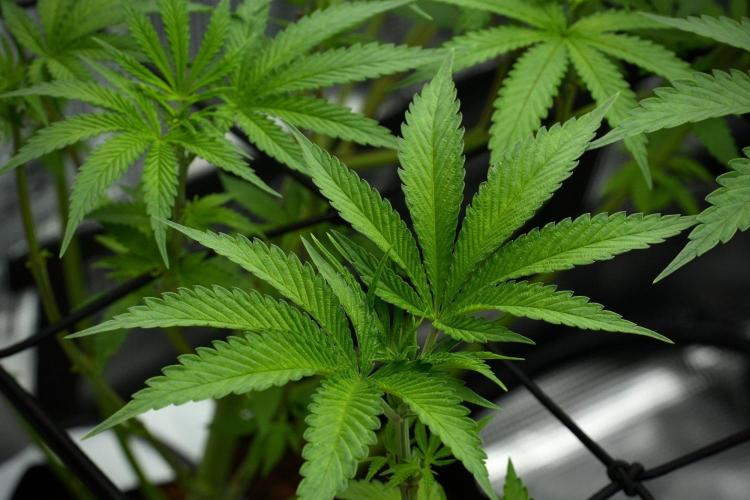
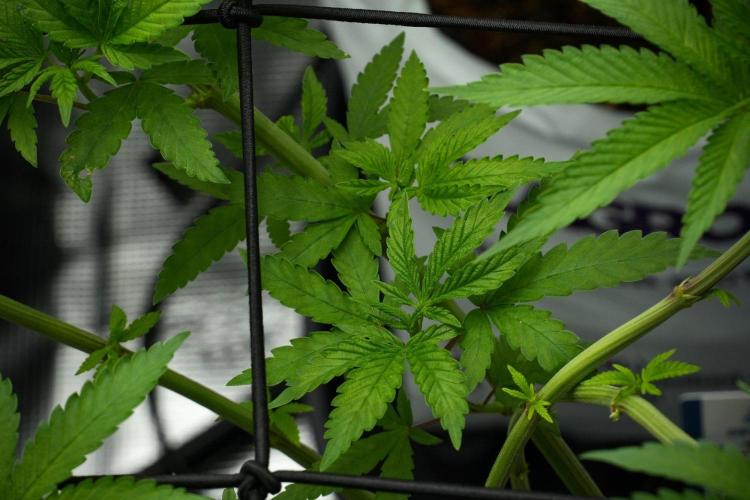
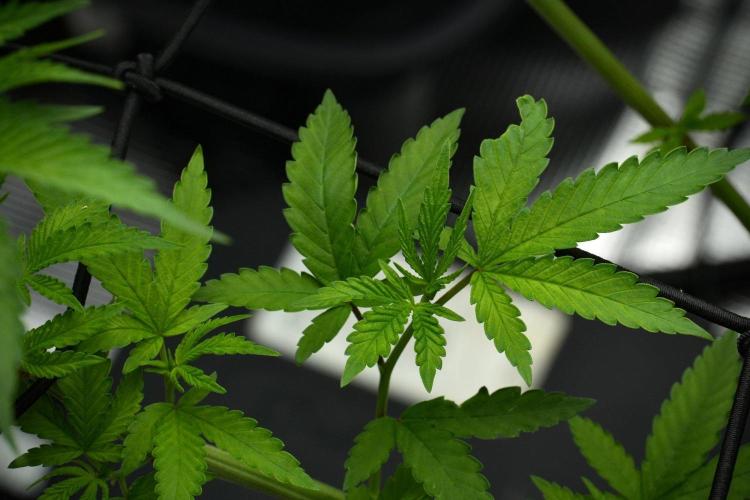
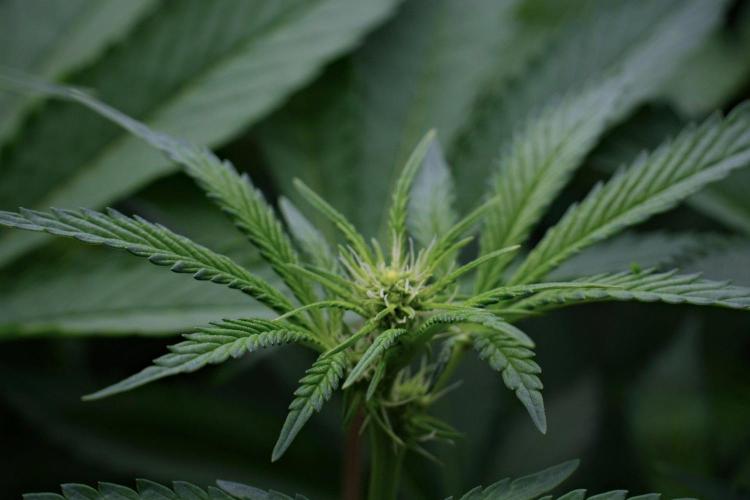
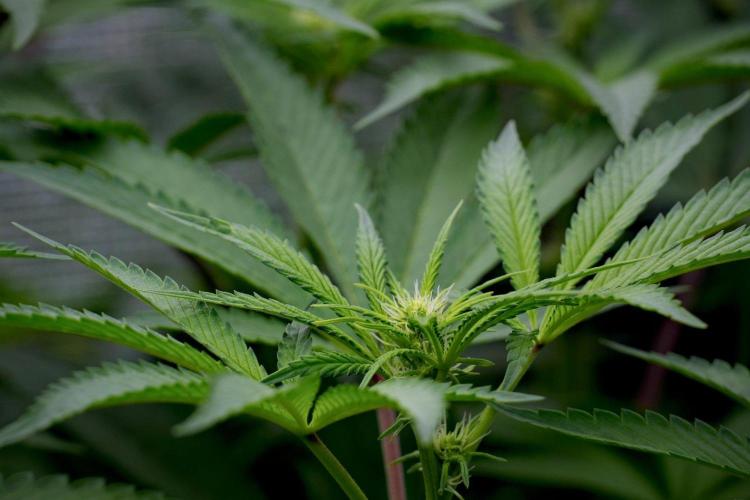
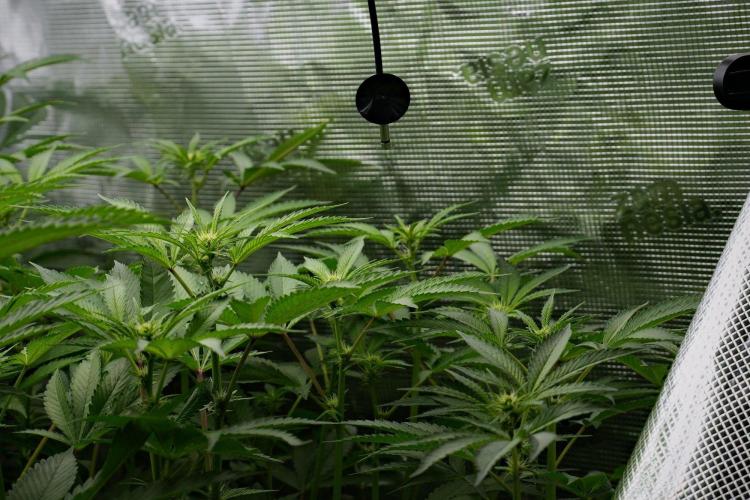
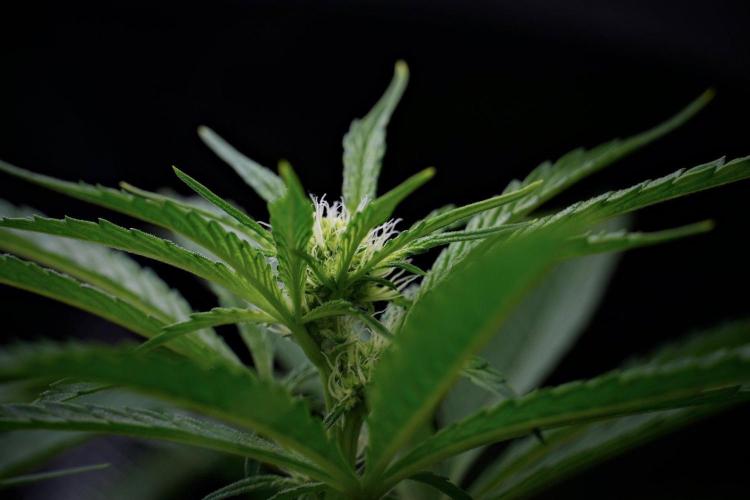
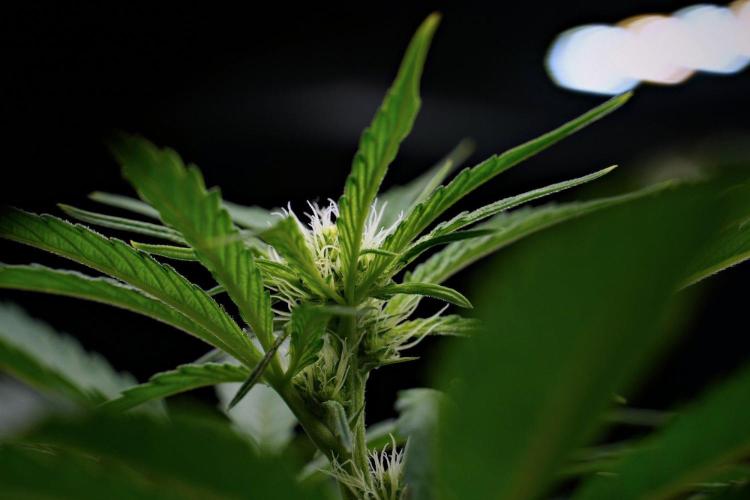
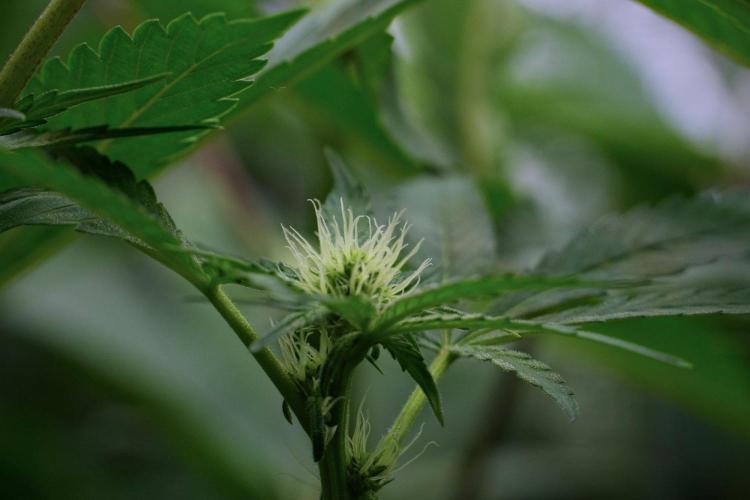
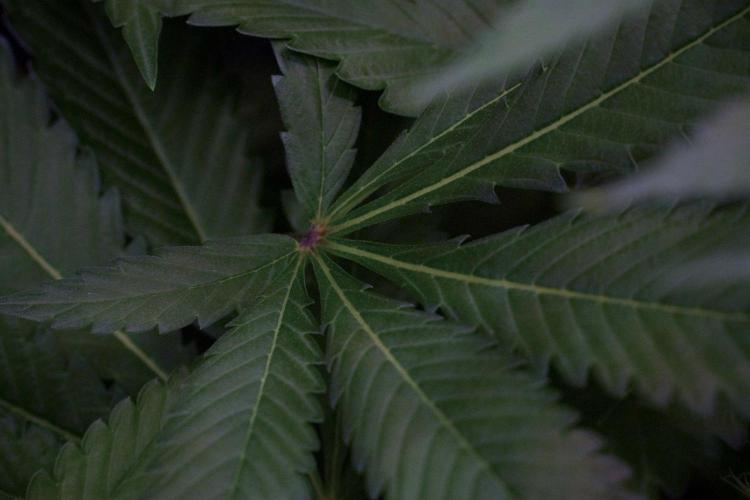
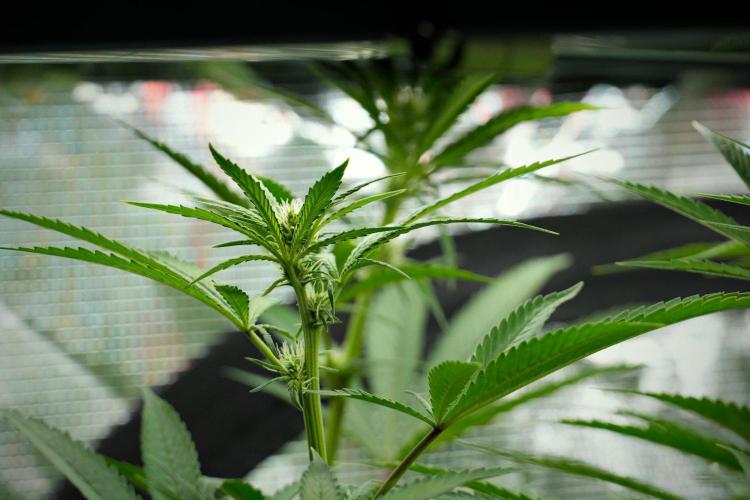
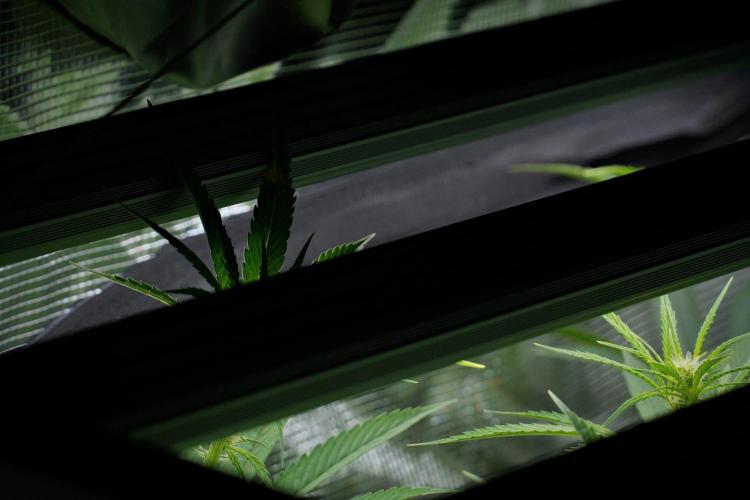
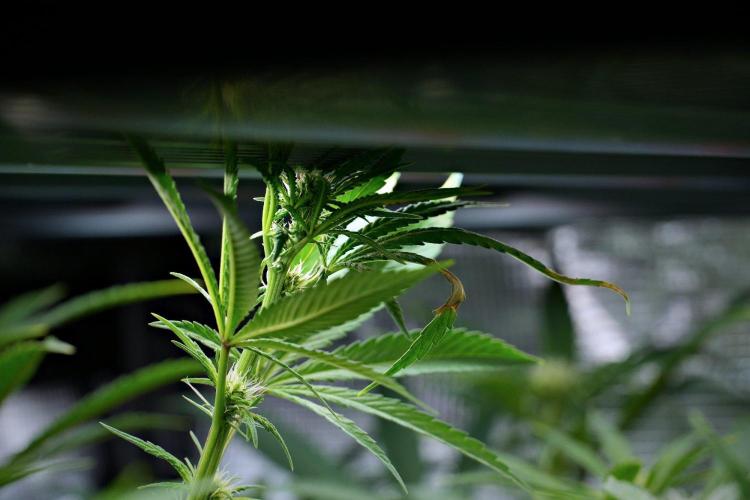
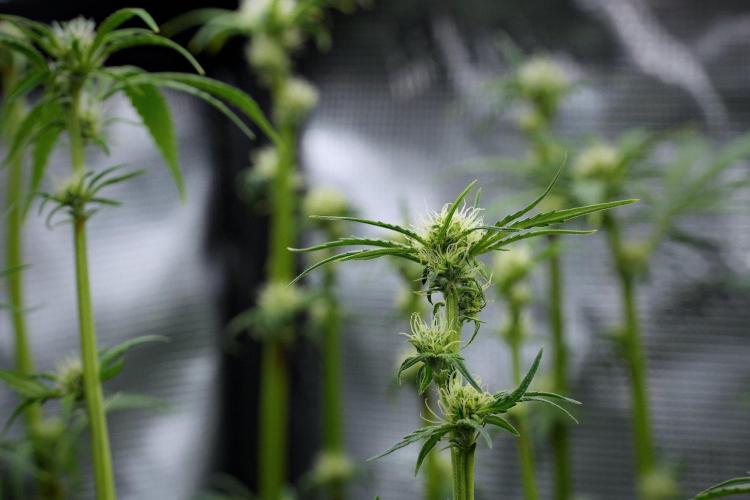
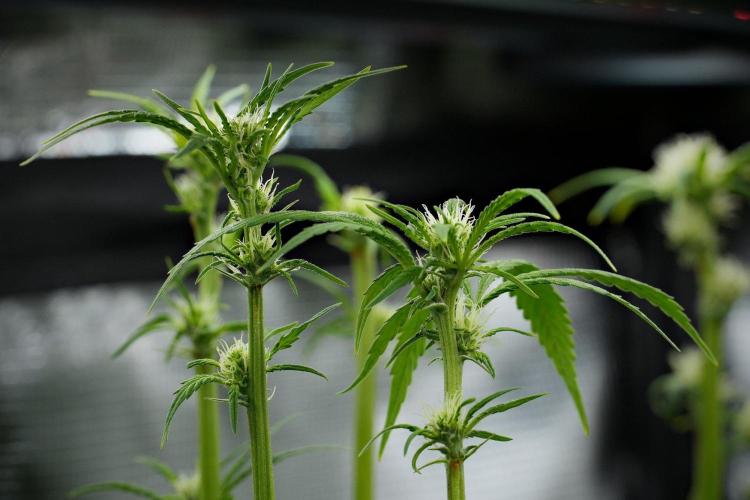
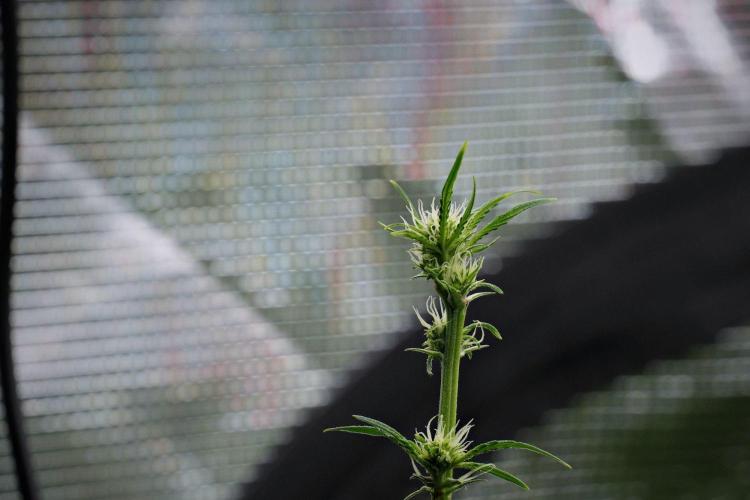
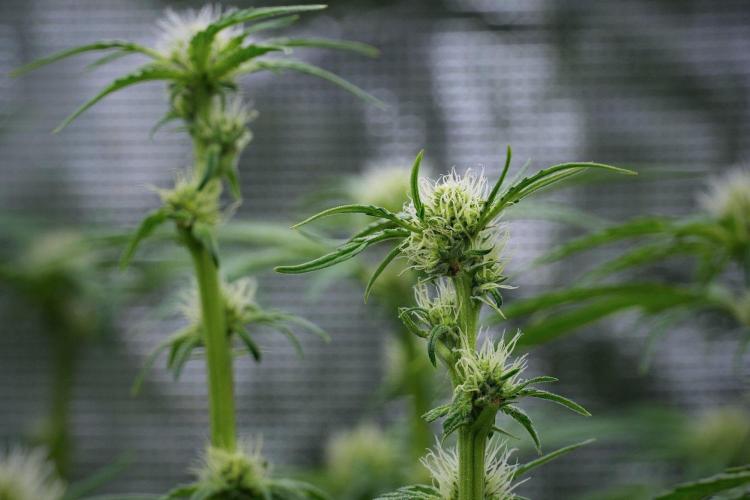
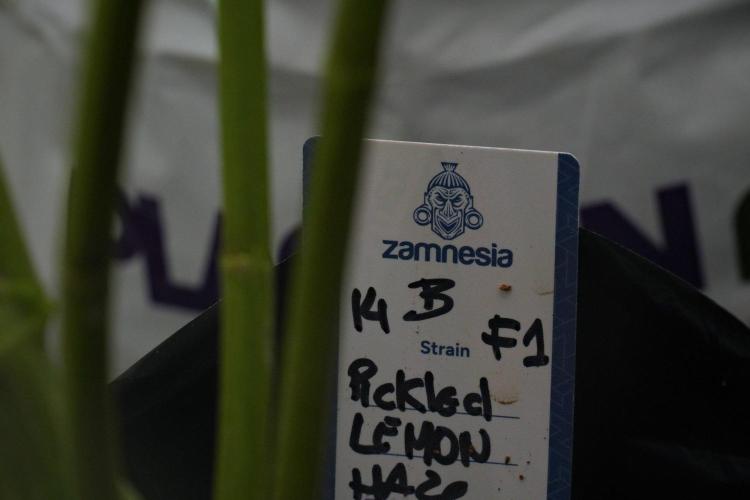
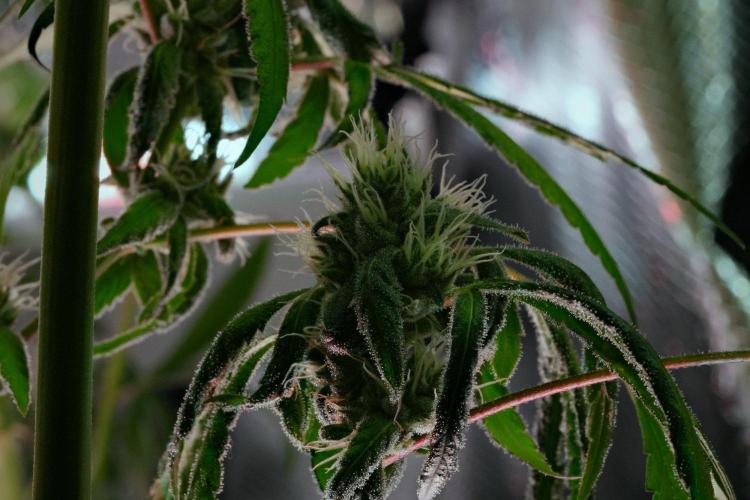
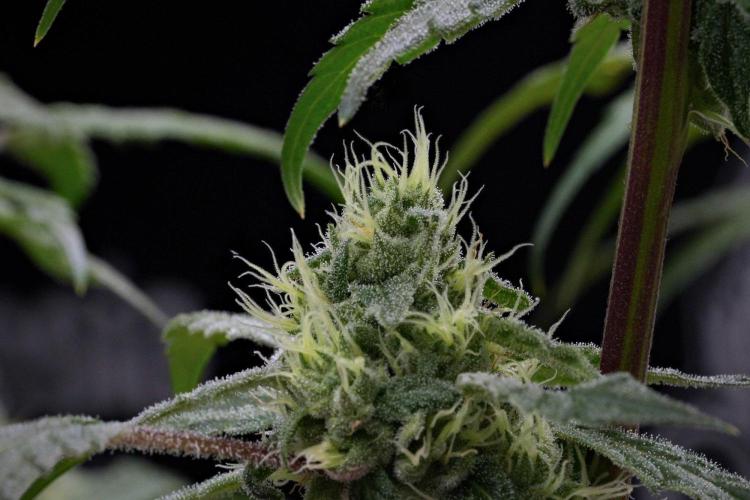
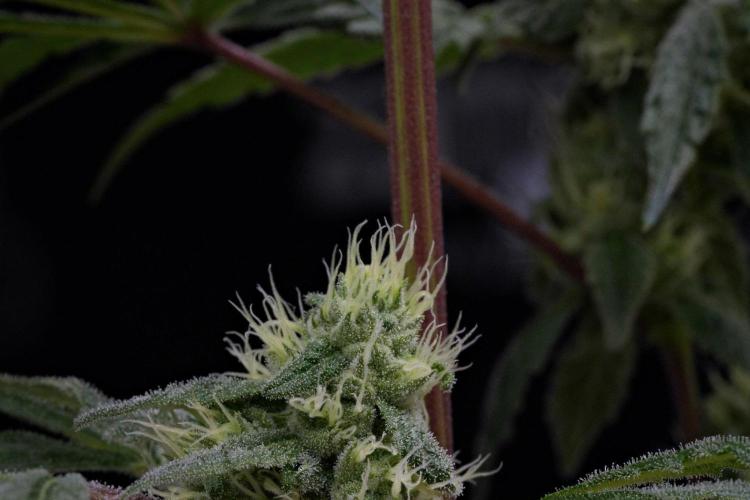
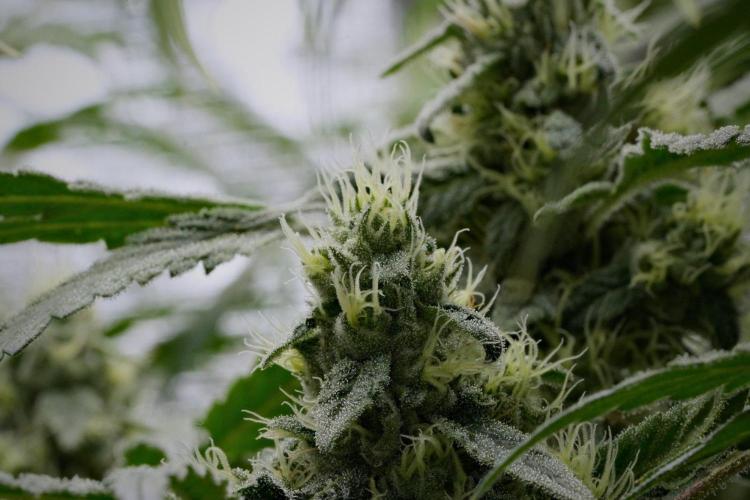
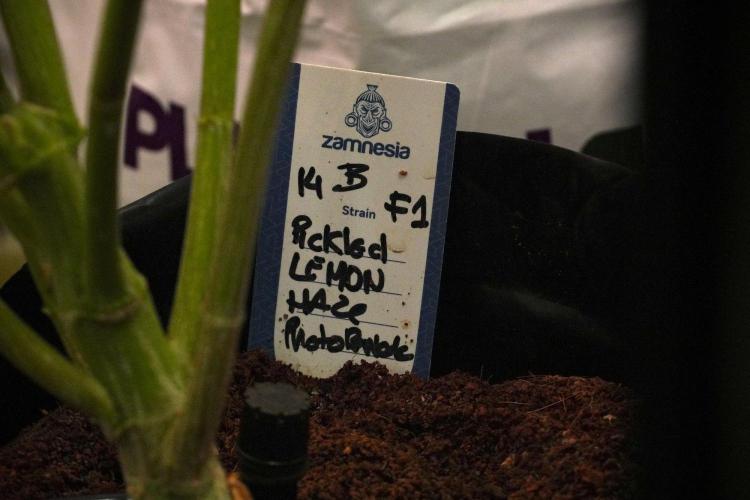
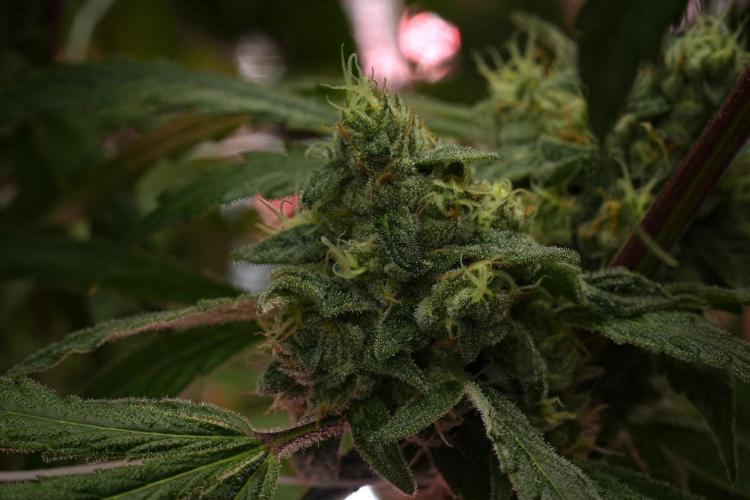
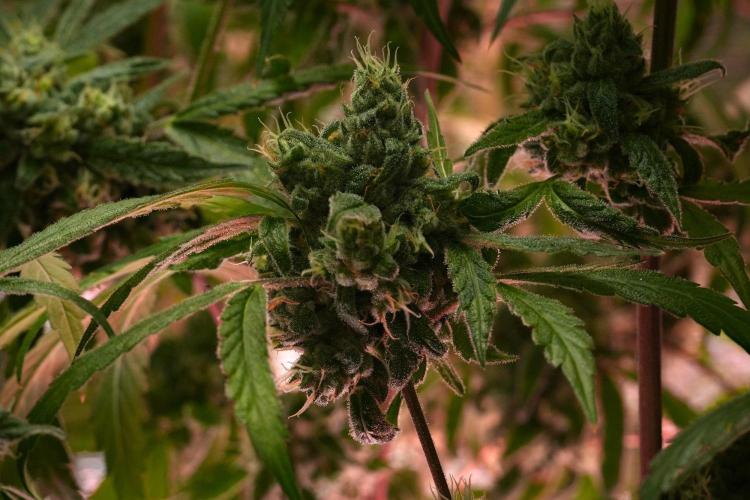
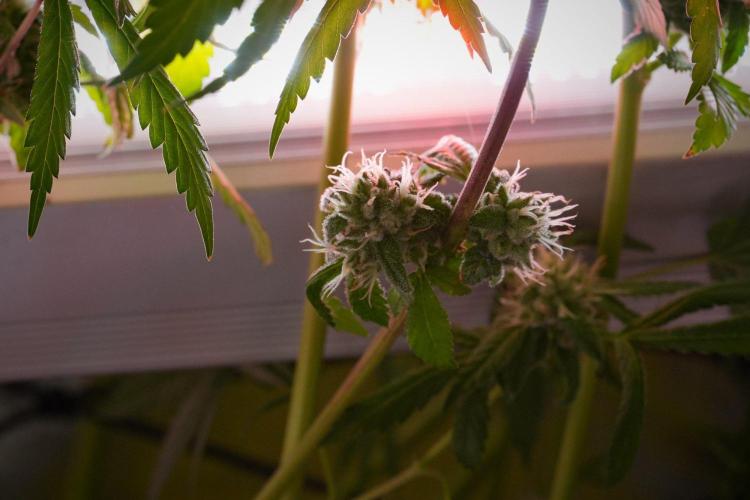
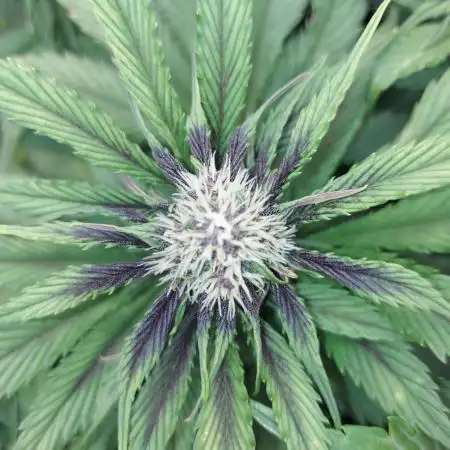
DogDoctorOfficial # 🍋 Pickle Lemon Haze F1 — Pheno B
## Germinatie Week | Stille Vertrouwen
Hallo GrowDiaries familie! 👋🌱
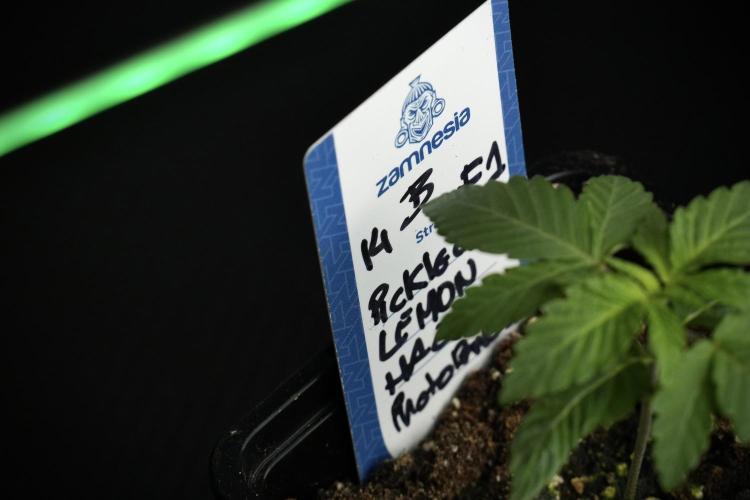
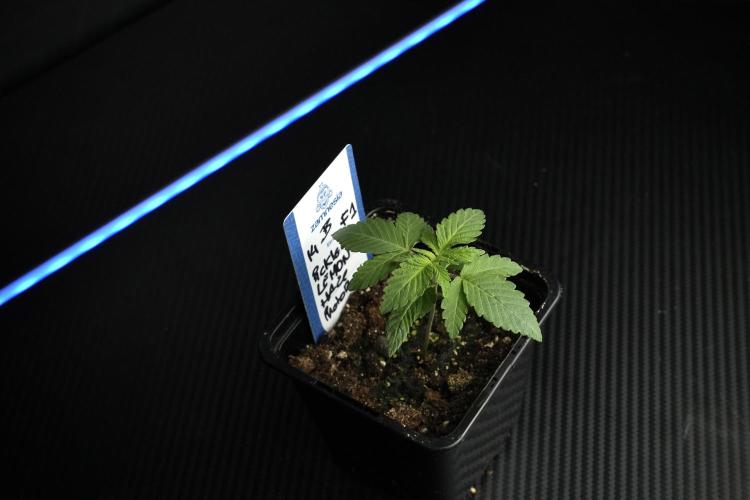
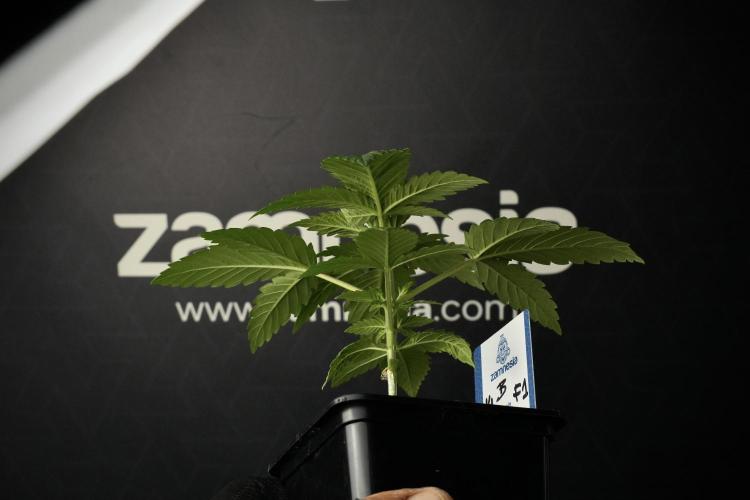
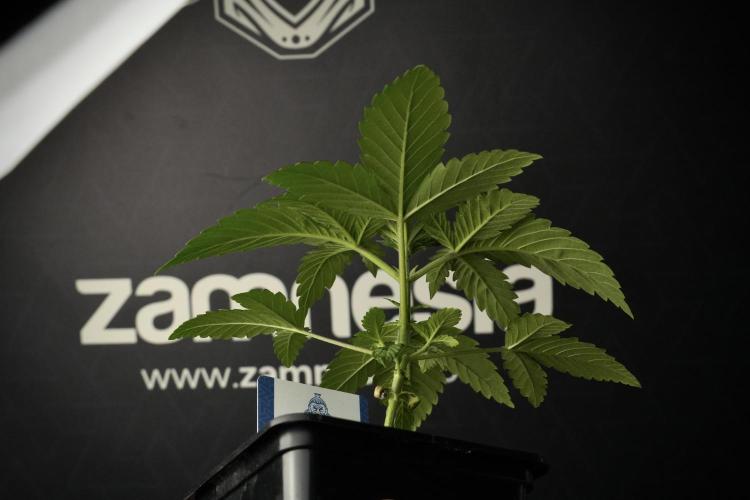
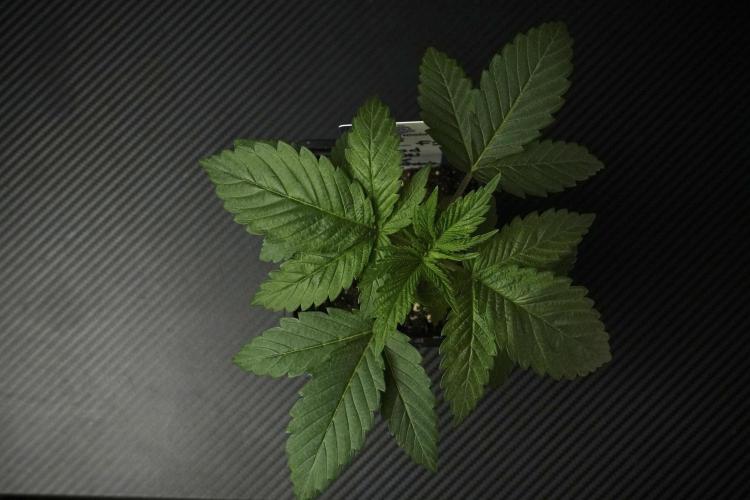
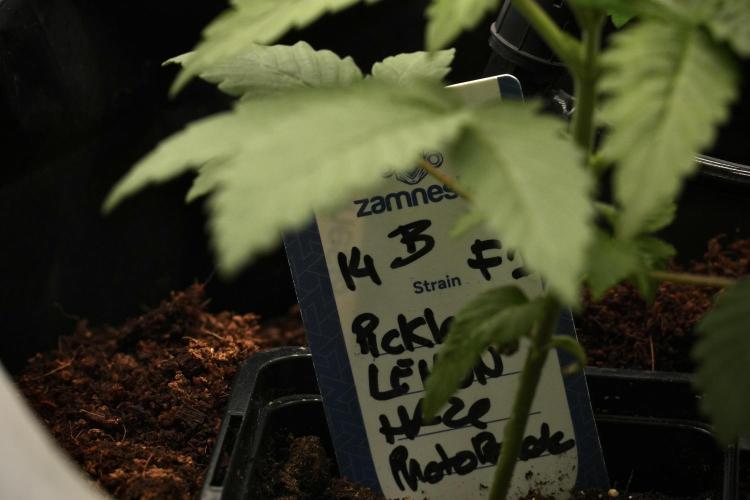
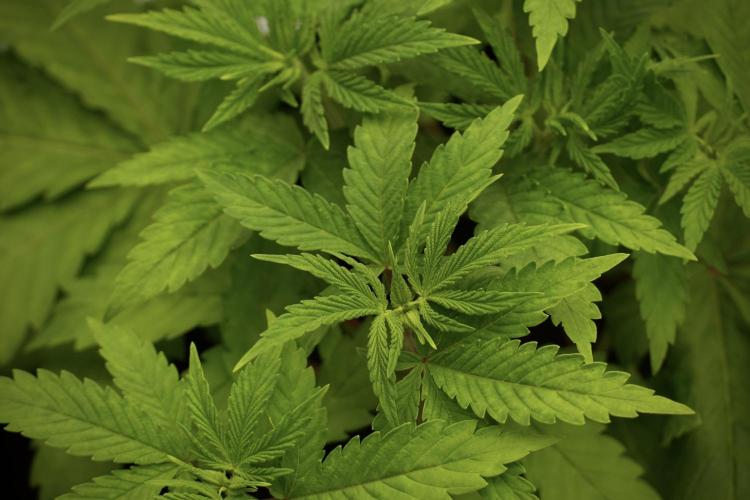
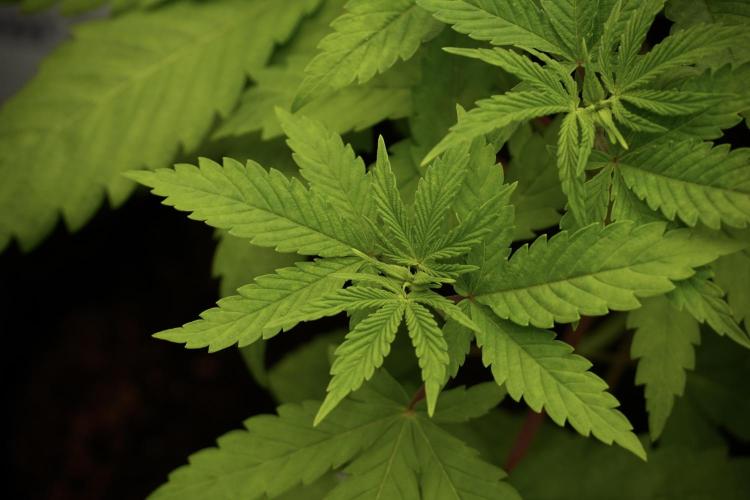
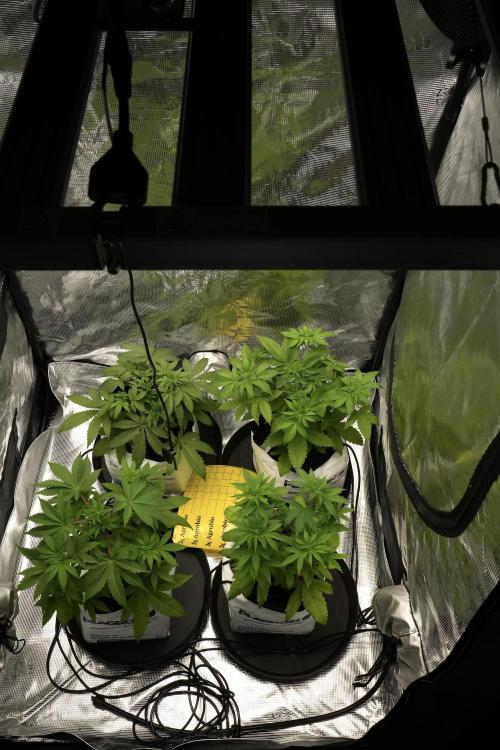
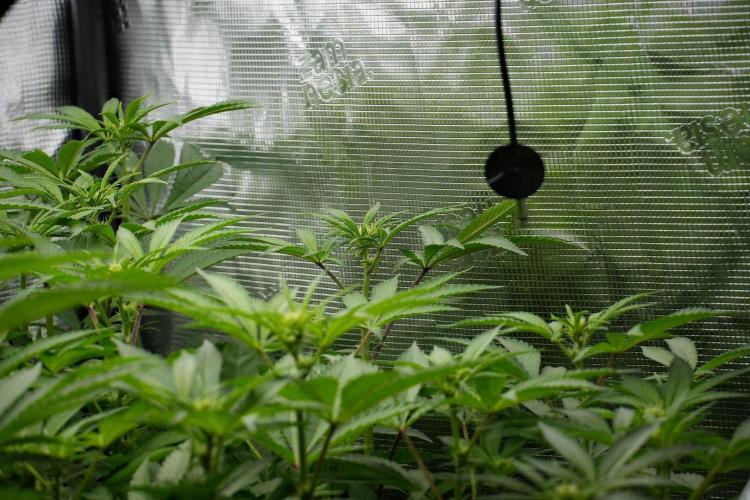
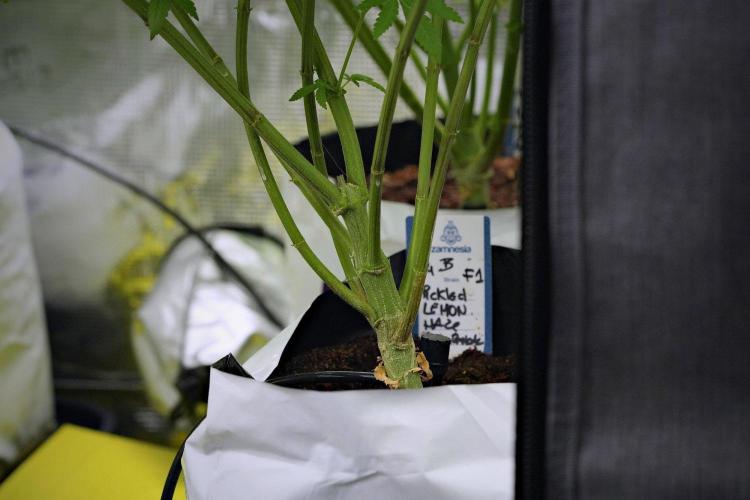
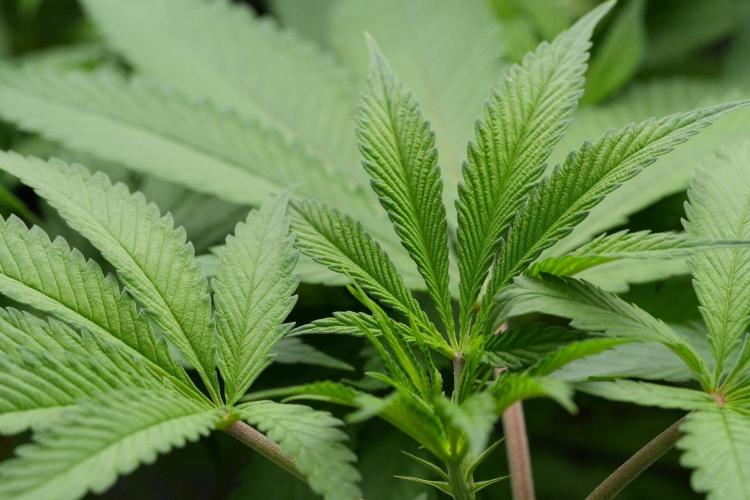
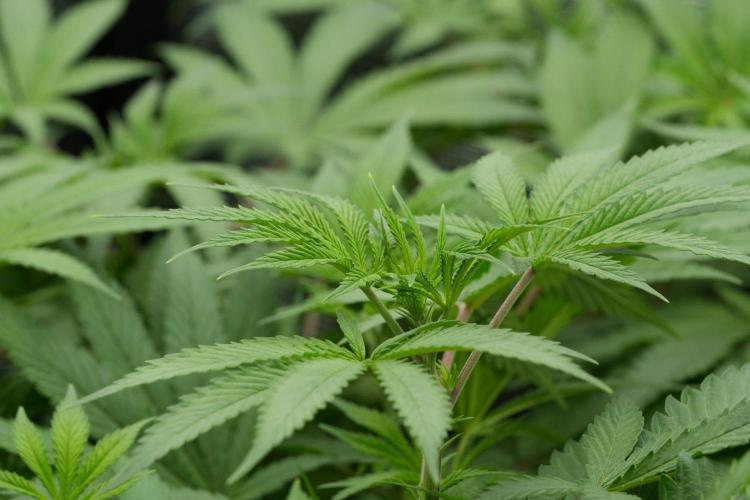
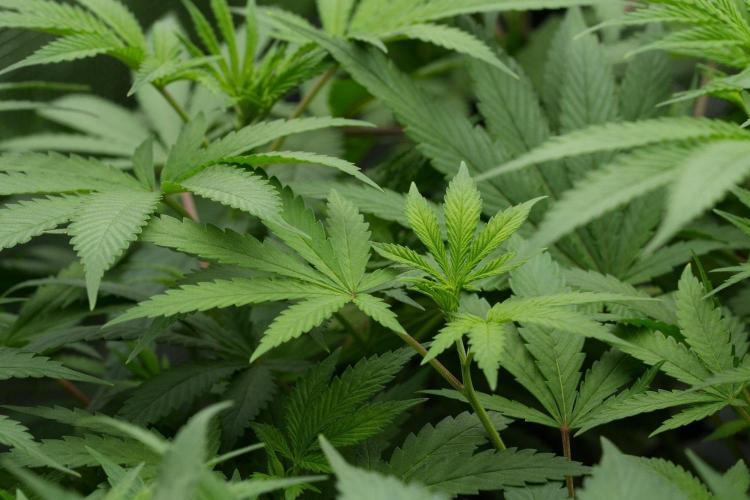
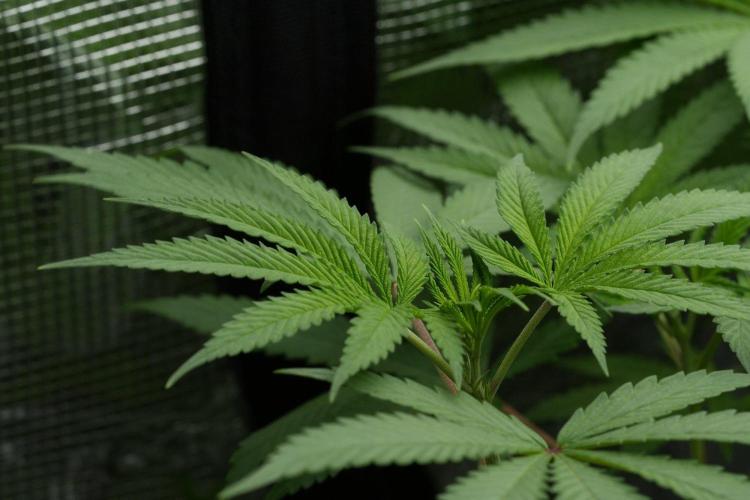
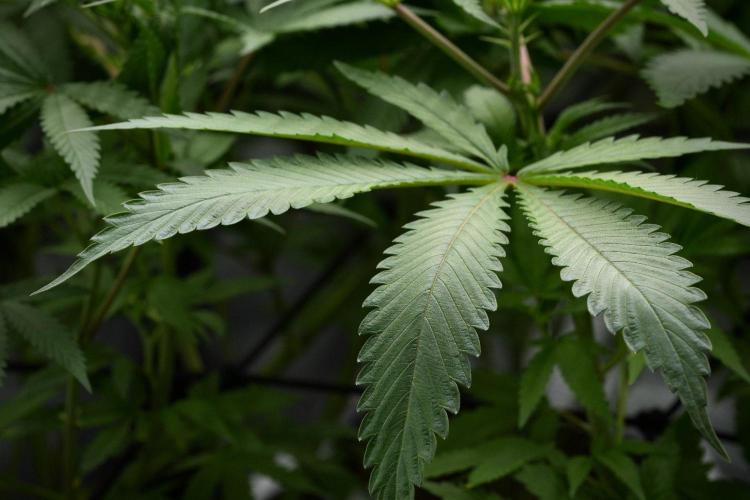
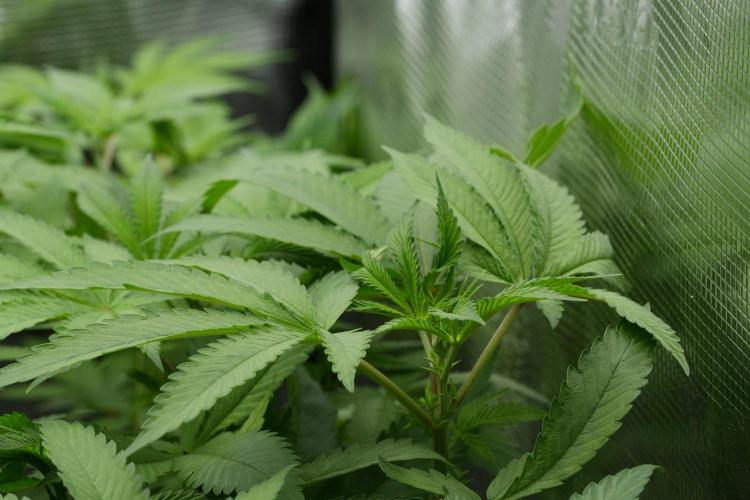
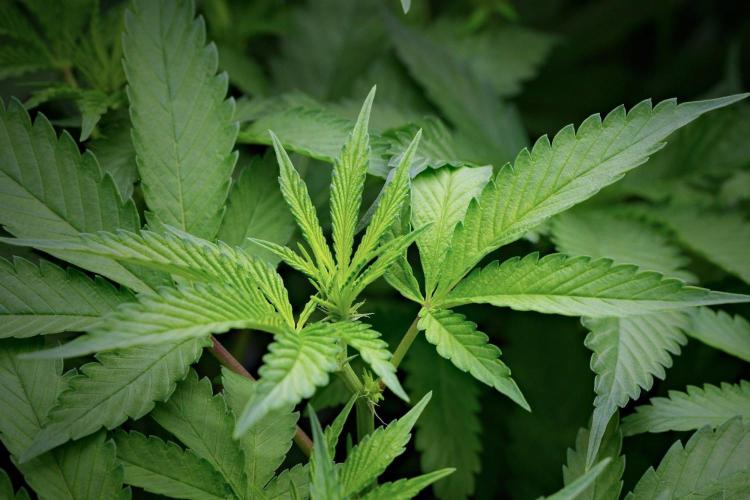
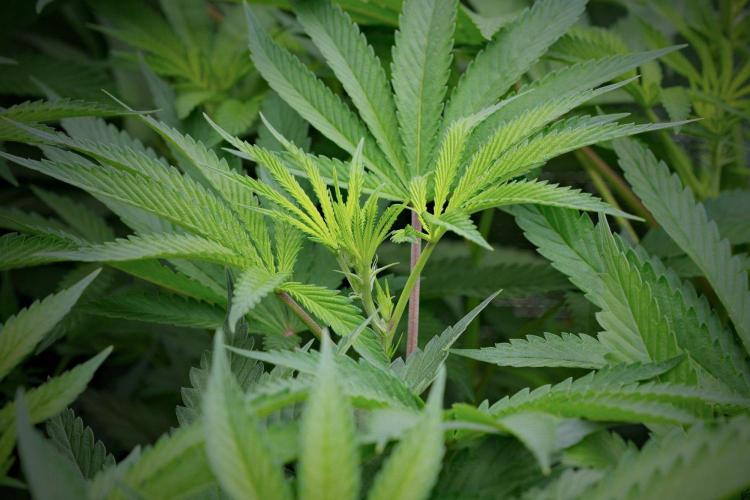
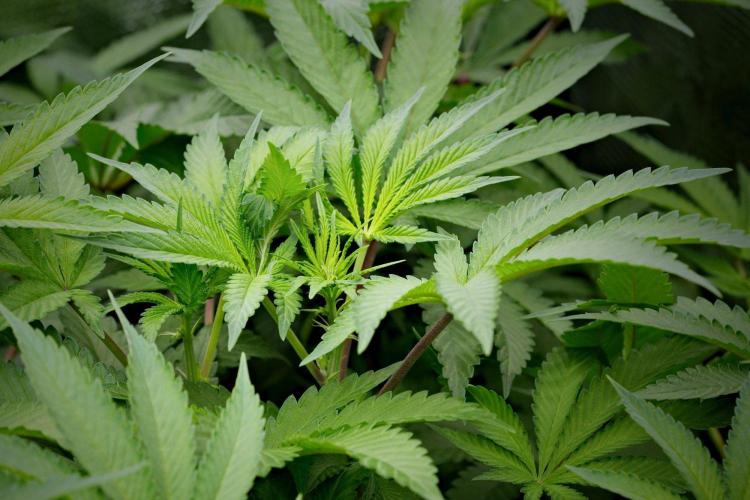
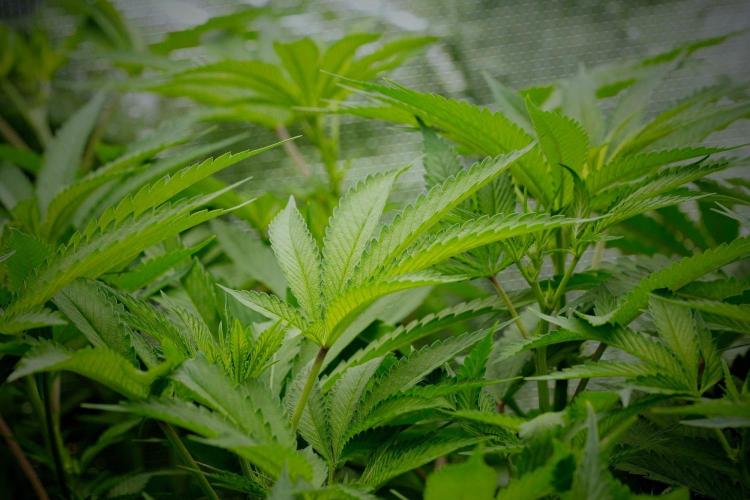
Welkom bij de eerste officiële entry voor Pickle Lemon Haze F1 Pheno B.
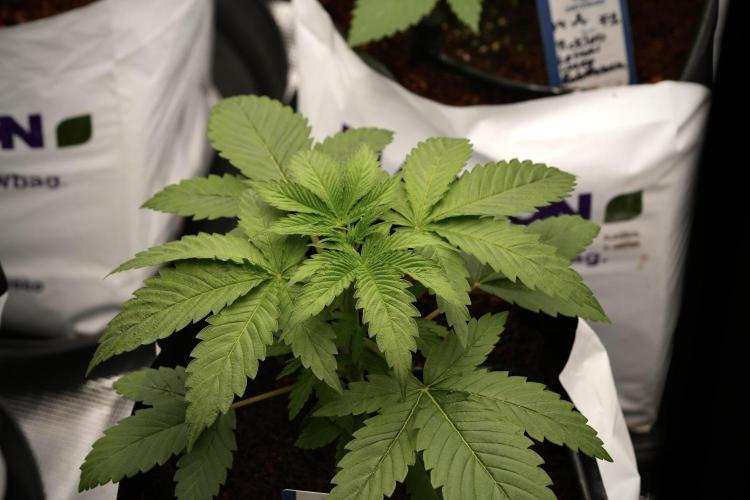
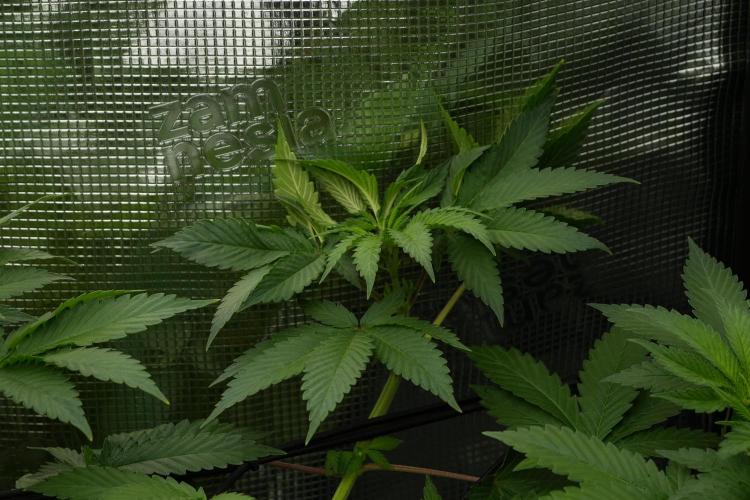
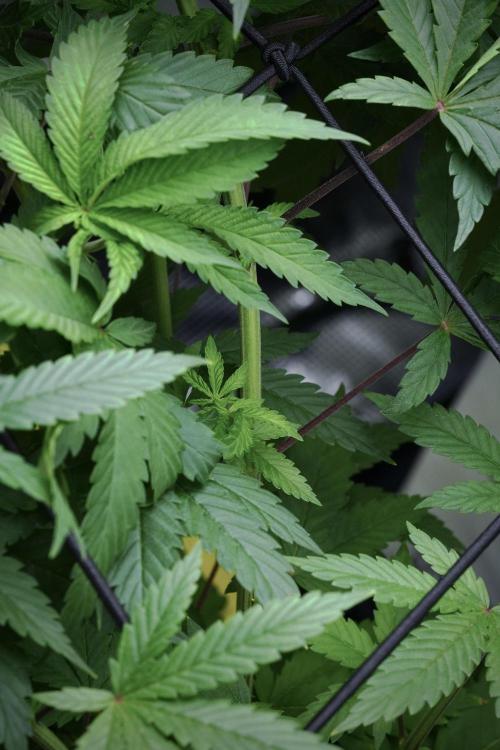
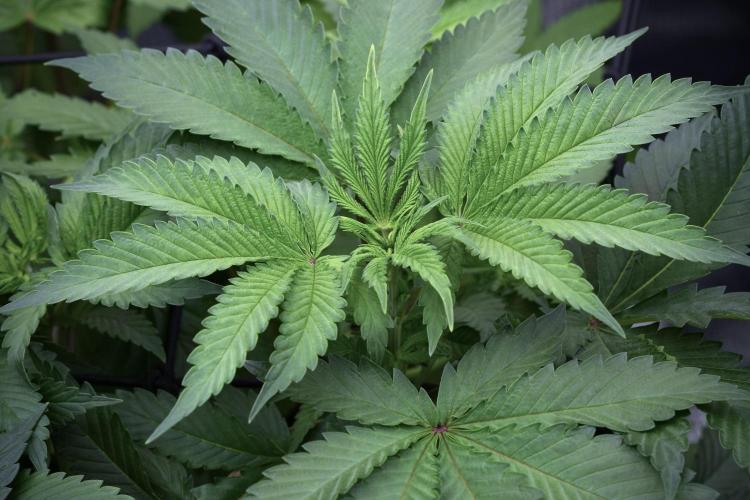
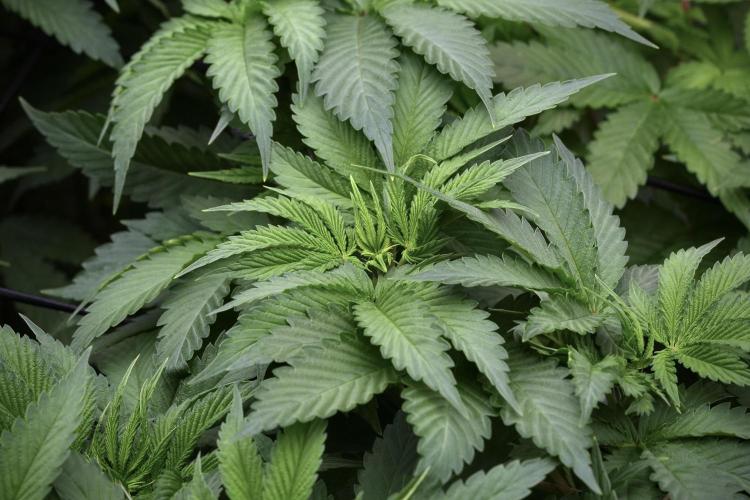
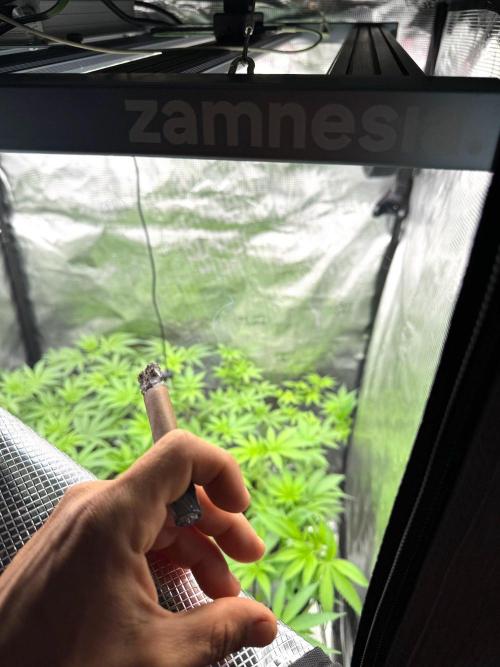
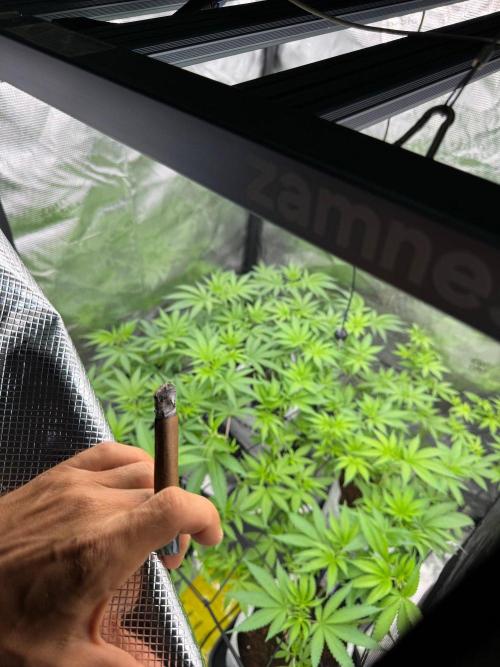
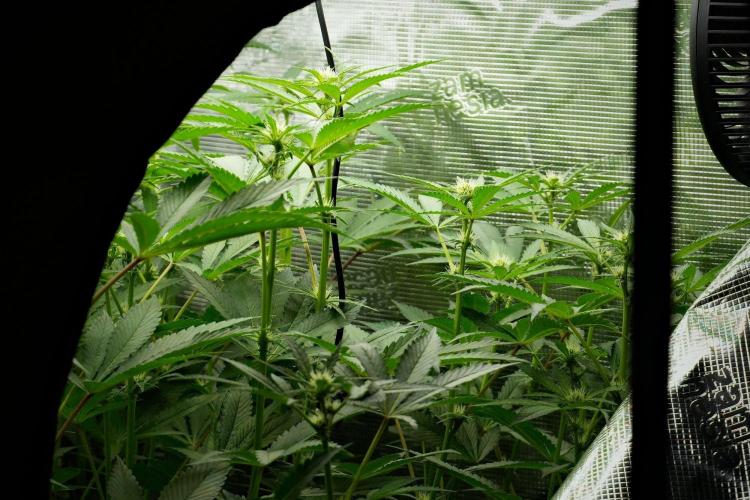
Vandaag gaan we verder met het documenteren van het tweede fenotype van dit spannende nieuwe F1-project dat binnen de Zamnesia tentopstelling groeit.
Terwijl haar zus misschien vroeg de aandacht trok met een indrukwekkende taproot en snelle opkomst, volgde Pheno B een iets andere aanpak.
Niet langzamer.
Niet zwakker.
Simpelweg anders.
Een van de meest belonende aspecten van het kweken van cannabis is leren dat elke zaad zijn eigen tempo en persoonlijkheid heeft.
En vanaf het allereerste begin leek dit meisje perfect comfortabel te zijn met het doen van dingen op haar eigen manier.
---
## Een Nieuw Project Begint
Dit dagboek maakt deel uit van een volledig apart project van mijn lopende 12/12-van-zaden tuin.
Voor deze run is het doel heel anders.
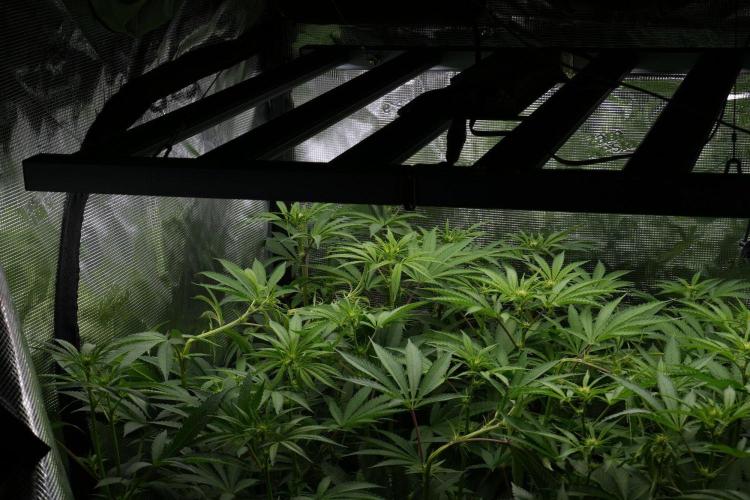
In plaats van te bloeien vanaf dag één, krijgen deze planten de kans om zich volledig te ontwikkelen onder een traditioneel vegetatief schema.
Huidige plannen omvatten:
- 18/6 lichtschema
- Volledige vegetatieve ontwikkeling
- Potentieel Low Stress Training (LST)
- Potentieel toppen
- Mogelijke Scrog-implementatie
- Observaties van structurele ontwikkeling
- Volledige documentatie van zaad tot oogst
In deze fase begint echter alles met een gezonde germinatie.
---
## De Cannakan Germinatiemethode
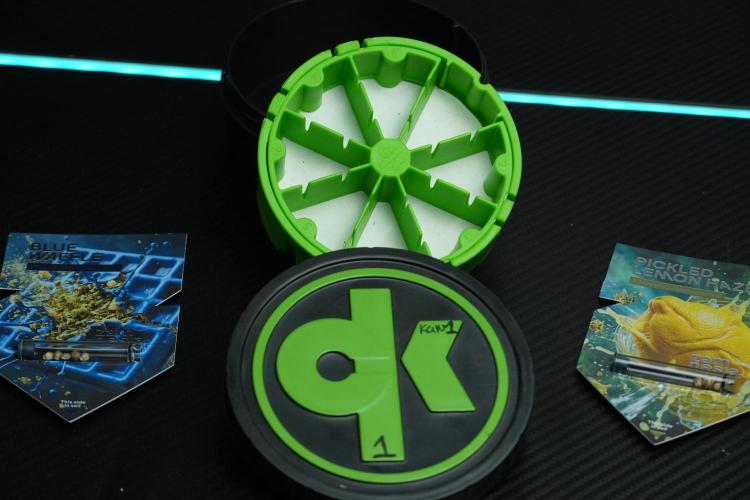
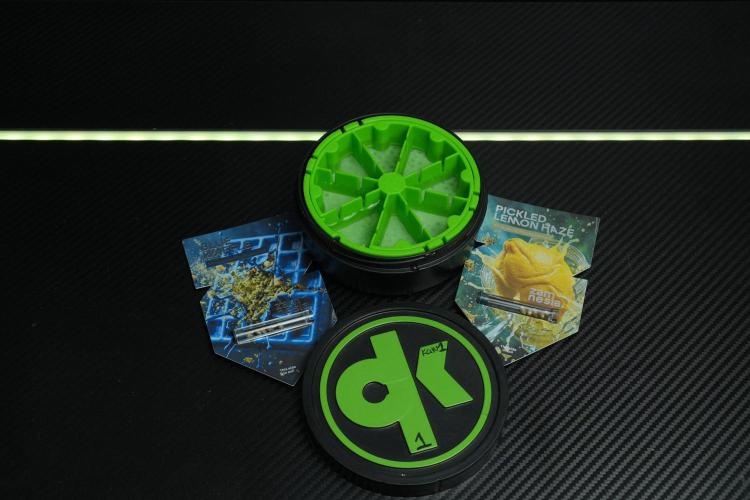
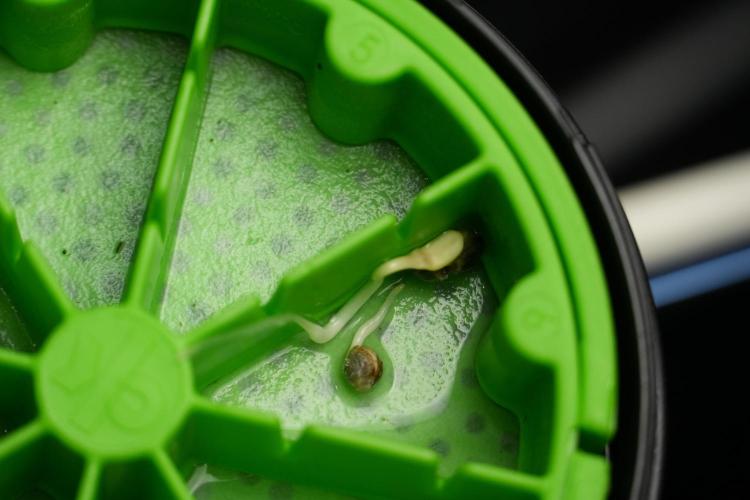
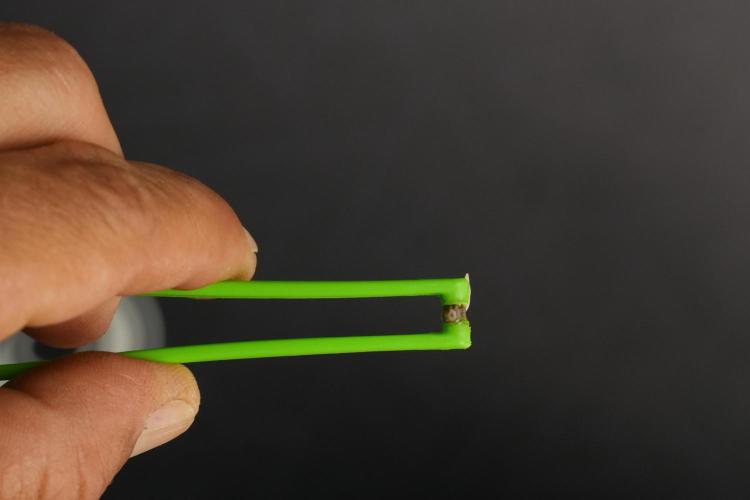
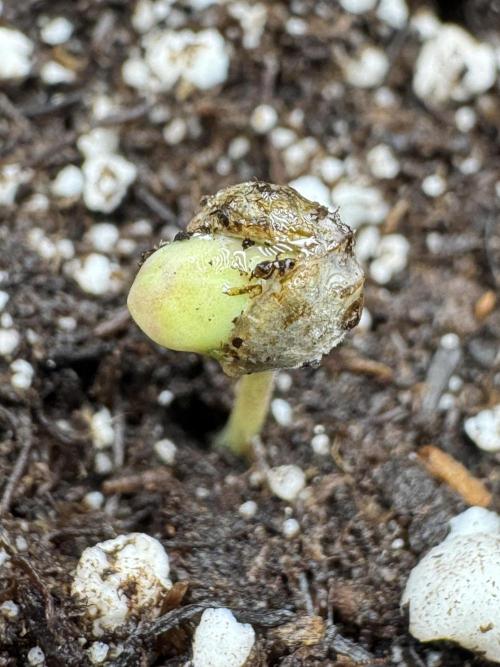
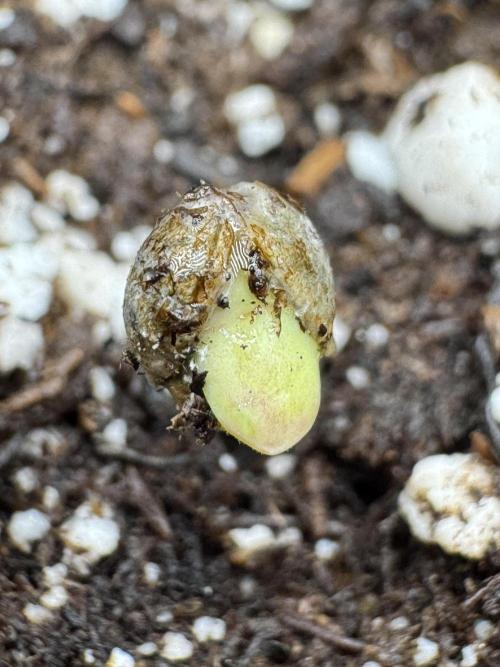
Net als alle planten in dit project, begon Pickle Lemon Haze F1 Pheno B zijn leven binnen het Cannakan germinatiesysteem.
Het proces blijft opzettelijk eenvoudig.
Het zaad werd in het systeem geplaatst met alleen maar gewoon water.
Geen voedingsstoffen.
Geen additieven.
Geen stimulerende middelen.
Gewoon water.
Na ongeveer 24 uur weken werd het meeste water verwijderd, terwijl er genoeg vocht achterbleef om ideale germinatievoorwaarden te behouden.
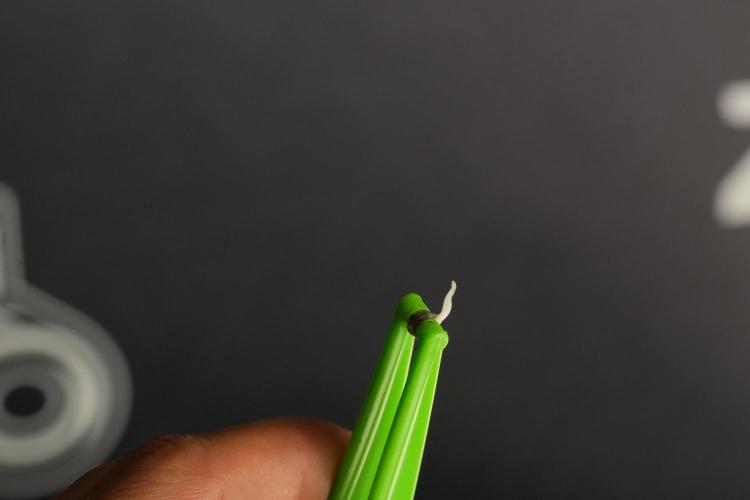
Al snel verscheen er een gezonde taproot en was het zaad klaar om geplant te worden.
Misschien niet zo dramatisch als de indrukwekkende wortel van haar zus, maar gezond, krachtig en precies wat we hopen te zien.
Soms is consistentie net zo mooi als snelheid.
---
## Waarom Alleen Water?
Een vraag die vaak opkomt tijdens de germinatie is:
"Waarom het zaad niet meteen voeden?"
Het antwoord blijft eenvoudig.
Het zaad bevat al alles wat nodig is voor de vroegste fase van het leven.
Binnen die schil zitten alle energievoorraden die nodig zijn om wortels te vestigen en ontwikkeling te beginnen.
In deze fase geef ik de voorkeur aan het toestaan dat het zaad die natuurlijke reserves gebruikt zoals bedoeld.
Het doel is niet om de plant te voeden.
Het doel is simpelweg om het wakker te maken.
Water is genoeg.
De natuur heeft de rest al voorbereid.
---
## Van Zaad Tot Zaailing
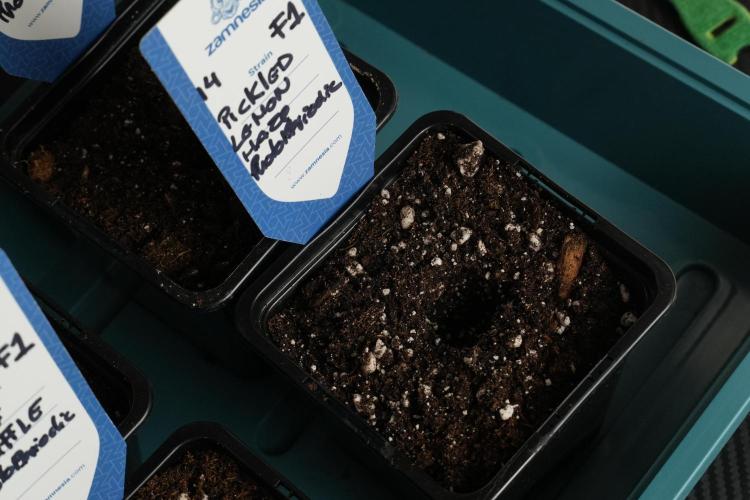
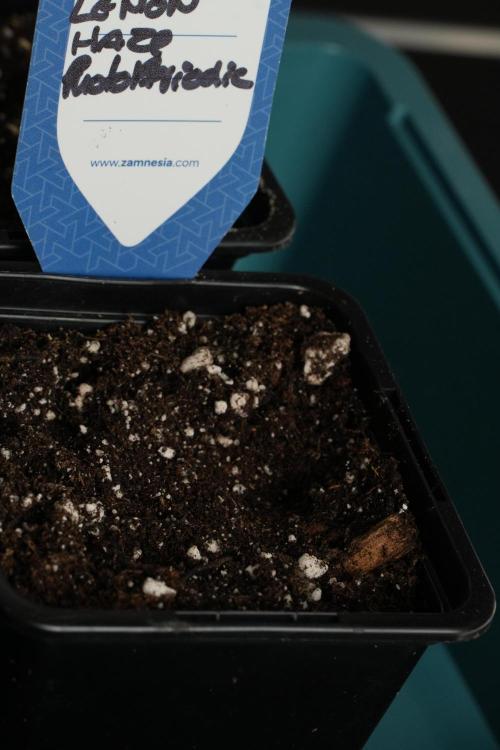
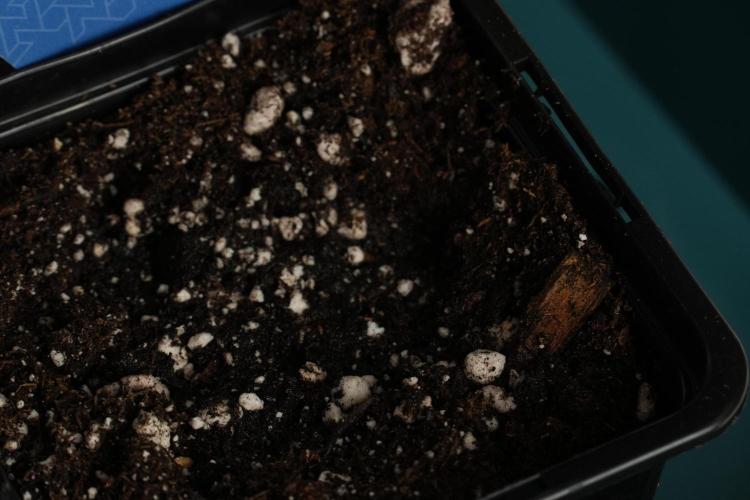
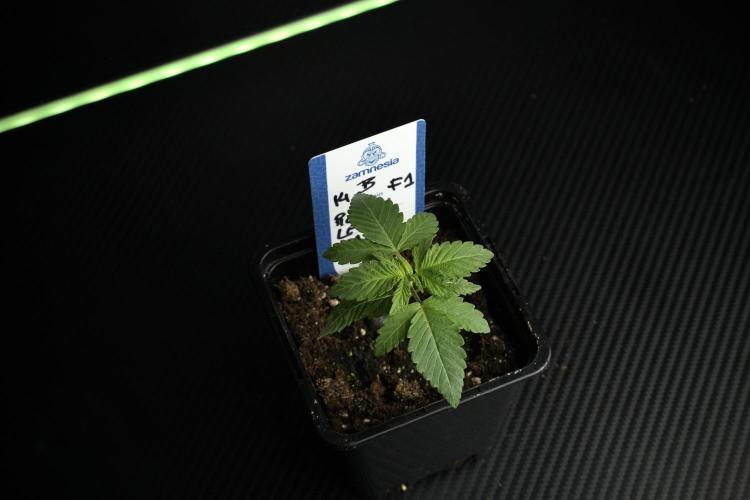
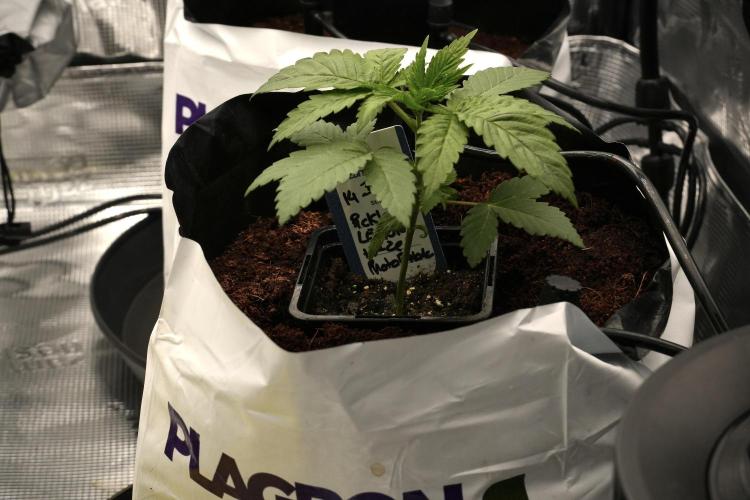
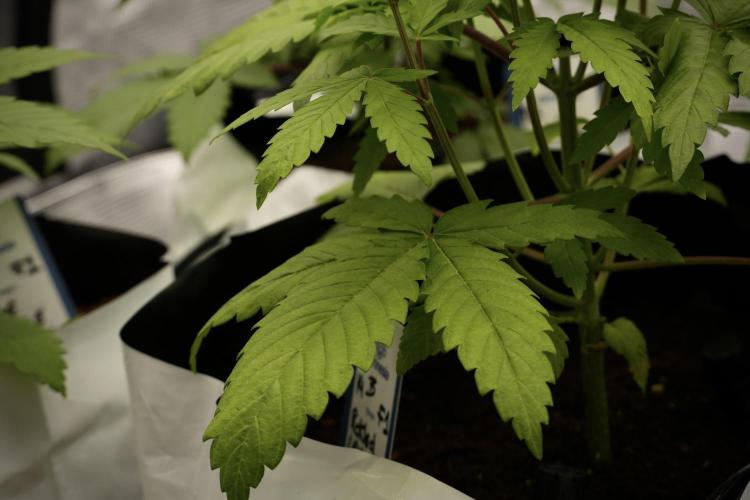
Zodra er een gezonde taproot verscheen, werd Pheno B overgebracht naar Plagron Lightmix.
Dit substraat blijft een van mijn favoriete startmedia vanwege de uitstekende beluchting, vergevingsgezinde aard en betrouwbare prestaties tijdens de vroege ontwikkeling.
Het zaad vestigde zich in zijn nieuwe huis en begon snel wortels te vestigen.
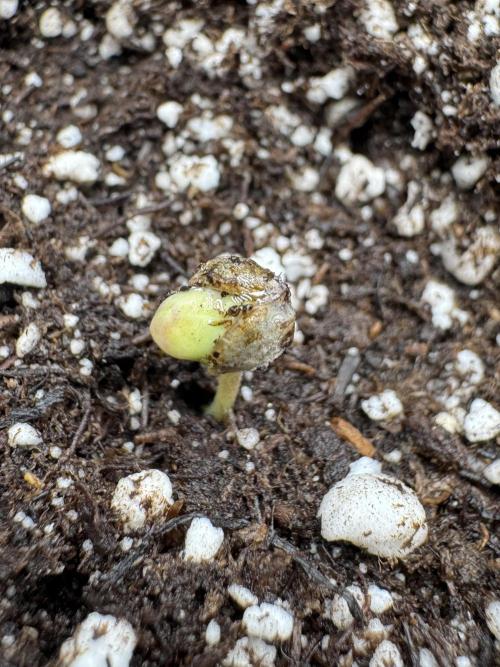
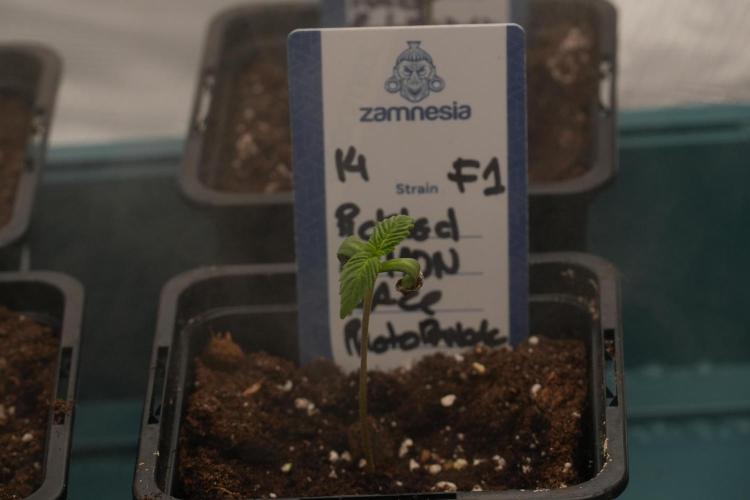
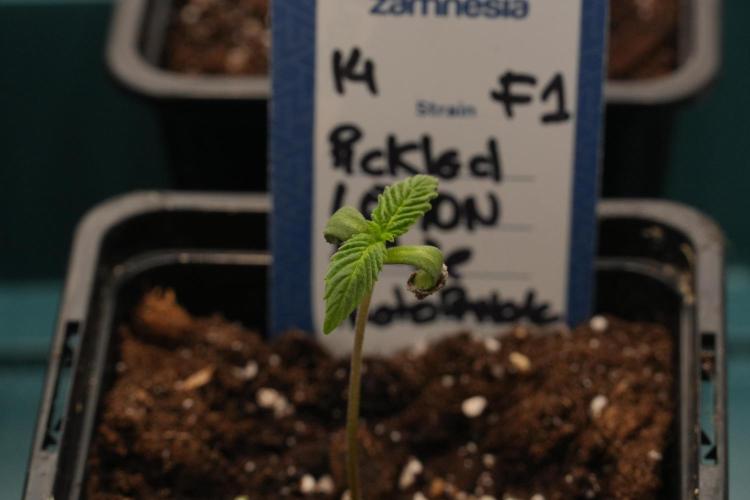
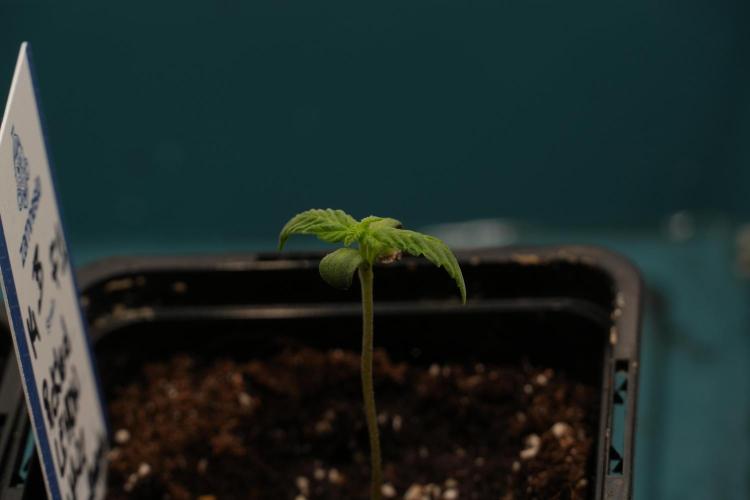
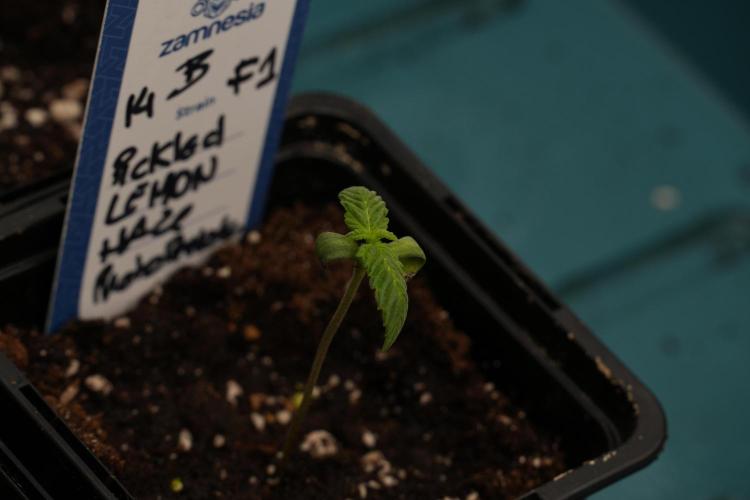
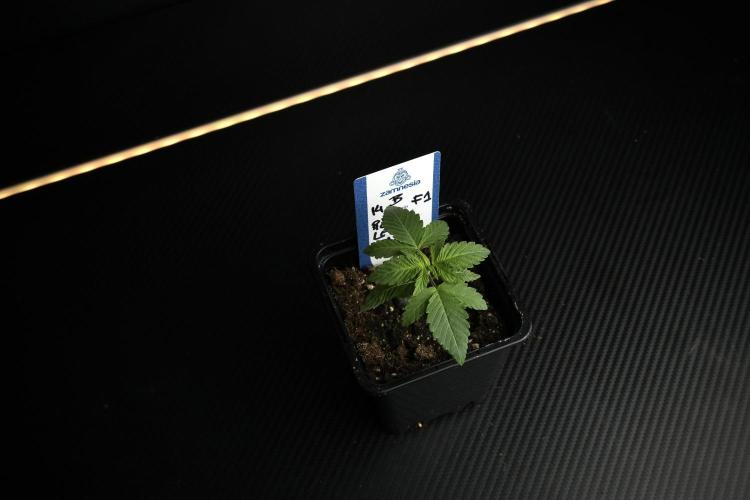
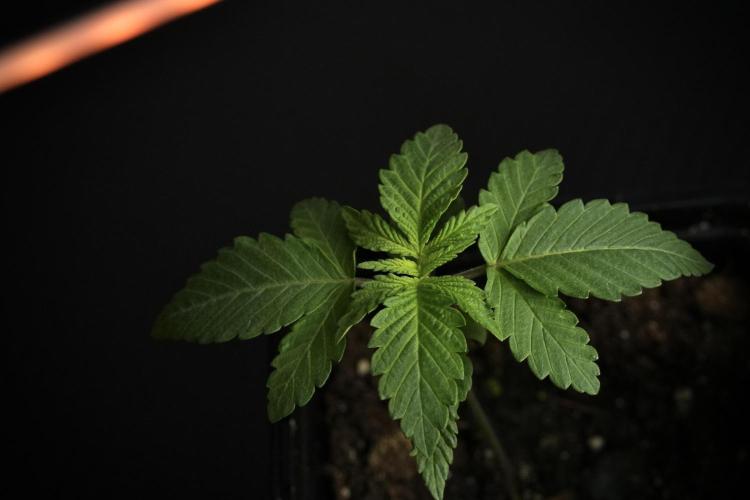
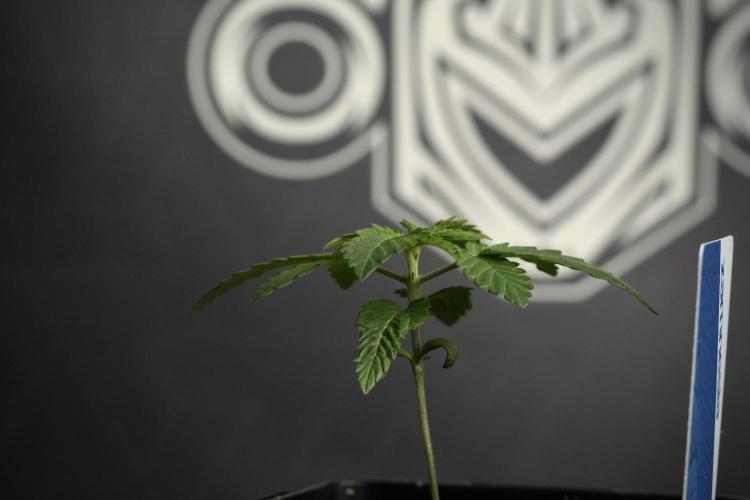
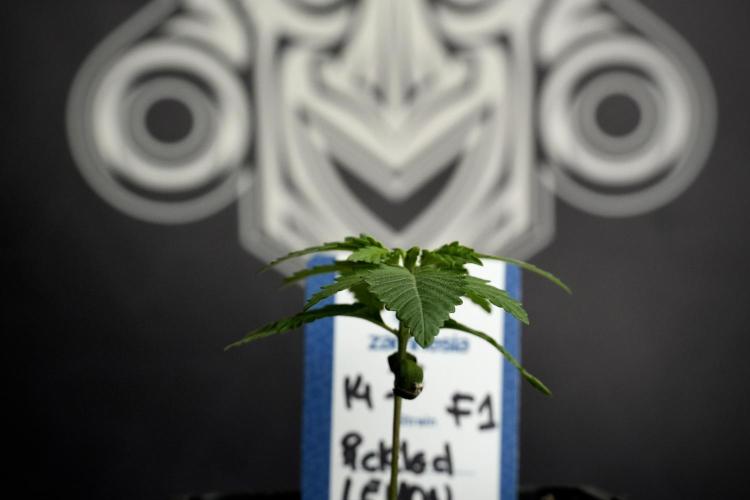
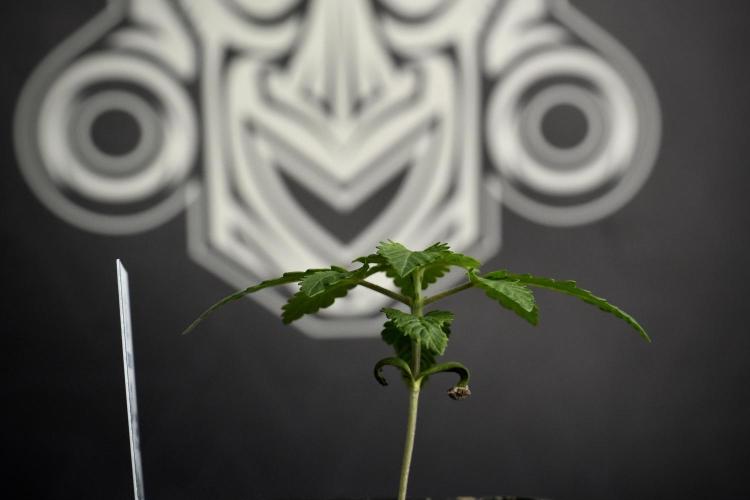
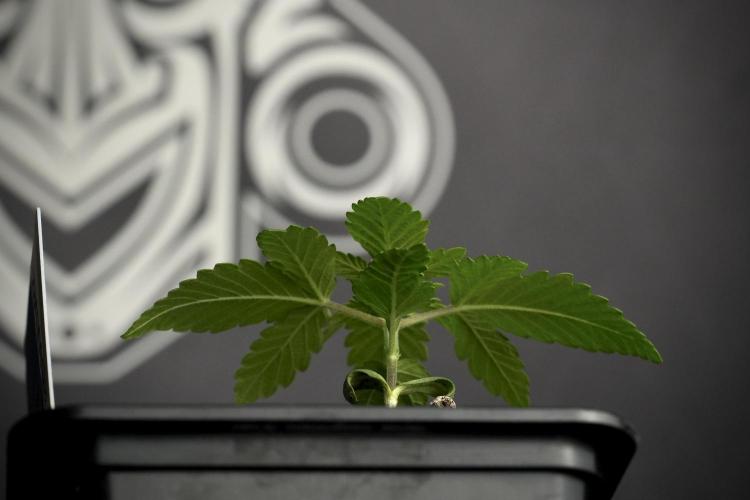
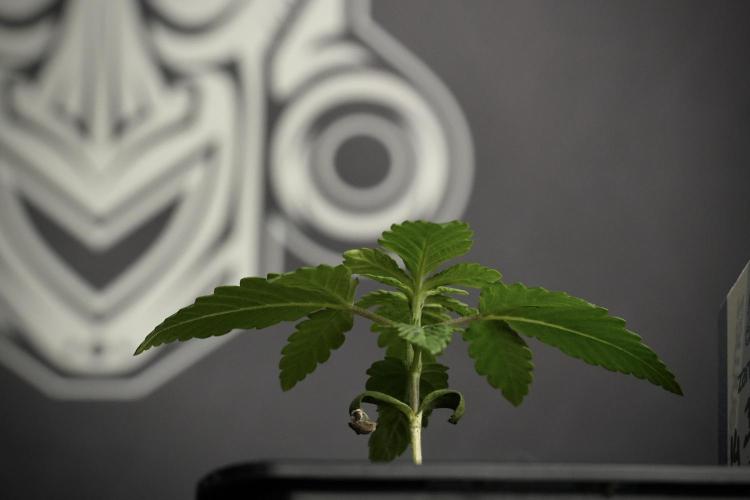
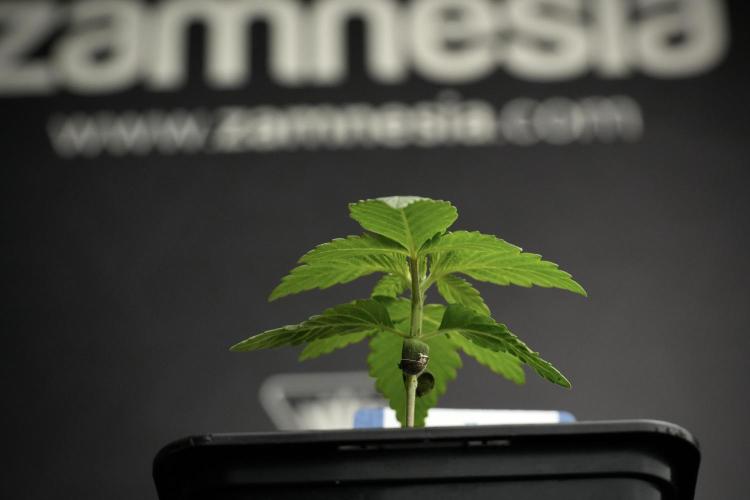
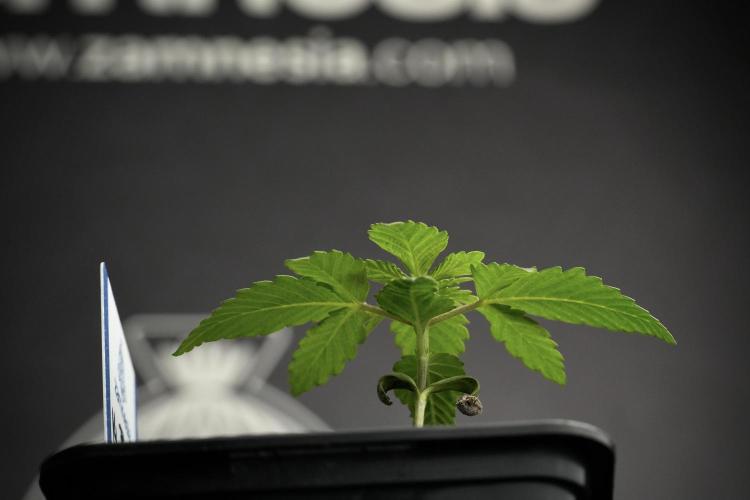
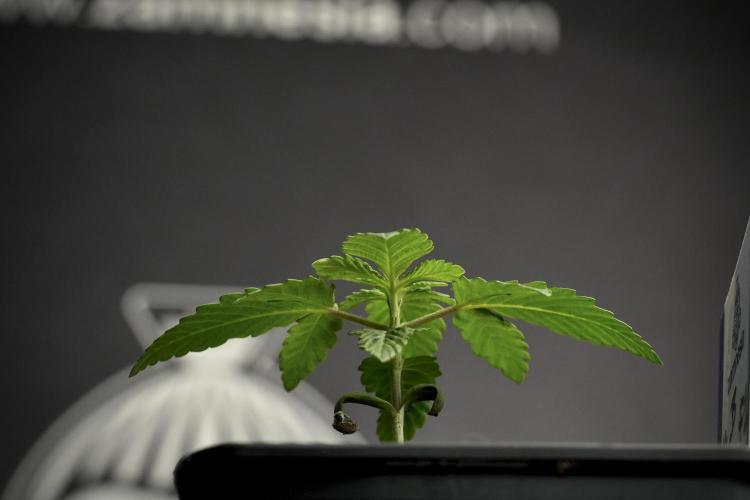
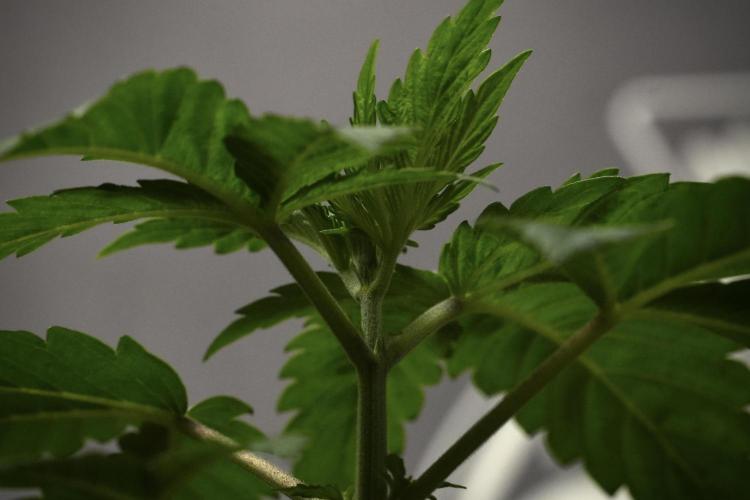
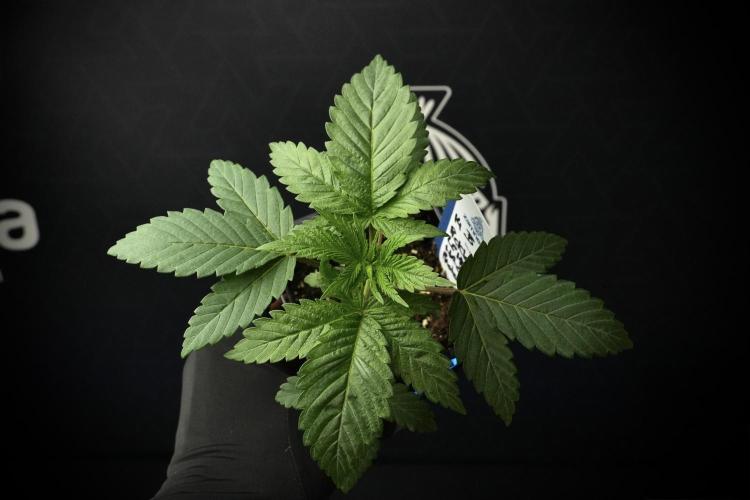
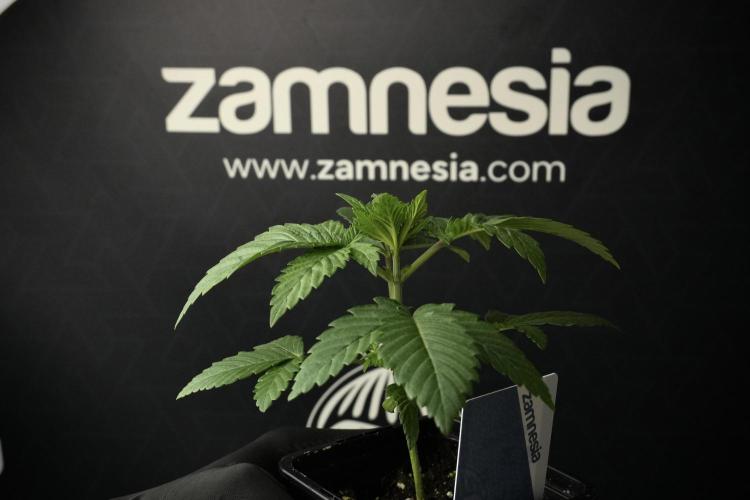
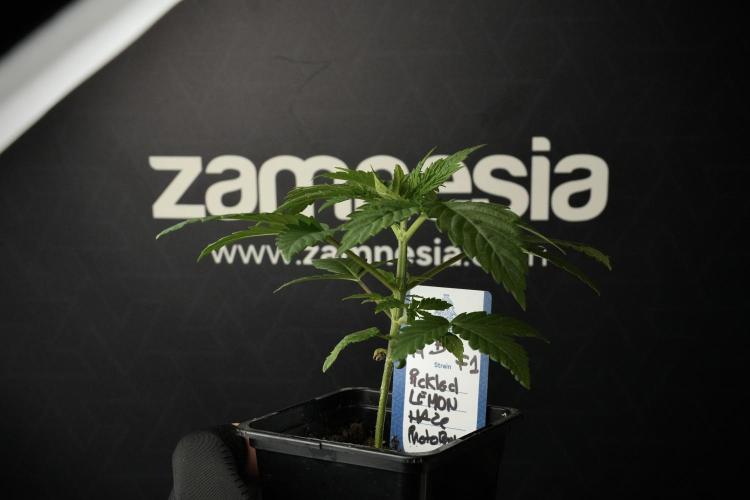
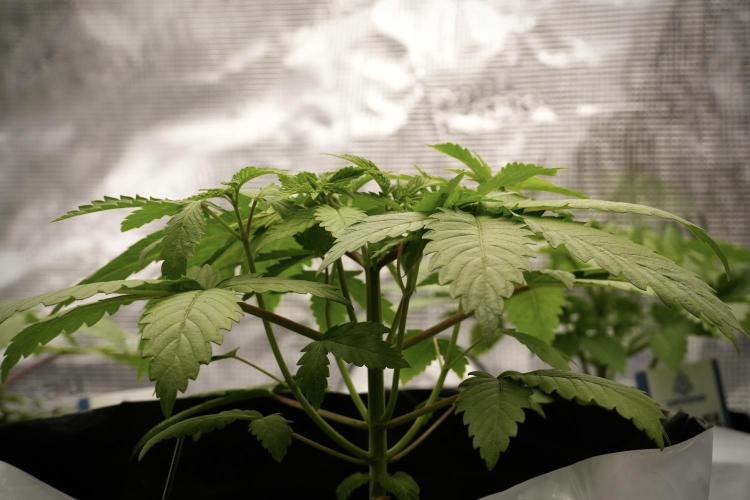
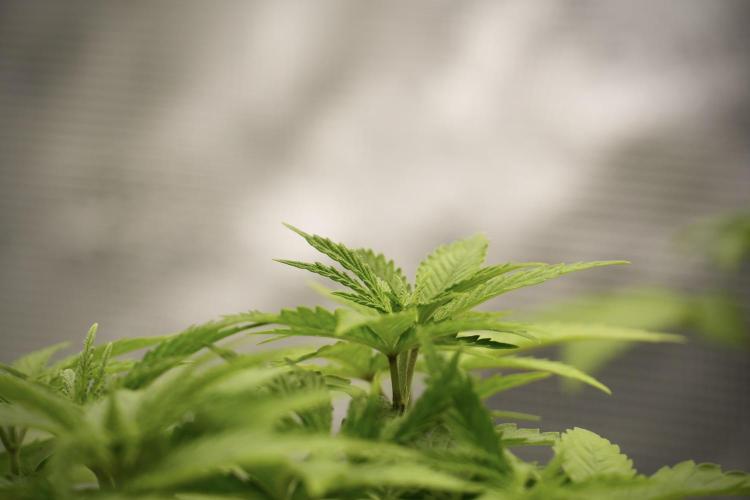
Al snel kwam ze boven de bodemoppervlakte tevoorschijn en begon ze naar licht te zoeken.
Gezonde stam.
Gezonde cotylen.
Gezonde kleur.
Alles precies waar het zou moeten zijn.
De start was misschien iets minder dramatisch dan die van haar zus, maar de bestemming blijft precies hetzelfde.
Een sterke basis voor de komende weken.
---
## Waarom Een Vochtigheidsdome Gebruiken?
Tijdens de eerste paar dagen na de opkomst bracht de zaailing tijd door in een vochtigheidsdome.
Jonge zaailingen hebben slechts een beperkt wortelsysteem en daarom beperkte toegang tot water.
Het handhaven van iets verhoogde vochtigheid helpt om vochtverlies te verminderen terwijl de wortels zich onder het oppervlak blijven ontwikkelen.
De vochtigheidsdome is niet bedoeld om een permanente omgeving te worden.
Het is simpelweg een tijdelijk ondersteuningssysteem tijdens een van de meest delicate groeifases.
Naarmate de wortels zich ontwikkelen, wordt de dome verwijderd en begint de plant zich aan te passen aan de omgeving die ze gedurende de rest van haar leven zal ervaren.
Het doel is aanpassing.
Niet afhankelijkheid.
---
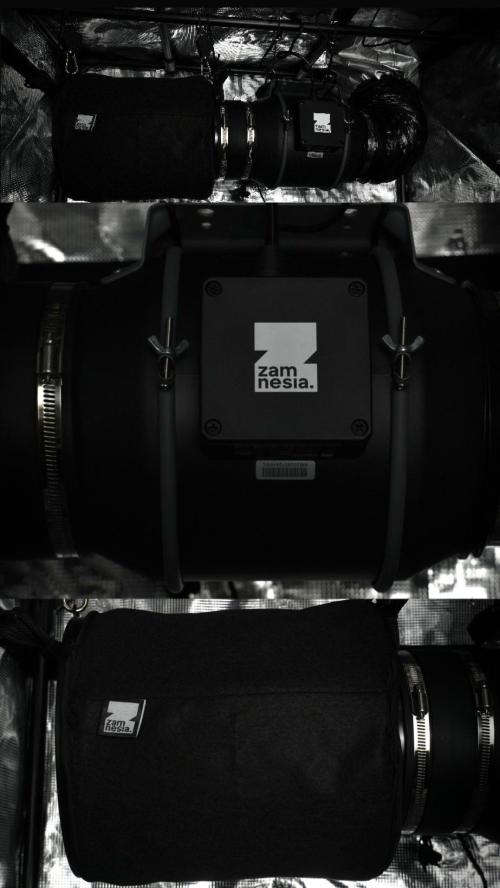
## Het Opbouwen Van De Nieuwe Zamnesia Kweektent Kit
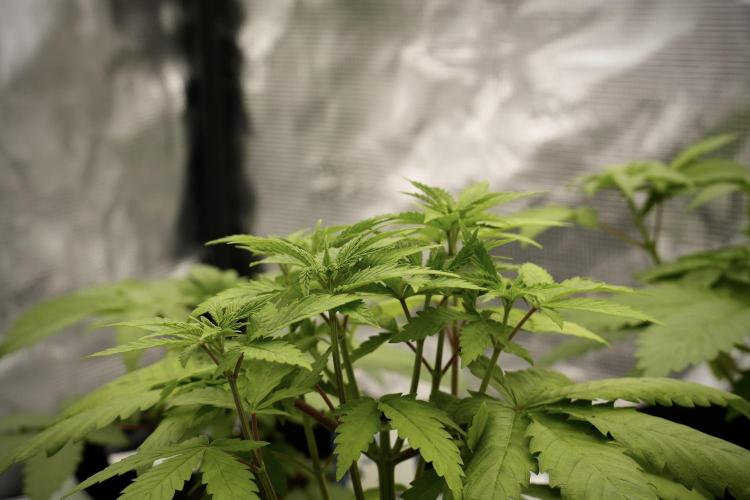
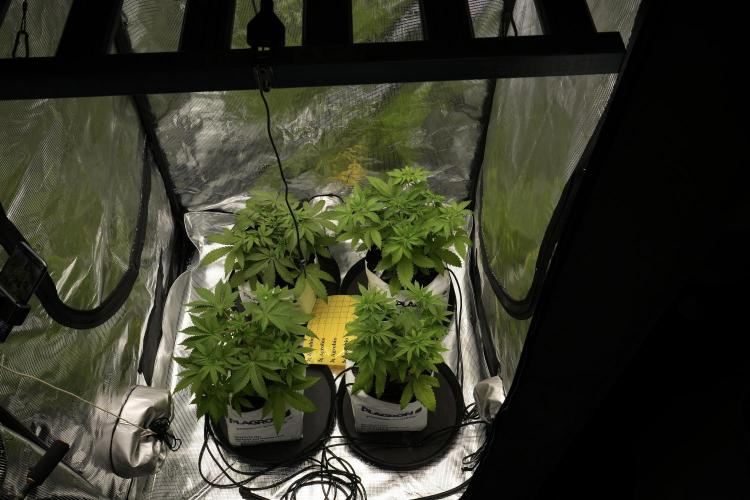
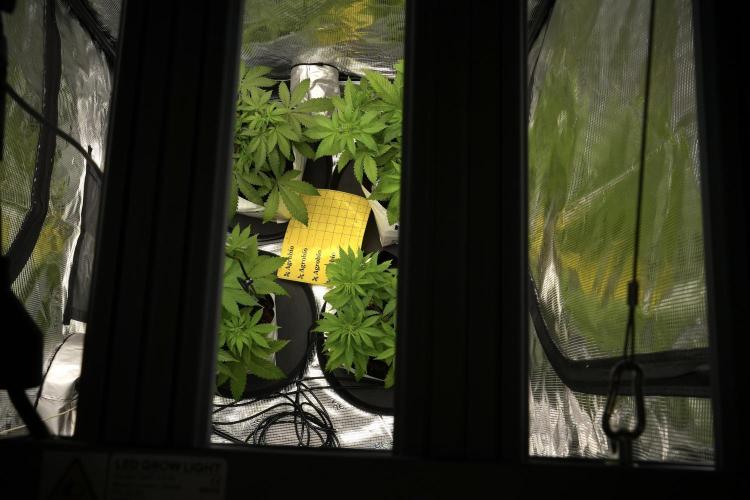
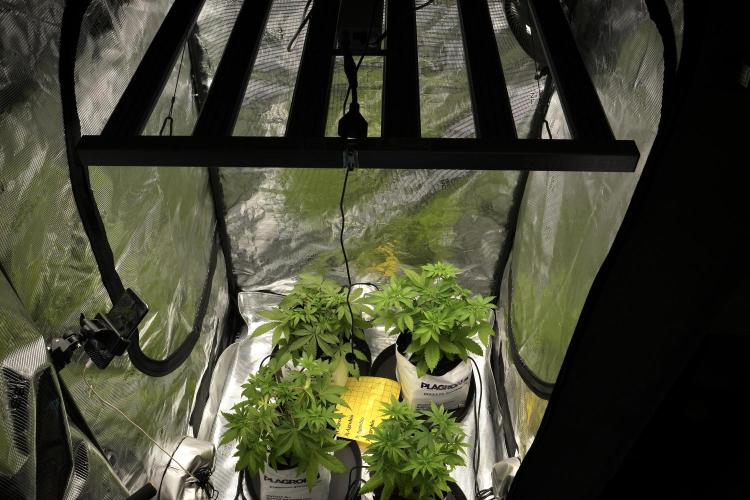
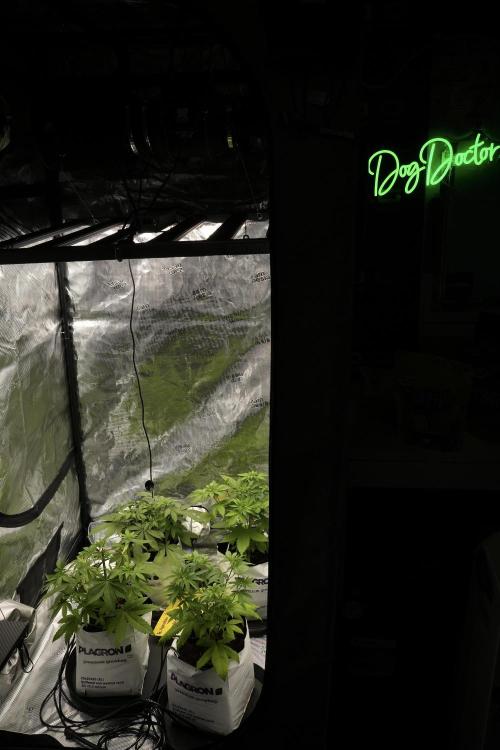
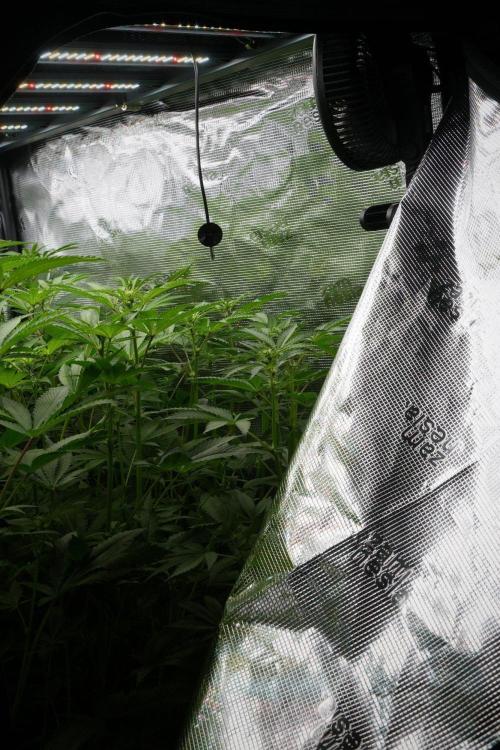
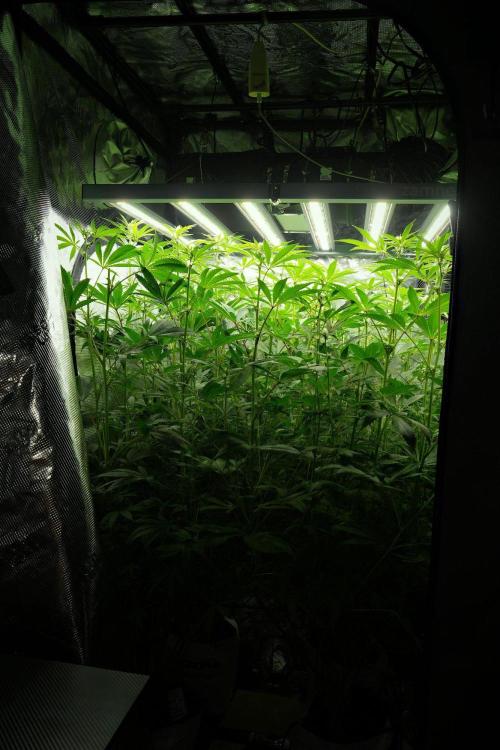
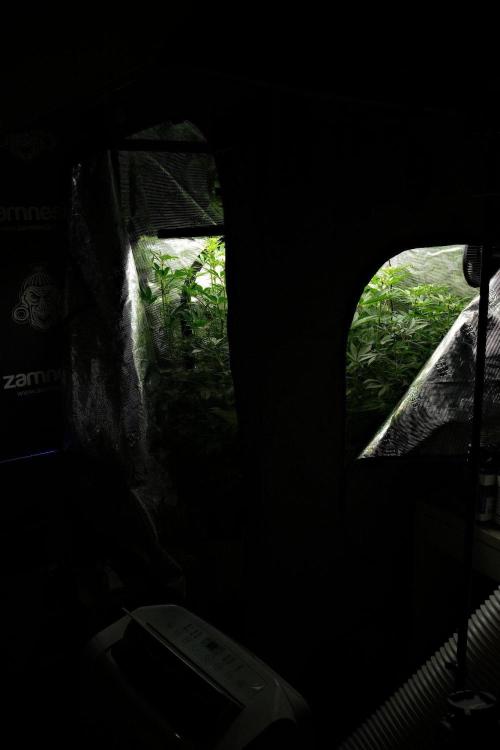
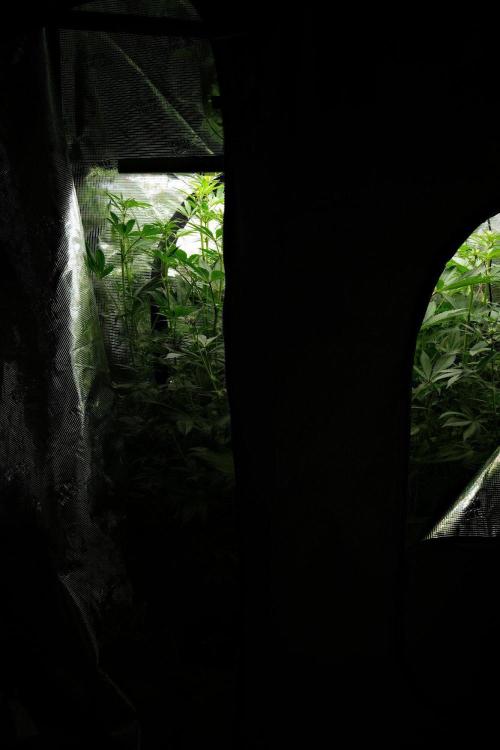
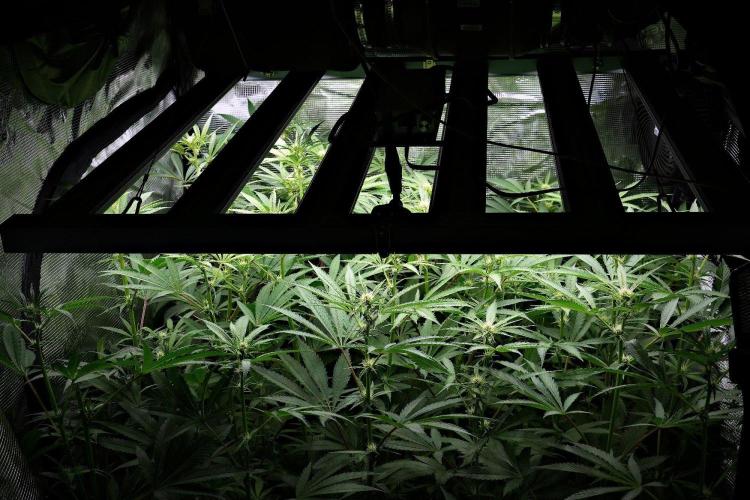
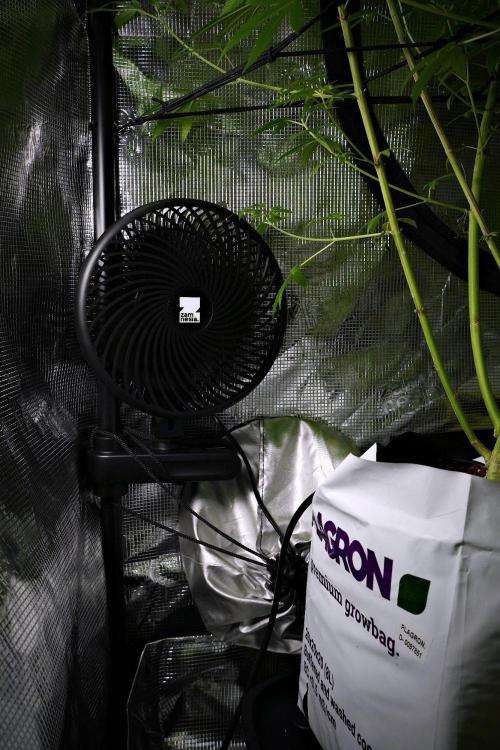
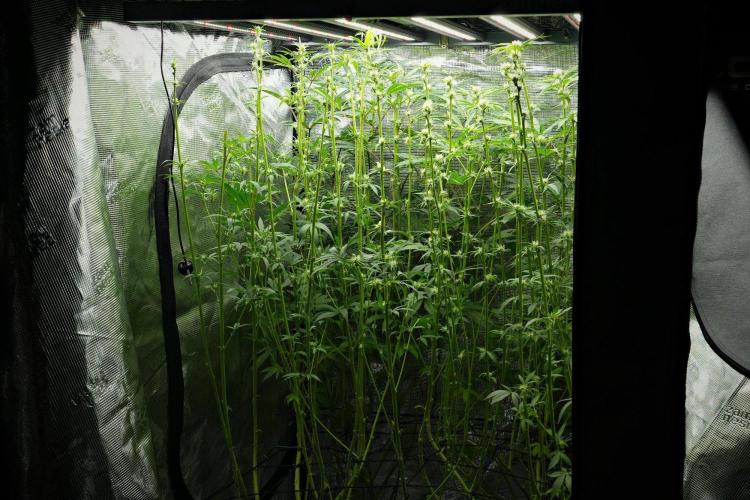
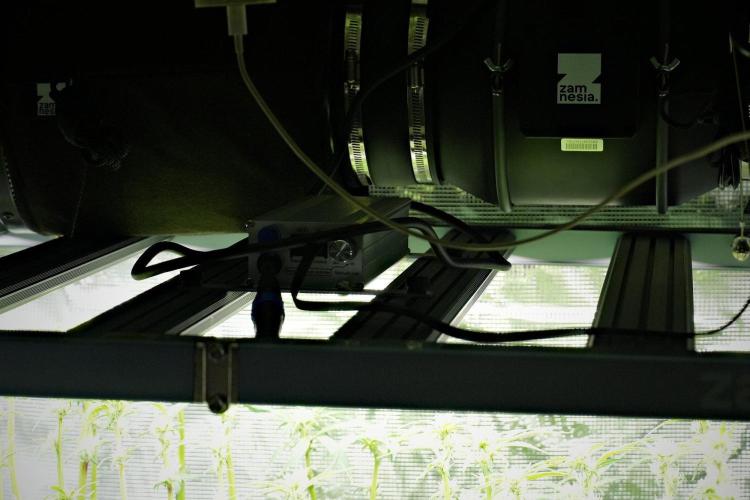
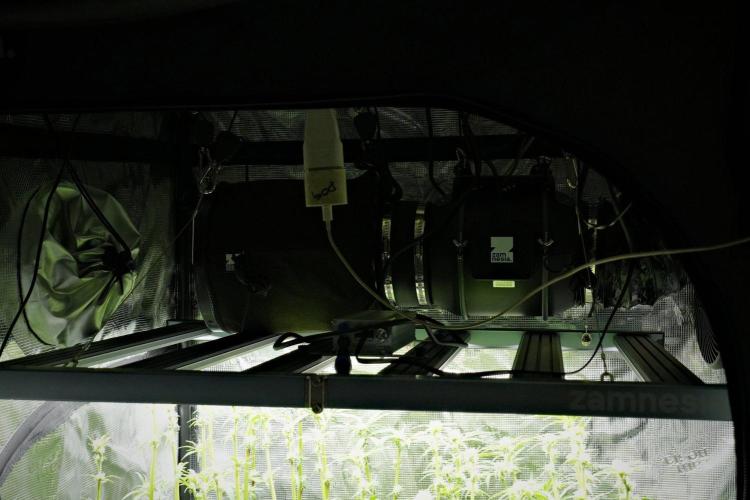
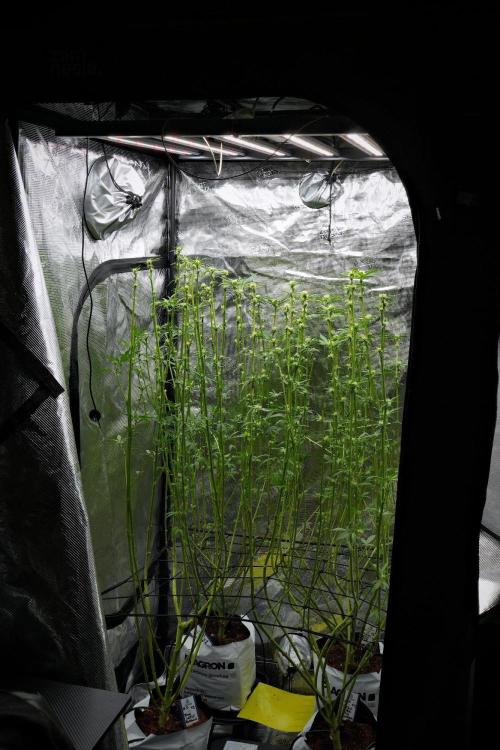
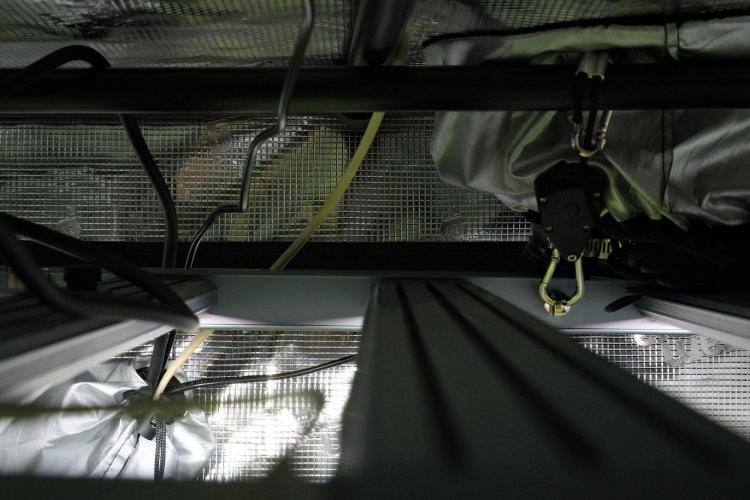
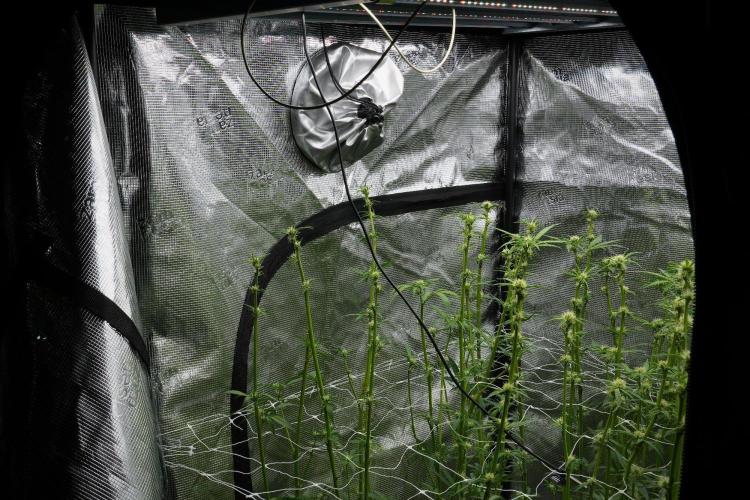
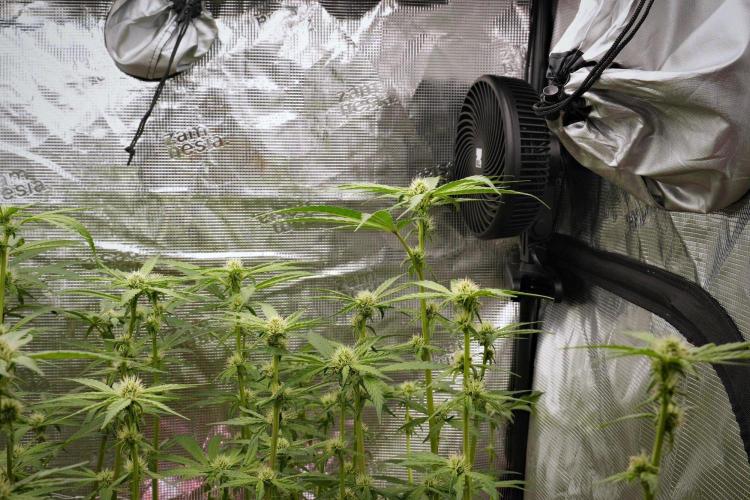
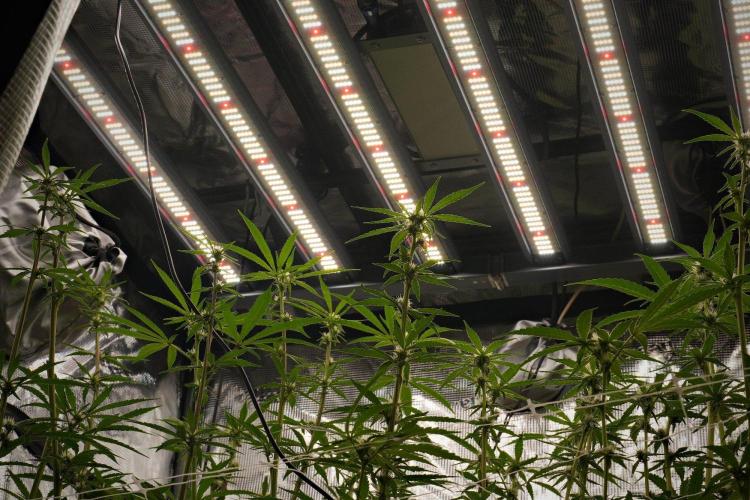
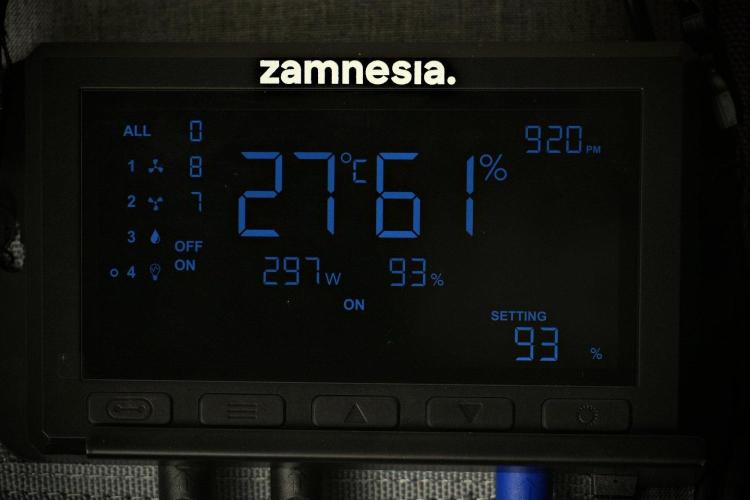
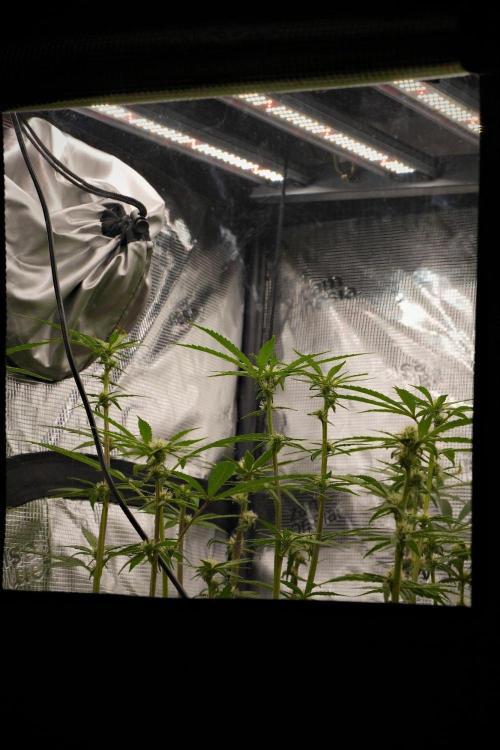
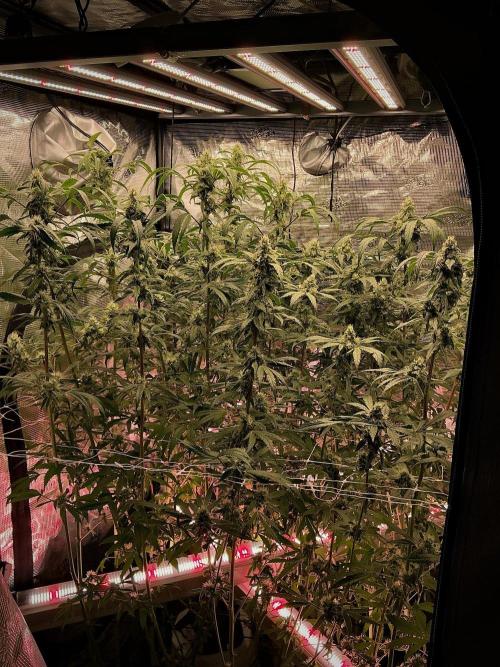
Dit project wordt volledig binnen de nieuwe Zamnesia Kweektent Kit gekweekt.
Een van de grootste verrassingen tijdens de opstelling was hoe eenvoudig het assemblageproces bleek te zijn.
Het hele systeem werd door één persoon in elkaar gezet.
Tent.
LED.
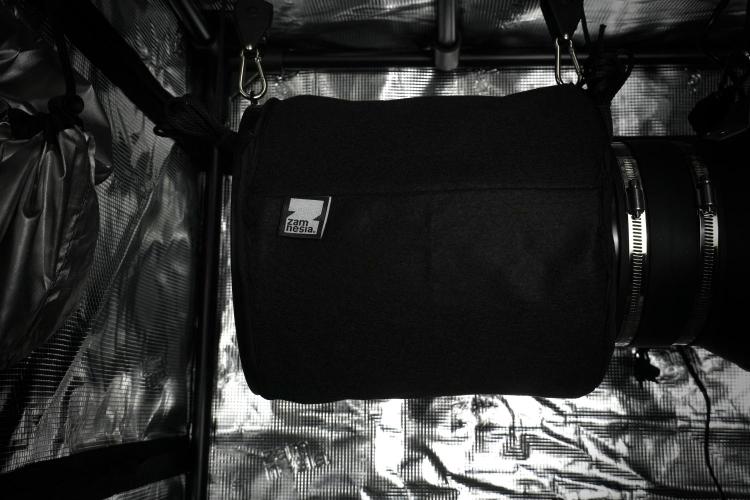
Koolstoffilter.
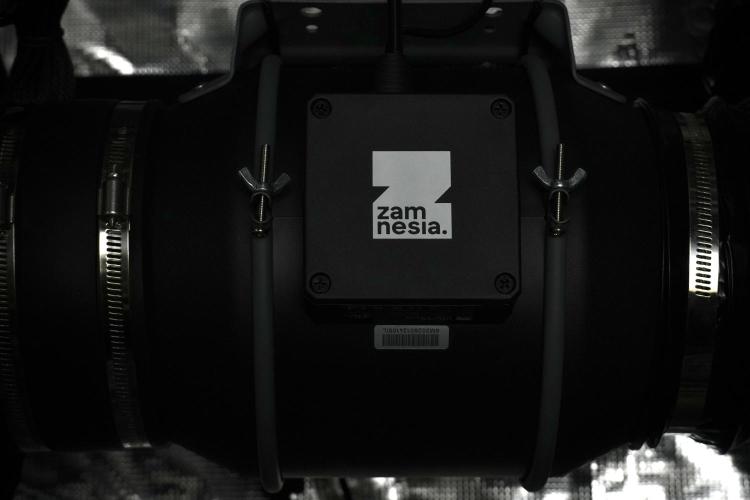
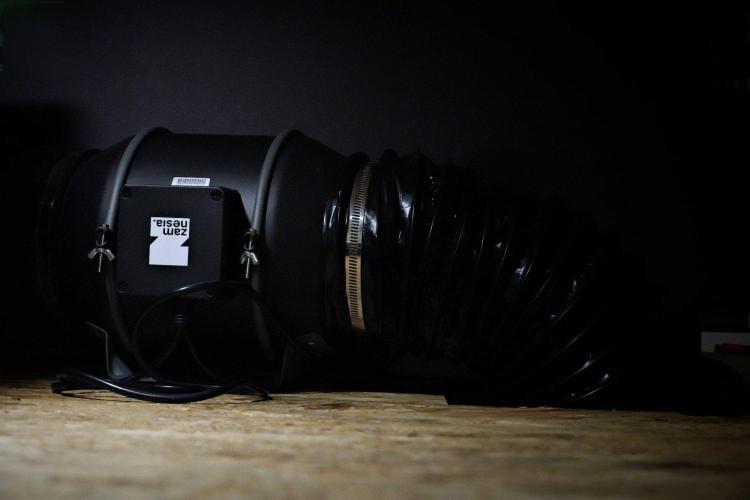
Inline ventilator.
Luchtkanalen.
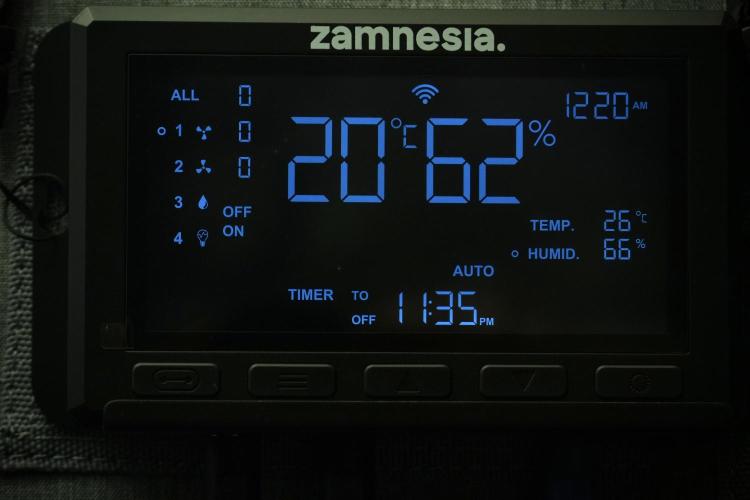
Controller.
Kabelbeheer.
Alles.
Zelfs met een paar aanpassingen die nodig waren vanwege ruimtebeperkingen, was de hele opstelling binnen minder dan een uur operationeel.
De instructies zijn duidelijk en gemakkelijk te volgen, en de algehele bouwkwaliteit maakte onmiddellijk een zeer positieve indruk.
Het frame voelt solide aan.
De materialen voelen duurzaam aan.
En het systeem voelt vanaf het begin doordacht ontworpen aan.
Nu is het aan de planten om de echte beoordeling te geven.
---
## Wat Is In De Kit Inbegrepen?
De complete Zamnesia Kweektent Kit omvat:
- Kweektent 100×100×200 cm
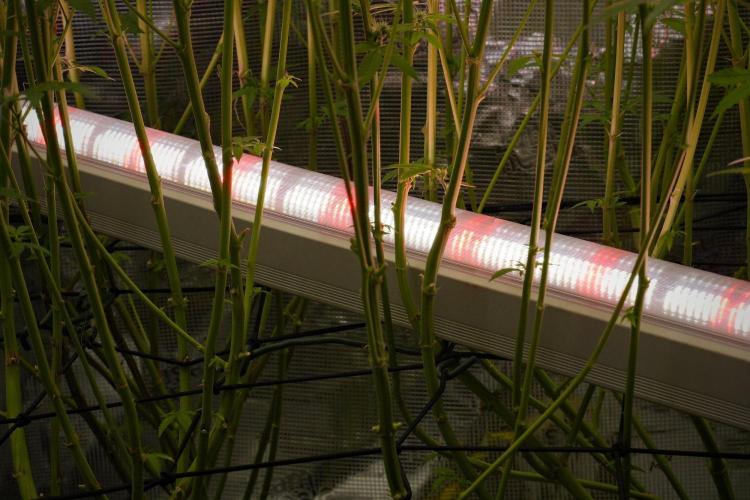
- Phytonaut LED Kweeklamp 320W
- Inline Luchtventilator 150 mm
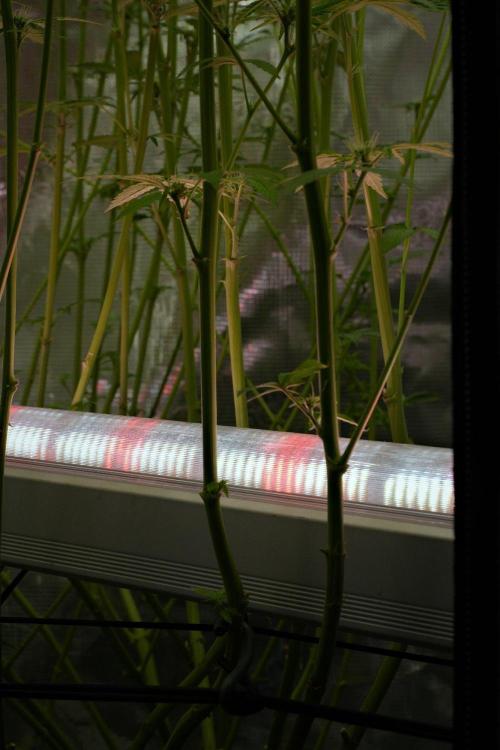
- Koolstoffilter Luchtzuiveraar 150 mm
- Kweekomgeving Controller
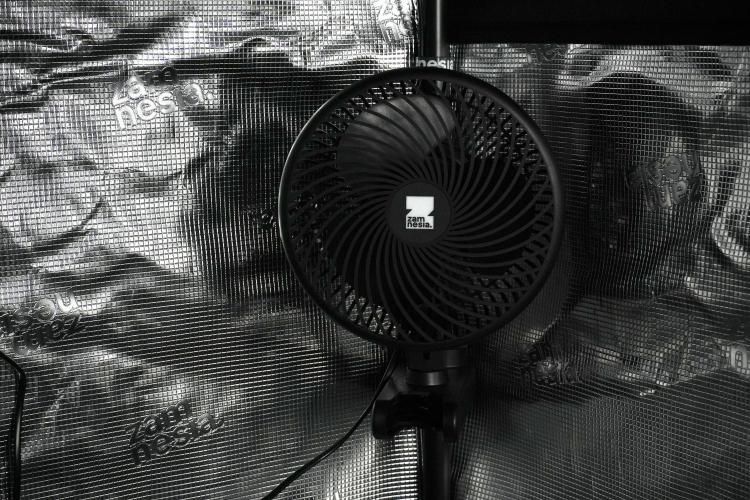
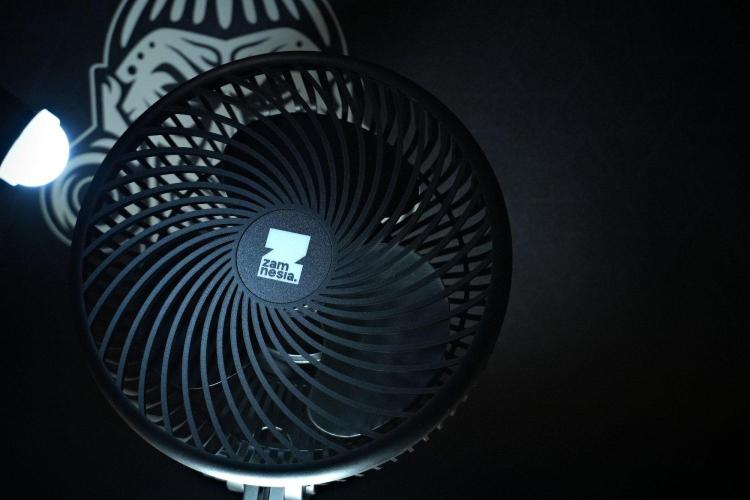
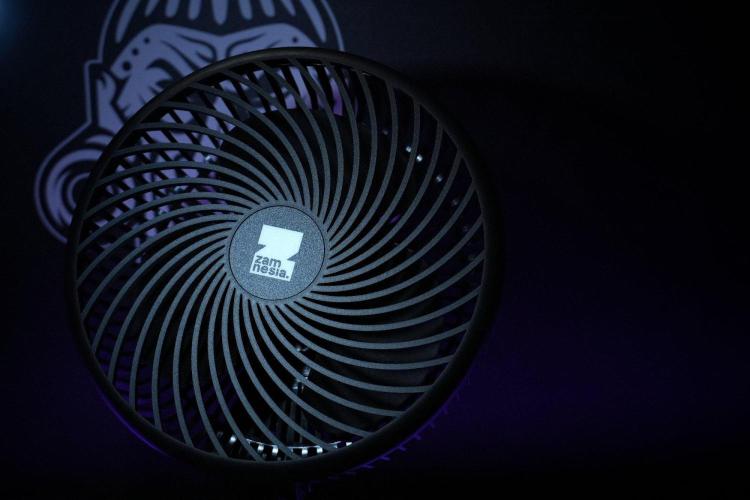
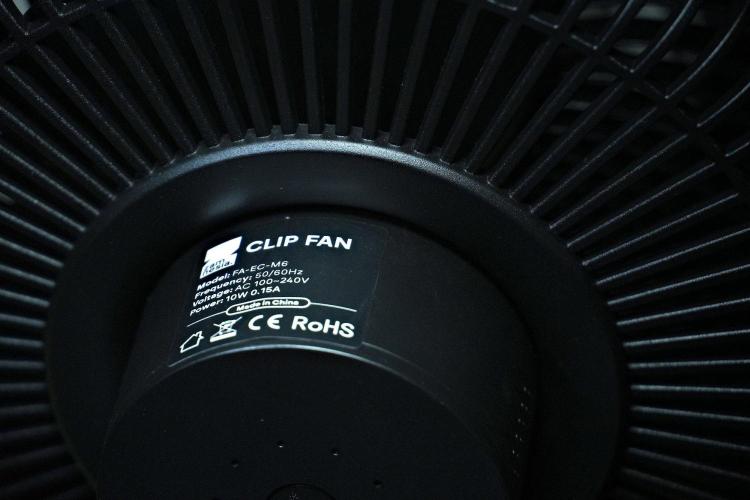
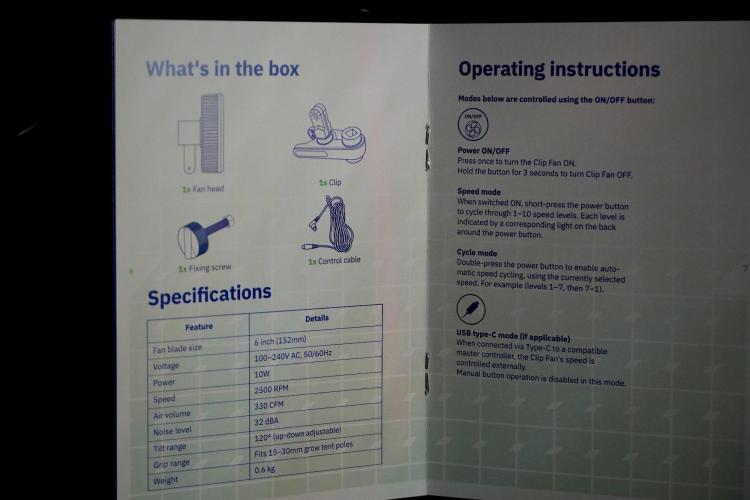
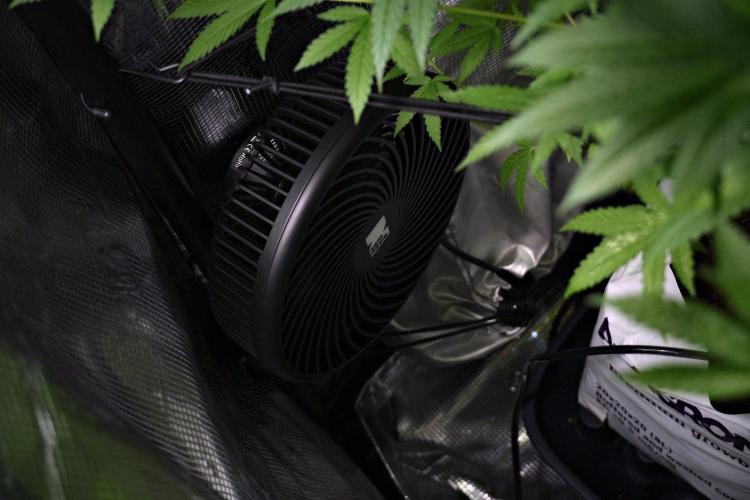
- Kweektent Clipventilator
- Flexibele Luchtkanalen
- 24-Uur Timer
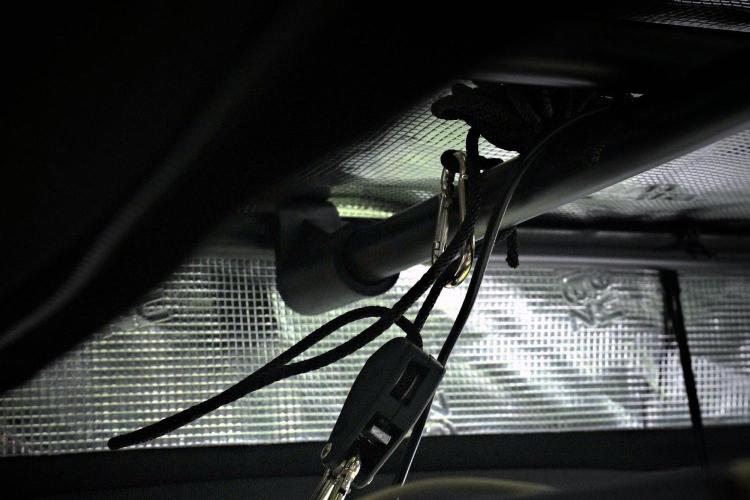
- Touw Ratchet Hangers
- Klittenband Kabelbeheer Accessoires
Alles wat momenteel binnen deze tent werkt, komt rechtstreeks uit dit pakket.
Geen vervangingen.
Geen upgrades.
Geen aanpassingen.
Dit maakt een oprechte evaluatie van het complete systeem mogelijk, precies zoals geleverd.
---
## Omgevingsomstandigheden
Voor deze eerste week bleef de verlichting opzettelijk zacht.
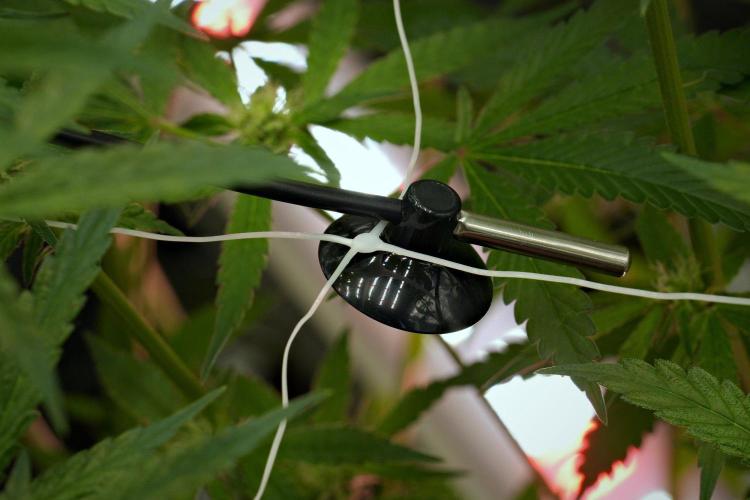
Met een PAR-meter werd de lichtintensiteit gemeten op ongeveer:
~200 PPFD
Jonge zaailingen hebben simpelweg geen hoge lichtniveaus nodig tijdens deze fase.
Het doel is een gezonde vestiging en sterke wortelontwikkeling in plaats van snelle verticale groei.
De omgevingsomstandigheden bleven de hele week stabiel en de plant reageerde prachtig.
Gezonde houding.
Gezonde kleur.
Goede ontwikkeling.
En geen tekenen van stress.
Precies wat we hopen te zien van een succesvolle start.
---
## Eerste Indrukken Van Pickle Lemon Haze F1 Pheno B
Hoewel haar zus misschien de eerste was die de aandacht trok, heeft Pheno B stilletjes een uitstekende basis voor zichzelf opgebouwd.
Gezonde germinatie.
Gezonde opkomst.
Gebalanceerde ontwikkeling.
Sterke kleur.
Goede kracht.
En een kalme, gestage voortgang die vertrouwen inspireert voor de toekomst.
Ik heb in de loop der jaren geleerd niet te veel voorspellingen te doen zo vroeg.
Planten hebben een geweldige gewoonte om ons te verrassen.
Dus in plaats van verwachtingen te creëren, geef ik de voorkeur aan het creëren van kansen en de plant de kans te geven ons te laten zien wie ze wil worden.
Die aanpak leidt zelden tot teleurstelling.
Slechts ontdekking.
---
## Vooruitkijkend
In de komende weken zullen we elke fase van de ontwikkeling blijven documenteren.
We zullen volgen:
- Wortelvestiging
- Vegetatieve groei
- Omgevingsbeheer
- Structurele ontwikkeling
- Trainingsbeslissingen
- Voedingsprogressie
- Genetische expressie
- En welke unieke kenmerken dit fenotype ook kiest om te onthullen
Voor nu heeft Pickle Lemon Haze F1 Pheno B een gezonde en succesvolle germinatieweek voltooid en heeft ze zich comfortabel gevestigd in haar nieuwe huis.
De wortels groeien.
De bladeren reiken.
En het avontuur is officieel begonnen.
Grower's Love iedereen. 💚🌱🍋
Soms zijn het de planten die stilletjes aankomen die later de luidste indruk maken.
13 houdt van
1 opmerking
Share
Used method
Overige
Germinatiewijze
1
Week 1. Vegetatie
4mo ago
1/30
6 cm
Height
18 uur
Light Schedule
26 °C
Day Air Temp
6.0
pH
Geen Geur
Smell
765 PPM
TDS
71 %
Air Humidity
24 °C
Solution Temp
24 °C
Substrate Temp
25 °C
Night Air Temp
0.3 set_lilers
Pot Size
0.3 set_lilers
Watering Volume
450 PPM
CO₂-niveau
Nutrients 4
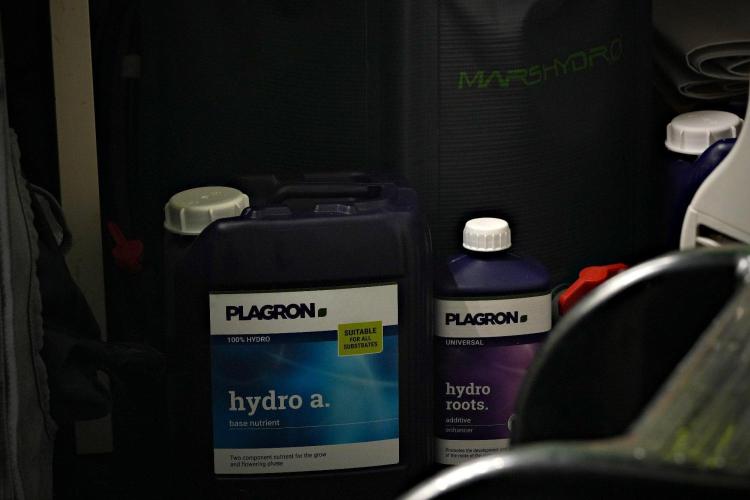
Hydro A
1.4 mll
Hydro B
1 mll
Hydro Roots
1 mll
DogDoctorOfficial Map 14 — Pickle Lemon Haze — Pheno B
Week 1 Vegetatie — Vroege Tekenen van een Vooraanstaande
Hallo kwekers,
Welkom terug bij een nieuwe update van het Zamnesia Tent-project.
Net als bij de rest van deze kweek, wordt elk fenotype afzonderlijk gedocumenteerd van zaad tot oogst. Zelfs wanneer planten dezelfde genetica en omgeving delen, beginnen subtiele verschillen vaak al heel vroeg te verschijnen, en die verschillen kunnen enkele van de meest interessante delen van de hele reis worden.
Deze week kijken we wat dichterbij naar Pickle Lemon Haze Pheno B, een zaailing die al begint te suggereren dat ze misschien iets grotere ambities heeft dan haar zussen.
Het is natuurlijk nog extreem vroeg, maar soms onthullen de eerste aanwijzingen zich eerder dan verwacht.
⸻
De Omgeving
Week 1 was gericht op het creëren van een stabiele basis voor groei.
Het Zamnesia-ecosysteem handhaafde constante omstandigheden gedurende de week, waardoor de zaailingen zich konden vestigen zonder onnodige omgevingsschommelingen.
De omstandigheden waren gemiddeld:
* Temperatuur: 26°C
* Relatieve Vochtigheid: 71%
De verlichting was ingesteld om ongeveer 250 PPFD te bieden, een niveau dat is gekozen om compacte en gezonde ontwikkeling vanaf het allereerste begin aan te moedigen.
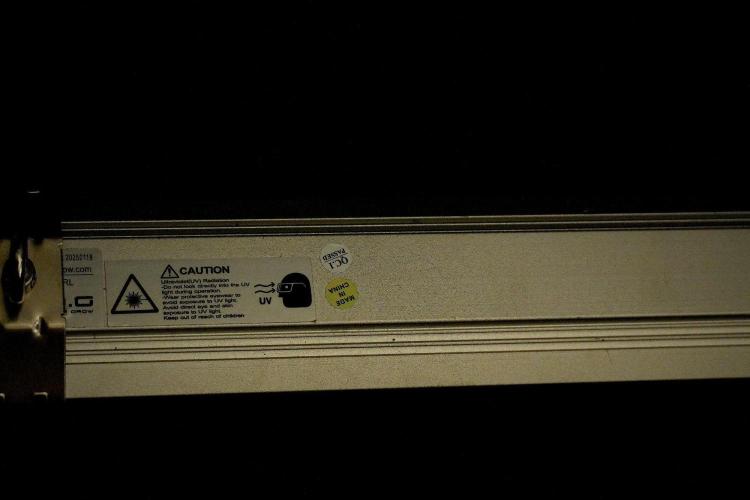
De LED-armatuur werkte op:
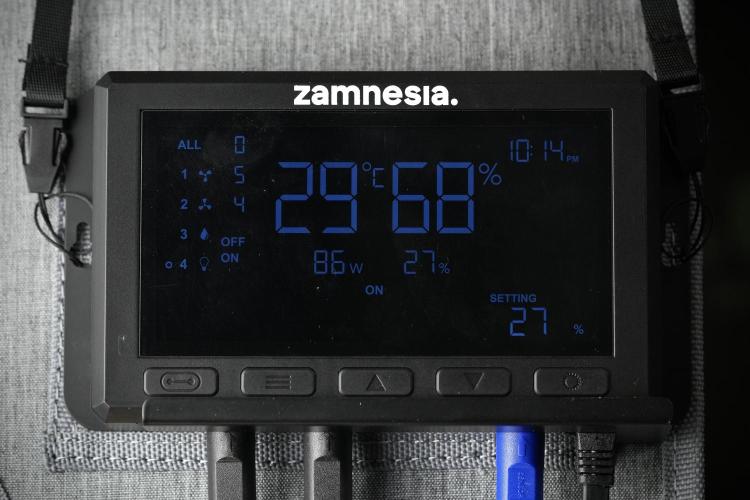
* 27% intensiteit
* Ongeveer 86 watt getrokken van het net
Luchtbeweging en omgevingscontrole werden geregeld door:
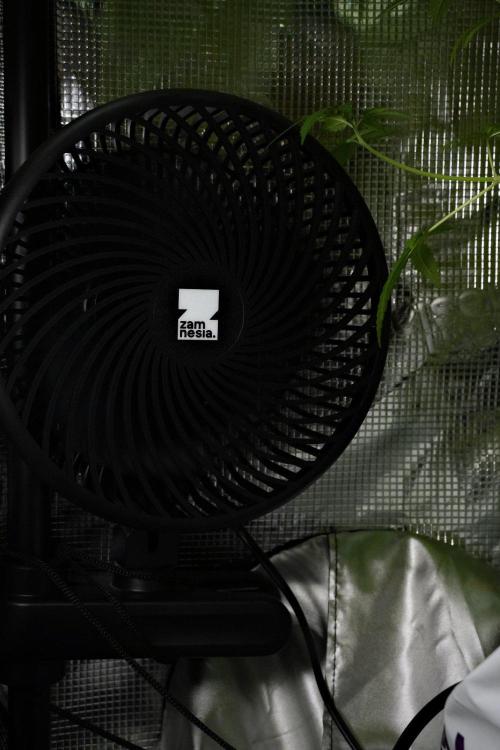
* Zamnesia afzuiger die op Niveau 5 draait
* Circulatieventilator die op Niveau 4 draait
Samen creëerden deze instellingen een comfortabele omgeving met een zachte luchtstroom en uitstekende luchtuitwisseling.
⸻
Voedingsprogramma
Hoewel de eerste dagen werden ondersteund met opgevangen regenwater, markeerde deze week de introductie van het voedingsprogramma.
De eerste voeding bestond uit:
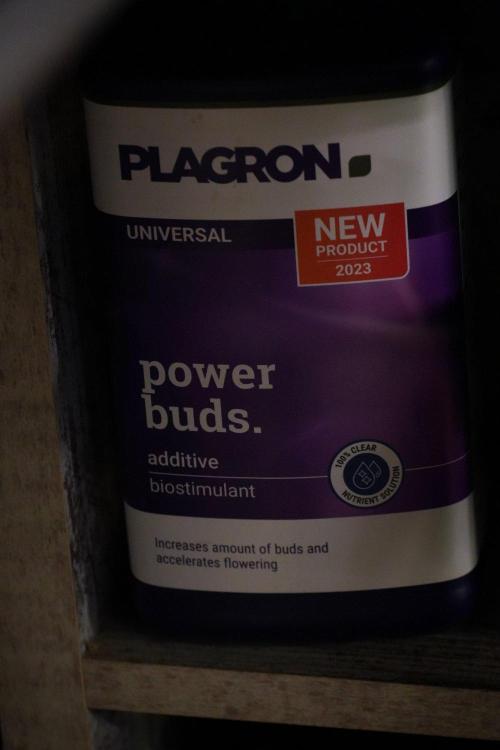
* Plagron Hydro A
* Plagron Hydro B
* Plagron Hydro Roots
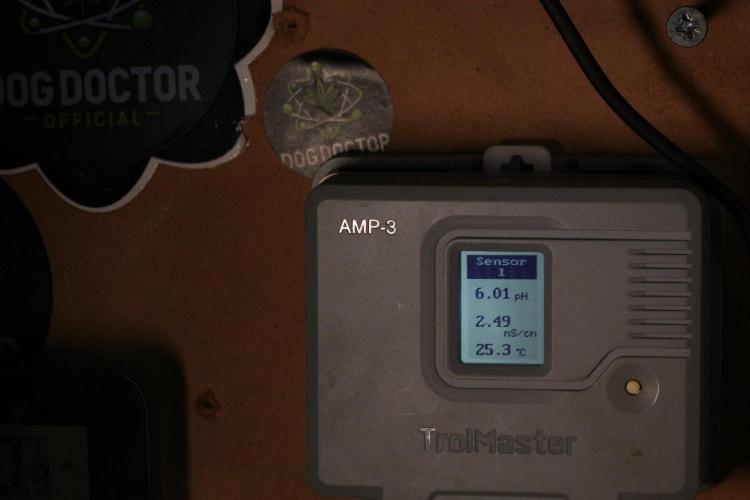
Gemengd tot:
* EC: 1.53 mS/cm
* pH: 5.96
* Watertemperatuur: 24.2°C
Het doel blijft eenvoudig: een gezond wortelsysteem opbouwen voordat we de coco-fase van het project ingaan.
Tot nu toe lijkt Pickle Lemon Haze Pheno B extreem goed te reageren.
⸻
Voorbereiden op de Coco-overgang
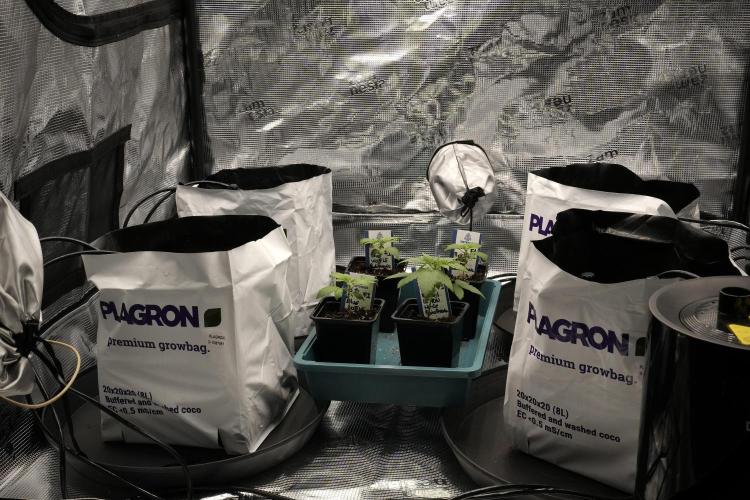
Terwijl de zaailingen voorlopig in hun starterpotten blijven, zijn de voorbereidingen voor de transplantatie van volgende week al voltooid.
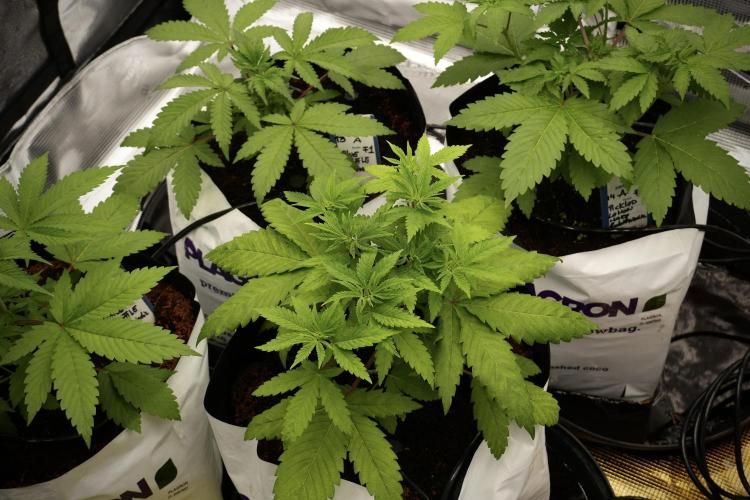
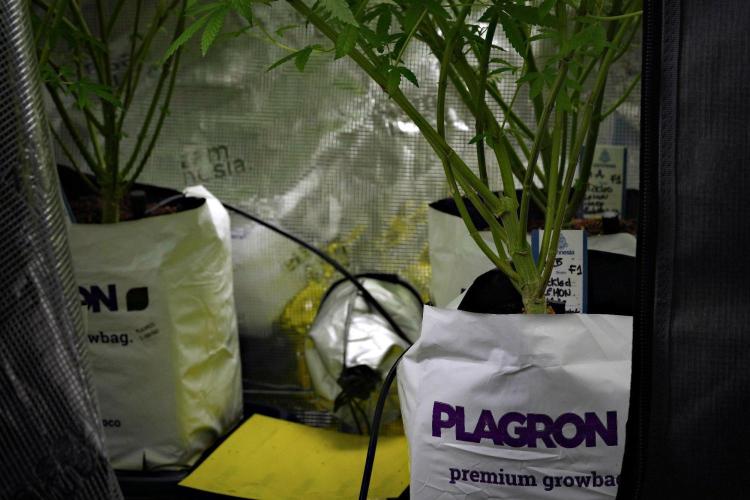
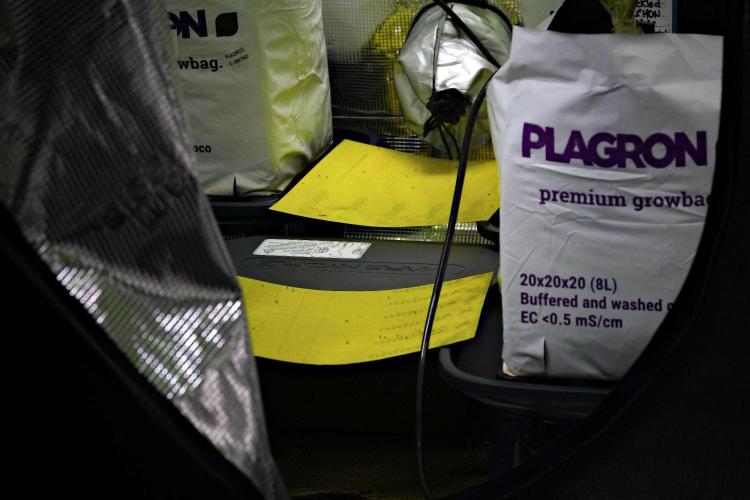
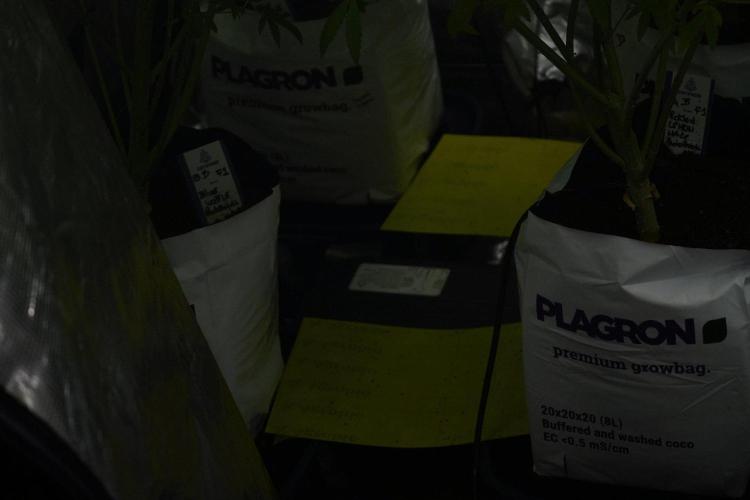
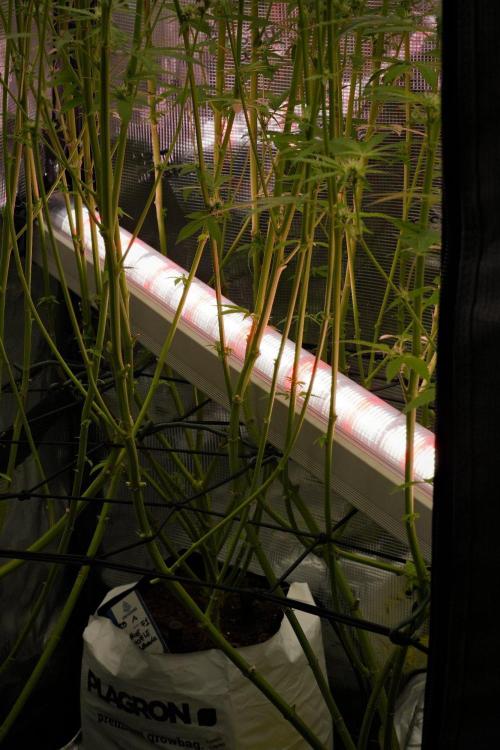
De Plagron Premium Grow Bags zijn gevuld en gehydrateerd met alleen gedestilleerd water.
In plaats van de coco in één keer te laten weken, wordt er een langzaam vrijkomend reservoirsysteem gebruikt om geleidelijk vocht door het medium te verdelen. Dit stelt de samengeperste coco in staat om gelijkmatig uit te zetten terwijl het consistente hydratatie van boven naar beneden behoudt.
Tegen de tijd dat de transplantatiedag aanbreekt, zou het medium volledig geconditioneerd moeten zijn en klaar om snelle worteluitbreiding te ondersteunen.
Deze aanstaande verhuizing naar coco zal een van de eerste belangrijke mijlpalen van het project zijn.
⸻
Pickle Lemon Haze — Pheno B
Hoewel alle vier de zaailingen uitstekende starts hebben gehad, begint dit fenotype zich toch een beetje van de rest te onderscheiden.
Het verschil is niet dramatisch.
Het is geen wereld van verschil.
Maar op deze leeftijd kunnen zelfs kleine verschillen betekenisvol zijn.
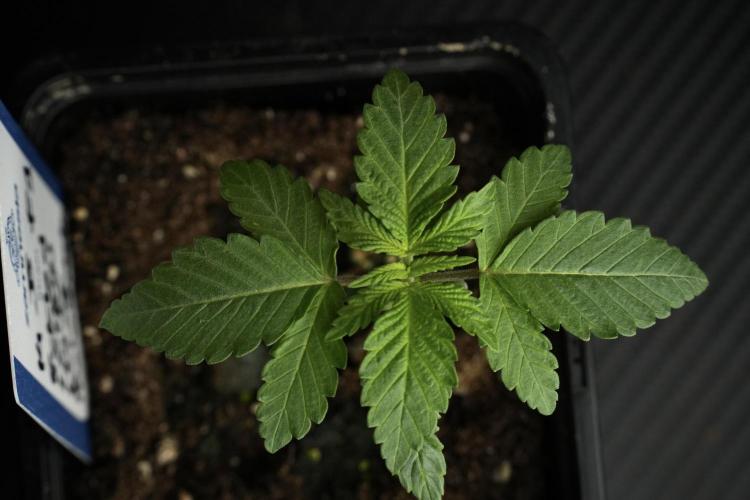
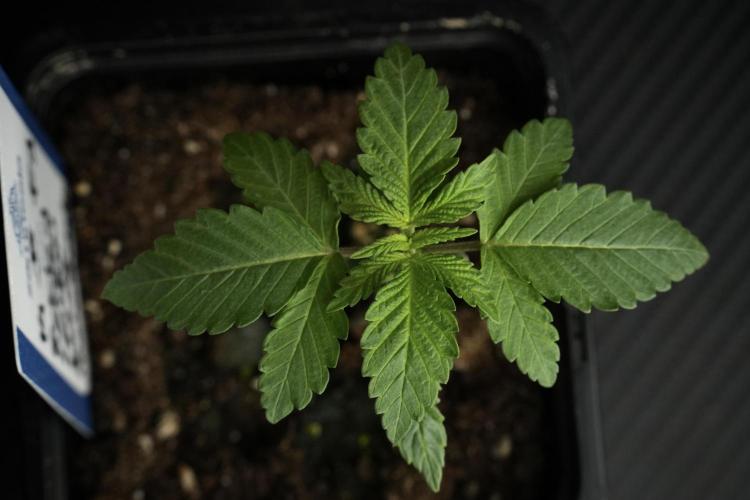
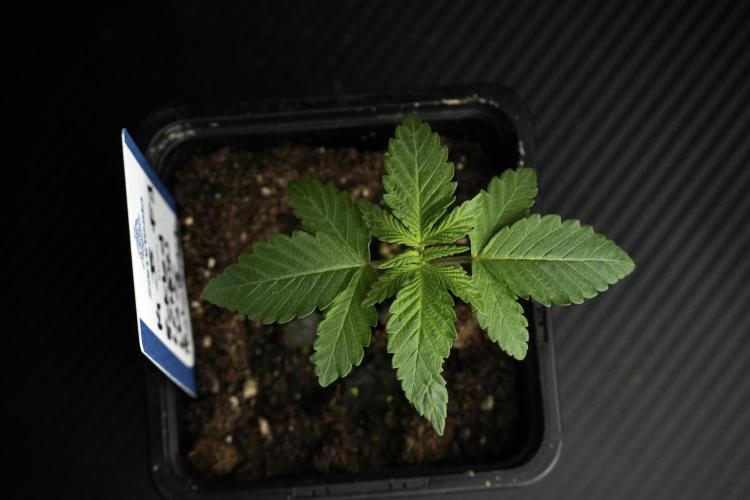
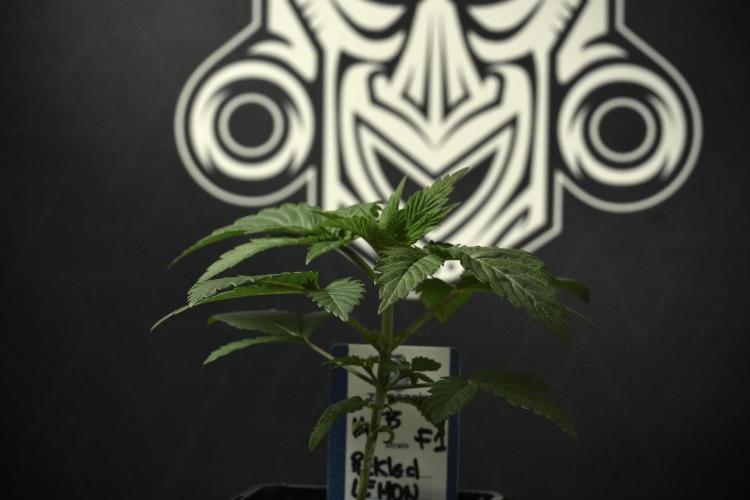
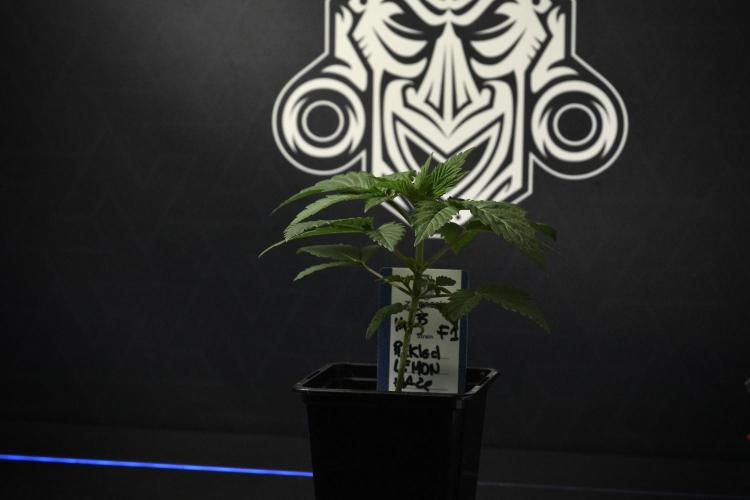
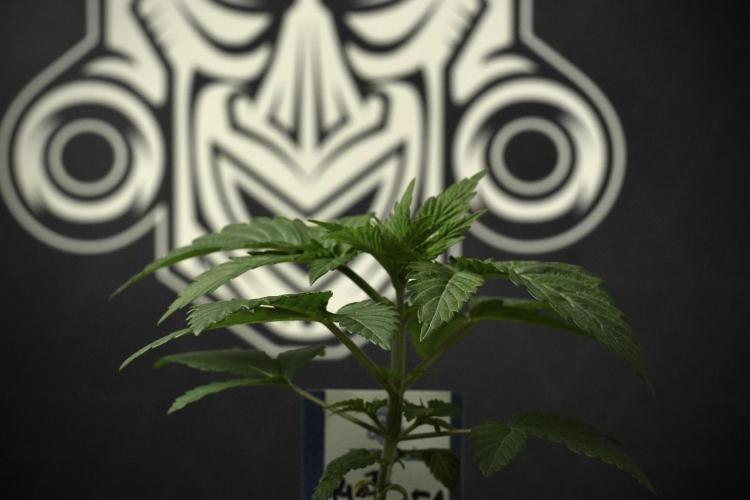
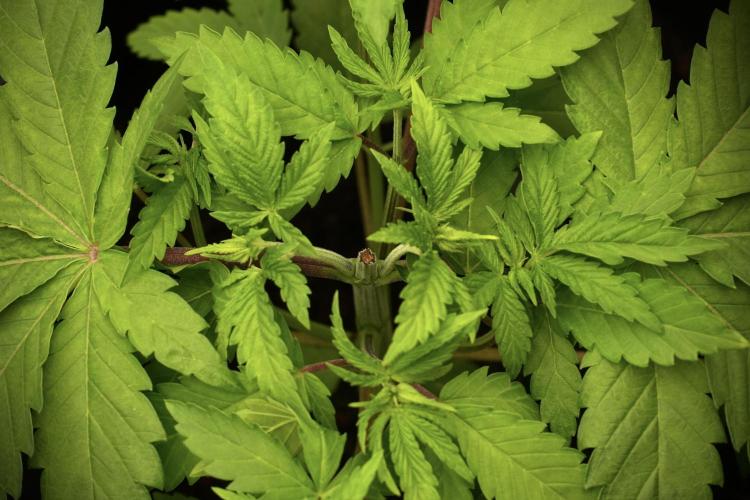
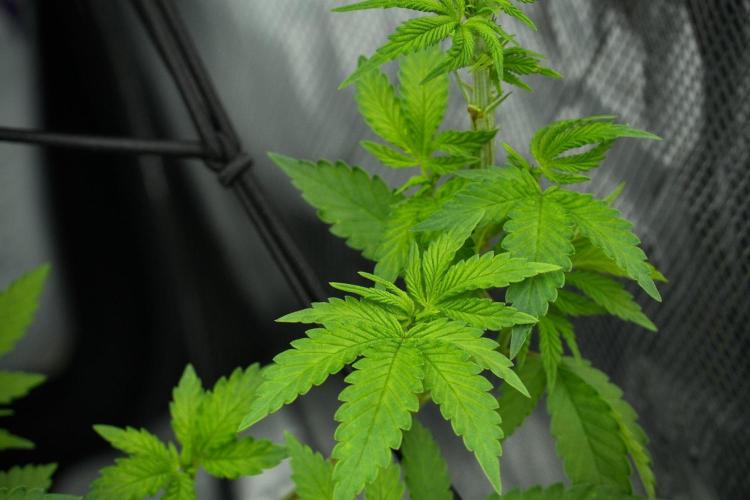
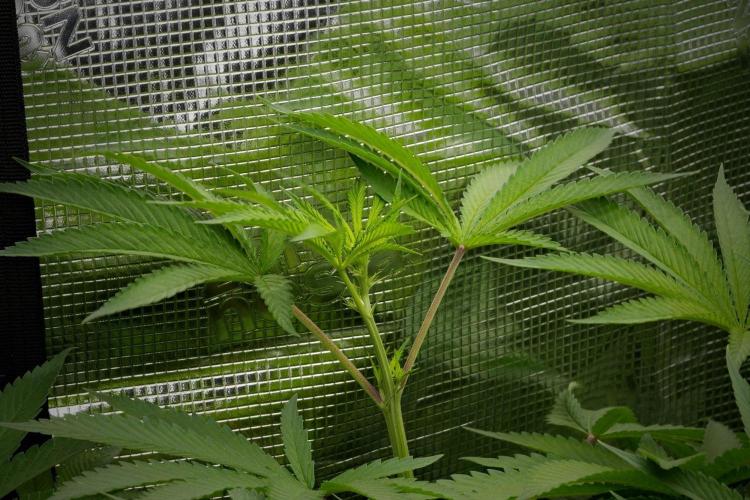
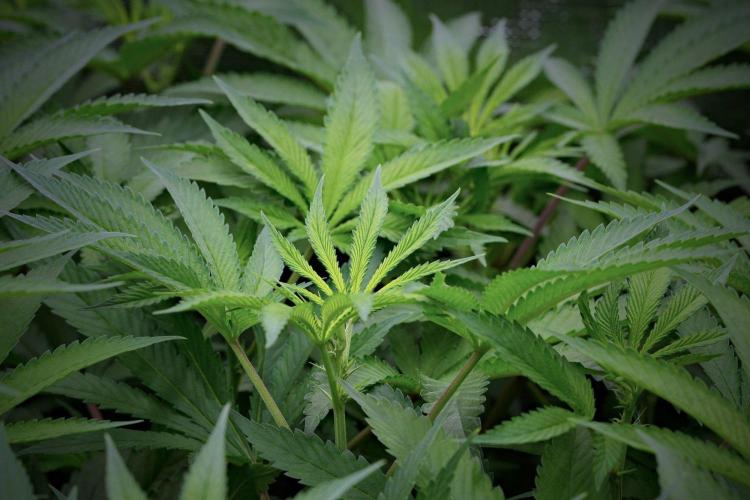
In vergelijking met haar zus toont Pheno B merkbaar sterkere vroege ontwikkeling. Ze lijkt iets groter in het algemeen, heeft meer bladmassa geproduceerd en is al agressief op weg naar haar volgende groeiset.
Terwijl verschillende van de andere planten hun derde set echte bladeren binnengaan, lijkt dit fenotype al enthousiast om aan het volgende hoofdstuk te beginnen.
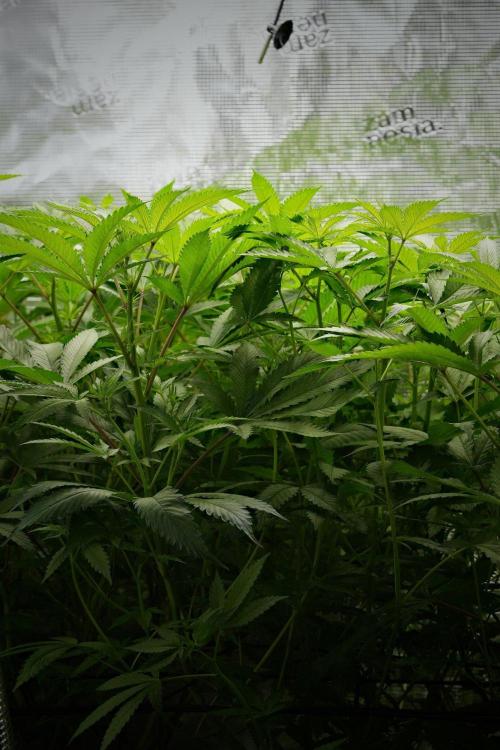
De internodale afstand blijft extreem klein, wat precies is wat we onder deze omstandigheden willen zien. In plaats van verticaal te rekken, investeert de plant energie in het opbouwen van een dichte, compacte structuur met brede, gezonde bladeren.
De bladeren zelf zijn een van de opvallende kenmerken.
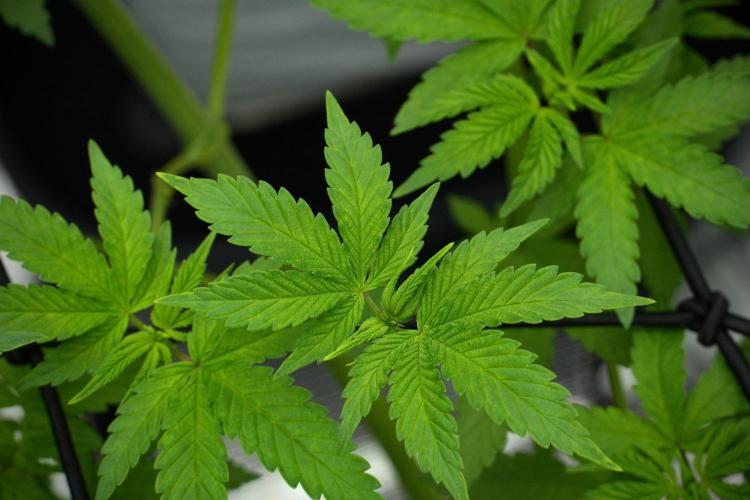
Groot, symmetrisch en prachtig gevormd, creëren ze een uitstraling die volwassener lijkt dan de leeftijd van de plant. De structuur suggereert al een krachtige groeihabit en een uitstekend potentieel voor energieproductie in de toekomst.
De kleur blijft gezond door de hele plant, met sterke groene pigmentatie en levendige nieuwe groei die uit het midden opkomt.
Het belangrijkste is dat de plant er gewoon comfortabel uitziet.
Comfortabele planten groeien.
En deze ziet er inderdaad erg comfortabel uit.
Natuurlijk moeten de observaties van Week 1 altijd met een korreltje zout worden genomen. Zaailingen kunnen ons vaak verrassen tijdens een kweek, en de huidige voorsprong is niet altijd de kampioen van morgen.
Toch, als eerste indrukken iets waard zijn, heeft Pickle Lemon Haze Pheno B een zeer sterke gemaakt.
⸻
Vooruitkijken
De aanstaande transplantatie naar coco zou een uitstekende kans moeten bieden om te zien of deze vroege momentum aanhoudt.
Met een aanzienlijk groter wortelgebied dat beschikbaar komt en een volledig vastgesteld voedingsprogramma dat al in werking is, wordt verwacht dat de groeisnelheden merkbaar zullen toenemen in de komende weken.
Als dit fenotype het tempo aanhoudt dat ze tot nu toe heeft getoond, kan ze een van de interessantere planten worden om te volgen binnen de Zamnesia Tent.
Voor nu blijft geduld echter het doel.
Sterke wortels eerst.
De rest volgt.
⸻
Bedankt
Een enorme dank aan iedereen die dit project volgt en deze dagboeken ondersteunt.
Bijzondere dank aan:
* Zamnesia voor het leveren van de genetica, apparatuur en ondersteuning achter deze kweek.
* Plagron voor het leveren van de voedingsstoffen en kweekmedia die door het project zijn gebruikt.
* Het GrowDiaries-team voor het blijven bieden van een thuis waar kwekers kunnen leren, documenteren en hun ervaringen delen.
* En natuurlijk de hele kweekgemeenschap wiens passie, kennis en aanmoediging helpen om projecten zoals dit mogelijk te maken.
Week 1 is officieel voltooid.
De coco-tassen zijn klaar.
De wortels ontwikkelen zich.
En Pickle Lemon Haze Pheno B lijkt al enthousiast voor de volgende stap.
Kwekersliefde en laten we zien waar ze ons besluit te brengen.
🌱🍋💚
7 houdt van
opmerkingen
Share
2
Week 2. Vegetatie
4mo ago
1/30
6 cm
Height
18 uur
Light Schedule
29 °C
Day Air Temp
5.8
pH
Geen Geur
Smell
630 PPM
TDS
68 %
Air Humidity
23 °C
Solution Temp
24 °C
Substrate Temp
25 °C
Night Air Temp
8 set_lilers
Pot Size
0.5 set_lilers
Watering Volume
450 PPM
CO₂-niveau
Nutrients 4
Hydro A
1.4 mll
Hydro B
1 mll
Hydro Roots
1 mll
DogDoctorOfficial 🍋 Project Blue Tent – Map 14B
Pickled Lemon Haze F1 – Pheno B | Week 2 – Haar Ritme Vinden
Elke fenotype vertelt zijn eigen verhaal.
Hoewel beide planten dezelfde genetica delen en onder identieke omstandigheden groeien, laat de natuur altijd haar eigen handtekening achter. Dat is precies waarom Project Blue Tent is opgericht—om elke fenotype individueel te documenteren en de subtiele verschillen te ontdekken die elke plant uniek maken.
Dit project is opgebouwd rond consistentie. Beide fenotypes worden binnen het complete Zamnesia-ecosysteem gekweekt, geworteld in Plagron Premium Coco Grow Bags en uitsluitend gevoed met de Plagron Hydro-lijn. Elke omgevingsparameter, elke voedingsaanpassing en elke observatie wordt vastgelegd, zodat dit dagboek meer wordt dan alleen een kweeklog—het wordt een leerervaring.
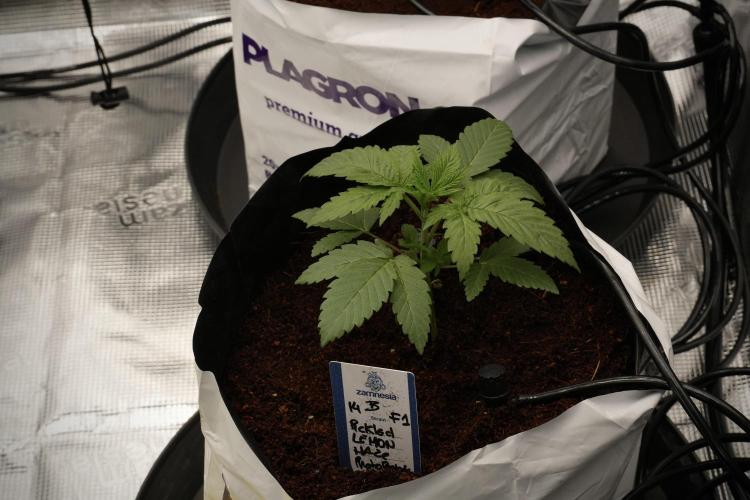
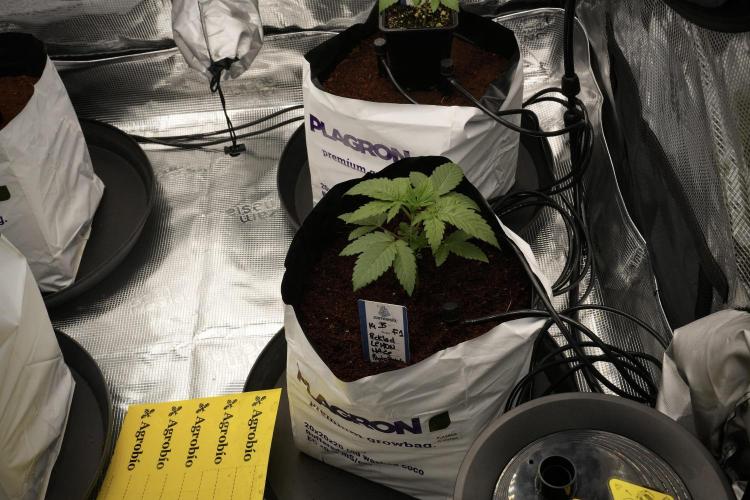
Deze week markeerde een van de belangrijkste momenten van de vroege vegetatieve groei: de transplantatiedag. Dankzij de uitstekende wortelontwikkeling in de starterpot was Pheno B klaar om naar haar permanente thuis te verhuizen, waar ze nu volledig het coco-substraat kan verkennen en de basis kan leggen voor de komende weken.
⸻
🌱 Omgeving & Ecosysteem
Alles binnen de Blue Tent is ontworpen om zo stabiel en herhaalbaar mogelijk te blijven.
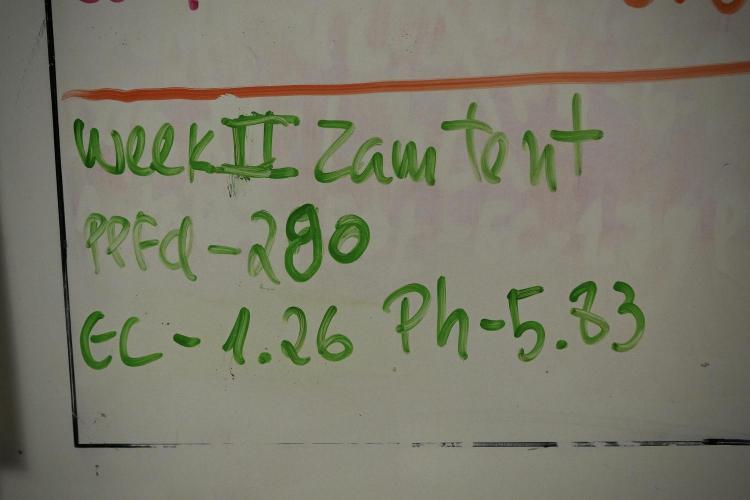
• Lichtschema: 18 uur AAN met 280PPFD / 6 uur UIT
• Kweekmedium: Plagron Premium Coco Grow Bags
• Voedingslijn: Plagron Hydro A & B + Hydro Roots
• Water pH: 5.83
• EC: 1.26 mS/cm
• Reservoirtemperatuur: 23.1°C
Omgevingscondities:
• Temperatuur: 29°C
• Relatieve Vochtigheid: 68%
Deze omstandigheden zorgen voor uitstekende transpiratie terwijl ze krachtige vegetatieve groei en snelle worteluitbreiding door het coco aanmoedigen.
⸻
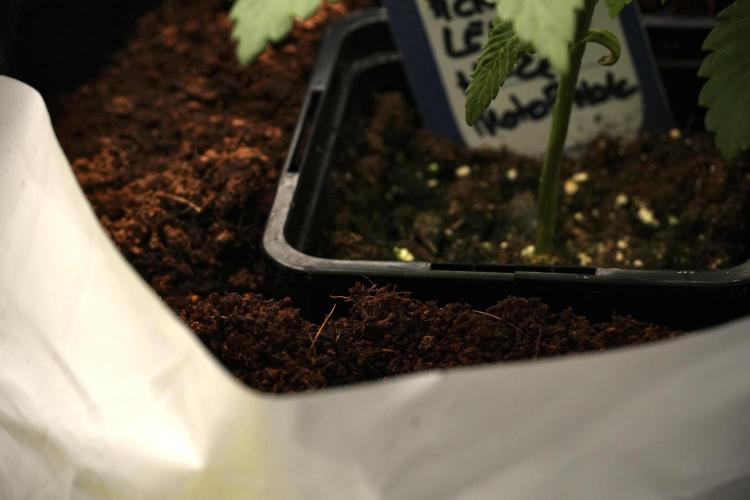
🥥 Waarom de Starterpot In de Coco Bag Is Begraven
Een detail dat mensen in dit project vaak verrast, is dat ik het gebied van de starterpot niet uit de uiteindelijke kweekzak verwijder.
In plaats daarvan begraaf ik de hele wortelkluit direct in het midden van de gehydrateerde coco.
Er zijn verschillende redenen voor deze aanpak.
Ten eerste elimineert het volledig transplantatiestress. De wortels hoeven nooit te herstellen van verstoring—ze blijven gewoon groeien zoals ze waren.
Ten tweede blijft de oorspronkelijke wortelzone perfect intact, waardoor de vochtigheidsniveaus geleidelijk kunnen overgaan in de verse coco in plaats van de plant te dwingen zich van de ene op de andere dag aan te passen.
Ten slotte creëert het positioneren van de starterpot in het midden van nature een perfect symmetrische worteluitbreiding. In plaats van één richting te bevoordelen, worden de wortels aangemoedigd om de hele kweekzak gelijkmatig te koloniseren, wat een uitgebalanceerde basis oplevert voor de rest van de kweek.
Soms leveren de eenvoudigste technieken de grootste voordelen op lange termijn.
⸻
🌿 Wortelontwikkeling
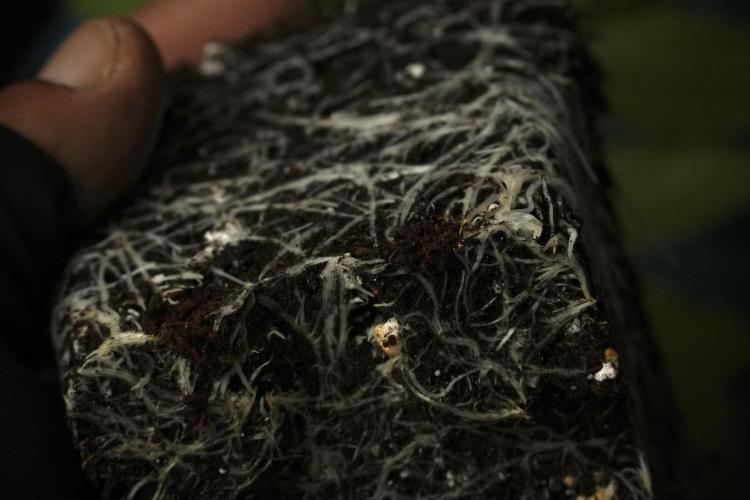
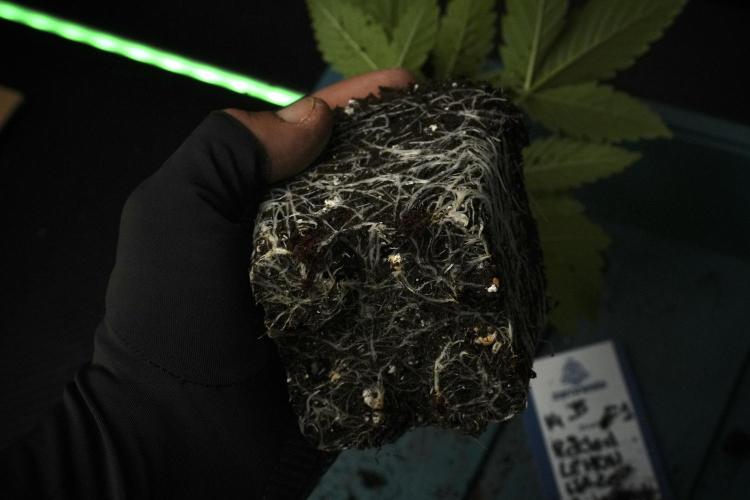
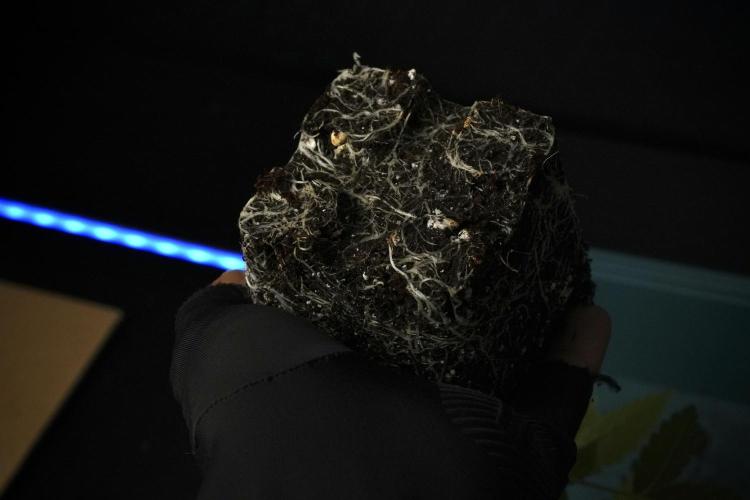
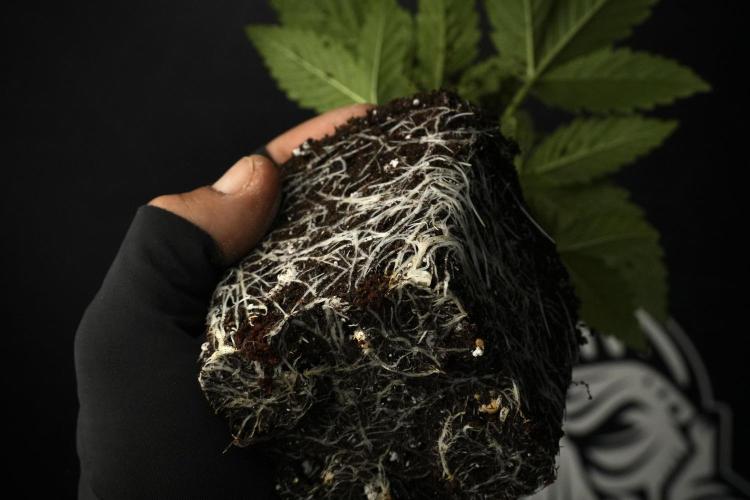
Bij het verwijderen van de starterpot viel als eerste de ongelooflijke dichtheid van gezonde witte wortels op die zich om de hele wortelkluit wikkelden.
Elke kant van de kubus toonde actieve groei.
De wortels waren helder wit, dik en gelijkmatig verdeeld, precies wat ik hoop te zien voordat ik in de uiteindelijke container transplant.
Gezonde wortels creëren gezonde planten.
Sterke wortels verbeteren de opname van voedingsstoffen, verhogen de weerstand tegen omgevingsstress en bieden de motor die explosieve vegetatieve groei in de komende weken zal ondersteunen.
Als ik naar dit wortelsysteem kijk, is het duidelijk dat Pheno B uitstekend gebruik heeft gemaakt van elke kubieke centimeter van haar starterpot voordat ze afstudeerde naar haar uiteindelijke thuis.
⸻
🌿 Maak kennis met Pheno B
Terwijl haar zus me verraste met een compacte structuur en gebalanceerde symmetrie, onthulde Pheno B onmiddellijk een andere persoonlijkheid.
Ze heeft iets meer stretch door de stam, wat zorgt voor iets bredere internodale ruimte terwijl ze toch uitstekende structurele sterkte behoudt.
Haar bladeren zijn breed, rijk van kleur en prachtig gelaagd rond de hoofdsteel, wat haar een krachtige, energieke uitstraling geeft. De nieuwste groei barst vanuit het midden met uitzonderlijke kleur en uitstekende bladvorming, wat laat zien dat ze zich comfortabel heeft gevestigd na de transplantatie.
Een detail dat echt mijn aandacht trok, is haar natuurlijke openheid. In plaats van dicht op elkaar te stapelen, hint haar vertakking al op een fenotype dat van nature betere luchtstroom en lichtpenetratie kan creëren naarmate ze rijpt.
Elke dag lijkt ze met vertrouwen te bewegen, omhoog reikend terwijl ze tegelijkertijd naar buiten uitbreidt.
Het is nog veel te vroeg om te weten hoe ze zich zal uiten tijdens de bloei, maar ze toont al een eigen persoonlijkheid—en dat is precies waarom ik het zo leuk vind om individuele fenotypes te documenteren.
⸻
💧 Voedingsstrategie
Na de transplantatie ben ik doorgegaan met voeden met de Plagron Hydro-lijn, zodat de jonge wortels onmiddellijk de verse coco rondom de oorspronkelijke wortelkluit konden koloniseren.
Huidige voeding:
• Plagron Hydro A & B
• Plagron Hydro Roots
Het handhaven van een stabiele EC samen met een goed aangepaste pH zorgt ervoor dat voedingsstoffen onmiddellijk beschikbaar blijven terwijl ze continue worteluitbreiding in het omringende substraat aanmoedigen.
In plaats van snelle topgroei te stimuleren, is het doel op dit moment om een uitzonderlijk gezond wortelsysteem op te bouwen dat krachtige ontwikkeling gedurende de vegetatieve fase zal ondersteunen.
⸻
🔍 Vooruitkijken
De transplantatie is precies gegaan zoals gepland, en Pheno B is al weer actief gaan groeien zonder enige tekenen van stress te vertonen.
In de komende week zal ik nauwlettend in de gaten houden hoe de wortels de coco zak blijven koloniseren en het bladerdak begint uit te breiden.
Naarmate haar structuur zich ontwikkelt, zal ik ook haar vertakkingspatroon en natuurlijke groeigewoontes beginnen te evalueren om te zien hoe dit fenotype verschilt van haar zus. Die kleine verschillen zijn vaak wat het fenotypejagen zo lonend maakt.
Voor nu ziet ze er gezond, zelfverzekerd en klaar uit om te laten zien wat ze kan.
⸻
💙 Laatste Gedachten
Twee zussen naast elkaar te zien groeien onder identieke omstandigheden is een van de meest fascinerende delen van deze reis.
Zelfde genetica.
Zelfde omgeving.
Zelfde voeding.
Toch begint elke plant haar eigen verhaal te schrijven.
Pheno B toont al een uniek karakter—iets meer open in structuur, vol energie, en groeit met stille zelfvertrouwen. Het is spannend om haar te zien ontwikkelen, en ik kan niet wachten om te zien hoe die vroege eigenschappen zich vertalen zodra de bloei begint.
Het avontuur begint pas echt.
⸻
🙏 Bedankt
Een grote dank aan iedereen die Project Blue Tent volgt en deze reis met mij deelt.
Bijzondere dank aan Zamnesia voor het leveren van de ongelooflijke genetica en het bouwen van een uitstekend ecosysteem rond thuis kweken, en aan Plagron voor het leveren van de Hydro-voedingslijn en Premium Coco Grow Bags die dit project mogelijk maken.
Dank ook aan de GrowDiaries-gemeenschap voor de constante aanmoediging, feedback en inspiratie. Het delen van deze wekelijkse updates is een van mijn favoriete onderdelen van elke kweek, en ik hoop dat ze blijven onderwijzen, inspireren en aanmoedigen voor kwekers van elk ervaringsniveau.
Kwekersliefde en tot de volgende update. 🌱💙
11 houdt van
1 opmerking
Share
Used techniques
Transplantatie
Techniek
3
Week 3. Vegetatie
4mo ago
1/30
25 cm
Height
18 uur
Light Schedule
27 °C
Day Air Temp
5.8
pH
Geen Geur
Smell
805 PPM
TDS
68 %
Air Humidity
18 °C
Solution Temp
24 °C
Substrate Temp
25 °C
Night Air Temp
8 set_lilers
Pot Size
0.9 set_lilers
Watering Volume
450 PPM
CO₂-niveau
Nutrients 4
Hydro A
1.6 mll
Hydro B
1.6 mll
Hydro Roots
1 mll
DogDoctorOfficial 🥒 14B – Pickled Lemon Haze F1 | Week 3
De Tweede Zus Neemt de Kroon
Welkom terug bij het Project Blue Tent, mijn kleine experiment waar elke plant individuele aandacht krijgt van zaad tot oogst.
Voor iedereen die voor het eerst meedoet aan de reis, volgt dit project meerdere Zamnesia Genetics die naast elkaar worden gekweekt in dezelfde omgeving. Elke fenotype krijgt zijn eigen dagboek zodat we echt kunnen waarderen hoe genetica zich uitdrukt onder identieke omstandigheden.
Deze week was zeker niet saai.
Een storing in het irrigatiesysteem heeft de hele tent onder water gezet, waardoor elke growbag in veel meer water zat dan de bedoeling was. Gelukkig werd het probleem snel opgemerkt, het systeem werd gerepareerd en elke zak kreeg de kans om natuurlijk af te lopen. Dankzij de ongelooflijke beluchting van Plagron Cocos Premium hebben de wortels nooit geklaagd, bleef er zuurstof beschikbaar en gingen de planten gewoon door met groeien alsof er niets aan de hand was.
Als er iets is, was dit kleine ongelukje weer een herinnering dat goede substraten onze fouten vergeven.
En deze prachtige Pickled Lemon Haze F1 was daar geen uitzondering op.
⸻
Week 3 Ontwikkeling
Ze was een absolute vreugde om naar te kijken.
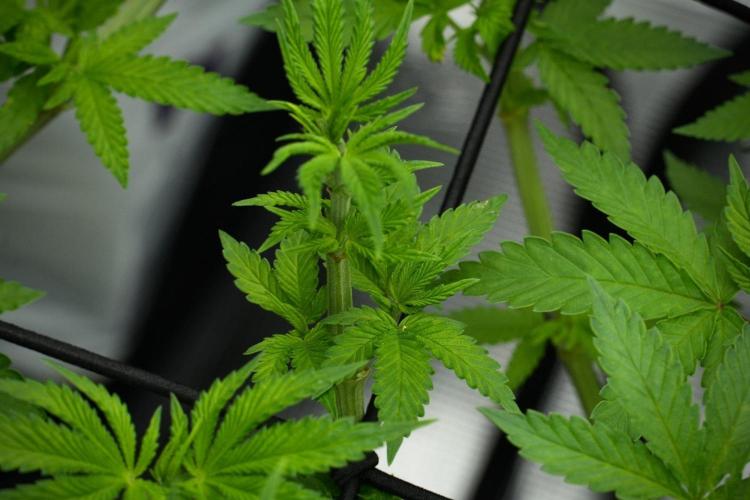
Hoewel ze dezelfde genetica als haar zus deelt, toont ze al haar eigen persoonlijkheid. Haar structuur werd ongelooflijk symmetrisch gedurende de week, met dikke internodes, brede bladeren en, het belangrijkste, uitzonderlijk krachtige lagere takken.
Soms vertelt een plant je precies wat ze wil.
Deze vroeg praktisch om getopt te worden.
In plaats van verticaal te groeien met een enkele dominante top, investeerde ze al zwaar in haar zijtakken, waardoor ze de perfecte kandidaat was om haar energie om te leiden en een veel bredere bladerdak te beginnen opbouwen.
Kijken onder de plant was genoeg om de beslissing te nemen.
Gezonde secundaire scheuten waren al omhoog aan het schieten, klaar om toekomstige hoofdcolas te worden.
⸻
Waarom Ik Heb Gekozen Deze Plant Te Toppen
Veel kwekers zien toppen als simpelweg de punt eraf knippen.
Het is eigenlijk veel meer dan dat.
De belangrijkste groeipunt produceert van nature auxines die de lagere takken onderdrukken door wat bekend staat als apicale dominantie. Door die enkele groeipunt te verwijderen, herverdeelt de plant hormonen en laat ze de zijtakken de overhand nemen.
In plaats van één dominante leider…
…creëren we er meerdere.
Aangezien deze Pickled Lemon Haze al zo'n indrukwekkende lagere ontwikkeling had, zou toppen die takken moeten laten exploderen met groei in de komende weken, wat zorgt voor een veel platter, gelijkmatiger bladerdak.
Voor binnenkweek betekent dat:
• Betere lichtverdeling
• Meer productieve bloeiplaatsen
• Sterkere structurele balans
• Gemakkelijker bladerdakbeheer
Natuurlijk is toppen een techniek met hoge stress, dus timing is belangrijk.
Ik voer het alleen uit wanneer de plant volledig gezond is, actief groeit en genoeg gevestigde knopen heeft om onmiddellijk te herstellen.
Afgaande op haar reactie slechts enkele dagen later, merkte ze de haircut nauwelijks op.
⸻
Een Kleine Chirurgie
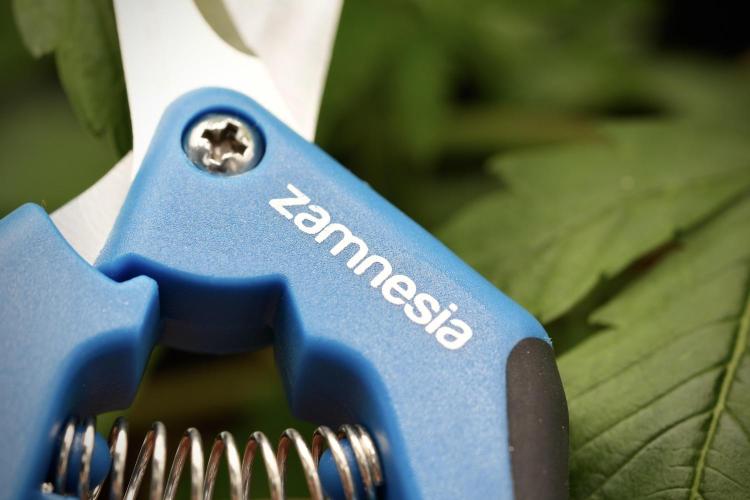
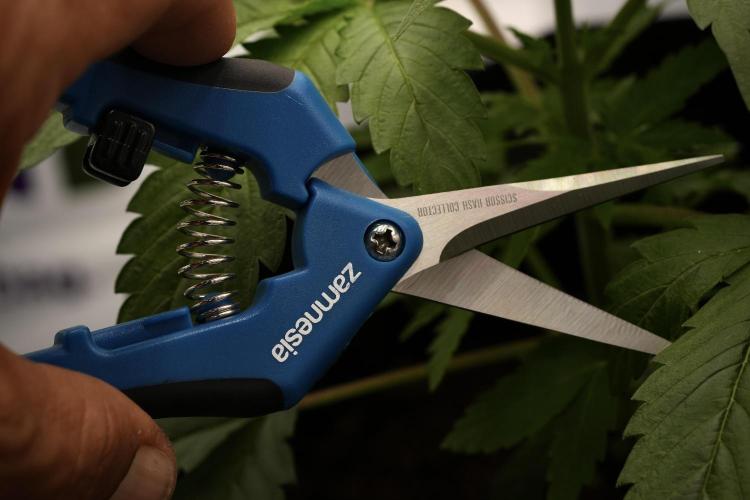
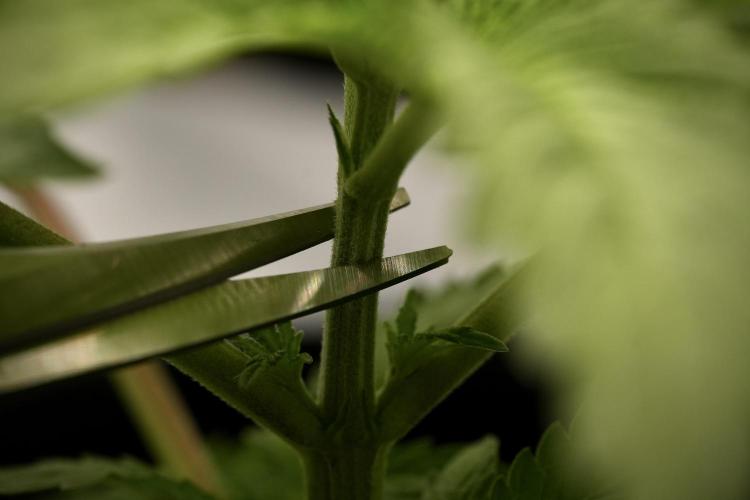
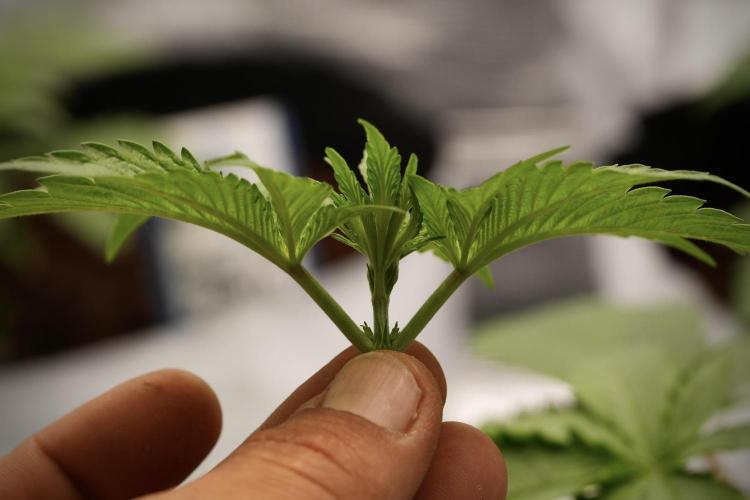
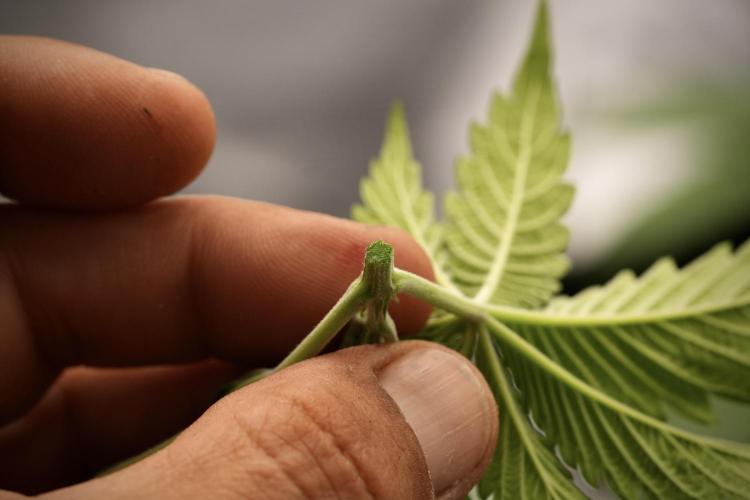
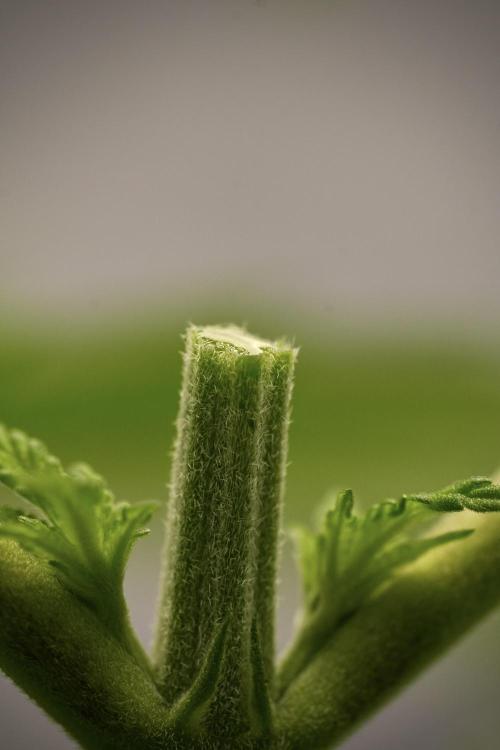
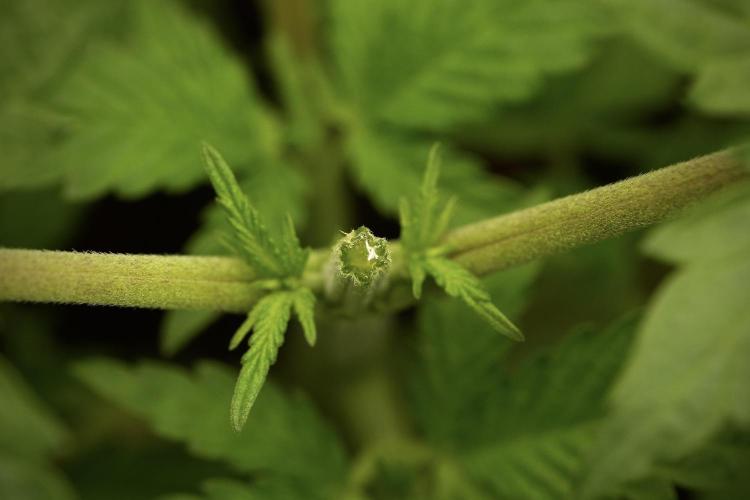
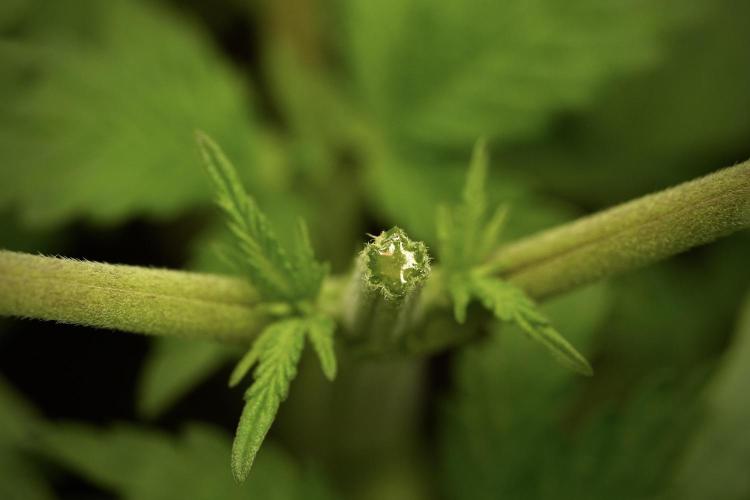
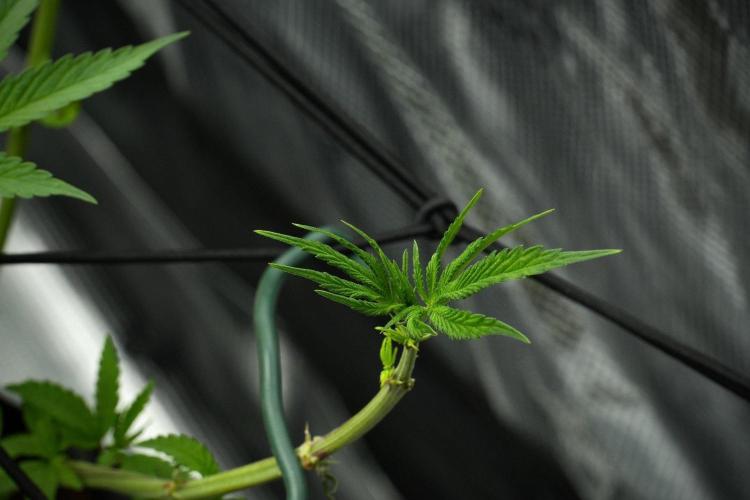
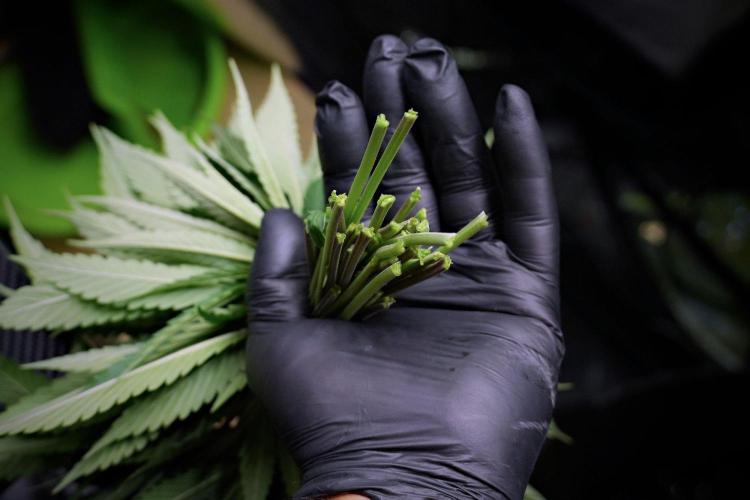
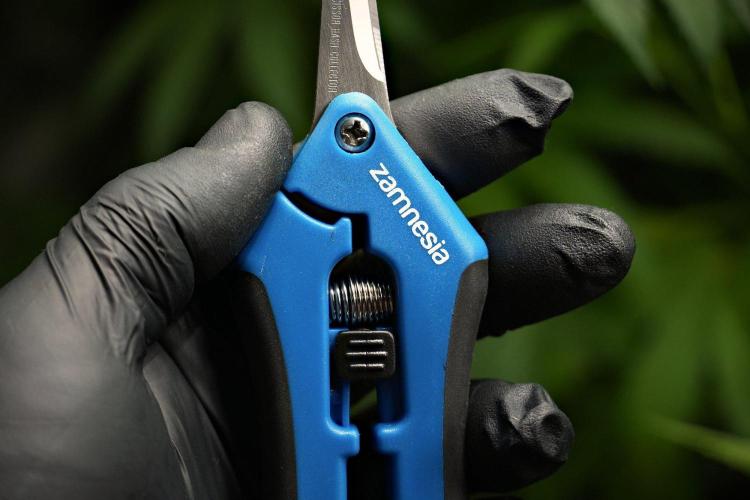
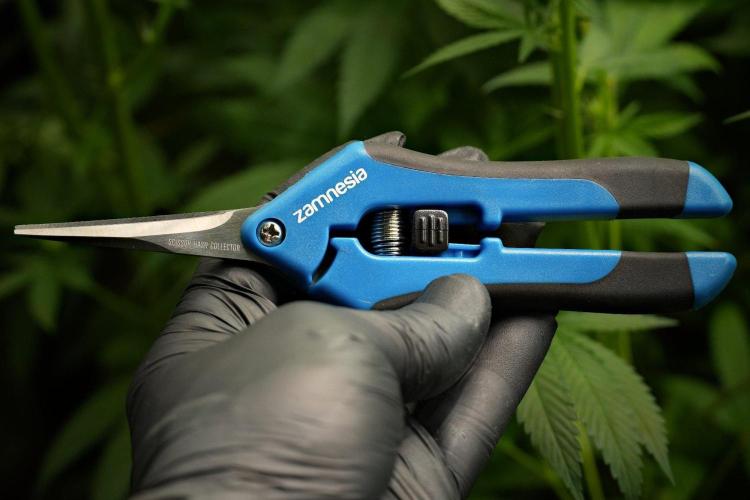
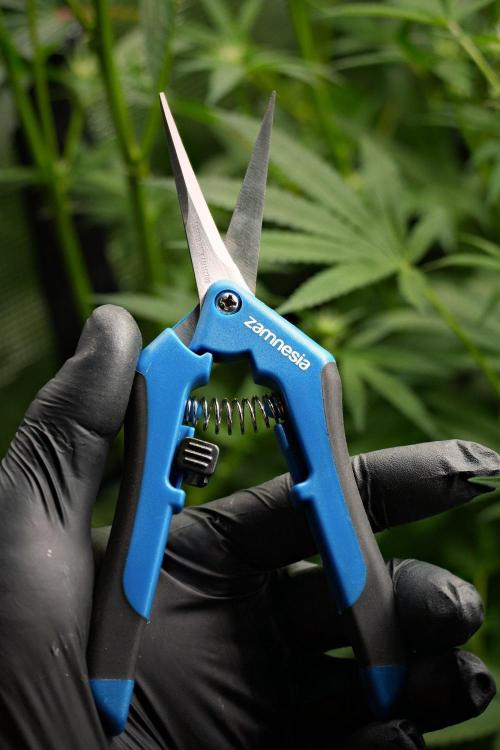
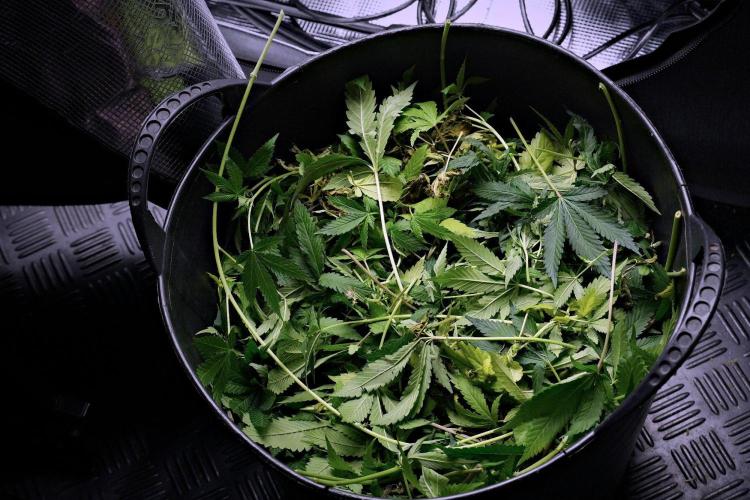
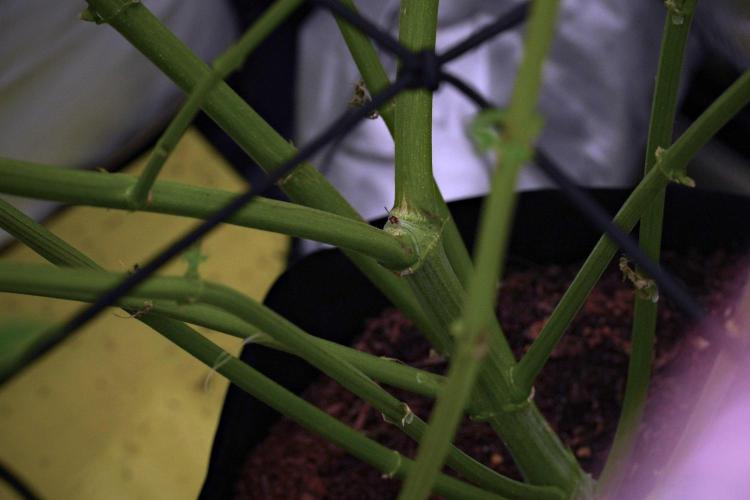
Met de Zamnesia snoeischaar heb ik voorzichtig de apicale scheut net boven de geselecteerde knoop verwijderd.
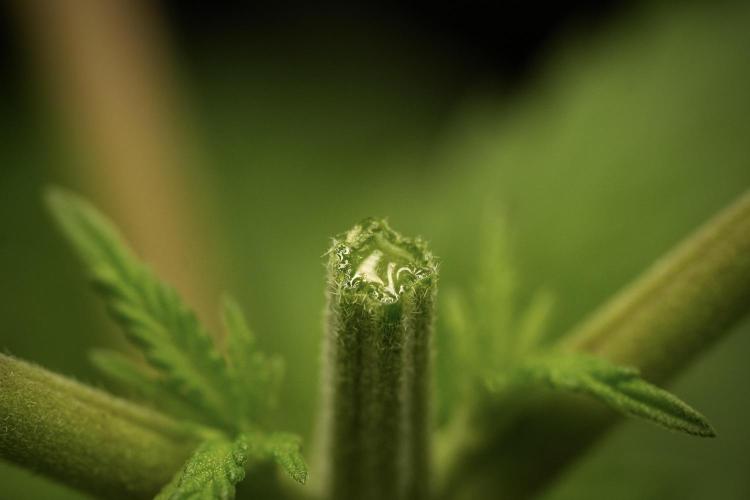
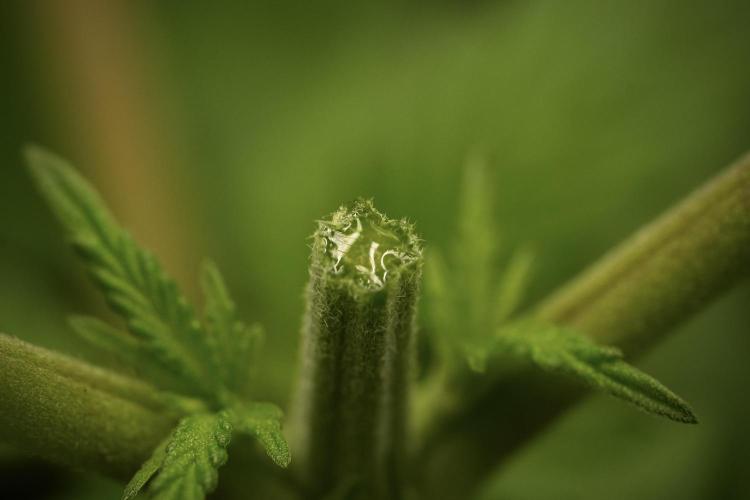
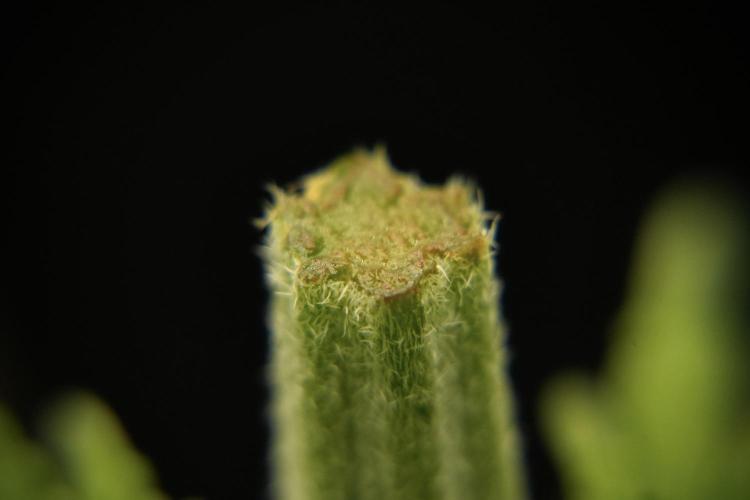
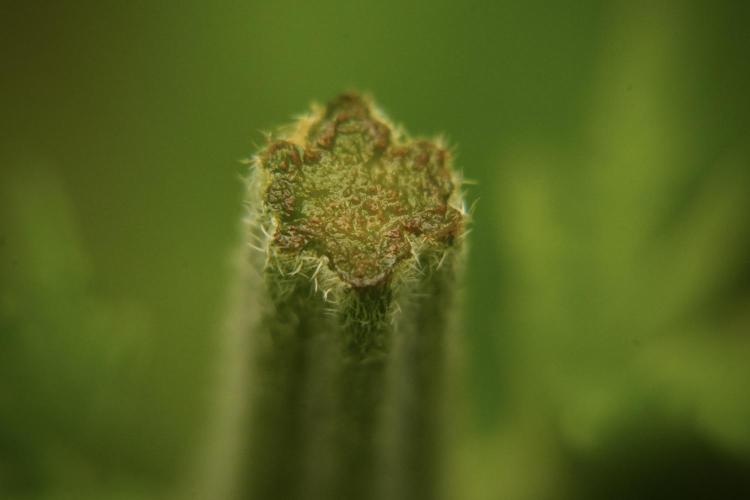
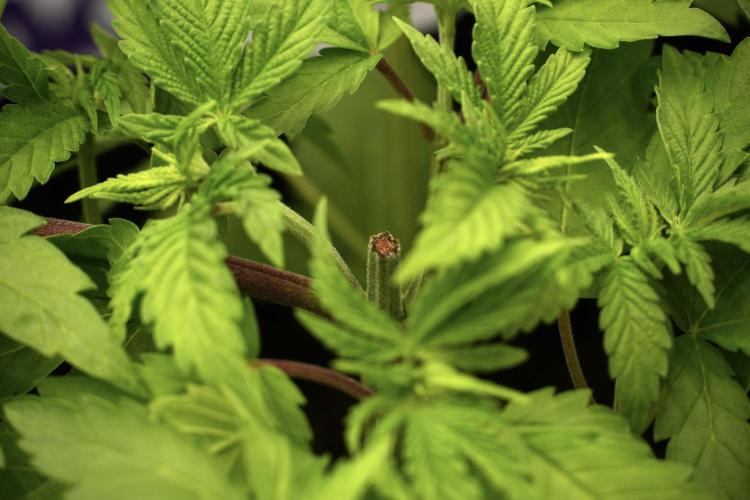
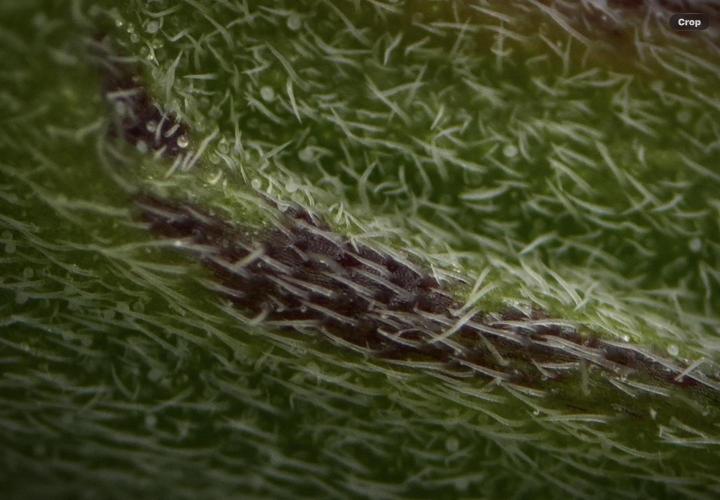
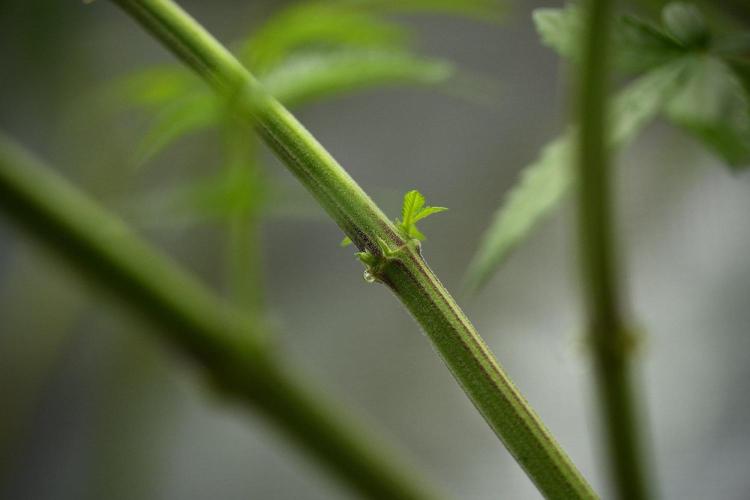
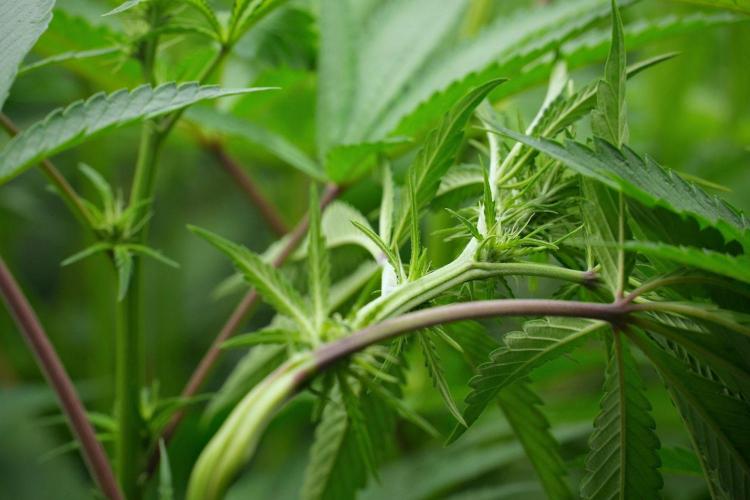
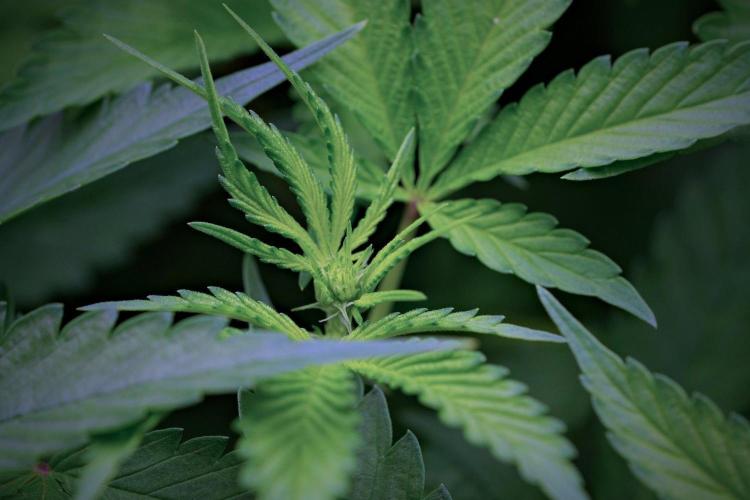
Een van mijn favoriete macrofoto's deze week legt de verse snede perfect vast.
Kijkend door de lens lijkt het bijna op een klein groen putje gevuld met kristalheldere sap. Het is fascinerend hoeveel schoonheid er bestaat in details die we zelden met het blote oog opmerken.
De natuur stelt nooit teleur.
De verwijderde groeipunt zelf was bijna te mooi om weg te gooien.
Soms denk ik dat fotografen sentimenteel worden over de vreemdste dingen.
⸻
Herstel
Het herstel is uitstekend geweest.
Binnen zeer korte tijd waren de resterende groeipunten al omhoog aan het wijzen, duidelijk reagerend op de hormonale herverdeling.
Er zijn geen tekenen van stress, slapheid of stilstaande ontwikkeling.
De stam blijft mooi dikken, terwijl de zijtakken lijken te verlangen naar dominantie.
Precies wat ik hoopte te bereiken.
⸻
Omgeving
De hele tent blijft dezelfde omgevingsomstandigheden delen.
🌡️ Dagtemperatuur: 27°C
🌙 Nachttemperatuur: 25°C
💧 Relatieve luchtvochtigheid: 67%
🌱 Wortelzone: 24°C
💡 Lichtschema: 18/6
⚡ EC: 1.61
💧 pH: 5.8
? Potmaat: 8 L Plagron Premium Growbag
💨 CO₂: Ambient (~450 ppm)
Alles blijft stabiel, waardoor de planten alle kans krijgen om te herstellen van zowel het overstromingsincident als de topping-sessie zonder onnodige stress.
⸻
Voeding
Naarmate de planten hun vegetatieve groei blijven versnellen, heb ik de voeding iets verhoogd.
Huidige voeding per liter:
• Plagron Hydro A — 1.6 ml/L
• Plagron Hydro B — 1.6 ml/L
• Plagron Hydro Roots — 1 ml/L
• pH aangepast naar 5.8
De lichte stijging in EC wordt al beloond met snellere groei en rijkere kleuren door het bladerdak.
De nieuwe groei blijft fel limoen groen—een volkomen normale eigenschap van snel delend jong weefsel—terwijl de oudere bladeren een gezonde mediumgroene kleur behouden zonder verbrande punten of nutriëntentekorten.
Alles wijst op een gelukkige, hongerige plant.
⸻
Vooruitkijken
Nu komt het leuke gedeelte.
In de komende dagen laat ik de natuur gewoon zijn werk doen.
Het doel is om de twee nieuwe dominante toppen zich te laten vestigen terwijl de lagere takken blijven uitstrekken.
Zodra het bladerdak gelijkmatig begint te vullen, zal zachte LST waarschijnlijk volgen om elke toekomstige bloeiplaats zoveel mogelijk licht te geven.
Ze heeft alle ingrediënten om een prachtig uitgebalanceerde struik te worden.
⸻
Heel erg bedankt dat je langs bent gekomen en een ander hoofdstuk van Project Blue Tent volgt.
Elke week blijven deze planten me herinneren dat groeien niet alleen gaat om het produceren van bloemen—het gaat om observeren, leren, aanpassen en waarderen hoe ongelooflijk veerkrachtig deze genetica kan zijn.
Ik waardeer echt iedereen die een paar minuten de tijd neemt om te lezen, te reageren, advies te delen of gewoon de reis met me te genieten.
Gelukkig groeien, en ik zie jullie allemaal volgende week! 🌱💙
⸻
PS
Een grote dank aan alle geweldige bedrijven die dit project mogelijk maken.
💙 Zamnesia voor de uitstekende genetica, de fantastische snoeischaar die deze topping moeiteloos maakte, en voor het geloven in dit avontuur vanaf dag één.
? Plagron voor het leveren van de Premium Growbags, Cocos Premium substraat en de Hydro voedingslijn die week na week blijft zorgen voor gezonde, krachtige groei.
Jullie steun maakt het mogelijk dat dit project het gedetailleerde educatieve dagboek wordt dat ik altijd heb gedroomd te creëren.
Growers Love en tot ziens in Week 4! 🌿💙
9 houdt van
opmerkingen
Share
Used techniques
Topping
Techniek
4
Week 4. Vegetatie
3mo ago
1/30
50 cm
Height
18 uur
Light Schedule
27 °C
Day Air Temp
5.8
pH
Geen Geur
Smell
940 PPM
TDS
68 %
Air Humidity
18 °C
Solution Temp
24 °C
Substrate Temp
25 °C
Night Air Temp
8 set_lilers
Pot Size
0.9 set_lilers
Watering Volume
450 PPM
CO₂-niveau
Nutrients 5
Hydro A
1.8 mll
Hydro B
1.8 mll
Hydro Roots
1 mll
DogDoctorOfficial 🥒 Project Blue Tent – Week 4
Pickle Lemon Haze F1 – Pheno B (Map 14B)
Hallo allemaal, en welkom terug bij een nieuw hoofdstuk van Project Blue Tent! 💙🌱
Voor degenen die voor het eerst meedoen aan het avontuur, dit project volgt vier individuele planten, elk gekweekt onder exact dezelfde omstandigheden terwijl ze afzonderlijk worden gedocumenteerd van zaad tot oogst. Door elke fenotype zijn eigen dagboek te geven, kunnen we waarderen hoe verschillende persoonlijkheden zich kunnen ontwikkelen, zelfs wanneer genetica, verlichting, voeding en omgeving identiek blijven.
Vandaag bezoeken we Pickle Lemon Haze F1 – Plant B.
⸻
🌱 Week Vier – Vertrouwen op het Proces
Vorige week was een spannende voor deze mooie dame.
Na een uitstekende structuur en krachtige lagere takken te hebben getoond, kreeg ze haar allereerste topping, waardoor haar energie werd omgeleid van een enkele dominante leider en een bredere, meer gebalanceerde bladerdak werd aangemoedigd.
Deze week ging het echter niet om het maken van meer sneden of het introduceren van nieuwe trainingstechnieken.
In plaats daarvan ging het om een stap terug doen.
Na een plant door een hoge-stress training te hebben gehaald, geef ik haar altijd graag de tijd om natuurlijk te herstellen voordat ik nog iets van haar vraag. Gezonde planten weten vaak precies wat ze moeten doen als we gewoon de juiste omgeving bieden en uit de weg blijven.
Plant B bewees dat opnieuw.
In plaats van te vertragen, reageerde ze met indrukwekkende kracht, waarbij ze zowel nieuwe leiders omhoog duwde terwijl de omliggende zijtakken prachtig verder vulden.
Soms is de beste trainingstechniek gewoon geduld.
⸻
🌡️ Omgevingscondities
Consistentie blijft een van de grootste doelen binnen Project Blue Tent.
Stabiele omgevingscondities stellen de planten in staat om snel te herstellen terwijl ze ononderbroken vegetatieve groei behouden.
De gemiddelde omstandigheden deze week waren:
• 🌡️ Dag temperatuur: 27°C
• 🌙 Nacht temperatuur: 25°C
• 💧 Relatieve luchtvochtigheid: 68%
• 🥥 Wortelzone temperatuur: 24°C
• 💦 Voedingsoplossing: 18°C
• ⚗️ pH: 5.8
• ⚡ EC: 1.88 mS/cm
• 💨 CO₂: ongeveer 450 ppm
• 💡 Lichtschema: 18/6
De combinatie van stabiele temperaturen, juiste irrigatie en de gelijkmatige lichtverdeling van de Phytonaut LED blijft een ideale omgeving creëren voor krachtige vegetatieve groei.
⸻
🥥 Voedingsaanpassingen
In de afgelopen weken hebben alle vier de planten een iets lichtere tint groen ontwikkeld.
Aangezien elke plant dezelfde kleur vertoonde terwijl ze gezond bleef en krachtig groeide, werd het duidelijk dat ze niet aan het worstelen waren—ze vroegen gewoon om iets meer voedsel naarmate hun metabolisme versnelde.
In plaats van te wachten tot er tekorten ontstaan, reageerde ik door de basisvoedingsstoffen iets te verhogen.
De huidige voeding bestaat nu uit:
• Plagron Hydro A — 1.8 ml/L
• Plagron Hydro B — 1.8 ml/L
• Plagron Hydro Roots — 1 ml/L
Aan het einde van de week waren de resultaten al zichtbaar. De nieuwste groei in de kamer begint geleidelijk dieper van kleur te worden terwijl het krachtige tempo van ontwikkeling dat dit project vanaf het begin heeft gekarakteriseerd, behouden blijft.
Het is altijd bevredigend wanneer kleine aanpassingen precies de reactie opleveren waar je op hoopte.
⸻
🌿 Pickle Lemon Haze F1 – Plant B
Plant B blijft bewijzen waarom elke fenotype zijn eigen dagboek verdient.
Hoewel ze dezelfde genetica deelt als haar zus, drukt ze zich op haar eigen unieke manier uit.
Haar herstel na de topping is ongelooflijk soepel verlopen, en de twee nieuwe dominante toppen hebben zich snel gevestigd. Rondom hen klimmen de secundaire takken vol vertrouwen, waardoor een van nature gebalanceerde en steeds bossigere structuur ontstaat.
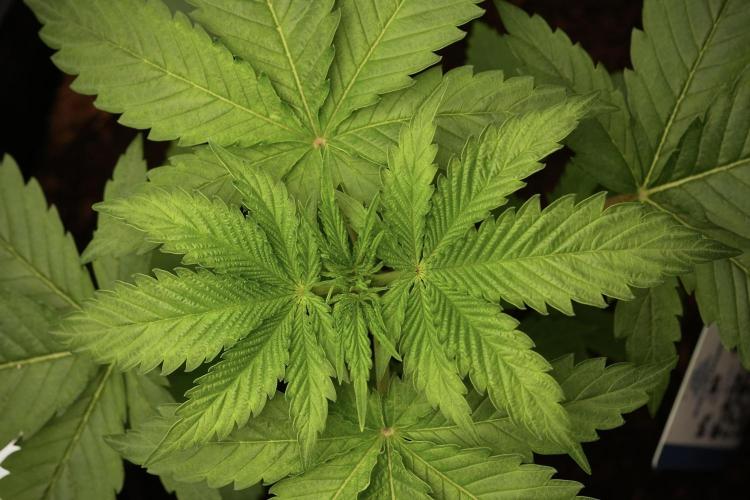
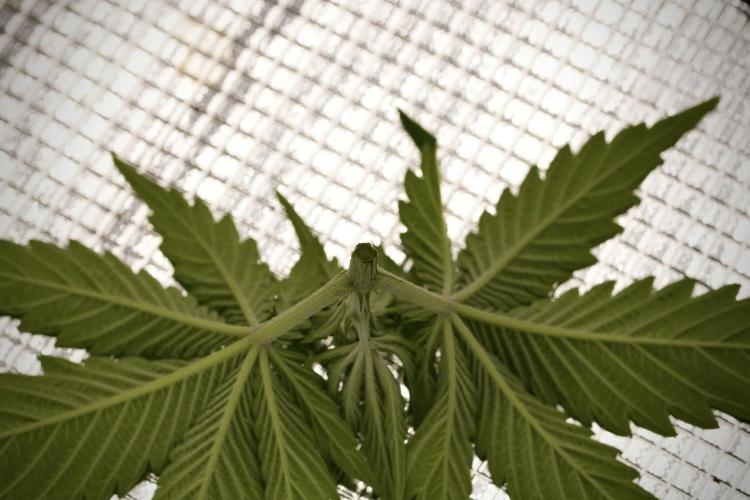
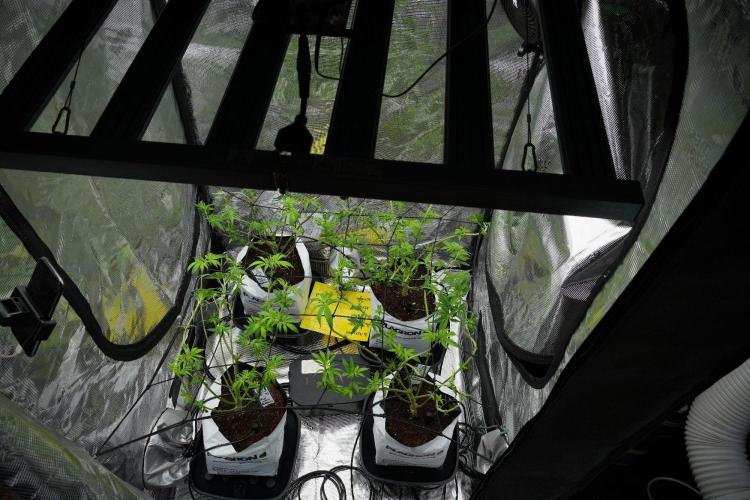
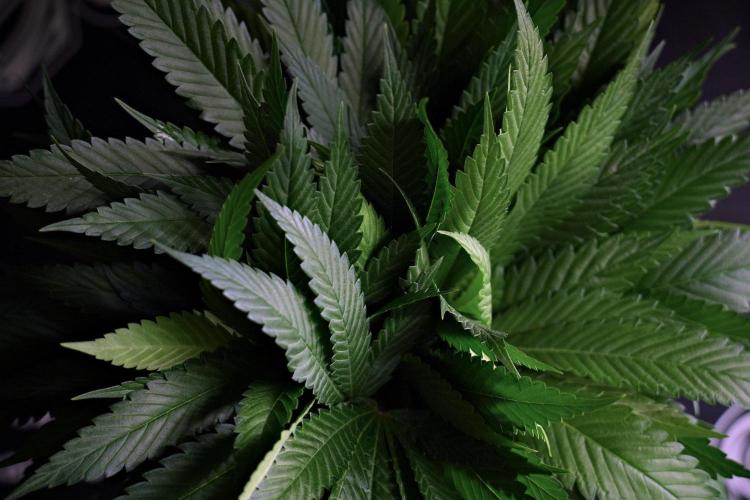
Een van de dingen die ik het leukst vind aan deze fenotype is hoe symmetrisch ze is geworden. Van bovenaf kijkend, is het gemakkelijk te zien dat het bladerdak begint zich gelijkmatig in elke richting te verspreiden, wat haar de soort architectuur geeft die prachtig zou moeten werken zodra de toekomstige training begint.
Haar stam blijft mooi dik worden, de internodale afstand blijft compact, en de bladeren blijven de hele dag rechtop staan, zonder tekenen van stress na de topping van vorige week.
De lichtere groene kleur die eerder aanwezig was, begint al te verbeteren na de voedingsaanpassing, terwijl de constante productie van verse groei geen twijfel laat dat ze het goed doet.
Gezonde planten hebben een manier om zonder woorden te spreken.
Deze ziet er zeker gelukkig uit.
⸻
🔍 Vooruitkijken
Met de topping nu volledig achter haar, zal de volgende fase simpelweg zijn om deze prachtige structuur verder te laten ontwikkelen.
Het doel is om beide nieuwe leiders natuurlijk te laten versterken terwijl de lagere takken worden aangemoedigd om in te halen, waardoor het gelijkmatige bladerdak ontstaat dat later de training en bloei veel efficiënter zal maken.
Voor nu is er geen reden om te haasten.
Ze bouwt precies het soort fundament waar ik op hoopte, en soms is het laten dicteren van het tempo door de plant de slimste beslissing die een kweker kan maken.
Elke dag wordt ze een beetje voller, een beetje sterker en een beetje interessanter.
⸻
💙 Dank U
Een enorme dank gaat uit naar Zamnesia voor de ongelooflijke Pickle Lemon Haze F1 genetica en voor het bieden van het complete ecosysteem dat Project Blue Tent mogelijk maakt.
Nogmaals, een oprechte dank gaat uit naar Plagron voor het leveren van de Premium Coco Growbags samen met de Hydro voedingslijn, die deze dames helpt sterke wortels en gezonde groei week na week te ontwikkelen.
Ik wil ook GrowDiaries bedanken voor het bieden van een plek voor kwekers over de hele wereld om kennis te delen, hun reizen te documenteren en elkaar elke dag te inspireren.
En tot slot, bedankt aan iedereen die dit project volgt.
Of je nu hier bent sinds de ontkieming, recentelijk bij het avontuur bent gekomen, elke week opmerkingen achterlaat, of gewoon geniet van het kijken naar deze planten evolueren, je steun betekent echt veel.
Project Blue Tent gaat over samen leren, elke fase van de groei vieren en laten zien dat elke fenotype zijn eigen verhaal heeft dat het vertellen waard is.
Ik hoop dat jullie allemaal een geweldige week hebben, en ik kan niet wachten om het volgende hoofdstuk met jullie te delen.
Tot de volgende keer...
Kwekersliefde, gelukkig groeien, en zorg goed voor jezelf iedereen! 💚🌱
10 houdt van
2 opmerkingen
Share
5
Week 5. Vegetatie
3mo ago
1/30
63 cm
Height
18 uur
Light Schedule
30 °C
Day Air Temp
5.8
pH
Geen Geur
Smell
960 PPM
TDS
58 %
Air Humidity
18 °C
Solution Temp
24 °C
Substrate Temp
25 °C
Night Air Temp
8 set_lilers
Pot Size
1.2 set_lilers
Watering Volume
450 PPM
CO₂-niveau
Nutrients 5
Hydro A
1.9 mll
Hydro B
1.9 mll
Hydro Roots
1 mll
DogDoctorOfficial 🥒 Project Blue Tent – Week 5
Pickle Lemon Haze F1 – Pheno B (Map 14B)
Hallo allemaal, en welkom terug bij een nieuw hoofdstuk van Project Blue Tent! 💙🌱
Voor iedereen die dit dagboek voor de eerste keer ontdekt, volgt Project Blue Tent vier individuele Pickle Lemon Haze F1 planten, elk gekweekt onder precies dezelfde omgevingsomstandigheden terwijl ze apart worden gedocumenteerd van zaad tot oogst.
Hoewel elke plant dezelfde genetica deelt, ontwikkelt elke plant zijn eigen persoonlijkheid, groeigewoonten en structuur. Door elke fenotype zijn eigen dagboek te geven, kunnen we die subtiele verschillen waarderen terwijl we leren hoe elke plant reageert gedurende de hele groei.
Vandaag kijken we naar Pickle Lemon Haze F1 – Plant B.
──────────────────────────────
🌱 Week Vijf – Elke Hoek Vulllen
Deze week draaide alles om gecontroleerde expansie.
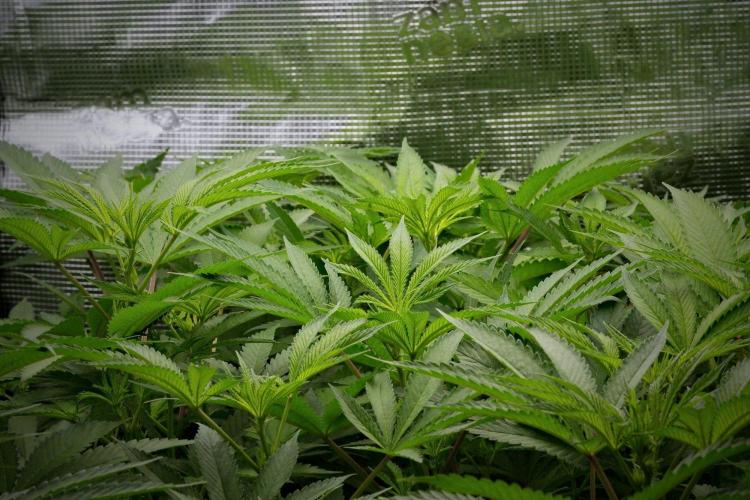
Na een prachtige herstel van het toppen van vorige week, heeft Plant B explosief nieuwe groei getoond. In plaats van overmatig te rekken, heeft ze haar energie gericht op het produceren van een ongelooflijk aantal zijtakken, waardoor ze een van de bossigste structuren in de tent heeft gecreëerd.
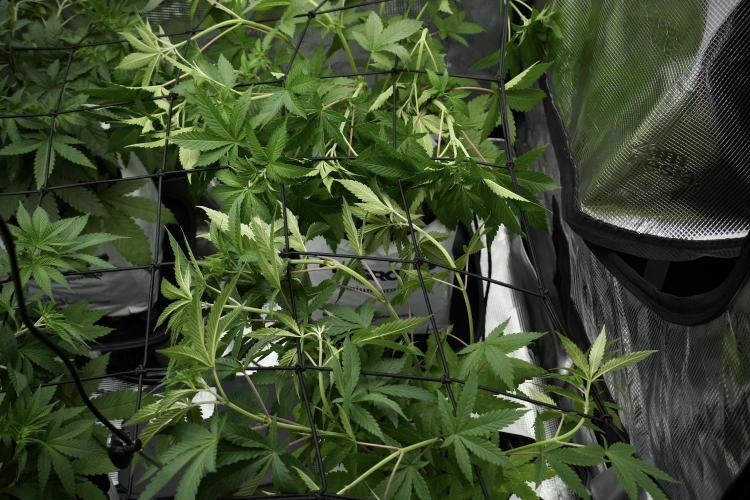
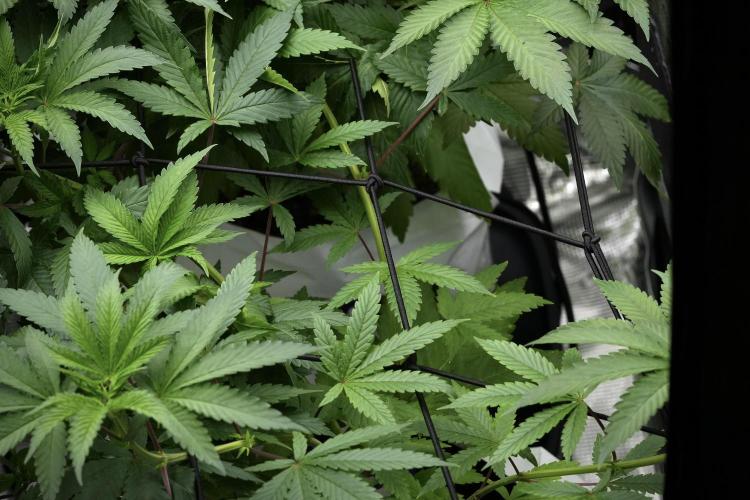
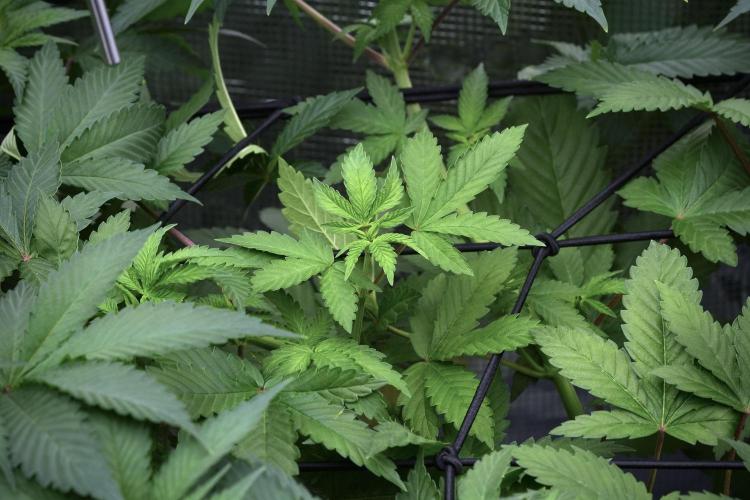
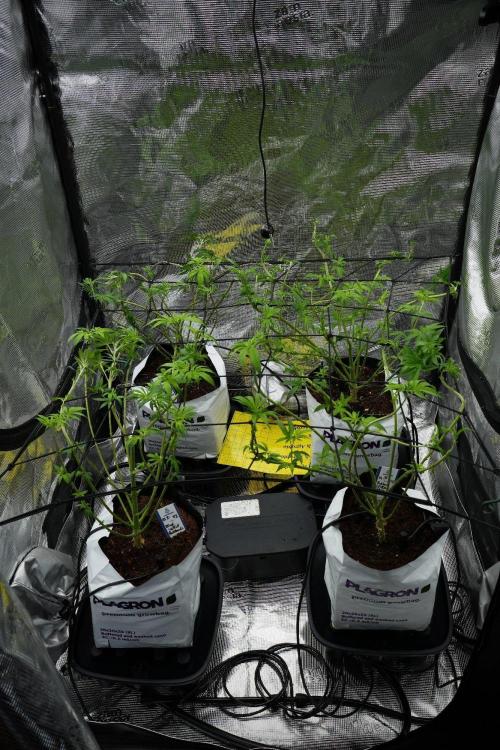
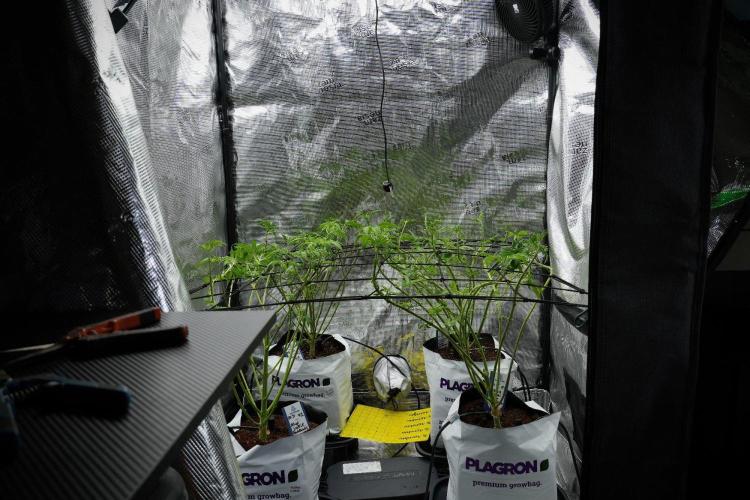
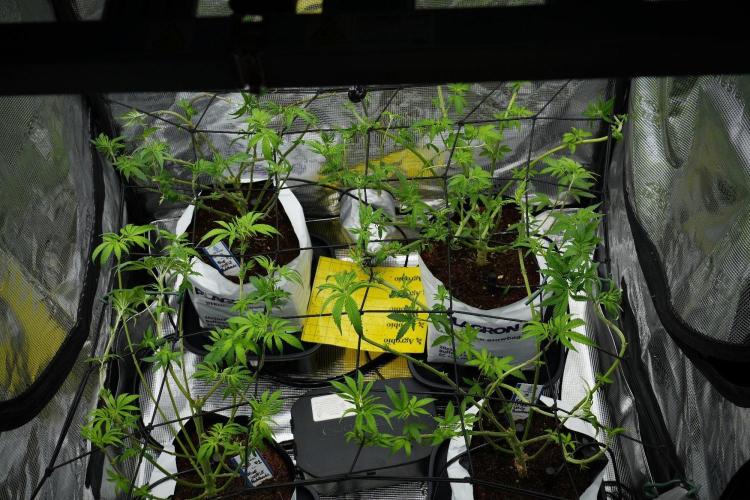
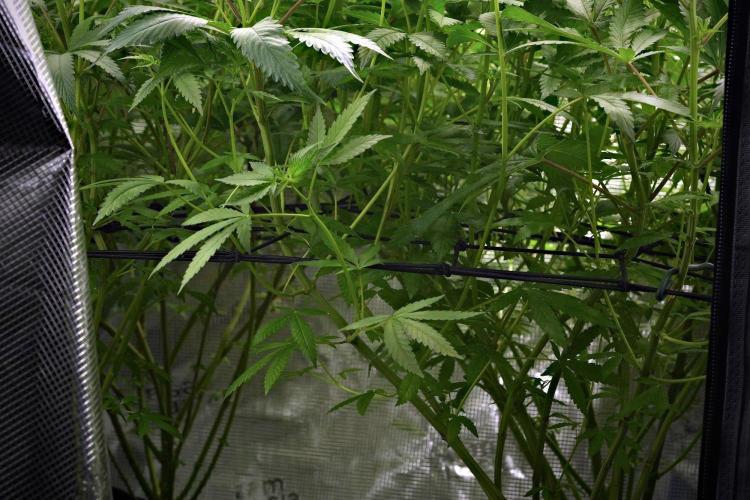
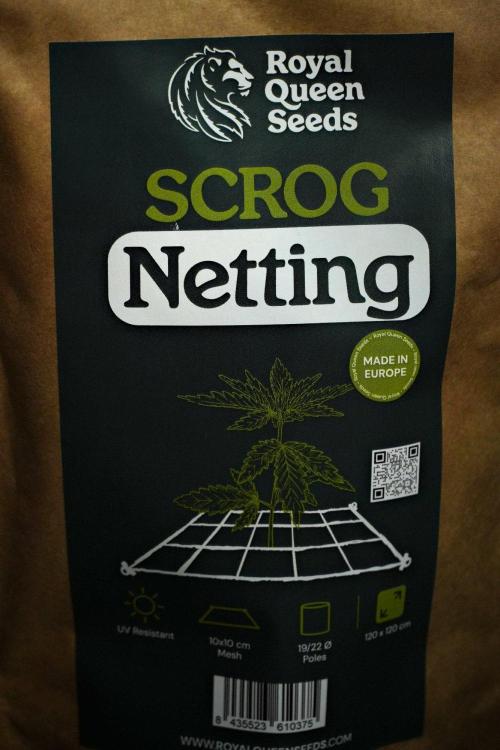
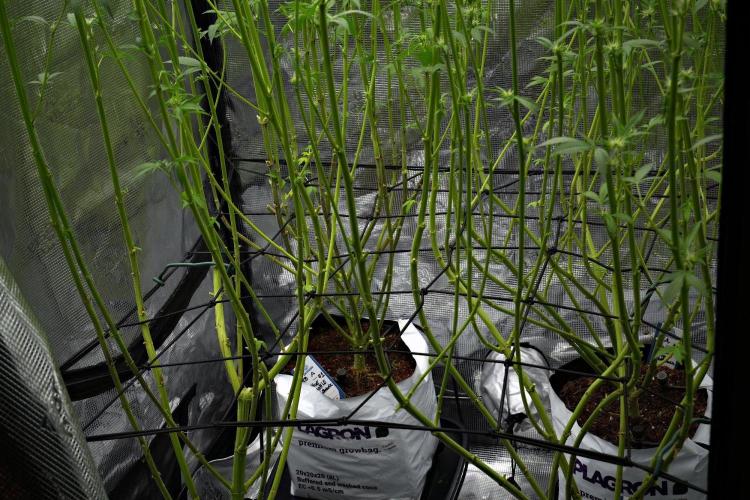
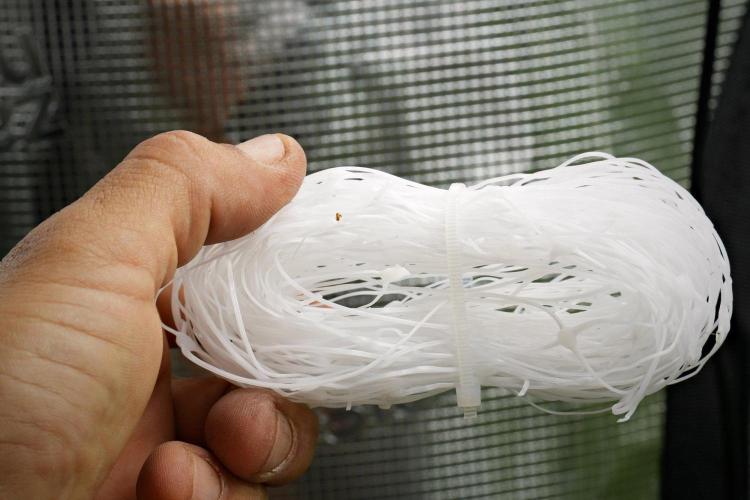
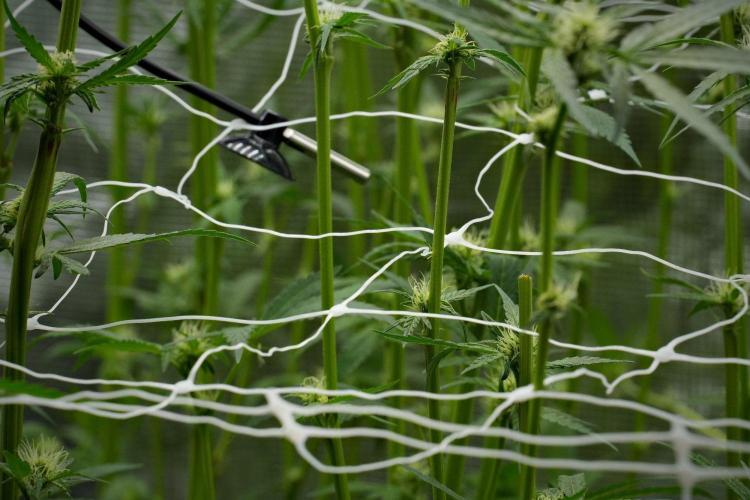
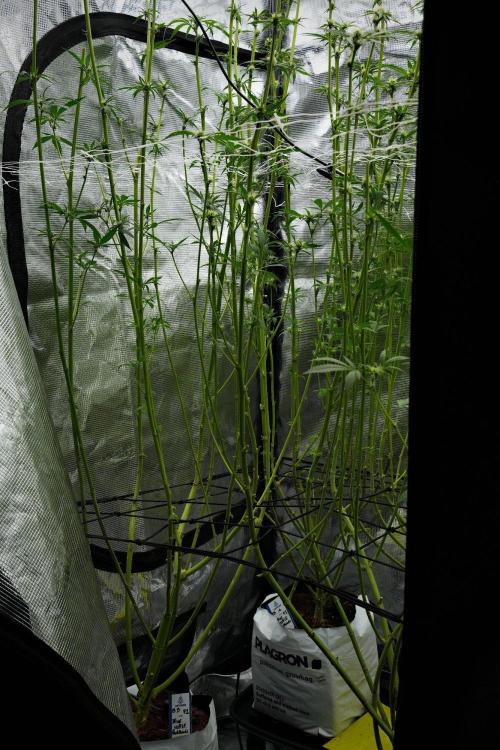
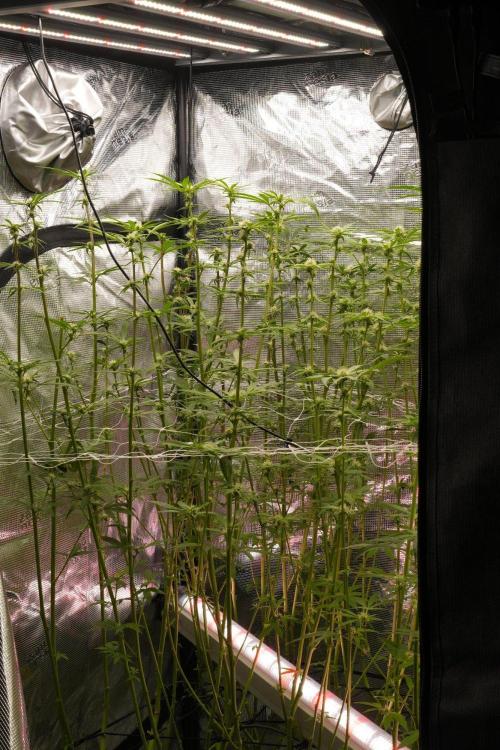
Met zoveel gezonde scheuten die zich ontwikkelen, was het het perfecte moment om het SCROG-net te introduceren.
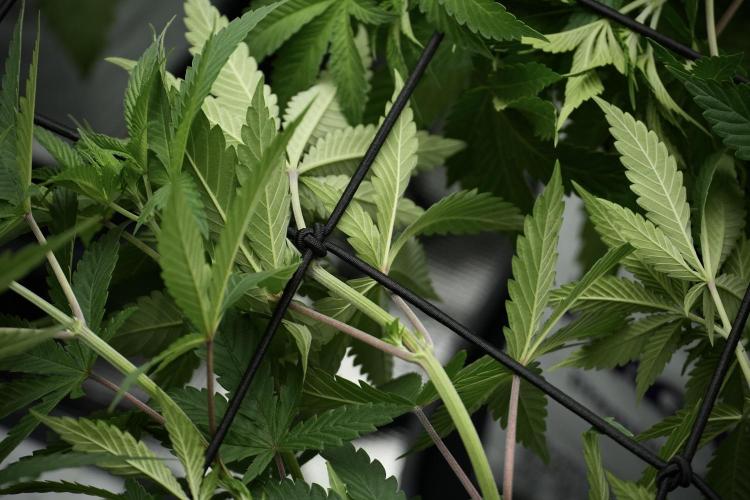
Voor iedereen die niet bekend is met de techniek, staat SCROG voor Screen of Green. In plaats van de plant verticaal te laten groeien, wordt elke tak voorzichtig onder een horizontaal net geleid, waardoor ze wordt aangemoedigd om zich over de beschikbare ruimte te verspreiden.
Het doel is niet alleen om de plant breder te maken.
Door het bladerdak te openen, ontvangt elke toekomstige bloeipunt betere lichtpenetratie en verbeterde luchtstroom, terwijl er een veel egaler oppervlak voor de bloei later ontstaat. In plaats van één dominante cola te produceren, wordt de plant aangemoedigd om veel even productieve toppen te ontwikkelen.
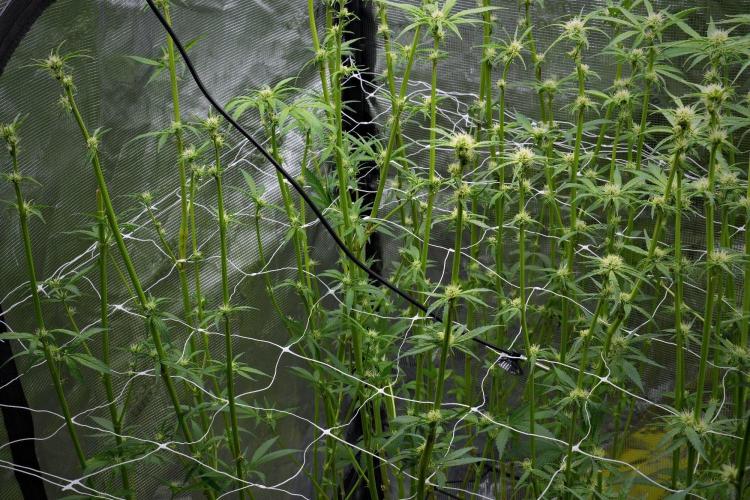
Deze week hebben we wat tijd besteed aan het voorzichtig buigen en positioneren van takken onder het scherm, waardoor Plant B haar deel van het bladerdak kan beginnen te claimen.
Ze deed het als een absolute kampioen.
──────────────────────────────
🌡️ Omgevingsomstandigheden
Consistentie behouden blijft een van de belangrijkste doelen binnen Project Blue Tent.
Stabiele omgevingsomstandigheden stellen de planten in staat om snel te herstellen van training terwijl ze ononderbroken vegetatieve groei behouden.
De gemiddelde omstandigheden van deze week waren:
• 🌡️ Dag temperatuur: 30°C
• 🌙 Nacht temperatuur: 25°C
• 💧 Relatieve luchtvochtigheid: 58%
• 🥥 Wortelzone temperatuur: 24°C
• 💦 Voedingsoplossing: 18°C
• ⚗️ pH: 5.8
• ⚡ EC: 1.92 mS/cm
• 💨 CO₂: ongeveer 450 ppm
• 💡 Lichtschema: 18/6
Ondanks de iets warmere dagtemperaturen deze week, zijn de planten blijven groeien met een sterke groei, met uitstekende transpiratie en een gezonde ontwikkeling door de hele ruimte.
──────────────────────────────
🥥 Voedingsstrategie
Naarmate de planten hun groeisnelheid blijven verhogen, nemen hun voedingsbehoeften natuurlijk ook toe.
Een paar weken geleden begonnen alle vier de fenotypes een iets lichtere tint groen te vertonen. Aangezien elke plant op dezelfde manier reageerde terwijl ze krachtige groei behielden, was het duidelijk dat ze gewoon iets meer voedsel wilden in plaats van tekenen van stress te vertonen.
Het voedingsschema werd dienovereenkomstig aangepast en blijft precies de reactie opleveren waar ik op hoopte.
De huidige voeding bestaat uit:
• Plagron Hydro A — 1.9 ml/L
• Plagron Hydro B — 1.9 ml/L
• Plagron Hydro Roots — 1 ml/L
De nieuwste groei verdiept geleidelijk weer naar een rijkere groene kleur terwijl ze een uitstekende groeisnelheid en gezonde bladontwikkeling behoudt.
Soms maken de kleinste aanpassingen het grootste verschil.
──────────────────────────────
🌿 Pickle Lemon Haze F1 – Plant B
Elke week wordt deze fenotype interessanter.
Terwijl haar zus iets meer verticale ambitie toont, heeft Plant B besloten om een absolute struik te worden.
Het herstel na het toppen is uitstekend geweest. Beide nieuwe hoofdleiders hebben zich perfect gevestigd terwijl talloze secundaire takken blijven omhoog racen, waardoor een ongelooflijk dicht bladerdak ontstaat vol toekomstige bloeipunten.
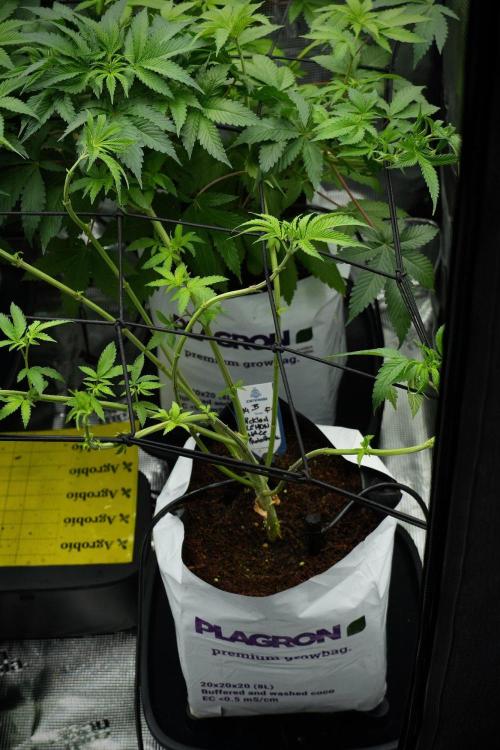
Na het introduceren van het SCROG-net deze week, werd het snel duidelijk hoeveel laterale groei ze in staat is te produceren. Elke tak leek gretig zijn eigen ruimte te willen innemen, waardoor het trainingsproces verrassend plezierig was.
Een kenmerk dat echt opvalt, is haar natuurlijke symmetrie. Zelfs na meerdere keren buigen, blijft ze een indrukwekkend gebalanceerd raamwerk produceren met zeer even spacing tussen de ontwikkelende toppen.
Haar stelen blijven mooi verdikken, de internodale afstand blijft compact, en de bladhouding blijft de hele dag rechtop, duidelijke tekenen dat ze elke training zonder klachten aankan.
Ze is weelderig, gezond, krachtig, en toont precies de soort structuur die ik graag zie voor de bloei.
Als ik nu naar haar kijk, is het moeilijk te geloven dat ze nog maar kort geleden is getopt.
──────────────────────────────
🌿 Vooruitkijkend
Terwijl beide Pickle Lemon Haze zussen de tent blijven vullen, wordt bladerdakbeheer steeds belangrijker.
Deze twee dames gaan zeker concurreren om ruimte in de komende weken, en dat is precies het soort probleem dat elke kweker graag heeft.
De volgende stap zal simpelweg zijn om takken door het SCROG-net te blijven weven terwijl elke toekomstige top zijn eigen plek in het bladerdak vindt.
Een lichte selectieve defoliatie kan ook binnenkort nodig zijn. Niet omdat de plant gecorrigeerd moet worden, maar simpelweg om de luchtstroom te verbeteren en meer licht te laten bereiken naar de snel ontwikkelende binnenste takken die verborgen zijn onder deze prachtige zee van bladeren.
Voor nu doet ze precies wat ik hoopte dat ze zou doen.
Breder groeien.
Sterker groeien.
En een indrukwekkende kleine struik worden.
──────────────────────────────
💙 Dank U
Een grote dank gaat uit naar Zamnesia voor de ongelooflijke Pickle Lemon Haze F1 genetica en voor het bieden van het complete ecosysteem dat Project Blue Tent mogelijk maakt.
Een ander oprecht dank gaat uit naar Plagron voor het leveren van de Premium Growbags samen met de Hydro voedingslijn, die deze dames helpt sterke wortelsystemen op te bouwen en week na week krachtige groei te behouden.
Ik wil ook GrowDiaries bedanken voor het bieden van een platform waar kwekers van over de hele wereld hun reizen kunnen documenteren, kennis kunnen uitwisselen en elkaar elke dag blijven inspireren.
En tot slot, bedankt aan iedereen die Project Blue Tent volgt.
Of je nu hier bent sinds de kieming, onlangs deze dagboeken hebt ontdekt, elke week actief opmerkingen achterlaat, of gewoon geniet van het kijken naar deze prachtige planten evolueren, je steun betekent echt veel.
Elke fenotype vertelt zijn eigen verhaal.
Deze wordt snel een van mijn favorieten.
Ik hoop dat jullie allemaal een geweldige week hebben.
Tot de volgende keer...
Kwekersliefde, gelukkig kweken, en zorg goed voor jezelf iedereen! 💚🌱
13 houdt van
opmerkingen
Share
Used techniques
ScrOG
Techniek
6
Week 6. Vegetatie
3mo ago
1/30
60 cm
Height
18 uur
Light Schedule
30 °C
Day Air Temp
5.8
pH
Geen Geur
Smell
960 PPM
TDS
58 %
Air Humidity
18 °C
Solution Temp
24 °C
Substrate Temp
25 °C
Night Air Temp
8 set_lilers
Pot Size
1.2 set_lilers
Watering Volume
450 PPM
CO₂-niveau
Nutrients 5
Hydro A
1.9 mll
Hydro B
1.9 mll
Hydro Roots
1 mll
DogDoctorOfficial 🥒 Project Blue Tent – Week 6
Pickle Lemon Haze F1 – Pheno B (Map 14B)
Hallo allemaal, en welkom terug bij een nieuw hoofdstuk van Project Blue Tent! 💙🌱
Als je voor het eerst meedoet aan het avontuur, welkom!
Project Blue Tent volgt vier individuele planten, elk gedocumenteerd in hun eigen speciale dagboek van zaad tot oogst. Elke plant groeit onder precies dezelfde verlichting, omgeving, irrigatieschema, voeding en zorg. Door elke variabele consistent te houden, kunnen we echt waarderen hoe elk fenotype zijn eigen unieke karakter ontwikkelt, terwijl we ook de indrukwekkende uniformiteit zien die moderne F1-genetica kan bieden.
Vandaag kijken we naar Pickle Lemon Haze F1 – Plant B.
────────────────────────
🌱 Week Zes – Een Zee van Groen
Deze week is de Blue Tent precies geworden wat ik me voorstelde toen dit project voor het eerst begon.
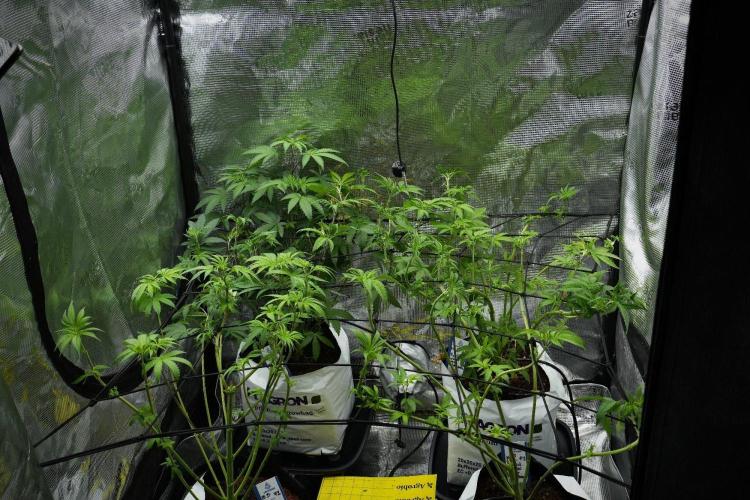
In plaats van vier individuele planten die om aandacht strijden, versmelt het bladerdak langzaam in één prachtige zee van groen.
Één kleine aanpassing veranderde het uiterlijk van de hele tent.
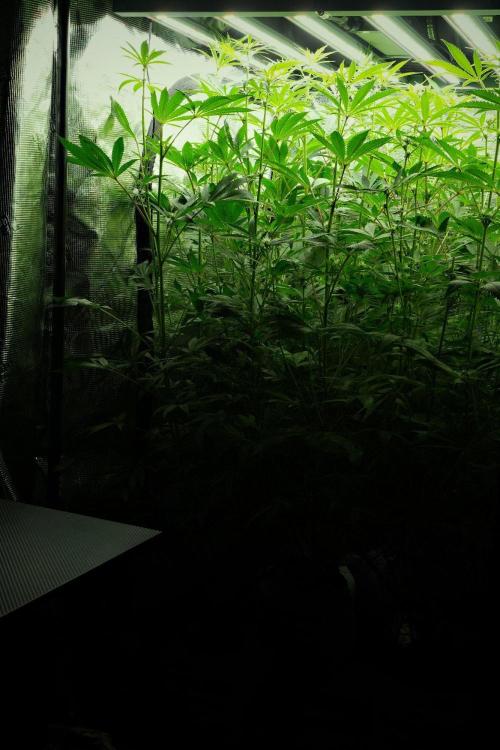
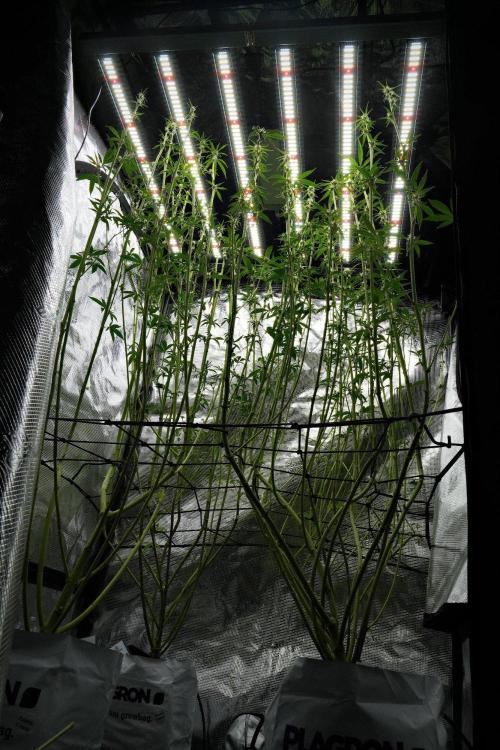
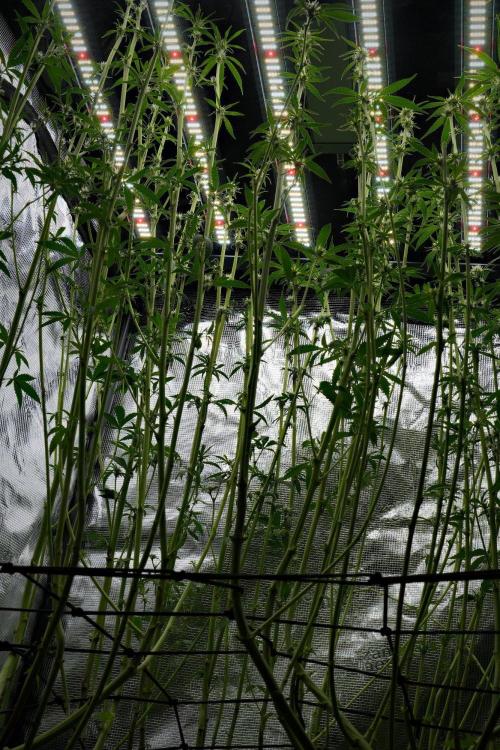
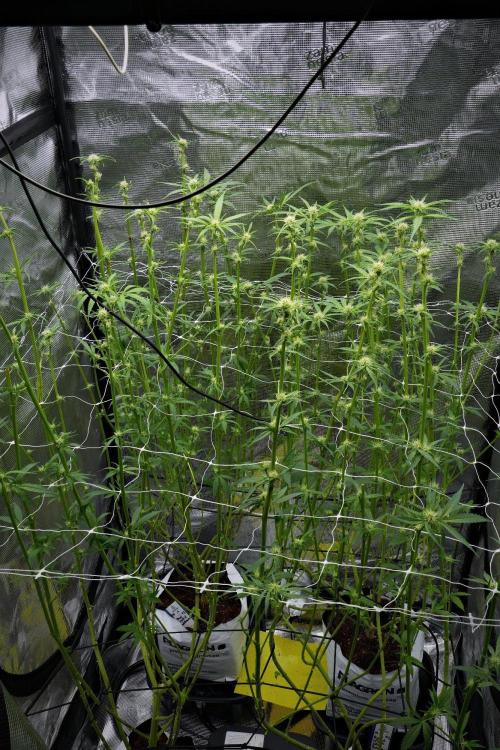
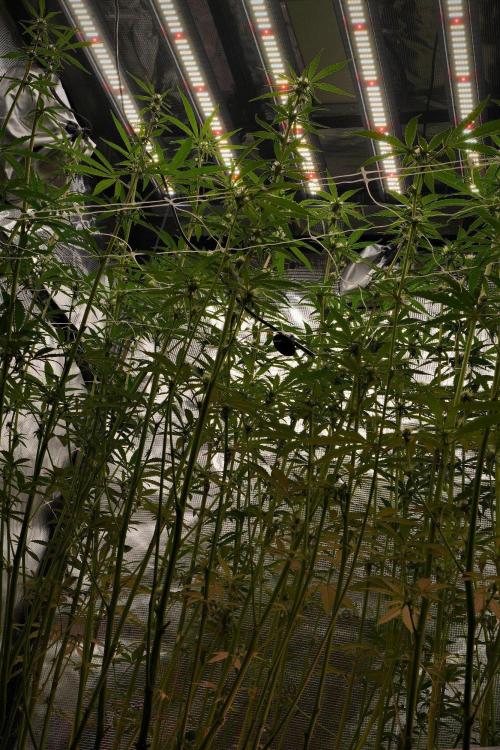
Hoewel Plant B vorige week ongeveer 66 cm meet, besloot ik het SCROG-net over de hele tent te verlagen en aan te spannen. Dat betekent dat alle vier dames nu ongeveer 60 cm hoog zijn, waardoor elke centimeter nieuwe groei horizontaal door het scherm kan worden geleid in plaats van verticaal.
Dat is nu het echte doel.
We jagen niet langer op hoogte.
We bouwen oppervlakte.
Elke tak die vandaag onder het scherm is gestopt, wordt morgen weer een toekomstige bloeiplaats, en elk leeg vierkant dat verdwijnt, brengt ons een stap dichter bij een perfect gelijkmatig bladerdak.
Plant B omarmt dit proces prachtig.
────────────────────────
🌿 Pickle Lemon Haze F1 – Plant B
Dit fenotype blijft dezelfde persoonlijkheid tonen die ze sinds het begin heeft laten zien.
Ze is prachtig in balans.
Terwijl haar zus van nature wil rekken, lijkt Plant B perfect gelukkig te zijn met het uitbreiden naar buiten, en produceert ze een dichte structuur vol gezonde zijtakken.
Het herstel na het toppen voelt nu als een verre herinnering.
Elke nieuwe scheut ontwikkelt zich met vertrouwen, en het bladerdak wordt met elke voorbijgaande dag voller.
De stelen blijven dikker worden, de internodale afstand blijft compact, en misschien wel mijn favoriete observatie van allemaal...
Het loof.
De bladeren hebben die rijke, gezonde groene kleur ontwikkeld die elke kweker graag ziet.
Het is het soort kleur dat je stilletjes vertelt dat de plant zich comfortabel voelt.
Comfortabele wortels.
Comfortabele omgeving.
Comfortabele voeding.
Soms hebben gezonde planten geen dramatische verhalen nodig.
Ze groeien gewoon.
────────────────────────
🕸️ De Schoonheid van SCROG
Elke dag begint bijna op dezelfde manier.
Open de tent.
Kijk over het bladerdak.
Vind een paar takken die boven het scherm uitsteken.
Begeleid ze voorzichtig naar het volgende lege vierkant.
Klaar.
Het is een van die technieken die geduld veel meer beloont dan kracht.
Er zijn geen dramatische buigingen of stressvolle trainingssessies.
Gewoon kleine dagelijkse aanpassingen die langzaam individuele planten transformeren in één verenigd bladerdak.
Als ik nu over de Blue Tent kijk, wordt het moeilijker om te zien waar de ene plant eindigt en de andere begint.
Dat is precies hoe een gezonde SCROG eruit zou moeten zien.
────────────────────────
🌡️ Blue Tent Omgeving
De omgeving blijft precies bieden wat deze dames nodig hebben.
Gemiddelde omstandigheden bleven:
• 🌡️ Dagtemperatuur: 30°C
• 🌙 Nachttemperatuur: 25°C
• 💧 Relatieve Vochtigheid: 58%
• 🥥 Wortelzone Temperatuur: 24°C
• 💦 Voedingsoplossing Temperatuur: 18°C
• ⚗️ pH: 5.8
• ⚡ EC: 1.92 mS/cm
• 💨 CO₂: Ongeveer 450 ppm
• 💡 Lichtschema: 18/6
• 💧 Irrigatie: 1.2 liter per plant per dag
Ondanks het warme weer buiten, blijven de stabiele omstandigheden binnen de tent de planten in staat stellen om moeiteloos te herstellen van training terwijl ze een krachtige vegetatieve groei behouden.
────────────────────────
🥥 Voeding & Irrigatie
Één ding dat ik in de loop der jaren heb geleerd, is dat consistentie vaak betere resultaten oplevert dan constante aanpassingen.
Sinds ik de voeding een paar weken geleden iets heb verhoogd, hebben de planten precies gereageerd zoals ik hoopte.
De rijkere groene kleur is teruggekeerd, de groei blijft krachtig, en er zijn geen tekenen die suggereren dat het recept moet worden veranderd.
Huidige voedingsschema:
• Plagron Hydro A — 1.9 ml/L
• Plagron Hydro B — 1.9 ml/L
• Plagron Hydro Roots — 1 ml/L
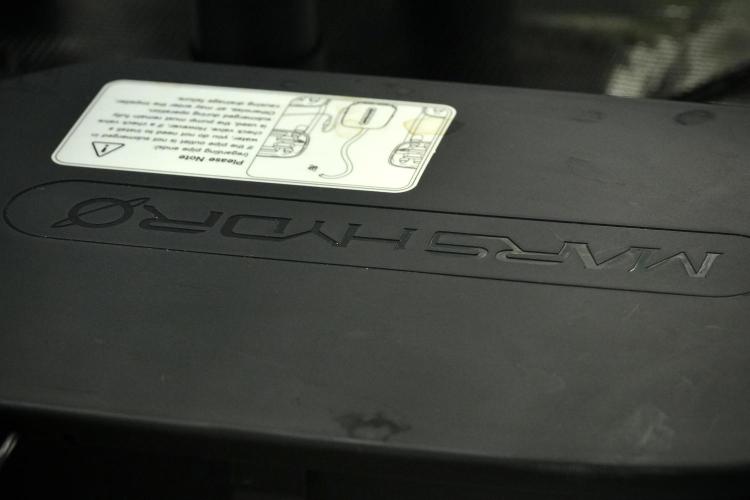
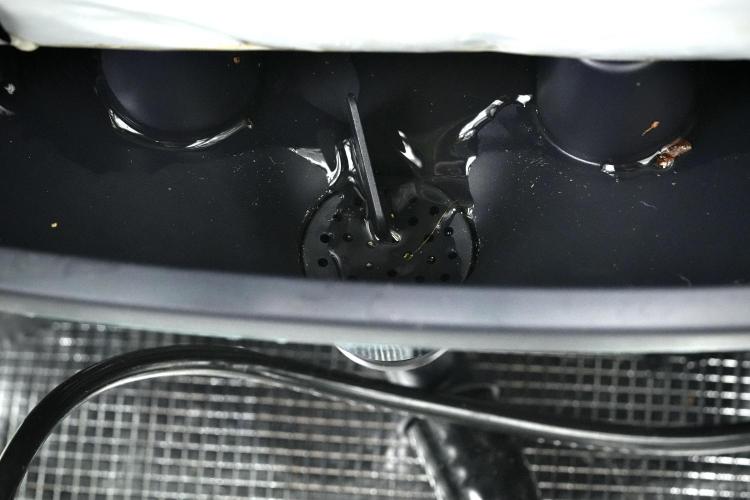
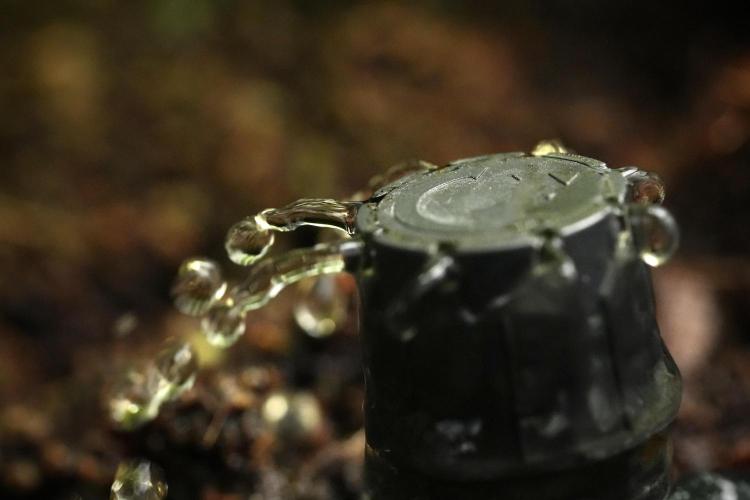
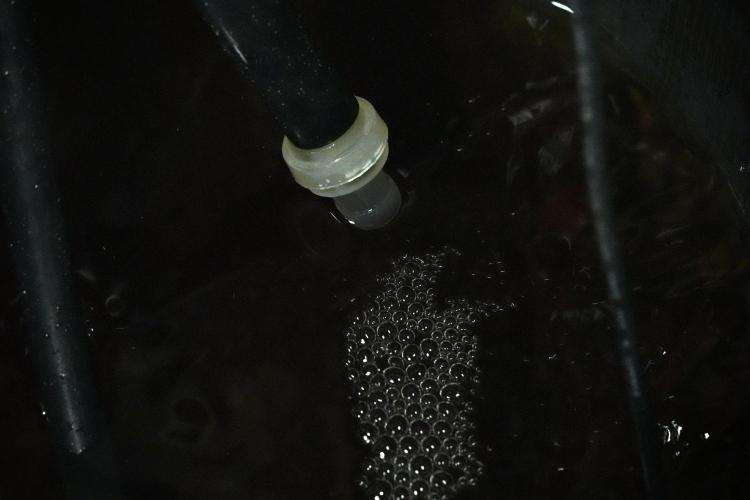
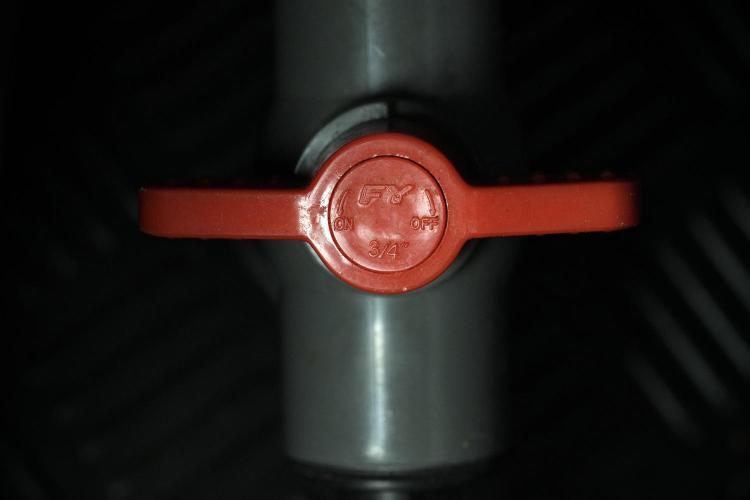
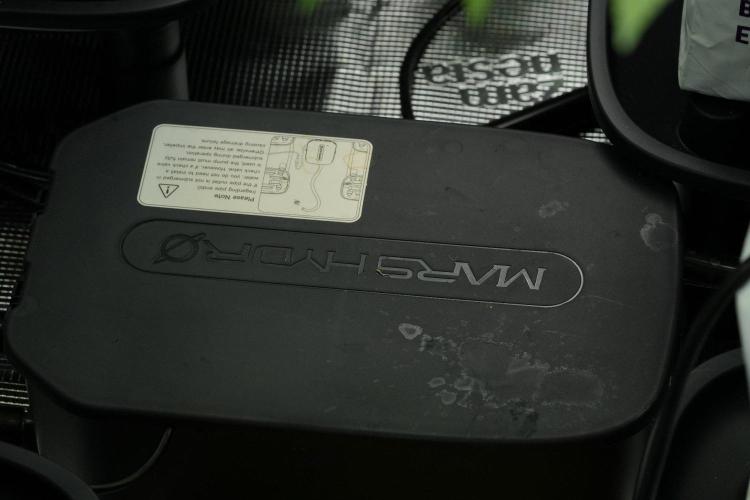
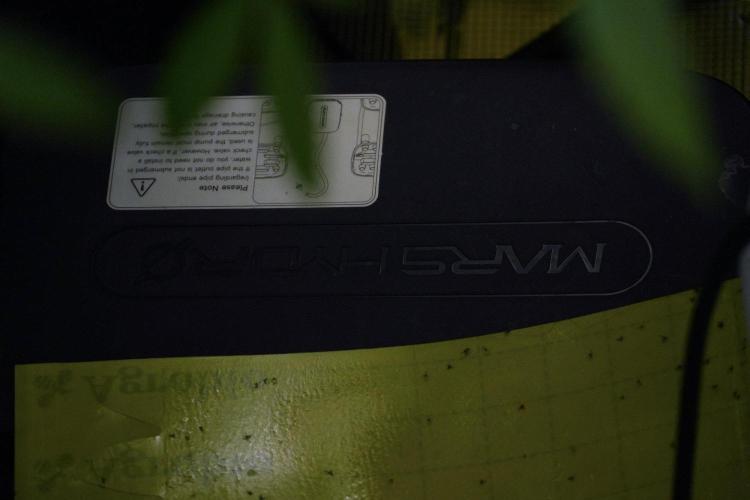
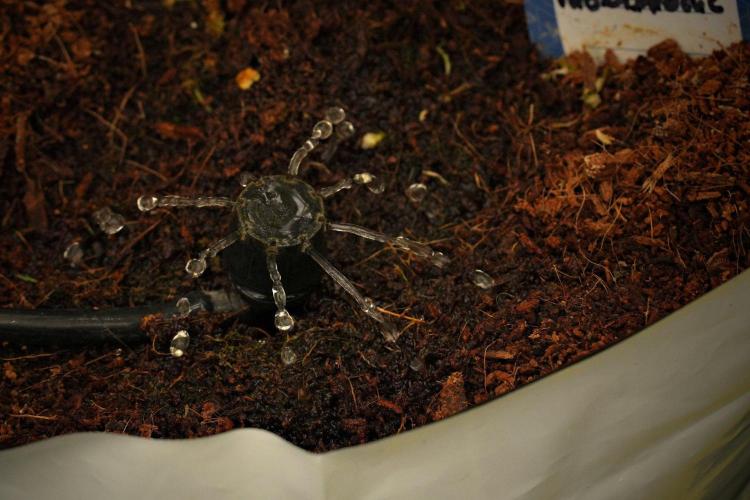
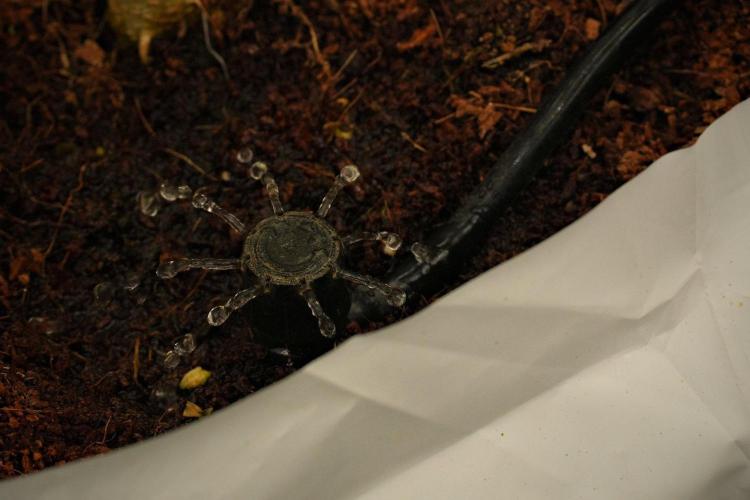
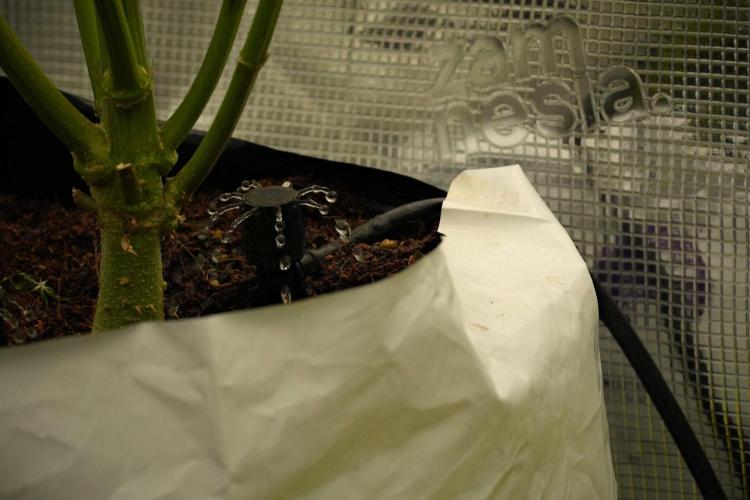
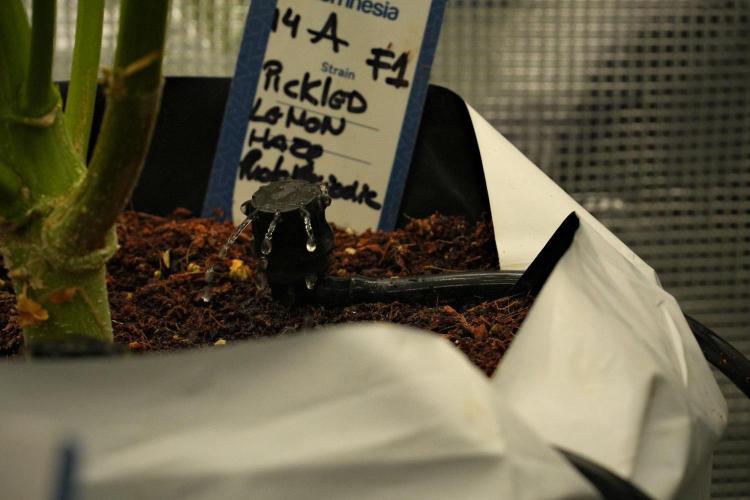
Elke plant ontvangt dagelijks ongeveer 1.2 liter voedingsoplossing via het Mars Hydro automatische druppelirrigatiesysteem.
Het automatische afvoersysteem verwijdert het overtollige water onder de kweekzakken, waardoor ophoping van voedingsstoffen rond de wortels wordt voorkomen, terwijl het groeigebied opmerkelijk schoon blijft.
Het is een van die systemen die elke dag stilletjes zijn werk doet terwijl het de hele kweek consistenter maakt.
────────────────────────
📸 Nader Bekijken – Een Andere Wereld Ontdekken
Een van de grootste vreugden van het documenteren van deze dagboeken heeft niets te maken met voedingsstoffen of training.
Het is fotografie.
Meer specifiek...
Macro fotografie.
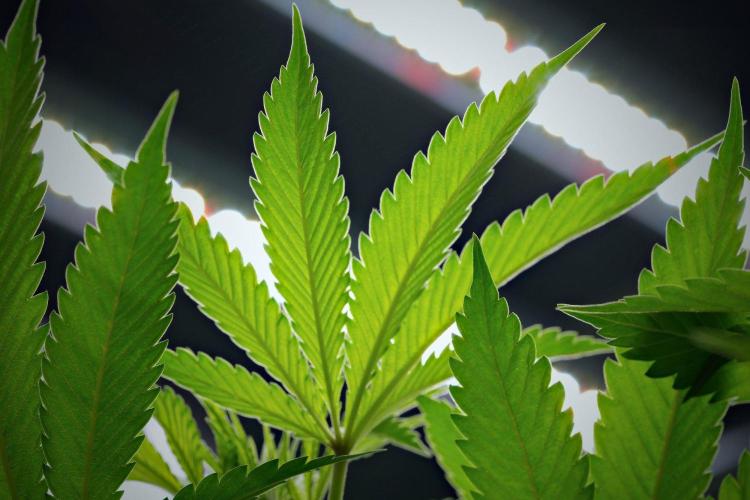
De meeste mensen kijken naar een cannabisplant en zien bladeren.
Een macrolens vertelt een totaal ander verhaal.
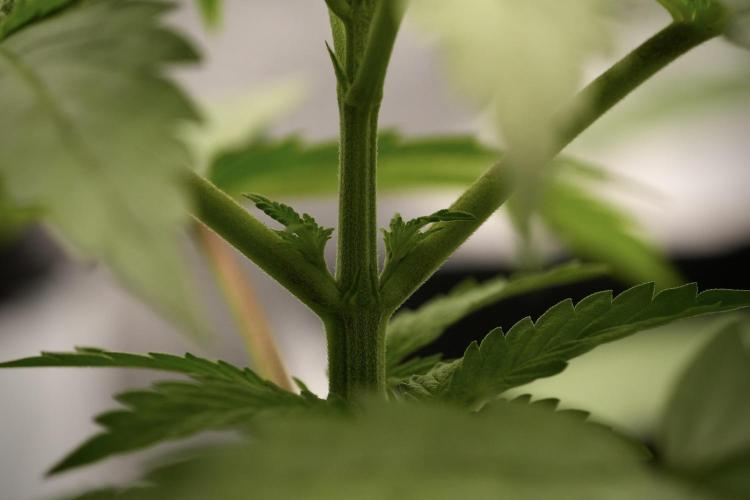
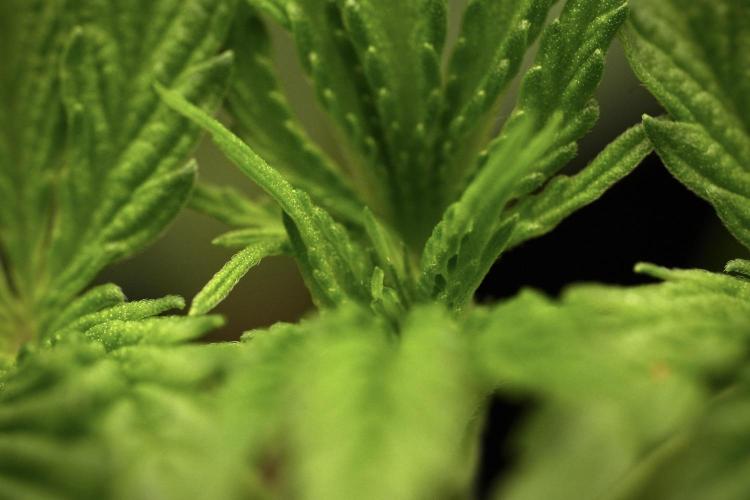
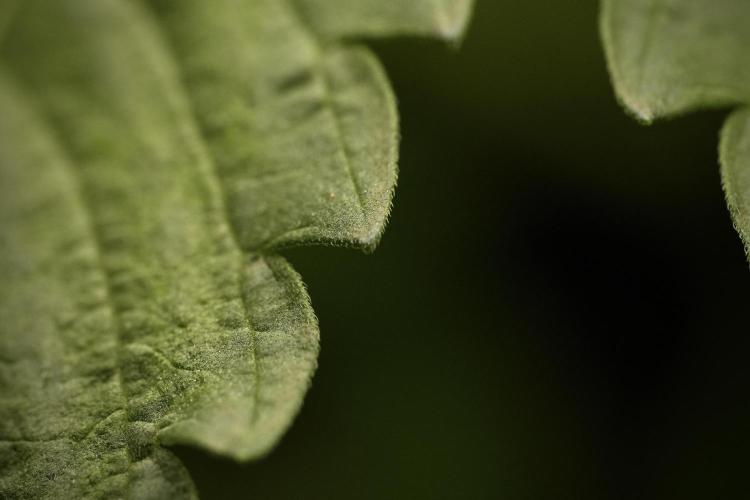
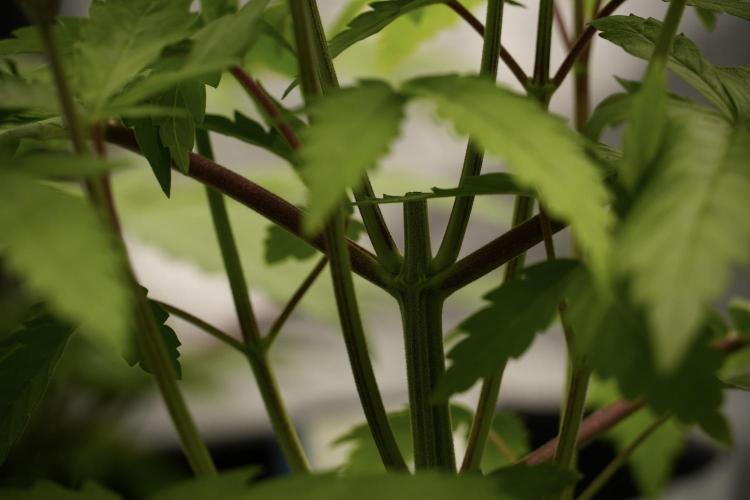
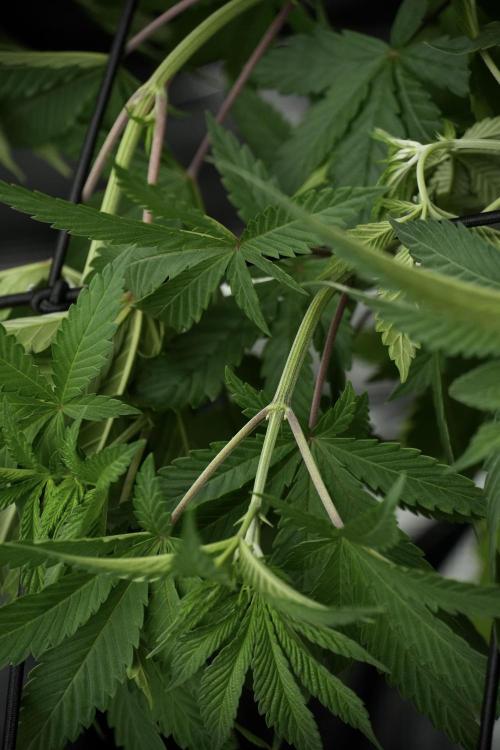
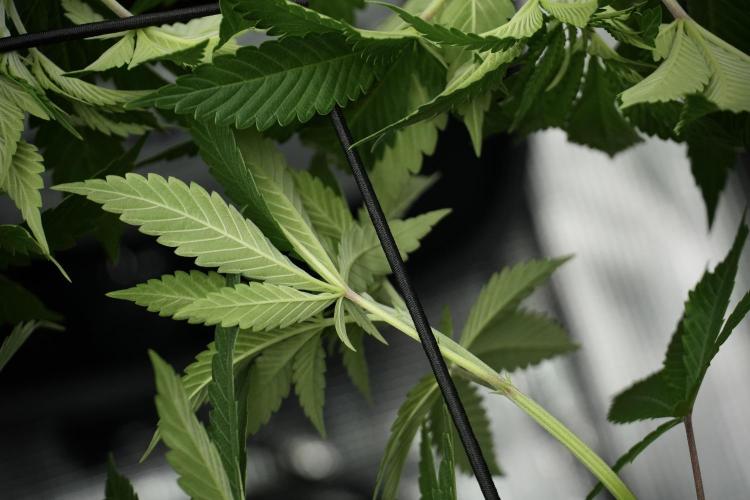
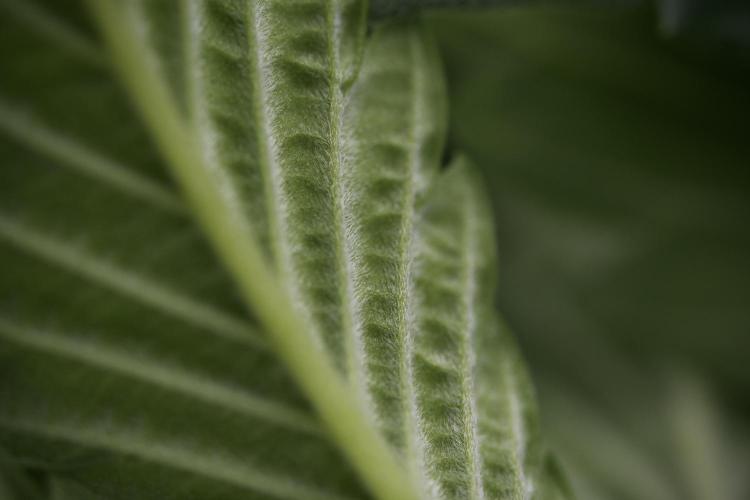
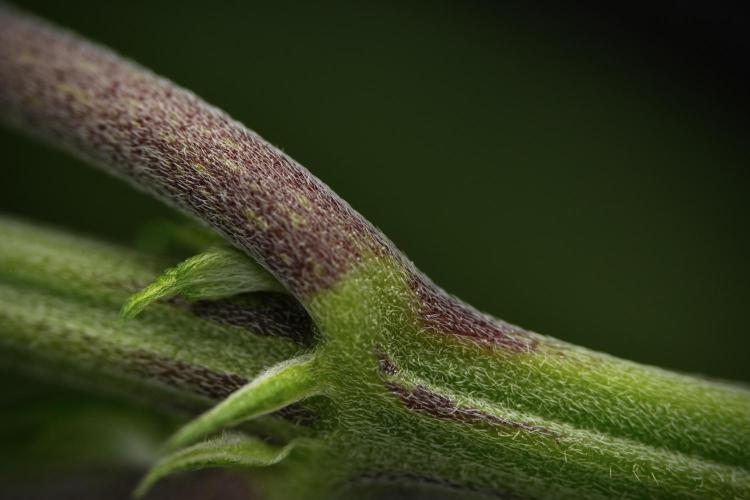
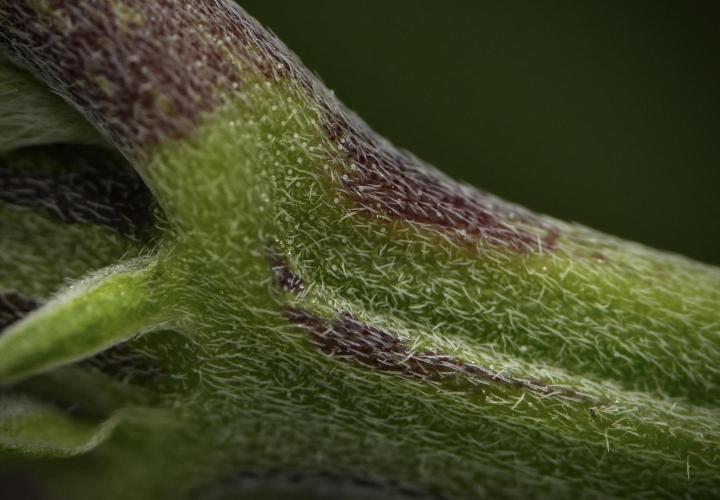
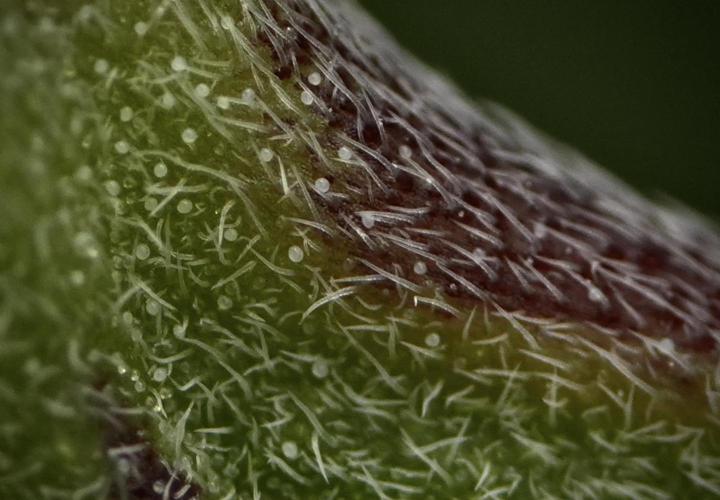
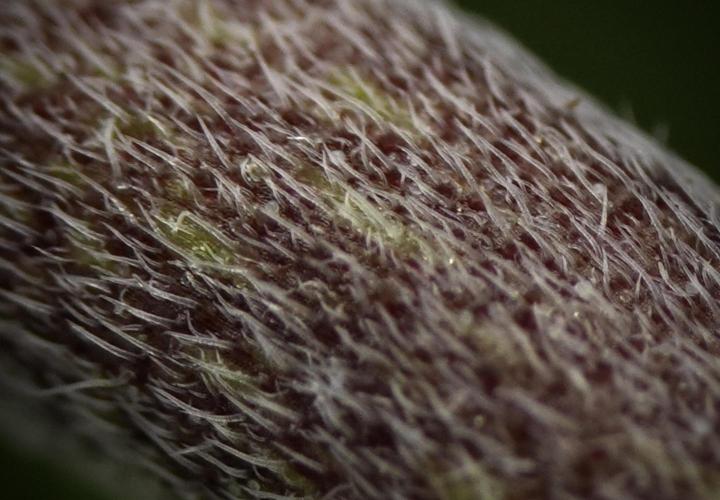
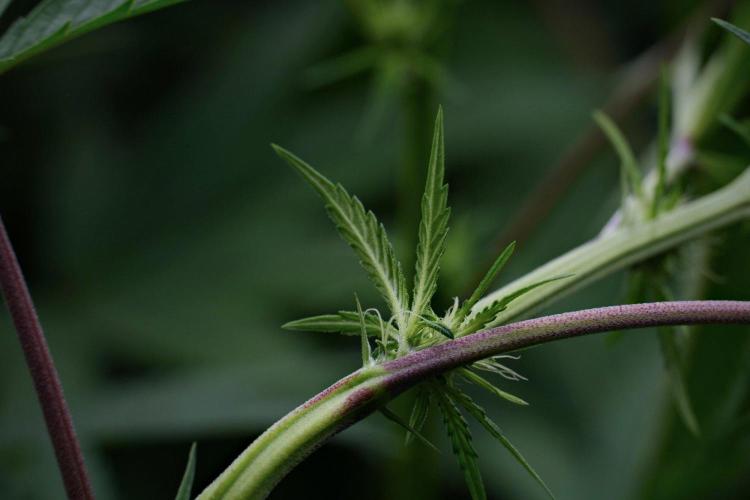
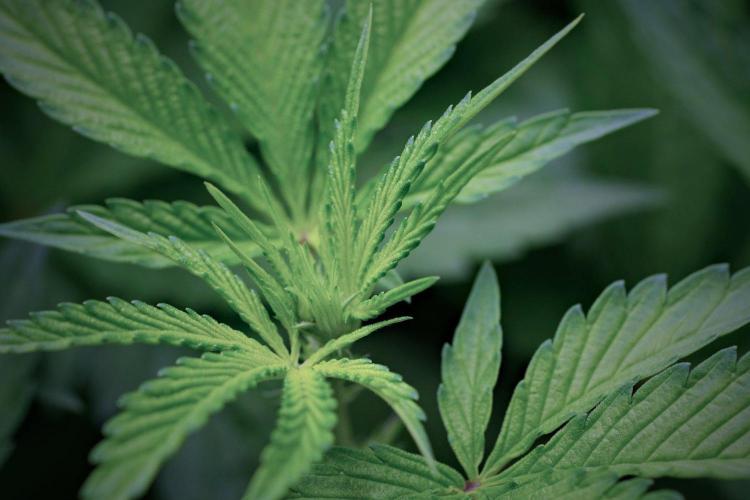
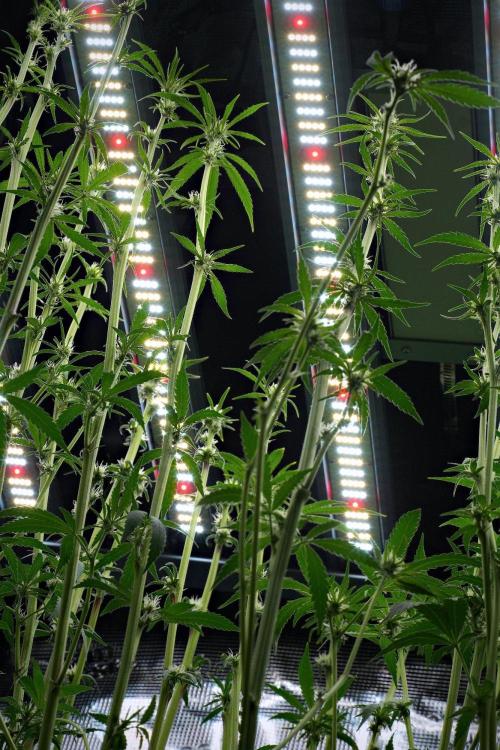
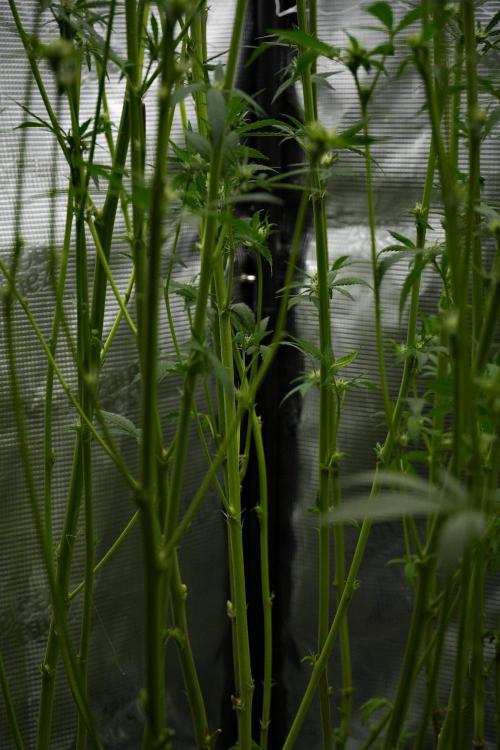
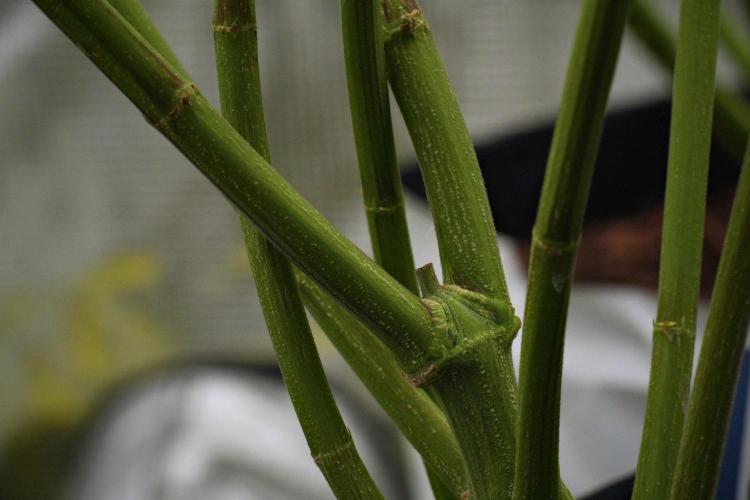
Plotseling worden de stelen bedekt met duizenden kleine beschermende haartjes.
De prachtige paarse pigmentatie die door de takken loopt, begint zich in ongelooflijke details te onthullen.
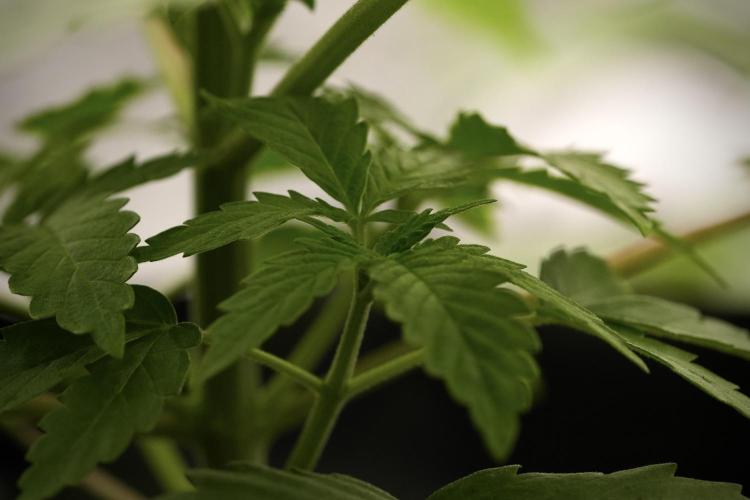
Jonge bladeren tonen delicate texturen die bijna onmogelijk te waarderen zijn met het blote oog.
Zelfs de kleinste bladaderen worden ingewikkelde natuurlijke patronen.
Hoe meer tijd ik achter de camera doorbreng, hoe meer ik besef hoeveel schoonheid er bestaat op plaatsen die we normaal over het hoofd zien.
Macro fotografie heeft de manier veranderd waarop ik door de kweekruimte loop.
Het vertraagt me.
In plaats van gewoon de planten te controleren, observeer ik ze echt.
Elke steel.
Elk nieuw blad.
Elk klein detail dat de natuur stilletjes altijd al heeft gecreëerd.
Kweken leert geduld.
Macro fotografie leert waardering.
Samen hebben ze ervoor gezorgd dat ik nog meer van deze hobby geniet dan ik al deed.
────────────────────────
🌿 Vooruitkijken
De missie voor volgende week blijft simpel.
Blijf het SCROG vullen.
Behoud de stabiele omgeving.
Vertrouw het proces.
Het bladerdak wordt elke dag vlakker, en met elke tak die zijn eigen plek onder het scherm vindt, groeit de opwinding voor de bloei.
Er ligt nog veel werk voor ons.
Maar er is absoluut geen haast.
Gezonde planten belonen geduld.
────────────────────────
💙 Dank U
Een enorme dank aan Zamnesia voor het mogelijk maken van Project Blue Tent, van deze uitstekende Pickle Lemon Haze F1-genetica tot het complete ecosysteem rondom deze kweek.
Een oprechte dank aan Plagron voor het leveren van de Premium Growbags samen met de Hydro voedingslijn die week na week blijft zorgen voor krachtige groei en prachtig gezonde planten.
Een speciale dank aan Phytonaut voor de uitstekende LED-verlichting, die compacte groei, ongelooflijke structuur en een prachtig gelijkmatig bladerdak door de Blue Tent levert.
Een oprechte dank aan Mars Hydro voor het automatische druppelirrigatie- en afvoersysteem dat consistentie, netheid en eenvoud heeft gebracht in elke dag binnen de kweekruimte.
Dank aan GrowDiaries voor het bieden van een plek aan kwekers over de hele wereld om hun reizen te documenteren, kennis te delen en elkaar te blijven inspireren.
En tot slot...
Dank aan ieder van jullie die Project Blue Tent volgt.
Of je hier nu bent sinds de ontkieming, onlangs deze dagboeken hebt ontdekt, elke week reacties achterlaat of stilletjes op de achtergrond meeleest, jullie steun betekent echt de wereld voor mij.
Elke week leren deze planten me iets nieuws.
Ik hoop dat ze, door middel van deze dagboeken, ook een beetje iets aan ons allemaal leren.
Tot volgende week...
Kwekersliefde, gelukkig kweken, en ik zie jullie allemaal snel. 🌱💙
17 houdt van
opmerkingen
Share
Used techniques
ScrOG
Techniek
7
Week 7. Vegetatie
2mo ago
1/30
60 cm
Height
18 uur
Light Schedule
28 °C
Day Air Temp
5.8
pH
Geen Geur
Smell
960 PPM
TDS
65 %
Air Humidity
18 °C
Solution Temp
24 °C
Substrate Temp
25 °C
Night Air Temp
8 set_lilers
Pot Size
1.2 set_lilers
Watering Volume
450 PPM
CO₂-niveau
Nutrients 5
Hydro A
1.9 mll
Hydro B
1.9 mll
Hydro Roots
1 mll
DogDoctorOfficial 🥒 Project Blue Tent – Week 7
Pickle Lemon Haze F1 – Pheno B (Map 14B)
Hallo allemaal, en welkom terug bij een nieuw hoofdstuk van Project Blue Tent! 💙🌱
Als je dit dagboek voor de eerste keer ontdekt, welkom aan boord!
Project Blue Tent volgt vier individuele planten, elk gedocumenteerd in hun eigen speciale dagboek van zaad tot oogst. Elke plant deelt exact dezelfde omgeving, verlichting, irrigatie, voeding en trainingsstrategie, waardoor we kunnen observeren hoe elk fenotype zijn eigen persoonlijkheid ontwikkelt terwijl de groeiomstandigheden zo consistent mogelijk blijven.
Vandaag kijken we naar Pickle Lemon Haze F1 – Plant B.
En deze week markeert weer een belangrijke mijlpaal.
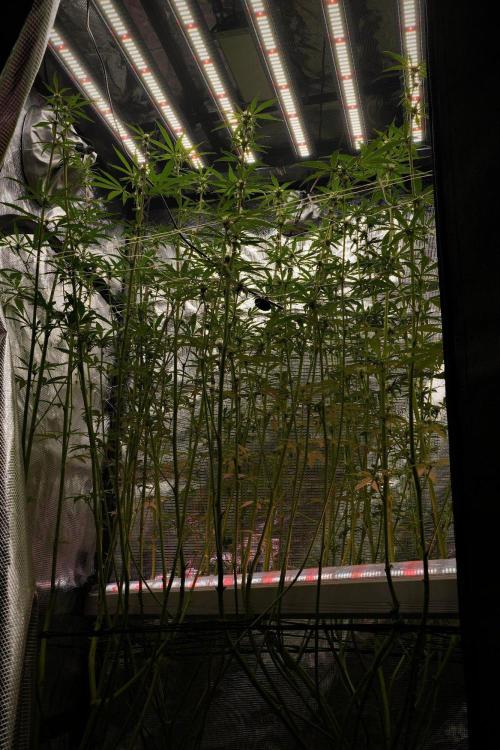
Het bladerdak is vol.
De structuur is klaar.
En we bereiden deze mooie dames voor op hun overgang naar de bloeifase.
────────────────────────
🌱 Week Zeven – Het Bladerdak Is Compleet
Als ik deze week over de Blue Tent kijk, wordt het steeds moeilijker om de vier planten van bovenaf te onderscheiden.
De SCROG heeft precies gedaan wat we wilden.
In plaats van vier individuele planten die verticaal groeien, hebben we nu één opmerkelijk gelijkmatig bladerdak dat zich over de beschikbare ruimte verspreidt.
Plant B is bijzonder goed geschikt voor dit proces.
Vanaf het begin heeft ze een natuurlijke neiging getoond om naar buiten te groeien in plaats van constant omhoog te proberen te reiken. Haar compacte structuur, sterke zijtakken en uitstekende reactie op training hebben haar in staat gesteld om haar deel van het scherm prachtig te vullen.
Na het verlagen en strakker maken van het SCROG-net zitten alle vier de planten nu op ongeveer 60 cm.
Op dit punt proberen we niet langer hoogte te winnen.
We beheren het oppervlak dat we hebben gecreëerd.
Elke tak heeft zijn plaats gevonden.
Elke beschikbare sectie van het scherm is gebruikt.
En nu is het tijd om dat bladerdak voor te bereiden op wat komen gaat.
────────────────────────
🕸️ SCROG – Van Training naar Bloeifase
Voor iedereen die dit dagboek volgt zonder de voorgaande weken te hebben gezien, SCROG staat voor Screen of Green.
Het doel van het scherm is om takken horizontaal te leiden in plaats van enkele dominante toppen significant hoger te laten groeien dan de rest.
Wanneer takken het scherm bereiken, worden ze voorzichtig in naburige openingen geleid.
Dit verspreidt de toekomstige bloeiplaatsen over een groter gebied en creëert een veel gelijkmatiger bladerdak.
Het gaat er niet om de plant in een onnatuurlijke vorm te dwingen.
Het gaat erom de groei die de plant al produceert efficiënter over de beschikbare ruimte te verdelen.
En na enkele weken van precies dat, is de missie in wezen voltooid.
Het scherm is vol.
Het bladerdak is gelijkmatig.
Nu gaan we over naar de opruimfase.
────────────────────────
✂️ Defoliatie – De Planten Voorbereiden op Bloei
De grootste klus deze week is defoliatie.
En omdat deze techniek vaak verkeerd begrepen wordt, is het de moeite waard om uit te leggen wat we eigenlijk doen.
Defoliatie gaat niet om het strippen van een plant van elk blad.
Bladeren zijn essentieel voor de plant. Ze vangen licht en ondersteunen de fotosynthese, dus het verwijderen van gezonde bladeren zonder reden is niet het doel.
In plaats daarvan voeren we een doelgerichte opruiming van het bladerdak uit.
Na weken van krachtige vegetatieve groei en SCROG-training is het interieur van de planten extreem dicht geworden.
Bladeren overlappen elkaar.
Takjes kruisen elkaar.
Sommige gebieden zijn zwaar beschaduwd.
En luchtstroom door het midden van het bladerdak wordt steeds belangrijker.
Dus we verwijderen selectief bladeren uit gebieden waar de dichtheid te groot is geworden.
We openen het interieur.
Creëren meer ruimte tussen takken.
Verbeteren de luchtstroom.
Verbeteren de zichtbaarheid.
En creëren een schonere structuur voor de bloeicyclus.
Het doel is niet:
"Verwijder zoveel mogelijk bladeren."
Het is:
"Verwijder wat niet langer helpt bij de structuur die we proberen op te bouwen."
Dat is een heel belangrijk verschil.
────────────────────────
🌬️ Waarom Defolieren Voor de Overgang?
Timing is alles.
Een aanzienlijke defoliatie is een vorm van stress. Zelfs wanneer het correct wordt uitgevoerd, heeft de plant wat tijd nodig om zich aan te passen aan het verlies van bladeren en terug te keren naar zijn normale groeiritme.
Daarom doen we dit voordat we in de bloei gaan, in plaats van te wachten tot we al ver in de bloeicyclus zijn.
Op dit moment volgen de planten nog een vegetatieve schema van 18/6.
Ze hebben tijd om te herstellen.
We kunnen de opruiming uitvoeren.
We kunnen kijken hoe ze reageren.
We kunnen vers groei laten hervatten.
En dan kunnen we de lichten omzetten zodra de planten zich weer hebben ingesteld.
Ik wil de planten niet vragen om een grote opruiming aan te pakken terwijl ze tegelijkertijd de fysiologische overgang naar de bloei ondergaan.
In plaats daarvan volgen we een eenvoudige volgorde:
Bouw het bladerdak.
Vul het scherm.
Maak het bladerdak schoon.
Herstel.
Draai om.
Het doel is om de bloei in te gaan met gezonde planten en een goed georganiseerde structuur.
────────────────────────
🌿 Pickle Lemon Haze F1 – Plant B
Plant B blijft precies de persoonlijkheid tonen die we gedurende dit project hebben leren kennen.
Ze is in balans.
Ze is compact.
Ze is ongelooflijk takrijk.
En ze lijkt perfect gelukkig te zijn met zijwaarts groeien.
Terwijl Plant A altijd iets meer verticale ambitie heeft getoond, heeft Plant B haar energie van nature geconcentreerd op laterale groei en secundaire takken.
Dat heeft het bijzonder leuk gemaakt om met haar te werken onder de SCROG.
Haar stelen zijn mooi blijven verdikken, haar internodale afstand blijft compact, en haar bladeren hebben die rijke groene kleur ontwikkeld waar we naar op zoek waren.
Het herstel van het toppen is nu niets meer dan een herinnering.
Ze is volledig verder gegaan van die fase en heeft de afgelopen weken besteed aan het opbouwen van het raamwerk dat uiteindelijk haar bloeiplaatsen zal ondersteunen.
Als ik nu naar haar kijk, is het gemakkelijk te zien hoeveel de plant is veranderd.
Ze is niet langer gewoon een jonge vegetatieve plant.
Ze is een goed gestructureerd klein boompje geworden met een vol gedeelte van het bladerdak dat haar naam draagt.
En nu bereiden we haar voor op het volgende hoofdstuk.
────────────────────────
🥥 Voeding – Blijven Bij Wat Werkt
Het voedingsrecept blijft deze week ongewijzigd.
Huidige voeding:
• Plagron Hydro A — 1,9 ml/L
• Plagron Hydro B — 1,9 ml/L
• Plagron Hydro Roots — 1 ml/L
Huidige pH:
5,8
Huidige EC:
1,92 mS/cm
De planten blijven uitstekende kleur en krachtige groei tonen, dus ik zie geen reden om het recept te veranderen alleen omdat we de bloei naderen.
Soms is consistentie de betere beslissing.
We zullen zien hoe de planten reageren na defoliatie, en afhankelijk van hun herstel en eetlust, kunnen we de voedingssterkte volgende week verhogen.
Voor nu vertellen ze me echter precies wat ik wil horen.
Gezonde kleur.
Sterke groei.
Goede bladhouding.
En geen duidelijke tekenen dat ze om iets anders vragen.
Dus...
Niets verandert.
────────────────────────
💧 Druppelirrigatie – De Wortels Consistent Houden
Het automatische druppelirrigatie- en afvoersysteem van Mars Hydro blijft prachtig presteren.
Elke plant ontvangt ongeveer 1,2 liter voedingsoplossing per 24 uur, geleverd via het geautomatiseerde druppelsysteem.
De langzame en consistente irrigatie houdt de coco voorzien van verse voedingsoplossing terwijl het automatische afvoersysteem de resulterende afvoer verwijdert.
Dit is bijzonder waardevol in een project als dit.
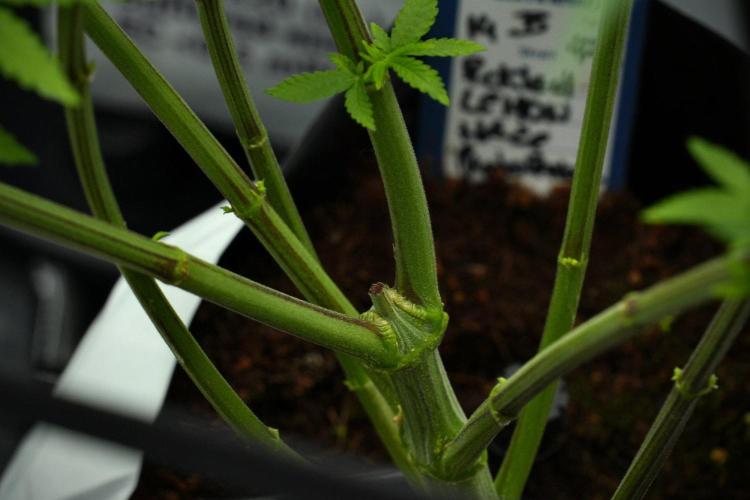
Vier planten delen dezelfde omgeving.
Hetzelfde voedingsrecept.
Dezelfde verlichting.
Hetzelfde irrigatieschema.
Die consistentie helpt ons om een andere belangrijke variabele onder controle te houden.
En naarmate de planten groter worden, wordt het voordeel nog duidelijker.
Het irrigatiesysteem blijft gewoon elke dag zijn werk doen.
Geen gehaast met gieters.
Geen proberen te onthouden welke plant wat heeft gekregen.
Gewoon consistente irrigatie terwijl ik me concentreer op het observeren van de planten zelf.
Het is een van die systemen die niet per se aandacht vereist wanneer het goed werkt.
En eerlijk gezegd...
Dat is precies hoe ik het graag heb.
────────────────────────
🌡️ Blue Tent Omgeving
De omgevingsomstandigheden zijn zeer stabiel gebleven nu we de overgang naar de bloei naderen.
De gemiddelde omstandigheden deze week waren:
• 🌡️ Dagtemperatuur: 28°C
• 🌙 Nachttemperatuur: 25°C
• 💧 Relatieve Vochtigheid: 65%
• 🥥 Substraattemperatuur: 24°C
• 💦 Temperatuur van de Voedingsoplossing: 18°C
• ⚗️ pH: 5,8
• ⚡ EC: 1,92 mS/cm
• 💨 CO₂: ongeveer 450 ppm
• 💡 Lichtschema: 18/6
• 💧 Irrigatie: ongeveer 1,2 L/plant/24u
• ? Potmaat: 8 L
• 📏 Hoogte: ongeveer 60 cm
In deze fase is stabiliteit belangrijker dan constant veranderende cijfers.
De planten zijn gezond.
Het bladerdak is vol.
De wortels ontvangen consistente irrigatie.
En de huidige voedingssterkte produceert prachtige groei.
Dus we blijven op koers.
────────────────────────
🌿 Een Vol Bladerdak Betekent Een Andere Soort Werk
Een van de interessante dingen aan het bereiken van deze fase is dat het werk volledig verandert.
Eerder in de groei was de uitdaging om de planten de ruimte te laten innemen.
Nu is de uitdaging om alles wat ze hebben geproduceerd te beheren.
Toen het bladerdak zich nog ontwikkelde, was elke nieuwe tak welkom.
Nu moeten we beginnen met het stellen van andere vragen.
Draagt dit blad genoeg bij?
Is dit gebied te druk?
Kan lucht hier doorheen bewegen?
Krijgt deze tak genoeg licht?
Zal dit deel van de plant profiteren van het in het bladerdak blijven?
Dat is waar goed bladerdakbeheer echt om draait.
Het gaat niet simpelweg om zoveel mogelijk te groeien.
Het gaat om beslissen welke groei deel van de uiteindelijke structuur verdient te blijven.
En Plant B heeft ons genoeg om mee te werken gegeven.
────────────────────────
Herstel Voor de Bloei
Zodra de defoliatie is voltooid, is het belangrijkste wat we kunnen doen de planten tijd geven.
Geen onnodige extra stress.
Geen gehaast.
Geen onmiddellijk nog een grote ingreep bovenop de eerste.
De planten hebben tijd nodig om zich opnieuw in balans te brengen na de opruiming.
We zullen de nieuwe groei observeren.
We zullen hun houding en algehele uiterlijk in de gaten houden.
We zullen de omgeving stabiel houden.
En we zullen ze laten herstellen.
Zodra ze zich weer hebben ingesteld, zijn we klaar om verder te gaan.
Dit is waarom de timing van de defoliatie zo belangrijk is.
We proberen de planten niet alles tegelijk te laten doen.
We bereiden ze stap voor stap voor.
────────────────────────
👀 Vooruitkijken
De komende dagen zouden bijzonder interessant moeten zijn.
De SCROG is gevuld.
Het bladerdak is schoongemaakt.
De planten hebben nu ruimte om te ademen.
En we naderen het moment waar we wekenlang naartoe hebben gewerkt.
Het voedingsrecept blijft voorlopig ongewijzigd, hoewel we het kunnen verhogen zodra we zien hoe de planten reageren na defoliatie.
De irrigatie gaat door met ongeveer 1,2 liter per plant per dag.
De omgeving blijft stabiel.
En het belangrijkste...
We haasten de flip niet.
We laten de planten eerst goed herstellen.
Dan, wanneer ze er klaar voor zijn...
Gaan we bloeien.
🌸
────────────────────────
💙 Bedankt
Een enorme dank aan Zamnesia voor het mogelijk maken van Project Blue Tent en voor het leveren van deze uitstekende Pickle Lemon Haze F1-genetica.
Een oprechte dank aan Plagron voor de Premium Growbags en Hydro voedingslijn die deze prachtige groei blijven ondersteunen.
Een speciale dank aan Phytonaut voor de LED-verlichting die ons helpt zo'n consistent en mooi gestructureerd bladerdak in de Blue Tent te behouden.
En een enorme dank aan Mars Hydro voor het automatische druppelirrigatie- en afvoersysteem dat consistentie en eenvoud blijft brengen in de dagelijkse routine.
Dank aan GrowDiaries voor het bieden van een plek voor kwekers over de hele wereld om hun reizen te documenteren, kennis uit te wisselen en elkaar te inspireren.
En tot slot...
Dank aan iedereen die Project Blue Tent volgt.
Of je nu hier bent sinds de kieming, recentelijk dit dagboek hebt ontdekt, elke week reacties achterlaat of gewoon geniet van het kijken naar deze vier zussen die zich ontwikkelen...
Jullie steun betekent echt de wereld voor mij. 💙
Plant B heeft de afgelopen weken stilletjes aan zichzelf gewerkt tot een prachtige, compacte en ongelooflijk goed gestructureerde fenotype.
Nu is het bladerdak klaar.
De opruiming is voltooid.
Alles wat overblijft is haar tijd geven om te herstellen...
En dan zien wat ze kan doen.
Tot de volgende keer...
Kwekersliefde, gelukkig groeien, en zorg goed voor jezelf iedereen! 🌱💙
16 houdt van
opmerkingen
Share
Used techniques
Ontbladering
Techniek
ScrOG
Techniek
8
Week 8. Bloeiend
2mo ago
1/67
81 cm
Height
12 uur
Light Schedule
27 °C
Day Air Temp
5.8
pH
Geen Geur
Smell
1045 PPM
TDS
67 %
Air Humidity
19 °C
Solution Temp
24 °C
Substrate Temp
27 °C
Night Air Temp
8 set_lilers
Pot Size
1.4 set_lilers
Watering Volume
666 PPM
CO₂-niveau
Nutrients 6
Hydro A
2 mll
Hydro B
2 mll
Hydro Roots
1 mll
DogDoctorOfficial 🥒 Project Blue Tent – Week 8
Pickle Lemon Haze F1 – Pheno B (Folder 14B)
Hello everyone, and welcome back to another chapter of Project Blue Tent! 💙🌱
If you're discovering this diary for the first time, welcome aboard!
Project Blue Tent follows four individual plants from seed all the way through harvest, with each phenotype receiving her own dedicated diary.
All four sisters share the same tent, lighting, irrigation, nutrition, environmental conditions and overall training strategy.
The idea is simple:
Keep the variables as consistent as possible and let the genetics tell the story.
And this week...
The story is getting very interesting.
Because all four girls have entered flowering with absolutely no intention of slowing down.
Today we're giving the spotlight to Pickle Lemon Haze F1 – Plant B.
And once again...
She's shining. 💙🌱
────────────────────────
🌸 Week Eight – Flower Has Arrived
The Blue Tent has officially entered the next chapter.
After seven full weeks of vegetation, we're now running 12/12, and the response from the plants has been immediate.
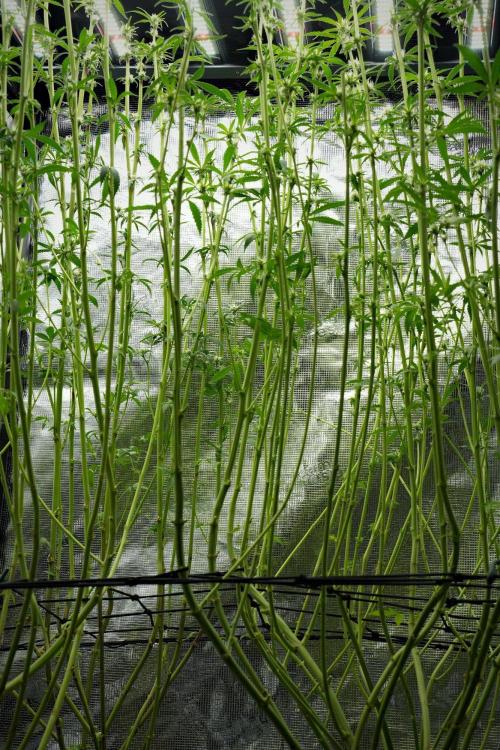
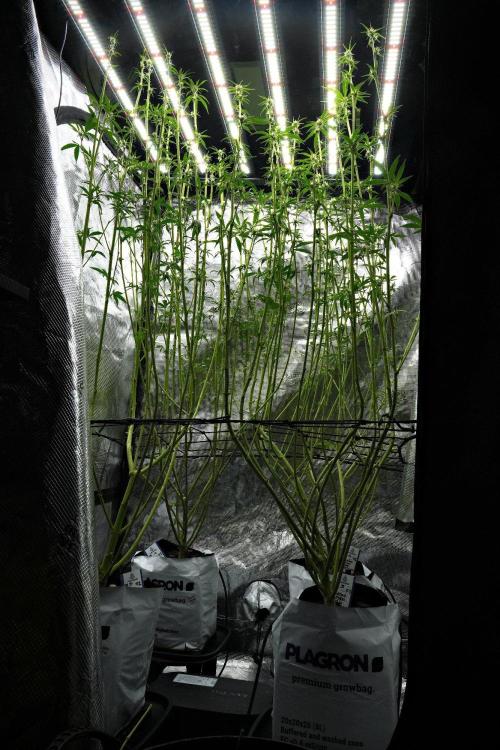
Plant B is now sitting around 81 cm, compared with approximately 60 cm when we finished the vegetative phase.
That's a serious amount of growth in a very short period.
And what's particularly impressive is that the plants aren't simply stretching upward.
They're developing everywhere.
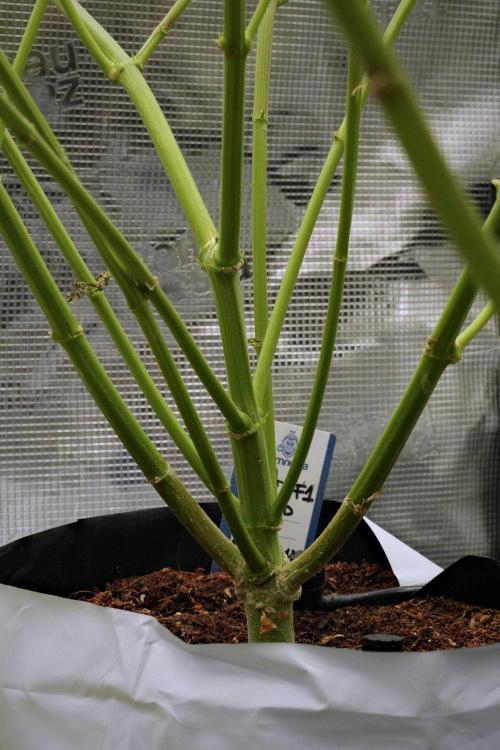
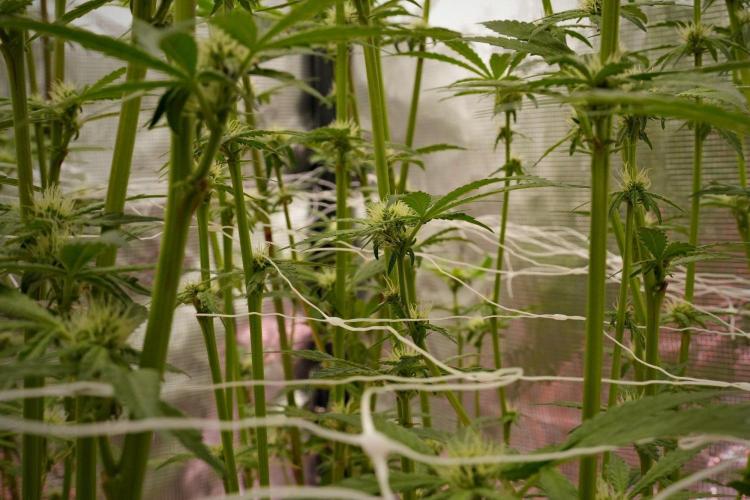
The branches are extending.
New growth is appearing rapidly.
Flowering sites are becoming more obvious every day.
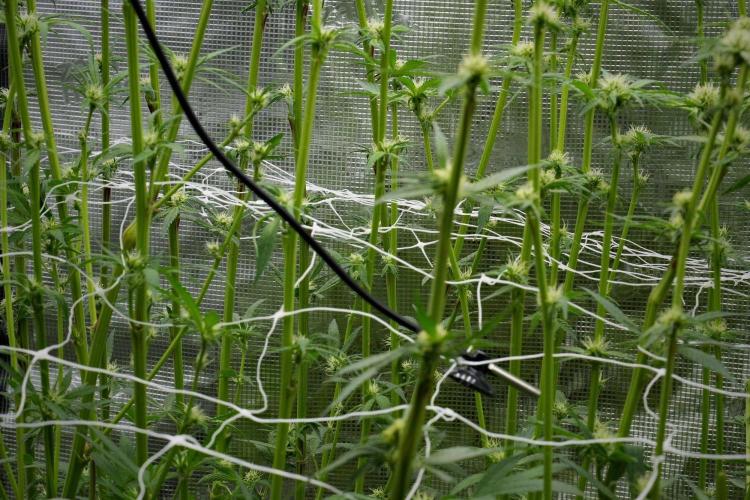
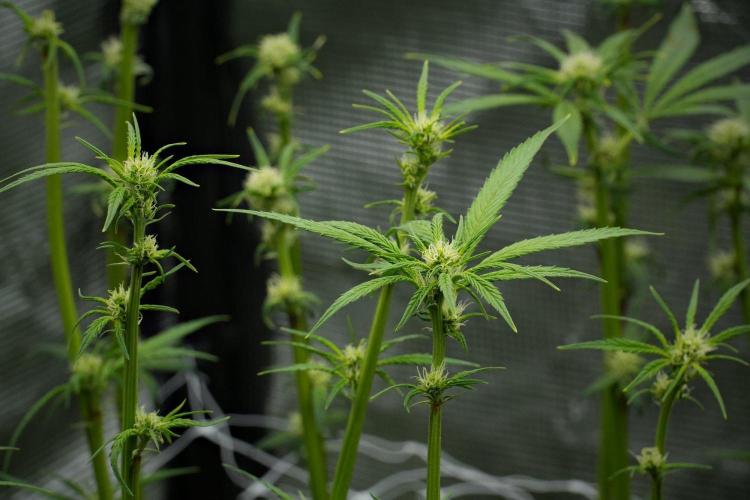
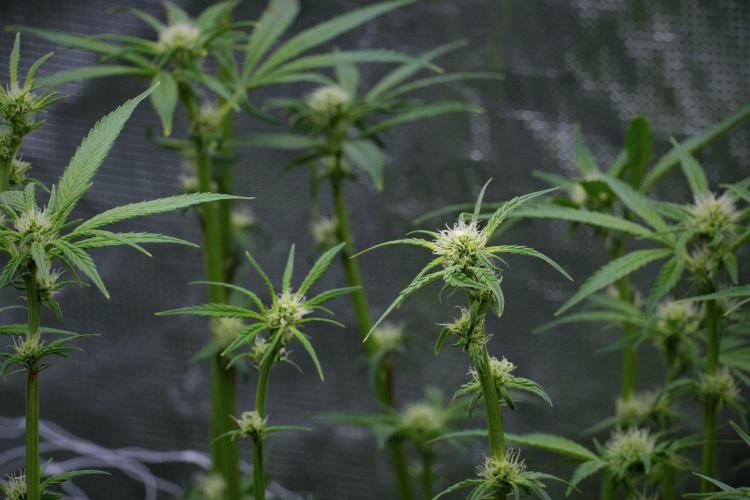
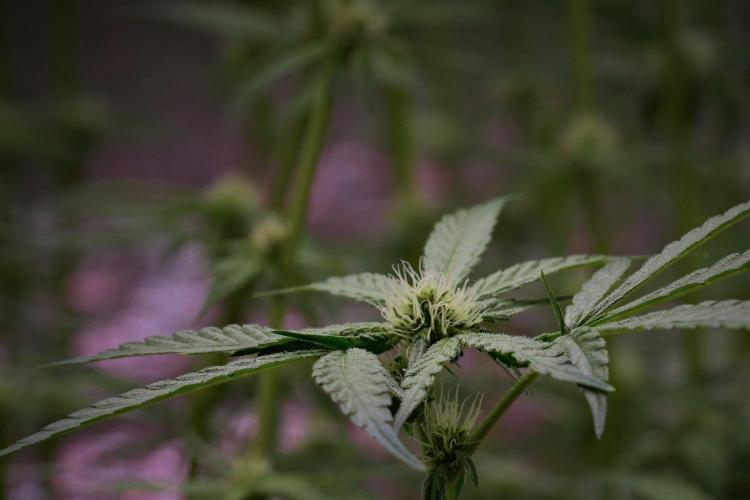
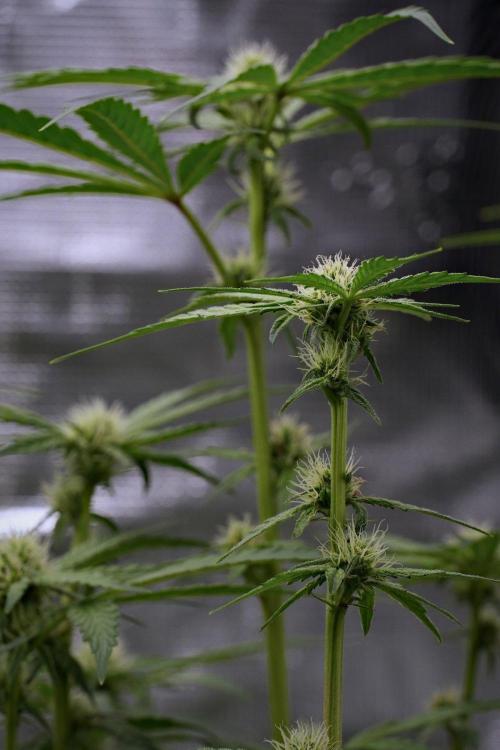
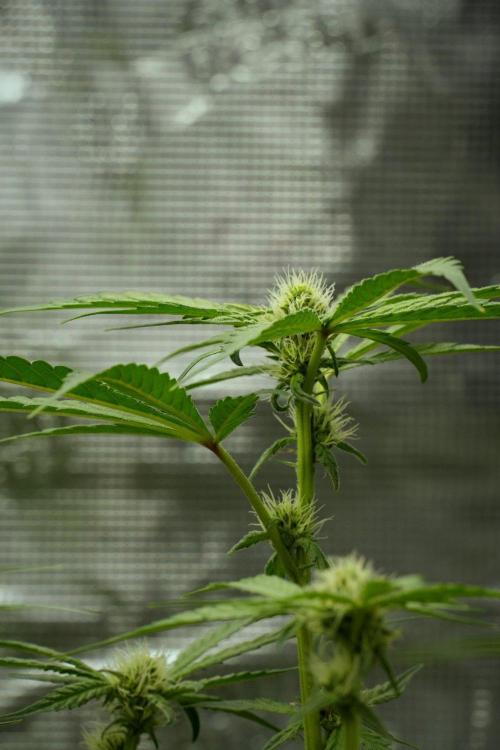
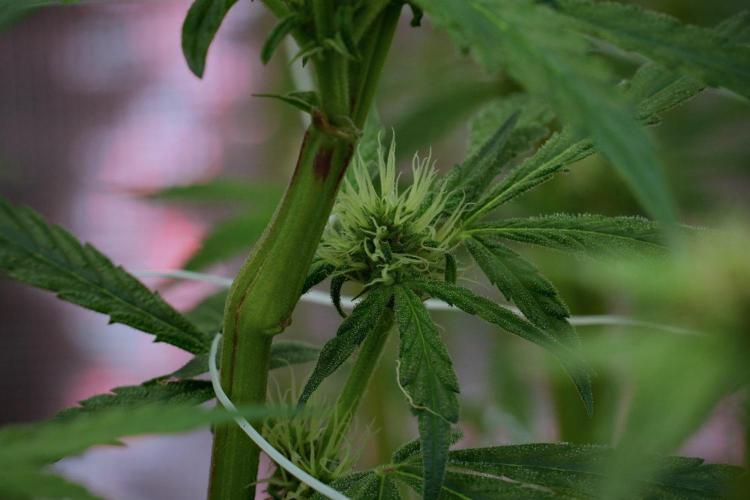
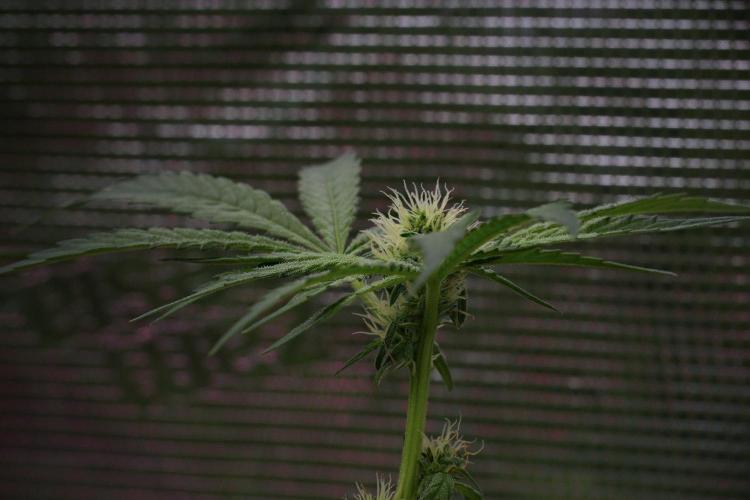
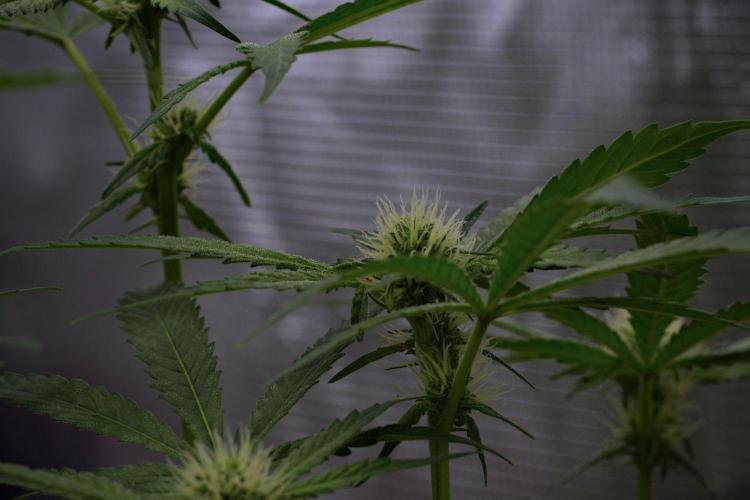
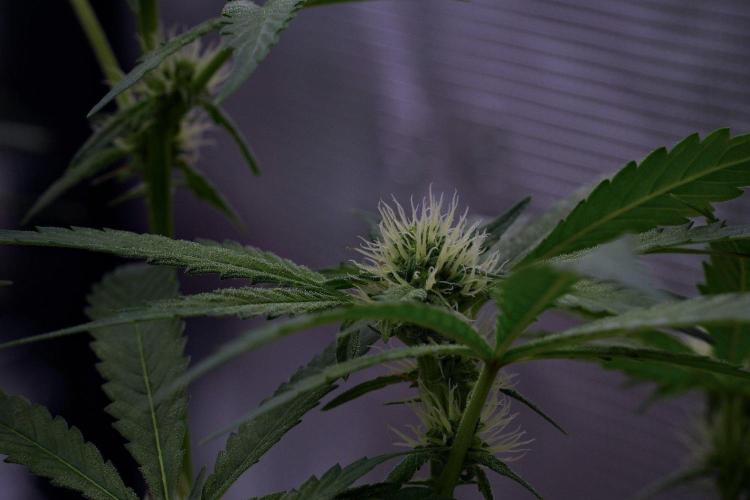
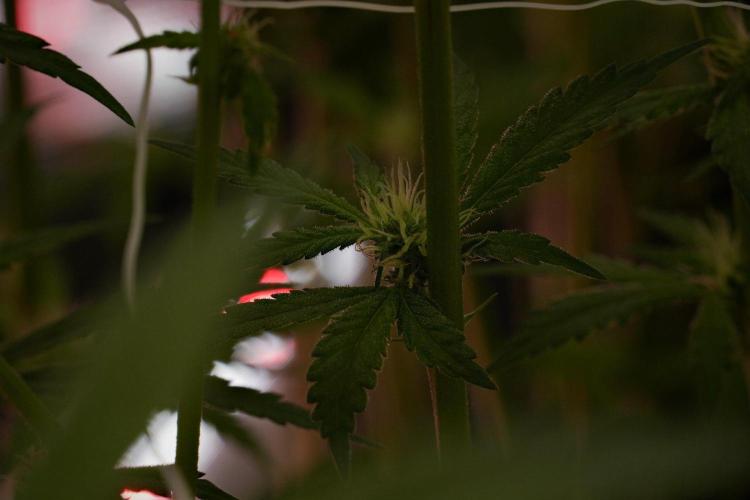
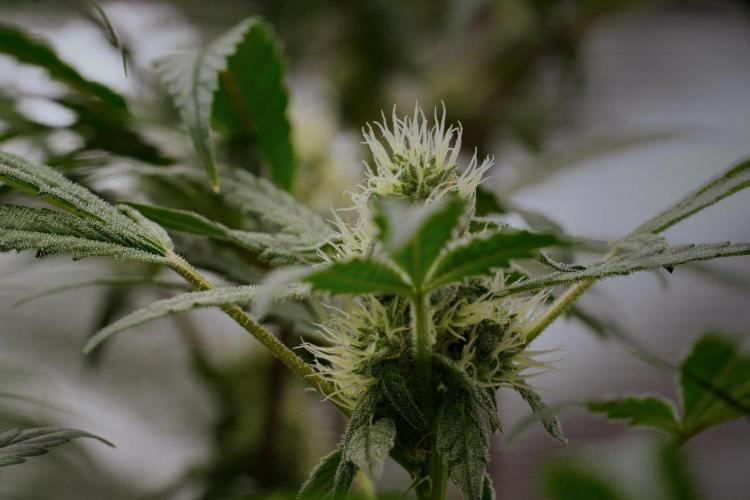
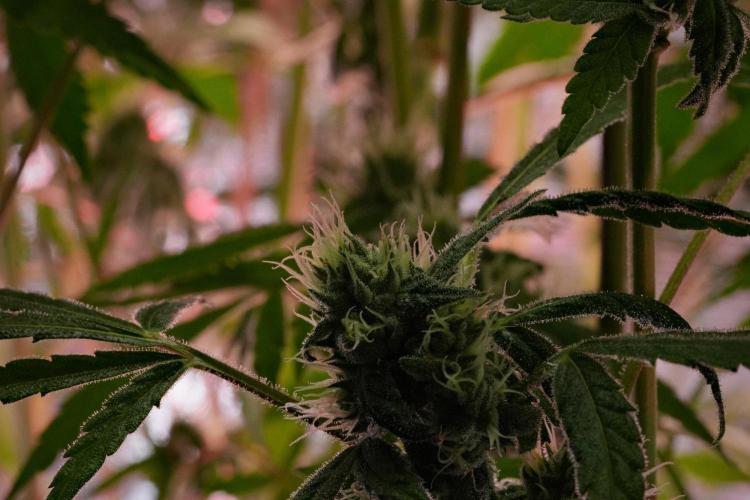
And the first real signs of bud development are now beautifully visible throughout Plant B's structure.
This is the point where all those weeks of preparation start becoming meaningful.
The SCROG gave us the structure.
The defoliation opened the canopy.
The training created the framework.
And now...
Flowering is filling that framework.
────────────────────────
🌿 Pickle Lemon Haze F1 – Plant B
Plant B continues to be one of those girls that makes me stop and look twice.
Her foliage is lush, vibrant and beautifully green, and the overall health of the plant is exactly where I want it to be.
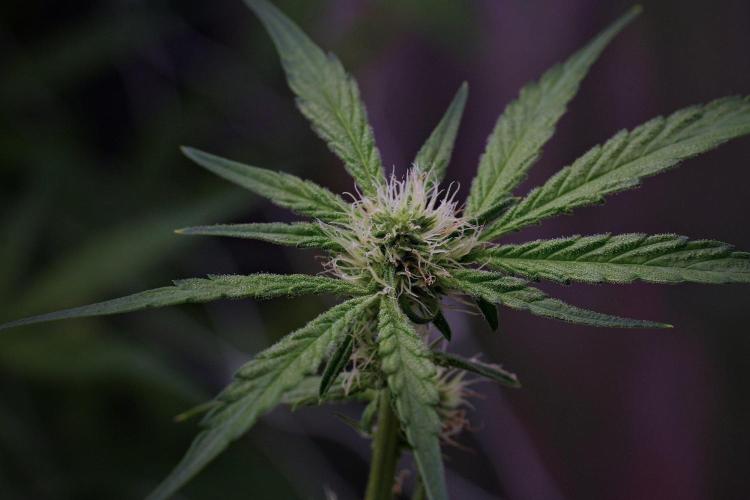
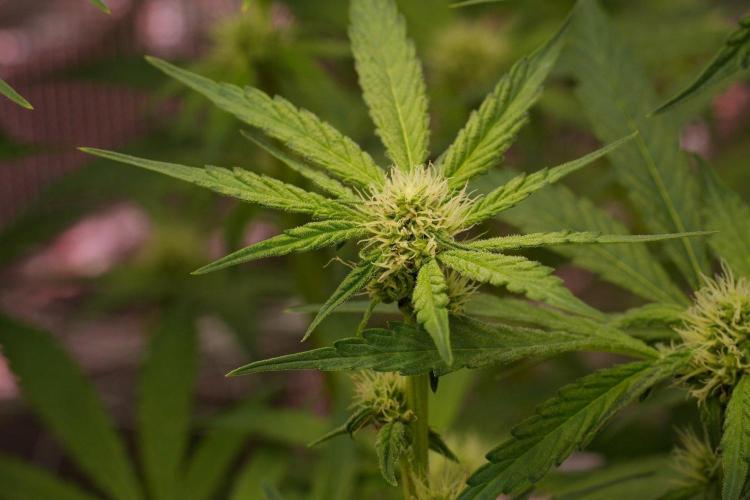
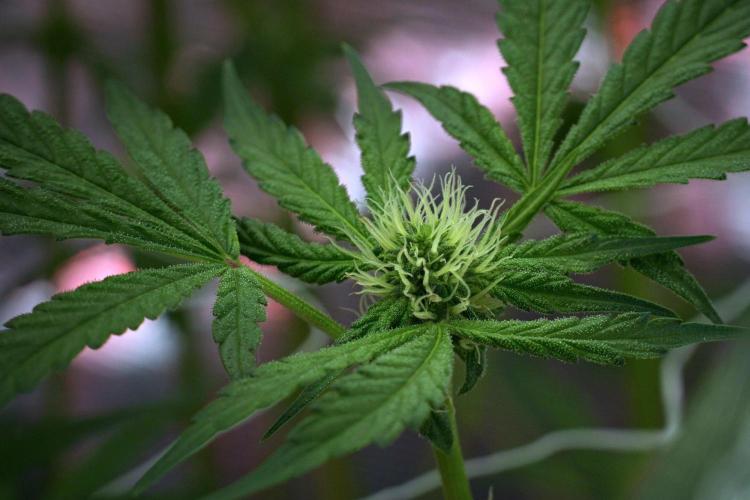
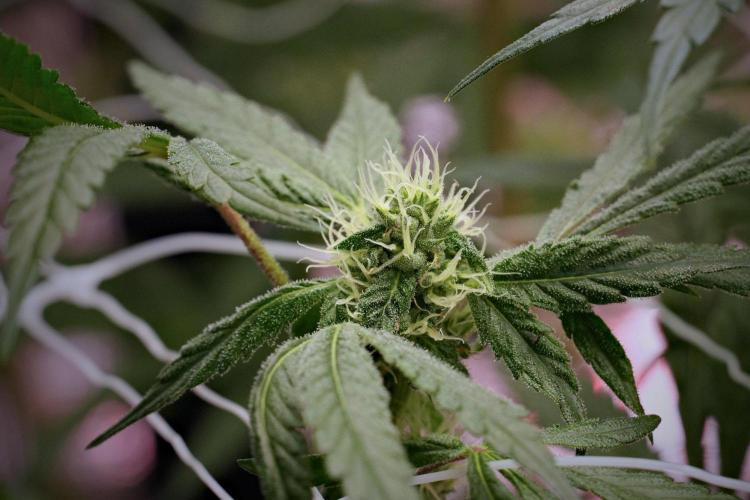
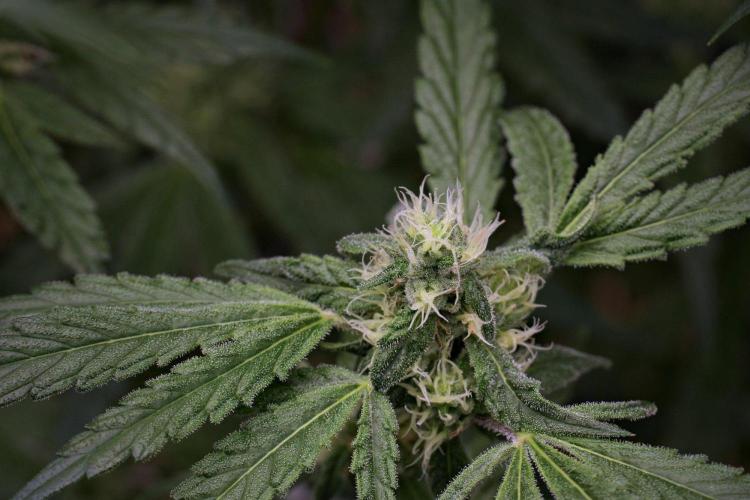
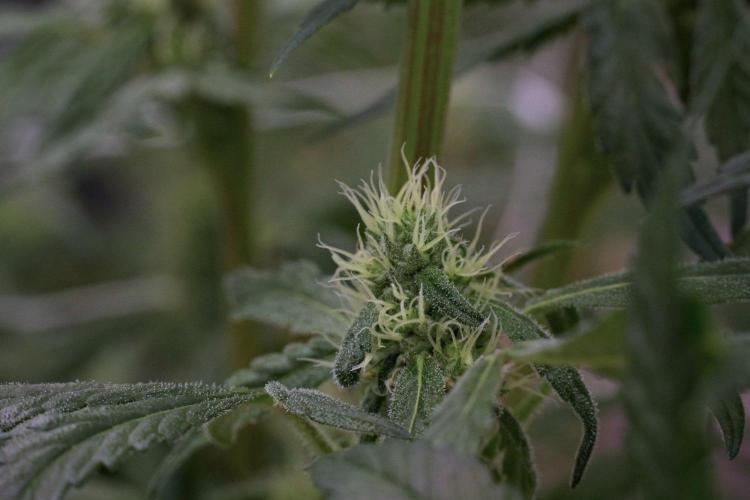
The developing flowers are progressing quickly, with fresh pistils and new growth appearing throughout the canopy.
And despite the speed at which she's developing, she's still maintaining a remarkably even structure.
That's something I really appreciate about this phenotype.
She has always been a cooperative plant.
She responds well to training.
She builds strong lateral growth.
And even now, with flowering underway and the stretch accelerating, she's still giving us a canopy that is relatively easy to manage.
At least...
As easy as four extremely vigorous plants can be. 😂
────────────────────────
💥 Super Cropping – Keeping the Canopy Under Control
The biggest challenge right now isn't getting these girls to grow.
They've already made that part very clear.
The challenge is managing how quickly they're growing.
We're continuing to use super cropping on selected branches as another tool for managing the most vigorous vertical growth.
The idea is to reduce the dominance of certain shoots, redistribute growth and encourage stronger branching points as the plants continue developing.
And these girls are making me work for it.
I'll carefully work a branch down...
Come back later...
And somehow it's already standing back up again.
😂🌱
They're determined.
But that's actually what makes this stage so interesting.
We're not trying to stop their natural growth.
We're trying to work with it.
The canopy is already very even, and we're simply making small interventions where necessary to keep the most aggressive growth from getting too far ahead.
Whether we'll successfully keep everybody compact throughout the stretch?
Well...
Let's see.
They certainly haven't read that part of the plan.
────────────────────────
🌸 Bud Formation – Things Are Moving Quickly
One of the most exciting changes this week is the speed of flower development.
We're only at the beginning of flowering, yet Plant B is already showing beautiful formation throughout the canopy.
The sites we've spent weeks creating and positioning are now beginning to transform.
Pistils are appearing.
Clusters are becoming more defined.
And every day there's another little sign that tells me:
We're properly in flower now.
This is one of those moments where you can finally see the purpose behind all the earlier work.
The individual branches aren't just branches anymore.
They're becoming future flowers.
And Plant B has plenty of them.
────────────────────────
🌱 Seven Weeks of Vegetation – Was It Too Much?
Looking at Plant B now, I'm still wondering whether I gave these girls too much vegetative time.
Seven weeks of vegetation is considerably longer than I normally run.
Usually, I'd flip earlier.
But the extra time gave us something valuable:
A very established canopy.
Strong branches.
A developed root system.
And a structure capable of supporting a lot of flowering growth.
The downside is becoming very obvious now.
These plants have an incredible amount of momentum.
They grew from roughly 60 cm to around 81 cm incredibly quickly, and they're still moving.
So there is definitely a little bit of:
"What have I created?" 😂
happening in the grow room right now.
But worrying about it isn't going to make the plants grow slower.
We've prepared them.
We've trained them.
We've opened the canopy.
We're managing the stretch.
Now we watch.
And we see where these girls want to take us.
────────────────────────
💡 Strong Light From the Beginning
The transition into flowering also means we're starting with approximately 800 PPFD across the canopy.
I want these girls to have strong light available from the beginning of flower rather than slowly creeping toward higher intensity.
They're already extremely vigorous, so the idea is to give them the photons they need while closely observing how the canopy responds.
The challenge is balancing that strong light with the environmental conditions and the very significant stretch we're already seeing.
I'm particularly interested in seeing whether the combination of strong light and continued canopy management can help keep the plants from becoming excessively elongated.
Because if there's one thing Plant B has demonstrated this week...
It's that she has absolutely no shortage of energy.
────────────────────────
🌡️ Blue Tent Environment
The room continues to run with remarkably consistent conditions across all four sisters.
This week's recorded averages were:
• 🌡️ Day Temperature: 27°C
• 🌙 Night Temperature: 27°C
• 💧 Relative Humidity: 67%
• 🥥 Substrate Temperature: 24°C
• 💦 Nutrient Solution: 19.1°C
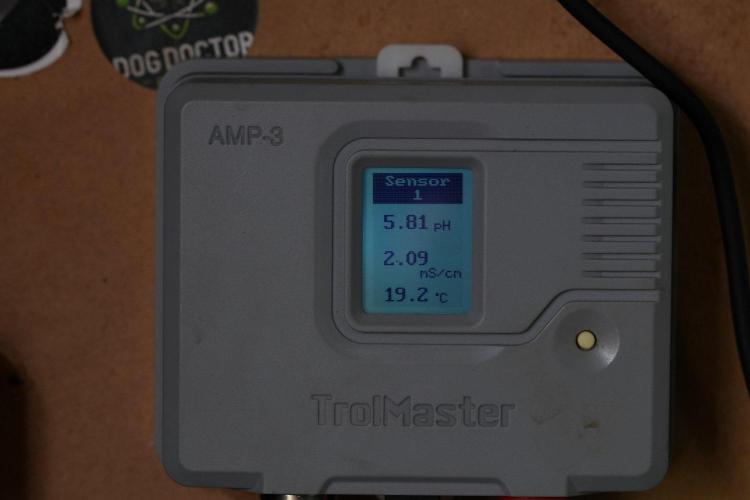
• ⚗️ pH: 5.81
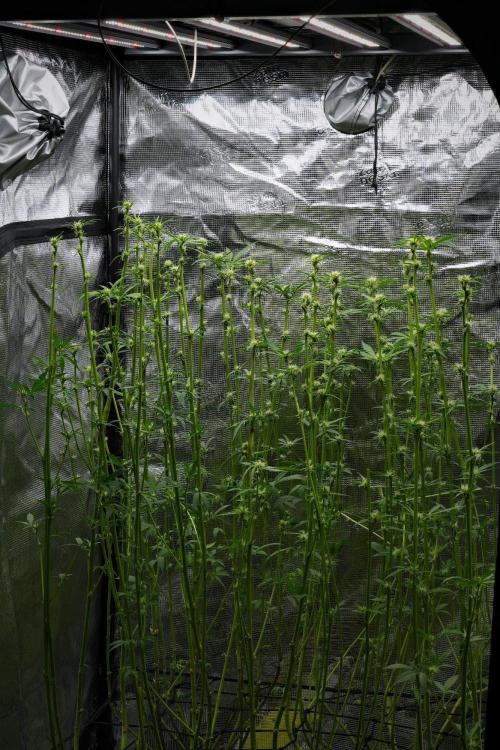
• ⚡ EC: 2.09 mS/cm
• 💨 CO₂: approximately 666 ppm
• 💡 Light Schedule: 12/12
• 💧 Irrigation: approximately 1.4 L/plant/24h
• ? Pot Size: 8 L
• 📏 Plant Height: approximately 81 cm
One thing that continues to stand out is the relatively small difference between day and night temperatures.
We're sitting around 27°C for both.
That can contribute to continued stretching, and considering how quickly these girls are already growing, it's something I'm keeping firmly in mind.
But for now, Plant B is responding beautifully.
Healthy foliage.
Strong development.
Rapid flower formation.
And no obvious signs that she's unhappy with her environment.
────────────────────────
🥥 Feeding – Supporting the Transition
The flowering nutrition is now established.
Current feeding:
• Plagron Hydro A — 2 ml/L
• Plagron Hydro B — 2 ml/L
• Plagron Hydro Roots — 1 ml/L
• Plagron Power Buds — 1 ml/L
• pH Plus — 0.03 ml/L
• pH Min — 0.03 ml/L
Current EC:
2.09 mS/cm
pH:
5.81
The plants are consuming aggressively and developing extremely quickly, so the nutritional strategy is now supporting that transition without making unnecessary changes simply for the sake of changing something.
Plant B's colour is exactly what I want to see.
That beautiful, lush green foliage is telling me that she's handling the current program very well.
And when I look at the flowering sites developing throughout the canopy...
I'm certainly not seeing a plant asking me to interfere.
So for now:
We stay consistent.
Observe.
Measure.
Adjust only when necessary.
────────────────────────
💧 The Drip & Drainage System – One Continuous Loop
The automatic irrigation and drainage setup has become one of my favourite parts of this project.
Plant B is now receiving approximately 1.4 litres of nutrient solution every 24 hours through the drip irrigation system.
The process is beautifully simple.
The drippers deliver the nutrient solution directly to the coco.
The solution passes through the substrate and feeds the root zone.
The resulting runoff drains into the collection trays underneath the grow bags.
From there, the drainage pipe carries the water toward the pump.
The pump removes the collected runoff and returns it toward the reservoir, creating a recirculating irrigation and drainage loop.
Water goes in.
The plants use what they need.
Runoff is collected.
The pump moves it away.
And the system continues its cycle.
It's a remarkably elegant setup when everything is working properly.
And right now...
It is working wonderfully.
The plants are growing rapidly, their water demand is increasing, and the system is keeping irrigation consistent without requiring me to manually water four increasingly thirsty plants every day.
That consistency is especially valuable in a project where we're deliberately trying to keep the four sisters under comparable conditions.
It's another variable we can keep controlled while we watch the genetics express themselves.
────────────────────────
🕸️ Managing the Canopy During the Stretch
The SCROG has already done its main job.
Now we're using the structure we've created to manage flowering growth.
The canopy remains impressively even.
There are no huge dominant towers completely taking over the room.
Instead, the flowering sites are distributed across the surface we've spent weeks building.
But the stretch is happening quickly.
So we're continuing to watch the taller shoots and selectively using training and super cropping where necessary.
This isn't about constantly manipulating the plant.
It's about making small corrections before a branch becomes a major problem.
A little intervention now can be much easier than trying to fix an overly dominant branch later.
And Plant B has responded very well so far.
She's stretching...
But she's stretching into a structure.
That's exactly what I wanted.
────────────────────────
🌿 Plant B's Personality Is Still There
This is one of my favourite things about Project Blue Tent.
From above, the four sisters can look almost identical.
Same tent.
Same lights.
Same irrigation.
Same nutrients.
Same environment.
And yet...
Spend enough time with them and their personalities start becoming obvious.
Plant B remains one of the more naturally cooperative phenotypes.
She's vigorous, but her structure remains usable.
She's growing rapidly, but the canopy hasn't become chaotic.
She's producing flowering sites quickly, while maintaining that beautiful green foliage we've been watching since vegetation.
And now she's showing another characteristic:
She doesn't seem particularly interested in slowing down.
😂🌱
Which, honestly, is a pretty good problem to have.
────────────────────────
🌸 From Canopy to Flowers
There is something incredibly satisfying about looking at Plant B now and remembering what she looked like only a few weeks ago.
Back then, we were talking about:
Topping.
SCROG.
Empty squares.
Branch positioning.
Defoliation.
Canopy management.
Now we're talking about:
Flowering sites.
Pistils.
Stretch.
Bud formation.
And eventually...
Bulk.
That's the transition we've been working toward.
The plant has moved from building the machine to using the machine.
The canopy is the foundation.
Now the flowers get to take over the story.
────────────────────────
👀 Looking Ahead
The next couple of weeks should be fascinating.
All four sisters are moving incredibly quickly, and Plant B is right there with them.
We'll continue managing the canopy as needed.
We'll keep an eye on the stretch.
Super cropping will remain one of the tools available when individual branches get too ambitious.
The irrigation system will continue providing its consistent cycle.
The flowering nutrition will continue supporting development.
And the environmental conditions will remain under close observation.
Most importantly...
We don't need to panic about the speed.
Yes, they're growing fast.
Yes, I may have kept them in vegetation longer than usual.
Yes, the warm nights aren't exactly helping us keep the stretch compact.
But the plants are healthy.
The canopy is remarkably even.
The flowers are forming beautifully.
And Plant B is looking absolutely fantastic.
So...
Let's see where this goes.
🌸💙
────────────────────────
💙 Thank You
A huge thank you to Zamnesia for making Project Blue Tent possible and for giving us the opportunity to explore these Pickle Lemon Haze F1 genetics phenotype by phenotype.
A heartfelt thank you to Plagron for the Premium Growbags and Hydro nutrient line supporting these girls throughout their journey and now through the beginning of flowering.
A special thank you to Zamnesia for the Phytonaut LED lighting helping us create such a strong, even canopy and now providing the intensity we're using during the transition into flower.
And a massive thank you to Mars Hydro for the automatic drip irrigation and drainage system.
Watching the drippers, coco, runoff collection, drainage lines, pump and reservoir work together has been incredibly satisfying.
The system has become an important part of keeping the entire room consistent.
Thank you as well to GrowDiaries for providing a place where growers from around the world can document their journeys, exchange experiences and learn together.
And finally...
Thank you to everyone following Project Blue Tent. 💙
Plant B has officially entered flowering.
She's stretching.
She's building flowers.
She's producing lush, beautiful growth.
And she's making it very clear that seven weeks of vegetation gave her plenty of momentum.
😂🌱
For now, the canopy remains beautifully even.
The flowers are developing quickly.
The super cropping is helping us manage the most ambitious branches.
The irrigation system is doing its job.
The nutrition is supporting the transition.
And Plant B...
Well...
She's simply shining.
Four sisters.
One environment.
One experiment.
And four plants that somehow manage to make every week more interesting.
Let's see what the next chapter brings.
Until next week...
Growers Love, happy growing, and take care everyone! 🌱💙
13 houdt van
opmerkingen
Share
9
Week 9. Bloeiend
2mo ago
1/144
145 cm
Height
12 uur
Light Schedule
27 °C
Day Air Temp
6.0
pH
Normaal
Smell
1245 PPM
TDS
67 %
Air Humidity
24 °C
Solution Temp
24 °C
Substrate Temp
27 °C
Night Air Temp
8 set_lilers
Pot Size
1.6 set_lilers
Watering Volume
666 PPM
CO₂-niveau
Nutrients 6
Hydro A
2.2 mll
Hydro B
2.2 mll
Hydro Roots
1 mll
DogDoctorOfficial 💙 Project Blue Tent – Week 9
🥒 Pickle Lemon Haze F1 – Pheno B
🌿 Wanneer de Meisjes Besluiten Dat Ze Groter Zijn Dan de Kamer
Hallo allemaal, en welkom terug bij een nieuw hoofdstuk van Project Blue Tent! 💙🌱
En wat een hoofdstuk is dit geweest.
Als je nieuw bent in dit dagboek, welkom aan boord!
Project Blue Tent volgt vier individuele planten op hun reis van zaad tot oogst, waarbij elke fenotype zijn eigen toegewijde dagboek krijgt.
Alle vier de meisjes delen dezelfde tent, verlichting, irrigatie, voeding, omgeving en algehele teeltstrategie.
Het idee blijft simpel:
Houd de variabelen zo consistent mogelijk...
En laat de planten hun eigen verhaal vertellen.
En deze week?
De planten hadden een behoorlijk verhaal te vertellen.
Want blijkbaar...
we raakten door de ruimte voordat ze door de energie heen waren.
😂🌱
Vandaag geven we de spotlight aan Pickle Lemon Haze F1 – Pheno B.
En net als haar zussen...
Schijnt ze.
🌸 Week Negen – Oké Meisjes, We Snappen Het... Jullie Groeien
Vorige week wisten we dat de stretch eraan kwam.
We hebben erover gesproken.
We verwachtten het.
We wisten dat zeven weken vegetatie, warme temperaturen en vier ongelooflijk krachtige planten mogelijk een serieuze bloeistretch konden creëren.
Nou...
Ze hebben geleverd.
😂
Pickle Lemon Haze Pheno B heeft ongeveer 145 cm bereikt.
En dat is voordat we de hoogte van de pot, het substraat en het drainsysteem eronder beginnen mee te tellen.
Plotseling werd onze verticale ruimte een zeer serieuze overweging.
De planten kwamen gewoon te dichtbij de LED's.
Dus deze week ging het niet om toekijken vanaf de zijlijn.
We moesten de kamer aanpassen.
En eerlijk?
Ik ben erg blij met het resultaat.
💡 Meer Verticale Ruimte Creëren
De eerste grote verandering was het verplaatsen van het koolstoffilter en de extractor buiten de tent en naar de bovenkant.
Voorheen nam die apparatuur waardevolle ruimte in beslag binnen de tent.
Door het te verplaatsen, konden we een deel van die verticale ruimte terugwinnen.
De extractie-opstelling haalt nu lucht uit de tent door het koolstoffilter en de extractor die boven de tent zijn geplaatst, voordat het wordt afgevoerd.
Dat gaf ons de mogelijkheid om de LED's veel dichter bij de bovenkant van de tent te plaatsen.
En die paar extra centimeters?
Die werden plotseling extreem waardevol.
De planten worden niet korter.
😂
Maar tenminste hebben ze nu meer ruimte tussen het bladerdak en de verlichting.
En dat is precies wat we nodig hadden.
🔥 Een Beetje Te Dichtbij De LED's
Voordat we de aanpassing maakten, waren sommige van de hogere toppen al een beetje te dichtbij de LED's gekomen.
Er waren wat verbrande bladeren en aangetaste toppen.
Niets dramatisch.
Niets dat de algehele gezondheid van de plant veranderde.
Maar zeker genoeg om ons te vertellen:
Ze hadden de grenzen verlegd.
Dus we hebben het op tijd opgemerkt.
We hebben de lichten verhoogd.
We hebben het bladerdak geopend.
En nu kijken we naar de reactie van de planten.
Dit soort dingen gebeurt in een echte kweek.
Je kunt je afstanden plannen.
Je kunt de cijfers in de gaten houden.
Je kunt je beschikbare ruimte berekenen.
En dan besluiten vier planten dat ze je berekeningen gaan negeren.
😂🌱
Bericht ontvangen.
✂️ Diepe Defoliatie – De Ruimte Weer Openen
Na het creëren van meer verticale ruimte, moesten we ook omgaan met de ongelooflijke hoeveelheid loof die deze planten hadden verzameld.
Dus we zijn door de kamer gegaan met een goede diepe defoliatie.
We hebben de bladeren verwijderd die ons niet langer hielpen de structuur te behouden die we wilden.
Het doel was niet simpelweg:
"Verwijder bladeren."
Het ging erom een extreem dichte bloeiontwikkeling op te schonen.
Het interieur openen.
De zichtbaarheid verbeteren.
Meer ruimte creëren tussen de ontwikkelende bloeiplaatsen.
En de structuur gemakkelijker te beheren maken naarmate de bloei vordert.
Pickle Lemon Haze Pheno B heeft het proces prachtig doorstaan.
En nu, kijkend naar haar na de schoonmaak...
Kan ik de plant weer echt zien.
De takken.
De bloeiplaatsen.
De structuur.
De ondersteuning eronder.
Alles is veel beter zichtbaar.
En dat is precies wat ik wilde.
🌿 Waarom We Defolieren
Ik denk dat het belangrijk is om uit te leggen wat we eigenlijk proberen te bereiken als we dit doen.
Gezonde bladeren zijn niet slecht.
Ze maken deel uit van de motor van de plant.
Dus we verwijderen geen loof omdat bladeren op de een of andere manier ongewenst zijn.
We beheren overmatige dichtheid.
Na zeven weken vegetatie en een enorme bloeistretch, hadden de planten simpelweg meer vegetatief materiaal geproduceerd dan we wilden meenemen naar de volgende fase.
De defoliatie geeft ons een schonere structuur en stelt ons in staat beter te observeren wat er binnen het bladerdak gebeurt.
Het is geen magische knop.
Het garandeert niets.
En ik verwacht zeker niet dat de plant plotseling meer bloemen gaat produceren alleen omdat we bladeren hebben verwijderd.
Het gaat om het beheren van de structuur die we hebben gecreëerd.
Nu is het werk gedaan.
De planten kunnen reageren.
🕸️ Het Tweede SCROG Is Geïnstalleerd
Een andere grote verandering deze week was de toevoeging van een tweede SCROG-net.
Het eerste net deed precies wat we wilden tijdens de vegetatie.
Het hielp ons het bladerdak te spreiden en de structuur te creëren.
Maar nu kijken we naar planten van ongeveer 145 cm hoog, met de bloei die nog steeds zich ontwikkelt.
Die takken gaan veel meer gewicht moeten dragen naarmate de bloemen rijpen.
Dus het tweede net is er voornamelijk als extra ondersteuning en organisatie.
We bereiden de structuur voor op wat komen gaat.
En ik denk dat we er heel blij mee zullen zijn dat we het gedaan hebben.
Want kijkend naar deze meisjes nu...
Denk ik niet dat ze van plan zijn om kleine bloemen te produceren.
😂💙
🌬️ Meer Luchtstroom – Eén Ventilator Omhoog, Eén Ventilator Omlaag
We hebben ook een tweede Zamnesia clipventilator onder het bladerdak toegevoegd.
Voorheen hadden we luchtstroom hoger in de kamer.
Nu hebben we een andere bron lager toegevoegd.
Het idee is om de lucht door de hele plantstructuur te laten bewegen in plaats van de circulatie alleen in één zone te concentreren.
Met één ventilator hoger en één lager creëren we een dynamischer, vortexachtig circulatiepatroon door de kamer.
Lucht beweegt.
Het verandert van richting.
Het reist door het bladerdak.
En het lagere deel van de planten wordt niet vergeten.
Dit is nu bijzonder nuttig nu we het bladerdak hebben geopend met de defoliatie.
We hebben meer ruimte gecreëerd.
Nu willen we dat die ruimte een goede luchtbeweging heeft.
En eerlijk gezegd...
de kamer ziet er prachtig uit.
✂️ Schone Scharen – Altijd
Een ander klein detail dat het vermelden waard is, zijn de gebogen scharen van Zamnesia.
Ik gebruik deze echt graag voor het kleinere en meer delicate werk.
Voor veel van mijn defoliatie geef ik eigenlijk de voorkeur aan het gebruik van mijn vingers.
Als ik een blad voorzichtig kan verwijderen zonder een mes ergens in de buurt van de plant te brengen, is dat vaak wat ik zal doen.
Maar sommige bladeren zijn ongemakkelijk.
Sommige zitten in delicate ruimtes.
Sommige hebben gewoon een precieze snede nodig.
Daar komen de scharen om de hoek kijken.
En ongeacht of ze gloednieuw of al gebruikt zijn:
Schone scharen.
Altijd.
Het is een simpele gewoonte, maar het is er een waar ik niet op compromitteer.
Schone tools zijn logisch.
🌿 Pickle Lemon Haze Pheno B – Neemt Het Allemaal In Strijd
En hier moet ik Plant B wat speciale eer geven.
Kijk naar haar.
Ze heeft dezelfde gekke stretch doorgemaakt als haar zussen.
Ze heeft de reorganisatie van de kamer doorstaan.
De LED's zijn verhoogd.
Het bladerdak is diep schoongemaakt.
Een tweede SCROG is geïnstalleerd.
Een andere ventilator is toegevoegd.
En ze staat nog steeds daar en ziet er perfect gelukkig uit.
😂💙
Dat is wat ik leuk vind aan dit meisje.
Ze lijkt niet bijzonder geïnteresseerd in het ingewikkeld maken.
Ze groeit gewoon.
En groeit.
En groeit.
Op een gegeven moment denk ik dat de hele kamer zich realiseerde:
We zijn allemaal Pickle Lemon Haze nu.
😂
🌸 De Bloeifase Neemt Echt Vorm Aan
Het meest opwindende is dat onder al dit structurele werk, de bloei doorgaat precies zoals we willen.
De planten zijn deze fase met enorme momentum binnengekomen.
De bloeiplaatsen ontwikkelen zich.
De takken dragen nieuwe groei.
De structuur die we wekenlang hebben opgebouwd, wordt nu het kader voor de bloemen.
En na de schoonmaak van deze week zijn die ontwikkelende bloemen veel gemakkelijker te waarderen.
De planten zijn niet langer simpelweg aan het voorbereiden om te bloeien.
Ze doen het.
En nu kijken we naar de overgang van bloeiplaatsen naar steeds substantiëlere bloemen.
Dat is het deel waar ik echt naar uitkijk.
🥒 Andere Strain, Zelfde Kamer, Zelfde Uitdaging
Pickle Lemon Haze F1 is duidelijk een andere genetische lijn dan de Blue Waffle F1 meisjes die deze tent delen.
En dat is precies wat dit project zo interessant maakt.
Verschillende genetica.
Verschillende dagboeken.
Verschillende planten.
Maar onder dezelfde omstandigheden...
gedroegen ze zich deze week opmerkelijk vergelijkbaar.
Ze strekten zich uit.
Ze werden te hoog.
Ze hadden meer verticale ruimte nodig.
Ze hadden een serieuze schoonmaak nodig.
Ze hadden extra ondersteuning nodig.
Ze profiteerden van verbeterde luchtstroom.
En nu staan ze daar allemaal en zien er opmerkelijk gelukkig uit.
Dat is op zichzelf al een interessant resultaat.
Soms geven genetica je zeer duidelijke verschillen.
Andere keren...
vinden verschillende genetica opmerkelijk vergelijkbare manieren om op dezelfde omgeving te reageren.
Deze week was zo'n tijd.
💧 Voeding – De Meisjes Houden Ervan
Het voedingsprogramma is ook iets vooruit gegaan.
Het huidige recept is:
Plagron Hydro A — 2.2 ml/L
Plagron Hydro B — 2.2 ml/L
Plagron Hydro Roots — 1 ml/L
Plagron Power Buds — 1 ml/L
pH-aanpassing indien nodig
Dat heeft de EC verhoogd tot ongeveer 2.49 mS/cm.
En de planten reageren duidelijk goed.
Het loof blijft gezond.
De planten zijn krachtig.
De bloeiontwikkeling vordert.
En de algehele kamer laat ons zien dat deze meisjes consumeren wat we ze geven.
Dus we blijven consistent.
Geen onnodige drama.
Geen wilde veranderingen.
Gewoon kijken naar wat de planten ons vertellen.
En op dit moment...
vertellen ze ons dat ze honger hebben.
😂🌱
🌡️ Blauwe Tent – Huidige Voorwaarden
De kamer blijft onder dezelfde algemene omgevingsomstandigheden:
🌸 Bloeifase: Week 9
📏 Hoogte: ongeveer 145 cm
💡 Lichtschema: 12/12
☀️ Dagtemperatuur: 27°C
🌙 Nachttemperatuur: 27°C
💧 Relatieve vochtigheid: 67%
⚗️ pH: 6.01
⚡ EC: ongeveer 2.49 mS/cm
🌡️ Oplossingstemperatuur: 25.3°C
🌱 Substraattemperatuur: 24°C
💨 CO₂: ongeveer 666 ppm
? Potmaat: 8 L
💦 Watergift: ongeveer 1.6 L per plant / 24u
Het grootste verschil deze week is niet echt de omgeving zelf.
Het is hoe we de fysieke ruimte eromheen hebben georganiseerd.
De planten groeiden.
Dus we pasten ons aan.
🌬️ Luchtstroom Wordt Nog Belangrijker
Met een kamer die zo vol is, wordt luchtstroom iets waar ik steeds meer aandacht aan wil besteden.
Het bladerdak is geopend.
De tweede ventilator beweegt nu lucht eronder.
De bovenluchtstroom blijft actief.
En de extractie is buiten de tent verplaatst.
Dat geeft ons een veel schonere algehele opstelling.
We proberen geen kunstmatige orkaan binnen de tent te creëren.
😂
We zorgen er gewoon voor dat de lucht niet stil blijft staan rond een dichte bloeistructuur.
Het doel is beweging door de kamer.
En met de tweede ventilator onder het bladerdak voel ik me veel gelukkiger over de circulatie die we creëren.
🕸️ Het Tweede Net – Voorbereiden Voor De Afsluiting
Het tweede SCROG zal ook steeds nuttiger worden naarmate de bloei vordert.
Op dit moment zijn de takken nog relatief licht.
Maar we zijn nog niet aan het einde.
We naderen de fase waarin die bloemen veel substantiëler gaan worden.
Dus het tweede net is er voordat we het nodig hebben.
Dat is iets dat ik in de loop der jaren heb geleerd:
Voorbereiding is veel gemakkelijker dan proberen een ondersteuningsprobleem op te lossen nadat het gewicht arriveert.
Voor nu is alles gepositioneerd.
De structuur is georganiseerd.
En we zijn klaar om te zien wat deze meisjes kunnen bouwen.
🌿 Wat Ik Verwacht Van De Defoliatie
Nu we de grote schoonmaak hebben afgerond, verwacht ik niet dat ik constant moet ingrijpen.
Helemaal het tegenovergestelde.
We hebben het werk gedaan.
Nu wil ik kijken naar de reactie van de planten.
Ik verwacht niet dat ze van de ene op de andere dag stoppen met groeien.
Ik verwacht geen magische transformatie.
En ik verwacht zeker niet dat de defoliatie goed omgevingsbeheer vervangt.
Wat ik wel verwacht is een schonere structuur die gemakkelijker te observeren en te beheren is terwijl de planten doorgaan met bloeien.
En dat is genoeg.
Soms is het beste wat je kunt doen na een significante aanpassing...
niks.
Gewoon kijken.
💙 Plant B – Nog Steeds Stralend
Er is iets echt bevredigends aan het kijken naar Pickle Lemon Haze Pheno B nu.
Ze is lang.
Ze is krachtig.
Ze is aan het bloeien.
Ze is gezond.
En ze heeft weer een week van ons herorganiseren van haar wereld overleefd.
😂🌱
De plant is niet plotseling iets anders geworden.
Ze is nog steeds hetzelfde energieke meisje dat we volgen.
Het verschil is dat de kamer nu beter voorbereid is op wat ze wil doen.
En ik denk dat dat een belangrijk onderscheid is.
We proberen haar niet kleiner te maken.
We proberen haar genetica niet te bestrijden.
We geven haar gewoon de structuur en ruimte om goed af te ronden.
Dat is het doel.
🌸 De Blauwe Tent Is Eindelijk Weer Georganiseerd
Na al het werk deze week moet ik toegeven...
Ik kijk nu echt graag in deze tent.
Het koolstoffilter en de extractor zijn buiten.
De LED's zijn verhoogd.
Het bladerdak is schoongemaakt.
Het tweede SCROG is geïnstalleerd.
De tweede ventilator beweegt lucht eronder.
De bloeistructuur is weer zichtbaar.
En de meisjes?
Ze zijn gelukkig.
Dat is het belangrijke deel.
We hebben misschien een beetje chaos gehad om hier te komen...
maar het eindresultaat ziet er prachtig uit.
👀 Vooruitkijken
Van hieruit denk ik dat het plan veel eenvoudiger wordt.
Observeren.
Onderhouden.
Ondersteunen.
En laat ze bloeien.
Het grote structurele werk is gedaan.
De kamer heeft meer verticale ruimte.
De lichten zijn verhoogd.
Het bladerdak is geopend.
Het tweede ondersteuningsnet is klaar.
De luchtstroom is verbeterd.
De voeding is iets aangepast aan hun eetlust.
Nu wil ik zien hoe Pickle Lemon Haze Pheno B reageert naarmate de bloei voortduurt.
Zal de stretch eindelijk vertragen?
Hoe snel zullen de bloemen in omvang toenemen?
Hoeveel gewicht zullen die takken uiteindelijk dragen?
En hoe zal haar individuele fenotype duidelijker worden naarmate de rijping nadert?
Dat zijn de vragen die ik nu beantwoord wil hebben.
En gelukkig...
hoef ik ze vandaag niet te beantwoorden.
De planten zullen dat doen.
💙 Laatste Gedachten – Laatste Maar Zeker Niet Minst
En hier zijn we...
laatste maar zeker niet minst. 💙😂
En ik schrijf dit met een grote glimlach op mijn gezicht omdat, eerlijk gezegd...
deze vier meisjes zijn geweldig.
Deze week was intens.
Ze strekten zich veel verder uit dan we wilden.
Ze werden te hoog voor de oorspronkelijke apparatuurindeling.
We moesten het koolstoffilter en de extractor buiten de tent verplaatsen.
We hebben de LED's verhoogd.
We hebben met een paar gebieden van LED-stress omgegaan.
We hebben een diepe defoliatie uitgevoerd.
We hebben een tweede SCROG geïnstalleerd.
We hebben nog een ventilator onder het bladerdak toegevoegd.
We hebben de voeding aangepast.
En na al dat...
kijk ik in de kamer en denk:
Prachtig.
😂💙
Pickle Lemon Haze Pheno B staat daar gezond, krachtig en helemaal klaar voor de volgende fase.
Ze is ongeveer 145 cm hoog.
Ze is aan het bloeien.
Ze is aan het opbouwen.
Ze is ondersteund.
Ze krijgt luchtstroom.
Ze krijgt voeding.
En ze straalt nog steeds.
Dat is wat ik leuk vind aan dit project.
We kunnen plannen.
We kunnen voorbereiden.
We kunnen trainen.
We kunnen meten.
We kunnen fouten maken.
We kunnen een beetje verticale ruimte verliezen.
😂
Maar uiteindelijk...
de planten hebben het laatste woord.
En deze week was hun boodschap heel duidelijk:
We zijn gelukkig. Ga door.
Dus dat is precies wat we gaan doen.
Het grote werk ligt achter ons.
Nu betreden we het veel rustigere deel van de reis.
We bieden wat ze vragen.
We houden de omgeving stabiel.
We kijken naar de bloemen die zich ontwikkelen.
We ondersteunen de takken.
En we laten deze prachtige meisjes het verhaal afmaken dat ze zeven weken geleden zijn begonnen.
Pickle Lemon Haze Pheno B heeft geen dramatisch reddingsverhaal nodig.
Ze heeft geen ingewikkelde interventie nodig.
Ze heeft gewoon haar ruimte, haar ondersteuning en haar tijd nodig.
En nu...
heeft ze alle drie.
💙🌸🥒
🙏 Een Enorme Dank U
Een enorme dank aan Zamnesia voor het mogelijk maken van Project Blue Tent en voor het geven van de kans om deze prachtige Pickle Lemon Haze F1-genetica individueel te verkennen.
Een enorme dank aan Plagron voor de Hydro voedingslijn die deze meisjes ondersteunt tijdens hun ongelooflijk krachtige groei en nu dieper in de bloei.
Een speciale dank aan Zamnesia voor de Phytonaut LED-verlichting, de gebogen scharen en de clipventilatoren die ons blijven helpen deze steeds indrukwekkendere kamer te beheren.
Dank aan Mars Hydro voor het automatische druppelirrigatie- en drainsysteem dat deze planten consistent van water blijft voorzien naarmate hun vraag toeneemt.
En natuurlijk, dank aan GrowDiaries voor het bieden van dit platform waar we de successen, de fouten, de onverwachte momenten en alles daartussen kunnen documenteren.
En tot slot...
dank aan iedereen die Project Blue Tent volgt. 💙
Vier planten.
Één kamer.
Verschillende genetica.
En op de een of andere manier...
besloten ze deze week allemaal dat ze reuzen wilden worden.
😂🌱
We gaven ze meer ruimte.
We maakten ze schoon.
We ondersteunden ze.
We verbeterden de luchtstroom.
En nu gaan we ze laten doen wat ze het beste doen.
Groeien.
Bloeien.
Stralen.
Pickle Lemon Haze Pheno B is klaar.
De kamer is klaar.
Het tweede net is klaar.
De luchtstroom is klaar.
En de bloemen zijn net begonnen.
Laten we zien hoe prachtig dit meisje het afmaakt.
Tot volgende week...
Blijf stralen, prachtig meisje. 💙🥒🌸
Growers Love, gelukkig kweken, en zorg goed voor jezelf iedereen! 🌱💙
19 houdt van
opmerkingen
Share
Used techniques
Ontbladering
Techniek
10
Week 10. Bloeiend
1mo ago
1/34
145 cm
Height
12 uur
Light Schedule
27 °C
Day Air Temp
6.0
pH
Normaal
Smell
1245 PPM
TDS
61 %
Air Humidity
24 °C
Solution Temp
24 °C
Substrate Temp
27 °C
Night Air Temp
8 set_lilers
Pot Size
1.6 set_lilers
Watering Volume
666 PPM
CO₂-niveau
Nutrients 6
Hydro A
2.2 mll
Hydro B
2.2 mll
Hydro Roots
1 mll
DogDoctorOfficial 💙 Project Blue Tent – Week 10
🥒 Pickle Lemon Haze F1 – Pheno B
🌸 De Week Waarin We Haar Laten Schijnen
Hallo allemaal, en welkom terug bij een nieuw hoofdstuk van Project Blue Tent! 💙🌱
En deze week...
Ik ga beginnen met iets te zeggen dat steeds duidelijker wordt terwijl ik dit project zie ontwikkelen:
Deze meisjes zijn ongelooflijk.
😂💙
Niet omdat ze iets totaal anders doen dan elkaar.
Eigenlijk...
het tegenovergestelde.
Ze worden opmerkelijk vergelijkbaar.
Zelfde kamer.
Zelfde omgeving.
Zelfde verlichting.
Zelfde irrigatie.
Zelfde voeding.
Zelfde trainingsfilosofie.
Zelfde grote ingrepen.
En nu, terwijl we deze fase van de bloei bereiken...
zien ze er bijna uit als kopieën van elkaar.
En dat is fascinerend.
Vandaag richten we de schijnwerpers weer op Pickle Lemon Haze F1 – Pheno B.
En eerlijk?
Ze ziet er absoluut prachtig uit.
🌿 WEEK TIEN – NIETS TE REPAREREN
Na de hoeveelheid werk die we in de voorgaande weken hebben gedaan, was deze week verfrissend eenvoudig.
We hebben geen grote defoliatie uitgevoerd.
We hebben de structuur niet veranderd.
We hebben geen takken verplaatst.
We hebben geen nieuwe SCROG geïnstalleerd.
We zijn niet gaan jagen op het bladerdak.
We hebben niets geforceerd.
We hebben gewoon gekeken.
En dat komt omdat er echt niets is dat om aandacht schreeuwt.
Pickle Lemon Haze Pheno B is ongeveer 145 cm hoog.
Ze is gezond.
Ze is krachtig.
Ze is aan het bloeien.
Ze krijgt ondersteuning.
En ze past prachtig in de structuur die we voor haar hebben gecreëerd.
Soms...
is niets doen eigenlijk iets doen.
😂🌱
🌸 KIJKEND NAAR DE RESULTATEN VAN DE VOORGAANDE WEKEN
Dit is het deel van het project dat ik bijzonder bevredigend vind.
Tijdens de voorgaande weken maakten we voortdurend beslissingen.
De meisjes strekten zich uit.
We raakten de verticale ruimte kwijt.
De LED's moesten omhoog.
Het koolstoffilter en de afzuiger werden buiten de tent verplaatst.
Het bladerdak werd extreem dicht.
We voerden een diepe defoliatie uit.
We installeerden de tweede SCROG.
We voegden extra luchtstroom onder het bladerdak toe.
We pasten de voeding aan.
Er gebeurde veel.
Maar nu?
Kunnen we die beslissingen zien uitspelen.
En Pickle Lemon Haze Pheno B geeft ons een heel mooi antwoord.
Ze staat daar met een prachtig georganiseerde bloeistructuur.
De takken zijn zichtbaar.
Het bladerdak is open.
De bloemen ontwikkelen zich.
Het ondersteuningssysteem is op zijn plaats.
De luchtstroom beweegt.
En de plant ziet er comfortabel uit.
Dat is wat we wilden.
🌿 DE DEFOILIATIE IS NU IN DE ACHTERUITKIJKSPRIJS
Een van de grootste dingen die ik deze week in de gaten houd, is hoe prachtig de plant zich heeft aangepast na de zware defoliatie.
Op dat moment zag de kamer er totaal anders uit.
We hadden een enorme hoeveelheid vegetatief materiaal.
De planten hadden zich agressief uitgestrekt.
De binnenkant van het bladerdak was extreem dicht.
Dus we hebben alles geopend.
Niet omdat bladeren slecht zijn.
Helemaal het tegenovergestelde.
Bladeren zijn essentieel.
Maar de structuur was zo vol dat we de dichtheid moesten beheren en de bloeiarchitectuur functioneler moesten maken.
En nu...
zien we het resultaat.
De plant heeft tijd gehad om te herstellen.
Het overgebleven loof doet zijn werk.
De bloeiplaatsen zijn veel gemakkelijker te zien.
Lucht kan door de structuur bewegen.
En de hele plant voelt georganiseerder aan.
Dat is het mooie deel.
De ingreep is voorbij.
Nu mag de plant ons vertellen wat ze ervan vond.
En tot nu toe?
Vind ik het antwoord leuk.
💡 LUMIFLORA – VERLICHTING VAN HET LAGERE BLADEDAK
De grootste nieuwe toevoeging aan de opstelling is nog steeds het LumiFlora onder-bladerdaklicht.
We gebruiken nu de **LumiFlora 150W full-spectrum armatuur**, met extra nadruk op het rode deel van het spectrum.
En met deze meisjes die zo groot worden, is het volkomen logisch om aanvullende verlichting onder het bladerdak te verkennen.
De belangrijkste Phytonaut LED's blijven de primaire verlichting van boven bieden.
Maar met een plant die zo hoog en zo ontwikkeld is, ontvangt het lagere gedeelte natuurlijk minder direct licht.
Dus in plaats van voortdurend meer loof te verwijderen om elke bloeiplaats bloot te stellen aan de overhead armaturen, nemen we een andere benadering.
We brengen aanvullende verlichting naar het lagere bladerdak.
De LumiFlora is daar om de overhead verlichting aan te vullen.
Niet om het te vervangen.
Niet om te concurreren.
Gewoon een extra laag licht toe te voegen waar de structuur van nature meer schaduw creëert.
En nu...
kijken we.
🌸
Ik ben bijzonder geïnteresseerd om te zien hoe de lagere bloeigebieden zich de komende weken ontwikkelen.
Dat is een van de redenen waarom ik het leuk vind om deze experimenten te documenteren.
We maken een verandering.
Dan wachten we op het antwoord van de plant.
🕸️ DE TWEEDE SCROG IS PRECIES WAAR WE HET WILLEN
De tweede SCROG blijft op zijn plaats en, net als de rest van de opstelling, raken we het niet onnodig aan.
Het heeft al gedaan wat we wilden.
De eerste SCROG hielp ons het vegetatieve bladerdak te organiseren.
De tweede SCROG is er nu om extra ondersteuning te bieden terwijl de bloei doorgaat.
Met Pheno B die ongeveer 145 cm bereikt, heeft ze een aanzienlijke structuur opgebouwd.
Naarmate die bloemen blijven aankomen, wordt die extra ondersteuning steeds nuttiger.
We proberen haar niet meer opnieuw te vormen.
We proberen takken niet in nieuwe posities te dwingen.
De structuur is vastgesteld.
Nu ondersteunen we het.
En dan laten we haar haar ding doen.
🥒💙
🌬️ LUCHTSTROOM – ALLES BEWEGEN
Het luchtstroomsysteem blijft ook onveranderd.
We hebben luchtstroom door verschillende niveaus van het bladerdak, met de extra Zamnesia clipventilator onderaan die helpt lucht door het lagere gedeelte van de plant te verplaatsen.
Dat wordt bijzonder interessant nu de LumiFlora is geïntroduceerd.
We voegen licht toe onder het bladerdak, dus natuurlijk willen we ervoor zorgen dat het lagere gedeelte van de kamer ook een goede luchtbeweging heeft.
Het doel is niet om een orkaan te creëren.
😂
Het is gewoon om stagnante luchtzakken binnen een zeer volwassen bloeistructuur te vermijden.
Het bladerdak is open.
De lucht beweegt.
Het extractiesysteem is buiten de tent.
En de kamer voelt veel meer in balans aan dan een paar weken geleden.
VOEDING – CONSISTENTIE IS KONING
De voeding blijft precies waar de planten ons vertellen dat ze het willen.
We gaan door met het PLAGRON Hydro-programma:
PLAGRON Hydro A — 2.2 ml/L
PLAGRON Hydro B — 2.2 ml/L
🌱 PLAGRON Hydro Roots — 1 ml/L
🌸 PLAGRON Power Buds — 1 ml/L
pH aangepast indien nodig
Huidige EC is ongeveer 2.49 mS/cm.
En nogmaals...
we veranderen dingen niet alleen om ze te veranderen.
De planten zijn gelukkig.
Ze consumeren.
Ze zijn aan het bloeien.
Ze behouden prachtig loof.
Dus we blijven consistent.
Dit is iets dat ik altijd leuk heb gevonden aan werken met planten:
Ze vertellen je wanneer ze zich comfortabel voelen.
Je moet gewoon opletten.
Voed geen nummer.
Kijk naar de plant.
🌸💙
🥒 PHENO B – ZIET ER STEEDS MEER UIT ALS HAAR ZUSTERS
Hier is het echt fascinerende deel.
Pickle Lemon Haze Pheno B begint opmerkelijk veel op de andere meisjes in de tent te lijken.
En dat vind ik oprecht interessant.
Dit zijn individuele planten.
Ze worden afzonderlijk gedocumenteerd.
We kijken naar hun individuele persoonlijkheden die zich ontwikkelen.
En toch...
onder exact dezelfde omgevingsomstandigheden...
tonen ze een ongelooflijke hoeveelheid uniformiteit.
Dezelfde algemene hoogte.
Dezelfde agressieve vegetatieve ontwikkeling.
Dezelfde bloeiovergang.
Dezelfde reactie op het structurele werk.
Dezelfde behoefte aan ondersteuning.
Dezelfde prachtige herstel na defoliatie.
Het is bijna alsof je naar verschillende versies van dezelfde plant kijkt.
😂💙
Natuurlijk zullen er nog steeds fenotypische verschillen zijn.
Dat is wat we hier zijn om te ontdekken.
Maar op dit moment?
De uniformiteit is indrukwekkend.
En dat maakt me nog nieuwsgieriger naar wat er gebeurt naarmate ze rijpen.
🔬 DEZELFDE OMGEVING – LATEN GENETICA SPREKEN
Dit is precies waarom Project Blue Tent zo interessant voor me is.
We houden zoveel variabelen consistent.
Zelfde tent.
Zelfde verlichting.
Zelfde irrigatie.
Zelfde voeding.
Zelfde omgevingsomstandigheden.
Zelfde algemene training.
En dan kijken we.
Hoe consistenter de omgeving blijft, hoe interessanter de individuele verschillen worden.
Of, in dit geval...
het gebrek aan duidelijke verschillen.
😂
De Pickle Lemon Haze F1 meisjes gedragen zich opmerkelijk vergelijkbaar.
En dat geeft ons een heel interessant beeld van hoe deze genetica zich in deze specifieke omgeving uitdrukt.
Maar we springen nog niet naar conclusies.
We zijn nog vroeg genoeg in de bloeiontwikkeling dat de uiteindelijke verschillen later veel duidelijker kunnen worden.
Dus...
we kijken.
🌿 DE PLANT HEEFT ONS NIET CONSTANT NODIG
Een van de grootste lessen uit deze fase van de groei is weten wanneer je een stap terug moet doen.
Er is altijd iets dat een kweker kan doen.
Je kunt nog een blad verwijderen.
Een andere tak verplaatsen.
Een andere instelling veranderen.
Een ander nummer aanpassen.
Een ander product toevoegen.
Maar dat betekent niet dat je dat moet doen.
😂
Op dit moment lijkt Pheno B niet nog een ingreep nodig te hebben.
Ze heeft stabiliteit nodig.
Ze heeft tijd nodig.
Ze heeft licht nodig.
Ze heeft voeding nodig.
Ze heeft luchtstroom nodig.
En dan...
moet ze met rust gelaten worden om te doen wat planten doen.
Groeien.
Bloeien.
Zich ontwikkelen.
Afmaken.
En dat is precies wat we doen.
💡 VAN BOVENVERLICHTING NAAR EEN VOLLEDIGE VERLICHTINGSOMGEVING
De introductie van LumiFlora verandert ook hoe ik over de verlichting binnen deze tent denk.
Voorheen was het belangrijkste verhaal altijd de overhead LED's.
Hoe hoog zijn ze?
Hoe ver van het bladerdak?
Hoeveel stretch?
Hoeveel verticale ruimte?
Nu hebben we een andere dimensie toegevoegd.
We denken over de plant in drie dimensies.
Licht van boven.
Aanvullend licht eronder.
Een bladerdak dat de ruimte tussenin bezet.
En dat is bijzonder interessant met planten die zo groot zijn geworden.
De LumiFlora 150W full-spectrum armatuur geeft ons een ander hulpmiddel om te verkennen hoe aanvullende verlichting onder het bladerdak in het totale systeem past.
We verwachten geen wonderen.
We beweren niet dat het de planten automatisch zal transformeren.
We geven gewoon het lagere bladerdak een andere lichtbron...
en kijken.
Dat is waar dit hele project om draait.
Observatie.
Experimentatie.
Documentatie.
🌸 HUIDIGE GROEICONDITIES
🌸 Bloeifase: Week 10
📏 Hoogte: ongeveer 145 cm
💡 Lichtschema: 12/12
☀️ Dagtemperatuur: 27°C
🌙 Nachttemperatuur: 27°C
💧 Relatieve luchtvochtigheid: 61%
⚗️ pH: 6.0
⚡ EC: ongeveer 2.49 mS/cm
🌡️ Oplossingstemperatuur: 24°C
🌱 Substraattemperatuur: 24°C
🌬️ CO₂: ongeveer 666 ppm
💦 Watergift: ongeveer 1.6 L per plant / 24u
? Potmaat: 8 L
💡 LumiFlora Onder-Bladerdak: 150W Full Spectrum
De kamer is stabiel.
De planten zijn stabiel.
En dat is precies wat we nu willen.
🔭 WAT IK NU IN DE GATEN HOUD
Op dit punt zijn de vragen veranderd.
Ik vraag me niet meer af:
"Hoe beheersen we de stretch?"
Dat hebben we al aangepakt.
Ik vraag me niet meer af:
"Hoe passen we ze in de tent?"
We hebben de ruimte gecreëerd.
Ik vraag me niet meer af:
"Hoe openen we het bladerdak?"
Dat hebben we al gedaan.
Nu vraag ik me af:
Hoe snel zullen de bloemen zich ontwikkelen?
Hoe zal het lagere bladerdak reageren op de LumiFlora?
Hoe zal de tweede SCROG presteren naarmate de bloemen zwaarder worden?
Zullen de Pickle Lemon Haze fenotypes blijven lijken?
En tenslotte...
hoe zullen deze meisjes eruitzien als de rijping echt begint te tonen?
Dat zijn veel spannendere vragen.
😂💙
🌸 LAAT ZE WERKEN
Deze week draait het echt om één ding:
Laat ze werken.
We hebben al weken besteed aan het opbouwen van deze planten.
We hebben de structuur gecreëerd.
We hebben het bladerdak beheerd.
We hebben de kamer geopend.
We hebben de luchtstroom verbeterd.
We hebben de lichten verhoogd.
We hebben ondersteuning toegevoegd.
We hebben de voeding aangepast.
We hebben nu aanvullende verlichting onder het bladerdak geïntroduceerd.
Er is niet veel meer dat ik nu wil manipuleren.
Ik wil zien wat de planten doen met alles wat we ze hebben gegeven.
En Pheno B maakt die beslissing heel gemakkelijk.
Ze ziet er fantastisch uit.
🥒💙
🌸 EINDGEDACHTEN – DE STILLE WEKEN ZIJN SOMS DE BESTE
Deze week was misschien niet dramatisch.
Er was geen grote trainingssessie.
Geen noodgeval.
Geen gebroken tak.
Geen grote herindeling van de kamer.
Geen massale ingreep.
En eerlijk?
Dat is geweldig.
😂
Omdat soms de beste groe updates de zijn waarbij je gewoon een stap terug kunt doen en zeggen:
" Kijk naar haar."
En dat is precies hoe ik me voel als ik naar Pickle Lemon Haze Pheno B kijk.
Ze staat daar op ongeveer 145 cm.
Ze is gezond.
Ze is krachtig.
Ze is aan het bloeien.
Het bladerdak is open.
De takken zijn ondersteund.
De luchtstroom beweegt.
De voeding is consistent.
De overhead verlichting doet zijn werk.
En nu geeft de LumiFlora het lagere bladerdak een andere bron van full-spectrum licht.
Alles wat we in de voorgaande weken hebben gedaan, wordt nu zichtbaar.
Dit is de beloningsfase.
Nog niet de oogst.
Nog niet de finishlijn.
Maar het punt waarop al die eerdere beslissingen beginnen de plant te worden die we vandaag bekijken.
En dat is ongelooflijk bevredigend.
💙🌸🥒
Het meest fascinerende deel?
Ze lijkt opmerkelijk veel op haar zusters.
Vier meisjes.
Één kamer.
Zelfde omgeving.
En op de een of andere manier...
ontwikkelen ze zich alsof ze hetzelfde instructiehandboek lezen.
😂
Misschien is dat de schoonheid van deze F1 genetica.
Misschien is het gewoon de omgeving.
Misschien zien we later meer verschillen.
Dat is precies waarom we alles documenteren.
We hoeven het verhaal vandaag nog niet te beslissen.
De planten zullen het ons vertellen.
En Pickle Lemon Haze Pheno B?
Ze vertelt ons dat ze heel gelukkig is.
Dus we luisteren.
We houden alles stabiel.
We geven haar het licht, de voeding, de ondersteuning en de luchtstroom die ze nodig heeft.
En we stappen terug.
Laten we nu zien wat de toekomst voor dit mooie meisje in petto heeft.
🌸🥒💙
🙏 EEN ENORME DANK
Een enorme dank opnieuw aan Zamnesia voor het mogelijk maken van Project Blue Tent en voor het geven van de kans om deze prachtige Pickle Lemon Haze F1 genetica fenotype voor fenotype te verkennen.
Dank aan PLAGRON voor de Hydro voedingslijn die deze krachtige meisjes ondersteunt tijdens deze ongelooflijke bloeireis.
Een enorme dank aan Zamnesia voor de Phytonaut LED verlichting, gebogen scharen en clipventilatoren die zulke belangrijke onderdelen van dit project zijn geworden.
Dank aan Mars Hydro voor het automatische druppelirrigatie en afvoersysteem dat deze meisjes consistent van water voorziet tijdens hun dorstige reis.
En een speciale dank aan LumiFlora voor het 150W full-spectrum onder-bladerdaklicht dat we nu in de opstelling introduceren om aanvullende verlichting onder dit prachtige bloeiende bladerdak te verkennen.
En natuurlijk, dank aan GrowDiaries voor het geven van het platform om dit hele avontuur te documenteren.
Het belangrijkste...
dank aan iedereen die Project Blue Tent volgt. 💙
Deze week was rustig.
Maar soms is stilte precies wat je wilt.
De planten doen het prachtig.
De kamer is stabiel.
De structuur is vastgesteld.
De ondersteuning is klaar.
De verlichting werkt van boven en van onder.
De voeding is consistent.
En nu...
wachten we.
Vier planten.
Één omgeving.
Verschillende fenotypes.
En een steeds fascinerender hoeveelheid gelijkenis tussen hen.
😂💙
Laten we zien wat de toekomst in petto heeft.
Voor nu is Pickle Lemon Haze Pheno B precies waar ik haar wil hebben.
Gezond.
Gelukkig.
Ondersteund.
Bloeien.
En stralend.
🥒🌸💙
Tot volgende week...
Minder ingrepen.
Meer observatie.
Meer bloemen.
En hopelijk...
een beetje meer van die prachtige Pickle Lemon Haze F1 magie.
Kwekersliefde, gelukkig groeien, en zorg goed voor jezelf iedereen! 🌱💙
17 houdt van
opmerkingen
Share
11
Week 11. Bloeiend
24d ago
1/44
145 cm
Height
12 uur
Light Schedule
28 °C
Day Air Temp
6.0
pH
Normaal
Smell
1120 PPM
TDS
63 %
Air Humidity
25 °C
Solution Temp
24 °C
Substrate Temp
27 °C
Night Air Temp
8 set_lilers
Pot Size
1.6 set_lilers
Watering Volume
666 PPM
CO₂-niveau
Nutrients 6
Hydro A
2.2 mll
Hydro B
2.2 mll
Ph Plus
0.03 mll
DogDoctorOfficial 💙 Project Blue Tent – Week 11
🥒 Pickle Lemon Haze F1 – Pheno B
🌸 Wanneer Zaden Eruit Zien Als Clones
Hallo allemaal, en welkom terug bij een nieuw hoofdstuk van Project Blue Tent! 💙🌱
En deze week...
Ik moet beginnen met iets dat me eerlijk gezegd elke keer weer laat glimlachen als ik deze tent binnenloop.
Deze meisjes...
ze beginnen eruit te zien als clones.
😂💙
Nu, uiteraard, zijn het geen clones.
We kweken ze uit zaad.
Maar als je kijkt naar de manier waarop deze Pickle Lemon Haze F1 cultivars zich ontwikkelen onder exact dezelfde omstandigheden...
wordt het steeds moeilijker om niet op te merken hoe ongelooflijk uniform ze zijn.
Zelfde krachtige groei.
Zelfde prachtige structuur.
Zelfde bloeivordering.
Zelfde indrukwekkende vorst.
Zelfde algemene ontwikkeling van het bladerdak.
En nu...
opmerkelijk vergelijkbare bloeiwijze.
Het is fascinerend.
En Pickle Lemon Haze F1 Pheno B verdient absoluut haar eigen spotlight deze week.
Want hoewel ze dezelfde tent, hetzelfde reservoir en dezelfde omgeving deelt als haar zussen...
vertelt ze ons nog steeds haar eigen verhaal.
En op dit moment?
Ziet haar verhaal er prachtig uit.
🥒🌸💙
🌸 WEEK 11 – ZE BEGINNEN ECHT TE STRALEN
Pickle Lemon Haze F1 Pheno B blijft er absoluut fantastisch uitzien.
Het belangrijkste structurele werk is al voltooid.
De stretch is gestabiliseerd.
Het bladerdak is gevestigd.
De tweede SCROG doet zijn werk.
De luchtstroom werkt prachtig.
De irrigatie houdt gelijke tred met haar.
En nu worden de bloemen het belangrijkste onderdeel.
Dat is precies waar ik op dit moment wil zijn.
We proberen de plant niet langer op te bouwen.
We kijken naar de plant die de bloemen opbouwt.
En Pheno B doet dat extreem goed.
De bloeiplaatsen ontwikkelen zich zeer gelijkmatig door het bladerdak.
De plant behoudt een prachtige structuur.
En de vorst...
Oh mijn God.
😂❄️
De vorstniveaus zijn absoluut prachtig.
Elke keer als ik dichterbij kijk, vind ik weer een ander deel van de plant bedekt met trichomen.
En we zijn nog steeds niet klaar.
🌿 DEZELFDE TENT – MAAR ZE VERDIENT HAAR EIGEN VERHAAL
Een van de meest interessante dingen aan Project Blue Tent is dat al deze planten dezelfde ecosysteem delen.
Zelfde kamer.
Zelfde tent.
Zelfde reservoir.
Zelfde irrigatie.
Zelfde voeding.
Zelfde verlichting.
Zelfde omgevingsomstandigheden.
Zelfde teeltfilosofie.
En toch documenteren we elke fenotype afzonderlijk.
Waarom?
Omdat zelfs wanneer planten er ongelooflijk vergelijkbaar uitzien...
ze nog steeds individuele planten zijn.
En dat is precies wat ik wil vastleggen.
Pheno B is niet zomaar een andere plant in de tent.
Ze is Pickle Lemon Haze F1 Pheno B.
En ze laat ons zien wat die specifieke plant kan doen.
Op dit moment laat ze ons zien:
kracht.
Uniformiteit.
Prachtige bloei-ontwikkeling.
En een absoluut belachelijke hoeveelheid vorst.
😂🥒❄️
WANNEER CULTIVARS ERUIT ZIEN ALS CLONES
Dit is iets dat ik deze week echt wilde benoemen.
Als ik naar deze planten kijk, naast elkaar...
moet ik mezelf soms echt herinneren dat we naar uit zaad gekweekte planten kijken.
Omdat ze opmerkelijk vergelijkbaar zijn.
Het groeipatroon.
De structuur.
De manier waarop de bloemen zich vormen.
De timing.
De vorst.
Zelfs het algemene uiterlijk van het bladerdak.
Het is bijna alsof iemand stekken van dezelfde moeder heeft genomen en ze in dezelfde kamer heeft gezet.
Maar dat is niet wat we doen.
Dit zijn uit zaad gekweekte F1 cultivars.
En dat niveau van uniformiteit is een van de dingen die dit experiment zo interessant maakt.
Ik zou ze geen clones noemen.
Omdat ze dat niet zijn.
Maar visueel?
Soms maken ze zeker een overtuigende indruk van hen.
😂💙
En dat is iets dat ik leuk vind aan het documenteren van een project als dit.
Je hoeft van tevoren niet te beslissen wat de planten gaan doen.
Je geeft ze een consistente omgeving...
en dan observeer je wat er gebeurt.
En op dit moment...
is wat er gebeurt extreem indrukwekkend.
🌸 DE BLOEIVORMING VAN PHENO B
De bloeistructuur wordt nu steeds meer gedefinieerd.
De bloemen stapelen zich langs de takken.
De witte stampers zijn nog steeds zeer prominent.
En de suikerbladeren worden steeds meer bedekt met zichtbare hars.
De hele plant begint over te gaan van:
"mooie bloeiende plant"
naar:
"Oké...
dit wordt serieus."
😂❄️🌸
De dichtheid ontwikkelt zich.
De structuur blijft behouden.
En de bloemen verschijnen extreem gelijkmatig over het bladerdak.
Dat is een van de dingen die ik bijzonder waardeer aan Pheno B.
Ze lijkt niet te worstelen om bij te blijven.
Ze ziet er comfortabel uit.
Ze drinkt.
Ze bloeit.
Ze bouwt.
En ze doet het consistent.
🕸️ DE X-CROSS ONDER-BLADERDAK VERLICHTING
Deze week hebben we ook verder gewerkt met de bijgewerkte onder-bladerdak verlichting.
Na de introductie van de tweede LumiFlora lamp, besloten we niet gewoon de twee lange balken naast elkaar te plaatsen.
Waar is de lol in dat?
😂
In plaats daarvan hebben we ze in een X-cross configuratie geplaatst.
Dit zijn ongeveer 1,20 meter lange balken, met het centrale gedeelte rond de één meter, wat ons genoeg lengte geeft om ze van hoek tot hoek onder het bladerdak te positioneren.
En eerlijk?
Ik vind het resultaat echt leuk.
Het ziet er fantastisch uit.
Maar belangrijker nog...
het maakt zin voor de vorm van de kamer.
We creëren een meer verspreide bron van aanvullende verlichting onder het bladerdak in plaats van alles in één gebied te concentreren.
De overhead LED's blijven het belangrijkste werk doen.
De LumiFlora armaturen zijn daar om ze aan te vullen.
En nu hebben we licht dat van een andere richting in de plant komt.
Boven.
Beneden.
En het bladerdak ertussenin.
Het is een zeer interessante opstelling.
En nu...
kijken we.
Dat is het leuke deel.
💡 LICHT VAN BOVEN EN BENEDEN
Met planten van deze grootte ontvangt het lagere bladerdak van nature minder direct licht van de hoofdarmaturen.
Dat is simpelweg een gevolg van het hebben van een volwassen, gestructureerd bladerdak.
In plaats van constant te proberen meer loof te verwijderen om elke lagere bloeiplaats bloot te stellen...
experimenteren we met een andere oplossing.
Aanvullende verlichting.
De LumiFlora armaturen geven ons een ander hulpmiddel om te verkennen hoe het lagere bladerdak reageert tijdens de bloei.
En met de tweede armatuur nu in het spel...
is de distributie nog interessanter.
Ik ben vooral benieuwd hoe de bloemen die dieper in het bladerdak zijn gepositioneerd reageren naarmate we verder in de bloei gaan.
Zullen ze zich blijven ontwikkelen met dezelfde snelheid?
Zullen we verschillen zien in de lagere structuur?
Zal het extra licht merkbaar worden naarmate de bloemen rijpen?
Dat zijn de vragen.
En nogmaals...
we gaan niet raden.
We gaan kijken.
✂️ DE DEFOLIATIE – NU EEN HERINNERING
Het is ook de moeite waard om te onthouden waar deze plant vandaan kwam.
Een paar weken geleden was het bladerdak ongelooflijk dicht.
De stretch was agressief.
De verticale ruimte werd beperkt.
De LED's moesten worden verhoogd.
De afzuigapparatuur moest buiten de tent worden verplaatst.
Het bladerdak moest worden geopend.
En we hebben een aanzienlijke defoliatie uitgevoerd.
Op dat moment...
was het een totaal andere plant.
Nu?
Je kunt bijna niet geloven hoeveel ze is hersteld.
Het overgebleven loof ziet er gezond uit.
De takken ontwikkelen zich prachtig.
De bloeiplaatsen zijn blootgesteld.
En de plant heeft zich volledig aangepast aan de architectuur die we hebben gecreëerd.
Dat is het deel dat ik leuk vind.
De interventie vond weken geleden plaats.
De plant had tijd om te reageren.
En nu kijken we naar het resultaat.
Dit is waar geduld deel uitmaakt van de techniek.
We hebben het werk gedaan.
Nu laten we de plant haar werk doen.
🌬️ LUCHTSTROOM – ALLES BEWEEGT Prachtig
De luchtstroomopstelling gaat ook door zonder drama.
En dat is precies hoe ik het graag heb.
Lucht beweegt door het bovenste bladerdak.
Aanvullende circulatie werkt eronder.
Het bladerdak is voldoende geopend zodat de lucht door de structuur kan reizen.
En met de aanvullende verlichting nu onder geplaatst, blijft het behouden van die luchtstroom op een lager niveau belangrijk.
We willen geen stagnante zakken verborgen in het bladerdak.
We willen beweging.
Geen orkaan.
😂
Gewoon consistente circulatie.
En op dit moment...
is dat precies wat we krijgen.
De kamer voelt in balans.
Het bladerdak beweegt.
De planten zien er comfortabel uit.
Geen klachten.
💧 IRRIGATIE & DRAINAGE – VLEKKENLOOS
En nogmaals, ik moet wat krediet geven aan het irrigatie- en drainsysteem.
Want eerlijk...
het doet precies wat we willen dat het doet.
De meisjes drinken prachtig.
De irrigatie houdt gelijke tred.
De distributie is consistent.
En het drainsysteem werkt vlekkeloos.
Geen drama.
Geen vreemde gedragingen.
Geen klachten.
Gewoon een systeem dat stilletjes zijn werk doet.
En wanneer alles goed werkt...
is dat wanneer ik het graag alleen laat.
😂
De planten zijn gelukkig.
De irrigatie is gelukkig.
Ik ben gelukkig.
Iedereen wint.
⚗️ VOEDING – DEZELFDE RESERVOIR, IETS LAGER EC
De voeding blijft deze week consistent.
We gebruiken nog steeds hetzelfde reservoirrecept:
PLAGRON Hydro A — 2.2 ml/L
PLAGRON Hydro B — 2.2 ml/L
PLAGRON Green Sensation — 1 ml/L
PLAGRON Power Buds — 1 ml/L
pH Plus — 0.03 ml/L
pH Min — 0.03 ml/L
pH aangepast indien nodig
Maar ondanks dat we geen wijzigingen in de reservoirmix hebben aangebracht...
is de EC deze week iets lager uitgevallen.
We zitten rond:
2.24 mS/cm.
Vorige week zaten we rond 2.49 mS/cm.
Waarom?
Eerlijk gezegd...
ik heb geen idee.
😂
Misschien was het regenwater deze keer iets zachter.
Misschien varieerde het bronwater gewoon iets.
Misschien is er een andere kleine variabele waar we geen rekening mee houden.
Ik zou een ingewikkelde verklaring kunnen verzinnen...
maar ik geef liever eerlijk antwoord.
Ik weet het niet.
En dat is oké.
We registreren het getal.
We kijken naar de planten.
En we blijven observeren.
Want de planten zelf zien er fantastisch uit.
Ze drinken.
Ze bloeien.
Ze ontwikkelen zich.
En ze tonen me geen reden om in paniek te raken.
Dus blijven we consistent.
🥒 PHENO B – KRACHTIG, GELIJKMATIG EN VORSTIG
Als ik Pheno B deze week met drie woorden zou moeten beschrijven...
krachtig.
gelijkmatig.
vorstig.
😂❄️
De plant ontwikkelt zich met indrukwekkende consistentie.
De bloeiplaatsen vorderen samen.
Het bladerdak blijft prachtig georganiseerd.
En de harsproductie begint echt een van de bepalende kenmerken van dit meisje te worden.
De vorst is niet beperkt tot een of twee speciale bloemen.
Het verschijnt door de hele plant.
En dat maakt deze foto's zo bevredigend.
Overal waar je kijkt...
is er weer een andere frosty kleine bloem die om aandacht vraagt.
📸❄️🌸
🌸 HAAR EIGEN PERSOONLIJKHEID
Ook al lijkt Pheno B opmerkelijk veel op haar zussen...
ze heeft nog steeds haar eigen persoonlijkheid.
En dat is iets dat ik wil blijven documenteren.
Het hele punt van het hebben van aparte fenotypedagboeken is om ons in staat te stellen die kleine verschillen te volgen.
Misschien zijn ze nu subtiel.
Misschien worden ze later duidelijker.
Misschien zal de ene plant plotseling anders gaan stapelen.
Misschien zal een andere een andere bloemvorm ontwikkelen.
Misschien zal het aroma het grootste verschil worden.
Misschien zal de uiteindelijke structuur ons meer vertellen.
We weten het nog niet.
En dat is precies waarom we kijken.
Op dit moment echter...
vertelt Pheno B ons dat ze extreem gelukkig is.
En ik vind echt leuk wat ze zegt.
🔬 DEZELFDE OMGEVING – VERSCHILLENDE PLANTEN
Dit is waar de wetenschappelijke kant van Project Blue Tent bijzonder interessant wordt.
We controleren zoveel mogelijk variabelen.
Zelfde kamer.
Zelfde tent.
Zelfde reservoir.
Zelfde irrigatie.
Zelfde verlichting.
Zelfde voeding.
Zelfde omgevingsomstandigheden.
En toch hebben we nog steeds te maken met individuele planten.
Dat geeft ons een fascinerende kans om te observeren hoe deze cultivars zich gedragen onder consistente omstandigheden.
En op dit moment...
is het meest voor de hand liggende resultaat geen enorme variatie.
Het is uniformiteit.
😂
Ze zijn ongelooflijk vergelijkbaar.
Dat is niet iets dat ik zo opvallend had verwacht.
En ik ben erg benieuwd of dat zo blijft naarmate de bloei vordert.
🌿 WETEN WANNEER JE NIET MOET AANRAKEN
Een andere les die deze week voor mij is versterkt, is hoe belangrijk het is om te weten wanneer je moet stoppen met ingrijpen.
Er is altijd iets dat je kunt doen.
Je kunt een ander blad verwijderen.
Een andere tak verplaatsen.
Een andere instelling wijzigen.
Een ander product toevoegen.
Een ander getal aanpassen.
Maar...
moet je?
😂
Niet noodzakelijk.
Pheno B is gezond.
Ze drinkt.
Ze bloeit.
Ze wordt ondersteund.
Het bladerdak is open.
De luchtstroom werkt.
De irrigatie werkt.
De drainage werkt.
De voeding is stabiel.
De verlichting is gevestigd.
Dus wat proberen we precies te repareren?
Niets.
En dat is een prachtige positie om in te zijn.
Soms is de beste teeltbeslissing simpelweg:
Laat haar met rust.
😂💙
❄️ DE VORST WORDT SERIEUS
Ik moet nog één keer terugkomen op de vorst.
Want...
WOW.
😂❄️
De hele tent wordt steeds vorstiger.
En Pheno B houdt absoluut haar eigen.
De suikerbladeren schitteren.
De bloemen ontwikkelen een prachtige harsbedekte uitstraling.
En de close-up fotografie wordt belachelijk.
Je weet dat je een goed stadium hebt bereikt wanneer je meer tijd doorbrengt met kijken door de camera dan daadwerkelijk naar de plant met je eigen ogen.
😂📸
En deze meisjes geven ons genoeg om te fotograferen.
🌡️ HUIDIGE GROEIOMSTANDIGHEDEN
🌸 Bloeifase: Week 11
📏 Hoogte: ongeveer 145 cm
💡 Lichtschema: 12/12
☀️ Dag temperatuur: 28°C
🌙 Nacht temperatuur: 27°C
💧 Relatieve luchtvochtigheid: 63%
⚗️ pH: 6.01
⚡ EC: ongeveer 2.24 mS/cm
🌡️ Oplossing temperatuur: 24.9°C
🌱 Substraat temperatuur: 24°C
💨 CO₂: ongeveer 666 ppm
? Potmaat: 8 L
💦 Water geven: ongeveer 1.6 L per plant / 24u
💡 Onder-bladerdak verlichting: LumiFlora 150W full-spectrum armaturen
💡 Onder-bladerdak opstelling: X-cross configuratie
🔭 WAT IK VANDAAG AAN HET KIJKEN BEN
Nu worden de vragen veel spannender.
Hoeveel meer zullen deze bloemen zwellen?
Hoeveel meer vorst zal zich ontwikkelen?
Hoe zullen de lagere bloeiplaatsen reageren op de aanvullende verlichting?
Zullen deze ongelooflijke overeenkomsten tussen de F1 cultivars aanhouden?
Zullen de individuele persoonlijkheden later duidelijker worden?
En wat zal Pheno B ons uiteindelijk laten zien wanneer ze volledige rijpheid bereikt?
We hebben die antwoorden vandaag niet nodig.
De plant zal ze ons geven.
Onze taak is simpelweg om een stabiele omgeving te blijven bieden...
en aandacht te besteden.
🌸 VAN STRUCTUUR NAAR BLOEMEN
Wekenlang ging het verhaal over het opbouwen van de plant.
Stretch.
Training.
Topping.
SCROG.
Beheer van het bladerdak.
Defoliatie.
Luchtstroom.
Ondersteuning.
Lichtbeheer.
Maar nu?
De structuur is er al.
Het frame is gebouwd.
De ondersteuning is op zijn plaats.
Het bladerdak is georganiseerd.
En de plant gaat nu naar het deel van het verhaal dat er echt toe doet:
de bloemen opbouwen.
En Pheno B doet dat absoluut prachtig.
💙 DE STILLE WEKEN ZIJN DE GOEDE WEKEN
Deze week was niet dramatisch.
En eerlijk?
Dat is perfect.
😂
Geen noodsituatie.
Geen grote structurele interventie.
Geen gebroken takken.
Geen grote veranderingen.
Geen getallen achtervolgen.
Geen proberen de planten in iets te dwingen wat ze niet zijn.
Gewoon consistentie.
Observatie.
Onderhoud.
En waardering.
We hebben de tweede onder-bladerdak lamp geïntroduceerd.
We hebben de LumiFlora balken in de X-cross configuratie geplaatst.
We hebben het reservoir gemonitord.
We hebben de iets lagere EC opgemerkt.
We hebben de irrigatie gecontroleerd.
We hebben de drainage gecontroleerd.
We hebben naar de bloemen gekeken.
En toen...
hebben we een stap terug gedaan.
Want soms is dat het beste wat een kweker kan doen.
🥒 SLOTGEDACHTEN – DEZE MEISJE VERDIENT HAAR SPOTLIGHT
Pickle Lemon Haze F1 Pheno B straalt deze week absoluut.
En hoewel ze dezelfde tent deelt als haar zussen...
verdiend ze haar eigen spotlight.
Ze is krachtig.
Ze is gezond.
Ze is ongelooflijk gelijkmatig.
Ze ontwikkelt prachtige bloemen.
Ze produceert een geweldige hoeveelheid vorst.
Ze drinkt prachtig.
En ze reageert extreem goed op alles wat we throughout het project hebben gedaan.
Het meest fascinerende deel?
Ze lijkt zo veel op de andere planten dat ik mezelf soms echt moet herinneren:
Dit zijn geen clones.
😂💙
Het zijn uit zaad gekweekte cultivars.
En toch is de uniformiteit opmerkelijk.
Dat is iets dat ik heel nauwlettend wil blijven volgen naarmate we dieper in de bloei gaan.
Want misschien wachten de grootste verschillen nog op ons.
Of misschien blijven deze cultivars ons gewoon laten zien hoe opmerkelijk consistent ze kunnen zijn.
Hoe dan ook...
ik ben erg blij hier te zijn en het te zien gebeuren.
De structuur is gevestigd.
De bloemen vormen zich.
De vorst bouwt zich op.
De verlichting komt van boven en beneden.
De irrigatie werkt.
De drainage is vlekkeloos.
En het meisje is gelukkig.
Dus...
laat haar stralen.
🥒🌸❄️💙
🙏 EEN ENORME DANK
Een enorme dank aan Zamnesia voor het mogelijk maken van Project Blue Tent en voor het geven van de kans om deze prachtige Pickle Lemon Haze F1 cultivars fenotype voor fenotype te verkennen.
Dank aan PLAGRON voor de Hydro voedingslijn die deze krachtige meisjes ondersteunt tijdens hun bloeireis.
Een enorme dank aan Zamnesia voor de Phytonaut LED-verlichting, gebogen scharen en clipventilatoren die nog steeds zo'n belangrijke rol spelen binnen dit project.
Dank aan Mars Hydro voor het irrigatie- en drainsysteem dat deze meisjes consistent van water voorziet en het hele systeem prachtig laat draaien.
En een speciale dank aan LumiFlora voor de onder-bladerdak verlichting die we nu gebruiken om een andere dimensie van aanvullende verlichting tijdens de bloei te verkennen.
We zijn extreem benieuwd hoe deze lagere bloeiplaatsen de komende weken zullen reageren.
En natuurlijk...
dank aan GrowDiaries voor het geven van het platform om het hele avontuur te documenteren.
Het belangrijkste...
dank aan iedereen die Project Blue Tent volgt. 💙
Dit project wordt elke week fascinerender.
Vier planten.
Één tent.
Één gedeelde omgeving.
En vier individuele verhalen...
die soms eruitzien als hetzelfde verhaal.
😂💙
Pickle Lemon Haze F1 Pheno B ziet er absoluut prachtig uit.
De bloemen vormen zich.
De vorst bouwt zich op.
Het bladerdak is gelijkmatig.
De plant drinkt prachtig.
De irrigatie werkt.
De drainage is vlekkeloos.
De verlichting is gevestigd.
En nu...
laten we haar doorgaan.
Geen onnodige interventie.
Geen forceren.
Geen haasten.
Gewoon stabiliteit.
Observatie.
En een heleboel waardering voor wat we zien.
Tot volgende week...
Meer bloemen.
Meer vorst.
Meer observatie.
En hopelijk...
nog meer van die prachtige Pickle Lemon Haze F1 magie.
🥒❄️🌸💙
Growers Love, gelukkig kweken, en zorg goed voor jezelf iedereen! 🌱💙
10 houdt van
opmerkingen
Share
12
Week 12. Bloeiend
15d ago
1/41
145 cm
Height
12 uur
Light Schedule
27 °C
Day Air Temp
6.0
pH
Normaal
Smell
1120 PPM
TDS
59 %
Air Humidity
25 °C
Solution Temp
24 °C
Substrate Temp
27 °C
Night Air Temp
8 set_lilers
Pot Size
1.6 set_lilers
Watering Volume
666 PPM
CO₂-niveau
Nutrients 6
Hydro A
2.2 mll
Hydro B
2.2 mll
Ph Plus
0.03 mll
DogDoctorOfficial # 💙 Project Blue Tent – Week 12
## 🥒 Pickle Lemon Haze F1 – Pheno B
### 🌸 Nog een Meisje, Nog een Verhaal, Nog een Belachelijk Frosty Week! ❄️📸
Hallo allemaal, en welkom terug bij een nieuw hoofdstuk van Project Blue Tent! 💙🌱
En eerlijk gezegd, mijn vrienden...
WAT GEBEURT ER BINNEN IN DEZE TENT?! 😂❄️
Elke week denk ik dat we geen manieren meer hebben om te beschrijven hoe mooi deze meisjes worden.
En elke week bewijzen ze me verkeerd.
De bloemen ontwikkelen zich prachtig, de vorst wordt steeds indrukwekkender, en het hele ecosysteem ziet er absoluut fantastisch uit.
Deze week geven we Pickle Lemon Haze F1 Pheno B haar individuele spotlight.
En ze heeft zeker iets om te laten zien!
We hebben weer wat tijd achter de camera doorgebracht en drie gedetailleerde fotostacks gemaakt van honderden individuele foto's. We eindigden met stacks die respectievelijk 299, 299 en 333 foto's bevatten.
Dat zijn 1.931 individuele frames over de drie stacks.
Ja, mijn vrienden, dat is veel foto's voor één meisje! 😂📸
We hebben deze week ook een paar omgevingsaanpassingen gedaan. We hebben de temperaturen iets verlaagd en het outputvermogen van de verlichting verhoogd.
De algemene aanpak blijft hetzelfde: observeren, indien nodig aanpassen, de resultaten documenteren en de planten de stabiliteit geven die ze nodig hebben om zich verder te ontwikkelen.
Dus laten we eens goed kijken naar Pheno B en zien wat ze ons deze week laat zien!
## 🌸 WEEK 12 – PHENO B ZIET ER UITSTEKEND UIT
Pickle Lemon Haze F1 Pheno B blijft indruk maken.
Ze is ongeveer 145 cm hoog, en de plantstructuur die we in de voorgaande weken hebben opgebouwd, ondersteunt nu prachtig de bloei-ontwikkeling.
Het grote trainingswerk ligt achter ons. Het bladerdak is vastgesteld, de SCROG-netten bieden ondersteuning, en de bloeiplaatsen ontwikkelen zich door de hele plant.
We zijn niet langer in de fase van het proberen opbouwen van de structuur.
We kijken naar de structuur die zijn werk doet terwijl de bloemen zich blijven ontwikkelen.
En dat is een van mijn favoriete overgangen in een kweekdagboek.
Je besteedt weken aan het werken aan de architectuur van de plant, beslissingen nemen over toppen, training, bladerdakbeheer en defoliatie.
Dan bereik je een punt waarop je een stap terug kunt doen en het resultaat kunt waarderen.
Dat is waar we nu zijn.
De plant ziet er prachtig uit, het bladerdak blijft georganiseerd, en de bloemen geven ons genoeg redenen om de camera dichtbij te houden.
En de vorst?
Oh, de vorst! 😂❄️
## ❄️ DE BLOEMEN STELEN DE SHOW
Laten we meteen naar het voor de hand liggende gaan.
Deze bloemen worden serieus fotogeniek!
De close-up foto's onthullen de ingewikkelde details van de ontwikkelende knoppen, de prominente stigma's en de trichomen die de bloemen en omringende suikerbladeren bedekken.
Er is iets speciaals aan het bereiken van deze bloeifase.
Van een afstand kun je de algehele structuur van de plant waarderen en hoe de bloeiplaatsen door het bladerdak zijn verdeeld.
Maar wanneer je dichtbij genoeg komt om de bloemen goed te onderzoeken, is er een totaal ander niveau van detail om te waarderen.
En dat is precies waarom ik van macrofotografie houd.
Het laat ons de kleine details documenteren die gemakkelijk te missen zijn wanneer we simpelweg naar de hele plant kijken.
Pheno B geeft ons prachtige onderwerpen om mee te werken, en ik wilde dat zo duidelijk mogelijk vastleggen.
Dus in plaats van een handvol foto's te maken en verder te gaan, hebben we meer tijd besteed aan het creëren van gedetailleerde fotostacks.
En ik denk dat je zult begrijpen waarom als je naar de resultaten kijkt.
😂📸🌸
## 📸 DRIE FOTO STACKS – 931 FOTO'S IN DETAIL
Deze week hebben we drie aparte fotostacks van Pickle Lemon Haze F1 Pheno B gemaakt.
Hier is de uitsplitsing:
- Fotostack 1: 299 foto's.
- Fotostack 2: 299 foto's.
- Fotostack 3: 333 foto's.
Dat is een totaal van 931 individuele frames!
Elke stack vertegenwoordigt een aanzienlijke hoeveelheid werk, zowel achter de camera als tijdens de nabewerking.
En dit is waar geduld essentieel wordt.
Focus stacking houdt in dat we foto's combineren die op verschillende focusafstanden zijn genomen om de scherptediepte in de uiteindelijke afbeelding te vergroten.
Bij het werken met macro-onderwerpen kan het gebied in focus extreem smal zijn. Een kleine verandering in focus kan één deel van een bloem in scherpe details brengen terwijl een ander deel buiten het focusvlak blijft.
Door meerdere frames te combineren, kunnen we meer van die details vastleggen in één uiteindelijke afbeelding.
Natuurlijk hangen de resultaten af van de bronfoto's en hoe goed het stackingproces ze verwerkt.
Maar wanneer alles samenkomt, kan de voltooide afbeelding een opmerkelijke hoeveelheid detail onthullen.
En dat is wat ik deze week met Pheno B wilde bereiken.
Drie stacks.
Honderden frames.
Één zeer fotogeniek meisje.
En genoeg frostige details om te waarderen! 😂❄️
## 🌿 DEZELFDE TENT. DEZELFDE ECOSYSTEEM. HAAR EIGEN VERHAAL.
Een van de bepalende kenmerken van Project Blue Tent is dat we de planten individueel documenteren terwijl we hun gedeelde kweekomgeving consistent houden.
De planten delen dezelfde tent, reservoir, irrigatiesysteem, verlichtingsomgeving, voedingsprogramma en algemene teeltbenadering.
Dat geeft ons de kans om hun ontwikkeling naast elkaar te observeren.
En de overeenkomsten blijven fascinerend.
De planten hebben opmerkelijk vergelijkbare structuren ontwikkeld, en hun bloeivorderingen zijn indrukwekkend consistent.
Maar dat betekent niet dat de individuele dagboeken uitwisselbaar zijn.
Elke plant verdient haar eigen registratie, foto's, observaties en ontwikkelingsgeschiedenis.
Daarom documenteren we Pheno A, Pheno B en de andere cultivars afzonderlijk.
Zelfs wanneer de planten opmerkelijk op elkaar lijken, blijven hun individuele details het waard om vastgelegd te worden.
Voor Pheno B gaat het verhaal van deze week over haar voortdurende bloei-ontwikkeling, de close-up fotografie en hoe ze eruitziet na de laatste omgevingsaanpassingen.
Ze deelt hetzelfde ecosysteem als haar zussen, maar ze is nog steeds de ster van dit specifieke rapport.
En vandaag geven we haar de aandacht die ze verdient!
💙🥒🌸
## 💡 VERLICHTING – VERHOGING VAN DE OUTPUT
We hebben deze week weer een aanpassing aan de verlichtingsopstelling gedaan, waarbij we het outputvermogen van de verlichtingsapparatuur hebben verhoogd.
De belangrijkste LED's blijven de primaire verlichting van bovenaf bieden, terwijl de twee LumiFlora 150W full-spectrum onder-canopy armaturen de lagere delen van het bladerdak aanvullen.
De onder-canopy balken blijven in de X-kruisconfiguratie onder de planten gerangschikt.
Met de structuur nu vastgesteld, geeft deze opstelling ons een ander aspect van de kweekomgeving om te observeren terwijl de bloei voortgaat.
We zijn geïnteresseerd in hoe de verschillende delen van het bladerdak zich ontwikkelen onder de gecombineerde verlichtingsopstelling.
Tegelijkertijd hebben we de verlichting output verhoogd, dus we houden de algehele omgeving en de reactie van de planten in de gaten.
Het is belangrijk om te onthouden dat het verhogen van de lichtoutput niet automatisch een bepaald resultaat garandeert. De reactie hangt af van de omstandigheden rond de planten en hoe ze zich in de loop van de tijd ontwikkelen.
Daarom documenteren we deze aanpassingen in plaats van aan te nemen wat het resultaat zal zijn.
We maken een verandering, monitoren de omstandigheden en observeren.
En Pheno B zal een deel van dat verhaal blijven.
## 🌡️ OMGEVING – IETS KOELERE OMSTANDIGHEDEN
Naast de verhoging van de lichtoutput hebben we deze week de temperaturen iets verlaagd.
Het is een klein maar betekenisvol onderdeel van de laatste omgevingsaanpassingen.
Verlichting en temperatuur zijn met elkaar verbonden, dus wanneer we de verlichtingsopstelling of de output veranderen, moeten we de bredere omgeving in overweging nemen in plaats van elke instelling in isolatie te bekijken.
We houden de dag- en nachttemperaturen, relatieve luchtvochtigheid, oplossingstemperatuur en substraattemperatuur in de gaten terwijl de planten blijven bloeien.
Het idee is niet om alles steeds maar weer te veranderen om het veranderen.
Het is om opzettelijke aanpassingen te maken en vervolgens te observeren hoe de omgeving zich stabiliseert.
De laatste metingen zijn bijgewerkt in het GrowDiaries-record, dus de omstandigheden die daar zijn vermeld, zijn de referentie voor het rapport van deze week.
En dat is nog een reden waarom ik het belangrijk vind om gedetailleerde registraties bij te houden.
Wanneer we aan het einde van het project terugkijken, zullen we niet alleen kunnen zien hoe de planten zich hebben ontwikkeld, maar ook welke omgevingsveranderingen onderweg hebben plaatsgevonden.
## 🕸️ SCROG EN BLADEDAKSTRUCTUUR – DE STRUCTUUR IS ER
De SCROG-structuur blijft ondersteuning bieden terwijl de bloeiende takken zich ontwikkelen.
Het eerste net hielp ons het bladerdak te verdelen, terwijl het tweede net extra ondersteuning biedt aan de gevestigde structuur.
Het eerdere toppen, trainen en defoliëren blijven ook belangrijke onderdelen van het verhaal van deze plant.
Die interventies hielpen ons de architectuur te creëren waar we nu naar kijken.
En nu laten we die structuur zijn werk doen.
We hoeven takken niet te blijven verplaatsen alleen omdat we dat kunnen.
We hoeven een bladerdak dat we al hebben vastgesteld niet opnieuw te vormen.
Het belangrijkste nu is om de plant te monitoren, te observeren hoe de bloemen zich ontwikkelen en alleen aanpassingen te maken wanneer er een echte reden is.
Soms is het meest bevredigende deel van de teelt het zien van de resultaten van werk dat je weken eerder hebt voltooid.
Je traint de plant, geeft haar tijd om te reageren, en uiteindelijk krijg je de kans om de structuur te waarderen die die training heeft geholpen creëren.
Dat is precies wat we zien met Pheno B.
## ✂️ DEFOliATIE – DE EERDERE WERK LATEN SPREKEN
De substantiële defoliatie die in de eerdere weken is uitgevoerd, blijft ook deel uitmaken van dit verhaal.
In die tijd maakte het openen van het dichte bladerdak een dramatisch verschil in het uiterlijk van de plant.
Nu kunnen we de structuur waarderen die overbleef na dat werk en hoe de plant zich is blijven ontwikkelen.
De bloeiplaatsen zijn zichtbaar door het bladerdak, de takken worden ondersteund, en de plant heeft tijd gehad om te reageren op de eerdere interventies.
Dit is waarom ik geloof dat het belangrijk is om zorgvuldig over de timing na te denken.
Er is een tijd om te trainen.
Er is een tijd om bladeren te verwijderen.
Er is een tijd om ondersteuning te bieden.
En er is een tijd om te stoppen met ingrijpen en te observeren.
Voor Pheno B is het grote structurele werk al gedaan.
Nu concentreren we ons op de bloei-ontwikkeling en de manier waarop de plant reageert op de omgeving die we hebben vastgesteld.
## 🌬️ LUCHTSTROOM – DE HELE BLADEDAK ONDERSTEUNEN
De luchtstroomopstelling blijft een belangrijk onderdeel van het gedeelde ecosysteem.
Met een substantieel bladerdak willen we dat lucht door de bovenste, middelste en onderste delen van de planten beweegt in plaats van dat er stilstaande zakken ontstaan.
Het eerdere bladerdakbeheer hielp de structuur te openen, terwijl de circulatieapparatuur de luchtbeweging door de tent ondersteunt.
De onder-canopy lichten maken het ook belangrijk om het lagere deel van de kweekruimte in gedachten te houden bij het beoordelen van de algehele omgeving.
We kijken naar het complete plaatje.
Verlichting, temperatuur, luchtvochtigheid en luchtstroom beïnvloeden elkaar allemaal.
Het doel is om een gebalanceerde omgeving te behouden in plaats van ons te concentreren op één parameter in isolatie.
En terwijl de planten zich blijven ontwikkelen, zullen we die omstandigheden blijven monitoren en aanpassingen maken wanneer dat nodig is.
## 💧 IRRIGATIE EN AFVOER – DE DINGEN CONSISTENT HOUDEN
De irrigatie- en afvoersystemen blijven deel uitmaken van de gevestigde opstelling.
Het geregistreerde watervolume is ongeveer 1,6 liter per plant over 24 uur.
Omdat de planten het reservoir en het irrigatiesysteem delen, is het handhaven van een consistente aanpak in de tent een belangrijk onderdeel van dit project.
We blijven observeren hoe de planten reageren en monitoren de werking van het systeem.
Het idee is eenvoudig: behoud de gevestigde opstelling, registreer wat er gebeurt en vermijd onnodige veranderingen wanneer alles werkt zoals bedoeld.
Goede apparatuur zou ons leven gemakkelijker moeten maken.
Het zou ons moeten helpen om consistentie te behouden terwijl we ons kunnen concentreren op de planten zelf.
En dat is precies de aanpak die we deze week voortzetten.
## ⚗️ VOEDING – DE JUISTE PLAGRON RECEPT
Het voedingsprogramma blijft deze week ongewijzigd.
We gebruiken de PLAGRON Hydro-lijn, met Green Sensation opgenomen in het huidige recept.
De eerdere rapporten worden ook gecorrigeerd waar nodig om ervoor te zorgen dat Green Sensation nauwkeurig wordt geregistreerd in plaats van Hydro Roots.
Voor het rapport van deze week is het recept:
- PLAGRON Hydro A — 2.2 ml/L
- PLAGRON Hydro B — 2.2 ml/L
- PLAGRON Power Buds — 1 ml/L
- PLAGRON Green Sensation — 1 ml/L
- PLAGRON pH Plus — 0.03 ml/L, zoals geregistreerd
- PLAGRON pH Minus — 0.03 ml/L, zoals geregistreerd
De geregistreerde pH is 6.01, en de EC is 2.24 mS/cm.
Aangezien het recept ongewijzigd is gebleven, blijven we de metingen registreren en de planten observeren in plaats van een uitleg te verzinnen voor elke variatie.
Het belangrijkste is om te documenteren wat er daadwerkelijk is gebruikt, de registratie nauwkeurig te houden en te monitoren hoe de planten zich ontwikkelen.
Dat maakt deze dagboeken nuttig wanneer we uiteindelijk terugkijken op het complete project.
## 🌡️ HUIDIGE BLAUWE TENT OMSTANDIGHEDEN
Het GrowDiaries-record voor deze week is bijgewerkt met de laatste omgevingsmetingen.
De referentiewaarden die in het huidige record worden weergegeven, omvatten:
- Cultivar: Pickle Lemon Haze F1
- Fenotype: Pheno B
- Bloei: Week 12
- Hoogte: Ongeveer 145 cm
- Lichtschema: 12/12
- Dag lucht temperatuur: 27°C
- Nacht lucht temperatuur: 27°C
- Relatieve luchtvochtigheid: 59%
- pH: 6.01
- EC: 2.24 mS/cm
- Oplossingstemperatuur: 25°C
- Substraat temperatuur: 24°C
- CO₂: Ongeveer 666 ppm
- Potmaat: 8 liter
- Watervolume: Ongeveer 1,6 liter per plant per 24 uur
- Onder-canopy verlichting: 2 × LumiFlora 150W full-spectrum armaturen
- Onder-canopy opstelling: X-kruisconfiguratie
- Voedingslijn: PLAGRON Hydro
- Green Sensation: 1 ml/L
De temperaturen zijn iets verlaagd, en de lichtoutput is verhoogd voor de update van deze week.
De waarden hierboven weerspiegelen het bijgewerkte record in plaats van de oudere metingen van Week 11.
## 🔬 VIER PLANTEN, VIER VERHALEN
Dit is iets wat ik wil blijven benadrukken gedurende Project Blue Tent.
Ja, de rapporten delen enkele gemeenschappelijke elementen.
Dat is opzettelijk.
De planten delen hetzelfde ecosysteem, dus het is logisch dat hun rapporten dezelfde omgevingssystemen, verlichtingsopstelling, irrigatiesysteem en voedingsprogramma behandelen.
Maar de individuele rapporten zijn niet simpelweg kopieën van elkaar.
Elke richt zich op een andere plant en documenteert haar eigen ontwikkeling.
Voor Pheno B hebben we de drie fotostacks, haar individuele bloei-ontwikkeling en haar reactie binnen de gedeelde kweekomgeving.
Voor haar zussen zullen we hun eigen kenmerken en de details die elke plant de moeite waard maken om te volgen blijven documenteren.
De gedeelde omstandigheden bieden context.
De individuele observaties geven elk dagboek zijn doel.
En dat maakt het project interessant.
We proberen geen verschillen te fabriceren waar die er niet zijn.
We documenteren wat we daadwerkelijk zien.
Soms is dat variatie.
Soms is het opmerkelijke uniformiteit.
En soms is het een tent vol planten die zo op elkaar lijken dat je jezelf moet herinneren dat ze geen klonen zijn!
😂💙
## 🔭 VOORUITKIJKEND – MEER TE OBSERVEREN
Terwijl we doorgaan met de bloei, ben ik bijzonder geïnteresseerd in hoe de bloemen zich ontwikkelen onder de bijgewerkte verlichtingsopstelling en iets koelere omgevingsomstandigheden.
We blijven het bladerdak, de bloeiplaatsen en de details die zichtbaar worden door de macrofotografie observeren.
We blijven ook de omgevingsmetingen registreren en het gedeelde voedingsprogramma onderhouden.
De volgende fase zal meer mogelijkheden bieden om de planten te documenteren en hun ontwikkeling in de loop van de tijd te vergelijken.
Maar we gaan niet haasten.
We hebben de structuur.
We hebben het gevestigde ecosysteem.
We hebben de apparatuur op zijn plaats.
En nu hebben we de tijd om de resultaten te observeren.
Dat is waar we voor hier zijn.
## 💙 EINDGEDACHTEN – NOG EEN MOOIE WEEK VOOR PHENO B
Mijn vrienden, Pickle Lemon Haze F1 Pheno B ziet er absoluut uitstekend uit.
De bloemen zijn prachtig, de vorst is indrukwekkend, en de close-up fotografie heeft ons weer een kans gegeven om de ingewikkelde details van haar ontwikkeling te waarderen.
We hebben drie fotostacks gemaakt van 931 individuele foto's, enkele omgevingsaanpassingen gedaan, de lichtoutput verhoogd en het gevestigde ecosysteem blijven onderhouden.
Niets aan deze week vereiste dat we de hele opstelling opnieuw uitvonden.
In plaats daarvan hebben we opzettelijke aanpassingen gedaan, de registraties bijgewerkt en blijven observeren.
En dat is een belangrijk onderdeel van de teelt.
Je hoeft niet elke week dramatische veranderingen aan te brengen om vooruitgang te boeken.
Soms moet je gewoon begrijpen wat je ziet, het goed registreren en de planten tijd geven om te reageren.
Pheno B deelt haar omgeving met haar zussen, maar haar individuele verhaal ontvouwt zich nog steeds.
En ik kijk ernaar uit om elke stap ervan te documenteren.
Het bladerdak is vastgesteld.
De bloemen ontwikkelen zich.
De trichomen geven ons genoeg om te bewonderen.
De fotografie ziet er prachtig uit.
En het hele ecosysteem blijft de basis van dit project.
Dus, voor nu, gaan we gewoon door met wat we aan het doen zijn.
Observeren.
Meten.
Documenteren.
Aanpassen wanneer nodig.
En de prachtige planten waarderen die we gelukkig genoeg zijn om te volgen.
💙🥒🌸❄️
## 🙏 EEN ENORME DANK
Een enorme dank aan Zamnesia voor het mogelijk maken van Project Blue Tent en ons de kans geven om deze Pickle Lemon Haze F1 cultivars individueel te documenteren.
Dank aan PLAGRON voor de Hydro voedingslijn die het project ondersteunt, inclusief Green Sensation als onderdeel van het huidige voedingsrecept.
Dank aan Mars Hydro voor de irrigatie- en afvoerapparatuur die ons helpt consistentie te behouden door de tent.
Een enorme dank aan Zamnesia voor de Phytonaut LED-verlichting, gebogen scharen en clipventilatoren die blijven spelen belangrijke rollen in het project.
En een speciale dank aan LumiFlora voor de onder-canopy verlichting die we verkennen als een ander onderdeel van onze teeltopstelling.
Dank aan GrowDiaries voor het bieden van het platform waar we de experimenten kunnen documenteren, de foto's kunnen delen en de lessen kunnen registreren die we onderweg leren.
En tot slot, dank aan iedereen die Project Blue Tent volgt! 💙
Jullie steun maakt het delen van deze individuele hoofdstukken nog leuker.
Pickle Lemon Haze F1 Pheno B ziet er prachtig uit, en ik ben blij dat ik weer een week van haar reis heb gedocumenteerd.
Tot volgende week...
Blijf groeien.
Blijf leren.
Blijf observeren.
En blijf de details waarderen!
Growers Love, gelukkig kweken, en zorg goed voor jezelf iedereen! 🌱💙🥒❄️
12 houdt van
9 opmerkingen
Share
13
Week 13. Bloeiend
8d ago
1/29
145 cm
Height
12 uur
Light Schedule
25 °C
Day Air Temp
6.0
pH
Sterk
Smell
930 PPM
TDS
55 %
Air Humidity
21 °C
Solution Temp
21 °C
Substrate Temp
20 °C
Night Air Temp
8 set_lilers
Pot Size
1.6 set_lilers
Watering Volume
666 PPM
CO₂-niveau
Nutrients 5
Hydro A
1.8 mll
Hydro B
1.8 mll
Ph Plus
0.03 mll
DogDoctorOfficial 💙 Project Blue Tent – Week 13 💙
🥒 Pickle Lemon Haze F1 – Pheno B
🌸 OH MY GOD, ZE IS BEAUTIFIEK! Frost, Witte Pistils, en Nog Een Meisje Dat De Finish Benadert! ❄️😂
Hallo allemaal, en welkom terug bij een nieuw hoofdstuk van Project Blue Tent! 💙🌱
Mijn vrienden, serieus...
IS ZE BEAUTIFIEK, OF IS ZE BEAUTIFIEK?! 😂❄️
Elke week loop ik deze kamer binnen met de gedachte dat ik al weet wat ik kan verwachten. Vier meisjes, twee cultivars, dezelfde omgeving, dezelfde apparatuur, en dezelfde algemene benadering.
En dan kijk ik weer naar de bloemen.
En daar ga ik, de camera pakken en weer een belachelijke hoeveelheid tijd besteden aan het bewonderen van deze meisjes!
😂📸💙
Deze week geven we Pickle Lemon Haze F1 – Pheno B haar eigen spotlight.
En wat een prachtig meisje is ze!
Ze is dicht, compact, serieus frosty, en heeft veel van die mooie witte pistils. Haar kleuren ontwikkelen zich naar lichtere tinten, en net als haar Pickle Lemon Haze zusje laat ze een andere afwerkingsprogressie zien dan onze Blue Waffle F1 meisjes.
De bloemen zien er fantastisch uit, het aroma is geweldig, en ik ben oprecht benieuwd hoe alles zich hierna ontwikkelt.
Zullen de Pickle Lemon Haze meisjes meer tijd nodig hebben dan de Blue Waffles?
Zullen we sommige planten eerder oogsten dan de anderen?
Of zal de hele kamer ons verrassen en dichter bij elkaar eindigen dan we verwachten?
Laten we het zien, mijn vrienden!
We gaan het einde niet beslissen voordat de planten ons laten zien wat er aan de hand is.
Voor nu houden we het ecosysteem draaiende, maken we onze laatste milieu-aanpassingen, verlagen we de voedingsconcentratie, en observeren we elke plant individueel.
Zelfde kamer. Zelfde apparatuur. Zelfde passie.
Maar elk meisje heeft haar eigen verhaal.
En vandaag is Pickle Lemon Haze F1 Pheno B de ster van de show!
💙🥒🌸
🌿 DEZELFDE TENT, DEZELFDE ECOSYSTEEM – VIER PLANTEN, TWEE CULTIVARS
Laten we beginnen met het grotere plaatje.
Project Blue Tent brengt vier planten samen die dezelfde kweekomgeving delen.
We hebben twee Blue Waffle F1 planten en twee Pickle Lemon Haze F1 planten.
Ze delen de tent, het irrigatiesysteem, het reservoir, de bovenverlichting, de aanvullende onder-canopy verlichting, en de algemene omgevingsomstandigheden.
We handhaven een consistente benadering in de kamer terwijl we elke plant afzonderlijk documenteren.
En hier wordt het interessant.
Zelfs wanneer planten dezelfde omgeving delen, hoeft hun individuele ontwikkeling niet identiek te zijn.
Verschillende cultivars kunnen verschillende kenmerken uiten, en individuele planten kunnen hun eigen variaties tonen naarmate de bloei vordert.
Dat is precies waarom we aparte dagboeken bijhouden.
We willen documenteren wat we daadwerkelijk observeren in plaats van alle vier meisjes als één identieke groep te behandelen.
En Pickle Lemon Haze F1 Pheno B heeft veel individuele kenmerken die het waard zijn om te documenteren.
Ze is compact en dicht, met prachtige bloemen, indrukwekkende frost, lichtere kleuren, en veel witte pistils die nog zichtbaar zijn.
Ze ziet er fantastisch uit, maar haar progressie lijkt een beetje anders dan die van de Blue Waffle meisjes.
We gaan niet aannemen dat dit betekent dat we haar exacte oogstdatum weten.
In plaats daarvan blijven we haar ontwikkeling observeren naast haar zussen en zien we waar de reis ons brengt.
Dat is wat dit project zo leuk maakt.
Vier planten. Twee cultivars. Eén ecosysteem.
En vier individuele verhalen die naast elkaar ontvouwen!
💙🌱
🌸 PICKLE LEMON HAZE F1 PHENO B – DICHT, COMPACT, EN ABSOLUUT FROSTY!
Laten we het over dit prachtige meisje hebben!
Een van de eerste dingen die mijn aandacht trekken is haar bloemontwikkeling.
De bloemen zien er dicht en compact uit, met een indrukwekkende hoeveelheid zichtbare frost over de ontwikkelende knoppen en omringende suikerbladeren.
De structuur is vastgesteld, de bloeiplaatsen ontwikkelen zich door de plant, en we concentreren ons nu op het observeren hoe alles naar de finish vordert.
Dit is de fase waarin ik het leuk vind om de foto's van verschillende weken te vergelijken.
Eerder in het project was onze aandacht gericht op het opbouwen van de structuur.
We waren aan het toppen, trainen, het bladerdak beheren, defoliatie uitvoeren, en de takken ondersteunen tijdens de bloei-uitrekking.
Nu kunnen we de resultaten van dat eerdere werk waarderen terwijl we de bloemen de aandacht geven die ze verdienen.
En Pheno B verdient het zeker!
Ze is prachtig van een afstand, maar de close-up foto's onthullen een ander niveau van detail.
De trichomen, de pistils, de bloemstructuur, en al die kleine details die macrofotografie zo lonend maken.
Eerlijk gezegd, mijn vrienden, ik zou uren kunnen besteden aan het kijken naar deze foto's.
En als je me kent, zal ik dat waarschijnlijk ook doen!
😂📸❄️
? WITTE PISTILS – ZE IS NOG STEEDS HAAR VERHAAL AAN HET SCHRIJVEN
Een van de meest opvallende dingen aan Pheno B deze week is het aantal witte pistils dat nog zichtbaar is op haar bloemen.
Ze geven de knoppen een prachtige uitstraling, en ze zijn een van de kenmerken die opvallen wanneer we haar vergelijken met de Blue Waffle meisjes.
De Pickle Lemon Haze planten tonen lichtere kleuren en hebben nog steeds veel witte pistils, terwijl de Blue Waffles lijken te vorderen naar de finish iets sneller.
Tenminste, dat is wat we op dit moment observeren.
En ik vind dat fascinerend!
We houden dezelfde algemene omgeving en voedingsbenadering aan in de kamer, toch tonen de planten verschillen in hun ontwikkeling.
Natuurlijk bepalen alleen witte pistils niet of een plant klaar is voor de oogst. Hun verschijning kan variëren gedurende de bloei, en verschillende delen van dezelfde plant kunnen op verschillende snelheden rijpen.
Dus we kijken naar het complete plaatje.
De bloemen, de trichomen, de pistils, en de algehele ontwikkeling van elke individuele plant zijn allemaal belangrijk wanneer we de rijpheid beoordelen.
Voor nu toont Pheno B nog steeds veel witte pistils, en we gaan haar nauwlettend in de gaten houden.
Er is geen reden om te haasten.
Ze zal ons meer vertellen naarmate de weken vorderen, en we zullen documenteren wat we zien.
💙🌸
🎨 LICHTERE KLEUREN – EEN ANDERE INTERESSANTE VERSCHILL
Iets anders dat ik leuk vind om te observeren is de kleurontwikkeling.
Pickle Lemon Haze F1 Pheno B toont lichtere kleuren naarmate ze door de bloei vordert.
Vergeleken met de Blue Waffle meisjes neemt haar uiterlijk een andere richting aan.
En dat is een van de dingen die het zo interessant maakt om verschillende cultivars in dezelfde omgeving te kweken.
Dezelfde kamer betekent niet dat elke plant dezelfde kleuren zal uiten of precies dezelfde visuele progressie zal volgen.
Genetica, plantontwikkeling, en omgevingsomstandigheden kunnen allemaal invloed hebben op wat we zien.
We gaan niet elke verschil toeschrijven aan één bepaalde oorzaak zonder voldoende bewijs.
In plaats daarvan registreren we de observaties en vergelijken we de planten naarmate het project vordert.
Op dit moment ziet Pheno B er prachtig uit met haar lichtere kleuren, dichte bloemen, en indrukwekkende frost.
En als ze zich blijft ontwikkelen in de richting die we nu zien, ben ik zeer benieuwd hoe haar uiterlijk zich de komende weken zal veranderen.
De Blue Waffles tonen hun eigen kenmerken, terwijl de Pickle Lemon Haze meisjes ons een andere expressie geven om te waarderen.
Zelfde ecosysteem, verschillende expressies.
Dat is de schoonheid van het documenteren van de individuele planten!
💙🥒🌿
❄️ DE FROST – EEN ABSOLUTE PLEZIER OM TE FOTOGRAFEREN
Ik weet het, ik weet het.
Ik blijf maar praten over de frost.
Maar kijk naar haar!
😂❄️
De close-up foto's onthullen prachtige details over de bloemen en suikerbladeren, waardoor we een andere kans krijgen om de plant te waarderen buiten wat we kunnen zien vanaf een normale kijkafstand.
Dit is waarom ik zo van macrofotografie hou.
Wanneer je naar een hele plant kijkt, gaat je aandacht natuurlijk uit naar de algehele structuur, het bladerdak, en de verdeling van de bloeiplaatsen.
Maar wanneer je dichterbij komt, worden de details de belangrijkste attractie.
De trichomen.
De pistils.
De texturen van de bloemen.
De kleine kenmerken die elke close-up het waard maken om te onderzoeken.
En Pheno B geeft ons veel om mee te werken!
De zichtbare frost is indrukwekkend, en ik ben oprecht blij met de foto's die we hebben weten vast te leggen.
We maken niet gewoon foto's om het dagboek te vullen.
We creëren een visueel verslag van de ontwikkeling van de plant, waardoor iedereen die Project Blue Tent volgt meer kan zien van wat we observeren binnen de tent.
En eerlijk gezegd, denk ik dat dat een van de beste delen is van het documenteren van een kweek.
We kunnen de ervaring delen met de gemeenschap, zelfs wanneer niet iedereen naast ons kan staan om naar de bloemen te kijken.
Dus, mijn vrienden, geniet van de foto's!
Want dit meisje verdient elke beetje aandacht die ze krijgt.
💙📸❄️
📸 DRIE FOTO STAPELS – 664 FOTO'S SAMENGEBUNDEN!
En nu, laten we het over de fotografie hebben!
Voor Pickle Lemon Haze F1 Pheno B hebben we drie aparte foto stapels gemaakt.
Hier is de opsplitsing:
Foto stapel 1 – 204 foto's.
Foto stapel 2 – 213 foto's.
Foto stapel 3 – 247 foto's.
Dat is een totaal van 664 individuele foto's over de drie stapels!
😂📸
Nou, dat is een aanzienlijke hoeveelheid werk voor een paar laatste afbeeldingen.
Maar dat is een deel van het plezier.
Focus stacking stelt ons in staat om foto's die op verschillende focusafstanden zijn genomen te combineren om een eindbeeld met een grotere scherptediepte te creëren.
Wanneer we kleine details fotograferen, kan het gebied in focus extreem smal zijn.
Een deel van een bloem kan perfect scherp zijn, terwijl een ander gedeelte net iets verder weg buiten het focusvlak valt.
Door meerdere frames te combineren, kunnen we meer van die details in focus brengen in het uiteindelijke beeld.
Natuurlijk hangt de kwaliteit van het resultaat af van de oorspronkelijke foto's, de opnameomstandigheden, en hoe goed het stackingproces de beelden afhandelt.
Maar wanneer alles samenkomt, kunnen de resultaten prachtig zijn.
En dat is wat we proberen te bereiken met deze stapels.
We hebben drie verschillende weergaven van Pheno B gemaakt, die ons elk een andere kans geven om de bloemstructuur en zichtbare frost te waarderen.
Sommige van de andere meisjes hebben deze week meer stapels, terwijl Pheno B er drie heeft.
Dat is gewoon hoe de fotografie uitpakte.
Elke plant biedt verschillende kansen, en we werken met de tijd en omstandigheden die we tot onze beschikking hebben.
Het doel is niet om hetzelfde aantal foto's voor elk dagboek te produceren.
Het is om elke plant zo goed mogelijk te documenteren.
Drie stapels. Honderden frames. Eén prachtige Pickle Lemon Haze F1 Pheno B!
En ik ben blij dat ze zijn opgenomen in haar dagboek.
💙📸🌸
💡 BOVEN LED'S – GELEIDELIJK DE UITVOER VERLAGEN
Nu, laten we teruggaan naar de gedeelde kameropstelling.
We blijven de bovenverlichting aanpassen naarmate de planten de laatste fase naderen.
De huidige benadering is om de belangrijkste LED's op ongeveer 90% te laten draaien en de uitvoer geleidelijk met ongeveer één of twee procentpunten per dag te verlagen.
We nemen een gemeten benadering in plaats van plotselinge veranderingen aan te brengen.
Het doel is om de verlichting te beheren terwijl we de planten observeren en een uitgebalanceerde omgeving behouden.
Meer licht garandeert niet automatisch een beter resultaat, en maximale uitvoer is niet per se het doel in deze fase.
We hebben het bladerdak al vastgesteld en het belangrijkste structurele werk voltooid.
Nu concentreren we ons op de laatste fase van ontwikkeling, maken we opzettelijke aanpassingen en observeren we de reacties van de planten.
De verlichting is een onderdeel van het systeem, maar werkt niet in isolatie.
Temperatuur, vochtigheid, luchtstroom, irrigatie, en de toestand van de planten zijn ook belangrijk.
Dus we blijven naar de complete omgeving kijken in plaats van ons op één instelling alleen te concentreren.
En, zoals altijd, documenteren we wat er gebeurt in plaats van een bepaald resultaat te beloven.
💡🌿
💡 TWEE LUMIFLORA 150W FIXTURE – ONDER-CANOPY VERLICHTING
De twee LumiFlora 150W full-spectrum onder-canopy fixtures blijven deel uitmaken van onze opstelling.
Ze zijn in een X-kruisconfiguratie onder het bladerdak geplaatst, ter aanvulling van de primaire verlichting van bovenaf.
Voor nu houden we hun uitvoer rond de 90–95%, met de mogelijkheid om het dichter bij het einde te verlagen.
Het doel van dit experiment is om aanvullend licht onder het bladerdak te verkennen en te observeren hoe de lagere bloeiplaatsen zich ontwikkelen.
Met een substantiële plantstructuur varieert de hoeveelheid licht die verschillende delen van het bladerdak bereikt natuurlijk.
Dat is waarom we geïnteresseerd zijn in het zien hoe de lagere delen van de planten zich ontwikkelen onder deze opstelling.
We gaan niet aannemen dat de extra verlichting automatisch een bepaald resultaat oplevert.
In plaats daarvan documenteren we de opstelling, houden we de andere omstandigheden zo consistent mogelijk, en observeren we de planten terwijl ze vorderen.
Dit is een van de interessante aspecten van Project Blue Tent.
We hebben de apparatuur, we hebben de planten, en we hebben de kans om de ontwikkeling in de loop van de tijd te volgen.
En nu kijken we naar de resultaten die zich ontvouwen.
💙💡🌿
🌡️ TEMPERATUUR EN VOCHTIGHEID – VOORBEREIDEN OP DE AFWERKING
De temperatuur aanpassingen gelden voor de hele kamer, dus Pheno B deelt dezelfde algemene omgevingsomstandigheden als haar zussen.
Onze huidige benadering is om een luchttemperatuur overdag rond de 25°C te handhaven en de nachttemperaturen te verlagen tot ongeveer 19–20°C.
De oplossing en substraat temperaturen worden rond de 21°C gehouden.
We handhaven ook ons normale relatieve vochtigheidsdoel van ongeveer 55%.
Deze aanpassingen maken deel uit van onze benadering naarmate de planten naar de laatste fase bewegen.
We kijken naar de relatie tussen temperatuur, vochtigheid, verlichting, en plantontwikkeling in plaats van elk parameter afzonderlijk te behandelen.
We willen een uitgebalanceerde omgeving behouden en observeren hoe de verschillende cultivars reageren.
Een interessant detail is dat de Pickle Lemon Haze meisjes een andere visuele progressie tonen dan de Blue Waffles.
Echter, we gaan niet aannemen dat de temperatuur aanpassingen alleen die verschillen verklaren.
We registreren wat we zien en laten de individuele planten ons tonen hoe ze zich ontwikkelen.
Als de kameromstandigheden stabiel blijven terwijl de planten blijven vorderen, zullen we een duidelijker verslag hebben van wat er gedurende deze fase is gebeurd.
En dat is precies wat we willen van dit project.
Consistente verslagen, individuele observaties, en geen onnodige aannames.
💧 IRRIGATIE EN AFVOER – HETZELFDE SYSTEEM VOOR ALLE VIER MEISJES
Het automatische irrigatie- en afvoersysteem blijft de vier planten ondersteunen.
Alle vier meisjes delen het reservoir, wat ons in staat stelt dezelfde algemene voedingsbenadering in de tent te handhaven.
Het geregistreerde watervolume is ongeveer 1,6 liter per plant over 24 uur.
Dat is de referentiewaarde in het dagboek, hoewel de werkelijke vraag nog steeds kan variëren tussen individuele planten.
We blijven het systeem monitoren en de planten observeren in plaats van aan te nemen dat elke plant identiek zal reageren.
De irrigatieopstelling is een belangrijk onderdeel van het algehele ecosysteem, maar wanneer alles draait zoals bedoeld, hoeven we geen onnodige veranderingen aan te brengen.
Het doel is om consistentie te behouden terwijl we ons kunnen concentreren op de planten zelf.
En dat is wat we deze week blijven doen.
Het systeem blijft gevestigd, de planten vorderen, en onze aandacht is steeds meer gericht op de bloemen en de naderende finish.
💧🌱
⚗️ VOEDING UPDATE – LAGERE EC, GREEN SENSATION STOPGEZET
Laten we nu het huidige voedingsprogramma correct documenteren.
Zoals uitgelegd in de vorige Project Blue Tent rapporten, zijn we gestopt met het gebruik van PLAGRON Green Sensation.
We hebben ook zowel Hydro A als Hydro B verlaagd, terwijl we Power Buds voorlopig in het recept houden.
Dit is een belangrijke verandering omdat het verklaart waarom de EC is gedaald.
We verlagen niet gewoon de A- en B-componenten terwijl we het hele vorige recept onaangetast laten.
Green Sensation is ook uit de huidige mix verwijderd.
In deze late fase heb ik besloten dat ik het PK-product niet meer aan het reservoir hoef toe te voegen.
Het huidige geregistreerde recept is:
PLAGRON Hydro A – 1,8 ml/L
PLAGRON Hydro B – 1,8 ml/L
PLAGRON Power Buds – 1 ml/L
PLAGRON Green Sensation – stopgezet
PLAGRON pH Plus en pH Minus – gebruikt zoals nodig voor pH-aanpassing
De huidige dagboekmetingen tonen een pH van ongeveer 6,0 en een EC van 1,86 mS/cm.
We blijven met de lagere voedingsconcentratie en monitoren de planten terwijl ze vorderen.
Het pH-doel blijft dicht bij 6, met kleine variaties die acceptabel zijn binnen ons beoogde bereik.
We hoeven niet een absoluut vast aantal gedurende de dag na te jagen als de meting al is waar we het willen hebben.
We monitoren, passen aan wanneer nodig, en houden de verslagen nauwkeurig.
Omdat alle vier planten hetzelfde reservoir delen, geldt deze voedingsaanpassing voor de hele tent.
Die consistentie is een belangrijk onderdeel van onze benadering.
En even belangrijk, het geschreven dagboek moet reflecteren wat we daadwerkelijk gebruiken.
Vanaf deze week registreren we Green Sensation als stopgezet, Hydro A en B tegen de verlaagde tarieven, en Power Buds als voorlopig in het recept.
Dat is de huidige situatie, en dat is wat we blijven documenteren.
💙🌱
🥒 PICKLE LEMON HAZE VS. BLUE WAFFLE – WIE ZAL EERST AFMAKEN?
Dit is de vraag waar ik echt naar uitkijk om te beantwoorden!
We hebben twee verschillende cultivars die naast elkaar in dezelfde tent groeien.
De Blue Waffle meisjes lijken sneller naar de finish te vorderen, terwijl de Pickle Lemon Haze meisjes nog steeds veel witte pistils en lichtere kleuren tonen.
Beide Pickle Lemon Haze planten zien er prachtig, dicht, compact, en frosty uit.
Maar hun visuele progressie lijkt iets langzamer te zijn dan die van de Blue Waffles.
En nu ben ik benieuwd wat er als volgende gebeurt.
Zullen de Blue Waffles als eerste klaar zijn?
Zullen de Pickle Lemon Haze meisjes extra tijd nodig hebben?
Zullen we een gefaseerde oogst hebben, of zullen de planten dichter bij elkaar komen naarmate de bloei vordert?
Ik weet het oprecht niet.
En ik wil niet doen alsof ik dat wel weet!
Het uiterlijk van de pistils en de kleuren van de bloemen zijn nuttige observaties, maar ze vertellen ons niet alles over rijpheid.
We blijven de trichomen controleren, de bloemen observeren, en kijken naar de algehele toestand van elke individuele plant.
De beslissing zal gebaseerd zijn op de planten zelf, niet simpelweg op het feit dat ze dezelfde kamer delen.
Als sommige meisjes eerder klaar zijn dan de anderen, moeten we beslissen hoe we dat gaan beheren.
Als ze allemaal samen eindigen, fantastisch!
Hoe dan ook, ik kijk ernaar uit om te zien hoe de vier individuele verhalen samenkomen.
Dit is precies waarom het de moeite waard is om aparte dagboeken bij te houden.
We kunnen elke plant individueel volgen en hun voortgang vergelijken zonder aan te nemen dat ze allemaal dezelfde tijdlijn zullen volgen.
Laten we zien wat het volgende hoofdstuk brengt!
😂💙🌸
🔭 WAT IK VOLGENS BEKIJK
Naarmate we dichter bij de finish komen, ligt mijn aandacht op de details.
Ik kijk naar de bloemontwikkeling en het veranderende uiterlijk van de pistils.
Ik monitor de trichomen en de algehele rijpheid van Pheno B.
Ik observeer hoe de lichtere kleuren zich ontwikkelen en of haar uiterlijk de komende weken blijft veranderen.
Ik kijk ook naar de effecten van onze geleidelijk verlaagde overheadverlichting, de aanvullende onder-canopy verlichting, en de lagere voedingsconcentratie.
En, natuurlijk, vergelijk ik haar voortgang met die van haar Pickle Lemon Haze zusje en de twee Blue Waffle meisjes.
Zullen de verschillen in hun ontwikkeling meer opvallen?
Zullen de Pickle Lemon Haze planten hun tijd blijven nemen?
Zullen de Blue Waffles als eerste klaar zijn?
We blijven de reis documenteren en laten de planten die vragen beantwoorden.
Geen haast.
Geen aannames.
Gewoon observatie, geduld, en veel foto's!
💙📸🌿
💙 EINDGEDACHTEN – OH MY GOD, ZE IS BEAUTIFIEK!
Mijn vrienden, wat een genoegen is het om dit meisje te documenteren!
Pickle Lemon Haze F1 Pheno B ziet er absoluut fantastisch uit.
Ze is dicht, compact, serieus frosty, en heeft veel mooie witte pistils.
Haar kleuren bewegen naar lichtere tinten, en haar algehele progressie lijkt iets langzamer dan die van de Blue Waffle meisjes.
Maar dat is precies wat deze fase zo interessant maakt.
We hebben vier planten die dezelfde kamer en dezelfde algemene omstandigheden delen, toch zien we verschillen in hun ontwikkeling.
De verlichtingsopstelling blijft gevestigd, de onder-canopy fixtures blijven de belangrijkste LED's aanvullen, en het irrigatiesysteem blijft de planten ondersteunen.
We hebben de voedingsconcentratie verlaagd, het gebruik van Green Sensation stopgezet, en Power Buds voorlopig in het recept gehouden.
We verlagen ook geleidelijk de overhead LED-uitvoer en handhaven de koelere omgevingsomstandigheden die we voor deze fase hebben vastgesteld.
En door dit alles heen blijft Pheno B ons veel geven om te bewonderen.
De foto's zijn prachtig.
De frost is indrukwekkend.
Het aroma is geweldig.
En ik ben oprecht benieuwd hoe ze zich hierna ontwikkelt.
Zal ze klaar zijn na de Blue Waffles?
Zullen de Pickle Lemon Haze meisjes iets meer tijd nodig hebben?
Zullen we de kamer in fasen oogsten?
Laten we het zien!
Voor nu ben ik blij om te blijven observeren, blijven documenteren, en elke meisje de tijd te geven die ze nodig heeft.
Want dat is waar dit project altijd om gegaan is.
Leren, experimenteren, de individuele planten waarderen, en de reis delen met de gemeenschap.
Zelfde tent.
Zelfde ecosysteem.
Zelfde passie.
Zelfde liefde.
Maar elke plant verdient haar eigen moment in de schijnwerpers.
En vandaag behoort dat moment tot Pickle Lemon Haze F1 Pheno B.
Ze is prachtig, mijn vrienden.
Simpele prachtig!
😂💙🥒🌸❄️
💬 KOM EN DOE MEE MET DE DOGDOCTOROFFICIAL DISCORD GEMEENSCHAP!
En voordat we eindigen, blijft de uitnodiging open voor iedereen!
Als je al deel uitmaakt van onze Discord-familie, weet je hoeveel plezier we samen hebben.
En als je nog niet bent aangesloten, kom dan hallo zeggen!
We verwelkomen kwekers van alle ervaringsniveaus die hun tuinen willen delen, ideeën willen uitwisselen, apparatuur willen bespreken, foto's willen delen, en van elkaar willen leren.
Het is een plek om mensen te ontmoeten die dezelfde hobby leuk vinden, vragen te stellen, en deel uit te maken van de gemeenschap.
We organiseren ook weggeefacties en foto-kampioenschappen, met prijzen voor de winnaars!
Dus wees niet verlegen.
Kom jezelf voorstellen, deel waar je mee bezig bent, en doe mee aan het gesprek.
💙 DogDoctorOfficial Discord:
https://discord.gg/dogdoctorofficial
Iedereen is welkom!
🙏 EEN ENORME DANK
Een enorme dank aan Zamnesia voor het mogelijk maken van Project Blue Tent en ons de kans geven om deze prachtige Blue Waffle F1 en Pickle Lemon Haze F1 planten individueel te documenteren.
Dank aan PLAGRON voor de Hydro voedingslijn die dit project ondersteunt en ons helpt de voedingsveranderingen gedurende de reis te documenteren.
Een enorme dank aan Zamnesia voor de Phytonaut LED-verlichting, gebogen scharen, en clipventilatoren die belangrijke onderdelen van dit ecosysteem zijn geworden.
Dank aan Mars Hydro voor de irrigatie- en afvoerapparatuur die ons helpt consistentie in de tent te behouden.
En een speciale dank aan LumiFlora voor de 150W full-spectrum onder-canopy fixtures die we gebruiken om aanvullend licht onder het bladerdak te verkennen.
Dank aan GrowDiaries voor het bieden van een platform waar we de planten kunnen documenteren, onze foto's kunnen delen, onze observaties kunnen registreren, en van het hele proces kunnen leren.
En, natuurlijk, dank aan iedereen die Project Blue Tent volgt!
Jullie steun maakt het delen van elk individueel hoofdstuk nog leuker.
Vier planten. Twee cultivars. Eén prachtig ecosysteem.
We komen dichter bij de finish, maar er is nog veel te observeren, fotograferen, en waarderen.
Tot volgende week, mijn vrienden...
Blijf groeien.
Blijf leren.
Blijf foto's maken.
En blijf genieten van de reis!
Growers Love, gelukkig kweken, en zorg goed voor jezelf iedereen! 🌱💙🥒🌸❄️
@Zengrower, 😅😅😅😇😇😇😍😍😍😂😂😂 heel erg bedankt mijn vriend 🙏🙏🙏 deze voelde alsof het zijn muziek nodig had om mee te gaan hehe bedankt dat je het opmerkte 💚💚💚 growers liefde mijn vriend en bedankt voor alles 💚💚💚