Check the winners The Grow Awards 2026 🏆
Likes
Comments
Share
@Fefa128
Follow
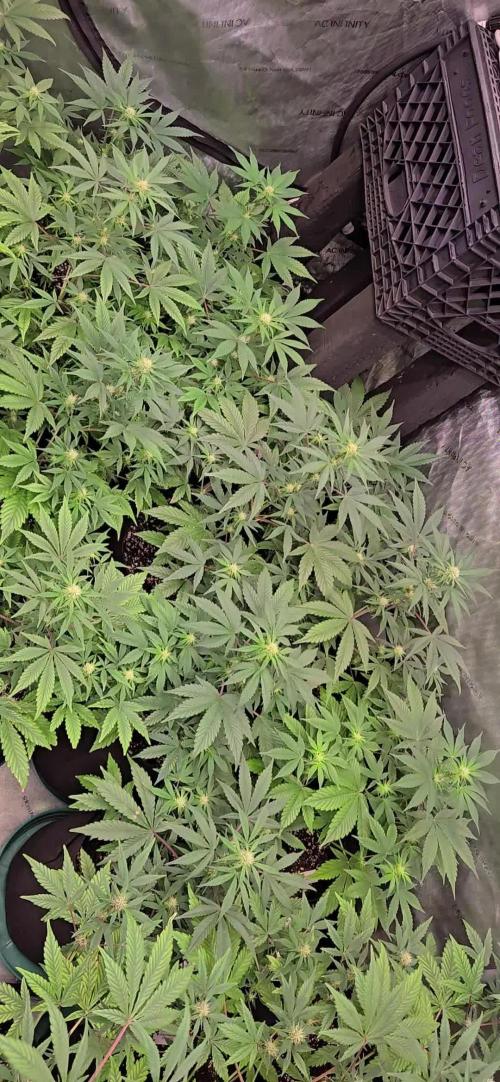
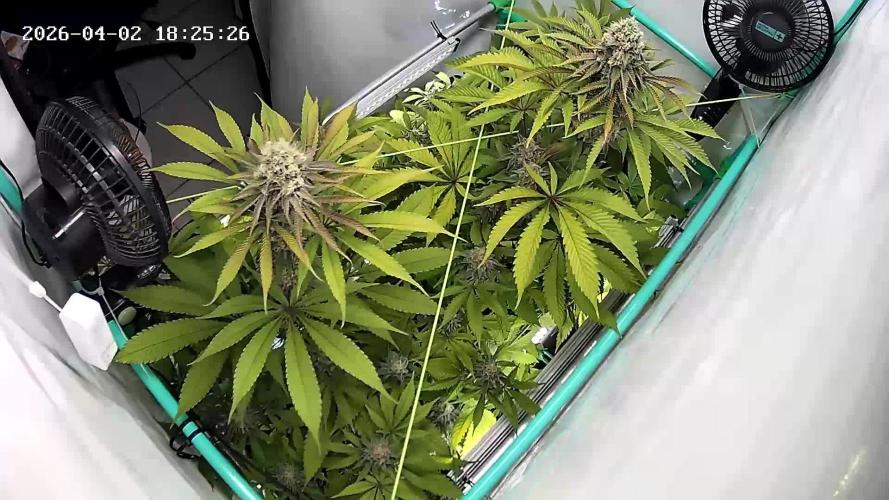
Alright Week 4 and end of treatment , start of flower... Maybe it's not just there for calling it flowering week one... But still... Videos still in Spanish. See you next week!
Processing
Likes
2
Share
Still trucking along. I had my light turned up a bit high for the first week, I turned them down a few days ago and all the plants seemed to enjoy it. Nothing else to report really.
Likes
68
Share
Removed autoflower and put her in her own pot outside the tent. Foliars applied in strong blue 430nm with 4000Hz tone. 20-minute dose prior to application. In essence, you're seeing a combination of the infrared light reflected by the plant, which the camera perceives as red, and any residual visible blue light the plant reflects, which results in a purple hue. I was doing more stretching of the stems, adjusting weights, just a little too much, and it snapped almost clean. I got a little lucky in that it was still connected, wrapped her almost instantly while holding her in place with yoyo's. The core framework is now in place. If your soil has a high pH, it's not ideal; you want a pH of 6.4, 6.5, or 6.6, which is ideal. If you are over a pH of 7, you have no hydrogen on the clay colloid. If you want your pH down, add Carbon. If you keep the pH below 7, you will unlock hydrogen, a whole host of new microbes become active and begin working, the plant will now be able to make more sugar because she has microbes giving off carbon dioxide, and the carbon you added hangs onto water. Everything has electricity in it. When you get the microbes eating carbon, breathing oxygen, giving off CO2, those aerobic soil microbes will carry about 0.5V of electricity that makes up the EC. The microorganisms will take a metal-based mineral and a non-metal-based mineral with about 1000 different combinations, and they will create an organic salt! That doesn't kill them, that the plant loves, that the plant enjoys. This creates an environment that is conducive to growing its own food. Metal-based: Could include elements like iron, manganese, copper, or zinc, which are essential nutrients for plants but can exist in forms not readily accessible. Non-metal-based: Examples like calcium carbonate, phosphate, or sulfur are also important for plant growth and potentially serve as building blocks for the organic salt. Chelation in a plant medium is a chemical process where a chelating agent, a negatively charged organic compound, binds to positively charged metal ions, like iron, zinc, and manganese. This forms a stable, soluble complex that protects the micronutrient from becoming unavailable to the plant in the soil or solution. The chelate complex is then more easily absorbed by the plant's roots, preventing nutrient deficiency, improving nutrient uptake, and enhancing plant growth. Chelation is similar to how microorganisms create organic salts, as both involve using organic molecules to bind with metal ions, but chelation specifically forms ring-like structures, or chelates, while the "organic salts" of microorganisms primarily refer to metal-complexed low molecular weight organic acids like gluconic acid. Microorganisms use this process to solubilize soil phosphates by chelating cations such as iron (Fe) and calcium (Ca), increasing their availability. Added sugars stimulate soil microbial activity, but directly applying sugar, especially in viscous form, can be tricky to dilute. Adding to the soil is generally not a beneficial practice for the plant itself and is not a substitute for fertilizer. While beneficial microbes can be encouraged by the sugar, harmful ones may also be stimulated, and the added sugar is a poor source of essential plant nutrients. Sugar in soil acts as a food source for microbes, but its effects on plants vary significantly with the sugar's form and concentration: simple sugars like glucose can quickly boost microbial activity and nutrient release. But scavenge A LOT of oxygen in the process, precious oxygen. Overly high concentrations of any sugar can attract pests, cause root rot by disrupting osmotic balance, and lead to detrimental fungal growth. If you are one who likes warm tropical high rh, dead already. Beneficial, absolutely, but only to those who don't run out of oxygen. Blackstrap is mostly glucose, iirc regular molasses is mostly sucrose. Sugars, especially sucrose, act as signaling molecules that interact with plant hormones and regulate gene expression, which are critical for triggering the floral transition. When sucrose is added to the growth medium significantly influences its effect on floral transition. Probably wouldn't bother with blackstrap given its higher glucose content. Microbes in the soil consume the sugar and, in the process, draw nitrogen from the soil, which is the same nutrient the plant needs. Glucose is not an oxygen scavenger itself, but it acts as a substrate for the glucose oxidase (GOx) enzyme, effectively removing oxygen from a system. Regular molasses (powdered if you can), as soon as she flips to flower or a week before, the wrong form of sugar can delay flower, or worse. Wrong quantity, not great either. The timing of sucrose application is crucial. It was more complicated than I gave it credit for, that's for sure. When a medium's carbon-to-nitrogen (C:N) ratio reaches 24:1, it signifies an optimal balance for soil microbes to thrive, leading to efficient decomposition and nutrient cycling. At this ratio, soil microorganisms have enough nitrogen for their metabolic needs, allowing them to break down organic matter and release vital nutrients like phosphorus and zinc for plants. Exceeding this ratio results in slower decomposition and nitrogen immobilization, while a ratio below 24:1 leads to faster breakdown and excess nitrogen availability. Carbon and nitrogen are two elements in soils and are required by most biology for energy. Carbon and nitrogen occur in the soil as both organic and inorganic forms. The inorganic carbon in the soil has minimal effect on soil biochemical activity, whereas the organic forms of carbon are essential for biological activity. Inorganic carbon in the soil is primarily present as carbonates, whereas organic carbon is present in many forms, including live and dead plant materials and microorganisms; some are more labile and therefore can be easily decomposed, such as sugars, amino acids, and root exudates, while others are more recalcitrant, such as lignin, humin, and humic acids. Soil nitrogen is mostly present in organic forms (usually more than 95 % of the total soil nitrogen), but also in inorganic forms, such as nitrate and ammonium. Soil biology prefers a certain ratio of carbon to nitrogen (C:N). Amino acids make up proteins and are one of the nitrogen-containing compounds in the soil that are essential for biological energy. The C:N ratio of soil microbes is about 10:1, whereas the preferred C:N ratio of their food is 24:1 (USDA Natural Resource Conservation Service 2011). Soil bacteria (3-10:1 C:N ratio) generally have a lower C:N ratio than soil fungi (4-18:1 C:N ratio) (Hoorman & Islam 2010; Zhang and Elser 2017). It is also important to mention that the ratio of carbon to other nutrients, such as sulfur (S) and phosphorous (P) also are relevant to determine net mineralization/immobilization. For example, plant material with C:S ratio smaller than 200:1 will promote mineralization of sulfate, while C:S ratio higher than 400:1 will promote immobilization (Scherer 2001). In soil science and microbiology, the C:S ratio helps determine whether sulfur will be released (mineralized) or tied up (immobilized) by microorganisms. A carbon-to-sulfur (C:S) ratio smaller than 200:1 promotes the mineralization of sulfate, when the C:S ratio is low, it indicates that the organic matter decomposing in the soil is rich in sulfur relative to carbon. Microorganisms require both carbon and sulfur for their metabolic processes. With an excess of sulfur, microbes take what they need and release the surplus sulfur into the soil as plant-available sulfate A carbon-to-sulfur (C:S) ratio higher than 400:1 will promote the immobilization of sulfur from the soil. This occurs because when high-carbon, low-sulfur materials (like sawdust) are added to soil, microbes consume the carbon and pull sulfur from the soil to meet their nutritional needs, temporarily making it unavailable to plants. 200:1 C:S 400:1: In this range, both mineralization and immobilization can occur simultaneously, making the net availability of sulfur less predictable. This dynamic is similar to how the carbon-to-nitrogen (C:N) ratio regulates the availability of nitrogen in soil. Just as microbes need a certain amount of nitrogen to process carbon, they also require a balanced amount of sulfur. Both mineralization and immobilization are driven by the metabolic needs of the soil's microbial population. Sulfur is crucial for protein synthesis. A balanced ratio is particularly important in relation to nitrogen (N), as plants need adequate sulfur to efficiently use nitrogen. A severely imbalanced C:S ratio can hinder the efficient use of nitrogen, as seen in trials where adding nitrogen without balancing sulfur levels actually lowered crop yields. Maintaining a balanced carbon-to-sulfur (C:S) ratio is highly beneficial for plant growth, but this happens indirectly by regulating soil microbial activity. Unlike the C:N ratio, which is widely discussed for its direct effect on nutrient availability, the C:S ratio determines whether sulfur in the soil's organic matter is released (mineralized) or temporarily locked up (immobilized). Applied 3-day drought stress. Glucose will hinder oxygenation more than sucrose in a solution because glucose is consumed faster and has a higher oxygen demand, leading to a more rapid decrease in oxygen levels. When cells respire, they use oxygen to break down glucose, and this process requires more oxygen for glucose than for sucrose because sucrose must first be broken down into glucose and fructose before it can be metabolized. In a growth medium, glucose is a more immediate and universal signaling molecule for unicellular and multicellular organisms because it is directly used for energy and triggers a rapid gene expression response. In contrast, sucrose primarily acts as a signaling molecule in plants to regulate specific developmental processes by being transported or broken down, which can be a more complex and slower signaling process. Critical stuff. During wakefulness (DC electric current) life can not entangle electrons and protons. During the daytime, the light is sensed as multiple color frequencies in sunlight. Coherence requires monochromatic light. Therefore, at night, IR light dominates cell biology. This is another reason why the DC electric current disappears during the night. The coherence of water is maintained by using its density changes imparted by infrared light released from mitochondria in the absence of light. This density change can be examined by NMR analysis, and water is found to be in its icosahedral molecular form. This is the state that water should be in at night. This is when a light frequency is lowest and when the wave part of the photoelectric effect is in maximum use. 3600
Likes
4
Share
Critical 49 bloom. I washed the plants. I noticed bud rot on two more branches. I cut them back (2cm) as well. I don't know whether to harvest or wait a little longer. I'm afraid I'll lose them all.😓
Likes
6
Share
24 toneladas es un cruce de 24k x Chemdawng, una planta con un aroma más débil y un sabor denso. Su floración es un poco más larga, pero tuve que quitármela una semana antes. Cítrico y con sabor a diesel en la parte posterior de la garganta. Una planta con suficientes ramas y cogollos densos. La mantendré en la carpa
Likes
12
Share
@OGbros
Follow
the roots broke the plastic basket😱 Very strong genetic, very recommended👽
Likes
15
Share
@AK1210
Follow
The tricombe production on this strain is ridiculous! It looks amazing under my microscope. The heads are mostly milky coloured so this may be finishing sooner than expected. The space in the tent is getting a bit tight so I'll be glad to have more room when this lady has done her thing.
Likes
24
Share
@Seedler
Follow
Finally! it's the Day I've waited for and now i can't believe it's actually done. The plant is hanging in the tent, looking so good. Like she is the prettiest plant i've ever grown. I don't know how to show it better on pictures, but i just upped my weed quality. Super dense, super frosty, SUPER LOUD! 10/10 I LOVE this strain! i can't imagine her being cured hahahaha Thank you, Fast Buds for providing me the seeds! Thank you, Terra Power for sending me some fertilizer samples, You make my growing live a bit better, thanks. Everyone who reads this is legally bound to get high today or hug a loved one. DECIDE. Cheers
Likes
11
Share
She seems starting to develop CalMag deficiency maybe. Start to add some CalMag every other watering. Every 2 weeks also the Bio Enhancer from greenhouse feeding
Likes
13
Share
@Limelight
Follow
This week kicks off 6w of flower for unknown and she’s going!!! Super excited to see the trichomes increase because I’ve had two days where, it was very unexpectedly hot and could do little to nothing about it even with fans. So she definitely suffered from heat stress but, the super low temperatures (constantly 😍) after that has made up for it. I believe the best is yet to come with this lady but, I’ll continue to play it cool and safe with her! She’s also very resistant to low temps compared to wwa. This week also kicks off w11 for wwa and she’s also living up to her name (so I’ve read 😏) with, the increase of trichomes over the last week! She also suffered from heat stress but, has bounced back amazingly and is fattening up. She’s also looking to be very purple (due to low temps) I believe I’m a few weeks out but, continuing to slow roll things! Thanks for stopping by this week 👋… Have a great day reader ✌️😎😎.
Likes
10
Share
@Sadhus
Follow
Vraiment fast ! Les fleurs apparaissent très vite ! 😍
Likes
58
Share
Elle fait de jolie étoile ⭐️ bien givrée! 😲🤤Jour 49 . J’ai récolté une j’en prendrais des photos finale du résultat après séchage. Je vais attendre encore pour le reste parce que son en pleine santé!
Likes
6
Share
@Ninjabuds
Follow
Runts might be small, but it's got a big personality. It's the second biggest seedling I have so far, and those leaves – they're totally unique. Runts is growing like a champ, and I have a feeling it's going to be the star of the show this year. Last week was awesome! I finally got around to giving all my plants a little upgrade – I repotted them into some bigger homes. They're all looking so happy and healthy now, it's crazy. I can't wait to see how much they grow this year!
Likes
19
Share
Day 31 flower wk 5 Welcome to frosty town. Sour diesel has shown up tot he party bringing snow holy crap. This was the plant that has been the dwarf the whole time all through veg and even the first cpl weeks of flower. This girl stretched and started stacking the trichomes. It smells like your in a tiny 5x5 room with ppl peeling oranges. Sour diesel buds are small but im hoping they stack on some weight in the next 30days Northern lights are my ideal bud structure, fat cone buds just stacking and also starting to get frosty as well. I think Northern lights is gonna be my big producer. Grandaddy Purp. I can tell this girl is slow grower. Shes starting to stack and has good internodal spacing but is taking her time and will likely be the last one in the tent This stage of growing is exciting but kinda on autopilot as im just watering every other day and just letting them do their thing
Likes
95
Share
@Ferenc
Follow
Day 73, 25th of November 2020: Hello! Here we goet'd say half way 4th week just started.... I miss the red or purple colour but still can appear later I hope it will. All good not much to say she is getting old lol and fruits are coming haha. Fertilization is still the same every second day with the ratio and mixture above stated. The lamp is on 11.15 min and off 12.45 min. Last week was 15 min longer light cycle.... So every week 15 min shorter light cycle until the 5th week. So far -45 min. It switches on at 6 am and off at 17.15 pm.
Likes
14
Share
Day 43 of flower and its looking good moved some branches around to improve light penetration love to Hear from you guys in the comments Day 44 ph 6.1 ppm at 350 Day 46 ph 6.3 ppm 270 Day 49 ph 5.9 ppm 300 removed the nuts added the dense nut at 300ppm will do this for 2 days and flush after that for a week or so so close to done one of the tops of the small plant got bud mold was removed hope it will be the only one to happen to
Likes
6
Share
@valiotoro
Follow
Easy trim✂️ Harvest in 2 times first the top buds then the lower! No popcorn 🍿 The smell is delicious cookie & lemon 🍋 🍪 The buds are extremely dense 🤩 See you in 2025 for the smoke report Take care 💜 Baxter loves you🕺🏽
Likes
1
Share
@Manball
Follow
We surely are in flowering phase after some great veg stage. The 20/4 cycle had a great impact in terms of their height, next 8/10 days the Gorrila Z will leave the tent; so they will be able to gather more light and hopefully continue thriving :3 Also, Did some measures and here are the sizes: -Critical mass 90cm -Moby 1 - 60 cm -Moby 2 71cm -Moby 3 63cm -Lsd 01 80cn -Lsd 02 70cm