


Likes
Comments
Share


@OutForReal
Follow
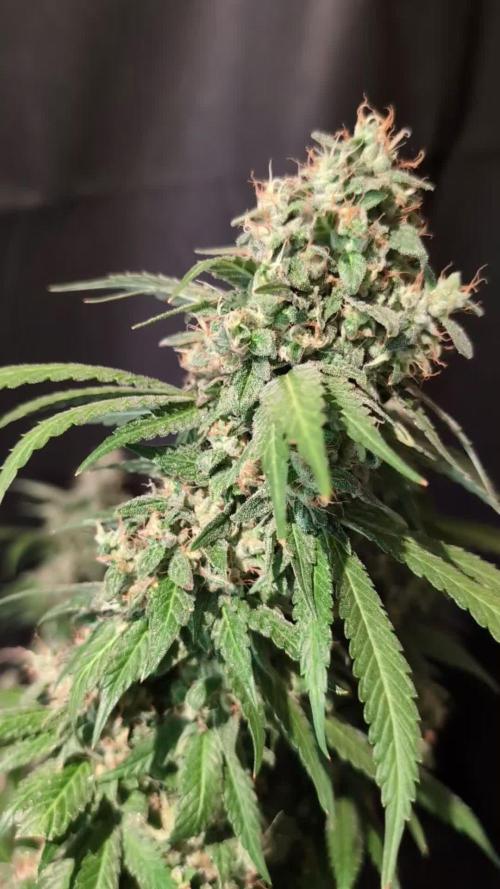
Day 86 - 04.04 - She is still pushing that nice sugary and seems healthy ❤️💛💚

Processing
Likes
16
Share


@3lementa1
Follow
I did a lot of low-stress training and I think I topped twice. The smaller plants had no training at all though. In retrospect, I should have re-potted them.

Likes
7
Share


@100Trillion
Follow
Week 3 of Flower we focus on Defoilation. This really is going to test the genetics response to extreme stress. Performed a 5 day Schwazze to minimize stress instead of ripping off most leave in one day. Plant seem to have reacted well so far. This technique has really opened the canopy and expose many bud sites. Preparing for a top feed at start of new week.

Likes
2
Share


@THEFROZEN710
Follow
Some problems have appeared with my beloved plants. From my research, I have poor air circulation inside my grow tent, which wasn't surprising. When I set everything up somewhat haphazardly, I knew I would need to fix it. I confess I'm dissatisfied with this week; some plants are stressed, nothing too serious, but I noticed a slowdown in 3 Baker's phenotypes, some gnats have returned, another insect I've never seen before has appeared, and I'm somewhat short on resources to deal with it. I also had a serious problem with the electricity, forcing me to completely improvise the electrical system and exhaust fan to work without a ventilator. Anyway, enough bad news. I'm still in my first run, but I'm learning from my mistakes!


Likes
18
Share


@BLAZED
Follow
Week 12 (14-4 to 20-4)
14-4
Temps: 19.7 to 23.5 degrees
Humidity: 45% to 68%
Watering: 1000 ml. EC: 0.4
15-4
Temps: 19.2 to 27.1 degrees
Humidity: 52% to 69%
Watering: 1000 ml. EC: 1.5
Light set from 65% to 70% strength.
Did a big defoliation today. (Schwazzing)
Removed 141 grams of leaves.
16-4
Temps: 20.6 to 25.8 degrees
Humidity: 54% to 66%
Watering: 1000 ml. EC: 0.4
17-4
Temps: 18.5 to 23.8 degrees
Humidity: 60% to 68%
18-4
Temps: 18.7 to 24.2 degrees
Humidity: 56% to 71%
Watering: 1000 ml. EC: 0.4
19-4
Temps: 18.4 to 24 degrees
Humidity: 54% to 70%
Watering: 1000 ml. EC: 0.4
20-4
Temps: 18.3 to 24.2 degrees
Humidity: 51% to 71%
Watering: 1750 ml. EC: 0.4
Light is at 70% strength with a distance of 37/40 cm.
Also installed a stronger exhaust fan as the humidity is getting a bit high.


Likes
18
Share


@RFarm21
Follow
16 março - 22 março
19 março - feeding
Cheese#2: bio bloom 0.5ml; top max 0.5ml; bio heaven 1ml; alg-a-mic 1ml; bio grow - 0.5 ml pH 6.2
22 março - cheese #1 feeding: 1l Walter
Bio bloom 1ml; top max 1ml; bio heaven 2ml; bio grow 1ml
Cheese #2:
Bio bloom 1ml; topmax 1ml; bio heaven 1ml; bio grow 0.5ml
Likes
3
Share


@rawterpz
Follow
I did a bit more defoliation and spread out the SCROG net to give everything some more structure and space. The plants are developing beautifully and looking really healthy overall. The cuttings are also making progress, with some of them already starting to develop roots.
For now, I gave them another round of foliar feeding, and soon it will be time to move on to the next phase and switch them into flower. Overall, everything is looking very promising.

Likes
17
Share

@GoodTimesOrganics
Follow
Hi liebe Community and Welcome Back! 💚
Woche 14 im Vergleichsgrow seit dem Eintopfen!
Bio Tabs NL. vs. Weedefix (Stuttgart/ Germany)
Blütetag: 57 (BW8)
Nach der achten Blütewoche, performed aktuell die Weedefix Pflanze insgesamt genau so gut.
Nach wie vor ist der Zustand dieser Pflanze Tip Top.
Ich habe im Vergleichsgrow bewusst das ganze System an sich gleich gehalten, eben nur die Düngerkomponenten sind unterschiedlich.
Hier entwickelt sich alles wie es soll. Schöne Blütenentwicklung und eine Top gesunde Pflanze!
Ich bin gespannt ob sich was an Qualitätsunterschieden nach dem curing feststellen lässt.
Laut Trichomcheck, denke ich braucht die Pflanze noch ca. Eine Woche für einen guten Reifegrad.
Gegossen wird jetzt nur noch Wasser.
Die Bedingungen im Growzelt sind aktuell wieder top!
—————
🌞 Temp: 26
🌚 Temp: 18°C bis 19°C
💨 RH: 54%
VPD: 1,71 kPa
💡ppfd: 830 mpm
—————

Likes
1
Share


@Pestitel
Follow
Amazing experience with the Mix Pack, I will try it again next summer for sure. Love the variety.

Likes
8
Share


@Aldo90
Follow
I was going to upload the process, but the wiser side of me said no. So I've edited it out and some of the evaporation process can be seen. Bho/wax/honey whatever we care to call it

Likes
14
Share


@420DeepGrow
Follow
Gracias al equipo de MSNL Seeds, Marshydro, XpertNutrients y Trolmaster sin ellos esto no sería posible.
💐🍁RS11:
RS11 es uno de nuestros nuevos híbridos 50/50 perfectamente equilibrados. Creamos RS11 cruzando Pink Guava x OZK x Sunset Sherbet con la intención de crear una variedad que ofrezca medidas iguales de efectos edificantes y relajantes. Aclamada como una de las variedades más sabrosas del mercado, su sabor agrio y dulce a bayas viene con un potente rango de THC del 27% al 31%.
💡TS-3000 + TS-1000: se usaran dos de las lámparas de la serie TS de Marshydro, para cubrir todas las necesidades de las plantas durante el ciclo de cultivo, uso las dos lámparas en floracion para llegar a toda la carpa de 1.50 x 1.50 x 1.80.
https://marshydro.eu/products/mars-hydro-ts-3000-led-grow-light/
🏠 : Marshydro 1.50 x 1.50 x 1.80, carpa 100% estanca con ventanas laterales para llegar a todos los lugares durante el grow
https://marshydro.eu/products/diy-150x150x200cm-grow-tent-kit
🌬️💨 Marshydro 6inch + filtro carbon para evitar olores indeseables.
https://marshydro.eu/products/ifresh-smart-6inch-filter-kits/
🍣🍦🌴 Xpert Nutrients es una empresa especializada en la producción y comercialización de fertilizantes líquidos y tierras, que garantizan excelentes cosechas y un crecimiento activo para sus plantas durante todas las fases de cultivo.
Consigue aqui tus Nutrientes:
https://xpertnutrients.com/es/shop/
💻 Trolmaster Tent-X TCS-1 como controlador de luz, optimiza tu cultivo con la última tecnología del mercado, desde donde puedes controlar todos los parametros.
https://www.trolmaster.com/Products/Details/TCS-1
📆 Semana 2:
Fantástica semana, estan creciendo de una forma espectacular gracias a la ayuda de @marshydro, @xpertnutrients y @trolmaster.
Se puede apreciar un tercer nudo y se ven aparecer las primeras futuras ramas, espero que todo siga asi.
Esta semana espero trasplantar a la maceta definitiva.
Potencia de la lámpara: 50%

Likes
10
Share


@Bread_n_Buds
Follow
Our Slurricane is one of those plants that I always say are my favorites, I am fascinated by low internode plants for their style.
It is one of those plants that is doing well I would already promote it but to avoid the risk of speaking too soon, let's see what grass it will give us.
For each strain we have at least two plants there is also a specimen that is growing straight that you do not see in the photos for now for each strain of her I have a very small one still probably I will do another diary.
We have done our best Zamnesia has put superb genetics and at home B&B we are working to show you the plants in all their possible meanings.
This plant like all the other photoperiodic ones has been worked with a topping x16 buds, simply repeating the topping technique without doing anything else than cleaning the leaves from time to time and now the branches that I believe do not give me good flowers at the bottom.
The 16 florets are perfectly aligned and the growth is very regular.
The flowering fertilizers have helped us get back to a good balance in a very short time and now we go straight to making big buds.
We are still using soil, fertilizers and all the additives recommended by Plagron 100% organic.
The plant has been flowering for 3 days, in the diary I leave it indicated as the last week of vegetative growth but let's move on to the flowering fertilizers.
We have now moved on to the flowering start program which maintains the same additives Power Roots, Sugar Royal, Pure Zym and adds the flowering stimulant Power Buds. Now the basic fertilizer is now Alga Bloom with which I find myself very very well even more than Alga Grow which sometimes I have to understand well how to dose in some particular cases (topping). Probably I will try to prepare the soil with Plagron Super Mix or with the Zamnesia Pellet.
The Green Sensation will arrive as an end-of-flowering hero and at the same time it will be time to remove power roots and a week later the Pure Zym enzymes.
---- Decide on the right soil and calculate your fertilizer card based on the soil on the official website.
-- www.plagron.com
Try a seed of this strain that drives us crazy... It's a super News!
---- https://www.zamnesia.io/it/11177-zamnesia-seeds-slurricane.html
Zamnesia Description // Do you want to add a prestigious genetics to your grow room? Slurricane is a premium US strain created by In House Genetics and now available to growers thanks to the breeding processes implemented by Zamnesia. Born from the fusion of Purple Punch and Do-Si-Dos, Slurricane is 60% indica and incredibly vigorous. Whether grown indoors, outdoors or in a greenhouse, this strain can produce large quantities of dense and aromatic buds. Add Slurricane to your assortment and enjoy growing one of the most beloved hybrids in the United States.
All the best that mother nature can offer is on ---- www.zamnesia.com
Likes
Comments
Share


@Robom069
Follow
Going into the last weeks iam very happy with my plants
they´re almost too big
but i love the big buds and hope they get very dense
left acid dough
right black domina
Likes
2
Share


@Altitonans_Fulmen
Follow
For most crops, a slightly acidic soil pH between 6.0 and 6.8 is ideal because it optimizes nutrient availability. When soil pH rises above 7.0 (alkaline), the concentration of hydrogen ions H+ drops significantly, and they are replaced by calcium, magnesium, or sodium ions on the clay colloid exchange sites. To naturally lower alkaline soil pH, you can add organic matter (carbon-rich materials), which produces weak organic acids as it decomposes. Maintaining this slightly acidic range stimulates a highly active, diverse microbial community; these microbes decompose organic matter and release carbon dioxide CO2, which plants absorb through their roots and leaves to boost photosynthesis and sugar production. Furthermore, the added organic carbon acts like a sponge, drastically improving the soil's water-holding capacity.
While soil biological activity does involve cellular electron transport, electrical conductivity (EC) in soil is actually a measure of dissolved mineral salts, not a voltage carried by individual microbes. Soil microorganisms secrete organic acids and chelate metallic and non-metallic minerals, transforming locked-up inorganic compounds into bioavailable organic complexes. Unlike harsh synthetic fertilizers that can dehydrate soil life in high concentrations, these naturally chelated nutrients safely nourish the plant, creating a thriving, self-sustaining ecosystem where plants can efficiently synthesize their own food.
Metal-based: Could include elements like iron, manganese, copper, or zinc, which are essential nutrients for plants but can exist in forms not readily accessible.
Non-metal-based: Examples like calcium carbonate, phosphate, or sulfur are also important for plant growth and potentially serve as building blocks for the organic salt.
Chelation in a plant medium is a chemical process where a chelating agent, a negatively charged organic compound, binds to positively charged metal ions, like iron, zinc, and manganese. This forms a stable, soluble complex that protects the micronutrient from becoming unavailable to the plant in the soil or solution. The chelate complex is then more easily absorbed by the plant's roots, preventing nutrient deficiency, improving nutrient uptake, and enhancing plant growth. Chelation is similar to how microorganisms create organic salts, as both involve using organic molecules to bind with metal ions, but chelation specifically forms ring-like structures, or chelates, while the "organic salts" of microorganisms primarily refer to metal-complexed low molecular weight organic acids like gluconic acid. Microorganisms use this process to solubilize soil phosphates by chelating cations such as iron (Fe) and calcium (Ca), increasing their availability.
Added sugars stimulate soil microbial activity, but directly applying sugar, especially in viscous form, can be tricky to dilute. Adding to the soil is generally not a beneficial practice for the plant itself and is not a substitute for fertilizer. While beneficial microbes can be encouraged by the sugar, harmful ones may also be stimulated, and the added sugar is a poor source of essential plant nutrients. Sugar in soil acts as a food source for microbes, but its effects on plants vary significantly with the sugar's form and concentration: simple sugars like glucose can quickly boost microbial activity and nutrient release. But scavenge A LOT of oxygen in the process, precious oxygen. Overly high concentrations of any sugar can attract pests, cause root rot by disrupting osmotic balance, and lead to detrimental fungal growth. If you are one who likes warm tropical high rh, dead already. Beneficial, absolutely, but only to those who don't run out of oxygen. Blackstrap is mostly glucose, iirc regular molasses is mostly sucrose. Sugars, especially sucrose, act as signaling molecules that interact with plant hormones and regulate gene expression, which are critical for triggering the floral transition. When sucrose is added to the growth medium significantly influences its effect on floral transition.
Probably wouldn't bother with blackstrap given its higher glucose content. Microbes in the soil consume the sugar and, in the process, draw nitrogen from the soil, which is the same nutrient the plant needs. Glucose is not an oxygen scavenger itself, but it acts as a substrate for the glucose oxidase (GOx) enzyme, effectively removing oxygen from a system. Regular molasses (powdered if you can), as soon as she flips to flower or a week before, the wrong form of sugar can delay flower, or worse. Wrong quantity, not great either. The timing of sucrose application is crucial. It was more complicated than I gave it credit for, that's for sure. When a medium's carbon-to-nitrogen (C:N) ratio reaches 24:1, it signifies an optimal balance for soil microbes to thrive, leading to efficient decomposition and nutrient cycling. At this ratio, soil microorganisms have enough nitrogen for their metabolic needs, allowing them to break down organic matter and release vital nutrients like phosphorus and zinc for plants. Exceeding this ratio results in slower decomposition and nitrogen immobilization, while a ratio below 24:1 leads to faster breakdown and excess nitrogen availability.
Carbon and nitrogen are two elements in soils and are required by most biology for energy. Carbon and nitrogen occur in the soil as both organic and inorganic forms. The inorganic carbon in the soil has minimal effect on soil biochemical activity, whereas the organic forms of carbon are essential for biological activity. Inorganic carbon in the soil is primarily present as carbonates, whereas organic carbon is present in many forms, including live and dead plant materials and microorganisms; some are more labile and therefore can be easily decomposed, such as sugars, amino acids, and root exudates, while others are more recalcitrant, such as lignin, humin, and humic acids. Soil nitrogen is mostly present in organic forms (usually more than 95 % of the total soil nitrogen), but also in inorganic forms, such as nitrate and ammonium. Soil biology prefers a certain ratio of carbon to nitrogen (C:N). Amino acids make up proteins and are one of the nitrogen-containing compounds in the soil that are essential for biological energy. The C:N ratio of soil microbes is about 10:1, whereas the preferred C:N ratio of their food is 24:1 (USDA Natural Resource Conservation Service 2011). Soil bacteria (3-10:1 C:N ratio) generally have a lower C:N ratio than soil fungi (4-18:1 C:N ratio) (Hoorman & Islam 2010; Zhang and Elser 2017). It is also important to mention that the ratio of carbon to other nutrients, such as sulfur (S) and phosphorous (P) also are relevant to determine net mineralization/immobilization. For example, plant material with C:S ratio smaller than 200:1 will promote mineralization of sulfate, while C:S ratio higher than 400:1 will promote immobilization (Scherer 2001).
In soil science and microbiology, the C:S ratio helps determine whether sulfur will be released (mineralized) or tied up (immobilized) by microorganisms.
A carbon-to-sulfur (C:S) ratio smaller than 200:1 promotes the mineralization of sulfate, when the C:S ratio is low, it indicates that the organic matter decomposing in the soil is rich in sulfur relative to carbon. Microorganisms require both carbon and sulfur for their metabolic processes. With an excess of sulfur, microbes take what they need and release the surplus sulfur into the soil as plant-available sulfate
A carbon-to-sulfur (C:S) ratio higher than 400:1 will promote the immobilization of sulfur from the soil. This occurs because when high-carbon, low-sulfur materials (like sawdust) are added to soil, microbes consume the carbon and pull sulfur from the soil to meet their nutritional needs, temporarily making it unavailable to plants.
200:1 C:S 400:1: In this range, both mineralization and immobilization can occur simultaneously, making the net availability of sulfur less predictable.
This dynamic is similar to how the carbon-to-nitrogen (C:N) ratio regulates the availability of nitrogen in soil. Just as microbes need a certain amount of nitrogen to process carbon, they also require a balanced amount of sulfur. Both mineralization and immobilization are driven by the metabolic needs of the soil's microbial population.
Sulfur is crucial for protein synthesis. A balanced ratio is particularly important in relation to nitrogen (N), as plants need adequate sulfur to efficiently use nitrogen. A severely imbalanced C:S ratio can hinder the efficient use of nitrogen, as seen in trials where adding nitrogen without balancing sulfur levels actually lowered crop yields.
Maintaining a balanced carbon-to-sulfur (C:S) ratio is highly beneficial for plant growth, but this happens indirectly by regulating soil microbial activity. Unlike the C:N ratio, which is widely discussed for its direct effect on nutrient availability, the C:S ratio determines whether sulfur in the soil's organic matter is released (mineralized) or temporarily locked up (immobilized).
Glucose will hinder oxygenation more than sucrose in a solution because glucose is consumed faster and has a higher oxygen demand, leading to a more rapid decrease in oxygen levels. When cells respire, they use oxygen to break down glucose, and this process requires more oxygen for glucose than for sucrose because sucrose must first be broken down into glucose and fructose before it can be metabolized.
In a growth medium, glucose is a more immediate and universal signaling molecule for unicellular and multicellular organisms because it is directly used for energy and triggers a rapid gene expression response. In contrast, sucrose primarily acts as a signaling molecule in plants to regulate specific developmental processes by being transported or broken down, which can be a more complex and slower signaling process.
Critical stuff.
Likes
45
Share


@GreenHouseLab
Follow
Hydro will be going in the flower tent once this run is wrapped up. I’m all out of horizontal space which is limiting the goal of gaining more width.
Week 6 flower wrapped up I’ll say she’s the last one showing signs of bulking now from what I’m seeing she might out up the fattest colas in the tent once complete. All n all very happy with this homemade cross from WS.
Likes
16
Share


@GRow_M8s
Follow
Some fan leaves turned yellow this week. I believe it is a deficiency as they have been watered with just 6 pH water between feeds and its unlikely to be efficiency. It looks like that it is a mag deficiency as appears in the picture. Biogrow which is biobizz's product with highest % of Mag wasn't used last 2 weeks and I think that might be what caused the deficiency.
Overall Green Gelatos are getting dense and smell sweet herbal, 2 short Hulkberries flowering up good as well but the tall one which is the one stretched more takes her time. Hulkberries aroma is a bit gassy but weaker than gelatos at the moment.
Likes
56
Share


@Island
Follow
Week 8 -
Dead line is coming, starting week 8 of flowering.
The routine is maintained, feeding only with water.
The pistils take on an orange color.
I think Gorilla Girl will pass 10 weeks of flowering.

Processing
Likes
54
Share


@rhodes68
Follow
2/5 Week 6
May be last week of veg kind of depends on factors outside the grow. Lets hope
Keeping the Si included and leaving nuets as is.
Continuing to defoliate as needed to keep things civil in the small tent, Moya is crowded.
Canopy is at 30" plants about 20"
2/6
Better plan!
Found a table at Goodwill that will fit in the flower tent and allow two plants to be moved there tomorrow.
So tomorrow is the day, two plants will remain in Moya, prob Jool and Zhaan
2/7 Aeryn is in flower tent flipped to 12-12
Jool and Zhaan in small tent, Moya, also flipped to 12-12
Here we go
Feed set as above, keeping levels low at this point
2/8 Second day
May reduce feed a bit, white tips
One time feed of Kangaroots 10ml/gal
Keeping things defoliated so the middle gets lots of light
2/8 Last attempt to try and get rid of those white tips. Further reduced feed but added just a touch of cal-mag to make up for it.
If this doesnt work I am just feeding them and ignoring the tips.
Flowering is starting to show, more on Aeryn being under the HPS than Jool and Zhaan under the LEDs.
Continuing to defoliate as needed to keep bud sites in light.
2/10 Bringing down the nuets to under 500ppm did the trick on the white tips but can not leave things there so back to some sane level and I am just going to ignore it.
Stretch is starting for real 😳
2/11 Since the tip burning is an issue with N, I am going to move the girls to all bloom tomorrow with today as a transition.
Strain is absolutely sensitive to Nitrogen.

Likes
10
Share


@BossHogg6
Follow
The roots are still looking great. I cleared the old water out and only put 2 gallons in and not the 4.5 I was putting in previous weeks. Starting to get a weak smell from the plant.
