


Likes
Comments
Share


@nerdz
Follow
F15 to 21 Tuesday
Big big big. Humidity was getting hard to handle especially during lights out so I had to do a mid stretch cleanup. I mostly did a lollipop to get air flowing through the plant. I didn't go too hard even though it looks like I did. I will do the last one in a week.
~1000ppm 3/4-full bloom @ ~5.8-5.9
Lights 100% @ 7-12"
25-26c / ~53rh

Likes
42
Share


@Miss_Greenthumbs_Garden
Follow
Strain. Gelato41🍦
Breeder. Seedstockers🐿️
light. Mars hydro ts1000💡
soil . biobizz lightmix 👊
nutrients. biobizz grow 🌱 biobizz heaven 😍
Growing extremely well shall top #1 today and wait for the other to catch up . Happy growing 💚
📢📢 UPGRADED to the MarsHydro ts1000
EFFICIENCY WHITE LED GROW LIGHT: Newest SMD LED technology provides highest PAR/LUMEN output(743umol@18"), designed to replace a single-ended 250watt HPS/MH; MARS HYDRO TS 1000 growing light makes you get 30% higher yield compared OLD blurple led lights, Max 2.0g yield per wattage (power draw).
LOWER RUNNING COSTS & HIGHER YIELDS: Actual Power 150W with 342 LEDS! It saves up to 50% energy than other led grow lights. Perfect for 80x80CM, Max Coverage 100x100CM. Over 90% light energy can be absorbed by plants; higher intensity and more even coverage in a MARS HYDRO reflective grow tent, or by crossing over using multiple TS1000.
SUNLIGHT FULL SPECTRUM LED GROW LIGHT FOR WHOLE GROWING STAGES: 760nm IR/660nm Red/5000k blue/3000k warm white light. Infinite close to natural sun light, TS1000 suits for all plants whole stages indoor growing, rapid plant response from seed to flower, achieving maximum quantity and high-quality yields
.
CUSTOMIZED GROWING NEEDS WITH UPGRADED DIMMING DAISY CHAIN: Newest TS series growing lights support multi-lights connection up to 15 lights for your various growing needs and stages; TS1000 light auto sensing power supply works on both 120VAC, 230VAC and 277VAC, suits for Large Rooms and Commercial Setups.
HIGH REFLECTIVE & NOISE FREE DESIGN: High reflective hood, noise fanless free TS series grow light. Quickly aluminum heat dispersing material increases light intensity up to 20%, reducing light lost to aisles and walls, allowing your plants receiving more energy without burning your plants in maximum headroom
Shes up and running 💚🙏😊 Thanks @Marshydro for the sponsorship opportunity


Likes
6
Share


@GrowIT
Follow
this week I wanted to add a wire mesh between the pot and the saucer, to make the roots breathe more and not to sediment the nutrients on the bottom. I increased the ventilation because in flowering it needs less humidity and decreased the nutrients after noticing a yellowing in the tips of the leaves. we are almost there 😍😍

Likes
Comments
Share

@Greenthumb85
Follow
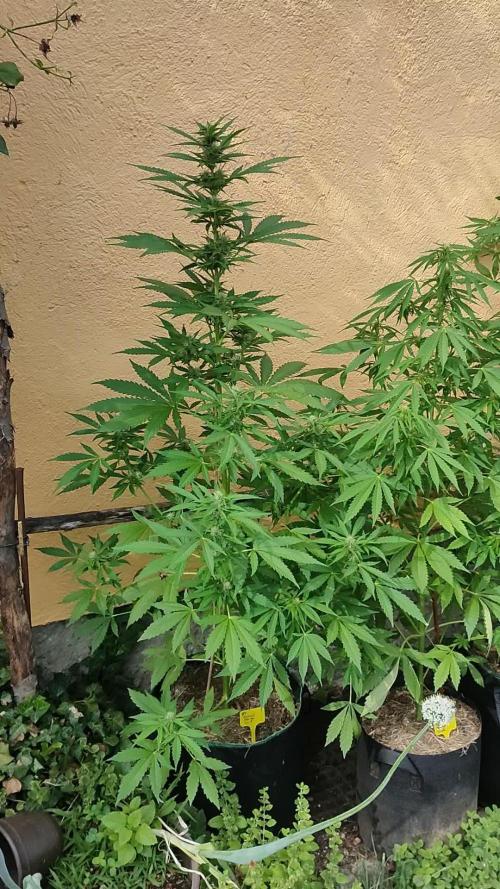
The ladies have grown really tall. All the plants are still in the stretch and are doing really well. I have added another layer of compost and a layer of grass clippings for mulch. I will sort them out with some fresh food this weekend as the first leaves are starting to turn a bit yellow. Bud development is good and the ladies are dealing with the colder temperatures well. The weather is supposed to get warmer again. I think they will get another boost soon and will enjoy a fresh feeding. Happy growing.

Likes
5
Share


@TheDutchGrower
Follow
Righttt
Start of week 4
Amazing if u find the sweet spot for the distance how much they grow in just 3 days.
I've been giving some micro nutrients, and feeding
I had small light stress on 2 plants moved the lamp to 50 cm
They just started to flower smell is getting strong actually 😅
I think i'm kinda pushing it with 7 plants under a 100 w lamp. But i'm trying to get most out of it. 1 obviously is doing not to great... it's 1/2 orion. His neighbour o top is the 2nd orion
Likes
5
Share

@gse314
Follow
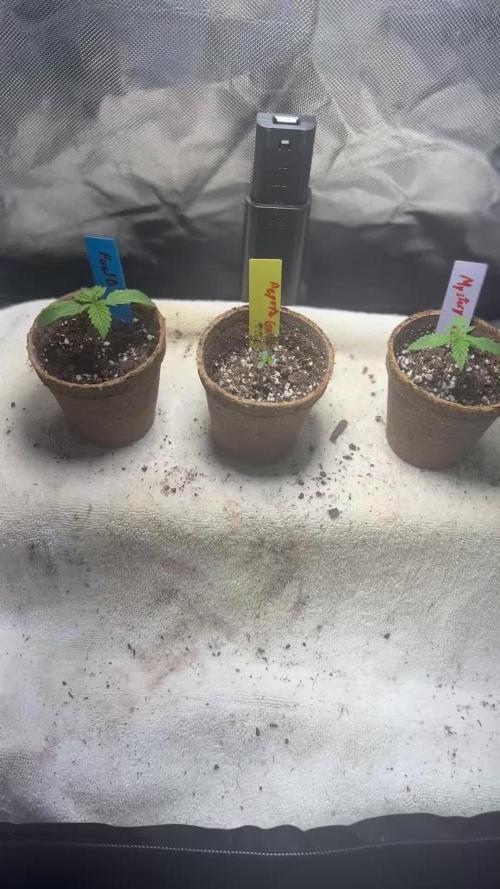
They getting transferred to a bigger pot today, I believe the peyote Gorilla is defective been having it for some months so that might be why


Likes
19
Share


@xbabybitchx
Follow
Switched all plants in this tent to 12/12 mostly because i need to know the sex of these plants. So far nothing but it could take a bit- the GWS are autos and loving the switch. Otherwise not too much to report back on this week.
jan 12 still no sign on sex yet

Likes
6
Share


@Growgreen_th
Follow
Days 65 ph 6.4
Floraflex 2 gram / water 2 lite.
Days 66 super cropping 5 pcs.
Processing
Likes
10
Share


@StarletBud21
Follow
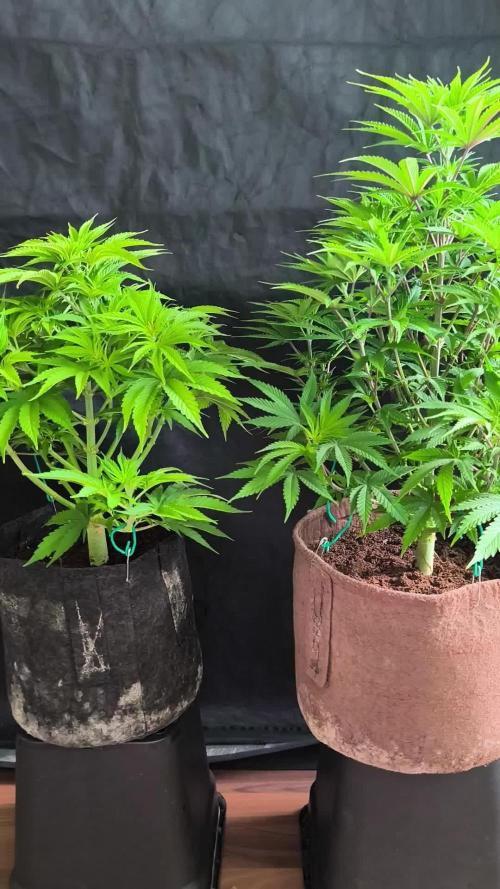
Been a good week I have lowered nutes as on some of the plants the tips have gone a bright yellow type colour wasn’t sure wether this was because of my lights or nutes either way I have lowered nutes for the minute and will see how that goes , went with another trim during the week as some flowers have grown far beyond The others main aim was to free up light for the lower plants and aim for there bud sight it’s seemed to have worked so far as they have grew a little other than that everything else has been quite manageable 🤞🏾
Obviously missed a day which was watering day due to other responsibilities but hey it happens on the brighter side
The jungle is still slowly coming along nicely happy growing 🤑




Processing
Likes
1
Share


@Mr_nugs_lover_David
Follow
This wedding cake is looking as healthy as her sister however she's in a bigger pot 25 liters. Let's see if she does as good as her sister,she's enjoying life right I don't think I'll have any type of issue,she's being fed 100% organically,with lactobacillus liquid made by me,liquid bat guano,and she has in her soil florians living organics and more bat guano and seaweed,mycorrizae,humic and fulvic acids,beneficial bacteria and fungus. She's gonna be a wonderful plant at the end I'm sure. Stay tuned guys! 💚🌱✌️

Likes
6
Share


@organicman
Follow
1 seed dead:
1 strawberry pie
seeded 1 new:
1 strawberry pie
2 seeds dead:
2 euphorias
seeded 1 new:
1 white widow x big bud
___________________________________________
light- and watering schedule: see photos
now:
16 plants
3 x Auto Orange Bud > Dutch Passion (early80's)
3 x Haze Berry Automatic > Royal Queen Seeds (2018)
2 x Auto Euforia > Dutch Passion (late 90's)
2 x Auto Bubblegum > TH Seeds (late 80's)
2 x Original Auto BubbleGum > Fast Buds Company (late 80's)
1 x Strawberry Pie Auto > Fast Buds Company
1 x Gorilla Cookies Auto Seed Stockers (2015)
2 x Auto White Widow x Big Bud > Female Seeds
setup + strategy:
18 seeds
3 x Auto Orange Bud > Dutch Passion (early80's)
3 x Haze Berry Automatic > Royal Queen Seeds (2018)
3 x Auto Euforia > Dutch Passion (late 90's)
2 x Auto Bubblegum > TH Seeds (late 80's)
2 x Original Auto BubbleGum > Fast Buds Company (late 80's)
2 x Strawberry Pie Auto > Fast Buds Company
1 x Gorilla Cookies Auto Seed Stockers (2015)
2 x Auto White Widow x Big Bud > Female Seeds
setup:
18 x gronest 2 liter
60 cm x 120 cm x 180 cm (2 x 4) growtent
4 l humidifier
25 watt axial fan
15 watt clip fan
ro-filter
bath room with a 50 watts room fan (-> carbon filter not necessary)
...and a lot of odds and ends.
grow strategy:
max yield by stressing with:
1. tiny shoes (2 l fabric pots standing on 3 plastic rings (4 cm) for max oxygen)
2. tiny growspace (17 plants on 0.72 sqm)
3. many strains (8 strains)
4. annoying neighbourhood (mixing old - i.e. bubblegum (late 80's) - with young- i.e. hazeberry (2018) - genetics)
5. no stress by light or food or water
plus:
- no lst - no hst - just leaf tucking
- positioning bigger strains (euphoria, orange bud, haze berry) or just bigger phenos on less intense light spots (end of tent + edges)
- music-rotation: 24 hrs reggae (for sativas) - 24 hrs classicals (because it's scientifically proofed) - 24 hrs traditionals from the hindukush region (for the indicas)
max efficiency (min electricity - max yield):
- light: 23 h on - 1 h off
- keeping the distance of 18" (45 cm) and dimming to the right par (lux) - value depending on growing stages (see sheet: beginning 185 par ( 10000 lux/100 watt )/end 340 par ( 18000 lux/175 watt )) => ends up in approx. 150 watts in average over max 12 weeks
temperatur management:
- using approx. max. half of what the lamp can do keeps temperature low:
my tsl 2000 is pulling max. 360 watts of the wall - i need only 175 watts, results in less temperature than using a 175 watts lamp
- adjusting the temperature by using a humidifier outside of tent:
blown in humidity is soaking degrees and is transported out by fan, works much better than doing the same with pure air
summer extreme: no humidifier: 36°C / 35 rh - with humidifier: 29°C / 65 rh
works for 1-2 weeks of real hot summer days, no mould, no signs of stress in two summers
germination:
seeding in soil
spraying "basic"-water: ro-water (22 ppm) + calmag to 180 ppm every 4 - 8 hours
man versus fungus gnat:
5 days before seeding i'm running the tent with "basic"-watered pots as if there were plants inside - led on, fans on, humidifier on. Fungus gnats coming with the soil might take the chance to come out now for breeding. i'm waiting with a 9 mm rifle. in the past i found 6 gnats in 2 of 8 x 50 l biobizz lightmix bags coming out of the soil. i could eliminate every single gnat successfully ;)
rotating harvest:
the little ones will be harvested completely when ready. at this point only the top branches of the big ones will be cut...and the new (basic-watered) pots of the new grow will move into the tent. 2-3 weeks later the second half of the big ones will be cut and the second half of the new grow will move in...
nutes:
individual feeding schedule/once a week:
bloom,grow,topmax,activera,algamic
+ aminopower instead of bio heaven (too expensive)
individual feeding schedule:
veg: 200 - 600 ppm
bloom: 600 - 900 ppm
water:
ro-water with:
veg: 100-150 ppm calmag
bloom: 150 ppm calmag


Likes
14
Share


@GanjaGecko
Follow
WEEK 6/3F // D36/15F - D42/21F
Das Wetter war in dieser Woche ein Traum. Es waren Tagsüber 25-30°C, 10-14 Stunden Sonne, kaum Wolken und kein Regen. Besser hätten es die Guava in dieser Woche nicht haben können.
Nachdem ich im letzten Jahr schon dabei war von einigen Ladys einige Triebe wegzuschneiden weil sie durch das Nass/feuchte/neblige Wetter von Mehltau oder auch Schimmel in der späteren Blüte betroffen waren und ich letztendlich über die letzte Outdoorsaison bestimmt die Hälfte vom Outdoor-Grow in die Biotonne geworfen habe, bin ich zurzeit einfach nur happy wie die Outdoorsaison 2025 beginnt und verläuft.
Gegossen wurde an Tag 38/17F, an Tag39/18F, an Tag40/19F und an Tag42/21F.
An den Tagen gab es ca 1L.
Der ph-Wert beim gießen wird aufgrund des hohen Anteils vom Cocos im Substrat (50/50) nicht höher 6.3.
Höhe 80 cm
Likes
33
Share

@foxbberg
Follow
Flipped to 12/12 at day 43.
Raised light-intensity from 60 to 90 %.
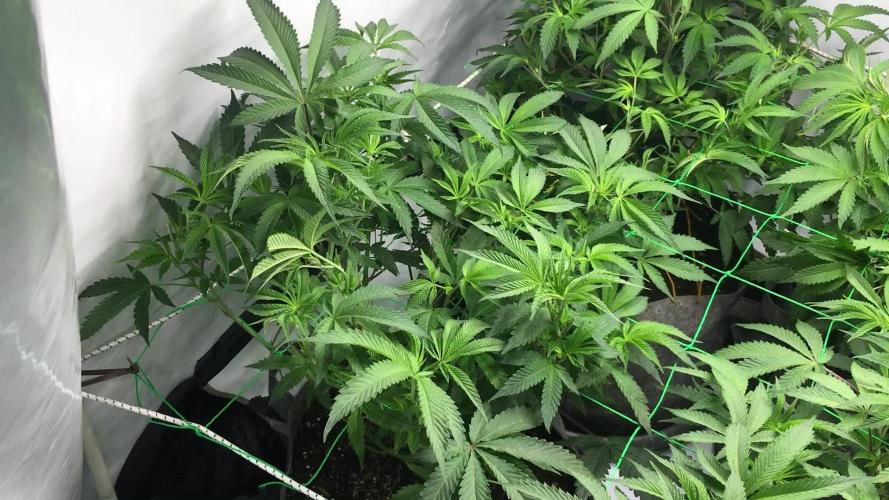
Now +70% of the net is filled and i can see potential to make it an evenly shaped bowl full of fruits:-)
The deep, dark colour has turned to a juicy green, shoots everywhere....... everything fine but two little things:
1) run-off-pH is a bit high...... 6.6-6.9. will feed rather acidic next time....
2) Main Colas get a bit tall..... will supercrop them as soon, as the rest of the cannopy is organzied to a clean scrog.
Nutritionwise i lowered N, raised K and gave an extra P-shot (0,05 g/L BLOSSOM-BOOST) on days 43 and 44.
Day 45
fed pH 5.8 - readings immediatly dropped to 6.3 to 6.5 👍
Vigorous stretch.....!!! Mounted some more hooks to get the scrog even - works perfectly now! +80% of the net is filled......and the colas in the corner almost make plants of their own - i will supercrop them, as soon as they don't stretch any more.
Day 46
fed pH 6.1 today..... readings still good (average 6.4)
took out some more leafs today, to give a little more light to young shoots.
Smell is getting stronger, but no visible signs of flowering yet.
Day 47
Defoliated and arranged - expect to have a proper bowl-shape within a week.
Will crank up the lights to 100% tomorrow.
....plus it's time to change the watering-plan. I will feed 10% of the Potsize every third day.
Likes
6
Share


@Reidy_B
Follow
Got fertilizer burn, had to flush them. Things are looking better but I think they are stunted a bit for sure. 😣


Processing
Likes
4
Share


@Green_Thumb
Follow
Added some CO2 to help with photosynthesis while at higher temps. These ladies really blew up at the end of last week and this week! The smell has really starting to be noticeable and pistols / flowers are finally showing! Side note I finally got more seeds to replace the one I lost early on. These ladies are really starting to become a treasure. Ended my LST this week.
Likes
28
Share


@PiusWaxis
Follow
Giorno59(27ottobre)
Oggi ho dato da bere alle due bestioline, ho dovuto attaccare le cime della runtz con dei fili attaccati al tetto del box, e ho legato tra di loro i rami della Orange perché si stavano piegando tutti verso l'esterno ...i bud hanno un volume accettabile, sono entrambi piena di resina , queste settimane e la prossima , dovranno dare il 100% così da chiudere con dei bud fenomenali!
Giorno60(28ottobre)
Oggi ho notato piccoli puntini bianchi su alcune foglie di entrambe le piante, ho preso il microscopio ed è uscito questo bellissimo insettino...per fortuna mancano due settimane e si chiude , devo solo stare attento a non fare proliferare questi bastardi !
No ho approfittato e ho controllato la maturazione della resina,ha un colore torpido e presentano entrambe già molte testoline marroncine.
Processing
Likes
13
Share


@GrowGuy97
Follow
Got everything moved around & the new carbon filter, fans & lights so hopefully I got better coverage with less power👍🏼 Topped 1 of the Gelato OGs today was getting way taller than the rest we will see how she bounces back! Everything else seems to be going great!
Day 22 topped & trimmed them up a bit
Day 23 started LST on a few
Day 24 started mainline on one of the GZ
Day 25 trimmed them a little more today

