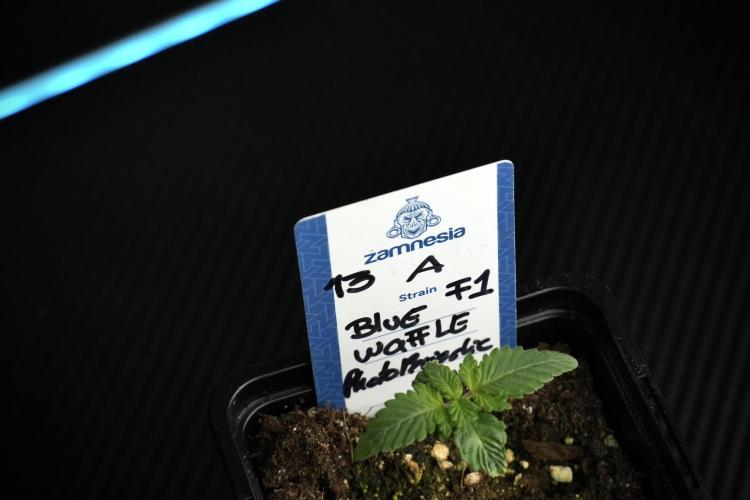
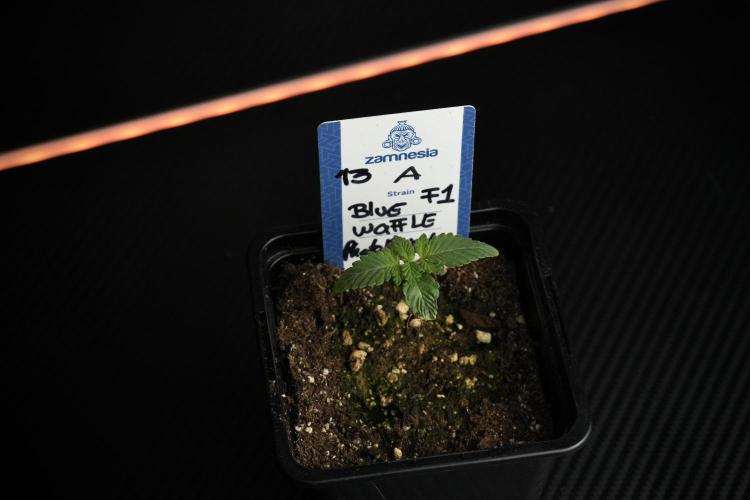
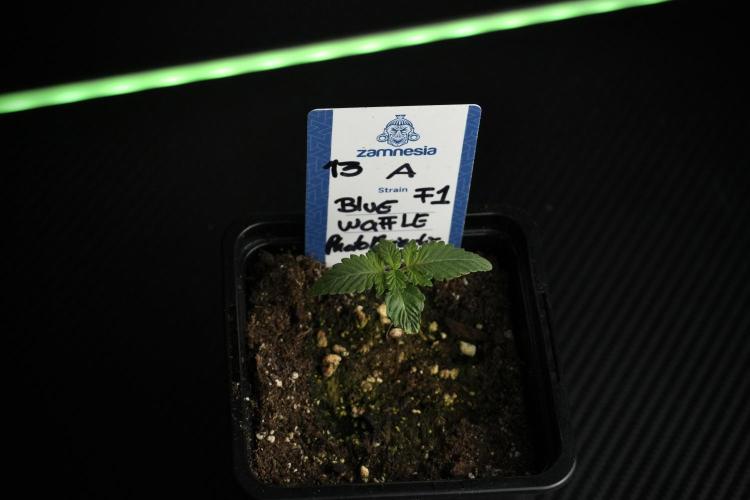
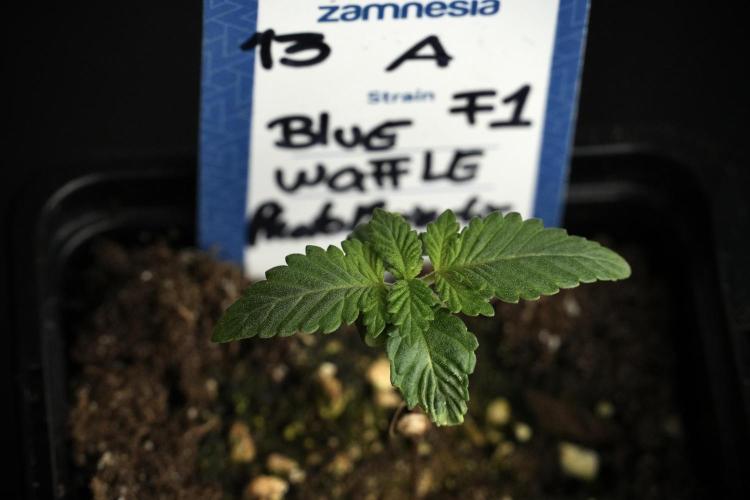
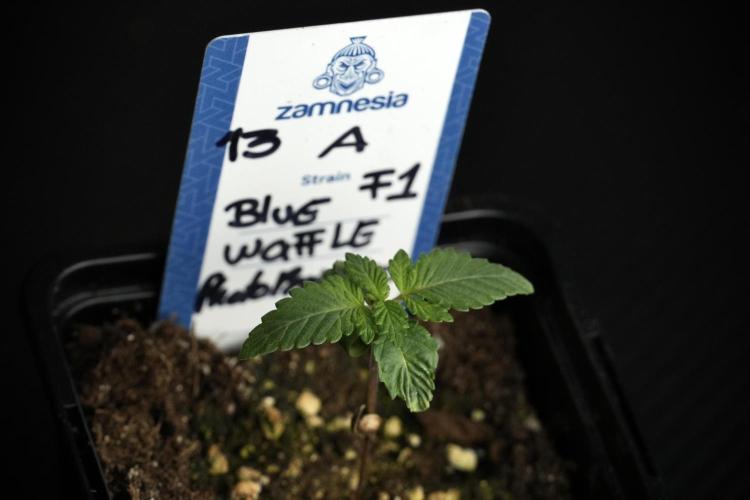
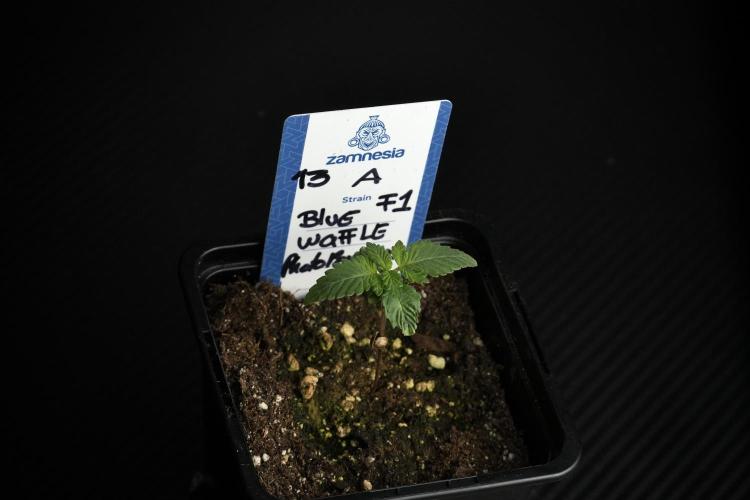
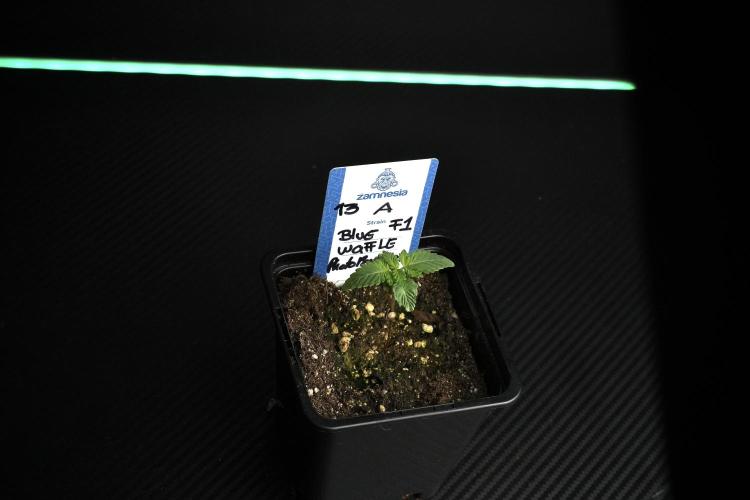
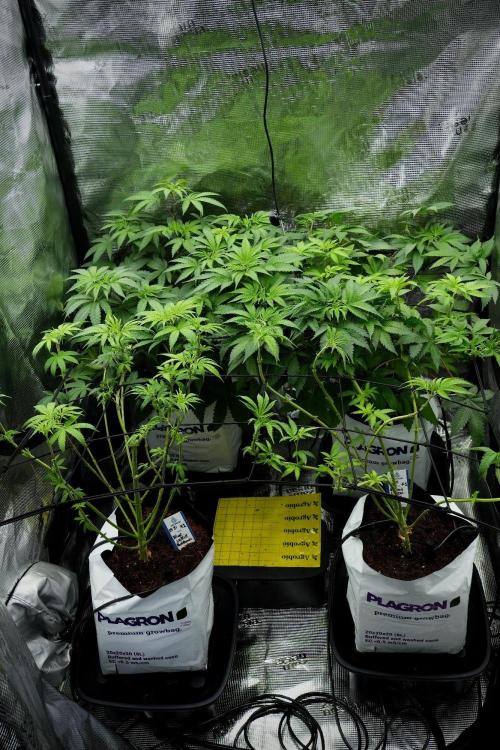
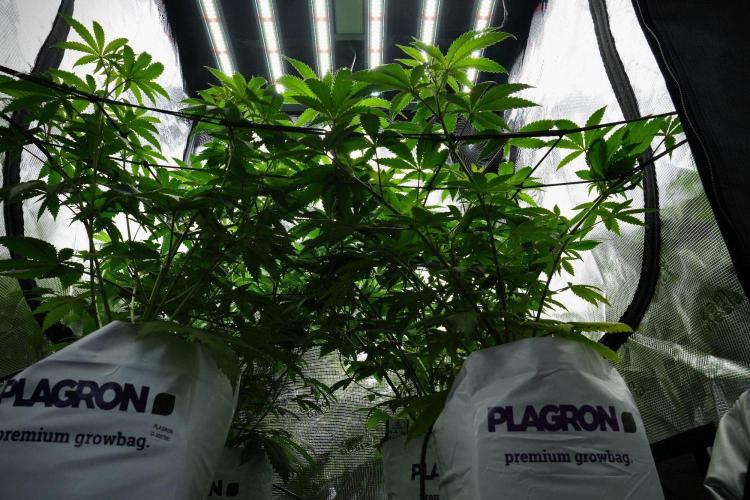
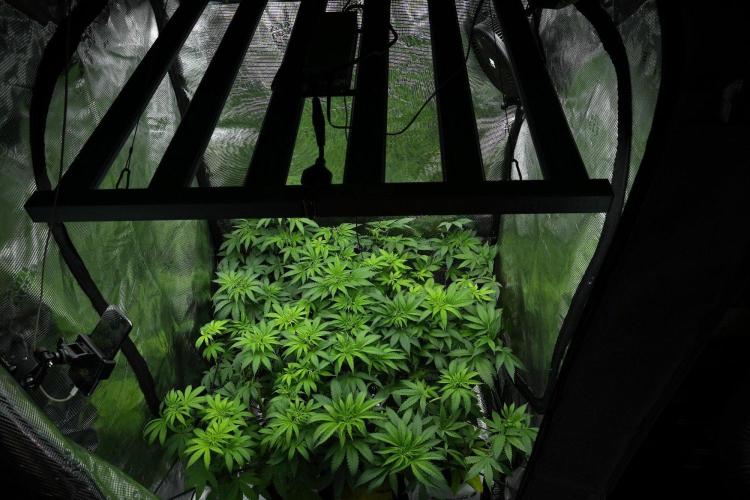
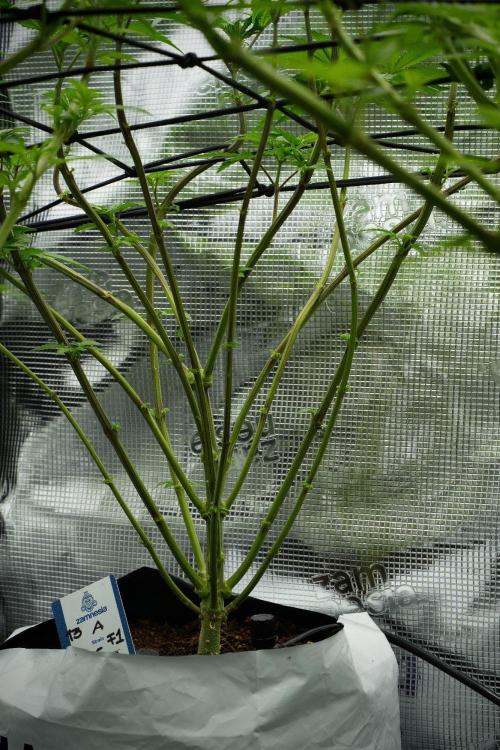
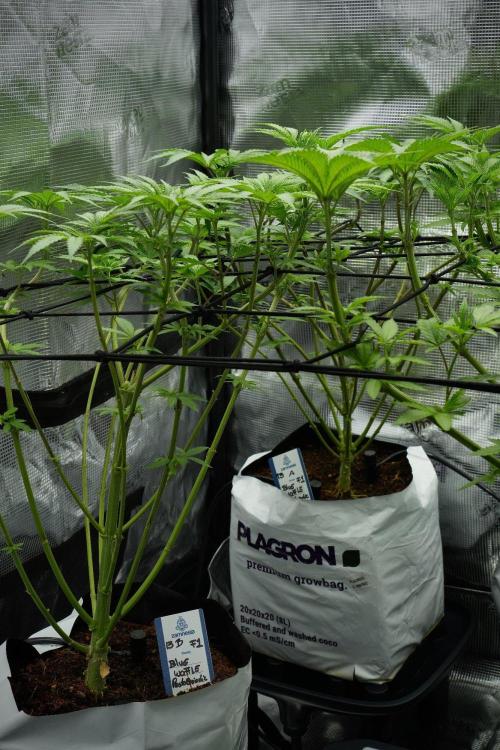
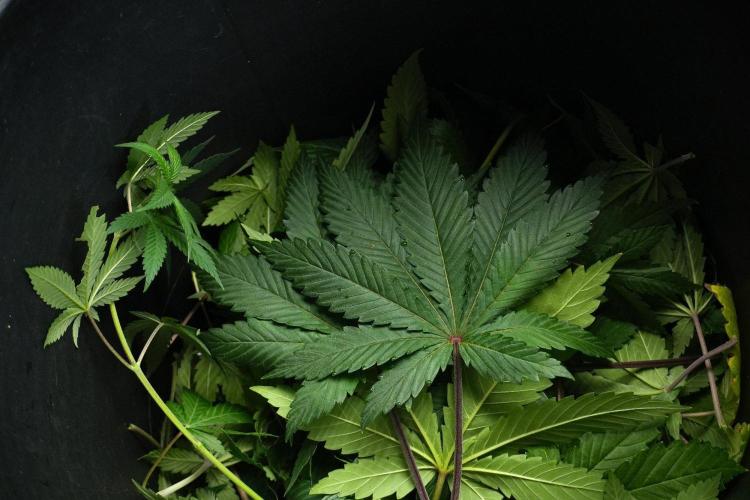
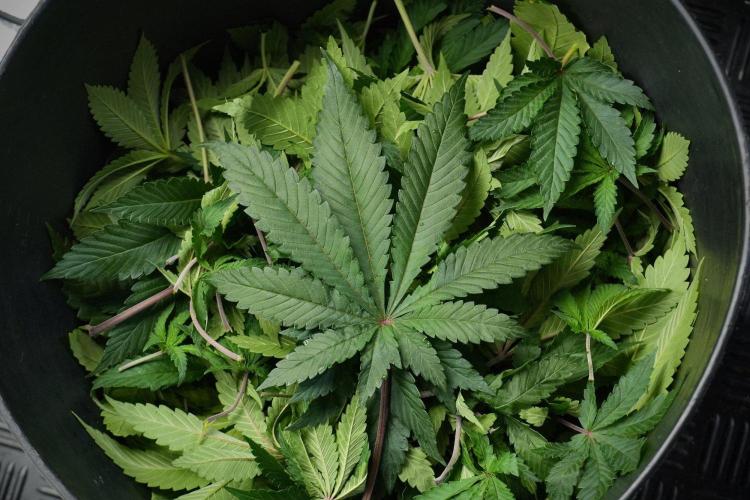
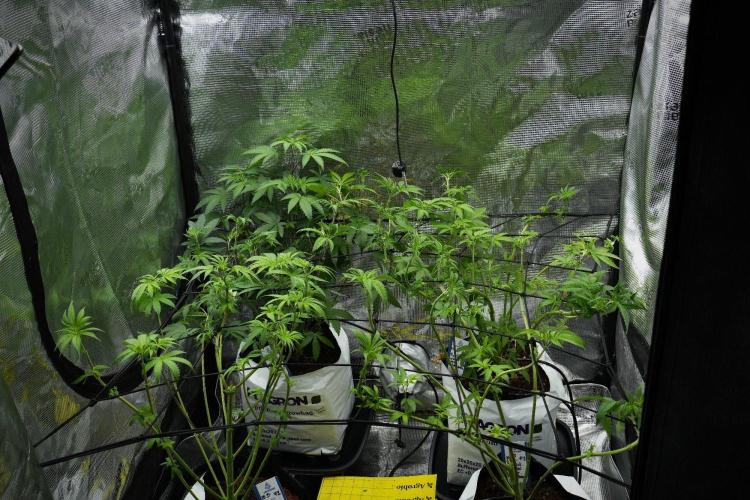
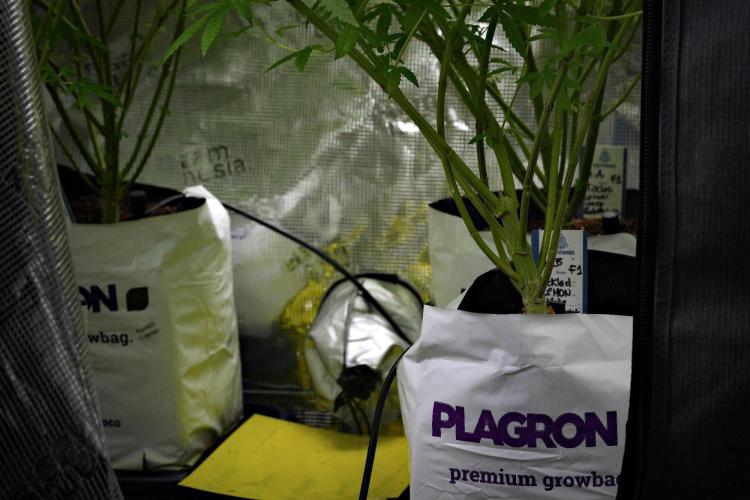
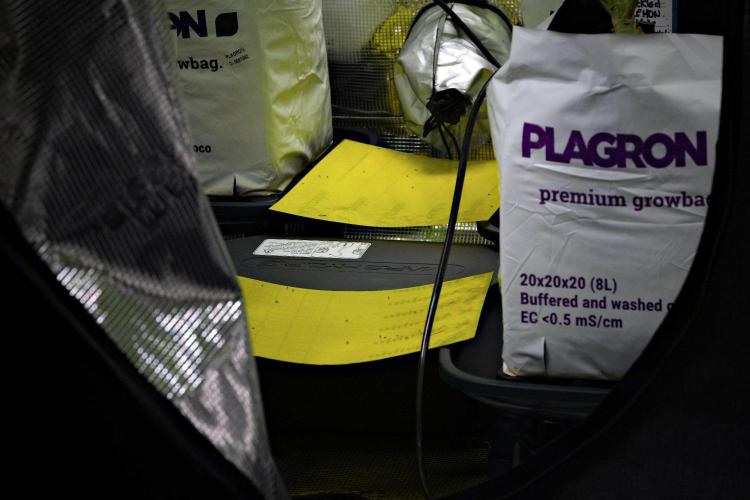
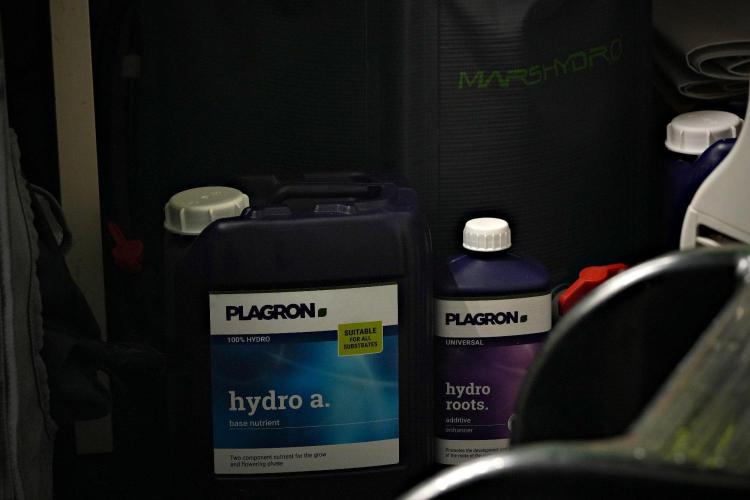
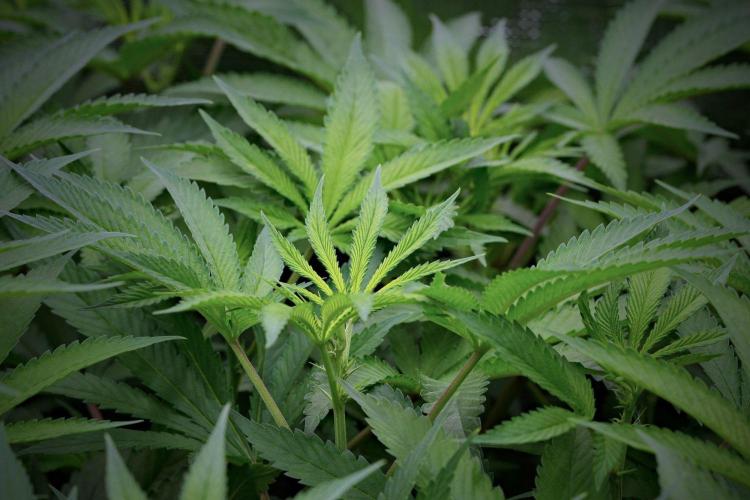
DogDoctorOfficial ? Blue Waffle F1 — Pheno A
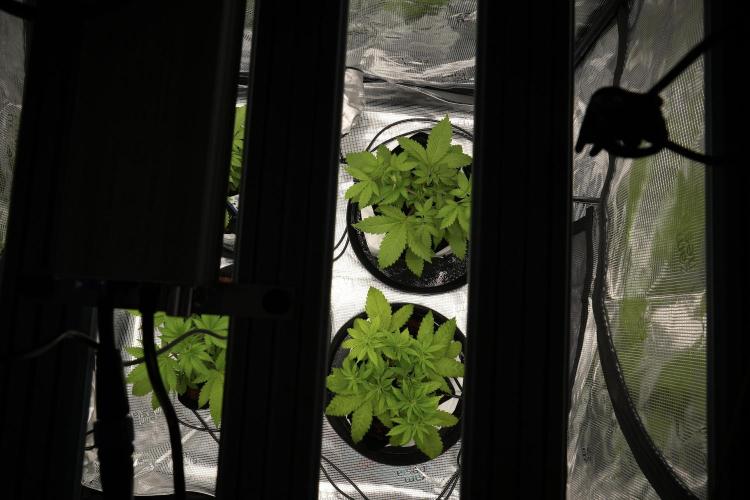
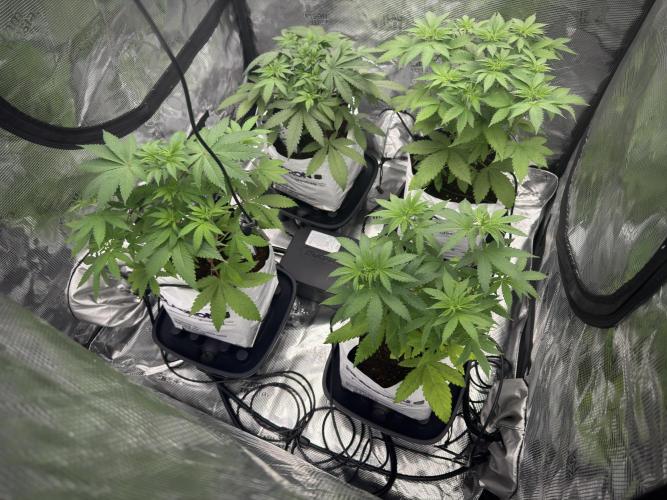
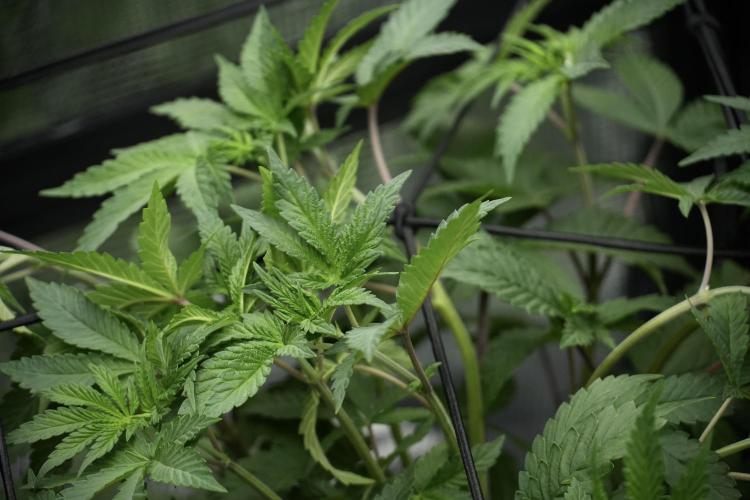
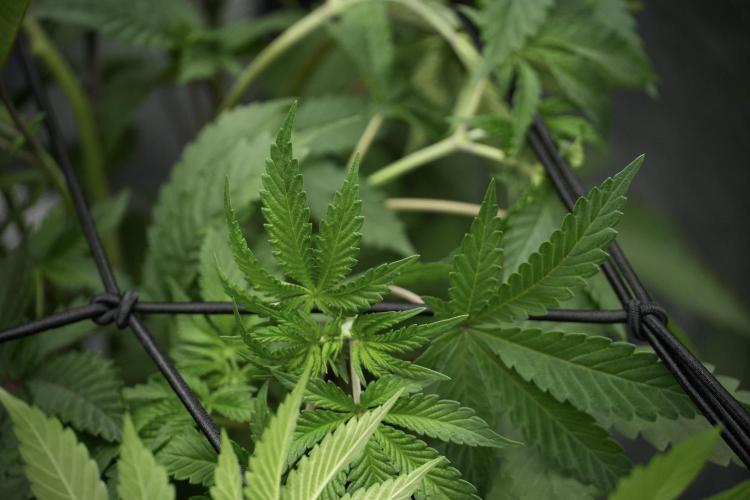
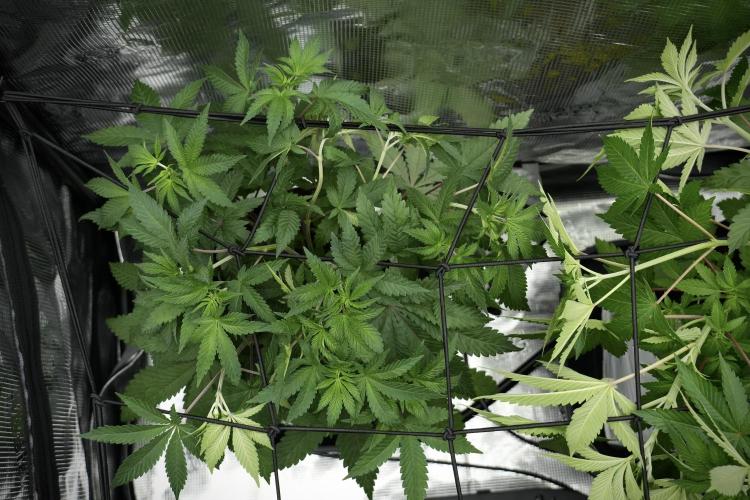
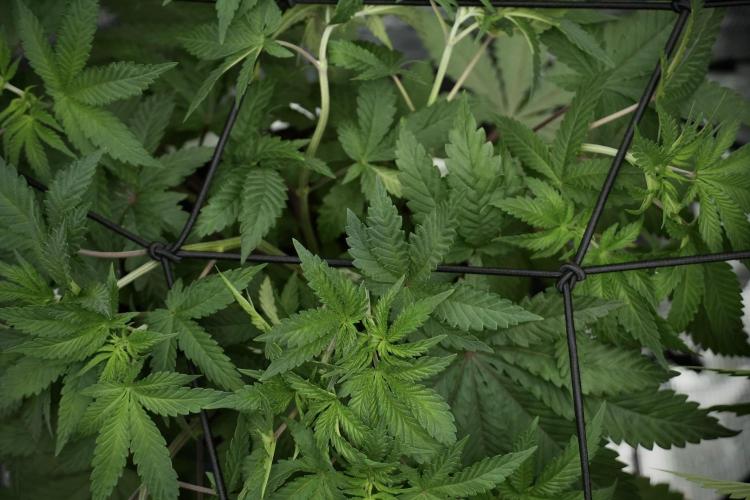
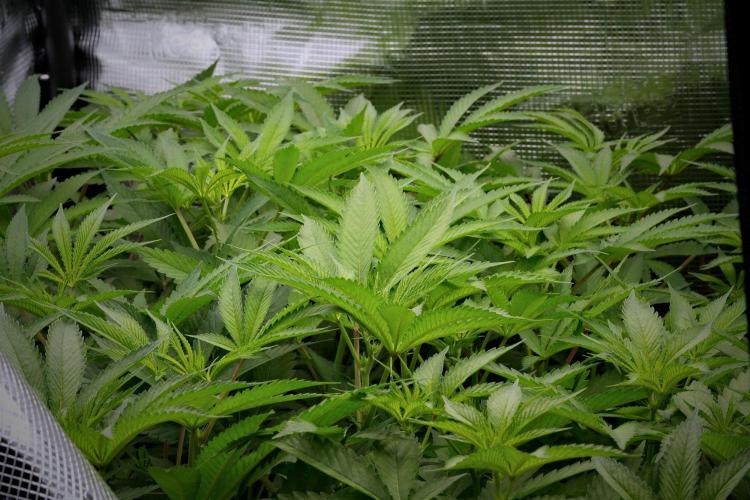
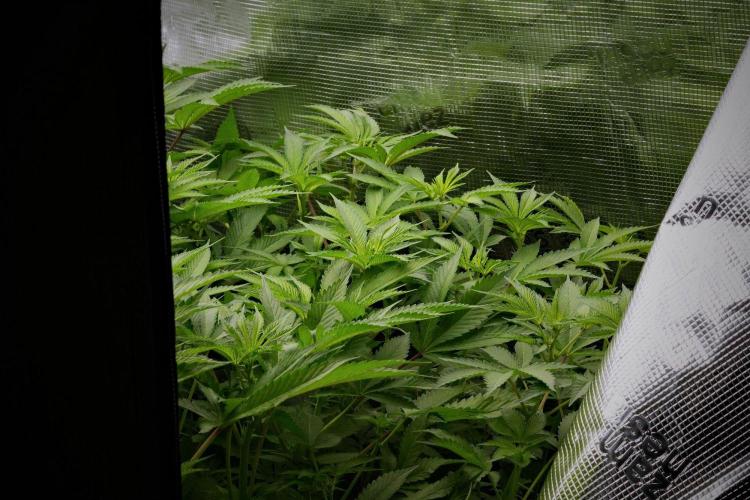
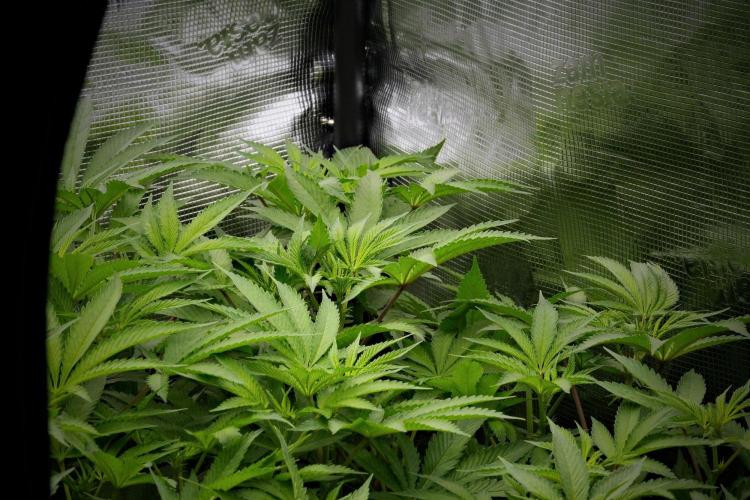
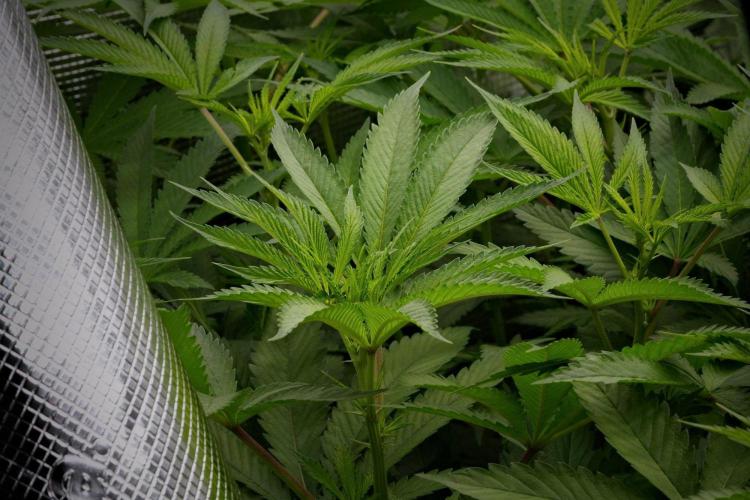
Week 1 | Nieuwe Tent, Nieuwe Genetica, Nieuw Avontuur
Hallo GrowDiaries-familie! 👋🌱
Vandaag markeert het begin van iets compleet nieuws in de tuin.
Niet alleen een nieuwe genetica.
Niet alleen een nieuw dagboek.
Maar een volledig nieuwe kweekomgeving die vanaf de grond is opgebouwd, specifiek voor dit project.
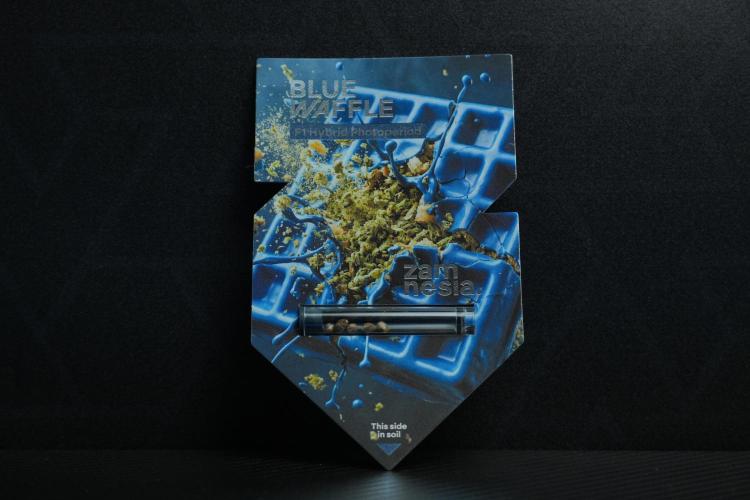
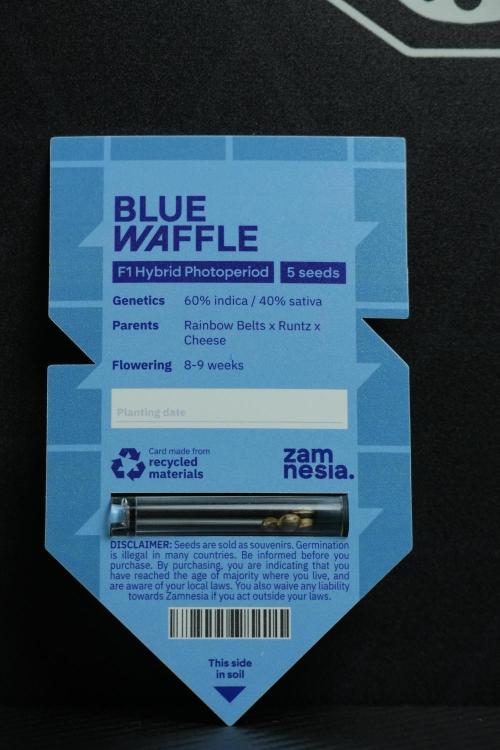
Welkom bij Blue Waffle F1 van Zamnesia Seeds.
En welkom bij de eerste officiële week binnen de nieuwe Zamnesia-opstelling.
⸻
Een Nieuwe Begin
Dit dagboek maakt deel uit van een volledig apart project van de 12/12-from-seed run die velen van jullie hebben gevolgd.
Terwijl de vorige tuin zich richtte op fotoperiode planten die vanaf dag één onder een strikte bloeischema werden gekweekt, heeft deze tent een compleet ander doel.
Voor dit project gebruiken we:
* 18/6 lichtschema
* Volledige vegetatieve ontwikkeling
* Potentiële trainingstechnieken
* Mogelijke topping
* Mogelijke LST
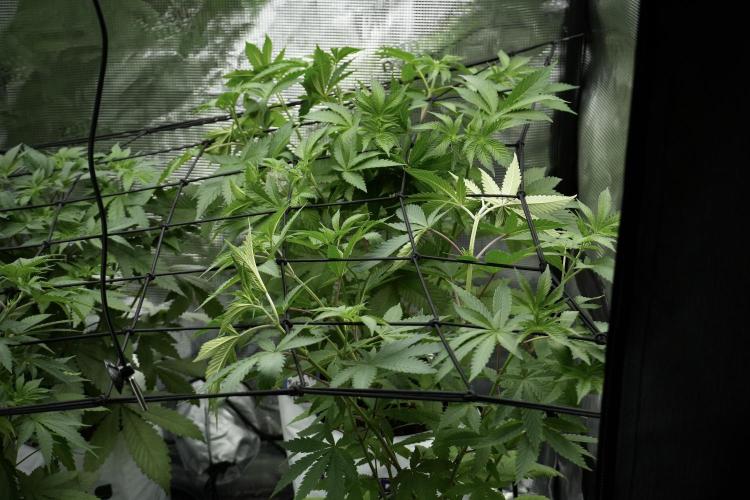
* Mogelijke Scrog
* En wat deze genetica onderweg ook maar besluit te inspireren
Voor nu begint alles echter precies waar elke geweldige kweek begint:
Met een zaadje.
⸻
Het Cannakan Germinatiesysteem
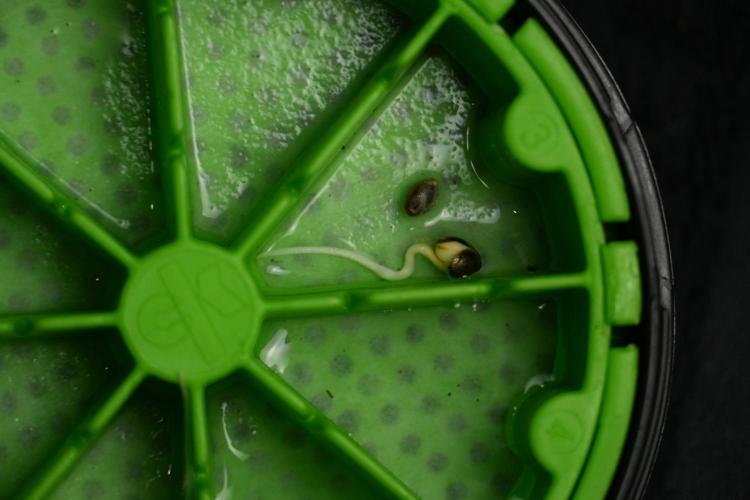
Net als bij veel eerdere dagboeken, begon de germinatie met mijn vertrouwde Cannakan-systeem.
Het concept blijft heerlijk simpel.
Zaden worden binnen geplaatst met gewoon water.
Niet meer.
Geen voedingsstoffen.
Geen stimulanten.
Geen geheime ingrediënten.
Gewoon water.
Het doel is niet om het zaad te voeden.
Het doel is simpelweg om het wakker te maken.
De natuur heeft alles wat nodig is voor die eerste momenten van leven al in de schil zelf verpakt.
Voor Blue Waffle F1 was de germinatie snel en indrukwekkend.
Na ongeveer 24 uur weken, hadden de zaden water opgenomen en het proces begonnen.
Het meeste water werd daarna verwijderd, zodat er alleen genoeg vocht overbleef om ideale omstandigheden te behouden.
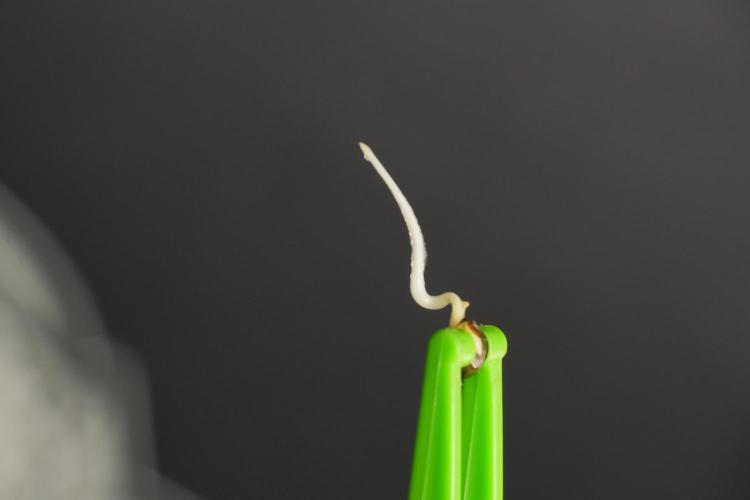
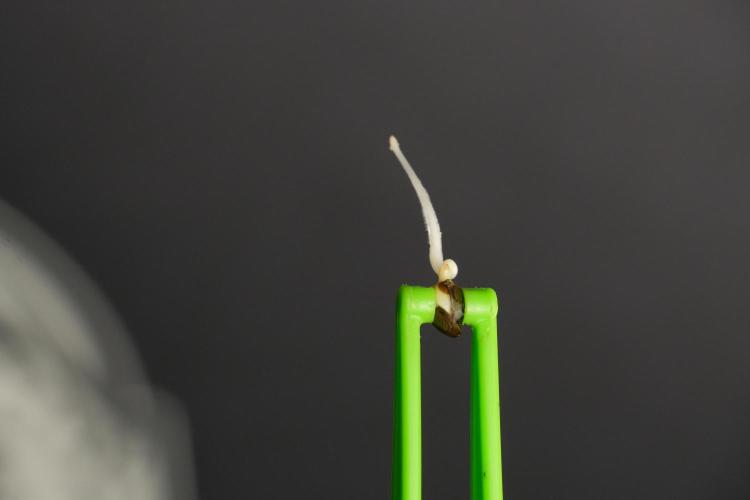
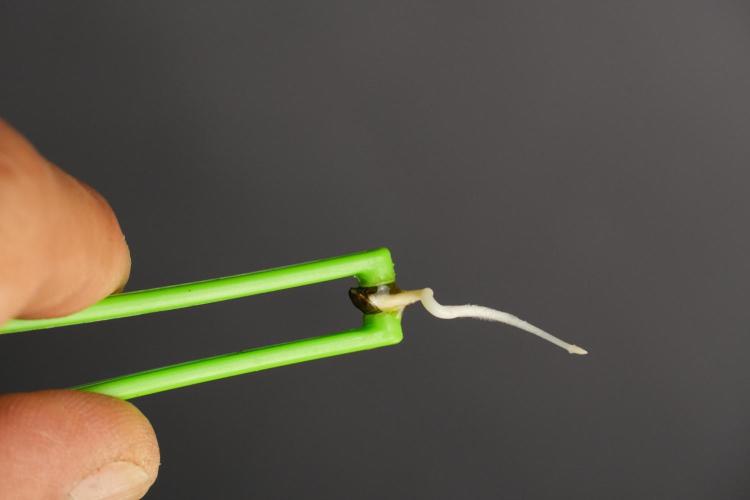
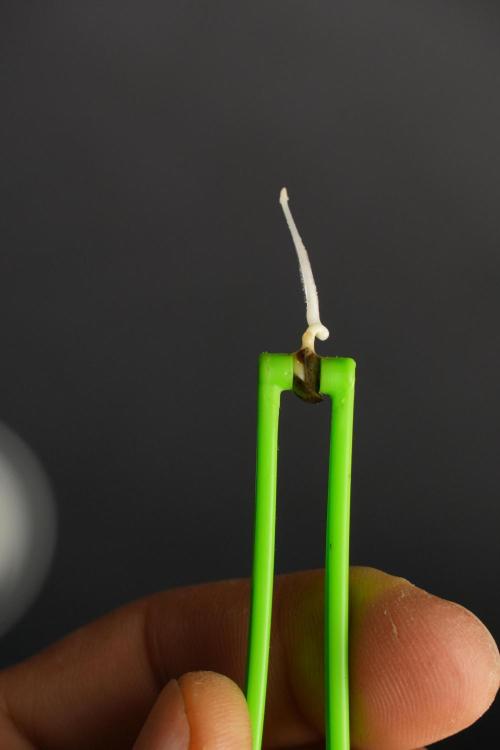
Ongeveer 12–13 uur later had één zaadje al een prachtige gezonde penwortel geproduceerd.
De tweede bleef niet ver achter.
Op dat moment werden beide zaden overgezet in hun definitieve containers.
Soms nemen planten de beslissing voor ons.
Deze meisjes waren er klaar voor.
⸻
Van Wortel Naar Licht
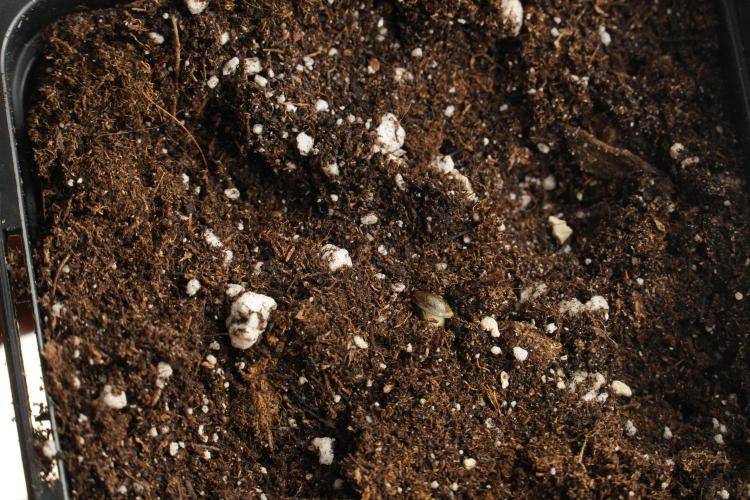
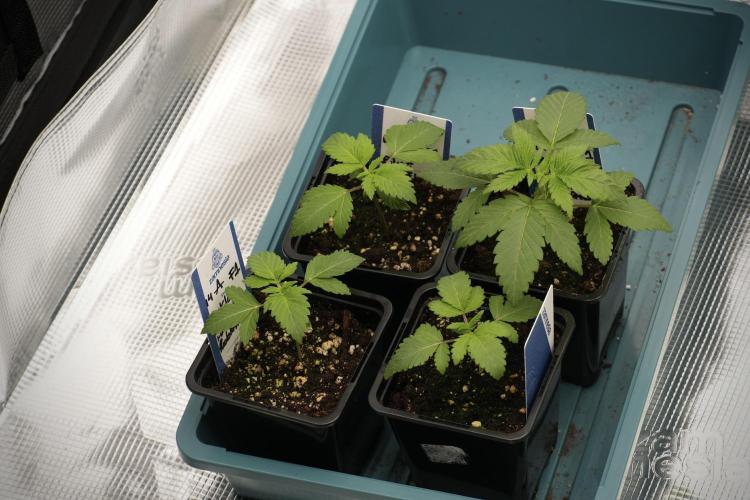
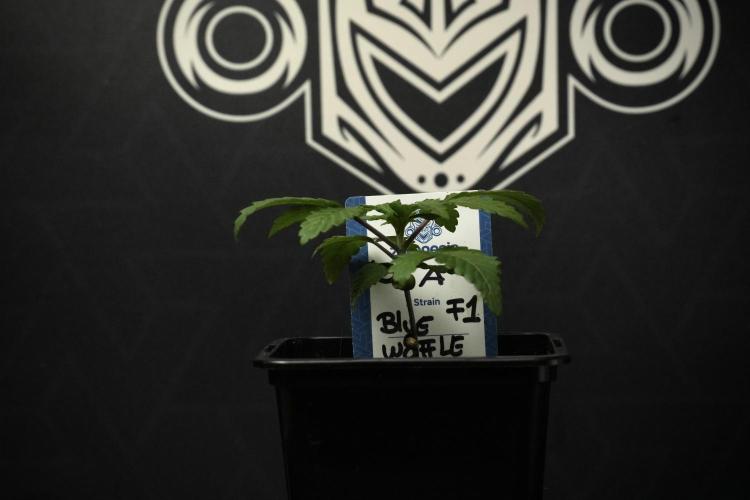
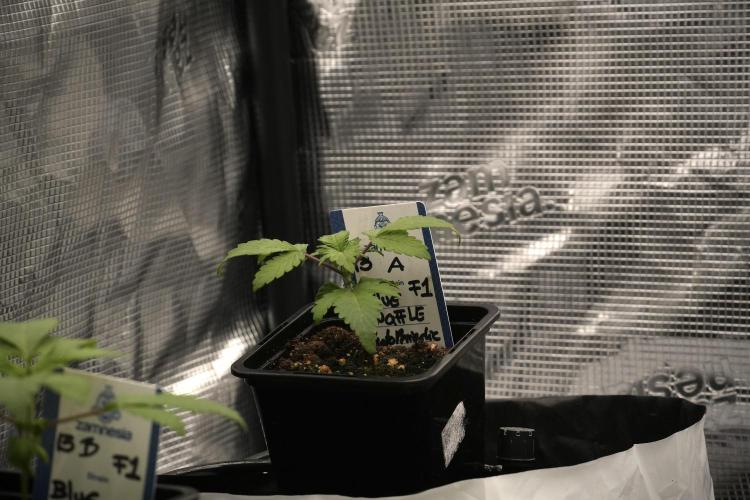
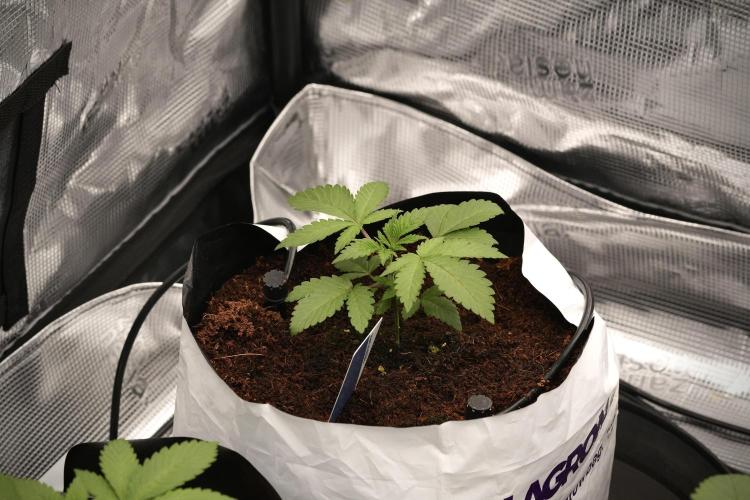
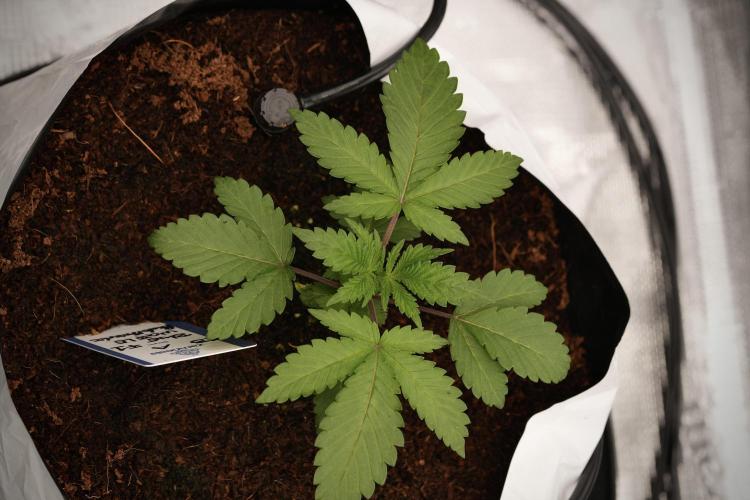
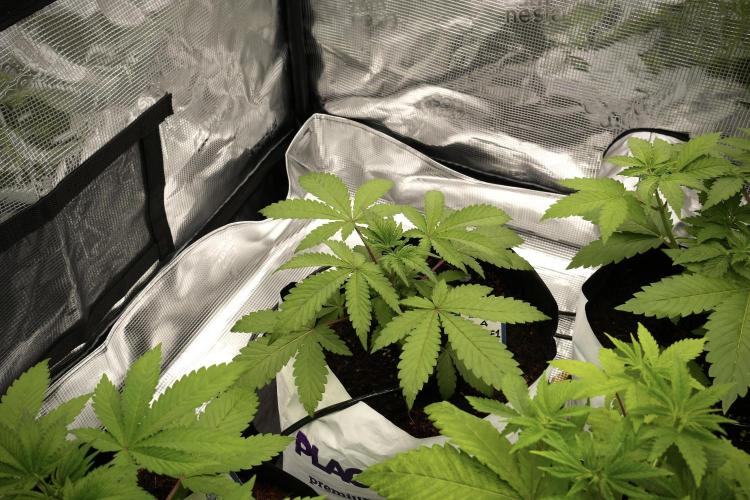
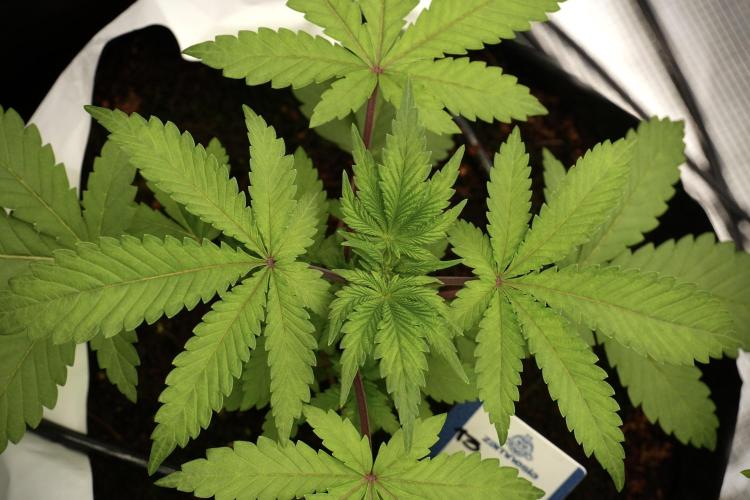
Eenmaal geplant in Plagron Lightmix, ging de ontwikkeling verder met een indrukwekkend tempo.
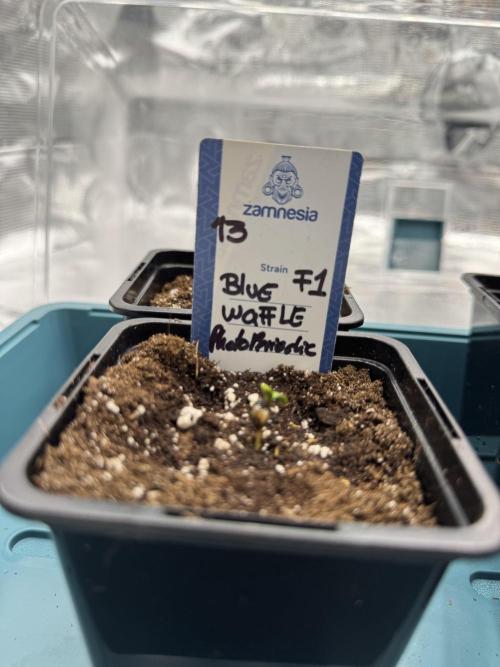
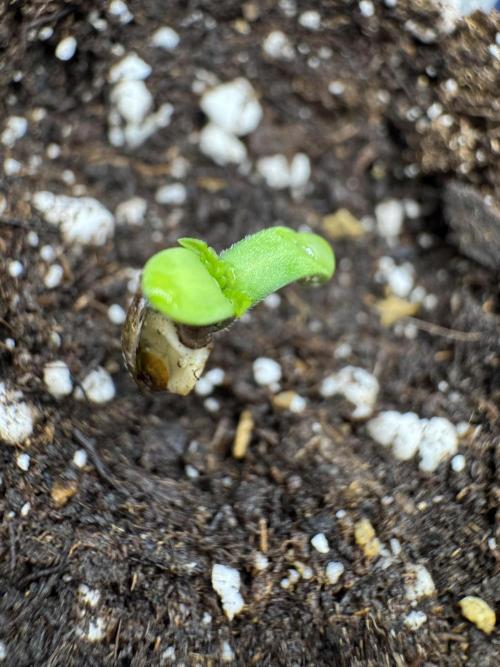
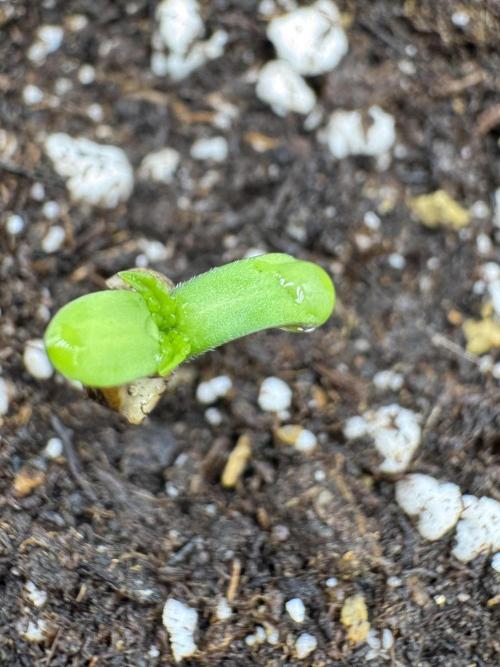
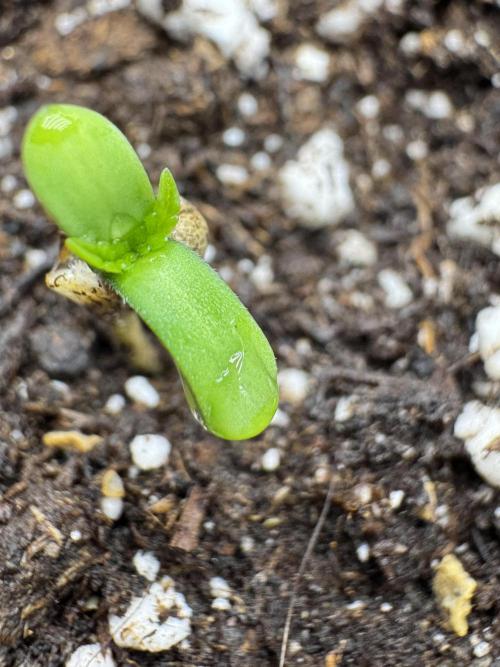
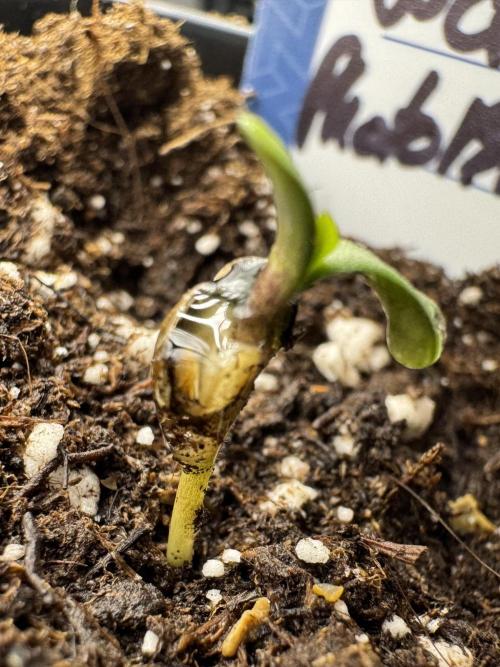
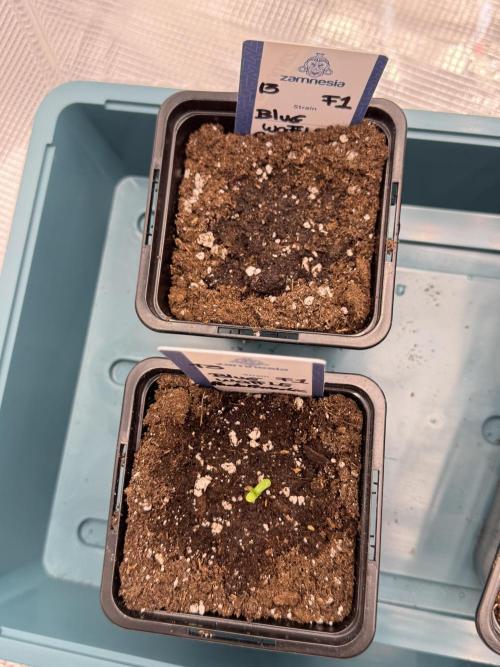
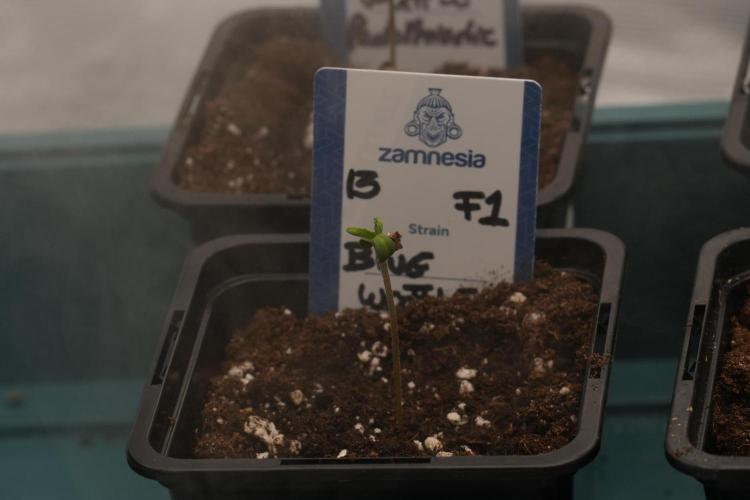
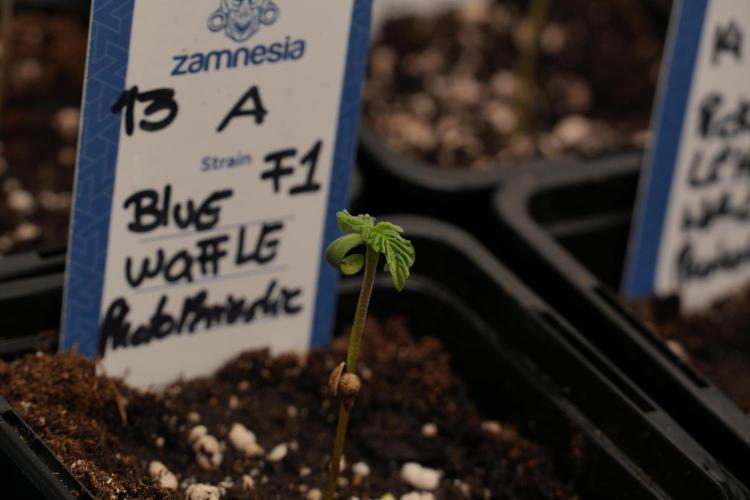
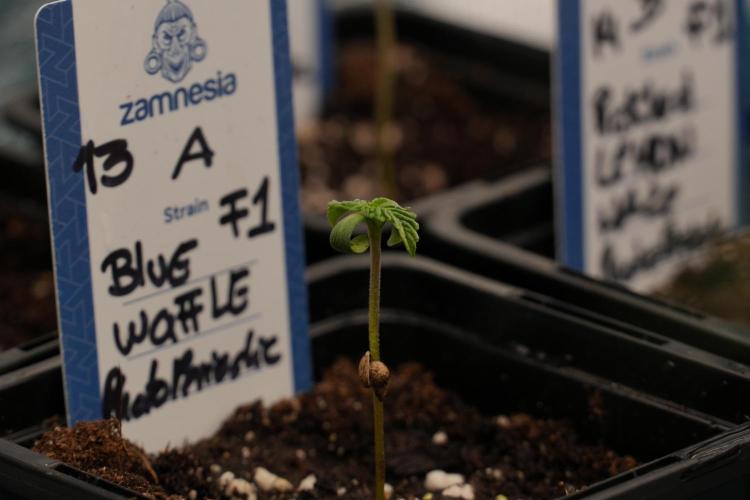
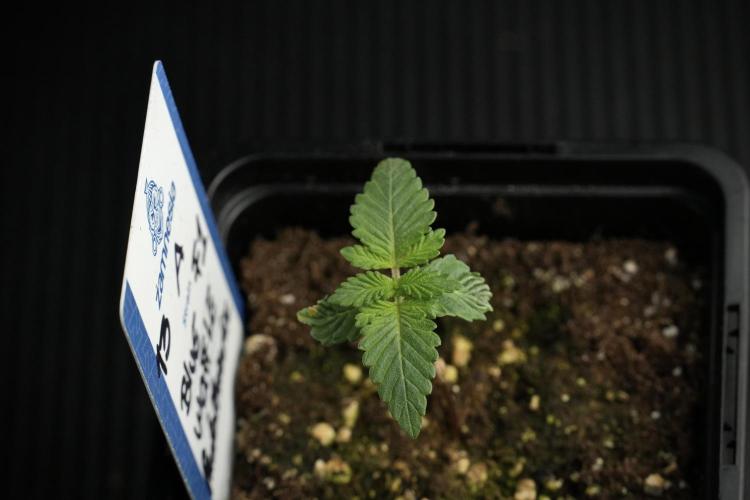
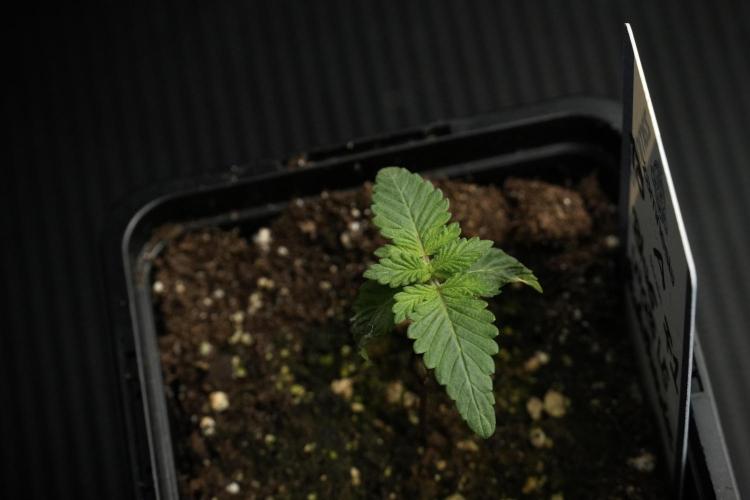
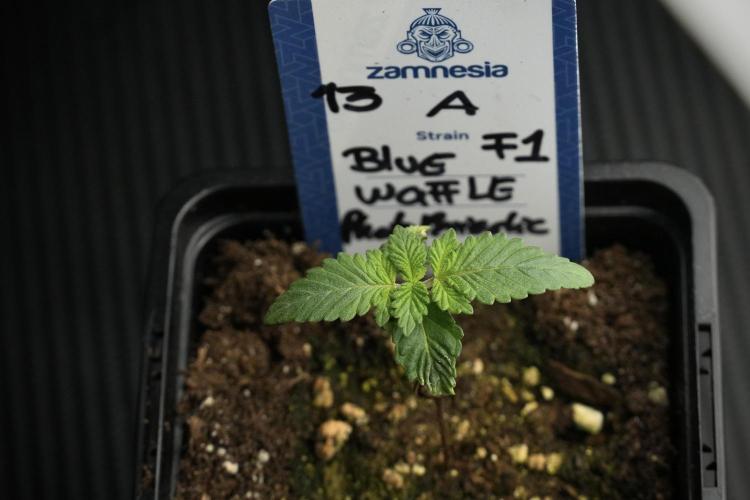
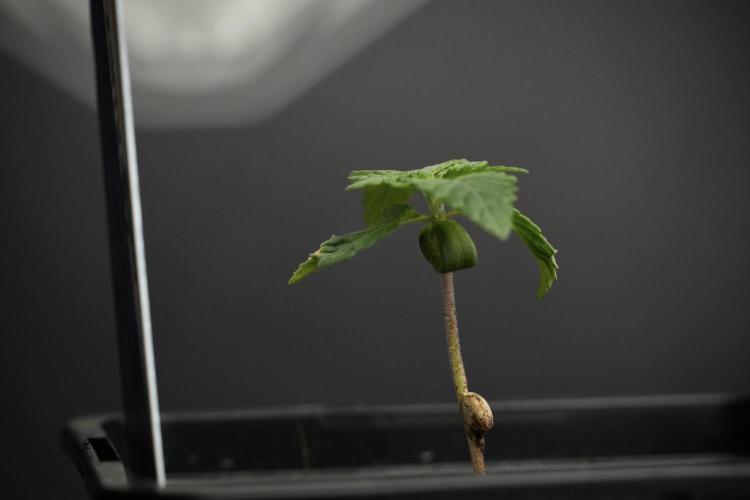
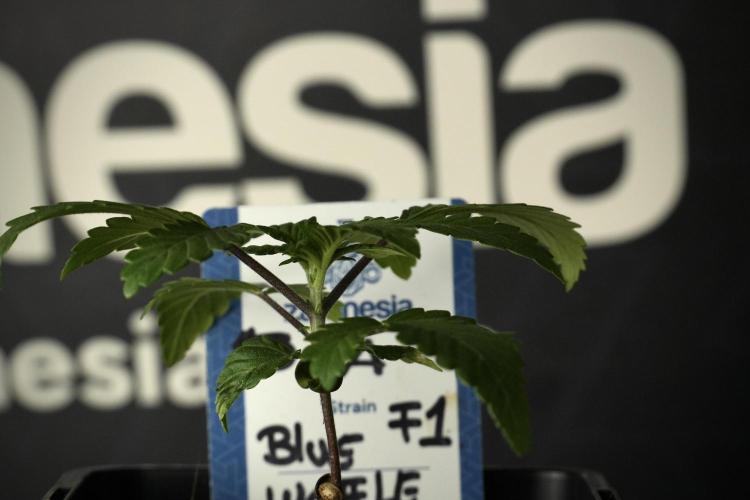
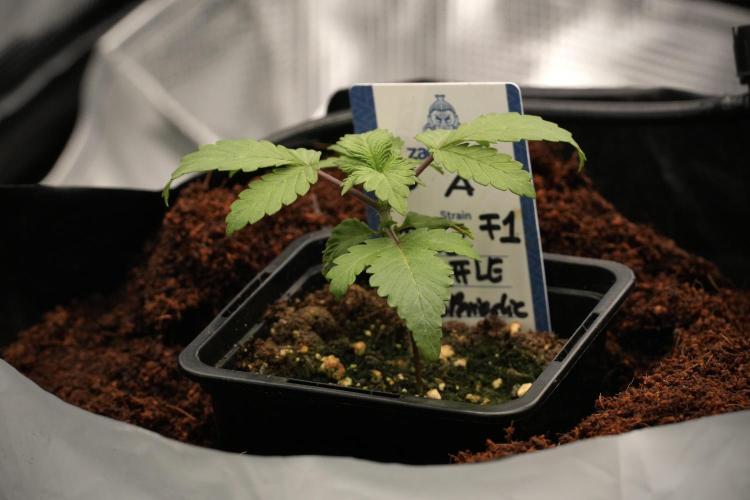
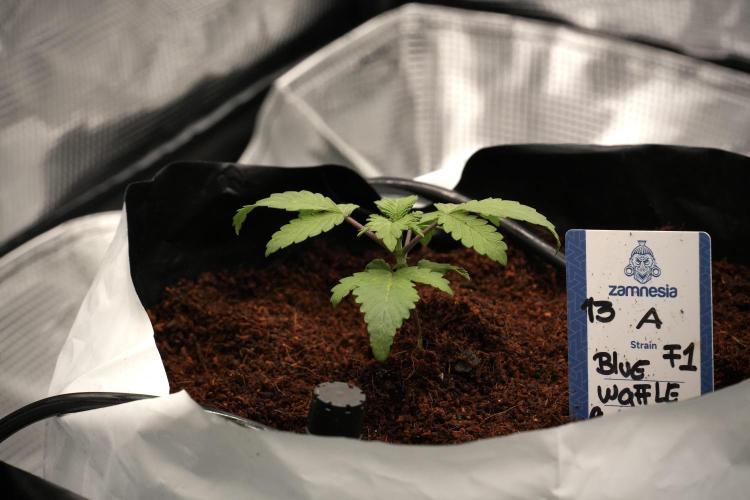
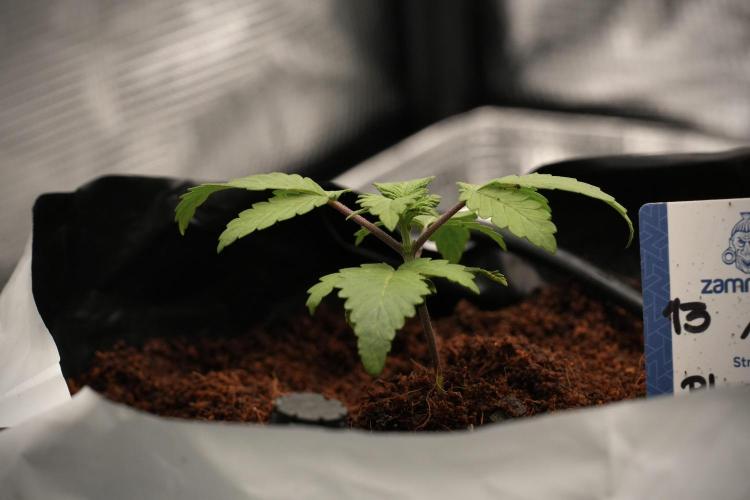
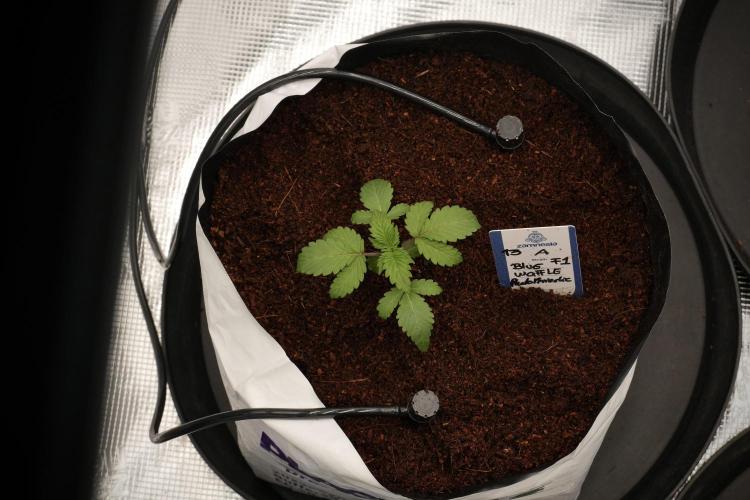
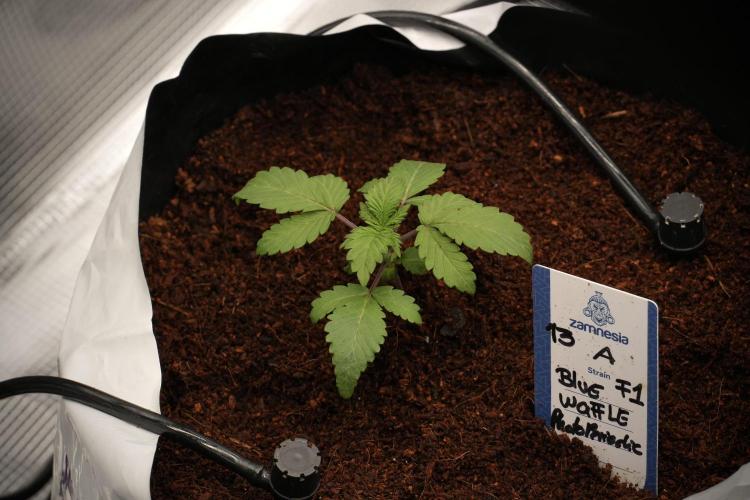
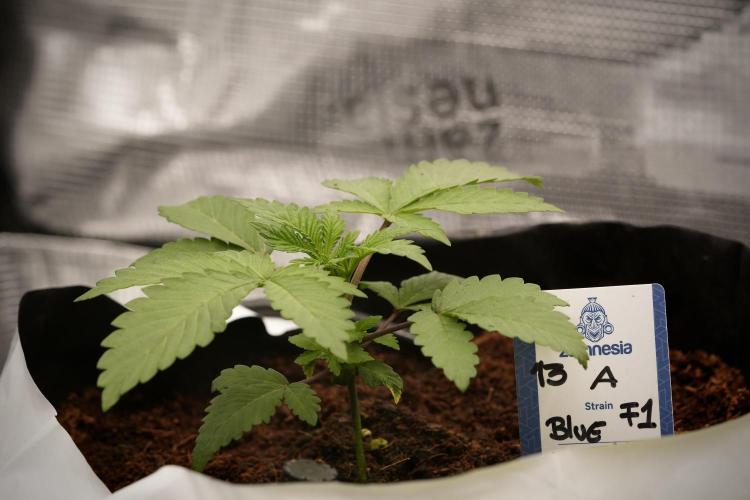
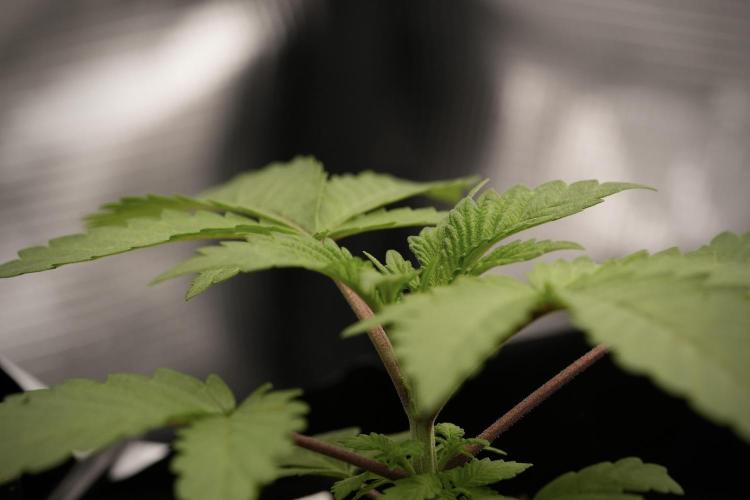
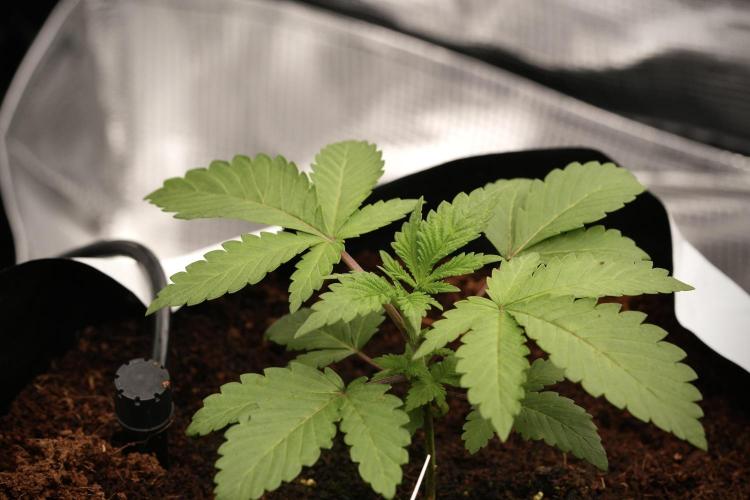
Minder dan 24 uur later kwam het eerste zaailingen al boven de grond uit en zocht naar licht.
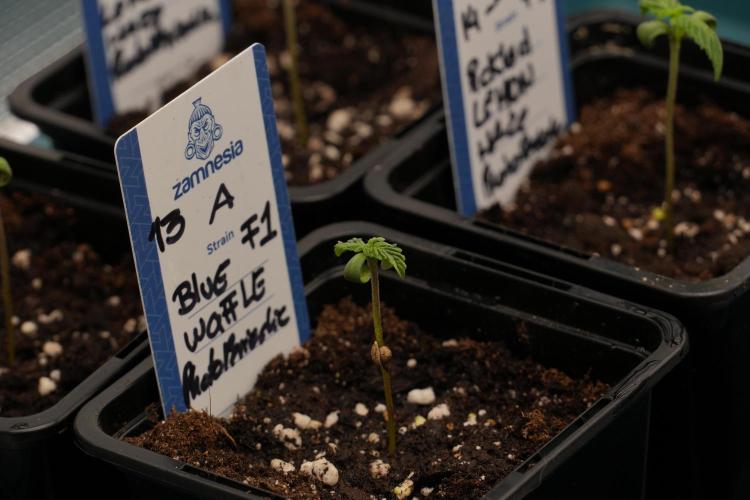
Pheno A was iets sneller vanaf het begin.
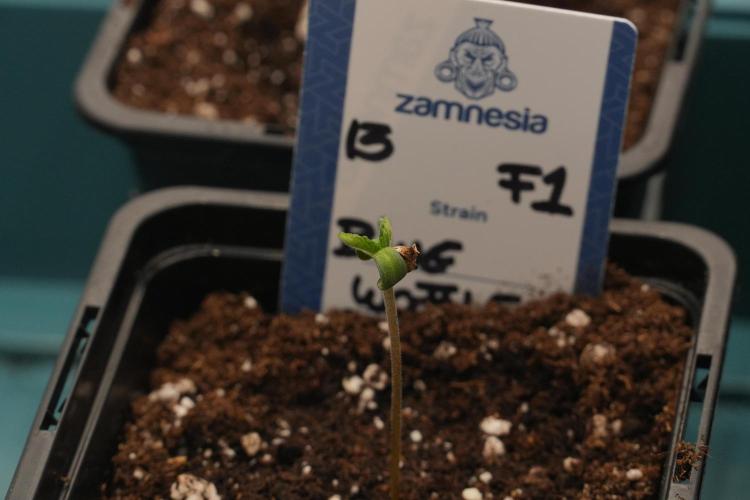
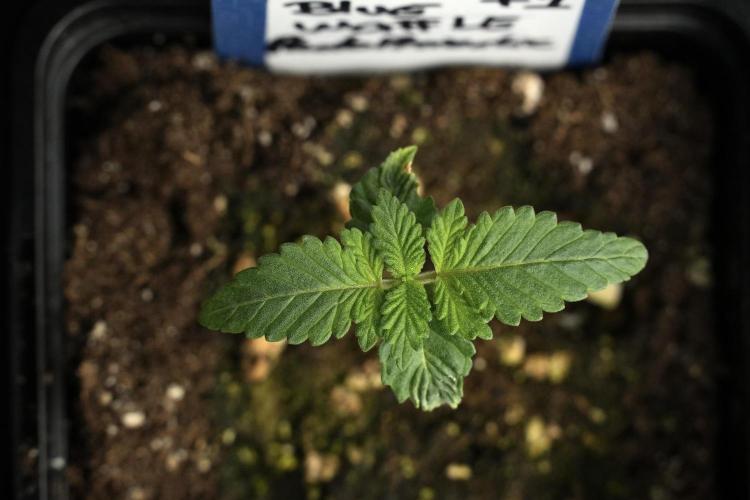
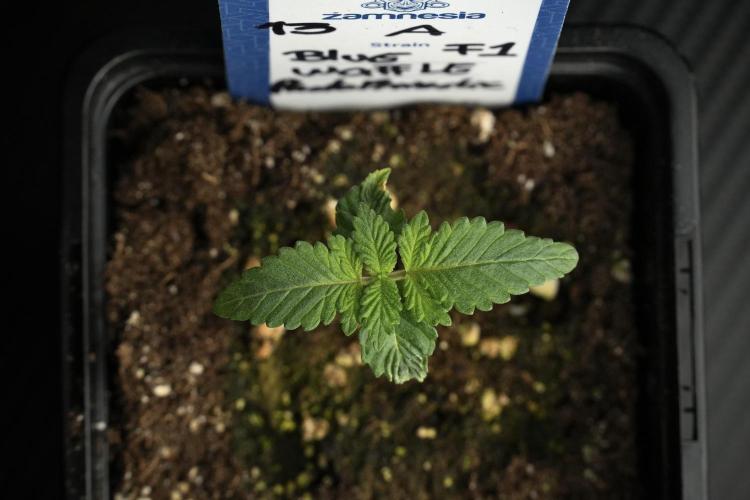
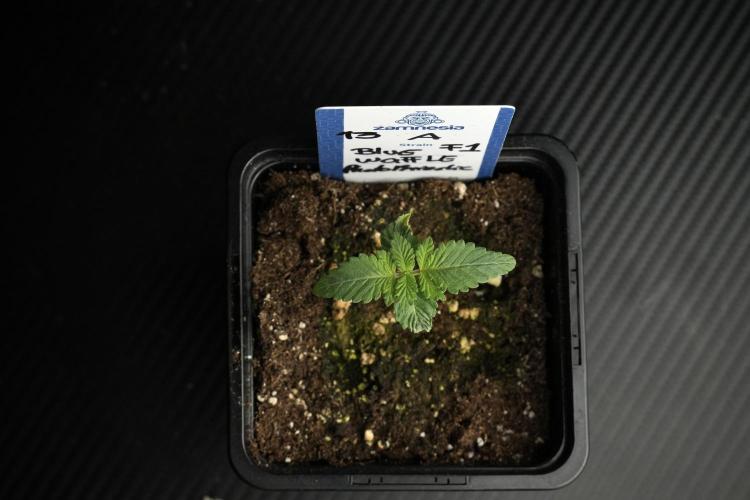
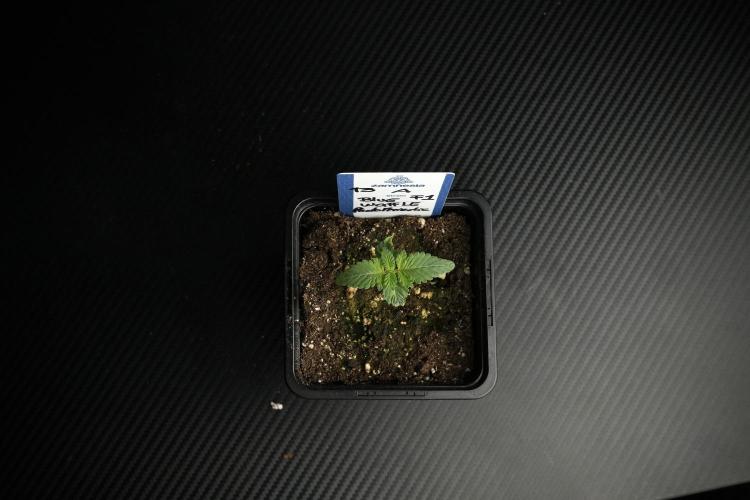
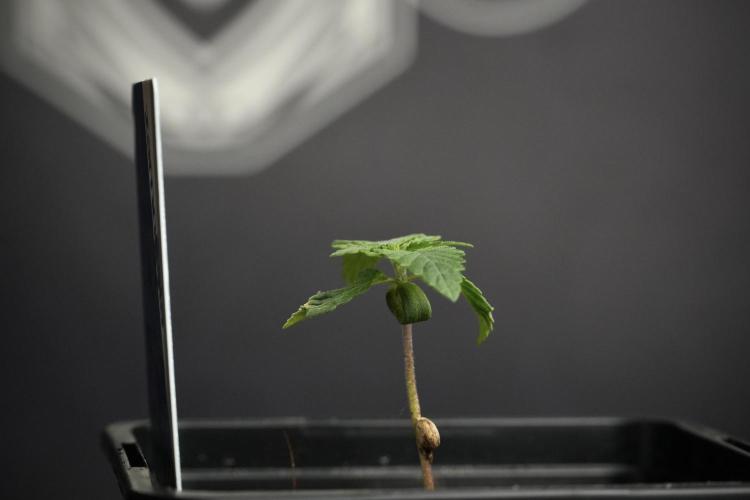
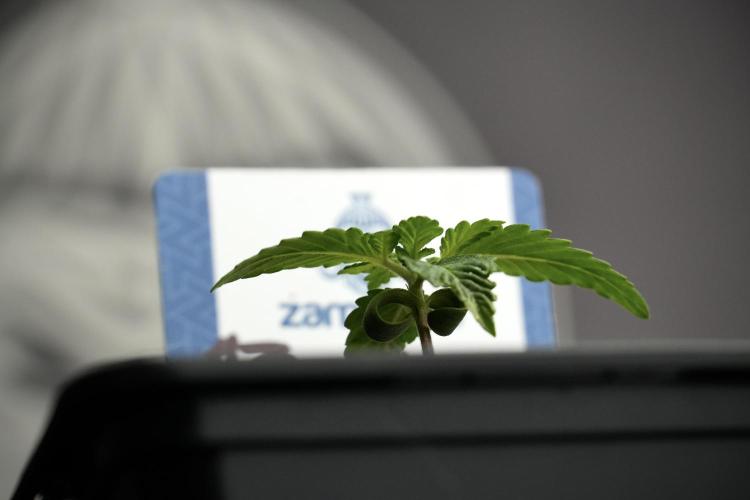
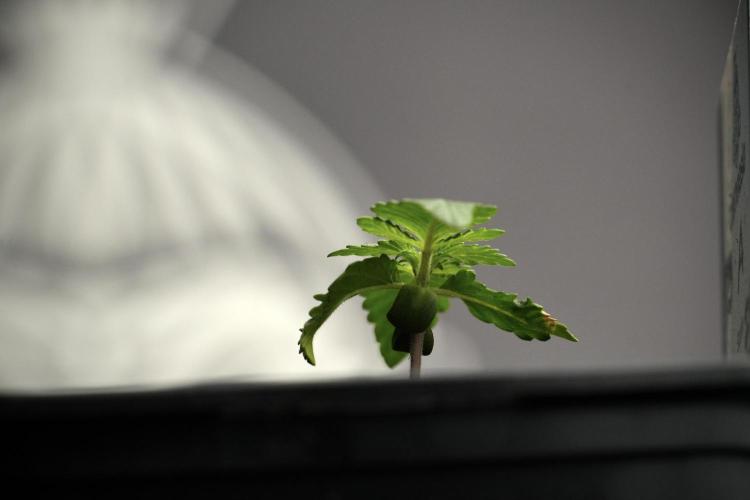
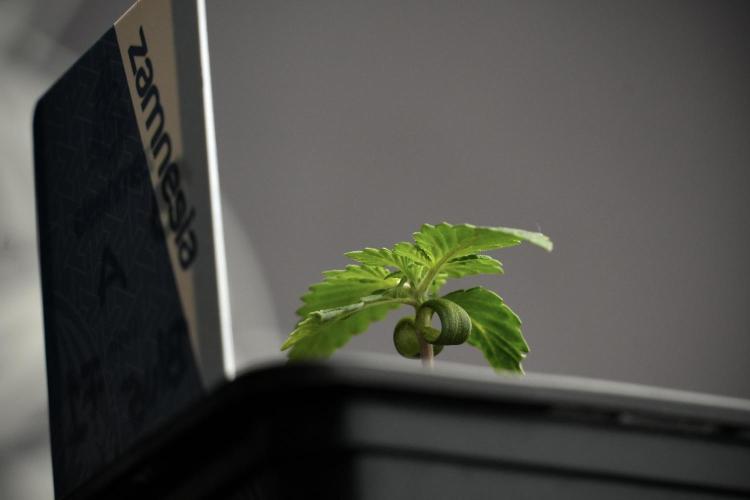
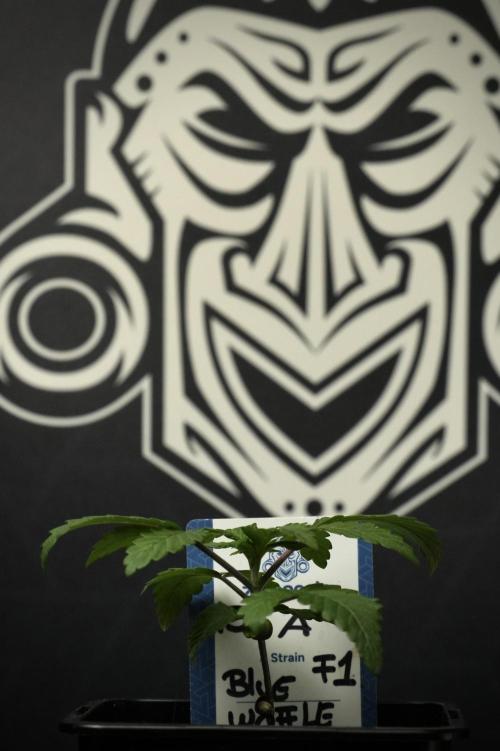
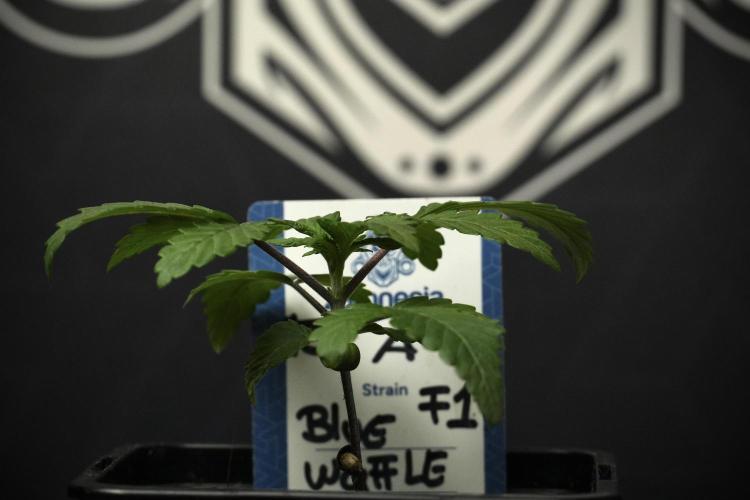
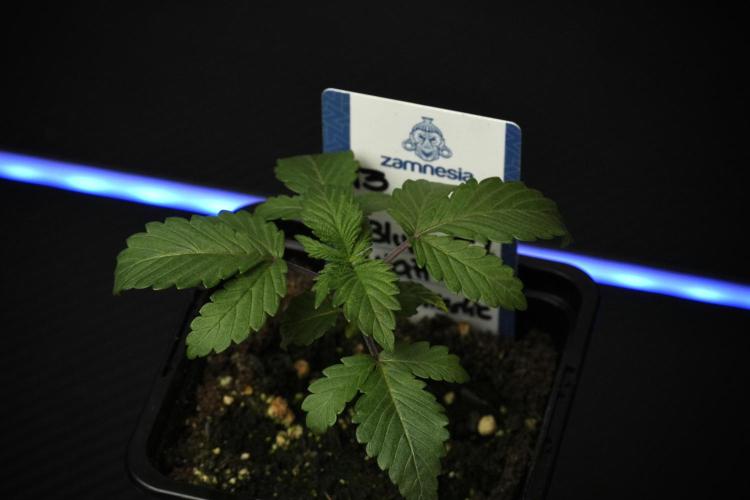
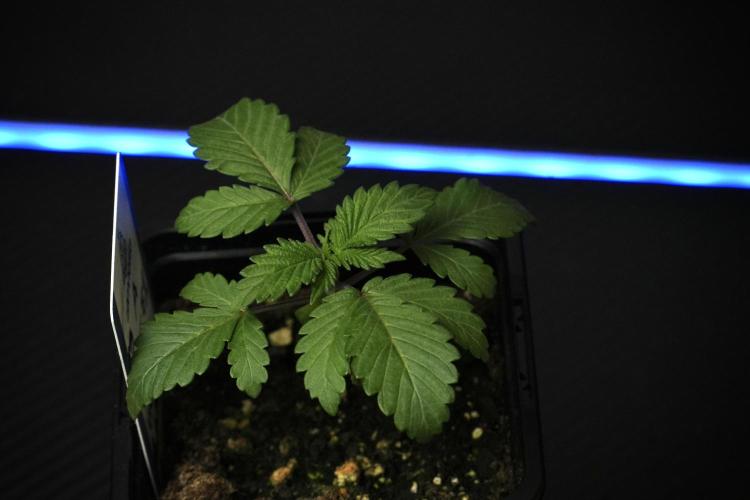
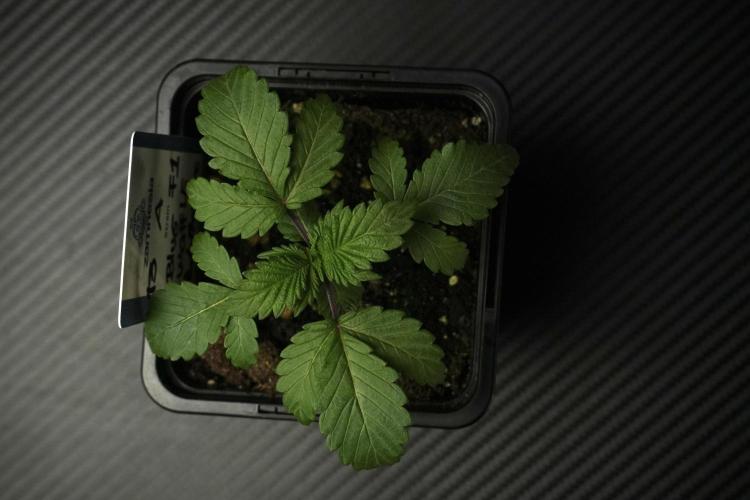
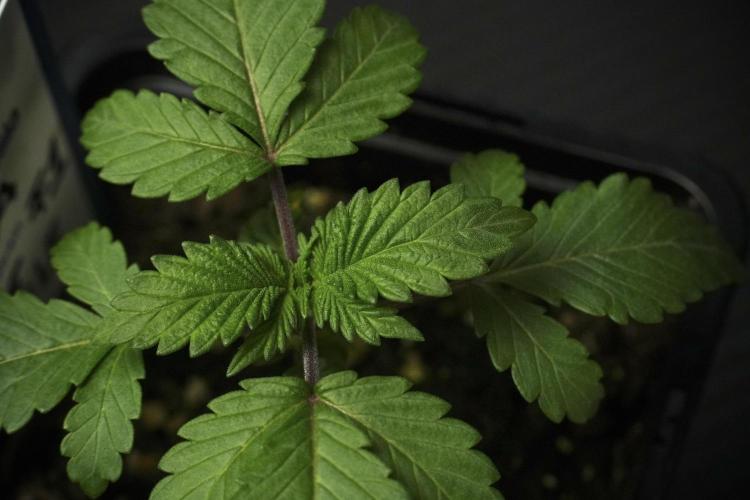
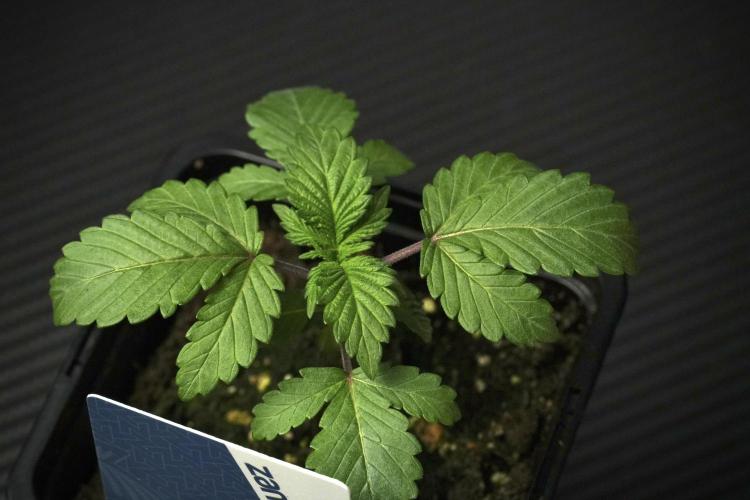
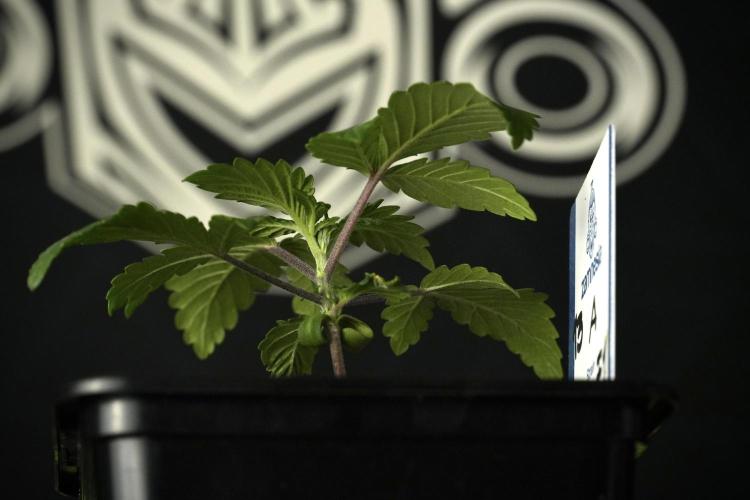
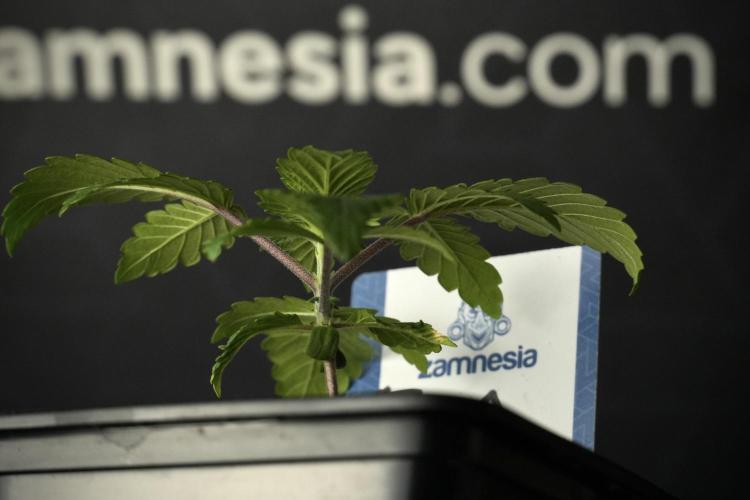
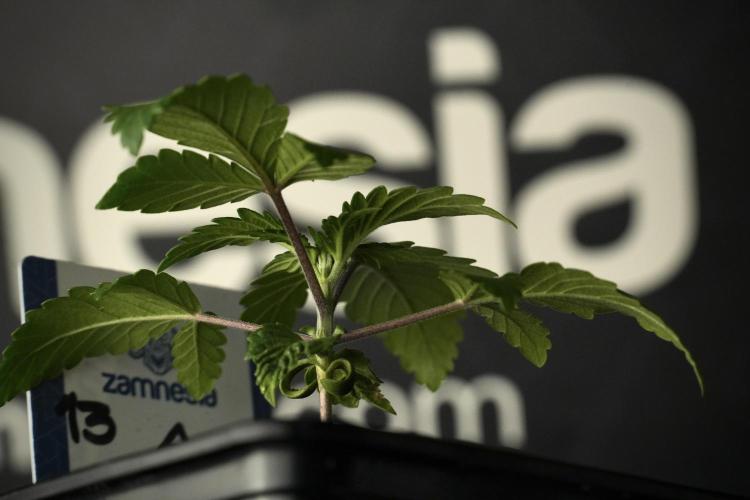
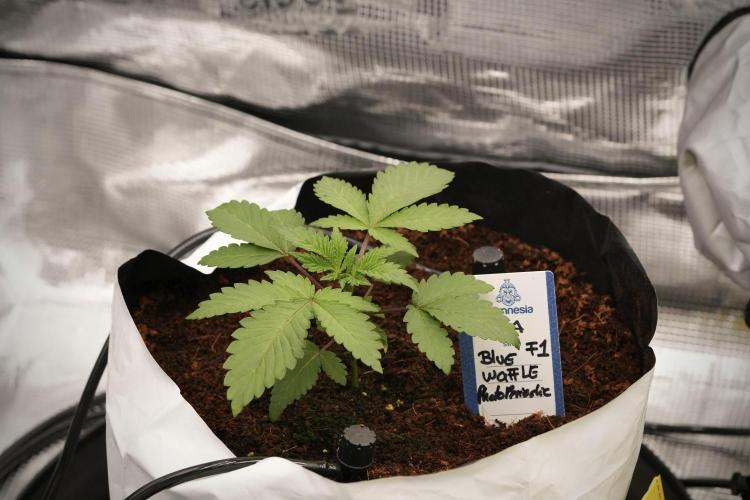
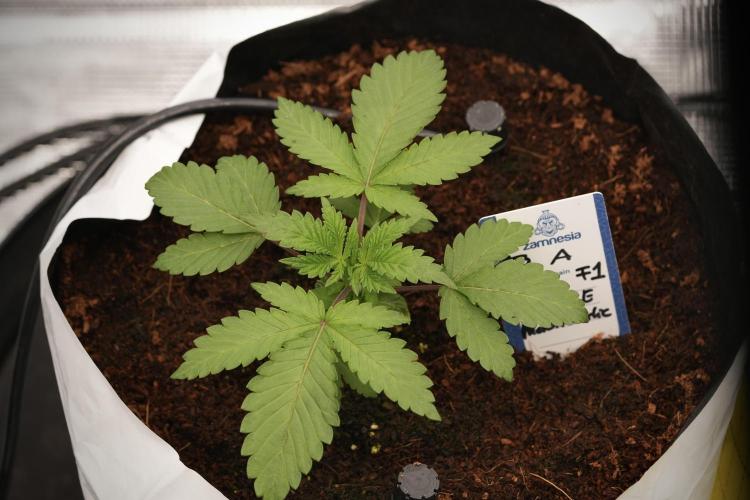
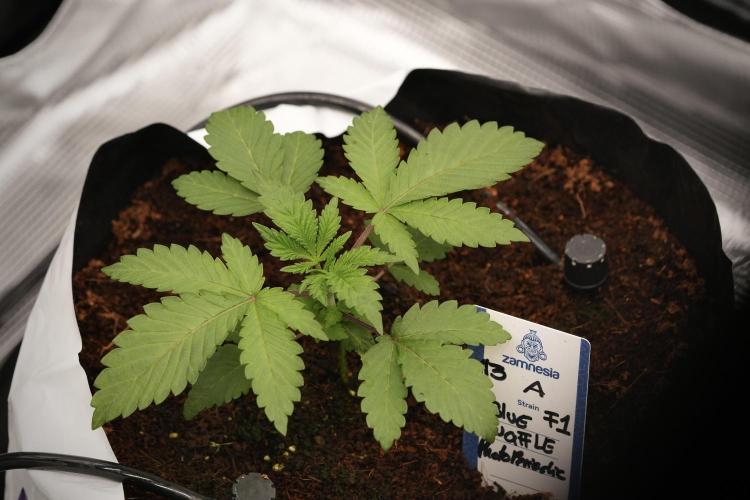
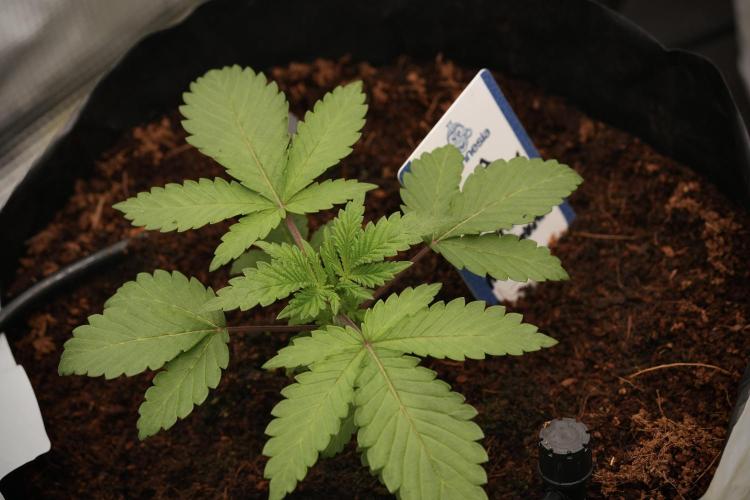
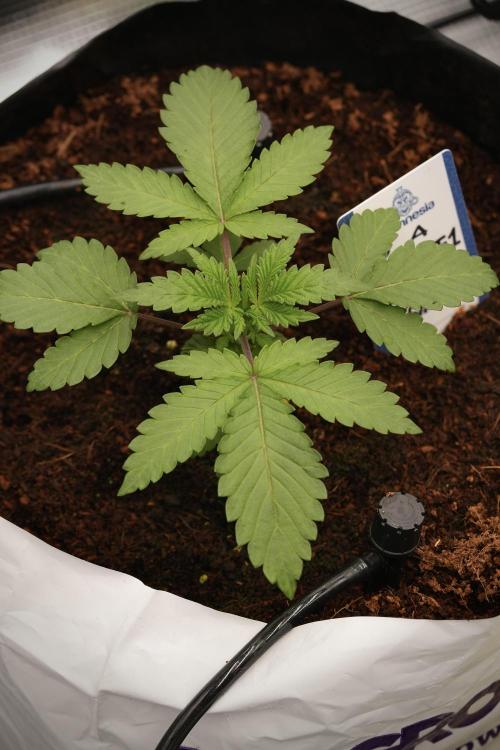
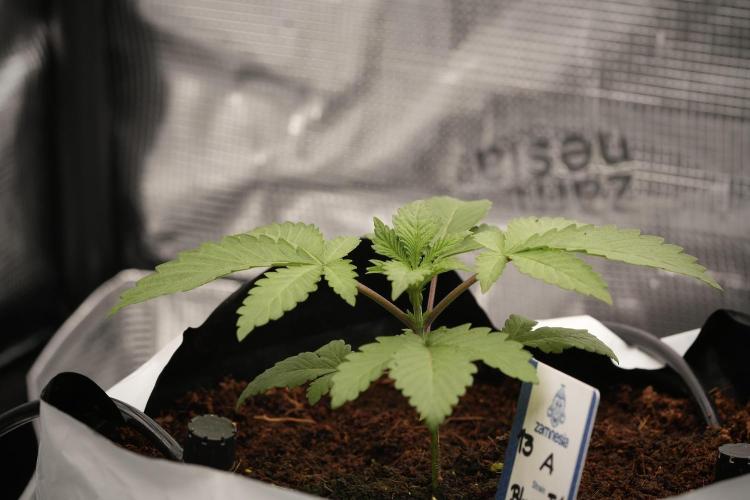
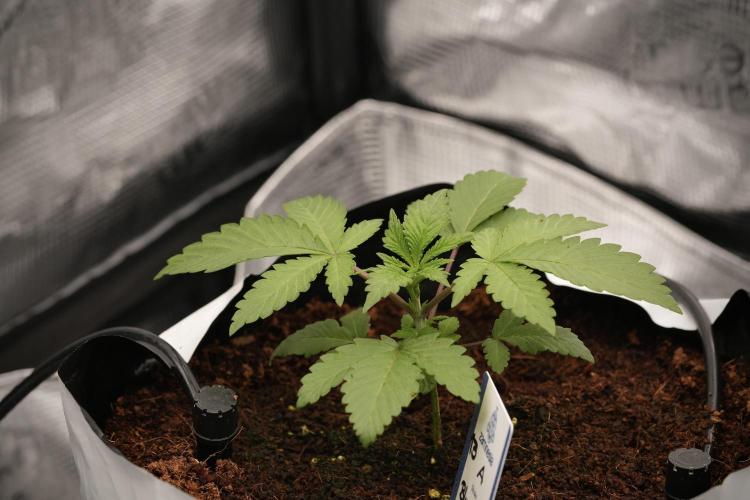
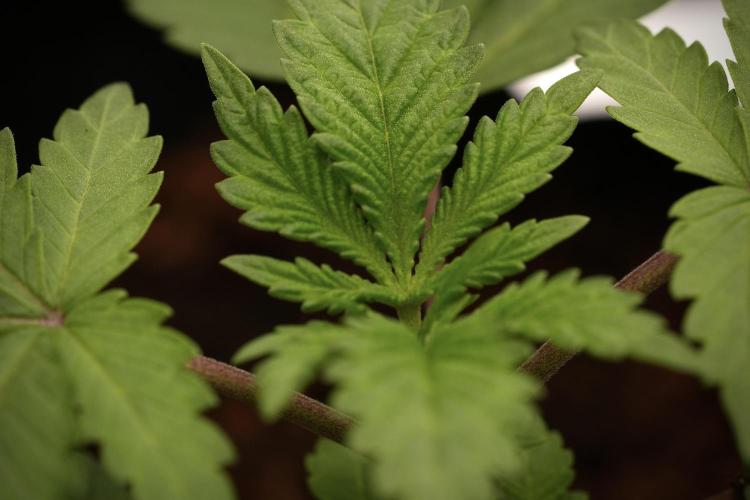
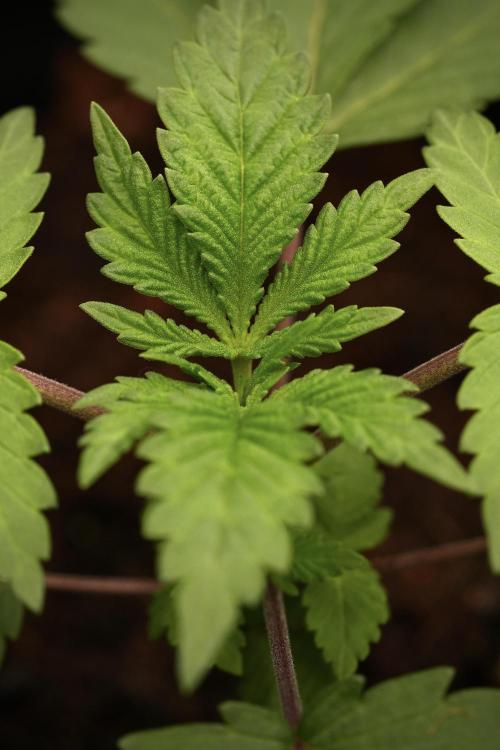
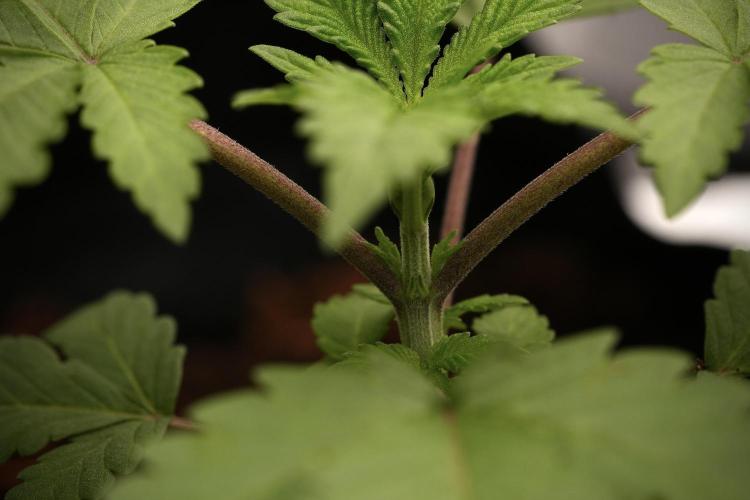
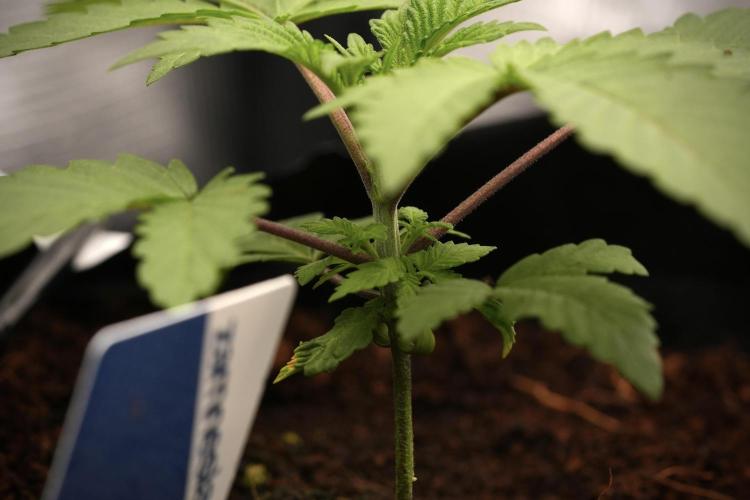
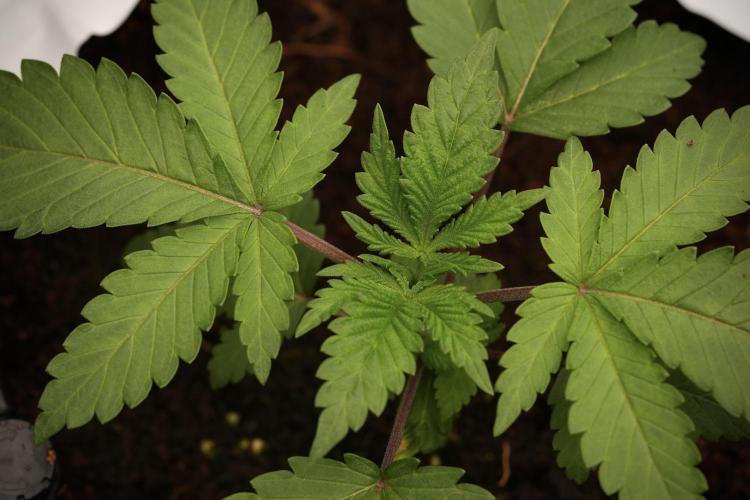
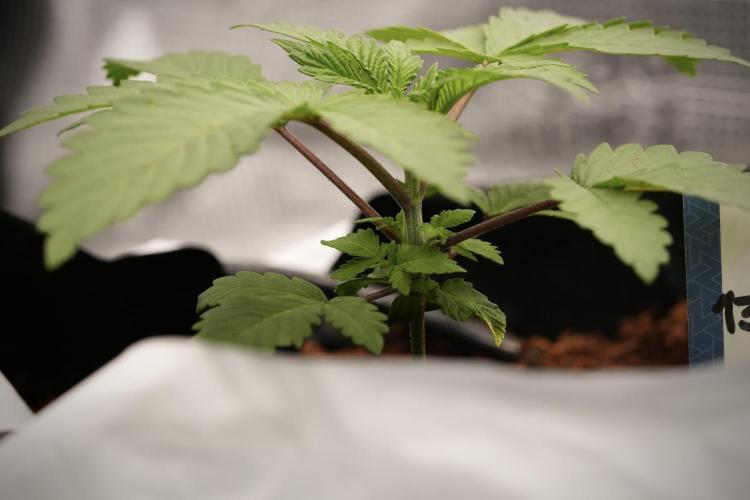
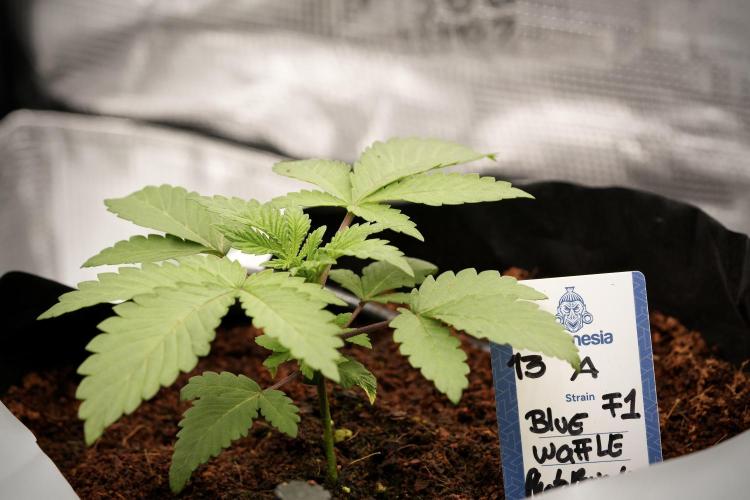
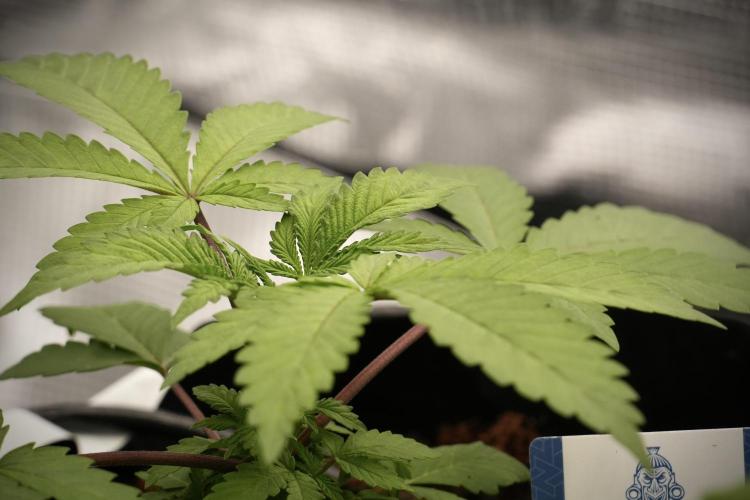
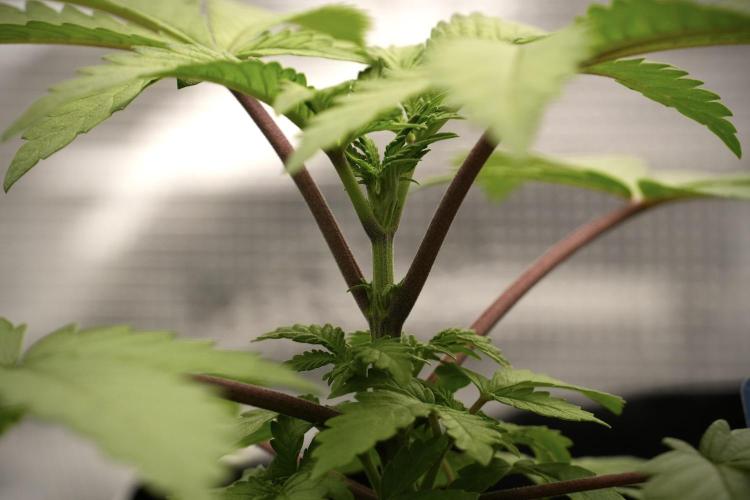
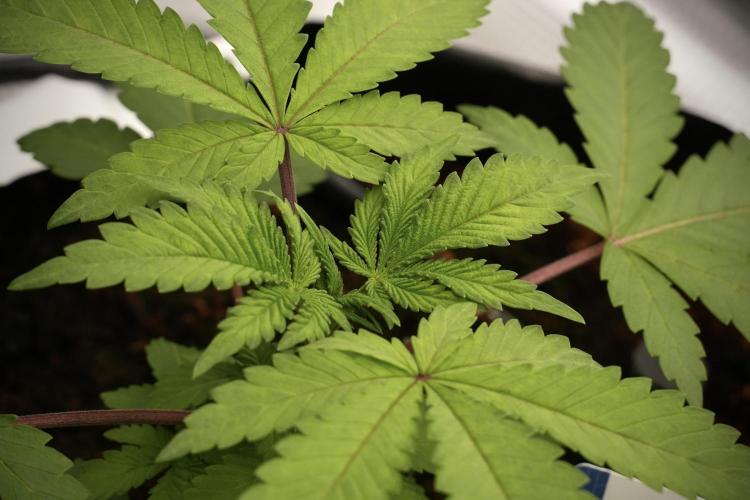
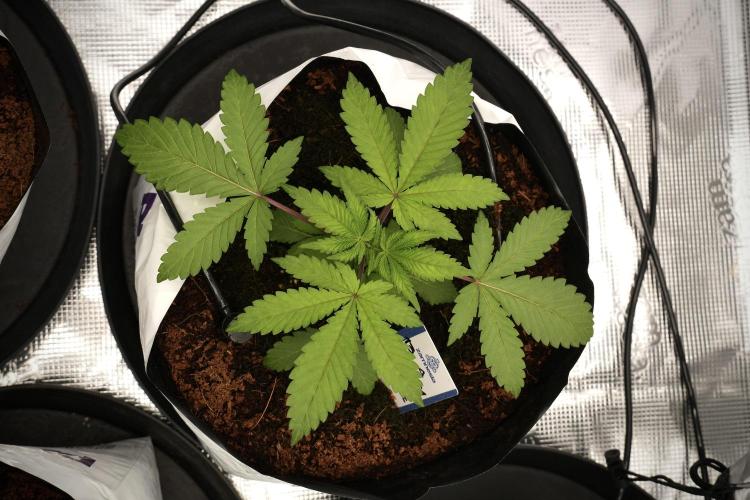
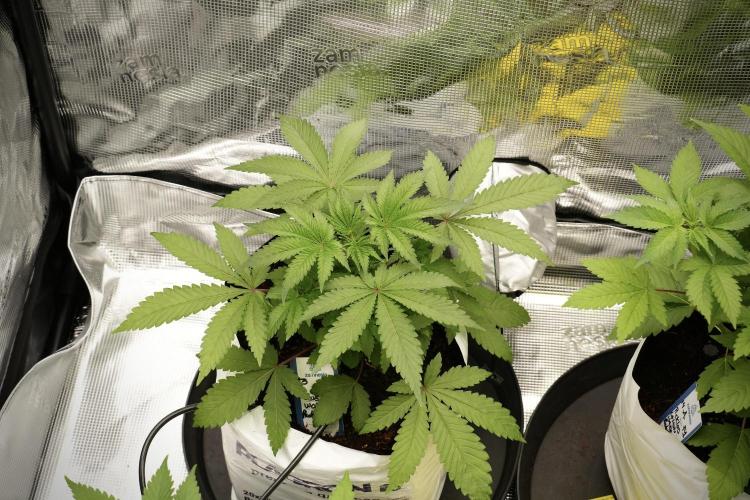
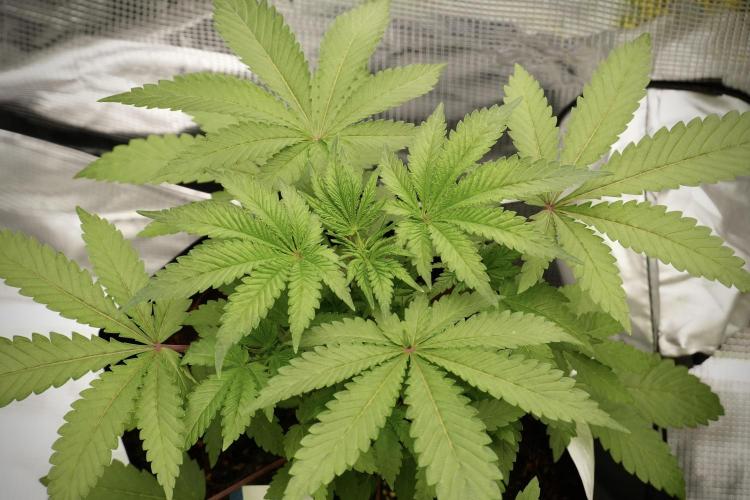
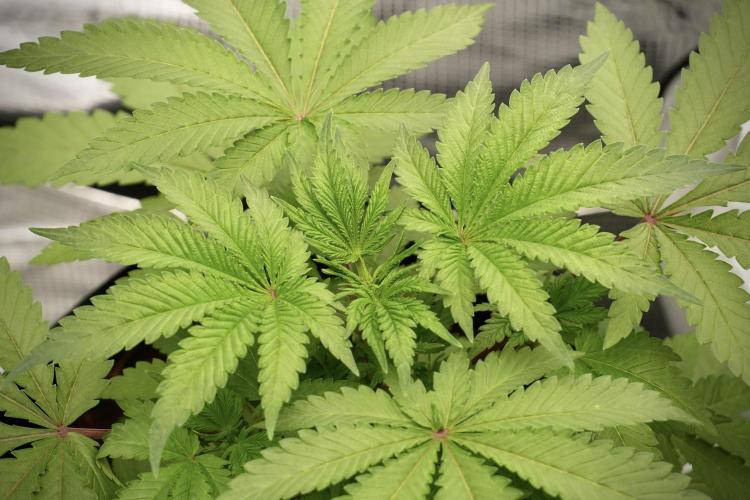
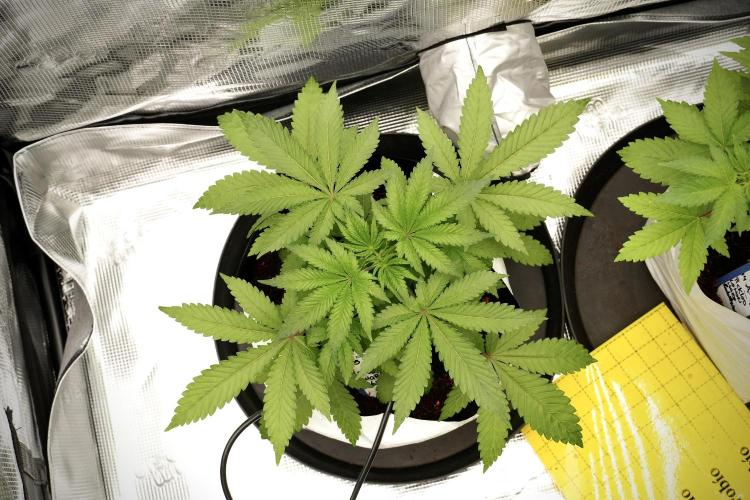
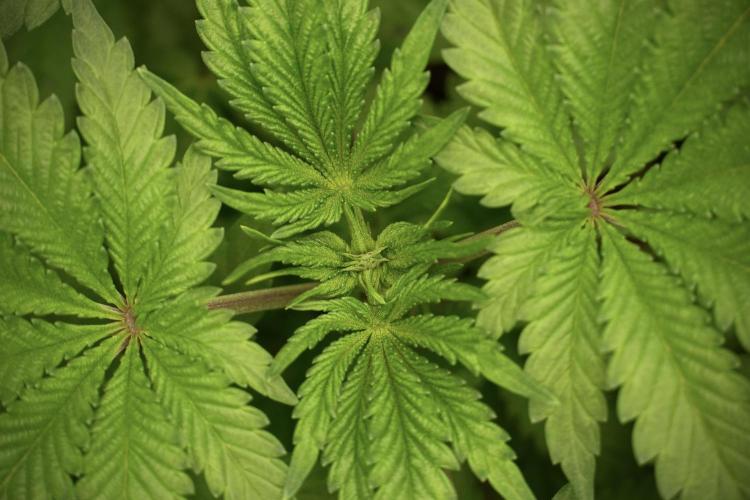
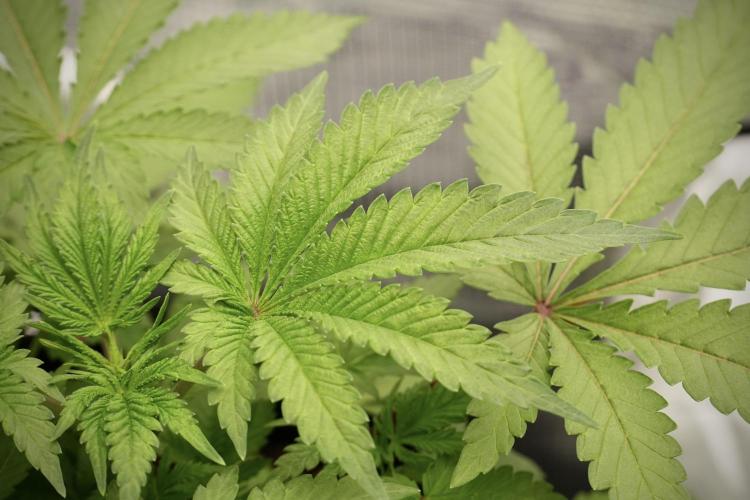
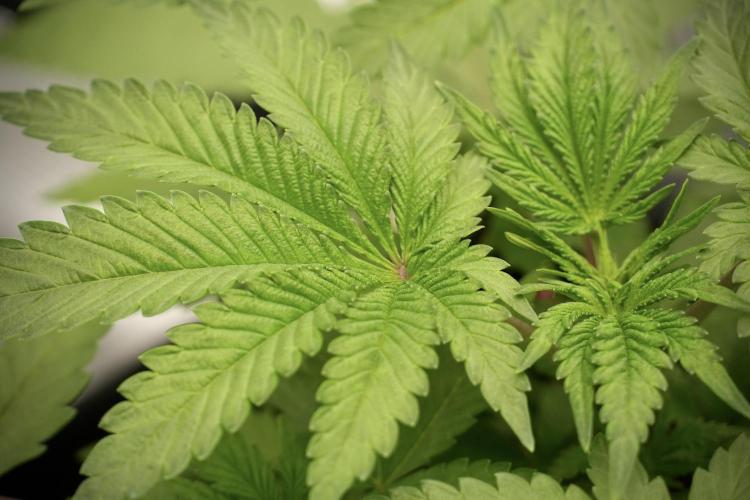
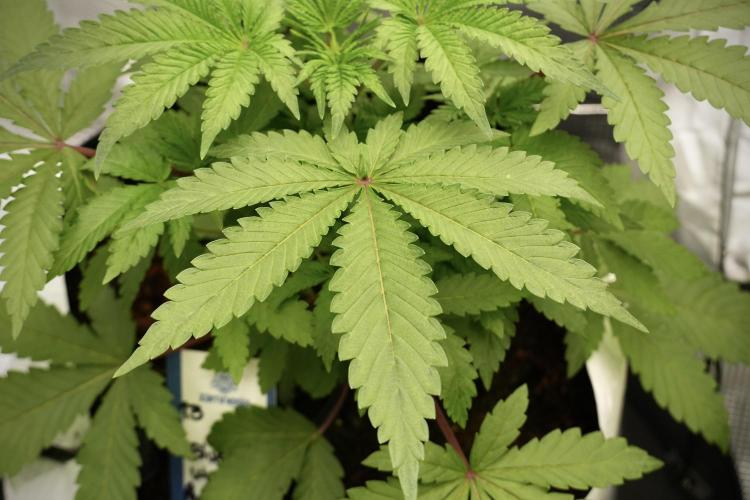
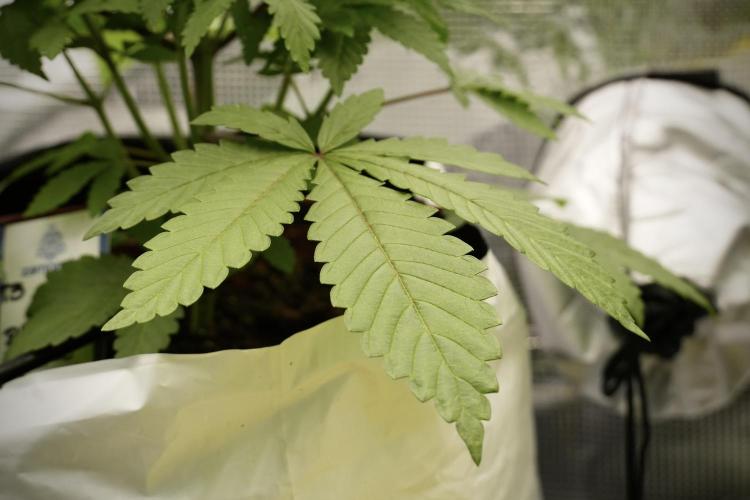
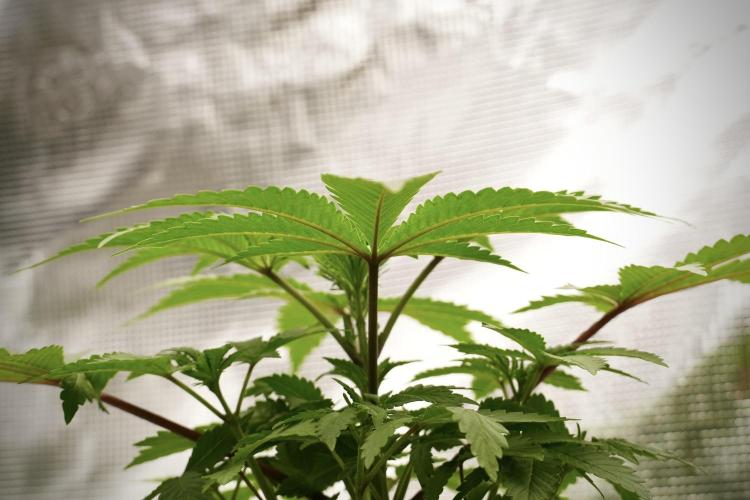
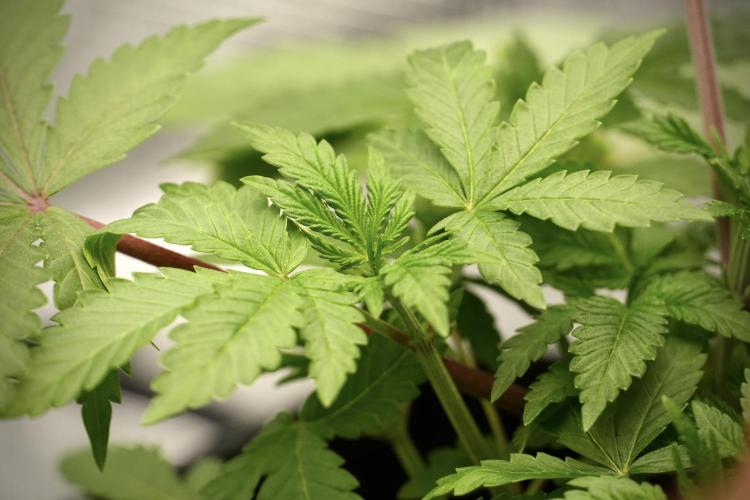
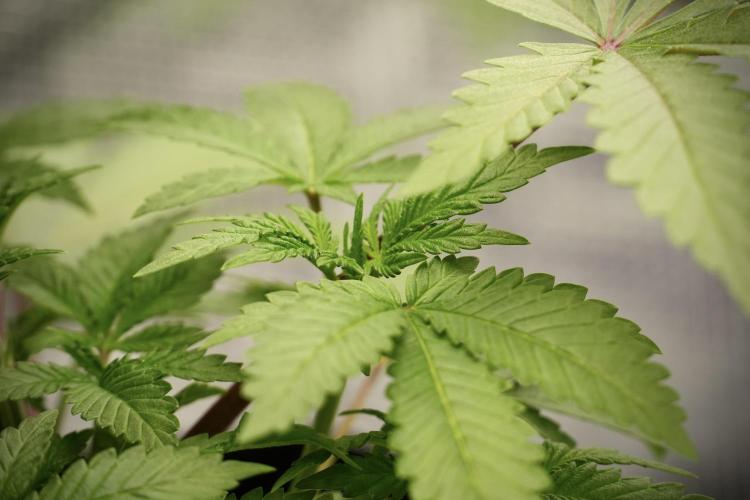
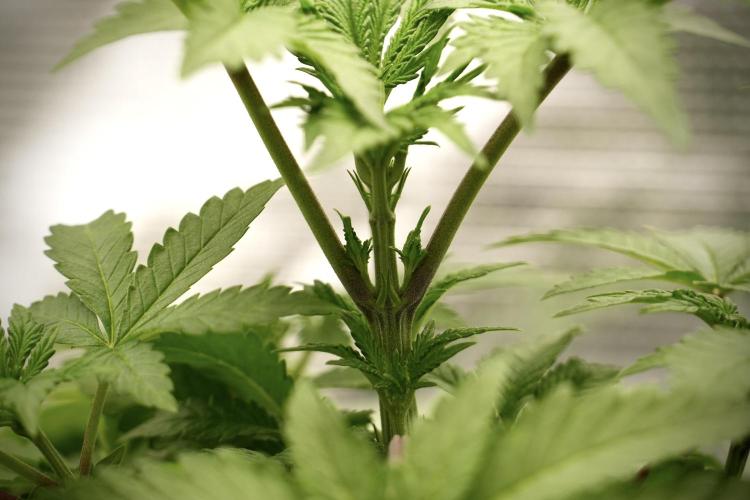
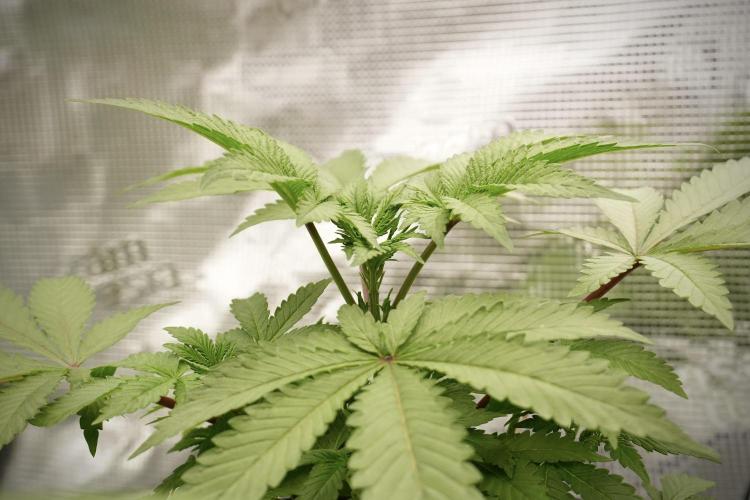
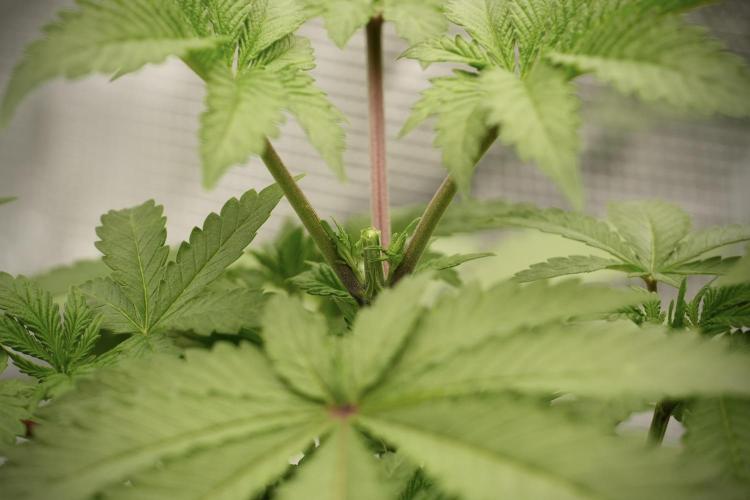
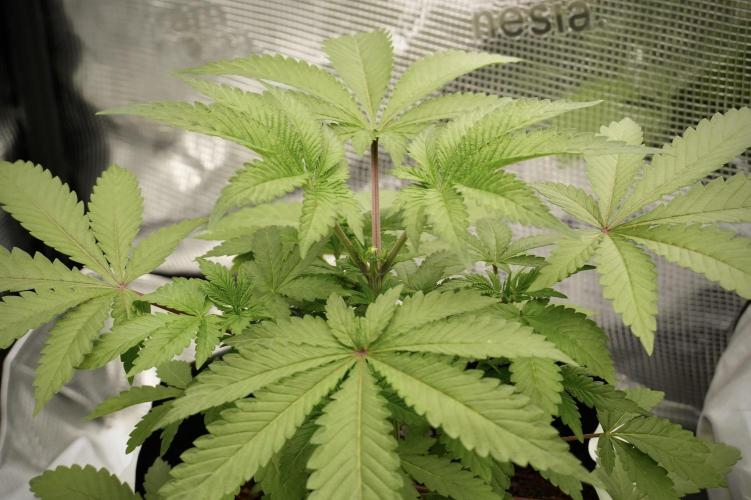
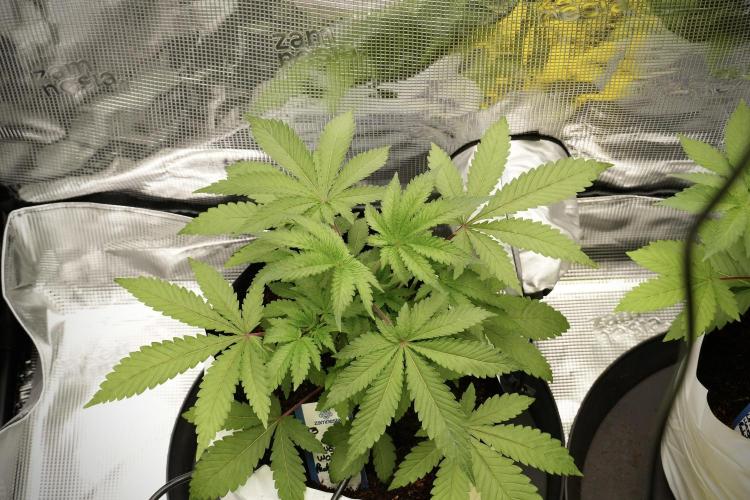
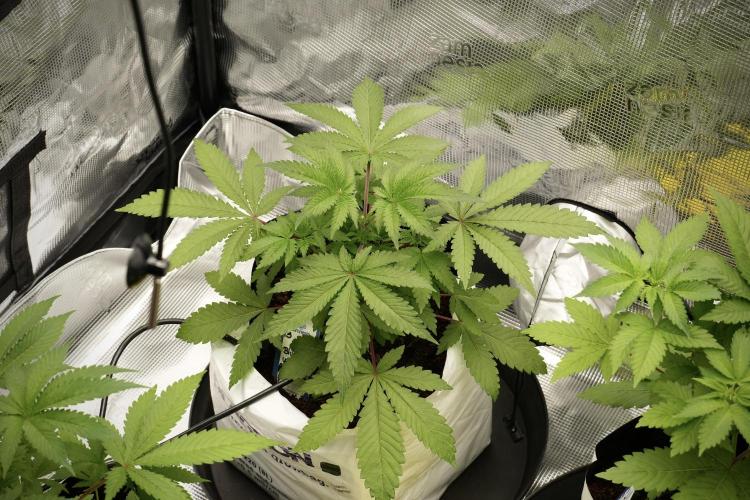
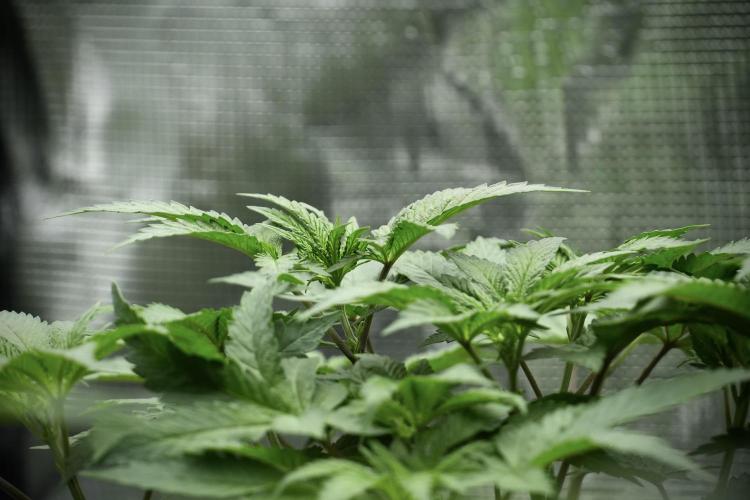
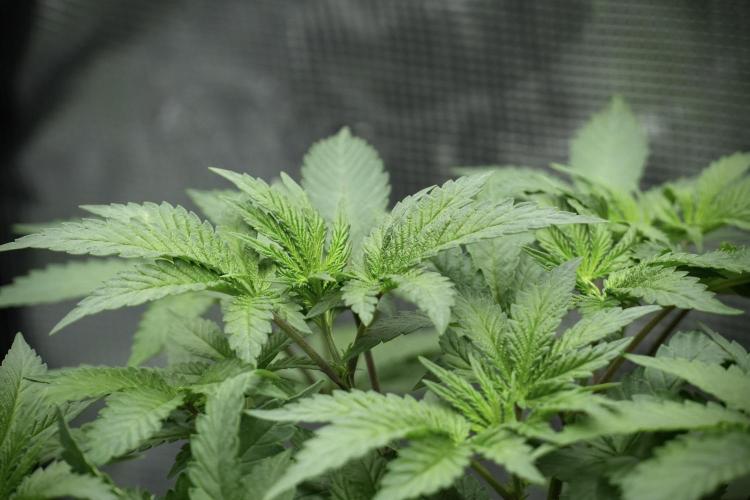
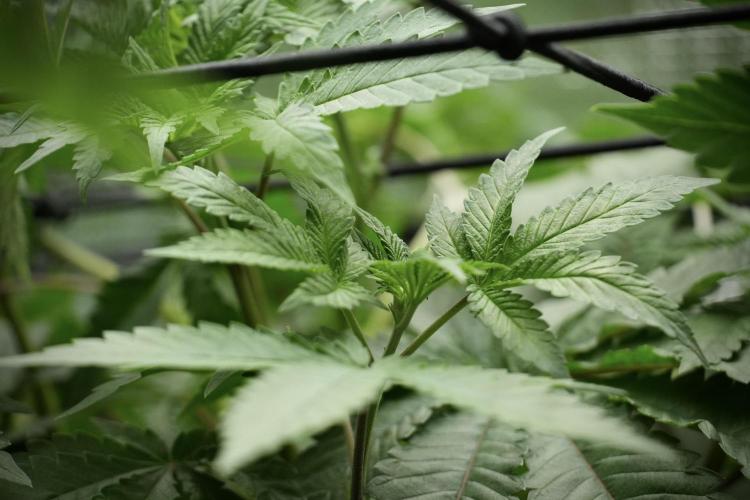
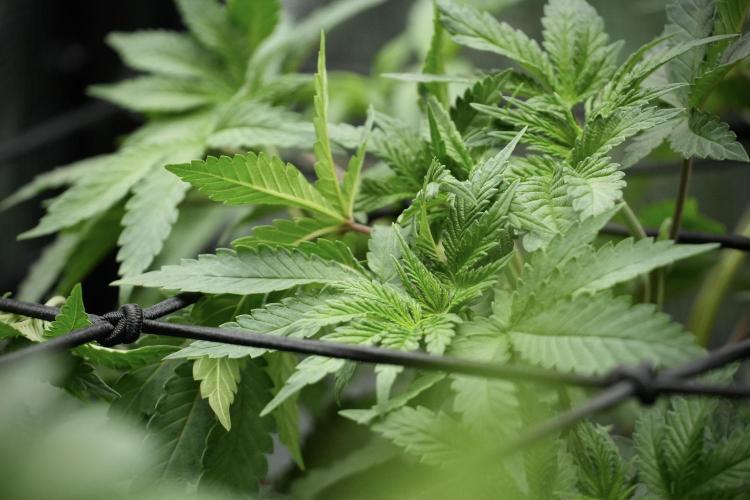
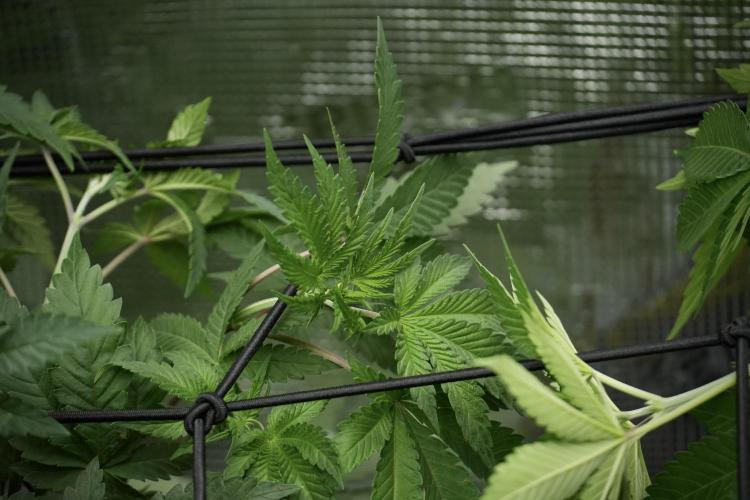
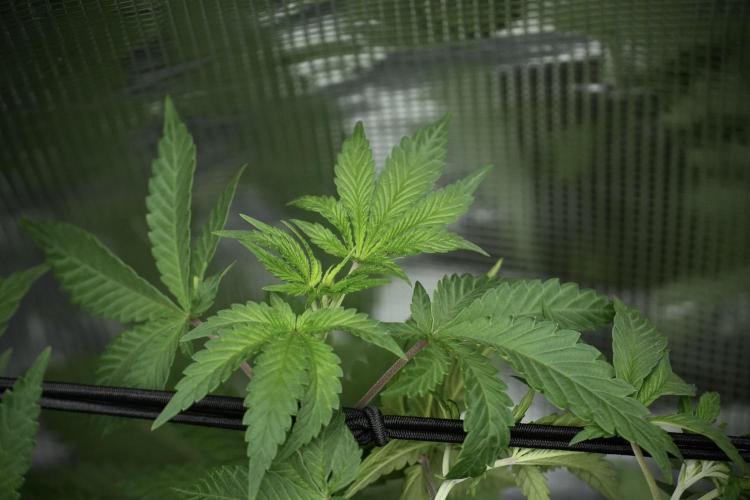
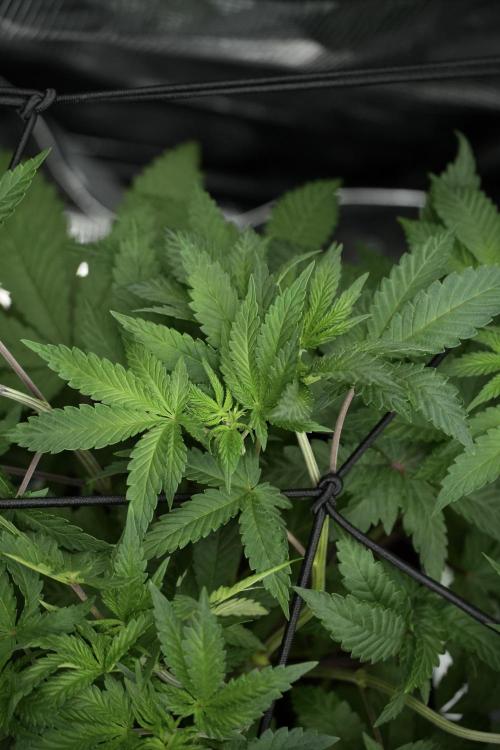
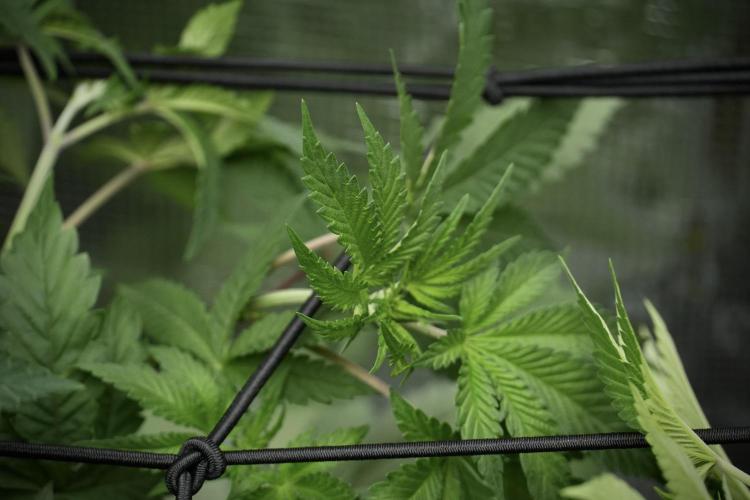
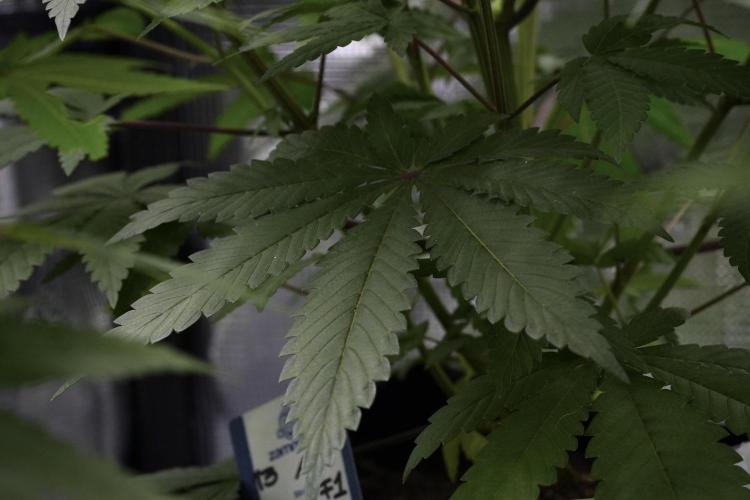
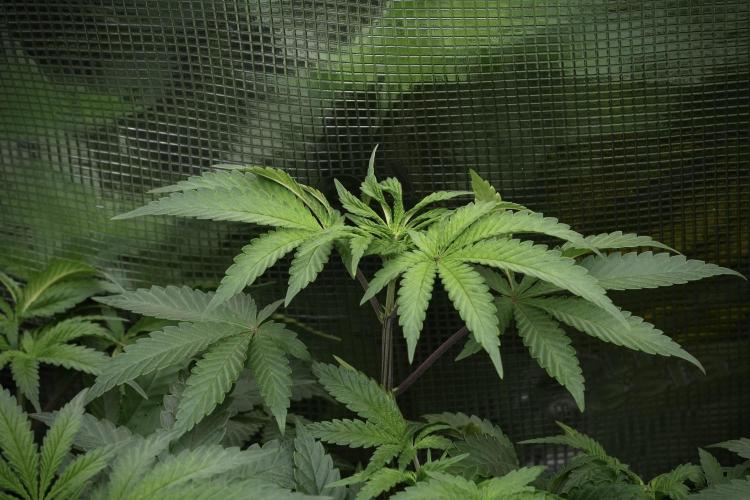
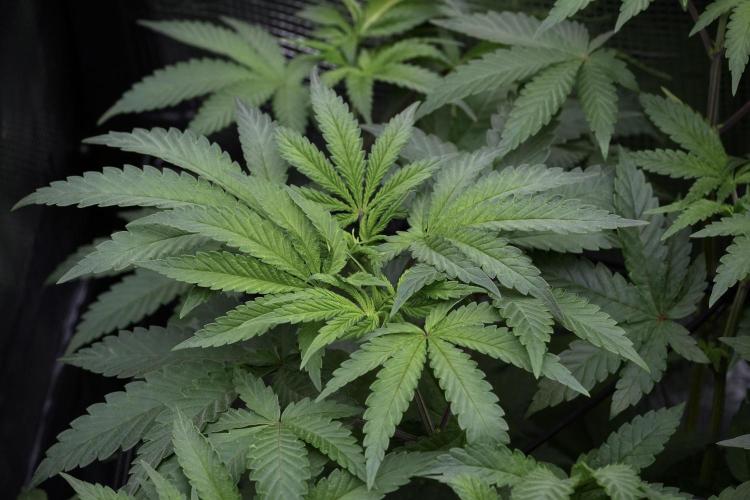
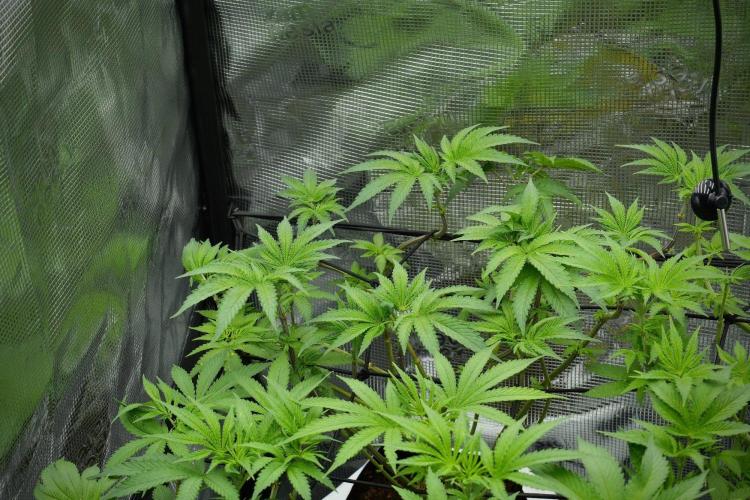
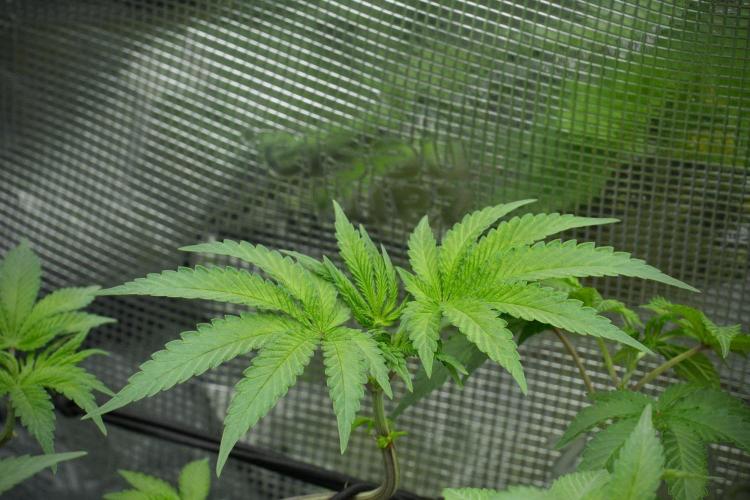
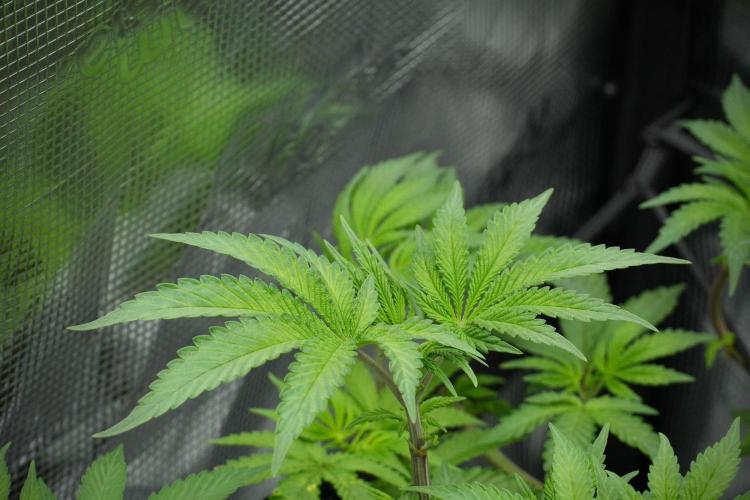
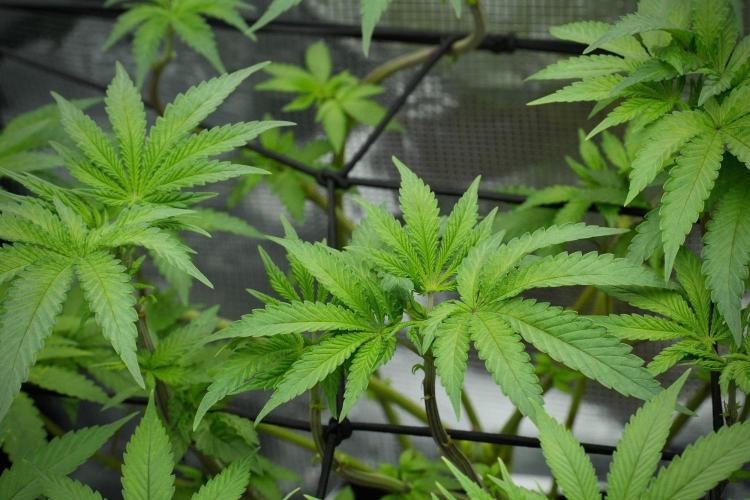
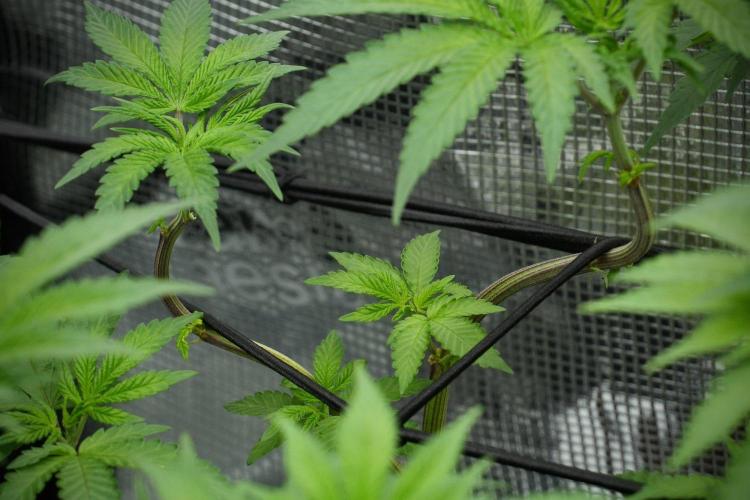
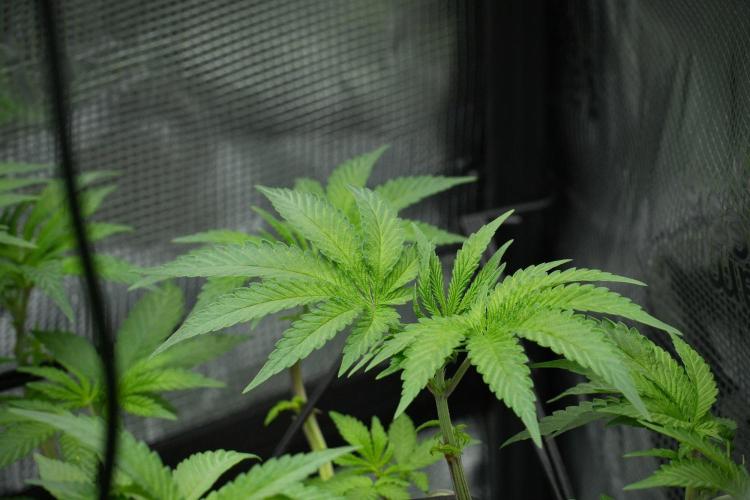
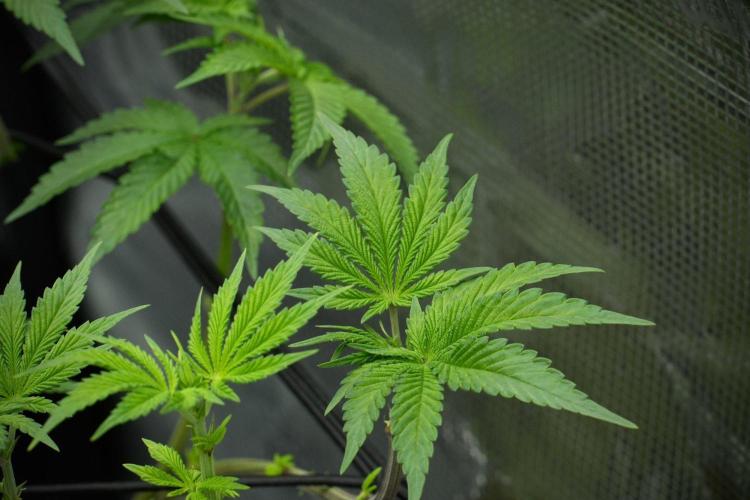
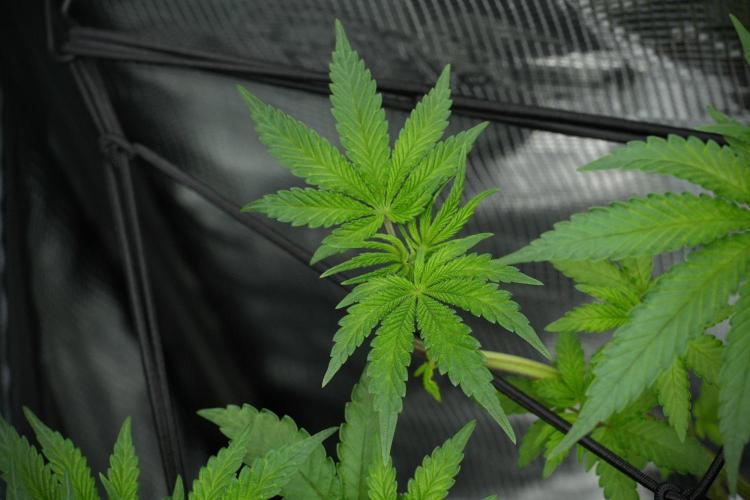
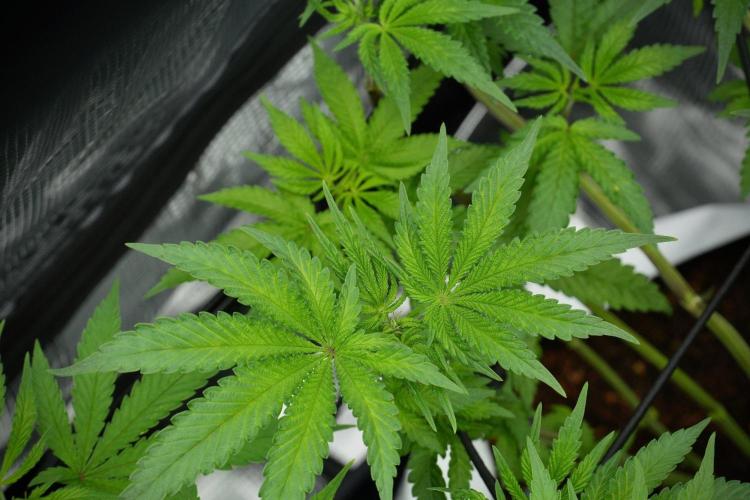
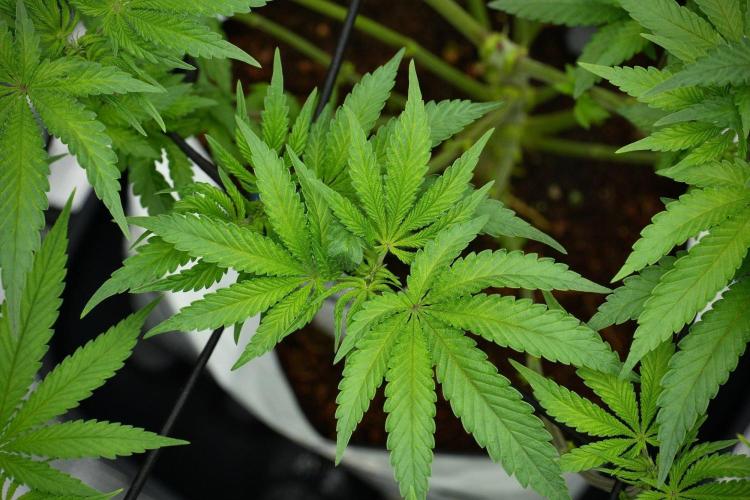
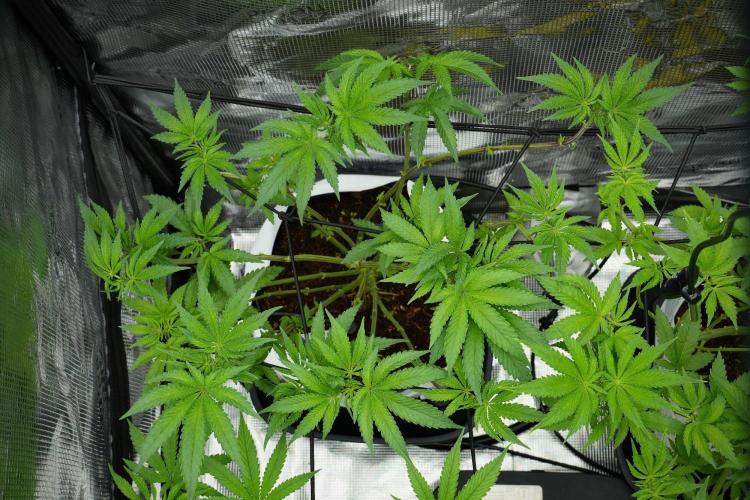
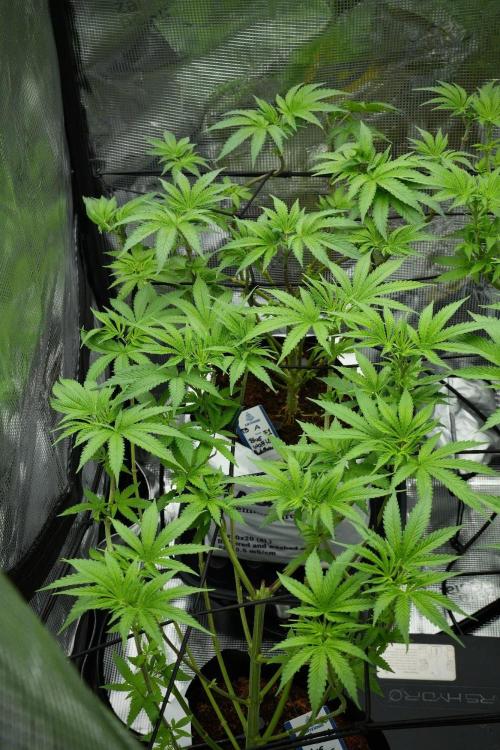
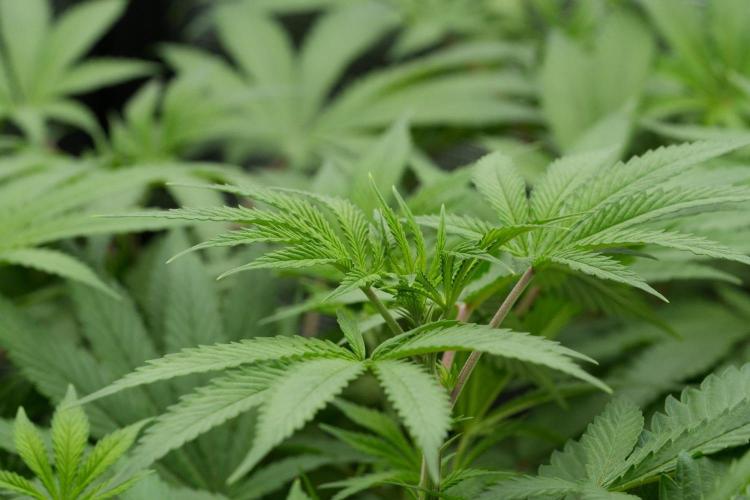
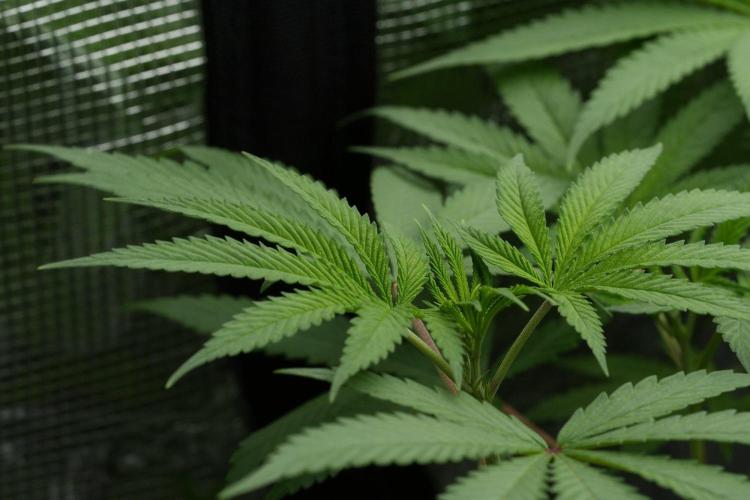
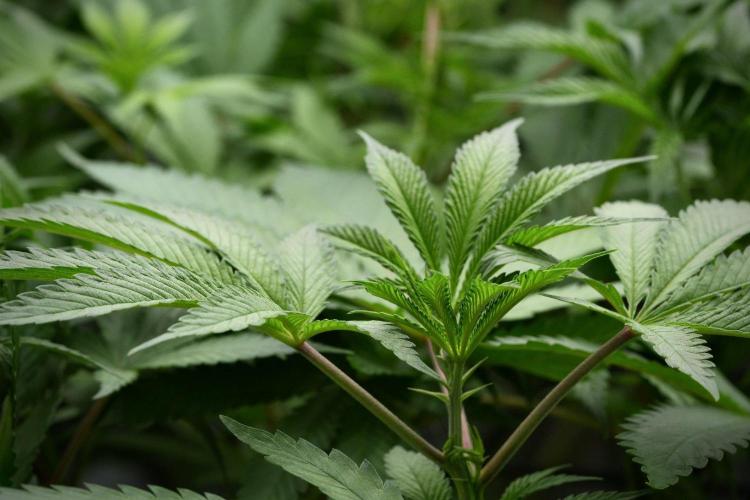
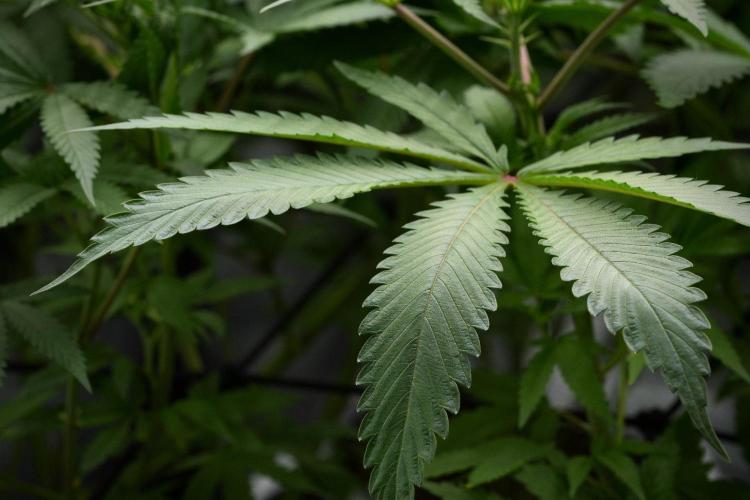
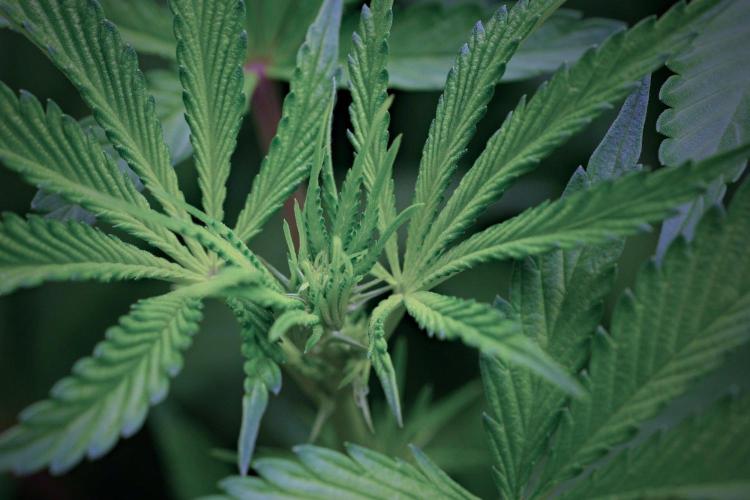
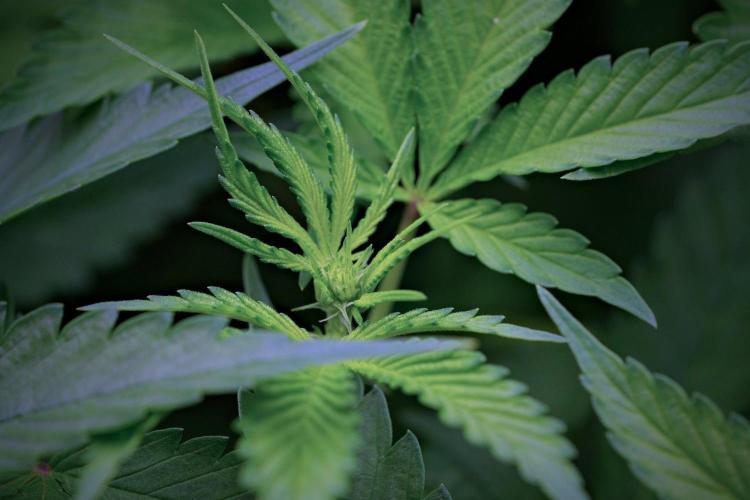
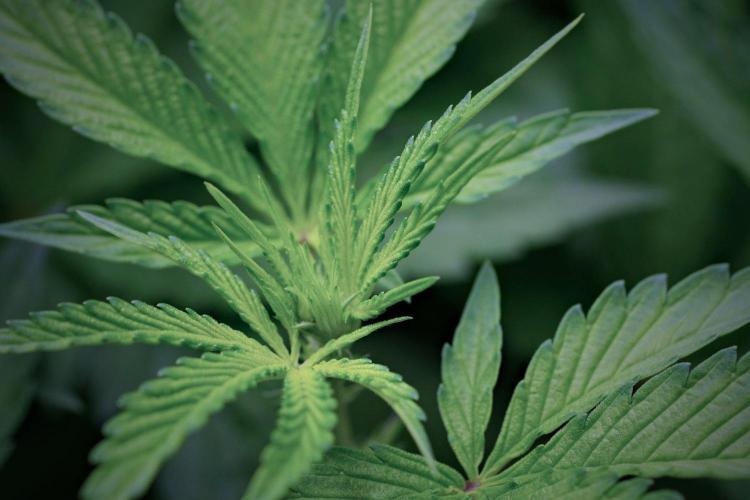
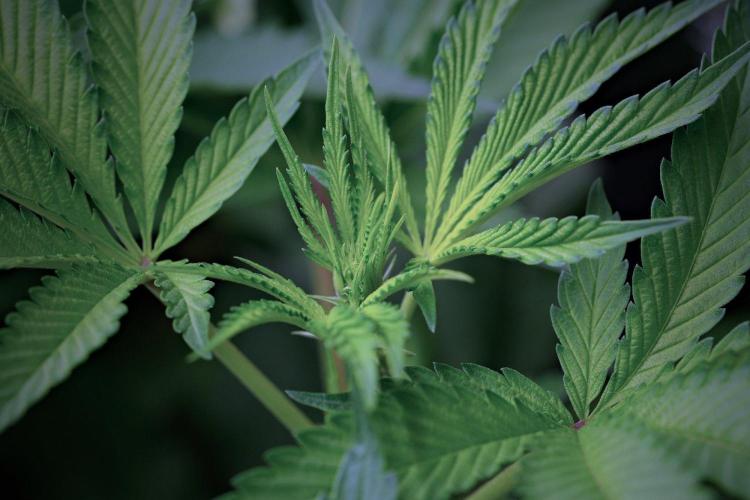
De foto's tonen duidelijk haar krachtige opkomst en sterke penwortelontwikkeling.
De kenmerkende kleine “staart” die zichtbaar was tijdens de germinatie, transformeerde snel in een gezonde jonge zaailing die verlangde naar groei.
Haar zus bleef niet ver achter.
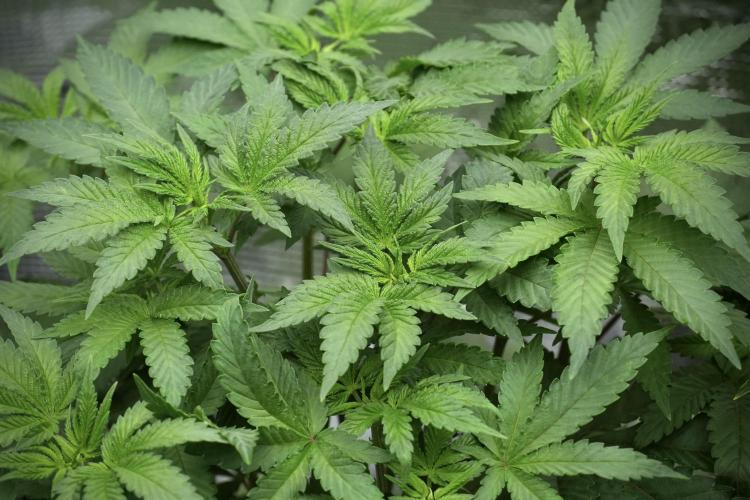
Beide zaailingen vestigden zich snel en toonden precies het soort vitaliteit dat we hopen te zien van moderne F1-genetica.
⸻
Waarom Een Vochtige Dome Gebruiken?
Tijdens de eerste paar dagen na de opkomst, brachten beide zaailingen enige tijd door onder een vochtige dome.
Dit is iets wat veel kwekers kiezen te gebruiken tijdens de vroege ontwikkeling.
Het doel is simpel:
Jonge zaailingen hebben slechts een zeer klein wortelsysteem.
Omdat ze nog niet in staat zijn om grote hoeveelheden water via de wortels op te nemen, helpt het handhaven van iets verhoogde vochtigheid om vochtverlies via de bladeren te verminderen.
De dome is niet bedoeld als een permanente omgeving.
Het is gewoon een tijdelijk hulpmiddel dat jonge zaailingen helpt de kloof te overbruggen tussen germinatie en een goede wortelvestiging.
Zodra de planten zich hebben gevestigd, wordt de dome verwijderd en nemen normale omgevingsomstandigheden het over.
Het doel is aanpassing.
Niet afhankelijkheid.
⸻
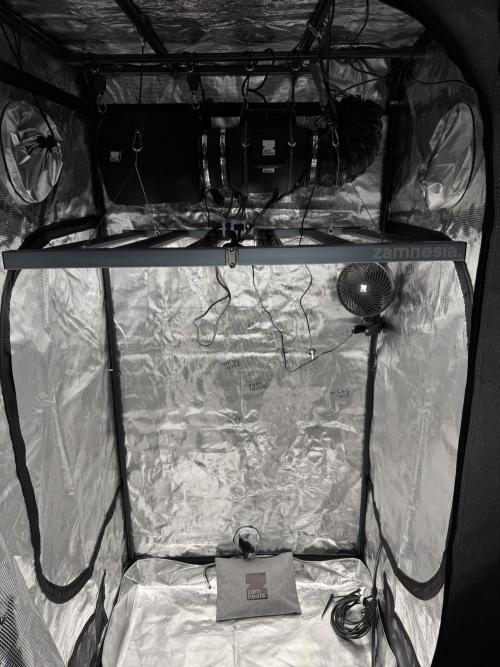
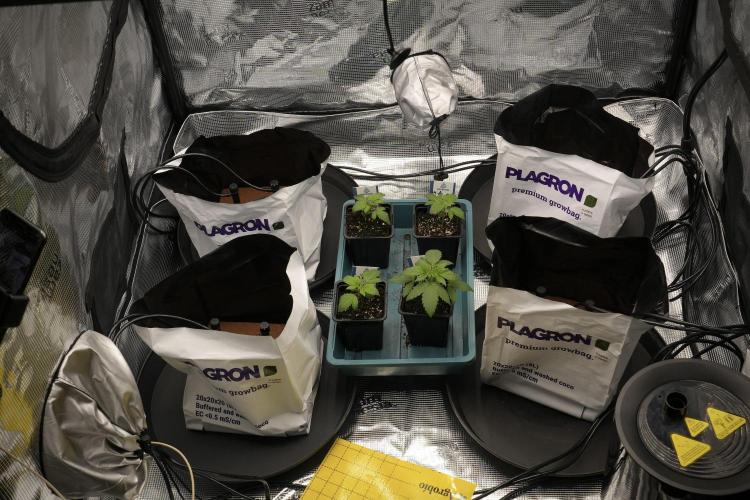
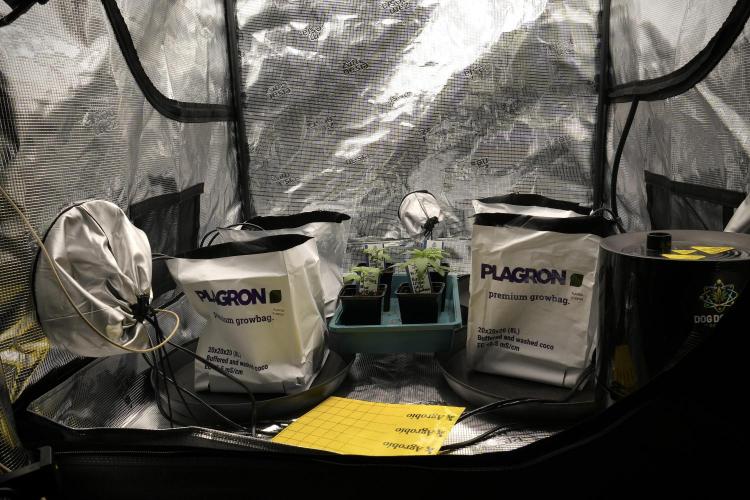
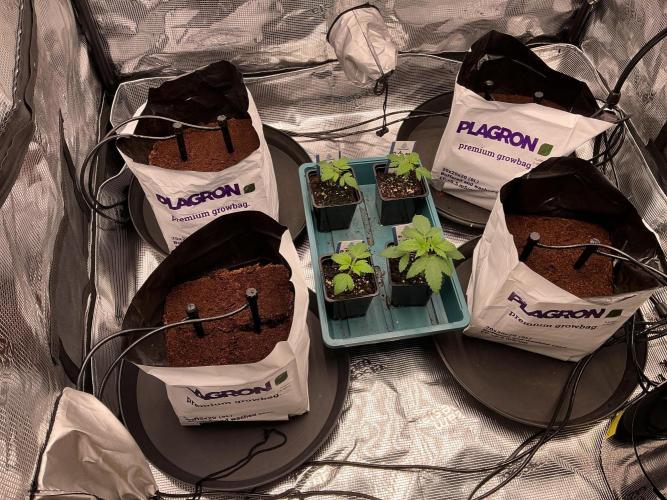
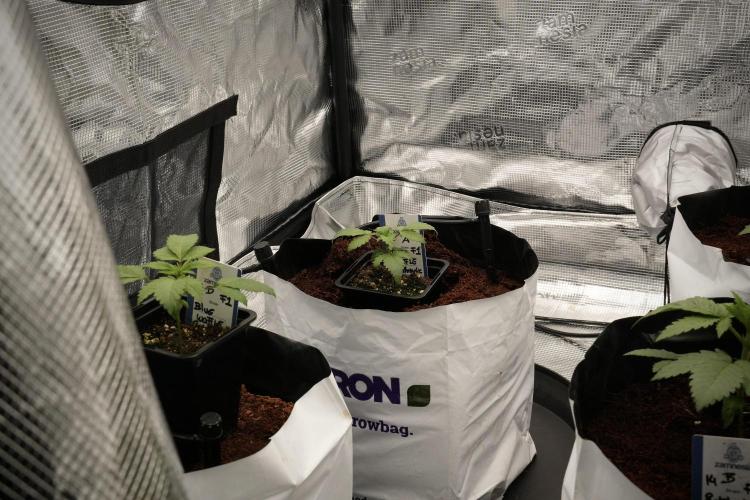
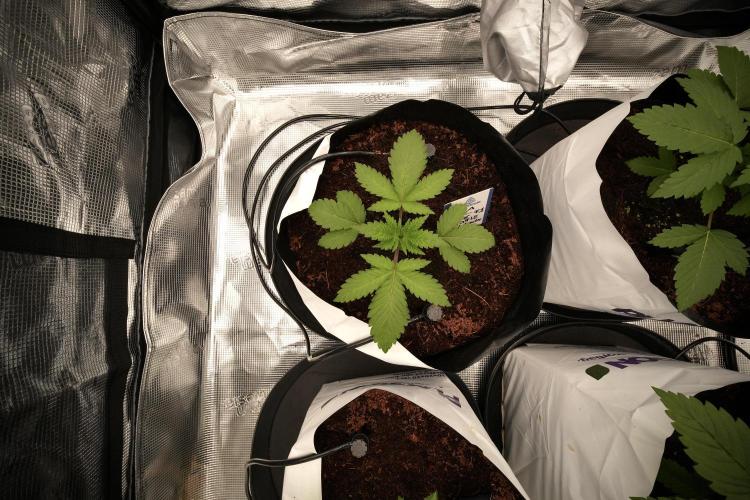
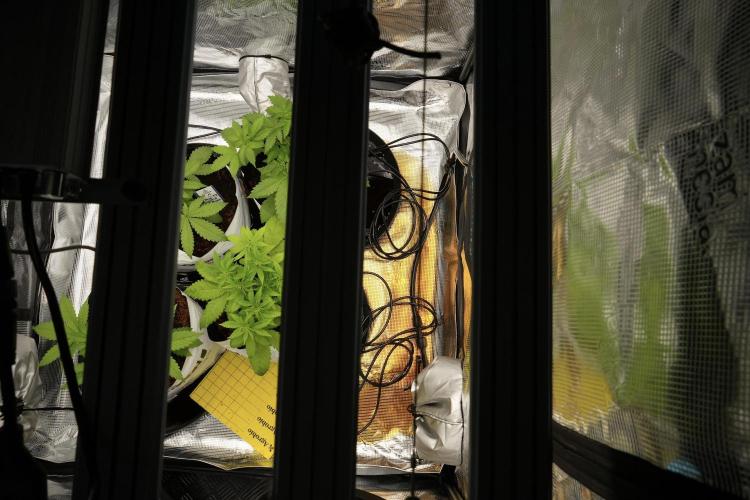
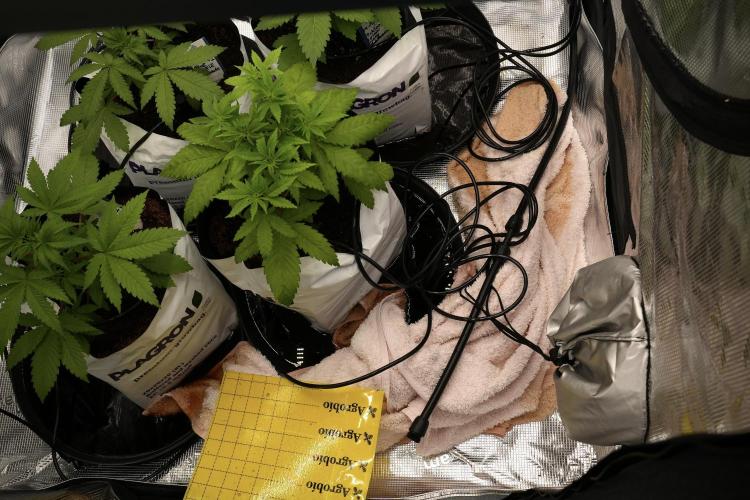
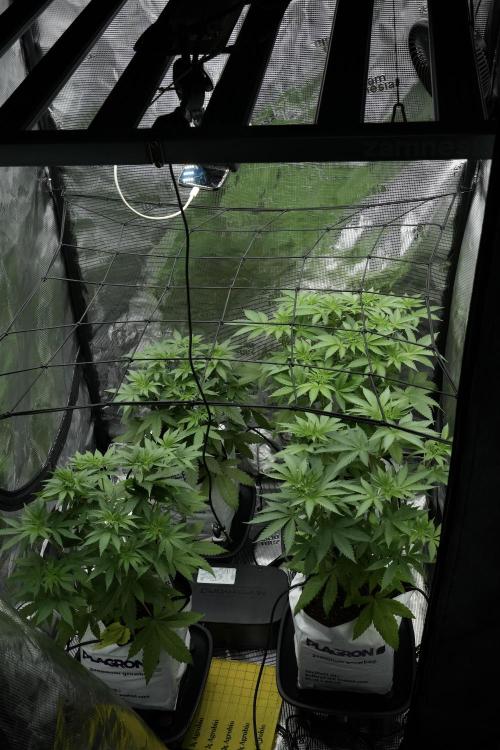
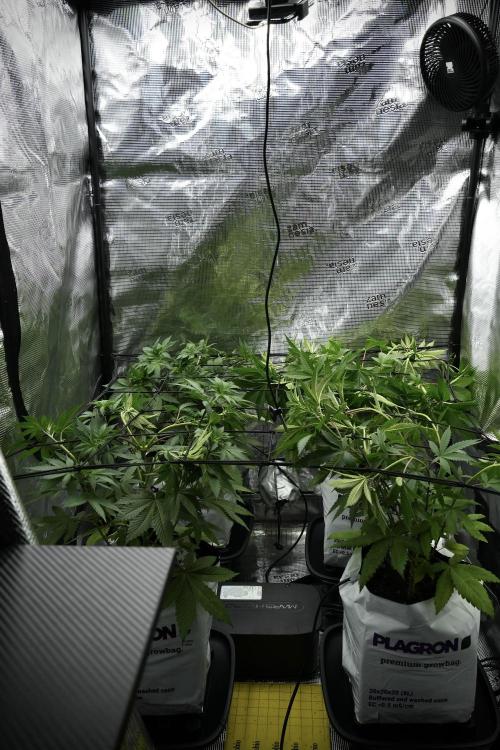
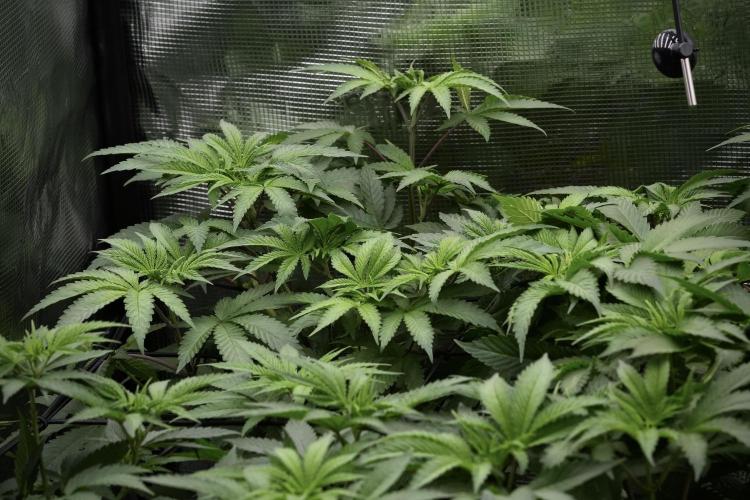
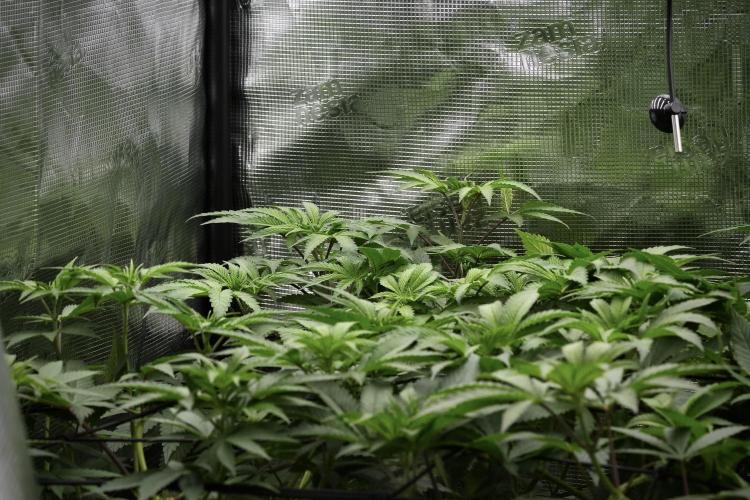
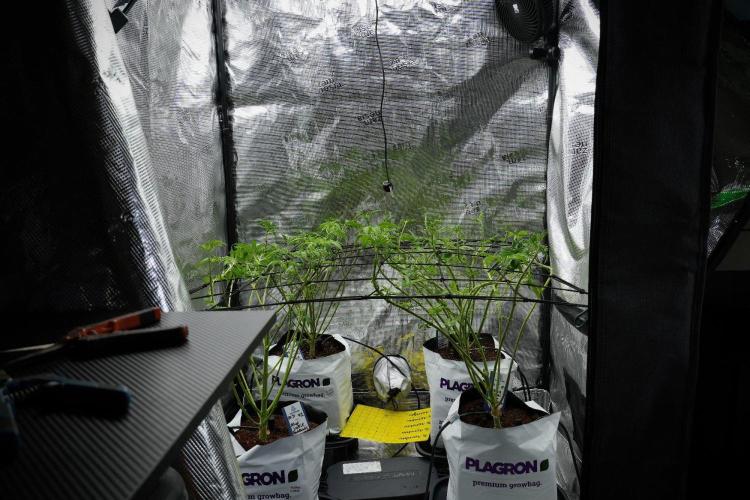
Het Bouwen Van De Nieuwe Zamnesia Kweektent Kit
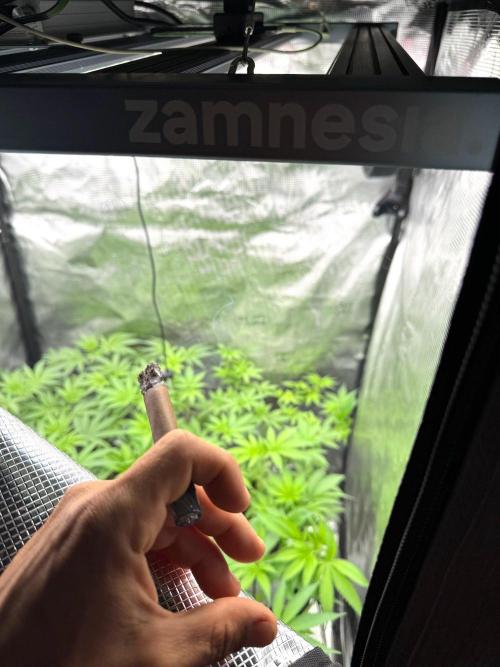
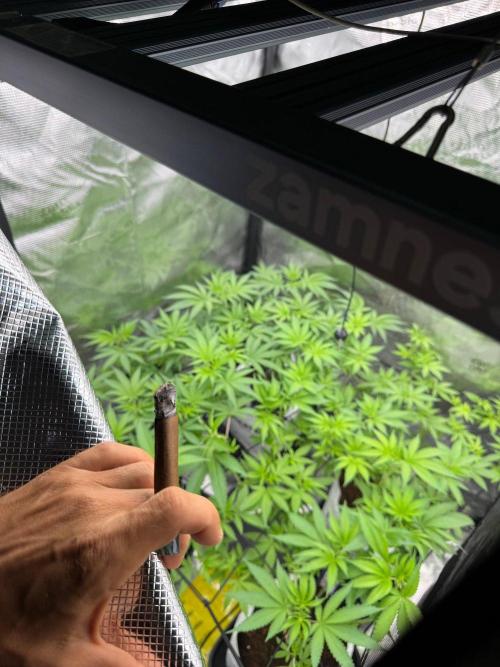
Een van de hoogtepunten van deze week was het in elkaar zetten van de gloednieuwe Zamnesia Kweektent Kit.
Alles wat in dit dagboek wordt getoond, is gebouwd en geïnstalleerd door één persoon.
Geen assistenten.
Geen speciale gereedschappen.
Geen ingewikkelde opstelling.
Gewoon geduld en een vrije middag.
Tot mijn verrassing ging het hele installatieproces extreem snel.
Inclusief:
* Tentassemblage
* LED-installatie
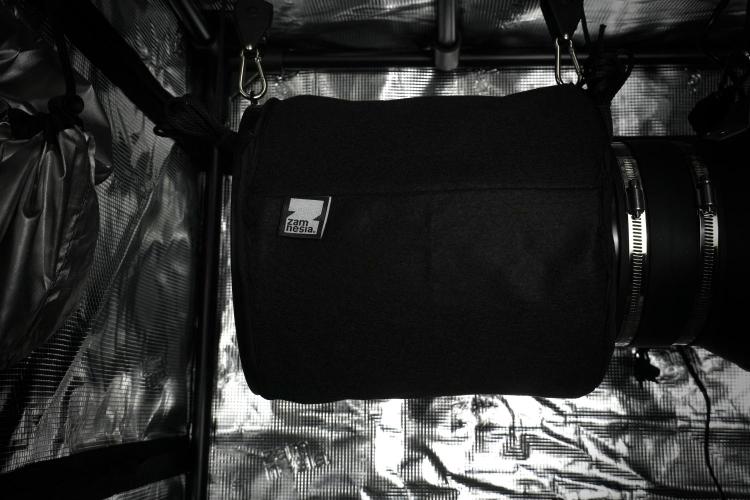
* Koolstoffilterinstallatie
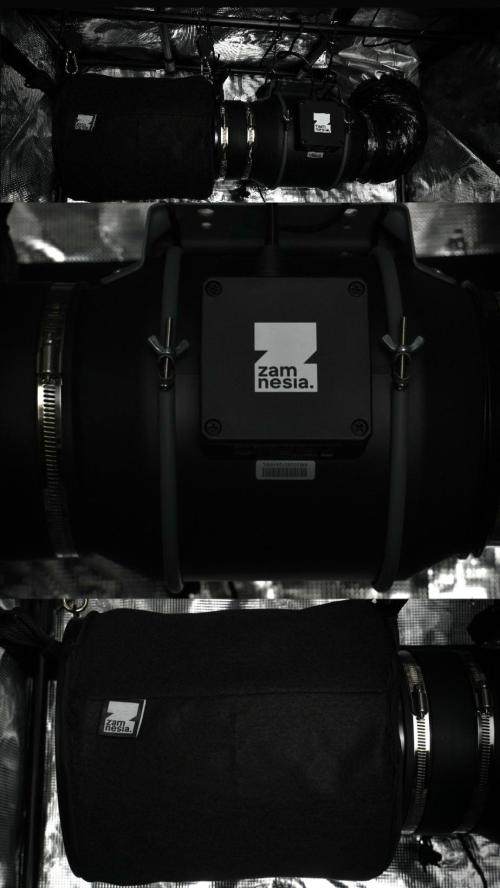
* Inline ventilatoropstelling
* Luchtkanalen
* Controllerinstallatie
* Kabelbeheer
Het complete systeem was operationeel in minder dan een uur.
Als ik het alleen kan bouwen, zullen de meeste kwekers absoluut geen problemen hebben om hetzelfde te doen.
De bijgevoegde instructies zijn uitstekend, hoewel ik in mijn specifieke ruimte een paar aanpassingen heb gemaakt en wat creatieve kweekkamer-gymnastiek heb uitgevoerd om alles precies te plaatsen waar ik het wilde.
De kwaliteit van de materialen viel meteen op.
Het frame voelt extreem stevig aan.
Eigenlijk, tijdens de opstelling, testte ik als grap hoe stevig het was en ontdekte dat het veel meer mishandeling aankon dan de meeste kweektenten ooit zullen ervaren.
De eerste indrukken zijn extreem positief geweest.
Nu is het tijd om te zien hoe het presteert gedurende een volledige kweekcyclus.
⸻
Wat Is Inbegrepen In De Kit?
Voor degenen die nieuwsgierig zijn naar de exacte opstelling die gedurende dit project wordt gebruikt, bevat de complete Zamnesia Kweektent Kit:
* Kweektent 100×100×200 cm
* Phytonaut LED Kweeklamp 320W
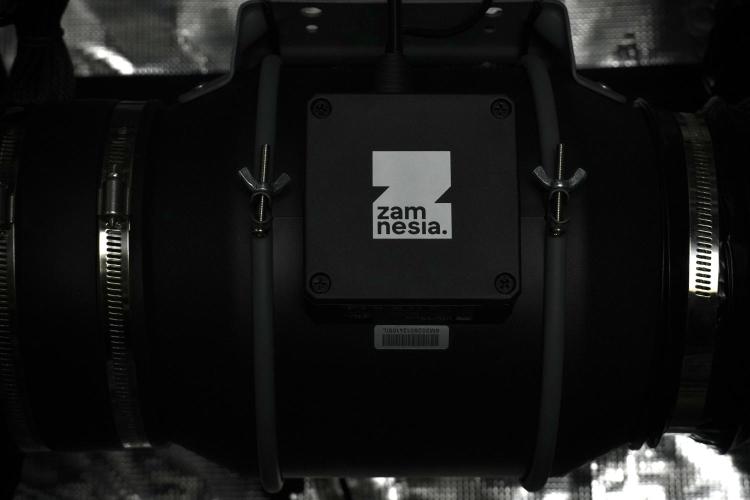
* 150 mm Inline Luchtventilator
* 150 mm Koolstoffilter
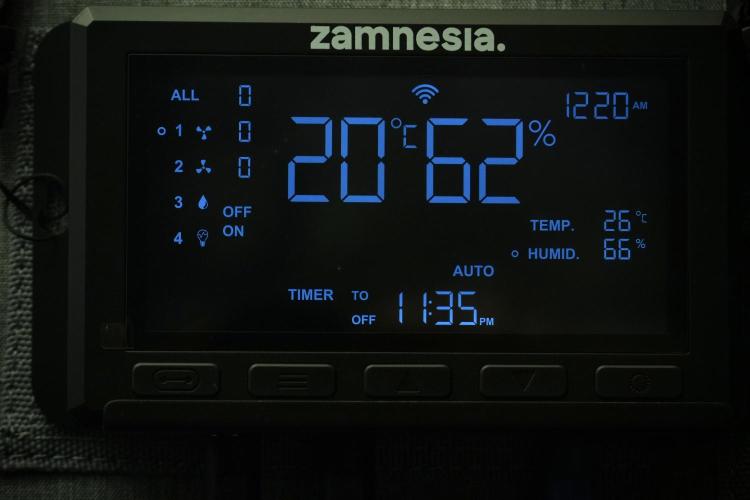
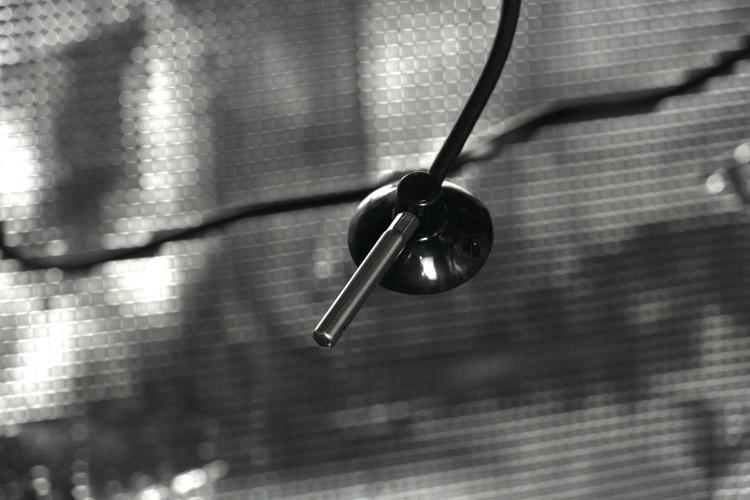
* Kweekomgeving Controller
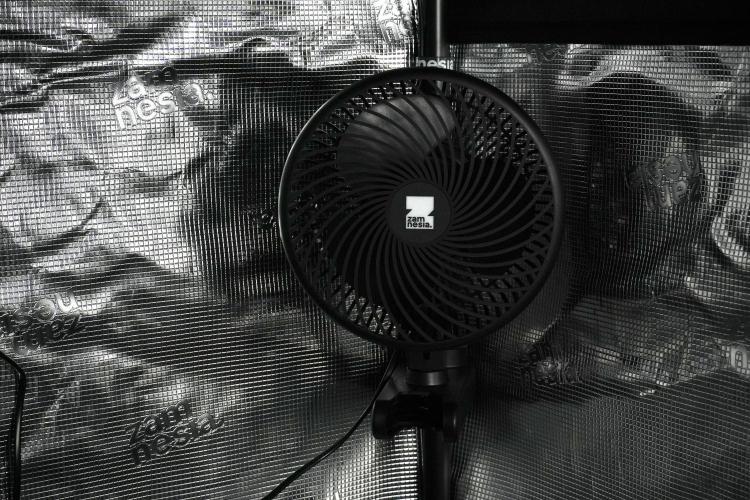
* 152 mm Clipventilator
* 2 m Flexibele Luchtkanalen
* 24-Uur Timer
* Touwratel Hangers
* Klittenband Kabelbeheersysteem
Alles wat momenteel in deze tent draait, komt rechtstreeks uit dit pakket.
Geen vervangingen.
Geen upgrades.
Geen extra apparatuur.
Dit stelt ons in staat om het hele systeem precies te evalueren zoals het aankomt.
⸻
Omgevingsomstandigheden
Voor deze eerste week waren de omstandigheden opzettelijk mild.
De lichtintensiteit werd gemeten met een PAR-meter en gehouden rond:
~200 PPFD
In deze fase hebben zaailingen simpelweg geen hoge-intensiteitsverlichting nodig.
Het doel is wortelontwikkeling en een gezonde vestiging in plaats van explosieve groei.
De planten reageerden prachtig.
Gezonde houding.
Goede kleur.
Sterke opkomst.
En constante dagelijkse voortgang.
Precies wat we hopen te zien.
⸻
Eerste Indrukken Van Blue Waffle F1
Hoewel nog steeds extreem jong, heeft Blue Waffle F1 al een positieve eerste indruk gemaakt.
Snelle germinatie.
Sterke opkomst.
Gezonde kleur.
Uitstekende vitaliteit.
En misschien nog wel het belangrijkste:
Zelfvertrouwen.
Sommige zaailingen lijken aarzelend.
Dit zaadje ging gewoon aan de slag.
De komende weken zullen veel meer onthullen over structuur, groeisnelheid, vertakking potentieel en de uiteindelijke terpeenprofiel, maar het openingshoofdstuk kon nauwelijks soepeler verlopen.
⸻
Vooruitkijken
Week 1 gaat altijd over fundamenten.
Wortels voor vruchten.
Geduld voor training.
Observatie voor interventie.
In de komende weken zullen we blijven documenteren:
* Vegetatieve groei
* Structurele ontwikkeling
* Omgevingsbeheer
* Trainingsbeslissingen
* Voedingsprogressie
* Genetische expressie
* En alles wat deze nieuwe F1-genetica kiest om te onthullen
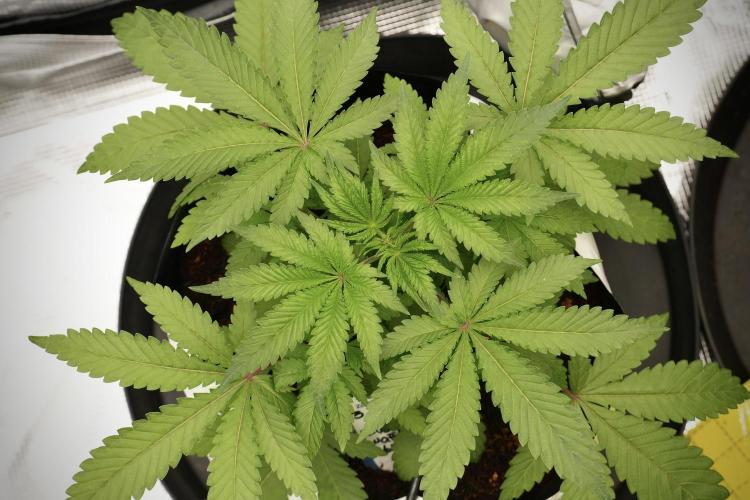
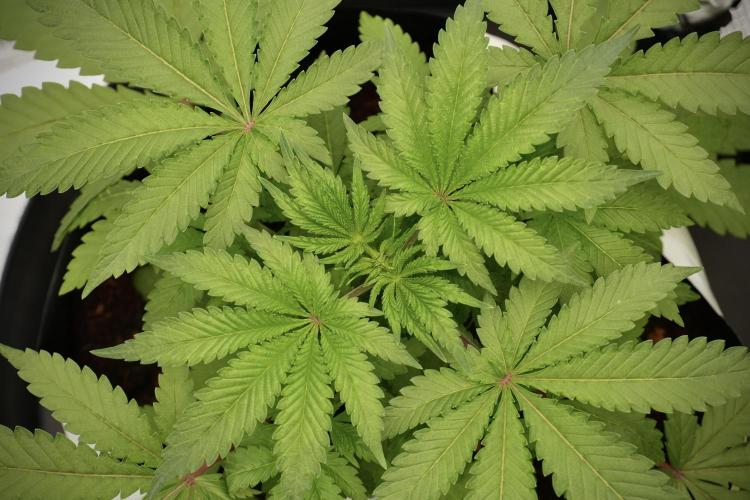
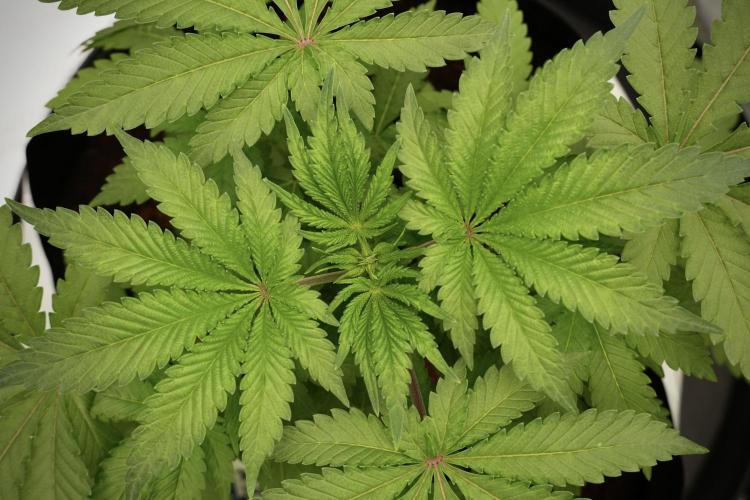
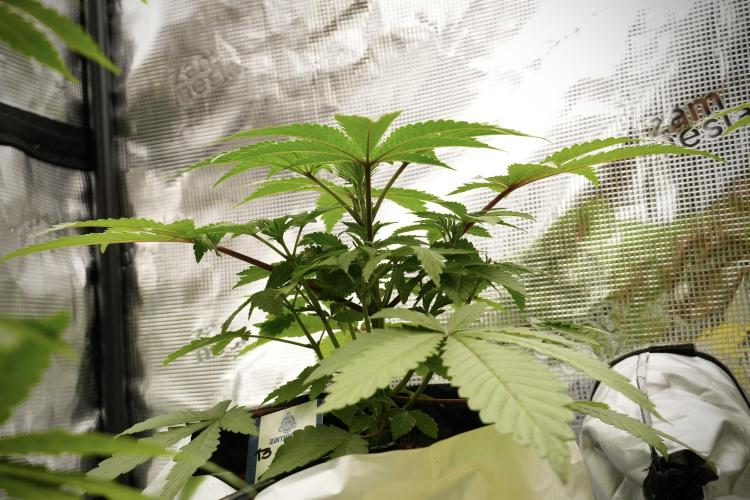
Voor nu is Blue Waffle F1 Pheno A veilig aangekomen, is ze zich in haar nieuwe huis gaan vestigen, en lijkt ze er erg blij mee te zijn.
Het koninkrijk heeft officieel zijn poorten geopend.
Laten we zien wat deze kleine Blue Waffle voor ons gaat koken. ?💙🌱
Kweker’s Liefde iedereen. 💚
13 houdt van
2 opmerkingen
Share
Used method
Overige
Germinatiewijze
1
Week 1. Vegetatie
2mo ago
1/30
6 cm
Height
18 uur
Light Schedule
26 °C
Day Air Temp
6.0
pH
Geen Geur
Smell
765 PPM
TDS
71 %
Air Humidity
24 °C
Solution Temp
24 °C
Substrate Temp
25 °C
Night Air Temp
0.3 liters
Pot Size
0.3 liters
Watering Volume
450 PPM
CO₂-niveau
Nutrients 3
Hydro A
1.2 mll
Hydro B
1.2 mll
Hydro Roots
1 mll
DogDoctorOfficial Folder 13 — Blue Waffle — Pheno A
Week 1 Vegetatie — De Eerste Stappen In Project Blue
Welkom terug, kwekers!
Met de kiemfase nu achter ons, is het tijd om de eerste echte week van vegetatieve groei voor het Zamnesia Tent-project te documenteren. Deze run is iets anders dan mijn eerdere dagboeken, omdat het vier genetica combineert die zij aan zij groeien in een speciaal ecosysteem dat is opgebouwd rond Zamnesia-apparatuur en Plagron-nutriënten.
Voor een gemakkelijkere tracking en omdat GrowDiaries het aantal foto's per update beperkt, wordt elke plant individueel gedocumenteerd van zaad tot oogst. Dit maakt het mogelijk om beter te kijken naar hoe elke fenotype zich in de loop van de tijd ontwikkelt, zelfs wanneer ze dezelfde omgeving delen.
Blue Waffle Pheno A is de eerste plant die het podium betreedt.
⸻
De Omgeving
Deze week draaide helemaal om het creëren van een stabiele basis.
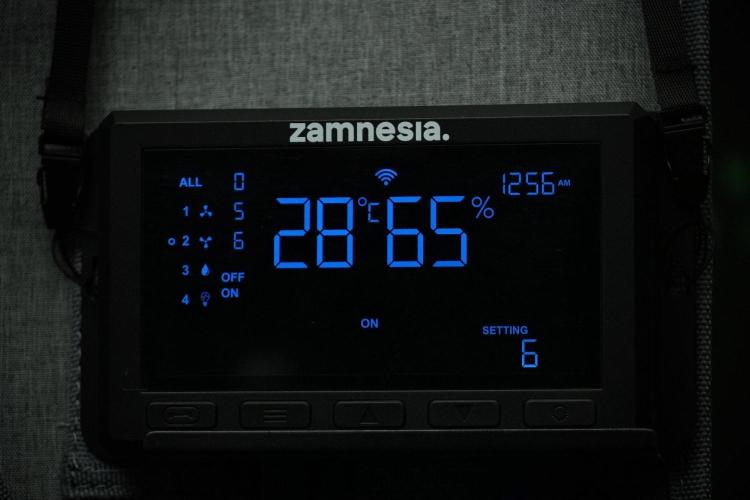
De tent draait onder het Zamnesia-ecosysteem, met temperaturen rond de 26°C en een relatieve luchtvochtigheid van gemiddeld 71%, wat een comfortabele omgeving creëert voor jonge zaailingen.
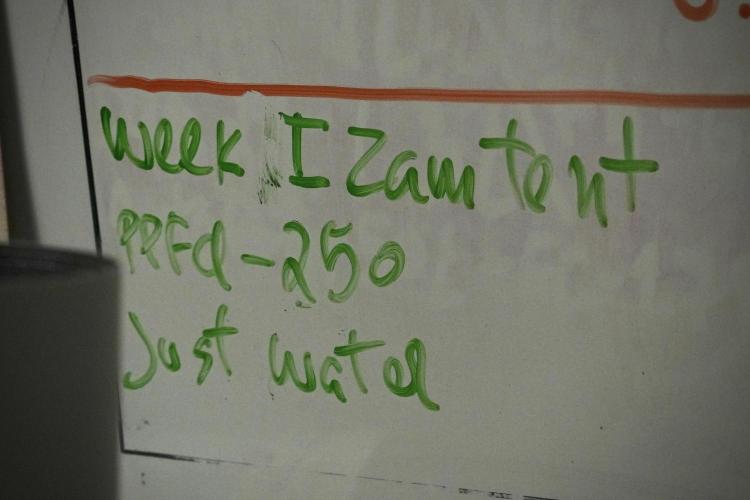
De verlichting werd opzettelijk sterker ingesteld dan veel kwekers misschien zouden verwachten. De LED was ingesteld op 27% output, wat ongeveer 86 watt van het stopcontact trekt, resulterend in een gemeten PPFD van ongeveer 250 µmol/m²/s op het bladerdakniveau.
Sommige kwekers geven de voorkeur aan een lagere start, maar een deel van dit project is het observeren van hoe moderne genetica reageren wanneer ze vanaf het begin een iets sterkere lichtintensiteit krijgen.
Luchtbeweging werd verzorgd door:
* Afzuigventilator: Niveau 5
* Circulatieventilator: Niveau 4
Beide instellingen zorgden voor voldoende luchtstroom om de omgeving stabiel te houden zonder onnodige stress op de jonge zaailingen te plaatsen.
⸻
Voedingsstrategie
Hoewel de zaailingen hun eerste dagen alleen regenwater kregen, markeerde deze week ook de introductie van hun eerste voedingsoplossing.
Het voedingsprogramma bestaat uit:
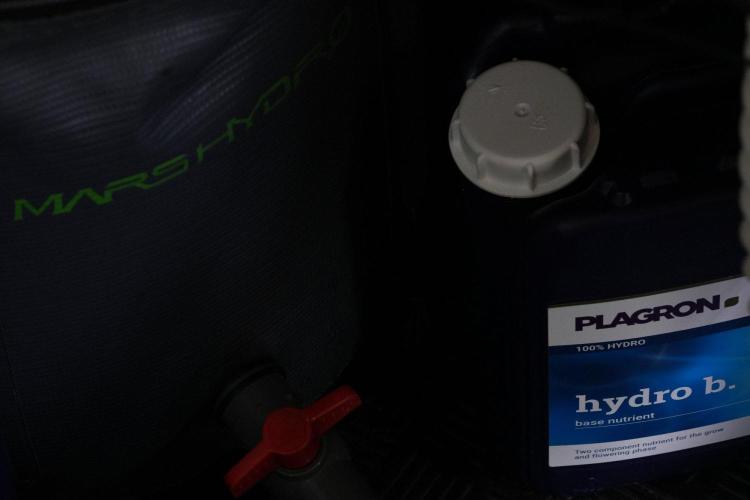
* Plagron Hydro A
* Plagron Hydro B
* Plagron Hydro Roots
Gemengd tot:
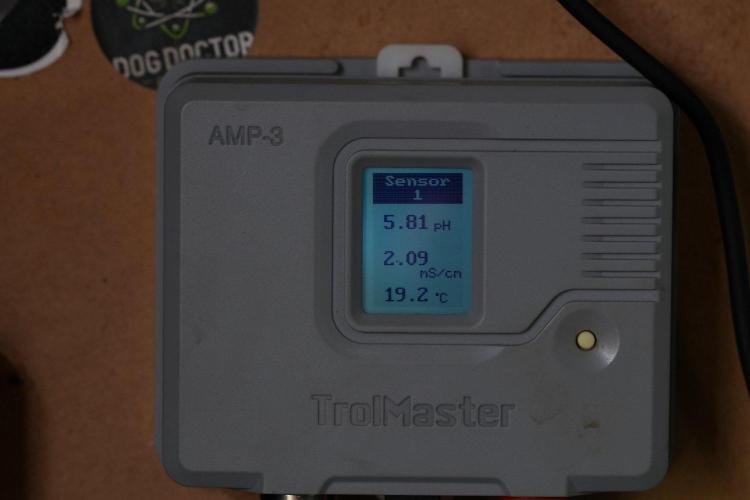
* EC: 1.53 mS/cm
* pH: 5.96
* Oplossingstemperatuur: 24.2°C
Het doel is niet agressieve voeding, maar eerder de planten voorbereiden op de overgang naar coco terwijl ze vanaf het begin een gezonde wortelontwikkeling aanmoedigen.
⸻
Voorbereiden Van Het Volgende Thuis
Een van de grootste mijlpalen deze week vond buiten de plant zelf plaats.
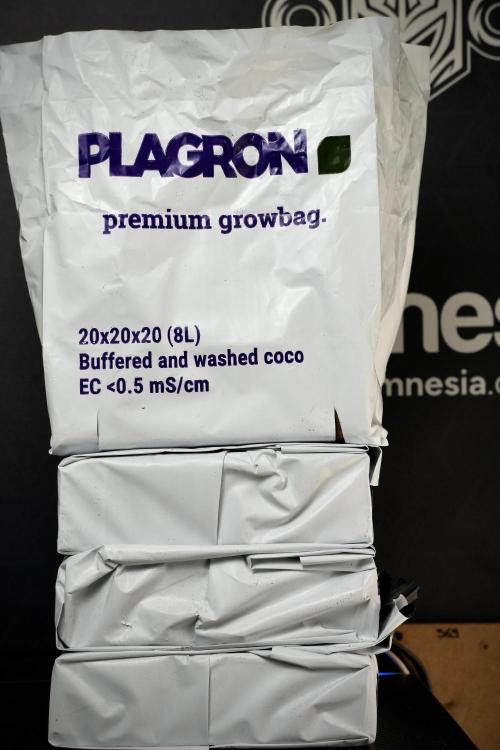
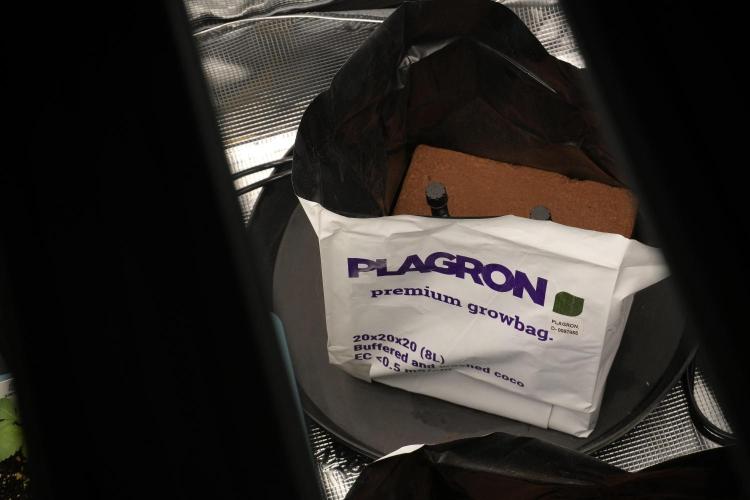
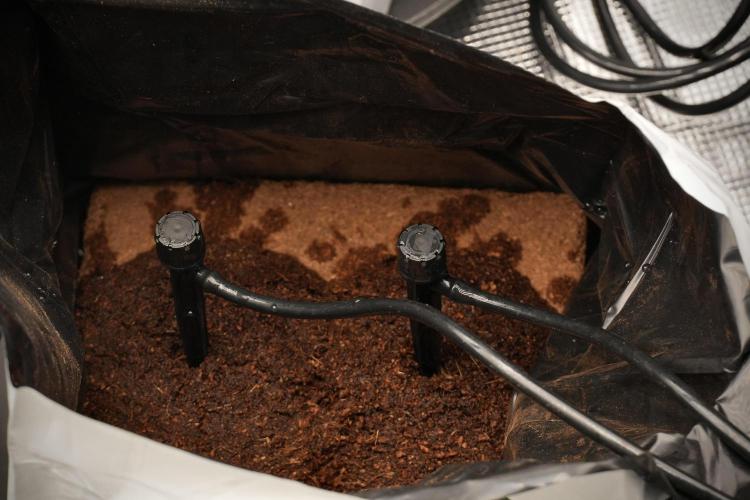
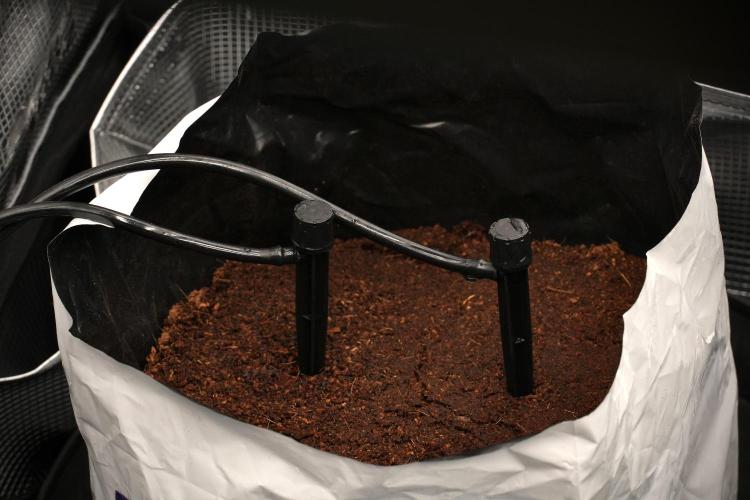
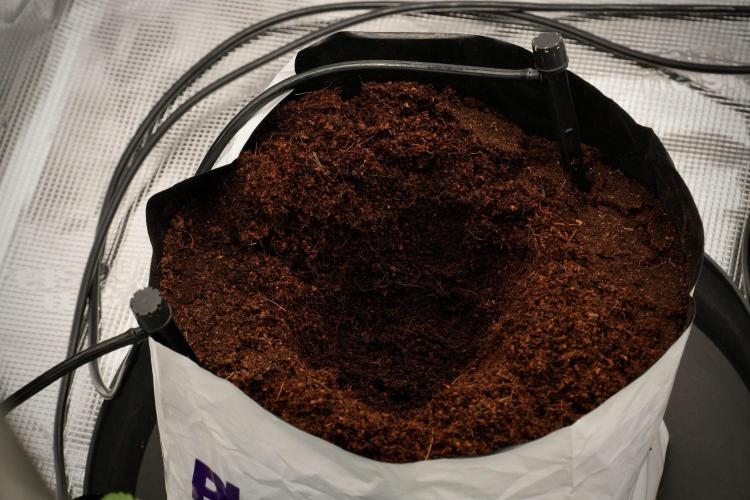
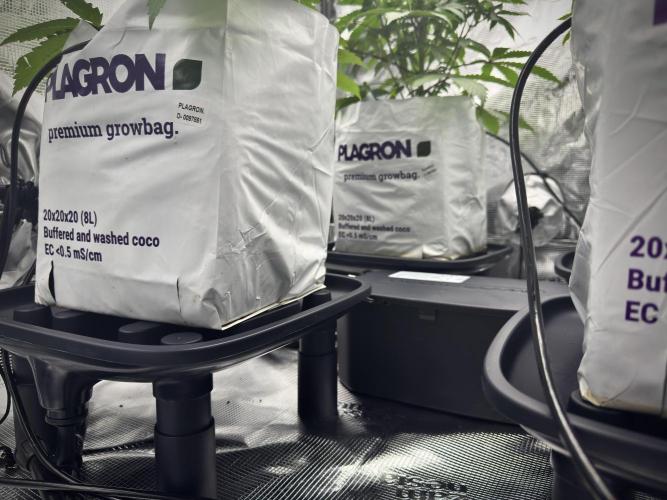
De Plagron Premium Grow Bags werden gevuld en gehydrateerd ter voorbereiding op de transplantatie van volgende week.
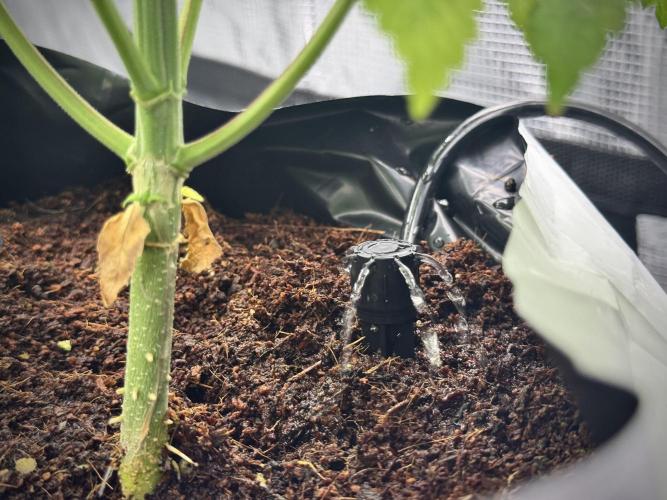
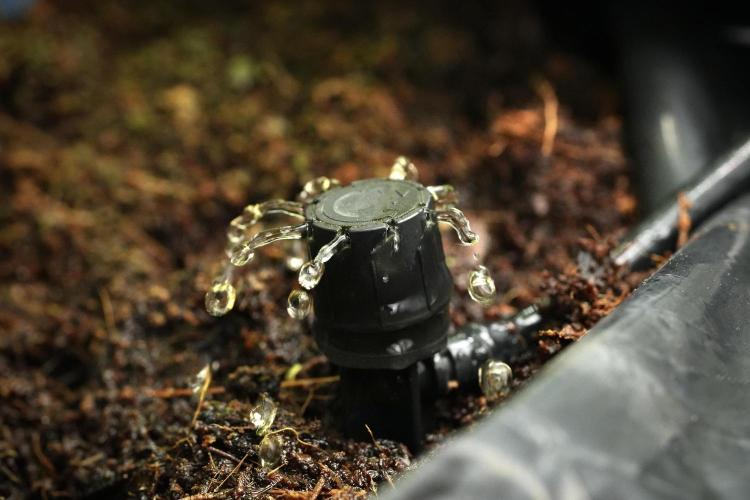
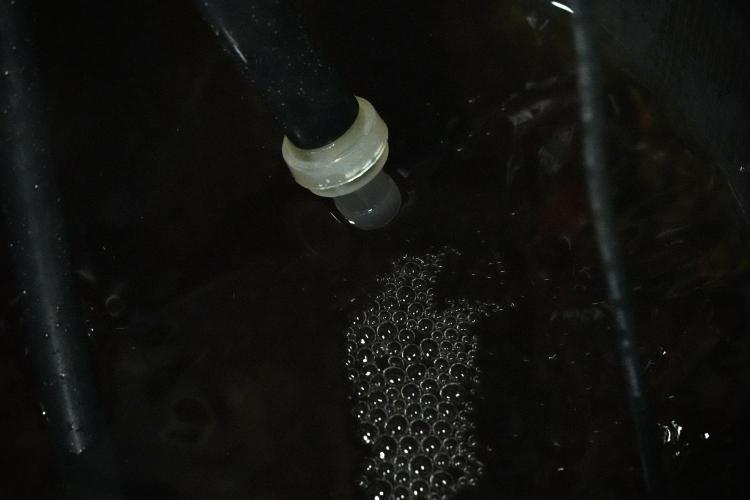
In plaats van de coco in één keer te overstromen, werd de hydratatie langzaam uitgevoerd met behulp van een reservoir-gevoed druppelsysteem. Deze geleidelijke aanpak stelt de coco in staat om vocht gelijkmatig op te nemen en natuurlijk uit te zetten in de grow bag.
Tijdens dit hydratatieproces werd alleen gedestilleerd water gebruikt.
De zaailingen zelf blijven voorlopig in hun startercontainers, maar volgende week zullen ze de overstap maken naar hun uiteindelijke coco-omgeving en het volgende hoofdstuk van hun ontwikkeling beginnen.
⸻
Blue Waffle Pheno A
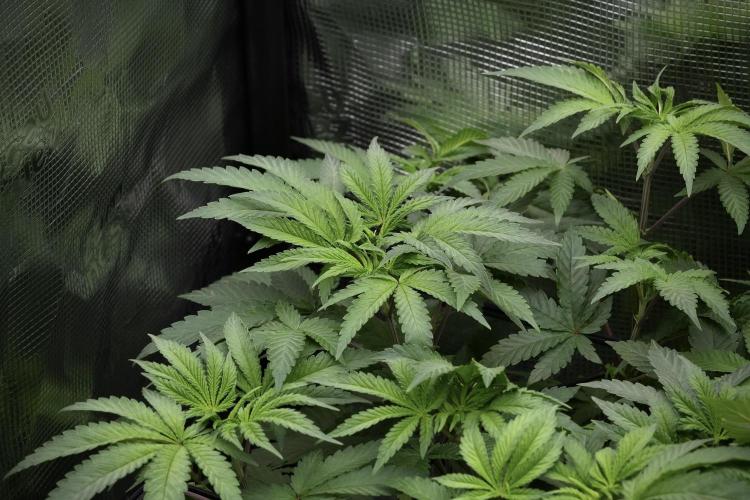
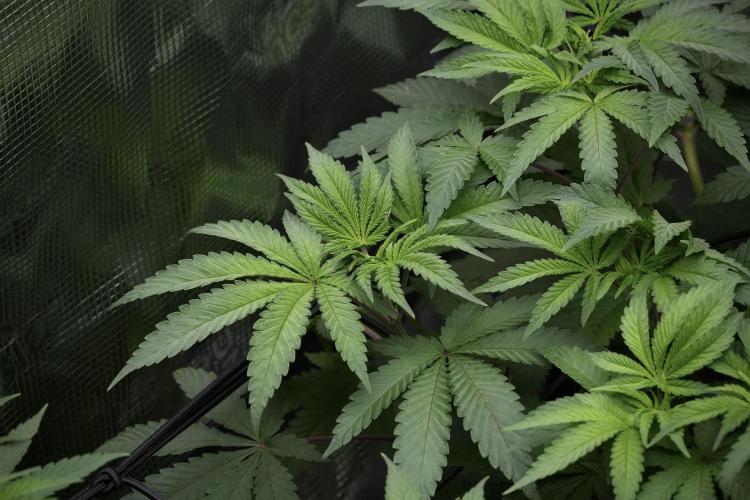
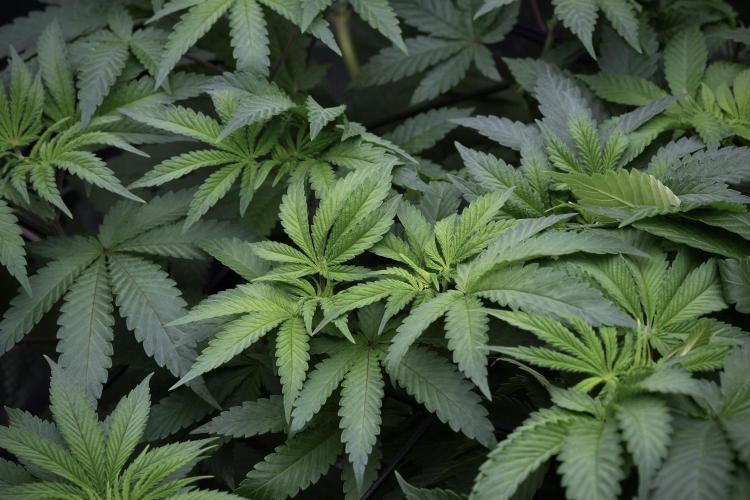
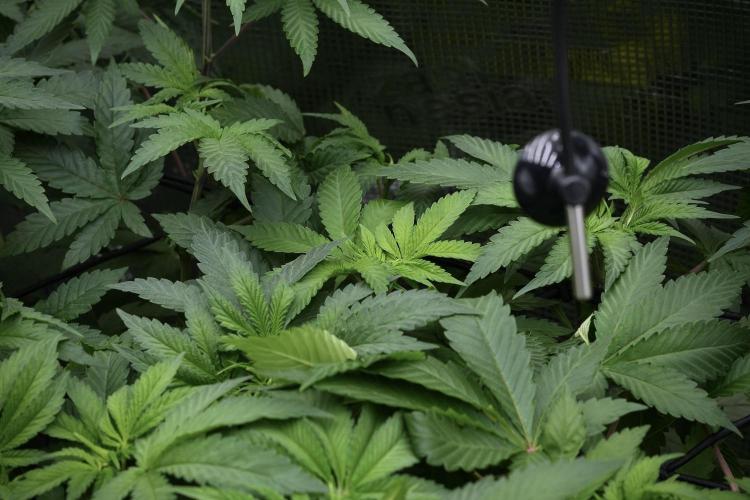
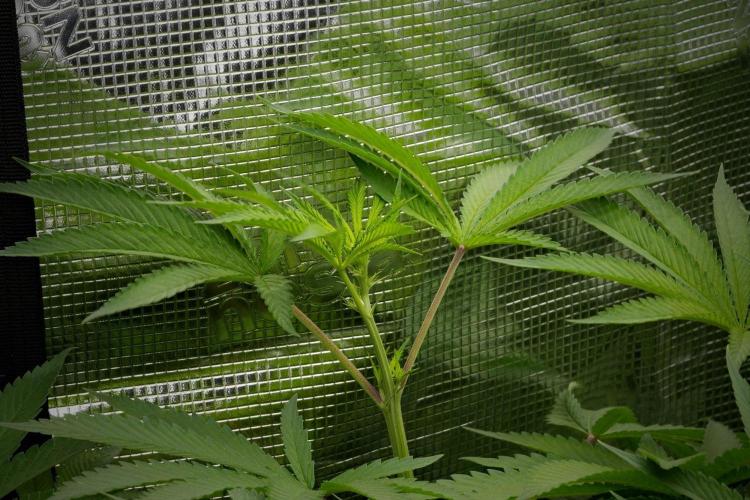
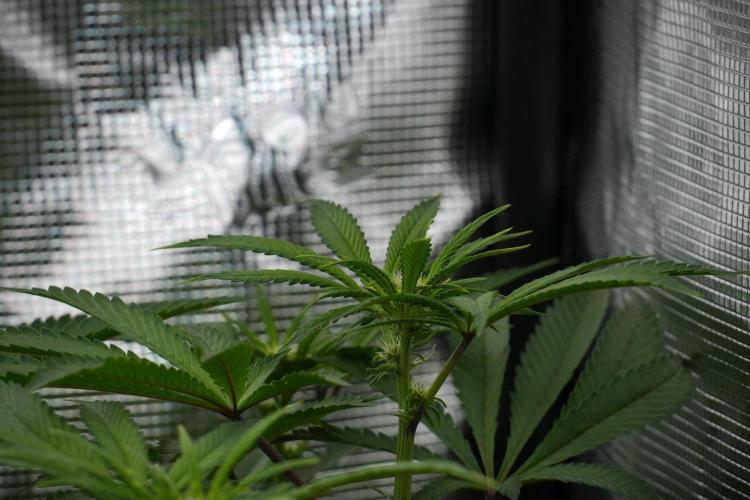
Ondanks dat ze pas een week in de vegetatie is, toont Pheno A al een eigen persoonlijkheid.
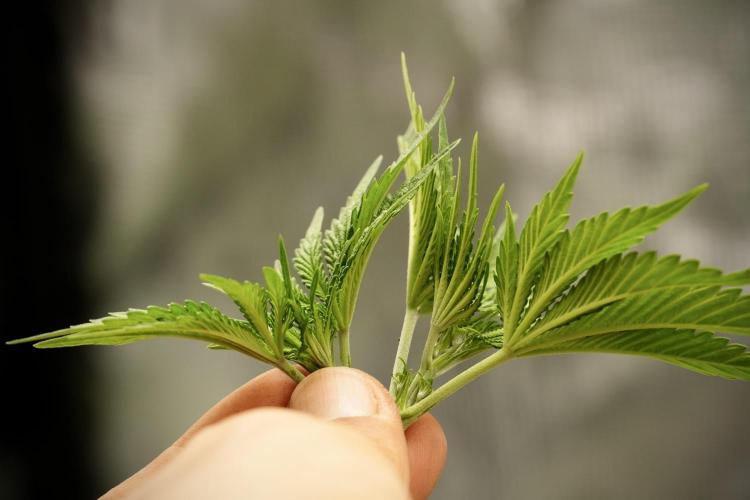
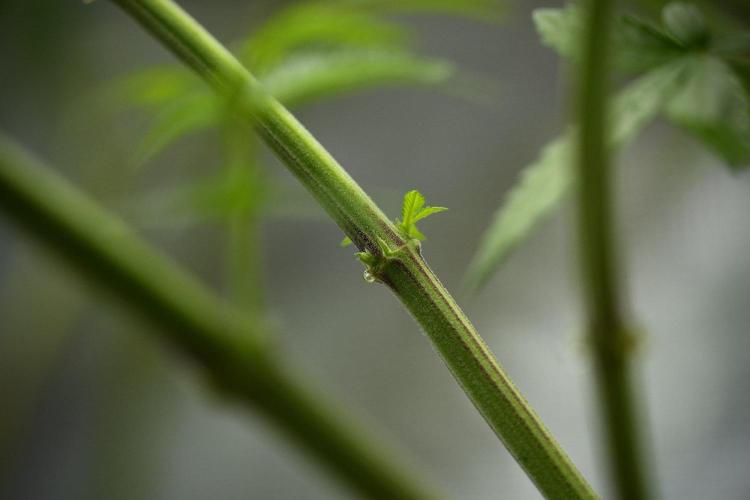
De eerste echte bladeren vertoonden in het begin een kleine cosmetische imperfectie, maar het lijkt niets meer te zijn dan een kleine ontwikkelingsquirk. Alle daaropvolgende groei is schoon, gezond en goed gevormd.
Wat het meest opvalt in deze fase is de structuur.
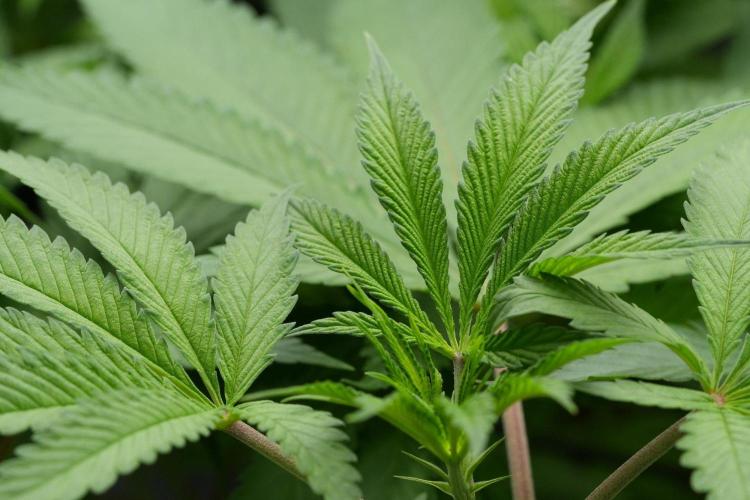
De internodale afstand blijft zeer klein, wat een compact en efficiënt groeipatroon oplevert. De plant vordert momenteel naar haar derde bladset terwijl ze een laag profiel en uitstekende symmetrie behoudt.
De stam blijft stevig in verhouding tot zijn grootte, terwijl de nieuwe groei een gezonde groene kleur vertoont zonder tekenen van voedingsstress.
In deze fase zijn er helemaal geen zorgen.
In plaats daarvan geeft deze fenotype de indruk van een zaailing die zich richt op het opbouwen van een solide basis voordat ze de verticale groei versnelt.
Soms zijn de sterkste planten niet degene die als eerste uit de startblokken schieten. Het zijn degenen die zich stilletjes vanaf het begin correct opbouwen.
Blue Waffle Pheno A geeft momenteel precies die indruk.
⸻
Vooruitkijken
Volgende week zou aanzienlijk meer evenementvol moeten zijn.
De geplande transplantatie in de gehydrateerde Plagron coco grow bags zal een volledig nieuwe wortelomgeving introduceren, en het zal interessant zijn om te zien hoe Blue Waffle Pheno A reageert op de verhoogde ruimte en de volledig hydroponische voedingsstrategie.
Voor nu blijft de missie eenvoudig:
Gezonde wortels. Stabiele groei. Sterke fundamenten.
De rest komt later.
⸻
Dank U
Een grote dank aan iedereen die meedoet en deze dagboeken steunt.
Speciale dank aan:
* Zamnesia voor de genetica, apparatuur en ondersteuning die dit project mogelijk maakten.
* Plagron voor het leveren van de voeding en groeimedia die gedurende deze run zijn gebruikt.
* Het GrowDiaries-team voor het bieden van een platform waar kwekers elkaar kunnen delen, leren en inspireren.
* En het allerbelangrijkste, de hele kweekgemeenschap wiens kennis, nieuwsgierigheid en bereidheid om te helpen deze hobby blijft vooruitduwen.
De reis begint pas.
Tot volgende week voor de eerste transplantatie en het volgende hoofdstuk van Blue Waffle Pheno A.
Kwekersliefde en blijf groeien 🌱💙🍁
7 houdt van
opmerkingen
Share
2
Week 2. Vegetatie
2mo ago
1/30
12 cm
Height
18 uur
Light Schedule
29 °C
Day Air Temp
5.8
pH
Geen Geur
Smell
630 PPM
TDS
68 %
Air Humidity
23 °C
Solution Temp
24 °C
Substrate Temp
25 °C
Night Air Temp
8 liters
Pot Size
0.5 liters
Watering Volume
450 PPM
CO₂-niveau
Nutrients 4
Hydro A
1.2 mll
Hydro B
1.2 mll
Hydro Roots
1 mll
DogDoctorOfficial Folder 13 — Blue Waffle — Pheno A
Week 2 Vegetatie — Een Nieuw Thuis Onder de Oppervlakte
Welkom terug, kwekers!
Deze week markeert een van de grootste mijlpalen sinds de germinatie.
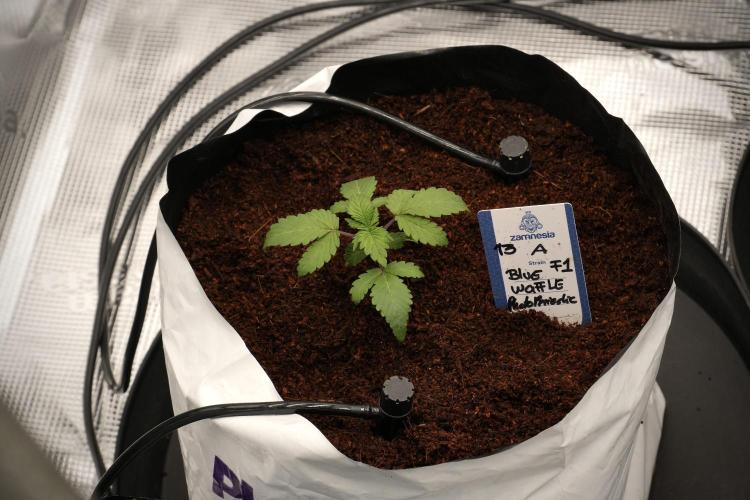
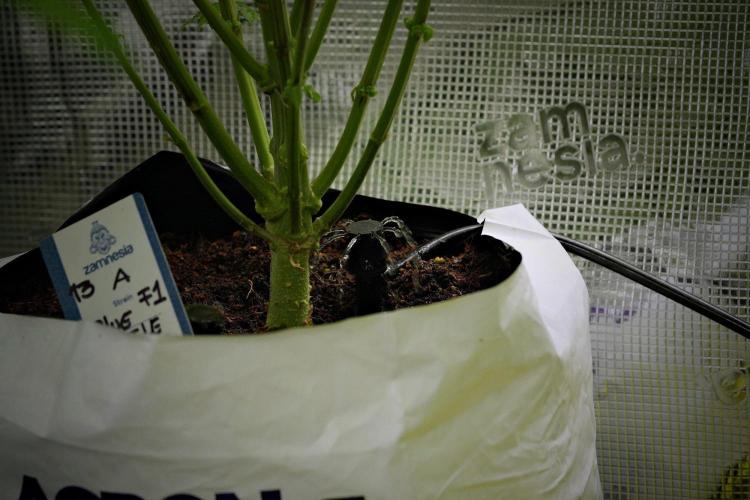
Na de eerste week waarin een gezonde basis werd gelegd in de startercontainer, is Blue Waffle Pheno A officieel verhuisd naar haar permanente thuis—een Plagron 8L Premium Coco Grow Bag, waar de volgende fase van haar reis echt begint.
De transplantatiedag is altijd spannend. Terwijl de bladeren ons vertellen hoe een plant zich boven de oppervlakte voelt, zijn het de wortels die het echte verhaal onthullen. En deze week was dat verhaal een zeer bemoedigend verhaal.
⸻
De Omgeving
Het Zamnesia-ecosysteem blijft een stabiele en comfortabele omgeving bieden voor deze jonge dames.
Huidige kamervoorwaarden:
• Temperatuur: 29°C
• Relatieve Vochtigheid: 68%
De luchtstroom blijft onveranderd ten opzichte van vorige week:
• Afzuigventilator: Niveau 5
• Circulatieventilator: Niveau 4
De verlichting blijft ook constant, met de LED die op 27% intensiteit draait en ongeveer 86 watt van het net trekt.
In deze fase is consistentie veel waardevoller dan het najagen van snelle groei. Stabiele omgevingsomstandigheden stellen de planten in staat hun energie te concentreren waar het het meest nodig is—het opbouwen van wortels.
⸻
Voedingsprogramma
Nu de planten hun coco-thuis zijn binnengekomen, begint de hydroponische voedingsstrategie officieel.
De voedingsoplossing blijft opzettelijk eenvoudig:
• Plagron Hydro A
• Plagron Hydro B
• Plagron Hydro Roots
Reservoirparameters:
• EC: 1.26 mS/cm
• pH: 5.83
• Oplossingstemperatuur: 23.1°C
Hydro Roots blijft een belangrijke rol spelen in deze fase, en moedigt de snelle ontwikkeling van verse wortels aan terwijl de planten hun nieuwe substraat beginnen te koloniseren.
Het doel is nog niet explosieve bovengroei.
Alles begint onder de oppervlakte.
⸻
Transplantatiedag
Vorige week werden de Plagron Premium Coco Grow Bags langzaam gehydrateerd met gedestilleerd water, waardoor de coco gelijkmatig kon uitzetten terwijl er een perfect vochtige omgeving werd gecreëerd voordat de planten werden geplaatst.
In plaats van de transplantatie in een droog substraat te forceren of de tassen op het laatste moment te overstromen, had de coco een hele week om te stabiliseren.
Toen de transplantatiedag aanbrak, kon het proces niet soepeler verlopen.
Met de originele kweekpot als gids, creëerde ik zorgvuldig een perfect formaat holte in elke coco-tas. Deze eenvoudige stap zorgt ervoor dat de hele wortelkluit natuurlijk op zijn plaats kan glijden zonder de omliggende coco te comprimeren of te verstoren.
Soms maken de kleinste details het grootste verschil.
Een zachte transplantatie betekent minder stress.
Minder stress betekent snellere herstel.
⸻
Een Kijk Onder de Oppervlakte
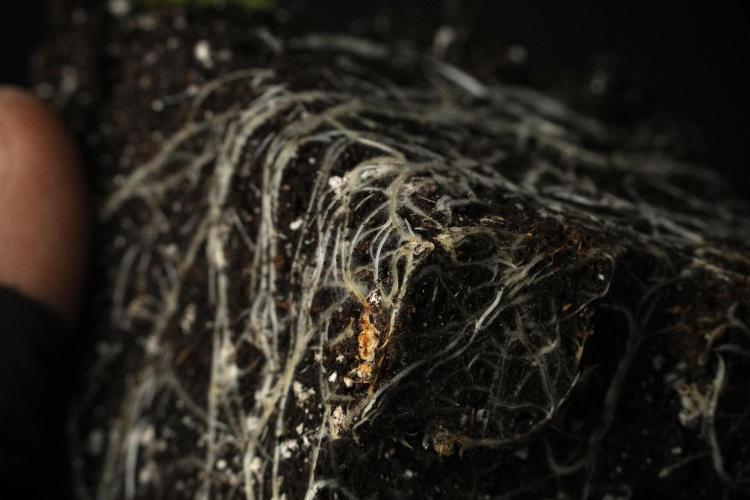
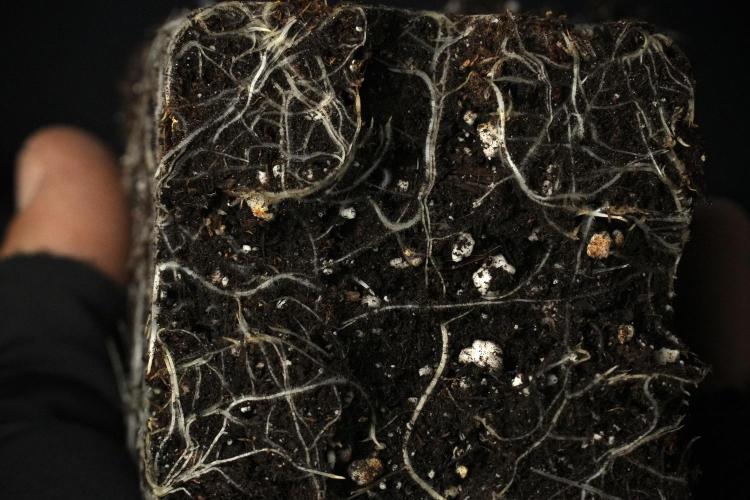
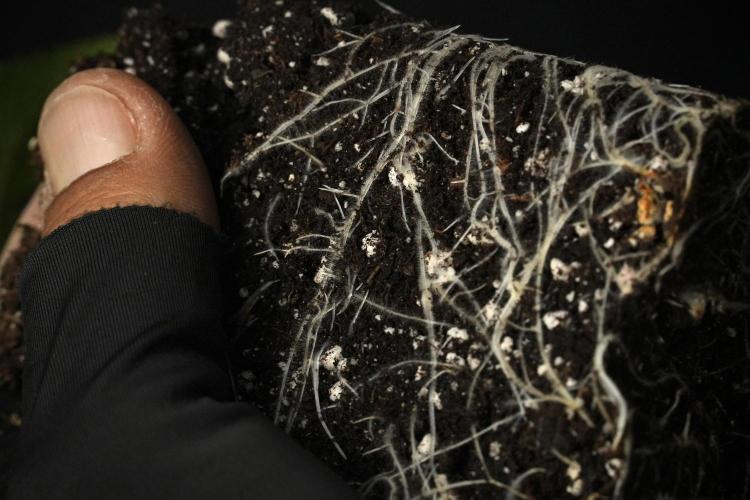
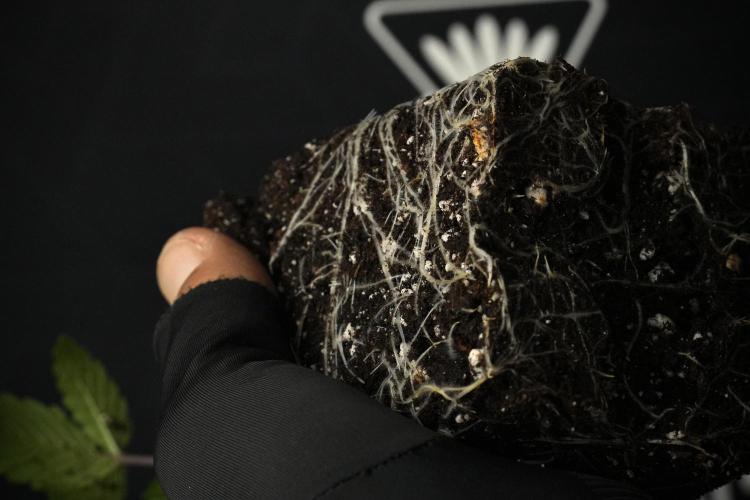
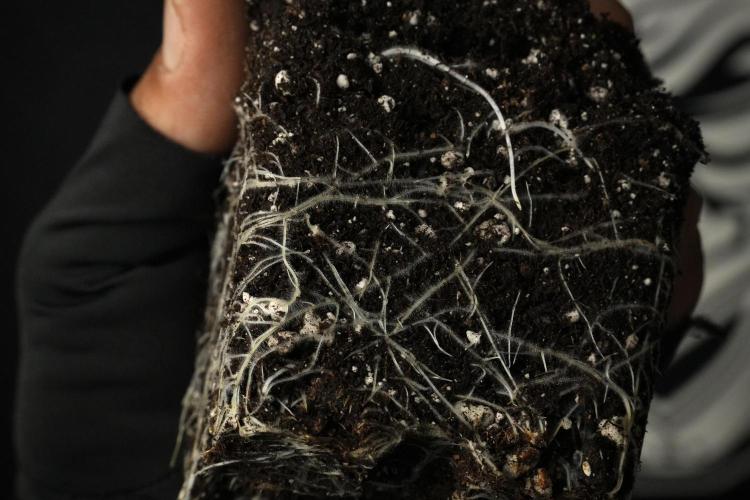
Voordat ik Blue Waffle Pheno A in haar nieuwe thuis plaatste, kon ik het niet laten om een dichterbij te kijken naar haar wortelsysteem.
En ik ben blij dat ik dat deed.
Hoewel de wortels de container nog niet volledig hebben gevuld, zijn ze prachtig verdeeld rond de hele wortelkluit. Heldere witte voederswortels zijn zichtbaar aan elke kant, met ontelbare fijne wortelharen die actief het groeimedium verkennen.
Dit is precies wat ik hoopte te zien.
Er was geen behoefte aan een sterk wortelgebonden plant voor de transplantatie. Sterker nog, ze op deze fase te verplaatsen stelt de wortels in staat om natuurlijk verder uit te breiden in plaats van te beginnen cirkelen rond de kweekpot.
Gezonde wortels hoeven niet massief te zijn.
Ze hoeven gewoon actief te zijn.
Blue Waffle Pheno A geeft alle aanwijzingen dat ze klaar is om te exploderen in haar nieuwe omgeving.
⸻
Blue Waffle Pheno A
Boven het substraat blijft Pheno A indruk maken.
De compacte structuur blijft intact, met strakke internodale afstand en uitstekende symmetrie over het bladerdak.
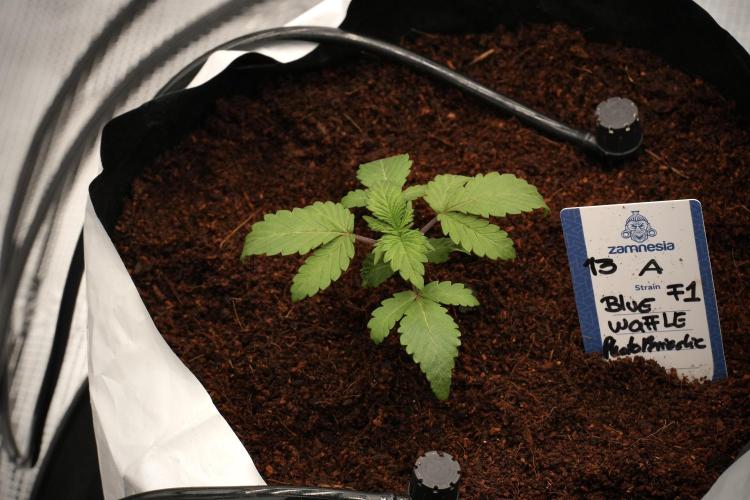
De bladeren vertonen een gezonde groene kleur, terwijl de petiolen subtiele paarse pigmentatie zijn gaan ontwikkelen—een kenmerk dat vaak van nature kan verschijnen in jongere planten, afhankelijk van genetica en omgevingsomstandigheden.
Het belangrijkste is dat de plant vrijwel geen tekenen van transplantatieschok vertoonde.
Slechts een korte tijd na het verhuizen naar de coco-tas, bleven de bladeren rechtop en turgide, terwijl er verse nieuwe groei uit het midden bleef komen.
Dat is altijd een van de beste tekenen waar een kweker op kan hopen na de transplantatie.
Het betekent dat de plant zich al comfortabel begint te voelen in haar nieuwe thuis.
⸻
Vooruitkijkend
Met de transplantatie nu achter ons, is het volgende doel het toestaan van de wortels om de hele Plagron Premium Coco Grow Bag te koloniseren.
Naarmate het wortelsysteem uitbreidt, zal ook het bladerdak groeien.
De komende weken zouden merkbaar snellere vegetatieve groei moeten brengen terwijl Blue Waffle Pheno A volop gebruik begint te maken van het verhoogde wortelvolume en het hydroponische voedingsschema.
Voor nu…
Gezonde wortels.
Gezonde bladeren.
Gezonde toekomst.
Precies wat elke kweker hoopt te zien.
⸻
Dank U
Een grote dank aan iedereen die deze reis volgt.
Speciale dank aan:
• Zamnesia voor de ongelooflijke genetica, apparatuur en het complete ecosysteem dat dit project mogelijk maakt.
• Plagron voor het leveren van de Premium Coco Grow Bags en de Hydro voedingslijn die deze groei nu aandrijft.
• GrowDiaries voor het bieden van een geweldig platform waar kwekers van over de wereld van elkaar kunnen leren.
• En tot slot, dank aan elk lid van deze ongelooflijke kweekgemeenschap. Of je nu net begint met je eerste kweek of al tientallen jaren aan het kweken bent, jouw steun, advies en passie maken deze hobby echt bijzonder.
De wortels hebben hun nieuwe thuis gevonden.
Nu is het tijd om te kijken hoe Blue Waffle Pheno A naar de lucht reikt.
Kwekers Liefde en Blijf Kweken. 🌱💙🍁
10 houdt van
1 opmerking
Share
Used techniques
Transplantatie
Techniek
3
Week 3. Vegetatie
2mo ago
1/30
25 cm
Height
18 uur
Light Schedule
27 °C
Day Air Temp
5.8
pH
Geen Geur
Smell
805 PPM
TDS
67 %
Air Humidity
18 °C
Solution Temp
24 °C
Substrate Temp
27 °C
Night Air Temp
8 liters
Pot Size
0.9 liters
Watering Volume
450 PPM
CO₂-niveau
Nutrients 4
Hydro A
1.6 mll
Hydro B
1.6 mll
Hydro Roots
1 mll
DogDoctorOfficial 💙 Project Blue Tent – Week 3
Blue Waffle F1 – Pheno A (Map 13A)
Welkom terug iedereen bij weer een week binnen Project Blue Tent!
Voor iedereen die voor het eerst bij ons is, draait dit project om het verkennen van de ongelooflijke Blue Waffle F1 genetica van Zamnesia, terwijl we het complete Zamnesia-ecosysteem in werking stellen. Elke plant wordt individueel gekweekt, afzonderlijk gedocumenteerd en krijgt de ruimte om zijn eigen persoonlijkheid te uiten, ook al delen ze allemaal exact dezelfde omgeving.
In tegenstelling tot ons 8×8 Avontuur, waar twaalf verschillende genetica één kamer delen, is Project Blue Tent gewijd aan het leren van elk detail over deze F1-hybriden. Elke week vergelijken we hun groei, structuur, kracht en reacties terwijl we ze kweken in Plagron Premium Coco Growbags met behulp van de Plagron Hydro voedingslijn.
Elke dagboek vertelt het verhaal van één plant.
Vandaag behoort de schijnwerper tot Blue Waffle F1 – Plant A.
⸻
🌱 Week Drie – Haar Ritme Vinden
Deze week markeerde een merkbare verandering in Plant A.
Ze begon de week eruit te zien als een gezonde jonge zaailing die zich vestigde in haar nieuwe huis, maar tegen het einde van de week had ze volledig van versnelling gewisseld en begon ze met veel meer zelfvertrouwen te groeien.
De internodale afstand blijft compact, haar vertakking is symmetrisch, en elke dag lijkt ze meer bereid om verse groei vanuit het midden te duwen.
Een ding dat ik echt waardeer aan dit fenotype is hoe georganiseerd haar structuur er al uitziet. Zelfs zonder zware training wil ze van nature een uitgebalanceerd bladerdak opbouwen, wat altijd een genoegen is om te zien.
⸻
🌡️ De Blue Tent Omgeving
Deze hele kamer is gebouwd rondom het Zamnesia-ecosysteem, waardoor elk onderdeel samenwerkt.
De Phytonaut LED blijft een gelijkmatige lichtverdeling over het bladerdak bieden, terwijl de Grow Environment Controller de ventilatie en luchtstroom beheert om de omstandigheden gedurende de dag stabiel te houden.
De gemiddelde omgevingsomstandigheden deze week waren:
* 🌡️ Dagtemperatuur: 27°C
* 🌙 Nachttemperatuur: 27°C
* 💧 Relatieve Vochtigheid: 67%
* ⚗️ pH: 5.8
* ⚡ EC: 1.61 mS/cm
* 💨 CO₂: ongeveer 450 ppm
* 💡 Lichtschema: 18/6
* ☀️ PPFD: ongeveer 350
* 🌈 PAR-niveaus blijven ideaal voor deze fase van vegetatieve ontwikkeling.
De planten blijven zachte maar voldoende licht ontvangen, wat compacte groei aanmoedigt zonder onnodige stretching.
⸻
🥥 Voedingsupdate
Na vele jaren in levende aarde te hebben gekweekt, leert de overstap naar coco me zeker een paar nieuwe lessen.
Een ding dat ik deze week opmerkte, was dat de planten begonnen te vragen om iets meer voeding. Hun kleur verschuift iets naar een lichter groen—niet iets alarmerends, maar genoeg om me te vertellen dat ze klaar waren voor een sterkere voeding.
In plaats van achteraf tekorten na te jagen, geef ik de voorkeur aan luisteren naar wat de planten me vertellen.
Daarom heb ik de basisvoeding verhoogd.
Het voedingsschema is nu:
* Plagron Hydro A — 1.6 ml/L
* Plagron Hydro B — 1.6 ml/L
* Plagron Hydro Roots — behouden op de vorige dosering
Deze aanpassing verhoogde de EC iets en zou voldoende stikstof en algehele voeding moeten bieden om die rijke gezonde groene kleur de komende dagen terug te brengen.
Kweken in coco draait om het maken van kleine correcties in plaats van grote, en dat is precies de aanpak die ik volg.
⸻
🚿 Een Klein Avontuur… De Overstroming
Nou…
Elke kweek heeft minstens één verhaal.
Het verhaal van deze week had te maken met water.
Ik heb altijd gegrapt dat irrigatiesystemen me nerveus maken omdat ze perfect werken… tot ze dat niet doen.
Deze week bewees mijn punt.
Na het activeren van het irrigatiesysteem, veranderde één kleine fout in een overstromende tent.
Gelukkig was het niets catastrofaals.
We hebben onmiddellijk alles afgesloten, het water opgezogen met veel handdoeken, de tent grondig schoongemaakt, elke verbinding gecontroleerd en alles weer onder controle gekregen.
Gelukkig gebeurde dit in coco, niet in aarde.
Een van de grote voordelen van coco is de uitstekende drainage en zuurstofretentie. Zelfs na meer water te hebben ontvangen dan bedoeld, blijft het medium zeer geventileerd, waardoor de wortels kunnen blijven ademen. Had dit in zware aarde plaatsgevonden, zou het herstel aanzienlijk stressvoller zijn geweest.
De planten vertoonden nooit tekenen van stress, en na het medium iets te hebben laten drogen, hervatten we eenvoudig het irrigatieschema zoals normaal.
Problemen gebeuren.
Het belangrijkste is om ze op te lossen.
We werken al aan een betere oplossing voor het irrigatiesysteem, en zodra de nieuwe apparatuur arriveert, zal ik alles delen in de komende wekelijkse rapporten.
Fouten maken deel uit van leren, en ik denk dat het eerlijk documenteren ervan net zo waardevol is als het tonen van perfecte resultaten.
⸻
🌿 Plant A Zelf
Deze dame blijft me imponeren.
Haar structuur is compact.
Haar bladeren zijn breed en gezond.
De stam ontwikkelt al mooie dikte met subtiele paarse pigmentatie die begint te verschijnen.
Het belangrijkste is dat ze elke dag lijkt te versnellen.
De nieuwste groei is merkbaar krachtiger dan een paar dagen geleden, wat me vertelt dat ze volledig gevestigd raakt in haar wortelzone.
Ze ziet eruit als een plant die zich voorbereidt om de komende weken te exploderen met groei.
⸻
👀 Vooruitkijken
Volgende week zou spannend moeten zijn.
Met de voeding aangepast en de wortels nu goed gevestigd in de coco, verwacht ik aanzienlijk snellere vegetatieve groei.
We blijven de kleur, internodale afstand en algehele kracht monitoren terwijl we deze dames voorbereiden op de volgende trainingsfasen.
Als Plant A deze koers blijft volgen, kan ze heel goed een van de sterren van Project Blue Tent worden.
⸻
💙 Dank U
Een enorme dank gaat uit naar Zamnesia voor het mogelijk maken van dit hele project—van deze prachtige Blue Waffle F1 genetica tot het complete ecosysteem rondom deze kweek.
Een enorme dank ook aan Plagron voor het leveren van de Premium Coco Growbags en de Hydro voedingslijn die deze dames elke dag voedt.
Dank aan GrowDiaries voor het bieden van een plek voor kwekers van over de hele wereld om onze reis samen te documenteren, leren en delen.
En tot slot…
Dank aan elke persoon die deze updates leest.
Of je nu vanaf dag één volgt, recent bij het avontuur bent gekomen, elke week reacties achterlaat, gewoon even langskomt om naar de foto's te kijken, of zelfs stilletjes het niet eens bent met mijn methoden—jullie dragen allemaal bij aan het maken van deze gemeenschap wat het is.
Ik waardeer elke weergave, elk gesprek, elk advies, elke vraag, elke like, elke kritiek en elke steunbetuiging oprecht.
Ik hoop dat jullie allemaal een geweldige week hebben, en ik kan niet wachten om jullie te laten zien hoe deze prachtige dames zich ontwikkelen in de volgende update.
Tot dan…
Growers Love, gelukkig kweken, en ik zie jullie allemaal volgende week. 🌱💙
7 houdt van
1 opmerking
Share
Used techniques
LST
Techniek
4
Week 4. Vegetatie
2mo ago
1/30
45 cm
Height
18 uur
Light Schedule
27 °C
Day Air Temp
5.8
pH
Geen Geur
Smell
940 PPM
TDS
67 %
Air Humidity
18 °C
Solution Temp
24 °C
Substrate Temp
27 °C
Night Air Temp
8 liters
Pot Size
0.9 liters
Watering Volume
450 PPM
CO₂-niveau
Nutrients 5
Hydro A
1.8 mll
Hydro B
1.8 mll
Hydro Roots
1 mll
DogDoctorOfficial 💙 Project Blue Tent – Week 4
Blue Waffle F1 – Pheno A (Map 13A)
Welkom terug iedereen bij weer een week in Project Blue Tent!
Als dit je eerste bezoek is, welkom aan boord. Dit project is gewijd aan het verkennen van de ongelooflijke Blue Waffle F1 genetica van Zamnesia, terwijl we het complete Zamnesia-ecosysteem op de proef stellen. In plaats van meerdere planten als één oogst te laten groeien, wordt elke fenotypen individueel gedocumenteerd, zodat elk zijn eigen verhaal kan vertellen, ondanks dat ze exact dezelfde omgeving, voedingsstoffen, verlichting en zorg delen.
In tegenstelling tot ons 8×8 Avontuur, waar verschillende cultivars samen groeien, richt Project Blue Tent zich op het begrijpen van elk subtiel verschil tussen identieke F1 genetica. Elke week kijken we hoe deze planten zich ontwikkelen, vergelijken we hun structuren en ontdekken we hoe elke plant zijn eigen unieke persoonlijkheid uitdrukt.
Zoals we graag zeggen...
We groeien niet alleen zaden—we ontdekken individuele persoonlijkheden.
Vandaag behoort de spotlight opnieuw tot Blue Waffle F1 – Plant A.
────────────────────────
🌱 Week Vier – Tijd om de Toekomst te Vormen
Deze week markeerde weer een belangrijke mijlpaal voor Plant A.
Vorige week was ze bezig haar wortelsysteem op te bouwen en zich comfortabel te vestigen in haar nieuwe thuis. Deze week beloonde ze ons met krachtige vegetatieve groei, waarbij ze grotere bladeren, dikkere stelen en een merkbaar vollere bladerdek produceerde.
Hoewel haar kleur lichter groen blijft dan ik uiteindelijk zou willen zien, toont ze nog steeds uitstekende gezondheid. Haar bladeren blijven turgide, de groei is krachtig, en elke nieuwe knoop komt netjes gestapeld met strakke internodale ruimte.
In plaats van tekenen van zwakte te vertonen, vertelt ze me gewoon dat ze klaar is voor een beetje meer voeding.
Soms spreken de planten zachtjes.
Onze taak is simpelweg te luisteren voordat ze moeten schreeuwen.
────────────────────────
🌡️ De Blauwe Tent Omgeving
De omgeving blijft een van de grootste sterke punten van dit project.
Het Zamnesia-ecosysteem houdt alles opmerkelijk stabiel, waardoor ik me minder hoef te concentreren op het achtervolgen van omgevingsschommelingen en meer op het observeren van de planten zelf.
De gemiddelde omstandigheden deze week waren:
• 🌡️ Dag Temperatuur: 27°C
• 🌙 Nacht Temperatuur: 27°C
• 💧 Relatieve Vochtigheid: 67%
• ⚗️ pH: 5.8
• ⚡ EC: 1.88 mS/cm
• 💨 CO₂: ongeveer 450 ppm
• 💡 Lichtschema: 18/6
• ☀️ PPFD: ongeveer 350
De Phytonaut LED blijft een prachtig gelijkmatige lichtverdeling over het bladerdek bieden, terwijl de Grow Environment Controller de ruimte elke dag weer stil en consistent laat draaien.
Stabiele omgevingen maken het veel gemakkelijker om te begrijpen wat de planten ons daadwerkelijk vertellen.
────────────────────────
🥥 Voedingsupdate
Een van de grootste observaties deze week kwam van het voedingsprogramma.
De iets lichtere bladkleur die we vorige week opmerkte, bleef aanwezig, dus in plaats van te wachten op een echte tekortkoming, besloot ik een kleine aanpassing te maken.
Hydro A en Hydro B zijn beide verhoogd naar 1.8 ml/L, terwijl Hydro Roots onveranderd blijft.
Het doel is niet simpelweg om meer te voeden—het is om genoeg stikstof en algehele voeding te bieden zodat de planten terugkeren naar de rijke groene kleur waar ik naar streef, terwijl ze een constante, gezonde groei behouden.
Een andere kleine toevoeging deze week was Plagron pH Min.
Niet omdat de voedingsoplossing onstabiel was—het tegenovergestelde is waar.
Een ding dat me echt heeft onder indruk van de Plagron Hydro lijn is hoe stabiel het reservoir blijft na het mengen. Zodra alles is ingesteld, fluctueert de pH nauwelijks gedurende de week, vaak is er niet meer nodig dan de kleinste correctie hier en daar om het precies te houden waar ik het wil.
Komend van jaren van groeien in levende aarde, was dat een aangename verrassing. Het maakt reservoirbeheer veel eenvoudiger en stelt me in staat om meer tijd te besteden aan het observeren van de planten in plaats van constant de oplossing aan te passen.
Soms is de beste apparatuur de apparatuur waar je nauwelijks over na hoeft te denken.
────────────────────────
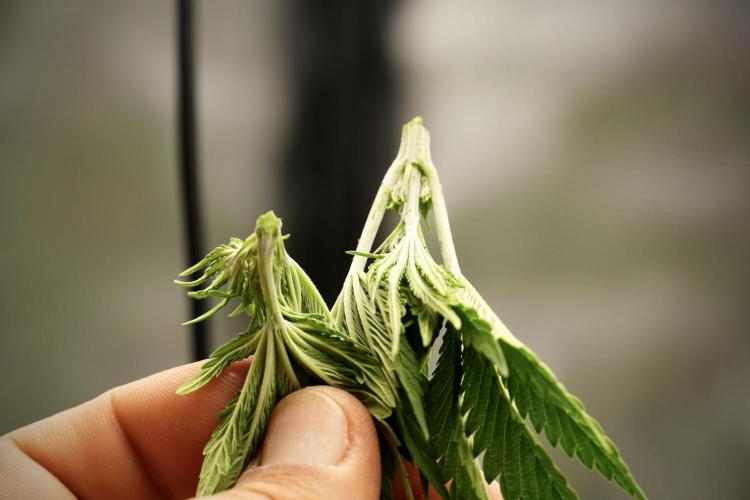
✂️ Deze Week's Les – Waarom Ik Mijn Planten Top
Deze week was ook het perfecte moment om een van de belangrijkste trainingstechnieken in te voeren die ik tijdens deze kweek zal gebruiken.
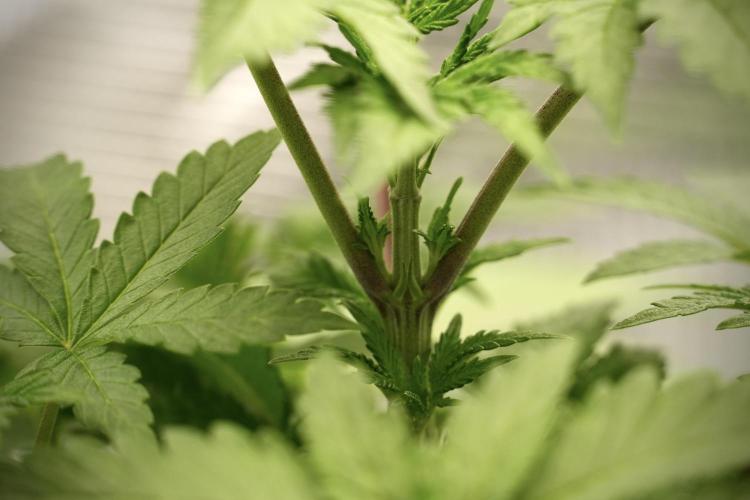
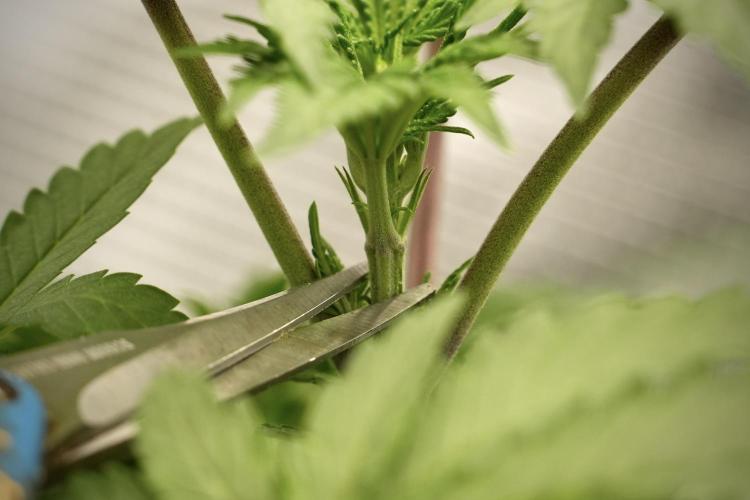
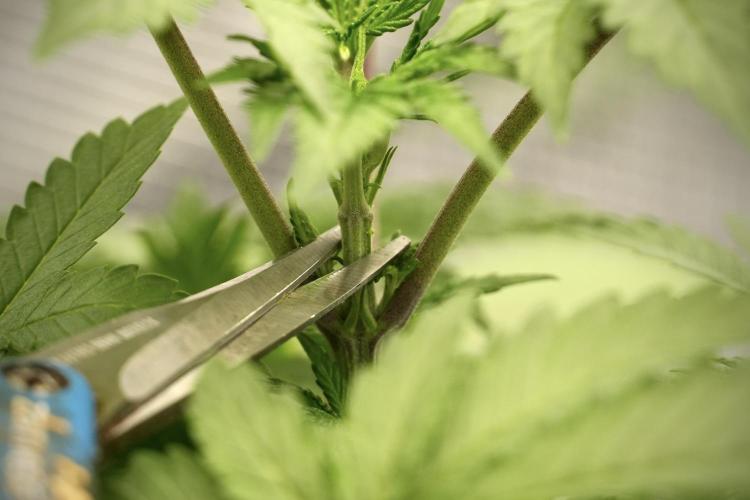
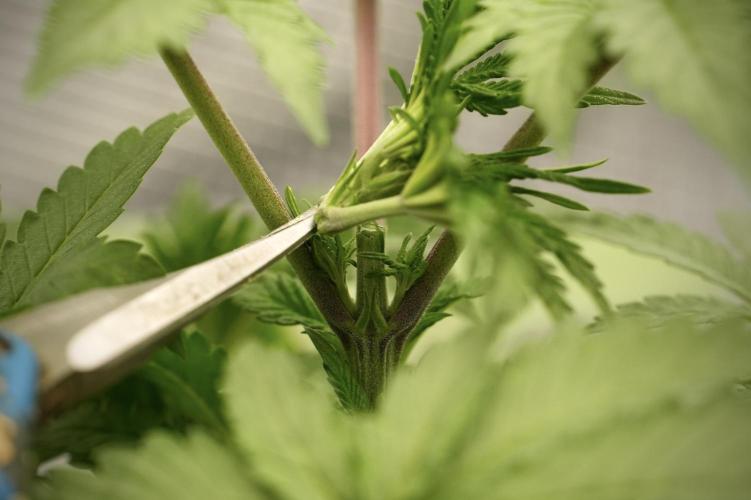
Plant A kreeg haar eerste topping.
In tegenstelling tot Low Stress Training (LST), wordt toppen beschouwd als High Stress Training (HST) omdat we opzettelijk de belangrijkste groeipunt van de plant verwijderen.
Het is niet iets dat ik aanbeveel te doen bij worstelende planten.
Voor het toppen wil ik gezonde wortels, actieve groei en een plant die duidelijk snel herstelt van dagelijkse ontwikkeling zien. Hoewel de kleur nog steeds iets lichter is dan ik zou willen, maakte haar algehele gezondheid en vitaliteit haar een uitstekende kandidaat.
Sommige kwekers geven de voorkeur aan toppen boven de tweede of derde knoop.
Persoonlijk laat ik de planten liever iets meer tijd om structuur op te bouwen voordat ik die snede maak.
Door iets langer te wachten, kan ik meer takken behouden die later waardevolle bloeiplaatsen zullen worden zodra het SCROG-net is geïnstalleerd. Mijn doel is niet simpelweg om twee toppen te creëren—het is om een bredere, sterkere structuur op te bouwen die uiteindelijk het hele scherm zal vullen met gelijkmatig ontwikkelde colas.
De snede van vandaag is een investering in het bladerdek dat we over enkele weken zullen genieten.
Voor de klus gebruikte ik de Zamnesia Snoeischaar, waarmee ik een schone, nauwkeurige snede maakte met minimale schade aan het omliggende weefsel. Een scherpe, schone snede helpt de plant snel te herstellen terwijl onnodige stress wordt verminderd.
Nu begint de race.
In plaats van één dominante leider, zullen verschillende takken strijden om de toppositie, wat een veel gelijkmatiger bladerdek creëert dat klaar is voor toekomstige training.
────────────────────────
🌿 Plant A Zelf
Elke week wordt haar persoonlijkheid iets duidelijker.
Ze blijft compact en georganiseerd groeien, met brede bladeren en prachtig symmetrische vertakkingen.
De stelen blijven subtiele paarse pigmentatie ontwikkelen, terwijl de hoofdtrunk merkbaar dikker wordt terwijl ze zich voorbereidt op de volgende groeifase.
Na het toppen verwacht ik dat de energie nu zal worden omgeleid naar de laterale takken, wat de bredere structuur aanmoedigt waar ik naar streef voordat ik het SCROG introduceer.
Ze begint minder op een jonge zaailing te lijken en meer op een plant met een plan.
────────────────────────
👀 Vooruitkijken
Volgende week zal helemaal draaien om herstel en herverdeling.
In plaats van explosieve verticale groei onmiddellijk na het toppen te verwachten, zal ik kijken hoe snel de zijkanten reageren en beginnen te strijden om dominantie.
Als alles volgens plan verloopt, zou het bladerdek natuurlijk moeten beginnen te openen, wat de perfecte basis creëert voor de SCROG die later in de vegetatieve groei zal komen.
We zullen ook goed letten op de nieuwe voedingssterkte, kijkend naar die rijkere groene kleur terwijl de verhoogde voeding begint effect te hebben.
Soms wordt de grootste vooruitgang niet gemeten in centimeters.
Soms wordt het gemeten in balans.
────────────────────────
💙 Bedankt
Een enorme dank aan Zamnesia voor het mogelijk maken van Project Blue Tent—van deze uitstekende Blue Waffle F1 genetica tot het complete ecosysteem rondom deze kweek. Elke week blijft de apparatuur bewijzen dat het is ontworpen door kwekers die begrijpen wat er in een echte kweekruimte gebeurt.
Een enorme dank ook aan Plagron voor het leveren van de Premium Growbags en de Hydro voedingslijn. De stabiliteit van het reservoir en de consistentie van het voedingsprogramma hebben deze overgang naar coco een ongelooflijk plezierige leerervaring gemaakt.
Dank aan GrowDiaries voor het bieden van een plek aan kwekers over de hele wereld om te documenteren, leren, ervaringen te delen en samen te blijven verbeteren.
En tot slot...
Dank aan elke persoon die deze reis volgt.
Of je nu hier bent sinds het begin, recentelijk bij het avontuur bent gekomen, elke week opmerkingen achterlaat, stilletjes meeleest, of zelfs af en toe mijn methoden uitdaagt—jullie helpen allemaal deze gemeenschap sterker te maken. Elk gesprek, elke vraag en elke gedeelde ervaring leert ons iets nieuws.
Ik waardeer ieder van jullie echt.
Ik hoop dat jullie allemaal een geweldige week hebben, en ik kan niet wachten om jullie te laten zien hoe Plant A reageert op haar eerste topping in de volgende update.
Tot dan...
Kwekersliefde, gelukkig groeien, en ik zie jullie volgende week 💙💙💙
7 houdt van
2 opmerkingen
Share
Used techniques
Topping
Techniek
5
Week 5. Vegetatie
1mo ago
1/30
60 cm
Height
18 uur
Light Schedule
30 °C
Day Air Temp
5.8
pH
Geen Geur
Smell
960 PPM
TDS
58 %
Air Humidity
18 °C
Solution Temp
24 °C
Substrate Temp
27 °C
Night Air Temp
8 liters
Pot Size
1.2 liters
Watering Volume
450 PPM
CO₂-niveau
Nutrients 5
Hydro A
1.9 mll
Hydro B
1.9 mll
Hydro Roots
1 mll
DogDoctorOfficial 💙 Project Blue Tent – Week 5
Blue Waffle F1 – Pheno A (Map 13A)
Welkom terug iedereen bij weer een week binnen Project Blue Tent!
Als dit je eerste bezoek is, welkom aan boord. Dit project is gewijd aan het verkennen van de ongelooflijke Blue Waffle F1 genetica van Zamnesia, terwijl we het complete Zamnesia-ecosysteem op de proef stellen. In plaats van meerdere planten als één oogst te laten groeien, wordt elke fenotypisch individueel gedocumenteerd, waardoor elke plant zijn eigen verhaal kan vertellen, ondanks dat ze precies dezelfde omgeving, voedingsstoffen, verlichting en zorg delen.
In tegenstelling tot ons 8×8 Avontuur, waar verschillende cultivars samen groeien, richt Project Blue Tent zich op het begrijpen van elk subtiel verschil tussen identieke F1 genetica. Elke week kijken we naar deze planten terwijl ze zich ontwikkelen, vergelijken we hun structuren en ontdekken we hoe elke plant zijn eigen unieke persoonlijkheid uitdrukt.
Zoals we graag zeggen...
We kweken niet alleen zaden— we ontdekken individuele persoonlijkheden.
Deze week was een van de meest opwindende sinds het begin van het project. Plant A heeft prachtig gereageerd op het toppen van vorige week, de aanpassingen in de voeding hebben de diepe groene kleur teruggebracht waar we naar op zoek waren, het SCROG-net is officieel geïnstalleerd, en een belangrijke upgrade heeft het hele irrigatiesysteem veiliger en betrouwbaarder gemaakt.
Soms wordt de grootste vooruitgang niet alleen gemeten aan de planten.
Soms is het de kweekruimte die zich samen met hen ontwikkelt.
────────────────────────
🌱 Week Vijf – Alles Komt Samen
Als ik terugkijk op de afgelopen weken, is het ongelooflijk om te zien hoe snel alles is begonnen samen te komen.
Na het opzetten van een gezond wortelsysteem en perfect te zijn hersteld van het toppen, is Plant A geëxplodeerd met krachtige vegetatieve groei. Het bladerdak is merkbaar voller geworden, zijtakken zijn dramatisch versneld, en elke groeipunt lijkt gretig te willen concurreren voor zijn plaats onder het licht.
Een van de grootste verbeteringen deze week is haar kleur geweest.
De iets lichtere groene kleur die we de afgelopen weken hebben waargenomen, is volledig verdwenen na het verhogen van de voedingssterkte. Het loof is teruggekeerd naar een rijke, gezonde groene kleur, wat bevestigt dat de planten gewoon om iets meer voedsel vroegen.
Het is altijd bevredigend wanneer de planten precies reageren zoals je hoopt.
Soms hebben ze geen redding nodig.
Soms moeten ze gewoon gehoord worden.
────────────────────────
🌡️ De Blue Tent Omgeving
De omgeving blijft een van de sterkste aspecten van dit project.
Zelfs met warmere zomerse omstandigheden buiten, heeft het Zamnesia-ecosysteem een opmerkelijk stabiele omgeving blijven bieden, waardoor de planten zich volledig kunnen concentreren op groeien in plaats van voortdurend aanpassingen te maken aan fluctuaties.
De gemiddelde omstandigheden deze week waren:
• 🌡️ Dag Temperatuur: 30°C
• 🌙 Nacht Temperatuur: 27°C
• 💧 Relatieve Vochtigheid: 58%
• ⚗️ pH: 5.8
• ⚡ EC: 1.92 mS/cm
• 💨 CO₂: ongeveer 450 ppm
• 💡 Lichtschema: 18/6
• ☀️ PPFD: ongeveer 350
De Phytonaut LED blijft een gelijkmatige spreiding van licht over het bladerdak produceren, terwijl de Grow Environment Controller alles stilletjes stabiel houdt op de achtergrond.
Wanneer de omgeving consistent blijft, wordt elke aanpassing die we maken gemakkelijker te evalueren.
────────────────────────
🥥 Voedingsupdate
Het voedingsprogramma van deze week bleef heerlijk eenvoudig.
Een van de dingen die ik echt leuk vind aan het kweken met de Plagron Hydro-lijn is hoe ongecompliceerd alles is. Er zijn geen ingewikkelde recepten of eindeloze flessen om bij te houden.
De planten ontvangen momenteel:
• Hydro A – 1.9 ml/L
• Hydro B – 1.9 ml/L
• Hydro Roots – 1 ml/L
Samen met zeer kleine pH-aanpassingen wanneer nodig.
Dat is het.
Na vele jaren organisch te hebben gekweekt in levende grond, ben ik aangenaam verrast door hoe stabiel de voedingsoplossing de hele week blijft. Zodra alles is gemengd en aangepast, blijft het gewoon waar het hoort.
Nog beter, de verhoogde voedingssterkte heeft precies opgeleverd wat ik hoopte. De rijkere groene kleur is teruggekeerd bij alle vier de planten, nieuwe groei is krachtig, en de hele tent ziet er gelukkiger uit door dit alles.
Soms is simpel echt beter.
────────────────────────
💧 Leren Van Ervaring – Het Installeren Van Het Afvoersysteem
Een van de grootste upgrades deze week was niet aan de planten zelf.
Het was aan de ruimte.
Terug in Week Drie hebben we een kleine overstroming ervaren veroorzaakt door het druppelirrigatiesysteem. Het was niets catastrofaals—we hebben alles opgeruimd met handdoeken en zijn doorgegaan—maar het herinnerde me aan iets dat ik altijd heb geloofd.
Automatisering is geweldig.
Zolang het wordt ondersteund door goede veiligheidssystemen.
In plaats van te hopen dat het nooit meer zou gebeuren, besloot ik om de hele opstelling te verbeteren.
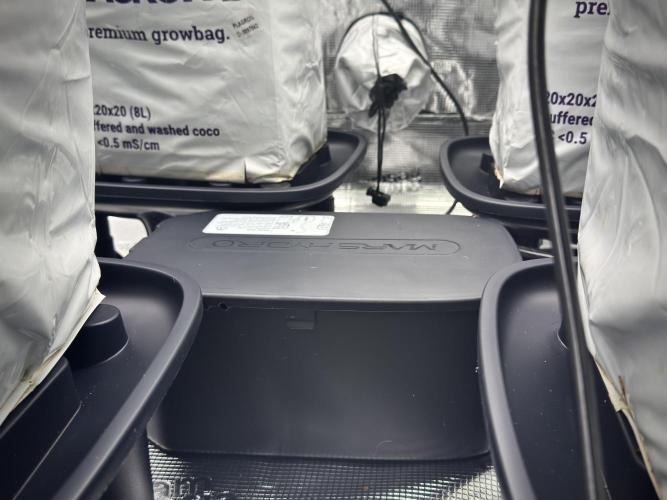
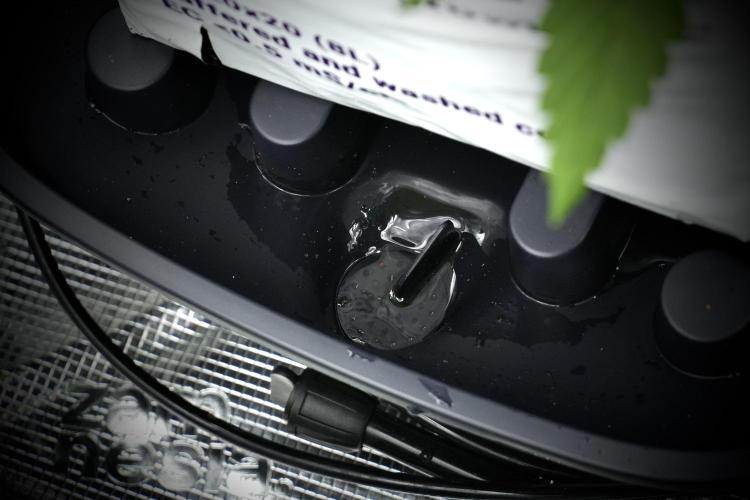
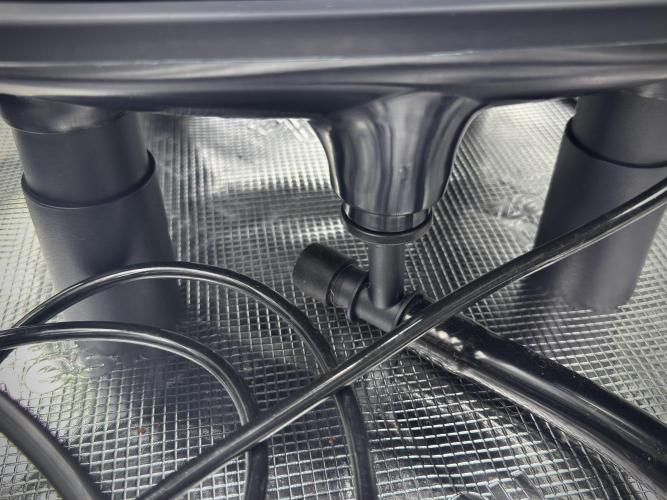
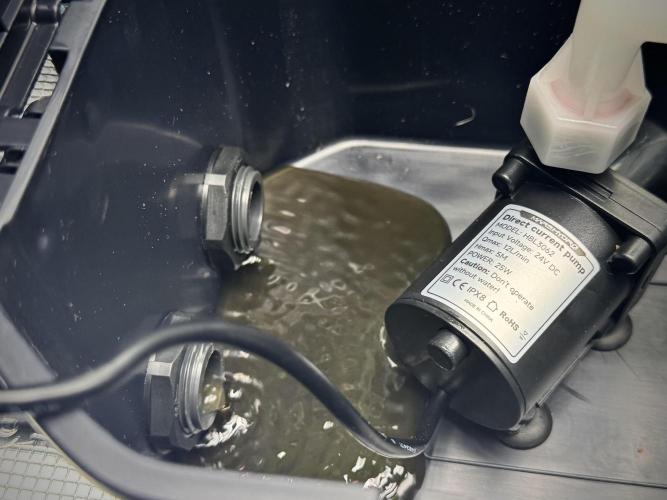
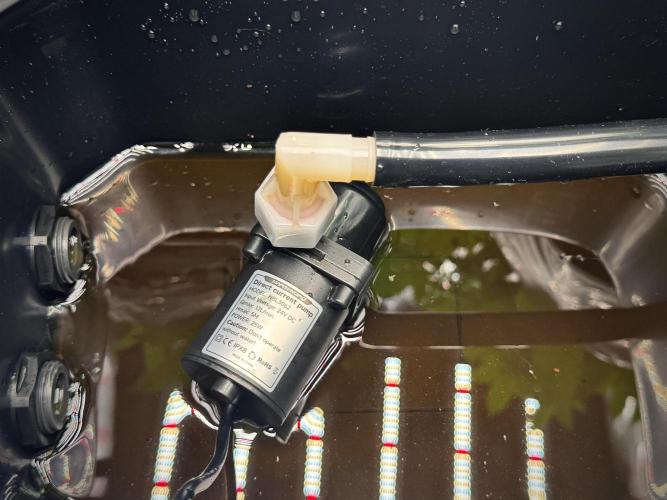
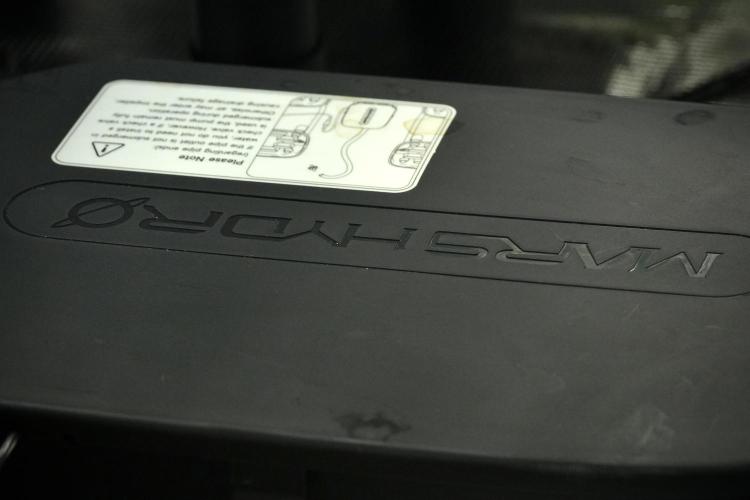
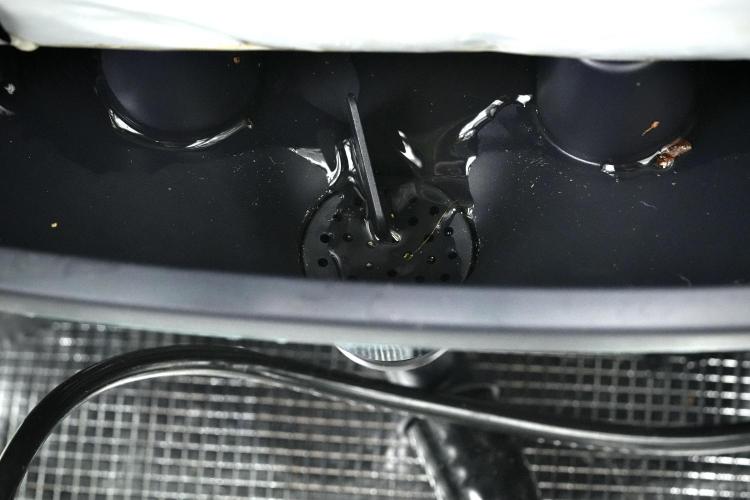
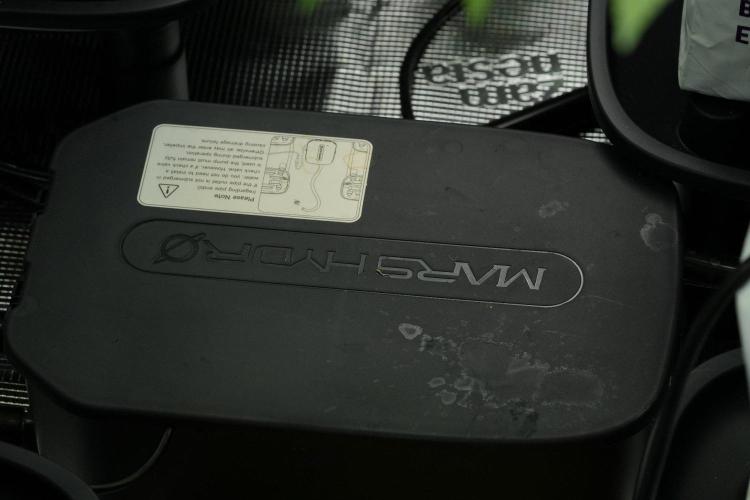
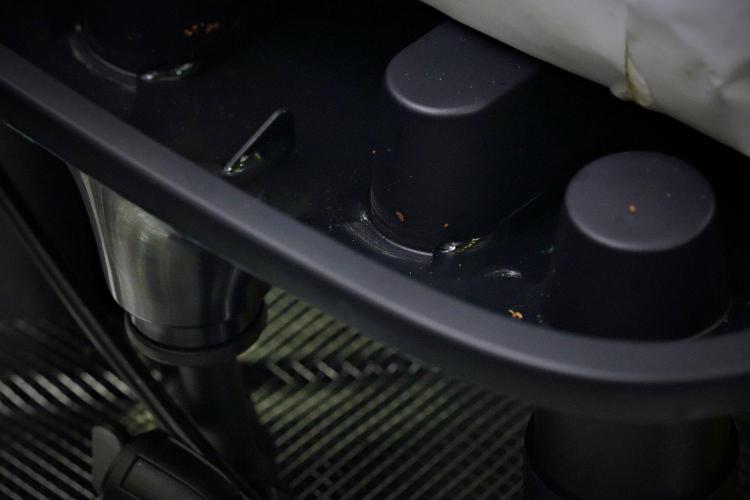
Deze week heb ik het Mars Hydro Auto Drainage System geïnstalleerd naast het bestaande druppelirrigatiesysteem.
Het concept is prachtig eenvoudig.
Het druppelsysteem voedt elke plant vanuit het hoofdreservoir. Alle afvoer wordt verzameld in speciaal ontworpen trays onder elke kweekzak. Die afvoer stroomt vervolgens naar een klein verzamelreservoir, waar een compacte pomp automatisch het water terugstuurt naar het hoofdreservoir.
Het resultaat is een veel schoner, veiliger en efficiënter systeem dat de kans op stilstaande afvoer die zich in de tent ophoopt, drastisch vermindert.
Het creëert iets dat heel dicht bij een gesloten irrigatiesysteem komt, terwijl het onderhoud ongelooflijk eenvoudig blijft.
Goede automatisering gaat niet om het verwijderen van de kweker.
Het gaat om het verwijderen van onnodige problemen, zodat we meer tijd kunnen besteden aan het observeren van de planten in plaats van het schoonmaken van de vloer.
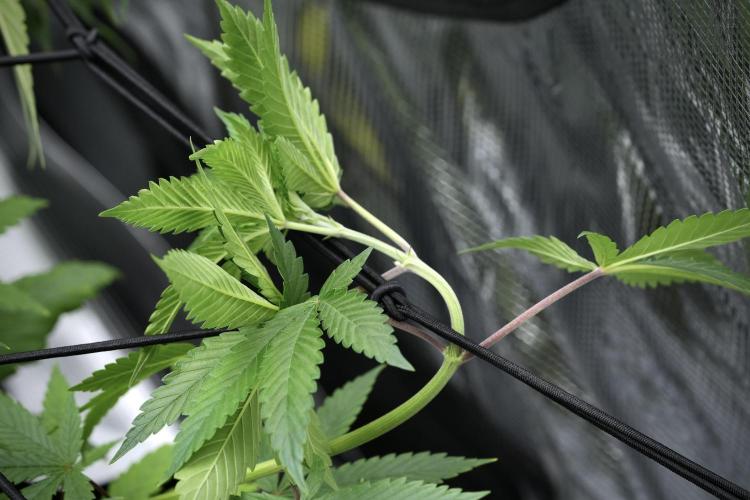
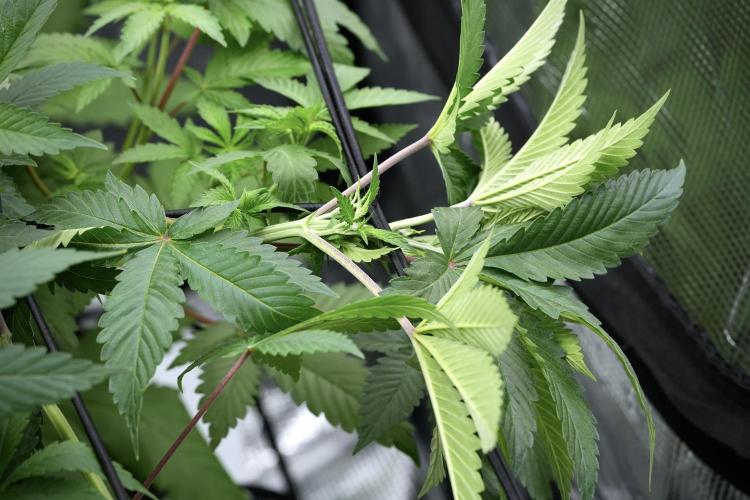
────────────────────────
🕸️ SCROG Tijd
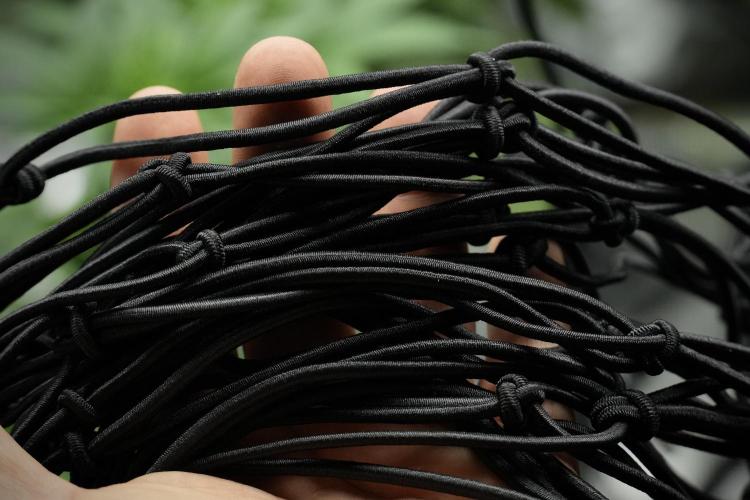
Een andere enorme mijlpaal deze week was eindelijk het installeren van het SCROG-net.
Het toppen van vorige week heeft meerdere nieuwe leiders gecreëerd, en deze week groeiden die takken zo krachtig dat het het perfecte moment werd om het bladerdak te gaan vormen.
Het doel van een Screen of Green is niet alleen om takken op hun plaats te houden.
Het gaat erom elke tak horizontaal te begeleiden, waardoor een gelijkmatig bladerdak ontstaat waar elke toekomstige bloeiplaats gelijke toegang tot licht krijgt.
In plaats van één dominante stam te laten racen, moedigt het scherm elke tak aan om een potentiële top te worden.
Plant A heeft prachtig gereageerd.
Haar takken blijven flexibel, gezond en gemakkelijk om mee te werken, waardoor de eerste fase van het weven zowel leuk als ongelooflijk belonend is.
Het frame begint nu vorm te krijgen.
────────────────────────
🌿 Plant A Zelf
Elke week onthult deze fenotype een beetje meer van haar persoonlijkheid.
Ze is niet de grootste plant in de Blue Tent.
Ze probeert dat ook niet te zijn.
In plaats daarvan ontwikkelt ze zich tot een van de meest gebalanceerde planten in de ruimte.
Haar takken zijn prachtig symmetrisch, de internodale afstand blijft strak, en elke nieuwe scheut lijkt perfect gepositioneerd om een andere toekomstige bloeiplaats te worden.
Het toppen heeft krachtige laterale groei aangemoedigd, terwijl de verbeterde voeding haar die rijke groene kleur heeft gegeven die onmiddellijk mijn aandacht trekt elke keer dat ik de tent open.
Als ik onder het bladerdak kijk, is haar structuur schoon, open en goed georganiseerd, wat uitstekende luchtstroom zou moeten bieden naarmate de bloei nadert.
Ze wordt precies het soort plant dat ik graag kweek.
Kalm.
Gebalanceerd.
Gezond.
En stilletjes zich voorbereidend op wat komen gaat.
────────────────────────
👀 Vooruitkijken
Volgende week zal helemaal draaien om het blijven begeleiden van de takken door de SCROG terwijl het bladerdak zich natuurlijk over het scherm verspreidt.
Het meeste zware werk is al gedaan.
Nu is het gewoon een kwestie van geduld, zachte training en de planten de kans geven om te blijven doen wat ze het beste doen.
Als ze blijven reageren zoals ze dat de afgelopen week hebben gedaan, verwacht ik dat de Blue Tent binnenkort een zee van perfect vlakke toppen zal worden.
Soms gebeuren de grootste verbeteringen niet omdat we ze forceren.
Ze gebeuren omdat we de juiste omstandigheden creëren en de natuur de rest laten doen.
────────────────────────
💙 Dank U
Een enorme dank gaat uit naar Zamnesia voor het mogelijk maken van dit hele project—van deze prachtige Blue Waffle F1 genetica tot het complete ecosysteem rondom deze kweek.
Een enorme dank ook aan Plagron voor het leveren van de Premium Coco Growbags en de Hydro voedingslijn die deze dames elke dag voedt.
Een speciale dank ook aan Mars Hydro voor het ontwerpen van het druppelirrigatie- en automatisch afvoersysteem dat zo'n waardevolle aanvulling op deze kweek is geworden. Hoewel dit geen gesponsord product is, is het een van die stukken apparatuur die gewoon werkt. Na ons kleine overstromingsavontuur een paar weken geleden, heeft dit systeem een extra niveau van veiligheid, netheid en gemoedsrust aan de kweekruimte toegevoegd, waardoor ik meer tijd kan besteden aan het genieten van de planten en minder tijd aan het maken van me zorgen over afvoerbeheer.
Dank aan GrowDiaries voor het geven van een plek aan kwekers van over de hele wereld om onze reis samen te documenteren, leren en delen.
En tot slot...
Dank aan elke persoon die deze updates leest.
Of je nu vanaf dag één volgt, recentelijk bij het avontuur bent gekomen, elke week opmerkingen achterlaat, gewoon even langskomt om naar de foto's te kijken, of zelfs stilletjes het niet eens bent met mijn methoden—jullie dragen allemaal bij aan het maken van deze gemeenschap tot wat het is.
Ik waardeer elke weergave, elk gesprek, elk stuk advies, elke vraag, elke like, elke kritiek en elke vorm van ondersteuning oprecht.
Ik hoop dat jullie allemaal een geweldige week hebben, en ik kan niet wachten om jullie te laten zien hoe deze prachtige dames zich in de volgende update ontwikkelen.
Tot dan...
Kwekersliefde, gelukkig kweken, en ik zie jullie allemaal volgende week. 🌱💙
12 houdt van
1 opmerking
Share
Used techniques
ScrOG
Techniek
6
Week 6. Vegetatie
1mo ago
1/30
60 cm
Height
18 uur
Light Schedule
30 °C
Day Air Temp
5.8
pH
Geen Geur
Smell
960 PPM
TDS
58 %
Air Humidity
18 °C
Solution Temp
24 °C
Substrate Temp
27 °C
Night Air Temp
8 liters
Pot Size
1.2 liters
Watering Volume
450 PPM
CO₂-niveau
Nutrients 5
Hydro A
1.9 mll
Hydro B
1.9 mll
Hydro Roots
1 mll
DogDoctorOfficial 💙 Project Blue Tent – Week 6
Blue Waffle F1 – Pheno A (Folder 13A)
Welkom terug iedereen bij weer een week in Project Blue Tent!
Als dit je eerste bezoek is, welkom aan boord. Dit project draait helemaal om het verkennen van de ongelooflijke Blue Waffle F1 genetica van Zamnesia, terwijl we het complete Zamnesia-ecosysteem op de proef stellen. In plaats van vier planten als één dagboek te documenteren, krijgt elk fenotype zijn eigen wekelijkse rapport, waardoor we kunnen waarderen hoe identieke F1-genetica toch hun eigen individuele persoonlijkheden kunnen uitdrukken, ondanks dat ze onder exact dezelfde omstandigheden groeien.
Elke week observeren we hoe elke plant reageert op training, voeding en de omgeving, en langzaam bouwen we een compleet beeld op van wie ze aan het worden zijn.
Zoals ik altijd graag zeg...
We zijn niet alleen planten aan het kweken.
We leren ze kennen.
────────────────────────
🌱 Week Zes – Elke Hoek Vullen
Deze week draaide helemaal om geduld, consistentie en het langzaam laten overnemen van het bladerdak in de tent.
Plant A staat nu op ongeveer 60 cm hoogte en heeft de hele week precies gedaan wat ik hoopte dat ze zou doen na het installeren van het SCROG-net.
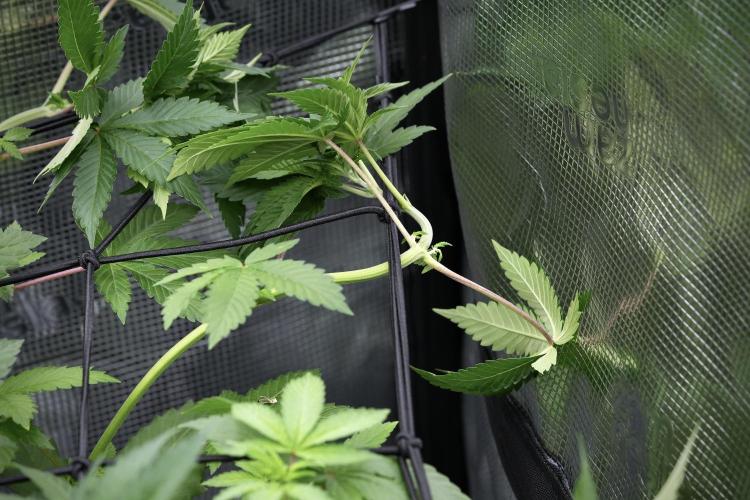
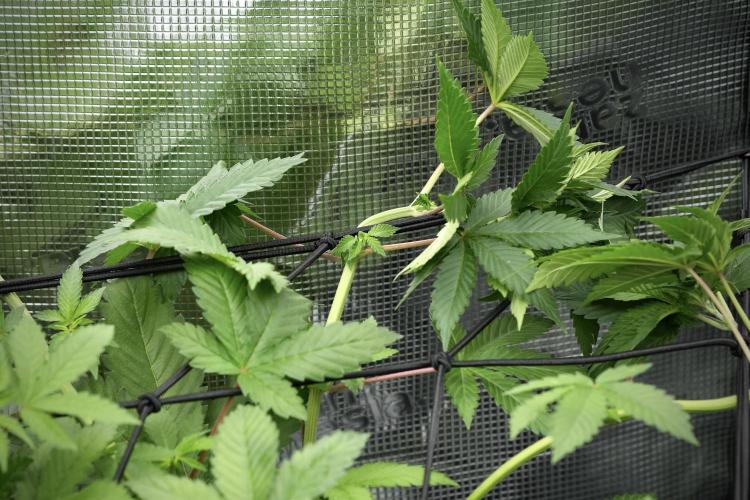
In plaats van verticaal te rekken, investeert ze haar energie in het vullen van haar eigen hoek van het scherm met gezonde nieuwe scheuten. Elke dag breng ik een paar minuten door met het voorzichtig terugleiden van de hoogste takken onder het net, en moedig ik ze aan om horizontaal te groeien in plaats van omhoog te racen.
Voor iedereen die niet bekend is met de techniek: SCROG (Screen of Green) is ontworpen om één groot, gelijkmatig bladerdak te creëren in plaats van enkele dominante takken boven de rest te laten uitsteken. Door elke tak onder het scherm te weven, ontvangt elke toekomstige bloeipunt een vergelijkbare lichtintensiteit, wat een veel uniformer bladerdak oplevert zodra de bloei begint.
Het is niet iets wat je één keer doet.
Het is iets wat je elke dag een beetje doet.
Stap voor stap spreiden de takken zich, verschijnen er nieuwe scheuten, en voor je het weet begint het hele scherm zichzelf te vullen.
Plant A heeft het proces prachtig omarmd.
Ze vecht niet tegen de training.
Ze werkt ermee samen.
────────────────────────
🌿 Plantontwikkeling
Het openen van de tent elke ochtend is ongelooflijk belonend geworden.
De lichter groene kleur die we een paar weken geleden observeerden, is volledig verdwenen, vervangen door rijke, gezonde bladeren van boven naar beneden. De aanpassing die we hebben gemaakt in het voedingsschema is duidelijk precies wat deze dames vroegen.
Plant A ziet er nu vitaal, in balans en vol energie uit.
Haar bladeren zijn breed, gezond en prachtig gekleurd, terwijl de nieuwe groei levendig blijft zonder tekenen van voedingsstress, ondanks dat we een EC draaien die sommige kwekers aanvankelijk relatief hoog zouden kunnen beschouwen.
Een ding dat ik in de loop der jaren heb geleerd, is dat de voedingssterkte niet gaat om het volgen van iemands cijfers.
Het gaat om luisteren naar wat je eigen planten je vertellen.
Op dit moment vertellen deze meisjes me dat ze gelukkig zijn.
Dus verandert er niets.
────────────────────────
🌡️ Omgeving
Ondanks dat de zomer constante warme weersomstandigheden buiten met zich meebrengt, blijft de omgeving binnen de Blue Tent opmerkelijk stabiel.
De gemiddelde omstandigheden deze week waren:
• Dagtemperatuur: 30°C
• Nachttemperatuur: 27°C
• Relatieve Vochtigheid: 58%
• pH: 5.8
• EC: 1.92 mS/cm
• CO₂: ongeveer 450 ppm
• Lichtschema: 18/6
• PPFD: ongeveer 350
Het kleine verschil tussen dag- en nachttemperaturen is iets waar ik op zal letten zodra de bloei begint, aangezien warmere nachten extra rek kunnen aanmoedigen tijdens de vroege weken van de bloei.
Voor nu, terwijl we ons nog volledig richten op vegetatieve groei en het vullen van de SCROG, blijven deze omstandigheden precies de resultaten opleveren waar ik naar op zoek ben.
Eén uitdaging tegelijk.
────────────────────────
🥥 Voedingsprogramma
Het voedingsschema blijft ongewijzigd omdat de planten absoluut geen reden hebben getoond om het aan te passen.
De voedingsoplossing deze week bestond uit:
• Hydro A – 1.9 ml/L
• Hydro B – 1.9 ml/L
• Hydro Roots – 1 ml/L
Met alleen kleine pH-aanpassingen waar nodig.
Hoewel een EC van 1.92 relatief hoog kan lijken voor sommige kwekers, konden de planten me niet duidelijker feedback geven.
Rijk groene bladeren.
Sterke stelen.
Snelle vegetatieve groei.
Gezonde wortelontwikkeling.
Planten lezen geen voedingsschema's.
Ze vertellen ons gewoon of ze gelukkig zijn.
En deze meisjes zijn dat zeker.
────────────────────────
🕸️ De SCROG Gaat Verder
Deze week begon het scherm echt zijn doel te tonen.
Elke dag blijf ik de hoogste takken onder het net terugduwen, wat laterale groei aanmoedigt terwijl langzamere takken kunnen inhalen.
Het doel is niet alleen om de planten kort te houden.
Het doel is om tientallen toekomstige bloei-toppen te creëren die allemaal ongeveer op dezelfde hoogte zitten.
Zodra het scherm bijna volledig gevuld is, zullen we een laatste defoliatie uitvoeren om de luchtstroom en lichtpenetratie te verbeteren voordat we de tent in bloei zetten.
We komen elke dag dichterbij.
De natuur bouwt het bladerdak.
Ik leid het gewoon.
────────────────────────
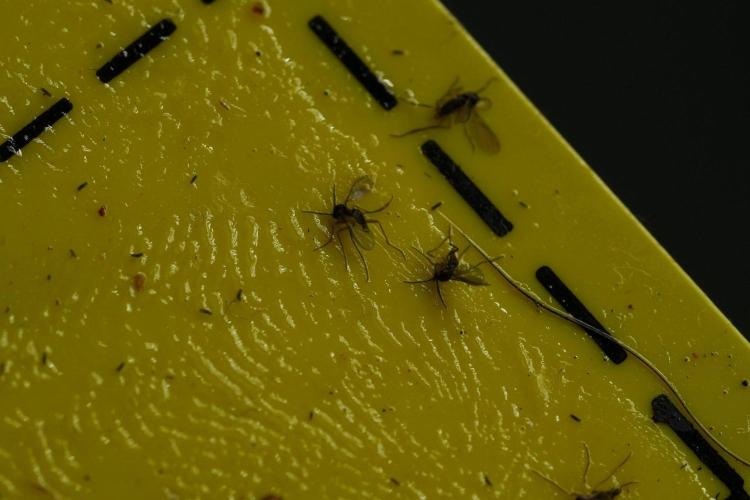
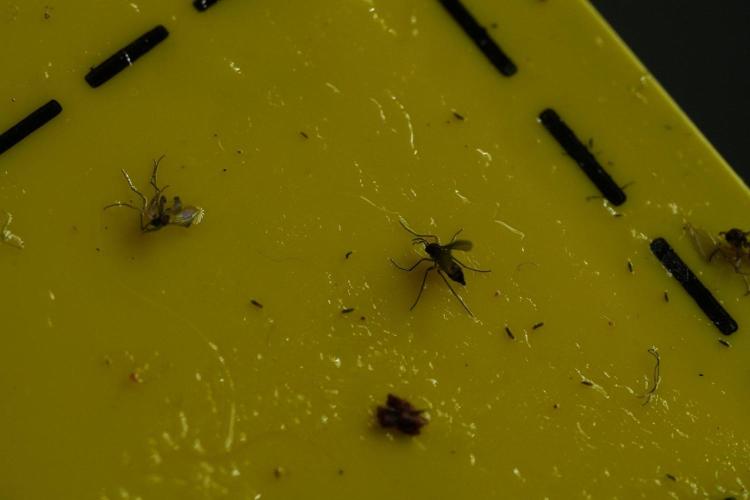
🐛 Een Onverwachte Bezoeker
Deze week herinnerde me er ook aan dat, ongeacht hoe voorzichtig we zijn, de natuur altijd manieren vindt om ons te verrassen.
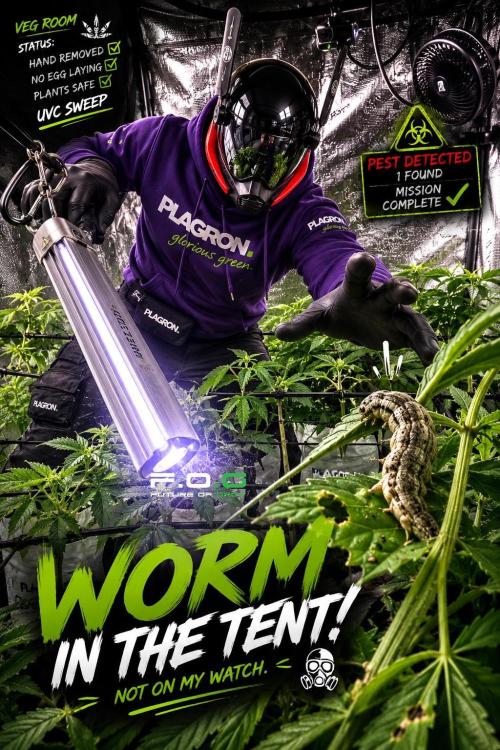
Tijdens het inspecteren van de planten ontdekte ik een enkele rups die gelukkig van een van de bladeren aan het genieten was.
Gezien hoe strikt ik ben met hygiëne voordat ik de kweekruimte binnenkom, verraste het me echt. Ik douche altijd, trek schone kleren aan en doe alles wat mogelijk is om ongewenste gasten binnen te houden.
Toch...
Weet één klein reiziger nog steeds zijn weg van de groentetuin naar de tent te vinden.
Gelukkig betekende regelmatige inspecties dat het probleem meteen werd opgemerkt.
De rups werd met de hand verwijderd, de beschadigde bladeren werden opgeruimd en er werd een IPM (Integrated Pest Management) inspectie uitgevoerd over de hele kweek.
IPM is niet alleen reageren wanneer problemen zich voordoen.
Het is het creëren van regelmatige routines die helpen kleine problemen te voorkomen dat ze ooit groot worden.
Observatie is altijd de eerste verdedigingslinie.
────────────────────────
🛡️ Een Beetje Extra Bescherming
Om de inspectie af te ronden, gebruikte ik ook de Future of Grow UVC LED-bar als een aanvullende preventieve maatregel.
UVC-licht kan helpen ongewenste sporen en micro-organismen te verminderen die misschien hun weg naar de kweekruimte hebben gevonden, waardoor het een nuttig hulpmiddel is binnen een algehele IPM-strategie.
Het is belangrijk te vermelden dat UVC altijd verantwoord moet worden gebruikt.
Directe blootstelling kan zowel planten als huid beschadigen, dus de juiste voorzorgsmaatregelen en oogbescherming zijn essentieel bij het werken met dit soort apparatuur.
Correct gebruikt, wordt het echter een waardevolle extra laag van preventie in plaats van te wachten tot problemen zich voordoen.
Zoals altijd...
Preventie is gemakkelijker dan behandeling.
────────────────────────
💙 De Persoonlijkheid van Plant A
Elk fenotype heeft zijn eigen manier van groeien.
Plant A blijft bewijzen dat ze een van de meest gebalanceerde meisjes binnen de Blue Tent is.
Ze probeert het bladerdak niet te domineren.
Ze haast zich niet naar de bloei.
In plaats daarvan vult ze rustig haar eigen ruimte met gezonde takken, prachtige bladkleur en uitstekende structuur.
Elke week lijkt ze zich comfortabeler te voelen met de training, en elke week wordt haar hoek van de tent een beetje voller.
Ze is precies het soort plant dat geduld beloont.
────────────────────────
👀 Vooruitkijken
Als alles op dit tempo doorgaat, verwacht ik dat het SCROG-scherm de komende week bijna volledig gevuld zal zijn.
Zodra dat gebeurt, zal de volgende grote mijlpaal een laatste opruiming en defoliatie zijn voordat we de tent in bloei zetten.
Tot die tijd blijft de dagelijkse routine heerlijk eenvoudig.
Duw de takken.
Observeer de planten.
Houd de omgeving stabiel.
Laat de natuur het zware werk doen.
Soms draait groeien niet om meer doen.
Het gaat om weten wanneer je gewoon uit de weg van de plant moet blijven.
────────────────────────
💙 Bedankt
Een enorme dank aan Zamnesia voor het mogelijk maken van Project Blue Tent, van deze uitstekende Blue Waffle F1-genetica tot het complete ecosysteem rondom deze kweek.
Een enorme dank aan Plagron voor het leveren van de Premium Growbags samen met de Hydro voedingslijn, die week na week prachtige, gezonde groei blijft leveren.
Een speciale dank aan Mars Hydro voor het druppelirrigatiesysteem en het automatische afwateringssysteem dat het water geven zowel eenvoudig als betrouwbaar houdt.
Dank ook aan Future of Grow voor de uitstekende UVC LED-bar, die nu een waardevol hulpmiddel is binnen mijn Integrated Pest Management-routine.
En tot slot, dank aan GrowDiaries en aan elke persoon die deze reis volgt.
Of je hier bent om te leren, je eigen ervaring te delen, vragen te stellen of gewoon te genieten van het kijken naar deze fenotypes die zich ontwikkelen, ik waardeer elke bezoek, elke opmerking en elk gesprek oprecht.
Hopelijk hebben we volgende week een volledig gevuld SCROG, voeren we onze laatste defoliatie uit en bereiden we deze prachtige dames voor op het moment waar we allemaal op hebben gewacht...
Bloeien.
Tot volgende week...
Growers Love en gelukkig groeien! 🌱💙
8 houdt van
1 opmerking
Share
Used techniques
ScrOG
Techniek
7
Week 7. Vegetatie
8d ago
1/30
60 cm
Height
18 uur
Light Schedule
28 °C
Day Air Temp
5.8
pH
Normaal
Smell
960 PPM
TDS
65 %
Air Humidity
18 °C
Solution Temp
24 °C
Substrate Temp
27 °C
Night Air Temp
8 liters
Pot Size
1.2 liters
Watering Volume
450 PPM
CO₂-niveau
Nutrients 5
Hydro A
1.9 mll
Hydro B
1.9 mll
Hydro Roots
1 mll
DogDoctorOfficial 💙 Project Blue Tent – Week 7
Blue Waffle F1 – Pheno A (Map 13A)
Welkom terug iedereen bij weer een week in Project Blue Tent! 💙🌱
Als je nieuw bent hier, welkom aan boord.
Dit project draait helemaal om het verkennen van de ongelooflijke Blue Waffle F1 genetica van Zamnesia, terwijl we het complete groei-ecosysteem op de proef stellen.
In plaats van vier planten als één dagboek te documenteren, krijgt elk fenotype zijn eigen individuele reis van zaad tot oogst. Ze delen dezelfde tent, dezelfde omgeving, dezelfde voeding, dezelfde irrigatie en dezelfde verlichting.
En toch...
Slagen ze erin om vier totaal verschillende verhalen te vertellen.
Zoals ik altijd graag zeg:
We kweken niet alleen planten.
We leren ze kennen.
────────────────────────
🌿 Week Zeven – De Laatste Schoonmaak
Deze week voelt als een mijlpaal.
De SCROG heeft zijn werk gedaan.
Het bladerdak is vol.
De planten hebben hun structuur gevestigd.
En nu is het tijd om alles voor te bereiden voor het volgende hoofdstuk...
Bloei. 🌸
Plant A ziet er op dit moment absoluut prachtig uit.
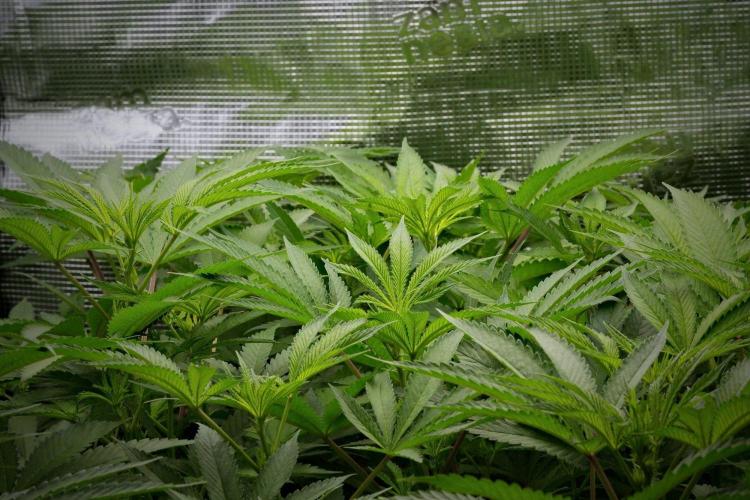
Haar loof is ontwikkeld tot het rijke, gezonde groen dat ik hoopte te zien, en de algehele structuur is opmerkelijk in balans. Na enkele weken van het voorzichtig begeleiden van takken onder de SCROG, zijn we erin geslaagd een bladerdak te creëren dat verrassend gelijkmatig is van de ene kant van de tent naar de andere.
Met ongeveer 60 cm zit ze comfortabel binnen de ruimte die we voor haar hebben gecreëerd.
En hoewel ze zeker verder vegetatief kan groeien, wil ik de tent niet gewoon blijven vullen met steeds meer loof.
Op een gegeven moment moet je stoppen met het bouwen van het bladerdak...
...en beginnen met het voorbereiden ervan voor wat komen gaat.
Dat is precies waar we nu zijn.
────────────────────────
🕸️ Van SCROG naar Bloei
In de afgelopen weken heeft de SCROG de manier waarop deze planten de tent bezetten volledig veranderd.
In plaats van individuele takken verticaal te laten domineren, hebben we ze voorzichtig horizontaal onder het scherm geleid.
Het resultaat is precies wat we zochten:
Een breed, relatief gelijkmatig bladerdak met veel ontwikkelende toppen die het beschikbare licht delen.
SCROG gaat niet over het dwingen van een plant tot onderwerping.
Het gaat erom samen te werken met de natuurlijke groei en die groei opnieuw te verdelen over de beschikbare ruimte.
En als ik nu naar de tent kijk...
Zou ik zeggen dat de missie is volbracht.
Het scherm is gevuld.
De planten hebben hun territorium opgeëist.
Nu moeten we het best mogelijke startpunt voor de bloei creëren.
Wat ons brengt bij de belangrijkste taak van deze week.
────────────────────────
✂️ Defoliatie – Vandaag Schoonmaken voor een Betere Morgen
Deze week voeren we een diepe, doelgerichte defoliatie uit over het bladerdak.
Voor iedereen die niet bekend is met de techniek, betekent defoliatie simpelweg het selectief verwijderen van bladeren van de plant.
Maar het is belangrijk om te begrijpen wat defoliatie niet is.
Het is niet het kaalstrippen van een plant.
Het is niet het verwijderen van bladeren alleen omdat ze in de weg zitten.
En het is niet iets dat automatisch elke week moet worden uitgevoerd.
Het doel is om de structuur die we al hebben gecreëerd te verbeteren.
Na enkele weken SCROG-training is er nu een enorme hoeveelheid loof samengepakt in een relatief kleine ruimte. Terwijl die bladeren essentieel zijn tijdens de vegetatieve groei, kan te veel overlappend loof uiteindelijk onnodige congestie in het bladerdak creëren.
Dus we verwijderen geselecteerde bladeren die:
• Ontwikkelende groei blokkeren
• Onnodige overlap creëren
• De luchtstroom door het interieur beperken
• Lagere gebieden schaduwen die we hebben besloten te behouden
• Of simpelweg niet genoeg bijdragen om die ruimte te rechtvaardigen
Het doel is niet om de plant leeg te laten lijken.
Het doel is om de plant efficiënt te maken.
────────────────────────
🌬️ Waarom Defolieren Voor Bloei?
Timing is alles.
We doen dit nu omdat de planten nog in de vegetatieve groei zijn en tijd hebben om te herstellen voordat we ze vragen over te schakelen naar bloei.
Defoliatie is een vorm van stress.
Zelfs wanneer het zorgvuldig wordt uitgevoerd, verandert het verwijderen van een aanzienlijke hoeveelheid loof tijdelijk de balans van de plant tussen zijn bladeren, wortels en groeipunten.
Daarom wil ik geen grote schoonmaak uitvoeren diep in de bloei, tenzij er een zeer goede reden is.
Op dit moment kunnen de planten die korte herstelperiode aan terwijl ze nog onder een 18/6 lichtschema werken en actief nieuwe vegetatieve groei produceren.
Na de schoonmaak geven we ze tijd om te herstellen, zich te settelen en hun loof opnieuw op te bouwen voordat we de lichten omdraaien.
Het idee is simpel:
Stress nu.
Herstel nu.
Bloei later.
In plaats van de plant te vragen om tegelijkertijd om te gaan met een grote overgang naar bloei en een aanzienlijke hoeveelheid snoeien, scheiden we die gebeurtenissen.
Eén stap tegelijk.
Dat is vooral belangrijk in een project als dit, waar ik probeer de planten te observeren in plaats van ze gewoon zo hard mogelijk te duwen.
────────────────────────
🌿 Plant A – Ziet Er Beter Uit Dan Ooit
Plant A blijft me imponeren.
Het eerste dat deze week opvalt, is de kleur.
Die iets lichtere uitstraling die we eerder in de groei zagen, is volledig verdwenen. Het loof toont nu dat rijke, gezonde groen dat me vertelt dat de huidige voedingsstrategie extreem goed werkt.
Ze is krachtig zonder overdreven te lijken.
Gezond zonder tekenen van voedingsstress te vertonen.
En het belangrijkste...
Ze is in balans.
Haar takken hebben prachtig gereageerd op de SCROG, en het bladerdak heeft zich ontwikkeld tot een zeer bruikbare structuur voor de bloei.
Dit is zo'n moment waarop je naar de plant kunt kijken en beseffen dat de weken van kleine aanpassingen eindelijk samenkomen.
Het toppen.
Het herstel.
Het dagelijkse SCROG-werk.
De irrigatie.
De voeding.
De milieustabiliteit.
Geen van die dingen heeft dit bladerdak op zichzelf gecreëerd.
Ze zijn allemaal stukjes van dezelfde puzzel.
────────────────────────
💧 Het Drip Irrigatiesysteem
Een van de dingen waar ik tijdens dit project bijzonder onder de indruk van ben, is het automatische drip irrigatiesysteem.
Het werkt prachtig.
Met de planten die nu consistenter drinken en het bladerdak dat steeds veeleisender wordt, maakt het hebben van een betrouwbaar irrigatiesysteem het onderhouden van uniformiteit in de tent aanzienlijk gemakkelijker.
Elke plant ontvangt momenteel ongeveer 1,2 L per 24 uur, geleverd via het druppelsysteem.
En de planten genieten duidelijk van de consistentie.
Een van de voordelen van automatische irrigatie is niet alleen tijdsbesparing.
Het is herhaalbaarheid.
In plaats van afhankelijk te zijn van elke watergift die handmatig op exact hetzelfde interval en volume wordt uitgevoerd, biedt het systeem een veel consistenter routine voor de planten.
Die consistentie wordt steeds waardevoller naarmate de wortelsystemen zich ontwikkelen en de planten overgaan naar bloei.
Tot nu toe...
Doet het systeem precies wat ik wilde dat het deed.
En eerlijk gezegd, het zien van vier planten die zo uniform reageren op dezelfde irrigatiestrategie is een van de meest bevredigende delen van dit project geweest.
────────────────────────
🥥 Voedingsprogramma
Het voedingsrecept blijft deze week ongewijzigd.
En voorlopig zie ik geen reden om in te grijpen in iets dat duidelijk werkt.
Huidige voeding:
• Plagron Hydro A — 1,9 ml/L
• Plagron Hydro B — 1,9 ml/L
• Plagron Hydro Roots — 1 ml/L
Huidige EC blijft ongeveer:
1,92 mS/cm
met de oplossing onderhouden rond 18°C en pH op 5,8.
De planten tonen uitstekende kleur, sterke groei en gezonde bladontwikkeling, dus ik voel me perfect comfortabel om het huidige recept voorlopig aan te houden.
We kunnen de voedingssterkte volgende week verhogen, afhankelijk van hoe de planten reageren na defoliatie en naarmate de bloei nadert.
Maar dat is precies waarom ik niet graag meerdere variabelen tegelijk verander.
Eerst observeren we.
Dan passen we aan.
De planten zullen ons vertellen wat ze nodig hebben.
────────────────────────
🌡️ Omgevingsomstandigheden
De Blue Tent blijft opmerkelijk stabiel.
De gemiddelde omstandigheden van deze week waren:
• 🌡️ Dag Temperatuur: 28°C
• 🌙 Nacht Temperatuur: 27°C
• 💧 Relatieve Vochtigheid: 65%
• 🥥 Substraat Temperatuur: 24°C
• 💦 Voedingsoplossing: 18°C
• ⚗️ pH: 5,8
• ⚡ EC: 1,92 mS/cm
• 💨 CO₂: ongeveer 450 ppm
• 💡 Lichtschema: 18/6
• 💧 Irrigatie: ongeveer 1,2 L/plant/24h
• ? Potmaat: 8 L
• 📏 Plantenhoogte: ongeveer 60 cm
De planten blijven prachtig reageren op deze omstandigheden.
De temperatuur in de wortelzone blijft bijzonder stabiel, irrigatie is consistent, en het bladerdak heeft voldoende luchtbeweging om krachtige transpiratie te ondersteunen.
Naarmate we naar de bloei gaan, zal het beheer van de omgeving nog belangrijker worden.
De ruimte die we nu hebben gecreëerd moet niet alleen de vegetatieve groei ondersteunen...
...maar ook de veel dichtere bloeistructuur die eraan komt.
────────────────────────
🌬️ Waarom de Schoonmaak Belangrijk Is
Een van mijn belangrijkste doelstellingen met deze defoliatie is niet alleen esthetiek.
Het is luchtstroom.
Wanneer vier krachtige planten een tent van 100 × 100 × 200 cm volledig vullen, wordt de hoeveelheid loof in die ruimte aanzienlijk.
Van bovenaf kan alles er absoluut perfect uitzien.
Maar onder dat prachtige bladerdak is het een ander verhaal.
Bladeren overlappen.
Takjes kruisen elkaar.
Interne ruimtes worden druk.
Lucht moet door dat alles bewegen.
Door nu selectief overtollig loof te verwijderen, openen we die interne ruimtes voordat de bloei begint.
Dat geeft ons een schonere structuur voor de toekomst en maakt het veel gemakkelijker om de planten te inspecteren, de luchtstroom te onderhouden en de ontwikkelende bloemen te monitoren.
Dit is ook een van de redenen waarom ik veel gelukkiger ben om de grote schoonmaak vóór de omschakeling te doen in plaats van te wachten tot de planten diep in de bloei zijn.
Zodra de bloei begint, veranderen de prioriteiten.
Ik wil dat de plant zijn energie concentreert op het ontwikkelen van bloemen in plaats van herhaaldelijk te herstellen van grote structurele werkzaamheden.
Dus we bereiden de ruimte nu voor.
Schoon bladerdak.
Goede luchtstroom.
Gezonde structuur.
Dan...
Bloei.
────────────────────────
🧠 Defoliatie Gaat Niet Over Het Verwijderen Van Bladeren
Een van de grootste misverstanden rondom defoliatie is dat meer bladeren automatisch betekent dat de plant slechter is.
Dat is niet waar.
Bladeren zijn ongelooflijk belangrijk.
Ze zijn de zonnepanelen van de plant.
Ze vangen licht en helpen bij de fotosynthese.
Dus het doel zou nooit moeten zijn:
"Hoeveel bladeren kan ik verwijderen?"
De betere vraag is:
"Welke bladeren dragen niet meer genoeg bij om deze ruimte te rechtvaardigen?"
Dat is de filosofie die ik hier volg.
We proberen de plant niet te verzwakken.
We proberen de relatie tussen:
Licht → bladerdak → luchtstroom → groeipunten te verbeteren.
En omdat we al weken bezig zijn met het creëren van de structuur met SCROG, is deze schoonmaak simpelweg de laatste verfijning van dat werk.
────────────────────────
🌱 De Persoonlijkheid van Plant A
Elk fenotype blijft zijn eigen persoonlijkheid ontwikkelen, zelfs wanneer alle vier de planten onder bijna identieke omstandigheden leven.
Plant A is consequent een van de meer gebalanceerde meisjes in de tent geweest.
Ze lijkt niet geïnteresseerd in het worden van de grootste plant in de kamer.
In plaats daarvan lijkt ze veel meer geïnteresseerd in het worden van een efficiënte.
Haar groei is gestructureerd.
Haar bladerdak is in balans.
Haar loof is prachtig.
En na weken van training heeft ze zich extreem goed in de SCROG gesetteld.
Nu, na de schoonmaak van vandaag, ziet ze eruit als een bijna andere plant.
Minder druk.
Meer open.
Meer georganiseerd.
En klaar voor het volgende hoofdstuk.
Dat is het deel van groeien waar ik echt van geniet.
Je besteedt weken aan het langzaam opbouwen van iets...
Dan stap je op een dag terug en realiseer je je ineens:
Het kwam allemaal samen.
────────────────────────
👀 Vooruitkijken
De komende dagen zullen draaien om één ding:
Herstel.
Geen onnodige training.
Geen streven naar perfectie.
Geen constante veranderingen in de omgeving.
Gewoon observatie.
De planten hebben het toppen doorstaan.
Ze zijn getraind onder de SCROG.
Ze hebben het bladerdak gevuld.
En nu hebben ze hun laatste grote vegetatieve schoonmaak gekregen.
Dus we gaan ze laten ademen.
Laat ze herstellen.
Laat ze doorgaan met groeien.
En dan, als alles blijft eruitzien zoals het vandaag doet...
draaien we de Blue Tent om naar bloei. 🌸
Dit is het punt waarop al die weken van voorbereiding eindelijk beginnen vruchten af te werpen.
Het scherm is vol.
De structuur is klaar.
De planten zijn gezond.
Nu moeten we ze gewoon laten doen wat planten het beste doen.
Groeien.
────────────────────────
💙 Bedankt
Een enorme dank aan Zamnesia voor het mogelijk maken van Project Blue Tent, van deze fantastische Blue Waffle F1 genetica tot het complete ecosysteem rondom deze groei.
Een enorme dank aan Plagron voor het leveren van de Premium Growbags samen met de Hydro voedingslijn, die blijft uitstekende resultaten en prachtig gezonde groei leveren.
Een speciale dank aan Mars Hydro voor het drip irrigatie- en automatisch afvoersysteem. Na het zien van deze planten die week na week reageren op de consistentie van automatische irrigatie, ben ik oprecht onder de indruk van hoe goed het systeem presteert.
Dank ook aan GrowDiaries, voor het geven van een plek aan kwekers over de hele wereld om hun reizen te documenteren, kennis uit te wisselen en van elkaar te leren.
En tot slot...
Dank aan iedereen die Project Blue Tent volgt.
Elke opmerking, elke vraag, elk stukje feedback en elke persoon die gewoon even langs komt om te zien hoe deze vier fenotypes zich ontwikkelen, betekent meer dan je waarschijnlijk beseft.
We hebben weken besteed aan het samen bouwen van dit bladerdak.
Nu staat het echt spannende deel op het punt te beginnen.
De planten zijn schoon.
De SCROG is gevuld.
De ruimte is klaar.
Bloei is volgende. 🌸💙
Tot volgende week...
Growers Love, gelukkig groeien, en zorg goed voor jezelf iedereen! 🌱💙
11 houdt van
2 opmerkingen
Share
Used techniques
Ontbladering
Techniek
ScrOG
Techniek
8
Week 8. Bloeiend
4d ago
1/57
81 cm
Height
12 uur
Light Schedule
27 °C
Day Air Temp
5.8
pH
Normaal
Smell
1045 PPM
TDS
66 %
Air Humidity
19 °C
Solution Temp
24 °C
Substrate Temp
27 °C
Night Air Temp
8 liters
Pot Size
1.4 liters
Watering Volume
666 PPM
CO₂-niveau
Nutrients 6
Hydro A
2 mll
Hydro B
2 mll
Hydro Roots
1 mll
DogDoctorOfficial 💙 Project Blue Tent – Week 8
Blue Waffle F1 – Pheno A (Folder 13A)
Hello everyone, and welcome back to another chapter inside Project Blue Tent! 💙🌱
If you're new here, welcome aboard.
Project Blue Tent is our little experiment with four individual Blue Waffle F1 plants from Zamnesia, each documented separately from seed to harvest.
All four ladies share the same environment, lighting, irrigation, nutrition and general care.
And yet...
They still manage to show their own little personalities.
We're not just growing plants.
We're getting to know them.
And this week?
Well...
They're finally in flower. 🌸
────────────────────────
🌸 Week Eight – Welcome to Flower
This week feels completely different.
After seven weeks of vegetative growth, the Blue Tent has finally made the transition into flowering.
And honestly...
I think these girls were ready for it before I was.
The entire tent has been growing at an incredible pace.
In roughly one week, some of these plants have gained close to 30 cm, while simultaneously becoming denser, producing developing flowering sites and generally accelerating in every direction.
They're not simply getting taller.
They're building.
Branches are extending.
New growth is appearing everywhere.
Flowering sites are developing rapidly.
And the whole room suddenly feels like it has shifted into another gear.
Looking back, I may have kept them in vegetation a little longer than I normally would.
Seven weeks of vegetative growth is definitely on the longer side for the way I usually run these plants.
But there's no point looking backwards now.
The canopy is established.
The plants are healthy.
The screen has done its job.
And now we're going to see what happens when these beautiful F1 ladies are finally allowed to flower.
────────────────────────
🕸️ From SCROG to Flower
The SCROG has been one of the most important parts of this entire vegetative phase.
For weeks, we weren't trying to make the plants taller.
We were trying to distribute their growth across the available space.
Branches were gently guided beneath the screen, allowing the canopy to develop horizontally rather than allowing individual tops to dominate vertically.
And looking at Plant A now...
I'd say the mission was successful.
The canopy is remarkably even.
From above, it is becoming increasingly difficult to tell where one plant ends and another begins.
That's exactly what we wanted.
A relatively uniform surface where multiple flowering sites can develop under similar conditions rather than having a few dominant tops towering over everything underneath them.
Of course, now comes the interesting part.
Flowering stretch.
And judging by what these plants have done during the last week...
I have a feeling they're not planning on staying at this height for very long.
😅
────────────────────────
🌿 Plant A – The Race Has Started
Plant A is looking absolutely beautiful.
The colour is one of the first things that catches my attention.
That rich, healthy green we've been working toward is still there, and the plant looks full of energy.
But her biggest characteristic this week is simple:
Speed.
She is moving.
Fast.
The transition into flower has clearly brought a completely different level of activity to the plant.
New growth is appearing quickly, branches are extending, and the developing flowering sites are becoming increasingly obvious.
At approximately 81 cm, she's already gained a considerable amount of height since the last report.
And that's exactly why I'm watching this flowering stretch so closely.
We have a very even canopy right now.
I'd love to keep it that way.
But with seven weeks of vegetative development behind these plants, combined with the warm and relatively similar day and night temperatures, I fully expect some stretching.
The challenge now isn't creating the canopy.
We've already done that.
The challenge is seeing how well we can maintain it while the plants transition into full flowering.
────────────────────────
💡 Starting Flower Under Strong Light
We're also entering flower with a fairly ambitious lighting strategy.
Rather than slowly easing the plants into lower light levels, we're starting flowering at approximately 800 PPFD.
The idea is straightforward:
The plants have developed a large, healthy canopy during vegetation, and now I want to see how they respond as flowering begins.
I'm particularly interested in seeing whether maintaining strong light from the beginning can help encourage compact development despite the factors that may push these plants toward additional stretch.
Will it keep them compact?
Honestly...
I'm not completely convinced.
😂
Seven weeks of vegetation.
Rapid growth.
Warm days.
Warm nights.
And now the beginning of flowering.
That's a lot of ingredients for stretch.
But that's also what makes this project so interesting.
We're not trying to predict everything perfectly.
We're watching what the plants actually do.
And Plant A is already telling us that she's ready to move.
────────────────────────
🌡️ Blue Tent – Flowering Conditions
The environmental conditions have shifted slightly with the transition into flower, while the overall stability of the room remains excellent.
This week's recorded conditions were:
• 🌡️ Day Temperature: 27°C
• 🌙 Night Temperature: 27°C
• 💧 Relative Humidity: 66%
• 🥥 Substrate Temperature: 24°C
• 💦 Nutrient Solution Temperature: 19.2°C
• ⚗️ pH: 5.81
• ⚡ EC: 2.09 mS/cm
• 💨 CO₂: approximately 666 ppm
• 💡 Light Schedule: 12/12
• 💧 Irrigation: approximately 1.4 L/plant/24h
• ? Pot Size: 8 L
• 📏 Plant Height: approximately 81 cm
One thing I'm particularly interested in during this phase is the temperature difference.
There really isn't much of one.
Day and night temperatures are currently sitting around the same level.
That's something I'm watching carefully because plants can tend to stretch more when nighttime temperatures remain relatively warm.
Combine that with the amount of vegetative growth these girls have already accumulated...
And we may have an interesting few weeks ahead.
For now, though, they're looking fantastic.
────────────────────────
🥥 Feeding Program – A Small Step Forward
With flowering officially underway, the nutrition has also moved forward slightly.
The current recipe is:
• Plagron Hydro A — 2 ml/L
• Plagron Hydro B — 2 ml/L
• Plagron Hydro Roots — 1 ml/L
• Plagron Power Buds — 1 ml/L
With pH adjustment as required.
The resulting EC is currently approximately 2.09 mS/cm.
This is a small progression from the previous vegetative recipe rather than a dramatic change.
And that's intentional.
The plants are hungry.
They're growing incredibly quickly.
They're entering flowering.
But I still prefer making measured changes and then watching how the plants respond rather than changing everything at once.
The plants have already given us some very clear feedback during this project.
Beautiful colour.
Fast growth.
Strong structure.
Healthy foliage.
So we're continuing to listen.
────────────────────────
💧 The Drip & Drainage System – Working Together
One of the things I really want to highlight this week is the irrigation system because it has become such an important part of Project Blue Tent.
The Mars Hydro drip irrigation and drainage setup isn't simply watering the plants.
The two sides of the system are working together.
The drippers deliver the nutrient solution directly into the coco.
The solution moves through the substrate, supplying the root zone before exiting as runoff.
That runoff is collected in the trays beneath the grow bags.
From there, the drainage system channels the collected solution through a pipe toward the pump.
The pump then moves the collected solution back toward the reservoir.
So what we have is effectively a recirculating system, where irrigation and drainage work together as one continuous setup.
And honestly...
It's working wonders.
The plants are drinking.
The roots are being supplied consistently.
The runoff is being removed automatically.
And the entire process happens without me having to manually carry watering cans around the room every day.
That's especially valuable now that the plants have entered flowering and their water demand is increasing.
The system is quietly doing its job in the background.
I get to spend my time watching the plants instead.
And I much prefer that.
────────────────────────
🌿 Why This Week Feels Different
There is something fascinating about watching a plant move from vegetation into flower.
Yesterday you're looking at leaves and branches.
Then suddenly...
You start seeing the plant change its priorities.
The growth becomes more pronounced.
The flowering sites begin developing.
The branches start extending.
The structure you've spent weeks building begins transforming into something completely different.
And because these plants were allowed to develop for seven weeks in vegetation, there is a lot of structure available for that transformation to work with.
Plant A has a fantastic starting point.
The canopy is even.
The branches are well distributed.
The stems are strong.
The foliage is healthy.
Now we simply have to see what she does with it.
────────────────────────
🌿 Plant A's Personality
Plant A continues to be one of those phenotypes that makes me smile whenever I open the tent.
She's vigorous.
She's responsive.
She's beautifully structured.
And apparently...
She's in a hurry. 😂
Her development throughout vegetation was impressive, but the speed at which she's now transitioning into flower is something else entirely.
There's a real sense of momentum around this plant.
At the moment, she remains remarkably similar to her sisters, which is another fascinating observation from this project.
Despite giving each phenotype its own diary, the four plants continue showing an incredible level of uniformity.
From above, they're almost becoming one giant plant.
But when you look closely...
The little differences start appearing.
And that's exactly what this project is about.
────────────────────────
🌸 The Big Question – How Much Will They Stretch?
This is probably the question I'm most curious about now.
The plants were vegetated for seven weeks.
They have grown extremely quickly during the last week.
Day and night temperatures are currently very similar.
And flowering has just begun.
All of those factors make me expect some additional vertical growth.
How much?
That's what we're about to discover.
I'm hoping the strong lighting and the structure we've created will help keep the canopy reasonably compact.
But I'm not going to pretend I know exactly what will happen.
Sometimes the plant gets the final vote.
And these girls have already demonstrated that they have plenty of energy.
So...
Let's see what they do.
────────────────────────
👀 Looking Ahead
The next couple of weeks are going to be fascinating.
The major vegetative work is finished.
The SCROG has been filled.
The canopy has been cleaned.
The plants have recovered.
And now we're officially into flowering.
Our main job from here is observation.
Watching the stretch.
Watching the developing flowers.
Watching the colour.
Watching the plants' response to the new nutritional program.
And, of course, keeping that environment as stable as possible while the room becomes increasingly dense.
Plant A has an excellent starting position.
Now nature takes over.
And considering how quickly she's been moving already...
I have a feeling the next report is going to look very different from this one.
🌸
────────────────────────
💙 Thank You
A huge thank you to Zamnesia for making Project Blue Tent possible and for giving us the opportunity to explore these beautiful Blue Waffle F1 genetics phenotype by phenotype.
A massive thank you to Plagron for the Premium Growbags and Hydro nutrient line that have supported these plants throughout their entire vegetative journey and now into flowering.
A special thank you to Zamnesia for the Phytonaut LED lighting that has helped us build this remarkably even canopy and will now be putting that flowering structure to work.
And a huge thank you to Mars Hydro for the drip irrigation and automatic drainage system.
Watching the irrigation and drainage work together throughout this project has been incredibly satisfying. The consistency, automation and recirculating setup have made managing four rapidly growing plants considerably easier.
Thank you as well to GrowDiaries for giving growers around the world a place to document their journeys, share experiences and learn from one another.
And finally...
Thank you to every single person following Project Blue Tent.
We've spent seven weeks building these plants.
Seven weeks of training.
Seven weeks of SCROG.
Seven weeks of watching them develop.
And now...
Flower has officially arrived. 🌸💙
The canopy is ready.
The plants are healthy.
The lights are on.
And the real transformation is just beginning.
Until next week...
Growers Love, happy growing, and take care everyone! 🌱💙
@Antifame, het is heel nieuw, ik denk dat ze het ongeveer een maand geleden hebben uitgebracht, ik ben tot nu toe serieus onder de indruk, voor de prijs had ik deze kwaliteit niet direct verwacht. Nu is het tijd om het te testen en te zien of het zo goed is als het eruit ziet 😍 Growers houden van mijn vriend, bedankt dat je langs bent gekomen voor de liefde en voor alles, hier is de link voor het geval je ze wilt bekijken https://www.zamnesia.com/531-growshop/799-grow-tent-kit 🙏🙏🙏🙌🙌🙌👊👊👊
@bkickstand, 😍😍😍 ohhh thank you so much my friend, seriously , its the genetics and nutrition, i am here just to provide them with what ever they ask and they are looking amazing to my eyes, seriously impressed with this F1s 😍 growers love my friend and thank you for everything 💚💚💚
@Wilstang, ohh dank je mijn vriend, en mijn excuses voor zo'n late reactie, ik ben overal geweest, heb zoveel updates te doen, kwekersliefde mijn vriend en dank je voor de liefde en steun 🙏🙏🙏