


Likes
Comments
Share


@GrowinHome
Follow
Most ladies are showing signs of flowering so today I will start counting the weeks.
Here u can also see my mutant/special ladies. They germinated a bit different from the others.
Day 3 of flower is showing some major progress‼️🙌🏽
I did NOT top any of these mutated plants. I only removed some very ugly growing leaves.
So everything u see on them is done by mother nature.


Likes
2
Share

@gr3g4l
Follow
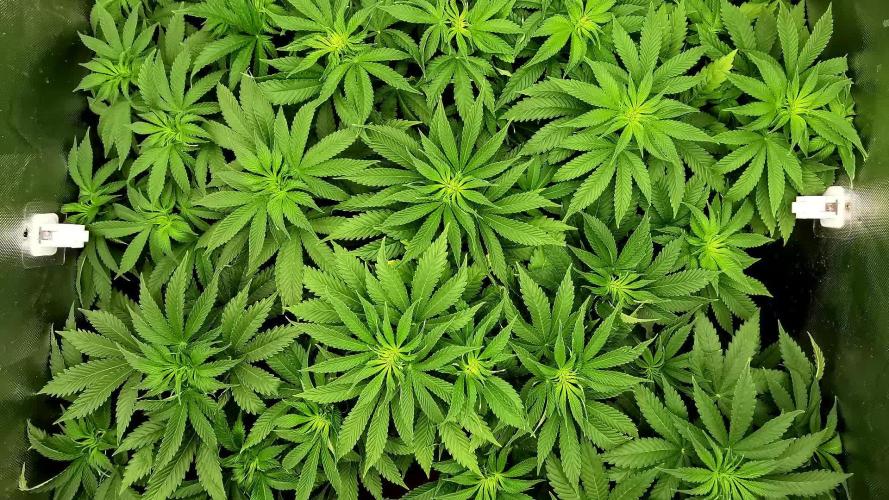
Inicios penúltima semana
Disminuí un poco la cantidad de riego de 600ml/dia a 500ml. Ahora ya prefiero que lleguen al siguiente riego un poco sedientas, total ellas al final tampoco no beben lo que venian bebiendo últimamente.
Likes
6
Share


@Aleks555
Follow
Zamnesia - Pineapple Express (F1 Auto) - 76 Days
The time has come—harvest day! It's bittersweet to say goodbye to this incredible journey, but all great things must come to an end. The Pineapple Express (F1 Auto) has been a true wonder, delivering both in strength and flavor, with an aroma that's unforgettable. This strain produced the hardest buds we've ever grown—rock-solid and packed with resin, the likes of which we’ve never seen before.
A massive thank you to Zamnesia for providing these remarkable seeds! And an extra special shoutout to Xpert Nutrients for the outstanding fertilizers. The results speak for themselves—your nutrients truly work miracles, creating those dense, powerful buds that we're so proud of.
Stay tuned for the final photo and video showcase of this incredible harvest. We're thrilled to share it with you all!
Xpert Nutrients – The Key to Powerful Harvests
When it comes to achieving the best results, we trust only proven solutions. And with Xpert Nutrients, our plants are getting nothing but the best! These nutrients are not just a product, they’re a true catalyst for growth and powerful yields. Thanks to a balanced formula, each dose nourishes our plants with essential elements, promoting their health, strength, and abundant harvests.
Every cycle with Xpert Nutrients shows progress. We see incredible results: dense, resinous buds, rich aromas, and, of course, yields we can be proud of. With these nutrients, there are no compromises – only maximum performance!
Thank you, Xpert Nutrients, for your continuous support and for helping us unlock the full potential of our plants. The results speak for themselves!

Likes
7
Share


@ibbzy
Follow
Only two plants which will need another two weeks. (Red Mimosa)
Everything just ripening and swelling at the moment!
Sad that it’s coming to an end
1x Mimosa Bruce Banner
1x Sweet Mandarine Zkittlez

Likes
100
Share


@TheFairyBudMother
Follow
Watching trichomes closely and using plain water over the past week. The largest of the two plants stopped responding much to watering and became resplendent with milky plus amber trichomes as the leaves faded and purpled up. On 2-15 I chose to harvest her. I weighed out 3.4 oz of untrimmed wet bud on 2-16, as I plan to dry trim. Second plant harvested 2-18. I will put up a harvest report when both plants are harvested. The smaller plant is approximately a week behind. I’m pleased with the yield but I really have no experience to know how these dense meaty buds will weigh out when dried. I have only removed the most easily plucked sugar leaves to facilitate drying and later trim. I have taken two medium sized riper buds from this plant over the past two weeks to dry and sample. I have only tried the first one and will say that the buzz was potent, delightful with a very sweet delicious flavor despite being uncured and grassy.
*****
Currently the scent is an almost artificial vanilla, sugar and chocolate.
******
Compared to my bagseed and my one previous grow, these plants have been resilient against transplant stress, heat, pests, and pmd. My only concern was the appearance of a ball, which I plucked off and had not since observed more of them. Unlike the smaller plant that has one large cola with many heavy but smaller ones, the larger one sported many larger colas.
******
For my next grow I would like to add more light or switch up to COBs move into a larger space, be it a tent or a diy grow room, augment my soil with coco as well as perlite, if not switch mediums entirely, be more gentle with transplant and add enzymes and bloom boosters to my supplements.
******
I know this was a long grow. Thank you for hanging with me throughout. Special thanks to my friends in the now crabfree Wolfpack on kik for your help and encouragement.
*******
Thank you Bombseeds for sending me these fantastic beans and for your help and support.
Thank you to WhiteWidow for hooking me up with Terpinator, and special thanks to Terpinator for sending me your very easy to use and effective product.
********
—Fairy
__about me:
I am a 54 year old woman with a California Prop 215 compliant medical grow. Cannabis helped me detox off of bupenorphine (Suboxone), an opioid medication used to treat opioid dependence. I was on large doses of fentanyl and morphine for several years prior to Suboxone, and at one point was taking 17 prescription medications for neuropathic pain caused by a spinal cord tumor, endometriosis and interstitial cystitis. I am currently off all prescription medications and continue to use cannabis for pain and stress reduction, primarily in the evenings. Being able to grow my own has offered me more control over quality and trichome ripeness, both of which are crucial to effectiveness for me.
____
Follow me on Instagram @thefairybudmother if you would like to know more about me and share in my advocacy of cannabis as medicine. I believe all cannabis use is medicinal use.

Likes
3
Share


@biggreens420
Follow
this strain grows really easy with not much effort just fimmed her once and used scrog net in flower and she turned out well she gets nice and bushy and fills in well towards the end can recommend to all growers new and old as she is a forgiving strain thanks for reading happy growing guys

Likes
22
Share


@OutdoorRookie
Follow
Due to prolonged bad weather, I decided to harvest them to avoid mold and other damage.
There were three of us, and it took around 6 hours to trim about 80% of both plants.
I ended up with a yield of 205 grams dry per plant.
I'm more than satisfied with the plants.
For my first grow, I couldn't be happier.
Likes
11
Share


@GREENPHOENIX6262
Follow
Veg into week 2 running smoothly thus far. No signs of deficiencies or areas of concern. See following specs.
Seedsman (Critical-Auto) - 6.0 Inches - Growing Tall - Healthy Fan leaves
BlimBurn (Apple Fritter - Auto) - 5.5 Inches Growing wide - Stems thicker then average.
Introduced Raw (NPK) Veg Part 2 (3.5g's per gal) - Assists with topping rebound
Hard Topping
LST should begin this week
Coco topped with worm casting and perlite
Light run - 18/6
Temps High 70 - Low 80's - Humidity - 78-91%
Heavy on the Myco
*End of week recap above* 08-11


Likes
10
Share


@Chubbs
Follow
Fastbuds Week 2
CrystalMeth Auto
This little lady surprises me every day. Starting to show some explosive growth since last week so I hope she'll continue on her path to greatness. Giving it straight water up to this point but since I'll be giving my other girls a molasses tea feeding this coming week I think she's going to get a little to. Until next week Happy growing.
Likes
49
Share


@masterofsmeagol
Follow
6/1 I'm anxious to get my plants in their final homes. Another 90 degree day today and then it will be cooling off with some showers. I plan to take advantage and utilize that to make the transition. I have some small burns on a couple plants bit considering the weather we've had its nothing. Temperature swings 50 degrees. I hope these girls do OK outside. I was tired and stoned last night and I accidently topped a plant I had already FIMed. Oh well. Transplants soon. Supports screwed in after the heat. Plants have been handling this weather like a champ. Big thick healthy stalks.
UPDATE PUT THE PLANTS IN AROUND 730. Cutting down on light hours I'm poverty close to where we are. It was 95 today. Plants have suprisingly little burning. My fan was taken so they go without that tonight too. In the next few days it's going to cool down and that's when I'll transplant. Only thing left before transplant is sanitizing trellis and supports. Easy peezy. Especially if it's supposed to be in the 50s. And people dent climate change lol. I'm hoping that all this adversity makes my flower a higher quality. I'm glad to have the quantity to pick the best phenos for the BIG POTS. Im trying to stay excited but it's just so dumb hot. Oh well. If the plants can do it so can I. I'm planning to give them some kelp me kelp you next watering and may start some light organic nutes.
6/2 Phone doesn't like uploading my videos. Broke record high temp yesterday 95 and tomorrow we will break the record low 50. Plants withstood the heat well and are doing great. Transplant soon. They were a little light but I held off on the water. Plan on it tomorrow. May transplant tomorrow. I have several videos that haven't uploaded. I thought they did but I was wrong. Oh well.
UPDATE: Forgot to water. Some were light and others could've held off. Did the half a powerade bottle ahain. A litt ke less on the heavier ones. However I'm looking to transplant into final homes tonight and into this weekend. I sanitized a fifty and a forty so my bags and two pots are sanitized. Cage is sanitized and ready and pallets are sanktized and in place. The 40 and 60 fit PERFECT in the small space left from the pallets. Plus the plants always lean the opposite direction so things should go smooth. Only thingvleft is sanitizing stakes, bamboo, plastic garden stakes and all the other plastic training stuff. I'll just soak it while I transplant. Gotta mix the soil first too though.
UPDATE. Heat went higher than expected and hit 90. I figured I'd go back around three and screw in suppirt stakes and begin getting everything ready for transplant (i.e. supports, mix soil, sanitize trellis) before I transplanted tomorrow MORNING was what I had planned. Unfortunately we got a huge thunderstorm with a shot ton of rain and it's gonna continue throughout the night. I think this is God's way of telling me to take a break. I can get up early and get those support stakes screwed in. Then when I get back from the wife's doctor's I can do the transplants. I'm trying to break the labor up into manageable chunks. Looking at my other diaries I can see that my plantscare fine in their three gallon homes. It'd a little disheartening seeing such big clones that I started so much earlier on the other diaries. However I always was fighting SOMETHING (usually more than one thing) and last year was a shit show. At least this year I stay away from anyone else's cannabis any clones and I'm extremely cautious. I've seen my cousin out perform me multiple times with healthy plants like this I'm excited to see how it goes. I really needed the break anyway but tomorrow morning the stakes will be in. Hopefully they'll be outside.
6/3 Broke the record for low days after breaking record for highs. I saw it 94 yesterday and the day before. On the way to my grow at 6am it was 44 degrees and it's not warming up much. Fifties at best. Rainy. I left the door closed. The big door on the otherside got opened as the other end of the garage neededcto he used. If the rain let's up I'm going to set up the grade stakes so I can transplant in the morning and throughout the day. I think I'm going to light dep a couple of them and leave them in the 3's. We'll see.
UPDATE: At 12:30 the temp today was 44. Yesterday it was 94. I can't believe this. Plants are doing great though and are in the garage under lights for the day. The BIG door was open part of the day. Didn't take any pictures (or even enter the grow area) as I sanitized the last 40 gallon pot and a bunch of grade stakes. I drilled the grade stakes to the pallets in the front. The first row is done. Just need to sanitize the plastic trellis itself and finish attaching the other grade stakes. I don't need the fill trellis up by transplant. I just need the bags to not knock over and have SOME support. I'll be back over there either to tonight to put more supports in or tomorrow when I actually plan to start transplanting. I'm getting excited. After dealing witb the stiff that I sanitized I didn't dare go fuck with my plants so I looked through the window. I'll finish sanitizing the net tomorrow. These plants look great. I'm wondering if doing the two diagonal I poles with zipties actually works. It would save me some kone for sure. I'll definitely update in the morning.
6/4 It's warmed up to a balmy 44 degrees. My plantsxare in the garage still. Weather sucks this whole week but after this heavy rain it should be perfect weather to transplant these girls. A little to chilly but it will warm up and I need to get this shit done. I'm trying to do to much at once. I need to just out dirt in bags and get them outside. I'm glad I waited until after this craziness. Breaking temp records for high one day then breaking it for low the next can't be good for the plants. I'll update what gets done today. I may mix soil or I might wait until tomorrow. It will let up some then. Plants still look fabulous 👌
6/5 50 degrees still raining like hell. Rain until Friday. Plants are inside under the onecworking light. Lots of indirect light through the massive windows though. I'm planning on mixing soil today and tomorrow and getting bags and pots half filled. Just trying to break the labor up into manageable pieces. It's probably a good thing I didn't put them in their huge containers before all this rain.
UPDATE: MIXED SOIL 1/3 of each (FOX FARM OCEAN FOREST, HAPPY FROG, AND ROOTS ORGANIC 707). I prepared I believe 11 containers for transplant. I need to sanitize two more containers and I'm good. I got a lot done. Might go back over. Set up extra cams too. I'm excited. Talked to my commercial buddy amd he motivated me. No reason my plants can't handle this shit. I've just had massive personal shit going on. Friday is the next GOOD day but these girls might go out earlier. I'm checking the forecast. I'll sanitize the other containers in the morning and fill them.
6/5 Today is usually my watering day but shit still seems heavy so I'm going to hold off. Despite that i need to transplant. I think they're wet enough. I could do it today. Plants are looking good and weather takes a better turn Friday. It's not raining hard though. It's just sprinkle right now. I may transplant some today depending on how things go. I'll keep the diary updated.
UPDATE: I went back over with the intent to just mix soil and let it acclimate. I decided to try to transplant one. I grabbed a 10th planet and started to go. I had done a bunch of manual labor already so i wasn't thinking. Of course the fucker was dry and didn't wanna come out ofcthe pot and the root ball pretty much decintigrated in my hand so I'm not sure how that will go. Tried again with the Blueberry Cheese Cake. I thought the roots just might not have been rootbound abdcthat could've been the case. After having another rough transplant I recognized I was tired, all the hard stuff is done and it's gonna keep raining until Friday. I wanted to transplant three and put them outside but with the wind and rain and the difficult transplant I let them sit under the light in the garage in indirect light. I had the doors open for a while. Should be open now but i don't want to have to go back over and shut it. Plus I'm not to keen on getting water on my light. Let's hope for a better day tomorrow. This was the only thing I had going good. Phrple punches are still behind. I've decided I'm oing to light dep ttwo of the plants in the 3 gallon pots. The two shittiest or smallest plants (probably purple punch will be light deped.
WENT BACK OVER AT FIVE AND IT APPEARS EVERYTHING IS ALRIGHT. WILL HAVE CHECK IN MORNING. Vid won't upload. Tried multiple times. I'll try again tomm.
6/6 Waiting for a doctor's appointment when I should be transplanting buy whatever. Everything is looking really good. Despite me disint9grating the rootball in my hands the two transplants look great! When I get back I'm planning to get some more work done. It's still lightly raining off and on but the door is up. I'm lettingvthe soil mix acclimate a little bit too. Hard labor is mostly done. Now the intricate part. Wish me luck. Not sure if it will be today bit I'm hoping.
WENT BACK OVER CAUSE IT WASNT RAINING BUT AS SOON AS I WAS CLOSE IT STARTED POURING SO THE PLANTS ARE UNDER THE ONE WORKING 150HPS AND THE AMBIENT LIGHTING FROM THE WINDOWS. TOMORROW IS TRANSPLANT DAY. I WONT HAVE A VEHICKE SO IT WILL BE TRICKY BUT IM GONNA MAKE IT HAPPEN. Opened doors at 530. Video still didn't upload
6/7 Still raining. It's off and on and a nice rain though. It's 53 degrees at noon. I transplanted two 10th planet's into 20 gallon pots. I transplanted these two a little differently. I put the bags in there final spot I side my cage andctransplanted in the misting rain. The first one came out and seemed to be heavier on the bottom and broke off. I tend to "throw" them in the hole before they collapse. With my anxiety I suck at transplanting. Plus these plants haven't filled the 3 gallon pots with roots yet but i want hem in their final homes and its time to go outside. I transplanted the other two plants indoors and let them have days in the garage with the door open and the light on then protection from the elements at night. I've been doing this for awhile. They would all be outside if the weather wasn't so shitty. This rain is supposed to stop. I'm curious as to what will be the fate of the two plantsci transplanted and left outside. I'm praying and hoping for the best. I also put my back tarp up so I have a wind break between rhe buildings. I stopped working because I didn't want to fuck anything up. Anxiety disorders suck. TOOK A BUNCH OF VIDS BUT THEY WONT UPLOAD. GOES FROM 9% TO 65% BUT ALWA7S TURNS RED "FILE FAILED TO LOAD". I'LL KEEP THE DIARY UPDATED. ESPECIALLY IF I GO BACK OVER. WAS ABLE TO LOAD A COUPLE VIDEOS. I GUESS ITS NOT AS BAD AS I THOUGHT. AT LEAST I HOPE. WENT BACK OVER AT 3 AND CHECKED THINGS OUT. THE TWO REXENT TRANSPLANTS I LEFT OUTSIDE SEEMED TO BE IMPROVING. DESPITE THE FACT I DUMPED A SHIT TON OF SOIL ALL OVER ONE OF THEM. IT SNAPPED A LITTLE BRANCH CLOSEST TO THE SURFACE. ITS STUFF I'LL REMOVE ANYWAY BUT STILL. IM REALLY CROSSING MY FINGWRS AND PRAYING THESE GIROS WILL MAKE IT. With everything i have going on tjis is my respite.IM GOING TO TRY TO SEE WHAT I CAN ACCOmplish TOMORROW. SOME OF THE PURPLE PUNCHES ARENT READY FOR TRANSPLANTING THOUGH. I ALSO ADDED TEO TARPS TO THE CAGECTO COVER THE WIND TOWER BETWEEN THE TWO BUILDINGS. THIS IS GOING TO BE A GOOD YEAR! Shut the door at seven. For some reason the two 10th planet's I transplanted (that fell all over the plant and I thought mightve broke it) look awesome lol. Despite the ridiculous pouring rain. It's going to let up soon and we are do fir some good weather. I'm trying to get everything (that isn't getting light depoed) into the cage. Four transplanted. Ten (I mean 8 more) to go.


Likes
8
Share


@Shellshocked
Follow
Well looked at the trics and I seen about 40% ambers so I put her in dark for 2 days before I harvested her pulled her out or the dark checked the trics. again and seen zero ambers while I was confused I knew she was not ready so I had a space in my veg. Tent so I threw her in there for her last week or 2. She looks so bad as I let her dry out big time and with the ph issues I had earlier in the grow there's not a leaf on her that's not got part of it dying off. Hopefully this is last week of flower as it's week start of week 10 and I really wanna try her out although most will go to concentrates as this grow was not ideal and the frost is minimal compared to other gg4 I got flowering right now.
Likes
2
Share

@Grow_for_Happiness
Follow
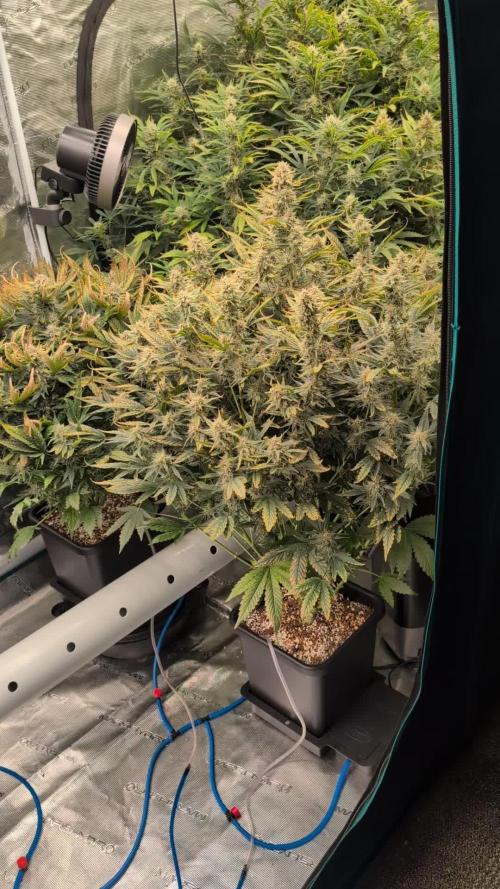
These plants are starting to live up to their name, looking very Yum-yum with the blue colours starting to come in. Front plant has nice long buds that are starting to plump up nicely with colours coming in. Back plant has slightly smaller looking buds, but they seem to be just as colourful, and are starting to smell delicious. Picked a few leaves off, and the buds made my arm sticky AF. Speaking of leaves, the back plant has some pretty dry fan leaves with a decent amount of browning. Looks like advanced tip burn, may be that this strain is a little more sensitive than the others? Other plants on same reservoir are happy, so just gonna let these two keep riding it out. They're looking great otherwise, and the browning is only affecting the older/larger fan leaves on the outside of the plant.
Turned the light up to 100% now getting 600 umol/s
Likes
12
Share


@Trickybis82
Follow
Hello growmies,
OK so if you wondering let me explain...
I had 8 plants outside in a greenhouse tent. (Which some of you might remember) however whilst we had the best summer to date! Here in the UK it Was unfortunately a week and a day which in this great weather that I wasn't able to get there in the morning to uncover them.
I had been using (black binbags) to help romote the 12/12 cycle.But they were left to long and the heat basically burn them all!!!!
6 of them I couldn't save. And 2 of them I did!!!!
However that being said I had to cut the plants from the main stalk half way day the plant and anything above that point! ALSO putting the plants through that much stress I truly didn't think they would recover!!!!
They have only EVER been fed water at a ph of 7.0. And the reason she has now joined the others indoors is because the weather and temp has dropped and seeing as she has some healthy buds. It would be a shame to lose her due to winter approaching.
AND, my god does she stink to high heaven. Looking so crystallised and lime green in colour (at present).
Tomorrow morning 27/09 I will give her 4ml per litre calculation if correct is 60ml for 15litres water. This is to ripen the bud. (Add nothing else) this has all the nutrients required with in that watering. ( I hope she react well seeing as she has only been given water) fingers crossed 🤞
Speak soon and thanks for all the love shown!!
Peace ✌️ ☮️
Likes
3
Share


@Earthsower
Follow
She looks well with her leaves fading the Double Kush Cake is still holding up in the latter stage. Her trichrome bracts are swelling up nicely and her stigmas are beginning to dull off. The lady received no nutrients for the last two weeks to prepare for her final flush. She stands at approximately 60cm from the soil!

Likes
18
Share


@MadeInGermany
Follow
Info:
Unfortunately, I had to find out that my account is used for fake pages in social media.
I am only active here on growdiaries.
I am not on facebook instagram twitter etc All accounts except this one are fake.
Have fun with the update.
Flowering day 47
since time change
to 12/12 h.
Hey everyone 😃.
The lady looks beautiful 😍.
The buds get thicker and thicker 👍.
They smell incredibly delicious 😬.
It was poured twice with 1.4 l.
The tent was cleaned and the humidifier refilled.
I wish you a lot of fun and all the best 👍
You can buy this Strain at :
https://sweetseeds.es/de/red-mandarine-f1-fast-version/
Type:
Red Mandarine F1 Fast Version
☝️🏼
Genetics:
Red Poison Auto®️ (SWS39)
X
Tangie (California Orange x Hybrid Skunk)
👍
Vega lamp:
2 x Todogrow Led
Quantum Board 100 W
💡
Bloom Lamp :
2 x Todogrow Led
Cxb 3590 COB 3500 K 205W
💡💡☝️🏼
Soil :
Canna Coco Professional +
☝️🏼
Fertilizer:
Green House Powder Feeding
☝️🏼🌱
Water:
Osmosis water mixed with normal water (24 hours stale that the chlorine evaporates) to 0.2 EC. Add Cal / Mag to 0.4 Ec Ph with Organic Ph - to 5.5 - 5.8 .
Likes
1
Share


@KannaGrowing
Follow
Ya estamos casi listos para cosechar.
Estamos regando con agua y solo lo estrictamente necesario para mantener hidratadas nuestras plantas.
Tambien hemos reducido al 50% la potencia de nuestras luminarias LazerLite Pro 720w.

Likes
17
Share


@CZ420CZ
Follow
more later
3rd Apr, today is day of two Amnesias - its time. they are on peak trichoms are milky 10% amber. Zkittles is on grotek final flush strawberry I trying if it change her smell and she is good now, but I fed her week ago with rocket fuel some fertilizers for peppers (11-6-8) coz im was out with bloom fertilizer, Amnesia 3 get this feed too but little bit improvemed with bio grow and rest of biobloom, yesterday I bought Powder Feeding PK booster/mineral and thats should be good. More later after some smoke :D


Likes
7
Share


@nectarinepasta
Follow
Plant continues to grown, seeing more and more trichomes on the leaves. Seeing photos from other White Diesel Haze Automatic growers I was expecting more frosting. It's possible the light is too close to the top of the highest stems but I cannot move it any higher.
pH was high so I added some pH min from Plagron to the water.

Likes
7
Share

@The710Garden
Follow
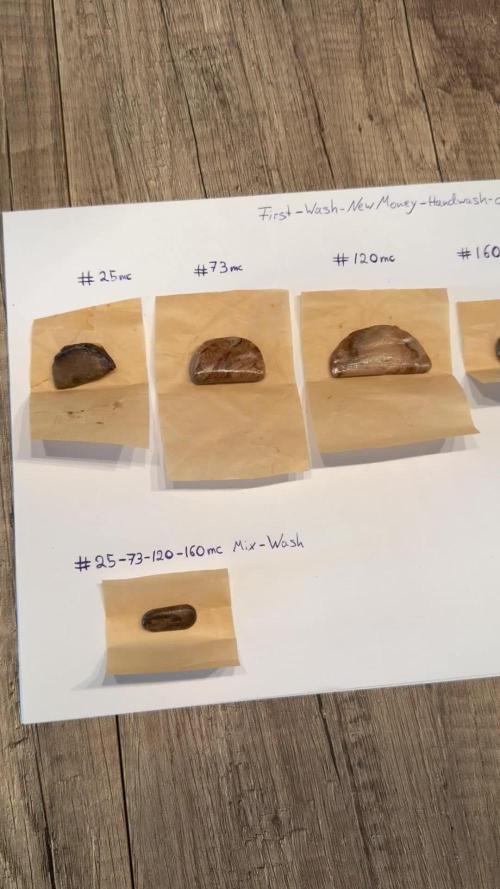
Good yield,good terpprofil on Both phenos Crazy trichome Productions!
I will Look what she will she will do it i dial her in in a next run,theres so much potential in this genetic!

Likes
Comments
Share

@BigHeadChief
Follow
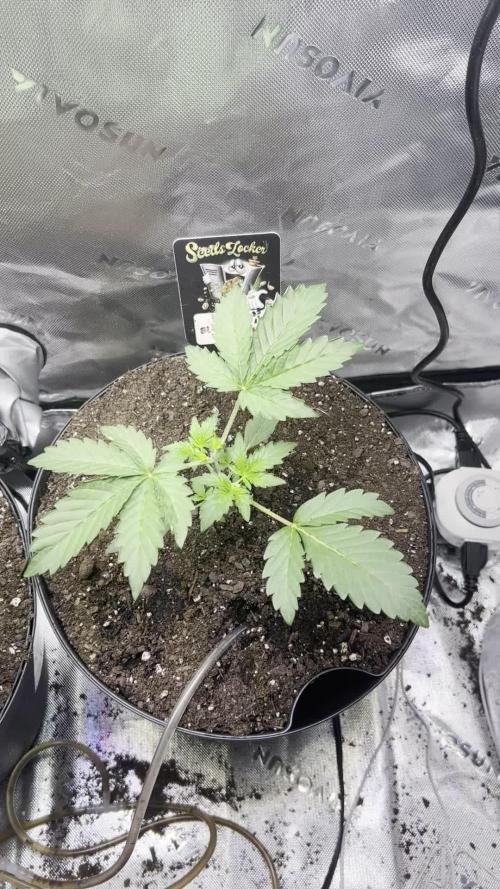
🥃 Blue Bourbon Smash
• Height: 6.25”
• Width: 10”
• Training: Topped Monday – strong recovery
• Notes:
• Tight internodes
• New tops emerging symmetrically
Blue Bourbon Smash: Topped cleanly, strong V-split, ready for staking soon
