Likes
Comments
Share


@Nedyah420
Follow
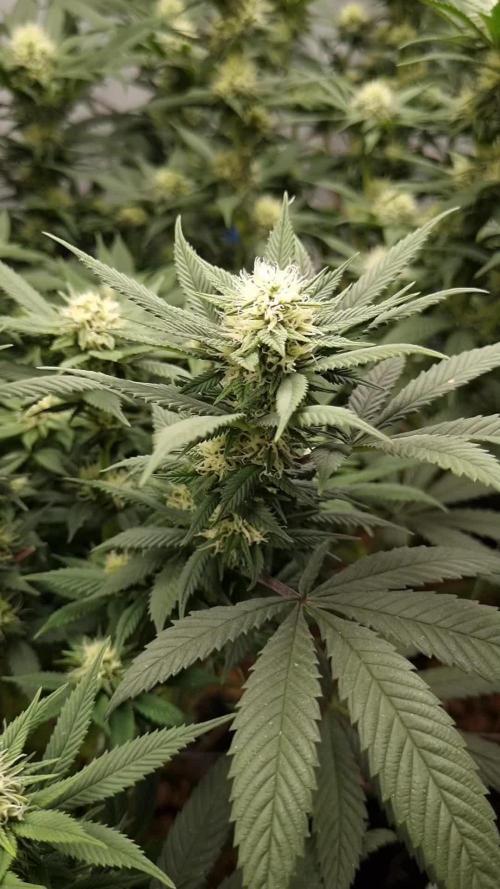
Getting sooo close i can almost taste it....will begin flushing with distilled watet until harvest..


Likes
2
Share


@Kali_DC
Follow
RO watering run off
Peach Sherbet OG - 2076 PPM
Peach Sherbet OG #2 - 1009 PPM
Mimosa x Orange Punch - 1035 PPM
Mimosa x Orange Punch #2 - 964 PPM
Permanent Marker Auto - 2020 PPM
Permanent Marker Auto #2 - 2520 PPM
Glookies Auto - 1031 PPM
Glookies Auto #2 - 3460 PPM


Likes
2
Share

@GreenEldritchGardens
Follow
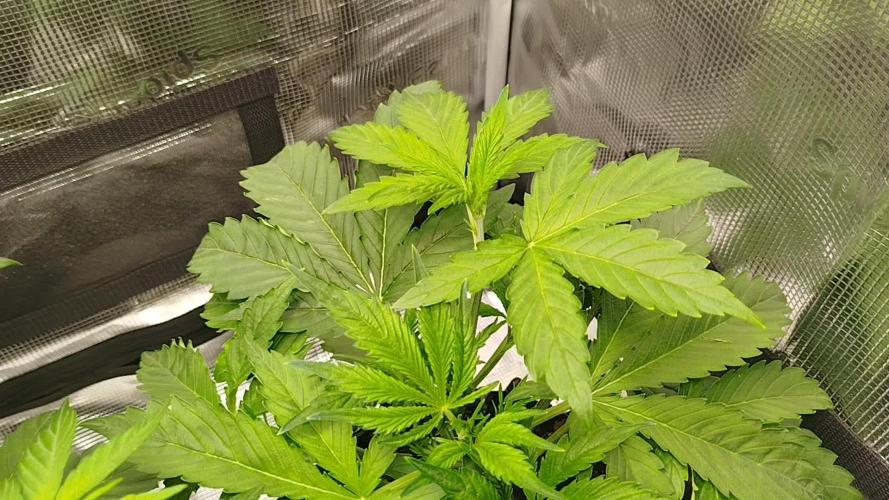
Since she was too small compared to other plants I moved her to a smaller tent with a 100w led for the moment, in some weeks she will go back to Sanlight.
I'm a bit worried that she will no flower, but she seems to indicate she is going pre flower. For sure will not take 65 days to harvest as the breeder claims.
If she flowers and give good fruits I'm happy 😊

Likes
4
Share


@adam_pawloski87
Follow
@twenty20mendocino A-Team R&D Update ~ Let’s Go day 24 of flower 🌸 an we are looking amazing! Ladies are starting to stack an oh my we getting a lot of frost going on! starting to get some gassy stanky notes of em too😍 ! We are only into week 4 ladies an gents we still got a few weeks to go of stacking! Keep your eyes peeled for next week’s update yall , peace love a positive to all y’all , an have an amazing productive day ! Cheers an blaze on !!




Likes
17
Share


@MasterKush714
Follow
HEY GANG UPDATE BEFORE THE FLIP!!!!!
So guys I had the WPM (white powdery mildew) issue with the gelato auto
haven't really seen it coming up elsewhere I'm already using a OMRI 3-in-1 spray for it
will update on that as well, hopefully that'll cure it, otherwise these other girls are doing great!
I have almost finished setting up the tent system and will update that also, see video, thanks for
everyone's help, I cant imagine what I would do without the whole forum here and the wisdom
I'm definitely a lot more knowledgeable about the process and systems that I have for it so again,
THANK YOU!!!!!!!!!!!!!!
LETS FUCKIN GOOOOOOOOOOO!!!!!!!!!!!!!!!!!!!!!!!!!!


Likes
2
Share


@AlpenZilla
Follow
🌸 Flowering – Week 7 | Day 48 (Day 83 overall)
Quick update focused on the Future #1 plants.
It has become quite clear by now that both Future #1 plants need more time than originally expected. In terms of development, they are still clearly behind and will very likely require at least 3 more weeks, possibly longer depending on how they progress over the final stretch.
At this stage, the plan is simply to keep the run stable, continue without unnecessary changes, and give the plants the time they need to fully mature.
Likes
2
Share


@Green_Peace
Follow
This is a strain a costom breeder and friend of mine has asked me to try. I know little about the genetics other than the name: "Gorilla Glue Pineapple Cheese"
Popped the seed as a back up just in case one of my Silver Haze cuttings didn't make it but they all did. This means along with the Gelato there will be 5 plants in this run in the 4x4 tent. I usually only grow 4, so might transfer this into a 3 gallon pot instead of a 5 gallon like the others, as in the past 5 plants in a 4x4 is pushing it for space. We'll see.


Likes
30
Share


@Ultraviolet
Follow
Hello 👋 and welcome back. I've been really, really stoned for a month or two. I do enjoy a good cleaning. No need to be rushing this one, I've got a lot of stuff to tweak in the grow tent. Give it a good scrub to boot. Added a bunch of organic amendments to the medium and reloaded mineral content. Giving it a few weeks to let everything break down, settle in, and balance out before beginning, I'll be doing a thorough pH and EC prior to placing anything in the final pot and making sure to give it a good till in the top soil once everything is broken down into more palatable size.
Organic fertilizer = organic matter that's still in the process of breaking down.
Mineral fertilizer = salt mineral that's already broken down and ready for uptake in its current form.
Synthetic mineral fertilizer = man-made minerals ready for uptake in their current form.
Synthetic concentrated fertilizer = man-made concentrates that don't exist in nature.
Adding this grow.
500g Horticultural charcoal.
454g Elite Shungite Coal (Fullerene C60).
1kg Spirulina is approx NPK 10%, 100g/1kg (N), 20% 200g/1kg (P), and 20% 200g/1kg (K).
In 1 kg (1000g) of spirulina, you can expect approximately 50 mg to 177 mg of Zeaxanthin.
1 kg of moringa powder, approximate NPK : 4.8% N, 0.5% P, and 1.9% K.
500g Azomite. (Ultimate mineral micro nutrient).
1kg of Gaia green 4-4-4, 1kg of 4-4-4 fertilizer contains 4% which is equivalent to 40 grams of each in 1000g.
500g eggshells, 20grams of calcium per 500g.
Generally, the more organic matter a plant breaks down, the higher the soil's electrical conductivity (EC) tends to be. This is because the breakdown of organic matter releases nutrients into the soil solution, which increases the concentration of dissolved ions that conduct electricity. Roots and microorganisms do not directly compete for electrical conductivity itself. However, they do interact in the rhizosphere, a zone around plant roots where microbes and plants compete for resources like nutrients and water, which can indirectly influence electrical conductivity. Plant roots release exudates (carbon) into the soil, providing energy and nutrients for microbes. In return, microbes can help plants access nutrients, particularly in the rhizosphere, where nutrient availability can be high. Both roots and microbes compete for the same resources, such as phosphorus (P) and iron (Fe). Factors like microbial decomposition of plant-derived chelators and the proximity of microbes to the root surface can influence this competition.
Carbon 60 (Fullerene) can enhance plant growth by boosting microbial activity in the soil, improving water retention, and even increasing plant biomass and yield. It's not a fertilizer, but rather a soil amendment that acts as an ideal companion product for fertilization programs. Studies have shown that fullerenes can influence soil bacterial communities and potentially activate processes like nitrogen transformation in the soil. Some research suggests that fullerenes can increase the availability of nutrients and enhance plant growth. Buckminsterfullerene is a type of fullerene with the formula C60. It has a cage-like fused-ring structure (truncated icosahedron) made of twenty hexagons and twelve pentagons, and resembles a soccer ball. Each of its 60 carbon atoms is bonded to its three neighbors. Shungite coal, particularly the "precious Shungite" variety, is known to contain fullerenes, with a higher content found in Shungite of category 3. The most common fullerene, C60 (also known as buckminsterfullerene or a buckyball), is a well-studied example.
The influence of water-soluble carboxylated light fullerene derivatives on the physiological plant state is not well studied.
The addition of Spirulina is primarily for zeaxanthin, as it contains a lot. But on top of that, Hawaiian Spirulina is cultivated in open ponds using a combination of 100% fresh potable water from Hawaiian aquifers and ultra-pure, deep ocean water containing all 94 trace minerals & elements. It is then gently dried using patented Ocean Chill Drying technology and cold-pressed to ensure maximum nutrient levels. Spirulina, a blue-green alga, is rich in nitrogen, phosphorus, and potassium (NPK), making it an excellent source of nutrients for plant growth. Studies have shown that Spirulina can be used as a biofertilizer, effectively replacing chemical fertilizers, especially for nitrogen with a whopping, NPK of 10% (N), 20% (P), and 20% (K).
Azomite needs no introduction; Just incase, Azomite delivers 70+ minerals and trace elements to boost BRIX, root strength, soil vitality, and yields. Micronized.
Moringa is a highly nutrient-dense plant, often called the "miracle tree" or "tree of life" due to its impressive nutritional profile and potential health benefits. It's particularly rich in vitamins, minerals, antioxidants, and other bioactive compounds, making it a valuable resource for addressing malnutrition and promoting overall health. Containing over 92 verifiable nutrients, Moringa oleifera is found to be the most nutrient-dense plant on earth. As far as we know this is the only place online where we list all 92 (and more) nutrients of the Moringa tree and we list all 46 antioxidants of the Moringa tree too. Deep in the Himalayas is a tree called Moringa oleifera, also known as the drumstick tree, and throughout the subtropics, this tree is cultivated for its amazing health benefits.
This amazing tree has the ability to grow in an array of conditions, and its health benefits are astonishing. The drumstick tree contains a staggering 92 nutrients and 46 natural antioxidants and as it also holds a number of anti-inflammatory compounds. The sheer number of nutrients found in this tree brings it to the top of the superfoods list, and in its native locations, it is said to have the ability to help treat more than 300 diseases and illnesses.
To give you an idea, just a single serving of the Moringa tree contains: 4 times the amount of calcium in the same amount of milk. More vitamin C than 7 oranges. Double the protein and 3 times the amount of potassium in a banana. It's high antioxidant levels can help fight free radicals, potentially slowing down the ageing process and promoting longevity. It is thought to be able to help lower cholesterol levels and regulate blood pressure, due to the high levels of niacin and vitamins B3 and B10.
A serving of 100g of this tree gives:
Over 8g protein
Over 400mg potassium
Nearly 450mg calcium
164mg vitamin C
738 ¼g of vitamin A.
Moringa also contains vitamins B1, B2, B3, B6, B7, A, C, K, E and D. Amino Acids: In addition, it contains various other nutrients, including the following essential amino acids:
Threonine – a nutrient that helps metabolism and prevents fatty buildup in the liver. It also aids digestion.
Isoleucine – good for a healthy brain and helps to give the body natural energy.
Leucine – works hand in hand with isoleucine to increase energy levels.
Phenylalanine – aids communication between the brain’s nerve cells and also helps to reduce hunger pangs as well as increasing alertness and improving memory.
Tryptophan – supports your immune system, and its mood boosting ability helps to beat depression and anxiety-associated insomnia. It also reduces the risk of heart attack and lowers bad cholesterol levels.
Lysine – aids the absorption of calcium into the bones, supports antibodies and regulates various hormones as well as inhibiting the growth of virus cells.
Methionine – provides the body with sulphur as well as helping to lower cholesterol. It also supports the liver, kidneys, and helps keep skin, hair and nails healthy.
Valine – helps to keep the mind calm.
There are other amino acids in Moringa too, which are not essential to the body but are still beneficial in supporting health. These include histidine, alanine, glutamic acid, arginine, cysteine, proline, aspartic acid, glycine, serine, and tyrosine. Moringa seeds contain oils that hold high levels of oleic acid, which may act to reduce inflammation.
https://amchara.com/detox-cleanse/92-nutrients-and-46-antioxidants-in-one-tree-maringa-oleifera/
4.8% N, 0.5% P, and 1.9% K. Moringa can also serve as a natural source of nitrogen, potentially replacing chemical fertilizers.
About 95% of the dry eggshell is calcium carbonate weighing 5.5 grams. The average eggshell contains about . 3% phosphorus and . 3% magnesium and traces of sodium, potassium, zinc, manganese, iron and copper.
1 ppm in water (mg/L) = 1 ppm in soil (mg/kg)
If you use 10 grams of 10-20-20 fertilizer in 4 liters of water:
Nitrogen: (10 grams * 10/100 * 1000000) / 4000 mL = 2500 ppm N
Phosphorus: (10 grams * 20/100 * 1000000) / 4000 mL = 5000 ppm P
Potassium: (10 grams * 20/100 * 1000000) / 4000 mL = 5000 ppm K
In summary, to determine the precise ppm of an NPK fertilizer, you need to know the specific weight of fertilizer used, the volume of water, and the NPK percentages. The general formula and example calculations can help you make these conversions.
Likes
11
Share


@GREENPHOENIX6262
Follow
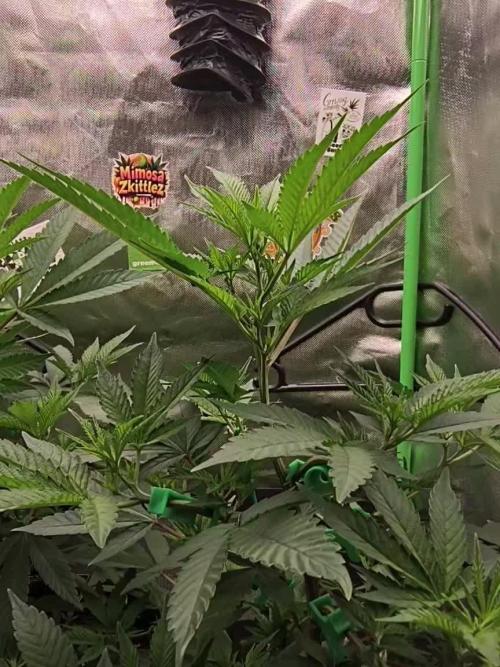
03/01 - (M) - Currently in pre-flower - She is growing amazingly - No deficiencies, wilted leaves or visual que's - I have changed her feeding program to daily micro-dosing between clean water and nute feed alternating days - She will be transferred into the 4x4 flower tent within the week.
03/01 - (C) - The clones are coming along nicely - Transplanted the 7 into 1 gallon pots last night - The substrate is the same as the mother with an added top dressing of worm castings last night - Increased feed formula on some of the nutes (Nitrogen/Silica and Cal-Mag) - High humidity/High heat is the name of the name the game - Specs to follow
Clone specs - Week 2
Height - 13 Inches
Temps - 82°(f)
Feed Temp - 65° (f)
Humidity - 79 - 81%
Watering Vol - 2 cups every 3 days
Nutrient Feed - Nitrogen - Silica - Cal-Mag - Microbes - Kelp - Horti Grow - Myco
03/04 (M) - She has been transferred into the 4x4 - Her setup run is identical to the 3x3 setup with the difference being the 4x4 has 2 AC infinity fans and a 6 inch carbon filter - Her nute feeds are twice a day running of the drip emitter (9 drippers) watering for about a minute.
03/04 (C) - The clones have transplanted without any issues into their 1 gallon pots - all 7 will be transplanted into 5 gallon pots in about a month - They are running alone in the 2x2 tent until next transplant.
03/08 -(M&C) Closing out the week on a good note - Mother is doing fine and the clones as well 😎😎😎😎😎😎😎



Likes
4
Share


Likes
22
Share


@Weedbadk
Follow
Día 1 y todas germinaron súper rápido 3 días
Día 5 desde puesta en sustrato
Ya todas están arriba
Estoy solo pulverizando el sustrato
Temperatura 23c humedad 75%
Likes
16
Share


@Rinna
Follow
I’ll update ya’ll on the smells and tastes after drying and curing! So far both are packed with ice and smell very potent, a little overpowering still, so I want to give it some time before they’re cures and can show their true terpene profile!


Likes
Comments
Share


@The_Lonely_Farmer
Follow
So I received some fastflowering testers from the amazing fastbuds I cannot wait for these girls too show themselves and start growing 🌱
Thank you so much too the fastbuds team I'm very excited too see what they become 🤞 👀🙏
I have not yet decided which nutrients too use between shogun and aptus but I may use both let's see.
hope you will feel comfortable too advise as I go along any comments are welcome.
Any aptus nutrients users please feel free on giving tips as I think I will be using aptus
Stay blessed growmies 🙏🌱💚
Likes
8
Share


@Kindbudz
Follow
This week has gone great! At the beginning of the week we flushed the remaining Fox farm nutrients we had been using before with Sledgehammer. After we treated with an organic compost tea brewed by our local hydroponic shop. We started with the Cyco Platinum Series this week. It’s still a bit early to tell but we will see how this nutrient line performs. I am very optimistic. As you may be able to tell I have a reservoir with coco coir mix on top with a drip irrigation system. I’m going to be trying out this system and an ebb and flow system in the upcoming weeks. I’m looking to maximize quality and quantity and believe these two system offer some of the best results. We look forward to starting that project! As for the lady she is looking extremely healthy. She is recovering well from being topped and lst. We’re going to let her grow up a bit now and stretch her out across the first trellis. My experience says this should be in 2-3 weeks and the. We will let her grow up through the second trellis. All in all I believe I’m looking at a 7-10 week veg. My goal is to shoot for a minimum of 1.3lbs from one plant. Thanks for taking the time to read this. Leave a comment if you have any questions or if you have any suggestions! Please check out my Instagram. Link in my Bio. Peace ✌️ Love ❤️ and Thanx 👍