


Likes
Comments
Share


@Ganja4Show
Follow
Update 12/8/2021
Keep on Rocking!😎
having a hard time getting the climate at a constant lvl. doing the best I can with the equipment I have🙌
Update 15/8/2021
from day 43 on i've started to add Calmag to each watering. but after a couple of day's it seems new leaves are still getting brown spots.
not really sure what to do.. The nutrient schedule I'm using 1/4 of what is recommended by the Bio-bizz schedule.
all plants are given the same amount.. 3 of them are showing some deficiency's and 1 plant is looking really healthy.
Update 18/8/2021
Hello Folks.. pffff deep breath My plants are really suffering.. only 1 is doing a really good job. the others really look sick. leaves starting to yellow cetting curly and crunchy..
I did pluck away most of the dead leaves but at this rate there is going to be nothing left 1 one week.
I have no real clue what's going on as it's looks it could be several things. it really feels i'm constantly running behind the facts.
I know this is my first grow and all and every decision I make will teach me a great deal for the future.
Today I ordered a digital PH/EC/PPM meter so I can actually see what exactly is going on and make decisions from there.
I am afraid the PH of 7 really blocked out the Nudes that have been given but I am not really sure so let's wait like 2 more days so i can start measuring stuff.
the past 2 days it only flushed the plants with water at an estimated guess of 6PH. but the crappy analogue PH meter that i put in the soil still tells me the the soil has a PH of nearly 7.
What I really don't understand is how 1 plant really doesn't show any symptoms while i gave every plant the exact same water/nutrients etc.
Well fingers crossed. what a hobby🙌💪

Likes
19
Share

@Flavors
Follow
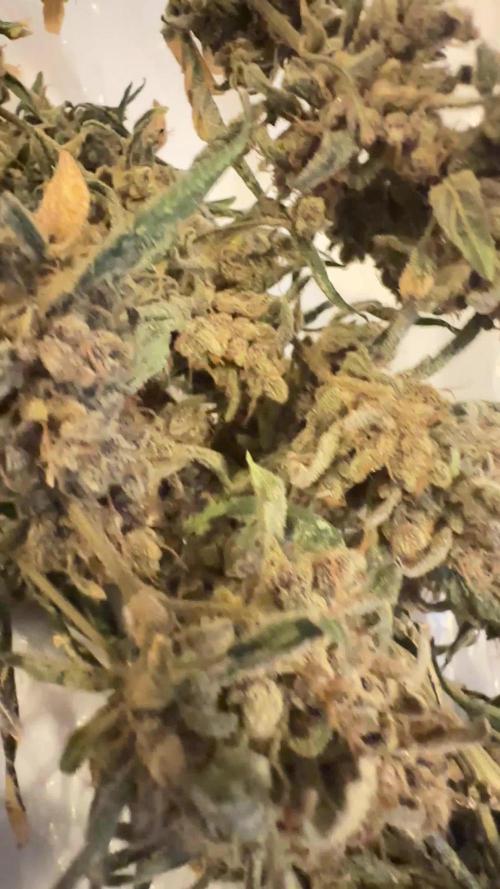
Harvest day finally came 🌿✂️🎉 — Mephisto’s Grape Wedding Force came down looking gorgeous 💜💎. The colas are dense and frosty ❄️🌸, with that signature grape-candy aroma filling the room 🍇🍬.
Trim went smooth ✂️👌 and buds are hanging to dry in perfect conditions 🌡️💨 (around 60°F / 60% RH). Trichomes are glistening ✨ and colors are rich — a perfect finish to the run 🌈🌿.
Now entering Week 1 of cure 🌱➡️🍯. Buds are in jars, burping daily

Likes
51
Share


@felixthegrower
Follow
Hello fellow growers,
Another week went by, and looking for the trichomes development every other day, I've noticed that the plants still have some bulking and maturing to do, so I gave another week of light feeding to them.
The buds are looking really dense and the smell is delicious 😋
The phenotype #2 untill now had only leaves with the purple color but not that the buds are becoming mature, the calyxes are also turning in purple 💜
The #1 that I've harvested is now dry, trimmed and curing in mason jars :) I'll input the data with the others later.
Thanks for everyone who's been checking in my diary, it's has been a blessed run so far. See you next week.
Felix 😎✌️

Likes
2
Share

@NoProbation4Weed
Follow
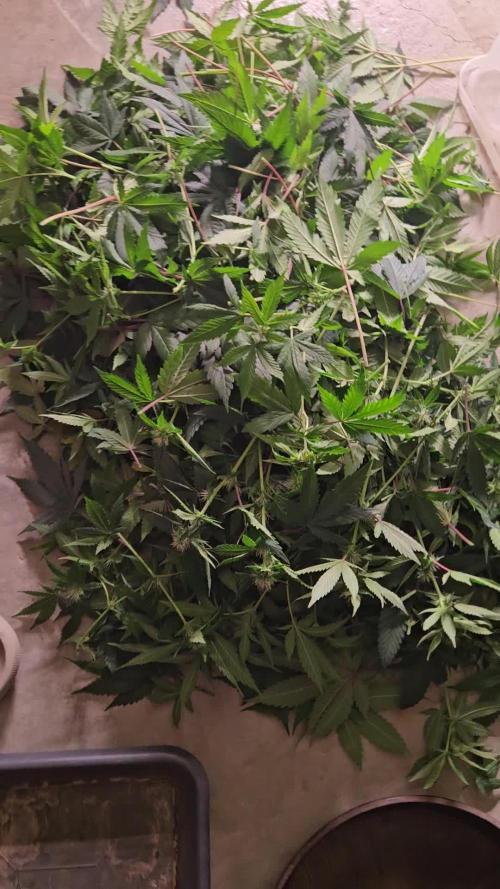
on day 21 of flower the lady have got a new Haircut.
Also some composttea on day 22 of flower.
Light hits the plants with around 950 PPFD.
She grows healthy and vigorous.

Likes
36
Share

@Salokin
Follow
GMO × Triangle Mints BX – Week 14 Veg | Summer Mode, Drinking Hard
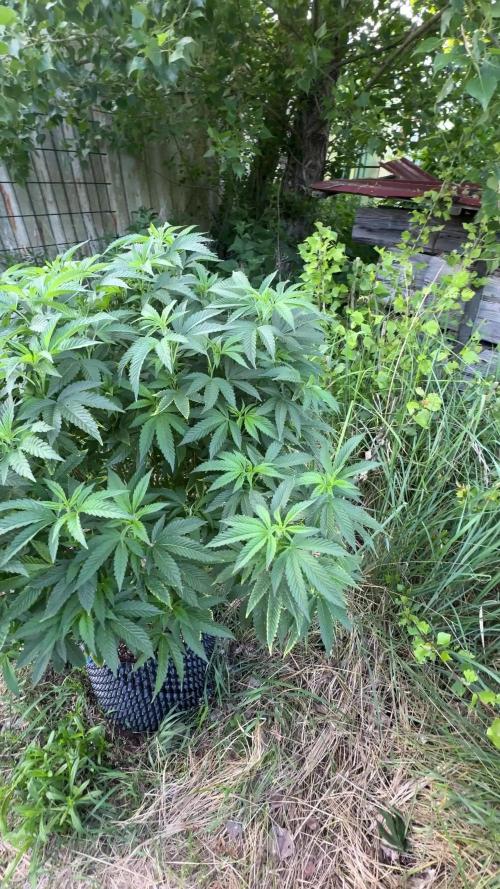
She’s in full summer mode now. 125cm and still pushing, the canopy has spread into a wide, dense structure that’s starting to look exactly like what you’d want going into the back half of veg. The LST work from the earlier weeks is paying dividends — even canopy, multiple well-developed tops, good light penetration throughout.
Water consumption has jumped noticeably this week, up to 5L per feed from 3L previously. She’s clearly found her root zone and is pulling hard in the warmer conditions. A good sign heading toward the solstice.
Nutrients unchanged: CANNA Aqua Vega 4ml/l, CalMag Agent 1.1ml/l, Aptus Regulator 0.1ml/l. pH holding steady at 6.2, EC at 1.5 mS/cm.
We’re sitting at around 16.5 hours of daylight right now with the solstice still two weeks away — she’ll stay comfortably in veg for several more weeks before the shortening days eventually push her toward transition. Plenty of time left to build the frame she needs.
The coming week looks warm but with some unsettled spells — mixed sun and cloud with a chance of showers. Winds staying manageable. Anything that brings some natural watering is welcome at this consumption rate.
Updates every Sunday. Stay tuned. 🌿


Likes
13
Share


@ChitownCannaChica
Follow
Probably another 2-4 weeks on this solo auto. Has been given a total of 7 dynomyco feedings total. Seems to have a positive effect on the quality. Solos are hard to do, and compared to another side/by/side solo, this one is doing better…
✌️💚🌿💨

Likes
43
Share


@MadeInGermany
Follow
Hey everyone 😃.
Today is the penultimate week before the harvest .
The buds look beautiful, and I think they smell stronger than when they were last grown on soil with the same phenotype 😋.
It just sparkles with crystals 😃.
I think pictures say more than 1000 words 😅, so I wish you lots of fun with the update, stay healthy 👌 and let it grow 😉☺️
You can buy This Strain at :
www.Zamnesia.com
☝️🏼☝️🏼☝️🏼☝️🏼☝️🏼☝️🏼
Strain
Gelato clone from mother (Zamnesia )
☝️
Genetics: Wedding Cake x Gelato x Gelato 33
👍
Vega lamp: 2 x Todogrow LED CXB3590 COB 55 W
1 x Sanlight S2W 62 W
💡
Flower lamp : 2 x Todogrow LED CXB3590 COB 55 W
1 x Sanlight S2W 62 W
💡 ☝️
Grow Aero System : Growtool 0.8
☝️
Fertilizer:
Canna Aqua Vega A + B , Canna Aqua Flores A + B , Rizotonic, Cannazym, CANNA Boost, Pk 13/14, Canna Cal / Mag, Canna Ph - Grow, Canna Ph-Bloom
☝️🌱
Water:
Osmosis water mixed with normal water (24 hours stale that the chlorine evaporates) to 0.2 EG. Add Cal / Mag to 0.4 Ec Ph with ph- to 5.5 - 5.8
💦 💧


Likes
57
Share


@AsNoriu
Follow
Day 0. New start. Sponsored grow.
ALL NUTRITIONS ARE GRAMS TO LITRES !!!! Neutralise is in real measurement only.
Soil was mixed two weeks ago !!! That line needs cooling time, have in mind !!!
Main sponsor of this grow is Mars Hydro. They sent me new light again, this time i will try out TSL 2000 model. First impression : easy to assemble, but i would create longer screws and put spacers , that way would ventilate better than now its bolted straight to board.
Ganja Farmer sent me few strains to try out, while i finally prepeared , got few more from them ;)))) Devil XL Auto is the first in try list.
Never had good luck with funky colours plants, but in this run it will be two ;)
Day 4. Girl sprouted on forth day, lets GO !!!
Day 5. Made a video, all runs smooth, a bit lanky, needed to put lights on on 3rd, not 4th day ;))) saving electricity not always pays off ;)
Happy Growing !!!

Likes
13
Share

@THcHunteR23
Follow
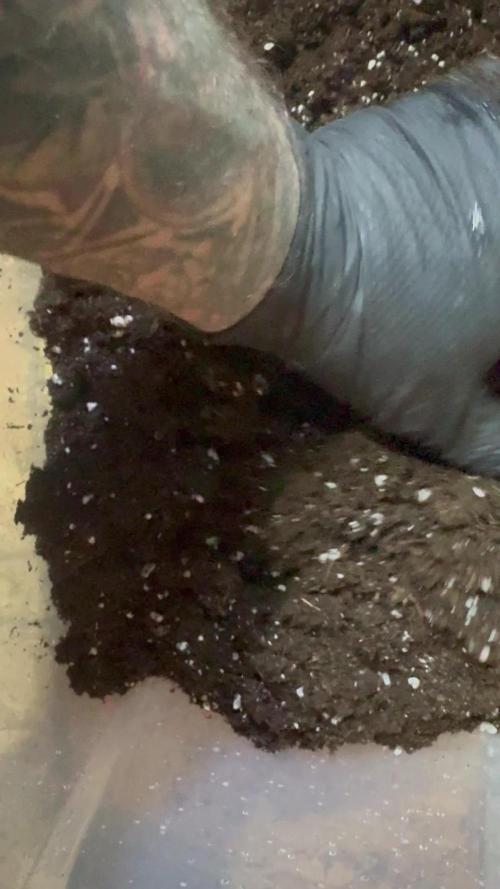
Elles ont germé en 4 jours avec une température stable entre 18 et 20 °C. Je vais maintenant les repiquer dans un terreau de semis Fafard. Pour la préparation, je mélange le terreau à la main dans un bac avec un peu d’eau pour qu'il soit humide mais pas détrempé. Je remplis ensuite un petit pot sans tasser la terre, afin de conserver un substrat léger et aéré . »

Likes
17
Share


@The_Real_KRT
Follow
31/8/21 Day 29 #1 Ph 5.7 E.C 1.0 #2 Ph 5.7 E.C 1.0 #3 Ph 5.7 E.C 1.0
3/9/21 Day 32 #1 Ph 5.7 E.C 0.9 #2 Ph 5.7 E.C 1.0 #3 Ph 5.7 E.C 1.0
5/9/21 Day Day 34 #1 Ph 5.7 E.C 1.2 #2 Ph 5.7 E.C 1.0 #3 Ph 5.7 E.C 1.0
6/9/21 Day 35 #1 Ph 5.7 E.C 0.9 #2 Ph 5.7 E.C 1.0 #3 Ph 5.7 E.C 1.0
Likes
3
Share

@TheGreenfulOne
Follow
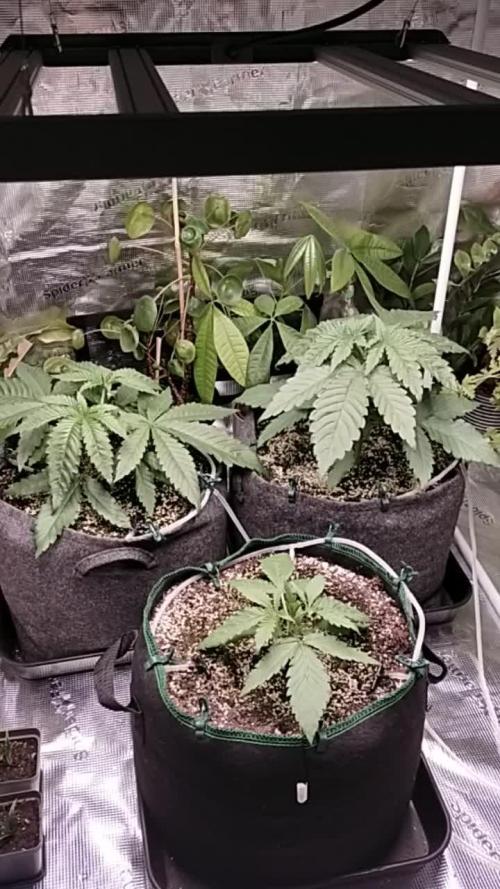
Successful topping performed on the two dominant Bruce Banner phenotypes.
Third Bruce Banner successfully topped; older ones react very good to LST.

Likes
42
Share


@Jack_Error
Follow
The plants still grow, form trichomes and increase the resin and smell. Some leaves are starting to turn purple as I like it and the tips are getting big, we are still halfway there, follow me for updates.
Patience is the key.🌲
Likes
8
Share


@Eyesweedshot
Follow
Seeding completed. A problem of temperature which rose to 28°c for 24/30h. I start the 20/4 cycle tomorrow.
nb: concerning elycitor I put 1g/l once a week and I alternate between root + bio technology and Hesi root complex.I take all advice with pleasure!
----> day 10 I start the fertilizer & algamic Biobizz


Likes
13
Share

@BLAZED
Follow
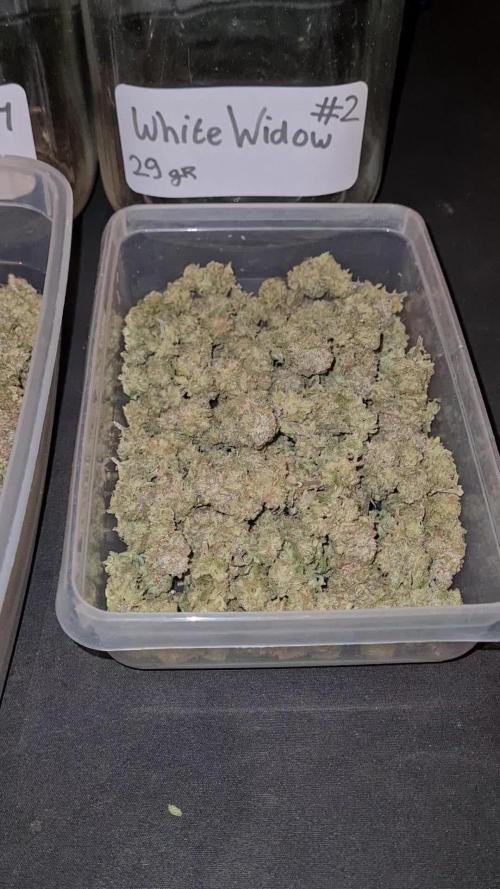
Drying conditions 18-11 to 1-12:
Temps: 17.4 to 19.05 degrees
Humidity: 62.4%
End results:
White Widow #1: 56.27 gram buds, 23.56 gram small buds, 9.24 gram trim.
White Widow #2: 29.06 gram buds, 9.29 gram small buds, 12.06 gram trim.

Processing
Likes
13
Share


@kevgrow
Follow
Week 2 - First Time Grower - Mystery Strain
Hey guys, Just hit week two here is an update of what’s been going on with my growing process.
Plant#1 is 3 inches, looking healthy, its beginning to take up a little more water
Sunday June 28 i saw a big growth in the plant.
Things I learned this week,
- I am beginning to notice when plants are ready for Lights off
- learned how to test soil


Processing
Likes
3
Share


@Grownewgenetics
Follow
We have with the Bonsai creamcaramelauto (a small sisters but the oldest of all sweetseeds creamcaramelauto we are running now. ) A litle accident,we lost the top of it , but still looking greatly Bud's ate becoming frosty and the other tow sister are also incredible big and smelly.