




Likes
25
Share


@xTherapy_Growingx
Follow
I had to buy a new tent, they started stretching and out grew my other one.. I clipped off a lot of big fan leaves but ima need to cut more ..their looking pretty good tho 💯✌️🏼


Likes
6
Share


@StarSkream
Follow
12/12 first week #starskreamstash looking pro,ising Dropping the night temps.... Happy Growing added some strawberry fields soil repotted to gallons

Likes
7
Share


@obeee
Follow
J'ai malheureusement du récolter cette variété tôt a cause de la mauvaise météo prévue sur les 15 jours suivants, faites attention si vous souhaitez réaliser cette plante en extérieur !
L'odeur est très intéressante et en vaut la peine !

Likes
6
Share


@Spearfish
Follow
Heading into the third week of flower. Everything has gone well so far.
I have an average of 15" growth above the screen.
Raised the tent 15" to the tops of the rdwc buckets.

Likes
57
Share


@Ultraviolet
Follow
Views expressed are my own. All opinions are my own. The opinions expressed here belong solely to me and do not reflect the views of Growdiaries or Grandcru Genetics.
The cannabis strain Grape Guava can be a purple strain, depending on its specific phenotype and genetic makeup. While not all phenotypes of Grape Guava are purple, some variations, such as the Zatix Grape Guava, are noted for their striking purple appearance due to the genetic expression of anthocyanin pigments.
Grand Cru Genetics is a cannabis seed bank that emerged in 2018 from a group of breeders in Madrid to provide a satisfactory experience to all cannabis users.
"If we do things, we do them well. Due to our experience in the sector and our taste for excellence, we know high quality and we seek it in everything we propose and do."
"We have a “cultivate without giving up” philosophy that we apply to everything we do. We do not give up, we are friends of change, and we adapt as necessary in a still restricted sector."
"We speak relaxed because we know how to relax. We are not intense or preachy; we accept everyone as they are, and we understand that farming is not for everyone. But for those who do, we are here to accompany you. We like to do it and tell it. We are experts in the field because we are the first to do it. We speak from experience and connect with others because we share the passion for cultivation."
"Cannabis has the ability to show us a world of possibilities. When you cultivate and live its growth process, you enjoy a path full of emotions and not just the final destination. At Grand Cru we find beauty in small things. We are attentive, observant, detail-oriented and aware of everyday things, and we savor them without rushing."
In a garden of green, Grape Guava gleams,
With its fruity aroma, enchanting dreams.
Clusters of grapes, guava's sweetness ignite,
A strain so divine, in purple and white.
Euphoria whispers, a lush fruity haze,
Grape Guava's embrace, a tranquil daze.
Off and away.@1400ppm. The increased CO2 allows plants to thrive at higher temperatures, which in turn necessitates higher humidity to maintain the ideal VPD for healthy growth and transpiration. 80F -5F = 75F LST with 70% RH = 0.72 kPa. Higher temperatures and humidity promote rapid growth, nutrient uptake, and photosynthesis while maintaining a lower stress level. Temperature influences the rate of enzymatic reactions involved in aerobic respiration. Enzymes, such as those involved in glycolysis, the Krebs cycle, and the electron transport chain, work most efficiently at an optimal temperature range. In low temperatures, enzymatic activity will slow down, thus reducing the rate of aerobic respiration. In high temperatures, enzymes can become denatured, thus impairing their function and stopping the process of aerobic respiration. Glucose is the primary fuel for aerobic respiration. The rate of aerobic respiration increases with the availability of glucose, as it is the starting point for glycolysis. If glucose levels are low, cells may rely on alternative energy sources such as fatty acids or amino acids , but these processes may yield less ATP or be less efficient. To determine this effect, carbon dioxide volume was measured (as carbon dioxide is an output of aerobic respiration)
18/6 with the 6 being IR. The near infrared (IR-a) borders around 700nm up to 1400nm @ photon par flux density of 1.8 instead of darkness, keeping temps overnight a neat 77F-80F.
I think of my tent as a lung. What goes in must come out. When the rate of air going out exceeds the amount of air coming in, it creates a negative pressure. Tent concaves (bends in). If set up correctly, the RH will begin to drop slowly to the desired level I set, and the extraction turns off when it reaches the desired RH. The plant, as it performs cellular respiration, will always release more water into the air; therefore, the RH% of the tent overnight will increase, as long as oxidative phosphorylation is occurring. As soon as the RH% creeps back up to 55%, the extraction turns back on, over and over. This creates a strong pressure differential, which will work wonders with mass flow. Replicating high and low-pressure fronts in nature. Critical for oxygen diffusion at the critical time of peak cellular respiratory function..
Moisture will not transfer from a saturated atmosphere to another if that air is already at or above its saturation point, meaning the air can't hold any more water vapor. Once I understood that water is produced as a by product during cellular respiration, specifically at the very end of the electron transport chain (ETC) where electrons are finally transferred to molecular oxygen, the higher the RH of the air, the more resistance there is for more moisture to be added to that environment, and effects the ease with which it does so. But none of that water comes from the pot; it's pulled from the air. If you run high daytime RH, your medium/pot is 100% reliant on transpirational root pull to move water. ZERO evaporation happens across the atmosphere if the tent air has high RH%, the medium cannot release its water through evaporation. Once a canopy develops, light no longer slowly wicks and evaporates from the topsoil. The Soil-Plant-Atmosphere Continuum (SPAC) describes the continuous pathway and process of water movement, driven by a gradient in water potential, from the soil, through the plant's roots, stem, and leaves, and finally evaporating into the atmosphere through transpiration. There is evaporation, there is transpiration, and then there is evapotranspiration; Evapotranspiration (ET) is the combined total of two processes: evaporation (water lost directly from soil and surface water into the atmosphere) and transpiration (water released from plants to the atmosphere through their leaves). Evapotranspiration represents the total amount of water that moves from the medium into the air. There is no such thing as a medium with too much water, only a medium that retains too much for too long.
The water must always flow efficiently from one atmosphere(Medium) to another(Air) in a timely manner. Moisture is a critical factor for bacterial growth and decay. Dictating how long it's allowed to sit in any one location for any given period is a key preferred control. To ensure a net reduction in a bacterial population, the rate of removal (ET) must exceed the rate of bacterial growth (decay rate), which is often modeled as a growth rate for the specific bacterium under the given conditions. By optimizing daytime VPD, we also optimize conditions for bacterial growth to explode exponentially above 77°F.. If water is allowed to sit in a medium without an escape within a timeframe, nothing good will happen. IF High RH is maintained overnight as well as during the day, placing 100% of water movement at the behest of daytime transpiration, roots can only pull where they can reach, and if soil is compressed above a certain point, moisture will become trapped in a medium with no way of moving day or night. This will begin the countdown for decay to take hold. When water stagnates in a medium, it loses oxygen, creating anaerobic conditions that foster the growth of harmful microorganisms like bacteria and fungi, which can produce toxins and disease vectors.
Thigmomorphogenesis, the process by which plants respond to mechanical stimuli like touch by altering their growth and development, results in significant morphological changes to improve survival against mechanical perturbations. This complex response involves sensing touch and initiating physiological and genetic responses, leading to changes in form and structure over days or weeks. The process is triggered by physical forces such as wind, rain, or touch. Plants adapt to these stimuli by changing their shape and structure, which may include slower growth, thickened stems, or altered leaf development. Plants possess sophisticated mechanisms to detect even subtle mechanical stimuli and initiate responses. A variety of molecules, including calcium ions, jasmonates, ethylene, and nitric oxide, are involved in signaling these mechanical inputs. Touch can induce the expression of genes that encode proteins for calcium sensing, cell wall modification, and defense mechanisms. A plant exposed to constant wind may become shorter and sturdier. A plant that is touched frequently might grow more slowly to conserve energy and develop thicker cell walls. These changes increase a plant's resilience and ability to survive in harsh environments.
Let's get Thiggy with it.
Likes
12
Share


@TheStaffedition
Follow
Привет друзья.
10.01.24 Harvest 15%
14.01.24 Harvest 100%
27.12 перестал кормить и начал проливать чистой водой
20.10 перевёл свет в режим 12/12
Начал применять LST технику на 19 дне, а 18 августа добавил ДЕФОЛИЗАЦИЮ
С 20.08 ДЕФОЛИЗАЦИЮ
С 20.08 LST технику
На сегодняшний день влажность 54%
5.09.2023 заметил высокий Ph 7.9
С 48 дня Ph не ниже 5.8
На сегодняшний день Ph 6.0
Начал кормить с 60 дня Canna Terra Vega
PPM 150
Всем мира и добра!
Не забудь поставить лайк❤️, если понравилась как прошла неделя
И читайте наш TELEGRAM: https://t.me/smail_seeds
#Smail_Seeds 😀
Перевод
Likes
11
Share


@TheMeltCorporation
Follow
Havrested a bit before just becouse i needed to have a harvest before the full one

Likes
Comments
Share


@BeHappyNtoke
Follow
Last week of pre flower girls are doing great can’t believe they’re clones


Likes
Comments
Share

@The_Doctor_Green
Follow
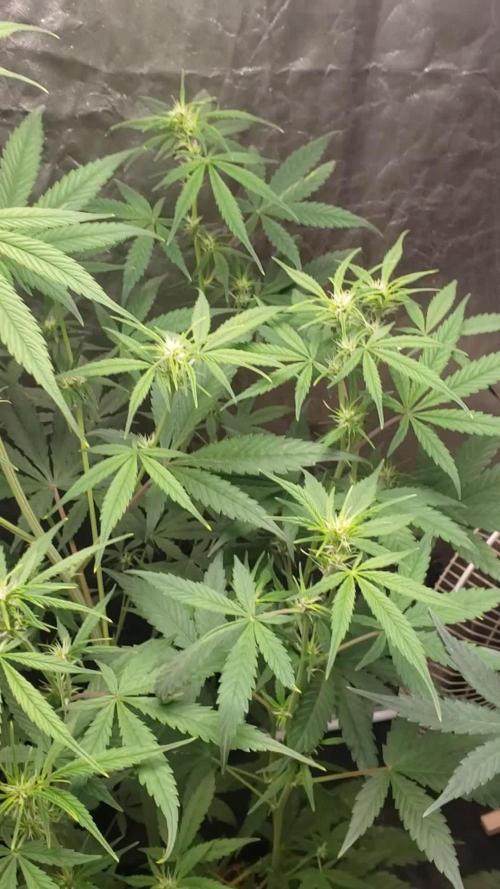
Hola a todos!!.
Esta divine rapier viene creciendo a pasos agigantados, en una semana ha crecido 30 cms!!.
La he regado al igual que los otros diarios 2ml x litro de agua de top auto, top bloom y top candy.
El resto de los días solo con agua.

Likes
18
Share


@Ultraviolet
Follow
High temperatures, high transpiration, high turgor pressure, and lots of cell elongation. Cannabis plants can sense and respond to their surroundings. They don't have brains like humans, but they have evolved sophisticated ways to perceive and react to various environmental cues, including light, gravity, touch, water, sound, and even the presence of other plants. This ability, known as plant perception, allows them to adjust their growth, defend themselves, and even communicate with each other.
Infrared light, particularly near-infrared (NIR), can influence plant growth and development by impacting various processes including initiation and elongation.
UVB radiation inhibits stem and hypocotyl elongation in plants.
Moderate UV-B exposure can cause a decrease in stem and leaf elongation, leading to a more compact plant architecture. Higher UV-B intensities, like 7.5 kJ·m−2, can lead to reduced elongation.
So it becomes a dance of initiating a stretch to seek to higher ppfd, then whenever you want the stretching to slow down,UVB inhibits the stretch by altering hormone balance,, coupled with the high-intensity dli once you get her to a height where you want. Being autos I don't have much time to play around. So we are playing fast and loose, get stretched, and then spread her open. You get the idea.
86F 30% RH with the lower side of optimal on ppfd, with a smudgering of infra-red to initiate response of making her stretch more so than normal.
Once she sprouts up in height, I drop metrics to 77F 55%RH% while upping the ppfd, giving her a dash of extra 430nm, giving the grow more of a 6000K. This encourages denser growth with less elongation. Higher side of optimal PPFD, with the auxin hormone balance changed, the side stems are starting to shoot up to the same canopy level as the apex (almost). Normally takes me 2 untrained toppings before a plant will flatten its canopy. I didn't take enough off the apex to do it in one chop, it was only day 10, so there really wasn't much to top from without creating unpredictable results using fim, opted just to keep it to a clean topping. Even predictability over the Chaos of the"Fim".
Brainfart:
Remember, the veg stage creates the skeleton that will stretch out into flowers. How dense you create the skeleton through light intensity will determine the density of your clusters as they form cola, as long as you can keep up with the demands. Increasing light intensity generally leads to plants having shorter internodal spacing, meaning the distance between nodes (where leaves grow) on a stem is reduced. This effect is particularly noticeable under LED grow lights, with great stress comes great dense clusters. Hello, temperature, my old friend! Goodbye, money on AC.
What did the flower decide to study in college?
STEM.
Likes
22
Share


@Weedbadk
Follow
Todo excelente un monstruo este variedad estábamos con 240w ahora con 360w
Desde ahora solo agua y bacteria estas 2semanas

Likes
7
Share


@PotCasso
Follow
Week 5 Flower Stacking
Watered in at 800ml
Individual Recharge day.
Epsom Salt 1tbs to 4l - bought at the local pharmacy.
Likes
6
Share


@BigGGrows
Follow
I have a few week 3's in here but they were literally a couple daya from coming into week 4....and i forgot to put them into the last veg journal, soooo....to sum up week 4 in 1 word, that would be " EXPLOSIVE"!!! THE GROWTH IS UNREAL. i had to train the plant about 4 times this week alone. I am seriously regretting putting this in a 1/2 gallon pot...should of kept her in the 3 gallon. Oh well we gonna roll with the punches!
Likes
6
Share


@Ross4Twenty
Follow
Sorry for lack of photos I will upload more on another week to catch up as I am lagging behind through half weeks.
Everything is running smooth as hell I love this new lights it is amazing.. reccomend! Good growth plenty of even bud sites can’t wait!


Likes
Comments
Share


Likes
16
Share


@Love420bluedream
Follow
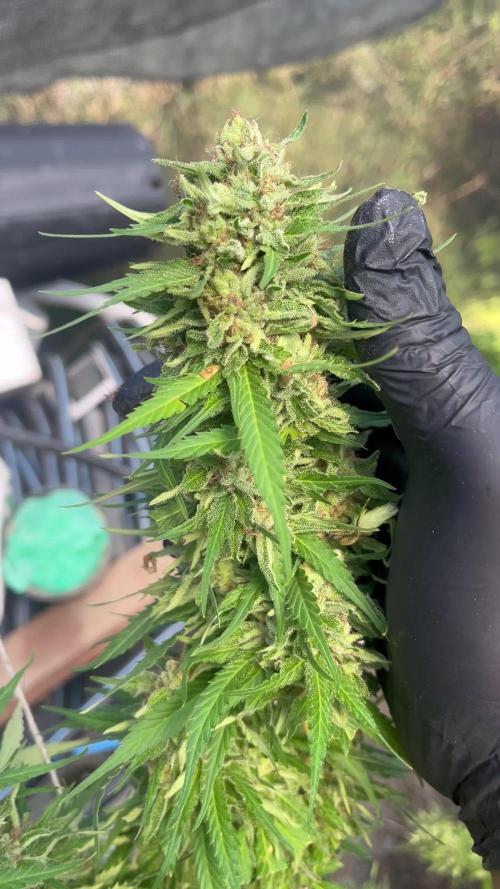
I'm very happy I've already got 107 grams out. I still have 2 plants drying and I'm excited to see how they turn out😊😊💚

Likes
21
Share


@Cogollo_eu
Follow
(Encontrarás la traducción a "Español" en la última parte de la descripción)
07/September/2018: (Photo 1)
09/September/2018: (Photo 2)
Foliar application of Neem oil, Potassium Soap MIX with organic insecticide (Tec-Forte) to combat Trips and white flies. I sprayed 1 l of water with 5 ml N.Oil + 5 ml P.Soap and 0.2 ml of Tec-Forte @ 9 P.H.
12/September/2018: (Photo 3, 4, 5, 6, 7 & 8)
I created some red circles in the 5th photo to remark some of the insect evidences, most of them are from Trips and White flies, but there are also from another insects, here the link to the High-res image -> https://growdiaries.s3-accelerate.amazonaws.com/static/post/photo/15048/621594_fb-auto-girl-scout-cookies-outdoorsfastbudsgirl-scout-cookies.jpg
** WEEK 5 EXACT WATERING CALENDAR **
07/09/18 - 1.5 l of water + All "PREVIOUS WEEK nutrients" (- Bud Ignitor) @ 6.4PH & 0.95 E.C.
08/09/18 - Drought
09/09/18 - 1 l of water + Bud Ignitor @ 6.4PH
10/09/18 - 1.7 l of water + All week nutrients @ 6.4PH & 1.20 E.C.
11/09/18 - Drought
12/09/18 - 1.5 l of water + "*Half dose" of all (Advanced Nutrients) week nutrients @ 6.4PH
13/09/18 - Drought
----------- ESPAÑOL ------------
07/Septiembre/2018: (Foto 1)
09/Septiembre/2018: (Foto 2)
Aplicación foliar de Aceite de Neem y Jabón Potásico con (Tec-Forte) para combatir Trips y mosca blanca. He echado 1 litro de agua con 5 ml de Aceite de Neem, 5 ml de Jabón Potásico y 0,2 ml de Tec-Forte @ 9 P.H.
12/Septiembre/2018: (Foto 3, 4, 5, 6, 7 & 8)
He creado círculos rojos en la foto 5, alrededor de alguna de las marcas que han dejado los insectos en las hojas. Mayoritariamente son de mosca blanca y trips, pero también hay de otros insectos. Os dejo aquí el link a la foto en alta resolución -> https://growdiaries.s3-accelerate.amazonaws.com/static/post/photo/15048/621594_fb-auto-girl-scout-cookies-outdoorsfastbudsgirl-scout-cookies.jpg
** SEMANA 5 CALENDARIO DE RIEGO EXACTO **
07/08/18 - 1,5 l de agua + Nutrientes de la "SEMANA ANTERIOR" (- Bud Ignitor) @ 6,4PH & 0,95 E.C.
08/09/18 - Sequía
09/09/18 - 1 l de agua + Bud Ignitor @ 6,4PH
10/09/18 - 1,7 l de agua + Nutrientes de la semana @ 6,4PH & 1,20 E.C.
11/09/18 - Sequía
12/09/18 - 1,5 l de agua + "Media dosis" de los nutrientes (Advanced Nutrients) de la semana @ 6,4PH
13/09/18 - Sequía