


Likes
Comments
Share


@Hempshire_Empire
Follow
Shes doing super well and seems to only want water. 4 weeks left on this girl.

Likes
30
Share


@Hashy
Follow
********************************************
Week 12 late flower (flower week 6)
********************************************
Light cycle=12/12
Light Power=125w 52%
Extractor controller settings
High temp= Day 26c, Night 20c
Low temp= c
Temp step=0c
High Rh= Day 50%, Night 55%
Low Rh= %
Rh step=0%
Speed max=10
Speed min=2
Smart controller settings (during lights on).
Lights on=9.00am
Top fan on=+22.5c
Top fan off=-22.0c
Dehumidifier on=+50% and -26c
Dehumidifier off=-50% or +26c
Smart controller settings (during lights off).
Lights off=9.00pm
Dehumidifier on=+55% and -20c
Dehumidifier off=-55% or +20c
VPD aim=0.6-1.6
DLI aim=30-45
EC aim=0.2-1.8
PH aim=6.0-6.5
NPK(6.6/8.1/22)
💧💧💧💧💧💧💧💧💧💧💧💧💧💧💧💧
Method= Autofeed 6 drippers.
Feed=Flower Nutes.
Neutralise=0.1ml/L
Bloom=2.0ml/L
Silicon=1.0ml/L
Pk=0.5ml/L
Boost=2.0ml/L
Volume=12L
Easy Ph down= 0.166ml/L
Ec=1.3 PH=6.5/6.6
Runs=16
Run times=5min (275ml each)
Gap times=15min
Total runtime=80mins (4.4L each)
Total flowrate= 110ml/min (55ml/min each)
Auto start time=10.00am
Auto stop time=3.05pm
💧💧💧💧💧💧💧💧💧💧💧💧💧💧💧💧
********************************************
********************************************
📅4/8/24 Sunday (day78, day 36 flower)
📋 Had to reduce light power as getting light bleach. Now 125w
H=111cm D=11cm Dli=64.3Ppfd=1488
📅5/8/24 Monday (day79, day 37 flower)
📋 not quite as hot today.
📅6/8/24 Tuesday (day 80, day 38 flower)
📋 weather is manageable
💧
Method= automatic
Feed=Nutes flower
Volume=12L
Ec=1.3 PH=6.5/6.6
Volume left=3L
Volume used=9L (110ml/min)
Volume each=4.5L (50ml/min)
Runoff.
Total runoff=1.4L
Ec=3.8 PH=/6.1
💧
📅7/8/24 Wednesday (day 81, day 39 flower)
📋 seemed cooler
📅8/8/24 Thursday (day 82, day 40 flower)
📋 temps proper dropped today and Dehumidifier has been running a lot.
📅9/8/24 Friday (day 83, day 41 flower)
📋 went away
💧
Method= automatic
Feed=Nutes flower
Volume=12L
Easy Ph down= 0.188ml/L
Ec=1.3 PH=6.6/6.6
Volume left=3.5L
Volume used=8.5L (106ml/min)
Volume each=4.25L (53ml/min)
Runoff.
Total runoff=0.8L
Ec=3.9 PH=/6.1
💧
📅10/8/24 Saturday (day 84, day 42 flower)
📋 away mega hot
********************************************
Weekly roundup.
📋 I think I'll have a bit of light bleaching on a couple of the tops, other then that she's had a good week and started to enter late flower so she should start bulking up more from now one.
Take it easy.
Back soon.
********************************************
Processing
Likes
4
Share


@XoticGROW666
Follow
DAY 28 of Flowering🌸🌼
Frosting & Stackin up ❄️🌲
Insane ice cream terps 🍨🍦

Likes
2
Share


@AustinRon
Follow
GG 4Q24 Week 7 - Flower 4
Grease Gun [Atlas Seeds]
Start of Week: [Tue Nov
23, 2024
GG 4Q24 50:F:7:1]
End of Week: [Mon Nov 29, 2024 GG 4Q24 56:F:7:7]
__
Sat Nov 23, 2024
GG 4Q24 50:F:7:1

- 1100: Replaced 32 Oz Frozen Bottle
- Moisture Meter @ 131 - Anytime BluMat ;-}
__
Sun Nov 24, 2024
GG 4Q24 51:F:7:2


__
Mon Nov 25, 2024
GG 4Q24 52:F:7:3
- AM Moisture Meter: [ 55, mBar]
- 
__
Tue Nov 26, 2024
GG 4Q24 53:F:7:4
- Moisture Meter @ 205 mBar, Dropped Carrot Valve 1 pt, after adding frozen bottle to reservoir


__
Wed Nov 27, 2024
GG 4Q24 54:F:7:5


- Mixed 2 Gallons of water
- FulPower: [ 30, ml, gal]
- CitricAcid: [ 1/4, tsp, gal] # pH Down
- Quillaja 60: [ 1/8, tsp, gal] # surfactant
- In the fridge to cool below ambient
__
Thu Nov 28, 2024
GG 4Q24 55:F:7:6
__
Fri Nov 29, 2024
GG 4Q24 56:F:7:7

Likes
21
Share


@CanadianFillmore
Follow
Welcome growfessors to another episode of growfessor theatre, 4x4 edition!
Flush time, just water for LSD, Green Crack and Mandarin dreams!! Do-si-dos gets another week of feed before flush.
I'm very impressed with the bud sizes, trichomes and smell of each plant, mandarin dreams is especially ooozing with resin, it's almost like liquid soap touching your skin.
The Mars-Hydro TSW2000 light has been killing it! This light delivers way more than expected!
Thanks for stopping by growfessors, tune in next time 👽🌳💚


Likes
2
Share

@PapaTerps
Follow
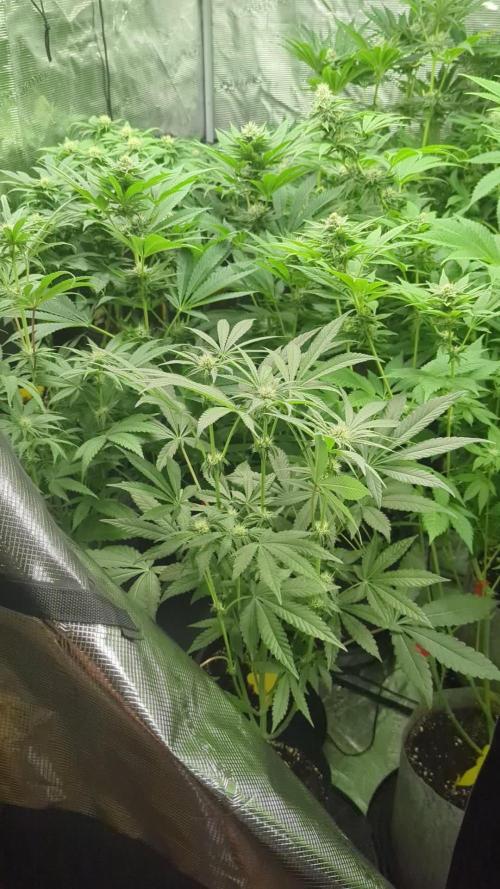
Wild Burst - Seed Junky
Week 3 of Bloom
🌸 She's growing really well and is working hard on developing her flower. From today, all the girls have been moved into a 8x4 tent, because the 5x5 has been hard to manage.
✂️ No work on her this week, I'm just letting her grow.
💧 Watered every three days with 2L of RO water, with nutrients mixed individually, in order and then finally, I pH'd the solution to 6.3. I've increased all of her nutrients, now that she is focusing on developing her flower, she'll need it.
💡 PPFD: ~750
♒ VPD: 1.37kPa
🌱 Days from seed: 88
🌸 Days in Bloom: 27

Likes
10
Share


@RandomStreetMerchant
Follow
This is start of week 5, the girls have been grooving even with a heat wave hitting and a few days of 90 degrees or 32c
Thinking this week they will start to turn some what a red purple hue, they have also stopped stretching.
Starting to produce lots of trichomes and the smells are starting to come out, atm the middle one smells like Vicks lol, and the left one is smelling gas.
Will keep you updated with all the important info growmies until next time ✌️ 09/04/23

Likes
35
Share


@Fronti89
Follow
Pflanzen entwickeln sich unterschiedlich Pflanze 1 hat vor einer Woche aufgehört in die Höhe zu wachsen und die 2 erst diese Woche !

Likes
1
Share


@Raddawg
Follow
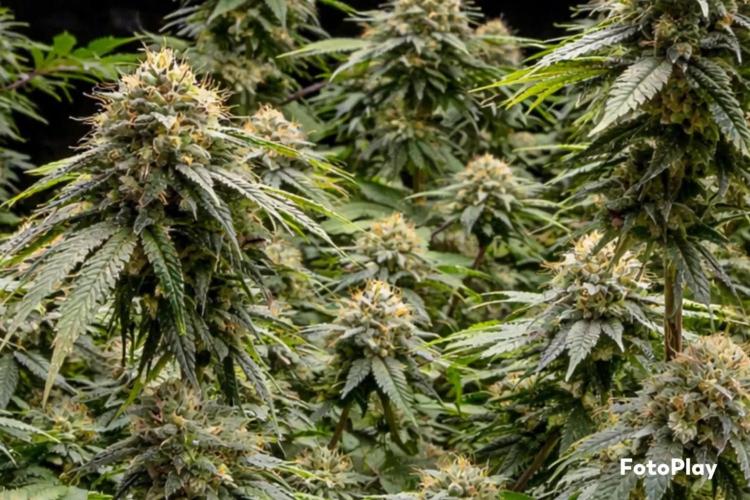
This week I continued removing lower leaves that were getting little to no light. I tied down lower branches to ensure them getting blasted with light. Buds are filling in nicely! very excited for the upcoming weeks



Likes
6
Share


@Gorey
Follow
mid next week it will be the harvest, the trichoms are very milky. the smell is excellent. on the video in order: cbg, thc then cbd

Likes
18
Share


@Bread_n_Buds
Follow
The Do Si Dos F1 Hybrid Automatic, did not start off well, they are a bit with the leaves gathered on themselves, but we are very confident of a fiery continuation, they have spoken very well of them and now that they take a little more nutrients you will see how they will go.
Growing projects for autoflowering plants ----- As for autoflowering plants I really love preserving the Main Cola. So I will try to make or grow the plants well or badly without affecting the main cola. Nowadays topping on autoflowering plants is very accepted but it is not my favorite thing to transform a baby born to finish in 10 weeks into a baby that finishes in 14, I say at this point I do photoperiodic. But in periods of people who only grow autoflowering everything is permitted for goodness sake if you want to do it, do it I will not be the one to stop you. Also because the results are excellent nothing to really discuss about anything except time.
All this to tell us that I recommend for example fimming on plants that tend to grow tall to give power to the lateral branches, LST as much as you want, I don't like too much, spread me out, I need space. HST and splitting are with experience. These are my tips not the absolute truth please do not mistake me for a great sage holder of the truth I speak as I see it.
The first week went only with Power Roots 1 Ml/l and Pure Zym 1 ml/l from now on we will start with ALga Grow. The plants were transplanted shortly after germination because the biodegradable pots were very small. The soil is Plagron Pro Mix 100% organic renewed with 30% new soil and 20% Perlite added. (Pro mix does not have perlite but is airy, we added it anyway)
Plagron fertilizers are available on Zamnesia in convenient Pack formats for all growing styles. I used this with a simple search you can find the other products.
---- https://www.zamnesia.io/it/12119-plagron-top-grow-box-100-naturale.html
Try a seed of this variety that drives us crazy...
---- https://www.zamnesia.io/en/10664-zamnesia-seeds-do-si-dos-f1-automatic.html
Description Zamnesia // From the team at Zamnesia Seeds comes Do-Si-Dos F1 Automatic. Using consistent and reliable F1 genetics, this strain is not only incredibly easy to grow, but also offers potent and delicious buds. The plants remain small and offer a reliable growing experience that everyone will enjoy.
Growbox and Air System - Secret Jardin DS120w + fans + exhaust fans and DF16 filters kit ---- https://www.secretjardin.com
All the best that mother nature has to offer is at ----www.zamnesia.com
Collaboration request: I am available for collaborations with companies of lights and various growing equipment (please no seed and nut companies) I would like to renovate my 120x120 space that has slightly outdated lights and would like to try some controllers. If you have any proposals available.

Likes
8
Share


@Pirangueiro
Follow
started to resin! I think more 4 weeks they will be done. Peace bros 🙌🏻✌️🏻✌️🏻
Likes
82
Share


@DreamIT
Follow
🍭🥧🍒 Sweet Cherry Pie by Sweet Seed 🍒🥧🍭
🍒22.8 Today only videos, to change a little, so there is still not much to see in practice
🍒23.8 lost color, to see it this way it seems in lack of boron. but today we start with the new fertilizers, improvements will soon be seen
🍒24.8 exponential growth in just 12 hours of fertilization
🍒25.8 wow wow wow 🤘🦄
🍒26.8 super wow
🍒27.8 Nobody stops her anymore, you see changes every day 🤘🔥🦄
🍒28.8
__________________________________________
❓ Are you new to the world of the cultivation and don't know where to safely buy your seeds?
😮From SweetSeeds you can find award-winning, sweet, fast, fragrant, beautiful, and delicious genetics !!!
✅http: //bit.ly/SweetSeeds_
__________________________________________
👀 Are you looking for a good lamp to start with? 👀
🌞Viparspectra has something more than the others, take a look at their site.
⏩ Use "GDVIP" for an extra discount or "ViparDreamIT" for an extra 5 %% discount
👀 Search for it on Amazon
✅Amazon US: https://amzn.to/30xSTVq
✅Amazon Canada: https://amzn.to/38udUVe
✅Viparspectra UE: bit.ly/ViparspectraUE
👀 Watch my ViparSpectra XS1000 unboxing on YouTube, leave a like and write to the channel 🦄
✅http://bit.ly/UnboxingViparSpectraDreamIT
______________________________________________
📷🥇 Follow the best photos on Instagram 🥇📷
https://www.instagram.com/dreamit420/
🔻🔻Leave a comment with your opinion if you pass by here🔻🔻
🤟🦄💚 Thank you and enjoy the growth 💚🦄🤟

Likes
3
Share

@Wycofane
Follow
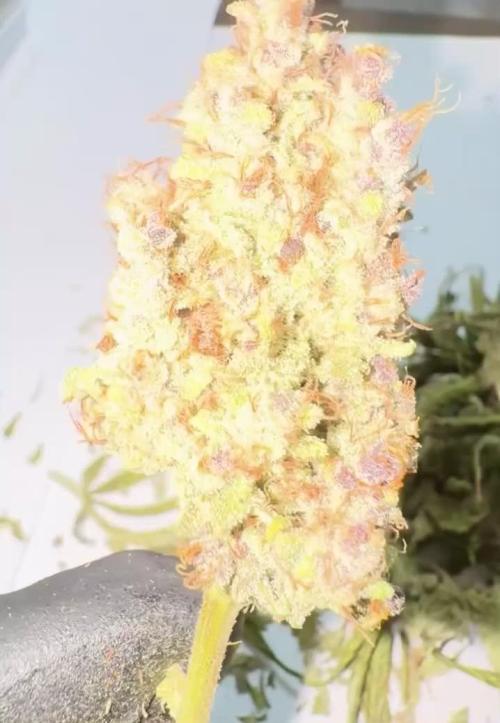
Die Gorilla Cookies wurde nun geerntet, die hälfte habe ich eingefroren um daraus im späteren Verlauf Bubble Hash draus zu waschen.
Die eine Hälfte hat ungefähr 70g Trocken auf die Wage gebracht (Natürlich wurde alles übre 50g vernichtet). Also schätze ich den Ertrag auf 120g-140g trocken. Wunderbare Genetik, wird definitiv wieder gegrowt!
Likes
8
Share

@tomatohomegrower
Follow
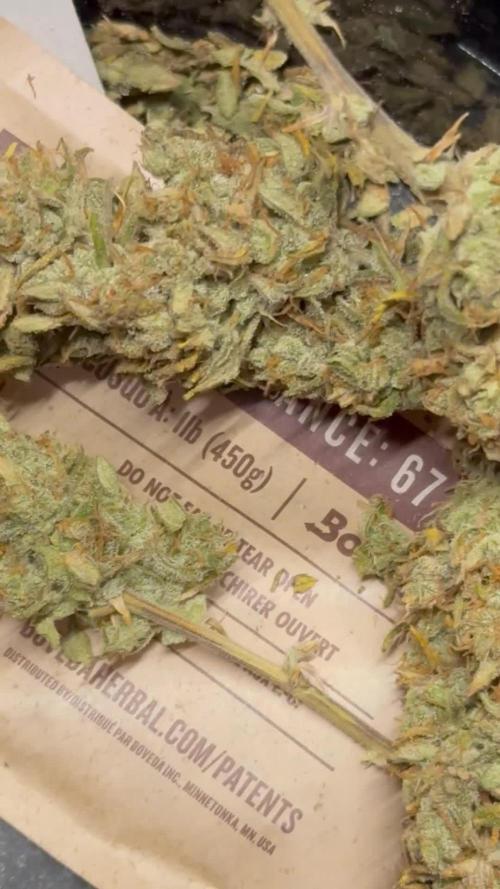
Nach 3 Tagen Dunkelheit und insgesamt fast 16 Wochen wurde die Süße heute geerntet und wird am Stück für die nächsten ca. 10 Tage am Stück im Zelt trocknen😍
Processing
Likes
27
Share


@Piquillo
Follow
Added a humidifier and removed the dome lid. They've been underwatered these last days and their size isn't what I would expect at this point.
Update: 01/12 --> As you can tell by the look of those roots, they are ready to be transplanted into a 2 gal pot. They are starting to take off, especially the one on the left. I'll be adding Biobizz Root Juice at low doses in next waterings. Looks promising.
Likes
78
Share


@Wastent91
Follow
Ehi ragazzi tutto bene! È arrivato finalmente il momento di dare il terzo tea di compost ricevuto da questa bellissima creatura! Ha davvero un bel aspetto , le foglie sono arriciate e prominenti verso la luce in un modo impressionante!, Sembra quasi che la pianta si stia nutrendo sotto i miei occhi di luce della lampada della Mars! Sta iniziando a puzzare davvero intensamente e le cime super appiccicose si stanno evolvendo nella direzione giusta! Mi aspetto la migliore ganja che abbia mai coltivate! Salute a tutti e buon 420!!
Likes
40
Share


@Ultraviolet
Follow
Observe.
The stem that snapped clean off in week 5, the resulting stress seems to have made a 2ft solid massive cola, probably the biggest individual I've grown, albeit she had signs of stress, and I felt like she was a little behind in the floral development compared to others, but as the rest of the plants start to settle down with packing on mass, the stressed colawas just getting started. Super interesting to see the difference that the snap made to the base of the stem overall, as I know before the snap, they were all the same girth or thereabouts. Neat little lucky accident, maybe I'll try something next grow.
Likes
6
Share


@SleepHuntMadScience
Follow
Training again. I spread out all side branches so the plant will now collect about 4 square metres of sun. It looks pretty crazy with central branches 6 ft up and side branches flat to each side. Did some defoliation as well. Still very healthy but I had to go through carefully to remove some annoying inch worms.
Likes
Comments
Share


@Hashcakee
Follow
Going to update a smoke report after drying. Going to do a 3 stage sampling on the cure to find the best time. Small bowl with no cure, small bowl after 1 week cure. If needed, one more test on the 2nd week of curing. Got smaller buds on this one but that is ok. Moreso excited on profile. Going to update the yield tonight