


Likes
Comments
Share





Likes
65
Share


@3lementa1
Follow
Not much to report from this week. More pistils came out every day. They're long and smell great. She drank half the res over the week but the pH and ppm stayed stable so I just left it.
July 25 I took the duct tape off one of the stems that broke when my fan fell. It healed with a huge knuckle and looks great. One of the other big stems looks like it also has a big knuckle and is growing strong. Some of the smaller ones look like they've regained their integrity but didn't get a knuckle. They are all able to stand up straight now and the plant looks much happier. I'm leaving one wire support in place because of one of the thinner stems.
July 27 I just noticed the upper leaves are a bit brittle. I should take it down and observe it more often
I turned the fan to point away from the plant and the leaves recovered.

Likes
18
Share


@Wakesk8
Follow
9 week flowering..Runtz Auto is almost ready and it’s beautiful!
Balance plants are going well


Processing
Likes
8
Share


@Dirtysouthgrower27
Follow
Dat 1 of flush 6/1
20 gallon of water
25ml of floraflush
35ml of fishshit
Likes
52
Share


@xbabybitchx
Follow
Hello Everyone! ♡
♡ This week has been good, the ladies just truckin away. Nice even canopy, all very similar in height, pistols all starting to show themselves.
♡ I officially added big bud tonight to the feeding! Last week was a flush, a few browning leaves underneath after heavy flush but look really good otherwise..
♡ I changed my display picture to my animal crossing avatar- lmao deal with it. 😛
I don't really have a ton to report back with, hope ya'll been safe n healthy. Really hoping for a better 2021 for us all.
Keep it sleeeeeezy, im out. ♡
Likes
33
Share


@burnerac
Follow
Day 78: Nothing to report
Day 79: Nothing to report
Day 80: Added one gallon water with nutrients
Day 81: Nothing to report
Day 82: Nothing to report
Day 83: Nothing to report
Day 84: Nothing to report

Likes
76
Share


@Roberts
Follow
Auto creeper has grown really well. I probably could of harvested her a week ago. She has about 40 percent amber trichromes on tops. Mis judgement on my part. Plus just been super busy. Smells really strong. Heavy frost. Pretty purple hue to buds. I will be back for the smoke report in a few months once it has dried, and cured some. The Mars Hydro light worked great for the grow. Thank you Mars Hydro, and Super Sativa Club 🤜🤛🌱🌱🌱 I tried to upload my harvest video, and it won't let me. 😔
Thank you grow diaries community for the 👇likes👇, follows, comments, and subscriptions on my YouTube channel👇. ❄️🌱🍻
Happy Growing 🌱🌱🌱
https://youtube.com/channel/UCAhN7yRzWLpcaRHhMIQ7X4g

Likes
7
Share


@Bluemels
Follow
Tag 50: Ich gebe noch Alg a mic ins gießwasser zur Stressbehandlung.
Tag 52: Ich beginne mit dem scroggen, das 1. Netz ist eingebaut die Pflanze reingefrimelt.

Processing
Likes
4
Share


@Grownewgenetics
Follow
These is a project in the we try (test) tge products of our sponsors to see how good they genetics are, for example we have know 6 seeds banks on these round.
Sweetseeds with the dark devil auto have break the time record for seed on the ground , 20 hours , only these tine have the seeds from sweetseeds on the soil and they just jump out to 2 cm , simple amazing

Likes
6
Share


@Elguacho420
Follow
Buenas a tod@s... Octava semana de flora de las tropicanna poison de sweet seed... Más allá de las marcas de "excesos" en las hojitas, q no se x q x q no me paso y a pesar de que podrían estar más grande ( fallo mío) la planta está DPM..🔥⚡🤯😱 está y se la ve compactada y tanto está como las demás, se las nota que pesan, que prometen y que yo no subestimaria x su altura, están muy bien y ya en la etapa casi final... Ya no les queda mucho, en verdad el calendario marca que ya está en etapa final, pero les falta aún más días, disfruten del paisaje que en breve se nos va 🙏🏻🙌🏻💪🏻💪🏻😎⚕️
🇦🇷🤝🏻🇪🇦


Likes
146
Share


@Natrona
Follow
So close to harvest. This week and last I reduced the amount of TPS1 in the feed from 15ml /gal to 10ml/g. Early in the week, Apollo's lower leaves started showing the fade using up the nutrients. Thursday, I did a preliminary trim to remove any fan leaves and feeder leaves with longer stems. just handling the stems and buds my hands, nails and arms were sticky. After the trim, I put Apollo's Friends back in the tent with her. When the plants were in different veg/flower cycles, I separated them into tents. GDP and zkittles grew with in 2-3 inches on the light. I could not raise the lights anymore.
Today, 11/19 is day Apollo's 69 day and 41 in flower. The harvest window per RQS is 70-75 days from seed. Tuesday will be the harvest day. After watering only 2 liters with Vit B, Recharge and Signal yesterday, I put her in the 3#x3tent in the dark.
Apollo's buds are thick, dense, stinky citrus floral and sticky. The sugar leaves are showing color change as she knows her life is ending in glory.
I am so proud of this grow. I didn't overfeed so I have experienced the color fade to yellow as foods are used up and the delicate colors emerge in the sugar leaves. I am very impressed with Royal Queen Seeds F1 genetics. So much so I bought Milky Way F1 and Medusa F1. I will definitely have another Apollo grow in January. Thank you @James at RQS.
Apollo F1 had a huge base stem and was multi branching-even the side stems had side stems. The stems were sturdy. No support is needed for her branches She stayed short at 26 inches tall. I definitely pushed her on the watering.
When I saw no runoff after 2.5 liters of water, I upped to 3 ltr. Then 3.5, then 1 gallon. I watered 2 liters, let the water absorb, then slowly add another 2 liters. There was a small amount of run off at the time of watering but was all gone by the next day. It could have been evaporation, but I really think it was consumption. Consumption is an indicator of yield. As densely bushy as she is, I'm estimating at least 90 grams.
So for future grows, especially for very bushy plants, I will defoliate at least 2x during early and midflower to open up the canopy and let the plants bulk up more. She did show some nutrient (cal-mag) deficiency and for the next Apollo grow, I will push the feed a bit. I'm excited and a bit sad to see this grow come to an end at the same time. I really want to sample the smoke and feel the effect. Apollo is a balanced Hybrid.
Thanks for the visit. Apollo and I appreciate the likes, views and comments. Have wonderful week . Happy growing and have fun.
Natrona
********************************
Apollo F1 is a vigorous auto flowering hybrid that boasts a strong structure and delicious aromas. Created from inbred lines descending from Lemon, Black Domina, and Sugar Magnolia, Apollo F1 inherited premium genetics from her predecessors. Like the ancient Greek deity she's named after, Apollo F1 produces balanced, creative effects that might inspire your perception of music, dance, poetry, and more!
Mature and well-dried Apollo F1 flowers boast an upfront fresh aroma that combines crisp pine and herbal notes with the invigorating kick of ripe citrus peels. Accentuating these notes is a rich backdrop of dark vanilla and hints of lavender, reminiscent of modern cannabis varieties descending from Cookies and other US lineages. Apollo F1 produces a resin loaded with plenty of cannabinoids (predominantly THC) and a complex mix of terpenes including myrcene, terpinolene, farnesene, caryophyllene, ocimene, limonene, and linalool. As a result, Apollo F1 produces a balanced effect very typical of a well-bred hybrid—expect a powerfully relaxing physical sensation (characteristic of myrcene, farnesene, and linalool) mixed with a notable euphoria and motivating kick produced by terpinolene, ocimene, and limonene.
Apollo F1 is a robust cultivar with the telltale compact structure of an indica-dominant hybrid. Plants reach a medium height with many tightly spaced branches that quickly become loaded with bud sites and thick, dark-green foliage. Apollo F1 flowers automatically, and her entire life cycle lasts roughly 80 days. Come harvest time, Apollo F1 will reward you with big, dense flowers bearing a thick layer of trichomes.
Variety: F1 Hybrid auto
Genetic Background: Lemon x Black Domina x Sugar Mangolia
THC: Very high
Yield: XXL
Height: 55 - 75 cm
Flowering time: 45 - 50 days
Harvest: 75 - 80 days after sprouting
Effect: Calming, Creative, Motivating , Physically Relaxing
Flavor: Citrus, Herbal, Lavender, Pine, Vanilla
Major terpenes: Caryophyllene, Farnesene, Myrcene, Terpinolene
Climate: Short Summers
Friends, Royal Queen Seeds Is offering a discount on purchases
👉**GROWERS20** for 20% 👈
Https://www.royalqueenseeds.com
Link to Apollo
https://www.royalqueenseeds.com/us/56-f1-hybrid-cannabis-seeds
====================================
Equipment: AC Infinity
CLOUDLAB 844 – Advance Grow Tent 48”x48”x80”
CONTROLLER 69 PRO – Grow Tent Controller
CLOUDLINE LITE 6 - Inline Fan 6"
IONBOARD S44 – LED Grow Light Board 400W
CLOUDRAY S6 – Oscillating Circulation Clip Fan
Carbon Filter 6”
Pots: 5 gallon Air pots
Soil Fox Farm Happy Frog amended with worm castings, perlite, dolomite lime and mycorrhiza.
Seeds provided by Royal Queen Seeds Check them out 😎
Https://www.royalqueenseeds.com
Link to the seeds
https://www.royalqueenseeds.com/us/56-f1-hybrid-cannabis-seeds
use Discount Code
👉 **GROWERS20** for 20% discount 👈
Nutrients: Total Plant Solution
>TPS1
>Canopy
>Signal
>Recharge
Amended soil recipe #2 used for soil prep.
https://www.paramountseedfarms.com/super-soil-recipes/
Likes
3
Share

@BLAZED
Follow
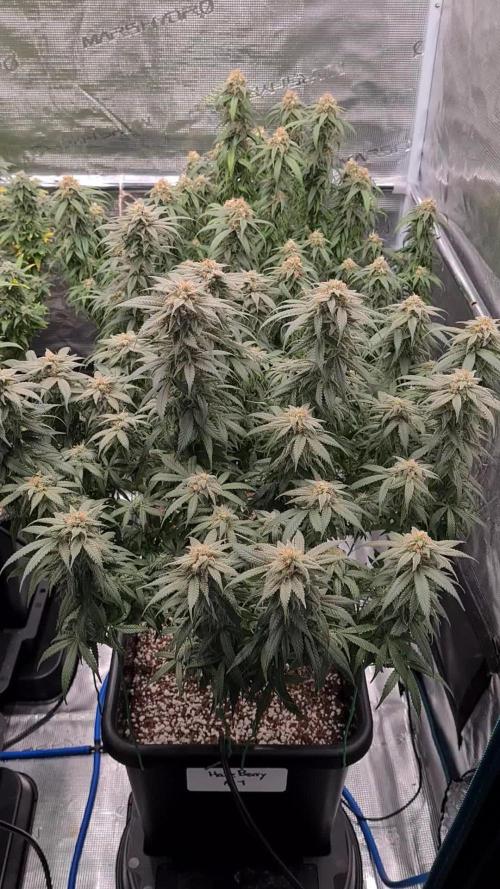
Week 20 (28-10 to 3-11)
28-10
Temps: 18.4 to 25.3 degrees
Humidity: 49% to 57%
29-10
Temps: 20.1 to 25.4 degrees
Humidity: 49% to 58%
Watering: Both 500 ml.
Lowered the light a bit.
Dry Weight #1: 3.2 kg. #2: 3.1 kg.
30-10
Temps: 19.4 to 24.2 degrees
Humidity: 50% to 59%
Watering: Both 500 ml.
31-10
Temps: 17.9 to 25 degrees
Humidity: 47% to 58%
Watering: Both 500 ml.
1-11
Temps: 18 to 24.1 degrees
Humidity: 49% to 55%
2-11
Temps: 19.7 to 23.8 degrees
Humidity: 45% to 56%
Watering: Both 650 ml.
3-11
Temps: 16.6 to 22.8 degrees
Humidity: 51% to 63%
Watering: Both 500 ml.
Likes
3
Share


@Altitonans_Fulmen
Follow
Lights are 58 inches from the main source to the top of the pot and the soil surface. If you added up all the lights in the tent, it would be 1100w-1200w total across 14 lights. Using them all at once is far too much for a plant and incredibly difficult to deal with environmentally. The lights are fixed in position; side lights have dimmers, allowing for pinpoint precision of PPF. Fixed at 58 inches, cannot move them closer to increase intensity. Instead, achieve optimal PPF by distributing smaller wattages across a massive, multi-fixture matrix. Triggering specific plant defenses without melting the canopy.
What's the point/blah blah wattage?
Never really go above 600W at any one time. Lights come on in the east of the tent and set in the west. At sunrise and sunset, the red-to-far-red R:FR light ratio drops because the sun's low angle scatters red light more than far-red light. This shift reduces active Pfr and increases inactive Pr, mimicking Mother Nature herself.
Deployed a lighting system featuring extra 660 nm deep-red and extending the spectrum up to 780 nm achieves the full Emerson Enhancement Effect by simultaneously balancing Photosystem II (PSII) and Photosystem I (PSI) to maximize quantum yield. By pairing deep-red photons with far-red photons, you trigger a synergistic biological response where the resulting photosynthetic rate is higher than the sum of both wavelengths used individually. This practice directly leverages the updated extended Photosynthetically Active Radiation (ePAR) framework. The Emerson effect accelerates plant metabolism and heat capture; you must proactively scale up your ambient room temperature, nutrient delivery, and CO₂ supplementation to prevent the light from stalling out your cannabis plant.
UVA stays high all day from morning to night, but UVB peaks at solar noon (middle of 18-hour days) when the sun is peak. Morning color starts at 2k-3k; by noon it goes to 5k- 6k and back to 2-3k for sunset, with differing P:FR at light off.
The extra-blue light is to assist with photoreactivation of UVB damage. No more yield loss for me. Using extra blue light for photoreactivation is what I do. Blue/UVA light activates photolyase enzymes, which directly repair DNA damage caused by UVB radiation.
But what's the point if it's not for yield?
Ultraviolet (UV) radiation—specifically UVA (315–400 nm) and UVB (280–315 nm)—acts as a critical environmental signal that programs a plant's photoprotective genes to unlock its true photosynthetic potential. When growers push crops to their absolute photosynthetic maximum via high-intensity light and elevated carbon dioxide, the photosynthetic machinery easily becomes overwhelmed. Emerging photobiology research demonstrates that UV radiation prevents this limiting bottleneck; it triggers specific transcription factors and signalling networks that fortify the plant's cellular defenses, allowing it to process extreme light levels without sustaining structural damage.
There are 8 limiting factors of plant growth; when carbon dioxide becomes the 9th limiting factor of plant growth, it shifts the growth curve from exponential to linear. The restriction after that is "photoprotection" against reactive oxygen species (ROS), managed via non-photochemical quenching (NPQ) and the xanthophyll cycle, which bridges into precise hydrogen and redox dosing.
UV radiation, particularly UVA, and the synthesis of zeaxanthin are critical for the xanthophyll cycle to function.
It's not chasing purple strains... One likes to call it chasing the limits of growth, trying to make the linear exponential, just like father mathematics prefers.
In order to do that, must control every environmental variable and compound the plant’s metabolic rate. True exponential growth means the rate of increase matches the current mass at every stage, requiring a closed-loop system where light, CO2, and nutrition lock into a synchronized upward curve. First, you must attempt to understand what restricts it. Precise hydrogen and redox dosing.
Nature mathematically optimizes quantum energy transfer and light absorption efficiency within the photosynthetic machinery, as it naturally dictates energy scaling hierarchies and resonance dynamics. Most won't even understand that; once you do, it changes everything.
Constructive interference occurs when two or more overlapping waves meet in phase, meaning their crests and troughs perfectly align. Their amplitudes add together, creating a new, amplified wave with greater intensity than the individual components.
Constructive interference is the foundational mechanism that establishes a resonance hierarchy across physical, structural, and acoustic systems.
Chromophore spacing is tuned to sub-nanometer precision to match the wavelengths of absorbed light, forcing constructive interference.
Light-harvesting proteins form geometric rings and lattices. These shapes act as physical resonators, trapping and focusing the wave energy.
This same principle dictates how opera singers shatter glass, how musical instruments resonate, and how bridges withstand structural vibrations. Nature uses the exact same math to harvest a photon as an engineer uses to design a concert hall.
When you push high PPFD and elevated CO₂, you create a metabolic bottleneck. The plant cannot process the energy fast enough, leading to electron backup, light-induced damage, and a collapse from exponential growth into a flat, linear rate. UV light acts as the regulatory valve that prevents this collapse.
In standard agronomy, Liebig's Law of the Minimum dictates that growth is limited by the scarcest resource. When you maximize water, nutrients, light, temperature, and CO₂, the bottleneck shifts to metabolic processing speed and photoprotection. By controlling the Redox state of the plant using UV, the xanthophyll cycle, and managing ROS, you can prevent the plant from hitting a hard photosynthetic ceiling. Instead of the growth curve flattening out (linear or plateauing due to photoinhibition), the plant continues to compound its metabolic rate efficiently. You are forcing the plant to operate at peak thermodynamic efficiency.
By matching the UVB peak with sustained UVA and shifting Kelvin temperatures (2K to 6K), you are damaging the plant just enough to trigger defensive genes, while simultaneously providing the exact light energy needed to repair that damage instantly.
UVA radiation and specific blue wavelengths accelerate this enzymatic conversion. Zeaxanthin acts as a structural sponge that absorbs excess excitation energy from chlorophyll and dissipates it safely, preventing ROS formation. Without UV signaling, the xanthophyll cycle cannot keep pace with extreme light, leading to dynamic photoinhibition (yield loss).
The addition of Spirulina is primarily for zeaxanthin, as it contains a lot. But on top of that, the active Hawaiian Spirulina in the matrix was cultivated in open ponds using a combination of 100% fresh potable water from Hawaiian aquifers and ultra-pure, deep ocean water containing all 94 trace minerals & elements. Then gently dried using patented Ocean Chill Drying technology and cold-pressed to ensure maximum nutrient levels. Spirulina, a blue-green alga, is rich in nitrogen, phosphorus, and potassium (NPK), making it an excellent source of nutrients for plant growth. Studies have shown that Spirulina can be used as a biofertilizer, effectively replacing chemical fertilizers, especially for nitrogen, with a whopping NPK of 10% (N), 20% (P), and 20% (K). Rich in proteins, amino acids, trace minerals, and plant growth-promoting compounds.
Zeaxanthin is a vital plant pigment that accumulates under intense light to drive non-photochemical quenching (NPQ), acting via thermal energy dissipation, direct singlet oxygen scavenging, and thylakoid membrane stabilization.
The violaxanthin cycle (or xanthophyll cycle) reversibly converts violaxanthin to zeaxanthin via antheraxanthin to protect plants from photooxidation.
Understanding this interconversion is vital for optimizing non-photochemical quenching (NPQ) and pushing photosynthetic limits under high-light stress.
Ascorbic acid (vitamin C) is a natural antioxidant that plants produce internally to neutralize harmful reactive oxygen species caused by photosynthesis and high light stress. Acts as a co-factor for enzymes like violaxanthin de-epoxidase in the xanthophyll cycle, which safely dissipates excess light energy.
1g ascorbic acid will neutralize 100% of chlorine in upwards of 30 gallons of tap water. If your local tap water uses chloramines (chlorine bonded with ammonia) instead of free chlorine, you will need roughly 20% to 30% more ascorbic acid to completely break the tougher chemical bond.
Molecular hydrogen and hydrogen-rich water act as selective antioxidants that help lower oxidative stress. They neutralize toxic reactive oxygen species like hydroxyl radicals and boost natural antioxidant defense systems in biological and plant systems exposed to high-intensity light or abiotic stress.
UVA and UVB act as stress signals that upregulate the plant's secondary metabolism. It forces the plant to build an internal "sunscreen" (flavonoids and anthocyanins) and fortify its cellular defenses before the peak solar noon crisis. This keeps the metabolic highway open.
In nature, the ambient ratio of UVA to UVB at solar noon sits roughly between 10:1 and 20:1 (depending on latitude and elevation). In a high-PPFD indoor matrix, maintaining a strict ratio—often aiming for around 12:1 to 15:1 UVA to UVB—provides the optimal signaling threshold.
Balancing Far-Red (FR) light at "light-off" to manage the phytochrome photo-equilibrium (Pfr to Pr conversion) in tandem with the UV schedule. Omg, the logic.
Hydrogen concentration and redox signaling as secondary messengers in this high-intensity loop.
Under the intense solar noon matrix, the pH of the thylakoid lumen drops. This acidic environment activates the enzyme Violaxanthin De-Epoxidase (VDE), which converts violaxanthin into the photoprotective zeaxanthin. VDE cannot function in a vacuum; it strictly requires ascorbic acid (Vitamin C) as an electron donor to run this conversion. If a plant undergoes heavy light stress and runs out of internal ascorbic acid, the xanthophyll cycle stalls. The plant can no longer engage in Non-Photochemical Quenching (NPQ), leading to immediate singlet oxygen O2 formation and destruction of the thylakoid membrane. This is "The Ascorbic Acid / Xanthophyll Engine"
Using ascorbic acid to neutralize chloramines in your water isn't just protecting your rhizosphere biology it actively prevents the degradation of your nutrient solution's redox potential before it ever touches the roots.
When pushing plants to the absolute edge, traditional antioxidants can be a double-edged sword because they blindly neutralize all free radicals. This is a problem because some Reactive Oxygen Species (ROS) act as critical signaling molecules telling the plant to grow. Molecular Hydrogen H2 is the Selective Kill-Switch.
Molecular hydrogen H2 is a revolutionary tool because it is a selective antioxidant. It ignores beneficial signaling ROS (like mild hydrogen peroxide) and targets only the most destructive, cell-shattering radicals—specifically hydroxyl radicals OH) and peroxynitrite.
By dosing hydrogen-rich water or managing hydrogen redox signaling, providing an emergency pressure-release valve for the plant's electron transport chain. It keeps the cellular environment stable enough that the plant never has to downregulate photosynthesis to protect itself. This maintains cellular voltage.
To trigger this defensive matrix without stunting the plant, you cannot simply blast UV indiscriminately. You must use UVA as the "scout" and UVB as the "enforcer. High UVA acts via the cryptochrome and phototropin photoreceptors to upregulate the expression of the HY5 transcription factor and prime the VDE enzyme. When the sharp spike of UVB hits at solar noon via the UVR8 receptor, the plant's biochemical "sunscreen" (flavonoids and anthocyanins) and its zeaxanthin pools are already pre-staged and waiting. This prevents the temporary stunting or "lag phase" usually associated with sudden UVB exposure."
Closing the Loop: Far-Red End-of-Day (EOD) Synergy
The final masterstroke is aligning this UV defense with a Far-Red (FR) lights-off routine. The Red-to-Far-Red Drop: At the end of the photoperiod, knocking out the blue/UVA spectrum and leaving a targeted burst of pure Far-Red (730nm) instantly flips the plant’s master switch. It converts active Pfr to inactive Pr in minutes rather than hours. Why this matters for the UV loop: UV radiation and high-intensity lighting keep the plant in a highly alert, photoprotective state that requires massive ATP expenditure to maintain. By forcing an immediate Pfr/Pr) conversion at lights-out, instantly commanding the plant to cease defensive expenditure, lower its metabolic respiration rate, and transition directly into nighttime cellular repair and carbohydrate translocation. You are maximizing the efficiency of its "sleep." every ounce, every last piece.
Highly synchronized biological dance, balancing the exact input of electrons with the exact mechanism to dissipate them safely when they overflow.
Peace.
Likes
13
Share


@GrowGuy97
Follow
Everything is going great, just waiting on flower tent to finish & these ladies will be going straight into flower😍✌️🏼🌱
Day 40 first day of flower, everything seems to be going ok so far!
Day 41 Can see they are starting to stretch!😍


Processing
Likes
5
Share


@Paultemp
Follow
Better than what i think.. i love banana chikita very good strains 👌💨💨
Likes
18
Share


@rhodes68
Follow
9/8 D65 Seems our "good" weather is ending and if the forecast is correct for the next three days, only three of the last ten were sunny.
That aint good folks not sure what can be done about it outside of artificial light and that would go on the ATF if any were available.
Ah well learning is fun
She looks good just needs some blasted sun
Zombie is thriving, go figure
Full feed yesterday
9/10 Sunless days continue, maybe two hours sun today then the rain moved in and the temp dropped... global warming my arse
The forecasts were correct now I can only hope that continues as it is forecast for much better the next 2 days and then right back to this mess.
9/11 Yep today was a big improvement glad to have it
9/13 Day 70
New vids, top dressing seems to have triggered a new run of bud building on both Gloria and zombie Quasimodo (cant kill some of these Mex Air plants). The moster crop growth pattern is interesting as hell just letting it grow. Gloria looks to be building a basketball bud on top :)
Weather degrading harvest in a couple weeks max trics say same
Likes
1
Share

@Roots420
Follow
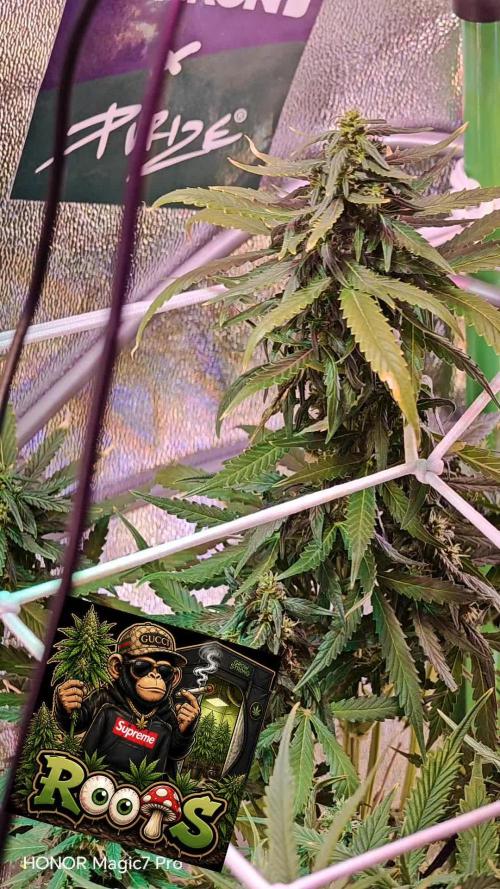
Bei einigen Pflanzen stimmt die Woche nicht da ich sie in Abständen angepflanzt habe ❗ Die kame Hame Ha Auto von V-Buds hat sich endlich erfangen weil am Anfang ist sie ur komisch und Gast gar nicht gewachsen deswegen ist sie auch viel kleiner als andere die gleich Alt sind ! Bei 🦍 Gorilla 🍪 Cookies Auto von 2Fast4Buds und cream Caramel Auto von BioTanic-Pro und Kame Hame Ha Auto von V-Buds sind schon die ersten Blüten zu sehen 😁🏻
Likes
6
Share

@CheeRz
Follow
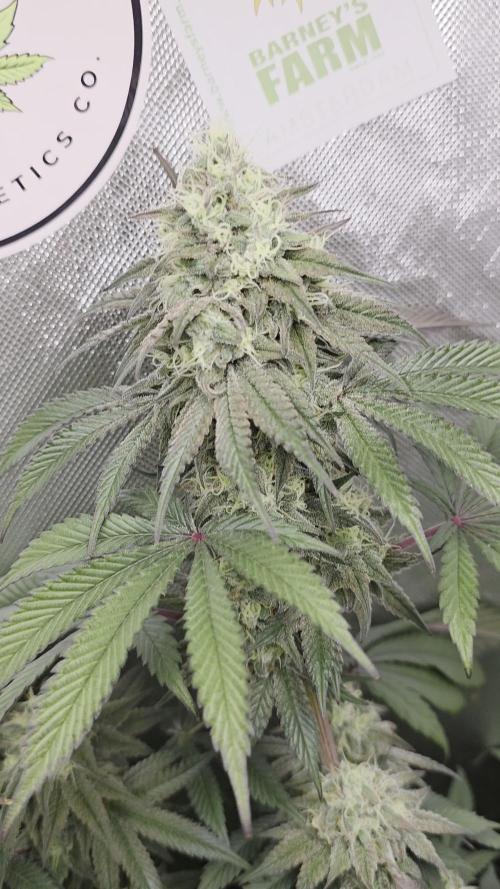
WEEK 10 - FLOWERING: Tropical Maturation
🌼 FLOWERING PROGRESS
We are now in the 10th week (6th week of flowering), and the Papayton is showing impressive development. The buds are visibly gaining weight and density every day. The resin production is in full swing, covering the flowers in a thick, sticky layer of crystals. It’s great to see how the plant is putting all its energy into the final flower formation. ❄️
👃 TERPENES & AROMA
The tropical scent is becoming much more defined this week. There is a strong, sweet papaya aroma that dominates the tent, perfectly complemented by a creamy finish. The Top-Max is clearly doing its job in bringing out these exotic fruit notes as the plant matures. 🍦
💧 NUTRIENT FEEDING & WATERING
The feeding schedule remains at a high level to provide all the necessary building blocks for the final ripening process. The focus is on maximizing terpene development and resin output.
Current Feeding Schedule:
Calmag: 1.5 ml/l
Acti-Vera: 5 ml/l
Bio-Heaven: 5 ml/l
Bio-Bloom: 4 ml/l
Top-Max: 5 ml/l
Bio-Grow: 1 ml/l
Likes
16
Share


@Gardener_of_Goodness
Follow
Well this was a really straight forward grow, very very pleased with the outcome and the bud isn’t completely cured 😋
5 Gal fabric pot with BioBizz light mix, some light consistent feeding, a FIM and basic LST, look at the outcome! No wonder their strain wins awards! I will 100% be growing more NL! Thank you RQS ✌️🙌👌🙏