


Processing
Likes
Comments
Share


@Fergie
Follow
hey guys so we are getting very close now . i collect my new aircon unit tomo morning im going to throw straight in tent and drop down to 18 for last few weeks . I started flush begining of week on both girl looking so nice a d smell is just amazing . Til next week only a few more to go 😀

Likes
35
Share


@MadeInGermany
Follow
Info:
Unfortunately, I had to find out that my account is used for fake pages in social media.
I am only active here on growdiaries.
I am not on facebook instagram twitter etc All accounts except this one are fake.
Flowering day 1
since time change
to 12/12 h.
Hi guys :-) .
The time has finally come 👍
You have been switched to 12/12 hrs and are ready to flower.
Of course, cuttings were cut beforehand to keep the genetics.
For 4 days now she has also been getting Fast Buds from GreenBuzzLiquids.
They were also sprayed again with GBL Fast Plant spray.
She is very healthy and I am excited to see how she gets going again in bloom :-).
This week it was poured twice with 1.2 l each time (for nutrients, see nutrient table above).
Then I filled canisters with fresh osmosis water for the next few weeks 👍.
The tent was cleaned and every plant was checked for health.
At the moment I am tinkering with the ventilation because there are currently 4 fans with 4 activated carbon filters running, which I want to make more efficient by putting a hose through 2 tents.
These are the things about which you desperately at the beginning but learned from them in the end.
I wish you all a nice week.
Stay healthy 🙏🏻
You can buy this Nutrients at :
https://greenbuzzliquids.com/en/shop/
With the discount code: Made_in_Germany you get a discount of 15% on all products from an order value of 100 euros.
You can buy this Strain at :
https://greenhouseseeds.nl/
☝️🏼☝️🏼☝️🏼☝️🏼☝️🏼☝️🏼☝️🏼☝️🏼☝️🏼☝️🏼☝️🏼☝️🏼
Green House Seeds Company Cup Clone 🏆
Type:
Wonder Pie
☝️🏼
Genetics:
Wedding Cake x OG Kush
👍😍
Vega lamp: 2 x Todogrow Led
Quantum Board 100 W
💡
Flower Lamp : 2 x Todogrow Led
Cxb 3590 COB 3500 K 205 W
💡💡☝️🏼
Earth: Canna Coco Professional +
☝️🏼
Nutrients :
Green Buzz Liquids :
Organic Grow Liquid
Organic Bloom Liquid
Organic more PK
More Roots
Fast Buds
Humic Acid Plus
Growzyme Big Fruits
Clean Fruits
Cal / Mag
Organic Ph - Pulver
☝️🏼🌱
Water: Osmosis water mixed with normal water (24 hours stale that the chlorine evaporates) to 0.2 EC. Add Cal / Mag to 0.4 Ec Ph with Organic Ph - to 5.8

Processing
Likes
9
Share


@Kushizlez
Follow
Everything is looking good so far. They’re all done stretching and the cheese and black garlic have stretched the most. I adjusted each plant with boxes to create a more even canopy. Buds are swelling up nicely. The two black berry breath plants are looking swollen and fantastic. I don’t like the structure and bud size of the black garlic plants and will not be running them again. Although, they’re getting quite keify and the breeder claims they have a genetic trait that make them put on most of their weight late in flower. So far I’m not too impressed by their size. The seedsman Badazz OG cheese has got good node spacing and structure but has very little trichs and smaller buds. I was just running the cheese to test old European genetics and my bias is starting to confirm my bias. Dutch and Euro genetics are shit. The slurricane #4 is looking fantastic in terms of frost but the buds are lacking a little in size. I’m going to do the 21 day strip today. I should have done most of this defoliation earlier in veg but right now is still fine. Ice cream cake #1 hermed which isn’t at all surprising so I scrapped her. At least it gives me more space to get in and tend to the rest of the plants. I got a pump sprayer to get in a bit closer to the plants as well.

Likes
14
Share


@Bread_n_Buds
Follow
When you get to a certain point in the flowering, the real magic begins, so far beautiful yes but when the flowers form I would stay there speechless admiring them for the whole time enchanted.
---- General conditions in the Growbox - We are talking about our autoflowering @zam.nesia which are all in great shape and are now showing their differences. The F1 Hybrids are flying, they are ahead of everyone, if you want to realize how much the F1s work look at my photos in the growbox. Look, test and then talk, I never talk before trying. I get an idea based on what people say, especially when I hear the old school know-it-alls a bit hippy talk badly about a new thing I think: "this new thing is worth trying, it must be the bomb", and in fact...
---- Plant - Every breeder has some super consolidated certainty strain in history, Zamnesia certainly includes this champion among its autoflowering strains that has been giving excellent and consistent results to growers for years. There are different phenotypes, all excellent and very fast, so much so that as I said above it is the only plant that is behind the f1s that are very fast and of the latest generation. Look at how big and branched it is, look at those beautiful buds at only 45 days guys it is a real beast. I can't wait to see how it ends and get into it in macro. Drink also like a beast 2 lt x day
Anyway a super harvest of about 70 grams per plant is expected, maybe a little less one of the two however excellent judging by the size and branching of the ladies. and I would say not bad.
---- Fertilization program - As for the fertilization program we have arrived at the moment of starting with the Green Sensation, Plagron would recommend the 4th week but these autoflowering accelerate and I start at the third. The Power Roots has reached the last week.
---- https://plagron.com/it
- Power Roots - 1ml/l
- Alga Bloom - 3 ml/l
- Pure Zym - 1 ml/l
- Sugar Royal - 1ml/l
- Power Buds - 1 ml/l
- Green Sensation - 1 ml/l
--- The dehumidifier now runs between 50% and 55%
--- The 100% Organic pack by Plagron can be found on Zamnesia at the link: https://www.zam nesia.io/it/11457-pla gron-easy-pack-natural.html /
// Strain Description // What happens when three famous strains come together? Sticky Beast Automatic by Zamnesia Seeds is a pure autoflowering composed of some of the best strains. From this combination, where the delicious flavors of Bubble Gum meet the famous OG Kush and the productivity of Critical Auto, a real autoflowering is born that is extremely easy to grow!
// AWARD WINNING STRAIN // First Prize at Autoflowering Highlife CUP 2018
--- Get a seed of this amazing strain --- https://www.zamnesia.io/it/3331-zamnesia-seeds-sticky-beast-automatic-femminizzato.html
- Soil and Fertilizers entirely organic --- https://plagron.com/en buy on www.zamnesia.io
- Growbox and air system --- https://www.secret jardin. com/ - Light — P2000 - https://www.viparspectra.com
- Music and sound --- I made my girls listen to 432hz frequencies and music from www.radionula.com
- Z --- You can find these seeds, much more from the world of cannabis, mushrooms and an incredible series of accessories and gadgets on the reference site not only mine but of many growers
---- https://www.zamnesia.io

Likes
5
Share


Likes
18
Share


@KushAllDayLong
Follow
Hey Growmies, I apologize for the lame diary this week. I've been sick on and off the last two months and it's really taking a toll on my body and heart condition. Please forgive me as I'm trying to heal up. I'll do the best I can at updating this as I go along. I'm not giving up!
The girls look great, despite not giving them as much attention as id like and they deserve.
Great week of growth. I let her do her thing. I did minor LST and some hst on the other girls that I haven't made a diary for yet but will.
Day 19 of flower.. week 3 of flower is about to wrap up which is nearing the end of the stretch phase. I was pleasantly surprised with the growth on the Watermelon Zkittelz, I've been putting the most work into her as the technique I'm using requires a lot of attention. Next run I will use tie downs and I'll most likely add a trellis here soon too help hold the heavy colas.. but we will see how it plays out. Looking forward to seeing her buds start to stack before my eyes! Thank you to everyone who has helped me through this journey!
I've been really sick lately and my girls help keep me going!
Day 20 of flower
Today went well, I reorganized the tent and cleaned it a bit, I try to clean it once a week or so. I've been hand "drip feeding" one of the girls the last few days. Just an expierment and the plant seems to love it so I'm going to start hand "drip feeding" all of them. I think the Watermelon Zkittelz is going to love some extra food every day! I know us humans do but it's important to make sure the girls aren't stressed and isnt in a nutrient lock out or something. I think it's best when she's running prime! At the end of day 20 of flower I took a video of all the new growth and it was after I reorganized the tent and I feel so much better after doing this. I also turned off all the lights and turned on each light individually so I could see how each light was casting on each plant. This way I know the plants are getting enough light coverage as that is a huge disadvantage of using these budget lights.
Excited for the 3rd week to come to an end!! Adding new nutrients next week!!
Day 21 of flower ( end of week 3 of flower, 11 weeks from seed )
Grow is going great!!
Have a good day!

Likes
17
Share


@GreenHouseLab
Follow
A lot more active on Instagram, green_house_lab
If interested in the genetics hit me up
My heart and spirit is with the people in Ukraine 🇺🇦💚


Likes
12
Share


@L_Choppa
Follow
This girl is about finished here sister came out to about a 1 1/2 ounce hopefully this big girl is more overall good experience I don't have to say I will be doing these again because I already have 2nd and 3rd generation clones who am I tho I. Just a newbie 😌 lol

Likes
20
Share


@CzAlmighty
Follow
Hello everyone . 👳♂️👳♂️👳♂️👳♂️👳♂️
The first week in bloom. beautiful plant. looks healthy and strong .size is 65cm. The first week in bloom I do not fertilize the flower. I'm waiting for it to switch to a flower, then I start fertilizing the flower. For this flower I will start fertilizing in the second week.

Likes
169
Share


@SlowpokeFuegobud
Follow
🍊 🐶 💜 🍊 🐶 💜 🍊 🐶 💜 🍊 🐶 💜🍊 🐶 💜 🍊 🐶 💜 🍊 🐶 💜 🍊 🐶 💜
Welcome to week 10, my fellow growmies!! 💚 💚 💚
DAY 66
Watered with 4ml bloom + pk+ humics + growzyme + bigfruits + 2ml calmag💧
DAY 68
Watered with 4ml bloom + humics + growzyme + bigfruits + 2ml calmag💧
DAY 70
Watered with 2ml bloom + 4ml humics, growzyme + bigfruits + 2ml calmag 💧
Thanks for stopping by, it's a true pleasure to have you as visitors!! 💚 💚 💚 😘
💜 🐘
______________________________________________________________
About Sour Tangie Dawg cannabis seeds
Sour Tangie Dawg is a sativa dominant cross between the famous Tangie and Chemdawg. Expect a combination of sweet & fruity mixed with a gassy, jet-fuel flavour. The amazing mix of citrus, tangerine, pine and gasoline produces uniquely rich, dank buds. The powerful sativa high is strong, uplifting and long lasting, great for creativity and socialising.
Chemdawg is the parent of OG Kush, all Diesel strain originate from Chemdawg. The Tangie is originally a Skunk hybrid strain but extremely fruity with the trademark Tangerine flavour. This strain is potent with THC-levels over 20% alongside very generous yields of top quality weed, very suited for hash and rosin producers. If you’re looking for a strain to produce the best tasting concentrates this Sour Tangie Dawg is a proven winner! She easy to grow and the perfect choice for SCROG growing due to her growth speed and stretch. We advise switching to 12/12 light when 75% of the net is filled. For outdoor growers the harvest period is early October. Indoors she’s finished after 9 weeks of flower - fast for a sativa dominant strain. We recommend growing in soil with organic nutrients for the best tasting weed.
Get some fantastic genetics here: https://supersativaseedclub.com/ 💜 🐘
___________________________________________________________________________
SETUP:
80x80x180 cm Zelsius
240W Full Spectrum LED IR UV dimmable
DW240H-A6-HS
Heatsink color red
LED Chips:
512pcs SAMSUNG LM301H + 24pcs Osram 660nm + 8pcs Osram IR 730nm + 8pcs UV 385nm
Color mix: 2700K + 4000K
2,8umol/J
Driver HLG-240H-C2100B
Coverage: veg 5x3ft / flower 4x2ft
Product size: 628x205x68mm
Green Buzz Nutrients
Shouts go out to my sponsors @GreenBuzzNutrients, thanks so much for your support! ❤️
If anyone would like to try their amazing organic products, use code GD42025 for generous 25% discount (for orders of minimum 75€) ✨
https://greenbuzznutrients.com/
Biobizz Lightmix
custom exhaust fan 320/270cm³/h
Carbon Active Granulate 240cm³/h
tab water pH 8 - EC 0,25 with Calmag to 0,5
Advanced Hydroponics pH minus Grow + Bloom to pH 6.2
🍊 🐶 💜 🍊 🐶 💜 🍊 🐶 💜 🍊 🐶 💜🍊 🐶 💜 🍊 🐶 💜 🍊 🐶 💜 🍊 🐶 💜

Likes
6
Share


@Grow_Outside
Follow
Heute am 5.07.25 steht die junge Dame sehr vital da und hat bereits eine Höhe von 2.5cm⭐️
Aktuell bekommt sie nur paar Tropfen Regenwasser und steht in einem 20Liter Stofftopf mit BioBizz Lightmix Erde✅
Ihr neues Zuhause ist ein 80x80x160 MarshydroTent mit einer GC Pure 80Watt.
Weitere Technik ist aktuell nicht im Zelt verbaut.
Kommt aber noch wenn der letzte Durchgang getrocknet ist 😉
🔥Lets Go and Happy Growing🔥
Update: 07.07.25
Sie entwickelt ihr erstes richtiges Blattpaar und streckt sich.
Sie scheint ziemlich fit zusein
Sie bekommt einmal am Tag 3 bis 4 Sprühstöße Wasser (Regenwasser)
Damit die Oberfläche über den Tag hinaus leicht feucht bleibt 💦
Die Temperatur liegt bei 24 Grad und die Luftfeuchtigkeit bei 65%
Aktuelle Lichtstärke ist bei 230 PPFD☀️
✅💚✅💚✅💚✅💚✅💚✅💚✅💚
EQUIPMENT:
Licht🌞: GC PURE 80Watt ✅️
Rohrventilator💨: S&P TD 350 silent.✅️
Aktivkohlefilter💢: Can-lite 300
Zelt⛺️: Marshydro 80x80x160 ✅
Luftbefeuchter: Spider Farmer 6L. ✅️

Likes
7
Share

@CannaArchive
Follow
Environment:
Temperature: ~26 °C
Humidity: ~60 % RH
Light intensity: increased to ~850 PPFD. ☀️
Watering / Feeding:
Watered every 2–3 days, based on pot weight, using RO water + CalMag. 💧
Additionally, 1x BioTabs Bio PK was applied during this week.
Observations:
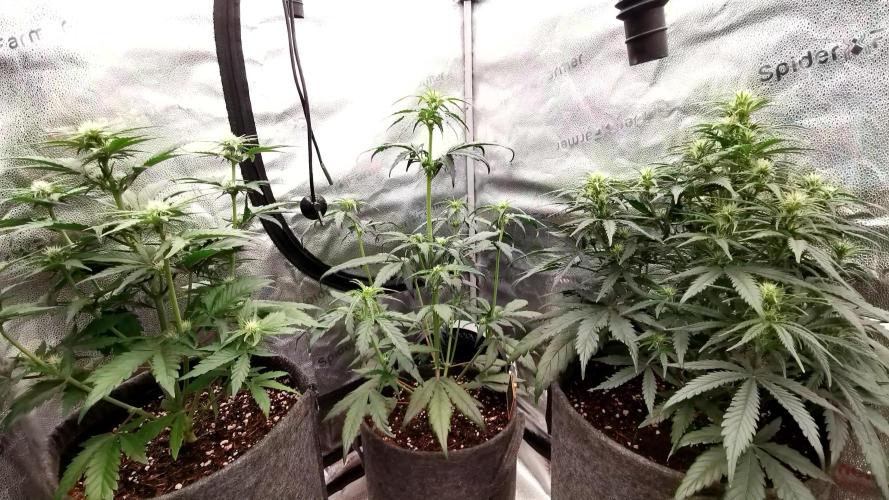
Week 5 marked the clear stretch phase for Amnesia Skittlez. 🌿
The plant began elongating, although it remained more compact in structure compared to the Apricot Autos.
The first proper bud sites are forming, and pistil production increased noticeably. 🌸
Overall plant health looks stable and clean. Leaf color remains a healthy green, with no visible deficiencies or stress reactions. 🙂
Training / Work Done:
No training or defoliation was applied.
The plant was left untouched to allow a natural stretch and smooth transition into flower.
Notes:
Week 5 shows a solid progression into flowering. While stretch is visible, the structure remains relatively compact. The plant is now clearly entering the main bud development phase. 🌱💪
Likes
37
Share


@masterofsmeagol
Follow
Week begins 8/12 LAST FEED 2 gallons 8/12 AFTER A RAINING NIGHT.
8/13 I've found what appears to be septoria on a couple plants. Looks like the weather will be OK tonight so I can apply organocide or something similar before dark. I've seen random pillar damage so this will be a two-for. I also should move the middle plant back and utilize my space more. Ph seems on point around 7.3. Higher in some places of the soil. I've noticed what looks like root issues on my blueberry. Winds were horrible yesterday and this plant doesnt hace a vertical trellis for support. Stem was pretty wobbly for a while but the plant seems to be growing fine. Either that or a jpn beetle munched the top of a bud. That's probably what happened. It was in the low 50's this morning. That's a 40 degree temperature swing in just a few days. This grow season has been the most challenging I've faced. Of course it had to happen when personal, family, and health concerns rear their head. Oh well. I can only do my best.
8/14 Went over at 5am to apply organocide to treat WPM or septoria as well as insecticide for pillars. I got there and one of my healthiest plants had been turning a little lime green now it was drooped over just like the larger GDP. This one is a 9lb kush though and they were doing good. Now it looks like it's dead over night. Maybe it's that liquid kool bloom. The soil seemed dry so I watered the plants. It MIGHT have picked ok a little. I'll have to check tonight. If not something is going on at night or in the rootzone and I really don't know what the fuck is going on. I will post updates and check later tonight. Damn. This has been a real challenging year.
8/15 That plant might be overwatered or not be draining correctly. At least I was able to get underneath it and the ground was dry. It was also hard packed dirt so elevating the bag may help. I'm going to wait a few days and see if things improve. This really sucks. I'm getting that defeated feeling. I need to get out of it though as I'm starting to see flower begin. The blueberry is probably the farthest along. I need to remember to take pictures of the newly developing flowers. Granted I've had numerous medical and other issues that have taken me off my game but losing two plants in one year is pretty shitty. I was able to fix things with COVID last year or the year before so I hope I can at least save this 9lb kush plant. If I lose this plant too it will be a substantial amount of cannabis lost. I need to rearrange my cage as well to make use of the extra space. Maybe I could've overwatered that plant that had been in the rain for a long time. I need to get my water routine down pat instead of doing the "lift the pot" method I have been doing. I went to several different commercial growers and got a bunch of crazy answers. Only time will tell. Last night I finished the organocide application on all the other plants except for the two babies and the drooped 9lb kush. Don't want to stress it further. I'll see how it goes.
8/16 Despite the soil drying out the newest disaster (my 9lb kush) is much worse with chlorosis killing leaves. Stalks and branches seem good. Soil smells musty and a little wetter than the rest. It was roofed to the ground slightly. NO water underneath. I stuck my hand in the bag from a bunch of angles. It's like the same thing that happened with the other one. I added to my surveillance. I also smell bleech and I hace an idea this might not be my doing at all. I can't be detailed but I'll find out one way or another. UPDATE. Went back over after the dentist and plants were dry as a fucking bone and droopy. I mixed up five gallons of phed water and watered everything. Even the 9lb kush that is pretty much dead. The soil was dry though. Everyone is saying overwater but I really doubt that. We had some massive rainstorms bur still. I need to review a game cam I have because unfortunately my cams went on the frits for a couple days (and the dogs went wild during that time around midnight) couple nights in a row. I fucking smell bleech. I'm a good dude and don't really have any enemies but we'll see what the game cam pulls up.
8/17 Of course we are getting a shit ton of rain. I watered yestetday because everything was dry as a bone
I watched yesterday as my blueberry was almost horizontal due to the wind. I added several supports to every branch and a few more up the main stalk. That may be what has been happening. The wind blowing so hard it separates the stalk from the roots. My problems started after I took my windbreaker tarp down. I put it back up for this storm. Or maybe it's just root rot. I dont fucking know. I cut all the dead stuff off the 9lb kush thats pretty mucb dead. Its holding on though. I probably shouldnt have watered that but it seemed bone dry. Maybe further down was wet. I dont know. Extra cams are up. I didn't smell that chemical bleachy smell today so it's probably in my head. I have better peace of mind with the night cams up though.and the dogs though. I've had a visitor this year but he left very quickly.
8/18 We got a shit ton of rain last night. No damage though. I spent what time I had in the garden working on the 9lb kush that looked like it was dieing. I'm not giving up on this one so easy. It seems to want to hold on. Despite the severely overwatered medium (due to this storm) I cam see new growth that looks healthy. The branches also seem stronger. I'm cautiously optimistic. The other one straight up died. So I might be able to salvage this. I'll go over later today and check on it. I debated putting it inside for the storm bur I figured I'd let the rain leech out anything in the medium in case it's locked out or something. At least I've got a couple real healthy ones this year. That NYCSA is amazing. That's a strain I'll probably grow again. Resilient as all all. Vigorous and doesn't seem impacted by things like WPM or other fungal ok infections or diseases like some other strains. I got a great recommendation from my buddy to use pots all the same size. It makes things easier watering. I just used what I had this year. I had bigger pots so I wanted to fill them. That tarp being up I think greatly helped with the wind. It's down now so things cam dry out. Still raining bit not yard and no wind. I think that may have played a large role in killing the 7ft GDP. Wind ripping the stalk away from the roots. Or it could've been a million other things. I'll never know. I do know that I have a better mindset, a great set of resources and I'm learning something new every year. If I can br8ng this plant back to life I'm going to be very proud of myself.....and her. Oh and I'm going to buy new tiger bloom. I'll start beasty bloom (hesitant as it has caused lockout in the past) as it goes better with my other nutes than the liquid kool bloom. Plus I started getting portables around tge time I used the liquid kool bloom. That being said, after two weeks I can see buds where there weren't before so I don't know. Next year I'm using seeds and I'm doing things different. I'm STRONGLY considering rapacaps idea about adding a removable roof for flower. The more I think about it tge better it sounds. That and putting wheels on pallets (buddy suggestion) and I could attach my supports directly to the pallet. I've got a lot of work to do that's for sure. Plants look healthy but I needvto him them again with organocide to fight any fungal stuff or pillars that might be hiding.


Processing
Likes
8
Share


@weed_gastro
Follow
Day 42, start of flowering week 3: they are growing nicely, had to do a lot of defoliation on each plant, except the one in the 3L pot.
Day 43, I started to discover that the roots are coming out aggressively from the bottom of the pot. I did not move the ones in the back, but I guess same thing.
The one in the 3L pot doesn't have this problem.
Day 45: getting really excited for these guys! I'm trying to keep the temp and humidity low, and I hope I can achieve some of the purple color :P any advice on that?
day46: defoliaton
Likes
19
Share


@Ultraviolet
Follow
Yellow butterfly came to see me the other day; that was nice.
Starting to show signs of stress on the odd leaf, localized isolated blips, blemishes, who said growing up was going to be easy!
Smaller leaves have less surface area for stomata to occupy, so the stomata are packed more densely to maintain adequate gas exchange. Smaller leaves might have higher stomatal density to compensate for their smaller size, potentially maximizing carbon uptake and minimizing water loss. Environmental conditions like light intensity and water availability can influence stomatal density, and these factors can affect leaf size as well. Leaf development involves cell division and expansion, and stomatal differentiation is sensitive to these processes. In essence, the smaller leaf size can lead to a higher stomatal density due to the constraints of available space and the need to optimize gas exchange for photosynthesis and transpiration. In the long term, UV-B radiation can lead to more complex changes in stomatal morphology, including effects on both stomatal density and size, potentially impacting carbon sequestration and water use. In essence, UV-B can be a double-edged sword for stomata: It can induce stomatal closure and potentially reduce stomatal size, but it may also trigger an increase in stomatal density as a compensatory mechanism. It is generally more efficient for gas exchange to have smaller leaves with a higher stomatal density, rather than large leaves with lower stomatal density. This is because smaller stomata can facilitate faster gas exchange due to shorter diffusion pathways, even though they may have the same total pore area as fewer, larger stomata. Leaf size tends to decrease in colder climates to reduce heat loss, while larger leaves are more common in warmer, humid environments. Plants in arid regions often develop smaller leaves with a thicker cuticle and/or hairs to minimize water loss through transpiration. Conversely, plants in wet environments may have larger leaves and drip tips to facilitate water runoff. Leaf size and shape can vary based on light availability. For example, leaves in shaded areas may be larger and thinner to maximize light absorption. Leaf mass per area (LMA) can be higher in stressful environments with limited nutrients, indicating a greater investment in structural components for protection and critical resource conservation. Wind speed, humidity, and soil conditions can also influence leaf morphology, leading to variations in leaf shape, size, and surface characteristics. Small leaves: Reduce water loss in arid or cold climates.
Environmental conditions significantly affect gene expression in plants. Plants are sessile organisms, meaning they cannot move to escape unfavorable conditions, so they rely on gene expression to adapt to their surroundings. Environmental factors like light, temperature, water, and nutrient availability can trigger changes in gene expression, allowing plants to respond to and survive in diverse environments.
Depending on the environment a young seedling encounters, the developmental program following seed germination could be skotomorphogenesis in the dark or photomorphogenesis in the light. Light signals are interpreted by a repertoire of photoreceptors followed by sophisticated gene expression networks, eventually resulting in developmental changes. The expression and functions of photoreceptors and key signaling molecules are highly coordinated and regulated at multiple levels of the central dogma in molecular biology. Light activates gene expression through the actions of positive transcriptional regulators and the relaxation of chromatin by histone acetylation. Small regulatory RNAs help attenuate the expression of light-responsive genes. Alternative splicing, protein phosphorylation/dephosphorylation, the formation of diverse transcriptional complexes, and selective protein degradation all contribute to proteome diversity and change the functions of individual proteins.
Photomorphogenesis, the light-driven developmental changes in plants, significantly impacts gene expression. It involves a cascade of events where light signals, perceived by photoreceptors, trigger changes in gene expression patterns, ultimately leading to the development of a plant in response to its light environment.
Genes are expressed, not dictated! While having the potential to encode proteins, genes are not automatically and constantly active. Instead, their expression (the process of turning them into proteins) is carefully regulated by the cell, responding to internal and external signals. This means that genes can be "turned on" or "turned off," and the level of expression can be adjusted, depending on the cell's needs and the surrounding environment. In plants, genes are not simply "on" or "off" but rather their expression is carefully regulated based on various factors, including the cell type, developmental stage, and environmental conditions. This means that while all cells in a plant contain the same genetic information (the same genes), different cells will express different subsets of those genes at different times. This regulation is crucial for the proper functioning and development of the plant.
When a green plant is exposed to red light, much of the red light is absorbed, but some is also reflected back. The reflected red light, along with any blue light reflected from other parts of the plant, can be perceived by our eyes as purple.
Carotenoids absorb light in blue-green region of the visible spectrum, complementing chlorophyll's absorption in the red region. They safeguard the photosynthetic machinery from excessive light by activating singlet oxygen, an oxidant formed during photosynthesis. Carotenoids also quench triplet chlorophyll, which can negatively affect photosynthesis, and scavenge reactive oxygen species (ROS) that can damage cellular proteins. Additionally, carotenoid derivatives signal plant development and responses to environmental cues. They serve as precursors for the biosynthesis of phytohormones such as abscisic acid () and strigolactones (SLs). These pigments are responsible for the orange, red, and yellow hues of fruits and vegetables, while acting as free scavengers to protect plants during photosynthesis.
Singlet oxygen (¹O₂) is an electronically excited state of molecular oxygen (O₂). Singlet oxygen is produced as a byproduct during photosynthesis, primarily within the photosystem II (PSII) reaction center and light-harvesting antenna complex. This occurs when excess energy from excited chlorophyll molecules is transferred to molecular oxygen. While singlet oxygen can cause oxidative damage, plants have mechanisms to manage its production and mitigate its harmful effects.
Singlet oxygen (¹O₂) is considered a reactive oxygen species (ROS). It's a form of oxygen with higher energy and reactivity compared to the more common triplet oxygen found in its ground state. Singlet oxygen is generated both in biological systems, such as during photosynthesis in plants, and in cellular processes, and through chemical and photochemical reactions. While singlet oxygen is a ROS, it's important to note that it differs from other ROS like superoxide (O₂⁻), hydrogen peroxide (H₂O₂), and hydroxyl radicals (OH) in its formation, reactivity, and specific biological roles. Non-photochemical quenching (NPQ) protects plants from damage caused by reactive oxygen species (ROS) by dissipating excess light energy as heat. This process reduces the overexcitation of photosynthetic pigments, which can lead to the production of ROS, thus mitigating the potential for photodamage. Zeaxanthin, a carotenoid pigment, plays a crucial role in photoprotection in plants by both enhancing non-photochemical quenching (NPQ) and scavenging reactive oxygen species (ROS). In high-light conditions, zeaxanthin is synthesized from violaxanthin through the xanthophyll cycle, and this zeaxanthin then facilitates heat dissipation of excess light energy (NPQ) and quenches harmful ROS.
The Issue of Singlet Oxygen!!
ROS Formation: Blue light, with its higher energy photons, can promote the formation of reactive oxygen species (ROS), including singlet oxygen, within the plant.
Potential Damage: High levels of ROS can damage cellular components, including proteins, lipids, and DNA, potentially impacting plant health and productivity.
Balancing Act: A balanced spectrum of light, including both blue and red light, is crucial for mitigating the harmful effects of excessive blue light and promoting optimal plant growth and stress tolerance.
The Importance of Red Light:
Red light (especially far-red) can help to mitigate the negative effects of excessive blue light by:
Balancing the Photoreceptor Response: Red light can influence the activity of photoreceptors like phytochrome, which are involved in regulating plant responses to different light wavelengths.
Enhancing Antioxidant Production: Red and blue light can stimulate the production of antioxidants, which help to neutralize ROS and protect the plant from oxidative damage.
Optimizing Photosynthesis: Red light is efficiently used in photosynthesis, and its combination with blue light can lead to increased photosynthetic efficiency and biomass production.
In controlled environments like greenhouses and vertical farms, optimizing the ratio of blue and red light is a key strategy for promoting healthy plant growth and yield.
Understanding the interplay between blue light signaling, ROS production, and antioxidant defense mechanisms can inform breeding programs and biotechnological interventions aimed at improving plant stress resistance. In summary, while blue light is essential for plant development and photosynthesis, it's crucial to balance it with other light wavelengths, particularly red light, to prevent excessive ROS formation and promote overall plant health. Oxidative damage in plants occurs when there's an imbalance between the production of reactive oxygen species (ROS) and the plant's ability to neutralize them, leading to cellular damage. This imbalance, known as oxidative stress, can result from various environmental stressors, affecting plant growth, development, and overall productivity.
Causes of Oxidative Damage: Abiotic stresses: These include extreme temperatures (heat and cold), drought, salinity, heavy metal toxicity, and excessive light. Biotic stresses: Pathogen attacks and insect infestations can also trigger oxidative stress. Metabolic processes: Normal cellular activities, particularly in chloroplasts, mitochondria, and peroxisomes, can generate ROS as byproducts. Certain chlorophyll biosynthesis intermediates can produce singlet oxygen (1O2), a potent ROS, leading to oxidative damage. ROS can damage lipids (lipid peroxidation), proteins, carbohydrates, and nucleic acids (DNA). Oxidative stress can compromise the integrity of cell membranes, affecting their function and permeability. Oxidative damage can interfere with essential cellular functions, including photosynthesis, respiration, and signal transduction. In severe cases, oxidative stress can trigger programmed cell death (apoptosis). Oxidative damage can lead to stunted growth, reduced biomass, and lower crop yields.
Plants have evolved intricate antioxidant defense systems to counteract oxidative stress. These include: Enzymes like superoxide dismutase (SOD), catalase (CAT), and various peroxidases scavenge ROS and neutralize their damaging effects. Antioxidant molecules like glutathione, ascorbic acid (vitamin C), C60 fullerene, and carotenoids directly neutralize ROS. Developing plant varieties with gene expression focused on enhanced antioxidant capacity and stress tolerance is crucial. Optimizing irrigation, fertilization, and other management practices can help minimize stress and oxidative damage. Applying antioxidant compounds or elicitors can help plants cope with oxidative stress. Introducing genes for enhanced antioxidant enzymes or stress-related proteins over generations.
Phytohormones, also known as plant hormones, are a group of naturally occurring organic compounds that regulate plant growth, development, and various physiological processes. The five major classes of phytohormones are: auxins, gibberellins, cytokinins, ethylene, and abscisic acid. In addition to these, other phytohormones like brassinosteroids, jasmonates, and salicylates also play significant roles.
Here's a breakdown of the key phytohormones:
Auxins: Primarily involved in cell elongation, root initiation, and apical dominance.
Gibberellins: Promote stem elongation, seed germination, and flowering.
Cytokinins: Stimulate cell division and differentiation, and delay leaf senescence.
Ethylene: Regulates fruit ripening, leaf abscission, and senescence.
Abscisic acid (ABA): Plays a role in seed dormancy, stomatal closure, and stress responses.
Brassinosteroids: Involved in cell elongation, division, and stress responses.
Jasmonates: Regulate plant defense against pathogens and herbivores, as well as other processes.
Salicylic acid: Plays a role in plant defense against pathogens.
1. Red and Far-Red Light (Phytochromes):
Red light:
Primarily activates the phytochrome system, converting it to its active form (Pfr), which promotes processes like stem elongation and flowering.
Far-red light:
Inhibits the phytochrome system by converting the active Pfr form back to the inactive Pr form. This can trigger shade avoidance responses and inhibit germination.
Phytohormones:
Red and far-red light regulate phytohormones like auxin and gibberellins, which are involved in stem elongation and other growth processes.
2. Blue Light (Cryptochromes and Phototropins):
Blue light:
Activates cryptochromes and phototropins, which are involved in various processes like stomatal opening, seedling de-etiolation, and phototropism (growth towards light).
Phytohormones:
Blue light affects auxin levels, influencing stem growth, and also impacts other phytohormones involved in these processes.
Example:
Blue light can promote vegetative growth and can interact with red light to promote flowering.
3. UV-B Light (UV-B Receptors):
UV-B light:
Perceived by UVR8 receptors, it can affect plant growth and development and has roles in stress responses, like UV protection.
Phytohormones:
UV-B light can influence phytohormones involved in stress responses, potentially affecting growth and development.
4. Other Colors:
Green light:
Plants are generally less sensitive to green light, as chlorophyll reflects it.
Other wavelengths:
While less studied, other wavelengths can also influence plant growth and development through interactions with different photoreceptors and phytohormones.
Key Points:
Cross-Signaling:
Plants often experience a mix of light wavelengths, leading to complex interactions between different photoreceptors and phytohormones.
Species Variability:
The precise effects of light color on phytohormones can vary between different plant species.
Hormonal Interactions:
Phytohormones don't act in isolation; their interactions and interplay with other phytohormones and environmental signals are critical for plant responses.
The spectral ratio of light (the composition of different colors of light) significantly influences a plant's hormonal balance. Different wavelengths of light are perceived by specific photoreceptors in plants, which in turn regulate the production and activity of various plant hormones (phytohormones). These hormones then control a wide range of developmental processes.


Processing
Likes
47
Share


@blazin_skywalker
Follow
Day 64 - I've been patiently waiting for the time to come, and it's finally here! Changed the lights over to 12/12 to send the tent into flower. Current light settings R99 W99 B50 as suggested by California Lightworks.
I did a full reservoir change - switching over to bloom nutes. I also added some Si28 and P31 Microbes to the reservoir to test out this new product that I was fortunate enough to receive samples of. I've seen the results of others with crazy booming root growth.... Let's see what happens!
Day 65 - I swear, it's like she's been waiting for me to flip the light cycle. I kicked one plant out of the tent so now there's even more room for improved air circulation and light distribution.
This plant is a serious beast!
Day 67/ Day 3 of Flower - Last massive round of defoliation before I sit back and let her do her thang. ✌️

Processing
Likes
17
Share


@jamjam887766
Follow
First ever harvest! Plant #2 has been covered in trichomes for the last two weeks and with a jeweler's magnifying glass and my camera phone zooming 7x it's clear that many of trichomes have turned amber. I chopped her down last night and have been hanging the branches upside down in a cardboard box with a fan and dehumidifier. I've read I should keep the temperature in the 70s F and the humidity around 50%. I'm doing my best but the garage isn't well insulated so I'm at the mercy of the weather. I'll keep an eye on them and when the branches snap easily I'll get them in jars for curing.
Plant #1 still has some time to go. The branches are filling out but to the naked eye there are no trichomes. When I look with the magnifying glass I can see them but I'm concerned that #2 had been coated in them for about two weeks now. Should I just wait? I think I'll just wait
Likes
24
Share


@TerpTurtle
Follow
14 day dry | Curing in Grove bags, filled 7 QP bags & got 56g of keif out the trim bin from only 2 plants!
More pictures coming! STAY FROSTY GROWMIES

