


Likes
Comments
Share


@Firepharmer
Follow
Flushed and chopped down!!
Vert impressed with the Futur vert flora max series led’s killer quality killer yield


Likes
6
Share


@SleepHuntMadScience
Follow
Starting to bloom. Continued with defoliation for air flow. Removed 5 or so leaves with mildew. Switched to bloom nutrients and hydra cal mag 2 days ago after 3 days of just ph 6.2 waterings/flush. Still healthy but a bit of mottling on older leaves and a tiny bit of nute burn on a couple of tips.
Likes
12
Share


@GrowBrosInc
Follow
Hectic week. Had some plumbing issues in the house so sorry for late update but the cal mag seems to be working. Last week I add any Nutes. It will be just flushing for the next two weeks. Left plant is maturing at a faster rate but nothing we cant handle! Really looking forward to Harvest time!

Likes
5
Share

@Jardineiro_Br
Follow
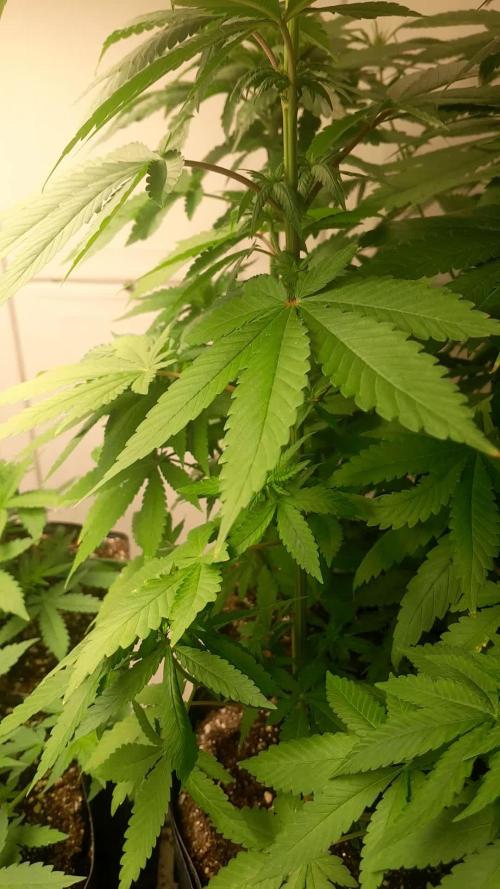
Voltamos para a estufa, as plantas estão bonitas mas ainda não mostraram as características do sexo. Acredito que mais essa semana e teremos uma definição, pois será a segunda semana no 12 /12.
Likes
7
Share


@Generalbudz
Follow
First day of week 6, i have to say these ladies are FASTTT! VPD 1.15-1.23 lights on VPD 0.97-1.05 lights off. The 70x70 area is 101% covered although id say 72x72cm because i added some self made growbox wall extenders i have started thinking adding the trellis net now or some days later to tilt the colas alittle just slightly for better light absorbtion for lower buds under the main shoots isnt a bad idea,under canopy view is magazine cover worthy MAN :D as you can see they are on fabric pots above plastic draining pot holders, the runoff is collected downthere and each of the pot holder has a plastic tube glued with water resistant superglue so after every water all the runoff water is collected from a pump with just a push of a button, the irrigation watering system is also connected and works pretty nice i have been giving them the water also by a simple push of a button with irrigation seem to love it (its not a automatic feeder connected to a reservuar i have two waterpumps one for watering one for collecting runoff i simply put the water intake plastic tube in my water bucket & press the button manualy, worth mentioning all of them have been reciving the same nutrient solution and same water although pheno#1 have been streching 4-6cm more than her sisters and she developed abit of blueish leafs even the soil in all 4 pots was from the same 2 soil bags and mixed very well before filling them so soil manifacturer excess nitrogen mistake is also not possible, i feel it is the phenotype but just to make sure there will be no excess nitrogen in the end i watered her with the exact same water amount as her sisters but 260ppm less for her this time just to make sure the blue is gone soon.she will be fine and emerald in few days. From today the UV FROST is ON from now too. Oh i forgot to mention thrueout the diary they where never topped only trained with these red clips besides the pheno3 that came topped "from god" since sprout and i wouldnt recommend topping autos (btw pheno 3 is a monster and smells wayy more LOUDA than the siblings.) although the pheno1 remains the main subject further on she got fuel to shoot for the stars and we rlly dont want that in this compact mini research area dont curse me for the substrate choice :D this stuff translates a bit of that earthy taste to the buds and way less attention than coco.

Likes
14
Share

@For2itous
Follow
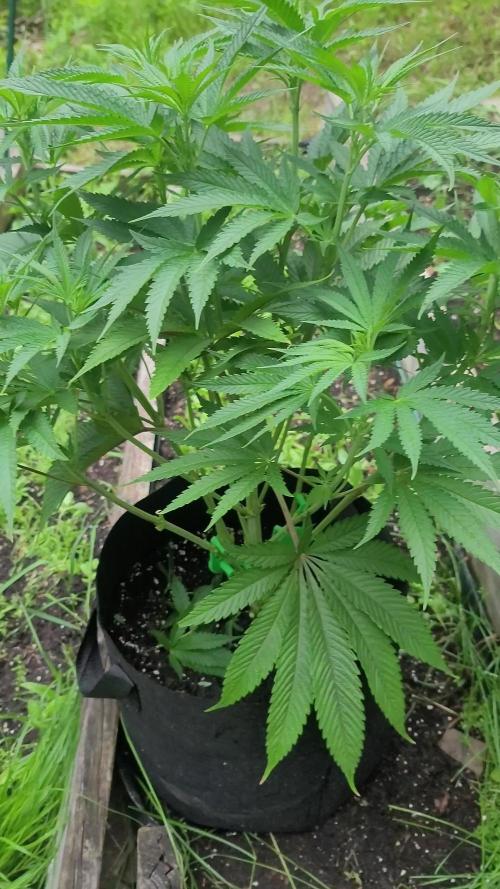
Just defoliating a bit pretty much lollipoping it to take out any super lower stuff. Seems to like the nutes and it's rained recently so haven't had to water as much which is nice. Hopefully she continues to grow as she is and adds some height can't wait to see how she turns out. Happy growing 🌴

Likes
4
Share

@GERGrowDesigns
Follow
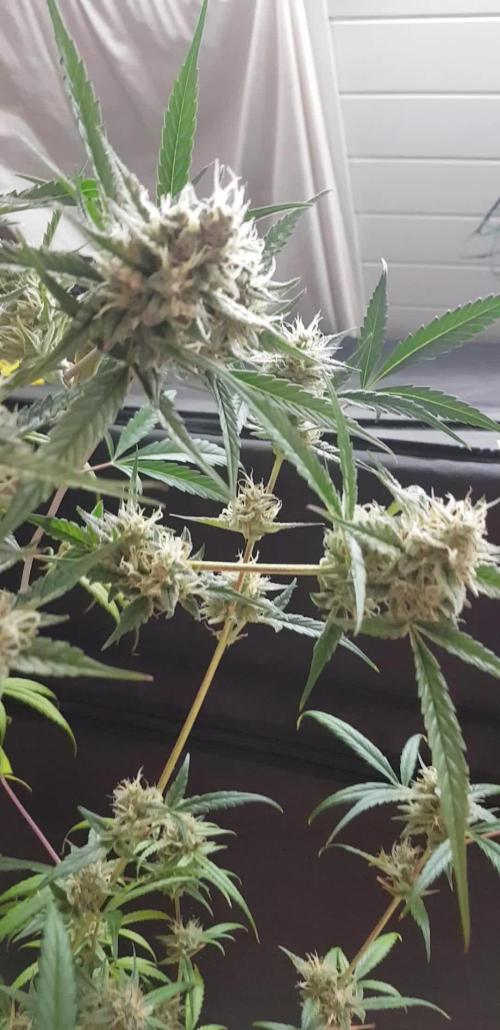
Welcome to Flower Week 7-8 and harvest of Divine Seeds Auto 77 Days
I'm excited to share my grow journey with you all as part of the Divine Seeds Autoflowering Competition 2025. It's going to be an incredible ride, full of learning, growing, and connecting with fellow growers from all around the world!
For this competition, I’ve chosen the Feminized Automatic strain: Auto 77 Days
Here’s what I’m working with:
• 🌱 Tent: 120x60x80
• 🧑🌾 Breeder Company: Divine Seeds
• 💧 Humidity Range: 60
• ⏳ Flowering Time: 56 Days
• Strain Info: 21%THC
• 🌡️ Temperature: 26
• 🍵 Pot Size: 3
• Nutrient Brand: Narcos
• ⚡ Lights : 200W x 2
A huge thank you to Divine Seeds for allowing me to be a part of this amazing competition and Sponsoring the Strains. Big thanks for supporting the grower community worldwide! Your genetics and passion speak for themselves!
I would truly appreciate every bit of feedback, help, questions, or discussions – and of course, your likes and interactions mean the world to me as I try to stand out in this exciting competition!
Let’s grow together – and don’t forget to stop by again to see the latest updates!
Happy growing!
Stay lifted and stay curious!
Peace & Buds!


Likes
17
Share


@Mroizo
Follow
Beginning of the sixth week. The first trichomes have already begun to appear. Now it's waiting for the buds to get fat.

Likes
6
Share

@The_Holy_Herb
Follow
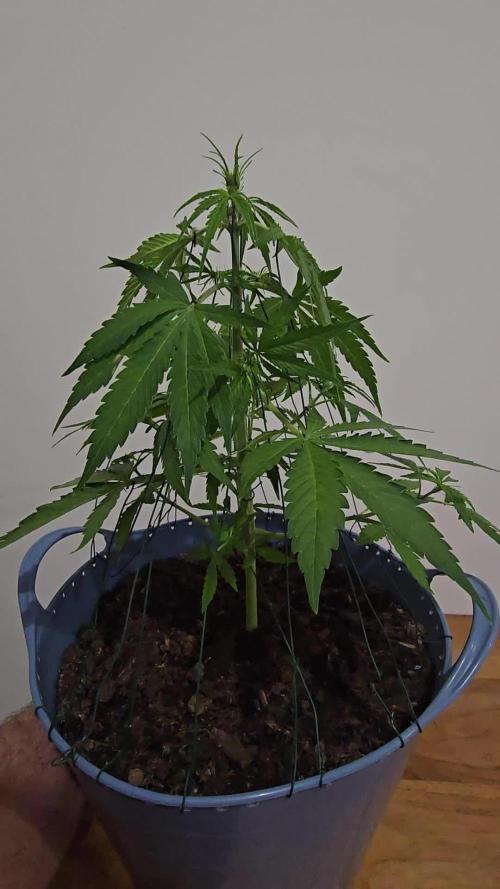
This week started with flowering.
The lst was a bit too agressive and one little branch broke but I save it.
I applied more lst to the plant this week.
The plant doubled the size within a week.
I had a pH problem that im fixing, the soil at one point due to nutes hit 4.8, way too low.
The flowering is in full power now, I did a flush to adjust the pH and tomorrow will add new nutrients and control the pH.
All good for now, a little of stress is visible on the leaves, is due to pH and strong light.
For the rest everything else is going fine.
See you next week.
Processing
Likes
4
Share


Likes
47
Share


@Ultraviolet
Follow
What's in the soil? What's not in the soil would be an easier question to answer. 16-18 DLI @ the minute. +++ as she grows.
Probably not recommended, but to get to where it needs to be, I need to start now.
Vegetative @1400ppm 0.8–1.2 kPa 80–86°F (26.7–30°C) 65–75%, LST Day 10, Fim'd Day 11
CEC (Cation Exchange Capacity):
This is a measure of a soil's ability to hold and exchange positively charged nutrients, like calcium, magnesium, and potassium. Soils with high CEC (more clay and organic matter) have more negative charges that attract and hold these essential nutrients, preventing them from leaching away.
Biochar is highly efficient at increasing cation exchange capacity (CEC) compared to many other amendments. Biochar's high CEC potential stems from its negatively charged functional groups, and studies show it can increase CEC by over 90%. Amendments like compost also increase CEC but are often more prone to rapid biodegradation, which can make biochar's effect more long-lasting. biochar acts as a long-lasting Cation Exchange Capacity (CEC) enhancer because its porous, carbon-rich structure provides sites for nutrients to bind to, effectively improving nutrient retention in soil without relying on the short-term benefits of fresh organic matter like compost or manure. Biochar's stability means these benefits last much longer than those from traditional organic amendments, making it a sustainable way to improve soil fertility, water retention, and structure over time. Needs to be charged first, similar to Coco, or it will immobilize cations, but at a much higher ratio.
a high cation exchange capacity (CEC) results in a high buffer protection, meaning the soil can better resist changes in pH and nutrient availability. This is because a high CEC soil has more negatively charged sites to hold onto essential positively charged nutrients, like calcium and magnesium, and to buffer against acid ions, such as hydrogen.
EC (Electrical Conductivity):
This measures the amount of soluble salts in the soil. High EC levels indicate a high concentration of dissolved salts and can be a sign of potential salinity issues that can harm plants.
The stored cations associated with a medium's cation exchange capacity (CEC) do not directly contribute to a real-time electrical conductivity (EC) reading. A real-time EC measurement reflects only the concentration of free, dissolved salt ions in the water solution within the medium.
98% of a plants nutrients comes directly from the water solution.
2% come directly from soil particles.
CEC is a mediums storage capacity for cations. These stored cations do not contribute to a mediums EC directly.
Electrical Conductivity (EC) does not measure salt ions adsorbed (stored) onto a Cation Exchange Capacity (CEC) site, as EC measures the conductivity of ions in solution within a soil or water sample, not those held on soil particles.
A medium releases stored cations to water by ion exchange, where a new, more desirable ion from the water solution temporarily displaces the stored cation from the medium's surface, a process also seen in plants absorbing nutrients via mass flow. For example, in water softeners, sodium ions are released from resin beads to bond with the medium's surface, displacing calcium and magnesium ions which then enter the water. This same principle applies when plants take up nutrients from the soil solution: the cations are released from the soil particles into the water in response to a concentration equilibrium, and then moved to the root surface via mass flow.
An example of ion exchange within the context of Cation Exchange Capacity (CEC) is a soil particle with a negative charge attracting and holding positively charged nutrient ions, like potassium (K+) or calcium (Ca2+), and then exchanging them for other positive ions present in the soil solution. For instance, a negatively charged clay particle in soil can hold a K+ ion and later release it to a plant's roots when a different cation, such as calcium (Ca2+), is abundant and replaces the potassium. This process of holding and swapping positively charged ions is fundamental to soil fertility, as it provides plants with essential nutrients.
Negative charges on soil particles: Soil particles, particularly clay and organic matter, have negatively charged surfaces due to their chemical structure.
Attraction of cations: These negative charges attract and hold positively charged ions, or cations, such as:
Potassium (K+)
Calcium (Ca2+)
Magnesium (Mg2+)
Sodium (Na+)
Ammonium (NH4+)
Plant roots excrete hydrogen ions (H+) through the action of proton pumps embedded in the root cell membranes, which use ATP (energy) to actively transport H+ ions from inside the root cell into the surrounding soil. This process lowers the pH of the soil, which helps to make certain mineral nutrients, such as iron, more available for uptake by the plant.
Mechanism of H+ Excretion
Proton Pumps: Root cells contain specialized proteins called proton pumps (H+-ATPases) in their cell membranes.
Active Transport: These proton pumps use energy from ATP to actively move H+ ions from the cytoplasm of the root cell into the soil, against their concentration gradient.
Role in pH Regulation: This active excretion of H+ is a major way plants regulate their internal cytoplasmic pH.
Nutrient Availability: The resulting decrease in soil pH makes certain essential mineral nutrients, like iron, more soluble and available for the root cells to absorb.
Ion Exchange: The H+ ions also displace positively charged mineral cations from the soil particles, making them available for uptake.
Iron Uptake: In response to iron deficiency stress, plants enhance H+ excretion and reductant release to lower the pH and convert Fe3+ to the more available form Fe2+. The altered pH can influence the activity and composition of beneficial microbes in the soil. The H+ gradient created by the proton pumps can also be used for other vital cell functions, such as ATP synthesis and the transport of other solutes. The hydrogen ions (H+) excreted during photosynthesis come from the splitting of water molecules. This splitting, called photolysis, occurs in Photosystem II to replace the electrons used in the light-dependent reactions. The released hydrogen ions are then pumped into the thylakoid lumen, creating a proton gradient that drives ATP synthesis.
Plants release hydrogen ions (H+) from their roots into the soil, a process that occurs in conjunction with nutrient uptake and photosynthesis. These H+ ions compete with mineral cations for the negatively charged sites on soil particles, a phenomenon known as cation exchange. By displacing beneficial mineral cations, the excreted H+ ions make these nutrients available for the plant to absorb, which can also lower the soil pH and indirectly affect its Cation Exchange Capacity (CEC) by altering the pool of exchangeable cations in the soil solution.
Plants use proton (H+) exudation, driven by the H+-ATPase enzyme, to release H+ ions into the soil, creating a more acidic rhizosphere, which enhances nutrient availability and influences nutrient cycling processes. This acidification mobilizes insoluble nutrients like iron (Fe) by breaking them down, while also facilitating the activity of beneficial microbes involved in the nutrient cycle. Therefore, H+ exudation is a critical plant strategy for nutrient acquisition and management, allowing plants to improve their access to essential elements from the soil.
A lack of water splitting during photosynthesis can affect iron uptake because the resulting energy imbalance disrupts the plant's ability to produce ATP and NADPH, which are crucial for overall photosynthetic energy conversion and can trigger a deficiency in iron homeostasis pathways. While photosynthesis uses hydrogen ions produced from water splitting for the Calvin cycle, not to create a hydrogen gas deficiency, the overall process is sensitive to nutrient availability, and iron is essential for chloroplast function.
In photosynthesis, water is split to provide electrons to replace those lost in Photosystem II, which is triggered by light absorption. These electrons then travel along a transport chain to generate ATP (energy currency) and NADPH (reducing power). Carbon Fixation: The generated ATP and NADPH are then used to convert carbon dioxide into carbohydrates in the Calvin cycle. Impaired water splitting (via water in or out) breaks the chain reaction of photosynthesis. This leads to an imbalance in ATP and NADPH levels, which disrupts the Calvin cycle and overall energy production in the plant. Plants require a sufficient supply of essential mineral elements like iron for photosynthesis. Iron is vital for chlorophyll formation and plays a crucial role in electron transport within the chloroplasts. The complex relationship between nutrient status and photosynthesis is evident when iron deficiency can be reverted by depleting other micronutrients like manganese. This highlights how nutrient homeostasis influences photosynthetic function. A lack of adequate energy and reducing power from photosynthesis, which is directly linked to water splitting, can trigger complex adaptive responses in the plant's iron uptake and distribution systems.
Plants possess receptors called transceptors that can directly detect specific nutrient concentrations in the soil or within the plant's tissues. These receptors trigger signaling pathways, sometimes involving calcium influx or changes in protein complex activity, that then influence nutrient uptake by the roots. Plants use this information to make long-term adjustments, such as Increasing root biomass to explore more soil for nutrients. Modifying metabolic pathways to make better use of available resources. Adjusting the rate of nutrient transport into the roots. That's why I keep a high EC. Abundance resonates Abundance.
Likes
Comments
Share


@Exotic_Cultivars
Follow
These grew really well stacked weight evenly, and flushed like a champ. Throw back to the first indoor scrog.

Likes
14
Share

@ThatsmyGrow
Follow
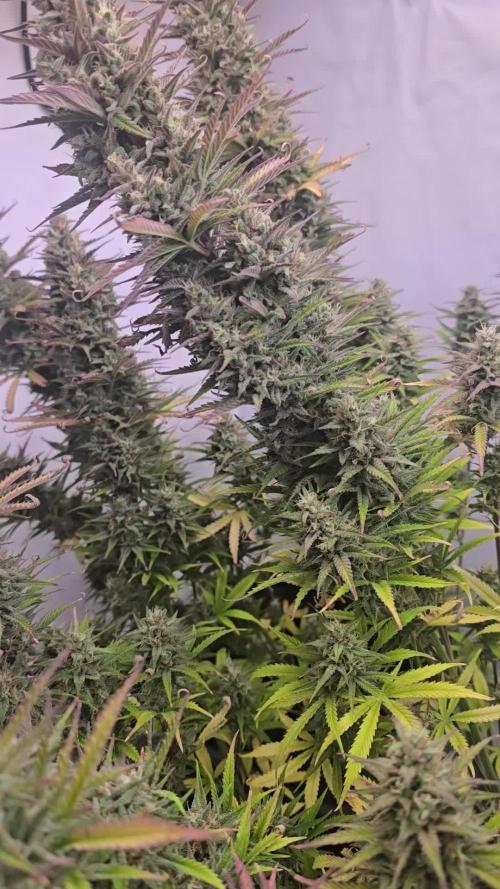
It's shocking how long the pound cake takes to grow. In the end, it has the whole tent to itself... We're still two weeks away from harvest; let's see what the beast turns out to be.
Likes
14
Share


@SpaceGorilla_01
Follow
Feed is based in 15 liters of water per time and they all took 17 litres each apart from lil was 5 litres
Good morning you'll lovely canna fam hope alls well and you all.had great fireworks 🎆 weekend get this 1st year we dnt buy and wen we do we do 😉😏🤭 and we alsywas see toms and say should jus sat out side and watched so didnt but theus years and no fk### done any well minimal at least 🤦🤣.
Anyway day 40 from seed and week 4 in dwc and here is the jungle now I thought I was in week 6 week 5 veg but wasn't but for 2 weeks I been doing selective defoliateation and tbey been coming vack crazy for autos thers strong


Likes
97
Share


@AsNoriu
Follow
Day 106. Trim jaiiiiiilllllllll !!!!
First done, think it could reach my record 240. Insane quality. 4 rows of solid buds hanging ....
Next one ....
Both finally finished and honestly, that's my plants to be proud of !!!
Day 114. All is done, no doubts its my best grow.
Happy Growing !!!


Likes
100
Share


@MadeInGermany
Follow
Hi people :-)
This week everyone has developed very nicely and is slowly coming to an end 🤗🌱🍀.
The Orange Sherbert was placed in the darkroom yesterday and will be harvested tomorrow :-).
Everyone else will continue to be flushed. Blue Gelato # 41, Her Majesty F1 and Sour Diesel will be harvested next week.
The next week is the gelato letzt.
Then I will gradually add all the harvest pictures 😍👍
I wish you all a good start into the week, let it grow 🌱🍀 and stay healthy 🙏🏻


Likes
33
Share


@valiotoro
Follow
Always rock hard buds💥
Sticky glue👀
The smell is divine & refreshing :
imagine a walk in a pine Forest in Summer with hint of lemon🤤🍋🌲
Moon safari effect

Likes
7
Share


@R_Owl_Mirror
Follow
She has slowed her growth and begun putting on quite a bit of heavy buds. The 3 inches of growth is purely due to the increased size of the top cola. She has been drinking much more water so, I have reduced the nutrients per feeding since I am watering much more often. The plant doesn't give off much of an aroma but, if you rub a leaf between your fingers the scent smells similar to Garlic. I have reduced the number of large fan leaves so as to allow more light to reach the lower buds. My huge photoperiod Sativa is about one week away from finishing so, by next week I should be able to move this plant into the 8-foot tall tent. This will allow me more headroom as well as provide some side-lighting. That should help the lower buds to receive more light and hopefully bulk-up. Well, that is it for this week. I hope people are following this grow. I haven't heard from anybody so, it's almost like I am producing this diary for myself.

Likes
59
Share


@Hashy
Follow
Grow diary 11 stage 6
Day 51-60
This last 9 days she has continued to veg and stretch. I have been bending the tops of the 4 mains to try and get her as low as possible, she is the tallest of the 4 strains I have going even with multiple bends on the mains she is a good 9 inches taller then the wedding glue I have going. Don't think she liked the slight increase in nutes this stage. Hope she gets going into flower soon as she is way behind the others and I was planning on harvesting all plants at the same time.