





@MaxMo8
Volgen
Hello friends, this week is interesting, busy and even enthusiastic. I put compost tea for all of them, wish you happy days🤗

shorts_status_processing


@Greenbean15
Volgen
By far the largest plant I have encountered. This plant is MASSIVE, my entire closet smells like pineapples... even with the carbon filters. This plant is a beast. Buds are developing rapidly, I expect a very high yield from this plant... this girl screams sativa. The buds are starting to frost up a bit and are developing nicely. Still have a few more weeks to go.
The bud I pollinated with a male bagseed appears to be developing seeds well. The bud looks entirely different from my other buds on the plant, some seeds appear to be growing sporadically throughout the larger tent but not many. I may have chopped the male early enough to only really pollinate what I needed. Still hoping I didn’t ruin the entire grow by allowing a male to get a few pods, but I did want seeds and I was willing to take the risk to ensure I’d have more seeds. 👩🌾🏼🌱


@CTCan
Volgen
White dots on a couple leaves? From what I read I’m thinking pests? Can’t see anything though.
Feeding daily with half the recommended dose. Switched to 15 gl pot in coco. Topped and pruned. 7 hours direct sun and then mostly shade.


@Iamdisabl3dsgirl
Volgen
Welp today ends week 6 on these beauties 😍 from @fastbuds_genetics_official 2x Gorilla Glue girlies are showing off with perfect node spacing things are looking gorgeous with these 2 ladies ...they are thriving super hard in their 8 gallon self wicking pots from @grotechgarden and their tasty nutes by @koshernutrients and basking under the cool rays 😎 of the QB4000 by @sunraise_led



@Ultraviolet
Volgen
High temperatures, high transpiration, high turgor pressure, and lots of cell elongation. Cannabis plants can sense and respond to their surroundings. They don't have brains like humans, but they have evolved sophisticated ways to perceive and react to various environmental cues, including light, gravity, touch, water, sound, and even the presence of other plants. This ability, known as plant perception, allows them to adjust their growth, defend themselves, and even communicate with each other.
Infrared light, particularly near-infrared (NIR), can influence plant growth and development by impacting various processes including initiation and elongation.
UVB radiation inhibits stem and hypocotyl elongation in plants.
Moderate UV-B exposure can cause a decrease in stem and leaf elongation, leading to a more compact plant architecture. Higher UV-B intensities, like 7.5 kJ·m−2, can lead to reduced elongation.
So it becomes a dance of initiating a stretch to seek to higher ppfd, then whenever you want the stretching to slow down,UVB inhibits the stretch by altering hormone balance,, coupled with the high-intensity dli once you get her to a height where you want. Being autos I don't have much time to play around. So we are playing fast and loose, get stretched, and then spread her open. You get the idea.
86F 30% RH with the lower side of optimal on ppfd, with a smudgering of infra-red to initiate response of making her stretch more so than normal.
Once she sprouts up in height, I drop metrics to 77F 55%RH% while upping the ppfd, giving her a dash of extra 430nm, giving the grow more of a 6000K. This encourages denser growth with less elongation. Higher side of optimal PPFD, with the auxin hormone balance changed, the side stems are starting to shoot up to the same canopy level as the apex (almost). Normally takes me 2 untrained toppings before a plant will flatten its canopy. I didn't take enough off the apex to do it in one chop, it was only day 10, so there really wasn't much to top from without creating unpredictable results using fim, opted just to keep it to a clean topping. Even predictability over the Chaos of the"Fim".
Brainfart:
Remember, the veg stage creates the skeleton that will stretch out into flowers. How dense you create the skeleton through light intensity will determine the density of your clusters as they form cola, as long as you can keep up with the demands. Increasing light intensity generally leads to plants having shorter internodal spacing, meaning the distance between nodes (where leaves grow) on a stem is reduced. This effect is particularly noticeable under LED grow lights, with great stress comes great dense clusters. Hello, temperature, my old friend! Goodbye, money on AC.
What did the flower decide to study in college?
STEM.


@Cultivators_Dream
Volgen
12/13/22 Day 56: Start of the 8th week and she is doing awesome really stretching out I think roots are getting bound though really think i should have put her in 5 gal pot instead of 3 gal but o well hopefully it won't get to bad.. she is already starting to stink 😳 that's for sure.. I have never had so much trouble keeping the ph right I think its because my soil and nutrients were old 😅 😔 will be getting new stuff for next grow I think the nutes are almost 2 years old..Temps have stayed at around 74 for daytime 70 at night hoping to see some colors change but who knows with this strain.. Stay tuned!



@Roberts
Volgen
Melon Gum is not doing so good. I got root rot and she is struggling to finish. It's summer here and really hot. It's hard to keep water temps down. She will likely finish. Just not in all she could do. Thank you Pure Instinto, Spider Farmer, and Athena nutrition. 🤜🏻🤛🏻🌱🌱🌱
Thank you grow diaries community for the 👇likes👇, follows, comments, and subscriptions on my YouTube channel👇.
❄️🌱🍻 Happy Growing 🌱🌱🌱
https://youtube.com/channel/UCAhN7yRzWLpcaRHhMIQ7X4g.


@Unculti_responsable
Volgen
Esta semana hicimos poda de bajos a podas las puntas y una poda de bajos a todas las ramas , se recupera muy bien de las podas la Jack está semana ya arrancamos de a poco con los fertilizantes de flora , así hacemos el último trasplante a 10 litros para pasar a flora , yo creo q ta esta más que bien para entrar en floración ya , pero quiero hacer el último trasplante antes , vamos a ir viendo como vienen las siguientes semanas

shorts_status_processing


@samkl
Volgen
Fairly fast grow although fairly airy small buds but probably caused by grow environment and lack of light at start


@Ultraviolet
Volgen
*Pre-flowers have micro trichomes upon formation, LOL. Based on my early observation, I predict that these will be frosty frosty on the trichomes.
Added 20lbs of black lava rock as mulch, raising soil temp around 1 and a half degrees to 72.8F.
Some nice little bud formations are creeping up already. Nice little foliar spray of some aminos to the underside of the leaf. Hard to guage or know how much the aminos help, but after reading how energy intensive it is for the plant to make them from scratch its something I feel I need to do as a habit.
An EC (Electrical Conductivity) meter, one that's made for the soil, it's so useful, as it indirectly indicates soil moisture as well as salt mineral nutrient levels. Just pop your metre stick in the soil and if ec is low, then it's time to water. Once there is water to assist in the conduction of electricity, the EC" will kick back up. 0.3-1.8, if it stays low, then you know it's time to add more mineral salt ferts! While Electrical Conductivity primarily indicates the overall salt content in soil, pH provides information about the relative proportion of cations (positively charged ions) in the soil's salt capacity. High EC signifies a higher salt concentration, while pH reflects the balance of cations like calcium, magnesium, potassium, ammoniacal nitrogen, sodium, and hydrogen.
Smaller leaves have less surface area for stomata to occupy, so the stomata are packed more densely to maintain adequate gas exchange. Smaller leaves might have higher stomatal density to compensate for their smaller size, potentially maximizing carbon uptake and minimizing water loss. Environmental conditions like light intensity and water availability can influence stomatal density, and these factors can affect leaf size as well. Leaf development involves cell division and expansion, and stomatal differentiation is sensitive to these processes. In essence, the smaller leaf size can lead to a higher stomatal density due to the constraints of available space and the need to optimize gas exchange for photosynthesis and transpiration. In the long term, UV-B radiation can lead to more complex changes in stomatal morphology, including effects on both stomatal density and size, potentially impacting carbon sequestration and water use. In essence, UV-B can be a double-edged sword for stomata: It can induce stomatal closure and potentially reduce stomatal size, but it may also trigger an increase in stomatal density as a compensatory mechanism. It is generally more efficient for gas exchange to have smaller leaves with a higher stomatal density, rather than large leaves with lower stomatal density. This is because smaller stomata can facilitate faster gas exchange due to shorter diffusion pathways, even though they may have the same total pore area as fewer, larger stomata
Sugars, classified as carbohydrates, are composed of the elements carbon (C), hydrogen (H), and oxygen (O). They are characterized by the general formula (CH2O)n, where 'n' represents the number of carbon atoms. The most basic units of sugars, called monosaccharides, have this ratio of carbon, hydrogen, and oxygen. For example, glucose and fructose, both monosaccharides, have the formula C6H12O6.
The reality of your typical plant. After harvest, with all water remove,d you are left with. (Ballpark)
Mother-nutrients: Carbon 47%, Oxygen 43%, Hydrogen 4%.
Macro-nutrients: Nitrogen 3%, Phosphorus1%, Potassium1%, Calcium1%, Magnesium0.5%, Sulfur0.5%.
Micro-nutrients: All the rest combined 1%
Nothing good can happen in a soil that can't breathe. The aerobic zone in soil is crucial.
Microorganisms can break down sugars into their constituent atoms, though they don't typically do so completely to the individual elemental level (carbon, hydrogen, oxygen) in one step. Microorganisms utilize sugars through metabolic pathways like glycolysis and fermentation, converting them into simpler molecules like pyruvate and then potentially to other compounds like lactic acid, ethanol, or carbon dioxide, releasing energy in the process.
Glycolysis:
This is a central pathway where a glucose molecule (a common sugar) is broken down into two molecules of pyruvate. This process generates some ATP (energy) for the cell.
Fermentation:
If oxygen is limited, some microorganisms can ferment pyruvate, producing various end products like lactic acid (in lactic acid fermentation), ethanol and carbon dioxide (in alcoholic fermentation), or other organic acids.
Further Breakdown:
The products of glycolysis and fermentation can be further broken down through other metabolic pathways, potentially leading to the release of carbon dioxide and water, and the extraction of more energy.
Not Always to Atoms:
While some microorganisms can completely oxidize sugars to carbon dioxide and water, releasing all their energy, others may stop at intermediate stages, producing various organic compounds.
Role of Enzymes:
Microorganisms use specific enzymes to catalyze each step in these breakdown pathways.
In summary, while microorganisms don't typically reduce sugars to individual atoms in one go, they break them down into simpler molecules, releasing energy and potentially forming new compounds as part of their metabolism.
In conditions of high CO2 concentration, the pH of a solution or system will decrease, becoming more acidic. Conversely, low CO2 concentrations lead to an increase in pH, making the solution more alkaline or basic. This relationship is due to the chemical reactions involving CO2 and water, which produce carbonic acid and influence the concentration of hydrogen ions, ultimately determining the pH


@Appoldro420
Volgen
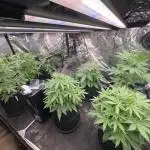
Title: 100% ChatGPT-Guided Grow – 12/12 Fast Flower Test (With Supervision)
Hey growers!
This grow is an experiment: I'm letting ChatGPT guide my entire grow cycle, from lighting to nutrients to environmental tweaks. It’s all based on AI suggestions.
Of course, I’ll still be keeping a close eye on things — if I see something going wrong or the plants aren’t vibing with the plan, I’ll step in. But the idea is to test how far AI can take a grow under controlled conditions.
Strains – All from @Sweet_Seeds (F1 Fast Version):
Mental Rainbow F1 Fast Version
Tropicanna Poison F1 Fast Version
S.A.D. Sweet Afgani Delicious F1 Fast Version
Gorilla Girl F1 Fast Version
Setup:
Coco in 20L @MarsHydroLED SmartPots
Grow tent: @SecretJardin DR240W
Lighting: 2x 720W LM301H EVO LEDs
12/12 from seed
Germination: May 14th / Main grow starts May 20th
Nutrients: Hy-Pro Coco A/B CalMag Pro, @BAC Silica Power, F1 Extreme Booster
Irrigation: Week 1 hand watering, then Blumat
pH starts at 5.8
CO₂ supplementation via natural gas system (Spider Farmer GGS)
Goal: Complete a full grow cycle in 10 weeks or less, from seed to harvest.
Updates will be posted in a personal yet informative style — a hybrid of stoner chill and data-driven grow logs.
Let’s see what AI can do in the grow tent. Stay tuned! 🤖🌿
🌱 Weeks 1–3 (May 20 – June 9) – Seedling to Early Flower (Stretch Phase)
Goals: Strong root development, firm stem structure, controlled stretch
Light: 12/12, start at ~500 PPFD → ramp up to 800 PPFD (day 14–21)
CO₂: 1500 ppm (only active when lights are on and temps 26°C)
Temperature: 26–28°C day / 22–24°C night
RH: Start at 70% → gradually lower to 60%
Nutrients (EC ramp-up):
Start EC: 1.0 → increase to 1.4
Plagron Cocos A+B + CalMag Pro (0.2 EC tap water)
Always mix Silica Power first (0.1 ml/L)
Actions:
Week 2: Start light defoliation on lower leaves
Week 3: Begin LST if desired
pH: 5.8 throughout the veg phase
🌸 Weeks 4–5 (June 10 – June 23) – Flowering Phase 2 (Bud Set)
Goals: Initiate flower formation, maintain healthy leaf mass, stimulate bloom
EC: 1.5–1.7 (monitor Blumat watering rate carefully)
RH: 55–60%
Nutrients:
Plagron Cocos A+B
CalMag Pro
Silica Power (0.1 ml/L – only until end of week 5)
Start B.A.C. F1 Extreme Booster at half dose, watered manually twice a week
Light: 900–1000 PPFD if plants can handle it
🌼 Weeks 6–7 (June 24 – July 7) – Flowering Phase 3 (Bud Building)
Goals: Develop dense flower structure, maximize flowering potential
EC: Up to 1.8 max
RH: 45–50%
Nutrients:
@Plagron Cocos A+B + CalMag Pro
@BAC. F1 Extreme Booster at full strength
Actions:
Final defoliation at beginning of week 6
Inspect leaves regularly for airflow and mold prevention
💧 Weeks 8–9 (July 8 – July 21) – Ripening Phase
Goals: Maximize terpenes, trichome maturity, flush medium
Week 8:
EC: taper down to 1.4
Stop using booster
Optional single flush with enzymes (manual watering)
Week 9:
Only plain tap water through Blumat (~0.2 EC)
Temperature: 24–26°C
Dim lights to ~600 PPFD for final 3–4 days
✂️ Week 10 (July 22 – July 28) – Harvest
Trichome check: Aim for 10–20% amber with a loupe
Optional: 48 hours darkness before harvest
Temperature: Keep low (20–22°C) to preserve terpenes
Deadline: Harvest no later than July 28
Powered by the new 2025 @SpiderFarmerLED GGS system..
Detailed setup (only SF parts mentioned here):
SF GGS Grow Light Controller (1x)
SF GGS AC10 Kit (1x)
SF GGS 6 Inch Clip Fans (2x)
SF GGS 6 Inch Inline Duct Fan (1x)
SF GGS SensorPro Kit
SF Ultrasonic Humidifier
May 20 – CO₂ moved outside, lighting dilemma, and a warm future ahead
Moved the CO₂ generator outside the tent today. Immediate win: steady 700 PPM from just the pilot light, no active burn needed. When turned off, it drops neatly to 400 PPM, matching the calibration point. Double-checked with the Dimlux CO₂ sensor—readings line up perfectly.
Still no tracking info for the originally ordered lights, so out of impatience I grabbed two new 720W LM281B fixtures from Germany this afternoon. Should arrive Friday/Saturday. It's a Trade Assurance order, so in theory, I'm covered.
Now the question: let the seedlings coast at 259 µmol for two more days, or hang the old lights to boost them to 500 µmol? Eight out of twelve are already above soil, and honestly, I’d rather not mess with the current vibe. Leaning toward leaving them be—low stress, happy sprouts.
Best part: temps dropped to 27.9˚C inside the tent now that the CO₂ generator’s out. Room itself is 24˚C, so all in all pretty chill. Curious what’ll happen once those dual 720W monsters fire up… it’s gonna get toasty, no doubt.
24/05: Stocked up on new Plagron nutes—finally. Now I can lock back into the full 10-week feeding plan (Plagron Cocos + B.A.C.). Flushing the res tonight and going full reset. Mixing fresh soup right after, dialed in to match this schedule:
Week 1:
Plagron Cocos A/B: 2 ml/L
B.A.C. Silica Power: 0.2 ml/L
Plagron CalMag Pro: 0.5 ml/L
B.A.C. F1 Extreme Booster: 0 ml/L
EC: 0.9–1.0
pH: 5.8
PPFD: 500
DLI: 22
RH Day: 70%
RH Night: 65%
CO₂: 700 ppm

shorts_status_processing


@GrowSmith
Volgen
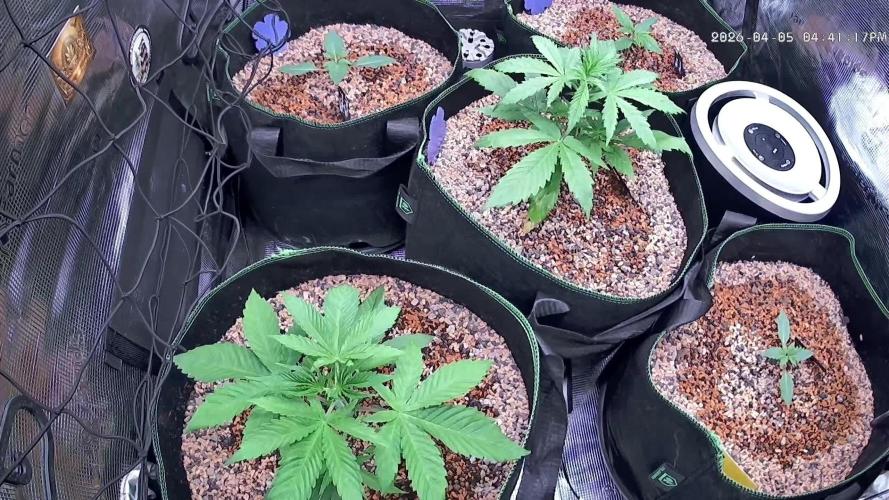
No feed needed this week, had another temp rise though. Excited to see the project to the end




@BlossomB
Volgen
🌿Growth & Resilience🌿
Ich bin absolut begeistert von der Entwicklung meiner Blue Mazar Automatic. Sie zeigt ein extrem robustes Wachstum und eine beeindruckende Widerstandsfähigkeit. Die Blätter haben ein sattes Grün und die Struktur der Pflanze ist sehr kompakt und kräftig.
🌿Low Stress Training (LST)🌿
In dieser Woche habe ich mit dem Low Stress Training begonnen, um die Lichtausbeute zu optimieren und die Seitentriebe zu fördern. Die Blue Mazar hat das Training fantastisch angenommen! Keine Anzeichen von Stress – sie wächst einfach munter weiter und bildet bereits eine schöne, gleichmäßige Krone.
🌿Nutrients🌿
Bisher habe ich mich dazu entschieden, noch nicht zu düngen. Die Pflanze sieht super vital aus und scheint alles, was sie braucht, aus dem Substrat zu ziehen. Solange sie keine Mangelerscheinungen zeigt und so gesund strahlt, lasse ich die Natur einfach ihren Lauf.


@RadDad
Volgen
Hey all,
Its been a few weeks so lets take a peak at our Blueberry manifold. Last time we topped our girl down to the 3rd node and removed all other growth except the two growth tip and their fan leaves. Over the past two weeks shes continued to grow an addition four pairs of leaves on each arm. This wee we will cut those branches back to the 3rd node and then clean all other growth from the plant except what remains on the 1st and 3rd node of each side. This should give us 8 main colas that will grow up from these eight remaining growth tips.
Continuing to feed as normal while trying to get the soil PH up to a proper level.


@Mrs_Larimar
Volgen
HAPPY 420
Today iam entering the SEEDSMAN 420 Growoff with the Following strain
the FATSO GMO f1 automatic.
All will start Indoors under SANlight Flex 25, and move Outdoors.
Only one Plant stays indoors, to see the performance under best Conditions
because my Outdoor Garden is hard^^
So i started with letting them soak, and then the seeds will move under a humid Kitchensponge
unil i see a sweet Taproot.
then they will go into the Final Pot, filled with lovely TerraPreta mj mix
the grow will be supported with Biotabs fertiliser
Breeder Information
Fatso GMO F1 Auto is a feminised hybrid strain that is the result of crossing two autoflowering strains,
viz. Fatso Auto and Cotton Candy Auto. This Cali-derived, slightly sativa-leaning,
easy to cultivate strain will please growers with its big yield, solid THC content and its sweet, candy and fuel palate.
Fatso GMO F1 Auto will grow well both indoors and outdoors. It has an above-average resistance
to mould but will still benefit from good ventilation, especially where humidity levels are quite high.
Resistance to plant pests and other pathogens is excellent. While plants will remain quite short at around 100cm
or less indoors, they can grow a little taller, reaching a height of 130cm, outdoors in open ground.
The entire cycle is completed in a maximum of 75 days from germination through to harvest
and although yields are said to be average this is still pretty impressive for an autoflowering strain.
The combination of high resin production and high terpene levels make Fatso GMO F1 Auto a very good strain from which to make cannabis extracts.
The terpene profile is sweet and funky with savoury scents of Skunk with pine and floral notes.
The taste is like sweet candy with hints of fuel. THC production is high, reaching 24% while CBD is low. The effect is uplifting and well-balanced.


@RunWithIt
Volgen
This update was made Day 58 from seed. I just now realized I've had my day count offset by about 2-3 days. No biggie, at least it's been rectified.
Anyways, onto the update. Beautiful deep purple tones have begun peeking throughout the plant. Similar to my lemon berry but with more of a magenta hue.
Feedings have been rather frequent. 2-3 nute feedings last week. With XSD. For the rest of the grow, XSD will be omitted. Just molasses and Liquid Seaweed from here on out.
Absolutely love the development of this photo period variety. I'll probably give this strain a rest for the next journal, however. Still need to spread my wings with Ethos' catalogue.


@ILoVeThiSpLaNt
Volgen
Giorno 81 (21 fioritura)
Come sempre le Rainbow Belts provocano dipendenza se toccate 😀 il solito mix di gas, lime e caramelle zkittlez che ti viene voglia di toccare sempre di più.
Sto aspettando qualche odorino delle altre piante perché sono proprio curioso di tutti gli incroci che ho nel box.
A settimana prossima 💪 🤞


