


Likes
Comments
Share


@SmokeableHobby
Follow
1/5 - Day 51 / Day 23 flower - Feeding Day
Pots were mostly dry on this day, last time they were fed was a little over a week ago on day 43 (12/28). I've done two small waterings since last feed, about a half gallon of water for each of my 5 gallons and about 8oz of water for my bonsais. My plants are drying out within about 48 hours of each small watering.
For today's feeding I went to full strength on my nutes. My solution consisted of:
- 1 gallon distilled water
- 3ml CalMag
- 3 tsp of FF Big Bloom (full dose))
- 2 tsp of FF Tiger Bloom (full dose)
- pH: 6.9
- TDS: 342ppm
- EC: .7
I gave each of my 5 gallons about a half gallon of the fertigated water each which wasn't enough to produce runoff. I gave them each about another 1/4 gallon distilled water to generate enough runoff to test. I tested the runoff of my Z52 which gave me readings of:
- pH: 6.3
-TDS: 1600ppm
-EC: 3.2
I gave about 12oz of fertigated water to each of my bonsais. My ZB2 runoff posted readings of:
- pH: 7.2
- TDS: 594ppm
- EC: 1.2
My TDS readings are definitely low compared to the FF Soil Feeding Schedule. The suggested readings for week 7 are an EC of 2.8 - 3.0 and 1960-2100ppm. Not stressing too much over the reading as the girls are looking healthy and happy. Will add another feeding in between waterings if I start to see any nutrient deficiencies but I don't see any cause to do so at the moment.
As you can see from the picture on 1/3, the super cropping I did on 1/2 didn't hurt my girls one bit. By the following day, the tops were already bending back toward the lights. This was a big relief.
****************************************************
1/7 - Day 53 / Day 25 Flower
Light watering in the morning today using pH'd dechlorinated tap water w/ 4ml of cal mag. Gave about about a 1/4 gallon to each for my 5 gallons and another 8oz each for my bonsais.
****************************************************
1/8 - Day 54 / Day 26 Flower
Noticing signs of nutrient issue on the Z51. Surprisingly, no signs of nutrient issues on the Z52 despite using the same solution and roughly the same amount of water during the feeding day on 1/5. Decided to do a heavier watering tonight, using about 3/4 gallon of pH'd dechlorinated tap water. Hoping that dilutes the soil a little bit and pushes the salts toward the bottom.
****************************************************
1/9 - Day 55 / Day 27 Flower
Nutrient issues did not appear to get any worse overnight so that is encouraging. Did some minor defoliation on my 5 gallons this morning to remove any of the smaller branches on the lower 3rd of the plant. Haven't completely removed any branches that are below the trellis. Will start pruning more regularly every other day so I don't shock the plants too much.


Likes
33
Share


@TeknoRanger
Follow
🌱 Sour Apple⠀⠀⠀
🌸 flowering 9 weeks⠀⠀⠀⠀⠀⠀
💚 70% Indica, 30% Sativa⠀⠀⠀⠀⠀
💣up to 27% THC⠀⠀⠀⠀
👅Apple, lemon⠀⠀⠀
⚖️ 550g/m²⠀
Sour Apple was created by an intersection of the original Sour Diesel and a Pure Kush. It is an indica dominant hybrid with a combination of both indica and sativa effects. It has an delicious intense taste of sour apples and lemon and a gigantic potency.
The rockhard buds are covered in a thick layer of milky white trichomes and are packed with sweet resin. Users describe the high of the sour Apple as a strong mental shift, a uplifting head high that leaves you motivated and focused with a sense of overwhelming euphoria and social tendencies. This is followed by a slow fade into an intensely overwhelming couch-lock. Sour Apple sends her 27% of THC stright to your mind to kick you in other psychedelic spheres. We proudly present this unique goddess to all the growers in the world.
GROWING SOUR APPLE
When growing indoors it is a good idea using screen of green or sea of green methods. You can expect big yields of 500g or more per squae meter indoors, 700g per plant outdoors. The flowering time is 9-11 weeks. Indoors, Sour Apple is a vigorous grower with many side stems which can be trimmed to keep the plant in bounds. Indoors, the plants grow between 1,00-1,50 m depending on the introduction of the flowering phase, outdoors Sour Apple can reach four metres of hight.
MEDICAL USE
Because of its strong effects Sour Apple is an ideal strain for treating patients who suffer from conditions such as chronic stress or anxiety, chronic pain due to injury or illness, and sleep disorders (insomnia and sleep apnea). In low doses it is daytime suitable for medical applications, at higher doses, it is the ideal weed for medication at the evening.

Likes
5
Share

@BasedBuds_89
Follow
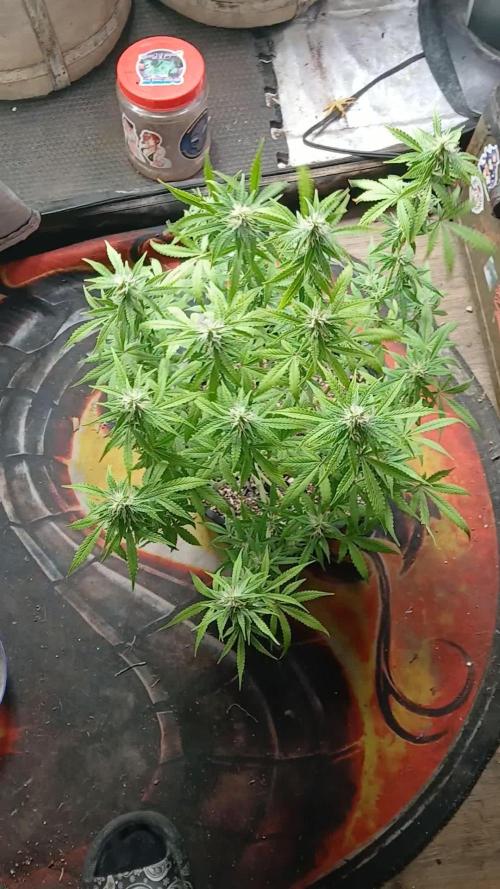
So I added a bit of calmag and nitrogen with little to no results. I let the roots soak overnight as well. Im convinced that it's the grow medium, I plant to transplant into a bigger pot with fresh soil to see if it helps the lockout. Im running out of room in my tent lil.

Likes
7
Share

@Franci5
Follow
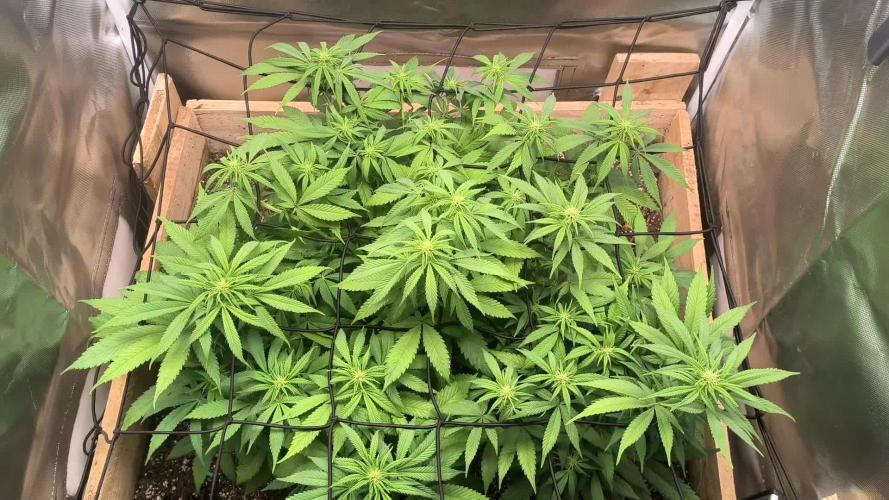
This week everything was pretty normal. I increased the light intensity a little without necessarily lowering the LED. The plants have adapted very well and have a very good structure. I'm very happy with how everything has gone. They need watering more constantly, but I keep an eye on the weight of the mesh under the growing bed so that it doesn't dry out too much. With the care I've given them, the three plants have shown that they have a very high production capacity. Let's see how I do, haha 😅😅

Likes
12
Share


@Growfun
Follow
Seems like the fungus gnats are almost gone. 😊 Since the Maverick is 2 weeks older than the blue dream I have to put them into flour which I did last night. The blue dream seems to be growing very slowly still. I also fimed her last week and yeah didn't see much results since it's going so slow. Hopefully we'll get something good out of the flowering stretch Blue Dream is looking to have about six colas and the Maverick probably around 10. Overall I am happy. Peace!!!
Likes
23
Share


@Mazgoth
Follow
I think a beginner can grow this plant easy because of its resistance and the fact that doesn’t need much care.If you make it to the end you will get incredible result for the first time.

Likes
20
Share


@NorthernMonkeyzInc
Follow
Im really pleased with how these girls are growing..at first i was worried about how small they may be but now seeing how stocky they have got im excited.
In total this is my 6th ever run and im so happy with the results.

Likes
14
Share

@GoodTimesOrganics
Follow
Hi liebe Community and Welcome Back! 💚
Slush Mint Cake von Dutch Passion!
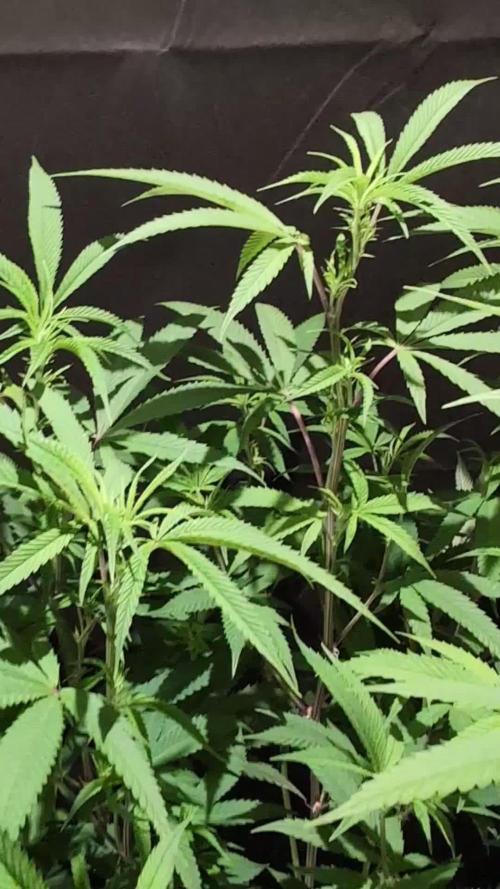
Die erste Blütewoche ist vorbei und die Pflanze hat im Stretch bisher 14 cm zugelegt, was noch sehr moderat erscheint..
Die Pflanze hat nun eine Höhe von 104cm erreicht.
Sie hat eine wunderschöne und homogene Wuchsform.
Dass untere Drittel der Pflanze habe ich ausgedünnt und die Triebe rausgeschnitten.
Die Wuchsform ist kräftig und Energie geladen.
Die Bedingungen im Growschrank sind für die Blütephase aktuell Top!
—————
🌞 Temp: 26
🌚 Temp: 18°C bis 19°C
💨 RH: 54%
VPD: 1,17 kPa
💡ppfd: 530 mpm
—————

Likes
10
Share


@Cocogrow1234
Follow
Week 5 flower : upped the a&b to 2.5ml litre and steered the pk at 1.2ml per litre
Blue cheese : they have completely outgrown the sunset sherbet . I’ve raised the light as the buds at the back of the tent were literally 1” away it didn’t do much harm although the leaves on them buds started to curl a little so I thought best to raise it now before it causes any stress . I’m still watering everyday to run off . I removed a few fan leaves but I am considering doing a bigger defoliation in a few days as the fan leaves have taken over . They are really starting to smell very sweet and filling out .I was worried about these seeds as I have grown Buddha blue cheese about 10 years ago and now they have changed the name to blueberry cheese and I was told they will be different from 10 years ago . So far I don’t think so as they look the same and smell the same at this point I can’t see any difference which I’m happy about as I haven’t had any good blue cheese for many many years .although they smell the filter is definitely controlling the smell outside the tent .
Sunset sherbet : although it hasn’t grow very big it’s very frosty and starting to smell .
I will carry on the pk for another 3-7 days and will start the flush about 6 1/2 weeks in for 2 weeks with plain water
I will also defoliate about in a few days

Likes
Comments
Share

@Olduffybastard88
Follow
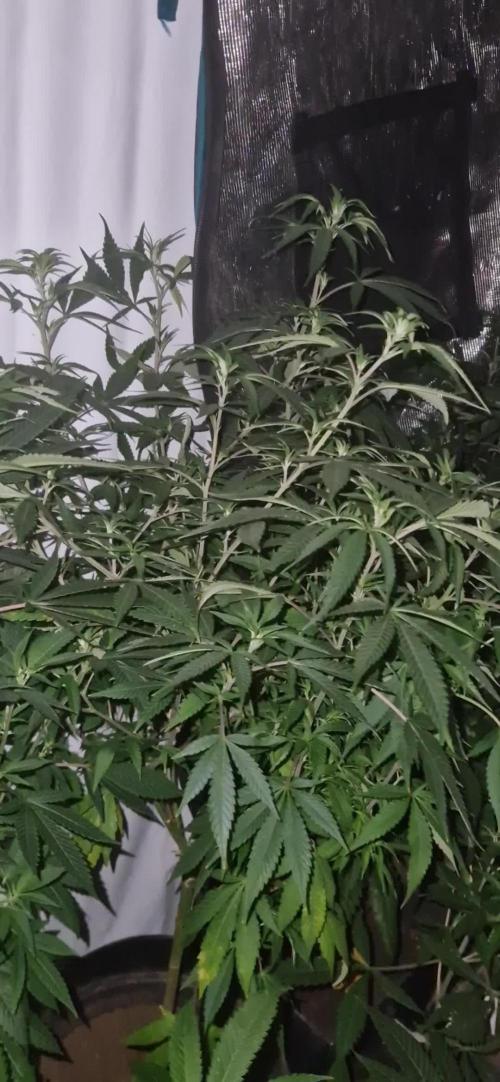
Flipping tent to flower next week am starting to remove all the lower branches that aren't adding up to much and removing a few dead leaves the off to flower they go half the plants have been topped the other half have been left natural as I would have ran out of space two weeks ago

Likes
Comments
Share

@frigo_camelo
Follow
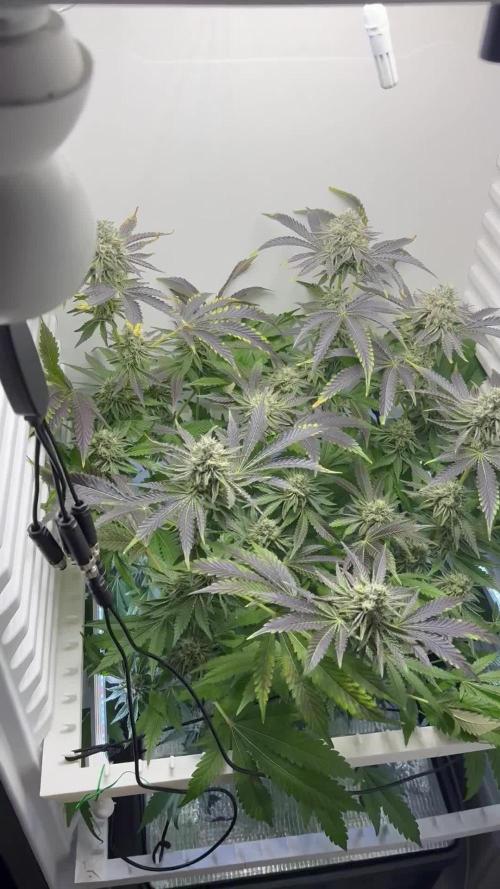
end of week 5 flower 🏻| all looking god | very strong rotten fruit smell | its gerring purple!
Likes
14
Share


@eldruida_lamota
Follow
Vamos familia quinta semana de floración de estás Punch Pie de RoyalQueenSeeds .
Que ganas tengo de ver el progreso de esta variedad, las plantas están sanas, se ven con buen color.
La cantidad de agua cada 48h entre riegos, nutrientes de la gama Agrobeta.
Esperaremos que no me suba mucho la temperatura , por el momento se mantiene entre 26-27 así que lujo.
Esta vez me pasé un pelín con los productos pero echaré agua destilada y en unos días apañamos.
Estas próximas semanas veremos cómo avanzan y progresan estas flores.
Mars hydro:
Code discount: EL420
https://www.mars-hydro.com/
Agrobeta:
https://www.agrobeta.com/agrobetatiendaonline/36-abonos-canamo
Hasta aquí todo, Buenos humos 💨💨.
Likes
14
Share


@Thinkingreen_420
Follow
Ultima semana de crecimiento en la que seguimos sin aplicar ningún fertilizante y hemos ido reduciendo las horas ya mañana la dejamos en 12/12 y cambiamos a periodo de floración.
Saludos y buenos humos!


Likes
87
Share


@ThrashedTV_BakedByGlaze
Follow
Week 9 - Day 58 - 02/23 to 2/28 2021
All phone pictures. Go off site to my instagram for HD/DSLR content: https://www.instagram.com/glazedgrow/
Red Poison from @Sweet_Seeds makes my mouth water. A sweeter more candy tone overall compared to other earthy purples like the LSD-25 beside it. Great colour and cluster of bud sites on the main cola all fighting for light/chunk space so should end up with a nice amount of bag appeal/photo subjects nearing the end. Big thick white pistils with some starting to orange as it enters the 6th week of flower. Can't wait to see how the main nug looks.
Gave all the plants mostly water feeds this week in order to avoid salt build up. Some staining on the bottom of the fabric pots from the bottom feeds so just making sure the soil is fine for the final major nute feeds before flushing in a week or so.
Made some caps with homemade thc olive oil from a friend that sent me some "Intergalactic Cable" viewing materials as well 😎 Have to use them fast but been stable for a week and not just starting to come through the gel caps, will have to get something harder next time still a lot left in the bottle.
It's closest to the window and i keep my tent open so when the light is off it's getting a solid 16-18 Celcius helping out the genetic purple pop a bit more in the leaves.
Other than that, the new @MarsHydroLED TSL 2000 and @ViparSpectraLED PS1500 for veg definitely made a huge difference and the buds on the Dark Devil.
Big thanks to @ViparspectraJennie for putting a new XS1000 in the mail to test on my next grow. The FB testers finally came in so excited to get some of those in the tent and under the new tester.
*Sponsored Content*
Feel free to check out/save some money on your next @ViparSpectraLED using discount code "GLAZEDGROW" at this link: https://www.viparspectra.com/?aff=378&utm_source=affiliate
(Again check out my insta, very limited quality content will be posted here)
Thanks for checking out the latest #GlazedGrow🍩
--
Go off site and check out my Instagram for better content: https://www.instagram.com/glazedgrow/
Go off site and check out my CannaBuzz profile: https://www.cannabuzz.app/users/GlazedGrow
Processing
Likes
2
Share


@pendeja420
Follow
Wow!! It was sunny and hot all week! You can see that they almost doubled their size and are looking pretty much more healthy. That is also because I followed @MadeInGermany 's advice and decided to wait more until I had to water. They seem to have liked that, beacuse there is no more sign of Ca blocking in the leaves. And they grew very nicely, no need of everything. Also following his advice I will use Cal/Mag in the next watering. But, you know, I'm making it cheap... so I will use another home-made recipe: wood ash fertilizer, which include those nutrients and some that are needed in flowering stage -which seems to be starting, so next week will have the flowering label-. It also degrades the N in the soil that could be still causing a little overfeeding (leaves' tips are a bit burnt). However, I admit that my mistake was overwatering from the beggining. Lesson learned! No watering for the whole week and the plnat didn't seem to worry about it.
Man! If only it had been this sunny all the time! Plants look very healthier and are way bigger, with huge new leaves. A little amount of pistils showed up in the last days, so I guess it is the moment for stretching. Knowing that, I decided to do a little training on Sweet, as it is the one a bit behind. You can see in the last picture how I took a couple leaves that were blocking light from side branches-future bud sites- and taped them, so they didn't. If results are good I might do the same with Rebel, but I have a feeling that she'll do good without it.
Sadly, next week will be all rainy and cloudy... Nothing to do tho. Any commentary will be thanked, even if it is about how cheesy the videos are! 😂
Likes
3
Share


Likes
7
Share

@Gewaltmann
Follow
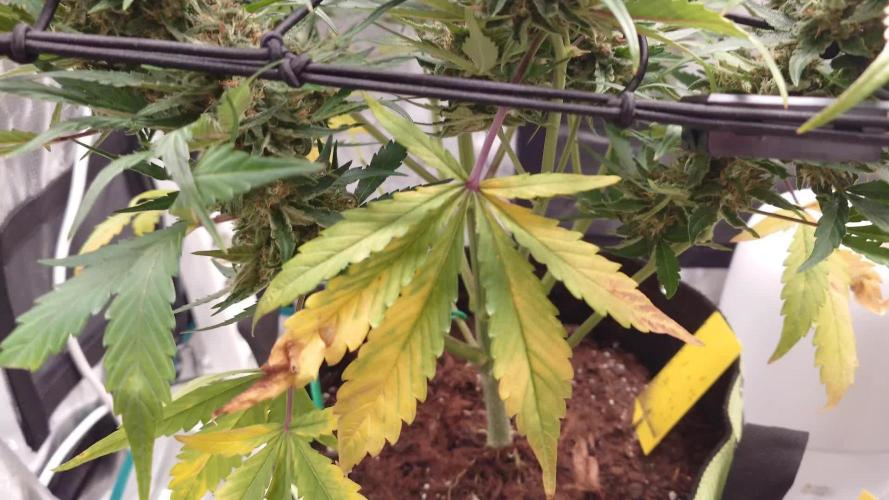
Der Herbst wird langsam eingeläutet. Man merkt deutlich dass es langsam Zeit wird regelmäßig die trichome zu monitoren.
Ich schätze mal ein bis zwei Wochen noch dann haben wir hier genau den perfekten Zeitpunkt. Ansonsten lasse ich das Video für sich sprechen.
Und wer noch mehr von der Guava Runtz sehen will - Guava Runtz auf YouTube suchen 😘
Likes
25
Share


@Danger90946
Follow
Hello all and welcome. It has been a while since I been here but I'm back. In this grow we have a 2x4 grow tent with A/C infinity carbon filter and a new light, GLS Grow 300.
So for this grow we are going to run 4 Fastbuds Autos. 2 Gorilla Cookies and 2 Purple Lemonade. We are also going to use this grow as a side by side grow between Down To Earth Amendments and FoopCanna.
Lets Get Started!!!!!!
Likes
3
Share

@Liquido
Follow
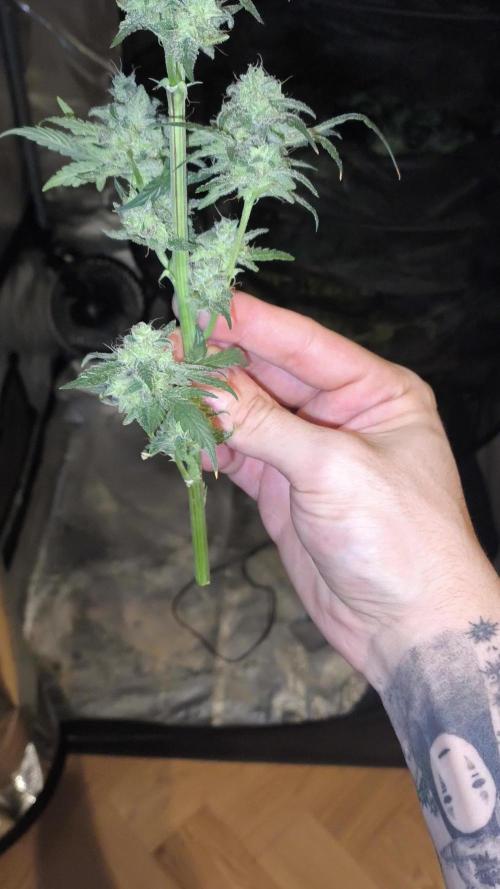
Questa è la prima GMO che raccolgo, cime molto più dense rispetto alla runtz e sembra essere molto più pesante, tra qualche giorno raccoglierò l'altra e poi mancano solo le due più grandi