


Likes
Comments
Share


@Canadian
Follow
Today They have pop in my new room is completely ready for a New girls season I am going to use a rosin press for a large quantity off all the flowers That we produce And I will be reviewing that brand ones it arrive

Likes
10
Share


@BOMbolenath
Follow
Flowers still growing, i will let one more week or so before harvest.
Giving water only.
Flowers are very dense like rocks.
Smell is amazing, like fresh sweet fruity gas :)

Likes
90
Share


@OrganicNature420
Follow
Both frosty and have big nugs. It did go into reveg in late flower but managed to save it before it went awol! Not as good as last time but hopefully tastes like it smells 🏆🌱💚


Likes
93
Share


@Hou_Stone
Follow
All the seedlings I kept continue to develop well, perfect 😊!
I find the genetics of this strain very interesting. I really can't wait to taste it!
️️Hawaiian Snow x (Wedding Cake x Gelato 33)️ ️ Here is the genetics of this limited edition from GreenHouseSeed
For this grow, I plan to let each plant grow with a large main bud, without topping.
Next week I will cut the lower branches closest to the ground.
-----------------------------------------------------------
My Instagram 🌱❤️️ :
https://www.instagram.com/hou_stone420/
-----------------------------------------------------------
💧Watering:
1L on day 9 and 0.5L on day 12
I use tap water, adjust the ph to around 5.8 and water
------------------------------------------------------------
🤩Equipment of the week :
Light FC3000 Mars hydro. power 80% at 50cm
Extractor 6 inch Mars Hydro. power 1/10. ON 24/24h
2 fans to circulate the air inside the tent. Each on for 30 minutes then off for 1 hour. this rhythm repeats itself in a loop
Heating mat Romberg 95x95cm. ON 45 minutes. OFF 30minutes. In a loop
i am adding anti-midge bird stickers this week
-----------------------------------------------------------
Thank you for your visit🙏
And thank you very much for your support💚
❤️️ Long live to grow diaries community❤️️
👋

Likes
10
Share


@StonedFarm
Follow
10/5/24 - Purple Punch 👊 & Green Crack 💚
Girls got a top feed of 7.3 pH, and runoffs are strong 6.4. PPMs are a little lower last dunk on the GC, so we are going to bump up her feed a little, and reduce the feed on the Purple Punch.

Likes
9
Share


@MrGreen92
Follow
They've been having a bit of trouble with calcium deficiency due to me overwatering them and not giving them CalMag every feed but have learnt my lesson for next time and will be getting the bare minimum nutrients from a recommended supplier.
Been feeding them half nutrients one feed and pHd water with CalMag the other, and that's taking a day break between watering.
Think they've only got this week left now then I'll start flushing with water I think, the one in the corner may need another week or 2 but at least it'll have loads of space to finish up when they're out of there 🙂
Was gonna start flushing this week but they just look so poorly so gonna have 1 more week with nutes every day cause I think they're thirsty bitches which has slowed them down possibly, full nutes, no nutes doesn't seem to be doing me any favours so I'll start flush the 2 that I think are ready next week and the last one a week after 😊😓
Have ordered a microscope to check the trichomes, no idea what to look for but I'm sure I'll see something.. feeding them everyday again as it's been another hot week should've just stuck with a daily feed probably. Will upload some trichome pics soon hopefully 😊

Likes
11
Share


@Kirsten
Follow
19.1.25:
I have watered all plants with 300ml of dechlorinated water PH'd to 6.3, with 1/3 jar of black strap molasses with Ecothrive Biosys-1g.
I am looking to increase the sugars for microbial life and plant processes.
It'll also add some extra Calcium, Magnesium and trace elements.
I also, watered all plants with Bloom nutrients.
Using dechlorinated water PH'd to 6.3 with the following nutrients: (ml/l) ;-
♡ 2ml Cal-Mag
♡ 2ml Ecothrive Flourish
♡ 2ml Xpert Nutrients Bloom Booster
♡ 2ml Biobizz Bloom
♡ 2ml Biobizz Top Max
♡ 1g of Ecothrive Biosys
I watered around 1-3 litres per plant. Depending on size and requirements.
I'm still spilling water containing the nutrient solution. 🙄
I am using this to rub into the leaves. I think a nice foliar massage won't do any harm, make the most of the situation.
The plants have become very hungry and thirsty. Increased the water by double.
I ran out of my TNC cal-mag. I decided to order the Xpert Nutrients brand, as I like their products. It isn't organic as far as I can tell, but I don't think it matters too much to me, to be honest.
I also want to top dress this week, so I bought some Green Leaf PK bud Booster dry amendment from Amazon, too.
I'll mix it with canna coco, perlite, worm castings, and Ecothrive Life Cycle.
24.1.25:
I went ahead and top dressed all the plants with 4.5 gallons of my supersoil custom mix.
This consists of the following substrate and dry amendments:
♡ 60% Canna coco
♡ 20% Worm castings
♡ 15 % Perlite
The remaining 5% consists of the following dry amendments;-
♡ 10g Ecothrive Biosys
♡ 1 Tsp RHS Mycorrhizal Fungi granules
♡ 3 Tsp Vitalink Bat guano
♡ 4 Tsp Diatomaceous earth
♡ 8 Tsp Ground Cinnamon
♡ 10g Green Leaf Bud Booster PK booster.
♡ 3 Tsp Ecothrive Life Cycle.
•Worm castings for some all round nutrition.
•Cinnamon for mildew and bug repellent.
•Canna coco base substrate.
•Perlite for adding oxygen to the root and soil system.
•Green Leaf Bud Booster PK Booster for blooming. Building strong big buds.
•Vitalink bat guano again for Bloom.
•RHS Mycorrhizal Fungi granules, to boost beneficial microbes.
•Ecothrive Life Cycle for lots of great benefits.
•Diatomaceous earth for Silica.
•Ecothrive Biosys, for an extra microbial boost.
24.1.25:
Gorilla Cookies is absolutely healthy and strong! I'm very pleased with this plant.
I was looking into topping autoflowers and had wanted to top her. Anyway I read some things, as a result of which I decided, last night, I wasn't going to do it.
So today came around, and I topped it. Totally forgot I wasn't going to do it 😅
I was really excited to experiment with topping in addition to LST. Now I guess we're all in! 🤞
Thanks for checking out my diary 🍃 ✌️
Likes
16
Share


@JohnnyBlaze
Follow
Week 7 of flower starting today for this amazing Green Gelato Auto and man she's fattening up fast these last weeks and she's stacked with trichomes ..
When opening the tent I can smell a gassy citrus smell with some sweet earthy tones too just like they describe thid strain on the site ..
So for now i will slow down feeding considerably and then flush this bad girl with ph'd water and flawless finish..
Really pleased to have this strain for Christmas time its going to be straight 🔥
Thanks everyone for passing by and showing love hope you have a great Sunday tomorrow and Happy Growing to you all!!!
Update Day 80: Hello everyone i inspected her with the lens and i saw even too many amber trichs on the buds this means the THC is already decreasing in favour of CBN so i decided to cut this baby tomorrow at night time so will post more pics after cut then going to make a final harvest update with the dry weight !!
She will be hanging drying after a nice wet trim at 60%rh and 20 C for 5-7 days or till the stems nearly snap..
Thanks for passing by and leaving a like my friends hope you have a lovely week!!

Likes
5
Share


@prebiancagrower
Follow
Hi people, how are you all????
Week 7 here, and all is good with the plant, I did some defoliation to keep the airflow, and I got a ScrOG to open the plant a little bit to get more light.
I am very happy with the results until this stage, is a whole new world for me :-)
Thank you for following me.
Peace and love!
:-)
Likes
1
Share

@birdmountain
Follow
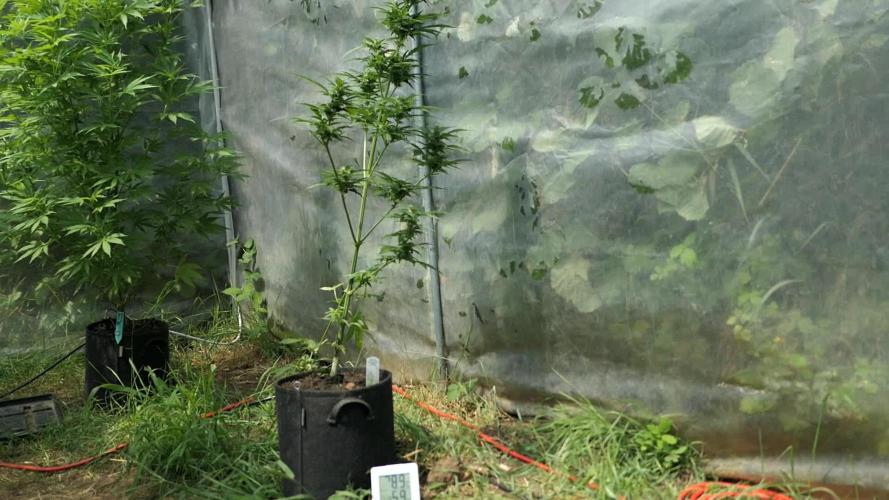
Sie wächst immer noch in den unteren Seitentrieben weiter, obwohl sie schon gut blüht. Leider hat der Grauschimmel sie nicht verschont und ich musste ein kleines Stück eines Buds entfernen. Der Ventilator im Folientunnel weht auch sie nun direkt an um die Luftfeuchtigkeit in den Blüten zu senken und die Wasserversorgung wurde heruntergefahren. Hoffentlich schafft sie es bis zur Ernte in ca. 3-4 Wochen. Auto Cinderella Jacks benötigen etwas länger, dafür wachsen sie auch stärker. Sie ist die größte meiner diesjährigen Autoflower Pflanzen. Leider habe ich auch an ihr etwas Bud rot gefunden und sofort entfernt. Ich vesuche den Autoflowers den bestmöglichen Platz unter dem Ventilator zu geben.
Der durch Schneckengewicht abgeknickte Zweig hängt zwar, aber er wächst bereits sich biegend nach oben.
Bis nächste Woche!
---
It is still growing in the lower side shoots, even though it is already flowering well. Unfortunately, gray mold has not spared it, and I had to remove a small piece of a bud. The fan in the foil tunnel is now blowing directly on it to reduce the humidity in the flowers, and the water supply has been reduced. Hopefully, it will make it to harvest in about 3-4 weeks. Auto Cinderella Jacks take a little longer, but they also grow stronger. It is the largest of my autoflower plants this year. Unfortunately, I also found some bud rot on it and removed it immediately. I try to give the autoflowers the best possible place under the fan.
The branch, which was bent by the weight of snails, is hanging, but it is already growing upwards.
See you next week!

Likes
Comments
Share


@GHcultivate90
Follow
Week 9 has been a good week, there responding well to the last two days completely Outside overnight now. Maybe in the ground next week?.

Processing
Likes
29
Share


@Grey_Wolf
Follow
****************** GINGER NUT COOKIES *************************************************3rd Jan 2020**********************************************************
Awhile back I made a diary on here, about how I used a Clone of a Red Diesel from Barneys Farm plant, to create feminised pollen by reversing the sex using
sodium thiosulphate mixed with silver nitrate which then makes silver thiosulfate solution or STS as its probably better known To get up to speed that diary can be found here
https://growdiaries.com/diaries/42051-barney-039-s-farm-red-diesel-grow-journal-by-grey-wolf-growdiaries
Then after I proccured some pollen I pollinated two Plants from Fastbuds in this Diary
https://growdiaries.com/diaries/42635-gelato-auto-girl-scout-cookies-grow-journal-by-grey-wolf-growdiaries
This diary will be showing the Growth of the result of Crossing the @BarneysFarm Red Diesel with the @Fastbuds Girl Scout Cookies auto .
In Australia we have a cookie variety called Ginger nuts and I thought that an apt name for this strain combo
I will be growing it in Soil fully organically with Sunshine and Love. Fuck knows how it will go and how it will even turn out but that just makes it more interesting & challenging for Me. So here we go & Let the Fun begin........................🙏🙏
Once a week I will post a link to an Aussie Band/performer performing one of their best songs to start things off Please Watch this video clip Dance Monkey https://www.youtube.com/watch?v=q0hyYWKXF0Q
Likes
11
Share


@DutchDudeGrow
Follow
not all the ladys are drom the same time 5 are 2 weeks ahead 1is West coast OG auro and all 10are Amnesia haze auto,
Likes
2
Share


@GreenEldritchGardens
Follow
Maybe she needed some defoliation on top but my focus was to clean the bottom half, she is is growing naturally into this bush shape so I will just leave her be.
First first week stretch she drank a 10l+ of water plus good nutrients consumption, during my soil grows from this strain I almost always had some yellowing, so she seems to consume a lot in stretching phase!
Likes
10
Share


@BigDaddyK
Follow
In the forest at the back. Added PK this week , I think they have 3 weeks left
Change reservoir Monday’s

Likes
25
Share


@pifflestikkz
Follow
Day 85
23/09/24 Monday
De-chlorinated tap water pH 6 and calmag today.
Day 87
25/09/24 Wednesday
Feed today using de-chlorinated tap water pH 6 only.
Day 89
27/09/24 Friday
De-chlorinated tap water pH 6 with Plagron PK13-14 today.
Picture and video update 😎
Day 91
29/09/24 Sunday (End of week)
De-chlorinated tap water pH 6 only today. Will start only water next week 👌💚 picture 😎

Likes
Comments
Share

@Guerrilla_grower777
Follow
06/08/2025 20:15
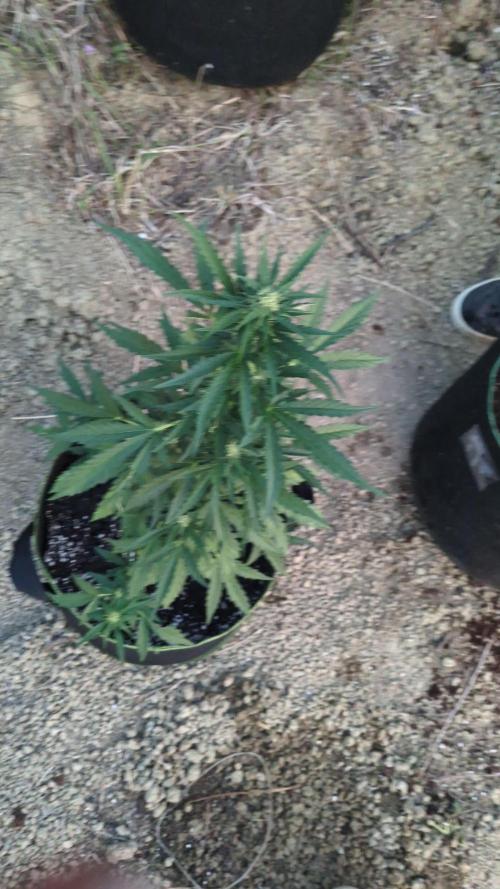
Good climate but one day in the middle of the week had 2h of heavy Rain with some hail(FUCK) that damaged one branch of the frostbanger
Gorilla z bumping and frosting all good
Frostbanger unbelievable how frost It can be on her very first days of flower,this Will be frost and a banger😂
Apricot auto and Coco milk now transplanted ,had some problems bringing them here that's why they look sad
Fucking boars this place Is so dangerous right now

Likes
16
Share


@AestheticGenetics
Follow
4/15/25 This plant is blowing my freaking mind. Long stacked colas. Even the lower buds are plumping up like golf balls. This is an exceptional plant so far.
Shes starting to show the classic "sherbert" purple that ive noticed shows up with anything that has sunset sherbert in the lineage. Some of the leaves are starting to fade slightly and the purple is coming in.
The rs11 that this seed came from, produced the most from a single plant out of all plants ive grown and trained and kept that small. She yielded 3.5 ounces or a 1/4lb of top nugs from a plant that was only about 18 inches tall and vegged for 6 weeks before flip.
Once i start to clear out all of the fan leaves later on in flower, its just going to be buds running the length of the stems
4/18/25
I really believe this may be a keeper. She is absolutely stunning. Just everything is perfect. She has super long stacking of buds up and down the stems.
Im actually super stoked to see how she finishes up.
One of the craziest parts is that shes in a plastic 2 or 3 gallon pot and this plant is going to yield insane.

Likes
10
Share


@CrazyFlowers07
Follow
Ciao a tutti oggi 3/06/2022 è il primo giorno di vita della pianta ✌️🏼✌️🏼 Buon seguimento 😝😝
