Processing
Likes
Comments
Share
@BAMA_251
Follow
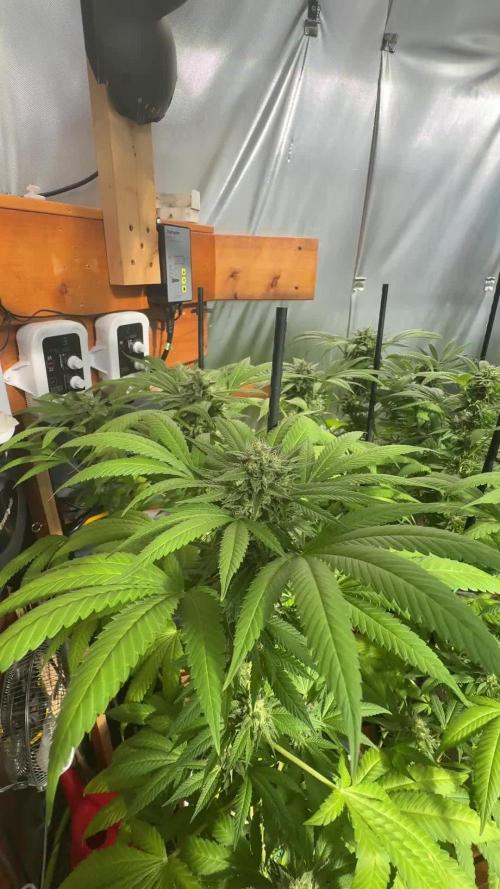
I just wished I planted this in a bigger pot but hey this was my first auto and it’s turning out great
Likes
6
Share
@gr3g4l
Follow
Hola al mundo mundial.  De nuevo por aquí con nuevo seguimiento de mi humilde cultivo exterior.   Pasado el solsticio de verano. Semillas en agua de osmosis 46 horas , luego  entre servilletas unas 29 horas más y al sustrato, un sustrato light-Mix .  Segundo fué enterrar las semillas en el sustrato con precaución y ponerlo todo bajo unos fluorescentes de 150W 4000K 18/06h. Antes de pasarlas a exterior me gusta tenerlas unos dias en interior, no muchos , entre 15-20 dias. Me gusta que salgan a ver el mundo ya con cierta madurez.
Likes
Comments
Share
@Archentar
Follow
Separating the Heat from the Garbage ✂️🗑️ Week 9, and it's time for some honest talk. This week was all about damage control and heavy pruning. To be completely blunt, these FastBuds RF3 genetics are a massive mixed bag. The Strawberry is looking absolutely terrible, and it’s clear the Guava is going to be a total disappointment too. Just zero potential on those two. The only saving grace in the tent right now is the Banana Purple Punch she is actually holding it down, stacking nicely, and showing some real quality. At this stage, I'm just cleaning up the trash phenos, focusing on the Banana, and pushing through to the finish line. Not every run can be a winner, but we ride it out until the end! 🤷‍♂️💨
Likes
23
Share
Básicamente lo mismo, aunque está semana pilló bastante más horas de luz(tuve que irme fuera de casa dos findes seguidos, en los cuales la dejé con la luz encendida full 24/7 en la caja) Como experiencia utilicé café reposado 48h para "alimentarla" e intentar bajar el Ph de la tierra (coco ph6+hummus ph7+vermiculita ph8= ph total 7) El otro experimento fue cubrir la tierra con coco para que el tallo eche raíces y aprovechar su espigamento! Las horas de luz solía dejarla 8h en bombilla mientras duermo, y el día la pongo en la ventana a que tome el fresco, pero apenas tiene luz directa, me da la sensación que crece más rapido cuando vuelvo del finde, estoy replanteandome tenerla más tiempo en la caja con luz, porque la veo aún pequeña, y quizá ponerle un ventilador de pc o algo🤔..veremos, aún tengo el papel de aluminio al lado de la caja y ni se lo he puesto, con eso os lo digo todo☝️🎃
Likes
176
Share
So, with the harvest complete and the dry finished, the rest is now going into jars for the final cure and storage. Overall I enjoyed this grow, it needed minimal interventions and had a smaller work load compared to the other grows. The amount of dried flowers is 752g (1.11gpw) so a decent haul, I threw a lot of B grade buds in the hash bag due to the large number of low level flowering sites (I need to rethink my canopy management) and also with the lack of stretch after flipping made the internodal spacing a bit too tight. Managed to extract 215g of grade a hash from her as well which I have pressed into a slab (pictures). I learned many things along the way, namely root health and the importance of keeping organic additions as low as possible. I also decided to try out clones for my next run, just to get a little more canopy and growth consistency - those of which are in an aeroponics tub at the moment waiting to root (picture). Thanks for those of you who followed along most of the way, good luck with all your grows!
Likes
19
Share
Yellow butterfly came to see me the other day; that was nice. Starting to show signs of stress on the odd leaf, localized isolated blips, blemishes, who said growing up was going to be easy! Smaller leaves have less surface area for stomata to occupy, so the stomata are packed more densely to maintain adequate gas exchange. Smaller leaves might have higher stomatal density to compensate for their smaller size, potentially maximizing carbon uptake and minimizing water loss. Environmental conditions like light intensity and water availability can influence stomatal density, and these factors can affect leaf size as well. Leaf development involves cell division and expansion, and stomatal differentiation is sensitive to these processes. In essence, the smaller leaf size can lead to a higher stomatal density due to the constraints of available space and the need to optimize gas exchange for photosynthesis and transpiration. In the long term, UV-B radiation can lead to more complex changes in stomatal morphology, including effects on both stomatal density and size, potentially impacting carbon sequestration and water use. In essence, UV-B can be a double-edged sword for stomata: It can induce stomatal closure and potentially reduce stomatal size, but it may also trigger an increase in stomatal density as a compensatory mechanism. It is generally more efficient for gas exchange to have smaller leaves with a higher stomatal density, rather than large leaves with lower stomatal density. This is because smaller stomata can facilitate faster gas exchange due to shorter diffusion pathways, even though they may have the same total pore area as fewer, larger stomata. Leaf size tends to decrease in colder climates to reduce heat loss, while larger leaves are more common in warmer, humid environments. Plants in arid regions often develop smaller leaves with a thicker cuticle and/or hairs to minimize water loss through transpiration. Conversely, plants in wet environments may have larger leaves and drip tips to facilitate water runoff. Leaf size and shape can vary based on light availability. For example, leaves in shaded areas may be larger and thinner to maximize light absorption. Leaf mass per area (LMA) can be higher in stressful environments with limited nutrients, indicating a greater investment in structural components for protection and critical resource conservation. Wind speed, humidity, and soil conditions can also influence leaf morphology, leading to variations in leaf shape, size, and surface characteristics. Small leaves: Reduce water loss in arid or cold climates. Environmental conditions significantly affect gene expression in plants. Plants are sessile organisms, meaning they cannot move to escape unfavorable conditions, so they rely on gene expression to adapt to their surroundings. Environmental factors like light, temperature, water, and nutrient availability can trigger changes in gene expression, allowing plants to respond to and survive in diverse environments. Depending on the environment a young seedling encounters, the developmental program following seed germination could be skotomorphogenesis in the dark or photomorphogenesis in the light. Light signals are interpreted by a repertoire of photoreceptors followed by sophisticated gene expression networks, eventually resulting in developmental changes. The expression and functions of photoreceptors and key signaling molecules are highly coordinated and regulated at multiple levels of the central dogma in molecular biology. Light activates gene expression through the actions of positive transcriptional regulators and the relaxation of chromatin by histone acetylation. Small regulatory RNAs help attenuate the expression of light-responsive genes. Alternative splicing, protein phosphorylation/dephosphorylation, the formation of diverse transcriptional complexes, and selective protein degradation all contribute to proteome diversity and change the functions of individual proteins. Photomorphogenesis, the light-driven developmental changes in plants, significantly impacts gene expression. It involves a cascade of events where light signals, perceived by photoreceptors, trigger changes in gene expression patterns, ultimately leading to the development of a plant in response to its light environment. Genes are expressed, not dictated! While having the potential to encode proteins, genes are not automatically and constantly active. Instead, their expression (the process of turning them into proteins) is carefully regulated by the cell, responding to internal and external signals. This means that genes can be "turned on" or "turned off," and the level of expression can be adjusted, depending on the cell's needs and the surrounding environment. In plants, genes are not simply "on" or "off" but rather their expression is carefully regulated based on various factors, including the cell type, developmental stage, and environmental conditions. This means that while all cells in a plant contain the same genetic information (the same genes), different cells will express different subsets of those genes at different times. This regulation is crucial for the proper functioning and development of the plant. When a green plant is exposed to red light, much of the red light is absorbed, but some is also reflected back. The reflected red light, along with any blue light reflected from other parts of the plant, can be perceived by our eyes as purple. Carotenoids absorb light in blue-green region of the visible spectrum, complementing chlorophyll's absorption in the red region. They safeguard the photosynthetic machinery from excessive light by activating singlet oxygen, an oxidant formed during photosynthesis. Carotenoids also quench triplet chlorophyll, which can negatively affect photosynthesis, and scavenge reactive oxygen species (ROS) that can damage cellular proteins. Additionally, carotenoid derivatives signal plant development and responses to environmental cues. They serve as precursors for the biosynthesis of phytohormones such as abscisic acid () and strigolactones (SLs). These pigments are responsible for the orange, red, and yellow hues of fruits and vegetables, while acting as free scavengers to protect plants during photosynthesis. Singlet oxygen (¹O₂) is an electronically excited state of molecular oxygen (O₂). Singlet oxygen is produced as a byproduct during photosynthesis, primarily within the photosystem II (PSII) reaction center and light-harvesting antenna complex. This occurs when excess energy from excited chlorophyll molecules is transferred to molecular oxygen. While singlet oxygen can cause oxidative damage, plants have mechanisms to manage its production and mitigate its harmful effects. Singlet oxygen (¹O₂) is considered a reactive oxygen species (ROS). It's a form of oxygen with higher energy and reactivity compared to the more common triplet oxygen found in its ground state. Singlet oxygen is generated both in biological systems, such as during photosynthesis in plants, and in cellular processes, and through chemical and photochemical reactions. While singlet oxygen is a ROS, it's important to note that it differs from other ROS like superoxide (O₂⁻), hydrogen peroxide (H₂O₂), and hydroxyl radicals (OH) in its formation, reactivity, and specific biological roles. Non-photochemical quenching (NPQ) protects plants from damage caused by reactive oxygen species (ROS) by dissipating excess light energy as heat. This process reduces the overexcitation of photosynthetic pigments, which can lead to the production of ROS, thus mitigating the potential for photodamage. Zeaxanthin, a carotenoid pigment, plays a crucial role in photoprotection in plants by both enhancing non-photochemical quenching (NPQ) and scavenging reactive oxygen species (ROS). In high-light conditions, zeaxanthin is synthesized from violaxanthin through the xanthophyll cycle, and this zeaxanthin then facilitates heat dissipation of excess light energy (NPQ) and quenches harmful ROS. The Issue of Singlet Oxygen!! ROS Formation: Blue light, with its higher energy photons, can promote the formation of reactive oxygen species (ROS), including singlet oxygen, within the plant. Potential Damage: High levels of ROS can damage cellular components, including proteins, lipids, and DNA, potentially impacting plant health and productivity. Balancing Act: A balanced spectrum of light, including both blue and red light, is crucial for mitigating the harmful effects of excessive blue light and promoting optimal plant growth and stress tolerance. The Importance of Red Light: Red light (especially far-red) can help to mitigate the negative effects of excessive blue light by: Balancing the Photoreceptor Response: Red light can influence the activity of photoreceptors like phytochrome, which are involved in regulating plant responses to different light wavelengths. Enhancing Antioxidant Production: Red and blue light can stimulate the production of antioxidants, which help to neutralize ROS and protect the plant from oxidative damage. Optimizing Photosynthesis: Red light is efficiently used in photosynthesis, and its combination with blue light can lead to increased photosynthetic efficiency and biomass production. In controlled environments like greenhouses and vertical farms, optimizing the ratio of blue and red light is a key strategy for promoting healthy plant growth and yield. Understanding the interplay between blue light signaling, ROS production, and antioxidant defense mechanisms can inform breeding programs and biotechnological interventions aimed at improving plant stress resistance. In summary, while blue light is essential for plant development and photosynthesis, it's crucial to balance it with other light wavelengths, particularly red light, to prevent excessive ROS formation and promote overall plant health. Oxidative damage in plants occurs when there's an imbalance between the production of reactive oxygen species (ROS) and the plant's ability to neutralize them, leading to cellular damage. This imbalance, known as oxidative stress, can result from various environmental stressors, affecting plant growth, development, and overall productivity. Causes of Oxidative Damage: Abiotic stresses: These include extreme temperatures (heat and cold), drought, salinity, heavy metal toxicity, and excessive light. Biotic stresses: Pathogen attacks and insect infestations can also trigger oxidative stress. Metabolic processes: Normal cellular activities, particularly in chloroplasts, mitochondria, and peroxisomes, can generate ROS as byproducts. Certain chlorophyll biosynthesis intermediates can produce singlet oxygen (1O2), a potent ROS, leading to oxidative damage. ROS can damage lipids (lipid peroxidation), proteins, carbohydrates, and nucleic acids (DNA). Oxidative stress can compromise the integrity of cell membranes, affecting their function and permeability. Oxidative damage can interfere with essential cellular functions, including photosynthesis, respiration, and signal transduction. In severe cases, oxidative stress can trigger programmed cell death (apoptosis). Oxidative damage can lead to stunted growth, reduced biomass, and lower crop yields. Plants have evolved intricate antioxidant defense systems to counteract oxidative stress. These include: Enzymes like superoxide dismutase (SOD), catalase (CAT), and various peroxidases scavenge ROS and neutralize their damaging effects. Antioxidant molecules like glutathione, ascorbic acid (vitamin C), C60 fullerene, and carotenoids directly neutralize ROS. Developing plant varieties with gene expression focused on enhanced antioxidant capacity and stress tolerance is crucial. Optimizing irrigation, fertilization, and other management practices can help minimize stress and oxidative damage. Applying antioxidant compounds or elicitors can help plants cope with oxidative stress. Introducing genes for enhanced antioxidant enzymes or stress-related proteins over generations. Phytohormones, also known as plant hormones, are a group of naturally occurring organic compounds that regulate plant growth, development, and various physiological processes. The five major classes of phytohormones are: auxins, gibberellins, cytokinins, ethylene, and abscisic acid. In addition to these, other phytohormones like brassinosteroids, jasmonates, and salicylates also play significant roles. Here's a breakdown of the key phytohormones: Auxins: Primarily involved in cell elongation, root initiation, and apical dominance. Gibberellins: Promote stem elongation, seed germination, and flowering. Cytokinins: Stimulate cell division and differentiation, and delay leaf senescence. Ethylene: Regulates fruit ripening, leaf abscission, and senescence. Abscisic acid (ABA): Plays a role in seed dormancy, stomatal closure, and stress responses. Brassinosteroids: Involved in cell elongation, division, and stress responses. Jasmonates: Regulate plant defense against pathogens and herbivores, as well as other processes. Salicylic acid: Plays a role in plant defense against pathogens. 1. Red and Far-Red Light (Phytochromes): Red light: Primarily activates the phytochrome system, converting it to its active form (Pfr), which promotes processes like stem elongation and flowering. Far-red light: Inhibits the phytochrome system by converting the active Pfr form back to the inactive Pr form. This can trigger shade avoidance responses and inhibit germination. Phytohormones: Red and far-red light regulate phytohormones like auxin and gibberellins, which are involved in stem elongation and other growth processes. 2. Blue Light (Cryptochromes and Phototropins): Blue light: Activates cryptochromes and phototropins, which are involved in various processes like stomatal opening, seedling de-etiolation, and phototropism (growth towards light). Phytohormones: Blue light affects auxin levels, influencing stem growth, and also impacts other phytohormones involved in these processes. Example: Blue light can promote vegetative growth and can interact with red light to promote flowering. 3. UV-B Light (UV-B Receptors): UV-B light: Perceived by UVR8 receptors, it can affect plant growth and development and has roles in stress responses, like UV protection. Phytohormones: UV-B light can influence phytohormones involved in stress responses, potentially affecting growth and development. 4. Other Colors: Green light: Plants are generally less sensitive to green light, as chlorophyll reflects it. Other wavelengths: While less studied, other wavelengths can also influence plant growth and development through interactions with different photoreceptors and phytohormones. Key Points: Cross-Signaling: Plants often experience a mix of light wavelengths, leading to complex interactions between different photoreceptors and phytohormones. Species Variability: The precise effects of light color on phytohormones can vary between different plant species. Hormonal Interactions: Phytohormones don't act in isolation; their interactions and interplay with other phytohormones and environmental signals are critical for plant responses. The spectral ratio of light (the composition of different colors of light) significantly influences a plant's hormonal balance. Different wavelengths of light are perceived by specific photoreceptors in plants, which in turn regulate the production and activity of various plant hormones (phytohormones). These hormones then control a wide range of developmental processes.
Likes
12
Share
I was without a phone this time, but I came back with everything. direct from brazil !!! let's go together. I would like to thank those who follow 🇧🇷🇧🇷🔥
Likes
43
Share
DFIe Buds entwickeln sich sehr gut :) diese Woche war relativ enbtspannt da ich hauptsächlich nur Gießen musste und das ein oder andere Sonnensegel entfernt habe damit ausreichend licht auf alle Buds fällt allerdings bin ich damit leider noch nicht fertig :)
Likes
11
Share
Likes
5
Share
@Nvchods3
Follow
empieza la 7ta semana de floracion. se sigue alimentando con top crop se le realizo poda de bajos para aprovechar al maximo la luz y engorden esos bellos cogollos tan apreciados.
Processing
Likes
3
Share
@Dico29
Follow
Day 128 it’s good smells sweet and every time I walk into my room it smells like gas Even though quantity is lower then I expected, the trichomes are crazy
Likes
13
Share
@WeedM8
Follow
Hello m8 welcome to this journey with me in this diary will have very interesting strains hope u find something useful Persian Girl 🏝️🧞‍♀️ - [ ] 1st week Veg: germinated in substrate lighting very close so it jets medium high humidity after the 3rd day they started sprouting - [ ] 2nd week Veg: this week my ventilator broke down and as the temperature stayed very warm nothing developed much - [ ] 3rd week Veg:fortunately this week i had fixed the ventilation and the temperature has go down a bit allowing the little plants to develop and reinforce - [ ] 4th week:very good developments in this week I already started feeding a bit two times but i didn’t have to…once was enough - [ ] 5th week Veg:this week they were very strong green i only had to water them good and keep the ventilators going no stop .They have good hight already ,but as i have to strains together. I want to transplant them when the hight of the other one have stretched… I’m thinking to transplant next week if not the next one Hello m8 welcome to this journey with me in this diary will have very interesting strains hope u find something useful - [ ] 1st week Fl: first week of flowering they started stretching and looking very heal - [ ] 2nd week Fl this week I’ve been away i had a friend taking care of them they stretching very well i hope that she starts putting energy into the flo - [ ] 3rd week Fl they are streaching very well ..getting the light very well - [ ] 4th week Fl: - [ ] 5th week Fl - [ ] 6th week Fl - [ ] 7th week Fl if this was useful please like and follow
Likes
5
Share
@Bryankush
Follow
Giorno 2 Lei è in forma e molto profumata😋, pochi pistilli stanno iniziando lentamente a diventare gialli quindi credo che manchino circa 3 settimane Giorno 6 annaffiata con 2L di acqua
Likes
26
Share
I really like the colors coming out in these buds. They are getting more purple every day. Looks like they are going to stack up pretty fat too. I spread the plants out a little this week so they get better light and air flow. Other than that I haven't done anything besides keep the reservoir full. Still pumping nutrients 1 minute on 20 minutes off. They are getting .5 tsp maxibloom per gallon. Not going to run any boosters this round. They dont look like they want or need it.
Likes
8
Share
Week 11 All is under control: plants are growing correctly, healthy, deep green… perfect size, a few weeks before flowering cycle; I did a second topping week 10 on everyone (+6 nodes): I would have a maximum size around 150 cm for discretion and space. Still Aphids problem on the Royal Moby and I treated leaves by hand with Soap…making a mistake: too late in the morning so the sun burned some leaves. This insects are still there but the infestation is contained for the moment. I sprayed Neem oil on all plants. Added more soil in each pot : 1.5/2L of humus worm + guano bat. I observed a sort of burn on lhe extremity of leaves: possibly a sign of nitrogen excess. I stopped nutrients for a while, adding just enzyme and Alga Mic. Watering around 1.25L/2 days Daylight 15h30 - 6h25/21h55 Sunny days, cloudy sometimes, windy (NNE) T°= 13ºC N / 21°C D Humidity 67%
Likes
18
Share
@cannasaxx
Follow
Bin zufrieden soweit, der PH steigt ab und an etwas lässt sich aber gut korrigieren. Mal schauen wie es weiter geht. 🌈🍉 Luftbefeuchter ist jetzt noch drin und die Luftfeuchtigkeit liegt bei 70%
Likes
8
Share
@J_N_Z
Follow
This is now the one before the last week of my grow. Since it's my first grow, I'm not sure when to harvest, I wanted to wait another week and then harvest what do you think ?!
Likes
17
Share
end of week 10 a bit of defoliation... not expecting but seeing massive yields to come.
Likes
49
Share
@squalino
Follow
🌿 Journal de Culture : Cherry Cola (Auto) ​Date : 12/03/2026 Âge : 49 jours (Semaine 7) Phase : Pleine floraison (Production de résine intense) ​📊 Paramètres de l'Environnement ​Température : 24°C (Jour) / 20°C (Nuit). ​Humidité : 55% (Parfait pour éviter la moisissure alors que les têtes se densifient). Éclairage pureled 240 w 75% intensité) : ​Distance Plante #1 : 69 cm. ​Distance Plante #2 : 79 cm. 💧 Nutrition & Soins (pH 6,3) ​Plante #1 : 1 Litre d'eau + 2 ml de PK 5-8. ​L'ajout du PK (Phosphore et Potassium) va booster le gonflement des fleurs et la densité des bourgeons. ​Plante #2 : 1 Litre d'eau pure. robinet 📏 Suivi des Plantes ​Plante #2 (La Petite ) ​Taille : 26 cm (+4 cm depuis le 05/03). ​État : Elle est devenue extrêmement touffue. Les fleurs sont d'un blanc immaculé avec des pistils bien vigoureux. deldues signe de brulure sur les pointes mais rien d'alarmant. Plante #1 (La Grande) ​Taille : 38 cm (+6 cm depuis le 05/03). ​État : Magnifique structure en "lustre" grâce à ton palissage. Les têtes sont plus avancées, plus larges et commencent à former des grappes denses. On voit clairement sur les gros plans que les trichomes (la résine) envahissent déjà les "sugar leaves" (petites feuilles de têtes). Le vert des feuilles reste sombre et sain. 🔍 Analyse ​Le Stretch : La croissance verticale ralentit (seulement quelques centimètres cette semaine), ce qui signifie que l'énergie est maintenant presque totalement redirigée vers la production de fleurs et de THC. ​Gestion PK : Plante #1. Elle est à son pic de demande en minéraux. Pour la Plante #2, l'eau permet de voir comment elle finit de digérer son dernier apport d'Orgatrex avant de lui donner aussi du PK . ​Aspect visuel : Les têtes sont très "électriques" avec tous ces pistils blancs. C'est le signe d'une plante qui n'a subi aucun stress majeur. juste quelques légères brulures sur quelque pointes mais rien de sérieux. 15/03 plante 1 et 2 j'ai retiré les cordes qui formaient mon LST afin d'atteindre le tronc et pouvoir defolier endessous de la plante. pour que l'air circule mieux et couper quelque branches qui ne prenait pas la lumière et n'aurait rien donné de bon .la plante peux mieux diriger ses ressources au autre branche. plante 1 le pot étant léger je vais lui donner 1,5 litres d'eau PH 6,4 . MUSIQUE : FAST BUD NO 2