


Likes
Comments
Share


@skeeter
Follow
Upgraded to "Kingbrite LED 320W QB288 Samsung lm301h 3000k LED grow light" direct from Alibaba!

Likes
5
Share


@Mister_Lion
Follow
This queen smells like candy, apple and lemon.
She spend her whole life outtdoor and she loves it.
Watering two times a day in the morning and in the evening.
shes getting fertilizer ever 4-5 days.

Likes
12
Share


@Hawkbo
Follow
They are all putting on weight quickly and taking shape very impressed with all of them and they prob have another week or so before flush/harvest.
REMEMBER , IF YOUR SHOPPING FOR GEAR YOU CAN USE THE CODE “BANGDANG” FOR 10% OFF YOUR ENTIRE PURCHASE FROM ANY OF THE FOLLOWING COMPANIES.
@greenbuzzliquids
@rainscience_growbags
@gorilla_grow_tent
@growlightscience.led
NEW* @Rocbudinc Seeds on his website *
*****Gorilla grow tent discounts extend to all companies affiliated with grow strong industries which include..*****
@super.closet
Lotus Nutrients
Kind LED grow lights
Likes
14
Share

@BlaKX
Follow
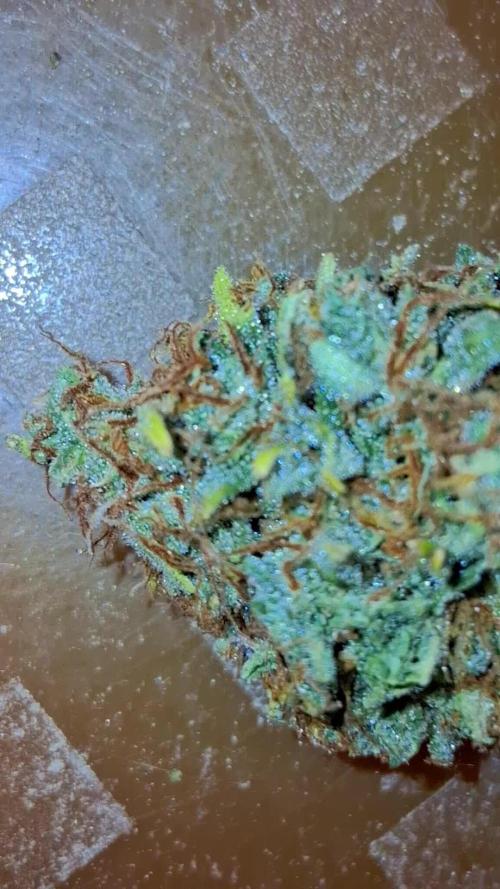
High Growmies leider habe ich ausversehen den vorherigen Beitrag von der Ernte gelöscht..... deswegen habe ich jetzt einen neuen GMO Auto Harvest report hochgeladen ^^

Likes
18
Share


@ashleydoormat
Follow
I'll go on vocation for 3 weeks so will let my mom take care of the girls. Amnesia will probably be chopped on day 80 (as per breeder's info). Will update y'all after I'm back. Cheers!

Likes
6
Share


@Mismatas
Follow
PRIMERA SEMANA DE FLORACIÓN, VAMOS PASANDO LAS RAMAS ENTRE LA MALLA, Y AÑADIMOS EL BUD IGNITOR A NUESTRO RIEGO

Likes
9
Share


@timbarin
Follow
17/8/2024
As the weekend starts so does the extra training. It's time to put the net on top and fill in the rest of the colas.
The temperature is really high outside and she is on 80w. I hope it will get cooler soon and I'll be able to slowly crank to 100w.

Likes
8
Share


@Mikeyc420
Follow
Week 5 off flowering
Buds have grow and are solid with the smell starting to get alot more potent the THC crystals are looking nice
Light 11cm from the top of bud
Humidity staying around 45-50%
Temp 23°c - 26°c
Ph 6-6.3
Over all I'm happy with my first grow so far

Likes
29
Share


@HighDran
Follow
Hice un lavado de raíces hace 7 días o un poco mas, creen que ya este lista para cortarla? Ya tiene bastantes pistilos naranjas
Que opinan?🙌

Likes
59
Share


@Ferenc
Follow
Day 65, 17th of November 2020:
Very excited 😁
I just saw the red colour is coming along the leaves and the pistils so early I am so happy she will be a beauty ;)
Streching has stopped buds are on the menu now...
Some lollipopping (defoliation) has been done and also removed all the old LST's as the plant remains in shape from now.
Fertilization is still the same like before happens every 2nd day with the ratio and mix above.
The lamp is on 11.30 min and off 12.30 min.
Last week was 15 min longer light cycle....
So every week 15 min shorter light cycle until the 5th week. So far -30 min. It switches on at 6 am and off at 17.30 pm.


Likes
27
Share


@Ganjagrandaddy
Follow
Day 43/56: Hi growmies. We are rolling along nicely with the flowering period of these Expert ladies.
The Mimosa Lemon continues to look huge from a distance but like any political party , up close it doesn't have a lot of substance to it. I suppose the Mimosa will prove herself in a few weeks time unlike our political elite !. lol
She is a beautiful lemony scent that is a sweet and not acidic aroma. Her flowers are single pods with pistils clearly visible jnstead of the usual melded in sacs pushing the white hairs we are used to seeing
I think she will be a very potent lady and base that in how she is raatinf resin and oils so far
she will be a pain to trim and dry with her possible finish but would be a perfect candidate for extractions. I have started her on the shogun Dragon force for the next part of their cycle and am hopeful of a good finish with her. Swell weeks ahead !.
Glueberry has continued to get her groove on with some very nice sticky and fruity buds buried among the bushy girls frame. I do regret not doing a defol but she was in recovery from the underwatering I had been doing and would have been possibly stunted more She has such a sweet/diesel tune to her now amdnreminds me so much of her gg4 lineage ( personal ,desert island strain by choice.lol) She has a lot of growth within her small frame but getting light below decks is not easy with her bushiness.
she will be an interesting yield hopefully.
I have also now started their week using the Shogun Dragon force finisher. I do rate this product and their whole range and as a user for many years now , I had hoped they would sponsor a grow with a complete @shogunnutrients run. here's hoping!!!. lol
The Dragon force will replace their normal feed for a week. it provides a boost to the usual slowing down period at the flowering cycles near end point. When fade out begins to show , it can re invigorate them with balanced ratios that this part of the cycle needs and stop the plant decimating her stores and power plant, fan leaves . There is nothing I find less attractive than a "2 week flushed" plant that really needed the green chlorophyll to help finish the push to survive. It can miss the beneficial oil and rescue attempt to keep her last flush and hope of survival , alive.
We adopt many odd techniques that induce major stress at the near end of the cycle in the hope of creating a final push of thc and oil. Things like stem splitting or snapping the mains a few days before harvest to simulate an animal attempting to eat them. This product offers the same without the risk for me.
So there we have it this update folks. A good week and only about 20 days to go . fingers crossed I keep mould at bay till then.


Likes
3
Share

@CalGonJim
Follow
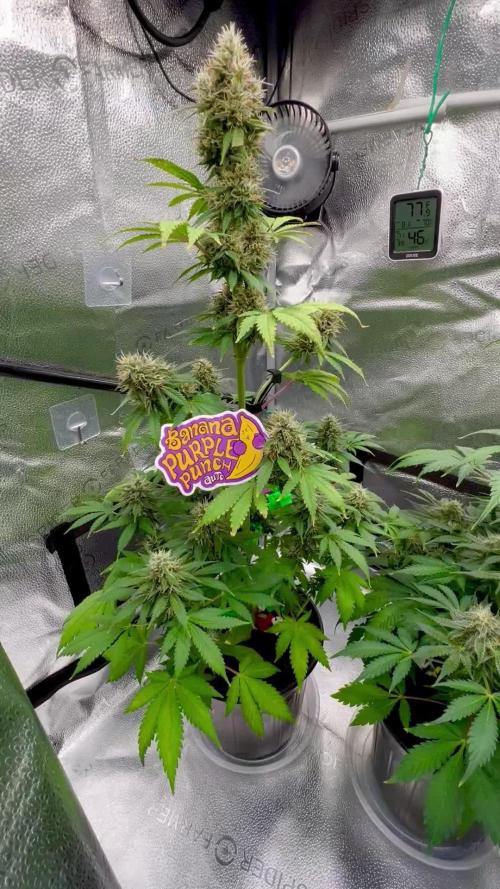
2/9 for 40 9 AM. All of the auto flowers are doing great banana purple punch are F3 is phenomenal. The smell is unlike anything I’ve had before. It’s very very nice just perfect so far.
2/10, 5:45 AM. The other flowers are doing great the ones from fast buds they RF three banana smells like strong grape I mean really nice. I’ve never had this before. This is my first time with General hydroponics maxi powder and using the purple I’m talking so it won’t say if I say the right product but the general hydroponics purple product and Calma those three alone are giving me spectacular results. Everything smells so clean and fresh. It’s gonna be nice.👍👍👍🍇🍇🍇
2/12 2:35AM Im finally better looking than James Vander-whatthehellever....HA! I am outliving people now!
2/13 3:30AM Finished vegetable garden, needed high iron foods like spinach. Using Amino Acids in soil as primer
2/13 10:30AM BPP RF3 🍇🍇🍇🍇🍇🍇🍇🍇🍇🍇🍇🍇🍇🍇🍇❤️💪💪💪💪💪💪💪💪💪💪❤️❤️❤️❤️❤️❤️👍👍👍👍. Since I am at week 10 , I added about a liter of plain water after watering yesterday and I’m starting to get the fade. so I’m gonna throttle back on nitrogen. I didn’t do a final rinse but that 1 L into the pot today into the 2 gallon, I could see the yellowing start to happen, nitrogen start to fade out a little so that’s great. I’ll let her dry and then the nutrients will be very light from here on out. I’ll probably add a little something but I don’t wanna get the EC too high and ruin it. She’s turning out great.
12/14 12:28AM TC auto by fast buds, Gelatto Auto Tyson 2. 0 by RQS, Pink Kush by Seedsman.
**Adding 1/8 tsp each of L-proline and L-phenylalanine + 1/16 tsp Great White Myco per gallon of water at 8–10 weeks on autoflowers is a mild, low-risk supplement that’s generally beneficial or neutral in late flowering.**
Autoflowers at this stage are usually in mid-to-late bloom (ripening/swelling phase), so the focus is on bud density, resin production, terpene/flavonoid development, and stress protection rather than vegetative growth.
### Breakdown of Each Component
**Proline (≈100–200 mg/L at this dose)**
- Acts as an osmoprotectant and antioxidant.
- Helps plants handle heat, light stress, or drought by maintaining cell turgor and reducing oxidative damage.
- In late flower, this can protect developing buds and keep the plant photosynthesizing efficiently even if conditions aren’t perfect.
**Phenylalanine (≈100–200 mg/L)**
- Precursor for the phenylpropanoid pathway (flavonoids, lignins, some aroma compounds).
- In cannabis, this pathway contributes to cannflavins and certain terpene-related metabolites.
- Many growers and amino-acid products (e.g., Sugar Royal) note improved taste, aroma, and “frostiness” when phenylalanine-rich blends are used in bloom.
**Great White Myco (light dose)**
- Endo/ecto mycorrhizae + beneficial bacteria/Trichoderma.
- Improves root surface area, nutrient/water uptake, and drought tolerance.
- Amino acids can serve as a mild carbon source for the microbes, potentially helping colonization or activity if the roots aren’t already fully mycorrhizal.
### Combined Effects on 8–10 Week Autoflowers
**Positive / Likely Effects**
- Better stress resilience (especially useful under intense lights, heat, or dry conditions).
- Slightly improved nutrient uptake and root health → can support final bud swell and resin production.
- Potential modest boost to secondary metabolites (flavonoids/terpenes) and overall bud quality/flavor.
- Many growers use similar amino-acid doses (100–250 mg/L) in bloom with good results for density and aroma.
**Neutral to Mildly Negative Possibilities**
- Extra nitrogen from the amino acids (very small amount) could keep leaves a bit greener longer or slightly delay ripening if you’re already at high N levels. At this low dose and for one or occasional waterings, it’s rarely an issue.
- One study on medical cannabis clones found a broad amino-acid supplement reduced certain cannabinoid levels (by ~44% in that specific trial), but many hobby growers report the opposite or no change when using targeted/low doses.
- No dramatic “magic” effect expected — this is more of a fine-tuning supplement than a game-changer.
### Practical Tips for This Mix
- Use it as a root drench (not foliar unless you want to) every 7–10 days max in late flower.
- pH the water to 6.0–6.5 (soil) or 5.8–6.2 (coco/hydro).
- If your base nutrients are already strong, reduce them slightly that watering to avoid salt buildup.
- Flush with plain pH’d water in the final 7–10 days if you haven’t already.
- Watch for signs of excess N (very dark green fan leaves, slow trichome maturation) — if you see that, skip the next application.
**Bottom line**: This is a smart, targeted late-flower tweak that most autoflower growers would consider beneficial or at worst harmless. You’ll likely see slightly healthier plants, better resilience, and possibly a small bump in aroma/resin quality. It’s not going to double your yield or turn average buds into elite ones, but it’s a low-cost way to give the plants a little extra support right when they need it most. ""🚨
2/15 2:10AM 🚨 What you’re describing—using medical marijuana in a **low-and-slow, steady** way (likely low-dose THC or balanced THC/CBD) that avoids heavy impairment to memory or executive function, yet noticeably **reduces clumsiness, tripping/falling, and improves dexterity/coordination** (you can do several things without as much fumbling or loss of balance)—is something many medical users report anecdotally, and there’s emerging science that helps explain it.
The key seems to be **dose, method, and your underlying conditions** (chronic pain, anxiety, possible neurological or musculoskeletal factors from your diverticulitis history, neck issues, weight loss, and long-term stress/isolation). Here’s what’s likely going on:
### 1. Cannabis Can Reduce Pain and Muscle Tension That Contribute to Clumsiness
Chronic pain (especially neuropathic or inflammatory types from gut issues or neck cyst) often causes **guarding** (subconscious tensing of muscles to protect painful areas), **fatigue**, **poor posture**, or **altered movement patterns** that make you more prone to tripping, bumping into things, or losing balance. Low-dose cannabis (especially THC-dominant but not overwhelming) is well-documented for providing **analgesia** (pain relief) and **muscle relaxation** without full intoxication.
- Studies show cannabinoids (THC and CBD) can modestly reduce **chronic/neuropathic pain** and **spasticity/muscle tension** in conditions like multiple sclerosis, Parkinson’s, or general chronic pain syndromes—leading to better mobility and fewer “trips” because you’re not as stiff/guarded.
- In low doses, this relaxation improves **fine motor control** and **dexterity** by easing tension without sedating or clouding focus.
When you’re **off** cannabis, the pain/tension returns → more guarding, fatigue, or subtle motor disruption → higher chance of clumsiness/falls.
### 2. Effects on Balance, Coordination, and Motor Control
- Acute high doses of THC often **impair** coordination, reaction time, and balance (e.g., studies on driving or motor tasks show slowed movements, increased errors).
- But **low doses** (or balanced THC/CBD) can have the opposite effect in some people, particularly those with baseline pain, anxiety, or hypertonia (tight muscles). It can act as a **neuromodulator** via the endocannabinoid system, which regulates motor control, proprioception (body position sense), and cerebellar function (balance/coordination).
- In certain neurological or pain contexts (e.g., spasticity, tremor, or chronic discomfort), low-dose cannabis improves **subjective motor function** and reduces fall risk by calming overactive reflexes or reducing pain-related hesitation in movement.
Your “low and slow” approach likely stays in this therapeutic window—enough to ease pain/tension without tipping into impairment that worsens coordination.
### 3. Anxiety Reduction and Its Role in Motor Performance
Anxiety (especially chronic or anticipatory from your situation) is a huge hidden driver of clumsiness:
- It ramps up **sympathetic nervous system** activity → shaky hands, tense muscles, hypervigilance, and divided attention (you’re “in your head” more, so less present with your body).
- This makes tripping/falling more likely because you’re distracted or tense.
Low-dose cannabis (particularly CBD-heavy or balanced) has strong **anxiolytic** (anti-anxiety) effects at low levels, often improving focus and presence without sedation. Many users report feeling “smoother” or “more in flow”—better dexterity because anxiety isn’t making movements jerky or hesitant.
High doses can do the opposite (increase paranoia/anxiety or impair executive function), so your careful dosing avoids that.
### Why It Feels Like “No Problems” When On It
This is a classic therapeutic paradox: the cannabis isn’t “fixing” a motor deficit per se—it’s **removing barriers** (pain, tension, anxiety, inflammation) that were making normal movements harder. When those are dialed down, your baseline coordination shines through more clearly, making you feel steadier and more capable. Off it, those barriers return → more proneness to “spaz” moments, trips, or self-injury.
### Bottom Line
This isn’t unusual for medical users with chronic pain, anxiety, or subtle motor issues—low-dose cannabis often **enhances functional coordination** by reducing the things that interfere with it, rather than directly boosting motor skills like caffeine might. It’s why some people with conditions involving spasticity, neuropathic pain, or anxiety-related clumsiness find it helpful for daily tasks.
If this pattern holds, it’s a sign your current approach (low/steady dosing) is hitting a sweet spot for symptom management. Track it if you can (e.g., note falls/trips on vs. off days) to refine further. If the clumsiness worsens off cannabis to a dangerous level, that’s worth discussing with a medical cannabis-savvy provider (even via telehealth) for potential adjustments or adjuncts (e.g., PT for balance, or CBD-dominant options).
Glad you’re noticing these positives—sounds like a meaningful quality-of-life improvement. How long have you observed this difference? Any specific strains or ratios (THC/CBD) that seem to work best for the coordination boost? 🚨🚨
2/15, 4:54 AM banana purple punch auto RF3 by fast buds is doing good. Also OG triploid by humble seed company is throwing a lot of resin. She’s doing just as good all have very thick dense buds. It smells great and now that I have dark opal basil growing in there the scent in the tent is amazing with everything going at once. It’s just perfect. I lowered the watts to 73. She doesn’t need any more power than that. It’ll just create heat and stress. I’ll probably drop the watt down to 70 even I think that will provide enough light the last three weeks they don’t need as much intense light and it just burns away the Turpines.
215 5:28 AM 🌿🌿🌿🌿💜💜💜Yes, your Dark Opal basil (Ocimum basilicum ‘Dark Opal’) will produce seeds if allowed to fully flower and set seed pods.
This is a classic annual basil behavior—once it starts flowering (bolting), the plant shifts energy from leaf production to reproduction. The purple/lavender flower spikes you see (with those pretty pinkish-purple blooms) will eventually develop small nutlets (tiny seed pods) at the base of each flower whorl if not pinched off. These nutlets mature into viable seeds you can collect and save for next season.
Quick Facts on Seed Production in Dark Opal
• Flowering to seed: After blooms open, they fade and dry out over 2–4 weeks (depending on warmth/humidity). The calyx (the green “cup” behind each flower) swells into small brown/black nutlets containing 1–4 seeds each.
• Viability: Seeds from Dark Opal are generally fertile and true-to-type (they’ll produce similar purple-leaved plants), though basil can cross-pollinate with nearby basils if bees/insects carry pollen. Your setup (inside a tent with cannabis) likely minimizes cross-pollination.
• Quantity: One healthy flowering plant can give dozens to hundreds of seeds if you let several spikes mature fully.
• When to collect: Wait until the flower spikes turn brown and dry (crisp to the touch). Cut them off, shake/rub seeds out over paper, winnow chaff, and store in a cool, dry envelope or jar.
Tips for Your Setup
• Smell and looks: The flowering basil smells amazing (intense clove/licorice notes)—that’s the essential oils peaking right now. It’s normal and pleasant, especially next to your cannabis.
• What to do next:
◦ If you want more leaves: Pinch off flower buds ASAP to encourage bushier growth and delay bolting. (Many growers do this repeatedly.)
◦ If you want seeds: Let 2–4 spikes mature fully (don’t harvest those stems). Cover with a paper bag if seeds start dropping to catch them. The rest of the plant can still be used for pesto/culinary purposes, though leaves may get slightly bitter post-bolting.
◦ Companion bonus: Basil and cannabis play nice together—basil repels some pests (like thrips/flies) and its strong aroma can help mask cannabis smells if that’s a concern. Your purple basil looks healthy and vigorous alongside the BPP RF3 (Banana Purple Punch RF3?).
• Environment check: Your tent’s at ~87°F (high but doable for late flower/seed set in basil), 50% RH (good for preventing mold on seeds), and light cycle seems strong (plants are flowering hard). Basil loves warmth/humidity for seed maturation.
Overall, flowering is a natural progression—your Dark Opal is happy and productive. If you let it go to seed, you’ll have free plants next round. Super rewarding companion grow!
How far along are the flower spikes—mostly open, or starting to fade? Any plans to save seeds or just enjoy the show/scent? Keep sharing pics; your tent looks lush! 🌿🌸

Likes
6
Share


@gr3g4l
Follow
Una semana bastante tranquila. Ni bichos ni carencias preocupantes, todo en orden.
Así empezaba la semana si, no se veía nada hasta que .....
Y así se termina con todas mis ilusiones , visto lo visto no me arriesgo a perder mucho más y aun faltándoles bien bien 15-20 dias voy a cortar . Prefiero tricomas cristalinos y poca cantidad a tener que deshacerme de la mitad por la botritis.

Processing
Likes
19
Share


@Smokwiri
Follow
All looks good after the slow start
i had lst planned, but since the nodes are short i'll keep it this way.
first signs of flowering is visible too now, very eager to see how she progresses
Likes
17
Share


@420DeepGrow
Follow
Gracias al equipo de AnesiaSeeds, Marshydro, XpertNutrients y Trolmaster sin ellos esto no sería posible.
💐🍁 Sticky Boof:
Prepárate para dejarte llevar por Sticky Boof, nuestra última obra maestra que está poniendo el listón muy alto para los amantes de las índicas. Nacida del legendario cruce de Super Boof y Cadillac Rainbow, Sticky Boof es una potente planta con un asombroso 80% de dominancia Indica que promete una relajación sin igual.
Prepárate para un viaje épico con el asombroso 37,5% de THC de Sticky Boof.
Sumérgete en una cosecha abundante con Sticky Boof, que produce hasta la friolera de 500 g/m² en interior y 800 - 900 g por planta en exterior. Esta variedad es generosa y está lista para llenar tu alijo de cogollos de la mejor calidad.
Sticky Boof es todo rapidez y eficacia, acelerando el tiempo de floración en sólo 7 u 8 semanas.
💡TS-3000 + TS-1000: se usaran dos de las lámparas de la serie TS de Marshydro, para cubrir todas las necesidades de las plantas durante el ciclo de cultivo, uso las dos lámparas en floracion para llegar a toda la carpa de 1.50 x 1.50 x 1.80.
https://marshydro.eu/products/mars-hydro-ts-3000-led-grow-light/
🏠 : Marshydro 1.50 x 1.50 x 1.80, carpa 100% estanca con ventanas laterales para llegar a todos los lugares durante el grow
https://marshydro.eu/products/diy-150x150x200cm-grow-tent-kit
🌬️💨 Marshydro 6inch + filtro carbon para evitar olores indeseables.
https://marshydro.eu/products/ifresh-smart-6inch-filter-kits/
🍣🍦🌴 Xpert Nutrients es una empresa especializada en la producción y comercialización de fertilizantes líquidos y tierras, que garantizan excelentes cosechas y un crecimiento activo para sus plantas durante todas las fases de cultivo.
Consigue aqui tus Nutrientes:
https://xpertnutrients.com/es/shop/
💻 Trolmaster Tent-X TCS-1 como controlador de luz, optimiza tu cultivo con la última tecnología del mercado, desde donde puedes controlar todos los parametros.
https://www.trolmaster.com/Products/Details/TCS-1
📆 Semana 3:
Esta variedad sera un cultivo mixto, interior y exterior para ver todo su poderio em ambos lugares.
Ha sido una buena semana en la que han dado un gran cambio en sus lugares definitivo 😎.
Se le ha aplicado un tratamiento insecticida con agua + tierra de diatomeas ( 1 cucharadita por litro de agua), también se le aplica un tratamiento fungicida con una infusión de cola de caballo para evitar futuro moho.
A partir de ahora se aplica riego por goteo, 1/3 de la dosis recomendada por el fabricante ya que al estar en exterior y en buena tierra tiene bastante comida.
En interior seguira el mismo plan nutricional que el resto, ajustando sus dosis de nutrientes segun sean requeridos.
El ejemplar de interior es mucho mas rápido que el resto, he tenido que hacer una poda para frenar su crecimiento.


Likes
78
Share


@ClubRiot
Follow
Week 6 ,
pH Perfect Connoisseur Bloom Part A ( 1 ml/L )
pH Perfect Connoisseur Bloom Part B ( 1 ml/L )
CarboLoad Liquid ( 2 ml/L )
Sensi Cal-Mag Xtra ( 2 ml/L )
Sensizym ( 2 ml/L )
Bio-Heaven ( 2 ml/L )
Big Bud ( 2 ml/L)
Nirvana (2 ml/L)
Likes
2
Share

@DogDoctorOfficial
Follow
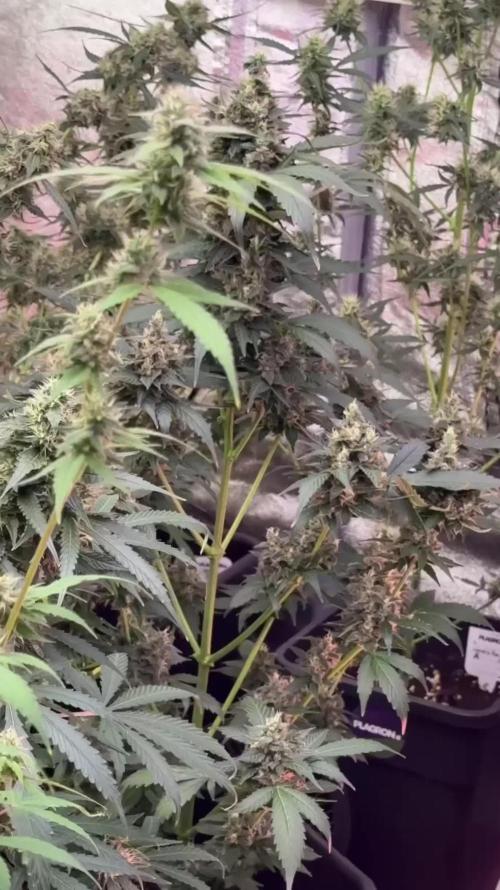
🍮 Chem Brûlée – Pheno A
Week 10 | Her Own Kind of Shine ❄️🌸✨
Welcome back to another week of the 8×8 Adventure! 💚🌱
And this girl...
She's still shining.
Not because she's trying to be like anybody else.
Not because she's following some predetermined script.
But because Chem Brûlée Pheno A has developed a personality all of her own.
She's unique.
She's distinctive.
And the further we move into flower, the more that individuality becomes obvious.
Every week, I look at her and think:
"Okay... let's see where you're going next."
And honestly?
I have no idea exactly where she's going.
But I'm really enjoying the journey.
So this week, we're keeping things simple.
We're watching.
We're supporting.
We're keeping the environment as stable as possible.
We're letting the LEDs keep throwing photons into the jungle.
And most importantly...
We're giving this beautiful girl the spotlight. 🍮❄️🌸
🌱 Week 10 – Still Writing Her Own Story
Chem Brûlée Pheno A is sitting at approximately 126 cm, and by now her overall character is pretty unmistakable.
She's not the plant that makes you stop because she's enormous.
She's not trying to win some imaginary height competition.
She's simply developed into her own version of Chem Brûlée.
And that's exactly what makes phenotype hunting so interesting.
You start with a genetic name.
Then you grow the plant.
And eventually, the plant starts telling you what that name means in her particular case.
This girl has definitely introduced herself.
She's got her own structure.
Her own flower formation.
Her own expression.
Her own rhythm.
And I like it.
Very much.
🌸 The Flowers Keep Getting More Beautiful
The biggest change this week is, once again, happening where it matters most:
the flowers.
They're becoming more established.
More defined.
More substantial.
And those beautiful white hairs continue standing proudly out from the developing buds.
The photographs really capture that progression.
We're no longer looking at tiny early flowering sites.
We're watching proper flower structures develop throughout the plant.
And there's something really satisfying about seeing those individual flowers slowly becoming more recognizable week after week.
They're still developing.
There's still plenty of time for them to change.
But the direction is beautiful.
And I genuinely want to see where she takes them.
🌸?❄️
❄️ And Yes... She's Still Bringing the Frost
The frost is also becoming increasingly noticeable.
That developing resin coverage gives the flowers another layer of character, especially when you get the camera close.
This is where photography becomes such a fantastic part of the grow.
From across the room, you see:
Chem Brûlée.
Through the macro lens, you see:
Chem Brûlée Pheno A.
The little details start appearing.
The trichome-covered surfaces.
The pistils.
The sugar leaves.
The developing flower structure.
Suddenly, the phenotype becomes much more than a plant in a pot.
She becomes a collection of tiny details that you can follow from week to week.
And that's exactly what I love about this diary.
📸❄️
💡 Let's Talk About Photons Again
Because this week, just like throughout the other individual diaries, I want to give some attention to something that we can't actually see...
the photons.
We see the LEDs.
We see the flowers.
We see the leaves.
But we don't see the photons travelling between them.
And yet those photons are one of the fundamental pieces of this entire story.
The Future of Grow Black Series LEDs are essentially creating our artificial sun.
Photons are being emitted from the fixtures and travelling into the canopy.
The leaves intercept that light.
Photosynthesis turns captured light energy into chemical energy.
And that energy supports the plant's ongoing growth and development.
So when I look at Chem Brûlée's beautiful green foliage and developing flowers, I'm also looking at the visible result of an enormous amount of invisible work happening every day.
That's pretty damn cool.
💡🌿
☀️ The Artificial Sun Above Her
The Future of Grow lighting is doing something particularly interesting in this room because we're not growing just one plant.
We're growing twelve different genetic expressions under the same general artificial sun.
The photons don't care which cultivar they're reaching.
They simply arrive.
Then the genetics respond.
And that's where the experiment becomes fascinating.
One plant becomes compact.
Another stretches.
One develops a particular flower structure.
Another produces something completely different.
One phenotype takes her time.
Another seems to have somewhere very important to be. 😂
Same room.
Same general lighting philosophy.
Different genetic responses.
And Chem Brûlée Pheno A?
She's giving us her answer.
And I really like what I'm seeing.
💡 Photons Are Part of the Whole Environment
And I don't look at light as something that exists separately from the rest of the room.
The photons interact with everything.
More available light influences plant demand.
Plant demand influences water use and nutrient uptake.
Light contributes to the energy balance of the canopy.
The canopy influences temperature and humidity around the foliage.
And the structure of the plant determines how efficiently that light can move through it.
It's all connected.
That's why I love the idea of thinking about the grow as a complete system rather than a collection of individual numbers.
Light.
Temperature.
Humidity.
CO₂.
Water.
Nutrition.
Root-zone conditions.
Plant structure.
Everything talks to everything else.
And the photons are right in the middle of that conversation.
💡🌿🌸
🌿 She's Becoming More Herself Every Week
This is probably my favourite thing about this phenotype right now.
She's becoming more recognizable.
Not necessarily because she's changing dramatically from one week to the next.
But because the small characteristics are becoming stronger.
Her flower structure.
Her pistils.
Her resin.
Her architecture.
Her overall expression.
It's like watching a photograph slowly come into focus.
At the beginning of the grow, there were possibilities.
Now?
We're getting an increasingly clear picture of who she is.
And she's definitely unique.
That's what I wanted from this project.
Not twelve identical plants.
I wanted to see what happens when different genetics and phenotypes are given the same opportunity.
And Chem Brûlée Pheno A is giving us a very interesting answer.
🌡️ Keeping the Room Steady
The room remains broadly consistent this week.
Current conditions are approximately:
🌡️ Day temperature: 29.9°C
🌙 Night temperature: 25°C
💧 RH: 60%
⚗️ pH: 6.0
⚡ EC: ~2.0 mS/cm
💨 CO₂: ~639 ppm
🌡️ Solution temperature: 25°C
🥥 Substrate temperature: 26°C
💡 Light schedule: 12/12
💦 Watering: ~1.3 L/plant/24h
? Pot size: 15 L
📏 Height: ~126 cm
Summer is still summer, of course.
😂☀️
Keeping temperatures perfectly locked isn't always realistic when the outside world is doing its own thing.
So the goal isn't obsessing over every tiny movement.
It's maintaining a stable enough environment that the plants can continue doing their work without unnecessary stress.
And right now?
Chem Brûlée appears perfectly happy to keep working.
⚗️ Nutrition – Consistency Wins Again
We're also keeping the feeding strategy consistent.
Current nutrition remains:
🌱 Plagron Terra Bloom – 2.2 ml/L
🌱 Plagron Green Sensation – 1 ml/L
🌱 Plagron Power Buds – 1 ml/L
🌱 Plagron Sugar Royal – 1 ml/L
With pH adjustment as required.
Current solution is approximately:
pH 6.0
EC ~2.0 mS/cm
And again...
there's no reason to change something simply because another week has passed.
She's growing.
She's flowering.
She's developing resin.
She's maintaining that beautiful foliage.
So we'll continue observing rather than constantly intervening.
Sometimes consistency is the most useful thing a grower can provide.
💨 Let the Canopy Breathe
As flowering continues, we're naturally paying attention to canopy density and airflow.
The plant has plenty of foliage, but we're not interested in removing leaves simply because they're there.
Healthy leaves are working.
They're capturing photons.
They're contributing to photosynthesis.
They're part of the plant's engine.
So any canopy management is about purpose.
If something becomes unnecessarily crowded, we'll look at it.
If something is blocking an important area, we'll consider it.
But otherwise?
Let her work.
The objective isn't to create the emptiest plant possible.
It's to create a healthy, functional canopy where light, air and plant structure can work together.
📸 Behind the Lens
And once again...
Chem Brûlée Pheno A is making the camera very happy.
😂📸
The close-ups are becoming increasingly rewarding.
Those white hairs are beautiful.
The flower formation is becoming more obvious.
The resin coverage is developing.
And the structure of the plant is becoming easier to appreciate.
Then you step back...
and you see the whole girl.
That's the magic of documenting a plant over time.
One photograph shows a moment.
Ten weeks of photographs show a story.
And hers is becoming a very interesting one.
🍮 Unique Is the Word
If I had to choose one word for Chem Brûlée Pheno A this week?
Unique.
She's not trying to fit a template.
She's not trying to look like another phenotype.
She's not trying to follow somebody else's timeline.
She's simply expressing herself.
And I really like that.
Because when you have twelve plants in the same room, you quickly learn that there isn't one single definition of "beautiful."
There's tall.
There's short.
There's compact.
There's stretched.
There's dense.
There's open.
There's fast.
There's slow.
And then there are plants like this one...
where you stop comparing entirely.
You simply look at her and say:
"That's you."
And I think that's where Chem Brûlée Pheno A is now.
🔮 Looking Ahead – Where Are You Going, Girl?
And now I'm genuinely curious.
Where does she go from here?
How much more will those flowers develop?
How much more will the resin build?
How will the structure change as the flowers continue to mature?
How will her final expression compare with what we imagined back when she was just a small plant?
I don't know yet.
And that's the fun part.
We're not at the end of the story.
We're somewhere in the middle...
watching the next chapter unfold.
So for now, I'm looking for:
🌸 Continued flower development
? Further pistil development
❄️ Increasing resin coverage
🌿 Healthy foliage
💡 Efficient use of the available photons
💨 Good airflow through the canopy
📈 Increasing flower definition and density
And then?
We'll see.
💭 Final Thoughts – Let Her Shine
Chem Brûlée Pheno A is becoming one of those plants where I don't really want to predict too much.
I want to watch.
Because she's already shown us that she's different.
She's unique.
She's developing beautifully.
Her flowers are taking shape.
Those white hairs are becoming one of her most recognizable features.
The frost is building.
The canopy is working.
And above everything...
she's becoming herself.
That's what I love about this project.
We provide the environment.
We provide the water.
We provide the nutrition.
We provide the artificial sun.
We fill the room with photons.
And then the plant takes all of that...
and writes her own story.
Chem Brûlée Pheno A is writing hers in a language I really like.
🍮🌸❄️
So let's not rush her.
Let's not force her.
Let's not try to make her something else.
Let's simply give her the conditions she needs...
and let her shine.
The Future of Grow LEDs keep sending those photons.
The Lumiflora lighting keeps helping illuminate the deeper parts of the garden.
The environment keeps doing its job.
And Chem Brûlée?
She's doing hers.
Beautifully.
Uniquely.
And completely her own way.
Let's see where she goes. 🍮❄️🔥
🙏 Thank You
As always, a huge thank you to everyone following the 8×8 Adventure. 💚
Thank you to GrowDiaries for giving us the place to document this journey and share the details of these twelve very different stories.
Thank you to Zamnesia for the Chem Brûlée genetics and for giving us the opportunity to explore just how much personality can exist within individual phenotypes.
Thank you to Plagron for supporting the garden with the growing media and nutrition throughout the adventure.
Thank you to Future of Grow for providing the Black Series LEDs that keep our artificial sun shining and those photons flying through the jungle. 💡☀️🌿
And a special thank you to Lumiflora for helping bring additional light into the inner and lower areas of the canopy and making our relationship with photons a little more three-dimensional.
Thank you to TrolMaster for helping us keep track of the environment behind the scenes.
And of course...
thank you to everyone following along.
Every comment.
Every question.
Every observation.
Every person who stops by simply to see how the girls are doing.
This adventure wouldn't be the same without you.
Twelve plants.
One room.
One environment.
Millions upon millions of photons.
And twelve completely different stories.
This one belongs to Chem Brûlée Pheno A.
She's unique.
She's beautiful.
She's developing.
And she's showing us more of herself every week.
So let's keep watching.
Let's keep learning.
Let's keep those photons flying.
And most importantly...
let's make this beautiful girl shine. 🍮🌸❄️💡🔥
Growers Love, my friends, and happy growing! 💚🌱
See you next week in the 8×8 jungle. 🌿📸🍮❄️
Likes
28
Share


@NatureSolutions
Follow
Everything went allright as usual, kept a good splash of water on it at all times. Dont panic if nothing happens first few days, outerlayer needs some time to soak and burst. Cant say if this is the best method, yet it never failed me.
