


Likes
Comments
Share


@Jakep721
Follow
topped 3 from seed 1 getting ready to mainline. This is 1st grow so any input would be great. The clones from day 1 were given to me looking unhealthy. The strawnanna is coming along . I'm worried about clone 2 but I'm optimistic !!!
"Let it grow " (~);-}


Likes
12
Share


@Amboss
Follow
Am Samstag direkt in die Erde gesteckt.
Mit der Blumat Classic Bewässerung und etwas zusätzliches bewässern der Topfe durch ne Gießkanne, von oben nur mit Wasser.
In den Blumat Tanks sind die Nutrients.
Nach 5 Tagen kamen die ersten 2/6.
Nach der Pause waren dann alle 6/6 von da.
Voller Erfolg.

Likes
27
Share



Likes
39
Share


@valiotoro
Follow
Hello everyone week 5 of flower has passed for this Cinderella Jack auto 👸🏼
For the feeding schedule i stopped feeding Power Roots and Pure Zym and started feeding Green Sensation 0,7ml/l
Mars hydro FC-E6500 power 85%
have a great day and wish you all happy growing 😎

Likes
27
Share


@Bread_n_Buds
Follow
Ghost Train Haze automatic by Zamnesia has breathtaking genetics and heritage, we are particularly fond of its parents and we are sure it will be a show. Everything was born in order and in its place for a day we are also giving alga grow and the plant flies but this week we had not given it yet.
Growing projects for autoflowering plants ----- As for autoflowering plants I really love preserving the Main Cola. So I will try to make or grow the plants well or badly without affecting the main cola. Nowadays topping autoflowering plants is very accepted but it is not my favorite thing to transform a baby born to finish in 10 weeks into a baby that finishes in 14, I say at this point I do photoperiodic. But in times of people who only grow autoflowering everything is permitted for goodness sake if you want to do it, do it I will not be the one to stop you. Also because the results are excellent nothing to really discuss about anything except time.
All this to tell us that I recommend for example fimming on plants that tend to grow tall to give power to the lateral branches, LST as much as you want, I don't like too much, spread me out, I need space. HST and splitting are with experience. These are my tips not the absolute truth please do not mistake me for a great sage holder of the truth I speak as I see it.
The first week went only with Power Roots 1 Ml/l and Pure Zym 1 ml/l from now on we will start with ALga Grow. The plants were transplanted shortly after germination because the biodegradable pots were very small. The soil is Plagron Pro Mix 100% organic renewed with 30% new soil and 20% Perlite added. (Pro mix does not have perlite but is airy, we added it anyway)
Plagron fertilizers are available on Zamnesia in convenient Pack formats for all growing styles. I used this with a simple search you can find the other products.
---- https://www.zamnesia.io/it/12119-plagron-top-grow-box-100-naturale.html
Try a seed of this variety that drives us crazy...
---- https://www.zamnesia.io/en/12511-zamnesia-seeds-ghost-train-haze-auto.html
Description Zamnesia // From the day its cotyledons emerge from the substrate, Ghost Train Haze Auto will surprise you with its rapid growth and robustness. When it starts to flower, this short sativa will develop long and compact buds with pungent scents of spice, citrus and fuel.
Growbox and Air System - Secret Jardin DS120w + fans + exhaust fans and DF16 filters kit ---- https://www.secretjardin.com
All the best that mother nature has to offer is at ----www.zamnesia.com
Collaboration request: I am available for collaborations with companies of lights and various growing equipment (please no seed and nut companies) I would like to renovate my 120x120 space that has slightly outdated lights and would like to try some controllers. If you have any proposals available.

Likes
4
Share


@Autower
Follow
This was the topped gorilla cookies got to say I will do this strain again produced some nice size buds could of been a bit more dense but for a wet weight of 431g wet weight I’m happy with this one 4 down 2 to go thanks for viewing
Likes
55
Share


@Ultraviolet
Follow
What's in the soil? What's not in the soil would be an easier question to answer. 16-18 DLI @ the minute. +++ as she grows.
Probably not recommended, but to get to where it needs to be, I need to start now.
Vegetative @1400ppm 0.8–1.2 kPa 80–86°F (26.7–30°C) 65–75%, LST Day 10, Fim'd Day 11
CEC (Cation Exchange Capacity):
This is a measure of a soil's ability to hold and exchange positively charged nutrients, like calcium, magnesium, and potassium. Soils with high CEC (more clay and organic matter) have more negative charges that attract and hold these essential nutrients, preventing them from leaching away.
Biochar is highly efficient at increasing cation exchange capacity (CEC) compared to many other amendments. Biochar's high CEC potential stems from its negatively charged functional groups, and studies show it can increase CEC by over 90%. Amendments like compost also increase CEC but are often more prone to rapid biodegradation, which can make biochar's effect more long-lasting. biochar acts as a long-lasting Cation Exchange Capacity (CEC) enhancer because its porous, carbon-rich structure provides sites for nutrients to bind to, effectively improving nutrient retention in soil without relying on the short-term benefits of fresh organic matter like compost or manure. Biochar's stability means these benefits last much longer than those from traditional organic amendments, making it a sustainable way to improve soil fertility, water retention, and structure over time. Needs to be charged first, similar to Coco, or it will immobilize cations, but at a much higher ratio.
a high cation exchange capacity (CEC) results in a high buffer protection, meaning the soil can better resist changes in pH and nutrient availability. This is because a high CEC soil has more negatively charged sites to hold onto essential positively charged nutrients, like calcium and magnesium, and to buffer against acid ions, such as hydrogen.
EC (Electrical Conductivity):
This measures the amount of soluble salts in the soil. High EC levels indicate a high concentration of dissolved salts and can be a sign of potential salinity issues that can harm plants.
The stored cations associated with a medium's cation exchange capacity (CEC) do not directly contribute to a real-time electrical conductivity (EC) reading. A real-time EC measurement reflects only the concentration of free, dissolved salt ions in the water solution within the medium.
98% of a plants nutrients comes directly from the water solution.
2% come directly from soil particles.
CEC is a mediums storage capacity for cations. These stored cations do not contribute to a mediums EC directly.
Electrical Conductivity (EC) does not measure salt ions adsorbed (stored) onto a Cation Exchange Capacity (CEC) site, as EC measures the conductivity of ions in solution within a soil or water sample, not those held on soil particles.
A medium releases stored cations to water by ion exchange, where a new, more desirable ion from the water solution temporarily displaces the stored cation from the medium's surface, a process also seen in plants absorbing nutrients via mass flow. For example, in water softeners, sodium ions are released from resin beads to bond with the medium's surface, displacing calcium and magnesium ions which then enter the water. This same principle applies when plants take up nutrients from the soil solution: the cations are released from the soil particles into the water in response to a concentration equilibrium, and then moved to the root surface via mass flow.
An example of ion exchange within the context of Cation Exchange Capacity (CEC) is a soil particle with a negative charge attracting and holding positively charged nutrient ions, like potassium (K+) or calcium (Ca2+), and then exchanging them for other positive ions present in the soil solution. For instance, a negatively charged clay particle in soil can hold a K+ ion and later release it to a plant's roots when a different cation, such as calcium (Ca2+), is abundant and replaces the potassium. This process of holding and swapping positively charged ions is fundamental to soil fertility, as it provides plants with essential nutrients.
Negative charges on soil particles: Soil particles, particularly clay and organic matter, have negatively charged surfaces due to their chemical structure.
Attraction of cations: These negative charges attract and hold positively charged ions, or cations, such as:
Potassium (K+)
Calcium (Ca2+)
Magnesium (Mg2+)
Sodium (Na+)
Ammonium (NH4+)
Plant roots excrete hydrogen ions (H+) through the action of proton pumps embedded in the root cell membranes, which use ATP (energy) to actively transport H+ ions from inside the root cell into the surrounding soil. This process lowers the pH of the soil, which helps to make certain mineral nutrients, such as iron, more available for uptake by the plant.
Mechanism of H+ Excretion
Proton Pumps: Root cells contain specialized proteins called proton pumps (H+-ATPases) in their cell membranes.
Active Transport: These proton pumps use energy from ATP to actively move H+ ions from the cytoplasm of the root cell into the soil, against their concentration gradient.
Role in pH Regulation: This active excretion of H+ is a major way plants regulate their internal cytoplasmic pH.
Nutrient Availability: The resulting decrease in soil pH makes certain essential mineral nutrients, like iron, more soluble and available for the root cells to absorb.
Ion Exchange: The H+ ions also displace positively charged mineral cations from the soil particles, making them available for uptake.
Iron Uptake: In response to iron deficiency stress, plants enhance H+ excretion and reductant release to lower the pH and convert Fe3+ to the more available form Fe2+. The altered pH can influence the activity and composition of beneficial microbes in the soil. The H+ gradient created by the proton pumps can also be used for other vital cell functions, such as ATP synthesis and the transport of other solutes. The hydrogen ions (H+) excreted during photosynthesis come from the splitting of water molecules. This splitting, called photolysis, occurs in Photosystem II to replace the electrons used in the light-dependent reactions. The released hydrogen ions are then pumped into the thylakoid lumen, creating a proton gradient that drives ATP synthesis.
Plants release hydrogen ions (H+) from their roots into the soil, a process that occurs in conjunction with nutrient uptake and photosynthesis. These H+ ions compete with mineral cations for the negatively charged sites on soil particles, a phenomenon known as cation exchange. By displacing beneficial mineral cations, the excreted H+ ions make these nutrients available for the plant to absorb, which can also lower the soil pH and indirectly affect its Cation Exchange Capacity (CEC) by altering the pool of exchangeable cations in the soil solution.
Plants use proton (H+) exudation, driven by the H+-ATPase enzyme, to release H+ ions into the soil, creating a more acidic rhizosphere, which enhances nutrient availability and influences nutrient cycling processes. This acidification mobilizes insoluble nutrients like iron (Fe) by breaking them down, while also facilitating the activity of beneficial microbes involved in the nutrient cycle. Therefore, H+ exudation is a critical plant strategy for nutrient acquisition and management, allowing plants to improve their access to essential elements from the soil.
A lack of water splitting during photosynthesis can affect iron uptake because the resulting energy imbalance disrupts the plant's ability to produce ATP and NADPH, which are crucial for overall photosynthetic energy conversion and can trigger a deficiency in iron homeostasis pathways. While photosynthesis uses hydrogen ions produced from water splitting for the Calvin cycle, not to create a hydrogen gas deficiency, the overall process is sensitive to nutrient availability, and iron is essential for chloroplast function.
In photosynthesis, water is split to provide electrons to replace those lost in Photosystem II, which is triggered by light absorption. These electrons then travel along a transport chain to generate ATP (energy currency) and NADPH (reducing power). Carbon Fixation: The generated ATP and NADPH are then used to convert carbon dioxide into carbohydrates in the Calvin cycle. Impaired water splitting (via water in or out) breaks the chain reaction of photosynthesis. This leads to an imbalance in ATP and NADPH levels, which disrupts the Calvin cycle and overall energy production in the plant. Plants require a sufficient supply of essential mineral elements like iron for photosynthesis. Iron is vital for chlorophyll formation and plays a crucial role in electron transport within the chloroplasts. The complex relationship between nutrient status and photosynthesis is evident when iron deficiency can be reverted by depleting other micronutrients like manganese. This highlights how nutrient homeostasis influences photosynthetic function. A lack of adequate energy and reducing power from photosynthesis, which is directly linked to water splitting, can trigger complex adaptive responses in the plant's iron uptake and distribution systems.
Plants possess receptors called transceptors that can directly detect specific nutrient concentrations in the soil or within the plant's tissues. These receptors trigger signaling pathways, sometimes involving calcium influx or changes in protein complex activity, that then influence nutrient uptake by the roots. Plants use this information to make long-term adjustments, such as Increasing root biomass to explore more soil for nutrients. Modifying metabolic pathways to make better use of available resources. Adjusting the rate of nutrient transport into the roots. That's why I keep a high EC. Abundance resonates Abundance.
Likes
7
Share

@Gewaltmann
Follow
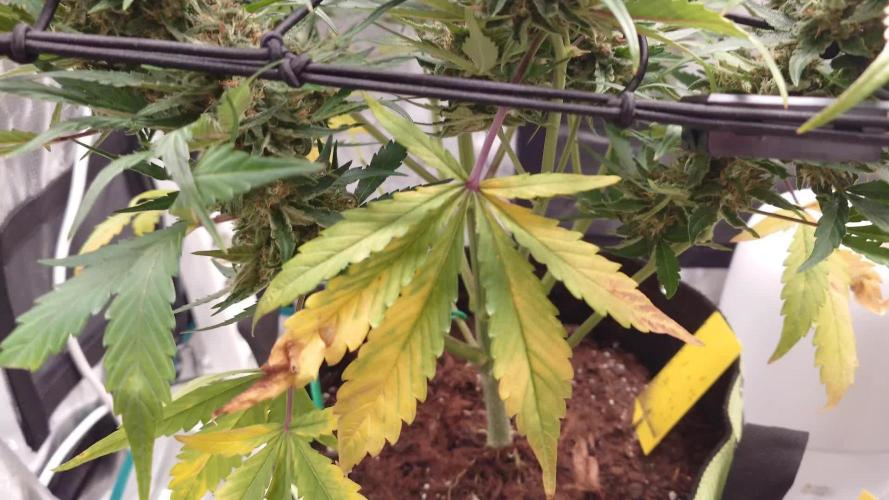
Der Herbst wird langsam eingeläutet. Man merkt deutlich dass es langsam Zeit wird regelmäßig die trichome zu monitoren.
Ich schätze mal ein bis zwei Wochen noch dann haben wir hier genau den perfekten Zeitpunkt. Ansonsten lasse ich das Video für sich sprechen.
Und wer noch mehr von der Guava Runtz sehen will - Guava Runtz auf YouTube suchen 😘
Processing
Likes
47
Share


@SlowerLowerGrower
Follow
One of the elbows on the fixture was loose and lowered a bulbs, getting a few tops a little crispy so I dropped the pot a half inch. Other than that we are trucking along. Probably another 4 weeks to go

Likes
3
Share


@DeDolderas
Follow
It’s been a good week for the Pineapple Express—great growth, thanks to daytime temperatures of 23°C in the sun and a light breeze. The internode spacing is good, the first side shoots are forming, and you can see a difference every two hours. It already has a subtle scent, but it smells delicious ;-)

Processing
Likes
6
Share


@ganjaman24
Follow
Everything is looking pretty good gonna flower soon just letting the structure develop a bit more..probably going to let Somango veg longest


Likes
8
Share

@GreenEldritchGardens
Follow
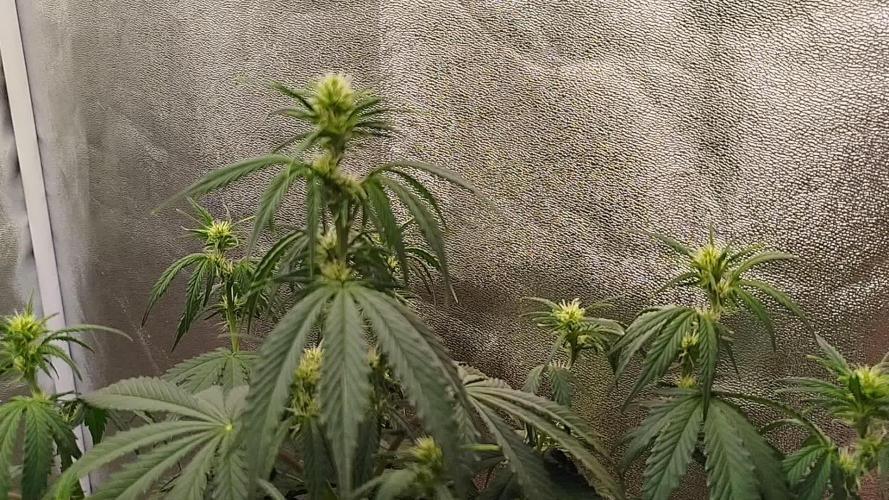
She was really in need of a nice lollipoping, because she is growing too bushy, she needs a good airflow. Maybe in 2 weeks I'll give her another one.
So far a great grow, she is smelling nice already with her topical wedding cake smell of vanilla, fruits and funk


Likes
12
Share


@ESVAGROWER
Follow
Plants rebounded completely, no deficiencies to be seen. Leaves were twisting from excess blowing air. Positioned fan higher, instantly solved the problem.
Likes
22
Share


@420DeepGrow
Follow
:
📆 Semana de Cosecha – Blue Zushi
La Blue Zushi llega al final de su ciclo con una presencia arrolladora. ✂️💎
Los tricomas están en su punto justo, con mayoría lechosa y toques ámbar que marcan el momento ideal. Los cogollos son duros, pesados y completamente nevados, con ese tono azulado que la convierte en una planta de escaparate.
El olor es profundo y embriagador, mezcla de cítricos dulces, kush cremoso y especias suaves que anticipan un perfil terpénico de categoría.
La resina habla sola: pegajosa, densa y presente incluso en las hojas más bajas.
Se corta en su mejor momento, tras semanas de mimo con XpertNutrients y el empuje final de Sticky Fingers, que ha redondeado la floración con una capa extra de calidad.
Blue Zushi al bote. Cultivo cerrado con broche de oro. 💚✂️
¡Cosechamos fuerte! 💪

Likes
10
Share


@YD_59
Follow
the plants are going well, im probably going to switch to flower in 2 or 3 weeks depending on if I can get bigger pots and a tray for them or not, I've also been defoliating the GDP plants and occasionally the MT plant if the leaves appear to be blocking the nodes/colas under it and the plants have been looking healthy

Likes
62
Share


@balansa
Follow
pretty excited afyer my forst harvest we had som problems but we were fighting so gether for this day )))))))) 1) i did not balance ph so they had growth problem 2) spider mite )))) tose little bastards almoast killd my babys but we won so foght till the and and everything will be just fine. i will keep updates to let you know how many gr i harvested cheers !!!!!33687336870
Processing
Likes
22
Share


@horticulturale
Follow
Hi buddies! We are already in second week of flowering stage and the first flowers are starting to appear, the biggest plants are the ones that are showing flowers more quickly, so the others will show them on the next days, I hope 😁😁
Plants are looking strong and healthy so the best is yet to come!! 🤘🤘🤘
Likes
33
Share


@FlavoursUk
Follow
So far, so good. Little defoliation, nothing major. As stated before, most likely not topping this run as I'd like to see the natural growth structure. I'd also like a more chilled grow this round too. Not too ling till i flip as they get big in hydro.
Day 33 - girls are looking good, just ashame about the 4th girl not making it, but all dependant on genetics 3/4 still good. Most the environment is now dialled in. Will be flipping the next few days. Nutrient dose is currently under what is recommended as less is more when in hydro.
Day 34 - All healthy enough and ready for some flower production. Will hopefully flip these girls tomorrow.
