


Processing
Likes
Comments
Share


@Ageddd
Follow
Flush week for Ultra Lemon Haze, stinking a little more this week, and eating the stored nutrients.
AH1 is getting weird, loosing colour, i dont know why, im going to increase the nutes a little... Giving Top Bloom (2ml/l) and Big One (0,5 ml/l).
AH2 is branching and branching, and growing a lot. Feeding Top Veg 2ml/l + Green Explosion 0,5 ml/l.


Likes
50
Share


@Mrs_Larimar
Follow
March 15th
We are entering Week 2
The hardest Part is done. Seedslings have established, and seem to feel Good
Working on next Leafset
I spray them daily with " Fast Plants Spray, and water them if they need it
I was setting up this Tent new and they got a new Light too.
Iam very happy with the Light
Its a bright, good quality Quantumboard
The corpus is built solid, and has cooling fins, so the Board and the Tent stays quite cool
No issues
It runs on 60 Percent
The Light was released on March, 15th.
here are some codes
Amazon US:
XS1000 10% off: it10mlarimar http://yx-8.cn/0y-6
XS1500 5% off: it15mlarimar http://yx-8.cn/0yA
XS2000 5% off: it20mlarimar http://yx-8.cn/0y2Y
XS4000 5% off: it40mlarimar http://yx-8.cn/0y5k
Amazon Canada
XS1000 10% off: it10mlarimar https://amzn.to/38udUVe
XS1500 5% off: it15mlarimar https://amzn.to/3esVUyr
XS2000 5% off: it20mlarimar https://amzn.to/3l5zAfg
XS4000 5% off: it40mlarimar https://amzn.to/3l7k5Uj

Likes
15
Share


@BushDoctor740
Follow
Day 28 I’ve been training the girls branches this week and they are filling out nicely.Watered with recharge and ph 6.5 they still are not drinking heavy but watering when pots are dry.I increased the light intensity to 50 percent power and they are taking it well.Ive noticed signs of flower development so i will top dress with 50/50 Gaia green power bloom/gaia green 4,4,4 and water with recharge.

Likes
1
Share


@Raddawg
Follow
Getting taller, getting bushier, very thirsty girls! Feeding nutrients every 2-3 days depending on moisture retention in the soil, follwed by flushing with ph balanced h2o every 2-3 days

Processing
Likes
20
Share


@Silverback_Guerilla
Follow
2/10:
I watered today with about 3/4 gallon each, plus cal-mag, signal, bembe, armor si, a little open sesame, and their final dose of endoboost.
The short one is budding up nicely, but the taller one is still stretching. The short one looks to be considerably more indica than the other.
2/11:
Wife home sick today....postponing construction project to raise the lights.
2/12:
Today, I tackled the project to raise my ceiling another foot. In addition to that project, I installed and hooked up my new AC Infinity 6" intake fan. It's pulling in fresh air from the soffit vent on the eave of the attic, and currently feeding the garden with 46f fresh air. I'm able to easily maintain daytime temps in the lower 70f's now. I am able to drive the nighttime temps as low as I want. The only issue is that the outdoor RH varies quite a bit, so I ordered a 30-pint dehumidifier to put in the top of the closet.
I sprayed everybody with boomboom spray to try and mitigate the light burn damage that is likely to ensue.
2/13:
The taller one is still stretching a little bit, but the 2-footer is just budding up.
2/14:
I fed them today with about 3/4 gallon each including grow big, big bloom, tiger bloom, cal-mag, signal, bembe, humic acid, and I switched over from Open Sesame to Beastie Bloomz. Raised the lights another couple of inches. I did some training on them and defo'd a little bit.
2/15:
Installed the new dehumidifier and rigged the continuous drain on it...works great.
2/16:
I rotated the edge plants and removed some old leaves. I added another 22w 3000k 4' bar light under the canopy.
2/17:
I rearranged the garden and defoliated a little bit. That's it for week 8-

Likes
14
Share


@Cannabot
Follow
Plants taking nice shape at 2 months old.Not bad for about 9 hours a day from seed.I think the purple kushes are going to be my biggest yielders this season.Really impressed thus far.They seem to soak up lst ,responding positively in this method.Bonus is the purple pheno

Likes
3
Share


@agustinnnv
Follow
Buenos días, les presento a Capri. Un experimento que quise probar, es una regular que hice vegetar un mes y la pasé a florar el 15 de marzo, queriendo imitar el proceso de una automática para comparar cantidad y calidad a la hora de la cosecha final. Cometí el error de ponerla en una maceta de 7.5L" definitiva". A los 45 días de floración me pedía trasplante a gritos. Podía notar que los cogollos se estancaron y las hojas se volvían amarillas. La pasé a una maceta Air Por de 10L a los 50 días de floración. Hoy por hoy (30/5) se encuentra más asentada, recuperando los tonos verdes y con 63 días de floración. Al parecer tiene predominancia sativa por lo que calculo que tendrá como mínimo 9/10 semanas de flora. Los productos que aparecen, son el historial de fertilizante que le puse desde que nació. A la planta no le hice ningún tipo de poda, creció tal cual sola, solo le saque dos ramas inferiores para hacerlas esquejes. Buen domingo y buenos humos!
Likes
5
Share


Likes
20
Share

@Pheno_Minds
Follow
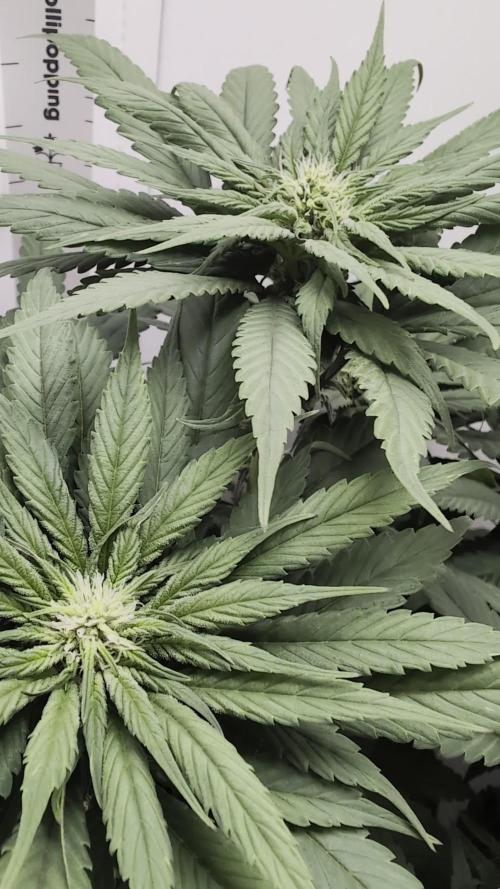
📋 Wir befinden uns in der vierten Blütewoche, insgesamt Woche sieben für die Golosa. Die Pflanze steht stabil im Futter und zeigt ein gesundes, sattes Grün. Die Struktur ist kompakt, die Blütenbildung nimmt jetzt Fahrt auf und die ersten feinen Härchen bilden sich deutlich an den Triebspitzen. Auf den Bildern ist ein vitaler Zustand ohne Auffälligkeiten bei der Blattfarbe oder den Stielen zu erkennen, das Substrat aus 25 Prozent Coco und 75 Prozent Light Mix scheint ihr zu schmecken.
📏 Die Golosa misst aktuell 44 cm. Die klimatischen Bedingungen im Zelt liegen im Durchschnitt bei 28.87 Grad Celsius und einer Luftfeuchtigkeit von 65 Prozent. Mit einem CO2-Wert von 1306 ppm und einem VPD von 1.39 kPa passt das Setup für diese Phase. Die Wassertemperatur liegt im Schnitt bei 21.7 Grad Celsius.
💧 Beim Gießen gab es in dieser Woche eine Gesamtmenge von 3 Litern bei einer durchschnittlichen Gabe von 3 Litern. Der pH-Wert liegt bei 6.2, der EC-Wert bei 1.7 mS/cm. Gedüngt wurde einmal nach dem Athena-Schema mit 2 ml/L Balance, 5.7 ml/L Pro Bloom und 3.4 ml/L Pro Core. Die Lichtperiode bleibt bei 12 Stunden täglich.
📸 Was auffällt: Die Pflanze zeigt ein sehr gleichmäßiges Wachstum und die Blütenansätze sind vital. Alles sieht sauber aus, keine Anzeichen von Stress oder Mangel. Jetzt heißt es, den Fokus auf die weitere Blütenentwicklung zu legen und das Klima stabil zu halten, damit die Buds ordentlich an Masse zulegen können. Läuft bisher nach Plan.

Likes
Comments
Share

@3rnest
Follow
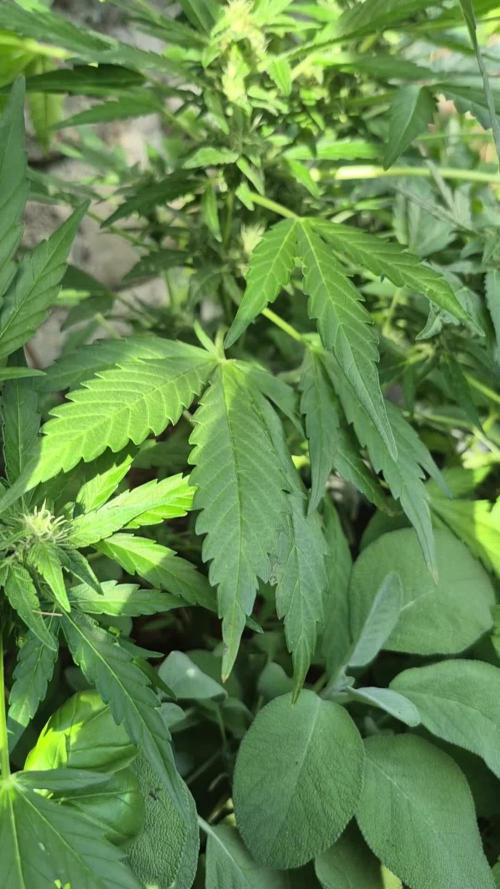
Diese Woche startet mit reichlich Sonne und Temperaturen über 30⁰C
Langsam gibt die Blüte gas und die Pflanze hat ordentlich aufgeholt.
Die Ernte dauert wohl nicht mehr lange.


Likes
23
Share

@DogDoctorOfficial
Follow
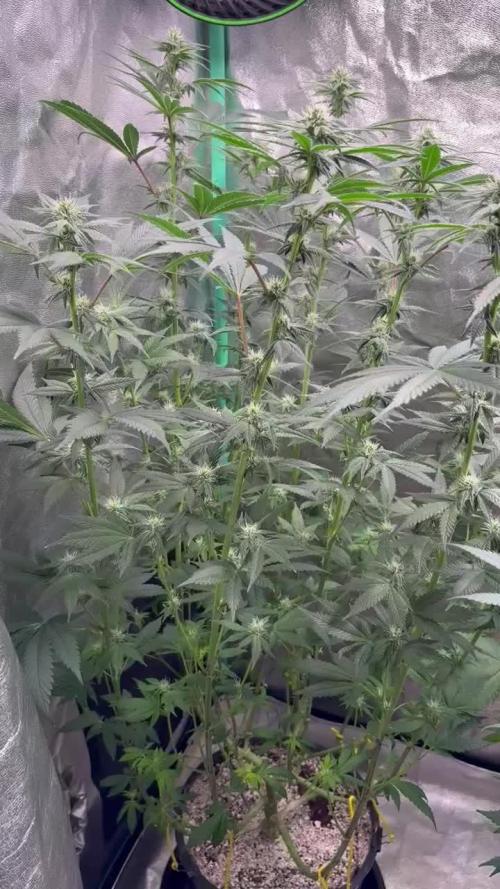
Week 14 marks a special chapter for Nectar Drip. What started as a straight 12/12 from seed run has turned into one of the clearest side-by-side lessons in plant behavior this room has given us so far. Same room, same feed, same light cycle, same genetics—but two very different approaches, and now two very different outcomes.
From seed, this run was split in philosophy. One Nectar Drip was trained early and shaped by hand. The others were left almost entirely untouched—no topping, no real intervention, just leaf tucking and enough space to do their thing. That contrast became the real experiment. By now, the result is hard to ignore: in this format, under 12/12 from seed, the less we interfere, the more the plant seems willing to give back. The trained plant stayed smaller, stacked tighter, and never fully matched the natural size or output of the untouched sisters. Still beautiful, still resin-heavy, still absolutely worth growing—but clearly the most reduced expression of the group.
And that made the decision easy.
This week, the trained Nectar Drip became the chosen plant for fresh frozen. Not because it underperformed—but because it offered the perfect candidate for something different. Smaller structure, dense flower, extreme resin coverage, and a terp profile too loud to ignore made it the obvious pick to sacrifice to the wash. Rather than drying it traditionally, the whole plant was harvested and frozen immediately to preserve the volatile compounds exactly as they were on the stem. That means this one is no longer headed for jars—it is headed for ice, agitation, and eventually bubble hash.
For anyone unfamiliar with the process: “fresh frozen” means harvesting the plant and freezing it immediately after chop instead of drying and curing first. This preserves more of the volatile terpenes and allows the resin to be processed later into solventless extracts—most commonly ice water hash. In simple terms: instead of smoking this plant as flower, we freeze it now so we can wash it later and separate the trichome heads into hash. Same resin, different destination.
And if any plant in this run deserved that treatment, it was this one.
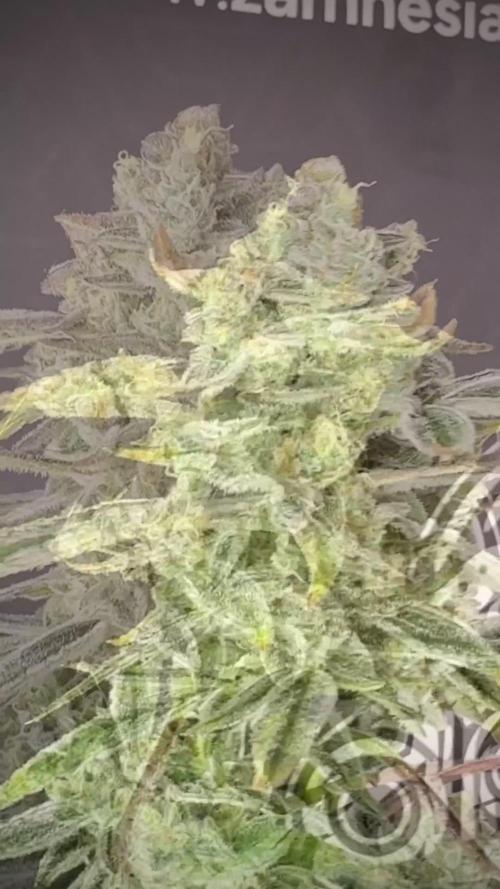
Even as the smallest of the group, it was dripping in frost from top to bottom. Thick trichome coverage, greasy heads, sticky stalks, and that unmistakable oily feel when touched—the kind of resin that tells you immediately this cultivar has extraction potential. The aroma made the decision even easier: fruit up front, skunk underneath, something creamy in the middle, and a strange almond-like edge that keeps showing up every time the flower is handled. Loud, weird, greasy, and complex—exactly the kind of profile worth preserving in fresh frozen form.
The remaining plants are still standing, and this is where the room shifts into its final phase.
At this point, the living Nectar Drips are no longer being fed in the traditional sense. This week is water only, using collected rainwater and reclaimed dehumidifier water, with a small amount of enzymes to help break down remaining organics in the root zone. No more push. No more force. Just clean hydration, natural fade, and enough biological support to keep the substrate active while the plants finish at their own pace. It is the final reduction phase now—less input, more observation.
And the plants are responding exactly the way they should.
Fade is accelerating across the room now, and this is the kind of late-flower senescence we want to see. Fans are pulling color, chlorophyll is retreating, and the plants are beginning to cannibalize what remains in reserve. This is not deficiency panic—it is end-of-life behavior. The engine is shutting down naturally. Energy is no longer going into leaf production or structural growth. Everything is being redirected toward resin, ripening, and final flower maturation.
Morphologically, that means the stretch is long over and the architecture is locked. What we are seeing now is finish work. Calyxes will continue to swell. Bracts should tighten. Resin heads will continue shifting from clear to cloudy. Aromatics will intensify. Leaf mass will continue fading back. Water uptake will begin slowing. The flowers are no longer building size the way they did two weeks ago—they are building finish.
And that finish is already obvious.
Buds across all remaining plants are dense, compact, and far heavier than their frame suggests. The untouched plants especially proved the point this run has been hinting at from the start: in this style of cultivation, less handling allowed for stronger vertical development, better natural structure, and ultimately more productive flowering sites. No topping, no recovery, no unnecessary stress—just uninterrupted forward motion. The difference is visible now in both size and final output.
What happens next is simple: patience.
There is no hard harvest date yet, and there does not need to be. From here forward, timing belongs to the trichomes. Right now, heads are mostly cloudy with very little amber present, which means we are entering the harvest window—but not fully inside it yet. Clear means early. Cloudy means peak THC. Amber means degradation begins shifting the effect. Until those heads begin showing the level of amber we want, these plants stay standing.
So now we wait, watch, and let them decide.
The room is loud. The flowers are greasy. Frost is everywhere. The fade is beautiful. The smell is ridiculous. Fruit, skunk, cream, funk, and something strangely nutty underneath. Sticky, oily, loud, and getting louder by the day.
Nectar Drip has been a special one.
Big respect to TICAL and Zamnesia for this collaboration—this cultivar has been loud, unique, and unforgettable from start to finish. Huge thanks as always to everyone following along, whether you have been here since day one or just landed in the diary this week. To the regulars, the silent watchers, the growers, the learners, the curious ones, the supporters, the skeptics, the OGs, the new faces, the lovers and the haters—thank you for being part of the ride. Big love to GrowDiaries for giving growers a place to document the process, and respect to every sponsor and supporter helping keep this garden moving.
One plant went to the freezer.
The rest are headed for the finish line.
📡 DELETED @ 1K Please stay tuned.we never quit https://www.youtube.com/@TheDogDoctorOfficial NEW 🙏 Thank you for your patience and continued support.
FOR DISCOUNT CODES AND MORE JUST FOLLOW THE LINK https://website.beacons.ai/dogdoctorofficial
📲 Don’t forget to Subscribe and follow me on Instagram and YouTube @DogDoctorOfficial for exclusive content, real-time updates, and behind-the-scenes magic. We’ve got so much more coming, including transplanting and all the amazing techniques that go along with it. You won’t want to miss it.
GrowDiaries Journal: https://growdiaries.com/grower/dogdoctorofficial
Instagram: https://www.instagram.com/dogdoctorofficial/
YouTube: https://www.youtube.com/@dogdoctorofficial Deleted by Youtube - https://www.youtube.com/@TheDogDoctorOfficial NEW
Vimeo : https://vimeo.com/dogdoctorofficial Under construction stay tuned ⸻
Explore the Gear that Powers My Grow
If you’re curious about the tech I’m using, check out these links:
🔆 Lighting & Environmental Control
• Future of Grow — Advanced LED lighting technology
https://www.futureofgrow.com/
DISCOUNT CODE: DOG20
• Lumiflora — Under-canopy LED lighting
https://lumiflorade.com/
• TrollMaster — Environmental controllers and automation gear (past collaboration)
⸻
Genetics
• Zamnesia Seeds — Genetics used in this project
https://www.zamnesia.com/
⸻
🌱 Soil, Substrates, Boosters & Root Support
• Plagron — Substrates, bio mixes, and supportive products
https://plagron.com/en/
⸻
🎒 Storage, Curing & Preservation
• Grove Bags — Curing and storage solutions
https://grovebags.com/
⸻
📸 Photography Equipment & Tools
(Not sponsors, but part of my creative toolkit)
• Sony A6700
• Sony full-frame macro lens + few more
• Stacking photography workflow - learning
• iPhone (for behind-the-scenes shots)
We’ve got much more coming as we move through the grow cycles. Trust me, you won’t want to miss the next steps, let’s push the boundaries of indoor horticulture together!
As always, this is shared for educational purposes, aiming to spread understanding and appreciation for this plant. Let’s celebrate it responsibly and continue to learn and grow together.
With true love comes happiness. Always believe in yourself, and always do things expecting nothing and with an open heart. Be a giver, and the universe will give back in ways you could never imagine.
💚 Growers love to all 💚
📸 P.S. – The Eye Behind the Lens
All photos in this diary (for now — except for the ones showing the camera, which I took with an iPhone) are taken with a Sony A6700 paired with a Sony full-frame macro lens and a few more.
Photography is part of the story — it’s how we share the fine textures, the glow, and the quiet details that words can’t always capture.
I’ve also started experimenting with photo stacking — a technique where multiple images, each taken at a slightly different focus point, are layered together to create one perfectly sharp image from front to back.
It’s not digital enhancement or AI; it’s pure photography — a way to reveal the plant’s beauty in microscopic depth, from trichome to petal.
You’ll even see a few shots of "ghost me" capturing the shots — camera, lens, setup — because every grow deserves not just to be cultivated, but documented like art.
FOR DISCOUNT CODES AND MORE JUST FOLLOW THE LINK https://website.beacons.ai/dogdoctorofficial
NEW DISCORD - Official Server Invite Link : https://discord.gg/ksjAkA5T74
Likes
31
Share


@MadeInGermany
Follow
Hey everyone 😃.
Today it continues with the
Flowering day 49
Today the tent was cleaned, the humidifier refilled, and the health of the plant checked.
Flowering day 50
Today she was watered with 1.2 l (see fertilizer table), and checked for her health.
Flowering day 51
Today fresh oamose water was poured into the tanks and the plant was sprayed.
Flowering day 52
Today was a pure control day where all the technology was checked.
Flowering day 53
Today the room was cleaned, the tent cleaned and the humidifier filled.
For this purpose it was poured with 1 liter today.
Flowering day 54
Today was again a pure control day :-).
Flowering day 55
Once again the plant was checked for health and sprayed.
The tent was also cleaned.
I wish you all a lot of fun with the update, stay healthy 🙏🏻 and let it grow 🍀
You can buy this Strain at
https://www.barneysfarm.com/blue-cheese-34
You can buy the fertilizer at
https://www.greenbuzzliquids.com/
Type:
Blue Cheese
☝️🏼
Genetics:
Blueberry
X
Original Cheese
👍
Vega lamp:
2 x Todogrow Led
Quantum Board 100 W
💡
Bloom Lamp :
2 x Todogrow Led
Cxb 3590 COB 3500 K 205W
💡💡☝️🏼
Soil :
Canna Coco Professional +
☝️🏼
Fertilizer:
Green Buzz Liquids :
Organic Grow Liquid
Organic Bloom Liquid
Organic more PK
More Roots
Fast Buds
Humic Acid Plus
Growzyme Big Fruits
Clean Fruits
Cal / Mag
Organic Ph - Pulver
☝️🏼🌱
Water:
Osmosis water mixed with normal water (24 hours stale that the chlorine evaporates) to 0.2 - 0.4 EC. Add Cal / Mag 2 ml per l water every 2 waterings . Ph with Organic Ph - Pulver to 5.8 .

Likes
7
Share

@angrygrower
Follow
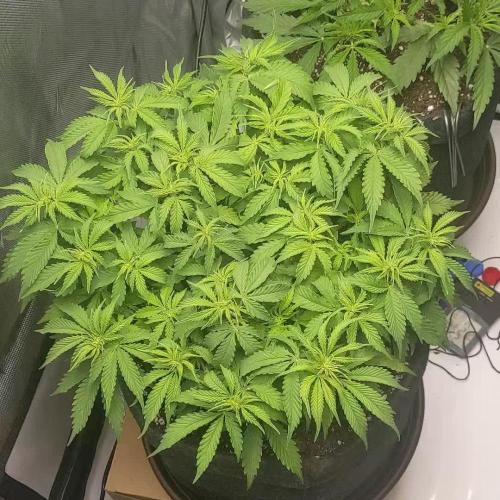
Unfortunately she has a deficiency.
From the looks of the leaves I'm thinking phosphorus.
Hopefully the nutrient mix will help.
Day 35 watering 3l, bio grow 1 ml, pH 6.2
Day 40 watering 3l, 3ml biogrow, 3ml biobloom, 3ml topmax, 3ml canna mag

Likes
18
Share


@Growbody
Follow
Tag 88: Die Watermelon Candy F1 Automatic von Zamnesia Seeds hat Spass gemacht, anzubauen. Das ich so unvorsichtig war und die Spitze abgebrochen habe, ärgert mich jetzt noch. Dafür hat sie ganz schön reagiert mit dem "Ersatzhaupttrieb". Das Nassgewicht kann man nicht ernst nehmen, ist mit einer groben Küchenmaschine gewogen, wichtiger ist, wieviel es nach der Trocknung ist. 😎


Likes
64
Share


@SmokingTiki
Follow
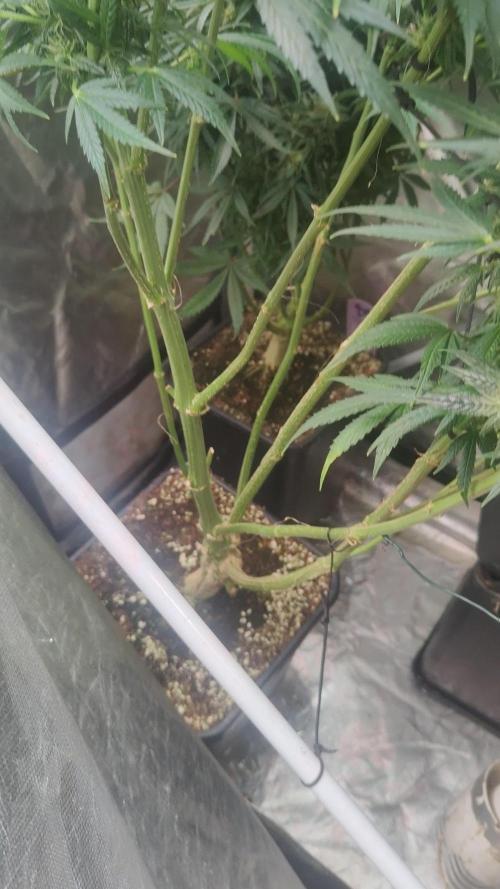
The plants are doing really good! I made a first light defoliation beginning of the week and continued the LST day by day. So far I broke no branch. I planned to switch to 12h/12h schedule beginning of next week but the plants grew too big already so I decided to switch a bit earlier.
Plants heights at the end of the week :
-------------------------------------------
Gorilla Cookies : 40cm
Purple Lemonade : 32cm
Wedding Cheesecake : 44cm


Likes
9
Share


@Atom_x_Andromeda
Follow
Plants are loving life Got a exhale bag There made in a town in the state i live in thats BA Hows The Girls Lookin 2 You Guys, i need advice im an outdoor guy so all this building my environment is new to me

