


Likes
Comments
Share


@JLaser
Follow
Not much has changed since last week. Sugar leaves are developing more than the buds are.

Likes
23
Share


@SkunkyDog420
Follow
Hallo zusammen 🤙.
Habe sie heute geerntet.
Wir hören uns in 3 Wochen mit dem Erntebericht
Rabattcode für den BIOTABS-Webshop https://biotabs.nl/en/shop/ GDBT420, damit erhalten Sie 15 Prozent


Likes
9
Share


@TheBulldozerSicily
Follow
Seconda settimana a 12/12 ma continuano a crescere in maniera piu contenuta, ora drimmer a 100% e lampada più alta, per sviluppare ancora un in altezza, fin ora tutto ok,

Likes
10
Share


@HideAndFly420
Follow
Something wrong happened on the end of last week.
I had a little irrigation problem and I did a m mistake with the fan’s position, it was too direct on the roots.
I think this could have caused a block to the nutrients transmission.
I will give just water with regulator ed enzym+.
Let’ a see

Likes
13
Share


@cookingwithninja
Follow
Week 6 day 1 video
Week 6 day 4 video
I’m still pushing very hard with carbs every watering, humic acid, soluble n, soluble pk, microbial mass, b+, fishshit. Already tried testers for lowers. Very potent hits harder than a pen. Feels like 30-40% baked for 1-3h per j, different phenos. Not harsh just testers dried for 0:01:15, checked seeds and developing for 2-3 weeks
Likes
48
Share


@Denzul
Follow
Day 64 (3/13/20)
Going to try to get this lady on a 12/12 this weekend. Only other thing I can hope for at this point.
Day 65-67
Flipped to 12/12 this week. Let's see if this does the trick.
Day 68/69
Same old. Big ol happy lady that just waiting to flower. Hit with some more LST and defoliation to fill out tent and improve air flow.
Day 70
Another week closed out strong
Likes
4
Share


@Ultraviolet
Follow
0.23v tuned to 7.83Hz Plants exposed to the Schumann resonance often show greater resistance to stress factors such as drought, diseases, and pests. It is possible that these natural electromagnetic waves strengthen plants' immune systems and increase their ability to resist disease.
Pretty neat, in the afternoon when the tent hovers around 84F the plants are 🙏, can visually see in time around 10 minutes after I opened the tent the temp had dropped to 76 pressure was lost, she is still chilling but she doesn't quite have that perk anymore.
*Salinity3.5% - 100ml H2O=100g The concentration of salt in a solution 3.5%= 3.5g in 100ml.
Growing well. Not going to top or do any training, I'll let the plant do its own thing, she is constructing foundations now for what she senses ahead. Smart girl. ✨️ Let her, do her thing, let me do mine.
The voltage that is needed for electrolysis to occur is called the decomposition potential. The word "lysis" means to separate or break, so in terms, electrolysis would mean "breakdown via electricity. Green hydrogen is hydrogen produced by the electrolysis of water, using renewable electricity. The production of green hydrogen causes significantly lower greenhouse gas emissions than the production of grey hydrogen, which is derived from fossil fuels without carbon capture.
Electrolysis of pure water requires excess energy in the form of overpotential to overcome various activation barriers. Without the excess energy, electrolysis occurs slowly or not at all. This is in part due to the limited self-ionization of water. Pure water has an electrical conductivity of about one hundred thousandths that of seawater. Efficiency is increased through the addition of an electrolyte (such as a salt, acid or base).
Photoelectrolysis of water, also known as photoelectrochemical water splitting, occurs in a photoelectrochemical cell when light is used as the energy source for the electrolysis of water, producing dihydrogen . Photoelectrolysis is sometimes known colloquially as the hydrogen holy grail for its potential to yield a viable alternative to petroleum as a source of energy. The PEC cell primarily consists of three components: the photoelectrode the electrolyte and a counter electrode. The semiconductor crucial to this process, absorbs sunlight, initiating electron excitation and subsequent water molecule splitting into hydrogen and oxygen.
Water electrolysis requires a minimum potential difference of 1.23 volts, although at that voltage external heat is also required. Typically 1.5 volts is required.
Biochar, a by-product of biomass pyrolysis, is typically characterized by high carbon content, aromaticity, porosity, cation exchange capacity, stability, and reactivity. The coupling of biochar oxidation reaction (BOR) with water electrolysis constitutes biochar-assisted water electrolysis (BAWE) for hydrogen production, which has been demonstrated to reduce the electricity consumption of conventional water electrolysis from 1.23v to 0.21v.
Biochar particles added to the electrolyte form a two-phase solution, in which the biochar oxidation reaction (BOR) has a lower potential (0.21 V vs. RHE) than OER (1.23 V vs. RHE), reducing the energy consumption for hydrogen production via biochar-assisted water electrolysis (BAWE).
BAWE produces H2 under 1 V while eliminating O2 formation: key word "eliminating". Air with a normal oxygen concentration of around 21% is not considered explosive on its own; however, if a flammable gas or vapor is present, increasing the oxygen percentage above 23.5% can significantly increase the risk of ignition and explosion due to the enriched oxygen environment.
The addition of ion mediators (Fe3+/Fe2+) significantly increases BOR kinetics.
Air:
Nitrogen -- N2 -- 78.084%
Carbon Dioxide -- CO2 -- 0.04%
Hydrogen in homosphere H -- 0.00005%
Hydrogen "GAS" H2 in homosphere - 0%
"Nitrogen, oxygen, and argon are the three main components of Earth's atmosphere. Water concentration varies but averages around 0.25% of the atmosphere by mass. Carbon dioxide and all of the other elements and compounds are trace gases. Trace gases include the greenhouse gases carbon dioxide, methane, nitrous oxide, and ozone. Except for argon, other noble gases are trace elements (these include neon, helium, krypton, and xenon). Industrial pollutants include chlorine and its compounds, fluorine and its compounds, elemental mercury vapor, sulfur dioxide, and hydrogen sulfide. Other components of Earth's atmosphere include spores, pollen, volcanic ash, and salt from sea spray."
Although the CRC table does not list water vapor (H2O), air can contain as much as 5% water vapor, more commonly ranging from 1-3%. The 1-5% range places water vapor as the third most common gas (which alters the other percentages accordingly). Water content varies according to air temperature. Dry air is denser than humid air. However, sometimes humid air contains actual water droplets, which can make it more dense than humid air that only contains water vapor.
The homosphere(where you live) is the portion of the atmosphere with a fairly uniform composition due to atmospheric turbulence. In contrast, the heterosphere is the part of the atmosphere where chemical composition varies mainly according to altitude. The lower portion of the heterosphere contains oxygen and nitrogen, but these heavier elements do not occur higher up. The upper heterosphere consists almost entirely of hydrogen, cool.
78%nitrogen as N2, a far too stable bond to be used by organisms.
20%oxygen
0.04%co2
0.00005% hydrogen
When lightning strikes, it tears apart the bond in airborne nitrogen molecules. Those free nitrogen atoms N2 nitrites then have the chance to combine with oxygen molecules to form a compound called nitrates N3. Once formed, the nitrates are carried down to the ground becoming usable by organisms. Will it react with the oxygen in the air spontaneously, the answer is no. The mixture is chemically stable indefinitely. A mixture with air near the release point can be ignited, but if this does not happen then when its concentration gets below 4% it will be unable to carry a flame. Taking a small detour into chemistry here, a key concept to understanding the health impact of nitrogen-based compounds is knowing the difference between nitrates and nitrites.
What Are Nitrates and Nitrites?
A nitrite (NO2) is a nitrogen atom bonded to only two nitrogen atoms. Very strong bond
A nitrate (NO3) is a nitrogen atom bonded to three oxygen atoms. Weaker bond The optimal pH for nitrate (NO3-) depends on the process and the type of bacteria involved.
Nitrification
The optimal pH for nitrification is between 7.5 and 8.6
Nitrification is the process of oxidizing ammonia to nitrate and nitrite
Nitrosomonas has an optimal pH between 7.0 and 8.0
Nitrobacter has an optimal pH between 7.5 and 8.0
Nitrification ceases at pH

Likes
9
Share


@Lifesgarden420
Follow
This beautiful lady is getting huge and those nuggets are so dense they are so Frosty she is going to provide some wonderful rosin yeah yeah she's almost ready maybe two more weeks

Likes
30
Share


@SAC87
Follow
Day 56 flower
Well, to be totally honest I’m not seeing a crazy amount of change. I am smelling and feeling a difference tho. I’ve decreased watering to allow for a bit of dry back.
The trichomes are super sticky and release a pungent ripe lemon and earthy aroma. The buds are smaller, but hard hard right from the outside, like golf balls and marbles. They are quite similar to my Durban buds. Gonna have to watch the humidity.
I started raising the Vipar spectra XS2000 just a bit each day as I’m noticing more leaf cupping. So just an attempt to decrease stress in this later phase. The light is still penetrating through the canopy well.
I think this will be my last week of feeding then I’ll flush for 2 weeks get 3-4 good flushed and watch them fade. I’ve never grown this strain so I’m just along for the ride. The leaves are still very green other than the tips 🤦♂️🏻So I’m thinking there’s still a lot of available nutes in the leaves. Time will tell.
Happy Growing 🌱


Likes
9
Share


@Growin_it
Follow
This is my first Amnesia Auto. It has been an easy grow so far. Looking forward to the buds fattening up, which almost goes without saying. But, interested to see how loose or tight they will be.


Processing
Likes
4
Share


@MrPurplePinkie
Follow
Colorado Cookie didn’t take the nutes as well as her companion, little burnt tips.
Everything’s ok, I guess, I wish the CC stops growing as she is approaching “danger zone”,
only have a 60x6x120. I guess LTS should have been more then an option.

Likes
10
Share


@TheMedicatedFarmer
Follow
New Tent, Started with Mr Canucks GRO medium, and planted directly in 5 gallon pots with a light watering center and plastic cap to hold the humidity. Currently 2 of 4 have broken the soil in 4 days now it’s time to keep the medium moist. The weather is chiller right now. I adjust my grow tent temp to 78. It feels the tent is dialed in for the othe 3 to germinate. When checking the seeds I realized I put them to deep. So I knuckle depth to see if there is success. The soil was cold so hopefully increasing the temp provides better results.
Likes
35
Share


@eldruida_lamota
Follow
Venga familia, va la quinta semana de floración de estas Frosted Guava de Zamnesia.
Que color que sanas se ven como se nota que Agrobeta es de lo mejor, las niñas están de 10.
La humedad está en su punto, y por fin puedo controlar la temperatura en 22 grados.
Las flores empiezan ya a tricomar bien y desprender aromas bastante llamativos.
Ya vamos viendo cómo progresan estas próximas semanas y van formándose esas flores.
Os comento que tengo un descuento y para que compréis en la web de Zamnesia de un 20%, el código es ZAMMIGD2023
The discount 20% and the code is ZAMMIGD2023
https://www.zamnesia.com/
Mars hydro:
Code discount: EL420
https://www.mars-hydro.com/
Agrobeta:
https://www.agrobeta.com/agrobetatiendaonline/36-abonos-canamo
Hasta aquí es todo, buenos humos 💨💨💨


Likes
Comments
Share

@DonvitoGenetics
Follow
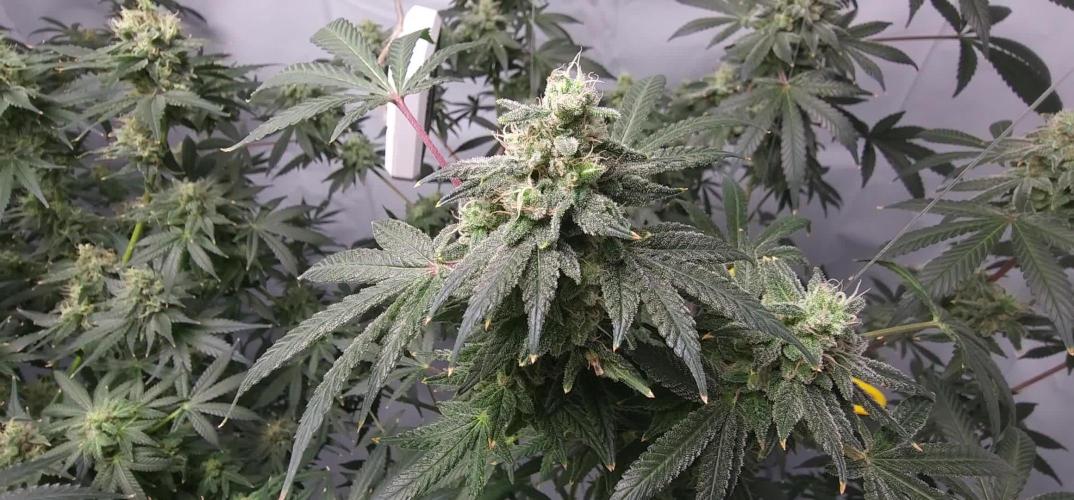
this whole grow was decent with a homemade tent i made but i did buy a 4x4 that im using now


Processing
Likes
13
Share


@Grownewgenetics
Follow
We are really happy to show youethe progress of the girl's, we are going to upload the week's that'we couldn't Upload from the app, we are getting really frosty on these two Epic Genetics Strains, the epical widow and epic spigol Field, both really beautiful Strains

