





@HappyFarmer2
Volgen
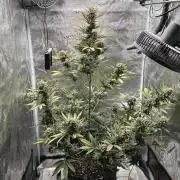
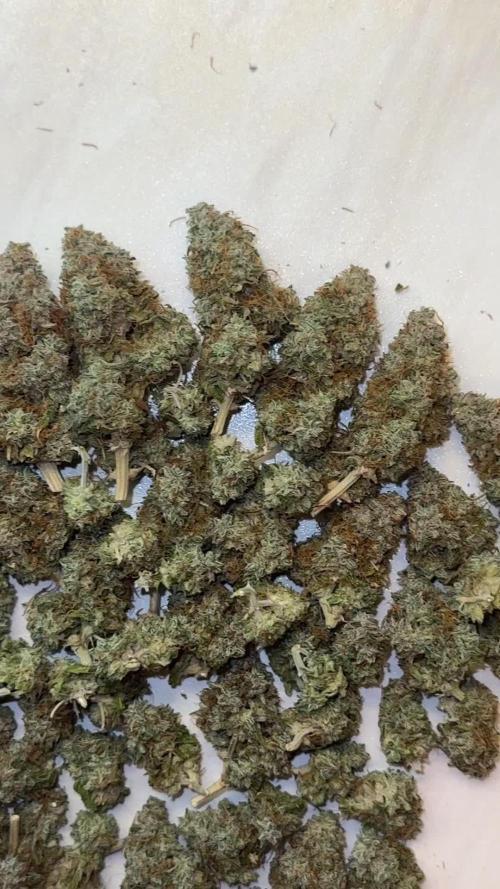
Nov 18-25: Looking good, buds getting heavier. Trichomes: seen a few Amber. Pics & video taken with IPhone 15 & Jewelers Loupe.



@Ultraviolet
Volgen
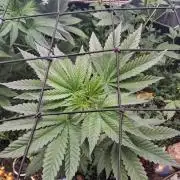
Heyókȟa
I desire to study nature, and to know better the mind of God, the creator, Holy art thou, O Father.
12x12=144, A dodecahedron is a polyhedron with 12 faces, and in coordination chemistry, it refers to a geometry where ligands surround a central metal atom (in this case, Magnesium) in a specific, 8-coordinate arrangement. Dodecahedrane is a hydrocarbon, meaning it's composed solely of carbon and hydrogen atoms. The carbon atoms are arranged at the corners of a dodecahedron, a 3D shape with 12 pentagonal faces. The water molecules in the dodecahedron form hydrogen bonds that are individually slightly weaker than in either the dimer or the tetramer. However, because three-quarters of the O -H groups in the dodecahedron form hydrogen bonds, it has a more negative energy per molecule than has either the dimer or the tetramer. Magnesium (Mg2+) is the essential, central metal ion in the chlorophyll molecule, crucial for photosynthesis by enabling light absorption and energy transfer. It is chelated by four nitrogen atoms within the porphyrin (or chlorin) ring structure. Chlorophyll appears green because it reflects light in the green region of the visible spectrum, specifically between 490 and 570 nm. The main resonance electronic frequency of a neutral Magnesium (Mg) atom corresponds to the transition from the ground state to the first excited state. Resonance Line Wavelength of Mg2+: 285.1nm (UVB light). The central atom of the chlorophyll molecule is Magnesium (Mg2+), which is coordinated within a porphyrin ring. The electronic "resonance frequency" of this central atom—meaning the frequency at which its electrons absorb energy—is primarily driven by the electronic transitions (ETR) of the surrounding conjugated chlorin ring structure, rather than a discrete atomic transition of the Magnesium atom itself. The resonant electronic frequencies of the chlorophyll porphyrin (technically, a chlorin) ring are determined by the energy required to promote π-electrons within its conjugated system, primarily appearing in the blue and red regions of the visible spectrum.
In standard physics, Chloryphyll b has peak absorption at 460nm (Blue). If we take the peak wavelength 460nm and a UV-B, UVR8 peak absorption wavelength 285nm Tryptophan-285 (W285) Sensing protein. 460/285=1.618 Φ, "natural harmony" and the "structure of light". The cryptochrome photoreceptor (CRY) is a UV-A/blue light receptor that shares this dual sensitivity with several other biological structures and functions, including significant sequence similarity and a common evolutionary ancestor with DNA photolyase enzymes. These are light-activated enzymes that use blue/UV-A light to repair DNA damage caused by UV-B radiation in plants.
Dodecahedrane (C20H20) is a hydrocarbon with a cage-like structure where carbon atoms form 12 pentagonal faces (a regular dodecahedron). It is highly symmetric (icosahedral), contains no delocalized electrons (no aromaticity), and has minimal angle strain, but significant torsional strain. Water Dodecahedron (H2O) forms hydrogen-bonded cages. While individual hydrogen bonds in this structure are weaker than in the linear dimer or tetramer, it has a more negative total energy per molecule. This is because three-quarters (75%) of the groups are involved in hydrogen bonding, creating a very stable, closed-shell configuration. a 3D carbon hydrocarbon (C20H20) to stable water clusters in hydrate, while the Magnesium ion acts as the central activator within a conjugated ring in biological systems, with its electronic absorption dominated by the ring, not the atom itself.
Effective quantum efficiency of photosystem II, often denoted as ΦPSII
In horticultural lighting, adding 730 nm (far-red) LEDs alongside standard red/blue lights has been shown to increase canopy photosynthesis by 20–30% in several crops by acting synergistically with shorter wavelengths. However, the limitation is that excessive, pure IR/Far-red light (without accompanying red light) can trigger the "shade avoidance response," causing plants to grow tall, weak, and spindly rather than robust. Knowing is half the battle however, engineering or utilizing infrared light (specifically the 700-750 nm far-red range) is a viable method to boost photosynthetic efficiency. It acts as a bridge to allow PSII to utilize a broader spectrum of light, breaking the traditional 700 nm barrier.
Extend, then multiply.
UVR8-mediated signaling (often in conjunction with CRY proteins) triggers protective mechanisms that maintain the stability of the photosynthetic apparatus (including LHCII and reaction center proteins), thus ensuring that the efficiency of Photosystem II remains higher in UV-B-exposed plants compared to plants lacking this receptor. ΦPSII indictates the rate of electron transfer from water to plastoquinone, which drives the production of ATP and NADPH. There is a close link between ΦPSII and the true rate of CO2 fixation (Φ*co2), particularly in C4 plants.
Effective quantum efficiency of photosystem II, often denoted as ΦPSII, represents the proportion of light absorbed by Photosystem II (ΦPSII) that is actually used in photosynthetic electron transport. It is a key indicator of how efficiently a plant is using light for photosynthesis, as opposed to losing it as heat or fluorescence. ΦPSII (effective quantum yield of photosystem II) functions primarily as a "multiplier" (a coefficient of efficiency) rather than an additive factor when estimating the overall photosynthetic electron transport rate (ETR). Multipliers are considered far more beneficial than additions because they generate exponential growth, leverage existing resources to their full potential, and create sustainable, self-multiplying capacity, rather than just incremental, linear increases.
Humans, and most other mammals, rely on other mechanisms, such as nucleotide excision repair, to manage and repair UV-induced DNA damage. As such, humans do not have the direct, light-driven repair mechanism that photolyase offers in plants.

shorts_status_processing


@MyloGrow2019
Volgen
Just at the end of week # 2 in bloom , LST training is going well and the canopy is pretty full , cooler outside temps allow me to use my co2 burner and they are all looking great with lots of bud sites and liking the nutrient balance, made new nuits today and it went from 1400 to 1150 in two feedings , one more week of stretch and then I will finish the under canopy cleanup and plan on a light defoliation at week 4 of bloom. The 8 Ball Kush is really showing great growth and it’s early on , should be some huge buds this crop , the Blue OG Kush is healthy , it’s my first time with it so I’m not sure what it grows like . Stay Tuned


@Santica_Garden
Volgen
So this is how things are looking at the end of Week 3 from Seed, not happy with their growth as I have explained in the video posted.... Hopefully I will see some improvement in the next couple weeks. Happy Growing guys! More Diaries coming soon and Wedding Cake Harvest coming.


@Ganjagrandaddy
Volgen
DAY 7: Hi all. A nice steady week for the girls finding their feet in the pots and without their domes. I have the pota a good soaking to start them off on the right foot and get those roots busy too. The Girl scout cookies are both doing really good with their 3rd nodes happily springing to life. I managed to start l.s.t as soon as the 5th node is workable on them. Plan is to hold the 5th nodes horizontal while the other nodes reach an even canopy height. Then I will let the 5th node continue vertical to join the party as an equal to the others.
The Amnesia Haze are also very happy looking in their new homes and domeless. Not as developed as the Gsc but looking a nice shade of green. They are about 1.5 inches and on 3rd node growth too.
So far so good. Let's see what another 7 days can add.
Be well growmies.


@SwedenX
Volgen
Hi.
it was another week in bloom. she is eighty-four days old now. this is the last update before harvest because now she is ready to be harvested. have checked the trichomes every day and now they are perfect. became two weeks of flush. I am so happy with this plant did not have any worries at all, and can recommend everyone to try this strain. she smells absolutely wonderful, deep citrus, pine, and sweet mango.
thank you @Fast_Buds for having such outstanding genetics! tomorrow she will be cut down.
thank you for stopping by.
and have a green Christmas


@TgOgFaRms
Volgen
16 days to go looking abit longer to me going to start bombing them with Bud Factor X in 2 / 4 days il start giving them overRide To fatten them up Gvae abit of call Mag Xtra have some yellowing leaves at the bottom not sure if they need some more nitrogen Set the Duct Fans on full setting got the room at 18 / 21c started to some Purpling Smell Is Intensifying everyday cant wait to smoke these babes 👌👌


@Canadian
Volgen
Day 85 from seed not much to say about her except that she is quite a beautiful sight and the buds look Rock Solid and the smell is hard to describe now but it is a sweet smell .
I will continue to update thank you for reading have happy grow.


@Eddjack
Volgen
La pianta è carica di nutrienti sana e forte. Continua una fioritura lenta non vedo l ora che esploda ..comunque ha già un buon profumo ed è bella appiccicosa ...promette bene
Dajeforte growers



@DogDoctorOfficial
Volgen
🚂 8×8 Adventure – Week 14 🌸
Cash Express – Pheno B
💚 Beast Mode Activated — Big Flowers, Big Presence, and Absolutely No Hurry to Follow Anyone Else's Rules!
Welcome back to another chapter of the 8×8 Adventure! 🌱💚
My friends...
LOOK AT THIS GIRL! 😂🚂🌸
Seriously.
Look at her.
Look at those flowers.
Look at that structure.
Look at the way she's carrying herself in the room.
This is Cash Express Pheno B, and I think we can officially say that her beast mode is still very much switched on!
💚🔥
And after everything that happened with her sister, there's something especially satisfying about seeing this girl continue her journey without losing her main cola.
Her sister had a rough chapter.
We lost a beautiful flower, and that was a proper bummer.
But this girl?
She's still carrying hers.
And what a beautiful main cola it is!
😂🌸
She's shining.
She's developing.
She's continuing to evolve.
And she's doing it in her own way, at her own pace, without asking anyone for permission.
She's not waiting for the other plants.
She's not checking the calendar.
She's not asking me when she's supposed to finish.
She's simply doing her thing.
And honestly?
I love that.
We are getting into the later part of her journey, but I'm not going to pretend I know exactly when she'll be finished.
She'll get there when she's ready.
Until then, we're going to keep observing, keep documenting, and keep giving this beautiful beast the spotlight she deserves.
🚂💚🌸✨
────────────────────────
🌱 THE 8×8 ADVENTURE — SAME ROOM, DIFFERENT STORIES
────────────────────────
For anyone discovering this diary for the first time, welcome to the 8×8 Adventure!
The idea behind this project is simple:
Different genetics and phenotypes sharing the same general environment.
Same room.
Same 12/12 light schedule.
Same general environmental conditions.
Same lighting ecosystem.
Same nutritional program.
Same grower.
And yet...
completely different personalities.
😂🌿
That's the part I love most about this experiment.
Some plants are compact.
Some stretch.
Some build enormous structures.
Some take their sweet time.
Others seem to wake up every morning and decide that today is another opportunity to surprise us.
And Cash Express Pheno B?
She's bringing the beast mode.
🚂🔥
Her sister has experienced a very different journey, including the unfortunate loss of her main cola.
This girl has kept hers, and we're continuing to follow her development as she moves toward the later part of her flowering journey.
Two phenotypes.
Shared genetics.
Shared environment.
Different experiences.
And that's exactly why every plant gets her own diary.
We're not simply documenting a cultivar name.
We're documenting the individual plant in front of us.
And this girl has plenty of personality to document!
────────────────────────
💚 HER MAIN COLA IS STILL HERE — AND SHE'S SHINING!
Let's give this flower the appreciation it deserves.
😂🌸
After what happened to her sister, I think it's impossible not to pay a little extra attention to this girl's main cola.
It's beautiful.
It's substantial.
And it's still part of the plant.
That's something worth celebrating.
When you've watched a flower develop over so many weeks, you start appreciating all the little changes that brought it to this point.
The structure.
The way the flowers develop together.
The way the surrounding foliage frames the cola.
The changing appearance as the plant progresses.
And now, here we are, looking at a beautiful main flower that's still very much part of her story.
💚🌸✨
I'm not going to make predictions about exactly how much longer it has.
I'm not going to put a finish date on her.
And I'm certainly not going to start calling the run finished just because the plant looks impressive.
We're going to keep watching.
We're going to keep observing the whole plant.
And we're going to let her development tell us where she is in the journey.
For now?
I'm enjoying the view.
And this girl is giving us plenty to enjoy!
────────────────────────
🔥 BEAST MODE — A MEDIUM PLANT WITH A BIG PRESENCE
────────────────────────
One of the things I really like about Cash Express Pheno B is that she doesn't need to dominate every centimetre of the room to make herself noticed.
She's got presence.
She's got character.
And those flowers certainly know how to attract attention.
😂💚
There's a difference between a plant being physically enormous and a plant simply having an impressive expression.
You can have a giant plant that doesn't necessarily produce the individual flower structure you're looking for.
And you can have a more moderate-sized plant that develops some seriously impressive flowers.
Cash Express Pheno B is a great reminder that plant height alone never tells the entire story.
Look at the structure.
Look at the individual flowers.
Look at the way the plant has developed.
Look at her main cola.
And then tell me she isn't bringing some serious beast energy to this adventure!
🚂🌸🔥
She's doing her thing.
And we're here to appreciate it.
────────────────────────
🌸 MOVING TOWARD THE FINISH — BUT WHO SET THE DATE?
────────────────────────
This is where things get interesting.
We're moving into the later part of her journey, and she's continuing to evolve beautifully.
But when is she going to be finished?
Honestly?
I don't know.
😂💚
And that's not me avoiding the question.
It's simply me refusing to pretend that a calendar can tell us everything we need to know about a living plant.
The week number gives us context.
The photographs help us track changes.
The appearance of the flowers gives us information.
But no single observation tells us everything about the plant's overall maturity.
Different phenotypes can develop at different rates, even when they're grown under the same general conditions.
And Cash Express Pheno B has already shown us that she has her own rhythm.
So we're not going to force a deadline onto her.
We're going to keep observing the overall development and document what we actually see.
No guessing for the sake of guessing.
No promises.
No imaginary finish date.
Just the plant, the camera, and another week of the 8×8 Adventure.
🌿📸💚
────────────────────────
🌱 SAME ROOM, SAME OPPORTUNITY — DIFFERENT GENETIC EXPRESSION
────────────────────────
The room remains under the same general setup.
We're not changing everything around simply because one plant is developing differently from another.
The lighting ecosystem remains in place.
The nutritional program remains consistent.
The environmental strategy remains the same.
And the plants continue to express themselves individually.
This is one of the most important things to understand about the 8×8 Adventure.
Keeping the environment consistent doesn't mean every plant will behave identically.
Genetics influence plant architecture, development, flowering patterns, and how individual plants respond to their surroundings.
The environment provides the conditions.
The plant's biology determines how it responds to them.
And the results can be fascinating.
The Blueberry Muffin sisters have been taking their time.
Cash Express Pheno B is showing a very different rhythm.
And even within Cash Express, Pheno A and Pheno B have experienced different journeys.
That's not a problem with the experiment.
That's precisely what makes the experiment interesting.
Same room.
Different stories.
And we're documenting every one of them.
────────────────────────
💡 THE ARTIFICIAL SUN — FUTURE OF GROW BLACK SERIES
────────────────────────
The lighting setup remains unchanged this week.
The Future of Grow Black Series LEDs continue to provide the main lighting for the room, with the two additional Black Series 600W fixtures remaining part of our upgraded setup.
After adding those fixtures, we reduced the output to approximately 59% from the plug rather than running everything at maximum.
Our working reference remains around:
☀️ ~1,500 PPFD across the upper canopy.
Actual intensity varies depending on the plant's height and position, so this is an upper-canopy reference, not a claim that every flower receives exactly the same amount of light.
And Cash Express Pheno B continues her journey beneath that lighting environment.
Same artificial sun.
Same general setup.
Different plant.
Different response.
Different expression.
💡🌿
The extra fixtures have given us more lighting capacity and more flexibility in how we use that capacity.
And that is worth highlighting.
More available capacity doesn't automatically mean we need to operate every fixture at maximum output.
The useful question is how the lighting performs within the complete environment and how the plants respond.
That's part of what we're exploring throughout this adventure.
A massive thank you to Future of Grow for supplying the additional Black Series fixtures and giving us the opportunity to test this expanded lighting setup!
────────────────────────
❤️ THE RED-LIGHT DISCUSSION — WHAT DOES IT ACTUALLY DO?
────────────────────────
Now, let's talk about the extra 15 minutes of red light after the main lighting period.
Since we're documenting this lighting routine across the individual reports this week, I want to explain the science rather than simply repeat a claim.
Plants have photoreceptors that help them interpret their light environment.
One important group is the phytochromes, which respond to red and far-red wavelengths.
These photoreceptors participate in signalling processes that can influence plant development and responses to changing light conditions.
Red and far-red light are related, but they are not interchangeable.
Their effects depend on the wavelengths involved, the intensity, the duration of exposure, the timing, and the plant's physiological state.
Our additional 15-minute red-light period is part of the lighting routine we're documenting.
However, we shouldn't automatically claim that this short period guarantees better flowering, larger flowers, increased yield, or a better transition into darkness.
Those are specific outcomes that would need appropriate evidence.
For this run, we're recording what we're doing and keeping the scientific explanation separate from any assumptions about the result.
That's important.
It's possible to explore lighting techniques while remaining honest about what we know.
And if we want to understand what a particular treatment actually changes, we need to look at the evidence and the plants' responses rather than assuming the result in advance.
❤️💡🌱
────────────────────────
🔬 THE EMERSON EFFECT — A LITTLE PHOTOSYNTHESIS SCIENCE
────────────────────────
Since we're already talking about light, let's take a moment to look at the Emerson effect.
This is a genuine phenomenon in photosynthesis, and it's a fascinating example of how plants use light.
In simplified terms, the Emerson effect describes an increase in photosynthetic activity observed when certain red and far-red wavelengths are supplied together, compared with what would be expected from their individual effects under the experimental conditions.
Why does that happen?
Photosynthesis involves two cooperating photosystems:
🌿 Photosystem II — PSII
🌿 Photosystem I — PSI
Both are involved in the light-dependent reactions that help convert light energy into chemical energy.
The two photosystems have different absorption characteristics, and their cooperation is essential to the overall process.
Under suitable conditions, combining particular wavelengths can improve the balance between the activity of the two photosystems.
The resulting photosynthetic response can be greater than expected from either wavelength acting alone.
That's the key idea behind the Emerson effect.
But here's where we need to be careful.
The Emerson effect does not simply mean that adding red light at the end of the day automatically increases photosynthesis.
The classic effect concerns the combined action of red and far-red wavelengths under particular illumination conditions.
Our additional 15-minute red-light period after the main lights is a different situation.
We shouldn't assume that it reproduces the Emerson effect or that it automatically produces a measurable benefit.
The actual spectrum matters.
The intensity matters.
The timing matters.
And the response being measured matters.
So, yes, the Emerson effect is an important and interesting part of photosynthesis research.
But we need to distinguish the established phenomenon from the particular lighting routine we're using in this grow.
That's how we keep the science useful.
Curiosity is good.
Experimenting can be interesting.
But understanding what an effect actually describes is even better.
🔬🌱💡
────────────────────────
🌙 RED LIGHT, FAR-RED LIGHT, AND DARKNESS ARE NOT THE SAME THING
One final clarification, because these subjects are often mixed together.
Red light and far-red light can influence plant signalling in different ways.
The phytochrome system responds to these wavelengths and helps plants interpret changes in their light environment.
But the response to a particular treatment depends on the exact conditions.
A short red-light period after the main lights switch off is not automatically equivalent to a far-red treatment.
And neither treatment should be assumed to guarantee a particular outcome without supporting evidence.
For this report, the important point is simple:
We're documenting the additional 15-minute red-light period as part of our current lighting routine.
We're explaining the relevant science.
And we're not claiming that the Emerson effect proves this particular treatment will improve the plant.
If we want to understand the actual effect of a lighting treatment, we'd need suitable comparisons and measurements.
That's the difference between an interesting idea and a demonstrated result.
And I think growers deserve that distinction.
💚🔬
────────────────────────
🌱 NUTRITION — KEEPING THE ROOM CONSISTENT
────────────────────────
The nutritional program remains unchanged this week.
We're continuing with the same general recipe across the room rather than creating a new feeding plan for Cash Express Pheno B simply because she's developing at her own pace.
The current recipe remains:
🌱 Plagron Pure Zym — 1 ml/L
⚗️ Plagron pH Plus — 0.03 ml/L
🍋 Plagron Lemon Kick — 0.03 ml/L
🌸 Plagron Terra Bloom — 2 ml/L
🌱 Plagron Power Buds — 1 ml/L
🍯 Plagron Sugar Royal — 1 ml/L
🌿 Plagron Green Sensation — 1 ml/L
Current solution readings remain approximately:
⚗️ pH — 6.04
⚡ EC — ~2.05 mS/cm
Same general program.
Same room.
Same opportunity.
And the plant continues to show us her own expression.
We're not trying to make every phenotype follow the same timeline.
We're watching the plants and documenting what happens.
────────────────────────
✂️ NOT MUCH INTERVENTION — JUST OBSERVATION
One thing that hasn't changed is our approach to the plant itself.
We're not looking for unnecessary work.
We're not trying to manipulate her simply because she's entering a later stage.
We're observing.
We're documenting.
We're keeping an eye on her overall condition.
And we're letting her continue her journey.
The plant has already developed her structure.
The flowers are there.
The room is stable.
So there's no reason to invent an intervention just to make the week feel busy.
😂🌿
Sometimes the grower needs to take action.
Sometimes the grower needs to solve a problem.
And sometimes the grower needs to put the camera down, take a step back, and appreciate what the plant has become.
Cash Express Pheno B is definitely giving me plenty of reasons to do that last one.
────────────────────────
🌡️ WEEK 14 — ROOM CONDITIONS
The room continues under the same general setup used across this week's individual reports:
🌸 Flowering — Week 14
💡 Light schedule — 12/12
💡 Future of Grow Black Series LEDs — upgraded setup
🔌 Approximate lighting output — ~59% from the plug
☀️ Upper-canopy PPFD reference — ~1,500
🌡️ Day temperature — ~27°C
🌙 Night temperature — ~26°C
💧 Relative humidity — ~61%
⚗️ pH — ~6.04
⚡ EC — ~2.05 mS/cm
🌡️ Nutrient solution temperature — ~25°C
🌱 Substrate temperature — ~25°C
🌬️ CO₂ — ~693 ppm
🌱 Pot size — 15 L
💦 Irrigation — ~1.45 L per plant / 24h
These are the shared room readings and setup references, rather than measurements unique to this individual plant.
Same room.
Same lighting ecosystem.
Same general nutritional program.
Different phenotype.
And Cash Express Pheno B continues to show us what she can do within that environment.
────────────────────────
💚 HER SISTER'S STORY IS DIFFERENT — AND THAT'S OKAY
I think this comparison deserves a moment of its own.
Cash Express Pheno A lost her main cola.
It was unfortunate, and we documented it honestly.
Cash Express Pheno B has kept hers, and we're continuing to follow her development.
It's tempting to think that two plants sharing the same genetics and room should experience the same journey.
But living plants don't work like that.
Their individual structures, development, and responses can differ.
And sometimes their experiences differ for reasons that have nothing to do with a simple comparison of the cultivar name.
We don't need to turn the two sisters into a competition.
One plant's setback doesn't diminish the other plant's success.
And one plant doing well doesn't make the other plant's difficult chapter any less important to document.
They each deserve their own report.
Their own photographs.
Their own observations.
And their own story.
Cash Express Pheno B is bringing her beast mode this week.
So that's what we're celebrating.
🚂💚🌸
────────────────────────
📸 THE CAMERA LOVES THIS GIRL
And honestly?
I could keep taking photographs of this plant.
😂📸
There's something satisfying about looking at a plant you've followed for weeks and seeing how her appearance has changed over time.
The structure.
The flowers.
The main cola.
The way she occupies her space.
All those details become part of the record.
And that's why I enjoy keeping the reports separate.
A single overview of the whole room would never tell us everything about each plant.
Here, we can stop and appreciate Cash Express Pheno B individually.
We can admire her flowers.
We can follow her development.
We can compare this week's photographs with previous weeks.
And we can document the journey without pretending we already know how the final chapter will look.
That's the beauty of keeping a proper diary.
One plant.
One week.
One more piece of the story.
💚📸🌸
────────────────────────
🔭 WHEN WILL SHE FINISH?
The million-dollar question!
😂💚
And my answer is still:
I don't know yet.
She's moving toward the later part of her journey, and her development is continuing.
But I'm not going to invent a finish date simply because we're at Week 14.
The calendar gives us context.
It doesn't make the decision for the plant.
We'll continue to observe her overall maturity and development, and we'll document what we actually see.
No false certainty.
No promises.
No pressure to finish on somebody else's schedule.
Cash Express Pheno B gets to write her own ending.
And we'll be here with the camera when the next chapter arrives.
────────────────────────
✨ FINAL THOUGHTS — BEAST MODE, BRIGHT LIGHTS, AND HER OWN FINISH LINE
Week 14.
Cash Express Pheno B.
And what a beautiful beast she is!
🚂💚🔥
Unlike her sister, she hasn't lost her main cola.
She's continuing to develop.
She's looking beautiful.
She's showing us her own structure and her own personality.
And she's moving toward the later part of her journey without giving us a reason to rush her or invent a deadline.
I'm loving what I'm seeing.
I'm enjoying the photographs.
I'm enjoying the opportunity to follow this phenotype individually.
And I'm especially enjoying the contrast between the two sisters.
Same genetics.
Same room.
Different experiences.
Different expressions.
Different stories.
That's what this adventure is all about.
We've also taken the opportunity to discuss the extra 15-minute red-light period and the Emerson effect.
Red and far-red light have fascinating roles in plant signalling and photosynthesis, but the science deserves to be explained accurately.
The Emerson effect describes a specific photosynthetic response involving the cooperation of photosystems under particular illumination conditions.
It doesn't automatically prove that our short end-of-day red-light period produces the same effect.
We're documenting our lighting routine, learning about the underlying science, and keeping our conclusions grounded in what we actually know.
Because growing is not just about watching plants develop.
It's also about asking questions, exploring ideas, and learning to separate observations from assumptions.
And this girl?
She's giving us plenty to observe.
😂🌸💚
So let's celebrate the beautiful main cola that's still here.
Let's appreciate the flowers.
Let's enjoy her beast-mode personality.
Let's keep the room stable.
Let's keep learning.
And let's allow Cash Express Pheno B to reach her own finish line in her own time.
She's not following the calendar.
She's following her own journey.
And we're here to watch it unfold.
🚂🌸💚✨
────────────────────────
🙏 THANK YOU
A huge thank you to Zamnesia for the Cash Express genetics and for giving us the opportunity to explore these individual phenotypes throughout the 8×8 Adventure. 🌸💚
Thank you to Plagron for supporting the nutritional side of the journey and helping us maintain consistency throughout the room. 🌱
A massive thank you to Future of Grow for the Black Series lighting and especially for supplying the two additional Black Series 600W fixtures that have expanded our lighting capability. 💡🙏
Thank you to LumiFlora for adding another lighting dimension deeper into the canopy.
Thank you to TrolMaster for helping us monitor and maintain the environment behind the scenes.
And, of course, thank you to everyone following along on GrowDiaries.
Thank you for the comments.
Thank you for the questions.
Thank you for the support.
And thank you for appreciating the individual stories behind these plants.
Because that's what makes the 8×8 Adventure special.
We're not simply showing you a room full of plants.
We're documenting different genetics, different phenotypes, different experiences, and everything we learn along the way.
Sometimes we celebrate a beautiful main cola.
Sometimes we document a setback.
Sometimes we explore the science behind a lighting technique.
And sometimes we simply stand there, look at a plant, and say:
"Damn...
you're beautiful."
😂💚🌸
Cash Express Pheno B is giving us one of those weeks.
So keep shining, beautiful beast.
Keep doing your thing.
Keep following your own rhythm.
And whenever you're ready to finish your story...
we'll be here to document it.
🚂💚🌸✨
Growers Love & Happy Growing! 🌱💚🚂



@Prototype0181
Volgen
The end is near:) been flushing them with RO for the past week and @ Day 56 first Canna flush. They Will be going down in a couple days.
And man that Bakers Delight, that thing Just blows my mind. The colors, the frost, the smell and how easy she was. Absolutely love this strain/pheno.


@HiLlama
Volgen
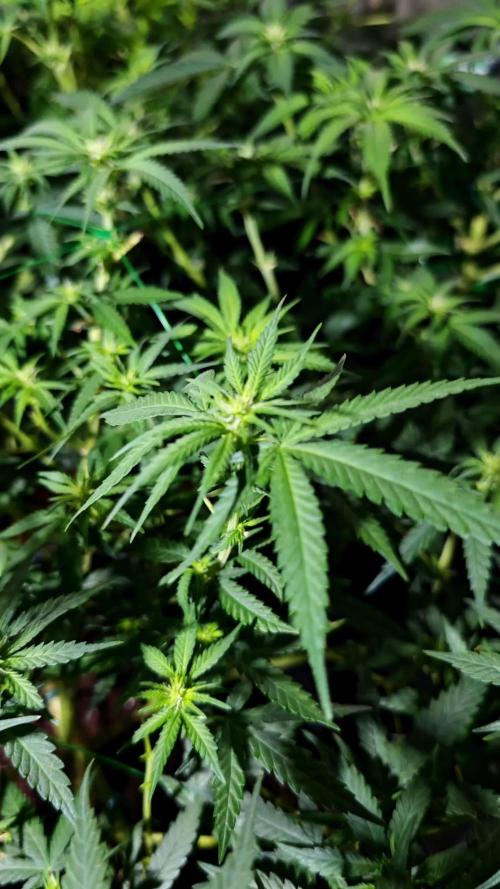
All look good. Very bushy. Giving them full dose of nutes and high light intensity. No stress signs.


@TheHighNews
Volgen
Day 8 of Flowering, this babies are stretching hard and starting to show white pistils and i couldn't be happier! Even if the soil is pre
fertilized i just added 0,5ml of Biomagno FiorituraOM to help the plants start flowering,
as @Mangodudu said EC was only 1,2 it shouldn't get them overfert.
The structure il very nice and the plants are vigorous and always with praying leaves, i defoliated pretty hard and fixed every branch to a bamboo stick,
so they don't have to carry the weight of the buds in the next weeks and focus all the energies in the bulking up the buds.
I also just lowered the lights to get some light stress and help the plants stretch harder, and the response was amazing they just doubled the size in this first week of flower,
I'm also very happy with this canna plus pro soil, it takes the water and drys very fast it think it's thanks to all the cocco in it.


@dekss
Volgen
*LOS FERTILIZANTES SON HACIA LAS OTRAS PLANTAS NO TERMINADAS NO LA QUE SE CORTO ESA SOLO AGUA*
*reemplazo bio bloom por monster bloom como los dos son PK la planta se sobrefertiliza*
semana 10 y se va de corte la primera
contento de terminar mi primer diario entero en esta plataforma
cogollos llenos de resina muy contento con la producción en 68 días desde germinación
*la planta en total creo un poco menos que el doble de lo que se corto pero fui sacándoselo de a poco antes*
ahora solo queda esperar secar
y las otras que vienen en camino
70.85 gramos en humedo contando tallos y una hoja de viento por rama
espero marcar unos 15 en solo cogollos y ya secos
LST en las dos ramas principales de una de las que viene siguiente muy compacta
en lo personal me gustan los cogollos con casi nada de hoja (de esto dependerá cuanto raspe en la garganta)
por lo que el humo entra sin dejar ninguna molestia muy suave y sativo


@Kenpowarrior
Volgen
●heavy defoliation done and 2 days drying out they were to wet. Then i got some brown tip leaves.😔😟
●got drinks and food again.(24/1) hope the rest will not do the same.
●honeys still weak🤔
●wrong settings of nutriens on diarie. All set to 2,5L before. Changed it to 1L
●when white is your new favo color!🤤😎👍❄️😁





shorts_status_processing


@AgroCultiveta
Volgen
Son fotos y videos de múltiples cultivos debido a que nunca e realizado un seguimiento como tal, espero realizar uno ahora!
Nutrientes Utilizados en general Trybac y Trypack biobizz.
Las criticas siempre serán bien recibidas!😋
Espero les guste el contenido!


