


Likes
Comments
Share


@Badbreath
Follow
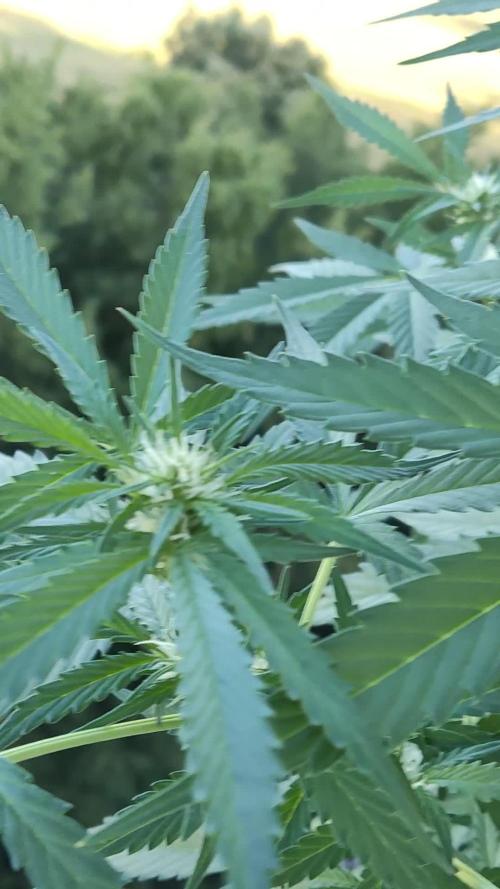
8/10-10/10
Ec 1.4
Ph 5.8-6.14
Dli 32
Humidity 65/70 på dagen. 55/59 på natten
Vpd/kpa 1.08/0.9
Vattentemperatur 17-20.4C

Likes
44
Share


@Ultraviolet
Follow
The gap between where you are and where you want to be is measured in decisions, not dreams. Dopamine release is not the pursuit of happiness; it's the happiness of the pursuit.
"Mens Dei"
Cannabis buds can expand or swell in warmer conditions, but this is not necessarily a desirable effect. High temperatures can cause the buds to become airy and loose, reducing their density and potentially impacting potency and aroma.
First 4 weeks flower, blazing hot expansion of buds, 4 weeks after cool off? Why??
What can be made to expand, airy and loose, can also be made to contract, dense and tight.
Why?
Trichomes do not discriminate, although we like to think of trichomes' primary purpose as being to get us high; they are there to provide photoprotection (sunscreen). Trichomes apply themselves based on area dimensions; the more area = the more trichomes in order to protect. Different from density: Trichomes, the resinous glands on plants, are often produced in response to stress, including high light intensity. This increased production can lead to denser trichome coverage on the plant, stress, stress, stress, stress is the signal.
There is a certain beauty in watching the large water-filled buds once swollen to the brim slowly shrink during drying, as the surface areas contract, the trichomes just cluster up to form denser and denser coatings, already dense from high light intensities, UVB exposure, and IPS, and every other stressor I could tweak.
Trichomes, the resinous glands on cannabis plants, are often produced in response to various forms of stress. These stresses can be environmental, like excess light(HIL) or UV-B radiation, temperature fluctuations, or drought, or mechanical, such as wind, pruning, or even the weight of the plant's own buds. The plant reacts to these stressors by increasing trichome production as a defensive mechanism to protect itself and its valuable compounds like THC and CBD. In essence, cannabis plants perceive stress as a threat and respond by producing more trichomes as a way to protect themselves and their valuable compounds. Several studies have shown this.
Not so much a "master" grower as a master of stress. Psssst. Tip.
Trichomes fill with "antioxidants," including THC.
Ant"ox"idants,
The production of antioxidants in plants is intricately linked to their oxidative apparatus.
The plant has limited oxidative capacity/apparatus. During daytime photosynthesis, a large percentage of that oxidative capacity is tied up in protecting the plant.
During the night, plants alter their metabolic pathways. This leads to a far more focused production of specific antioxidants, like THC. Plants also produce antioxidants during the day. Excess light, for example, can trigger the production of excess antioxidants as part of their defense mechanisms against reactive oxygen species (ROS). The differential ROS production by blue and IR light can have significant biological consequences. For example, high levels of ROS induced by blue light can lead to cell damage and death, while lower levels of ROS produced by IR light may be involved in beneficial cellular signaling pathways. Long nights under the IR (very low ROS), the boost in cellular respiration, and the boost in energy production. In a perfect world, I'd give the plant a shock treatment of 60DLI in 4 hours and give her the other 20 hours to perform cellular respiration under IR. The stress of those 4 hours would be rigorous and full of stress abound, 1800-2000ppm CO2 is easy for a couple of hours during daylight, it's maintaining it that's hard, but 4 hours is very doable with nothing but a little extra "carbon sugar" in your medium every other night during the first 4 weeks of flower.
In my opinion, you only need to jack CO2 for those first 4 weeks of flower to see maximal output, after that it's all about trichome preservation, everything else comes second. Without the temps to assist with metabolism, CO2 is reduced to normal levels along with temps 4-5th week of flower.
Buds are primarily composed of water. Developing flower buds, like other plant tissues, require a significant amount of water for growth and turgor pressure, which helps maintain their structure and firmness.
Turgor pressure in plant cells is primarily generated by osmosis, but transpiration plays a crucial role in maintaining it.
The optimal internal leaf surface temperature for photosynthesis at 1800-2000ppm CO2 is likely in the upper range of 97°F, meaning ambient would need to sit at 102°F-ish or thereabout for full metabolic utilization. That's putting your transpirational pulling force x5 x6 maybe x7 of what it would be if she were cruising at 68F.
"My buds won't fatten, what can I do!!"
Crank that bitch. If your purpose was to blow up a balloon as fast as you can, as much as you can, would you use 2x force or x5 Force to do so? Bad analogy, but you get the idea. Kiss.
Optimize photosynthesis & VPD by day, cellular respiration by night.
TECHNICALLY:
"While transpiration and cellular respiration are both ongoing plant processes, they are not neatly separated into day and night. Both processes occur both day and night, though at different rates and with different emphasis. Transpiration, the release of water vapor from plant surfaces, is primarily driven by sunlight and photosynthesis during the day, but it also continues at a lower rate at night. Cellular respiration, which provides energy for the plant, occurs continuously, both day and night. "
BUT Only 10% ATP can be processed through photosynthesis and carbon capture.
90% of ATP is processed when the plant's oxidative capacity becomes available (NIGHTTIME). Cellular respiration relies on the process of oxidation to generate energy. Specifically, the final stage of cellular respiration, called oxidative phosphorylation, utilizes oxygen as the final electron acceptor to produce a substantial amount of ATP, the cell's primary energy currency.
Several environmental factors can hinder cellular respiration in plants. These include low oxygen levels, temperature extremes (both too high and too low), humidity, water stress, and the presence of toxins. These factors can impair the function of enzymes involved in respiration, disrupt the availability of substrates, or directly damage plant tissues, thus reducing the rate of cellular respiration.
Factors such as oxygen concentration, glucose availability and temperature will all impact the amount of aerobic respiration an organism will perform.
See you next grow, *twiddles thumbs*
Signum Magnum.
Signum magnum
Appáruit in caelo
Múlier amícta sole
Et luna sub pédibus ejus
Et in cápite ejus
Coróna stellárum duódecim
Cantáte dómino cánticum novum
Quia mirabília fecit
Gloria pátri, et filio, et spirítui sáncto
Sicut érat in princípio, et nunc, et semper
Et in saécula saeculórum, amen
Signum magnum
Appáruit in caelo
Múlier amícta sole
Et luna sub pédibus ejus
Et in cápite ejus
Coróna stellárum duódecim
Cantáte dómino cánticum novum
Quia mirabília fecit
Gloria pátri, et filio, et spirítui sáncto
Sicut érat in princípio, et nunc, et semper
Et in saécula saeculórum, amen
Signum magnum
Appáruit in caelo
Múlier amícta sole
Et luna sub pédibus ejus
Et in cápite ejus
Coróna stellárum duódecim
Cantáte dómino cánticum novum
Quia mirabília fecit
Gloria pátri, et filio, et spirítui sáncto
Sicut érat in princípio, et nunc, et semper
Et in saécula saeculórum, amen
Signum magnum
Appáruit in caelo
Múlier amícta sole
Et luna sub pédibus ejus
Et in cápite ejus
Coróna stellárum duódecim


Likes
2
Share

@DogDoctorOfficial
Follow
👑 Godfather OG – Pheno A
Week 11 | The Queen Finally Gets Her Portraits 😂👑📸🔥
Welcome back to another chapter of the 8×8 Adventure! 💚🌱
And this week...
WE HAVE PHOTOGRAPHS.
😂📸👑
Yes, my friends.
After somehow managing to lose the individual photographs of our Queen for two consecutive weeks, I can finally confirm that Godfather OG Pheno A has officially returned to the photographic record.
And because I felt slightly guilty about the previous weeks...
I gave her TWO stacks.
😂👑📸📸
She deserved it.
After all, she spent two weeks basically saying:
"You keep talking about me, but where are my pictures?"
😂
Fair enough, Your Majesty.
Here they are.
And honestly...
looking at these images, I'm very happy we made the effort.
Because this girl is developing beautifully.
She's still tall.
She's still hungry.
She's still demanding.
She's still doing absolutely everything in her own way.
But now we can actually look closely at what she's been building.
So let's give the Queen the spotlight again.
👑🌿🔥
────────────────────────
🌱 WEEK 11 – THE QUEEN KEEPS MOVING
────────────────────────
Not much changed physically for the plants this week.
And that's actually the point.
The room is established.
The plants have their structure.
The flowering sites are developed.
The environment is stable.
The irrigation is running.
The nutrition has been adjusted.
The lighting has been upgraded.
And now...
we let them work.
Godfather OG Pheno A is continuing to grow and develop in exactly the same room as everybody else.
Same environment.
Same general strategy.
Same lighting system.
Same irrigation.
Same nutritional foundation.
Different genetics.
And once again, she's showing us her own interpretation of that environment.
She's not trying to become Blueberry Muffin.
She's not trying to become Cash Express.
She's not trying to become Chem Brûlée.
She's Godfather OG Pheno A.
And she's doing it her way.
👑
────────────────────────
📸 THE QUEEN FINALLY GETS HER PORTRAIT SESSION
────────────────────────
Okay...
I have to admit something.
This week wasn't exactly a massive photography week.
I didn't spend hours photographing every plant from every possible angle.
But when I got to Godfather OG Pheno A...
I looked at her and thought:
"Nope. She deserves at least two stacks." 😂
So that's exactly what we did.
Two stacks.
And I'm really glad we did.
Because macro photography gives us a completely different way of looking at the plant.
Suddenly, the canopy becomes a landscape.
The flowers become mountains.
The trichomes become a forest of tiny structures.
And those beautiful orange and white pistils weave their way through everything.
Looking at these images, you can really see how much resin coverage she's building.
The flowers are absolutely covered.
The sugar leaves are coated.
The surface of the buds is sparkling.
And the more you look...
the more there is to discover.
🔬🌸💎
────────────────────────
💎 A CLOSER LOOK AT HER RESIN
────────────────────────
This is probably the part of the photography that makes me stop every time.
You take the image.
Then you zoom in.
Then you zoom in again.
And suddenly...
there are trichomes everywhere.
😂💎🌿
Godfather OG Pheno A is showing some beautiful resin development.
The macro stacks reveal layers upon layers of trichomes sitting across the flower structure.
Some areas look almost completely covered.
Others show the green floral tissue underneath, surrounded by sparkling resin.
And then you have those pistils running through everything, giving the flowers that beautiful contrast between green, white and orange.
It's one of those moments where photography becomes more than simply documenting the plant.
It becomes a way of seeing something that your eyes simply can't appreciate in the same way.
The naked eye says:
"That's a frosty flower."
The macro stack says:
"Look at ALL of this." 😂
🔬💎🌸
────────────────────────
👑 STILL THE SAME HUNGRY QUEEN
────────────────────────
And yes...
before anyone thinks the Queen has suddenly become polite...
No.
😂🍽️👑
She's still hungry.
Godfather OG Pheno A continues to be one of the more demanding phenotypes in the room.
That characteristic hasn't disappeared.
If anything, it has become part of her identity throughout this run.
She's a large plant.
She's got a substantial structure.
She's supporting a lot of foliage.
She's developing flowers throughout that structure.
And she's using the resources available to her.
That's one of the things I find so fascinating about running multiple phenotypes together.
We can give the room a consistent foundation...
and then watch the plants tell us what they think about it.
Some are quieter.
Some are more compact.
Some are more relaxed.
And then there's Godfather OG Pheno A.
😂👑
"More, please."
She hasn't changed her position on the matter.
────────────────────────
🌿 SAME ROOM – DIFFERENT STORY
────────────────────────
This is really the heart of the 8×8 Adventure.
Twelve plants.
One room.
One general environment.
And twelve completely different conversations happening between the genetics and that environment.
Godfather OG Pheno A is giving us one of the more obvious examples.
She's tall.
She's vigorous.
She's hungry.
She's substantial.
She's built her own architecture.
And now she's developing flowers across that architecture.
The environment hasn't been specially designed for her.
She's adapting to the same environment as everyone else.
And that's exactly what makes the comparison interesting.
We're not trying to force every plant into the same shape.
We're observing.
We're documenting.
And we're allowing the genetics to speak.
This Queen has certainly found her voice.
😂👑🌿
────────────────────────
💡 MORE PHOTONS – SAME QUEEN
────────────────────────
And of course...
we have another major change to talk about this week.
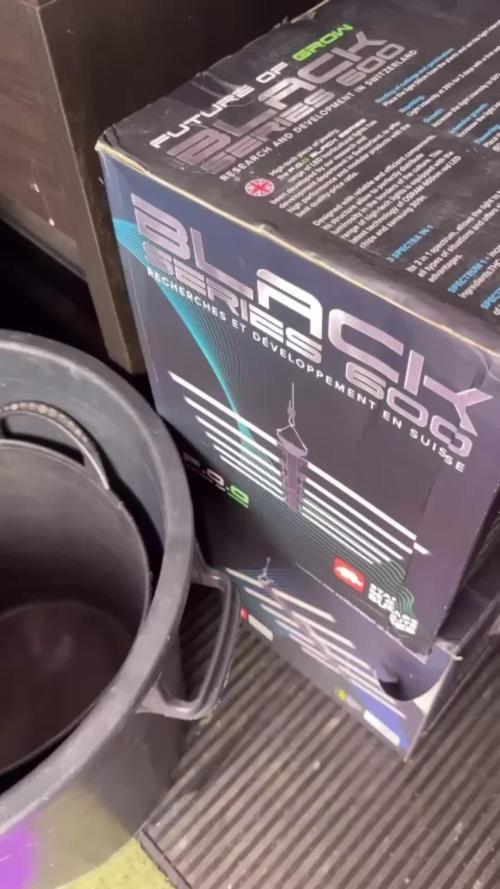
The room is now running with the two additional Future of Grow Black Series 600W fixtures.
When we first introduced them, the available light was more than we wanted to run at full output.
So instead of simply throwing everything at the plants...
we reduced the power.
We're now running approximately 59% power from the plug.
And we're seeing around:
☀️ ~1,500 PPFD across the upper canopy
with the intensity naturally decreasing depending on plant height and position.
And I really like this setup.
Because we're not chasing maximum power.
We're creating capability.
We have more lighting available when we need it...
without needing to run every fixture flat out.
That means more flexibility.
More control.
And, importantly, no reason to waste electricity simply because the fixtures are capable of producing more.
The Queen doesn't need us to turn the room into a miniature sun.
😂☀️👑
She just needs access to the photons she can actually use.
────────────────────────
☀️ PHOTONS MEET PLANT ARCHITECTURE
────────────────────────
And this is where Godfather OG Pheno A becomes particularly interesting.
She's around 169 cm tall.
She's not a small, compact plant.
She's a three-dimensional structure occupying a significant amount of vertical space.
So when we talk about ~1,500 PPFD at the upper canopy, that's only part of the story.
The light interacts with the entire structure.
Leaves intercept photons.
Some light passes through.
Some reaches deeper.
Some reflects.
Some is absorbed lower in the canopy.
And then we have the additional Lumiflora lighting helping reach areas that naturally receive less direct illumination.
The plant isn't a flat surface.
She's a living structure.
A three-dimensional photon-catching machine.
😂💡🌿
And this Queen has plenty of surface area available for those photons to meet.
────────────────────────
💡 FUTURE OF GROW – A BIG THANK YOU
────────────────────────
I also want to take a moment to give another big shoutout to Future of Grow.
They supplied the two additional Black Series 600W fixtures for us to test in this adventure, and they've made a very interesting difference to the lighting capacity of the room.
The beauty of having more available power isn't necessarily running everything at maximum.
It's having headroom.
It's having options.
It's being able to distribute light across the room while controlling the actual output we're using.
And right now...
~59% from the plug is giving us the ability to work around that ~1,500 PPFD upper-canopy target.
That's a pretty impressive amount of light without needing to push the fixtures anywhere near their maximum.
So thank you, Future of Grow, for giving us the opportunity to put these fixtures through their paces. 💚💡☀️
────────────────────────
🌸 THE FLOWERS ARE SPEAKING FOR THEMSELVES
────────────────────────
And now that we actually have photographs again...
I think the flowers deserve a little attention.
😂📸
The macro stacks show a plant that is clearly well into her flowering development.
The floral structures are established.
The pistils are developing beautifully.
The resin coverage is becoming increasingly obvious.
And there's that wonderful mixture of green flower tissue, white trichomes and orange pistils that makes every macro image look completely different from the one before it.
This is the stage where I really enjoy documenting the plants.
Because the changes aren't always dramatic from one day to the next.
But put photographs from different weeks beside each other...
and suddenly you can see the story.
The plant has changed.
The flowers have changed.
The resin has changed.
The structure has changed.
And all those small changes add up.
🌸💎🌿
────────────────────────
🌿 LITTLE INTERVENTION – LOTS OF OBSERVATION
────────────────────────
Just like with the other girls...
we didn't do much physically this week.
And that's intentional.
The major structural work has already happened.
The plants are flowering.
Healthy leaves are still doing their job.
The flowers are developing.
The root zones are being supplied.
The environment is stable.
So there isn't much reason for me to walk in there every day looking for something to cut.
😂✂️
Sometimes the best thing a grower can do is...
nothing.
Watch.
Observe.
Measure.
Adjust when necessary.
And let the plant actually grow.
Godfather OG Pheno A certainly isn't asking me to interfere.
She's busy enough doing her own thing.
😂👑
────────────────────────
⚗️ FEEDING – THE MENU HAS BEEN INCREASED
────────────────────────
This week we also increased the nutrition slightly, just like with the rest of the room.
Terra Bloom moved from:
🌱 2.2 ml/L → 2.3 ml/L
The rest of her current feeding remains:
🌱 Terra Bloom – 2.3 ml/L
🌱 Green Sensation – 1 ml/L
🌱 Power Buds – 1 ml/L
🌱 Sugar Royal – 1 ml/L
⚗️ pH adjusted as required
That small increase brought the room EC up a little.
Current EC is around:
⚡ ~2.14 mS/cm
And once again...
the Queen is probably happy about this.
😂🍽️👑
Although I wouldn't be surprised if she sends another royal request next week.
────────────────────────
🌡️ WEEK 11 ROOM CONDITIONS
────────────────────────
The room continues to remain very stable.
Current conditions are approximately:
🌡️ Day temperature: ~26.5°C
🌙 Night temperature: ~26°C
💧 RH: ~61%
⚗️ pH: ~6.02
⚡ EC: ~2.14 mS/cm
💦 Nutrient solution: ~25°C
🌱 Substrate temperature: ~25°C
💨 CO₂: ~693 ppm
💡 Light schedule: 12/12
? Pot size: 15 L
💧 Irrigation: ~1.45 L/plant/24h
And again...
the numbers are only one part of the story.
The most important thing is how the plants are responding.
And Godfather OG Pheno A is responding with:
🌿 Growth
🌸 Flower development
💎 Resin
🍽️ Appetite
👑 Personality
That's a pretty good report card.
────────────────────────
💨 SAME ENVIRONMENT – LET HER WORK
────────────────────────
At this point in the run, my main job is becoming increasingly simple.
Keep the environment stable.
Keep the irrigation consistent.
Keep nutrition appropriate.
Keep the airflow moving.
Keep the lighting where we want it.
And observe.
The plant already knows what she's doing.
Godfather OG Pheno A has spent the entire run building the structure that she's now using to support these flowers.
So now we get to watch the payoff.
All those branches.
All those leaves.
All those photons.
All that root activity.
All those days of growth.
Coming together in these flowers.
That's the part of the grow that I love.
🌿➡️🌸
────────────────────────
🔬 TWO STACKS FOR THE QUEEN
────────────────────────
And I think the two macro stacks were absolutely justified.
😂👑📸
After two weeks without her own photographic feature...
she was owed.
And honestly, these images remind me why I love doing stacked macro photography so much.
A single photograph can show you a beautiful flower.
A focus stack can reveal an entire world.
Every tiny trichome becomes visible.
Every little variation in the surface becomes part of the image.
You start seeing structures that you simply don't notice when standing in front of the plant.
And with Godfather OG Pheno A...
there is certainly plenty to look at.
💎💎💎
So yes.
Two stacks.
Because apparently the Queen's photographic allowance had been accumulating interest.
😂👑📸
────────────────────────
🔮 WHAT COMES NEXT?
────────────────────────
Now we continue watching.
The plant is established.
The flowers are developing.
The resin is becoming more obvious.
The nutrition has been increased slightly.
The lighting environment has been expanded.
And the Queen is still doing what she does best.
Growing.
Eating.
Flowering.
And occasionally making me feel like I'm not feeding her enough.
😂🍽️👑
I'm curious to see how the flowers continue developing from here.
I'm curious to see how the resin expression progresses.
And I'm especially curious to see what the next macro session reveals.
Because now that we've finally got her photographic record back...
I'm not losing it again.
😂📸
I hope.
────────────────────────
💭 FINAL THOUGHTS – THE QUEEN IS BACK ON CAMERA
────────────────────────
So...
Week 11.
And for once...
we actually have individual photographs of Godfather OG Pheno A.
😂👑📸
After two weeks of photographic disappearance, the Queen has officially returned to the camera.
And honestly?
She looks fantastic.
She's still tall.
She's still hungry.
She's still demanding.
She's still building.
She's still catching photons.
And she's still developing those beautiful flowers that have made her such an interesting phenotype to follow.
The room hasn't changed specifically for her.
The environment remains shared.
The lighting has been upgraded for the whole room.
The nutrition has been increased for the whole room.
And yet...
she continues to interpret everything in her own way.
That's the experiment.
That's the beauty of phenotypes.
Same room.
Same photons.
Same general care.
Different genetics.
Different expression.
Different story.
And Godfather OG Pheno A is definitely writing her own.
👑🌿💡🌸💎🔥
This week, she finally got her photographs.
Two beautiful stacks.
And I think we can all agree...
she was worth the wait.
😂📸👑
────────────────────────
🙏 THANK YOU
────────────────────────
As always, thank you so much to everyone following the 8×8 Adventure. 💚🌱
Thank you to GrowDiaries for giving us the space to document these individual journeys and share the experience with growers around the world.
Thank you to Zamnesia for the Godfather OG genetics and for giving us the opportunity to explore these different phenotypes.
Thank you to Plagron for the growing media and nutrition supporting the room.
A huge thank you to Future of Grow for supplying the additional Black Series 600W fixtures and allowing us to explore what this expanded lighting setup can do. 💡☀️🌿
Thank you to Lumiflora for helping bring additional light into the deeper and lower areas of the canopy.
Thank you to TrolMaster for helping keep everything under control behind the scenes.
And finally...
thank you to everyone following along.
Every comment.
Every question.
Every message.
Every person stopping by to see what these girls are doing.
It genuinely means a lot. 💚
This 8×8 Adventure continues to be such a fascinating experience.
Twelve plants.
One room.
One shared environment.
And twelve completely different stories.
And Godfather OG Pheno A?
She's still one of the loudest characters in the room.
😂👑
She's hungry.
She's demanding.
She's tall.
She's beautiful.
She's covered in developing flowers and resin.
And apparently...
she also expects a proper photography budget.
😂📸👑
Fair enough.
She earned it.
So let's keep those photons flying.
Let's keep watching the flowers develop.
Let's keep documenting the differences.
And most importantly...
let's let the Queen shine.
👑🌿💡🌸💎🔥
Growers Love, my friends. 💚🌱
And this time...
I actually have the photographs to prove it.
😂📸👑
Likes
56
Share


@Master_weeda
Follow
Bonjour à tous les padawans et maîtres jedis
Jour84 arrosage avec 2 litres d'eau ph6.3
Jour86 arrosage avec 2. 5litres d'eau ph6.3
Jour89 arrosage avec 2 litres d'eau ph6.3
LE MEILLEUR MOMENT POUR RINCER SON CANNABIS
Le rinçage commence en général deux semaines avant la récolte. Si le plant a une période de floraison de huit semaines, le rinçage doit commencer six semaines après le début de la période de floraison. Il est préférable de regarder de près les trichomes sur le plant pour déterminer quand votre cannabis est prêt à être récolter. Si les petits trichomes commencent juste à passer d’une couleur transparente à une teinte laiteuse et blanche, c’est une bonne indication que les plants peuvent commencer à être rincés. Il faut s’arranger pour que la majorité des trichomes aient changé vers la couleur désirée pour la récolte après deux semaines – ça devient plus facile à faire avec l’expérience, alors accrochez-vous !
Le rinçage peut également être un bon moyen de remettre à zéro la terre quand un plant est toujours en phase de croissance végétative. Parfois, un cultivateur suralimente par accident son cannabis, ce qui provoque un changement de couleur et un flétrissement du bout des feuilles. Ceci est appelé une « brûlure par nutriments ». Rincer la terre peut éliminer les nutriments excédentaires, ce qui aide à résoudre le problème. Cependant, c’est une mesure drastique à ce stade de la culture, alors assurez-vous que le problème soit bien une brûlure par nutriments et non quelque chose d’autre.
Le rinçage ne concerne pas que le moment de la récolte. Cette technique peut aussi être mise en place durant la phase de croissance afin de débarrasser le sol des nutriments. Bien évidemment, les nutriments permettent à votre plante de rester en bonne santé et vous assurent des rendements maximaux, mais une trop grande quantité peut causer une accumulation et un état statique durant lequel la plante ne peut plus y accéder.
Le blocage des nutriments peut être causé par une accumulation saline ou des niveaux de pH incorrects. Ces deux causes peuvent être résolues par un rinçage de votre plante à l’eau claire. Les fluides viendront pousser les nutriments en dehors du substrat et le débarrasseront de l’accumulation, permettant ainsi aux racines de pouvoir accéder à nouveau aux nutriments.
EMPÊCHER LE BLOCAGE D'ABSORPTION DES NUTRIMENTS AVANT QU’IL NE POSE PROBLÈME
Au mieux, le blocage des nutriments peut être un problème, au pire, il peut être un vrai désastre. Comme le dit l’adage, il vaut mieux prévenir que guérir. Il vaut mieux prendre de l’avant pour empêcher le blocage des nutriments plutôt que de s’y atteler lorsque c’est trop tard.
Empêcher le blocage des nutriments peut se faire par le biais d’un rinçage de routine. En rinçant vos plantes une fois avant la floraison et une fois au milieu de cette dernière, vous minimiserez l’accumulation de nutriments.
LES ENZYMES À LA RESCOUSSE
Après le rinçage pour contrer l’accumulation ou le blocage des nutriments, vous remarquerez peut-être que vos plantes ont une apparence vert foncé, c’est le signe d’un excès de nutriments. Dans ce cas, certains cultivateurs choisissent d’ajouter une formule riche en enzymes à leur substrat.
Au cas où vous auriez oublié vos cours de biologie, les enzymes sont des protéines qui catalysent les réactions. Elles aident à rincer le substrat en décomposant l’amidon, les glucides et les nutriments. Il existe sur le marché toute une variété de produits qui contiennent des formules d’enzymes très efficaces.
Si l’eau ne suffit pas à vos plantes, ces petites protéines ne feront qu’une bouchée de l’accumulation de nutriments !
COMMENT BIEN RINCER SON CANNABIS
Rincer votre plant de cannabis est un processus simple. À chaque fois que vous apporteriez normalement des nutriments, vous rincez à la place. De l’eau du robinet non traitée est tout ce dont vous avez besoin pour rincer, assurez-vous juste que son pH est sans danger pour le cannabis. La plupart de l’eau de puits a un pH sain et ne nécessite pas de traitement, mais s’il est nécessaire de traiter l’eau de rinçage pour avoir un pH adapté, faites-le. Les ajustements du pH seront donc la seule chose à considérer.
Inonder la terre avec autant d’eau fraîche qu’elle puisse contenir. Laissez l’eau durant quelques minutes pour qu’elle puisse absorber les nutriments, puis inondez la terre encore pour rincer les nutriments loin du plant. Si vous cultivez en intérieur dans des pots, notez la couleur de l’eau qui s’échappe du fond des pots. Elle sera tâchée et aura une couleur sale. C’est à cette étape qu’un appareil de mesure des TDS (Total des Solides Dissous) est utile. Si vous récupérez et mesurez le TDS de l’eau « évacuée », elle devrait avoir un taux de 1300ppm, ce qui est assez élevé. Il est important de rincer le plant jusqu’à ce que total baisse à un niveau de 50ppm, ou du moins qu’il s’approche du TDS de l’eau fraîche que vous utilisez pour rincer le plant. La couleur de l’eau d’évacuation va s’éclaircir et apparaîtra plus propre. Vous devez tirer autant que possible de minéraux dissous du plant.
Comment et Quand Rincer les Plants de Cannabis
Rincer les plants de cannabis avant la récolte peut faire la différence entre les meilleurs têtes ou la plus rude pour la gorge. Cette petite tâche est simple et facile à faire. Ajoutez juste de l’eau ! Attention car le moment du rinçage joue un rôle critique.
Le b.a.-ba du rinçage de ses plants de cannabis.
Sommaire:
1. Qu’est-ce que le rinçage ?
2. Le meilleur moment pour rincer son cannabis
3. Empêcher le blocage d'absorption des nutriments avant qu’il ne pose problème
4. Les enzymes à la rescousse
5. Comment bien rincer son cannabis
6. Comment rincer ses plantes en hydroponie
7. Les résultats du rinçage de son cannabis
8. Quand éviter de rincer son cannabis
Vous avez enfin fini vos cultures et vous vous retrouvez avec un magnifique plant couvert de super têtes, maintenant sèches, vous avez fait le curing et vous êtes prêt à fumer – et pourtant quelque chose ne va pas. La weed semble ne pas vouloir se consumer et quand vous tirez une bouffée, c’est comme si on vous avait donné un coup de poing dans les poumons et vous toussez en craignant pour votre vie ! Le goût est rude et décevant. Si c’est une situation que vous avez vécue, il y a des chances pour que vos plants n’aient pas été rincés correctement avant la récolte.
Cette fumée bien loin d’être agréable est provoquée par la présence dans le plant des nutriments et minéraux utilisés lors de la culture, ce qui altère la façon dont le plant se consume. Rincer le plant élimine ces nutriments restants, ce qui améliore la qualité des sensations. Heureusement, le rinçage des plants de cannabis se fait facilement et sans effort, et cela vous permet de produire des têtes douces et délicieuses en un rien de temps.
ARTICLE LIÉ
Comment Utiliser les Nutriments pour Cannabis
QU’EST-CE QUE LE RINÇAGE ?
L’acte de rincer un plant implique d’utiliser de l’eau pour éliminer tout nutriment présent dans la terre. Une grande quantité d’eau est passée à travers la terre et drainée sur une base régulière. Tous les minéraux et nutriments présents dans la terre sont rincés avec le temps avec l’eau, ce qui laisse une terre propre.
Mais pourquoi vouloir éliminer tous les minéraux de la terre ? N’est-ce pas mauvais pour la récolte ? En fait, cela aide à la récolte de manière significative. Quand les nutriments sont éliminés de la terre, ceci force le plant de cannabis à utiliser tous les nutriments toujours présents dans le plant. C’est comme pour le corps humain. Quand on consomme beaucoup d’aliments, ce que nous n’utilisons pas est transformé en graisses. Dans les situations extrêmes où la nourriture est rare, le corps s’appuie sur cette graisse stockée pour tirer de l’énergie.
Comme rincer force le cannabis à utiliser tous les nutriments restants dans le plant, aucun ne devrait rester et altérer les têtes récoltées. Cependant, si vous le faites trop tôt, cela peut nuire à la santé du plant, le moment est donc clé.
LE MEILLEUR MOMENT POUR RINCER SON CANNABIS
Le rinçage commence en général deux semaines avant la récolte. Si le plant a une période de floraison de huit semaines, le rinçage doit commencer six semaines après le début de la période de floraison. Il est préférable de regarder de près les trichomes sur le plant pour déterminer quand votre cannabis est prêt à être récolter. Si les petits trichomes commencent juste à passer d’une couleur transparente à une teinte laiteuse et blanche, c’est une bonne indication que les plants peuvent commencer à être rincés. Il faut s’arranger pour que la majorité des trichomes aient changé vers la couleur désirée pour la récolte après deux semaines – ça devient plus facile à faire avec l’expérience, alors accrochez-vous !
Le rinçage peut également être un bon moyen de remettre à zéro la terre quand un plant est toujours en phase de croissance végétative. Parfois, un cultivateur suralimente par accident son cannabis, ce qui provoque un changement de couleur et un flétrissement du bout des feuilles. Ceci est appelé une « brûlure par nutriments ». Rincer la terre peut éliminer les nutriments excédentaires, ce qui aide à résoudre le problème. Cependant, c’est une mesure drastique à ce stade de la culture, alors assurez-vous que le problème soit bien une brûlure par nutriments et non quelque chose d’autre.
Flushing
Le rinçage ne concerne pas que le moment de la récolte. Cette technique peut aussi être mise en place durant la phase de croissance afin de débarrasser le sol des nutriments. Bien évidemment, les nutriments permettent à votre plante de rester en bonne santé et vous assurent des rendements maximaux, mais une trop grande quantité peut causer une accumulation et un état statique durant lequel la plante ne peut plus y accéder.
Le blocage des nutriments peut être causé par une accumulation saline ou des niveaux de pH incorrects. Ces deux causes peuvent être résolues par un rinçage de votre plante à l’eau claire. Les fluides viendront pousser les nutriments en dehors du substrat et le débarrasseront de l’accumulation, permettant ainsi aux racines de pouvoir accéder à nouveau aux nutriments.
EMPÊCHER LE BLOCAGE D'ABSORPTION DES NUTRIMENTS AVANT QU’IL NE POSE PROBLÈME
Au mieux, le blocage des nutriments peut être un problème, au pire, il peut être un vrai désastre. Comme le dit l’adage, il vaut mieux prévenir que guérir. Il vaut mieux prendre de l’avant pour empêcher le blocage des nutriments plutôt que de s’y atteler lorsque c’est trop tard.
Empêcher le blocage des nutriments peut se faire par le biais d’un rinçage de routine. En rinçant vos plantes une fois avant la floraison et une fois au milieu de cette dernière, vous minimiserez l’accumulation de nutriments.
LES ENZYMES À LA RESCOUSSE
Après le rinçage pour contrer l’accumulation ou le blocage des nutriments, vous remarquerez peut-être que vos plantes ont une apparence vert foncé, c’est le signe d’un excès de nutriments. Dans ce cas, certains cultivateurs choisissent d’ajouter une formule riche en enzymes à leur substrat.
Au cas où vous auriez oublié vos cours de biologie, les enzymes sont des protéines qui catalysent les réactions. Elles aident à rincer le substrat en décomposant l’amidon, les glucides et les nutriments. Il existe sur le marché toute une variété de produits qui contiennent des formules d’enzymes très efficaces.
Si l’eau ne suffit pas à vos plantes, ces petites protéines ne feront qu’une bouchée de l’accumulation de nutriments !
Comment et Quand Rincer les Plants de Cannabis
COMMENT BIEN RINCER SON CANNABIS
Rincer votre plant de cannabis est un processus simple. À chaque fois que vous apporteriez normalement des nutriments, vous rincez à la place. De l’eau du robinet non traitée est tout ce dont vous avez besoin pour rincer, assurez-vous juste que son pH est sans danger pour le cannabis. La plupart de l’eau de puits a un pH sain et ne nécessite pas de traitement, mais s’il est nécessaire de traiter l’eau de rinçage pour avoir un pH adapté, faites-le. Les ajustements du pH seront donc la seule chose à considérer.
Inonder la terre avec autant d’eau fraîche qu’elle puisse contenir. Laissez l’eau durant quelques minutes pour qu’elle puisse absorber les nutriments, puis inondez la terre encore pour rincer les nutriments loin du plant. Si vous cultivez en intérieur dans des pots, notez la couleur de l’eau qui s’échappe du fond des pots. Elle sera tâchée et aura une couleur sale. C’est à cette étape qu’un appareil de mesure des TDS (Total des Solides Dissous) est utile. Si vous récupérez et mesurez le TDS de l’eau « évacuée », elle devrait avoir un taux de 1300ppm, ce qui est assez élevé. Il est important de rincer le plant jusqu’à ce que total baisse à un niveau de 50ppm, ou du moins qu’il s’approche du TDS de l’eau fraîche que vous utilisez pour rincer le plant. La couleur de l’eau d’évacuation va s’éclaircir et apparaîtra plus propre. Vous devez tirer autant que possible de minéraux dissous du plant.
COMMENT RINCER SES PLANTES EN HYDROPONIE
Le rinçage des plantes en hydroponie est bien plus simple que de se débarrasser des nutriments en terre. Les cultivateurs en hydroponie pourront simplement drainer leur système et le remplacer par une eau au pH neutre.
Le rinçage des plantes en hydroponie est aussi un processus bien plus court. Une fois que la réserve d’eau aura été modifiée, les plantes en hydro n’auront pas accès aux nutriments externes. Pour cette raison, un rinçage de deux jours suffira.
LES RÉSULTATS DU RINÇAGE DE SON CANNABIS
Après la récolte des têtes, prenez du temps pour bien faire le curing pour atteindre le potentiel le plus élevé. Un affinage correct par curing permet de réduire encore plus le côté rude des têtes, en éliminant des choses comme un excès de chlorophylle. Vous serez étonné de voir la différence que ce petite effort peut avoir sur votre produit. Tout votre travail se sentira dans la première bouffée de cette weed douce comme de la soie, qui caresse la gorge comme du miel. Le plus doux de la nature. Vous pouvez donc améliorer la qualité de votre cannabis en ajoutant juste de l’eau !
QUAND ÉVITER DE RINCER SES PLANTES
Le seul moment où nous recommandons d’éviter le rinçage de son cannabis est lorsque l’on travaille avec une terre biologique amendée ou un super soil. Ces substrats ont été développés avec précaution afin d’héberger des micro-organismes bienfaisants tels que des bactéries ou des champignons. Cette délicate biodiversité pourrait être éliminée et endommagée par le rinçage.
Une fois de plus, l’absence de rinçage ne devrait pas poser de soucis, car aucun nutriment externe ou synthétique n’aura été ajouté au substrat. À la place, les plantes comptent sur les micro-organismes pour décomposer la matière organique et la livrer aux racines.
May the force be with you 💪

Likes
Comments
Share

@fridge
Follow
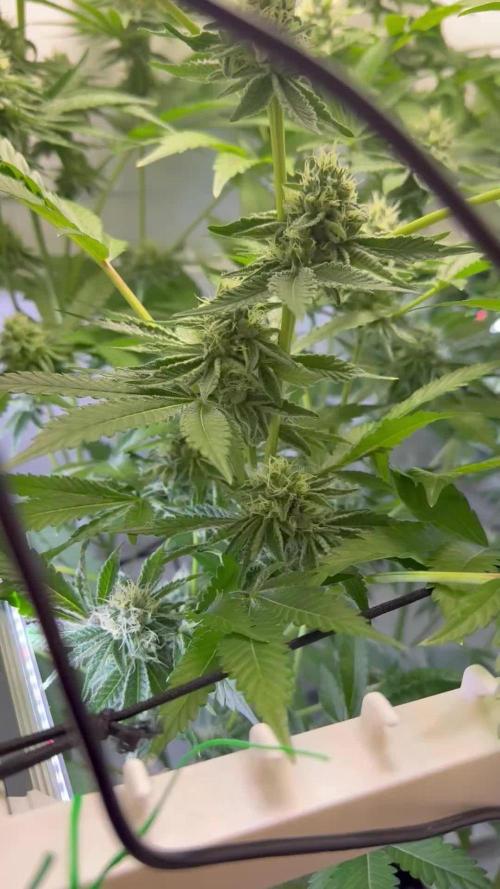
end of week 4 flower | bit more deficencies | this one is running on only 50% fertilizer |
Likes
Comments
Share
@Vet_J
Follow
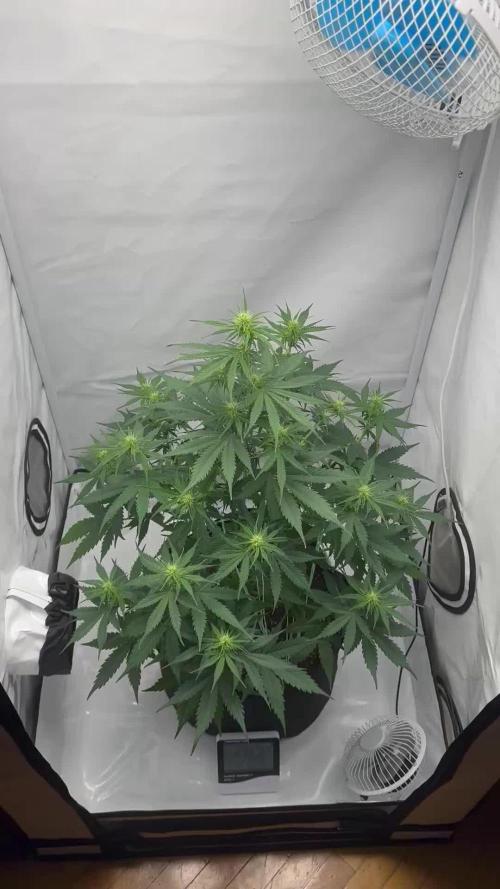
The flowering stage is progressing really well and I’m genuinely happy with how she’s coming along at week 7. The first brown pistils have already started showing on two of the branches, which confirms she’s deep into her flowering cycle now — right on schedule for Glue Gelato Auto.
Next week I’m planning to significantly increase the flowering nutrients — particularly Big One and Top Candy, which should really push bud size and resin production from here on. Around the middle of the week I’ll also do a proper defoliation, clearing out the fan leaves that are blocking light from reaching the lower bud sites. The canopy has filled in nicely but it needs opening up to let those buds really fatten up.
Water intake has increased quite a bit — I’ve stepped up from one liter to two, and even then the soil is nearly bone dry by early morning. That kind of uptake is a good sign — the roots are clearly healthy and the plant is working hard to fuel bud development. I’ll be watching closely to see if she needs even more as things progress.
I’ve also been doing regular branch adjustments, gently repositioning the roped branches to keep the canopy level and make sure every top is getting its share of light. Nothing too aggressive at this point — just keeping things tidy.
Week 7 feels like a critical stage now. Pushing the flowering nutrients harder from here should make a real difference in final bud size and density.

Likes
170
Share

@Master_weeda
Follow
Bonjour à tous les padawans et maîtres jedis
Quel plaisir mes amis tout y est dans ce diarie !
À par le rendement 😁 mais bon ce n'était vraiment pas le but car je me suis rendu la tâche encore plus difficile en tentant l'expérience solo cup challenge avec main-lining sur une autofloraison.
Merci pour tout vos compliment votre soutient et votre gentillesse.
Je me suis vraiment amusé et j'ai pris beaucoup de plaisir avec ce diarie, mais j'ai surtout beaucoup appris. Que la force soit avec vous 💪
Likes
92
Share


@DogDoctorOfficial
Follow
Week 10 - Second Week of Flowering 🌸
As week two of flowering begins, the garden’s growth is unstoppable! These ladies are thriving, stretching up while staying beautifully vibrant and green. Every inch of this tent is optimized—each plant is soaking up light, nutrients, and water precisely as they need, filling the room with energy.
Room Conditions 🌡️
• Temperature: 27.3°C
• Humidity: 62.6%
• CO₂ Levels: 800 ppm
• VPD: 1.36 kPa (excellent range for robust flowering)
• Lighting Intensity: 818 PPFD
Solution & Medium 💧
• Solution Temp: 21.5°C | TDS: 470 ppm | pH: 6.02
• Medium: Moisture 100% (recently dried to 67%), TDS 510 ppm, Temp 22.5°C
The “dry-out” to 67% was a strategic move, helping boost nutrient uptake and root strength. Meanwhile, our slight increase in reds seems to be having the desired effect, nudging these ladies further along in the flowering process.
Eye Safety & LED Lighting 🌞🕶️
With powerful LED systems like the ThinkGrow and ICL-300, eye protection is critical. LED grow lights emit high-intensity light across the full spectrum, including intense UV and infrared components that are not easily detected by the human eye. Long-term exposure without adequate protection can lead to eye strain, and in extreme cases, damage to vision.
• Blue Light Hazard: LEDs often have elevated levels of blue light, which can harm the retina over time if proper precautions aren’t taken.
• UV Protection: Even low doses of UV can accumulate and harm eyes, so grow glasses with UV protection are essential for any indoor gardener.
Investing in quality grow room glasses can help protect from glare, UV, and infrared rays, making plant care safer and more comfortable.
Lighting Enhancements: ICL-300 In-Depth 🔆
The ICL-300 is our newest addition, specifically designed for inner canopy illumination. This LED offers a targeted light boost under the canopy, enhancing flower growth in lower and shaded areas—ideal for maximizing yield and light efficiency.
• Dual Spectrum Technology: The ICL-300 provides a custom spectrum designed to penetrate deeper into the plant canopy, promoting robust bud formation throughout.
• Enhanced Light Distribution: With strategically positioned diodes, the ICL-300 reduces shadowing and balances light distribution to all parts of the plant.
• Energy Efficiency & Heat Management: This light is designed to be energy-efficient, running cooler and reducing the risk of heat stress within the grow space.
The inner canopy light gives the plants exactly what they need, particularly during the flower stage when bud sites deep in the canopy can benefit from more direct exposure. However, after noticing slight leaf burn on some plants, I’ll hold off a bit longer before fully integrating this light to ensure optimal adjustment.
Looking Forward 🌟
As we continue dialing in conditions, it’s all about balance, precision, and taking proactive steps to optimize every aspect of the grow environment. We’ll keep a close watch on the canopy height, and next week, I’ll aim to fine-tune the light integration even further with the ICL-300.
P.S. - ICL-300 and CO₂ Sensor 🌱
The TrolMaster CO₂ Sensor (MBS-S8) has been crucial for real-time CO₂ adjustments, ensuring the plants get exactly what they need without constant monitoring. Combined with the ICL-300’s spectrum flexibility, these tools make an unbeatable setup, allowing for nuanced control over plant growth and development.
As always, a huge thanks to the Grow Fam for the tips, support, and enthusiasm! I’m excited to see what these next weeks will bring as these plants reach their full flowering potential. Stay tuned for more updates, and don’t forget: eye safety first, growers! 🌞🌿
Discount Codes so you can save big on your next check out 💚💚💚
Kannabia - DOGDOCTOR 30% off
SeedsmanSeeds - DOGDOCTOR 10% off
CannaKan- DOGDOCTOR 15% off
terpyz.eu - DOCTOR 15% off
The Neutralizer - PORKIT5-DOG 15% off
As always thank you all for stopping by, for the love and for it all , this journey of mine wold just not be the same without you guys, the love and support is very much appreciated and i fell honored and so joyful with you all in my life 🙏
With true love comes happiness 💚🙏 Always believe in your self and always do things expecting nothing and with an open heart , be a giver and the universe will give back to you in ways you could not even imagine so 💚
Friendly reminder all you see here is pure research and for educational purposes only
Growers Love to you all 💚💚💚


Likes
7
Share


@cwgrows
Follow
Growth is really starting to explode! Been researching all of the training methods and think some LST and eventually scrog will be the best use of this space.
Likes
16
Share


@Paultemp
Follow
Hi all!!🤗👊
Week 3 flower
Very Nice buds not very frosty but look good!
In coco With perlite 80/20
Systeme auto pot 7gallons
Remo nutrients
600w hps

Likes
26
Share


@Buddyman75
Follow
Good week everyone. I started off with another top dress with 0-10-0 fruit bat guano. Yummy!!
I saw lots of growth outward not upward because the stretch has almost stopped.
This is a very fast growing strain with a strong smell. The smell is amazing. It's swell yet musky. I guess it's like a banana, hope the buds are like bananas also😀

Likes
26
Share


@OGgrows
Follow
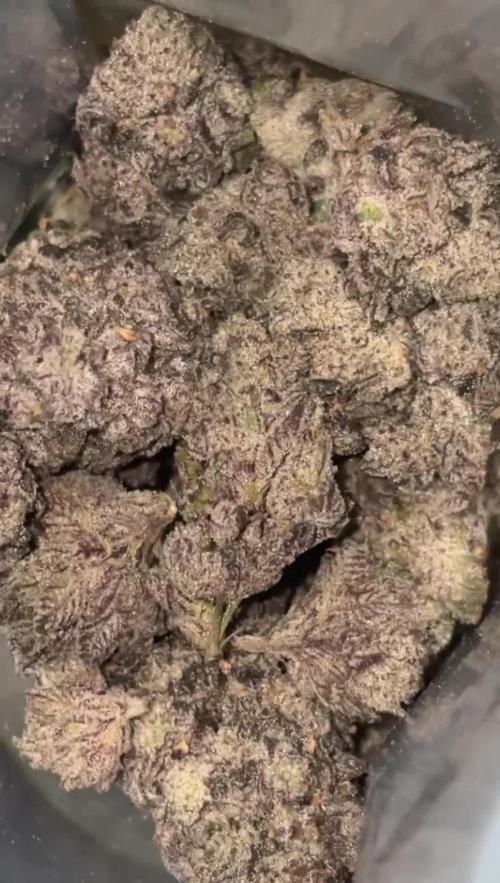
Plants harvested about 80 days from seed. Very frosty buds with an intense citrus and blackberry scent. Easy harvesting with little work, buds easy to trim due to their uniform shapes. 604gr of wet buds. are drying for 8 days, first test done and the result is a very funny hybrid, initial sensations of a very sativa plant and then calms down and the symptoms of indica plants arrive, this strain is very well created. citrus and blackberry flavor very pleasant. as soon as they are completely dry I update with the dry weight. 3 Plants, Total of 136gr of dry buds. Love this strain 💚🌱🙏
Good week everyone 🌱🙌

Likes
5
Share


@Deltatigrou0169
Follow
Bonjour à tous, voici quelques vidéos de mes fifilles pour l'instant elles poussent bien. Après j'en n'ai qui pousse bizarrement à voir par là suite. Bonne journée à tous 😉

Likes
20
Share

@TrickzGrowz
Follow
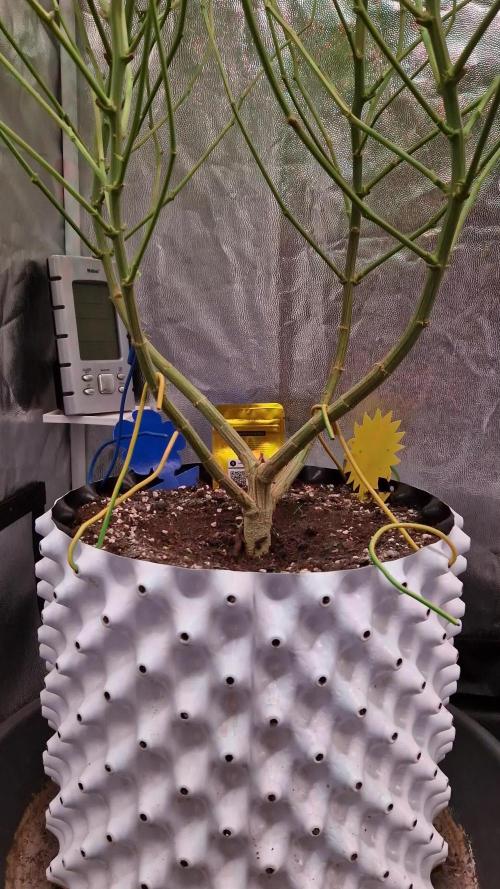
Heute ging es rund. Der Massive Busch wurde ausgedünnt und gelollipoppt. Das Netz habe ich ca. 5 cm höher gemacht.
Likes
15
Share


@gottagrowsometime
Follow
Grow is going great. The bigger pheno has taken to the bamboo shoots really well & now both plants are growing really well. Coming into preflower without a care in the world.
Days 29-32 2nd/2/
Growth is steady. I really haven't done anything differently so there's not much to report on. Keeping the feed ppm steady & I haven't touched anything LST or any defols. I haven't had the need. It'll do a good amount of stretching over the next few days. I haven't switched to bloom feed yet. Maybe in a few days.
3rd/3 Day 33
Growing like nothing in her way. Moving like a pair of mad women. Added 500ml of Master Root/Enzymes/Calmag ph'ed to 6.9, little higher than I'd like but I wasn't wasting a mix for a point out of what I normally give.
5th/2 day 35
Wow, just blow away by the growth in 2 days. DAMN Herbies got it going DOWN.
She has one or 2 blemishes. Still learning the nutrients. With these you can only improve the more you use, I'd she'll easily put on another 20-25cm for each plant. One is much bigger.
DISCOUNT CODES
20 OFF ZAMNESIA WITH CODE: ZAMMIGROW2024
20% OFF XPERT NUTRIENTS& KANNABIA WITH CODE: GGST
20% off Oringal Sensible Seeds with code:

Likes
129
Share


@StarLorr
Follow
Welcome to my Cherry🍒Cola diary.
In this Diary:
Seeds: [420 Fast Buds]from my growmie Tropicannibis_Todd 👊🏻😎
Media: Pro~Mix HP Open Top Grow Bag, Connect.
Nutrients: Green Planet Nutrients,
2 Part Dual Fuel starter kit.
RealGrowers: Recharge.
Diablo nutrients: Ripping.
Feeding :
Wed 13Mar: 3 1/3L Nutes/Recharge pH'd 6.5
Sat 16Mar: 2.6L Monster K,Blaster pH'd 6.5
___________________________
__________________________
She's so gorgeously filled with buds!😋
___________________________
Thanks for stopping by, likes and comments are appreciated.👊🏻😎
Keep on growin!
Keep on tokin!!!
😙💨💨💨💨💨
Likes
53
Share


@CTCan
Follow
Just picked up my seeds off my buddy. He had them under a light for 6 weeks and their looking great. Moved them outside and they didn’t seem to be too shocked from the adjustment. Getting about 7 hours of direct sun then some indirect sun but mostly shade after that. Gonna top, prune, and move to bigger pots soon

Likes
5
Share


@Organic473
Follow
Both seeds were planted on the same day, however, one is growing faster which leaves me to assume that's a male which I am very much happy for…time will tell.
