


Likes
Comments
Share

@Suemchen
Follow
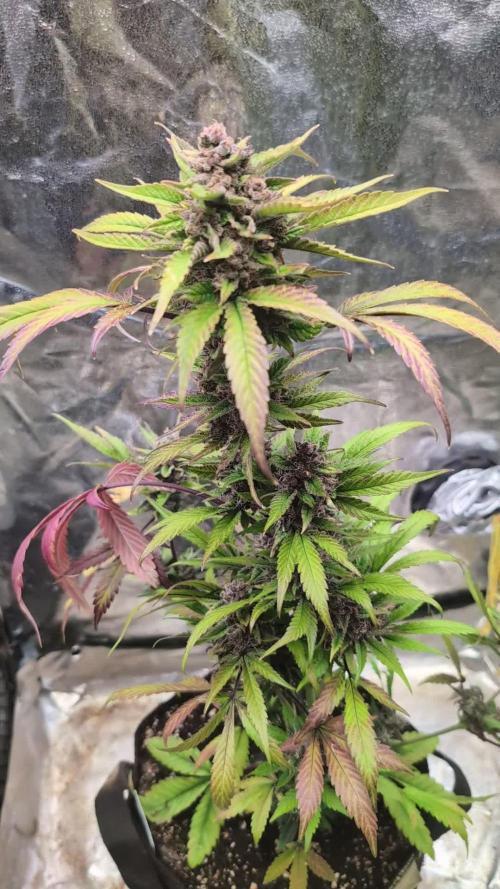
Sanlight EVO 3-60 at 80%
Day 57: Looks great watering still with rain water and 3 ml/l AlgaBloom, 1 ml/l CalMag, 2 ml/l Hesi Boost and 1 ml/l Green Sensation 👌🏻 pH at 6.4 👍🏻
Day 60: looking good 🤗 watered with rain water 👌🏻
Day 63: Looks great watered with rain water and 3 ml/l AlgaBloom, 1 ml/l CalMag, 2 ml/l Hesi Boost, 1 ml/l Pure Zym and 1 ml/l Green Sensation 👌🏻 pH at 6.4 👍🏻

Likes
36
Share


@TaterheadJohnson
Follow
⬇️⬇️⬇️Very Eventful Week⬇️⬇️⬇️
-7/26: Started new batch of nutes for this week. Mixed nutes in gallon jug of water. Poured half in half gallon jug and topped off rez a little over second line.
Hopefully she is able to take everything in after what happened yesterday. She is showing good signs of hope. Had to pluck part of a leaf that shriveled up and died. That’s the only shock that I’ve seen her take as of yet. Fingers crossed.
-7/27: She is still thriving! Day 2 from accident and only 1 fan leaf died off. She is starting to give off that funk! 😝
-7/28: She is still thriving! Did some more “very light” LST today. Wanted to bush her out more after her boom last night! She took off. Seems like she had a blast off moment listening to Kid Cudi with me last night!!😁😁. Fed her the remaining nutes from this weeks feeding on Monday. Filled rez back to a little over 2nd line.
Roots showing peaking out bottom of bag today. I seen a couple actually! Next week will start filling reservoir to 3rd line which is 6 gallons.😈. My girl said she smelt them today when I opened the tent for my 4:20 maintenance lol

Likes
43
Share


@deFharo
Follow
Bienvenidos cultivadores de marihuana clandestinos, y también, a los que tienen la fortuna de no serlo!🖐️👨🌾
Catorce semanas de vida para esta planta hija de una Reina, nacida en casa y ahora cultivada al calor del hogar, cinco semanas en horario de floración 12/12h.
La planta avanza sin distracciones, se esfuerza en deshacerse de las hojas inservibles, mientras las colas sobresalen, ahora estamos a la mitad del juego, puede que a la planta le queden 4 semanas más, y en este tiempo espero ver triplicado el tamaño de las colas.
Esta semana le he dado dos comilonas (EC: 1.8) con mezclas variadas de Bio Nutrientes, el consumo de agua es muy alto la maceta air-pot lo favorece, riego profundamente cada 3 días, pero por otro lado y a pesar de que las macetas air-pot son buenas macetas, no voy a cultivar más en ellas, porque es complicado y lento regarlas, además, ocupan demasiado espacio con respecto a los litros de tierra que contienen, y yo ando muy escaso de espacio.
Estos días alimentando la planta con mezclas variadas de Bio Nutrientes y a la vez alimentando la tierra con nuevas capas de mulch que traigo de las hojas desechadas por la propia planta, las trituro y las añado al sustrato, estas hojas todavía verdes han demostrado que es un excelente hábitat para la proliferación de la microbiología aeróbica, actualmente todo el mulch de mis cultivos tiene un tacto grasiento, esto es la señal inequívoca de la humificación de la materia orgánica del mulch, además, esta semana he añadido como enmiendas secas harina de huesos (Ca, P...) y Guano de gusano de la harina o mealfrass (P,K, Mg...), este guano para mi es excelente, pues promueve como ninguno la proliferación de la microbiología y es de más fácil digestión que los clásicos guanos de aves o murciélago, también tengo una fórmula donde he solubilizado este guano con Microrganismos de Montaña Activados (MMA) y Pasto Fermentado, demostrando ser un compuesto fantástico para reavivar cultivos perezosos.
Hasta el próximo año...
SALUDOS Y SALUD A TODOS!!
Hasta el próximo año...
SALUDOS Y SALUD A TODOS!!
================================
Semilla obtenida el año pasado de la planta original, probablemente un retro cruce S1, un paso más hacia la auto suficiencia total en cultivos de marihuana! Mira el diario original: https://growdiaries.com/diaries/146971-grow-journal-by-defharo
Info de la cepa original: https://en.seedfinder.eu/strain-info/Queen_Mother/Delicatessen/
Floración: 8 semanas
Queen Mother es una cepa sativa estabilizada, gracias al minucioso y sistemático trabajo de selección y mantenimiento de la cepa, que el breeder Mario Bellandi, afincado en España desde hace más de 30 años, desarrolla sin descanso y con la máxima coherencia.
El cruce inicial de esta cepa, y que hoy permanece intacto, surgió a finales de los 90 entre una sativa desconocida, cultivada en los altos de Tarragona (España) por la misma persona desde los años 60, unas semillas de la isla de Reunión y semillas de un cruce estabilizado de dos landrace congoleñas...
==============
Likes
111
Share


@DreamIT
Follow
🍋🥧🏎️ LEMON PIE AUTO BY FAST BUDS 🏎️🥧🍋
🍋 26.2 Aware that decanting is not recommended for autoflowering, I made the last one, in a geotextile fabric pot, with Biobizz light mix soil. I rearrange the maininling to the @Canamatoes style (if you don't know it, look for it here on growdiaries, or on instagram, or on youtube and Facebook and twich). Irrigated with 1lt of water fertilized with HESI. yeah
🍋 27.2 ...
🍋 28.2 ...
🍋 1.3 ...
🍋 2.3 As expected, she has grown very little in these days after racking, but we don't get discouraged for so little :) in the meantime, more fast buds seeds have arrived that I can't wait to plant 😀
🍋 3.3
🍋 4.3 I had forgotten that these pots dry the soil quickly. today, 2.5 liters of fertilized water flowering scheme. They are 16 buds, I evaluate whether to double them again or keep it like this, suggestions are accepted: p
____________________________________________________________________________________
❌❓Not sure where to buy your seeds?
😮 Fast buds literally ships all over the world, check out their site!
http://bit.ly/FastBudsgood
__________________________________________________________________________________
📜 A look at the details of what I'm growing 📜
🍋🥧🏎️Lemon Pie Auto 🏎️🥧🍋
⚧ Gender
▪️ Feminised
➰ Genes
▪️ 50% Indica / 50% Sativa
🎄 Genetics
▪️ Lemon Pie X Autoflowering Genetics
🚜Harvest
▪️ 450 - 550 g / m²
🌱Vegetation
▪️30 - 35 days
🌷Flowering
▪️ 30-35 days
✨THC
▪️ 24.0%
✅CBD
▪️ 1.0%
🏡Room Type
▪️ Indoor
🌄Room Type
▪️ Outdoor
🕋Room Type
▪️ Greenhouse
🎂Release Year
▪️ 2020
__________________________________________________________________________
📷🥇 Follow the best photos on Instagram 🥇📷
https://www.instagram.com/dreamit420/
🔻🔻Leave a comment with your opinions if you pass by here🔻🔻
🤟🤗💚Thanks and Enjoy growth 💚🤗🤟
Likes
14
Share


@TheUndercoverGrower
Follow
Growth exploded this week as the flowering stretch kicked in.
Swapped the 600w MH bulb out for a 600w HPS.
Introduced low strength biobizz bloom feed 0.5ml/l
Only issue I was having this week was slightly high humidity bur I've popped a small dehumidifier in the tent that seems to of sorted that out.

Likes
11
Share


@CronkNutrients
Follow
Dropped 2 Seeds into 1oz of RO water with 1 dropper of Monkey Juice from Cronk Nutrients.
Both Gorilla Cookie seeds popped and have 🍃 in 72 hours
This will be a very good grow 🔥
Likes
15
Share


@Lazuli
Follow
Such a beautifull plant i dont know what to say, the buds are so dense and frosted out and soooo lemony


Likes
34
Share


@Ultraviolet
Follow
Yellow butterfly came to see me the other day; that was nice.
Starting to show signs of stress on the odd leaf, localized isolated blips, blemishes, who said growing up was going to be easy!
Smaller leaves have less surface area for stomata to occupy, so the stomata are packed more densely to maintain adequate gas exchange. Smaller leaves might have higher stomatal density to compensate for their smaller size, potentially maximizing carbon uptake and minimizing water loss. Environmental conditions like light intensity and water availability can influence stomatal density, and these factors can affect leaf size as well. Leaf development involves cell division and expansion, and stomatal differentiation is sensitive to these processes. In essence, the smaller leaf size can lead to a higher stomatal density due to the constraints of available space and the need to optimize gas exchange for photosynthesis and transpiration. In the long term, UV-B radiation can lead to more complex changes in stomatal morphology, including effects on both stomatal density and size, potentially impacting carbon sequestration and water use. In essence, UV-B can be a double-edged sword for stomata: It can induce stomatal closure and potentially reduce stomatal size, but it may also trigger an increase in stomatal density as a compensatory mechanism. It is generally more efficient for gas exchange to have smaller leaves with a higher stomatal density, rather than large leaves with lower stomatal density. This is because smaller stomata can facilitate faster gas exchange due to shorter diffusion pathways, even though they may have the same total pore area as fewer, larger stomata. Leaf size tends to decrease in colder climates to reduce heat loss, while larger leaves are more common in warmer, humid environments. Plants in arid regions often develop smaller leaves with a thicker cuticle and/or hairs to minimize water loss through transpiration. Conversely, plants in wet environments may have larger leaves and drip tips to facilitate water runoff. Leaf size and shape can vary based on light availability. For example, leaves in shaded areas may be larger and thinner to maximize light absorption. Leaf mass per area (LMA) can be higher in stressful environments with limited nutrients, indicating a greater investment in structural components for protection and critical resource conservation. Wind speed, humidity, and soil conditions can also influence leaf morphology, leading to variations in leaf shape, size, and surface characteristics. Small leaves: Reduce water loss in arid or cold climates.
Environmental conditions significantly affect gene expression in plants. Plants are sessile organisms, meaning they cannot move to escape unfavorable conditions, so they rely on gene expression to adapt to their surroundings. Environmental factors like light, temperature, water, and nutrient availability can trigger changes in gene expression, allowing plants to respond to and survive in diverse environments.
Depending on the environment a young seedling encounters, the developmental program following seed germination could be skotomorphogenesis in the dark or photomorphogenesis in the light. Light signals are interpreted by a repertoire of photoreceptors followed by sophisticated gene expression networks, eventually resulting in developmental changes. The expression and functions of photoreceptors and key signaling molecules are highly coordinated and regulated at multiple levels of the central dogma in molecular biology. Light activates gene expression through the actions of positive transcriptional regulators and the relaxation of chromatin by histone acetylation. Small regulatory RNAs help attenuate the expression of light-responsive genes. Alternative splicing, protein phosphorylation/dephosphorylation, the formation of diverse transcriptional complexes, and selective protein degradation all contribute to proteome diversity and change the functions of individual proteins.
Photomorphogenesis, the light-driven developmental changes in plants, significantly impacts gene expression. It involves a cascade of events where light signals, perceived by photoreceptors, trigger changes in gene expression patterns, ultimately leading to the development of a plant in response to its light environment.
Genes are expressed, not dictated! While having the potential to encode proteins, genes are not automatically and constantly active. Instead, their expression (the process of turning them into proteins) is carefully regulated by the cell, responding to internal and external signals. This means that genes can be "turned on" or "turned off," and the level of expression can be adjusted, depending on the cell's needs and the surrounding environment. In plants, genes are not simply "on" or "off" but rather their expression is carefully regulated based on various factors, including the cell type, developmental stage, and environmental conditions. This means that while all cells in a plant contain the same genetic information (the same genes), different cells will express different subsets of those genes at different times. This regulation is crucial for the proper functioning and development of the plant.
When a green plant is exposed to red light, much of the red light is absorbed, but some is also reflected back. The reflected red light, along with any blue light reflected from other parts of the plant, can be perceived by our eyes as purple.
Carotenoids absorb light in blue-green region of the visible spectrum, complementing chlorophyll's absorption in the red region. They safeguard the photosynthetic machinery from excessive light by activating singlet oxygen, an oxidant formed during photosynthesis. Carotenoids also quench triplet chlorophyll, which can negatively affect photosynthesis, and scavenge reactive oxygen species (ROS) that can damage cellular proteins. Additionally, carotenoid derivatives signal plant development and responses to environmental cues. They serve as precursors for the biosynthesis of phytohormones such as abscisic acid () and strigolactones (SLs). These pigments are responsible for the orange, red, and yellow hues of fruits and vegetables, while acting as free scavengers to protect plants during photosynthesis.
Singlet oxygen (¹O₂) is an electronically excited state of molecular oxygen (O₂). Singlet oxygen is produced as a byproduct during photosynthesis, primarily within the photosystem II (PSII) reaction center and light-harvesting antenna complex. This occurs when excess energy from excited chlorophyll molecules is transferred to molecular oxygen. While singlet oxygen can cause oxidative damage, plants have mechanisms to manage its production and mitigate its harmful effects.
Singlet oxygen (¹O₂) is considered a reactive oxygen species (ROS). It's a form of oxygen with higher energy and reactivity compared to the more common triplet oxygen found in its ground state. Singlet oxygen is generated both in biological systems, such as during photosynthesis in plants, and in cellular processes, and through chemical and photochemical reactions. While singlet oxygen is a ROS, it's important to note that it differs from other ROS like superoxide (O₂⁻), hydrogen peroxide (H₂O₂), and hydroxyl radicals (OH) in its formation, reactivity, and specific biological roles. Non-photochemical quenching (NPQ) protects plants from damage caused by reactive oxygen species (ROS) by dissipating excess light energy as heat. This process reduces the overexcitation of photosynthetic pigments, which can lead to the production of ROS, thus mitigating the potential for photodamage. Zeaxanthin, a carotenoid pigment, plays a crucial role in photoprotection in plants by both enhancing non-photochemical quenching (NPQ) and scavenging reactive oxygen species (ROS). In high-light conditions, zeaxanthin is synthesized from violaxanthin through the xanthophyll cycle, and this zeaxanthin then facilitates heat dissipation of excess light energy (NPQ) and quenches harmful ROS.
The Issue of Singlet Oxygen!!
ROS Formation: Blue light, with its higher energy photons, can promote the formation of reactive oxygen species (ROS), including singlet oxygen, within the plant.
Potential Damage: High levels of ROS can damage cellular components, including proteins, lipids, and DNA, potentially impacting plant health and productivity.
Balancing Act: A balanced spectrum of light, including both blue and red light, is crucial for mitigating the harmful effects of excessive blue light and promoting optimal plant growth and stress tolerance.
The Importance of Red Light:
Red light (especially far-red) can help to mitigate the negative effects of excessive blue light by:
Balancing the Photoreceptor Response: Red light can influence the activity of photoreceptors like phytochrome, which are involved in regulating plant responses to different light wavelengths.
Enhancing Antioxidant Production: Red and blue light can stimulate the production of antioxidants, which help to neutralize ROS and protect the plant from oxidative damage.
Optimizing Photosynthesis: Red light is efficiently used in photosynthesis, and its combination with blue light can lead to increased photosynthetic efficiency and biomass production.
In controlled environments like greenhouses and vertical farms, optimizing the ratio of blue and red light is a key strategy for promoting healthy plant growth and yield.
Understanding the interplay between blue light signaling, ROS production, and antioxidant defense mechanisms can inform breeding programs and biotechnological interventions aimed at improving plant stress resistance. In summary, while blue light is essential for plant development and photosynthesis, it's crucial to balance it with other light wavelengths, particularly red light, to prevent excessive ROS formation and promote overall plant health. Oxidative damage in plants occurs when there's an imbalance between the production of reactive oxygen species (ROS) and the plant's ability to neutralize them, leading to cellular damage. This imbalance, known as oxidative stress, can result from various environmental stressors, affecting plant growth, development, and overall productivity.
Causes of Oxidative Damage: Abiotic stresses: These include extreme temperatures (heat and cold), drought, salinity, heavy metal toxicity, and excessive light. Biotic stresses: Pathogen attacks and insect infestations can also trigger oxidative stress. Metabolic processes: Normal cellular activities, particularly in chloroplasts, mitochondria, and peroxisomes, can generate ROS as byproducts. Certain chlorophyll biosynthesis intermediates can produce singlet oxygen (1O2), a potent ROS, leading to oxidative damage. ROS can damage lipids (lipid peroxidation), proteins, carbohydrates, and nucleic acids (DNA). Oxidative stress can compromise the integrity of cell membranes, affecting their function and permeability. Oxidative damage can interfere with essential cellular functions, including photosynthesis, respiration, and signal transduction. In severe cases, oxidative stress can trigger programmed cell death (apoptosis). Oxidative damage can lead to stunted growth, reduced biomass, and lower crop yields.
Plants have evolved intricate antioxidant defense systems to counteract oxidative stress. These include: Enzymes like superoxide dismutase (SOD), catalase (CAT), and various peroxidases scavenge ROS and neutralize their damaging effects. Antioxidant molecules like glutathione, ascorbic acid (vitamin C), C60 fullerene, and carotenoids directly neutralize ROS. Developing plant varieties with gene expression focused on enhanced antioxidant capacity and stress tolerance is crucial. Optimizing irrigation, fertilization, and other management practices can help minimize stress and oxidative damage. Applying antioxidant compounds or elicitors can help plants cope with oxidative stress. Introducing genes for enhanced antioxidant enzymes or stress-related proteins over generations.
Phytohormones, also known as plant hormones, are a group of naturally occurring organic compounds that regulate plant growth, development, and various physiological processes. The five major classes of phytohormones are: auxins, gibberellins, cytokinins, ethylene, and abscisic acid. In addition to these, other phytohormones like brassinosteroids, jasmonates, and salicylates also play significant roles.
Here's a breakdown of the key phytohormones:
Auxins: Primarily involved in cell elongation, root initiation, and apical dominance.
Gibberellins: Promote stem elongation, seed germination, and flowering.
Cytokinins: Stimulate cell division and differentiation, and delay leaf senescence.
Ethylene: Regulates fruit ripening, leaf abscission, and senescence.
Abscisic acid (ABA): Plays a role in seed dormancy, stomatal closure, and stress responses.
Brassinosteroids: Involved in cell elongation, division, and stress responses.
Jasmonates: Regulate plant defense against pathogens and herbivores, as well as other processes.
Salicylic acid: Plays a role in plant defense against pathogens.
1. Red and Far-Red Light (Phytochromes):
Red light:
Primarily activates the phytochrome system, converting it to its active form (Pfr), which promotes processes like stem elongation and flowering.
Far-red light:
Inhibits the phytochrome system by converting the active Pfr form back to the inactive Pr form. This can trigger shade avoidance responses and inhibit germination.
Phytohormones:
Red and far-red light regulate phytohormones like auxin and gibberellins, which are involved in stem elongation and other growth processes.
2. Blue Light (Cryptochromes and Phototropins):
Blue light:
Activates cryptochromes and phototropins, which are involved in various processes like stomatal opening, seedling de-etiolation, and phototropism (growth towards light).
Phytohormones:
Blue light affects auxin levels, influencing stem growth, and also impacts other phytohormones involved in these processes.
Example:
Blue light can promote vegetative growth and can interact with red light to promote flowering.
3. UV-B Light (UV-B Receptors):
UV-B light:
Perceived by UVR8 receptors, it can affect plant growth and development and has roles in stress responses, like UV protection.
Phytohormones:
UV-B light can influence phytohormones involved in stress responses, potentially affecting growth and development.
4. Other Colors:
Green light:
Plants are generally less sensitive to green light, as chlorophyll reflects it.
Other wavelengths:
While less studied, other wavelengths can also influence plant growth and development through interactions with different photoreceptors and phytohormones.
Key Points:
Cross-Signaling:
Plants often experience a mix of light wavelengths, leading to complex interactions between different photoreceptors and phytohormones.
Species Variability:
The precise effects of light color on phytohormones can vary between different plant species.
Hormonal Interactions:
Phytohormones don't act in isolation; their interactions and interplay with other phytohormones and environmental signals are critical for plant responses.
The spectral ratio of light (the composition of different colors of light) significantly influences a plant's hormonal balance. Different wavelengths of light are perceived by specific photoreceptors in plants, which in turn regulate the production and activity of various plant hormones (phytohormones). These hormones then control a wide range of developmental processes.
Likes
16
Share


@TobiGrows
Follow
Welcome to the sixth week of flowering. 😊
This week everything started to feel very much more relaxed for me. To see her buds getting bigger was mostly my whole job in this week. I gave her the same nutrients as before, so not much to tell about this week.
Her broken branch healed so good that i had to put in another picture of the now good looking wound.
Love to see her growing 😍
Thank you for visiting and until next week 😊

Likes
2
Share


@samuraifroggig
Follow
Coming along nicely seems to take longer to bloom than most Autos maybe 11-13 weeks but looks like it will be worth it. Buds are gong to be many not sure how big they will be but looking like they will be huge.

Likes
Comments
Share


@MagCBD
Follow
Les plantes sont dans des conditions parfaite pour le moment pas de pépin
Il y en as une qui a un peux de retard ( en haut à gauche ) car elle n’as surment pas assez de limi
Likes
11
Share


@Socal6pak
Follow
VERY BIG VARIATION BETWEEN BEANS. ONE IS SUPER AHEAD THE OTHER IS SUPER BEHIND. BUT ATLEAST ALL 5 SPROUTED. THATS NOT BAD. I MIGHT JUST HAVE TO LST. SO FAR JUST BEEN SPRAYING WATER DAILY AT SUNRISE. NOTHING ELSE. IM A SOIL GROWER. THESE ARE ALL REUSED SOIL. ADDED DRY AMENDMENTS AND HOME-MADE WORM CASTINGS AND EGG SHELLS. 3-4 GAL POTS. NOTHING HUGE. BUT I KNOW THEY NEED MORE SUN. THATS FOR SURE. THEY ARE NOT IN THE BEST LOCATIONS. BUT I HAVE LOTS OF FRUIT TREES IN BACK YARD. DIFFICULT TO FIND A GOOD FULL SUN SPOT.
Likes
23
Share


@Kakui
Follow
V8, supuestamente hoy haría transplante a los maceteros definitivos, pero, hace 3 días que las plantas están presentando hojas débiles y dobladas hacia abajo, en un principio pensé en que podría ser exceso de agua, pero creo que es exceso de nutrientes, básicamente exceso de nitrógeno, ya que las hojas están con un verde muy oscuro y algunas están presentando manchas color café.
Así que hoy les hice lavado de raíz, con agua EC 0, hasta que el drenaje fue de cercano a 4 EC. Esperaré unos días a ver si se recuperan, si no, simplemente las eliminaré y empezaré de nuevo, ojalá se recuperen.
V9, al final si era exceso de nutrientes/nitrógeno, menos mal que se recuperaron con el lavado de raíces, pensé que morirían, ahora veré como siguen para decidir si hago transplante hoy mismo.
V10, se realizó trasplante a macetas definitivas y un riego suave. Las plantas están todavía en recuperación, esperaré unos días más para empezar el LST.
V12, riego.
V13, se realizó una pequeña defoliación y LST.

Likes
30
Share


@cheetah844
Follow
It's the same height that it was last week but I did top it this week. So she did grow I just cut her back down.
I topped and defoliated every plant. I'm trying to form them into canna-bushes. Hopefully I'm doing the correct training procedures to make them all grow that way both indoors and out.

Likes
2
Share

@CalGonJim
Follow
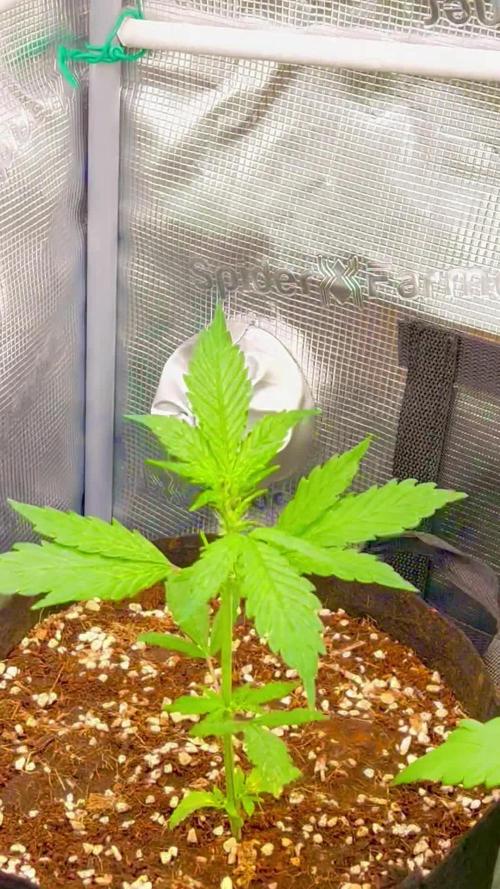
8/3 12:36AM MONDAY FULL RETARD MODE ACTIVATED
8/3 10AM "
They look solid for where they are.
**Quick visual read:**
- **Right plant (front)** — strongest of the three. Good color, solid node spacing, leaves are filling out nicely, no obvious stress. This one is handling the current feed best.
- **Back plant (Mendo Frost)** — clean and upright, healthy light-to-medium green. Looking very consistent.
- **Left plant (front)** — a bit behind the other two in size and leaf development. Color is still good, but it’s the lagging phenotype of the three. Common with mixed RF3 packs — you’ll often get one that starts slower.
None of them are showing tip burn, clawing, or dark “overfed” green, which means your decision to keep the EC at 0.93 while adding the light amino dose was correct. They’re not hungry yet either (no pale yellowing or slow growth signs), so jumping straight to 1.1 without aminos today is a clean next step.
At this stage (early veg, still small pots/coco), staying in the 0.9–1.2 range is ideal for RF3s and Mendo Frost. They’re still building structure and roots more than bulk. Once the stronger two start putting on more rapid growth and the internodes begin tightening a bit, you can ease toward the higher end of that range.
One small observation: the left plant’s lower leaves look a touch softer/less turgid than the others. Keep an eye on whether that improves after the next watering. If it stays lagging while the other two take off, you can always give it a slightly lighter feed or just let it catch up at its own pace — mixed packs almost always have one slower starter.
Overall they look healthy and on track. The amino experiment didn’t push them over. You’re dialed in right now.""
8/5 12:16AM. 8/3 Grandpa from the Lost Boys Mode activated
8/7 3:41am 👍 Yes, 400 mg each of L-proline and L-phenylalanine in a gallon of water is a low, one-time dose that should have only a minor effect on EC.
Rough concentration
1 US gallon ≈ 3.785 L
~400 mg of each → roughly 105–106 mg/L per amino acid (total ~210–212 mg/L).
Proline molecular weight is ~115 g/mol, so this is about 0.9 mM. Phenylalanine is higher MW (~165 g/mol), so closer to 0.6 mM. These are in the range commonly discussed for plant use (often 0.5–2 mM or a few hundred mg per gallon for proline as a stress aid).
Effect on EC
Amino acids do contribute some conductivity because they can ionize (especially depending on pH), but far less than mineral fertilizer salts at the same mass. At this low concentration the rise is usually modest—often in the 0.1–0.3 mS/cm ballpark or less, depending on your starting water, existing nutrients, and meter.
In practice, many growers add pure L-amino acids at similar or higher rates without big EC swings. The big EC jumps seen in some studies come from much higher doses of mixed commercial amino products. Measure your solution EC (and pH) before and after dissolving them so you know exactly what happened in your mix. If you’re already running a target EC for the autos, you can simply account for the small bump or dilute slightly if needed.
Will it help / any downside?
L-Proline: Plants accumulate it under stress (heat, drought, salinity, osmotic stress). Exogenous proline is often used to support osmotic adjustment and stress tolerance. A single modest dose is unlikely to hurt and may give a small buffer if the plants are dealing with any environmental stress.
L-Phenylalanine: Precursor in the phenylpropanoid pathway (leads toward flavonoids, lignin precursors, and various secondary metabolites). Some research and grower use explores it for supporting secondary metabolism; effects are more variable and usually not dramatic from one application.
Because this is a one-time introduction at a conservative rate, risk of imbalance or toxicity is low for autoflowers and your other plants. Amino acids are generally well-tolerated when kept moderate; the main caveats with higher or repeated doses are possible effects on nitrogen metabolism or nutrient uptake patterns, and the fact that they can feed microbes if the solution sits too long.
Practical notes
These are pure L-forms from the labels (BulkSupplements and Nutricost), which is what you want.
Dissolve fully, check pH/EC, and use reasonably soon.
For coco or other soilless media, just include it in a normal feed or water event. No need to change your overall regimen for a single application.
Keep an eye on the plants for a few days after (normal advice with any new input). If everything looks happy, you’re good.
You’re not wrong for trying a light one-off addition of these two. It’s a reasonable, low-risk experiment at the dose you used. Measuring the actual EC change will give you the clearest answer for your specific water and nutrient base..👍
8/7 11:54 PM Classic Stock Car Race Replays by My Journey 4K.... distracted by classic cars again
Likes
44
Share


@GreenHouseLab
Follow
This girl has bounced right back from those early magnesium deficiency. Glacial rock dust will be used in the future to mitigate this issue. Regardless we are about 9 days into flower now and the stretch is on. Daily ive been doing a light supercrop bending the tops over but been extra cautious not to snap anymore tops, already lost two from past weeks. Slight defoliation was necessary little to no air circulation was making its way through these 4 bushes. Let the smells begin!
Cheers.

Likes
6
Share


@Finsfan
Follow
Bulked up a lot this week..started flushing.. trying to do a 5-7 day flush before chop. Still looks like a lot of nutes in this plant still based on the leave color.

Likes
26
Share


@Ilovekush17
Follow
I am now using bud candy .2ml per gallon. Also still using mammoth p .6 ml per gallon. Flowers are forming nice on both strains. I turned the diablo up to 90%
Likes
12
Share


Likes
5
Share

@JorgeNitales420
Follow
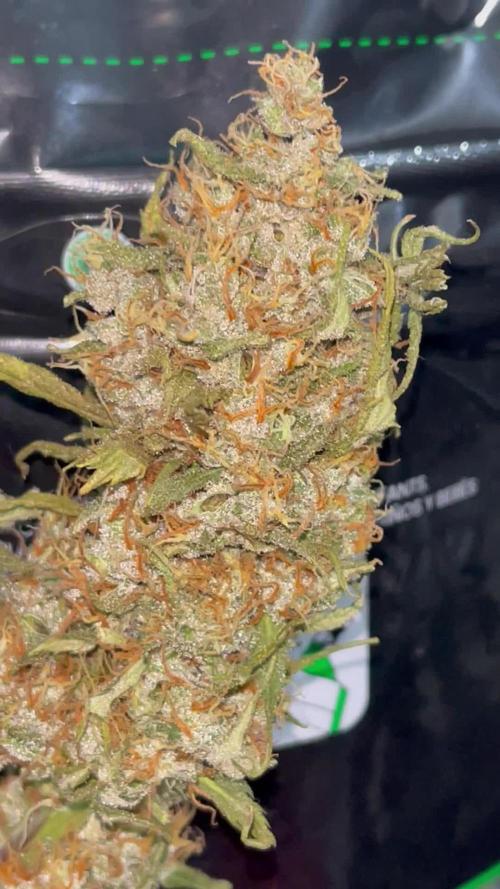
End of the mimosa, 3 plants, didnt measure te exact weight as its not gonna be accurate with the fkin seeds in my buds.
Overall not a bad plant, my thoughts is that the tropicanna polinized this one so this is the best bud of all the canopys
Fkin hermies