






@Gardens_of_Of
Volgen
And just like that, the ninth and final week of flowering has come to an end. After months of training, adjusting, observing, and patiently waiting, the girls have finally reached the finish line.
Unfortunately, the last week wasn't entirely stress-free. Humidity became particularly challenging, reaching levels much higher than I would have liked this close to harvest. With the flowers now at their densest, this naturally made me more cautious about potential mold and bud rot.
One bud on Planet of the Grapes caught my attention, as it appears to be showing either some localized damage or the early signs of bud rot. I have been monitoring it very closely, and thankfully, the surrounding flowers still look healthy and unaffected. With harvest planned for tomorrow, I don't intend to take any unnecessary risks—if the affected area looks any worse, it will simply be removed during harvest.
Now for the good news: the girls have finished beautifully.
Trichome development is right around where I wanted it to be, with most plants showing approximately 15% amber trichomes, although naturally there is some variation between cultivars and even between individual flowers. Some are slightly further along, while others could probably continue for a little longer.
Nevertheless, I have decided to harvest the entire tent together at the end of Week 9. They have matured closely enough to one another that a synchronized harvest makes the most sense, especially since I would rather not set up a second tent purely for drying.
Looking back, it's satisfying to see how much the garden has changed. What started as four relatively small plants eventually became a completely filled canopy of heavy, frosty flowers. There were challenges along the way—yellowing leaves, summer heat, stubborn humidity, light adjustments, deficiencies, and branches eventually becoming too heavy to support themselves—but the plants kept pushing forward.
And now there is nothing left to adjust.
No more chasing the perfect light distance. No more canopy management. No more wondering how much they will stretch or how large the flowers will become.
Tomorrow, the scissors finally come out.
After nine weeks of flowering and a lot of patience, harvest day has arrived. 🌿✂️






@Smoke_Jabat
Volgen
Séptima semana de floración 🌺 están llegando a su fin. Las hojas empiezan a apagarse🍁 y las flores empiezan a adquirir su aspecto final.
Todo ha ido bien 😃 ¡
Espero que disfrutéis del álbum!
🐗🌰



@Seedtoweed
Volgen
These girls are just looking and smelling TASTY! Haha been a good week lots of the smaller buds have filled out alot this week tryed to open them up a bit more again have removed alot of leaves from the smallest one n still amazed at just how much bud its packing haha
At nearly 100%milky trichs now so be interesting to see how much longer they go now lol im actually just starting week 8 of flower n its 8 to 10 week strain depending on what you want out of it but that amazing taste fully starts in at 10 weeks n over so will be definitely going full 10 cos well why not haha
Only issue that may arise is temps as we are now heading into mid 30s outside which causes my room to run a little warmer lol like mid 30s but girls dont seem to mind at this point just dont want to many days in a row in 30s hate my room going over 28/29


@russrahl
Volgen
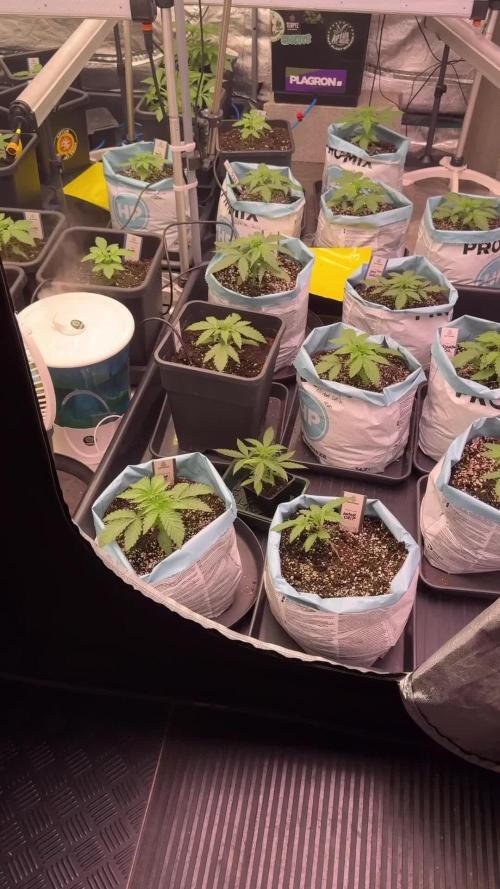
Seeds stared good after sitting in a glass of water overnight and placed directly in rock wool cubes in RDWC buckets. My 1000w MH HID is turned down to 600w and on a light rail mover about 24” above seedlings.



@DogDoctorOfficial
Volgen
🌿 Nectar Drip – Week 4 Report
Early Vegetative Phase (12/12 from Seed)
Zamnesia Seeds x TICAL – Pack #268
🌱 Growth Overview – Entering Structure
This week marks Week 4 since germination (often considered Week 3 in growth rhythm), and the plants are now clearly transitioning from early establishment into structural development.
All plants are healthy, vibrant, and responding beautifully to the environment. Growth remains steady rather than explosive — exactly what’s expected when running 12/12 from seed. What’s most exciting this week is that we’ve officially begun training, and with it, the first real divergence in plant architecture.
⸻
🌡️ Environment – Gradual Shift, No Shock
We’ve started to gently guide the environment toward a more “grown” climate, without rushing anything.
• Relative Humidity: ~65% (slowly lowered from previous weeks)
• Day Temperature: ~26 °C
• Night Temperature: ~18 °C
• CO₂: ~666 ppm
• Lamp Distance: ~1.70 m from canopy
• Substrate Temperature: ~22 °C
• Solution Temperature: ~22 °C
Airflow is still kept soft, but this week we’ve begun increasing movement slightly. The goal is to start encouraging stem strength and plant responsiveness, preparing them for the phases ahead while keeping stress close to zero.
⸻
💡 Lighting – Raising the Bar, Naturally
Light intensity continues its progressive increase, following plant demand rather than forcing development.
• Previous Weeks: ~400–500 PPFD
• Current Week: moving from ~500 toward 600 PPFD
The plants are clearly growing into the light, which is exactly what we want to see. This gradual ramp-up will continue week by week, allowing the canopy to adapt naturally as structure and leaf mass increase.
⸻
Substrate & Containers
• Medium: ProMix
• Containers: 15 L plastic bags
Root activity is clearly accelerating now. Even though top growth remains compact, internal development is well underway — something that becomes very apparent once training begins.
⸻
Nutrition – Consistency Over Reaction
Nutrition remains unchanged and stable, reinforcing the idea that plants don’t need constant adjustments when they’re already happy.
Current inputs:
• Plagron Terra Grow
• Power Roots
• Pure Zym
• Sugar Royal
• Vita Race (foliar application)
This balanced organic–mineral approach continues to deliver excellent results: lush green color, healthy leaf posture, and no signs of deficiency or excess.
As always, the philosophy here is simple:
don’t fix what isn’t broken.
⸻
✂️ Training Focus – Low Stress, High Intention
This week, we introduced Low Stress Training (LST) on one selected plant.
Using long clips, the main stem is gently bent and guided almost parallel to the ground, opening the plant structure and allowing light to reach the lower growth sites. Leaves are carefully repositioned to expose side branches without damaging tissue or creating stress points.
This technique:
• Breaks apical dominance
• Encourages lateral branch development
• Keeps the plant shorter and wider
• Promotes a more even canopy later on
The trained plant is currently the shortest of the group, but already showing strong response. She’s entering her fourth node, and lower branches are clearly waking up and pushing upward.
The other plants remain untrained for now, growing naturally. This will allow us to directly compare structure, stretch, and expression later on — same genetics, same environment, different guidance.
What to Expect:
• Slower vertical growth on the trained plant
• Increased side branching
• A more compact, bushy structure
What Not to Expect:
• Immediate explosive growth
• Stress reactions
• Delays in overall health
This is guidance, not force.
⸻
🍃 General Observations
• Leaf color remains deep, healthy green
• Growth is compact and intentional
• Plants are calm and responsive
• Training response is already visible
• No signs of stress or imbalance
Videos included this week show the entire room and all plants, giving a full-picture view of how the Nectar Drip is progressing as a group.
⸻
🔮 Reflections on 12/12 From Seed
This week reinforces why I’m really enjoying the 12/12 from seed approach. Growth may be slower on the surface, but structure, balance, and root development feel extremely solid. The plants are building themselves quietly — and that patience usually pays off later.
⸻
🤝 Gratitude & Community
Huge thanks once again to:
• Zamnesia Seeds
• TICAL
• Plagron
• Future of Grow
for supporting this run and making this collaboration possible.
And thank you to the community — supporters, critics, newcomers, and long-time followers alike. Everything shared here reflects my personal experience and opinion, including my choices, lessons, and mistakes. It’s a privilege to share this journey openly so we can all learn together.
⸻
🌟 Week 4 Summary
• Environment gently shifting
• Light intensity rising naturally
• First training introduced
• Plants healthy and responsive
• Structure beginning to form
The Nectar Drip is no longer just settling in — it’s taking shape.
More to come.
Growers love always 💚
FOR DISCOUNT CODES AND MORE JUST FOLLOW THE LINK https://website.beacons.ai/dogdoctorofficial
📲 Don’t forget to Subscribe and follow me on Instagram and YouTube @DogDoctorOfficial for exclusive content, real-time updates, and behind-the-scenes magic. We’ve got so much more coming, including transplanting and all the amazing techniques that go along with it. You won’t want to miss it.
GrowDiaries Journal: https://growdiaries.com/grower/dogdoctorofficial
Instagram: https://www.instagram.com/dogdoctorofficial/
YouTube: https://www.youtube.com/@dogdoctorofficial
⸻
Explore the Gear that Powers My Grow
If you’re curious about the tech I’m using, check out these links:
🔆 Lighting & Environmental Control
• Future of Grow — Advanced LED lighting technology
https://www.futureofgrow.com/
DISCOUNT CODE: DOG20
• Lumiflora — Under-canopy LED lighting
https://lumiflorade.com/
• TrollMaster — Environmental controllers and automation gear (past collaboration)
⸻
Genetics
• Zamnesia Seeds — Genetics used in this project
https://www.zamnesia.com/
⸻
🌱 Soil, Substrates, Boosters & Root Support
• Plagron — Substrates, bio mixes, and supportive products
https://plagron.com/en/
⸻
🎒 Storage, Curing & Preservation
• Grove Bags — Curing and storage solutions
https://grovebags.com/
⸻
📸 Photography Equipment & Tools
(Not sponsors, but part of my creative toolkit)
• Sony A6700
• Sony full-frame macro lens + few more
• Stacking photography workflow - learning
• iPhone (for behind-the-scenes shots)
We’ve got much more coming as we move through the grow cycles. Trust me, you won’t want to miss the next steps, let’s push the boundaries of indoor horticulture together!
As always, this is shared for educational purposes, aiming to spread understanding and appreciation for this plant. Let’s celebrate it responsibly and continue to learn and grow together.
With true love comes happiness. Always believe in yourself, and always do things expecting nothing and with an open heart. Be a giver, and the universe will give back in ways you could never imagine.
💚 Growers love to all 💚
📸 P.S. – The Eye Behind the Lens
All photos in this diary (for now — except for the ones showing the camera, which I took with an iPhone) are taken with a Sony A6700 paired with a Sony full-frame macro lens and a few more.
Photography is part of the story — it’s how we share the fine textures, the glow, and the quiet details that words can’t always capture.
I’ve also started experimenting with photo stacking — a technique where multiple images, each taken at a slightly different focus point, are layered together to create one perfectly sharp image from front to back.
It’s not digital enhancement or AI; it’s pure photography — a way to reveal the plant’s beauty in microscopic depth, from trichome to petal.
You’ll even see a few shots of "ghost me" capturing the shots — camera, lens, setup — because every grow deserves not just to be cultivated, but documented like art.
FOR DISCOUNT CODES AND MORE JUST FOLLOW THE LINK https://website.beacons.ai/dogdoctorofficial
NEW DISCORD - Official Server Invite Link : https://discord.gg/ksjAkA5T74

shorts_status_processing


@Four20Guerrilla
Volgen
This week was amazing to see the growth really start. Felt like a little kid again when observing the first pointy leaves that come through! To think these 9 are going to provide us with the most beautiful, versatile plant on our planet, is just awesome. Eradicating the need to fuel crime by putting money in dealers pockets, and taking full control of the wonders I’ll be inhaling and consuming.
They didn’t need much attention day to day, just moving windowsills morning/afternoon, and watering when the soil/pots looked dry. Thankfully haven’t had much trouble with them, although one of the FastBuds original AK’s isn’t looking so great. She’s not as developed as the others as you can see. She’s not received any different treatment or water or anything different at all to the others. Maybe I need to investigate more.
I’ve decided to try stay as organic as possible with this grow. With that said, I’ve been brewing up a nettle tea to make a good nitrogen feed for the girls. Nitrogen is said to be needed most during veg stage, so preparing as much as I can.


@Rock_n_Roll_Randy
Volgen
FINALLY STARTING ANOTHER GROW. MY BACK HAS BEEN FUCKED FOR MONTHS. CANT WAIT!!!! IM DOING 24 AUTOFLOWERS FOR THIS GROW AND IN 5 WEEKS IM STARTING ABOUT 20 FEMINISED PHOTOPERIODS IN MY 5X5 WITH A TSW2000 SO THEY CAN BE READY TO MOVE INTO THE 8X8 TENT AFTER THE AUTOFLOWERS ARE FINISHED. HOPE MY TIMING IS GOOD🤞🤞🤞🤞 LOL


@ISCA_Abi_In_Da_HOoD
Volgen
Hello
Very satisfied with the sweet seed.
Planted them she likes my soil prepare yourself.
I'm going into flowering today.
If you have any advice to give me I'm interested
Thank you and good luck to all of you



@Bread_n_Buds
Volgen
I need to preface this diary: as I've said many times, I've been a true Hip Hop guy since I was a teenager, and now I have white hair. In my room, I still have a huge Wu Tang Clan poster/street poster from '97, the Enter the Wu Tang era. Those who know rap will understand me better...
At a certain point, well into my 40s, my friends at Zamnesia made a deal with Method Man's Tical and created this strain, and I'm growing it. I feel like I'm going crazy with joy.
We're talking about a strain with typically American characteristics called Nectar Drip, obtained by hybridizing a Zamnesia Apple Fritter and Tical's 24K Gold Fangs. The result is truly explosive, with an apple-like smell and an enormous amount of resin that makes it perfect for extracting even from residues. The leaves are full of pure resin and smell like heaven.
I don't know the Tical plant, but I can feel the Zamnesia one.
I'm once again truly embarrassed by its beauty, like when a beautiful girl talks to me and makes me blush. And I have to say, it's not even the best; there are four more epics coming that might surprise us, one of which is a clone of this one.
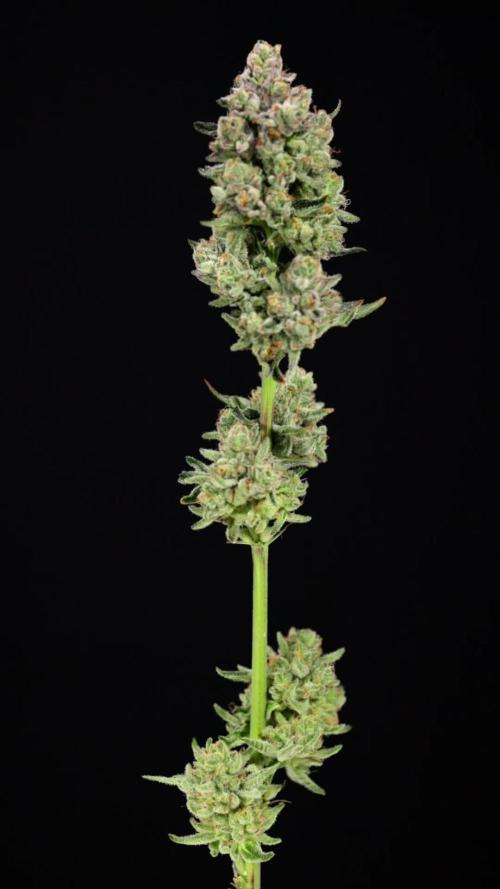
Ripeness - The pistils have looked super ripe for a long time, especially the upper ones, which are very red, and we're still over 90%.
The trichomes are about 30% amber, 40% cloudy/milky, and 30% clear, more or less naturally, but I think it's fine; it looks super ripe.
The flowers are all top-quality, and the yield is excellent, I think 80-100 grams.
The overall shape of the plant is truly splendid. Main lining works well even without LST training, as I did this time. The plant seems more solid and more evenly distributed than when I mainfold, or repeatedly top, the soil.
We chose a 100% organic, 1000% Plagron soil, as always.
The soil we chose is the recently launched Plagron Bio LightMix, which will allow us to start with more gradual and consistent watering, without the sudden changes that liquid fertilizers can cause. A week of soil is enough, so don't overdo it.
Choose your favorite style and calculate your results on the website:
www.plagron.com
Visit the new Growshop area on the Zamnesia website:
Z - https://www.zamnesia.io/it/531-growshop
These seeds are sold out and were a limited edition. I'm very sad not to have saved one, but we can choose from Zamnesia's excellent strains, and keep an eye out for exclusive limited editions like this one when they come out...
Z - https://www.zamnesia.io/en/35-cannabis-seeds
T - https://www.zamnesia.io/en/35-cannabis-seeds/745-tical
Z - Nectar Drip is a unique cannabis hybrid created in collaboration between Zamnesia Seeds and TICAL. These flowers are pure power, with up to 26% THC and effects that stimulate the mind and stabilize the body. But if you want to try them, you'll have to hurry: only 750 packs are available!
There's nothing better than a good collaboration—we know that better than anyone! For this partnership, we joined forces with TICAL to create a strain packed with flavor and potency. We brought our delicious Apple Fritter, while TICAL contributed its 24K Gold Fangs. After fine-tuning the result, Nectar Drip was born. This strain produces potent flowers with up to 26% THC, accompanied by delicious fruity and skunky aromas. Considering one of its parents is Apple Fritter, you can be sure that Nectar Drip has inherited a burst of fruity aromas and flavors. Skunky notes are evident, creating a rich and intriguing profile. Smoking this beauty will leave you feeling relaxed, with a pleasant cerebral euphoria accompanying the experience. It's definitely a great evening smoke, perfect for when you want to take a moment for yourself.
You know it, but I recommend it. You'll find so many wonderful things here, essentially "all the best that nature has to offer."
Z - www.zamnesia.com //
Music //
Last Day the Daddy Music
"Tical" (1994) is Method Man's first solo album.
www.radionula.com
+ Feng Shui Music
+ Frequencies 432 Hz



@Enochian
Volgen
Had to fold the stretch under scrog this week. Going great guns. Opened lower bud sites and spread the canopy. Outside temps and humidity swings have been managed well by the D12 and fan working together to keep enviroment stable. Had another good week.


@andzzz
Volgen
added a layer of coco soil (1l) mixed with 80g BioBloom at the beginning of this week
now every other day following combination:
- 2ml CalMag + 5ml Bio Heaven + 200 ml water
- 4ml Mono Trace + 5ml Bio Heaven + 200 ml water
@PH 6
therefore removed 800ml of water that week
applied nemathodes and a little bit of leaf coat, because flies take over


@BrigadeDesTerps
Volgen
Recette du tco pour 20 litres. (Grammes : gr)
50gr biochar
250gr zéolite
3gr granulé Micro-Organisme IT45
10gr pollen d’abeilles
10gr levure de bière
3gr endomychorize
10gr consoude
20gr vers de farine
10gr cendre coque de ricin
12gr ortie microniser
15gr Kelp
10gr spiruline
10gr de cbd living soil
20ml de miel liquide
30ml de mélasse
20ml d’acide humiques et fluvic
Mettre tous les ingrédients (sauf la mélasse ,l’acide h/f et le miel) dans un filtre 400micron, le placer dans un seau avec de l’eau (10litres). Rajoutez le miel et 10ml de mélasse
Y mettre un micro bulleur alimenter sur une pompe à air et faire oxygéné le mélange pendant 24h. Rajout de 10ml de mélasse après 12h le début de la mise en route de la pompe.
A la fin des 24h rajoutez le restant de mélasse et d’acide h/f, mettez y en plus 10litres d’eau au mélange.
Reste plus qu’à arroser!
j’y ai incorporé 7litre de mélange
La veille j’ai préparé le pot à l’arrosage avec 500ml d’eau et 2gr de Bacillus IT35 Amyloliquefaciens X5
Bacillus Amyloliquefaciens : rhyzosphère, probiotiques. Aspersion et arrosage. Utilisable pour toutes cultures.
La bactérie Bacillus Amyloliquefaciens se fixe dans la rhizosphère en se nourrissant des exsudats racinaires. En contrepartie, elle stimule la croissance racinaire en sécrétant des métabolites de croissance et solubilise le phosphore en sécrétant des phytases (enzymes).
Effet probiotique consistant en l’utilisation de micro-organismes bénéfiques pour la nutrition et la santé des plantes.
La spiruline, le plus riche et le plus complet des amendements organiques
La Spiruline est une algue aquatique connue comme complément alimentaire, la Spiruline est aussi un amendement organique et écologique très complet.
D'une grande qualité nutritive, elle apporte à vos plantes une quantité de nutriments, dont l'azote, phosphore, potassium, minéraux, acides aminés, vitamines, chlorophylle et protéine.
Le charbon végétal actif est capable d’absorber jusqu’à cinq fois son poids propre en eau ainsi que les éléments nutritifs qui s’y trouvent. Il joue ainsi le rôle de catalyseur et d'amplificateur pour les fertilisants traditionnels, qu'ils soient d'origine organique ou minérale. Ce pourquoi il est idéal pour activer un sol et pour les thés de compost oxygénés.
Le charbon végétal améliore la diffusion et la disponibilité des éléments nutritifs dans le sol et offre des conditions propices au développement des micro-organismes.
Le Biochar peut être introduit dans une grande variété de sols. Il est particulièrement efficace dans les sols pauvres, difficiles et acides.
Pour faire agir rapidement et efficacement sa capacité d’amendement, le charbon végétal est enrichi et biologiquement activé avec des micro-organismes. Le Biochar se comporte ainsi comme un structurateur et un activateur dans le but de valoriser les sols.
Composition :
• Charbon végétal actif 31%
• Matière organique 33%
• Matière sèche 75%
• C/N : 17
• PH : 7,2
• Azote (N) : 2,1 % dont 1,2 % azote organique
• Phosphore (P205) : 0,74%
• Potassium (K20) : 1,18%
• Calcium (Ca) : 6,8%
• Magnésium (MgO) : 0,65%
Le pollen est l'ingrédient de base de la fabrication du miel par les abeilles. Riche en vitamines et minéraux, il est qualifié « d'aliment parfait », y compris pour les plantes !
Les zéolithes sont des roches cristallines, présentant des capacités d'adsorption particulièrement importantes vis à vis des polluants que l'on rencontre dans l'eau et dans certains liquides, ainsi que dans l'air et les gaz. Elles sont extrêmement poreuses comme les charbons activés et elles peuvent être chargées électriquement pour opérer comme des échangeurs d'ions.
La zéolithe est un produit naturel qui respecte notre environnement. Utilisé dans le milieu industriel depuis de longues années déjà, ce minerai aux propriétés filtrantes particulières commence à se vulgariser dans le domaine de la piscine privée, de l'aquariophilie, des bassins d'agrément, de la récupération des eaux de pluie, ou encore de la culture des bonsaïs et autres plantations diverses par exemple...
4 points techniques majeurs :
- Grâce à leur propriété hydrophile, les zéolithes peuvent adsorber l'eau jusqu'à 30% de leur poids total et sans aucune variation de volume : pas de gonflement en présence d'eau ni de craquement en cas de déshydratation comme certaines argiles. Les zéolithes sont d'ailleurs de puissants agents anti-mottant (anti-agglomérant). Cette propriété est très appréciée dans le cas des terrains de golf et autres aires de jeux.
- Les zéolithes ne captent pas l'eau de façon irréversible, elles se comportent comme une réserve au voisinage des racines. Celles-ci peuvent capter l'eau en fonction de leur besoin. Les zéolithes permettent ainsi de réduire les besoins d'arrosage jusqu'à 35 %.
- Une zéolithe se comporte comme une "Zone de Stockage" qui retient l'azote et les éléments minéraux nutritifs au voisinage des racines et les relâche lentement en fonction des besoins de la plante. Cela se traduit par une croissance harmonieuse mais rapide du végétal.
- La capacité d'adsorption et l'énorme rapport surface/volume des zéolithes, vont permettre à la fois la rétention de la solution du sol et une bonne oxygénation au voisinage du système racinaire. Les zéolithes favorisent donc l'organisation biologique des sols en contribuant au développement de la micropopulation. L'apport en nutriments (N, P, K) est réduit de 20 à 25 %. Ces derniers, adsorbés par la zéolithe, sont beaucoup moins sensibles au lessivage et à l'évaporation.
Composition minéralogique :
* Chabasite 70 %
* Phillipsite 2 %
* Feldspath 5 %
* Augite 3 %
* Illite - Mica 2%
Analyse atomique:
* Sio2 52 %
* AL2o3 17 %
* CaO 5,7 %
* K2O 6,1 %
* MgO 2 %,
* Na2O 0,6 %
* Fe2O3 3,6 %
Amendement calcaire, dolomie et gypse avec préparation microbienne à base de Bacillus Amyloliquefaciens IT45 et Saccharomyces cerevisiae LYCC6420
Formulation : micro granulés (1 – 1,6 mm) à base de rhizobactéries favorisant la croissance des plantes qui se multiplient et colonisent rapidement la zone des racines, et de levures Saccharomyces cerevisiae souche LYCC ayant un effet probiotique.
Les PGPR produisent des enzymes qui solubilisent le phosphore à partir de complexes inorganiques et organiques dans le sol et stimulent la croissance des racines efficaces augmentant ainsi la zone d'interception des éléments nutritifs. Les levures LYCC permettent une occupation de la rhizosphère par une flore bénéfique.
Composition :
• Matière sèche : 96,8%
• Matière organique : 91,5%
• N total : 6,6% dont N soluble dans l'eau 0,17%
• P total : 2%
• K total : 1,7%
Micro-granulés :
• Oxyde de calcium (CaO) total : 30%
• Oxyde de magnesium (MgO) total : 7%
• Anhydride sulfurique (SO3) : 13%
La levure de bière est une matière vivante qui permet un meilleur fermentation pour les thés de compost oxygénés notamment conseillé pour accompagner les croissances ou apporter un gros coup de pousse pendant la floraisons.
La levure stimule la vie des sols également à l'arrosage direct en apportant tout aussi bien que dans le TCO sa population l'espèce micro-bactérienne positive pour votre sols ainsi que des oligo-éléments et diverse vitamines.
Composition :
• 2,8% (N) total dont 1% (Norg),
• 2,3% (P205)
• 1,6% (K20)
• 35% de MO
• C/N : 8. PH : 8,4.
Sous forme de poudre mouillable. Il contient des spores du champignon mycorhizien Rhizophagus Irregularis MUCL57891 avec des levures inactivées spécifiques. 2000 spores/gramme d’endomycorhize Rhizophagus Irregularis MUCL57891 et Saccharomyces Cerevisiae LYC6420 inactivée. Se connecte efficacement au système racinaire et forme un vaste réseau souterrain de filaments, qui agissent comme des extensions pour atteindre les nutriments et l’eau au-delà de la rhizosphère
Composition :
• Poudre contenant 2000 spores/g. d’endomycorhizes Rhizophagus irregularis
La Consoude (Symphytum Officinale) est une plante présentant de nombreuses propriétés.
Particulièrement riche en Potassium (K) organique, la consoude est une alliée idéale pour les périodes de floraison. La consoude a tout pour plaire : riche en vitamine B12, elle agira également comme stimulateur racinaire, mais aussi comme biostimulant cellulaire, grâce aux alcaloïdes, aux allantoïnes et jusqu'à 30% de protéine !
100% déjection de vers de ténébrions.
Très riche en microorganismes, le guano de vers de farine est une matière directement composté par les vers. En effet, c'est bien la digestion de matières végétales par des larves, insectes ou autres arthropodes qui valident le processus de compostage, que ce soit en zone de production de cultures d'insectes, pour le compost maison ou la dégradation de litière forestière.
Les bactéries et autres champignons obtenus grâce au système digestif de nos vers, permettent la dégradation accélérée des éléments nutritifs dans vos supersoils, et les symbioses permettant l'assimilation des éléments nutritifs.
Cette bio-activation intense mettra dans vos sols, à la disposition de vos plantes, un panel tellement varié de nutriments frais qu'il nous est aujourd'hui technologiquement impossible de pouvoir tous les nommer et de les compter.
Le guano de vers de farine fournit une grande polyvalence. Très équilibré, il s'utilise en entretien ou en apport ciblé seul ou en complément de d'autres amendements ou fertilisants organiques.
Il agit comme un puissant activateur de sol et/ou de substrat.
Cendre coque de ricin NPK 0,1-18,6-16,5. 0,1% (N-Azote), 18,6% (P205-Phosphore), 16,5% (K2O-Potasse), 11,7%(Ca0), 9,1 (Mg0) - Origine : Inde
ACTION SOL • rend rapidement accessible au sol Phosphore, Potasse, Magnésium et Calcium.
ACTION PLANTE • Apport aux stades agronomiques propices. • Produit riche en éléments fertilisants : combinaison NPK 35%. • Régularité de l’apport, milieu et fin de floraison. . Favorise la sénescence.
Analyse chimique :
• NPK 0,1-18,6-16,5
• N-Azote 0.1%
• P205-Phosphore 18,6%
• K2O-Potasse 16,5%
• CaO-Calcium 11,7%
• MgO-Magnésium 9,1%
Ortie bio micronisée Stimule la vie du sol et la végétation.
Composition :
• 2,8% (N) total dont 1% (Norg),
• 2,3% (P205)
• 1,6% (K20)
• 35% de MO
• C/N : 8. PH : 8,4
KELP poudre
ascophyllum nodosum
- amendement sol
Croissance et floraison - Meilleure germination - Meilleur développement racinaire Meilleure assimilation - Résistance aux stress osmotiques - Augmente la production de chlorophylle = plantes plus vertes = lumière mieux captée - Lutte contre le stress osmotique - Développement des Micro-Organismes dans le sol – Riche en vitamines, fer, iode, oligo-éléments, hormones de croissance auxines et cytokinines - Idéal en épandage et pour les thés de compost oxygénés.
Important : notre Kelp est un goémon noir mais il n'est pas le varech bien moins fertile de la même famille qui est l'algue qui pullule et pollue la Bretagne, notre algue pousse uniquement à plus de 50 mètres de fond dans les grands courants froids au large de la Norvège.




@Huckleberry39
Volgen
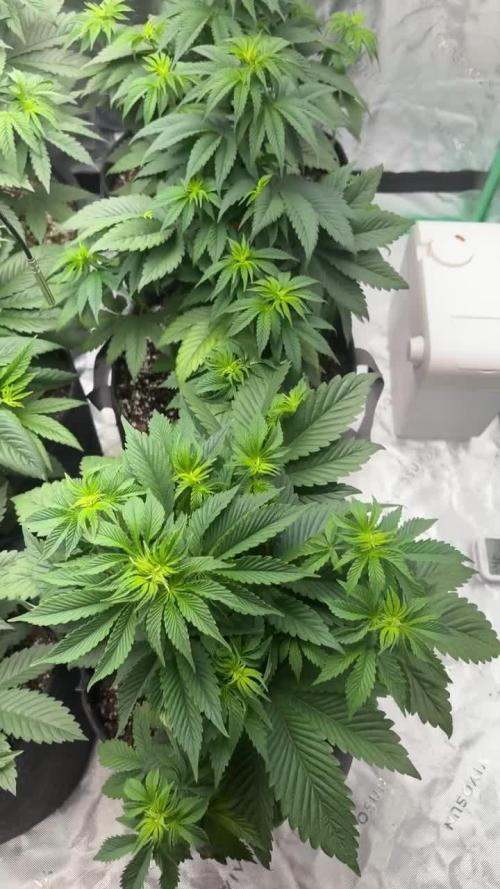
Best grow yet!!! These ilgm og kush are a little fickle butas long as the ph is good and you start early on the cal mag and don't overfeed these ladies will treat you good!!


@eldruida_lamota
Volgen
Que pasa familia, vamos a añadir la cuarta semana de floración de estas Apple Fritter de RoyalQueenSeeds, empezamos con la temperatura que la tenemos entre los 21/25 grados, la humedad está entorno al 50%, el ph está en 6.2 , el foco actualmente lo tengo encendido 12 horas y la potencia es al 100% de lo que da el foco.
También añado la gama de nutrientes de Agrobeta, que no falla, sin duda de la mejor alimentación que hay para tus plantas.
Veremos estas próximas semanas como avanzan y se comportan en la floración.
Mars hydro:
Code discount: EL420
https://www.mars-hydro.com/
Agrobeta:
https://www.agrobeta.com/agrobetatiendaonline/36-abonos-canamo
Hasta aquí todo, Buenos humos 💨💨💨


@DeepRootsGrowTrees
Volgen
MIMOSA by ROYAL QUEEN SEEDS
Week #16 overall
Week #15 Veg
This week she is doing good she's looking nice she has done a nice job being outside. Stay Growing!!
Royal Queen Seeds MIMOSA


@Lazuli
Volgen
i started feeding 1000ppm now, she eats a lot, the frost is coming crazy just need a bit weight to the buds now, i think she got 4 weeks left from here


@sinfantas
Volgen
Lindo crecimiento 3 semana de floracion
debo comentar que tienen muy poco olor creo que se fue perdiendo porque estoy seguro en la semana 5 vegetacion era un olor muy fuerte no se si es uno de los fertilizantes que bajo el olor
comienzo a usar PK de B.A.C