


Likes
Comments
Share

@Argos
Follow
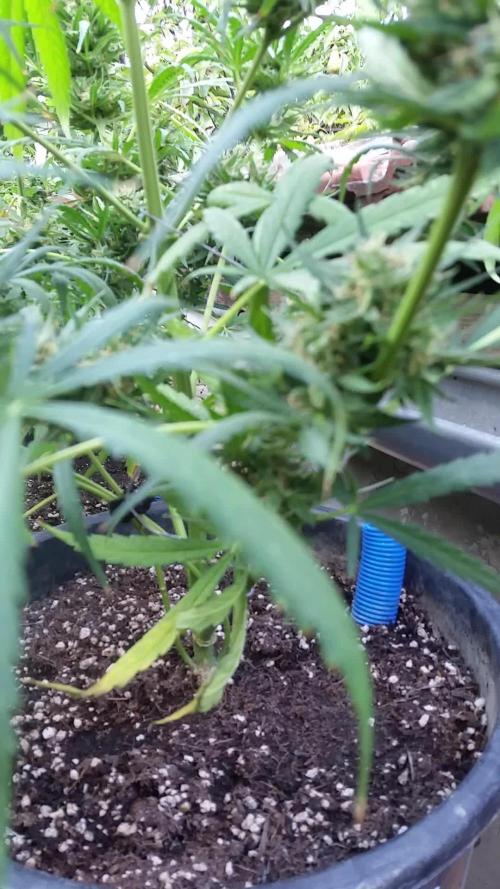
Még finomabb az illata. Trichómák nagy része tejszerű, de még nem hozza a várt hatást. Néhány sárga levél leszedve. (3-4 db) 08. 04. a makrofotókon látható, ahogy néhány trichóma elkezdődött ámbrásodni.

Likes
22
Share


@dr_Thompson
Follow
Rather big and greedy plant, doesn't demand a lot of attention. Has shown good reaction to scrog and lst.
I've already grown it once, and I'm sure I'll do it again.
Довольно большое и прожорливое растение, не требует повышенного внимания, хорошо реагирует на scrog и lst. Поднимаю уже не в первый и точно не в последний раз:)


Likes
11
Share


@Grow_Outside
Follow
Die Purple Lemonade FastFlower steckt aktuell ihre ganze Power in ihre Buds. Sie sieht einfach Mega geil aus, jedesmal wenn ich ins Zelt schaue, fasziniert sie mich 💚
Likes
33
Share


@BADKUSS
Follow
Hello everyone!
here it is, the time has come to spend all this beautiful world in bloom ...
although one of the small is typically indica, the others int a more sativa phenotype, there is just a look at the leaves ....
here I water this week with plagron terra grow at a rate of 5ml per liter ...
here is now room for photos ...
peace ...

Likes
10
Share


@eldruida_lamota
Follow
Esa familia, ya estamos a mitad de floración como quien dice finalizando la 4 semana , y es que están cogiendo unos tonos también, esos colores rojos y morados que están entonando😈
Tuve que tuitear las 5 plantas de un armario ya lo visteis y las puntas se dirigen hacia la luz. Cómo podéis observar en las fotos y vídeos.
Algunas se sobrealimentaron porque no todas comen igual pero reduci la alimentación solo en esas y ya se está solucionando.
Por lo demás , pronto empezaré aplicar el overdrive junto con el bud candy unas semanas más.
Las temperaturas en estos indoors son perfectas y la humedad relativa es correcta.
Hasta aquí es todo espero que os esté gustando, buenos humos y feliz navidad 💨💨💨


Likes
9
Share


@TheBulldozerSicily
Follow
Queste piante sono state fatte al massimo dello stress, al minimo dei consumi. Con 300 watt totali, niente riscaldamento, solo ricircolo d aria e luce, anche nell'acqua pochi nutrienti, si vede il risultato finale abbastanza scarso, non ho avuto tempo d stargli dietro, ma con tutto ciò qualcosa ho raccolto.

Likes
7
Share

@majklsoft
Follow
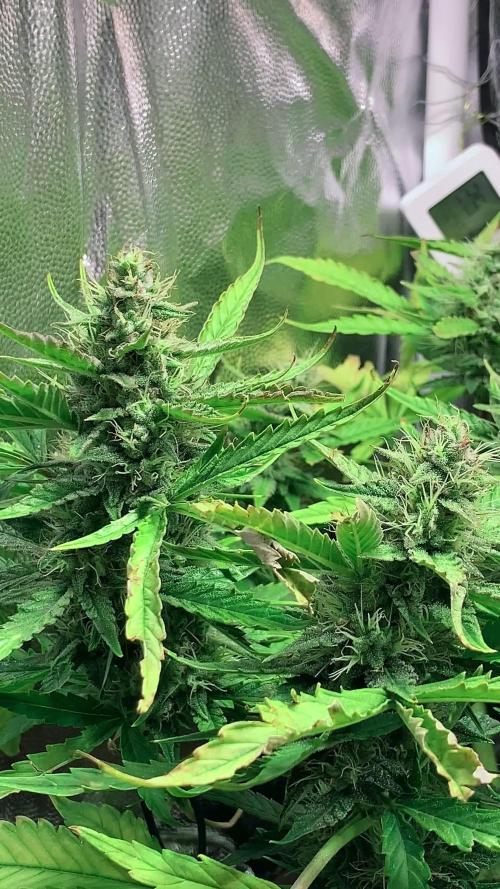
Considering that Syrup is a fast-flowering autoflower (lifespan 56–65 days), we're getting close to the finish line... :)
Big thanks to everyone who's been guiding me through messages and answers — and also to all the growmies who just stop by!
BTW: For those chasing purple buds — just underfeed them a bit and give them a phosphorus deficiency. 😂

Likes
26
Share


@darb35
Follow
Finally time has come to chop down plants 1&2.
They look ready and trichomes are mostly cloudy with some embers.
Both plants weight 750 grams as whole.
I would assume there is around 30-40 grams dry on each, but we would have to dry cure and than return with results.
3rd plant can probably go for another week, she looks like she can get her buds bigger, also still many many white pistils.
She is looking very promising with very long buds (:
3rd plant chopped after 1 week, weighs 500 grams wet as whole.
Joining the 2 other girls in the closet
Likes
37
Share


@Capo420
Follow
Start of Week 3. Been an awesome first 2 weeks.😎
I have learned more than I thought possible. I want to thank everyone who has helped me.🙏
Gonna start LST later in the week. 💪
Will be updating throughout the week.
Happy Growing!
🤙💚💪🌱😎🌱💪💚🤙
Likes
3
Share


@Choot
Follow
un peu moins de 5 mois de culture pour ce résultat, c'est long certes mais rendu sympa
Faire attention à l'humidité, ventilation si indica ... mais sinon globalement tout à été très bien . A voir quand cela est sec .

Likes
4
Share


@GreeneScene
Follow
Not too much to report here .
Added 3 new pieces of “equipment”
1. Plant watering saucers
2. Small electric dehumidifier
3. Even smaller non-electric dehumidifier
Anywho , still only watering when dry with PH’d water & LSTing . The growth rate I would describe as moderate . One of the 3 GDPs have thrown preflower pistals at the very end of week 3 which is disappointing but I’ll trudge on & try & get 5 minimum 4 solid weeks of veg out of the other two .
That’s pretty much all to report , another week in the books 📚 here at the GreeneScene

Likes
59
Share


@Le_Duc_Du_Bud
Follow
Coucous amis cultiveurs 👌✌️
Bon alors franchement merci Fast Buds ❤️ franchement les Gorilla Cookies Auto sont honnêtement les meilleurs que j'ai pu cultiver 🙏
Une beauté regardé par vous même 😊
Une senteur diabolique 😈
Je suis en pot de 18 litres , actuellement je leur donne chacune 3,5 a 4 litres . Je trouve abusé je ne sais pas mais c'est ça tous les deux jours 😱😱
Qu'en pensez vous ?
Je n'es enlever très peut de feuilles, j'hésite à faire une defoliation en fin de semaine pour laisser que les Buds , bonne idée ou pas ?
Bref la gamme Terra aquatica, j'ai retourne dans aucun problème , pour ma part le best ✌️👌en plus c'est fabriqué en France 🇨🇵
Profitez de ces belle demoiselle. ❤️❤️❤️
Et encore merci fastbuds 🍁
Processing
Likes
11
Share


@Chimney_Chief
Follow
Another great week of growth, I've noticed she has pretty much stopped growing any larger fan leaves so I havent needed to defoliate.
The smell in the space is strong now and she is producing lovely sweet buds that are dense and sticky.
Reduced her nute intake and have introduced DRAGON FORCE.


Likes
6
Share


@Jbreezy
Follow
Still taking about 2-3L of water each day, feeding ucann bloom every two weeks with worm castings. A little bleaching on the gelato but I just raised the light a few more inches, hoping it’s enough to prevent more. The Coco Melon is short but the buds are looking very compact.

Likes
3
Share

@GoodTimesOrganics
Follow
Hi liebe Community and Welcome Back! 🌿💚
Permanent Marker von Seed Junky Genetics x Doja Exklusiv!
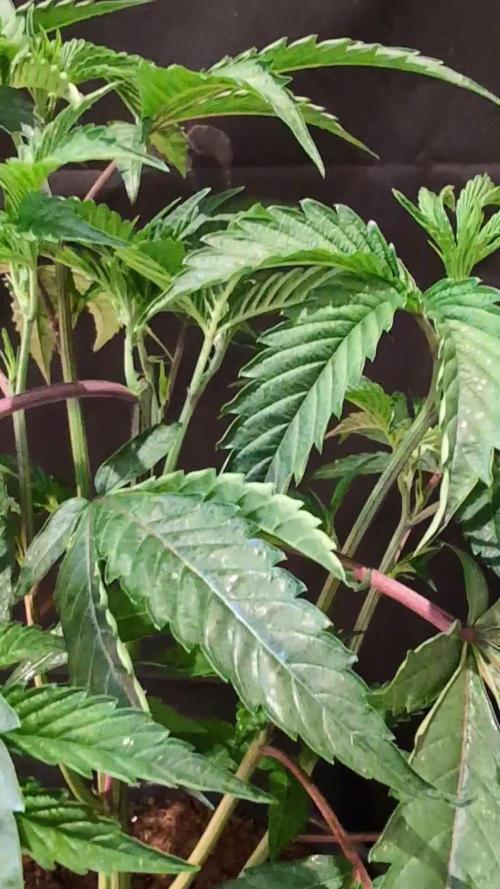
Wir befinden uns in Wachstumswoche 5 seit dem Eintopfen (Tag 28).
Sie hat nun 13 cm in einer Woche zugelegt und ich habe einen der Triebe getoppt um die Pflanze schön in die Breite zu fächern.
Die Triebe entwickeln sich super.
Die Pflanze legt eine top Performance hin.
Gegrowt wird wie immer rein Organisch!
Die Bedingungen für einen Steckling, bis er gut angewachsen ist sind gerade Top:
—————
🌞 Temp: 26
🌚 Temp: 18°C bis 19°C
💨 RH: 64%
VPD: 1,1 kPa
💡ppfd: 330 mpm
—————

Likes
7
Share


Likes
6
Share


@RzDreams
Follow
18/10/2022 Se controló la plaga de mosca del sustrato, no están exterminadas definitivamente pero no se siguen reproduciendo a la misma velocidad.
19/10/2022 Mediados de la 4ta semana de crecimiento se trasplantan 03 y 09, queda pendiente 04 no contamos con más macetas y el espacio no es suficiente dentro de la carpa se deja dentro la semana completa.
22/10/2022 Se aplica tierra diatomea para exterminar por completo la plaga de la mosca del sustrato.
23/10/2022 Se quita excedente de tierra diatomea de las hojas para no ralentizar el crecimiento. 04 se saca del indoor para continuar con la semana 5 de crecimiento solo con 4 plantas y buen espacio para su correcto crecimiento, 04 se pretender pasar a maceta más grande y se deja en exterior esperando sobreviva.
No se agregan nutrientes específicos aún hay buenas reservas y restos de control de plaga
Likes
21
Share


@MicrowGrow420
Follow
Bushy little mama. Removed the tobacco plants as they were taking over the tent. She is on her lonesome now so she can make full use of the space available. Looking like she needs some defoliation pretty soon.
3/10 Gave her a radical defoliation. Took away about 85% of all the larger fan leaves and some lower canopy growth. I want all the plants energy to go into flowering and developing large kolas.
Don't expect the auto clone to get much bigger, so won't be potting up, but she may produce a decent kola.
Likes
25
Share


@Ultraviolet
Follow
ANTHOCYANIN production is primarily controlled by the Cryptochrome (CR1) Photoreceptor ( !! UV and Blue Spectrums are primary drivers in the production of the pigment that replaces chlorophyll, isn't that awesome!
1. Diverse photoreceptors in plants
Many civilizations, including the sun god of ancient Egypt, thought that the blessings of sunlight were the source of life. In fact, the survival of all life, including humans, is supported by the photosynthesis of plants that capture solar energy. Plants that perform photosynthesis have no means of transportation except for some algae. Therefore, it is necessary to monitor various changes in the external environment and respond appropriately to the place to survive. Among various environmental information, light is especially important information for plants that perform photosynthesis.
In the process of evolution, plants acquired phytochrome, which mainly receives light in the red light region, and multiple blue light receptors, including his hytropin and phototropin, in order to sense the light environment. .. In addition to these, an ultraviolet light receptor named UVR8 was recently discovered. The latest image of the molecular structure and function of these various plant photoreceptors (Fig. 1), focusing on phytochrome and phototropin.
Figure 1
Ultraviolet-visible absorption spectra of phytochrome, cryptochrome, phototropin, and UVR8. The dashed line represents each bioactive absorption spectrum.
2. Phytochrome; red-far red photoreversible molecular switch
What is phytochrome?
Phytochrome is a photochromic photoreceptor, and has two absorption types, a red light absorption type Pr (absorption maximum wavelength of about 665 nm) and a far-red light absorption type Pfr (730 nm). Reversible light conversion between the two by red light and far-red light, respectively(Fig. 1A, solid line and broken line). In general, Pfr is the active form that causes a physiological response. With some exceptions, phytochrome can be said to function as a photoreversible molecular switch. The background of the discovery is as follows. There are some types of plants that require light for germination (light seed germination). From that study, it was found that germination was induced by red light, the effect was inhibited by subsequent far-red light irradiation, and this could be repeated, and the existence of photoreceptors that reversibly photoconvert was predicted. In 1959, its existence was confirmed by the absorption spectrum measurement of the yellow sprout tissue, and it was named phytochrome. Why does the plant have a sensor to distinguish between such red light and far-red light? There is no big difference between the red and far-red light regions in the open-field spectrum of sunlight, but the proportion of red light is greatly reduced due to the absorption of chloroplasts in the shade of plants. Similar changes in light quality occur in the evening sunlight. Plants perceive this difference in light quality as the ratio of Pr and Pfr, recognize the light environment, and respond to it.
Subsequent studies have revealed that it is responsible for various photomorphogenic reactions such as photoperiodic flowering induction, shade repellent, and deyellowing (greening). Furthermore, with the introduction of the model plant Arabidopsis thaliana (At) and the development of molecular biological analysis methods, research has progressed dramatically, and his five types of phytochromes (phyA-E) are present in Arabidopsis thaliana. all right. With the progress of the genome project, Fi’s tochrome-like photoreceptors were found in cyanobacteria, a photosynthetic prokaryotes other than plants. Furthermore, in non-photosynthetic bacteria, a homologue molecule called bacteriophytochrome photoreceptor (BphP) was found in Pseudomonas aeruginosa (Pa) and radiation-resistant bacteria (Deinococcus radiodurans, Dr).
Domain structure of phytochrome molecule
Phytochrome molecule can be roughly divided into N-terminal side and C-terminal side region. PAS (Per / Arndt / Sim: blue), GAF (cGMP phosphodiesterase / adenylyl cyclase / FhlA: green), PHY (phyto-chrome: purple) 3 in the N-terminal region of plant phytochrome (Fig. 2A) There are two domains and an N-terminal extension region (NTE: dark blue), and phytochromobilin (PΦB), which is one of the ring-opening tetrapyrroles, is thioether-bonded to the system stored in GAF as a chromophore. ing. PAS is a domain involved in the interaction between signal transduction-related proteins, and PHY is a phytochrome-specific domain. There are two PASs and her histidine kinase-related (HKR) domain (red) in the C-terminal region, but the histidine essential for kinase activity is not conserved.
3. Phototropin; photosynthetic efficiency optimized blue light receptor
What is phototropin?
Charles Darwin, who is famous for his theory of evolution, wrote in his book “The power of move-ment in plants” published in 1882 that plants bend toward blue light. Approximately 100 years later, the protein nph1 (nonphoto-tropic hypocotyl 1) encoded by one of the causative genes of Arabidopsis mutants causing phototropic abnormalities was identified as a blue photoreceptor. Later, another isotype npl1 was found and renamed phototropin 1 (phot1) and 2 (phot2), respectively. In addition to phototropism, phototropin is damaged by chloroplast photolocalization (chloroplasts move through the epidermal cells of the leaves and gather on the cell surface under appropriate light intensity for photosynthesis. As a photoreceptor for reactions such as escaping to the side of cells under dangerous strong light) and stomata (reactions that open stomata to optimize the uptake of carbon dioxide, which is the rate-determining process of photosynthetic reactions). It became clear that it worked. In this way, phototropin can be said to be a blue light receptor responsible for optimizing photosynthetic efficiency.
Domain structure and LOV photoreaction of phototropin molecule
Phototropin molecule has two photoreceptive domains (LOV1 and LOV2) called LOV (Light-Oxygen-Voltage sensing) on the N-terminal side, and serine / on the C-terminal side. It is a protein kinase that forms threonine kinase (STK) (Fig. 4Aa) and whose activity is regulated by light. LOV is one molecule as a chromophore, he binds FMN (flavin mononucleotide) non-covalently. The LOV forms an α/βfold, and the FMN is located on a β-sheet consisting of five antiparallel β-strands (Fig. 4B). The FMN in the ground state LOV shows the absorption spectrum of a typical oxidized flavin protein with a triplet oscillation structure and an absorption maximum wavelength of 450 nm, and is called D450 (Fig. 1C and Fig. 4E). After being excited to the singlet excited state by blue light, the FMN shifts to the triplet excited state (L660t *) due to intersystem crossing, and then the C4 (Fig. 4C) of the isoaroxazine ring of the FMN is conserved in the vicinity. It forms a transient accretionary prism with the tain (red part in Fig. 4B Eα) (S390I). When this cysteine is replaced with alanine (C / A substitution), the addition reaction does not occur. The effect of adduct formation propagates to the protein moiety, causing kinase activation (S390II). After that, the formed cysteine-flavin adduct spontaneously dissociates and returns to the original D450 (Fig. 4E, dark regression reaction).
Phototropin kinase activity control mechanism by LOV2
Why does phototropin have two LOVs? Atphot1 was found as a protein that is rapidly autophosphorylated when irradiated with blue light.
The effect of the above C / A substitution on this self-phosphorylation reaction and phototropism was investigated, and LOV2 is the main photomolecular switch in both self-phosphorylation and phototropism. It turns out that it functions as. After that, from experiments using artificial substrates, STK has a constitutive activity, LOV2 functions as an inhibitory domain of this activity, and the inhibition is eliminated by photoreaction, while LOV1 is kinase light. It was shown to modify the photosensitivity of the activation reaction. In addition to this, LOV1 was found to act as a dimerization site from the crystal structure and his SAXS. What kind of molecular mechanism does LOV2 use to photoregulate kinase activity? The following two modules play important roles in this intramolecular signal transduction.
Figure 4
(A) Domain structure of LOV photoreceptors. a: Phototropin b: Neochrome c: FKF1 family protein d: Aureochrome (B) Crystal structure of auto barley phot1 LOV2. (C) Structure of FMN isoaroxazine ring. (D) Schematic diagram of the functional domain and module of Arabidopsis thaliana phot1. L, A’α, and Jα represent linker, A’α helix, and Jα helix, respectively. (E) LOV photoreaction. (F) Molecular structure model (mesh) of the LOV2-STK sample (black line) containing A’α of phot2 obtained based on SAXS under dark (top) and under bright (bottom). The yellow, red, and green space-filled models represent the crystal structures of LOV2-Jα, protein kinase A N-lobe, and C-robe, respectively, and black represents FMN. See the text for details.
1) Jα. LOV2 C of oat phot1-to α immediately after the terminus
Rix (Jα) is present (Fig. 4D), which interacts with the β-sheet (Fig. 4B) that forms the FMN-bound scaffold of LOV2 in the dark, but unfolds and dissociates from the β-sheet with photoreaction. It was shown by NMR that it does. According to the crystal structure of LOV2-Jα, this Jα is located on the back surface of the β sheet and mainly has a hydrophobic interaction. The formation of S390II causes twisting of the isoaroxazine ring and protonation of N5 (Fig. 4C).
As a result, the glutamine side chain present on his Iβ strand (Fig. 4B) in the β-sheet rotates to form a hydrogen bond with this protonated N5. Jα interacts with this his Iβ strand, and these changes are thought to cause the unfold-ing of Jα and dissociation from the β-sheet described above. Experiments such as amino acid substitution of Iβ strands revealed that kinases exhibit constitutive activity when this interaction is eliminated, and that Jα plays an important role in photoactivation of kinases.
2) A’α / Aβ gap.
Recently, several results have been reported showing the involvement of amino acids near the A’α helix (Fig. 4D) located upstream of the N-terminal of LOV2 in kinase photoactivation. Therefore, he investigated the role of this A’α and its neighboring amino acids in kinase photoactivation, photoreaction, and Jα structural change for Atphot1. The LOV2-STK polypeptide (Fig. 4D, underlined in black) was used as a photocontrollable kinase for kinase activity analysis. As a result, it was found that the photoactivation of the kinase was abolished when amino acid substitution was introduced into the A’α / Aβ gap between A’α and Aβ of the LOV2 core. Interestingly, he had no effect on the structural changes in Jα examined on the peptide map due to the photoreaction of LOV2 or trypsin degradation. Therefore, the A’α / Aβ gap is considered to play an important role in intramolecular signal transduction after Jα.
Structural changes detected by SAXS
Structural changes of Jα have been detected by various biophysical methods other than NMR, but structural information on samples including up to STK is reported only by his results to his SAXS. Not. The SAXS measurement of the Atphot2 LOV2-STK polypeptide showed that the radius of inertia increased from 32.4 Å to 34.8 Å, and the molecular model (Fig. 4F) obtained by the ab initio modeling software GASBOR is that of LOV2 and STK. It was shown that the N lobes and C lobes lined up in tandem, and the relative position of LOV2 with respect to STK shifted by about 13 Å under light irradiation. The difference in the molecular model between the two is considered to reflect the structural changes that occur in the Jα and A’α / Aβ gaps mentioned above.
Two phototropins with different photosensitivity
In the phototropic reaction of Arabidopsis Arabidopsis, Arabidopsis responds to a very wide range of light intensities from 10–4 to 102 μmol photon / sec / m2. At that time, phot1 functions as an optical sensor in a wide range from low light to strong light, while phot2 reacts with light stronger than 1 μmol photon / sec / m2. What is the origin of these differences? As is well known, animal photoreceptors have a high photosensitivity due to the abundance of rhodopsin and the presence of biochemical amplification mechanisms. The exact abundance of phot1 and phot2 in vivo is unknown, but interesting results have been obtained in terms of amplification.
The light intensity dependence of the photoactivation of the LOV2-STK polypeptide used in the above kinase analysis was investigated.
It was found that phot1 was about 10 times more photosensitive than phot2. On the other hand, when the photochemical reactions of both were examined, it was found that the rate of the dark return reaction of phot1 was about 10 times slower than that of phot2. This result indicates that the longer the lifetime of S390II, which is in the kinase-activated state, the higher the photosensitivity of kinase activation. This correlation was further confirmed by extending the lifespan of her S390II with amino acid substitutions. This alone cannot explain the widespread differences in photosensitivity between phot1 and phot2, but it may explain some of them. Furthermore, it is necessary to investigate in detail protein modifications such as phosphorylation and the effects of phot interacting factors on photosensitivity.
Other LOV photoreceptors Among fern plants and green algae, phytochrome ɾphotosensory module (PSM) on the N-terminal side and chimera photoreceptor with full-length phototropin on the C-terminal side, neochrome (Fig. There are types with 4Ab). It has been reported that some neochromes play a role in chloroplast photolocalization as a red light receiver. It is considered that fern plants have such a chimera photoreceptor in order to survive in a habitat such as undergrowth in a jungle where only red light reaches.
In addition to this, plants have only one LOV domain, and three proteins involved in the degradation of photomorphogenesis-related proteins, FKF1 (Flavin-binding, Kelch repeat, F-box 1, ZTL (ZEITLUPE)), LKP2 ( There are LOV Kelch Protein2) (Fig. 4Ac) and aureochrome (Fig. 4Ad), which has a bZip domain on the N-terminal side of LOV and functions as a gene transcription factor.
4. Cryptochrome and UVR8
Cryptochrome is one of the blue photoreceptors and forms a superfamily with the DNA photoreceptor photolyase. It has FAD (flavin adenine dinucle-otide) as a chromophore and tetrahydrofolic acid, which is a condensing pigment. The ground state of FAD is considered to be the oxidized type, and the radical type (broken line in Fig. 1B) generated by blue light irradiation is considered to be the signaling state. The radical type also absorbs in the green to orange light region, and may widen the wavelength region of the plant morphogenesis reaction spectrum. Cryptochrome uses blue light to control physiological functions similar to phytochrome.
It was identified as a photoreceptor from one of the causative genes of UVR8 Arabidopsis thaliana, and the chromophore is absorbed in the UVB region by a Trp triad consisting of three tryptophans (Fig. 1D). It is involved in the biosynthesis of flavonoids and anthocyanins that function as UV scavengers in plants.
Conclusion
It is thought that plants have acquired various photoreceptors necessary for their survival during a long evolutionary process. The photoreceptors that cover the existing far-red light to UVB mentioned here are considered to be some of them. More and more diverse photoreceptor genes are conserved in cyanobacteria and marine plankton. By examining these, it is thought that the understanding of plant photoreceptors will be further deepened.
