


Likes
Comments
Share

@DomForester
Follow
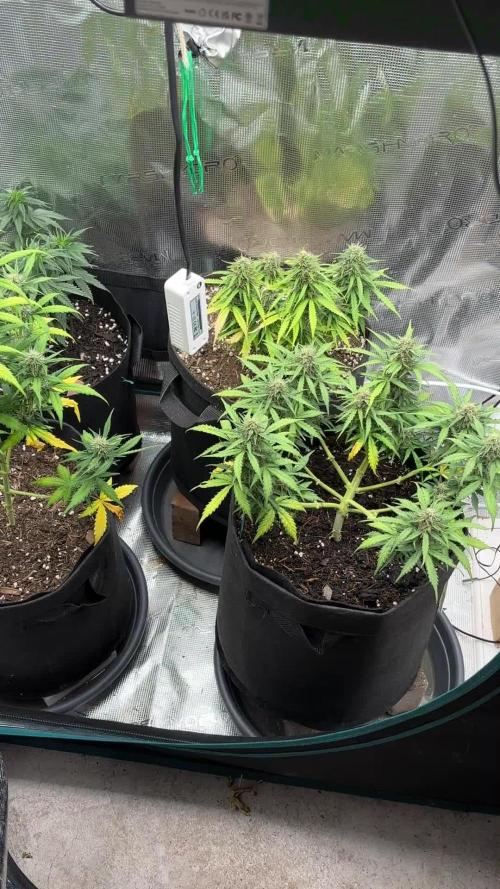
Weird. I’m seeing a few amber but mostly clear trichomes on Cindy1. No milky ones. Will double check tomorrow but does anyone know what that might be about?
Also, whats up with Cindy3’s leaves (the tall one)? That doesnt look like normal senescence during mid flower…

Likes
124
Share


@Legendaryseedthumb
Follow
Day 9: they are all looking super healthy and ready to explode! I’ll just veg these fast. Let them grow a node or two more then top them all and wait some days then switch to 12/12.
I’m having 9 plants in the same tent.

Likes
28
Share


@Bread_n_Buds
Follow
We have a new girl with suggestive references: Lavender is in fact a fantastic plant, widely used in human history for various purposes, with a purple color that no one can escape. Creating a lavender-flavored plant is a great idea and we want to enjoy it soon.
The plant grows well, the leaves are regular and very turned towards the light, it is very proportionate even I don't see stretching, bending and things that don't convince me. Soon we start with the grow.
The girls have already been trashed in 11 lt jars because the biodegradable jars have started to decompose prematurely, no problem let's go to the ground, Power Roots for root fertilizing.
Music of the week provided by Radio Nula from Slovenia.
https://radionula.com/
Thanks to friends of Seeds Mafia try this and their other creations
seeds > https://seedsmafia.com/en/autoflowering-cannabis-seeds/auto-lavender-feminized.html
Light and tent > https://marshydro.eu/products/marshydro-sp3000-led/?lang=it

Likes
5
Share


@Mr_nugs_lover_David
Follow
I love this pheno compared to the other hard diesel pheno #2 this one has a beautiful structure, and the buds are very dense hard and sticky as hell, the aroma it's really strong and stinky, I would definitely run her again, gea seeds always provides high quality strains and seeds to the growers! Very happy about this strain. Please stay tuned until the end to see the final result of this project! 💛❤️💚👨🌾✌️

Likes
1
Share

@Drehpaper
Follow
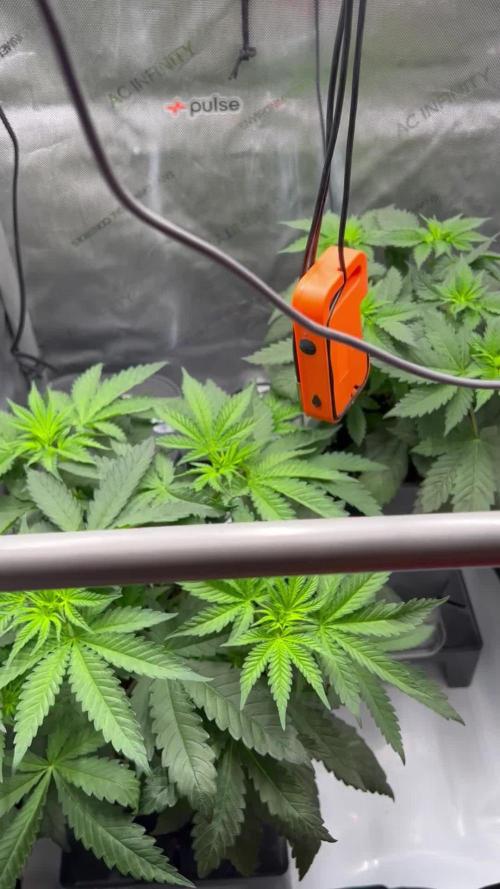
Woche: 01 Blüte 01-07 / 29-35
13.07-19.07 / Licht 100/25
VPD: 1,18
Höhe: 25cm
PPFD: 600
DLI: 25,92
Temperatur Tag: 27,4
Temperatur Nacht: 24,8
Luftfeuchtigkeit: 57%
Erste Blüte Woche nach Umstellung ist rum. Bis jetzt läuft alles so wie es soll. Schön langsam muss ich nur den AKF montieren sonst klingelt es wieder an der Tür 😅.


Likes
47
Share


@Mrs_Larimar
Follow
Monday,March 1st.
Second Week of Flower starts.
Those Plants growing like Masters, Drinking around 0.7l each Day
Only Benefical Drinks, because they sit in amended Soil
( EASY BOOST ORGANIC NUTRITION)
I was watching them very carefully, because they moved into abigger Tent,
with Double amount of Light.
But it seems to be allright for them. Looking gorgeous, green and Happy


Likes
16
Share


@TAXFR33
Follow
All the late nights and hard work are starting to show signs of paying off. Got high hopes for this grow


Processing
Likes
3
Share


@MOTB666
Follow
Getting too tall buds coming nicely now. No real problems but running out of room

Likes
27
Share


@Herbinski
Follow
So the first week of a 12 on 12 light schedule is behind us.
As you can see she started to elongate very well, most of the branches grew out to the same hight without any LST or HST training.
The Bilberry Lamp is showing it's quality. You can see that both the spectrum and the power work great for the plant.
Nothing special happened this week. She showed her first "hairs". Fed her twice each time with the mentioned dosages from the BAC Organic line.
I try to keep na 9 degrees Celsius difference between night and day. Just trying to keep her happy and hope that all goes well.

Likes
17
Share


@Plantinator
Follow
This week I made the decision to remove the ScrOG net because the plant has stunted growing and the leaves were droopy before and after watering . Given the fact she is an indica dominant strain, my approach to training wasn't the best.
Also the light intensity has been adjusted to PPFD level of 700. The light schedule is 18/6, so the DLI is about 45, which is the recommended maximum for autoflowers. I will keep my eyes on her, how is she will react.


Likes
26
Share


@Ilovekush17
Follow
Same regime i did add rose bloom for a 1 time feed. Dug a inch or so around the root and 1 inch or so hole by the pots edge. Recovered with soil then watered. I did not like the effects tho. It made a bunch of leaves change colors like they had p and k deficiencies. Stalks and viens got red but went back to normal after another watering with just 6.3 ph water
Likes
8
Share


@Susquihanna
Follow
Oh my goodness, 2nd time around Candy grew 7 inches this week!
This was another hot, hot week with a big rainstorm. Take a look at the measuring cup, it is full of rainwater. Second Time Around Candy continues to grow. It is beautiful and very full. All nutrients during this grow are from @Advance Nutrients Jungle Juice. It is touted as the only nutrient that I will need. One just need to make the solution stronger as the plant matures.
The directions say to “stir vigorously” and that is true. It is very clumpy and I had to stir and shake the bottle a lot. As your plant is in veg and growing larger, directions say to up your Jungle Juice to 4 ml per liter. If my calculations are correct, I am using approx. 5 tablespoons per 5 gallon bucket.
1 gal is 3.78 liters
5 gallons=18.92 liters
4ml jungle juice per liter x 18.92 liters= 75.7 ml which is = to 5.119 tablespoons per 5 gallon bucket of water
As always, Let’s Chat it up AND Likes and comments are appreciated

Likes
2
Share


@Ultraviolet_
Follow
Topped once, turned off IR @ nights, slowed vertical growth back down, and took off both of the very lowest internodes on each plant.
Eisenia fetida
Stratiolaelaps scimitus
Armadillidium vulgare
Red wigglers (Eisenia fetida) are highly beneficial. They are considered an ideal choice for "no-till" or container-based organic growing because they live in the upper layers of soil, feeding on organic mulch rather than the plant's root system. Red wigglers accelerate the breakdown of organic amendments and produce high-quality, nutrient-dense worm castings directly in the root zone. Clover is another exceptional component of an organic rhizosphere, offering a sustainable, self-sustaining alternative to synthetic nitrogen fertilizers produced via the energy-intensive Haber-Bosch process. By forming a symbiotic relationship with Rhizobia bacteria, clover converts atmospheric nitrogen N2 into ammonium NH4, providing a steady, slow-release nutrient source that enhances soil health and reduces environmental impacts. Red clover offers superior nitrogen fixation and biomass production compared to white or yellow clover, making it the premier choice for maximum soil vitality, particularly for improving soil structure and providing a high-volume nitrogen credit for subsequent crops.
If it is fully functional and efficient soil, the rhizophagy cycle is superior long-term than any synthetic delivery when it comes to preventing deficiencies, not because it's "better," per se. The medium will require a very high CEC to make it to harvest without re-fertilization. The rhizosphere acts as a dynamic, interactive exchange where plants and soil microbes trade resources based on immediate needs. When a plant lacks a specific nutrient, it changes its physiology and releases specialized chemical cocktails—root exudates—into the surrounding soil. These exudates, which include sugars, amino acids, and organic acids, serve as a "shopping list" to attract specific microorganisms, which in turn return higher levels of desired nutrients. There is nothing in comparison when using synthetic delivery, which can cause plants to stop producing exudates, effectively "starving" the beneficial soil life, over time turning the soil barren and void of microbial life. Responsible use, applying the right amount at the right time, can minimize these negative effects. Relying solely on synthetic fertilizers without replenishing organic matter is what typically leads to exhausted soil. The use of synthetic fertilizers can utilize the Cation Exchange Capacity (CEC) of the soil, but without a robust rhizosphere and active microorganisms, the efficiency of this process is significantly reduced. This makes synthetic growing more difficult to prevent deficiencies overall compared to an efficient organic living soil with a robust rhizophagy cycle, as there is no "one size, fits all" when it comes to different nutrient profiles of strains/genetics, making it trickier to "guess" and prevent creeping deficiencies.
CEC does not contribute towards EC. Add more CEC using biochar, problem solved. If you keep pH between 6.3 and 6.7, hydrogen is exudated to cycle the medium's CEC for its needs. Keeping the pH between 6.3 and 6.7 creates an environment where plants release H+ to displace positively charged nutrients (like Ca2+, Mg2+, K+ held on soil particles or within artificial media this cycle through nutrients via the medium's Cation Exchange Capacity (CEC)
Microorganisms generate a stable potential of approximately 0.5 V EC. The rhizosphere creates its own food, similarly to chelation, using 1000's of varying combinations to create its own food.
Start to finish, just add water. Eventually, more materials will need to be added at the beginning of each new grow, but very attainable to go from seed to harvest without ever fertilizing.
ATP is important when it comes to biomass accumulation. Cellular root respiration and cellular respiration are essentially the same biological process, the breakdown of glucose to create usable energy (ATP) in the presence of oxygen, just taking place in different parts of the plant. Synthetic (salt-based) grows have significantly lower levels of total rhizosphere respiration, often referred to as root-zone activity, compared to organic living soil grows. While the plant roots themselves may respire in both systems, the surrounding soil ecosystem in a living soil setup is vastly more active, teeming with bacteria, fungi, and beneficial microorganisms.
2 pools of ATP, it won't double in growth buuuut, but improving root respiration by ensuring high oxygen in the soil is crucial. Good aeration ensures roots can fully utilize glucose to generate the ATP necessary for nutrient uptake, leading to healthier and more productive plants, even if growth isn't exactly doubled. The ATP created using root respiration is dedicated to rootzone growth; the ATP created using regular cellular respiration in a synthetic system would have to dedicate a lot of ATP to the roots when there is little or no root respiration. It's true that there is less of an initial ATP cost in breakdown when nutrients are already in their final form (synthetic), but you lose a solid chunk of ATP when the entire plant is reliant on cellular respiration alone; a large portion of ATP is dedicated to root zones for "forced" nutrient uptake rather than traded. Making it overall less efficient, even if the initial cost of breakdown is higher. Not sure if I butchered that but one can hope It makes sense.
Oxygen is of critical importance when growing in living soil compared to synthetic soil because it supports the metabolic needs of the microbial, fungal, and insect ecosystem, rather than just the root respiration required by the plant itself. While synthetic grows can survive in lower-oxygen environments with precise mineral feeding, living soil systems rely on aerobic microbes to decompose organic matter (microbial mineralization) to create plant-available nutrients, which is an oxygen-intensive process. While a specific fair percentage is difficult to guess, my experience points to a massive, compound difference between the two methods and the amount of oxygen required. All the ATP spared is used on more biomass, not only that, but the extra root respiration can achieve a much higher CO2 compensation point naturally than you could with synthetic and atmospheric CO2 alone.
As a plant grows faster and increases in size, its demand for nutrients to support that growth increases, requiring a higher rate of nutrient uptake. As plants enter phases of rapid vegetative/floral growth, their metabolic demand for nutrients increases exponentially. Without a robust buffer zone—whether in the soil (cation exchange capacity) or in a hydroponic reservoir—deficiencies will occur rapidly because the instantaneous demand for specific nutrients can quickly exceed the rate of supply.
A growing body of evidence suggests that organic living soil provides superior long-term soil health and environmental benefits compared to synthetic fertilizers, which are often criticized for promoting a cycle of dependency and degradation. While synthetic fertilizers offer short-term convenience and high yields, they often come at the expense of long-term soil health, sustainability, and increased corporate control over growers/ farmers. Organic living soil, while slower and requiring more care to establish, creates a sustainable, resilient, and, ultimately, more fertile environment.
We don't really grow; we facilitate energy conversions, and energy is just numbers. Because the universe works the same way today as it did yesterday, there is a single, fundamental mathematical quantity that remains constant. We call this quantity energy. You cannot put "energy" under a microscope. You observe matter and forces (like heat, motion, or light), but energy is just a scalar number calculated to help predict how these things will change and interact. When an object falls, or when a battery powers your phone, matter shifts and changes form. Through it all, the universe ensures the "total score" of the numbers remains exactly the same.
Once all water is removed, approximately 95% to 97% of a plant’s dry matter consists of carbon, oxygen, and hydrogen. These three elements form the structural backbone of all plants. NPK & all the rest 3-5%.
Indigenous Amazonians created, or at least significantly enhanced, the fertile, dark soil known as Terra Preta de Índio (Portuguese for "Indian Black Earth") by incorporating biochar and other organic materials into the soil. This anthropogenic (human-made) soil technique, which dates back roughly 2,500 to 8,000 years, allowed ancient civilizations to flourish in regions with naturally poor, acidic, and nutrient-poor tropical soils.

Likes
2
Share


@A_Beefy
Follow
This lady has been receiving nutes unlike my other ladies. Did some minor defoliation and normal feeding schedule lessons learned on this one are to top off my autos well at least this genetics and to start these ladies with nutes to maximize growth. I do see pistols starting to sprout but no frosty leaves yet.

Likes
87
Share


@beenSlayin
Follow
What I thought to be a cal deficiency at first glance appears to be rust fungus or leaf septoria, but nothing rubs off of the spots, which confuses me. I freaked out and tore the hell out of the plant my buddy left on my doorstep, stripped all the freakin spotted leaves. I'm hesitant to toss it, dont know why, I did notice spots on 2 other plants, barely, bastard being one of them. Ill be keeping a great hawk eye on them, ready to pluck anything I notice with a rust spot or toss that one plant out of there if I see too much appear. I need to grab some neem oil as well. Maybe I shouldn't run the tent sealed anymore, as I think it could be a big reason for the fungus. I never let humidity get over 60 and I had pretty decent air movement, but they are squeezed in there. I'm freaking scared.
Nothing rubs off these spots. My run off PH has been low which makes me think calcium still. Guess I'll do some big-time flushing.
Flushed all with 6.8 water until run off reached 6.5, roughly 10-12 gallons each. I'll l feed them tomorrow. Usually, I flush around day 45. I was trying to see if i could get away without doing so, with that scrog n all.
Whew, I was trippin out there there, after reading n shit I got thinking the worst, should've stuck with my original diagnosis. I'm sure they'll be ok.👍
Zipper broke off the tent the other night, so it's now "sealed" with a red blanket🤣


