


Likes
Comments
Share

@Livetimegrower93
Follow
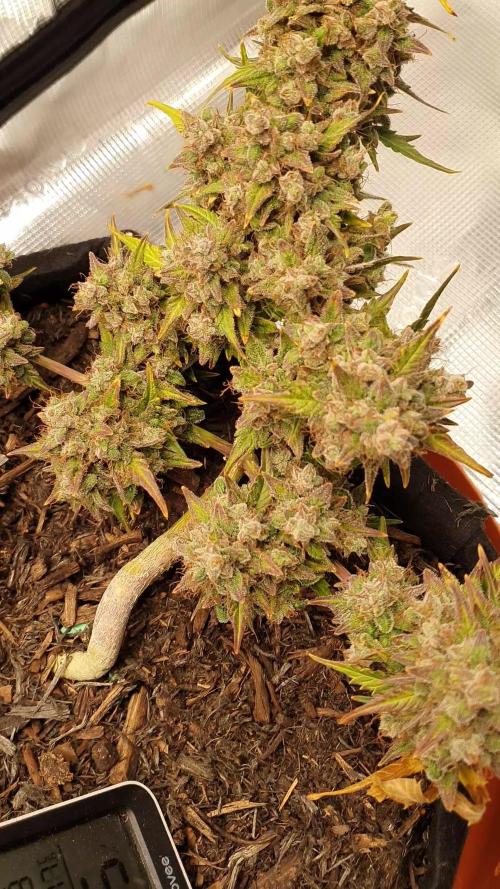
Stay turned as I'm looking to do alot in the comeing months. and hopefully collab witha fellow grower but that's between us and the rest of the Internet lol thank yo to everyone that ha commented an given advice. This is why this app is the nuts. Because it gives us a place to talk to one another and we are all of te same mind set chill and grow some bangin grade an learn along the way


Likes
18
Share


@Cannibalgardens
Follow
The whole grow was full of ups and downs I neglected her basic needs from the get go but she did recover and push along with me.. the growing conditions were not prime and fir that she did me proud .. The buds are tight and have a very nice smell to them .. If I had grown this lady in a bigger pit with warmer temps she would have been amazing ... I'm excited to try her again sometime in the spring hopefully .. the buds I tried a little but of were not bad tasted smooth and cash was white when burned ..

Likes
15
Share


@GreenEldritchGardens
Follow
Extreme gas.
Sharp fuel.
Cat piss.
Permanent marker funk?
The fragrance is no longer a whisper.
It a proclamation.
Plant #1 — The Fat One — has entered a phase of growth so aggressive that even the ancient watchers of the garden might pause in admiration. Reaching an astonishing height of 75 centimeters, it has become a living monument of stem, leaf, and emerging floral intent.
The stretch has been extraordinary.
What was once merely the largest specimen now dominates through both mass and elevation. Thick branches spread outward like the limbs of an ancient forest god, while enormous leaves continue to harvest the artificial starlight with relentless efficiency.
Plant #2 — The Battered One — remains close behind, pursuing a different but equally impressive destiny. Though it has not reached the towering height of its larger rival, its structure has become astonishingly dense. Branches emerge from every available space, weaving together into a bushy labyrinth of foliage and future flowering sites.
Where Plant #1 seeks the sky, Plant #2 seeks dominion.
Plant #5 — The Red One.
For the first time since its selection, signs of struggle have become difficult to ignore.
Overshadowed by its larger siblings, it finds itself competing beneath an increasingly crowded canopy. Its leaves have taken on a lighter green coloration, whispering of deficiencies and unmet needs. Though still alive and developing, its growth has slowed compared to the dominant pair.


Likes
3
Share


@Djeemz
Follow
This week was another great week for the ladies, we are in week now 3 and did not have time to start this diary earlier but het better late then never. We are growing 5 out of 6 due to a fuck up did and accidently broke the stem in week 2 so 1 died but the others are striving like i haven't experienced before. I am pretty sure its because we choose are great genetic from Dutch passion but we also changed to Green House feeding and i must say that the results so far are great and their slogan keep it simple is exactly that super simple. Since we (We as in My Son and I) are already in week 3 they are slowly starting to show flowering and i see super healty plants that look different by the day. In closing i fucking love this hobby and sharing our experiences together on this website.😍

Likes
43
Share


@TheCannaProphet
Follow
~ GG4 SHERBET FAST FLOWER by FastBuds ~
Well fam, here we go again with another epic strain from FastBuds Fast Flowering stable. After having such tremendous success growing their Gorilla Cookies Fast Flower outdoors last year, I've decided to run another of their fast flowering strains outdoors this year... GG4 Sherbet Fast Flower!
The best description of this awesome cultivar comes directly from my friends at FastBuds which is as follows:
"Bred from extremely potent and flavorful Gorilla Glue and Orange Sherbet genetics, GG4 Sherbet FF (Fast-Flowering) takes all the best traits to the next level, offering a high-yielding strain that can produce up to 600 g/m2 in a 7-week flowering time. This super resilient Indica-leaning hybrid thrives indoors and outdoors, and in all types of climates while producing mouth-watering sweet, fruity, spicy and earthy terps that translate into a delicious sugary hazelnut aroma. Expect an extremely relaxing and overall happy effect that’ll leave you with a huge smile from ear to ear. It’s the perfect strain for growers of all levels of experience seeking low-maintenance yet highly productive photoperiod varieties that deliver quality and quantity without extra effort.
GG4 Sherbet FF grows chunky buds with long dark orange hairs and spade-shaped calyxes that get encrusted with trichomes by harvest time, giving them a gorgeous silvery-white appearance. This medium-sized photoperiod can reach up to 200 cm in height and yields up to 650 g/m2 while developing that typical hybrid structure. GG4 Sherbet FF grows with a stocky, bushy appearance, developing one sturdy main cola and fat side branches that support huge yields without much effort. This super-fast variety produces distinctive light-green buds with a high bud-to-leaf ratio, making your trimming sessions a breeze. It’s a top-notch resin producer that doesn’t need much maintenance and will thrive in almost every climate, rewarding growers of all levels with extremely flavorful resin that makes for outstanding hash end extracts."
________________________________________________________________________________________________________________________________________________________________________________________________________________________________________________________________________________________________________________________
The Setup:
This is going to be an outdoor grow, but I have started the GG4 Sherbet Fast Flower indoors as our weather is still too cold to put her outside (nighttime temp's dipping regularly into the 30's℉).
The plan is simple... let her grow inside under a 19/5 light schedule until the nighttime temperatures stay above the mid 40's℉, at which point she'll be moved outside and transplanted into the soil which I have already setup and inoculated with beneficial microbes, and then let the fun begin!🤪💚
________________________________________________________________________________________________________________________________________________________________________________________________________________________________________________________________________________________________________________________
Weekly Updates:
8/18- Week 5 of flower's here for the FastBuds GG4 Sherbet Fast Flower and she has transformed into an absolutely gorgeous specimen of this strain, and hopefully it will become a good example of this strains capabilities!
Our weather continues to be cool and dry with nighttime temp's dipping into the upper 50's℉ with daytime highs in the mid to upper 70's℉, and the daylight has dropped to just over 13 hours now.
8/20- I am still watering the GG4 Sherbet FF daily but, with the cooler weather and with the plant at this stage of flower, her water requirements have dropped a bit so I'm only giving approximately 4-5g of well water after the sun goes down to allow it to soak in thoroughly throughout the soil.
8/22- Along with my daily watering, I am also constantly going through the plant and removing any dead or yellowed leaves. I'm also checking over the entire plant including the undersides of leaves looking for early signs of insect infestation or their eggs being laid, as well as looking for signs of deficiencies and as flowering progresses mold and fungus.🤢
8/24- With five weeks of flower behind her now, the FastBuds GG4 Sherbet Fast Flower has passed the halfway point and only has another 2-3 weeks to go! My only hope is that our weather continues to cooperate and at least stay dry to quell any fears of bud rot on her beautiful flowers!
Thank you for checking out my diary, your positive comments and support make it all worthwhile! 💚Growers Love!💚😎🙏


Likes
18
Share


@Ironblimp
Follow
Week 4. I defoliated 2-4 leaf's all week, unlike like last week I did 10 fan leafs per plant. Lst training is going quite well...because I'm seeing more vertical growth and the center branches had no problem pushing up after defoliating.

Likes
24
Share


@SkunkyDog
Follow
Hallo zusammen 🤙.
Sie wächst sehr schön und macht keine Probleme.
Rabattcode für den BIOTABS-Webshop https://biotabs.nl/en/shop/ GDBT420, damit erhalten Sie 15 Prozent
Likes
2
Share


@Bread_n_Buds
Follow
Our friends at Zamnesia have always been an asset to the world of cannabis, lately in case you haven't noticed they've been unleashed with the production of new strains of the highest quality.
White truffle is a novelty of these last times, go and read the description it will make your mouth water.
In this diary you will find the plant worked with the techniques in this case the first topping was carried out, we cleaned everything else creating the Mainfold and we are going to work everything with the main lining. We are at the first topping and we have two mini branches growing. Topping 1t 2nd internode here to stay low and parallel to the soil.
The other can be found in the adjacent diary worked without the application of techniques that involve cuts to preserve its speed.
Comparison is the spice of experience.
We have started the Plagron fertilization program, we are in 100% organic configuration, the soil is recycled Promix + 1/3 fresh soil + 10% Perlite + RQS Mycorrhiza Mix (4gr in the mix, 1 gr under the small fiber pot).
We are administering // 1 ml/l of Power Roots - 1 ml/l of Pure Zym - 1 ml/l of Sugar Royal - 3 ml/l of Alga Grow
I have doubts about the compatibility of Pure Zym with mycorrhizae. If in doubt, ask the experts, don't mix too much at random.
https://plagron.com/en
Doubts about Pure Zym / Mycorrhizae compatibility have been dispelled, they can go well together according to Plagron experts. If someone tells you that enzymes eat mycorrhizae, which in principle may seem possible, explain to them that it is not true.
https://www.royalqueenseeds.it/growing/452-easy-roots-mix-di-micorrhize.html
Give this strain a try, it is an autumnal delicacy ---- // https://www.zamnesia.io/en/11184-zamnesia-seeds-white-truffle.html
Brief description of Zamnesia // Enhance your cannabis grows with the latest US genetics. The result of crossing GG with Peanut Butter Breath, White Truffle boasts a first-rate lineage, taking the best of some of America's finest cultivars. And as you'd expect, she has a lot to offer: a high THC content, irresistible flavors and a relaxing, carefree high. Oh, and let's not forget that she's incredibly easy to grow too! Buy your seeds today and enjoy easy harvests of delicious, USA-made bud.
The whole world of growing and more can be found at Zamnesia, just take a look around the site and you'll find "the best that nature has to offer" in all shapes and colours.
And as you'd expect, she has a lot to offer: a high THC content, irresistible flavors and a relaxing, carefree high. Oh, and let's not forget that she's incredibly easy to grow too! Buy your seeds today and enjoy easy harvests of delicious, USA-made bud.
The whole world of growing and more can be found at Zamnesia, just take a look around the site and you'll find "the best that nature has to offer" in all shapes and colours.
The new strains are fantastic and the old ones are no exception...
p.s. no hermaphrodites so far, can you growers say the same?
---- // www.zamnesia.com
Likes
19
Share


@DogDoctorOfficial
Follow
one more week up we go, and after intruducing the AC to the Girls, and rase some of them up closer to the ligth ( i did this because the most of my SG are 3 phingers from the ligth lol, so bringing the ligth down was not an option )now i realize that the BB and the AP are showing some spots on the older leaves with i think it migth be nutrients problem, so i'm intruducing Calmag Agent and see how they react. Appart from that they all look amazing, the smell is starting to show off in all of them, it's like a rainbow of fruity smels with a sweet taste going from one strein to another, so far the one i think is the winer in tha smel factor is the PG, man, she's becoming and amazing white frosty smly litle plant <3 the same is happening to all of her siters in my litle love garden.
So let's see how the wee goes, i'l try and keep it updated the most i can,
Stay safe
Peace out
D
So day 31 F and i intruduce Calmag and lower EC to 1.8 , now let's seeee :)


Likes
25
Share


@Bakeryguy420
Follow
Cresando auto first time growing her and won't be my last. Final product is killer smells so dank. Diesel with some fruits. Can smell the cookies for sure ☺️. Ethos again did a great job making these autos for sure. Will update more as the weeks go by.

Likes
17
Share


@Mastr
Follow
This week just flush her with 8 litre ph water and I will harvest her next week some point
Update today day 100 and she is thirsty as hell will flush her again tomorrow then will go for 48 hour darkness
Update today day 103 and I find my jewellery microscope but still can't see any Amber trichomes so I leave her and will check on her everyday
Update today day 105 and I decide to chop her down I let her 12 hour darkness then chop off will update later
Likes
35
Share


@Bud_Koenig
Follow
Hey fellow growers! Week 3 of Bloom is completed, and everything has gone smoothly so far. The plants are well taken care of and haven’t shown any signs of deficiency. To be safe, I did another top dressing with worm compost, microbes, and fungi. I’ll keep you updated. If you have any questions, feel free to reach out!


Likes
7
Share


@Zuppler
Follow
Week 9 - Fourth Week of Flower
The Donutz gang is hitting its stride as the fourth week of flower unfolds. Trichomes are developing beautifully, and the plants are entering full production mode. A few challenges cropped up this week, but quick thinking and some DIY ingenuity kept everything on track.
Key Updates:
Trichome Progress: The resin glands are popping off, with a frosty layer forming across the developing buds. The plants are starting to show their true potential, and the tent is starting to smell.
New Fan Installation: The old ventilator tapped out this week, so a replacement was installed to maintain proper airflow. This ensures the plants stay cool and prevents any issues with humidity or stagnant air.
Lamp Adjustment: The front-left plant shot up too close to the light, so I had to get creative. I built a DIY solution to raise the lamp higher, ensuring even coverage and preventing light stress.
Accident Recovery:
During the light adjustment, I initially tried securing the front-left plant with a rubber band. Concerned it might melt, I removed it, but in the process, the main stem got damaged. Thankfully, the plant is a fighter. The main cola is now growing sideways but remains fully healthy and strong. This unexpected twist has added some character to the tent, and the plant is bouncing back beautifully.
Observations:
Despite the challenges, all plants are thriving, with strong growth and healthy bud development.
The sideways-growing cola on the front-left plant is a unique highlight, showing the resilience of the Donutz genetics.
Next Steps:
Keep monitoring airflow and light height to avoid any further issues.
Continue with the nutrient schedule and reverse osmosis (RO) watering to maintain stability.
Watch the trichomes closely as they continue to mature, signaling the start of the final phases of flower.
The Florida Gang grind is real, and the Donutz are proving their worth week after week. This tent is shaping up to be a legendary grow!

Likes
62
Share


@MeaCulpa
Follow
Third week in bloom. Everything is going well. My only concern is that I have defoliated too much and my humidity is too high.
Difficult to get it down when it's just raining outside. I'll see what happens...
19.12.2023 I've made some space and flanged my old 60x60x120cm tent on the right site and switched on another PC fan. I hope I haven't made a serious mistake. All fans repositioned. And everything is taped off so that no light comes in.
That was too crowded. Next time 4 or 5 will be enough for me.
Processing
Likes
8
Share


@GrownwithLED
Follow
Both Barbarian (=AK-47 x Barbara Bud) plants continue to grow and now start to develop the first flower clusters. They both have a healthy green color and love the Advanced Nutrients feeding schedule. The Barbarian plant#1 is still shorter than plant#2, but both have bushed out fine now and continue to grow more budding sites. After this week I will take off the biggest fan leaves for defoliation in order to let the light penetrate better thru the canopy.
Likes
5
Share


@Hanffanatiker
Follow
Die 3x Z-Up Autoflower von FastBuds sind sehr schnell gekeimt. Sie wurden in einem Glas mit klarem Wasser gekeimt. 💦
Es hat ~3 Tage gedauert. Dann ging es in den Lightmix von Plagron.
Likes
1
Share

@The_Doctor_Green
Follow
HOLA A TODO EL MUNDO!!!!.😃😃🙌🙌
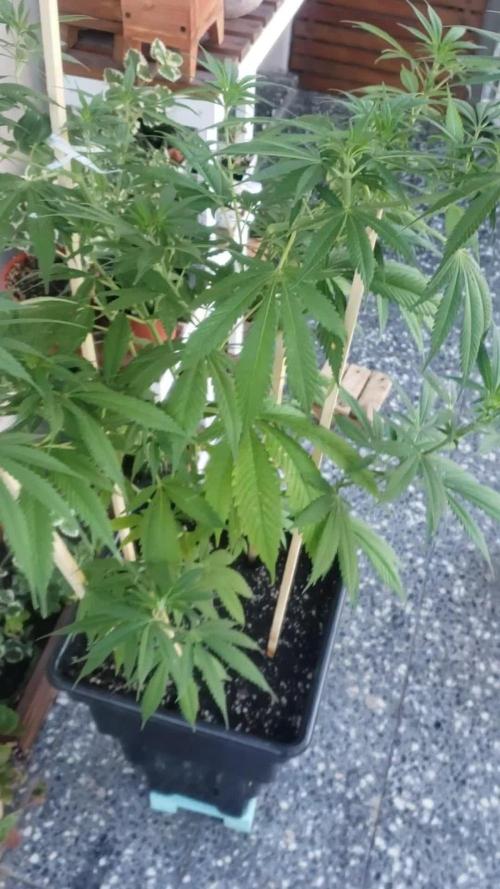
ESTA SEMANA HE REALIZADO EL DOBLAJE DE LAS RAMAS PRINCIPALES, ES LA PRIMERA VEZ QUE UTILIZO ESTA TECNICA, ASIQUE ESPERO QUE FUNCIONE, DOBLE LOS TALLOS PARA QUE LA PLANTA EMPIECE A ESTIRASE A LOS COSTADOS.
HE REALIZADO UN RIEGO CON top Veg, de @TopCrop
AUMENTE LA DOSIS A 3ML X LITRO DE AGUA.
EL RESTO DE LOS DIAS HE REGADO SOLO CON AGUA, CON PH 6.3.
CREO QUE NO TENGO MAS NADA PARA DECIR😅😅, MAS QUE DESEARLES A TODOS UN BUEN 2026, LLENO DE COGOLLOS GIGANTES🙌😃🤭😊
Likes
14
Share

@Gandalf-CZ
Follow
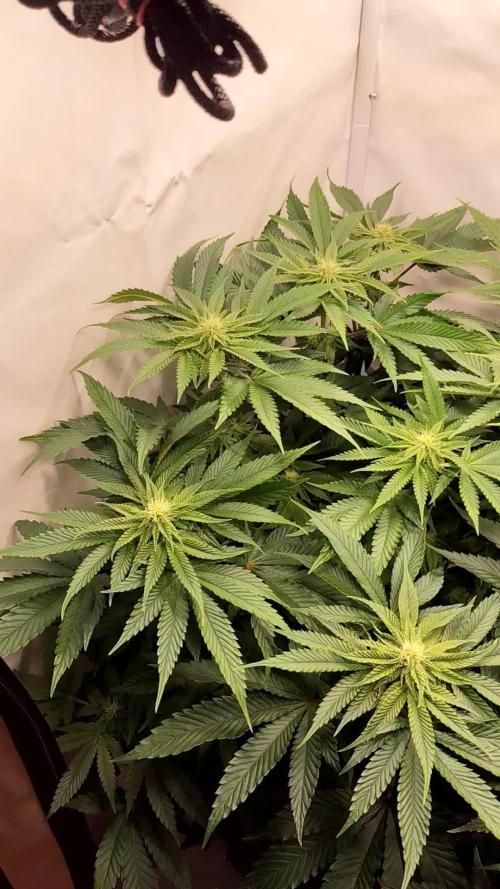
Čus grouweři. Máme tu 26tý den květu a holky jsou stále zdravé a silné. Jen mi příjde, že by měly být paličky větší na to jak dlouho máme přepnuto. Nakvétat začali až 15tý den, tak třeba mají jen pomaý start. Zálivku mají 5l a zalévám co 5 dní. Vlhkost je 70-75%, tak se jim pres den snažim aspoň trochu větrat. ✊