








@Pr3m_85
Volgen
RiP Rick ▪️︎ 01/05/2017 - 07/09/2021 ▪️︎
forever in our hearts ! 💚💚💚💚💚💚💚
My baby, I gonna miss you...🐈




@HinduGod
Volgen
DRIED UP AN ORANGE PEEL IN THE OVEN. THEN GOUND IT UP IN A COFFEE GRINDER AND TOP DRESSED ON DAY 8. MIXED UP A VERY VERY GOOD CUSTOM BLEND OF MEDIUM ON DAY 13 AND TRANSPLANTED. MISTED THE MEDIUM AND THE SEEDLING AFTER THE TRANSPLANT. WEATHER HAS BEEN COOL AND WINDY WITH NO ISSUES SO FAR.
PLEASE COME AGAIN!😎



@RealGrowDiary
Volgen
Week 3
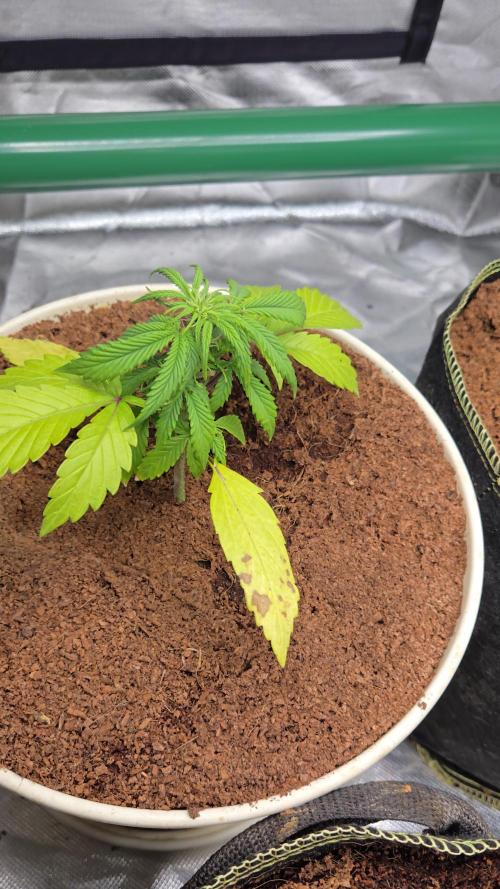
By week three, the plant begins to show a clearer structure, though some irregularity remains. Internodal spacing is slightly inconsistent, giving the plant a somewhat uneven appearance. Leaf edges are mostly clean, but a few leaves show mild shape variation. The plant is clearly alive and developing, just without the balance and symmetry seen in stronger examples.
I stressed her at begining and she goes into flower ,thats bad for me :/





@BLAZED
Volgen
Week 11 (26-8 to 1-9)
26-8
Temps: 20.5 to 26.1 degrees
Humidity: 50% to 56%
27-8
Temps: 20.7 to 27.3 degrees
Humidity: 50% to 56%
Watering: Both 1500 ml. (Only Calcium) EC: 0.4 PH: 5.6
Dry Weight: Both 2.7 kg.
28-8
Temps: 21.5 to 28 degrees
Humidity: 51% to 56%
29-8
Temps: 23.3 to 27.4 degrees
Humidity: 55% to 62%
30-8
Temps: 19.9 to 27.7 degrees
Humidity: 50% to 60%
31-8
Temps: 20.2 to 26.6 degrees
Humidity: 50% to 55%
1-9
Temps: 21.1 to 29.1 degrees
Humidity: 49% to 55%
Watering: Both 1000 ml. EC: 1.4 PH: 5.6
Dry Weight: Both 2.4 kg.
Recalibrated my PH pen and it was only 0.1 off, so i dont think the leaf problems are PH related.




@Ultraviolet
Volgen
What's in the soil? What's not in the soil would be an easier question to answer. 16-18 DLI @ the minute. +++ as she grows.
Probably not recommended, but to get to where it needs to be, I need to start now.
Vegetative @1400ppm 0.8–1.2 kPa 80–86°F (26.7–30°C) 65–75%, LST Day 10, Fim'd Day 11
CEC (Cation Exchange Capacity):
This is a measure of a soil's ability to hold and exchange positively charged nutrients, like calcium, magnesium, and potassium. Soils with high CEC (more clay and organic matter) have more negative charges that attract and hold these essential nutrients, preventing them from leaching away.
Biochar is highly efficient at increasing cation exchange capacity (CEC) compared to many other amendments. Biochar's high CEC potential stems from its negatively charged functional groups, and studies show it can increase CEC by over 90%. Amendments like compost also increase CEC but are often more prone to rapid biodegradation, which can make biochar's effect more long-lasting. biochar acts as a long-lasting Cation Exchange Capacity (CEC) enhancer because its porous, carbon-rich structure provides sites for nutrients to bind to, effectively improving nutrient retention in soil without relying on the short-term benefits of fresh organic matter like compost or manure. Biochar's stability means these benefits last much longer than those from traditional organic amendments, making it a sustainable way to improve soil fertility, water retention, and structure over time. Needs to be charged first, similar to Coco, or it will immobilize cations, but at a much higher ratio.
a high cation exchange capacity (CEC) results in a high buffer protection, meaning the soil can better resist changes in pH and nutrient availability. This is because a high CEC soil has more negatively charged sites to hold onto essential positively charged nutrients, like calcium and magnesium, and to buffer against acid ions, such as hydrogen.
EC (Electrical Conductivity):
This measures the amount of soluble salts in the soil. High EC levels indicate a high concentration of dissolved salts and can be a sign of potential salinity issues that can harm plants.
The stored cations associated with a medium's cation exchange capacity (CEC) do not directly contribute to a real-time electrical conductivity (EC) reading. A real-time EC measurement reflects only the concentration of free, dissolved salt ions in the water solution within the medium.
98% of a plants nutrients comes directly from the water solution.
2% come directly from soil particles.
CEC is a mediums storage capacity for cations. These stored cations do not contribute to a mediums EC directly.
Electrical Conductivity (EC) does not measure salt ions adsorbed (stored) onto a Cation Exchange Capacity (CEC) site, as EC measures the conductivity of ions in solution within a soil or water sample, not those held on soil particles.
A medium releases stored cations to water by ion exchange, where a new, more desirable ion from the water solution temporarily displaces the stored cation from the medium's surface, a process also seen in plants absorbing nutrients via mass flow. For example, in water softeners, sodium ions are released from resin beads to bond with the medium's surface, displacing calcium and magnesium ions which then enter the water. This same principle applies when plants take up nutrients from the soil solution: the cations are released from the soil particles into the water in response to a concentration equilibrium, and then moved to the root surface via mass flow.
An example of ion exchange within the context of Cation Exchange Capacity (CEC) is a soil particle with a negative charge attracting and holding positively charged nutrient ions, like potassium (K+) or calcium (Ca2+), and then exchanging them for other positive ions present in the soil solution. For instance, a negatively charged clay particle in soil can hold a K+ ion and later release it to a plant's roots when a different cation, such as calcium (Ca2+), is abundant and replaces the potassium. This process of holding and swapping positively charged ions is fundamental to soil fertility, as it provides plants with essential nutrients.
Negative charges on soil particles: Soil particles, particularly clay and organic matter, have negatively charged surfaces due to their chemical structure.
Attraction of cations: These negative charges attract and hold positively charged ions, or cations, such as:
Potassium (K+)
Calcium (Ca2+)
Magnesium (Mg2+)
Sodium (Na+)
Ammonium (NH4+)
Plant roots excrete hydrogen ions (H+) through the action of proton pumps embedded in the root cell membranes, which use ATP (energy) to actively transport H+ ions from inside the root cell into the surrounding soil. This process lowers the pH of the soil, which helps to make certain mineral nutrients, such as iron, more available for uptake by the plant.
Mechanism of H+ Excretion
Proton Pumps: Root cells contain specialized proteins called proton pumps (H+-ATPases) in their cell membranes.
Active Transport: These proton pumps use energy from ATP to actively move H+ ions from the cytoplasm of the root cell into the soil, against their concentration gradient.
Role in pH Regulation: This active excretion of H+ is a major way plants regulate their internal cytoplasmic pH.
Nutrient Availability: The resulting decrease in soil pH makes certain essential mineral nutrients, like iron, more soluble and available for the root cells to absorb.
Ion Exchange: The H+ ions also displace positively charged mineral cations from the soil particles, making them available for uptake.
Iron Uptake: In response to iron deficiency stress, plants enhance H+ excretion and reductant release to lower the pH and convert Fe3+ to the more available form Fe2+. The altered pH can influence the activity and composition of beneficial microbes in the soil. The H+ gradient created by the proton pumps can also be used for other vital cell functions, such as ATP synthesis and the transport of other solutes. The hydrogen ions (H+) excreted during photosynthesis come from the splitting of water molecules. This splitting, called photolysis, occurs in Photosystem II to replace the electrons used in the light-dependent reactions. The released hydrogen ions are then pumped into the thylakoid lumen, creating a proton gradient that drives ATP synthesis.
Plants release hydrogen ions (H+) from their roots into the soil, a process that occurs in conjunction with nutrient uptake and photosynthesis. These H+ ions compete with mineral cations for the negatively charged sites on soil particles, a phenomenon known as cation exchange. By displacing beneficial mineral cations, the excreted H+ ions make these nutrients available for the plant to absorb, which can also lower the soil pH and indirectly affect its Cation Exchange Capacity (CEC) by altering the pool of exchangeable cations in the soil solution.
Plants use proton (H+) exudation, driven by the H+-ATPase enzyme, to release H+ ions into the soil, creating a more acidic rhizosphere, which enhances nutrient availability and influences nutrient cycling processes. This acidification mobilizes insoluble nutrients like iron (Fe) by breaking them down, while also facilitating the activity of beneficial microbes involved in the nutrient cycle. Therefore, H+ exudation is a critical plant strategy for nutrient acquisition and management, allowing plants to improve their access to essential elements from the soil.
A lack of water splitting during photosynthesis can affect iron uptake because the resulting energy imbalance disrupts the plant's ability to produce ATP and NADPH, which are crucial for overall photosynthetic energy conversion and can trigger a deficiency in iron homeostasis pathways. While photosynthesis uses hydrogen ions produced from water splitting for the Calvin cycle, not to create a hydrogen gas deficiency, the overall process is sensitive to nutrient availability, and iron is essential for chloroplast function.
In photosynthesis, water is split to provide electrons to replace those lost in Photosystem II, which is triggered by light absorption. These electrons then travel along a transport chain to generate ATP (energy currency) and NADPH (reducing power). Carbon Fixation: The generated ATP and NADPH are then used to convert carbon dioxide into carbohydrates in the Calvin cycle. Impaired water splitting (via water in or out) breaks the chain reaction of photosynthesis. This leads to an imbalance in ATP and NADPH levels, which disrupts the Calvin cycle and overall energy production in the plant. Plants require a sufficient supply of essential mineral elements like iron for photosynthesis. Iron is vital for chlorophyll formation and plays a crucial role in electron transport within the chloroplasts. The complex relationship between nutrient status and photosynthesis is evident when iron deficiency can be reverted by depleting other micronutrients like manganese. This highlights how nutrient homeostasis influences photosynthetic function. A lack of adequate energy and reducing power from photosynthesis, which is directly linked to water splitting, can trigger complex adaptive responses in the plant's iron uptake and distribution systems.
Plants possess receptors called transceptors that can directly detect specific nutrient concentrations in the soil or within the plant's tissues. These receptors trigger signaling pathways, sometimes involving calcium influx or changes in protein complex activity, that then influence nutrient uptake by the roots. Plants use this information to make long-term adjustments, such as Increasing root biomass to explore more soil for nutrients. Modifying metabolic pathways to make better use of available resources. Adjusting the rate of nutrient transport into the roots. That's why I keep a high EC. Abundance resonates Abundance.
shorts_status_processing


@Fergie
Volgen
Hey guys so here we are week two into flower and the tent is filling right up now got some awesome bud sights forming and my aim of 1kg dry out of the 2 plants is on course . Root structure is amazing and I have always had good results when I get the wrapped root over top as can see in pic . Anyway til next week guys


@Ju_Bps
Volgen
Hello my friends,
I think it's my last week fertilizer,
Plant still healthy and love fertilizer ,😍😍,
I'll start flush in 1 week,
I think harvest in 2 or 3 week,
Trychromes start to be full milky
Have a good week,
Thanks for like and following 🤗🤗🤗


@CheeRz
Volgen
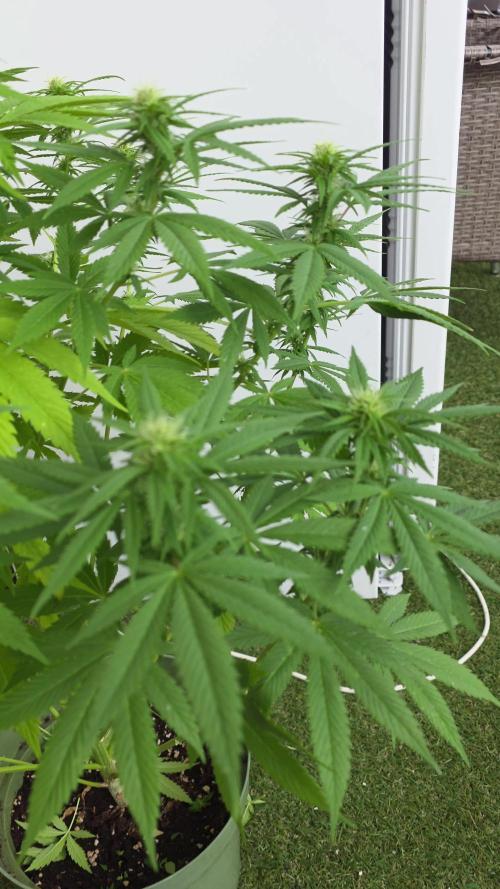
It is week four of flowering, and the buds are developing as desired. Unfortunately, the weather has been cloudy lately. Temperatures drop to 18°C at night. 🗡️🗡️🗡️ 💚💚💚


@123Grow
Volgen
Week 1 is going fine. I am going to grow this out to 3 feet and flip it under a trellis net. Apparently, Mos Cutty genetics are supposed to be fire. We had some stretch, but that was taken care of by adding more soil to the container.
10-11 Something I will go over in each of the grows is exactly what I use and exact amounts and ppm’s. Most of the time that I read other grows, it isn’t specific enough to mimic ( organically speaking). In the container ( 1 gallon):
What’s inside the container exactly:
1: 1 Tablespoon 2-2-2 By Dr Earth
2. 2 Tablespoons earth worm castings
3. 3 Tablespoons Charcoal
4. 1/8 tsp recharge ( yes, I added it as dry amendment)
5. Mother Earth Soil


@OldskoolHed
Volgen
Love this strain and breeder, he is a Virginia based and local. Super easy to grow.


@4ako4ako
Volgen
Got better at week 8 end.
Finally lots of trichomes, buds are gettin denser last couple days.
Made a couple of pure water waterings between nutrition.
Defoliated hard and seems like this is last time before harvest.
Please share any thoughts/tips on better growing this baby👇
Peace🙏


@eldruida_lamota
Volgen
Vamos finalizamos la sexta semana de estas Blue Spider de ZambezaSeeds.
Una tiene alguna carencia las otras 2 no van mal tienen buen color y El Progreso de formación de las flores es el correcto también en las 2 sanas la otra si se nota que la carencia afecta algo al engorde a si que a ver si soluciono el problema.
Por lo demás bien vamos viendo el proceso estas últimas semanas.
Agrobeta:
https://www.agrobeta.com/agrobetatiendaonline/36-abonos-canamo
Mars hydro:
Code discount: EL420
https://www.mars-hydro.com/
Las maximas de temperatura no superan los 26 grados y las mínimas no bajan 20, así que no me puedo quejar.
Los niveles de humedad también son los correctos van entre 50%/65% de humedad relativa.
Por supuesto el Ph lo estamos dejando alrededor de 6.
Hasta aquí es todo, buenos humos 💨💨💨.


@MadeInGermany
Volgen
Flowering day 44
since time change
to 12 / 12 h
Hey guys :-)
The buds are becoming incredibly beautiful and smelling better and better ☺️.
Today there was again the full load of food and will be slowly driven down as soon as it comes to an end :-)
Was watered 3 times a week with 1.2 l each (nutrients see table above)
Otherwise everything was cleaned.
Have fun and stay healthy 💚💚💚
👇🏼👇🏼👇🏼👇🏼👇🏼👇🏼👇🏼👇🏼👇🏼👇🏼👇🏼👇🏼
You can buy this Nutrients at :
https://greenbuzzliquids.com/en/shop/
With the discount code: Made_in_Germany you get a discount of 15% on all products from an order value of 100 euros.
👇🏼👇🏼👇🏼👇🏼👇🏼👇🏼👇🏼👇🏼👇🏼👇🏼👇🏼👇🏼
You can buy this strain at :
https://www.ripperseeds.com/en/feminized/kmintz-feminized-cannabis-seeds
Water 💧 💧💧
Osmosis water mixed with normal water (24 hours stale that the chlorine evaporates) to 0.2 EC. Add Cal / Mag to 0.4 Ec Ph with Organic Ph - to 5.8 - 6.5
MadeInGermany


@TeaTime
Volgen
today with more experience. I see that I made some mistakes, about nutrients and some techniques, but as I repeat this was my second crop. it did not yield as much income as it should, but it was worth it, cultivating and learning.



@Borberad
Volgen
🔥🍪
Dieses Mal wird’s heiß, harzig und höllisch lecker in unserem Grow-Universum, denn wir haben uns eine echte Feuerkönigin ins Zelt geholt:
Red Hot Cookies von Sweet Seeds – eine Sorte so verführerisch wie ein frisch gebackener Cookie, der direkt aus einem Vulkan serviert wird.
Eine Pflanze, die nicht nur ordentlich Farbe ins Spiel bringt, sondern auch geschmacklich richtig aufdreht. Jung, wild, rot – und definitiv nicht zu unterschätzen.
---
🌿 Genetik & Charakter
Red Hot Cookies ist ein kraftvoller, moderner Hybrid, entstanden aus der Verbindung von Red Poison Auto x Tropicanna Cookies. Das Ergebnis ist eine Sorte, die Dessert-Süße mit würziger Schärfe verbindet – sowohl im Aroma als auch im Charakter.
Sie liefert eine aktive, kreative Wirkung, gepaart mit einer angenehmen körperlichen Entspannung. Perfekt für gute Laune, Musik, Gespräche oder kreative Eskapaden.
---
⏳ Blühdauer & Wuchs
Blütezeit: ca. 8–9 Wochen
Wuchshöhe Indoor: mittelgroß & kompakt
Outdoor: ebenfalls gut kontrollierbar
Ertrag: mittel bis hoch, dafür mit absolutem Show-Faktor
Wuchsform: kräftige Seitentriebe, buschiger Aufbau, perfekte Kandidatin für Training
---
🎨 Optik & Farben
Hier kommt der Name nicht von ungefähr:
Knallrote, violette & pinke Blütenfarben
Dichte Buds mit glänzender Harzschicht
Ein echter Blickfang – diese Pflanze sieht aus, als würde sie unter Schwarzlicht leben
Optisch ist sie weniger Pflanze, mehr neonfarbene Grow-Art.
---
🍪🔥 Terpenprofil & Aroma
Der Duft ist ein wilder Ritt durch die Cookie-Hölle:
Süße Kekse & Gebäck
Beeren & tropische Früchte
Dazu eine würzig-scharfe Chili-Note im Hintergrund
Beim Öffnen des Glases denkt man kurz, man steht gleichzeitig in einer Bäckerei und in einer heißen Küche.
🧠 Wirkung
Stimmungsaufhellend & aktivierend
Kreativ & kommunikativ
Später angenehm körperlich entspannend, ohne direkt abzuschalten
Eine Sorte für alle, die nicht sofort schlafen, sondern erst noch leben.
Woche 1: Die Keimungwoche
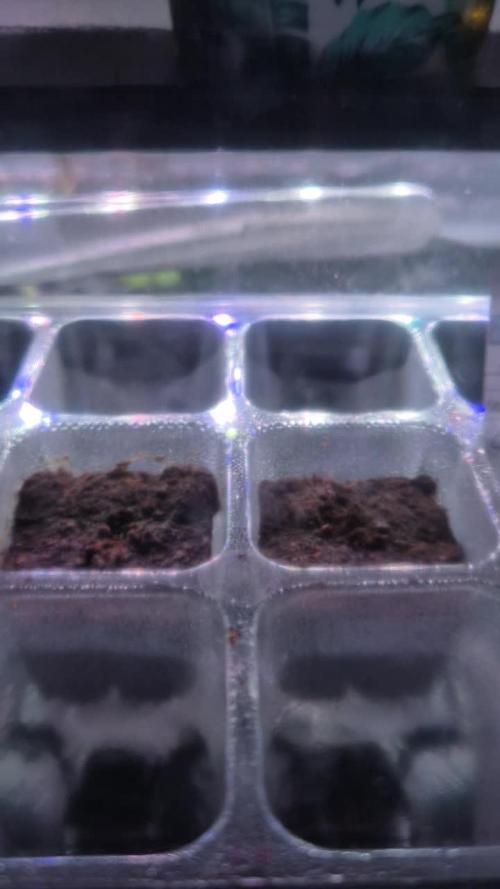
* Tag 0.1: Nach dem max. 10 Stündigen Einweichen in 1 % H₂O₂ wurde der Samen ins Substrat in seinen Easyplug gesetzt.
* Tag 0.2: Die erste Geduldsphase beginnt. Wir warten darauf, dass der Samen seine Schale aufbricht.
Tag 03/04 Warten.
* Tag 0.5: Die ersten Anzeichen des Lebens sind sichtbar. Das Samen bricht durch das Substrat, nachdem wir eine erste Wölbung der Substratoberfläche beobachtet hatten. Wir haben daraufhin das DLI von ca. 12 auf 16 erhöht, um dem Keimling genügend Licht zu geben.

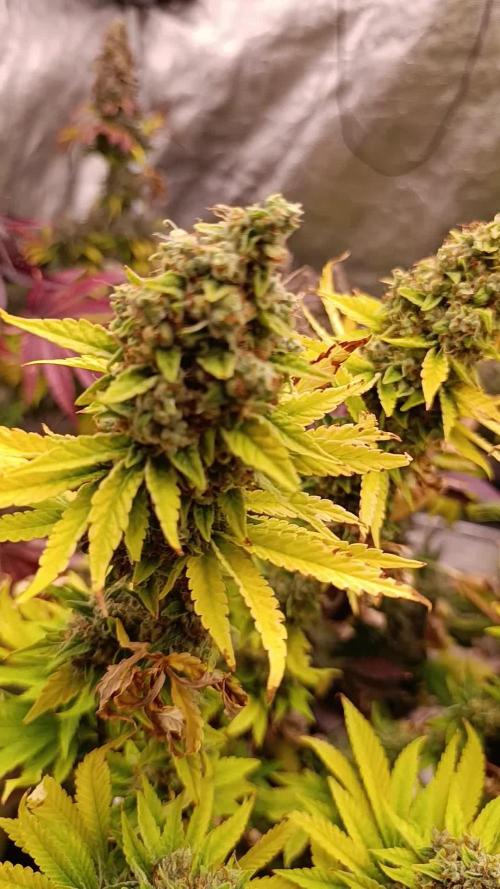

@420DeepGrow
Volgen
📆 Semana 9
La Monster Maker entra en su fase final de lavado de raíz. Los cogollos mantienen su dureza y la capa de tricomas sigue brillando con intensidad, mientras la planta termina de consumir sus reservas internas. Los pistilos oscurecen completamente y los matices terrosos del aroma se vuelven más redondos y nítidos, dejando que el dulzor y las especias destaquen.
💧 Lavado final: limpieza interna, aroma puro y resina lista para el corte.
¡Seguimos creciendo fuerte 💪!


@adam_pawloski87
Volgen
Let’s go day 19 of flower🌺 y’all!!! These girls are doing so amazing, especially the smell for these already , just absolutely lovely! We are heading into week 3 of flower alot of very nice bud spots to build on , these girls are gonna be one of a kind so y’all don’t want to miss them next updates, keep them eyes peeled! Y’all have an amazing productive day and let’s grind the rest of this week out and have an amazing weekend! Peace love an positive vibes to all y’all Cheers 😶🌫️💨💨💨💨💨🤙🏻


