


Likes
Comments
Share

@Mo_Powers
Follow
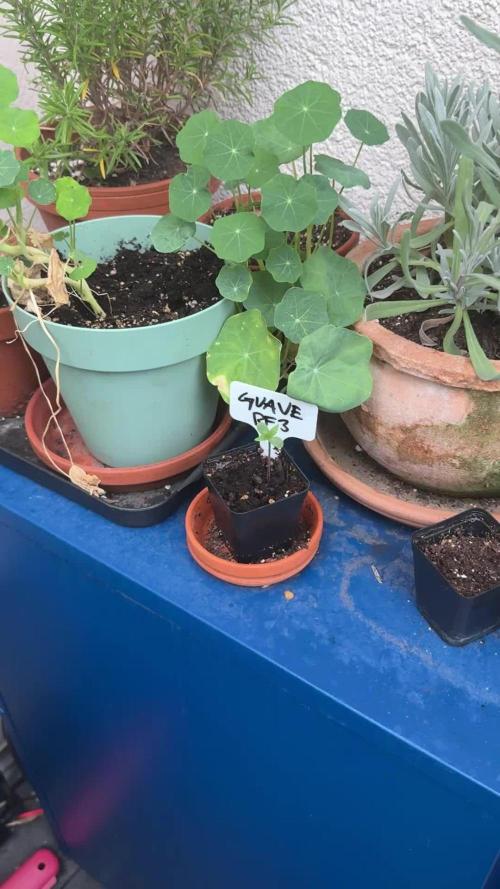
I’m looking forward to another grow with a strain from FAST BUDS. This time it’s GUAVE RF3. I’ve only had good experiences with FAST BUDS so far and I’m keen to see how the RF3 genetics perform.
The germination went very well. After 72 hours, has the seed sprouted. And after sowing the seed in the little pot, it took just 24 hours for it to sprout.
It’s going to be another balcony grow.
She go into an 12-litre fabric pot and be fed with PLAGRON. I’ll be applying the fertiliser and watering by hand.
-------------------------------------------------------------------------------------------------------------------------------------------
About the strain:
Guava Auto RF3 is the next evolution of our tropical powerhouse, upgraded through eight generations of refinement to deliver elite stability, louder terpenes, and superior resin production. This RF3 upgrade produces uniform, vigorous plants with tighter stacking, denser buds, and improved extraction yields, perfect for hashmakers and flavor hunters. The terp profile has been sharpened into a richer, sweeter guava blend with creamy fruit layers, filling the room long before harvest.
https://2fast4buds.com/de-en/seeds/guava-auto-rf3
--------------------------------------------------------------------------------------------------------------------------------------------
https://plagron.com/en/hobby
:) HAPPY GROWING


Likes
11
Share


@Rob691
Follow
Plants are in dry pode since 8 days Now.
I decide to stop flowering besause a few yellow bananas start showing up. That was time.
By the way, I taste the fresh weed before making my decision and… damned, it’s a great one !!!!!
😁😁😁😳😳😳😎😎😎


Likes
25
Share


@Ultraviolet
Follow
ANTHOCYANIN production is primarily controlled by the Cryptochrome (CR1) Photoreceptor ( !! UV and Blue Spectrums are primary drivers in the production of the pigment that replaces chlorophyll, isn't that awesome!
1. Diverse photoreceptors in plants
Many civilizations, including the sun god of ancient Egypt, thought that the blessings of sunlight were the source of life. In fact, the survival of all life, including humans, is supported by the photosynthesis of plants that capture solar energy. Plants that perform photosynthesis have no means of transportation except for some algae. Therefore, it is necessary to monitor various changes in the external environment and respond appropriately to the place to survive. Among various environmental information, light is especially important information for plants that perform photosynthesis.
In the process of evolution, plants acquired phytochrome, which mainly receives light in the red light region, and multiple blue light receptors, including his hytropin and phototropin, in order to sense the light environment. .. In addition to these, an ultraviolet light receptor named UVR8 was recently discovered. The latest image of the molecular structure and function of these various plant photoreceptors (Fig. 1), focusing on phytochrome and phototropin.
Figure 1
Ultraviolet-visible absorption spectra of phytochrome, cryptochrome, phototropin, and UVR8. The dashed line represents each bioactive absorption spectrum.
2. Phytochrome; red-far red photoreversible molecular switch
What is phytochrome?
Phytochrome is a photochromic photoreceptor, and has two absorption types, a red light absorption type Pr (absorption maximum wavelength of about 665 nm) and a far-red light absorption type Pfr (730 nm). Reversible light conversion between the two by red light and far-red light, respectively(Fig. 1A, solid line and broken line). In general, Pfr is the active form that causes a physiological response. With some exceptions, phytochrome can be said to function as a photoreversible molecular switch. The background of the discovery is as follows. There are some types of plants that require light for germination (light seed germination). From that study, it was found that germination was induced by red light, the effect was inhibited by subsequent far-red light irradiation, and this could be repeated, and the existence of photoreceptors that reversibly photoconvert was predicted. In 1959, its existence was confirmed by the absorption spectrum measurement of the yellow sprout tissue, and it was named phytochrome. Why does the plant have a sensor to distinguish between such red light and far-red light? There is no big difference between the red and far-red light regions in the open-field spectrum of sunlight, but the proportion of red light is greatly reduced due to the absorption of chloroplasts in the shade of plants. Similar changes in light quality occur in the evening sunlight. Plants perceive this difference in light quality as the ratio of Pr and Pfr, recognize the light environment, and respond to it.
Subsequent studies have revealed that it is responsible for various photomorphogenic reactions such as photoperiodic flowering induction, shade repellent, and deyellowing (greening). Furthermore, with the introduction of the model plant Arabidopsis thaliana (At) and the development of molecular biological analysis methods, research has progressed dramatically, and his five types of phytochromes (phyA-E) are present in Arabidopsis thaliana. all right. With the progress of the genome project, Fi’s tochrome-like photoreceptors were found in cyanobacteria, a photosynthetic prokaryotes other than plants. Furthermore, in non-photosynthetic bacteria, a homologue molecule called bacteriophytochrome photoreceptor (BphP) was found in Pseudomonas aeruginosa (Pa) and radiation-resistant bacteria (Deinococcus radiodurans, Dr).
Domain structure of phytochrome molecule
Phytochrome molecule can be roughly divided into N-terminal side and C-terminal side region. PAS (Per / Arndt / Sim: blue), GAF (cGMP phosphodiesterase / adenylyl cyclase / FhlA: green), PHY (phyto-chrome: purple) 3 in the N-terminal region of plant phytochrome (Fig. 2A) There are two domains and an N-terminal extension region (NTE: dark blue), and phytochromobilin (PΦB), which is one of the ring-opening tetrapyrroles, is thioether-bonded to the system stored in GAF as a chromophore. ing. PAS is a domain involved in the interaction between signal transduction-related proteins, and PHY is a phytochrome-specific domain. There are two PASs and her histidine kinase-related (HKR) domain (red) in the C-terminal region, but the histidine essential for kinase activity is not conserved.
3. Phototropin; photosynthetic efficiency optimized blue light receptor
What is phototropin?
Charles Darwin, who is famous for his theory of evolution, wrote in his book “The power of move-ment in plants” published in 1882 that plants bend toward blue light. Approximately 100 years later, the protein nph1 (nonphoto-tropic hypocotyl 1) encoded by one of the causative genes of Arabidopsis mutants causing phototropic abnormalities was identified as a blue photoreceptor. Later, another isotype npl1 was found and renamed phototropin 1 (phot1) and 2 (phot2), respectively. In addition to phototropism, phototropin is damaged by chloroplast photolocalization (chloroplasts move through the epidermal cells of the leaves and gather on the cell surface under appropriate light intensity for photosynthesis. As a photoreceptor for reactions such as escaping to the side of cells under dangerous strong light) and stomata (reactions that open stomata to optimize the uptake of carbon dioxide, which is the rate-determining process of photosynthetic reactions). It became clear that it worked. In this way, phototropin can be said to be a blue light receptor responsible for optimizing photosynthetic efficiency.
Domain structure and LOV photoreaction of phototropin molecule
Phototropin molecule has two photoreceptive domains (LOV1 and LOV2) called LOV (Light-Oxygen-Voltage sensing) on the N-terminal side, and serine / on the C-terminal side. It is a protein kinase that forms threonine kinase (STK) (Fig. 4Aa) and whose activity is regulated by light. LOV is one molecule as a chromophore, he binds FMN (flavin mononucleotide) non-covalently. The LOV forms an α/βfold, and the FMN is located on a β-sheet consisting of five antiparallel β-strands (Fig. 4B). The FMN in the ground state LOV shows the absorption spectrum of a typical oxidized flavin protein with a triplet oscillation structure and an absorption maximum wavelength of 450 nm, and is called D450 (Fig. 1C and Fig. 4E). After being excited to the singlet excited state by blue light, the FMN shifts to the triplet excited state (L660t *) due to intersystem crossing, and then the C4 (Fig. 4C) of the isoaroxazine ring of the FMN is conserved in the vicinity. It forms a transient accretionary prism with the tain (red part in Fig. 4B Eα) (S390I). When this cysteine is replaced with alanine (C / A substitution), the addition reaction does not occur. The effect of adduct formation propagates to the protein moiety, causing kinase activation (S390II). After that, the formed cysteine-flavin adduct spontaneously dissociates and returns to the original D450 (Fig. 4E, dark regression reaction).
Phototropin kinase activity control mechanism by LOV2
Why does phototropin have two LOVs? Atphot1 was found as a protein that is rapidly autophosphorylated when irradiated with blue light.
The effect of the above C / A substitution on this self-phosphorylation reaction and phototropism was investigated, and LOV2 is the main photomolecular switch in both self-phosphorylation and phototropism. It turns out that it functions as. After that, from experiments using artificial substrates, STK has a constitutive activity, LOV2 functions as an inhibitory domain of this activity, and the inhibition is eliminated by photoreaction, while LOV1 is kinase light. It was shown to modify the photosensitivity of the activation reaction. In addition to this, LOV1 was found to act as a dimerization site from the crystal structure and his SAXS. What kind of molecular mechanism does LOV2 use to photoregulate kinase activity? The following two modules play important roles in this intramolecular signal transduction.
Figure 4
(A) Domain structure of LOV photoreceptors. a: Phototropin b: Neochrome c: FKF1 family protein d: Aureochrome (B) Crystal structure of auto barley phot1 LOV2. (C) Structure of FMN isoaroxazine ring. (D) Schematic diagram of the functional domain and module of Arabidopsis thaliana phot1. L, A’α, and Jα represent linker, A’α helix, and Jα helix, respectively. (E) LOV photoreaction. (F) Molecular structure model (mesh) of the LOV2-STK sample (black line) containing A’α of phot2 obtained based on SAXS under dark (top) and under bright (bottom). The yellow, red, and green space-filled models represent the crystal structures of LOV2-Jα, protein kinase A N-lobe, and C-robe, respectively, and black represents FMN. See the text for details.
1) Jα. LOV2 C of oat phot1-to α immediately after the terminus
Rix (Jα) is present (Fig. 4D), which interacts with the β-sheet (Fig. 4B) that forms the FMN-bound scaffold of LOV2 in the dark, but unfolds and dissociates from the β-sheet with photoreaction. It was shown by NMR that it does. According to the crystal structure of LOV2-Jα, this Jα is located on the back surface of the β sheet and mainly has a hydrophobic interaction. The formation of S390II causes twisting of the isoaroxazine ring and protonation of N5 (Fig. 4C).
As a result, the glutamine side chain present on his Iβ strand (Fig. 4B) in the β-sheet rotates to form a hydrogen bond with this protonated N5. Jα interacts with this his Iβ strand, and these changes are thought to cause the unfold-ing of Jα and dissociation from the β-sheet described above. Experiments such as amino acid substitution of Iβ strands revealed that kinases exhibit constitutive activity when this interaction is eliminated, and that Jα plays an important role in photoactivation of kinases.
2) A’α / Aβ gap.
Recently, several results have been reported showing the involvement of amino acids near the A’α helix (Fig. 4D) located upstream of the N-terminal of LOV2 in kinase photoactivation. Therefore, he investigated the role of this A’α and its neighboring amino acids in kinase photoactivation, photoreaction, and Jα structural change for Atphot1. The LOV2-STK polypeptide (Fig. 4D, underlined in black) was used as a photocontrollable kinase for kinase activity analysis. As a result, it was found that the photoactivation of the kinase was abolished when amino acid substitution was introduced into the A’α / Aβ gap between A’α and Aβ of the LOV2 core. Interestingly, he had no effect on the structural changes in Jα examined on the peptide map due to the photoreaction of LOV2 or trypsin degradation. Therefore, the A’α / Aβ gap is considered to play an important role in intramolecular signal transduction after Jα.
Structural changes detected by SAXS
Structural changes of Jα have been detected by various biophysical methods other than NMR, but structural information on samples including up to STK is reported only by his results to his SAXS. Not. The SAXS measurement of the Atphot2 LOV2-STK polypeptide showed that the radius of inertia increased from 32.4 Å to 34.8 Å, and the molecular model (Fig. 4F) obtained by the ab initio modeling software GASBOR is that of LOV2 and STK. It was shown that the N lobes and C lobes lined up in tandem, and the relative position of LOV2 with respect to STK shifted by about 13 Å under light irradiation. The difference in the molecular model between the two is considered to reflect the structural changes that occur in the Jα and A’α / Aβ gaps mentioned above.
Two phototropins with different photosensitivity
In the phototropic reaction of Arabidopsis Arabidopsis, Arabidopsis responds to a very wide range of light intensities from 10–4 to 102 μmol photon / sec / m2. At that time, phot1 functions as an optical sensor in a wide range from low light to strong light, while phot2 reacts with light stronger than 1 μmol photon / sec / m2. What is the origin of these differences? As is well known, animal photoreceptors have a high photosensitivity due to the abundance of rhodopsin and the presence of biochemical amplification mechanisms. The exact abundance of phot1 and phot2 in vivo is unknown, but interesting results have been obtained in terms of amplification.
The light intensity dependence of the photoactivation of the LOV2-STK polypeptide used in the above kinase analysis was investigated.
It was found that phot1 was about 10 times more photosensitive than phot2. On the other hand, when the photochemical reactions of both were examined, it was found that the rate of the dark return reaction of phot1 was about 10 times slower than that of phot2. This result indicates that the longer the lifetime of S390II, which is in the kinase-activated state, the higher the photosensitivity of kinase activation. This correlation was further confirmed by extending the lifespan of her S390II with amino acid substitutions. This alone cannot explain the widespread differences in photosensitivity between phot1 and phot2, but it may explain some of them. Furthermore, it is necessary to investigate in detail protein modifications such as phosphorylation and the effects of phot interacting factors on photosensitivity.
Other LOV photoreceptors Among fern plants and green algae, phytochrome ɾphotosensory module (PSM) on the N-terminal side and chimera photoreceptor with full-length phototropin on the C-terminal side, neochrome (Fig. There are types with 4Ab). It has been reported that some neochromes play a role in chloroplast photolocalization as a red light receiver. It is considered that fern plants have such a chimera photoreceptor in order to survive in a habitat such as undergrowth in a jungle where only red light reaches.
In addition to this, plants have only one LOV domain, and three proteins involved in the degradation of photomorphogenesis-related proteins, FKF1 (Flavin-binding, Kelch repeat, F-box 1, ZTL (ZEITLUPE)), LKP2 ( There are LOV Kelch Protein2) (Fig. 4Ac) and aureochrome (Fig. 4Ad), which has a bZip domain on the N-terminal side of LOV and functions as a gene transcription factor.
4. Cryptochrome and UVR8
Cryptochrome is one of the blue photoreceptors and forms a superfamily with the DNA photoreceptor photolyase. It has FAD (flavin adenine dinucle-otide) as a chromophore and tetrahydrofolic acid, which is a condensing pigment. The ground state of FAD is considered to be the oxidized type, and the radical type (broken line in Fig. 1B) generated by blue light irradiation is considered to be the signaling state. The radical type also absorbs in the green to orange light region, and may widen the wavelength region of the plant morphogenesis reaction spectrum. Cryptochrome uses blue light to control physiological functions similar to phytochrome.
It was identified as a photoreceptor from one of the causative genes of UVR8 Arabidopsis thaliana, and the chromophore is absorbed in the UVB region by a Trp triad consisting of three tryptophans (Fig. 1D). It is involved in the biosynthesis of flavonoids and anthocyanins that function as UV scavengers in plants.
Conclusion
It is thought that plants have acquired various photoreceptors necessary for their survival during a long evolutionary process. The photoreceptors that cover the existing far-red light to UVB mentioned here are considered to be some of them. More and more diverse photoreceptor genes are conserved in cyanobacteria and marine plankton. By examining these, it is thought that the understanding of plant photoreceptors will be further deepened.

Processing
Likes
45
Share


@AsNoriu
Follow
New week, seems ok for first morning, will do heavy feed on day 52.
I already gave away one plant ( strawberry cough photo ) now one of fast diesels still stucked in pre-flower, would love to return to 18/6 regime, just dont want any reveg or hermie. Still lost.
Fingers crossed ;)
Day 53 Morning, leaves a bit down after night, everything looking not bad, thinking to defoliate two midle babies.
Had a big mistake on day 52, they where down, i stayed for one night out and was late with watering for a day, they looked totaly down, like my mobile, thats why no photos, never seen any plant so bad in my hole life... But they are ok now, quess it was on the verge, but damadge was done 100 %
Day 53 evening. I wouldnt be me if i wont be searching ways to screw up the crop ;)))
After many hesitations i decided to do very light defoliation.
And ..... They hated it. Lets give couple days, but 2 huge stresses in 3 days dont give me and girls joy for sure ....
In that rush forgot to make third Fast diesel photo, but i quess she didnt made mind to flower, took like 5 leaves down and left her for a bit,very annoying , she will be a big delay at the end or very early harvest, both ways waste of time....
Plus had to reduce light to 15.5 of day, maybe those 30 min will force her ...
All 3 Fast Diesels are very mag hungry, fed them with epsom salt extra.
Day 54 . Fast Diesel 3 went to 24 hours darkness prison with a heater ;))) hope that will teach her a lesson !
Others got feed with silicic acid, they drink, thats a good sign tho !
Fast Diesel 3 was a day behind from all, even 5 leaves was too much. But its a good time for me to give last trick i can, before downgrading day hours even more.
Day 54 Evening. Girls are praying again, silica always boost them to hapiness ;)
Day 56. Girls are growing, looks like last Fast Diesel starts to make buds from preflower, but a lot of pistils going brown, so either its heat, which i will check today or its hermie ;)))
Could be wind damage, i will check all options today, returned from work, made short shitty video and thats all ;)
End of week.


Likes
33
Share


@zera1337
Follow
Week 2: Day 9 Update 🌱
Sup fellas,
My cuties are off to a fantastic start. While they've only grown a couple of cm in height, fresh new pairs of leaves are coming in strong now. Imo, they look really solid for day 9 and ready to take off.
They're responding well to the Canna Coco A + B and Rhizotonic nutrients. Been doing the last 4 grows with Canna and my plants always loved it. Never had any issues at all.
Also I made a big upgrade this week and finally got my hands on a new SF Exhaust fan with speed control and overall more power. It was about time. Airflow in the tent is much better now and it's more spacious overall since i placed the fan itself outside the box.
My lights are at 50% now, and I'll be increasing them by at least 10% per week from here on out. Also upping the water amounts gradually, aiming for ~ 300ml per plant by the end of week 2. I always prefer to stay on the lower side until week 4-5.
Update Day 11: My babies are growing really well. Also, my new Spiderfarmer Humidifier arrived yesterday and I love it. Makes the growing conditions even better.
Update Day 13: Plants progress is on track. Super satisified so far. Can't wait for the 3rd week.
More updates to come! 🍀🔥

Likes
109
Share


@Prototype0181
Follow
Didn't Pay to much attention to em this week😅
Deu to a shopping Spree😉 Got a new light and tent this week 😁
Light: Geeklight Geekbeast pro 630w
Tent: Budbox pro xl 120x120
Expecting a lot from this upgrade stay tuned😉


Likes
119
Share


@Tropicannibis_Todd
Follow
💩Holy Crap Growmies We Are Back💩
Well growmies we are at 63 days in and everything is going as good as can be 👌
👉 So even with some major issues in the early stages , shes bounced back as good as expected 👍Or better 👈
Lights being readjusted and chart updated .........👍Even with early major issues due to the soil/medium she's come a long way 👈
👉I used NutriNPK for nutrients for my grows and welcome anyone to give them a try .👈
👉 www.nutrinpk.com 👈
NutriNPK Cal MAG 14-0-14
NutriNPK Grow 28-14-14
NutriNPK Bloom 8-20-30
NutriNPK Bloom Booster 0-52-34
I GOT MULTIPLE DIARIES ON THE GO 😱 please check them out 😎
👉THANKS FOR TAKING THE TIME TO GO OVER MY DIARIES 👈
Likes
12
Share


@StonedandSteady
Follow
AutoBlueberry breed by #DivineSeeds #DivineSeedsSquad #DivineSeedsBreedingCompany Origin:Afghani/Thai
Type:50% Indica/ 40% Sativa/ 10% Ruderalis
Flowering:56 days
THC:22%
Harvest:400-550 g/m2
Height:110-150 cm
Thier Growing under the #Growatt600w and in my #TopoLite 24×24×48 Grow Tent! I'm also using #TNBNaturals #TheEnhancer Co2 Despersal Canister and using thier Ph⬆️⬇️ for my Decolinated Tap Water!
Green and Growing Up Great! She's leaving her 2nd week of Veg and Stretching out into her 3rd week! She's Growing in my special blend of ProMix potting mix, a 1/2 bag of Earthworm castings and 2 light handfuls of Diatomaceous Earth mixed Up well for before transplanted! Diatomaceous Earth: Diatomaceous earth is made from the fossilized remains of tiny, aquatic organisms called diatoms. Their skeletons are made of a natural substance called silica. WHAT IS DIATOMACEOUS EARTH?
In a nutshell, DE comes from the fossilised remains of small marine organisms called diatoms. Over a 30 million year period, these hard-shelled algae collected on the bottom of bodies of water, eventually forming into a type of sedimentary rock. Fast forwarding, it wasn’t until around 1836 that a German peasant Peter Kasten discovered the ivory-coloured, powdery substance while drilling a well in northern Germany. Ever since, the usefulness of DE for multiple purposes, including industrial and horticultural applications, has been well-reported. Just sprinkle some diatomaceous earth on top of your soil and watch mother nature's secret weapon work its magic.CONDITIONS THE SOIL
When it comes to growing cannabis, everyone strives to provide the best soil to grow the best plants—but there’s always a way to make it even better. Making the soil a better medium is called soil conditioning, which is exactly what diatomaceous earth does. It works by improving the retention of moisture in your potting soil, holding a large amount of fluid and drying at a rate that’s much slower. This natural soil additive also helps to retain nutrients and allows for better oxygenation of the substrate. NATURALLY CONTROLS PESTS
DE is an all-natural, safe-to-use substance that doesn’t harm the cannabis plant with toxic chemicals. The nature of diatomaceous earth makes it useful against most types of insect infestation you might be experiencing; and unlike chemical insecticides, insects can’t develop a resistance to the effects of DE. So once they’re gone, they’re gone for good. DE is an abrasive. and when used as an insecticide, it gradually scrapes away an insect’s exoskeleton, absorbs the fluids, and dehydrates insects and other critters to eventual death. IMPROVES PLANT STABILITY
When using DE in your soil, it can be especially beneficial as it frees up nutrients so that they are made available to the plants as needed. This works via the silica content of DE being absorbed into the plant tissue, which helps improve the plant’s ability to respond and receive more nutrients as DE activates. This in turn results in greater yields and better stability under small pH fluctuations!
https://divineseeds.net/
https://instagram.com/divine.seeds?igshid=osxe2v7en33v https://divineseeds.net/
Thanks Again to All my Friends, Family's, Teams, Sponsors, Followers and Subscribers!!! Your Genetics are Merry Magnificent, Mega Marvelous and Mighty Medical! Love um!!! I really Can't stress enough how Thankful and Grateful I am of All of you and what you've Shared with Us! Means the World!!! It's definitely a Pleasure being able to Grow with these Phenomenal Grow Lights! Please Enjoy! BudBrothers4-Life! Cheers Famz!!! Much Props and Much Topz!💯🔥 #Osree #GrowStarStore #Growatt #TNBNaturals #TNBTeam #GrowYourOwn #Bliss
https://instagram.com/as420.ca?igshid=1f116alw054wp
The Grow Bags: https://www.as420

Likes
Comments
Share

@HashishOculus
Follow
DWC Grow #3 - Week 5 (Day 28–34) | Canopy Takes Over + Trellis/Topping + Space Management (Dec 25–31)
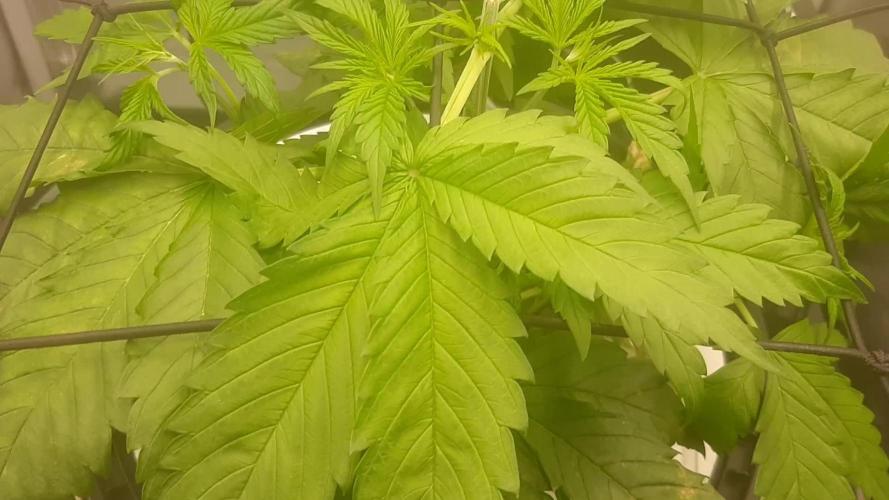
Week 5 was the week the plant stopped being “a plant in a bucket” and started being a canopy-management project. Growth turned noticeably more explosive, the footprint expanded fast, and I had to make real decisions about structure, airflow, and tent space.
Day 28 (Dec 25) - Explosive growth
Came home to a huge jump in growth. The plant looked healthy and vigorous, and it finally felt like the system was “locked in” after the earlier turbulence. Reservoir was stable, roots looked strong, and the canopy started to crowd the tent. I started seriously thinking about topping and how to manage height long-term.
Day 29 (Dec 26) - Post-training recovery looks good
The plant handled the recent canopy work well and kept pushing new growth. I logged a stable reservoir (temp staying in a good range) and the overall posture looked positive. Water usage was clearly increasing, which matches the jump in biomass.
Day 30 (Dec 27) - Strong momentum + dialing light position
The plant kept building mass fast. I continued to raise the light slightly as the canopy climbed and nudged intensity upward cautiously (still conservative relative to manufacturer “veg” suggestions). Reservoir readings stayed in the workable zone, and water level continued to drop steadily, confirming she’s drinking.
Day 31 (Dec 28) - Steady readings, steady push
No big interventions - more “observe, tuck, and keep it stable.” The canopy was getting denser, and I could tell the next phase would be about preventing the tent from turning into a packed, hard-to-service jungle.
Day 32 (Dec 29) - Space management: moved extraction hardware outside
To reclaim headroom and working space, I moved the inline fan and carbon filter outside the tent. This was purely about space and practicality as the plant expands. I kept an eye on airflow behavior and made sure the setup still pulled properly.
Day 33 (Dec 30) - Canopy density reality check
Canopy got dense enough that it started feeling like a “light and airflow engineering” problem. I did a light prune (nothing extreme - more like clearing obvious blockers). I also noticed some droop and ended up focusing on reservoir basics: keeping the root zone oxygenated and avoiding a too-high water line. I siphoned out some water to bring the level down. The water looked a bit murky but didn’t smell, which was reassuring.
Day 34 (Dec 31) - Hands-off (New Year)
I was away for New Year’s, so this was effectively a hands-off day. Sometimes that’s the best thing for me - less temptation to over-adjust. The plan was simply to return, assess water usage, and continue shaping the canopy with minimal stress.
Week 5 takeaway: The plant is officially in “take over the tent” mode. Growth is strong, water consumption is increasing, and the limiting factor has shifted from “will she survive?” to “can I keep the environment and structure under control without over-correcting?”
Likes
30
Share


@cheetah844
Follow
Nice growth but it does look like this one is going to be a thirsty girl. She already wants some additional nitrogen.
I topped every bud site on every plant, both indoors & outdoors.

Likes
41
Share


@PrairieFrostGrow
Follow
Sweet Seeds Cream 47 grow 2020.
Sweet Seeds Cream 47 was finally run and she was a great experience…….as always there was something to be learnt here but in the end these girls were super frosty and finished super fast! Done in 8 weeks Veg and you keep ALL the trim for further processing😊 Stayed under 30” for height and can fight off many issues including pests and temps……as well as cracked stems and broken branches😊
I believe I ordered these in 2018 after my first experience with Sweet Seeds and Gorilla Girl photo. I was so impressed I had wanted to try something else from them. Then I don’t know what happens…..something else newer or possibly more interesting at the time comes along and you push this seed pack to the back. For some reason AK47 has been the strain I have played with a couple variants of and these girls finally had their chance. The seed pack I have has a date stamp of 2016…….not a worry Growmies, seen lots of other growers popping 10 year old genetics from seed and thy will still work out fine. Just sharing a little reminder that its about storage…….I keep mine in a sealed container in a different fridge in a dark spot😊 As an example, these were 4 years old and I got two girls from my three seeds…..works for me😊
Beginning the diary……during germination everything is rosy and you are going to set things on fire!!!!!!
Germination started on July 11/20 with two seeds. First one came up from coco 7 days later on July 18 and C472 was actually the third seed and was put into a rapid rooter on July 19 and came up from coco on July 23…….that left us with C472 actually being 5 days behind C471. Quick note….C472 was a bigger girl at the finish line even though she was 5 days younger and being grown in the 3 gal pot vs the 5 gal pot.
Typical photoperiod process and went to solo cups and then to 1 gal and then a final upsize to either a 3gal or 5gal. I put one in each. At the start of this diary I wanted to focus on seeing the difference in yield between a 12L and 20L pot and is it worth the extra media and nutes? Well things change and you have to go with the punches😊
Early veg and building root mass……..come one girls, lets see some snow white roots!!!!
The girls were grown in 90 – 80% coco and 10 - 20% Perlite……..COVID made many things hard to get here and there this past year and I believe and I even had to use some Vermiculite as I couldn’t get perlite. As in the previous couple of grows I battled pH drift in this run as well. Quick note…….I am now mixing my media with 65% coco, 25% peat, 10% perlite and the current run is doing very well for both autos and photos……pH is holding at 6.1 in media rather than damn 7.2 a couple of weeks later, may consider dropping peat a little next run to 20% or 15% and increase the coco by the same percentage to see the impact😊😊😊
By the end of 7 days they had a whopping 1 set of single blade fan leaves out and the thought of a second set of leaves. Then by the end of 14 days they really rocked and we had a set of 3 blade leaves out and a sliver of green forming the first set of 5 blade fan leaves……..on fire they were😊😊😊😊 With the girls facing an 8 week veg, I was in no rush.
At the end 21 days they were roughly 7” tall and it was time for their first upsize to a 1gal pot. They were finally transplanted on day 23. C471 had a better root development that C472 and she was slightly bigger so was eyed as the pheno to get the 5 gal pot in the future. Usual Mycorrhizae added to the holes and in the pots and further microbes to supplement the girls. Need the roots to more plentiful than what they currently are. The girls loved the extra room and week 5 saw good growth as side branching developed and the leaves became bigger……on course!
Late veg and forming a canopy for flower……SCROG or not?????:
Weeks 4 and 5, plus the start of 6, the girls continued to flourish and grow in 1 gal pots. Being feed a couple of times a week they continued to progress. The girls had reached a little of 10” tall and it was time to top them. Not sure about LST or SCROG at this point, I knew they had to fill half the tent, so I went a head and topped the girls on day 37 between the fourth and fifth nodes. The girls grew a little different shaped fan leaves and they were more “pointy” and long in growth……and long lateral growth fan leaves. She wanted to grow laterally on her own…..bonus!
The girls reacted will to the toping over the next days and kept a solid growth. This strain has tight node spacing and will not grow into 5’ monsters like the Gorilla Girl strain they were grown beside. Finally at day 50, Sept 6/20, the girls were given their final home and transplanted a last time. C471 with more vigorous growth was given the 5 gal pot to fill with roots while C472 was designated the 3 gal pot.
I finally decided that a SCROG was going to be the answer because the other girls in the tent will need to be kept tied down. Problem was that these girls won’t stretch much but the other girls will……how the hell to SCROG that situation otherwise you have nodes 12” taller than others and creates a tough canopy to give the correct amount of light??? Solution was to put C47 girls on boxes and rise them up. Took a guess at the potential height difference in the strains and figured I should plant at least a 12” riser of some type. It actually worked out not to bad……they were coming through the top of the SCROG first but as they grew things balanced out between the strains😊
In week 9 the girls took off and we finally had a good canopy to start flower with……all the girls were down low and touching all sides of the tent and each other. Getting them ready to SCROG I decided to perform LST for a couple of weeks and ensure the branching grows to the side and not straight up. They formed 4 main tops on each girl and the side branches were thick. Bud Ignitor added to the feed in week 9 and we are ready…….lets change the light and watch the explosion Baby 😊😊😊 Still only positive thing happening in the grow to this point!!
Flower time and filling up the tent with sticky buds………my F@#%ing tent is too small for the girls:
Okay Growmies……we are on fire, all 4 girls are growing with pistols popping, branches bent everywhere and put in the first layer of the SCROG……..right on!! Soon reality sets in and the fictitious Gremlins arrive to F my grow and actions☹️ Getting ready for putting the net and decided to cut to low branches from C471 as they just don’t have any thickness to them. Concern was that she was now down to 6 main branches on her…..don’t break any!! Mid week I check the tent in the morning and there is a damn fan laying on top of C471!!! That’s no good but shit happens, no visible damage to the plant…..or the fan😊
So we get through week 1, IPM spray done and net is in, and moving into week 2 of flower my heart stopped when I noticed a huge crack in the main stem of C471……WTF??????? So on day 12 of flower I am looking at two girls with cracked main stems…..one C47 and one Gorilla Girl……WTF everything is the same, why did this happen for no apparent reason? Answer - - - - usual “grower F-up”…….I topped the girls to close to the lower node when done and I should have the scissors up against the node above and left a larger “nub” on top……I had them against the node below when I cut and little to no nub left on top!!!! Once they were trained a bit and started growing harder, the stem didn’t have any more strength and cracked right in the middle of the main stem! Learning point……remember to always leave a good piece of stem at the top when using scissors……hasn’t been an issue for me in the past when “pinching” tops as they develop, this was though☹️
So what to do now they are doing awesome????? Well, that is why I support Grow Diairies and continue to use the site outlining my grows……I asked for help and other opinions about what happened😊 Sure enough within hours, I had some input from fellow growers, thanks again @Mr_Motalovah who pointed out quickly what I had done because they had shared about what has happened to them in the past……thanks a bunch for the input Growmie….you rock!! Now that I know what I screwed up, we vaped a bunch of bud and put on the MacGyver Hat and fashioned some supports and ties out of a pool noodle, zip ties, tape, and more weed😊 Tied the girls up and kept the area moist for a week! She never did weld right back together at the crack because it was too major and at a high stress point for the branches. I feel this certainly contributed to C471 not being as big a yielder as I am sure she should have been.
So now we are getting back on track, forget all the other shit of the last two weeks, stay positive and lets rock this grow😊 There was lots to be positive about as the second lay of SCROG is in, the girls are 20” tall and looking happy with leaves up. She has some huge fan leaves and starting to really show some trichomes already! Right on Sweet Seeds……they are pulling through and doing awesome now! Problem I am now having is keeping the air movement in the tent as these four girls are killing it and I am out of room. If I don’t help with more room or air movement, the yield and quality of the bud will suffer……they will finish and all is good but there will be lost opportunity. I really struggle to grow 4 plants in a 3’ x 3’ tent. I am always out of room and can’t get the light down as low as I want. This grow is a perfect example of that. Not to mention how to cool them off and reduce light intensity when ripening in the last two to three weeks?? I need a bigger freaking tent….finally bit the bullet and ordered a 4’ x 4’ tent for flower. Will then have a 4’ x 4’ for photos and keep one of the 3’ x 3’ for autos. Through week 3 of flower and going now Baby, just waiting on a new tent😊
Late flower and watching them buds swell……no worries now, let the deficiencies fly!!!:
Now in week 4 of flower and the girls are getting very big. The trichome production has kicked in and they are looking happy everyday at this point. Tips up everyday and they are loving the light and feed at this point. Chugging along and feeling like we will feed them though week 6 and flush for weeks 7, 8, and 9 and take down about day 62 or so. Feed moved into Big Bud and silica going to keep the stems strong so they support the bud weight. Her nodes have stacked very well and for week 4 she is chunking out nicely! The girls are pretty dark green now at this point and looking healthy. Again, buds are big and they are frosty…..the grow is going very well.
New tent finally arrives in week 5 and we move the girls to a new home with more room for air and light penetration lower on the branches. Had to cut the girls out of the SCROG and added bamboo to the other strain being run with these girls. Since C47 was not very tall, they were not supported. So feeling that everything is good and we are moving forward. Like I say, feeling good, but I think the girls had their issues in weeks 5 and 6 and I didn’t really pick up on it. They had battled high pH through the grow, again why the media change this run, and it seemed to stall the girls. I think I was so focussed on the success of the Gorilla Girls that I didn’t really pick on the fact these girls were slowing down. At any rate, they looked very good and frosty and still eating so we kept going, there were even resin rails beginning to form on fan leaves and they are 24” tall😊 LST helped to keep them short, along with topping. She is showing that she will make hash people happy!!! Awesome trichomes for this stage of growth…..excited as hell!
We move into week 6 and start working on some flushing. She is dark now and concerning. Her hairs are starting to red here and there and I am seeing some colour in the buds. She smells of a strong floral or something that almost “stings” your sinuses…..sorry for description but it was good strong smell. Flush should have begun at the start of this week, six. Instead, it was not given until week 7, almost too late at this point. She had slowed down her drinking and was not uptalking much anymore. Her buds looked beautiful but her leaves were dark. Yup…..F#$% I missed her and she will not finish with the colours that she should. Not much you can do at this point. She was given Flawless Finish twice and roughly 7 days of plain watering before darkness. Then on November 8, Day 51 the girls went into darkness……..the trichomes had matured and it was time. This strain should have stopped her feeding at the end of week 5 and keep the water only for up for 2.5 weeks idea and colours should pop on her…….not one week like I did☹️
After two days of darkness the girls looked gorgeous and faded a little more than when they went in……right on. The buds are beautiful with the light colour of purple on some calyxes and red hairs in there. Frosty as all heck and sticky like crazy😊😊😊
Harvest, dry, cure and smoking Cream 47 from Sweet Seeds……..is she Sweet Smoke??
Remembrance Day was harvest for the girls. They ran their 53 days and its time to cut them down. It was a little surprising to see that C472 had better bud production that C471 since she was the slower grower. At the same time, it was not surprising as C471 had her stem split and this impacted her yield because of a challenge getting the amount of nutrients she wanted up the stem. She made it to the finish line though and was still making me smile at the end😊 can’t ask for much more than that really! Again, I wanted to compare 3 gal vs 5 gal but this diary simply didn’t work out that way. (one should also use clones for a better test of this and not seeds but its all good because I was just having fun😊)
I hope that my pictures show her level of trichome production as very good to excellent. She has a lot of crystal in her buds and they are sticky. They hung for 10 to 12 days, took a couple of days to finish his time, and went it jars. I kept ALL fan leaves and of course sugar leaves…….in the freezer right now waiting for the next edible or hash run……grower bonus😊 not to mention the crazy good kief in the tray from trimmings you can enjoy as the grower😊 Full Melt Hash!!!
The yield was not the largest for this girl and you can see that in the pictures by the amount of leaf in the buds. They didn’t swell right up……again going back to weeks 5 and 6 in flower I suspect☹️ This is my smoke and I am not worried about yield to be honest. Therefore, even though I only pulled a couple of ounces from each girl…….its primo smoke! The lung expansion is huge and takes my breath away for a couple of seconds as well😊 One dab the size of a rice grain for light weight friend and he was sleeping on the couch 15 minutes later😊 Anyone have insomnia issues?? She is a strong one but with my crazy tolerance she is a nice day to evening smoke for me.
That will wrap it up for this grow and Cream 47 for 2020. Have a few ounces to enjoy plus still have another seed to keep the dream alive😀👍 Should have cloned her........there are so many options though👊 Still, would love to have ran her again knowing that she is done at the start of week 8 and hit the flush properly. On to the next one though.
She was indeed Sweet Smoke!!! Cheers @Sweet_Seeds another one you should be proud of😍😎👊
Likes
9
Share


@Sauce_XL
Follow
3.9.2024: Start of week 8. Day 50 from seed, 46 from sprout. Nothing doing today, plant is healthy and getting fatter by the day. Plucked a few leaves but thats it.
3.10.2024: Day 51. Fed 1/4 strength fox farm trio mixed w/ calmag into over a gal of 6.5ph water. Gave roughly 3 liters of the solution. Runoff ppm is finally under 1000. Might increase nutes to 1/2 strength moving forward. Bud development on the main cola is almost half the main stalk now. I'm no pro when it comes to taking pictures so its hard for me to get clear, detailed shots of the nugs.
3.11.2024: Day 52, 48 from sprout. Moving along nicely.
3.12.2024: Day 53. Fed 1/4 strength, roughly 96oz at 6.4ph. I broke the feed/water/feed schedule and fed twice in a row. Also did some lite defoliation on the bottom fan leaves that weren't getting light.
3.13.2024: Day 54 from seed. Plant is doing its thing.
3.14.2024: Day 55. Fed again at 1/4 strength, 96oz at 6.6ph. Runoff ppm was 880.
3.15.2024: Day 56 from seed, 52 from sprout.
Likes
13
Share


@Robeeriegenetics
Follow
Ooooooweeeeeee they’re all doing so good even the extras that I threw in flower with out cloning are doing great .. in just 2 more weeks I’ll throw the donor plants into flower
Likes
2
Share


@mojogrow
Follow
2º week crystal
1º week euphoria (she will be in veg period until dicember)
Likes
5
Share


@RoyColt
Follow
Always R.O Water
Watering the plant 3 times for per week
1st Watering with nutriens.
2st Watering with nutriens.
3st Watering with only R.O water & CalMag

Likes
6
Share


@Gardens_of_Of
Follow
The one in the middle still did not recover. The one in the right top corner is still happy and enjoying life. Today, a trailers net has been added to level canopies.
Likes
24
Share


@TerpTurtle
Follow
Planning on the harvest!
Trichomes Mostly milky seeing a little amber maybe around 5%
Pictures taken with iPhone SE.. looking into some new cameras like the Nikon COOLPIX p1000 or Sony A6700


Likes
22
Share


@valiotoro
Follow
The buds shine like a shooting star mad sticky too⭐️
First thing that hits me with the smell straight up like canned pineapples in syrup🤤🍍