




@undermink
Volgen
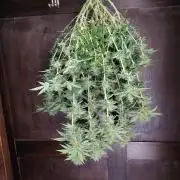
I was on vaccation for a week and found her healthy and bushy when I got back.. Lovely


@JandM
Volgen
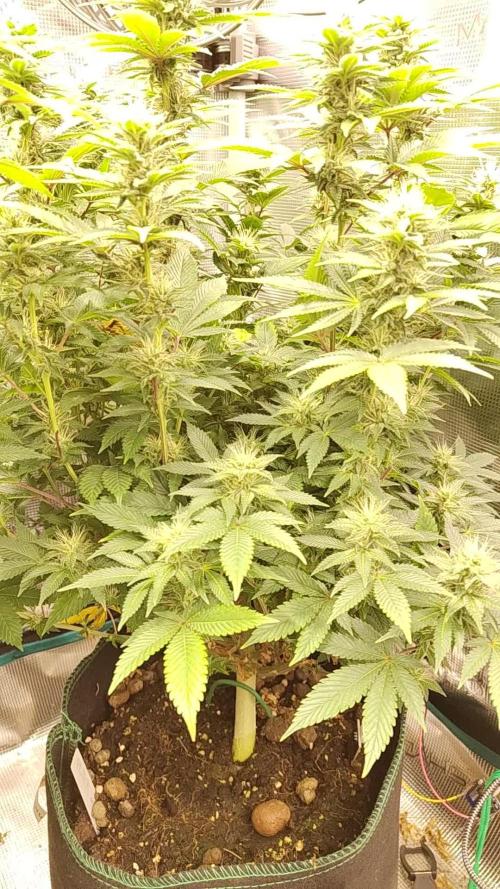
Not much to say this week they only grew two inches last week so the stretch is over now. One of them is getting really frosty the other not so much but it is a little behind schedule since it sprouted crooked and took a little over a week to fix itself.


@TheCannaProphet
Volgen
~ AirCube Active Oxygen Ebb/Flow System sponsored by GrowAce, featuring Strawberry Gorilla Auto by FastBuds ~
Well guy's and gal's here we go again on another exciting Autoflower run together! This time will be different as I will be doing a 'Hydroponic' run utilizing the AirCube Active Oxygen Ebb/Flow System by GrowAce, who were kind enough to sponsor me for this run, so it should be interesting to see what results I get and have some fun along the way!
•Let me first tell you about this 6 Pot Ebb/Flow system from GrowAce:
"The AirCube system is the one and only Ebb & Flow grow system on the market that combines the benefits of air pruning with a fully automated Ebb+Flow system! With the AirCube's proprietary fabric pot in bucket design, this system is guaranteed to outgrow any other Ebb + Flow system on the market. The results speak for themselves- grow MASSIVE roots that result in MASSIVE fruits!
Air Pruning- Air Pruning only happens with fabric pots. As the roots reach the fabric walls of the pot, they penetrate and grow into the breathable fabric. Once penetrated, the roots are exposed to air, which causes the tips of the root to dehydrate and naturally prune themselves. This natural pruning process forces the roots to grow tons of lateral fibrous feeder roots. This results in a plant that utilizes the entire root zone and fills the entire pot with tons of roots. These fibrous feeder roots are incredibly effective in uptaking water and nutrients, resulting in a plant that grows healthier and more vigorously!
Oxygen Benefits- Without oxygen, nutrient absorption cannot occur. On a molecular level, oxygen is needed to transmit nutrients across the cell walls and into the roots of a plant. With the AirCube's proprietary bottom lifted draining design, the system actively draws all of the water out of the bucket pulls vital oxygen into the root zone.
Maximum Versatility with Any Grow Medium: The AirCube System is the only system on the market that allows you to use any growing medium you like. Use coco coir, soil, peat moss, perlite, vermiculite, hydroton, rockwool or any other medium you wish! This system is the most versatile Ebb and Flow bucket system in today's hydroponics industry.
Temperature Control- with the fabric pots constructed with highly porous polypropylene fabric, heat dissipates easily and effectively. Unlike standard plastic pots, heat isn't trapped in the root zone. Heat in standard plastic containers can reach temperatures of up to 125 degrees. When this type of heat is trapped and unable to escape, it can damage your plant's health and limit the potential of your harvest. Growing in the AirCube System, plant roots grow cooler, healthier, and more vigorous.
Largest Pots in its Class- this system features 5 Gallon grow buckets, the largest pot size of any other ebb and flow hydroponic system in the market.
Modular and Expandable- start with 6 grow buckets and expand up to 36 grow buckets with the optional 105 gallons PopTank reservoir!"
For my medium and nutrients I decided to also switch things up from my regular Organic runs, going with Plagron Nutrients and Root Royale 70/30 Coco/Perlite. When filling the fabric pots with medium, I first added just under a gallon of horticulture perlite from Nor-Cal as a base layer to ensure good drainage and then filled the remainder with the Root Royale.
•Now for one of my favorites, and award winning strain from my friends at FastBuds... Strawberry Gorilla Auto:
I'll be running Strawberry Gorilla Autoflower which is a 55/45 Sativa/Indica Hybrid. "ATTENTION ALL! Due to our continuous efforts in evolving our breeding process, we are proud to confirm that our Strawberry Gorilla Auto has now become one of the most potent autoflowers in the world! Paving the way to our recent success where she ranked on top & brought home the gold at the very first American Autoflower Cup in California. Moreover, she proved that not only modern autoflowers can compete with photoperiods, but they can even beat them in their field. At the most recent edition of the Farmer’s Cup and competing against various photoperiodic strains, Strawberry Gorilla Auto took home the title of 'Highest Combined Terpenes' in the highly sought-after 'Home Grow Hash' category, with an impressive 97.163 mg/g total terpene content! Our exceptional genetic selection's crowning Strawberry Gorilla Auto strain is a spectacular hybrid known for producing yields of up to 600 gr/m2 in 70 days. This is a very manageable grow that can reach heights of up to 150 cm - due to its magnitude we recommend it for more experienced growers, as a huge plant may be a little overwhelming for first-timers. This show stopping sativa heavy hybrid is perfect as an all day smoke, producing a taste bud tingling, pungent berry and diesel terpene-rich flavor combo that leaves you with a grin from ear to ear, a perfect choice for those looking for a day-and-night autoflower! "*
*References: GrowAce.com, 2fast4buds.com
______________________________________________________________________________________________________________________________________________________________________________________________________________________________________________________________________________________________________________________________________________________________________________________________________________________
The Setup:
• AC Infinity 4x4 tent
•AC Infinity Cloudline T6 Exhaust Fan w/ Controller 67
•HLG 650R w/UVA Bar *** For some reason GD does NOT have a listing for the USA version of the 650R so I selected the closest match to it.
•AirCube Active Oxygen Ebb/Flow 6 pot System
•TrolMaster Hydro-X Controller for light
•AutoPilot APC8200 co2 controller fed by a 50# tank
•16" Hurricane oscillating fan and 8" floor fan
•Tent cooling via filtered outside air delivered by AC Infinity Cloudline T6 fan
•BlueLab instruments: PH Pen and Truncheon Nutrient Meter
______________________________________________________________________________________________________________________________________________________________________________________________________________________________________________________________________________________________________________________________________________________________________________________________________________________
Weekly Updates:
10/10- Here we go again with another killer strain from FastBuds, Strawberry Gorilla! I went ahead and germinated 4 seeds originally by first soaking in a glass of tap water for 12 hours then placing in pre-moistened Peat Pellets, of which all four were successful. Two however looked like they they might not make it, so I germinated 3 more by first soaking for 12 hours, then placed on moist paper towels for 48 hours. I checked them on the third day and all had sprouted. I then planted the additional 3 seedlings next to the ones already in pots and will wait 5-7 days to see which look the best, then cull the 3 'losers'.
10/12- Yesterday, I went ahead and ran the AirCube system manually today to give them their first feed. I have the reservoir filled with 60L of well water which was adjusted to 6.2ph @ 75℉. I then added 60ml each of Plagron Cocos 'A' and Cocos 'B' and 30ml of Plagron Power Roots to the reservoir and, after mixing thoroughly, readjusted the ph to 6.3 @ 75℉. I then ran the AirCube system on the 'Fill' setting for 10 minutes. While the system was filling the pots, I used a soil hydrometer to monitor the moisture level in the medium to make sure that I had the floats in the 'Brain Bucket' that control how much solution flows through the system adjusted correctly. Everything worked flawlessly with all of the pots getting saturated, then fully drained... excellent!
10/14- I ran the AirCube system again today after checking the ph of the reservoir which had risen to 8.0 due to off gassing of CO2 which occurs because of the large air stone I have in the reservoir to oxygenate the water in it. I adjusted the ph to 6.2 using SaferGrow's PH Down which BTW I love! After adjusting the ph, I ran the system manually for 10min, then drained it.
I have the HLG 650R hung @ 28" above canopy and have it set to 45% power on a 19/5 cycle via a TrolMaster HydroX Controller. Tent temp's are running 80-82℉ with the lights on, 74-75℉ during the dark cycle. RH is being maintained by a 1.5g humidifier at 63% currently resulting in a 1.41kPa VPD.
10/17- Well there goes the first week for these three girls and so far, so good! They all have good color and leaf structure and I'm just waiting for them to take off now.
I ran one manual feed cycle today for 15min upping the ppm's to 700, then drained the pots. I'll start gradually increasing the feed schedule along with the ppm of the nutrients starting next week... See you there!💚


@valiotoro
Volgen
Hello everyone week 2 has passed for this Skywalker haze auto by Dutch Passion 😎
this plant is doing very well growing at fast pace and with a beautiful green colour on the leaves.
Topping & LST for my girl 😎
wish you all happy growing!




@Cannabinatek
Volgen
Crescimento saudável. Meninas a ramificar bem , bem alimentadas e prontas a iniciar a 3.ª semana de crescimento… Zimbora 💚💚💚



@DogDoctorOfficial
Volgen
💙 PROJECT BLUE TENT – WEEK 15 💙
🌿 BLUE WAFFLE F1 – PHENO B
🍂 AUTUMN IS HERE! BEAUTIFUL LIGHTER COLOURS, INCREDIBLY DENSE FLOWERS, AND THE FINAL CHAPTERS OF OUR JOURNEY!
Hello everyone, and welcome back to another chapter of Project Blue Tent! 💙🌱
My friends, my friends...
WHAT A BEAUTIFUL WAY TO APPROACH THE FINISH! 😂🌈❄️
The season is changing, the colours are appearing everywhere, and the girls are showing us their individual expressions as they approach the end of their flowering journey.
And today, it's all about Blue Waffle F1 Pheno B!
Her sister has been showing us some beautiful darker colours, with pronounced purple, reddish, and brown tones.
But Pheno B?
She's telling a slightly different story!
We're seeing lighter green tones, beautiful colour transitions, and fading throughout the plant. Her flowers are incredibly dense and compact, with an outstanding structure that makes her every bit as interesting as her sister.
Two phenotypes from the same F1 cultivar.
The same tent.
The same ecosystem.
And two beautiful individual expressions!
We're now in Week 15 of flowering, and after observing the flowers, the trichomes, the aroma, and the overall development, I've decided that it's time to move to plain water.
We're bringing the EC down to approximately 0.2 mS/cm, which is our starting-point water reading.
The pH is naturally around 6.8, and we're not using pH Plus or pH Minus.
We're keeping things simple and giving the girls a little time as we approach what I genuinely believe will be the final stage of this journey.
But there's plenty more happening inside this room!
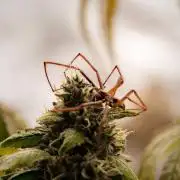
Matilda, our little spider friend, is making another appearance.
We're continuing our macro photography adventures, experimenting with some 3D-printed irrigation accessories for the next run, and observing the results of our under-canopy lighting setup.
And when I look at the flowers throughout this tent, I can't help feeling that all those weeks of work are coming together beautifully.
So, let's give Pheno B the attention she deserves!
🌿🌈💙
🌱 A QUICK LOOK BACK – HOW DID WE GET HERE?
Before getting into this week's observations, let's take a moment to remember the adventure behind Project Blue Tent.
We're growing four individual plants from two different Zamnesia F1 cultivars:
🌈 Blue Waffle F1 – Pheno A.
🌈 Blue Waffle F1 – Pheno B.
🥒 Pickle Lemon Haze F1 – Pheno A.
🥒 Pickle Lemon Haze F1 – Pheno B.
Four plants, two cultivars, and one shared ecosystem.
All four girls have been sharing the same tent, the same general environmental conditions, the same reservoir, the same irrigation system, and the same nutritional program.
Throughout this journey, we've documented their development individually, following the plants from their early stages through transplantation, topping, LST, canopy management, SCROG, defoliation, and flowering.
We've spent considerable time establishing the structure, organizing the branches, managing the canopy, and experimenting with different aspects of our growing environment.
We've also introduced supplemental under-canopy lighting using two LumiFlora 150W full-spectrum fixtures arranged in an X-cross configuration.
Nutritionally, we've been working with the PLAGRON Hydro line, gradually adjusting the program as the girls progressed through flowering.
And now, we're approaching the end.
The major structural work is behind us.
The flowers have developed throughout the canopy.
The plants are showing their individual characteristics.
And we're beginning to see the beautiful changes associated with this final stage.
One of the most interesting aspects of this project is that sharing the same environment doesn't mean every plant will express itself identically.
Even two plants from the same cultivar can show differences in structure, pigmentation, flower formation, and other characteristics.
And that's exactly what we're seeing with our two Blue Waffle F1 sisters.
Pheno A has been showing us some darker, more dramatic colours.
Pheno B is displaying a different visual expression, with lighter greens and her own beautiful combination of colours.
Same genetics.
Same room.
Same general approach.
Different expressions.
And that's precisely why every phenotype deserves her own diary!
💙🌱
🌿 BLUE WAFFLE F1 PHENO B – HER OWN BEAUTIFUL EXPRESSION!
Let's talk about this girl!
Because although her sister has been stealing plenty of attention with those darker colours, Pheno B is certainly not staying behind!
She's looking absolutely beautiful.
The first thing that catches my attention is the overall flower structure.
The flowers are incredibly compact, dense, and beautifully formed.
Looking throughout the plant, we're seeing those little golf-ball-like flowers from the lower sections towards the top of the canopy.
And that's one of the things I've been particularly enjoying during these last weeks.
The plant has developed within the structure we've established throughout the earlier stages, and now we're able to appreciate the results.
The flowers are taking centre stage.
The surrounding foliage is changing.
And the overall appearance is becoming increasingly interesting.
Compared with Pheno A, this girl is showing lighter green tones.
Her sister is moving towards a darker colour palette, while Pheno B retains a more pronounced green appearance throughout parts of her flowers and foliage.
But that doesn't make one more interesting than the other.
They're simply expressing themselves differently.
And honestly, I love having the opportunity to document those differences.
It's easy to look at two plants from the same cultivar and expect them to behave or look exactly alike.
But that's not always what happens.
Individual phenotypic expression can produce noticeable differences, even when plants share the same general environment.
And Pheno B is giving us another beautiful example.
💚🌈
🍂 THE FADING – WHY DOES PHENO B LOOK DIFFERENT FROM HER SISTER?
This is one of the most interesting things happening throughout the tent right now.
We're seeing fading across the plants, but the way that fading appears isn't identical between the two Blue Waffle F1 sisters.
Pheno A has been showing us more pronounced darker colours, including purple, reddish, and brown tones.
Pheno B, on the other hand, is retaining lighter green tones while also showing yellowing and other changes throughout her foliage.
So, why does this happen?
There are several factors involved in the colour changes we observe as plants progress through their life cycle.
One of the main contributors to the green appearance of leaves is chlorophyll.
As chlorophyll levels decline, other pigments can become more visible.
Carotenoids contribute yellow and orange colours, while anthocyanins are associated with red, purple, and blue shades.
Genetics play an important role in how these pigments are expressed.
Environmental conditions, including temperature and light exposure, can also influence the colours we observe.
This means that two plants growing side by side can display different colour combinations, even when they're exposed to the same general conditions.
And that's precisely what we're documenting.
We shouldn't assume that every colour change has the same cause, nor should we use fading alone as proof that a plant is ready for harvest.
Instead, we're looking at the complete picture.
The flower development.
The trichomes.
The pistils.
The aroma.
The overall condition of the plant.
And the changes we've observed throughout the previous weeks.
For Pheno B, the fading is becoming increasingly visible, but her overall appearance remains beautifully green compared with her sister.
And I genuinely love that contrast!
Two sisters, two colour palettes, and two individual stories.
🍂💚🌈
❄️ FLOWERS – DENSE, COMPACT, AND BEAUTIFULLY FORMED!
Now, let's appreciate those flowers!
Because this is where Pheno B really shines.
The flower structure is outstanding.
We're seeing beautifully compact flowers, with a dense appearance throughout the canopy.
And the consistency of the development is particularly interesting.
From the lower flowering sites to the upper sections, we're finding plenty of beautiful flowers to admire.
The photographs show the different angles, the overall structure, and the details that make this phenotype so enjoyable to document.
When we step back, we can appreciate the shape of the plant and the distribution of the flowering sites.
When we get closer, there's an entirely different world waiting for us.
The textures.
The pistils.
The trichomes.
The intricate details of the flowers and surrounding sugar leaves.
And that's one of the reasons I enjoy macro photography so much.
It allows us to explore the details that we might otherwise overlook.
Pheno B has developed a beautiful structure, and the compact appearance of her flowers is particularly impressive.
Combined with the changing colours and the visible frost, she's giving us plenty of reasons to keep the cameras ready.
And just like her sister, she's making it difficult to walk into the room without taking another photograph!
😂📸❄️
👃 THE AROMA – TWO SISTERS, ONE BEAUTIFUL ROOM!
Now, let's talk about something that our photographs cannot communicate.
The aroma!
The room smells absolutely incredible, and the overall aromatic experience is becoming another memorable part of this final stage.
One of the interesting observations is the similarity between the two Blue Waffle F1 sisters.
Visually, they're showing different expressions.
But the overall aromatic impression is remarkably similar.
Of course, without proper analytical testing, I'm not going to invent a terpene profile or assign specific aromatic compounds to either phenotype.
What I can tell you is what I'm experiencing.
The smell is beautiful, the room is wonderfully aromatic, and spending time around these girls has become an absolute pleasure.
And that's something I wish I could share through the photographs!
Unfortunately, you'll have to use your imagination for that part.
😂🌸💙
💡 UNDER-CANOPY LIGHTING – A HIGHLIGHT OF PROJECT BLUE TENT!
I really want to dedicate a section to our supplemental lighting experiment.
Throughout this project, we've been using two LumiFlora 150W full-spectrum fixtures beneath the canopy.
They're arranged in an X-cross configuration, supplementing the main overhead lighting.
And now, as we approach the final stage, we're able to appreciate the flowers developing throughout the different sections of the plants.
The lower flowering sites are particularly interesting to observe.
We're seeing compact flowers throughout the canopy, and the overall development has made this experiment one of the highlights of Project Blue Tent.
The main lighting system provides our primary illumination from above, while the LumiFlora fixtures add supplemental light beneath the canopy.
It's important to remember that several variables contribute to the final result.
Genetics, plant structure, canopy management, environmental conditions, nutrition, and the complete lighting arrangement all play their respective roles.
We cannot attribute every result to one piece of equipment.
But we can document the setup, follow the development, and evaluate what we're observing.
And that's precisely what we've been doing.
I'm particularly interested in reviewing the complete photographic record once the project is finished.
Having individual diaries for all four plants will also give us an opportunity to compare their development and identify interesting differences.
A massive thank you to LumiFlora for making this experiment possible!
These two 150W fixtures have certainly given us plenty to explore.
💡💙🌱
🌡️ ENVIRONMENT – SAME ROOM, SAME CONDITIONS!
Now, let's look at the environmental conditions.
As we've explained throughout Project Blue Tent, all four plants share the same general growing environment.
And this week, we're maintaining the established conditions.
Outside temperatures have increased slightly again, particularly during nighttime.
We're seeing readings above 22°C outside, with one measurement reaching approximately 22.4°C around midnight.
Fortunately, with the air conditioning running, we're managing to maintain the conditions inside the tent without allowing those outside fluctuations to push our internal temperatures higher than intended.
Our current environmental reference is:
🌡️ Day air temperature: approximately 25°C.
🌙 Night air temperature: approximately 20°C.
💧 Relative humidity: approximately 55%.
💧 Solution temperature: approximately 21°C.
🌱 Substrate temperature: approximately 21°C.
We're also keeping an eye on the other environmental readings throughout the room.
CO₂ reference: approximately 666 ppm.
The important thing is maintaining consistency.
We don't want sudden environmental changes simply because the weather outside has decided to become warmer again.
The AC is helping us manage those fluctuations, and we're continuing to monitor the room.
It's quite funny when you think about it.
Outside, summer is trying to make another appearance.
Inside, our girls are giving us a beautiful autumn display!
😂🍂🌈
💧 IRRIGATION – THE ESTABLISHED SYSTEM CONTINUES
The irrigation and drainage arrangement remains unchanged.
All four plants continue sharing the same reservoir and irrigation system.
The recorded watering volume remains approximately 1.6 litres per plant over 24 hours.
As always, this is our recorded reference value rather than a guarantee that every individual plant consumes exactly the same amount.
Individual plants can behave differently, even when they're sharing the same system.
That's another reason why we're continuing to observe each phenotype separately.
At this stage, we're concentrating on keeping the established system consistent while monitoring the plants and their individual development.
We're not introducing unnecessary changes to an arrangement that's already been established throughout the project.
And as we're now moving to plain water, we'll continue documenting the reservoir readings and the changes in our irrigation approach.
💧🌱
⚗️ THE NUTRITIONAL CHANGE – PLAIN WATER FROM HERE!
Now, let's talk about this week's biggest change.
As mentioned in our previous report for Pheno A, I've decided that it's time to move away from our previous nutritional recipe and introduce plain water.
We're now doing the same for Pheno B.
All four plants share the same reservoir, so this change applies to the entire room.
Our current readings are:
💧 EC: approximately 0.2 mS/cm.
💧 pH: approximately 6.8.
The EC represents the starting-point water reading.
The pH is naturally around 6.8, and we're not using pH Plus or pH Minus.
We're no longer adding:
PLAGRON Hydro A.
PLAGRON Hydro B.
PLAGRON Power Buds.
PLAGRON Green Sensation had already been discontinued earlier in flowering.
Why the change?
Simply because, after observing the plants, I feel we're approaching the end of the journey.
The flower development, the density, the aroma, the trichomes, and the overall appearance are all contributing to that impression.
Since this project isn't following an organic nutritional program, I've decided to introduce a period using plain water.
For now, I'm thinking about a few days, potentially around one week.
We'll continue observing the girls and decide how things progress.
I'm not putting an exact date on it because I want to keep the final decisions based on the actual condition and maturity of the individual plants.
And one important clarification: plain water doesn't magically remove nutrients from the flowers or guarantee a particular flavour outcome.
This is simply the nutritional change I've chosen for this stage of this particular project.
The important thing is to document exactly what we're doing and why.
So, from this week onward:
EC approximately 0.2 mS/cm.
pH approximately 6.8.
No additional nutrients.
Let's see how the final chapter unfolds!
💧💙
🕷️ MAHTILDA RETURNS – OUR LITTLE MACRO MODEL!
Well, my friends, apparently Matilda isn't finished with us yet!
Our little spider friend is making another appearance inside Project Blue Tent.
For anyone who missed the previous update, Mathilda is the little spider I spotted wandering around the room.
I decided to give her a temporary starring role in our photography session, and she turned out to be a fantastic subject.
And this week, we're continuing the photographic adventure!
I've included more photographs of Mathilda, because I genuinely enjoy the opportunity to capture these little details.
Look at those legs!
The textures!
The incredible structure!
The details that become visible when we move closer!
It's fascinating how different the world looks through a macro lens.
Something that might otherwise go unnoticed suddenly becomes an entirely different photographic subject.
And that's what I love about macro photography.
It encourages us to slow down, look closer, and appreciate details that we normally overlook.
Matilda has officially become part of the Project Blue Tent photographic collection.
😂🕷️💙
Of course, she's only a little guest appearance, but she's certainly making the most of her time in the spotlight!
📸 MACRO PHOTOGRAPHY – GETTING CLOSER TO THE DETAILS
Photography has always been an important part of documenting these projects.
And during these final weeks, there's so much to appreciate.
The flower structures.
The changing colours.
The trichomes.
The textures.
And our unexpected little spider visitor!
I've been enjoying getting closer to the subjects and capturing details that aren't always visible in ordinary photographs.
I'm also continuing to experiment with macro photography and focus stacking.
For anyone unfamiliar with the technique, focus stacking involves combining multiple photographs taken at different focus distances to create an image with a greater depth of field.
It's particularly useful when working with small subjects at high magnification, where only a limited area can remain sharply focused in a single photograph.
And between the flowers and Matilda, we've had plenty of opportunities to experiment!
I hope you enjoy the photographs as much as I enjoy taking them.
Sometimes the smallest details make the biggest difference.
📸💙
🖨️ BEHIND THE SCENES – NEW 3D-PRINTED IRRIGATION EXPERIMENTS!
Now, let's move away from the flowers for a moment and introduce something I've been working on behind the scenes.
I've been experimenting with 3D printing and have produced a number of prototype bases that I'm currently testing.
The idea is to create a small distribution plate beneath the watering points.
Instead of having water fall directly onto one concentrated area of the coco surface, the plate is designed to help distribute the incoming water more evenly.
The objective is simple:
A more even distribution of water across the surface.
I've printed several prototypes, and I'm currently evaluating their design and how they behave during small tests.
Will the water distribute as intended?
Will the design need adjustments?
Will the final version be suitable for the next run?
That's exactly what we're trying to find out!
I'm not making any claims about the results yet because this is still an experiment.
At the moment, I'm only carrying out a few small tests and checking how the water flows across the plates.
The proper evaluation will come with the next project.
I've included some photographs so you can have a little preview of what I've been working on.
And that's one of the things I enjoy most about this hobby.
There's always something to improve, something to experiment with, and something new to learn.
Project Blue Tent might be approaching its finish, but the next adventure is already taking shape!
😂🖨️💙
🔭 WHAT TO EXPECT NEXT WEEK – IS THIS THE LAST WEEK BEFORE HARVEST?
And here comes the big question!
My friends, I genuinely feel we're very close to the finish.
Looking at the flowers, their density, the trichomes, the aroma, and the overall development, I have the feeling that we're approaching the final days of this journey.
We've now introduced plain water, and we'll continue observing the plants over the coming days.
Perhaps this is the last weekly update before we move into harvest.
Perhaps we'll have one more chapter.
Let's see!
What I don't want to do is promise a harvest date simply because we're excited to reach the finish.
We'll continue looking at the individual plants and assessing their maturity.
Remember, we're growing two different cultivars in the same tent, and even the individual phenotypes can progress differently.
So we need to remain patient and allow each plant to reach her own finish.
What should you expect from the next update?
More observations.
More photographs.
More attention to the trichomes and overall flower maturity.
And potentially the beginning of our harvest documentation!
What shouldn't you expect?
Major environmental changes.
New training sessions.
A new nutritional recipe.
Or unnecessary interventions.
The girls have already done their part.
Now it's time to observe, document, and prepare for the next chapter.
We're getting there!
💙🌸🍂
💬 COME JOIN OUR DOGDOCTOROFFICIAL DISCORD COMMUNITY!
Before we finish, I want to invite everyone to join our Discord family!
If you're already part of the community, you know what we're building together.
And if you haven't joined yet, you're more than welcome!
We've created a place where growers can share their experiences, exchange knowledge, discuss equipment, show their gardens, share photography, and learn from each other.
We also organize our community photo championships, cups, and giveaways!
There's always something happening, and one of the things I appreciate most is the opportunity to learn from people with different experiences, setups, and approaches.
You don't need to be an expert.
You don't need expensive equipment.
You don't need years of experience.
Everyone is welcome!
Come and introduce yourself, share your photographs, join the discussions, and become part of the adventure.
And don't forget to check out our giveaway channels!
👽 Mr. Baggy and other surprises are waiting for you!
💙 JOIN US HERE:
https://discord.gg/dogdoctorofficial
Growers helping growers.
Sharing knowledge.
Learning together.
And having a little fun along the way!
We'd love to have you with us!
💙 FINAL THOUGHTS – TWO SISTERS, TWO EXPRESSIONS, ONE BEAUTIFUL JOURNEY!
My friends, Week 15 has been another beautiful chapter for Blue Waffle F1 Pheno B.
She's looking fantastic.
The flowers are incredibly dense and compact, the structure is outstanding, and the changing colours are giving us another beautiful expression of this F1 cultivar.
Compared with her sister, Pheno B is retaining lighter green tones, while Pheno A is showing us more pronounced darker colours.
And that's precisely what makes documenting individual phenotypes so interesting.
They share the same environment, the same general conditions, and the same nutritional program, yet each plant brings her own characteristics to the table.
We've also introduced plain water this week, bringing our EC down to approximately 0.2 mS/cm, with the natural water pH sitting around 6.8.
The environmental conditions remain stable despite the warmer temperatures outside.
Our irrigation arrangement remains in place.
And our two LumiFlora 150W under-canopy fixtures continue to be an important part of this project's lighting experiment.
We've had Matilda making another appearance, enjoyed more macro photography, and started testing some 3D-printed irrigation prototypes for our next adventure.
And now, we're approaching the finish.
I genuinely feel that this may be the final weekly chapter before harvest, but we'll let the plants guide us.
No rushing.
No guessing.
Just observation, patience, and good documentation.
Two Blue Waffle F1 sisters.
Two beautiful individual expressions.
And another reminder of why every plant deserves her own story.
Same tent.
Same ecosystem.
Different expressions.
Same passion.
Same love.
And another beautiful chapter of Project Blue Tent! 💙🌈🍂❄️
🙏 A HUGE THANK YOU – THE PEOPLE BEHIND PROJECT BLUE TENT!
A project like this doesn't happen alone, and I want to take a moment to thank everyone who has been part of this adventure.
A massive thank you to ZAMNESIA for providing the genetics and making it possible for us to document these beautiful Blue Waffle F1 and Pickle Lemon Haze F1 plants individually.
Thank you to PLAGRON for the Hydro nutrient line supporting the project throughout the journey.
A huge thank you to MARS HYDRO for the irrigation and drainage equipment helping us maintain consistency throughout the room.
Thank you to ZAMNESIA for the Phytonaut LED lighting, curved scissors, and clip fans that continue playing important roles in our setup.
A special thank you to LUMIFLORA for the two 150W full-spectrum under-canopy fixtures. This has been one of the most interesting experiments in Project Blue Tent, and I'm looking forward to exploring the results further.
Thank you to HEMP HOOKS for joining our adventure and providing our community with an exclusive discount opportunity.
🌐 https://hemphooks.com/
Discount code: DogDoctor
15% OFF YOUR ENTIRE ORDER!
We're looking forward to exploring your products further in upcoming projects and sharing our experiences with the community.
Thank you to GROWDIARIES for providing the platform where we can document the plants, share our photographs, and record the lessons we learn along the way.
And finally, a massive thank you to everyone following Project Blue Tent, reading our diaries, supporting the reports, sharing comments, and enjoying the photographs.
Your support makes sharing these individual chapters even more enjoyable.
And to our Discord family, thank you for making this community such a fantastic place to learn, share, and grow together.
If you haven't joined us yet, come and say hello, check out our cups and giveaways, and become part of the adventure!
💙 https://discord.gg/dogdoctorofficial
Until the next chapter, my friends...
Keep growing.
Keep learning.
Keep documenting.
Keep experimenting.
And never lose that passion for the little details that make every run special.
GROWERS LOVE, HAPPY GROWING, AND TAKE CARE, EVERYONE! 🌱💙🌈🍂❄️



@SamDo
Volgen
La culture c’est dans son ensemble bien passée. La critical+2.0 est une herbe plutôt facile à faire pousser. Je suis un peu déçu du rendement, mais je pense que cela ne provient pas de la génétique, mais plutôt de mon expérience qui demande à être améliorer encore. Et peu être aussi augmenter la puissance de la lampe pour obtenir des buds encore plus grosses.
Je ferais un update pour le smoke review.


@Mr_und_Ms_Lue_Roots
Volgen
Hallo und herzlich Willkommen
Wie zuletzt beschrieben, befinden sich aktuell beide Klone in der Wachstumsphase.
Sie im Garten hat sich gute erholt und freut sich auf die kommende Sommerzeit.
Die Dame die auf dem Balkon steht, fühlt sich sichtlich auch sehr wohl. Man merkt wie das Wachstum zurück geht.
Die Stamm- Struktur zeichnet sich schön mit der Farbe lila. Sie sieht auf jeden fall auch wirklich bemerkenswert aus.
Ein paar Entwicklungsbilder unseres Gartens sind auch anbei :-)
Auf ab in die nächste Woche, wir freuen uns und wünschen in diesem Sinne allen Growmies eine tolle neue Woche und viel Erfolg!
VG 😎



@deseed_uy
Volgen
Eran 3 esquejes cherrywanna , solo pesé el nro 2, me limé pero esa fue un intermedio entre las otras: La cw 1 tenia cogos grandes y largos, el mas grande humedo pesaba 33g.
La cherrywanna 3 era la del fondo, tenia mas bien pompones superiores gorditos y no mucho mas para abajo. La realidad es que puse muchas plantas para la potencia de luz q tengo, pero igual salieron muyy bien:)
shorts_status_processing


@The_Projexx
Volgen
Found this bad ass GG#4 from Canuk Seeds . Let the fun begin ! This is an all new experience for me . I've learned lots from watching some of the people on this site and now its time to put my knowledge to the test ! I hope these ladies turn out lovely !!!


@Legendaryseedthumb
Volgen
Day 23: had to remove some leaves! The stems had some insane growth yesterday so the leaves was growing in the tent😁
Just a picture at the final product of sugarpunch, one phenotype out of 5x!
Smells amazing and taste so sweet just like sugar. very strong head high.
Mars hydro TS-1000
Increase Yield & Crop Quality in Led Grow
Newest SMD Led technology provides the highest Par/Lumen output, makes you get 30% higher yield compare old led lights, can get up to 2.5g/watt yield.
Only 150 watts true output so you don't have to check your bill every month. 342 pcs LEDs, more scientifically and energy-efficient! Perfect for 3'x3' (100x100cm) veg stage and 2'x2' (60x60cm) bloom stage
https://www.instagram.com/marshydro_aliexpress2/


@Overcaring_dad
Volgen
This week I kept on feeding as usual. Due to a few burnt leaf tips I then flushed the three bigger plants with 5l each, and got a run off around 1l each with a PH of 6.9
I will only use 40% to 50% of the recommended nutrients the next week and PH my feeding water to around 6.2 - 6.3 to compensate the high PH of the run off.
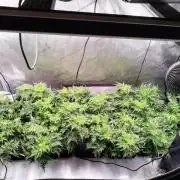
Mid week 2 I also lollipoped the plant again and did a rather heavy defoliation. From now on I only want to get rid of leafs if really necissary
By now I can see more pistils forming and flowering is starting slowly.


@Rollerboy
Volgen
Since the plants have not shown sex yet, i decided to take 2 clones from each, and put the un-rooted clones to flower. As soon as they show i will discard all males and reverse them to vegetative stage. I did make another diary for this !
Same goes for the mother/father plants, as soon as i know what is what, i will discard all males and transplant into 11 liter pots.


@BabyBillyFreeman
Volgen
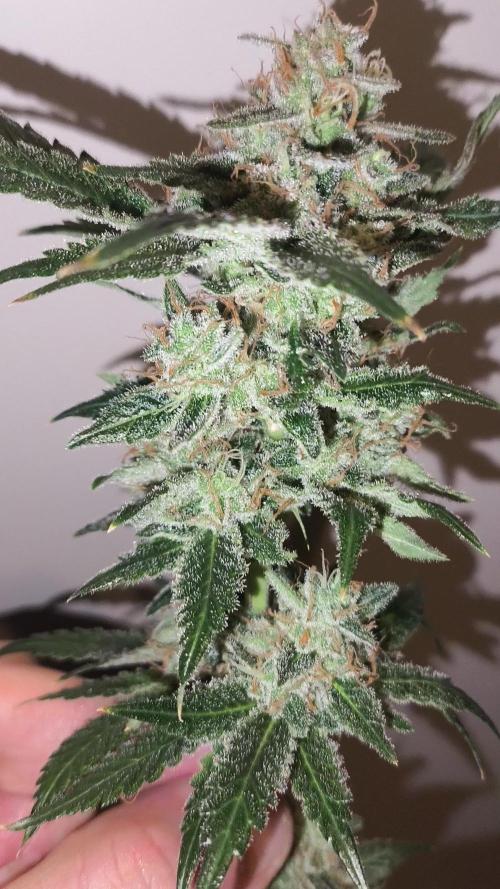
Decided to harvest at 10-12% amber. Running out of time and needed to chop her down. Pretty sure I slowed her down from a heavy defol. She was supposed to be done on day 65 based on breeders notes. She took considerably longer for me so the heavy defol is the only thing I can think of.
She has sweet gas and grape terp. Very nice heavy dense buds but not as large as I was hoping. Despite the bud size I think it will be some good smoke. I’ll update with dried and cured bud pics.
Buds are very dense after dry and cure!



@Liquido
Volgen
Prima raccolta della mia vita, molto soddisfatto, dopo una settimana in flush ho deciso di tagliare in quanto i tricomi stavano diventando ambrati, dopo questo ciclo sicuramente ho capito l'importanza del Lollipoping e sicuramente al prossimo saprò come valutare la gestione