


Likes
Comments
Share

@WMinerva007
Follow
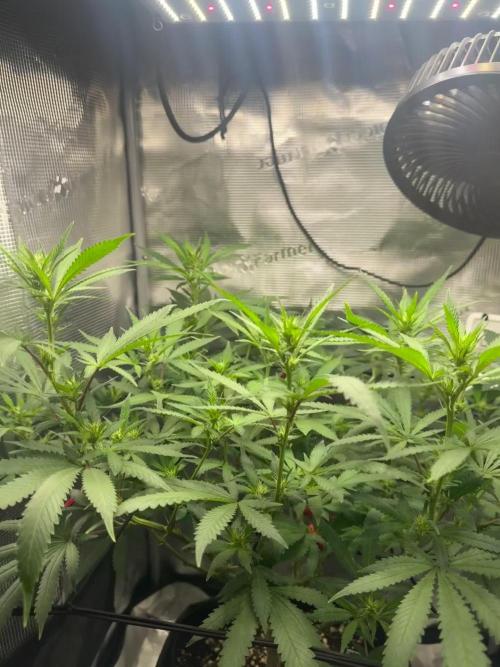
Wow… she stretched really really well and shes gonna start her bulking phase soon.
Shes growing vigorously with lush green color and great node spacing so I’m expecting a really good harvest!

Likes
12
Share


@DrGreenbutterThumb
Follow
So I harvested 1 Grlato Cake seed 🙃22 Gelato cake × Dosi-punch, & 18 Gelato cake × Lamb's Bread. Already germinating the gelato × dosi mix.
Excited to start the next diary


Likes
43
Share


@TheCannaProphet
Follow
~Entry for the 'Best Rarest & Smallest Pot by Seedsman' contest~
Starring 🤩....
~ Seedsman Zkittlez Auto ~
Zkittlez (Grape x Grape Apple) Auto x Auto Fruit (Auto Fruit Cheese x Auto Blueberry)
Zkittlez Auto is one of the very sweetest-tasting auto strains available anywhere. It is a sativa-dominant (60%) strain that was bred from Zkittlez (Grape x Grape Apple) Auto crossed with a male Fruit Kush Auto, the latter a remarkable fruity strain bred from Fruit Cheese Auto and Blueberry Auto. Growers can expect to harvest some good yields of high-THC buds.
Zkittlez Auto remains a fairly short plant, rarely exceeding 120 cm. in height wherever it is grown. This is a vigorous plant which is able to metabolize a high level of nutrients and she's a thirsty girl too! If growing indoors close to neighbors it is strongly advised to ensure good and effective carbon air-filtration in order to neutralize powerful odors. This strain's life-cycle is approximately 90 days from seed to harvest.
The leaves on this plant are big and wide serving to convert every lumen available into Zkittlez goodness. Indoor growers should obtain between 400 - 500 gr/m2 while plants cultivated outdoors will produce slightly more at 500 - 600 gr/m2. Lateral branching is very good and it is recommended to use supports/ties to prevent snapping and keep buds close to the light source.
This strain's scent is sweet and fruity with candy and berry notes. Its high-THC has been measured at between 21 - 24% with less than 1% CBD. The effect is well-balanced, cerebral and euphoric, and is very good for social situations as well as for relaxing in front of the TV either alone or with company. It also has the added effect of helping to relieve chronic pain, helping with nausea, insomnia and depression as well as stimulating the appetite.**
**Credit to Seedsman.com
________________________________________________________________________________________________________________________________________________________________________________________________________________________________________________________________________________________________________________________________________________________________________________________________________________________________________________________
~ The Setup ~
~ Grown in a 2qt plastic popcorn pot filled with Mother Earth Grow 70/30 Coco/Perlite with Xtreme Gardening Mykos added.
~ Seed was germinated directly in the medium without any 'pre-soak'
~ Feeding will be by Dutch Pro Nutrients
~ 24hr light cycle while germinating
~ 20/4 light cycle after first leaves appear.
~ 4x8 Gorilla Tent
~ HLG 650R w/ 30w Supplemental UVA Bar controlled by a Trolmaster Hydro X controller set for a 15min Sunrise/Sunset simulation. (also a HLG Blackbird for additional side lighting if necessary)
~ Supplemental co2 controlled by an AutoPilot APC 8200 co2 controller
~ AC Infinity Cloudline T6 with Controller 67 using a Terrabloom 6x24" carbon filter
~ De-Humidifier and Humidifier when needed.
~ 14k BTU IdealAir portable A/C unit plumbed into tent for temperature control.
~ BlueLab testing instruments
~ Two Hurricane 18" oscillating fans
~ Two 6" Clip-on fans
~ Two 10" floor mounted fans
________________________________________________________________________________________________________________________________________________________________________________________________________________________________________________________________________________________________________________________________________________________________________________________________________________________________________________________
Weekly Update:
11/15- Well here we go into the Seedsman Zkittlez Auto's second week of life since she popped out of her medium, and I must say she's looking super fine! ❤️
Today I watered/fed her with 16oz of well water with a base ppm of 100, to which was added the following Dutch Pro nutrients: Grow 'A' & 'B' @ 10ml/g, Multi Total @ 7.6 ml/g, Take Root @ 3.8 ml/g, Silica Von Liebig’s Special @ 1.2 ml/g along with Earth Juice's Oily Can @ 5 ml/g to end up with a total 850ppm nutrient solution. After adding the nutrients and checking the EC, I ph'd the solution to 6.1 @ 74℉
11/17- I skipped watering as her pot still had some weight to it and she was 'praying' hard showing no signs of being thirsty.
11/19- Yesterday the Zkittlez Auto still looked perky so I decided to wait another day to water/feed her. I did decide since she's in such a small pot to go ahead and top her today. Her fifth leaf set was just emerging so that is what I removed. Now, she'll not grow quite as tall and will train into a beautiful looking lady!😍👍
Today her leaves were just starting to show signs of drooping and her pot was light so I went ahead and watered/fed her with 0.25g of well water with a base ppm of 100 that I allowed the excess to drain to waste. To the well water I added the following Dutch Pro nutrients: Grow 'A' & 'B' @ 10ml/g, Multi Total @ 7.6 ml/g, Take Root @ 3.8 ml/g, Silica Von Liebig’s Special @ 1.2 ml/g along with Earth Juice's Oily Can @ 5 ml/g to end up with a total 800ppm nutrient solution. After adding the nutrients and checking the EC, I ph'd the solution to 6.1 @ 74℉.
11/21- I skipped watering today as she was still pretty moist (the plastic 'popcorn bucket' doesn't breath like a fabric pot) and I don't want her roots to get too wet so I'll wait until tomorrow and check her again.
The Zkittlez Auto reacted really well to her topping and has new shoots emerging from the site . Her color and vigor remain great and she's really starting to get going now! ❤️❤️❤️
~ Thank you from the bottom of my heart for following my grows and for all the ❤️and support you give! 💚What you grow - Grow what you💚

Likes
16
Share


@Ultraviolet
Follow
Seedling managing 93F 30%RH, around 20 DLI. Vpd is in the 3's. No I don't recommend.
Signum Magnum.
"A great sign appeared in the sky
a woman clothed with the sun
with the moon under her feet
and on her head a crown of twelve stars.
Sing ye to the Lord a new canticle:
because He has done wonderful things.
Glory to the Father, and to the Son, and to the Holy Spirit
As it was in the beginning, and now, and ever shall be, world without end."
The plant nutrient nitrogen exists in forms with both positive and negative charges. Ammonium (NH4+)(immobile in soil)(Cation) has a positive charge, while nitrate (NO3-) (highly mobile in soil)(Anion)has a negative charge. Nitrogen is unique among plant nutrients in that it can exist in both positively charged (ammonium, NH₄⁺) and negatively charged (nitrate, NO₃⁻) forms in the soil. This makes it a special nutrient. In that it is responsible for providing balance for reactionary trade offs when it comes to ph. Because ph itself in the medium will always slowly drift towards acidicity, such is nature. 80% of nitrogen should be nitrate and no more than 20% ammoniacal nitrogen.
Ca, mg, and K are the big 3 cations related to soil composition, pH & base saturation.
When nitrogen is in the form of ammonium, it can compete with calcium, magnesium, and potassium for absorption sites in the plant root. This competition can lead to a reduction in the uptake of these other essential nutrients. Nitrogen, particularly in its nitrate form (NO3-), can increase soil acidity, which can also affect the availability of calcium, magnesium, and potassium. The form of nitrogen applied (ammonium vs. nitrate) can influence its interactions with other nutrients. Ammonium nitrogen can have a more pronounced negative effect on the uptake of calcium, magnesium, and potassium compared to nitrate nitrogen.
Common forms of ammonium nitrogen include ammonium ion (NH4+), urea, and ammonium compounds like ammonium nitrate, ammonium sulfate, and ammonium phosphate.
Common forms of nitrate nitrogen include potassium nitrate (KNO3), sodium nitrate (NaNO3), calcium nitrate (Ca(NO3)2), and ammonium nitrate (NH4NO3).
Phosphorus is an essential plant nutrient, and its availability in the soil is strongly linked to the presence of oxygen. Plants primarily absorb phosphorus as phosphate (PO4), and oxygen is a key component of this molecule. Furthermore, the availability of phosphorus in the soil can be impacted by factors like soil aeration and temperature, which in turn affect the oxygen supply to the roots.
Phosphorus uptake in plants is most critical during the early stages of growth, particularly within the first few weeks of plant development.
Young plants actively growing tissues have a high demand for phosphorus. They may absorb up to 75% of their total phosphorus requirements within the first few weeks of vegetative growth, with up to 51% of uptake happening overnight, primarily in the first few hours or early nightfall.
⑨Anaerobic root respiration, or respiration without oxygen, is detrimental to plants because it's less efficient and produces toxic byproducts, leading to reduced energy production, nutrient uptake issues, and ultimately, root damage and plant stress.
⑨Anaerobic respiration, unlike aerobic respiration, doesn't utilize oxygen as the final electron acceptor in the electron transport chain. This results in a significant drop in the amount of energy (ATP) produced, which is necessary for various plant functions, including growth, nutrient uptake, and maintenance of cellular processes.
⑨In the absence of oxygen, plants produce byproducts like ethanol and lactic acid during anaerobic fermentation. These byproducts can be toxic to the roots and inhibit their function,
⑨When oxygen is depleted in a medium, the pH tends to decrease (become more acidic) due to the production of metabolic byproducts. This is particularly relevant in biological systems where aerobic respiration relies on oxygen as the final electron acceptor.
⑨When oxygen is scarce, plants may switch to anaerobic respiration. This process produces carbon dioxide (CO2) as a byproduct.
⑨CO2 dissolves in water to form carbonic acid (H2CO3). This acid lowers the pH of the medium, making it more acidic.
⑨Anaerobic conditions can impair a plant's ability to regulate its internal pH, leading to a drop in cytoplasmic pH and potentially cellular acidosis.
⑨The change in pH can also affect the availability of certain nutrients to the plant, as pH influences the solubility of micronutrients like iron, manganese, zinc, copper, and boron.
⑨The lack of oxygen in the plant medium leads to a decrease in pH due to the production of carbon dioxide during anaerobic respiration and impaired pH regulation within the plant.
In plant cells, cellular acidosis, a drop in the internal pH of the cytosol, is a significant stress response, particularly during conditions like flooding or hypoxia. This acidification can be triggered by a decrease in oxygen levels, leading to the production of metabolic byproducts like lactic acid and CO2. The plant's ability to tolerate and recover from these conditions depends on its cellular mechanisms to regulate pH and mitigate the effects of acidosis. When plants are subjected to low oxygen environments, such as those experienced during flooding, anaerobic metabolism, which produces lactic acid and ethanol, becomes the primary source of energy. This can lead to a build-up of these acidic metabolites in the cytosol, causing a drop in pH.
OXYGEN
Atomic oxygen (single oxygen atom, O) is the lightest form of oxygen, as it has the lowest mass of the oxygen molecules. Oxygen also exists as a diatomic molecule (O2) and an allotrope called ozone (O3), which have higher masses due to the number of oxygen atoms combined.
Atomic Oxygen (O):
This refers to a single oxygen atom, which is the most fundamental form of oxygen.
Molecular Oxygen (O2):
This is the common form of oxygen we breathe, consisting of two oxygen atoms bonded together.
Ozone (O3):
This is an allotrope of oxygen, meaning it's a different form of the same element, consisting of three oxygen atoms bonded together.
Since atomic oxygen has the fewest oxygen atoms, it naturally has the lowest mass compared to O2 or O3.
Ozone (O3) Lifespan:
Ozone has a relatively long lifespan in the stratosphere, particularly at lower altitudes. For example, at 32 km in the middle latitudes during spring, ozone has a lifetime of about 2 months.
Oxygen (O) Lifespan:
Atomic oxygen, on the other hand, has a much shorter lifespan. At the same altitude, its lifetime is about 4/100ths of a second.
Ozone-Oxygen Cycle:
The ozone-oxygen cycle involves the rapid exchange between atomic oxygen (O) and ozone (O3). UV radiation can split molecular oxygen (O2) into atomic oxygen (O), which then reacts with O2 to form ozone (O3). Ozone can also be photolyzed by UV radiation, creating atomic oxygen again, which can then react with O3 to reform O2.
Dominant Form:
The partitioning of odd oxygen (Ox) between ozone and atomic oxygen favors ozone in the lower stratosphere. This means that a much larger proportion of odd oxygen exists as ozone than as atomic oxygen, especially in the lower stratosphere.
Recombination:
Atomic oxygen has a high energy and reactivity. When it encounters another oxygen atom, they can combine to form O2. This process releases energy, contributing to the heating of the atmosphere.
Ozone Formation:
Atomic oxygen can also react with molecular oxygen (O2) to form ozone (O3). Ozone plays a significant role in absorbing harmful UV radiation.
Other Reactions:
Atomic oxygen can react with various other molecules in the atmosphere, like nitrogen (N2), water (H2O), and carbon dioxide (CO2), forming different compounds.
UV light below 240nm (peak 185nm) creates ozone (O₃) through a process called photolysis, where UV light breaks down dioxygen molecules (O₂) into single atomic oxygen atoms (O). These single oxygen atoms then react with other oxygen molecules to form ozone (O₃). Specifically, UV-C light with wavelengths shorter than 240 nm can cause this photolysis.
UV light with wavelengths between 240-280 nm, (peak 254 nm) breaks down ozone (O₃) into dioxygen molecules (O₂) and atomic oxygen atoms (O). 280nm does not have the energy potential to break apart the stable bond of (O₂) into enough (O) to make (O₃)
At ground level, atomic oxygen (single oxygen atoms) has a very short lifespan. This is because it's highly reactive and quickly combines with other molecules to form stable diatomic oxygen (O2) or other compounds. While the exact timeframe varies depending on the specific circumstances, its lifespan is typically measured in nanoseconds or picoseconds.
Likes
11
Share


@StartGrowingShxt
Follow
Week 10
November 11
- Looking good need to up the calmag as the leaves are looking weird again like in early veg
-Will be defoliating at 21 days of flower so bout the end of this week
-flowers and bud site are looking good and flowers are forming well
- had one clone survive outta four but it’s all good at least one survived
-Will good a good top and bottom watering later this week

Likes
39
Share


@Hazecat_420
Follow
Todo resultó bien, pero hubo una semilla que a pesar de que germinó de manera exitosa no logró enraizar correctamente. Quedando con 14 semillas de 15 en total seguimos ...

Likes
36
Share


@Coopmc
Follow
Ya ya baby these things are monsters!!
Bent a few over they were asking for it LOL

Likes
4
Share


@HeitorLeao
Follow
Will be harvesting Anandamida in the next few days, I placed her inside to protect from the rain



Likes
21
Share


@cal917
Follow
Day 51, plants were transplanted in fox farm ocean forest, so have not fed nutrients yet. just microbials and compost tea. Flipped light to 12/12.

Likes
23
Share


@NSCanna
Follow
Buds are fattening up pretty well and I've had to use more rubber garden wire and clips to keep the branches from bending over. Smell is increasing on the Northern Light but still a mild skunk on the Black Devil. Also gave the very last feeding on the plants this week so they will get nothing but water until the chop.
I'm very happy with the microbe populations so I stopped feeding the sugars (molasses/agave) as the plants themselves don't get much out of them; that stuff is just for feeding the soil beasties. I had added some predatory mites several weeks ago to deal with some springtails, and the mites annihilated the population. I did find a developing larva though so there are still some around. Posted lots of microscope videos today.


Likes
3
Share


@Diy_autoflowers
Follow
Not much to talk about yet. Walking into week 2 here.
Will update when enter week 3.
I apologize for the seedlings lol
Good thing they grow fast!


Likes
3
Share


@Willies_Organic_Gro
Follow
So all the pictures that I posted on this week's diary are just pretty much random. The only thing I did for this week was give more toppings so each plant was topped four times. As of now, each plant will have a total of eight main colas, if I don't do anymore tops that is... I didn't have time today to really do a detailed post on every cultivar and the difference between phenos. so for week 6 I'll do a detailed cover of my girl so I'll do a female comparison for each breeder and cultivar!!

Likes
7
Share


@Easy_does_it
Follow
Sorry I missed a so many weeks folks. Just distilled water up until last week. then they got a small shot of gh flora duo b(1Tbs/gal). Back to just water due to the small amount of burning on lady on the left


Likes
8
Share

@Hempface86
Follow
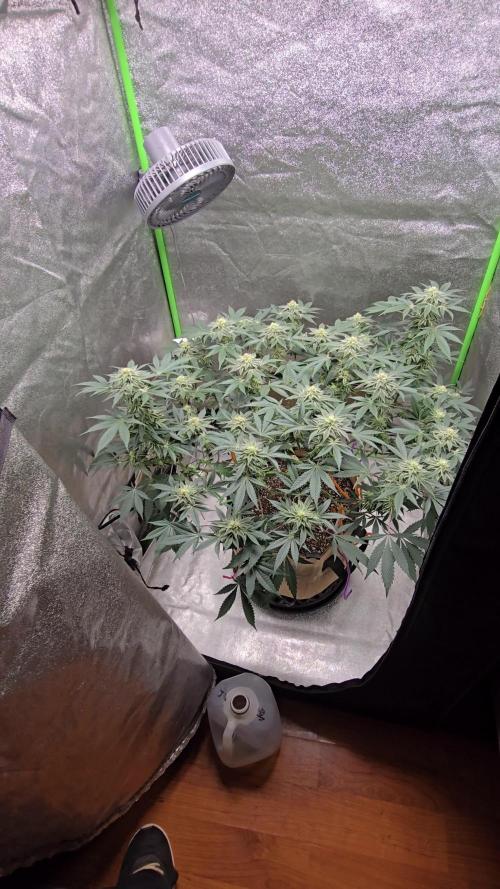
Ladies and gentlemen, hope all is well. As you can see, this lady is doing very good and it's getting super frosty even on the fan leaves =) .. big shout out to the homie @Grow4releaf for the bean.. my man ... anyhow, this girl is super frosty and I really look forward to what's to come... She is filling up the tent nicely... See you back in a week and until next time God bless and happy growing

Likes
7
Share




Likes
4
Share

@The_Doctor_Green
Follow
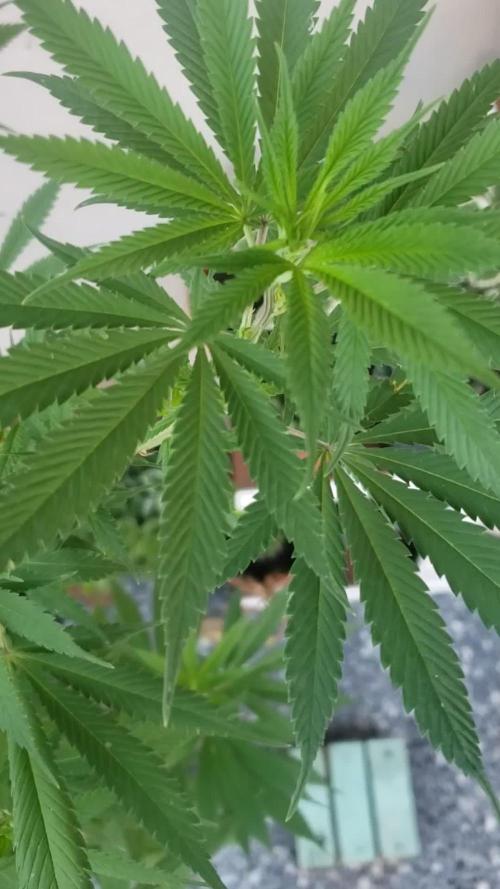
Hola a todos!! Esta laughing buda va creciendo bien, ha soportado todo el entrenamiento que le he dado😅😅.
Ya comenzó a mostrar las preflores, asique estoy muy emocionado,
La he regado con fertilizantes 1 dia, el resto de la semana solo lo he hecho con agua, con un ph entre 6.2 y 6.4
Creo que debería ponerla en una maceta más grande pero no tengo😒🤭😅.
Porque la riego todos los días y la maceta parece que no le hecho agua..
Realice una defoliacion en todas las ramas bajas, y también he sacado algunas ramas para dejarme unos esquejes😁. Espero que funcionen🙏😃.

Likes
3
Share


@PoshGrow
Follow
Welcome to GhostGrow Chapter One by PoshGrow!
🌳 Week #7
4th week of flowering. Somehow didnt documented alot of this week and last one in vids or pics... Need to smoke less i guess 🤦♂️😆
Scrog works perfect, plants are looking amazing and healthy, tought, fast growing.
If you wonder about my home made scrog net, its made from 18mm hot water pvc tube, some screws and rope 😅
Watering when needed, every other watering I used Fox Farm Big Bloom, Grow Big & Tiger Bloom