


Likes
Comments
Share

@Puff_TM_Dragon
Follow
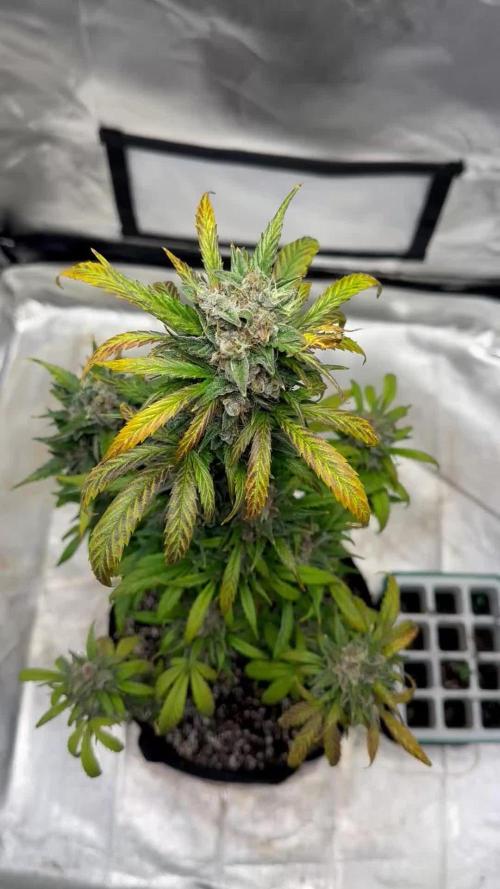
Before and after haircut. On vacation and it is doing well despite the neglect.

Processing
Likes
8
Share


@Munchiesfrommars
Follow
This one was super big and made me super happy.
Green crack probably is one of the best strains from classic old school
Perfect morning strain
Brilliant vibes and emotions all the time
Best antistress
Likes
26
Share


@KeiserOrganics
Follow
I have had some troubles this week. I have lost quite a few fish (not sure why) I am also showing signs of light burn/nutrient deficiency.
I had to put netting around the sides because they grew taller than they should have and started falling over from the weight.
The buds are filling out quite well, some of the hairs are starting to turn orange. It wont be long before harvest.


Likes
31
Share


@Mr_ZAF_Budz
Follow
Hello Ladies and Gentlemen😎
So my grow is coming closer to an end and so far it has not been so bad for a winter grow.
As of 3 days ago I completed the partial harvests to the LSD-25, Gorilla Cookies and the Girl Scout Cookies. The late blooming Gorilla Glue will go for another 2-3 weeks and the six shooter should get the chop next week marking 13 weeks since breaking ground.
I trimmed some of the 1st half of the partial harvest last night and the Gorilla Cookies seemed to have preformed well with nice sticky dense buds.
I hope you all enjoy the diary entry and happy growing ✌️🏼
Likes
39
Share


@King_Green21
Follow
Everything going well with this strain no problems and growth is very fast, they bounce back after any defoliation.
Day 41 - Gave them a haircut today and a good Biosys tea feed till run of will leave now till start of next week
Planning to add a drip irrigation feed system this week to make this a little easier. 🤞
Will update next Sunday now end of week 6 as will be busy adjusting and implementing the irrigation feed.

Likes
14
Share


@TheBulldozerSicily
Follow
Oggi ho scoperto una bruttissima cosa, le piante sono ermafrodita, peccato, questa doveva essere la seconda settimana di fioritura. Invece non continuerà, butto tutto e ricomincio un altra volta.
Non sono né felice né arrabbiato, questo fa parte del gioco... la prossima volta staró ancora più attento.

Likes
3
Share


At this point, you just do what you gotta do. Beautiful process of learning that comes to an end. Now we just have to wait until it's ready to smoke, maybe in a couple of weeks.

Likes
2
Share


Likes
56
Share


@BeefWellingtons
Follow
Well she is coming to the end. I looked at her tricomes with a 60x handheld microscope and she has about 90% milky and 10% clear, with the occasional amber one. I thought about pulling her today but the smaller flowers look like they need more time. Also, I read someplace that if you think you are ready to harvest, wait a week as there is a 2 week window and waiting one week will put you in it. I have been giving her just tap water ph to 5.8-6.0 with the occasional extra gallon flush as I can not empty my basin right now. The root picture looks a little brown, but that's just the lighting. I reached in and checked the roots, no slime or odd smell.
After I maneuver her around (bending her colas away from lamp) my hands smell like a pine air freshener or grass, (not like cannabis)? I have now supercropped 3 of her larger colas which can not be seen from the photos, but they are all the size of my wrist in circumference and about 6 inches long. While some have some toasted leaves, I think the buds will be fine. The extra cfls hanging on the outside have really made a difference in popcorn production! If I get an ounce out of this I am considering it a win, however I'm thinking it might be more, we shall see.
Thank you for following my grow. Comments and feedback has been wonderful and extremely helpful.

Likes
22
Share


@herbalistssword
Follow
Alright, another week. Ladies looking well.
Defoliated the Sugar Mama and Fastberry mid-week they took it well.
Ran out of Neem Oil last week and noticed a couple of small bugs flying around, no idea what they are so ordered some more neem oil and some stickies.
The other girls are all doing well, they are drinking much less than usual, I had a bunch of alfalfa seeds lying around so sprinkled them around some of the plants.
Upped the feed as they seemed to need it. EC is now going from a base of .6 to 2.4


Likes
10
Share


@Canadian_Steelheader
Follow
End of week 6, Day 42 and all is going well. Did another defoliation 3 days ago and they bounced back nicely again. Started to lower the light schedule to get ready for 12-12. Currently at 15 - 9 going to 14 - 10 for Saturday , 13 - 11. Sunday and 12 - 12 on Monday. Let’s go Flower, been waiting patiently for the switch.

Likes
17
Share

@PapaBlob
Follow
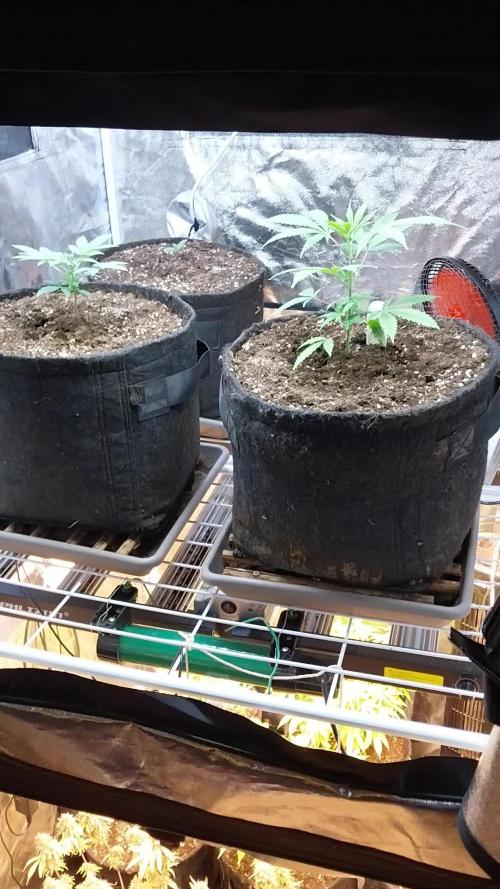
04/11 Bien voilà, voilà. C'est un démarrage très classique. Donc tout va pour le mieux. 😁👍
Bien sur, merci à Dutchfem pour ces jolies graines . On en trouve là : https://www.dutchfem.com/
Likes
14
Share


@Sadhus
Follow
Ph 6 , EC 2,4
25 °c jour 18 °c nuit , 70% RH constant, sa vide 60 litres d'eau en moins de 10 jours, sa sent fort le melon , un phéno particulièrement gelée très jolie ! ✳️
Likes
12
Share


@Mexicanwear
Follow
growing this one for a few months, but I dont know how to do the cure correctly - any help please ?

Likes
20
Share


@Mr_nugs_lover_David
Follow
She's looking extremely healthy enjoying lactobacillus made by me and florians living organics full of 10 types of mycorrizae,humic and fulvic ácidas,aminoacids,vegetable hormones and beneficial fungus,also guanokalong extract which is also full of life man! She's just an organic happy girl in a soil full of micro life,thank you everybody peace ✌️ 💚 ❤️ 💛

Likes
7
Share

@GoodKarmaCannabis
Follow
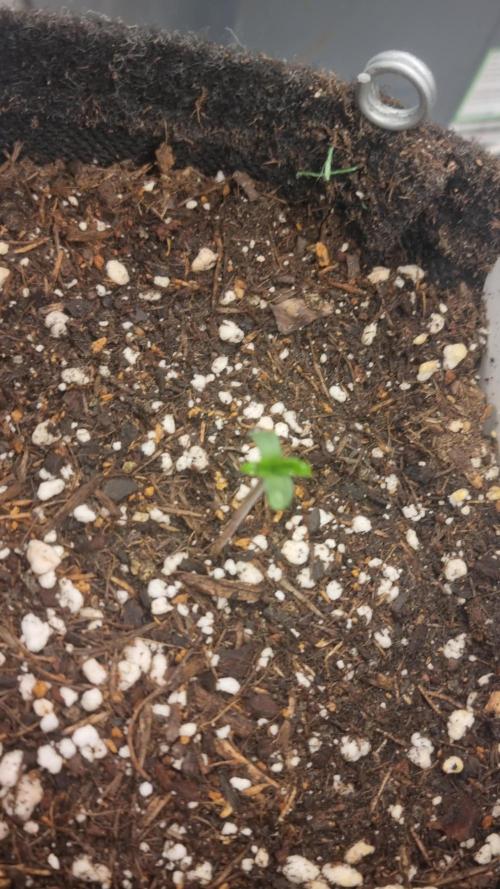
So far, they are all coming along nicely. During the seedling stage, it's all about building roots, so the foliage grows a bit slower at first. But the time-lapse really shows the progress that a lot of people miss in the beginning—it's definitely there.
Update
New Photos
_____________________________________________
Bisher kommen alle gut, die sämlingszeit werden wurzeln gemacht und erst noch langsam blattwerk aber die Zeitraffen zeigt den Fortschritt denn viele am anfang vermissen, der aber doch da ist.
Processing
Likes
29
Share


@Damonkey
Follow
Nice to watch growing OS. Kind of slow at first but then really picks up some pace nearing the end. 2 of the plants, the buds I will definitely keep. Really nice fat juicy buds. Smell great and taste great. The high is quite heavy✌️🏻😎✌️🏻And has a rapid onset. Good night-time smoke, if I smoked this during the daytime I’d probably just smoke all day and not move. I’ll press for Rosin in the next few days too , I’ll upload info onto here at a later date.
Again thanks to Barney’s Farm for supply the seeds, you are super generous guys and the rewards of growing are generous too. Thank you thank you thank you. What a great little
string of genes you have to add to your catalog.
I’ll also update a smoke report later when the bud has cured and is ready for real consumption 😍😍😍
Update. The bud really is looking feeling and smelling better every day of the cure, these little nugs gonna be insanely strong. It’s already a knockout smoke, in a month she’ll be rocking 100%
About 25% of the dry bud is awesome quality the rest is still very good


Likes
47
Share


@Ultraviolet
Follow
All content on this diary is for inspirational and educational purposes only. The ideas shared are not a substitute for professional advice. This diary/account is not officially affiliated with Alan Watts or his estate. All materials are used under the principles of fair use. I honor the legacy of Alan Watts by sharing his wisdom respectfully and with the intention of inspiring awareness and self-understanding.
2nd net is up. Early bud formations are promising. holding up to the extremes pretty well, some leaves taking minor damage, but overall, she is holding up, gave her 1 night at 50F see how she would react, stressful. Not advised as it messes with her metabolism, but I want to see if it triggers any anthocyanin response. Love to see her purp up but no signs yet. Remember, For every molecule of glucose produced during photosynthesis, a plant needs to split six molecules of water. This process provides the hydrogen needed for synthesizing glucose and other organic compounds, while oxygen is released as a byproduct.
Homework.
If Rubisco activity is impaired and it cannot properly function or regenerate its substrate, the plant's leaves are likely to turn a pale green or lime green, a condition known as chlorosis. Essentially, Rubisco activity is highly regulated and susceptible to various environmental and metabolic factors that can cause it to become inhibited, leading to an apparent failure in RuBP regeneration due to a lack of consumption.
Rubisco regeneration is intrinsically linked to nitrogen supply because Rubisco is a major sink for nitrogen in plants, typically accounting for 15% to over 25% of total leaf nitrogen. The regeneration phase itself consumes nitrogen through the synthesis of the Rubisco enzyme and associated proteins (like Rubisco activase), and overall nitrogen status heavily influences the efficiency of RuBP regeneration. RuBisCO is a very large enzyme that constitutes a significant proportion (up to 50%) of leaf soluble protein and requires large investments in nitrogen. Insufficient nitrogen supply limits the plant's ability to produce adequate amounts of RuBisCO, thereby limiting the overall capacity for photosynthesis and carbon fixation. Maintaining the optimal, slightly alkaline pH is crucial for the proper function and regeneration of Rubisco. Deviations in either direction (too high or too low) disrupt the enzyme's structure, activation state, and interaction with its substrates, leading to decreased activity and impaired RuBP regeneration. (Lime/yellowing)
Structural Component: Nitrogen is an essential building block for all proteins, and the sheer abundance of the Rubisco protein makes it the single largest storage of nitrogen in the leaf.
Synthesis and Activity: Adequate nitrogen supply is crucial for the synthesis and maintenance of sufficient Rubisco enzyme and Rubisco activase (Rca), the regulatory protein responsible for maintaining Rubisco's active state. Nitrogen deficiency leads to a decrease in the content and activity of both Rubisco and Rca, which in turn limits the maximum carboxylation rate, Vmax, and the rate of RuBP regeneration Jmax, thus reducing overall photosynthetic capacity.
Nitrogen Storage and Remobilization: Rubisco can act as a temporary nitrogen storage protein, which is degraded to remobilize nitrogen to other growing parts of the plant, especially under conditions of nitrogen deficiency or senescence.
Nitrogen Use Efficiency (NUE): The allocation of nitrogen to Rubisco is a key determinant of a plant's photosynthetic nitrogen use efficiency (PNUE). In high-nitrogen conditions, plants may accumulate a surplus of Rubisco, which may not be fully activated, leading to a lower PNUE. Optimizing the amount and activity of Rubisco relative to nitrogen availability is a target for improving crop NUE.
Photorespiration and Nitrogen Metabolism: Nitrogen metabolism is also linked to the photorespiration pathway (which competes with carboxylation at the Rubisco active site), particularly in the reassimilation of ammonia released during the process.
To increase RuBisCO regeneration, which refers to the process of forming the CO2 acceptor molecule Ribulose-1,5-bisphosphate (RuBP) during photosynthesis, the primary methods involve optimizing the levels and activity of Rubisco activase (Rca) and enhancing the performance of other Calvin-Benson-Bassham (CBB) cycle enzymes.
Biochemical and Environmental Approaches:
Optimize Rubisco Activase (Rca) activity: Rca is a crucial chaperone protein that removes inhibitory sugar phosphates, such as CA1P (2-carboxy-D-arabinitol 1-phosphate), from the Rubisco active site, thus maintaining its catalytic competence.
•Ensure optimal light conditions: Rca is light-activated via the chloroplast's redox status. Adequate light intensity ensures Rca can effectively maintain Rubisco in its active, carbamylated state.
•Maintain optimal temperature: Rca is highly temperature-sensitive and can become unstable at moderately high temperatures (e.g., above 35°C/95F° in many C3 plants), which decreases its ability to activate Rubisco. Maintaining temperatures within the optimal range for a specific plant species is important.
•Optimize Mg2+ concentration: Mg2+ is a key cofactor for both Rubisco carbamylation and Rca activity. In the light, Mg2+ concentration in the chloroplast stroma increases, promoting activation.
•Manage ATP/ADP ratio: Rca activity depends on ATP hydrolysis and is inhibited by ADP. Conditions that maintain a high ATP/ADP ratio in the chloroplast stroma favor Rca activity.
Enhance Calvin-Benson-Bassham (CBB) cycle enzyme activity: The overall rate of RuBP regeneration can be limited by other enzymes in the cycle.
•Increase SBPase activity: Sedoheptulose-1,7-bisphosphatase (SBPase) is a key regulatory enzyme in the regeneration pathway, and increasing its activity can enhance RuBP regeneration and overall photosynthesis.
•Optimize other enzymes: Overexpression of other CBB cycle enzymes such as fructose-1,6-bisphosphate aldolase (FBA) and triose phosphate isomerase (TPI) can also help to balance the metabolic flux and improve RuBP regeneration capacity.
Magnesium ions, Mg2+, are specifically required for Rubisco activation because the cation plays a critical structural and chemical role in forming the active site: A specific lysine residue in the active site must be carbamylated by a CO2 molecule to activate the enzyme. The resulting negatively charged carbamyl group then facilitates the binding of the positively charged Mg2+ion. While other divalent metal ions like Mn2+ can bind to Rubisco, they alter the enzyme's substrate specificity and lead to dramatically lower activity or a higher rate of the non-productive oxygenation reaction compared to Mg2+, making them biologically unfavorable in the context of efficient carbon fixation. The concentration of Mg2+ in the chloroplast stroma naturally increases in the light due to ion potential balancing during ATP synthesis, providing a physiological mechanism to ensure the enzyme is activated when photosynthesis is possible. At the center of the porphyrin ring, nestled within its nitrogen atoms, is a Magnesium ion (Mg2+). This magnesium ion is crucial for the function of chlorophyll, and without it, the pigment cannot effectively capture and transfer light energy.
Mg acts as a cofactor: Mg2+ binds to Rubisco after an activator CO2 molecule, forming a catalytically competent complex (Enzyme-CO2-Mg2+). High light + CO2) increases demand: Under high light (60 DLI is a very high intensity, potentially saturating) and high CO2, the plant's capacity for photosynthesis is high, and thus the demand for activated Rubisco and the necessary Mg2+ cofactor increases. Mg deficiency becomes limiting: If Mg2+ is deficient under these conditions, the higher levels of Rubisco and Rubisco activase produced cannot be fully activated, leading to lower photosynthetic rates and potential photo-oxidative damage.
Optimal range: Studies show that adequate Mg2+ application can enhance Rubisco activation and stabilize net photosynthetic rates under stress conditions, but the required concentration is specific to the experimental setup.
Monitoring is key: The most effective approach in a controlled environment is to monitor the plant's physiological responses e.g., leaf Mg2+ concentration, photosynthetic rate, Rubisco activation state, and adjust the nutrient solution/fertilizer to maintain adequate levels, rather than supplementing a fixed "extra" amount.
In practice, this means ensuring that Mg2+ is not a limiting factor in the plant's standard nutrient solution when pushing the limits with high light and CO2.
Applying Mg2+ through foliar spray is beneficial to Rubisco regeneration, particularly in alleviating the negative effects of magnesium (Mg) deficiency and high-temperature stress (HTS). While Mg can be leached from soil, within the plant it is considered a mobile nutrient, particularly in the phloem. Foliar-applied Mg is quickly absorbed by the leaves and can be translocate to other plant parts, including new growth and sink organs.
Foliar application of: NATURES VERY OWN MgSO4 @ 15.0g L-1 in a spray bottle. For those high-intensity workouts when 1 meal a day is just not enough!
Foliar sprays are often recommended as a rapid rescue measure for existing deficiencies or as a supplement during critical growth stages, when demand for Mg is high. Application in the early morning or late evening can improve absorption and prevent leaf burn. The plant was getting a little limey yellow in the centre. Shortly thereafter, she was back in business, green mostly regenerated. The starting point [of creativity] is curiosity: pondering why the default exists in the first place. We’re driven to question defaults when we experience vuja de, the opposite of déjà vu. Déjà vu occurs when we encounter something new, but it feels as if we’ve seen it before. Vuja de is the reverse—we face something familiar, but we see it with a fresh perspective that enables us to gain new insights into old problems.
Confidence is evidence... nothing more. You are confident because you have driven 10,000 times, you are confident because you have spoken 10,000 times. People think confidence is a feeling, but it's not. If you want more confidence, then you need to create evidence, take more shots, collect more data, build more experiences, take more risks; fail, confidence doesn't come first; it is the reward you get for doing the work. no one else wants to do.