


Likes
Comments
Share

@eldruida_lamota
Follow
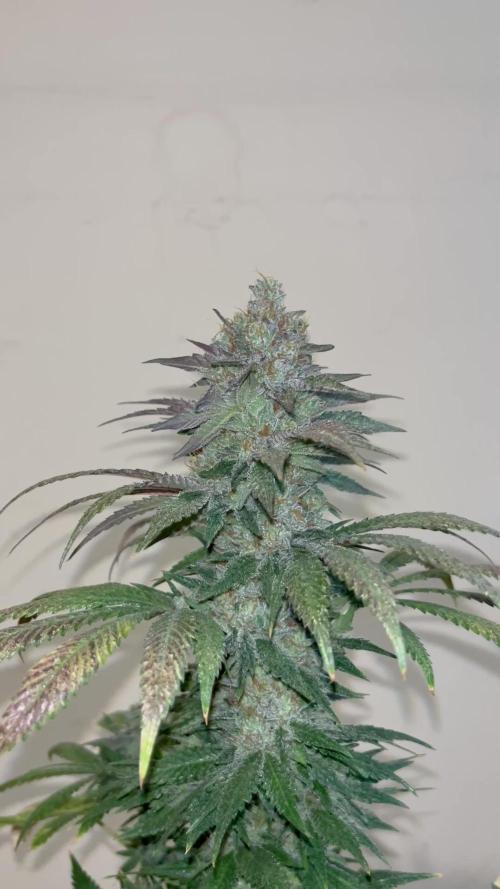
Que pasa familia, vamos con la cosecha de estas Purple Lemonade Fast Flowering, de FastBuds.
Por dónde empezar, las flores son poco compactas y van repletas de resina, tienen tonos por dentro muy bonitos, y tiene un aromas dulces y afrutados.
Es muy sencilla de cultivar, es de ciclo corto medio aunque también si le dais una semana más no pasa nada agradecer se agradece al final.
Mars hydro:
Code discount: EL420
https://www.mars-hydro.com/
Agrobeta:
https://www.agrobeta.com/agrobetatiendaonline/36-abonos-canamo
Hasta aquí todo, Buenos humos 💨💨💨

Likes
10
Share


@GoldenWeedGrower
Follow
📅 D43 - 26/09
📜New res and new light setup (only bloom lights): so T decreased and I need to take under control the H. Changed res with flowering mix. EC is 2 and pH 6. Removed SCroG net.
✍️ 2 EC
♒ 6 pH
🌊 10 L
📏 50 cm
📅 D44 - 27/09
📜 Posed a new SCroG net over the buds, only to give a support and guide the buds. As EC is raising, today I will give her only 2 L of water with only calmag and hydroguard. I purchased another lamp, that will arrive tomorrow with dimmers both on bloom and veg lights
✍️ 2,2 EC
♒ 6 pH
🌊 10 L
📏 55 cm
📅 D45 - 28/09
📜 Added of fresh water as the EC is raising too much. Let see if I've to add more later, trying to take EC under control. pH is quite stable , but it always goes decreasing and never raising. NEw lamp setup: I've purchased one that seems really good with 2 dimmers for both VEG and BLOOM lights. Very compact but powerful. Now I put bloom dimmer on 100% and veg dimmer on 80%. I'm not sure about the light time: the product sheet say 9-12/24 but now I'm 18/24. I will sniff around others diary to see what to do.
✍️ 1,8 EC
♒ 5,9 pH
🌊 9 L
📏 60 cm
📅 D46 - 29/09
📜 Added 1 other L. of fresh water and stabilize the EC 0n 1,5 and pH 6.1 I decided to keep the ligths on 18/24. Nothing else to report
✍️ 1,5 EC
♒ 6,1 pH
🌊 9 L
📏 65 cm
📅 D47 - 30/09
📜 So far so good. EC and pH are stable now and Lucy is healty and she's growing very fast.
✍️ 1,5 EC
♒ 6,1 pH
🌊 9 L
📏 65 cm
📅 D48 - 01/10
📜 Added 2 L with EC = 1,4 and pH= 6,1. Now the res is stable on EC 1,6 and pH 6,1. She's drinking about 2 liters and more every day. Tomorow I will report last day of 2nd flowerng week, So the harvest should be in the middle of November.
✍️ 1,6 EC
♒ 6,1 pH
🌊 9 L
📏 70 cm
📅 D49 - 02/10
📜 Last day of second week. Lucy is growing a lot and my tent is very small. I could consider to buy another tent, we will see. Added 2 L of water with only calmag and Hydro. I will keep the res untile the middle of next week.
✍️ 1,5 EC
♒ 6,1 pH
🌊 8 L
📏 75 cm

Likes
9
Share


@AustinRon
Follow
Week 10 - Flower Week 3
Ambassador Cartwright
Ambassador Cartwright by IRIE Genetics
Transition to Flower
Afterglow X Arise
(Clementine X Arise) X Arise
((Tangie X Lemon Skunk) X Arise) X Arise
______________________________________
Start of Week: Saturday 10 September 2022 AC3Q 57:F:3:1 to 17 September 2022
Summary:
Plant HeightBeginningOfWeek: [ 20, in]
Plant HeightEndOfWeek: [ 26, in] *TBD*
Temp: 74.8
RH: 70.7
VPD: 0.88 kPa # need to get into the 0.9 -> 1.1 Early Flower
Autofertigation - Enable
- [ ] Growtek RINGS Calibrated
- [ ] Growtek RINGS INSTALLED
- [ ] Growtek OPERATIONAL
LightSchedule: 12/12
amt: [ 1300, ml] #
period: [ 360, min]
frequency: [1, day]
times: { first: 2100, second: 0300 } # Auto Only!!! Otherwise 1.3 @ 2100
Environment:
EC Targets: #
rel.
|
abs (rel + source)
ECseedling:
[0.4, 0.5]
[ 0.7, 0.8]
ECearlyveg:
[ 1.1, 1.4]
[ 1.4, 1.7]
EClateveg:
[ 1.2. 1.5]
[ 1.7, 1.8]
ECearlybloom:
[ 1.1, 1.4]
[ 1.4, 1.7]
EClatebloom:
[ 1.3, 1.6]
[ 1.6, 1.9]
ECripen:
[ 0.8, 1.1]
[ 1.1, 1.4]
ECflush:
[ 0.0, 0.2]
Seedling Early Veg Late Veg Early Bloom Late Bloom Ripen Flush
400* – 500 1100 – 1400 1200 – 1500 1100 – 1400 1300 – 1600 800 - 1100 0 - 200
Fertigation Daily:
- {pid: 4, amt: 1300 ml, ec: 2.0, pHRange: [ 5.5, 6.5], time: 2130}
- {pid: 7, amt: 1300 ml, ec: 2.0, pHRange: [ 5.5, 6.5], time: 2130}
FertigationtheRootedLeafFullRatios: # Flower Week 3
Primer A: [ 10]
Primer B: [ 10]
CalMag Fuel: [ 6]
Silica Skin: [ 4]
Lush Green: [ 4 ]
Root Anchor [ 6]
Peak Bloom [ 4]
Resin Bloom [ 2]
Last Week of Foliar
FoliarMonday:
Solar Wind: [ 2.5, ml, 500, ml]
Silica Skin: [ 2.5, ml, 500, ml]
FoliarWednesday:
CalMag Fuel: [ 2.5, ml, 500, ml]
Lush Green: [ 0.63, ml, 500, ml]
FoliarFriday:
Solar Wind: [ 2.5, ml, 500, ml]
Peak Bloom: [ 0.63, ml, 500, ml] # Cease Begininning Flower Week 5
NEW WEEK
Week's Plan - (Added Veg week to allow SuperCropped Mains HEAL.)
- [ ] Install Growtek Fertigation w/ 8” Rings
- [ ] Run Feed Lines & Cut to Optimal Length
- [ ] Calibrate Feed
- [ ] Install Drain Lines, Cut to Optimal Length
- [ ] Notch Drain Tube end to eliminate vacuum against drain pan
_____
Sat 10 Sep 2022
AC3Q 57:F:3:1
# PM
- [x] As Below
Fertigation:
pid: 4, amt: [ 1300, ml], ec: 2.2
pid: 7, amt: [ 1300, ml], ec: 2.2
LightIntensity: [ 824, µMol/m2/s2]
LightDLI: [53.4, mol/m2/d]
Sun 11 Sep 2022 # AM IS 9PM Local TIme, the Night BEFORE.
AC3Q 58:F:3:2
NOTE:
- We’ve added a couple inches removing all restraints, and having flipped last week. As frequently observed, Both plants were clearly vibrant and vigorous after a nights sleep after restraint removal.
- Zymes/Bonners/Ascorbic Acid - Soil surface, container sides, and container bottom (exposed roots)
- [x] As Below
Fertigation:
pid: 4, amt: [ 1200, ml], ec: 2.4
pid: 7, amt: [ 1000, ml], ec: 2.4
# AM
- [x] Complete Previous Weeks GrowDiaries
- [x] As Below
Fertigation:
pid: 4, amt: [ 1200, ml], ec: 2.4
pid: 7, amt: [ 1200, ml], ec: 2.4
# PM - None
Mon 12 Sep 2022
AC3Q 59:F:3:3
# AM
- [x] As Below
Fertigation:
pid: 4, amt: [ 1200, ml], ec: 2.4
pid: 7, amt: [ 1200, ml], ec: 2.4
- [x] As Below
FoliarMonday:
Solar Wind: [ 2.5, ml, 500, ml]
Silica Skin: [ 2.5, ml, 500, ml]
Tuesday 13 Sep 2022
# AC3Q 60:F:3:4
# AM
- [x] As Below
Fertigation:
pid: 4, amt: [ 1200, ml], ec: 2.4
pid: 7, amt: [ 1200, ml], ec: 2.4
Wednedsay 14 Sep 2022
# AC3Q 61:F:3:5
#AM
- [x] As Below
Fertigation:
pid: 4, amt: [ 1300, ml], ec: 2.2
pid: 7, amt: [ 1300, ml], ec: 2.2
- [x] Apply as Below
FoliarWednesday:
CalMag Fuel: [ 2.5, ml, 500, ml]
Lush Green: [ 0.63, ml, 500, ml]
Thursday 15 September 2022
# AC3Q 62:F:3:6
# AM
- [x] As Below
Fertigation:
pid: 4, amt: [ 1200, ml], ec: 2.2
pid: 7, amt: [ 1200, ml], ec: 2.2
Friday 16 September 2022
# AC3Q 63:F:3:7
# AM
-
# PM
- [x] As Below
Fertigation:
pid: 4, amt: [ 1400, ml], ec: 2.4
pid: 7, amt: [ 1400, ml], ec: 2.4
_______
Saturday 17 AC3Q 64:F:4:1
CEASED FOLIAR Application: 2022-09-17T16:02:06-0500 #
- [X] Complete Week’s GrowDiaries

Likes
23
Share


@elementhc
Follow
The Ethos photos have been flipped to flower a week or so ago. Took 12 clones.
Gsc Auto will be ready to harvest this week. Others still have a few weeks.


Likes
39
Share


@SirBudAlotts
Follow
I broke the mainstem performing LST😬🙄😳...Idiot 🎭...
Repaired her with some tape, Guess no more LST training for her hehehe..
Actually, she started performing better after the break 🤷♂️...So perhaps it was a blessing 🙌.
No nutes,No problems
Likes
30
Share


@WeWantItToGrow
Follow
Simply put I am so very pleased with the way this plant has performed my only worry is how to properly dry and cure this magnificent specimen

Likes
18
Share


@Ganja_Victoria_Aus
Follow
Unfortunately due the smell. I spray organic eco oil. Some nasty little animals to avoid. GDP stating to get some nice rainy water. All Cloudy, few orange one appear. ❤️


Likes
8
Share


@Elixire
Follow
Flipping the light to 12/12 start to see some stretching.
They looking good but the canopy is not actually well leveled.
Lets wait for them to completely stretch
Likes
36
Share


@BrigadeDesTerps
Follow
Que dire mise à part que se strain est tous simplement magnifique ? Il porte bien son nom, il commence à être bien Frosty! Et la couleur violet commence à apparaître de plus en plus! Les bud sont beau et dégagent une belle odeur fruité, le plant a une sacré couverture résineuse, je pense qu’elle pourrais être parfaite pour faire des extraction!
Cette semaine je lui ai donné un thé de compost oxygéné, on va voir comment elle va réagir.
Recette du tco pour 20 litres. (Grammes : gr)
50gr biochar
250gr zéolite
3gr granulé Micro-Organisme IT45
10gr pollen d’abeilles
10gr levure de bière
3gr endomychorize
10gr consoude
20gr vers de farine
10gr cendre coque de ricin
12gr ortie microniser
15gr Kelp
10gr spiruline
10gr de cbd living soil
20ml de miel liquide
30ml de mélasse
20ml d’acide humiques et fluvic
Mettre tous les ingrédients (sauf la mélasse ,l’acide h/f et le miel) dans un filtre 400micron, le placer dans un seau avec de l’eau (10litres). Rajoutez le miel et 10ml de mélasse
Y mettre un micro bulleur alimenter sur une pompe à air et faire oxygéné le mélange pendant 24h. Rajout de 10ml de mélasse après 12h le début de la mise en route de la pompe.
A la fin des 24h rajoutez le restant de mélasse et d’acide h/f, mettez y en plus 10litres d’eau au mélange.
Reste plus qu’à arroser!
Pour la Frosty j’y ai incorporé 7litre de mélange
La veille j’ai préparé le pot à l’arrosage avec 500ml d’eau et 2gr de Bacillus IT35 Amyloliquefaciens X5
Bacillus Amyloliquefaciens : rhyzosphère, probiotiques. Aspersion et arrosage. Utilisable pour toutes cultures.
La bactérie Bacillus Amyloliquefaciens se fixe dans la rhizosphère en se nourrissant des exsudats racinaires. En contrepartie, elle stimule la croissance racinaire en sécrétant des métabolites de croissance et solubilise le phosphore en sécrétant des phytases (enzymes).
Effet probiotique consistant en l’utilisation de micro-organismes bénéfiques pour la nutrition et la santé des plantes.
La spiruline, le plus riche et le plus complet des amendements organiques
La Spiruline est une algue aquatique connue comme complément alimentaire, la Spiruline est aussi un amendement organique et écologique très complet.
D'une grande qualité nutritive, elle apporte à vos plantes une quantité de nutriments, dont l'azote, phosphore, potassium, minéraux, acides aminés, vitamines, chlorophylle et protéine.
Le charbon végétal actif est capable d’absorber jusqu’à cinq fois son poids propre en eau ainsi que les éléments nutritifs qui s’y trouvent. Il joue ainsi le rôle de catalyseur et d'amplificateur pour les fertilisants traditionnels, qu'ils soient d'origine organique ou minérale. Ce pourquoi il est idéal pour activer un sol et pour les thés de compost oxygénés.
Le charbon végétal améliore la diffusion et la disponibilité des éléments nutritifs dans le sol et offre des conditions propices au développement des micro-organismes.
Le Biochar peut être introduit dans une grande variété de sols. Il est particulièrement efficace dans les sols pauvres, difficiles et acides.
Pour faire agir rapidement et efficacement sa capacité d’amendement, le charbon végétal est enrichi et biologiquement activé avec des micro-organismes. Le Biochar se comporte ainsi comme un structurateur et un activateur dans le but de valoriser les sols.
Composition :
• Charbon végétal actif 31%
• Matière organique 33%
• Matière sèche 75%
• C/N : 17
• PH : 7,2
• Azote (N) : 2,1 % dont 1,2 % azote organique
• Phosphore (P205) : 0,74%
• Potassium (K20) : 1,18%
• Calcium (Ca) : 6,8%
• Magnésium (MgO) : 0,65%
Le pollen est l'ingrédient de base de la fabrication du miel par les abeilles. Riche en vitamines et minéraux, il est qualifié « d'aliment parfait », y compris pour les plantes !
Les zéolithes sont des roches cristallines, présentant des capacités d'adsorption particulièrement importantes vis à vis des polluants que l'on rencontre dans l'eau et dans certains liquides, ainsi que dans l'air et les gaz. Elles sont extrêmement poreuses comme les charbons activés et elles peuvent être chargées électriquement pour opérer comme des échangeurs d'ions.
La zéolithe est un produit naturel qui respecte notre environnement. Utilisé dans le milieu industriel depuis de longues années déjà, ce minerai aux propriétés filtrantes particulières commence à se vulgariser dans le domaine de la piscine privée, de l'aquariophilie, des bassins d'agrément, de la récupération des eaux de pluie, ou encore de la culture des bonsaïs et autres plantations diverses par exemple...
4 points techniques majeurs :
- Grâce à leur propriété hydrophile, les zéolithes peuvent adsorber l'eau jusqu'à 30% de leur poids total et sans aucune variation de volume : pas de gonflement en présence d'eau ni de craquement en cas de déshydratation comme certaines argiles. Les zéolithes sont d'ailleurs de puissants agents anti-mottant (anti-agglomérant). Cette propriété est très appréciée dans le cas des terrains de golf et autres aires de jeux.
- Les zéolithes ne captent pas l'eau de façon irréversible, elles se comportent comme une réserve au voisinage des racines. Celles-ci peuvent capter l'eau en fonction de leur besoin. Les zéolithes permettent ainsi de réduire les besoins d'arrosage jusqu'à 35 %.
- Une zéolithe se comporte comme une "Zone de Stockage" qui retient l'azote et les éléments minéraux nutritifs au voisinage des racines et les relâche lentement en fonction des besoins de la plante. Cela se traduit par une croissance harmonieuse mais rapide du végétal.
- La capacité d'adsorption et l'énorme rapport surface/volume des zéolithes, vont permettre à la fois la rétention de la solution du sol et une bonne oxygénation au voisinage du système racinaire. Les zéolithes favorisent donc l'organisation biologique des sols en contribuant au développement de la micropopulation. L'apport en nutriments (N, P, K) est réduit de 20 à 25 %. Ces derniers, adsorbés par la zéolithe, sont beaucoup moins sensibles au lessivage et à l'évaporation.
Composition minéralogique :
* Chabasite 70 %
* Phillipsite 2 %
* Feldspath 5 %
* Augite 3 %
* Illite - Mica 2%
Analyse atomique:
* Sio2 52 %
* AL2o3 17 %
* CaO 5,7 %
* K2O 6,1 %
* MgO 2 %,
* Na2O 0,6 %
* Fe2O3 3,6 %
Amendement calcaire, dolomie et gypse avec préparation microbienne à base de Bacillus Amyloliquefaciens IT45 et Saccharomyces cerevisiae LYCC6420
Formulation : micro granulés (1 – 1,6 mm) à base de rhizobactéries favorisant la croissance des plantes qui se multiplient et colonisent rapidement la zone des racines, et de levures Saccharomyces cerevisiae souche LYCC ayant un effet probiotique.
Les PGPR produisent des enzymes qui solubilisent le phosphore à partir de complexes inorganiques et organiques dans le sol et stimulent la croissance des racines efficaces augmentant ainsi la zone d'interception des éléments nutritifs. Les levures LYCC permettent une occupation de la rhizosphère par une flore bénéfique.
Composition :
• Matière sèche : 96,8%
• Matière organique : 91,5%
• N total : 6,6% dont N soluble dans l'eau 0,17%
• P total : 2%
• K total : 1,7%
Micro-granulés :
• Oxyde de calcium (CaO) total : 30%
• Oxyde de magnesium (MgO) total : 7%
• Anhydride sulfurique (SO3) : 13%
La levure de bière est une matière vivante qui permet un meilleur fermentation pour les thés de compost oxygénés notamment conseillé pour accompagner les croissances ou apporter un gros coup de pousse pendant la floraisons.
La levure stimule la vie des sols également à l'arrosage direct en apportant tout aussi bien que dans le TCO sa population l'espèce micro-bactérienne positive pour votre sols ainsi que des oligo-éléments et diverse vitamines.
Composition :
• 2,8% (N) total dont 1% (Norg),
• 2,3% (P205)
• 1,6% (K20)
• 35% de MO
• C/N : 8. PH : 8,4.
Sous forme de poudre mouillable. Il contient des spores du champignon mycorhizien Rhizophagus Irregularis MUCL57891 avec des levures inactivées spécifiques. 2000 spores/gramme d’endomycorhize Rhizophagus Irregularis MUCL57891 et Saccharomyces Cerevisiae LYC6420 inactivée. Se connecte efficacement au système racinaire et forme un vaste réseau souterrain de filaments, qui agissent comme des extensions pour atteindre les nutriments et l’eau au-delà de la rhizosphère
Composition :
• Poudre contenant 2000 spores/g. d’endomycorhizes Rhizophagus irregularis
La Consoude (Symphytum Officinale) est une plante présentant de nombreuses propriétés.
Particulièrement riche en Potassium (K) organique, la consoude est une alliée idéale pour les périodes de floraison. La consoude a tout pour plaire : riche en vitamine B12, elle agira également comme stimulateur racinaire, mais aussi comme biostimulant cellulaire, grâce aux alcaloïdes, aux allantoïnes et jusqu'à 30% de protéine !
100% déjection de vers de ténébrions.
Très riche en microorganismes, le guano de vers de farine est une matière directement composté par les vers. En effet, c'est bien la digestion de matières végétales par des larves, insectes ou autres arthropodes qui valident le processus de compostage, que ce soit en zone de production de cultures d'insectes, pour le compost maison ou la dégradation de litière forestière.
Les bactéries et autres champignons obtenus grâce au système digestif de nos vers, permettent la dégradation accélérée des éléments nutritifs dans vos supersoils, et les symbioses permettant l'assimilation des éléments nutritifs.
Cette bio-activation intense mettra dans vos sols, à la disposition de vos plantes, un panel tellement varié de nutriments frais qu'il nous est aujourd'hui technologiquement impossible de pouvoir tous les nommer et de les compter.
Le guano de vers de farine fournit une grande polyvalence. Très équilibré, il s'utilise en entretien ou en apport ciblé seul ou en complément de d'autres amendements ou fertilisants organiques.
Il agit comme un puissant activateur de sol et/ou de substrat.
Cendre coque de ricin NPK 0,1-18,6-16,5. 0,1% (N-Azote), 18,6% (P205-Phosphore), 16,5% (K2O-Potasse), 11,7%(Ca0), 9,1 (Mg0) - Origine : Inde
ACTION SOL • rend rapidement accessible au sol Phosphore, Potasse, Magnésium et Calcium.
ACTION PLANTE • Apport aux stades agronomiques propices. • Produit riche en éléments fertilisants : combinaison NPK 35%. • Régularité de l’apport, milieu et fin de floraison. . Favorise la sénescence.
Analyse chimique :
• NPK 0,1-18,6-16,5
• N-Azote 0.1%
• P205-Phosphore 18,6%
• K2O-Potasse 16,5%
• CaO-Calcium 11,7%
• MgO-Magnésium 9,1%
Ortie bio micronisée Stimule la vie du sol et la végétation.
Composition :
• 2,8% (N) total dont 1% (Norg),
• 2,3% (P205)
• 1,6% (K20)
• 35% de MO
• C/N : 8. PH : 8,4
KELP poudre
ascophyllum nodosum
- amendement sol
Croissance et floraison - Meilleure germination - Meilleur développement racinaire Meilleure assimilation - Résistance aux stress osmotiques - Augmente la production de chlorophylle = plantes plus vertes = lumière mieux captée - Lutte contre le stress osmotique - Développement des Micro-Organismes dans le sol – Riche en vitamines, fer, iode, oligo-éléments, hormones de croissance auxines et cytokinines - Idéal en épandage et pour les thés de compost oxygénés.
Important : notre Kelp est un goémon noir mais il n'est pas le varech bien moins fertile de la même famille qui est l'algue qui pullule et pollue la Bretagne, notre algue pousse uniquement à plus de 50 mètres de fond dans les grands courants froids au large de la Norvège.

Likes
36
Share


@JUSTOUKV
Follow
So was harvest week some buds are really big hope quality of smoke will be same too happy growing
Likes
16
Share


@osmrducks
Follow
Day 57: Girls looking good and healthy. Got the HLG turned up 100% pumping 500 watt to em! We shall see. Still only given around 500ppm nutes.
Day 58: Got mostly cloudy with just a couple amber it looks like. I'm thinking I need to start flushing. Albeit, only on one plant. I will wait a few days more until I make a decision.
Day 59: Still looking beautiful! Buds are getting thicker! Decided I will give MOAB till week 10 and check the tric's at that time. Prob start flushing at that time. Only time will tell.
Day 60: Girls looking good. 👊 Not gonna lie, getting nervous as I do not want to cut em too soon or too late. This is a tough spot. The one has a ton of red hairs. It looked as if there was just a couple of amber that I found the other day. I was looking on the outside of the buds, also. So I know the inside is where I need to look. Just not wanting to jack with them too much. I will check again at end of week.
Day 61: Busy. No updates.
Day 62: These girls are starting to smell amazing!! I don't see any noticeable growth here lately. I'm hoping they start to bulk even more though as I think I am still seeing some clear trichomes.
Day 63: Welp, all is well and no new updates. I been feeding pretty heavy so I will back off and just water tomorrow.
Likes
7
Share


@mn_home_grown
Follow
Well, not much has changed, so it's kind of like 'same same but different' around here. The plants are still vibing, doing their thing, just with a little more oomph this week.
Likes
29
Share


@Twizz
Follow
Weather has been rainy and windy so she has been living under a shelter at nights and most days. The climate is getting moisty here so i decides to remove some fanleafs again to keep a good airflow. Buds are getting bigger and they make me wanna sing
' I like big buds and i can not lie..'
Likes
26
Share


@1Right_Angle
Follow
Feb 19th,
- week 9 of flower sees a lot of subtle changes going on. The smell at the door is one, and it’s becoming a very dense and dark odour. Fruit-like up close.
- Molasses doubled as root boosters get removed and Calimg has only 1 feed left, tonight.
- Mar 1 is the tentative flush, first day of week 11 in flower.
Those will be a long couple of weeks, feeding h20 & sugar only
- noticing the stems of Fan leaves are turning Red/Crimson on L plant. A few are in the R as well.
** question asked about Red Stems **
23rd
- noticing a definite increase in the Trichomes of the Buds, under the UVB (pics tonight).
There are simply more now and it’s kinda obvious when side by side. Lite spill from uvb is falling on the left plant as well, but not from 14”
- feed tonite will include a bit of CaliMag once again moving forward and a lingering taste of Medi-One.
- Trichomes were checked today. As happy as I was to see a few Amber ones. They were very wide-spread with most of the others still 50/50 clear and cloudy.
- Based on todays Trichome check; hoping to flush ~ Mar 7 now. That will be the end of 11 complete weeks of Flower. FYI: Breeders expectation "11-12” weeks. Happy to see it linger a bit, diet, humidity and lighting changes have been incremental throughout. How quickly the next changes happen ie: clear to cloudy etc., I have no idea.
Would love to see ~ 10% Amber, just enough to say it’s Very ripe. ( Not in any way thinking of couch-lock lol )
- literature & product labels on Humic Acid recommend usage throughout Veg & Flower... just Not the last 3 weeks. That rules this batch out... So the next batch(s) get introduced.
- Macro shots tonight of the Buds under the UVB... cannot wait.
** found 1 bud on the R plant, that had quite a bit of Amber showing. Nowhere to be seen in the L plant, but it looks like a high concentration of Cloudy Trichomes on the L regardless.
One more serious search tonight of the R plant and it may just be time for a rinse.
Surprised to see so many Ambers, alone on this one bud.
Pics uploaded ! re: 24th a.m.
Feb24th,
- when the lights came on this evening, I did another thorough check on both plants and there were more Amber trichomes found. Ready or not, both plants were Thoroughly flushed.
- Flush aid used in the process.
- 10 Litres of Water was mixed with Molasses / Rezin as the first liquids poured into the plants, after the Flush...
- when it came right down to it, the sudden appearance and then rapid spreading of the Amber Trichomes made it an easy call, to flush both plants.
Thoughts on the amount of white hairs left... they have a couple weeks to get their shit together... if I can get a couple weeks of flushing-in, that’s a definite bonus.
25th
- humidity spike in the Tent. doors are cracked and a floor fan has been added for extra air flow. Exhaust fan increased...
26th, no liquid to remove from the plants btm Trays, but still showing a high humidity. R.H. coming down slowly, aimed the fans at the fabric pots... doors cracked etc.
* why mess around, hooked up the dehumidifier... R.H. dropping, end of issue

Likes
17
Share


@MoneyGrowup
Follow
Transplanted into a 3 gallon fabric pots. Cut off couple of the dried tips off the blue gelato, not sure what's up with it, the other two girl got topped left the gelato alone you can see why other than little blue everything is looking as I expected


Likes
6
Share


@BLAZED
Follow
Week 11 (7-4 to 13-4)
7-4
Temps: 18.1 to 23.3 degrees
Humidity: 52% to 61%
Watering: Both 1000 ml. EC: 1.4
8-4
Temps: 18.2 to 23.5 degrees
Humidity: 52% to 62%
Watering #1: 1000 ml. #2: 1500 ml. EC: 0.4
Light is at 60% strength with a distance of 55 cm.
9-4
Temps: 18.2 to 23.1 degrees
Humidity: 58% to 64%
Watering: Both 1000 ml. EC: 1.4
10-4
Temps: 18.1 to 23 degrees
Humidity: 57% to 67%
Watering: Both 550 ml. EC: 0.4
Opened an extra airduct of the tent.
11-4
Temps: 18.4 to 23.1 degrees
Humidity: 58% to 67%
Watering: Both 1000 ml. EC: 0.4
12-4
Temps: 19.2 to 24.4 degrees
Humidity: 57% to 66%
Watering: Both 1000 ml. EC: 1.4
13-4
Temps: 20.9 to 24.7 degrees
Humidity: 58% to 65%
Likes
5
Share


@Northern_Ent
Follow
Sep 24: starting new diary to accommodate 30 week limit on Growdiaries.
Buds are nearly ready but weather is good so will keep her going a bit longer. Nothing harvested from this plant yet but the clones are mostly harvested and produced great dense buds. Fantastic plant.
Sep 28: took 995 g wet in first round which might be half of the plant, but I think I’ll end up over 2 kg wet which means 454 g dry is possible. Come on, I still haven’t had a one pound plant.
Either way, this is the best growing strain I’ve ever tried, the buds are great and trimming is a total breeze. 👍👍

Likes
25
Share


@pifflestikkz
Follow
Day 22
22/07/24 Monday
Nothing new to report. Starting to see them beautiful fans appear that's all 😁✌️
Day 23
23/07/24 Tuesday
Feed today, giving them straight all nutes Inc flowering nutes.
I will update the dose as they grow and develop a bigger hunger.
(Not sure what's wrong with Overdose #2, bit mutated, we'll see how she gets on 😅)
Video updates 👌💚
Day 26
26/07/24 Friday
De-chlorinated watering pH 6 with 5ml calmag to 5L water.
Watered each with 250ml and had small run off.
I will continue to feed/water with small run offs to help prevent salt build ups.
Video update.

Likes
9
Share


@wheedtobeus420
Follow
Day 32 she’s exploded and the lady I was most excited to get going. I mean who doesn’t love a Russian 👌🏻 Can’t wait to watch her grow. She took very well to the leaf tucking and loving touches.
Likes
45
Share


@Dingle
Follow
Just water again this week to help with the flush along with some light defoliation.
The majority of the trichomes look mostly cloudy now and I’ve started to see a very small amount of them turn amber so all going well I will be turning the lights off for 48 hours some stage early next week.
The buds have developed really well from the bottom up over the last couple of weeks and are stacking up nicely.
The smell has also seriously increased this week. 😳