


Likes
Comments
Share


@DigiDom
Follow
Not much do do this week. Training is mostly done. Don't really have anything to trim as was doing it as I went along. Just need to keep an eye on her. She's starting to flower but it looks like dimming the light affected the stretch.
Day 37 - some mild defoliation
Day 39 - looks like she's done with her stretch but hopefully she'll grow a bit more.


Likes
29
Share


@Ukfarmer420
Follow
Hi guys
So here is my 10 plant auto run from fastbuds 420 genetics. I will update weekly on this one. So I'm going to be using 3 gal fabric pots filled with biobizz lightmix soil.
I will be putting into solo cups after the 18 hour soak then transferring them to there for ever pots. Im looking forward to this run and trying to get 20oz + dry and cured out of this 4x4 tent grow.
Part 2 of germination in operation in solo cups with root juice. Hopefully 10 out of 10 pop.

Likes
19
Share


@eldruida_lamota
Follow
Bueno, empezamos por el final familia.
Gorilla girl, me parece una cepa BRU-TAL , ya partiendo de esa base, mi error, creo que e cometido , es poner estos ejemplares en macetas de 5L, que tonto... mínimo recomendado 7L y a ser posible 11L
Otro error fue no dejarlas una semana más. pero, escasez. (intentaremos curarla un par de semanas).
Cepa con flores muy compactas, hay bastante separación entre nudos pero compensa las flores de verdad.
Sabor muy dulzón a mi me recuerda a melón , es un pepino recomendado para amantes de la hierba que llevan tiempo en esto, un colocón muy fuerte, ahora mismo estoy bajo los efectos de esta vaina, aseguro que con cada frase, leo varias veces y detenidamente por que válgame.

Likes
7
Share

@moe_mr_x
Follow
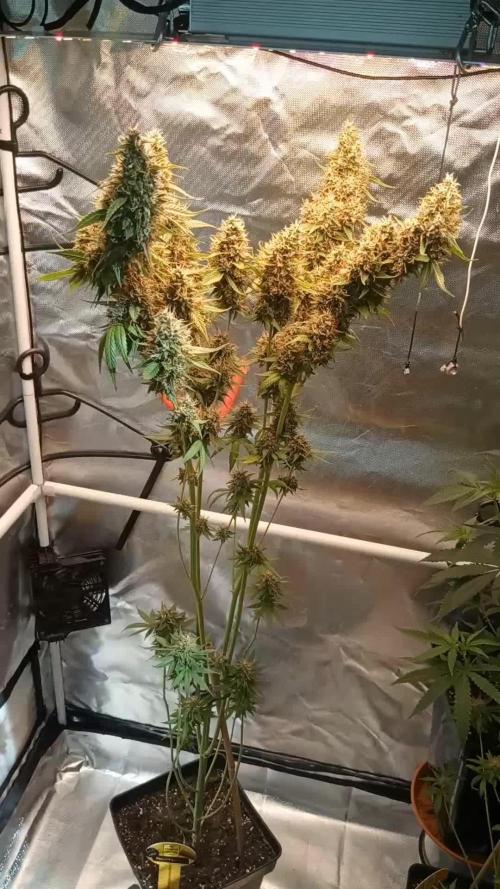
Tag 100 ist vollbracht und der 65.Blütetag ist erreicht. Die Lady ist bereit zur Ernte, denn alle Trichome sind milchig und etliche bernsteinfarbend, so wie ich es mag. Bin total zufrieden mit dem Ergebnis dieser Lady, so macht anbauen Spaß.


Likes
3
Share

@Gympaddy
Follow
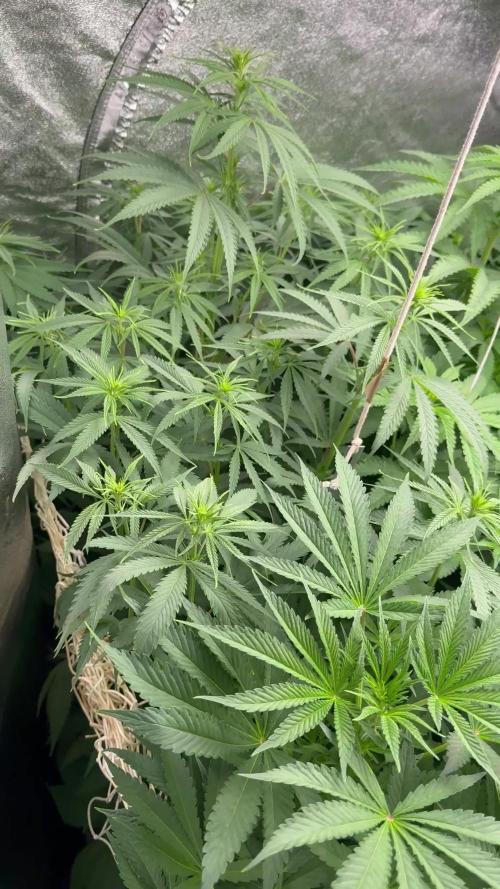
The ladies are growing like crazy... I don't mind, but it's time I tidied up a bit next week... I think quite a bit of foliage will have to go.

Likes
19
Share

@MistaOC
Follow
07.07. F9
There’s a moment in every grow when you stop looking at individual plants…
…and start looking at a canopy.
I think this week was that moment.
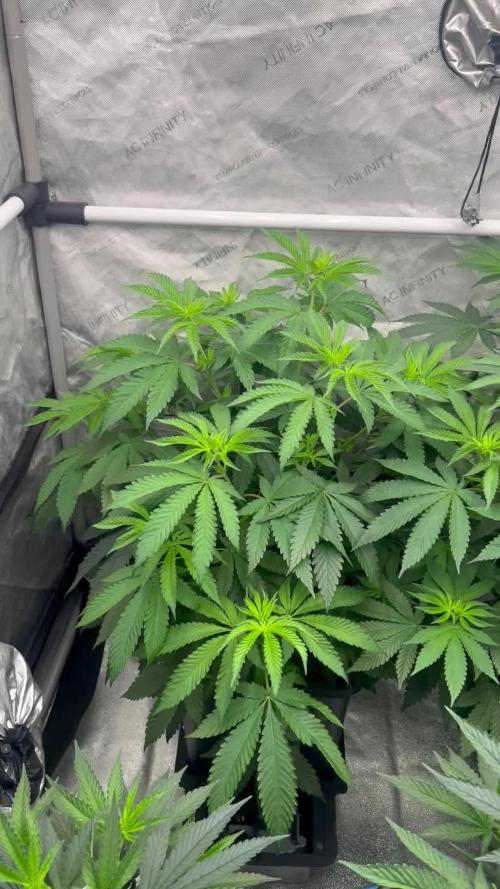
Four days can make a surprising difference once the stretch begins. Every morning the tops seem to have climbed a little higher, every evening the canopy looks a little fuller. The topping has completely changed the way these girls are growing. Instead of racing upward with one dominant stem, they’ve become a team.
Every branch wants a seat in the front row.
Standing in front of the tent now feels different than it did a couple of weeks ago. Back then I was still shaping the plants. Now they’re shaping themselves.
That’s probably my favorite part of growing.
You spend weeks making small decisions—when to transplant, when to top, when to wait instead of interfering—and then, almost overnight, everything starts making sense.
The AutoPot system has settled in beautifully. The plants are drinking on their own schedule, the roots have obviously found what they were looking for, and all I really have to do now is observe and guide.
Less correction.
More trust.
The canopy is filling in exactly the way I’d hoped. New growth is vibrant, side branches are stretching with confidence, and the structure is becoming surprisingly even. Looking across the tent, it’s hard to pick a single leader anymore.
That’s a good problem to have.
The next challenge won’t be growing bigger.
It’ll be growing smarter.
As the stretch continues, airflow, light penetration and canopy management become far more important than simply adding more leaves. Every decision from here on will influence what these flowers look like a month from now.
This phase always reminds me that great harvests aren’t created during harvest week.
They’re created right now.
One careful decision at a time.
And if these first nine days of flower are any indication…
The Tropical Ice Cream One is finally starting to reveal what she’s capable of.
Likes
Comments
Share

@dinosdarko
Follow
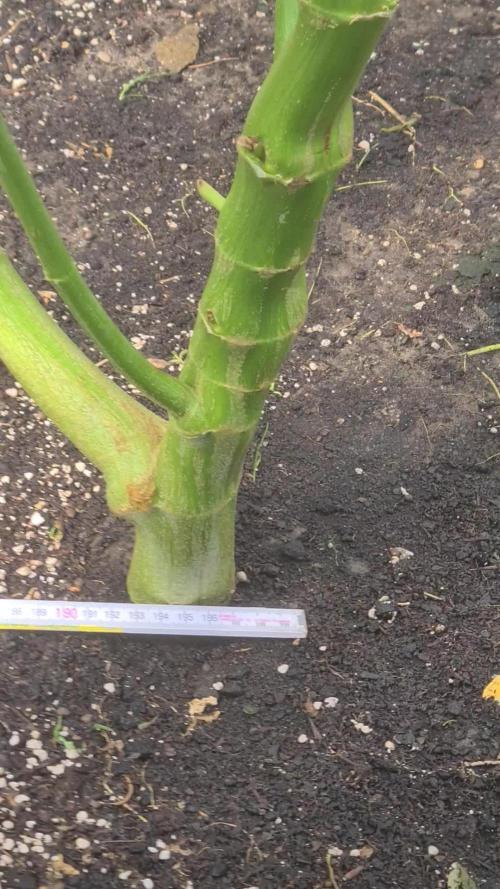
Sie ist kurz vor der Blüten was kann ich bloß sagen einfach wunderschön

Likes
60
Share


@Professor_Chaos
Follow
Beginning of week..
I went ahead and bumped the TDS to 1000 PPM this week. I don't think I'm going to go much higher than that. Usually don't have to.. Hopefully that's not too much.. I also started adding a bloom booster from Advanced Nutrients called Kushie Kush.. It works great for all strains tho lol. So the runoff is still acting up.. But it is getting better... Slowly. I emailed General Hydroponics on the issue a few days ago and they have not gotten back to me yet... Ugh. But going in: 1000 PPM.. Runoff: 700 PPM.. That was this morning.. Still have not given her plain water yet.. Just been feeding every watering.. Not really any signs of issues right now. A couple leaves are a little yellow (literally 2).. Another couple have some spots (maybe 4 or 5 leaves).. But other than that she is happy, healthy and smelling like a fucking champion! Seriously fucking delicious.. And to think the smell is supposed to warn off predators.. Hah! Good luck with that!!! Barely 8 days of flowering and she is already stacking so fucking nicely! I can't wait to see what kinda magic this gal is gonna do! So happy and excited!!! The light sits about 18 inches from the canopy right now at 100% power. She is still stretching a little but seems like she may be done with that pretty soon.. Maybe even before this week is over. Clones didn't make it.. I think it was too cold. They all sprouted roots but just stopped and they all yellowed out like a mf'r.. Looked like shit so I took them out back Ol' Yeller style and put them out of their misery 😭.. But it's ok.. The mama needs all the focus on her right now! Lol.. Oh yeah.. I went ahead and pulled a couple of the tallest branches down.. Just a tad.. Brought the ties up a node or so on each and pulled it tight.. Spread her out a little but I was nervous of snapping one off so I didnt try to push it too much.. These branches are tough af!
Later that day..
General Hydroponics finally got back to me.. They said that I'm an idiot for using FloraKleen during transition like that.. Lol jk.. They did say that I should have NOT done that.. And that my runoff should ALWAYS be lower than it is going in due to the ppant taking up the nutrients.. But that just doesn't seem right to me.. Ive ALWAYS had my runoff higher.. Literally ALWAYS.. but without issues. They said that if the runoff PPM is higher, then there's a problem.. Maybe if I was doing frequent fertigation.. But I'm not.. And never will because that just sounds like a waste of nutrients.. But whatever.. Today I learned that FloraKleen is ONLY for pre-harveat flushing.. Or hydroponic reservoir cleaning in between nutrient changes.. But definately not the way I used it lol.. Thankfully she is still doing good 👍... Buuuut whoops lol
Mid week..
Still doing magical things! Lol.. I didn't think she was gonna fill out this tent so nicely! Trichomes are forming nicely.. The purpling is looking amazing also! Some spots on SOME leaves.. But not alot.. Not sure what that is about.. No pests.. No deficiencies as far as I can tell.. Maybe just a mutation? Nothing to worry about tho.. This girl is so fucking gorgeous! I love it!.. Back to feed, water, feed, water, etc. schedule now.. I'm hoping that 1000 PPM isnt going to be too high for her.. But if it is, I will adjust accordingly.
End of week..
Seems to me like the stretching has stopped.. So I'm going to cut out the FloraGro.. Double up on the FloraBloom and later into flower I will bump up the Kushie Kush Bloom Booster. She's doing great! Smells fucking amazing! I thought my ETHOS Early Lemon Berry R1 was gonna be the best strain ever.. Then I grew this girlie! Not just a lemony scent.. But like a very sweetened lemonade.. Incredible! Trichomes are EVERYWHERE! Such an awesome, beautiful strain! Good job FastBuds.. Can't wait to try more of your strains! Too bad you wont even acknowledge my grow journal like you do everyone elses.. But whatev.. Lol.. On to the next week!!!...


Processing
Likes
26
Share


@Hawkbo
Follow
Sorry for the delay was in a wedding this weekend came home and been trimmin like a dog the past few days but I gotta feed everything in this tent tmm so I'm gunna get some pics. If your interested in the pics come back tmm night
Likes
71
Share


@Roberts
Follow
Everything is going good with Quebec blast. The roots have just cleared the basket. So hopefully good growth from here out. I am using a Spider Farmer SE5000. I am growing her in a New Level hydro 5 gallon bucket links below. Thank you again Quebec Seeds, New level hydro, and Spider Farmer. 🤜🤛🌱🌱🌱
SE5000
https://amzn.to/3qFpAML
Spider Farmer Official Website Links:
US&Worldwide: https://www.spider-farmer.com
UK: https://spiderfarmer.co.uk
CA: https://spiderfarmer.ca
EU: https://spiderfarmer.eu
AU: https://spiderfarmer.com.au
Coupon Code: saveurcash
Thank you grow diaries community for the 👇likes👇, follows, comments, and subscriptions on my YouTube channel👇. ❄️🌱🍻 Happy Growing 🌱🌱🌱
https://youtube.com/channel/UCAhN7yRzWLpcaRHhMIQ7X4g
www.newlevelhydro.com
www.hygrozyme.com

Likes
12
Share


@NONSENSE
Follow
Good day every one,
The flowering is going on just perfect.
New branches began to actively gain flowers. For additional stimulation of new flowers, I installed a household extra LED lamp.
no problem with the PH at all , no problem with the PPM : thanks to Hesi.

Likes
13
Share


@sunshinegroww
Follow
Overall very easy to grow dont need much attention at all left her to grow natural so not sure if strong for training probably ,smells really sweet by far

Likes
8
Share


@Buddering
Follow
Hmmm, I'm growing her right beside a strain from a famous breeder that's nearly 50 bucks a seed (I've grown 3 of those so far, and all 3 hermied, so even the famous breeders apparently aren't stress-testing!) and a Blue Cheese. The Blue Cheese's buds are half the size of the other two plants. So, all in all, this is a raging success. My strain is beating the other two by miles. Hopefully it smokes well...
Likes
7
Share


@Cultivatorcarlos
Follow
december 20th gave her half a gallon of dechlorinated tap water phd to 6.6 with 1/2 tsp of bloom nutes to each 3 gallons of water. runoff tested at 6.3 ph. she was showing a few deficiencies

Likes
Comments
Share

@DogDoctorOfficial
Follow
🌸 Folder 09A | Pink Rosay Auto
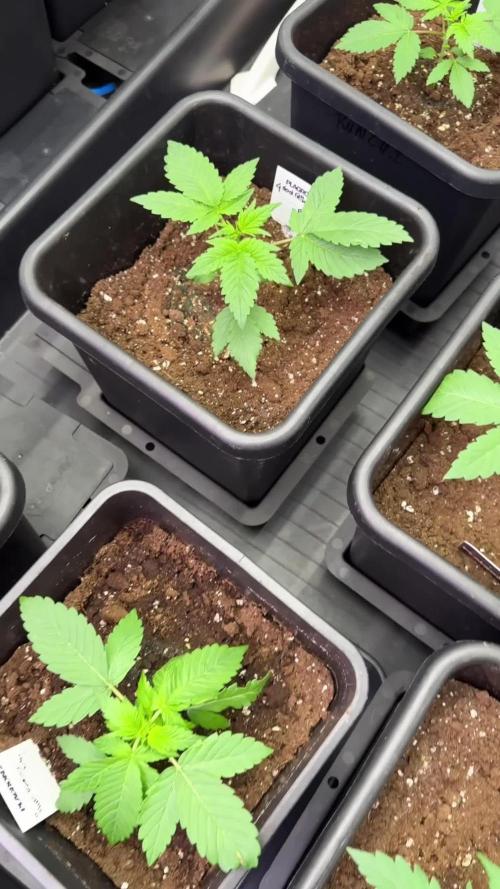
Week 2 – Building the Foundation of Something Special
Welcome back to another week of the 8×8 Adventure, where every phenotype earns its own diary and every plant is allowed to tell its own story.
This week belongs to Pink Rosay Auto 09A.
From the moment she settled into her new home, she has done little else but impress.
Strong growth.
Excellent vigor.
Beautiful symmetry.
And perhaps most exciting of all…
An incredible willingness to respond to every bit of training she’s received.
Some plants fight you.
Others work with you.
Pink Rosay A already feels like she’s becoming a true partner in this grow.
⸻
🌿 Growing Conditions
Every plant in the project continues growing under identical environmental conditions, allowing each phenotype to express its own unique characteristics without external variables influencing the comparison.
Environmental Conditions
* 🌡️ Day Temperature: 27°C
* 🌙 Night Temperature: 25°C
* 💧 Relative Humidity: 55%
* 🌱 Root Zone Temperature: 21°C
* 💦 Nutrient Solution Temperature: 20°C
* ⚡ EC: 1.3
* pH: 6.0
* 💨 CO₂: 666 ppm
* 💡 Light Schedule: 12/12 From Seed
* ? Pot Size: 15 Litres
The room continues to remain exceptionally stable, providing the perfect environment for healthy root development and vigorous vegetative growth.
⸻
🌿 Feeding Program
Pink Rosay A continued following the complete Plagron Terra nutrition schedule throughout the week.
Weekly Feeding
* Terra Grow — 1.8 ml/L
* Power Roots — 1 ml/L
* Pure Zym — 1 ml/L
* Sugar Royal — 1 ml/L
* pH Plus — when required
* Lemon Kick — when required
The feeding remains intentionally balanced, encouraging explosive root expansion while supplying everything needed for strong structural growth before flowering accelerates.
⸻
🌱 Plant Development
This week has been nothing short of impressive.
Every few days she seemed noticeably larger than before.
Her central stem has thickened considerably while producing a wonderfully even distribution of side branches that are already beginning to compete with the main leader.
The internodal spacing remains tight without becoming overcrowded, creating a compact yet highly productive structure.
One of the most enjoyable aspects of watching this phenotype has been the speed at which she responds.
Almost overnight, new shoots emerge from every node, eager to occupy every bit of available light.
Her leaves display excellent colour, healthy turgor and outstanding vigor, all clear signs that the root system is developing exactly as hoped.
She simply looks happy.
⸻
🌿 Training Progress
This week focused on gentle canopy management and encouraging an even distribution of future flowering sites.
Daily leaf tucking exposed developing secondary branches while maintaining excellent airflow through the centre of the plant.
Gentle low-stress training helped guide the main branches outward, opening the canopy without slowing her impressive rate of development.
What stands out most is how naturally she responds.
Every adjustment seems to trigger another burst of growth.
Rather than showing signs of stress, she appears to embrace the extra light reaching the lower branches, rewarding each training session with even more vigorous development.
It’s exactly the kind of response every grower hopes to see.
⸻
📸 Behind This Week’s Photos
This week’s photographs tell the story beautifully.
Early overhead shots reveal a compact young plant already displaying remarkable symmetry.
As the week progresses, that symmetry evolves into a broad, balanced canopy with fan leaves stretching confidently toward the edges of the pot.
The macro images highlight vigorous new shoots emerging from every node, each one already preparing to become a future flowering branch.
Side profile photographs showcase the increasingly thick central stem supporting a canopy that is becoming wider rather than taller—a fantastic trait for maximizing light distribution under the LED.
By the final images of the week, she has transformed from a promising seedling into a confident young plant full of potential.
It’s one of those weeks where the camera truly captures the speed of healthy development.
⸻
🌸 Looking Ahead
The coming week promises to be an exciting one.
With her vigorous response to training and naturally balanced architecture, I expect the canopy to continue widening as secondary branches rapidly catch up with the main stem.
As flowering begins to approach, the structure already being established should provide an excellent framework capable of supporting numerous evenly developed bud sites.
If she continues growing with this level of consistency, Pink Rosé A has every opportunity to become one of the stars of the entire 8×8 Adventure.
She isn’t simply growing.
She’s building something.
⸻
💚 Thank You
Thank you for following another chapter of this incredible journey.
Every week reinforces one simple truth: when genetics, environment and careful cultivation come together, each plant reveals a personality entirely its own.
A heartfelt thank you to GrowDiaries for providing a home where growers from around the world can document their successes, learn from one another and celebrate this amazing passion together.
A huge thank you to Plagron for supplying the Terra nutrient line that continues to deliver vigorous, healthy growth with remarkable consistency throughout every stage of this project.
To the breeders behind these beautiful genetics—thank you for the dedication, patience and years of work that make adventures like this possible.
And finally, thank you to everyone following these diaries.
Your encouragement, your questions, your advice and your shared enthusiasm are what make this community so special.
The 8×8 Adventure continues…
One phenotype.
One lesson.
One beautiful surprise at a time.
Growers Love 🌱💚

Likes
3
Share


@RunicKevin58675
Follow
63 days of flowering have passed, according to various colleagues they are 1/2 weeks behind on the swelling. But to me they look squat enough to pick up. Quite evident smell of sweet Hashy. Fed lightly with Bio Bloom but it was more of a rinse. 2.22l per day for 6 days, including 2 days put 1 drop of Bio Bloom in the irrigation

Likes
54
Share


@Mimi420
Follow
Hi growers!
The kushes are buding nice!Bubba kush started to coloring a litle.Dutch kush have such a nice smell.Loove the smell that is coming from the tent!
Stay green!🌱

Likes
36
Share


@brownbae420
Follow
This plant started twisty and circular. It was burned early on from sprout - due to hot soil. Then again later when I burned her with a foliar spray in the 24/0 cycle. Out of all that, she continued to grow in circles, but ultimately produced some beautiful and elegant buds.
