


Likes
Comments
Share

@CheeRz
Follow
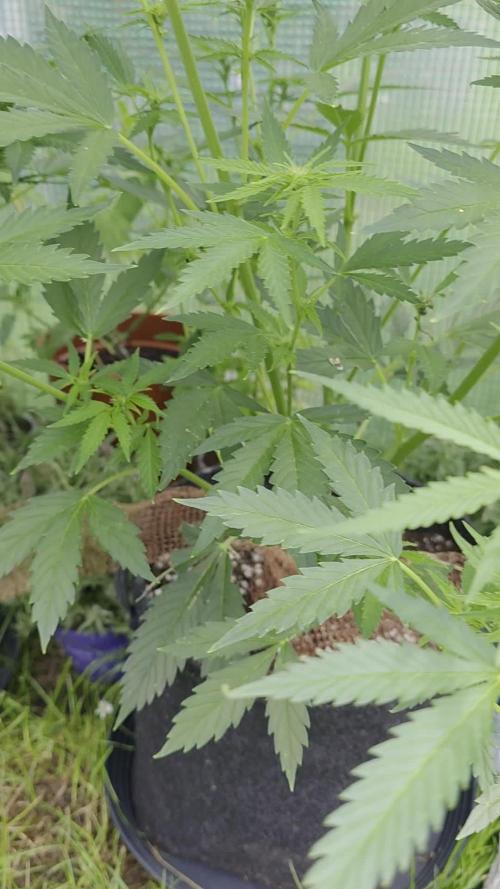
Week 6: Flowering Stage Week 2 – Stacking the Frost ❄️🕷️
Setup & Environment:
☀️ The June weather has been kind, providing plenty of natural light and ventilation. The plant is adapting well to the outdoor tent environment, showing robust growth in response to the ideal climate conditions.
Nutrients & Water 💧
The plant is thirsty, especially during warm spells. I’m ensuring a steady watering routine to match the increased demand.
Feed (per Liter):
Calmag: 1 ml
Acti·Vera: 2 ml
Bio·Heaven: 2 ml
Fish·Mix: 1 ml
Bio·Bloom: 2 ml
Top·Max: 1 ml
Grower’s Notes 💭Goal for this week: Monitor bud development and maintain a clean canopy. We are officially two weeks into flower and the progress is clear! Stalks are visible from multiple points on the branches, confirming successful flower initiation. This vertical growth shows the initial stretch is transitioning into bud stack mode. The structure we built with LST early on is really paying off now, creating multiple main colas. The surrounding defense plants are still holding strong, keeping pests at bay. The Frost Queen is on her way! 📈❄️

Likes
8
Share

@Antarctic
Follow
24.07.2025 – 30.07.2025
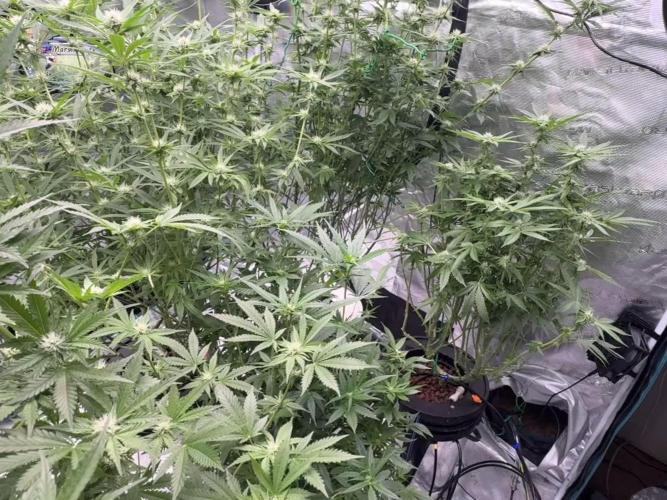
🌸 Week 2 Flower — Stretch still going strong! 🌸
Plants are now in their second week of 12/12. Stretch is at full power 🚀 — some shoots almost doubled in size compared to last week. Bud sites are becoming more visible and small pistils are showing everywhere 🧡.
This week I slightly increased the nutrient strength (EC ~1.6–1.7 / 850–950 ppm), adding more bloom nutrients and boosters while keeping a bit of nitrogen for the last phase of vegetative growth.
🌡️ Environment stayed steady: 27°C day / 20°C night, 60–65% RH — exactly where I want it for VPD balance.
🌿 Aroma is starting to appear when I open the tent — a sweet/fruity smell, and trichomes are spreading onto the leaves ✨.
Mistake from last week (using IR too early) is now more obvious — plants stretched more than I wanted 😅. But it’s still manageable with training & airflow.
👉 From here on, I’ll slowly reduce the nitrogen and fully switch to bloom nutrition. Next week should be the true start of flower stacking.

Likes
22
Share


@OutdoorRookie
Follow
I deliberately sent my 2 ladies into flower 2 months earlier. roughly the 12/12h rule. Sometimes it was 10 hours in the sun, but sometimes 12 hours.
In my region it will soon be rainy and cold. I'm toying with the idea of harvesting them before I catch mold or something else.
The trichomes are all milky. About 15-20% amber colored.


Processing
Likes
10
Share


@Dunk_Junk
Follow
Day 70 - 2cm vertical growth. Flowering stretch almost done. Flowers are forming fast.

Processing
Likes
3
Share


@Ilusionweed1
Follow
Buena semana para estas nenas,creciendo de manera impresionante y con unas buenos brazos, teniendo algunos problemas con las hojas, resuelta que el humificador el agua no era purificada lo que implicó que las hojas de las niñas se estaba llenando de mucho calcio que no la dejaba respirar bien, trate de quitarle las manchas y quedo peor, pero de todo se aprende, cambie el 💧 a agua purificada y listo aunque algunas quedaron manchadas 🔮del resto quedando hermosas muy sanas y con tallos muy fuertes 🌾seguiré informando como van estas nenas 🍃

Likes
16
Share


@GRow_M8s
Follow
During week 7(bloom) like corona lock down wasn't enough we had major weather change. Temp dropped significantly and humidity levels increased to 70%(outdoors RH).
As far this goes on it is necessary to use a strong dehumidifier inside tent for half an hour every 2 hours as once the lights are off the humidity climbs 65%+ without it.
Feed remained the same.
GG# 1 looks like most of its pistils are orange so in the end of the week I ll have a look with the microscope and might start flushing it.
Likes
13
Share


@Ieiogrow94
Follow
Eccoci qui...
Per problemi di lavoro ho tardato un pò la pubblicazione delle foto, la piccola è molto vigora ed emana un forte odore.. Già si può vedere la resina che si inizia a formare sulle cime in alto...
Sono estremamente soddisfatto della sua crescita finora e sono sicuro che mi riserva sorprese, odore veramente intenso.
Grazie a tutti per il supporto, NON VEDO L'ORA DI RACCOGLIERLA 🔥🌲❤️

Likes
6
Share


@Naujas
Follow
for the girl, several yellowed leaves were removed :) everything looks not bad, maybe I would even say very beautiful :) I already increased the light intensity to 85%, I'm a little afraid that there might be a problem due to excessive heat, well, you have to watch :) the girl drinks a lot ,in a week I poured her 12 liters :) I also gave the girl a really strong food mixture with almost 1100 ppm, but I also gave completely clean water with 20 ppm and 6.3 ph :).
Likes
34
Share


@Antifame
Follow
My new babies from Divine Seeds have arrived. 🙏😇 I gave them a cozy new home.
Looking forward to seeing their little heads poke out. 😊
Boobies for scale. 😋
Likes
14
Share


@Canadian
Follow
This girl is developing very nicely despite the crowd space where she is in and I trim out all the lower branches so she will put effort only in the top branches of the canopy she definitely has this typical smell of the Moby Dick that is love it or hate it in my case I love it . She is growing too tall into the light and you can see a little bit of light bleaching on one of the buds I already raised the light to to protect the girl from Extreme light intensity not much to say except that she's looking great not as a surprise with this genetic dinafem. thank you for reading I will continue to update have a happy grow

Processing
Likes
12
Share


@ThePotFactory
Follow
Wow, what a week. Finally installed my Inkbird humidity controller and look at the results. Massive difference having the VPD on point at 25°C and 60% RH. A video at the end shows my setup. Did a bit more supercropping this week and more defoliation to keep all tops at the same level, this will make the Scrog setup alot easier. Please like this and comment any questions or thoughts. Peace out guys.
Charlie
Likes
15
Share


@TommyBVRSA75
Follow
Más una semana con lluvia consecutiva y dias con poco solo directo. Todavia un fuerte crecimiento vegetativo y muchas hojas junto a los espacios inter nudos.
Esta semana he empezado con fertilización mezcla organico y mineral ( Bionova Autoflowering Supermix + Fish Mix Biobizz - plano Trypack All in Outdoor/ Soil pack). Sigue mantenimiento de Melaza negra sin sulfatos y aminoácidos y agente de crecimiento de raíces (Biolcan Bioroot).
La agua en uso ha sido la de la lluvia, pero ultimamente he tratado el agua de grifo con Tetra Aquasafe (para acuarios, que elimina clorito, flúor y metales pesados). En la falta de agua OR, creo que este agente de limpeza hace una limpieza basica sin contaminar plantas y sustrato.
He encargado tambien a RQS clips para LST para que coloque las hojas interiores cogiendo sol.
Seguimos en un grow muy sólido y sin problemas, pese a la enorme cantidad de agua de la lluvia y el sol corto de los ultimos dias.
Jah Jah Dios en el comando...


Processing
Likes
4
Share


@DRO420
Follow
Doing great. Leaves are perfect , plants are very happy. Growth is tall enough for trellis in this space very soon.
Processing
Likes
18
Share


@Silverback_Guerilla
Follow
Here's the talley:
72g - Candesia [Candy Cane x Amnesia] (top section)
112g - Candesia [Candy Cane x Amnesia]
116g - Candesia [Candy Cane x Amnesia]
119g- Candesia [Candy Cane x Amnesia]
127g - Candesia [Candy Cane x Amnesia]
184g - Candesia [Candy Cane x Amnesia]
TOTAL: 730g 👍


Likes
55
Share


@Ultraviolet
Follow
2nd net is up. Early bud formations are promising. holding up to the extremes pretty well, some leaves taking minor damage, but overall, she is holding up, gave her 1 night at 50F see how she would react, stressful. Not advised as it messes with her metabolism, but I want to see if it triggers any anthocyanin response. Love to see her purp up but no signs yet. Remember, For every molecule of glucose produced during photosynthesis, a plant needs to split six molecules of water. This process provides the hydrogen needed for synthesizing glucose and other organic compounds, while oxygen is released as a byproduct.
Homework.
If Rubisco activity is impaired and it cannot properly function or regenerate its substrate, the plant's leaves are likely to turn a pale green or lime green, a condition known as chlorosis. Essentially, Rubisco activity is highly regulated and susceptible to various environmental and metabolic factors that can cause it to become inhibited, leading to an apparent failure in RuBP regeneration due to a lack of consumption.
Rubisco regeneration is intrinsically linked to nitrogen supply because Rubisco is a major sink for nitrogen in plants, typically accounting for 15% to over 25% of total leaf nitrogen. The regeneration phase itself consumes nitrogen through the synthesis of the Rubisco enzyme and associated proteins (like Rubisco activase), and overall nitrogen status heavily influences the efficiency of RuBP regeneration. RuBisCO is a very large enzyme that constitutes a significant proportion (up to 50%) of leaf soluble protein and requires large investments in nitrogen. Insufficient nitrogen supply limits the plant's ability to produce adequate amounts of RuBisCO, thereby limiting the overall capacity for photosynthesis and carbon fixation. Maintaining the optimal, slightly alkaline pH is crucial for the proper function and regeneration of Rubisco. Deviations in either direction (too high or too low) disrupt the enzyme's structure, activation state, and interaction with its substrates, leading to decreased activity and impaired RuBP regeneration. (Lime/yellowing)
Structural Component: Nitrogen is an essential building block for all proteins, and the sheer abundance of the Rubisco protein makes it the single largest storage of nitrogen in the leaf.
Synthesis and Activity: Adequate nitrogen supply is crucial for the synthesis and maintenance of sufficient Rubisco enzyme and Rubisco activase (Rca), the regulatory protein responsible for maintaining Rubisco's active state. Nitrogen deficiency leads to a decrease in the content and activity of both Rubisco and Rca, which in turn limits the maximum carboxylation rate, Vmax, and the rate of RuBP regeneration Jmax, thus reducing overall photosynthetic capacity.
Nitrogen Storage and Remobilization: Rubisco can act as a temporary nitrogen storage protein, which is degraded to remobilize nitrogen to other growing parts of the plant, especially under conditions of nitrogen deficiency or senescence.
Nitrogen Use Efficiency (NUE): The allocation of nitrogen to Rubisco is a key determinant of a plant's photosynthetic nitrogen use efficiency (PNUE). In high-nitrogen conditions, plants may accumulate a surplus of Rubisco, which may not be fully activated, leading to a lower PNUE. Optimizing the amount and activity of Rubisco relative to nitrogen availability is a target for improving crop NUE.
Photorespiration and Nitrogen Metabolism: Nitrogen metabolism is also linked to the photorespiration pathway (which competes with carboxylation at the Rubisco active site), particularly in the reassimilation of ammonia released during the process.
To increase RuBisCO regeneration, which refers to the process of forming the CO2 acceptor molecule Ribulose-1,5-bisphosphate (RuBP) during photosynthesis, the primary methods involve optimizing the levels and activity of Rubisco activase (Rca) and enhancing the performance of other Calvin-Benson-Bassham (CBB) cycle enzymes.
Biochemical and Environmental Approaches:
Optimize Rubisco Activase (Rca) activity: Rca is a crucial chaperone protein that removes inhibitory sugar phosphates, such as CA1P (2-carboxy-D-arabinitol 1-phosphate), from the Rubisco active site, thus maintaining its catalytic competence.
•Ensure optimal light conditions: Rca is light-activated via the chloroplast's redox status. Adequate light intensity ensures Rca can effectively maintain Rubisco in its active, carbamylated state.
•Maintain optimal temperature: Rca is highly temperature-sensitive and can become unstable at moderately high temperatures (e.g., above 35°C/95F° in many C3 plants), which decreases its ability to activate Rubisco. Maintaining temperatures within the optimal range for a specific plant species is important.
•Optimize Mg2+ concentration: Mg2+ is a key cofactor for both Rubisco carbamylation and Rca activity. In the light, Mg2+ concentration in the chloroplast stroma increases, promoting activation.
•Manage ATP/ADP ratio: Rca activity depends on ATP hydrolysis and is inhibited by ADP. Conditions that maintain a high ATP/ADP ratio in the chloroplast stroma favor Rca activity.
Enhance Calvin-Benson-Bassham (CBB) cycle enzyme activity: The overall rate of RuBP regeneration can be limited by other enzymes in the cycle.
•Increase SBPase activity: Sedoheptulose-1,7-bisphosphatase (SBPase) is a key regulatory enzyme in the regeneration pathway, and increasing its activity can enhance RuBP regeneration and overall photosynthesis.
•Optimize other enzymes: Overexpression of other CBB cycle enzymes such as fructose-1,6-bisphosphate aldolase (FBA) and triose phosphate isomerase (TPI) can also help to balance the metabolic flux and improve RuBP regeneration capacity.
Magnesium ions, Mg2+, are specifically required for Rubisco activation because the cation plays a critical structural and chemical role in forming the active site: A specific lysine residue in the active site must be carbamylated by a CO2 molecule to activate the enzyme. The resulting negatively charged carbamyl group then facilitates the binding of the positively charged Mg2+ion. While other divalent metal ions like Mn2+ can bind to Rubisco, they alter the enzyme's substrate specificity and lead to dramatically lower activity or a higher rate of the non-productive oxygenation reaction compared to Mg2+, making them biologically unfavorable in the context of efficient carbon fixation. The concentration of Mg2+ in the chloroplast stroma naturally increases in the light due to ion potential balancing during ATP synthesis, providing a physiological mechanism to ensure the enzyme is activated when photosynthesis is possible. At the center of the porphyrin ring, nestled within its nitrogen atoms, is a Magnesium ion (Mg2+). This magnesium ion is crucial for the function of chlorophyll, and without it, the pigment cannot effectively capture and transfer light energy.
Mg acts as a cofactor: Mg2+ binds to Rubisco after an activator CO2 molecule, forming a catalytically competent complex (Enzyme-CO2-Mg2+). High light + CO2) increases demand: Under high light (60 DLI is a very high intensity, potentially saturating) and high CO2, the plant's capacity for photosynthesis is high, and thus the demand for activated Rubisco and the necessary Mg2+ cofactor increases. Mg deficiency becomes limiting: If Mg2+ is deficient under these conditions, the higher levels of Rubisco and Rubisco activase produced cannot be fully activated, leading to lower photosynthetic rates and potential photo-oxidative damage.
Optimal range: Studies show that adequate Mg2+ application can enhance Rubisco activation and stabilize net photosynthetic rates under stress conditions, but the required concentration is specific to the experimental setup.
Monitoring is key: The most effective approach in a controlled environment is to monitor the plant's physiological responses e.g., leaf Mg2+ concentration, photosynthetic rate, Rubisco activation state, and adjust the nutrient solution/fertilizer to maintain adequate levels, rather than supplementing a fixed "extra" amount.
In practice, this means ensuring that Mg2+ is not a limiting factor in the plant's standard nutrient solution when pushing the limits with high light and CO2.
Applying Mg2+ through foliar spray is beneficial to Rubisco regeneration, particularly in alleviating the negative effects of magnesium (Mg) deficiency and high-temperature stress (HTS). While Mg can be leached from soil, within the plant it is considered a mobile nutrient, particularly in the phloem. Foliar-applied Mg is quickly absorbed by the leaves and can be translocate to other plant parts, including new growth and sink organs.
Foliar application of: NATURES VERY OWN MgSO4 @ 15.0g L-1 in a spray bottle. For those high-intensity workouts when 1 meal a day is just not enough!
Foliar sprays are often recommended as a rapid rescue measure for existing deficiencies or as a supplement during critical growth stages, when demand for Mg is high. Application in the early morning or late evening can improve absorption and prevent leaf burn. The plant was getting a little limey yellow in the centre. Shortly thereafter, she was back in business, green mostly regenerated. The starting point [of creativity] is curiosity: pondering why the default exists in the first place. We’re driven to question defaults when we experience vuja de, the opposite of déjà vu. Déjà vu occurs when we encounter something new, but it feels as if we’ve seen it before. Vuja de is the reverse—we face something familiar, but we see it with a fresh perspective that enables us to gain new insights into old problems.
Confidence is evidence... nothing more. You are confident because you have driven 10,000 times, you are confident because you have spoken 10,000 times. People think confidence is a feeling, but it's not. If you want more confidence, then you need to create evidence, take more shots, collect more data, build more experiences, take more risks; fail, confidence doesn't come first; it is the reward you get for doing the work. no one else wants to do.
Likes
3
Share


@rawterpz
Follow
I did a bit more defoliation and spread out the SCROG net to give everything some more structure and space. The plants are developing beautifully and looking really healthy overall. The cuttings are also making progress, with some of them already starting to develop roots.
For now, I gave them another round of foliar feeding, and soon it will be time to move on to the next phase and switch them into flower. Overall, everything is looking very promising.

Likes
18
Share


@JohnnyBlaz3
Follow
smooth sailing with the new ph meter and the ladies are loving it. I am very pleased with how the flowers are coming on and they havent even reached the flowering stage yet! I will be starting the bulking nute in about 1-2 weeks and then well really see what these ladies are gonne do!!! Only things I really did this week is a little defoil here and there, feed and refresh the co2, I like when things are easy lol 😁

Likes
9
Share


@TrialAndErrorGrows
Follow
Ok week 5 veg. I usually just let the plants grow through the trellis net.
This time I tried a little bit of everything. I did a fairly big trim on leaves. I tied down branches with twist ties and then lowered the trellis net overtop. I may have gone a little overboard. But looking at other peoples diary’s I am seeing a lot of techniques being used so I will giver a shot. Trial and error.
**Update**
Plants growing up through trellis nicely. After tie down and trim.
