


Likes
Comments
Share

@WalachianGrowinDiary
Follow
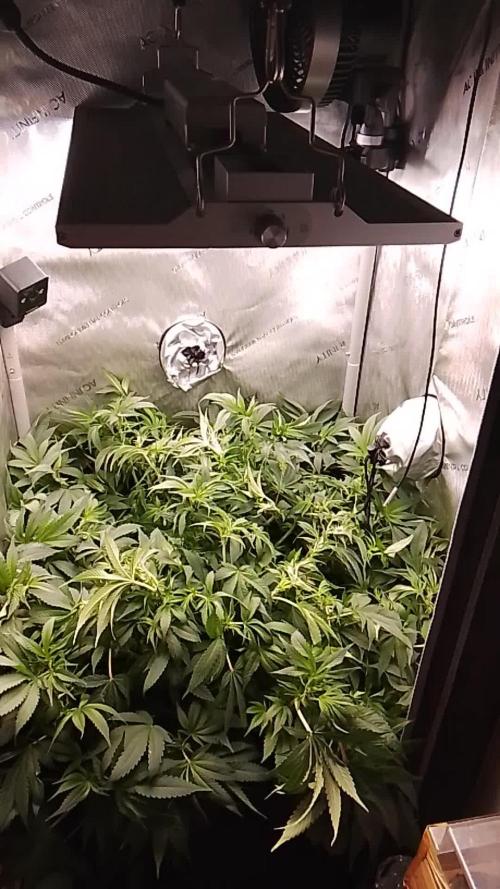
Im doing at the start of 1st week bigger defoliation for better light penetration and air movement.Top dressing with GHF bio Bloom 3g/l top dress mixed With wormhumus and watered with Homemade compost Tea And superthrive

Likes
64
Share


@Ju_Bps
Follow
Hello happy growers :D
Week was good,
I've continued my lst all the week,
Now all the buds are at their place
I've make a last defolition day 61, I've cut one bud by accident, so I've removed the stem, by luck it was a litle stem
I've prepared a last mix of water and easy grow for the first week of bloom, and after I'll use the easy bloom.
I'll put them in 12 12 tomorrow (day 64),
Let's go to bloom!
See you next for the first blooming week,
Have a nice week my friends!

Likes
64
Share


@Tonks
Follow
Most eventful thing this week was getting invaded by strayan wildlife! I left the tent open with the portable air con running just outside it cause we had a few days of 35C+ weather, was the only way to keep it cool in there. Next morning there were 20 odd flies and a skink in the tent. Took me two days to get the skink out - I was dropping water on the floor for him to drink which he seemed to appreciate, but the slippery little sucker just didn't want to be caught! Got him eventually though, he made it outside safely. :) Also FYI watching skinks wee is hilarious, both the back legs come off the ground and they do a little wiggle.
The 4 Assed Monkey seemed unaffected :P Starting to get some chunk slowly!


Likes
371
Share


@love_2_grow
Follow
D85.
At the start of week seven of flower, the girls are just humming along.
I gave each girl 2.5 liters of water @ pH 6.6.
------------------------------
D87.
I brewed a compost tea with worm castings, kelp meal, neem meal, rock dust, biochar, and molasses and gave each girl 2.5 liters @ pH 6.3.
------------------------------
D89.
Each girl got 2.5 liters of water @ pH 6.3 with Bokashi Juice.
------------------------------
D91.
We're at the end of the seventh week of flower, and things are uneventful in the tent. I still can't find any thrips when I scout, so that's good.
Yesterday, each girl got 1.25 liters of water @ pH 6.6 with fulvic acid and FFJ, and today, they also got 1.25 liters of water @ pH 6.6 but with humic acid.
------------------------------

Likes
6
Share


@biggreens420
Follow
this girl grows like a dream takes training topping great she grows more vertical than horizontal so would recommend topping she has good bud to leaf ratio and is an easy grow did get a bit of mould on 2 big colas but that was probably more due to the conditions would recommend to anyone thanks for reading happy growing guys

Likes
11
Share


@CanadianFillmore
Follow
Flushing has begun! GG4 is looking good, trichomes are about 5-10% amber. Her buds are heavy, I've got to try the beaches up to support them or they twist downward. Good smell, good size to the buds, count down to harvest!!
Thanks for looking at my grow! 👽🌳

Likes
2
Share
@Guerrilla_grower777
Follow
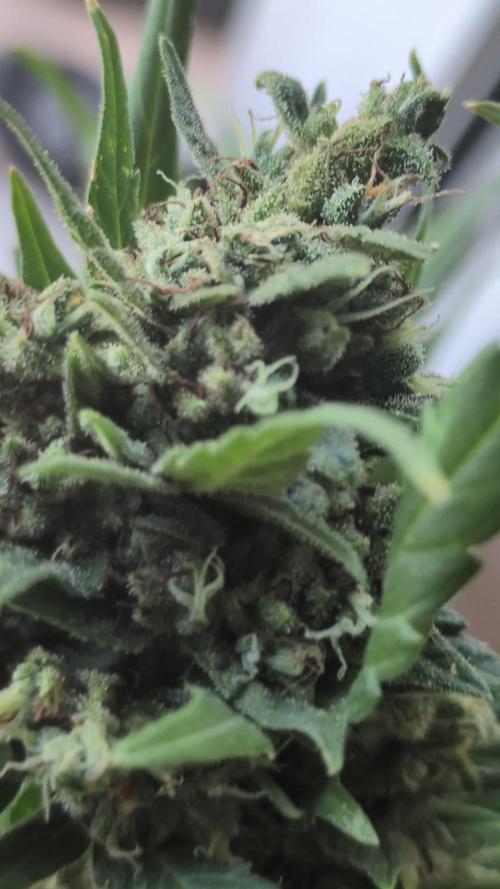
Strange hot week in the very end of Summer
I had to write something here to post this😄😄


Likes
8
Share

@Centollo
Follow
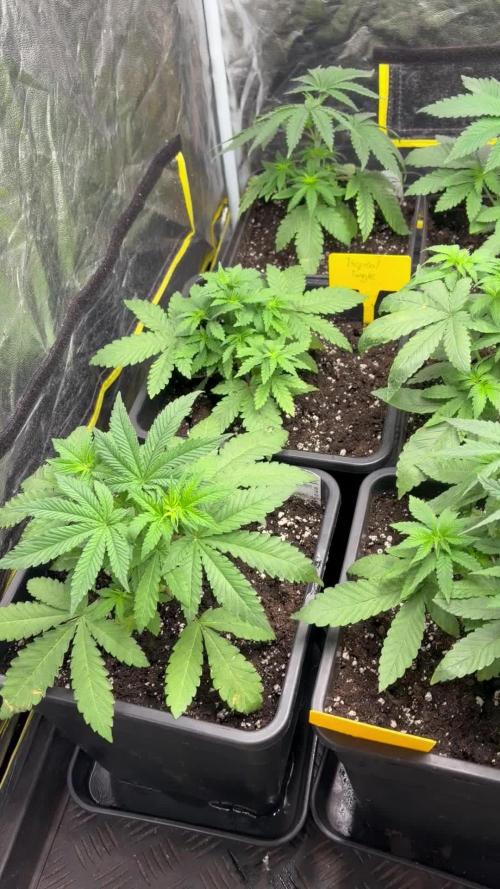
Último día de crecimiento vegetativo. Van a ser 21 días exactos de 18/6. Están todas podadas, y ya transplantadas en la maceta definitiva. Están muy sanas y felices. He seguido con Roots Juice y Bio Heaven, la próxima semana empiezo poco a poco con el Top Max y Bio Bloom. Felices humos y buen finde, amig@s!!


Likes
20
Share


@GrowinHome
Follow
The plants are still growing great. They reavted really well on the topping and defoliation.


Likes
39
Share


@Grileon
Follow
10% discount code for Zamnesia shop - GROWITGD
--
Another series of topping done, so that there will be 8 main branches.
Roots look amazing, healthy, white, and bushy.
UPDATE:
Did some heavy defoliation for fan leaves and LST on all 8 main branches.

Likes
7
Share


@jonesy_grows
Follow
Hey All!
These seedling dome vents have been fully open for a week, and are now ready to go under a veg light!
I cleaned out my 2x2 today and set the light to 60% power
Happy growing!


Likes
151
Share


@BioBuds
Follow
It has been a week of amazing growth for the Xtrakush too. What an amazing plant this is. Resilient, enormous growth, it was only last week that we took out her brother. It turned out to be male, which is why we planted two in one pot. Already she has taken up its space almost entirely. And the bud growth is also something I haven't seen before. This can really turn out to be enormous buds if the buds grow out like advertised.
All in all a great week with lots of activity on my part to facilitate these results. We are three weeks into flowering, the deadline I set myself from where I'm allowed defoliating the underside. To prevent stress, but also to maximize growth I hadn't touched them all grow. Also, I made the flowering amendments, it didn't seem they needed anything so I waited a couple of weeks. I made a mix of 2 cups worm castings, 2 cups bonemeal, 1 cup of micro life (per plant) and mixed this. I dropped this on the soil around the stem. In just a day another amazing stretch happened. The combined defoliation and added nutes gave a boost they seemed to love.
I watered with a heavy mix of BAC organic flowering, Topmax and Calmag, and a one in 6 mix of my trusty permaculture tea.
This SP 3000 is performing so well. Thanks again @MarsHydroLED for letting us try it. We are believers!
If you are in the market for a light, give this one a chance!!
Thanks again for all the likes, comments and the people following! Only 6 more weeks to go!!
Big hug!!
Bud
Likes
14
Share



Processing
Likes
17
Share


@Luv2Grow
Follow
Day 61 - Into week 9 and back from my little vacation and the wife did good with the girls while I was gone. The girls didn’t need water today but when she dries out, I will be giving her a feeding of nutes. I did a bit of defoliating today and some more leaf tucking. She’s grew up a ton since I left and the buds are looking gorgeous. She’s definitely putting out an awesome smell right now.
Day 62 - Nothing new really today, just checked her to ensure she didn’t need water and tucked leaves again. She’s definitely starting to put out a smell of an old wet shoe or something.
Day 63 - The end of week 9 and gave her a feeding of nutes today. Fed her with the FoxFarm trio and went to runoff to check the pH. Water going in was 6.7 and coming out easy 6.6 so all is looking good.
Likes
8
Share


@Inceptionist
Follow
Melonade Runtz is staring to purple as well. It's so beautiful and it's just the beginning.
They are loving life.


Likes
48
Share


@Rangaku
Follow
GSC looking like a really nice yielder with plenty of bud arms starting to fatten up , flushed again this week , otherwise same same .