


Likes
Comments
Share
@Chrisandweed
Follow
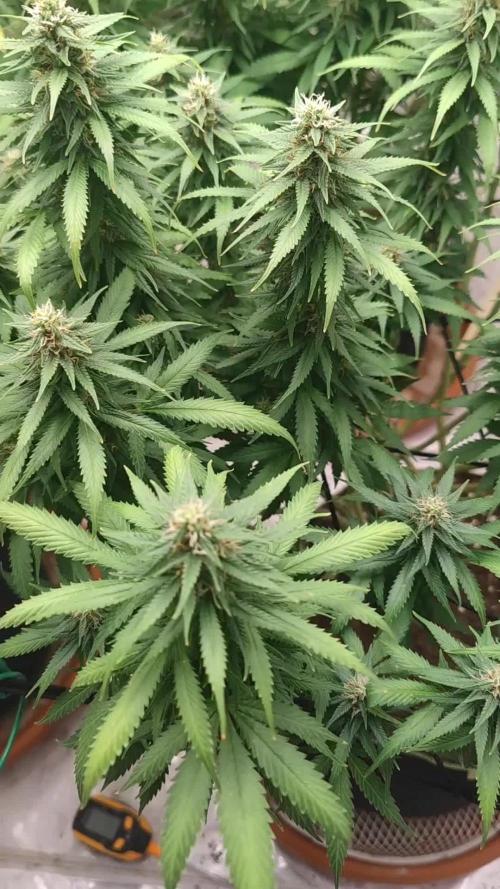
Buueno, pues seeguimos. Estoy viendo en esta y la Oreoz, algo de sobrefertilización, pero quizas muuy leve y mas posiblemente provocado a raiz de algun ligero bloqueo por el calor, que ya no consigo bajarle de los 30° el armario, pero bueno, en general no muestran sintomas de estres fuerte por calor asique guay.
Las critical si están sobrefertilizadas 😅.
En el proximo riego, a todas les haré el riego solo de agua con una dosis media del producto Flush, de la marca que sigo usando. En el siguiente algo de comida y ya en el siguiente enzym y de nuevo a los riegos normales, no por na, siento que aún quedará un mes minimo para empezar con los cortes.
PD: IMPORTANTE, voy a poner datos que no solía poner por la "dificultad" entre muchas comillas ya que es dificultad por una situación especifica, de sacar y es que como antes comentaba, habían bloqueos y tal... Bien, he medido el agua de drenaje de cada planta. En esta los valores de ph estan mas o menos bien, un poco bajos, pero aceptables, peeero la EC era lejia viva! En esta planta el ph era de 6.07 y la EC era de 11.24 MILISIMENS! que no microsimens... Una toxicidad altísima! Muy similar a las otras 4. Básicamente mis riegos eran por lo general 2 a la semana, uno de fertilizantes base con el especifico de cada fase que toque, y el segundo riego era de encimas con normalmente calmag (fertilizante muuuy salino) y a eso le juntamos que normalmente los riegos eran justitos, normalmente no había drenaje, por lo que las sales en el sustrato se iban acumulando hasta estos puntos. Hoy, tras varios dias de dejar secar las macetas, incluso buscando un poco de estres hidrico, he metido un riego de 6L por maceta de agua con el producto Flush para hacer un arrastre y limpieza de sales, en esta ocasion los 6L han sido la medida perfecta para que drenase agua suficiente como para que estos niveles de ec bajen, y ademas en el plato pudiera medirlos y darme el resultado que he puesto anteriormente.
Todo comenzó porque en la Kritical GB sentí un bloqueo de pk y la planta empezó a comerse sus hojas para conseguir magnesio, si llego a verlo como una carencia de magnesio o calcio la hubiera cagado atrozmente!

Likes
65
Share


@Dendegrow
Follow
Week 2 of the flowering phase flew by 🌱💨. Unfortunately, I may have overdone it with potassium or kept the water level too high – the classic signs of clawing leaves were evident. Thankfully, they seem to be recovering now and are back under control 💪🍃.
My IR night experiment is showing clear results 🌌: The plants exposed to infrared radiation at night stretched significantly more. This might be especially beneficial for this indica-dominant strain as it leads to better canopy distribution, improved airflow, and reduced risks of mold and disease. Plus, the light distribution is much more efficient now, which I’m excited to see pay off.
On the downside, my Orange Sherbert turned hermaphroditic 😔. It’s hard to pinpoint the cause – overfertilization seems unlikely since I’m using only organic nutrients. I suspect it might be linked to an E-field experiment I’ve been running. To confirm this theory, I’ll conduct a new grow with a similar strain next year to see if the electric field negatively impacts cannabis development.
Stay tuned for updates! Drop a like and follow along for more grow insights 🌿✨. See you next week!
Woche 2 der Blütephase ist wie im Flug vergangen 🌱💨. Leider habe ich wohl etwas zu viel Kalium gegeben oder den Wasserstand zu hoch gehalten – die typischen Anzeichen von Adlerkrallen waren sichtbar. Zum Glück scheinen sich diese jetzt zurückzubilden und sind wieder unter Kontrolle 💪🍃.
Mein IR-Nachtexperiment zeigt bereits deutliche Ergebnisse 🌌: Die Pflanzen, die nachts mit Infrarotstrahlung bestrahlt wurden, haben deutlich stärker gestretcht. Das ist besonders bei dieser indica-dominanten Sorte wahrscheinlich von Vorteil, da es zu einer besseren Verteilung des Blätterdachs führt. Dadurch verbessert sich die Luftzirkulation, das Risiko von Schimmel und Krankheiten wird minimiert, und die Lichtverteilung wird effizienter. Ich bin gespannt, wie sich das weiter auswirkt!
Leider hat meine Orange Sherbert gezwittert 😔. Woran das genau liegt, kann ich schwer sagen. Eine Überdüngung halte ich für unwahrscheinlich, da ich nur biologischen Dünger verwendet habe. Ich vermute, dass mein E-Feld-Experiment eine Rolle spielt. Um das zu bestätigen, werde ich nächstes Jahr einen neuen Durchlauf mit einer ähnlichen Sorte machen und prüfen, ob das elektrische Feld tatsächlich eine ungünstige Rückentwicklung der Pflanze verursacht.
Bleibt dran, lasst ein Like da und folgt mir für weitere Updates 🌿✨. Bis nächste Woche!


Likes
41
Share


@FrostyGardens
Follow
12/16/18
Start of week 8 of flower. At least one of the plants is more then 1 week out. The sativa leaner still has many white pistils. The frost queen is right on schedule. The runt will be processed into bubble hash. Secret Sara buds are getting huge and are quite mature as well. Hoping to see some yellowing off in next few day.
12/21/18
All 4 plants scoped out well. I saw very little clear trichomes. Also 1 of the plants has some amber trichomes as well. Also almost all pistils have changed color and curled in. I decided to start 36hrs of light deprivation, they are no longer getting water, and the temps are kept as low as possible.

Likes
4
Share


@LittleBigTrees
Follow
I've been pulling the top fan leaves to stop the main stem growing any taller and repotted them into 4L pots, once they show roots I'll flip them over to flower.
They've all outgrown their mutations but the apple fritter has a slight varigation.


Likes
21
Share


@Shaunofthedank
Follow
Plants responded well to topping/fimming. They all have 4/6 main stems. Training them to get a bit of a canopy going. Cookies kush is def a keeper. Gonna try clone it. My clone games weak though.


Likes
29
Share


@THCeitor
Follow
Ya en la cuarta semana podemos ver mayor cantidad de pistilos sobre todo en la planta mas pequeña y la que de seguro estará lista antes para cosechar, la R.S.Banana #2.
La R.S.Banana #1 muestra un crecimiento mas vigoroso con un tallo muy ancho y aunque ya muestra algunos pistilos, esta tardará mas que la R.S.B.#2 pero será mas productora.
En relación al LST es una tarea que se realiza a diario.

Likes
3
Share


@KronicAquaponic
Follow
Not sure what to expect of dry weight as this is my first grow, but seems like it should be pretty good for 2 square feet of grow space and my 150w light set at just over 100 watts.
Likes
39
Share


@J_diaz420
Follow
El cambio de fotoperiodo para el inicio de floración fue el día 18 de la semana anterior.
Desde ese momento de han hecho riegos con vegetativo y floración.
Generalmente en 3°o 4° semana de floración elimino el vegetativo.
También se a regado estimulante de floración delta 9 de manera foliar aprox cada 10 días.
Recordar que doy 1 riego de fertilizante cada dos de agua sin fertilizantes por semana, donde en los riegos sin fertilizantes añado microorganismos, enzimas y calmag.
Likes
9
Share


@Skinnytalls420
Follow
Day 39-02/09/22 should be back on track with the diary now 5 of the plants all looking good some taller than others but that’s to do with the position of the plants under the light but all looking good this is when things get exciting

Likes
5
Share


@Brickleberry
Follow
July 5 - YES! I know, was beautiful.. i've done this for height problems but.... No worry, stay tuned cause she will return more strong than before😜💚

Likes
34
Share


@Ultraviolet
Follow
Yellow butterfly came to see me the other day; that was nice.
Starting to show signs of stress on the odd leaf, localized isolated blips, blemishes, who said growing up was going to be easy!
Smaller leaves have less surface area for stomata to occupy, so the stomata are packed more densely to maintain adequate gas exchange. Smaller leaves might have higher stomatal density to compensate for their smaller size, potentially maximizing carbon uptake and minimizing water loss. Environmental conditions like light intensity and water availability can influence stomatal density, and these factors can affect leaf size as well. Leaf development involves cell division and expansion, and stomatal differentiation is sensitive to these processes. In essence, the smaller leaf size can lead to a higher stomatal density due to the constraints of available space and the need to optimize gas exchange for photosynthesis and transpiration. In the long term, UV-B radiation can lead to more complex changes in stomatal morphology, including effects on both stomatal density and size, potentially impacting carbon sequestration and water use. In essence, UV-B can be a double-edged sword for stomata: It can induce stomatal closure and potentially reduce stomatal size, but it may also trigger an increase in stomatal density as a compensatory mechanism. It is generally more efficient for gas exchange to have smaller leaves with a higher stomatal density, rather than large leaves with lower stomatal density. This is because smaller stomata can facilitate faster gas exchange due to shorter diffusion pathways, even though they may have the same total pore area as fewer, larger stomata. Leaf size tends to decrease in colder climates to reduce heat loss, while larger leaves are more common in warmer, humid environments. Plants in arid regions often develop smaller leaves with a thicker cuticle and/or hairs to minimize water loss through transpiration. Conversely, plants in wet environments may have larger leaves and drip tips to facilitate water runoff. Leaf size and shape can vary based on light availability. For example, leaves in shaded areas may be larger and thinner to maximize light absorption. Leaf mass per area (LMA) can be higher in stressful environments with limited nutrients, indicating a greater investment in structural components for protection and critical resource conservation. Wind speed, humidity, and soil conditions can also influence leaf morphology, leading to variations in leaf shape, size, and surface characteristics. Small leaves: Reduce water loss in arid or cold climates.
Environmental conditions significantly affect gene expression in plants. Plants are sessile organisms, meaning they cannot move to escape unfavorable conditions, so they rely on gene expression to adapt to their surroundings. Environmental factors like light, temperature, water, and nutrient availability can trigger changes in gene expression, allowing plants to respond to and survive in diverse environments.
Depending on the environment a young seedling encounters, the developmental program following seed germination could be skotomorphogenesis in the dark or photomorphogenesis in the light. Light signals are interpreted by a repertoire of photoreceptors followed by sophisticated gene expression networks, eventually resulting in developmental changes. The expression and functions of photoreceptors and key signaling molecules are highly coordinated and regulated at multiple levels of the central dogma in molecular biology. Light activates gene expression through the actions of positive transcriptional regulators and the relaxation of chromatin by histone acetylation. Small regulatory RNAs help attenuate the expression of light-responsive genes. Alternative splicing, protein phosphorylation/dephosphorylation, the formation of diverse transcriptional complexes, and selective protein degradation all contribute to proteome diversity and change the functions of individual proteins.
Photomorphogenesis, the light-driven developmental changes in plants, significantly impacts gene expression. It involves a cascade of events where light signals, perceived by photoreceptors, trigger changes in gene expression patterns, ultimately leading to the development of a plant in response to its light environment.
Genes are expressed, not dictated! While having the potential to encode proteins, genes are not automatically and constantly active. Instead, their expression (the process of turning them into proteins) is carefully regulated by the cell, responding to internal and external signals. This means that genes can be "turned on" or "turned off," and the level of expression can be adjusted, depending on the cell's needs and the surrounding environment. In plants, genes are not simply "on" or "off" but rather their expression is carefully regulated based on various factors, including the cell type, developmental stage, and environmental conditions. This means that while all cells in a plant contain the same genetic information (the same genes), different cells will express different subsets of those genes at different times. This regulation is crucial for the proper functioning and development of the plant.
When a green plant is exposed to red light, much of the red light is absorbed, but some is also reflected back. The reflected red light, along with any blue light reflected from other parts of the plant, can be perceived by our eyes as purple.
Carotenoids absorb light in blue-green region of the visible spectrum, complementing chlorophyll's absorption in the red region. They safeguard the photosynthetic machinery from excessive light by activating singlet oxygen, an oxidant formed during photosynthesis. Carotenoids also quench triplet chlorophyll, which can negatively affect photosynthesis, and scavenge reactive oxygen species (ROS) that can damage cellular proteins. Additionally, carotenoid derivatives signal plant development and responses to environmental cues. They serve as precursors for the biosynthesis of phytohormones such as abscisic acid () and strigolactones (SLs). These pigments are responsible for the orange, red, and yellow hues of fruits and vegetables, while acting as free scavengers to protect plants during photosynthesis.
Singlet oxygen (¹O₂) is an electronically excited state of molecular oxygen (O₂). Singlet oxygen is produced as a byproduct during photosynthesis, primarily within the photosystem II (PSII) reaction center and light-harvesting antenna complex. This occurs when excess energy from excited chlorophyll molecules is transferred to molecular oxygen. While singlet oxygen can cause oxidative damage, plants have mechanisms to manage its production and mitigate its harmful effects.
Singlet oxygen (¹O₂) is considered a reactive oxygen species (ROS). It's a form of oxygen with higher energy and reactivity compared to the more common triplet oxygen found in its ground state. Singlet oxygen is generated both in biological systems, such as during photosynthesis in plants, and in cellular processes, and through chemical and photochemical reactions. While singlet oxygen is a ROS, it's important to note that it differs from other ROS like superoxide (O₂⁻), hydrogen peroxide (H₂O₂), and hydroxyl radicals (OH) in its formation, reactivity, and specific biological roles. Non-photochemical quenching (NPQ) protects plants from damage caused by reactive oxygen species (ROS) by dissipating excess light energy as heat. This process reduces the overexcitation of photosynthetic pigments, which can lead to the production of ROS, thus mitigating the potential for photodamage. Zeaxanthin, a carotenoid pigment, plays a crucial role in photoprotection in plants by both enhancing non-photochemical quenching (NPQ) and scavenging reactive oxygen species (ROS). In high-light conditions, zeaxanthin is synthesized from violaxanthin through the xanthophyll cycle, and this zeaxanthin then facilitates heat dissipation of excess light energy (NPQ) and quenches harmful ROS.
The Issue of Singlet Oxygen!!
ROS Formation: Blue light, with its higher energy photons, can promote the formation of reactive oxygen species (ROS), including singlet oxygen, within the plant.
Potential Damage: High levels of ROS can damage cellular components, including proteins, lipids, and DNA, potentially impacting plant health and productivity.
Balancing Act: A balanced spectrum of light, including both blue and red light, is crucial for mitigating the harmful effects of excessive blue light and promoting optimal plant growth and stress tolerance.
The Importance of Red Light:
Red light (especially far-red) can help to mitigate the negative effects of excessive blue light by:
Balancing the Photoreceptor Response: Red light can influence the activity of photoreceptors like phytochrome, which are involved in regulating plant responses to different light wavelengths.
Enhancing Antioxidant Production: Red and blue light can stimulate the production of antioxidants, which help to neutralize ROS and protect the plant from oxidative damage.
Optimizing Photosynthesis: Red light is efficiently used in photosynthesis, and its combination with blue light can lead to increased photosynthetic efficiency and biomass production.
In controlled environments like greenhouses and vertical farms, optimizing the ratio of blue and red light is a key strategy for promoting healthy plant growth and yield.
Understanding the interplay between blue light signaling, ROS production, and antioxidant defense mechanisms can inform breeding programs and biotechnological interventions aimed at improving plant stress resistance. In summary, while blue light is essential for plant development and photosynthesis, it's crucial to balance it with other light wavelengths, particularly red light, to prevent excessive ROS formation and promote overall plant health. Oxidative damage in plants occurs when there's an imbalance between the production of reactive oxygen species (ROS) and the plant's ability to neutralize them, leading to cellular damage. This imbalance, known as oxidative stress, can result from various environmental stressors, affecting plant growth, development, and overall productivity.
Causes of Oxidative Damage: Abiotic stresses: These include extreme temperatures (heat and cold), drought, salinity, heavy metal toxicity, and excessive light. Biotic stresses: Pathogen attacks and insect infestations can also trigger oxidative stress. Metabolic processes: Normal cellular activities, particularly in chloroplasts, mitochondria, and peroxisomes, can generate ROS as byproducts. Certain chlorophyll biosynthesis intermediates can produce singlet oxygen (1O2), a potent ROS, leading to oxidative damage. ROS can damage lipids (lipid peroxidation), proteins, carbohydrates, and nucleic acids (DNA). Oxidative stress can compromise the integrity of cell membranes, affecting their function and permeability. Oxidative damage can interfere with essential cellular functions, including photosynthesis, respiration, and signal transduction. In severe cases, oxidative stress can trigger programmed cell death (apoptosis). Oxidative damage can lead to stunted growth, reduced biomass, and lower crop yields.
Plants have evolved intricate antioxidant defense systems to counteract oxidative stress. These include: Enzymes like superoxide dismutase (SOD), catalase (CAT), and various peroxidases scavenge ROS and neutralize their damaging effects. Antioxidant molecules like glutathione, ascorbic acid (vitamin C), C60 fullerene, and carotenoids directly neutralize ROS. Developing plant varieties with gene expression focused on enhanced antioxidant capacity and stress tolerance is crucial. Optimizing irrigation, fertilization, and other management practices can help minimize stress and oxidative damage. Applying antioxidant compounds or elicitors can help plants cope with oxidative stress. Introducing genes for enhanced antioxidant enzymes or stress-related proteins over generations.
Phytohormones, also known as plant hormones, are a group of naturally occurring organic compounds that regulate plant growth, development, and various physiological processes. The five major classes of phytohormones are: auxins, gibberellins, cytokinins, ethylene, and abscisic acid. In addition to these, other phytohormones like brassinosteroids, jasmonates, and salicylates also play significant roles.
Here's a breakdown of the key phytohormones:
Auxins: Primarily involved in cell elongation, root initiation, and apical dominance.
Gibberellins: Promote stem elongation, seed germination, and flowering.
Cytokinins: Stimulate cell division and differentiation, and delay leaf senescence.
Ethylene: Regulates fruit ripening, leaf abscission, and senescence.
Abscisic acid (ABA): Plays a role in seed dormancy, stomatal closure, and stress responses.
Brassinosteroids: Involved in cell elongation, division, and stress responses.
Jasmonates: Regulate plant defense against pathogens and herbivores, as well as other processes.
Salicylic acid: Plays a role in plant defense against pathogens.
1. Red and Far-Red Light (Phytochromes):
Red light:
Primarily activates the phytochrome system, converting it to its active form (Pfr), which promotes processes like stem elongation and flowering.
Far-red light:
Inhibits the phytochrome system by converting the active Pfr form back to the inactive Pr form. This can trigger shade avoidance responses and inhibit germination.
Phytohormones:
Red and far-red light regulate phytohormones like auxin and gibberellins, which are involved in stem elongation and other growth processes.
2. Blue Light (Cryptochromes and Phototropins):
Blue light:
Activates cryptochromes and phototropins, which are involved in various processes like stomatal opening, seedling de-etiolation, and phototropism (growth towards light).
Phytohormones:
Blue light affects auxin levels, influencing stem growth, and also impacts other phytohormones involved in these processes.
Example:
Blue light can promote vegetative growth and can interact with red light to promote flowering.
3. UV-B Light (UV-B Receptors):
UV-B light:
Perceived by UVR8 receptors, it can affect plant growth and development and has roles in stress responses, like UV protection.
Phytohormones:
UV-B light can influence phytohormones involved in stress responses, potentially affecting growth and development.
4. Other Colors:
Green light:
Plants are generally less sensitive to green light, as chlorophyll reflects it.
Other wavelengths:
While less studied, other wavelengths can also influence plant growth and development through interactions with different photoreceptors and phytohormones.
Key Points:
Cross-Signaling:
Plants often experience a mix of light wavelengths, leading to complex interactions between different photoreceptors and phytohormones.
Species Variability:
The precise effects of light color on phytohormones can vary between different plant species.
Hormonal Interactions:
Phytohormones don't act in isolation; their interactions and interplay with other phytohormones and environmental signals are critical for plant responses.
The spectral ratio of light (the composition of different colors of light) significantly influences a plant's hormonal balance. Different wavelengths of light are perceived by specific photoreceptors in plants, which in turn regulate the production and activity of various plant hormones (phytohormones). These hormones then control a wide range of developmental processes.
Likes
2
Share


@Terpslurpgoat
Follow
A breez to grow 450 grams off 5 plants first ever grow red buds throughout the whole grow
Likes
8
Share


@FarmerT
Follow
Super excited to see the weight after dry 😬 didn’t weigh any plant when cut !!!!

Likes
2
Share


@Greenbean15
Follow
Large 2x4 tent: Pineapple Express far back left corner, white widow front left corner; berry-white middle and purple trainwreck far right.
Small 2x3 tent- purple trainwreck on week 7-8 of flower and white widow on week 3-4.
Male-separated in a dark non-aerated room
All the girls are growing well. Berry white suspected plant is still looking indica. Purple trainwreck is budding well and stretching too. Much more than I’ve seen other PT plants do, I don’t think the nodes are too spaced out though. White widow is starting to frost up. This particular plant is a clone, the mother developed buds on the leaves and the fan leaves were covered in trichomes giving me lots of good trim for edibles. The leaves are already beginning to frost up. The Pineapple Express is a bit out of control, I had to put a second net up to control her. I went ahead and super cropped her as well, I did snap a few branches but she doesn’t appear to be phased by the damage.
I selectively pollinated specific branches on each female in the larger tent. The male was removed before the pods opened. I think one pod may have already split but I tried to minimize his natural pollination. He was moved into a different room with no air flow and no light. Pods opened in a few days and I used tips to collect pollen and then dab onto buds. Pollinated branches are marked with a green tie around them. I’m hoping that by spraying the tents with water after pollinating that I didn’t pollinate the entire tent.
Here’s to hoping for neat seeds for in the future whenever I am able to grow again and for good bud 👩🌾🏼🌱


Likes
19
Share


@cam0538154
Follow
Germinated then planted into 3” peat pots using an open room in my basement to start the seedlings. Using roots organic soil only as of now. Getting ready to transfer into a living soil mix into a 3 gal pot and move to my grow room
Likes
6
Share


@BigGGrows
Follow
The candy cush bounced back with resilience this week after the transplant. She is about to go into stretch and seems to be doing well this week.
