


Likes
Comments
Share

@AlphaVortex
Follow
Tag 88 Erntetag, Ich musste leider Platz machen für die nächsten Projekte. Daher habe Ich, bei 20% Bernstein Rest Milchig Durchsichtig geerntet. Sind super dichte Buds geworden, riecht Mega. Etwas süßlich mit einer Zitrus Note

Likes
1
Share

@Nickeluring
Follow
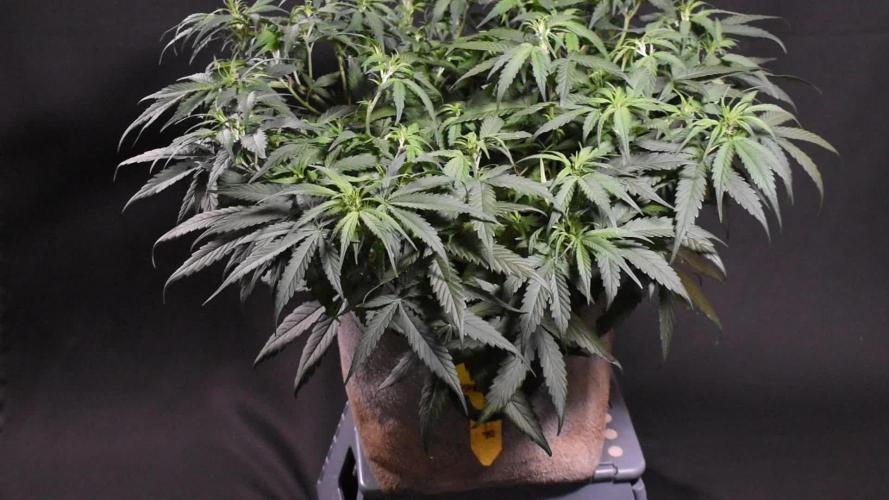
There have been some serious training this week. LCC is flowering quickly and hasn't needed anymore training. She has had some leaves removed. Guava and Apricot are a bit behind LCC in flowering. They have been trained heavily this week. They now both have an insane amount of top bud sites. These babies will get very interesting in a few weeks...
Their heights:
Guava: 28 cm
Apricot: 36 cm
Lemon Cherry Cookies: 50 cm
Likes
14
Share


@Auto_lover
Follow
Flowers are coming along nicely.end of week swelling starting to incre
Likes
10
Share


@SkunkyDog420
Follow
Hallo zusammen 🤙.
Sie wächst sehr schön und macht keine Probleme
Rabattcode für den BIOTABS-Webshop https://biotabs.nl/en/shop/ GDBT420, damit erhalten Sie 15 Prozent
Processing
Likes
6
Share


@field_nigga
Follow
So pretty im genuinely happy and interested. GOD IS GOOD
Haven't started flower mode yet though..maybe at 10 weeks?


Likes
3
Share

@carlitoshaze44
Follow
Buenas tardes,noches a tod@s.
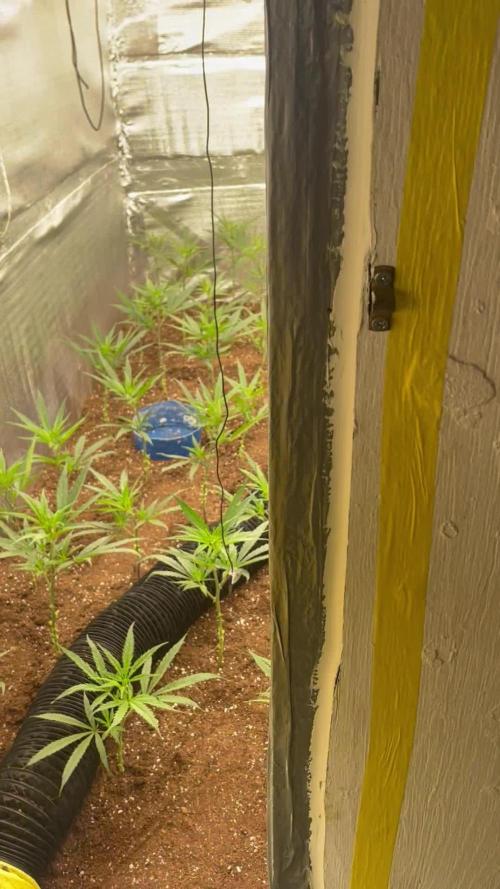
1 día de floración en marcha,vinieron dos compañeros a ver el proyecto de suelo cultivable en interior.
Quiero añadir que seguiré haciendo los riegos de manera manual,hasta que vea conveniente colocar el riego automático y con ello la red.
De momento por lo que puedo percibir,las temperaturas se han mantenido sin aire acondicionado durante varias horas en un rango de 24 a 18 grados Celsius durante las siguientes 7 horas después de el apagado.
El resto de horas a llegado a 16 grados.
Espero que vuelvan las temperaturas y pase esta pequeña ola de frío.
Saludos compañeros! Que disfrutéis de un buen mes.
Likes
6
Share

@DogDoctorOfficial
Follow
🥒 Project Blue Tent – Week 7
Pickle Lemon Haze F1 – Pheno A (Folder 14A)
Hello everyone, and welcome back to another chapter of Project Blue Tent! 💙🌱
If you're discovering this diary for the first time, welcome aboard!
Project Blue Tent follows four individual plants, each documented in its own dedicated diary from seed to harvest.
All four plants share the same environment, lighting, irrigation system, nutrition and training strategy. By keeping as many variables identical as possible, we can observe something particularly interesting:
How much personality can an individual phenotype still show when everything around it remains the same?
Every plant has the same opportunity.
Every plant receives the same care.
Yet somehow...
They still manage to tell their own story.
Today we're checking in with Pickle Lemon Haze F1 – Plant A.
And this week marks a pretty important moment in her story.
The canopy is full.
The structure is ready.
And we're preparing for the final step before flowering.
────────────────────────
🌱 Week Seven – From Building to Preparing
For the last several weeks, the entire focus has been on building the canopy.
We topped.
We trained.
We installed the SCROG.
We guided branches through the screen.
And slowly, square by square, the empty spaces disappeared.
Now the Blue Tent has reached the point where the plants have essentially done their job.
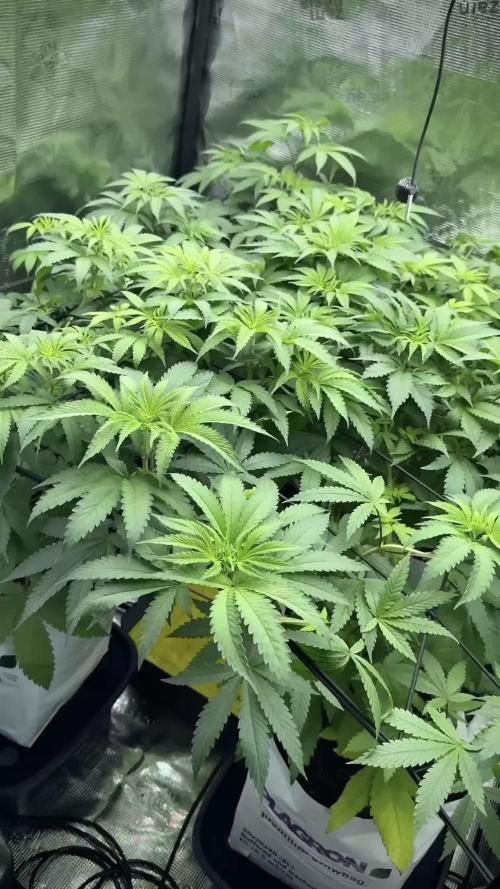
Looking from above, the canopy is remarkably even.
All four sisters are sitting at approximately 60 cm, and because the SCROG net was lowered and tightened earlier in the grow, the majority of the new growth has been directed horizontally rather than vertically.
That was the objective.
Not taller plants.
More usable canopy.
And Plant A has done an exceptional job filling her allocated space.
Her foliage is rich green, her branches are strong, and the amount of healthy growth packed into that screen is impressive.
But there comes a point where adding more foliage isn't necessarily the goal anymore.
Now we need to prepare what we've built.
────────────────────────
🕸️ The SCROG – Mission Accomplished
The SCROG has been one of the most important techniques we've used during this vegetative cycle.
For anyone unfamiliar with it, SCROG means Screen of Green.
Instead of allowing the plant to develop a few dominant vertical branches, we repeatedly guide the growing shoots underneath a horizontal screen.
As each branch moves through the screen, we can distribute the future flowering sites across a much larger area.
The result we're looking for is a relatively even canopy rather than several tall branches competing with one another.
And this isn't something that happens in one afternoon.
It's a process.
A little tuck here.
Another branch redirected there.
A few minutes of observation every day.
Eventually, the plant does most of the work itself.
This week, looking across the Blue Tent, that process has reached its goal.
The screen is effectively filled.
And that means it's time for the next stage.
────────────────────────
✂️ Defoliation – Cleaning the Canopy Before Flower
This week's main event is defoliation.
And because this technique is sometimes misunderstood, I want to explain exactly what we're doing and, perhaps more importantly, what we're not doing.
Defoliation is not simply removing leaves because we don't like seeing them.
Leaves are essential to the plant.
They're responsible for capturing light and supporting photosynthesis, so removing them unnecessarily doesn't automatically make a plant healthier.
The objective here is different.
After weeks of vigorous vegetative growth and SCROG training, the interior of the canopy has become extremely dense.
Leaves overlap.
Branches cross through one another.
Lower sections become increasingly shaded.
Air movement through the middle of the plant becomes more difficult.
And some foliage is simply contributing less to the productive upper canopy.
So we're performing a deliberate cleanup.
Removing selected leaves.
Opening congested areas.
Improving visibility.
Creating more space between branches.
And preparing the structure for the very different demands of flowering.
The goal isn't:
"Remove as many leaves as possible."
The goal is:
"Remove what isn't helping the structure we're trying to build."
────────────────────────
🌬️ Why Defoliate Now?
The timing is just as important as the technique.
A significant defoliation is a form of stress.
Even a perfectly healthy plant needs time to respond after losing a meaningful amount of foliage.
That's why we're doing this while the plants are still in vegetative growth rather than waiting until we're well into flowering.
Right now they're running 18/6.
They're actively growing.
They're not yet trying to produce flowers.
So if the plants need a little time to rebuild their balance after the cleanup, we have that time.
The sequence we're following is very intentional:
Build the plant.
Fill the screen.
Clean the canopy.
Allow recovery.
Then flip.
I would much rather have the plants enter flowering already recovered from this work than perform a major cleanup while they're simultaneously dealing with the transition into flower.
Once the lights are flipped, the priorities change.
The plant will begin redirecting its energy toward reproductive growth, and I want that transition to happen with a clean, well-organised canopy rather than asking her to recover from major training at the same time.
────────────────────────
🧠 Defoliation Isn't a Magic Trick
Another thing worth mentioning is that defoliation isn't some magical technique that automatically produces bigger flowers.
It's a canopy-management tool.
We're trying to improve the relationship between:
🌱 Growing sites
💡 Light distribution
🌬️ Air movement
🍃 Leaf density
? Plant structure
The upper canopy is already receiving strong light.
The problem we're addressing is congestion.
When four vigorous plants share a 100 × 100 × 200 cm space, the interior can become incredibly dense.
By selectively removing some unnecessary foliage, we're opening pathways through that structure.
Better airflow.
Better visibility.
Less congestion.
And a cleaner starting point for flowering.
It's about managing the environment that exists inside the canopy, not simply making the plants look prettier.
Although...
I have to admit...
They do look pretty spectacular after the cleanup. 😂💙
────────────────────────
🌿 Pickle Lemon Haze F1 – Plant A
And now, back to our girl.
Plant A continues to be exactly the phenotype I thought she might become when she first started showing her personality.
Vigorous.
Responsive.
Confident.
She has consistently been one of the most energetic plants in the Blue Tent.
Every time we've given her something to work with, she's responded with more growth.
Topping?
She recovered beautifully.
SCROG?
She filled it.
Daily training?
She simply kept producing new shoots.
Her internodal spacing remains nicely compact, her stems have thickened substantially, and the foliage has developed that rich green colour we've been looking for.
The most impressive part is probably how much growth she's managed to produce while still maintaining a very manageable structure.
She's not simply growing wildly.
She's growing usefully.
And that's exactly what we want at this stage.
────────────────────────
🥥 Feeding – No Changes Yet
The nutrition remains completely unchanged.
And honestly...
Why change something that is working?
Current feeding:
• Plagron Hydro A — 1.9 ml/L
• Plagron Hydro B — 1.9 ml/L
• Plagron Hydro Roots — 1 ml/L
Current EC:
1.92 mS/cm
pH:
5.8
The plants are showing excellent colour and vigorous growth, so I'm not interested in increasing the nutrient strength simply because we're approaching flowering.
Instead, we'll watch their response to this week's defoliation.
If they continue consuming aggressively and maintaining that healthy green colour, we may increase the nutrition next week as flowering begins.
But for now...
The plants are happy.
And happy plants don't need unnecessary changes.
────────────────────────
💧 The Drip Irrigation Continues to Impress
The Mars Hydro automatic drip irrigation and drainage system has also become one of those pieces of equipment that quietly proves its value every day.
Each plant is receiving approximately 1.2 litres of nutrient solution per 24 hours, delivered through the individual drip system.
The solution passes through the coco and the resulting runoff is automatically collected and removed.
That consistency is particularly useful in a project like this.
We're trying to keep four plants under almost identical conditions.
Manual watering can certainly work, but maintaining exactly the same routine every day becomes increasingly difficult as plants get larger and more demanding.
The automated system removes much of that variation.
The roots receive a consistent supply.
The plants receive the same routine.
And I get to spend less time carrying water...
And more time observing the plants.
That's a pretty good exchange in my book. 😄
────────────────────────
🌡️ Blue Tent Environment
The environment has remained very stable as we approach the transition into flowering.
This week's average conditions were:
• 🌡️ Day Temperature: 28°C
• 🌙 Night Temperature: 25°C
• 💧 Relative Humidity: 65%
• 🥥 Substrate Temperature: 24°C
• 💦 Nutrient Solution: 18°C
• ⚗️ pH: 5.8
• ⚡ EC: 1.92 mS/cm
• 💨 CO₂: approximately 450 ppm
• 💡 Light Schedule: 18/6
• 💧 Irrigation: approximately 1.2 L/plant/24h
• ? Pot Size: 8 L
• 📏 Plant Height: approximately 60 cm
At this point, maintaining consistency is more important than constantly chasing numbers.
The plants are growing beautifully.
The canopy is healthy.
The irrigation is performing reliably.
And the nutrition is producing exactly the response we're looking for.
So for now...
We observe.
────────────────────────
🌿 Four Plants Starting to Look Like One
One of my favourite things about this stage of Project Blue Tent is looking at the tent from above.
It's becoming genuinely difficult to tell the four plants apart.
The canopy is so even that the individual plants almost disappear into one continuous sea of green.
And that's actually a fantastic result from the SCROG.
We started with four individual plants.
Different branches.
Different growth patterns.
Different personalities.
Now we've shaped them into one remarkably uniform canopy.
But underneath that uniformity, the individual characteristics are still there.
And that's what makes documenting them separately so interesting.
Plant A still has her particular way of growing.
She's still one of the most vigorous.
She's still incredibly responsive to training.
And she's still quietly trying to occupy every available centimetre of space.
────────────────────────
🌬️ Cleaning for the Next Chapter
Once the defoliation is complete, the room should immediately feel different.
More open.
More breathable.
Less congested.
And that is exactly what we're looking for before the flip.
We're not trying to make the plants small.
We're not trying to weaken them.
We're simply creating a cleaner structure from which the flowering cycle can begin.
The canopy has been built.
Now we're refining it.
Then comes recovery.
And after that...
Flower. 🌸
────────────────────────
👀 Looking Ahead
This is one of those weeks where the best thing we can do after the work is simply give the plants some peace.
We've spent weeks manipulating their structure.
Now they need time to respond.
I'll be watching the new growth closely, keeping the environment stable and monitoring how quickly they recover.
The nutrient recipe may increase next week depending on what the plants tell us.
The irrigation will continue doing its job.
And if everything looks as good as it does now...
We'll be ready to flip the Blue Tent into flowering.
The SCROG is full.
The canopy is organised.
The plants are healthy.
The cleanup is done.
Now we let them recover.
Then...
we turn the page.
────────────────────────
💙 Thank You
A huge thank you to Zamnesia for making Project Blue Tent possible and for providing these fantastic Pickle Lemon Haze F1 genetics.
A heartfelt thank you to Plagron for the Premium Growbags and Hydro nutrient line that continue supporting this beautiful vegetative growth.
A special thank you to Phytonaut for the LED lighting helping us maintain such a consistent and beautifully structured canopy throughout the tent.
And a massive thank you to Mars Hydro for the automatic drip irrigation and drainage system, which continues making consistent irrigation so much easier.
Thank you to GrowDiaries for providing a place where growers from all over the world can document their journeys, share knowledge and learn from one another.
And finally...
Thank you to everyone following Project Blue Tent.
Whether you've been here since the beginning, just discovered this diary, leave comments every week or simply enjoy watching these plants develop...
I genuinely appreciate you being here. 💙
Four sisters.
One environment.
One experiment.
And four very different little personalities hiding underneath an increasingly uniform canopy.
For Plant A, this week is about finishing what we started.
The canopy is built.
The cleanup is complete.
Now she gets to recover.
And very soon...
🌸 Flowering begins.
Until next time...
Growers Love, happy growing, and take care everyone! 🌱💙
Likes
26
Share


@SmokeableHobby
Follow
1/10 - Day 56 / Day 28 Flower
The nutrient deficiency appears to be getting worse. After some reading, I suspect I may have a pH issue which is causing a nutrient lockout. I gave each of my plants enough water to get some runoff that I could test. When I first tested the runoff, I was getting pH readings of around 5.6-5.8 for my 5 gallons....not good. Way too acidic. I decide to do a flush out of an abundance of caution. I ran about 8 gallons of water that ranged between a pH of 6.5 and 7.2. At a certain point, I ran out of distilled and dechlorinated tap and decided to stop flushing at that point rather than introduce chlorinated tap water. At the end of the flush, I was getting pH readings of around 6.1 and 6.2 for my 5 gallons. Not ideal but should at least mitigate any further damage.
Remarkably, some of the leaves that were starting to yellow began to bounce back shortly after the flush.
****************************************************
1/11 - Day 57 / Day 29 Flower
The conditions haven't dramatically improved but also haven't appear to get dramatically worse. The leaves that were already yellowing seemed to yellow a bit further but I didn't notice any new leaves yellowing. After still more reading, I think I narrowed the issue down to a magnesium issue. My leaf symptoms seem to match all of the tell tale signs - leaves were turning pale green before fading to yellow, the yellowing was showing up first around the edges but all the veins were still green. Combined with the fact that magnesium lockouts typically occur when the soil is too acidic - I think I found my culprit.
Even though the soil was still wet on my 5 gallons, I decided to go ahead and provide a half gallon of distilled water with 5mg of Cal-Mag to each plant. Of course, this was before I read some of the responses to my grow question and this was the exact opposite advice suggested by @BluntZilla who I think has the correct diagnosis of my problem (calcium toxicity causing other nutrient lockouts)... :facepalm:
****************************************************
1/12 - Day 58 / Day 30 Flower
Based on the symptoms I'm having, it looks like the biggest nutrient deficiency I'm having is magnesium. In an attempt to mitigate that deficiency, I made a solution combining a gallon of distilled water with two tablespoons of epsom salts and applied as a foliar spray. Started applying this today - once in the morning and once in the evening.
****************************************************
1/14 - Day 60 / Day 32 Flower
Watered my plants using spring water until I could produce runoff. The runoff readings were as follows:
Z51:
- pH = 6.4
- TDS = 1080ppm
- EC: 2.2
Z52:
- pH = 6.3
- TDS = 1040ppm
- EC: 2.1
While it appears my pH is back in a healthy range, my EC readings are a bit higher than I'd like. Ideally, I'm aiming for 1.8 but didn't want to continue shocking my plants with a flush.
****************************************************
1/16 - Day 62 / Day 34 Flower
My plants still haven't really turned a corner with the nutrient lockout issues as new leaves continue to succumb to the same symptoms of slow yellowing. Despite these issues, my buds are continuing to develop and becoming more full and dense.

Likes
6
Share

@Franco123
Follow
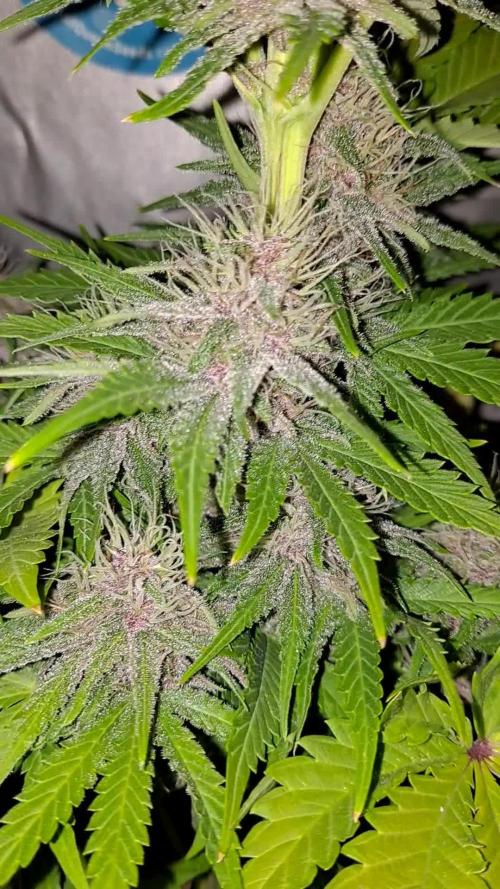
Hi, the plants are in short supply and I can't manage them even though I have adjusted the pH and EC and have done a week of water alone, things don't change so they seem to be at a standstill. If anyone has any ideas on how to resolve this, please share your opinion below in the comments.

Likes
14
Share


@eldruida_lamota
Follow
Vamos familia octava semana de floración de estás Tropical Zmoothie de SeedStockers.
Que ganas tengo de ver el progreso de esta variedad, las plantas están sanas, se ven con buen color.
Ya entramos en la recta final de esta variedad.
La cantidad de agua cada 48h entre riegos.
Esta semana quitamos los nutrientes de la gama Agrobeta.
Las plantas están bastante bien y eso que subió par de grados la temperatura que en mi tierra hace mucho calor.
Estas próximas semanas veremos como avanzan y terminan de madurar las flores.
Mars hydro:
Code discount: EL420
https://www.mars-hydro.com/
Agrobeta:
https://www.agrobeta.com/agrobetatiendaonline/36-abonos-canamo
Hasta aquí todo, Buenos humos 💨💨.

Likes
1
Share


@tigerbomb
Follow
il ramo secondario piu esterno è anche quello piu cresciuto, è gia quasi al limite di altezza non so se continua cosi dovrò finire per topparlo o rischio che sia troppo vicino alla lampada ma se cosi fosse, quando sarebbe l'ideale topparlo? siamo gia in fioritura stresserei la pianta e rallenterebbe lo sviluppo, non so


Likes
4
Share


@ChiloteAnonimo
Follow
DÍA 1 - CUARTA SEMANA DE VEGETA (26-05-2022)
*Se sigue con el LST
(28-05-2022)
* Se le aplica una poda selectiva a todas
* Tuve un problema de riego con varias
* En su día 31 desde q salió del sustrato, de las 6, hay 3 ya que van bien y han sufrido soportaron mejor el estrés, de las otras 3; hay una Banana y una AK que vienen más bajas que todas, de ramas más cortas y distancia internodal corta a comparación de las otras. Después esta la lemon que se viene recuperando muy bien de estrés y fue la que siempre vino más grande y ramificada :)
DÍA 7 ÚLTIMA SEMANA VEGETA (01-06-2022)
* Último día de la semana de vegetación, ya mañana es su día 1 de flora.
* El día de ayer se le regó lo último con Vegalquimia, y se le añadió 1ml de Alquisweet de LAAOS.
* Estos últimos 2 días he tenido problema de temperaturas muuuy bajas donde vivo, con luz encendida llegan 20 grados con suerte y luz apagada a 12-13 grados. Estoy tratando de jugar con bajar la humedad pero no la puedo bajar a menos de 55% aprox. Espero ya mañana arreglar ese problema de bajas temperaturas.
* Lo que es el cultivo se ve bien dentro de todo. Hay dos enanas que se estresaron en la semana 2 y quedaron pequeñas. A todas se le aplicaron LST, unas resistieron mejor los distintos estrés ya mencionados en semanas anteriores. Pero va bien.
* Hay 3 en pre flora, una de ellas en pre flora avanzada y es una de las más enanas.


Likes
31
Share


@Targona
Follow
18/09/2022 - 42 days since my little girl sprouted from seeds🌱
The second week of flowering of my BCN Power Plant 🌴🌴🌻
Nutrients:
Jungle Indabox - the girl responded well to the nutrient change, so I continue to feed the same as last week, when I set the nutrients for flowering
Jungle Environ X - bud stimulators 🌼
I am giving Advanced Nutrients - bud stimulators, Bud Ignitor for the last time this week
Atami - ATA Calmag - it is recommended to use Calmag when growing under LED lights
Training:
LST: just a slight LST, I attached some small twigs with string so that more light shines on them 💡💡
Defoliation: I did a bigger defoliation in the middle of the week so that the girl could breathe well and the big leaves wouldn't shade the twigs 🍃🍃
Light: Mars Hydro TS1000, the girls are doing amazing under this great light, I can see a big difference compared to my past results 💡💡💓
The girl is slowly turning into a big lady, her stems are strong, regularly grown, so that massive buds can form on them 🌸👩🌲
You can see white tufts of pistils on the stems, in this week of flowering they are just right and look like a blanket of snow ❄️❄️
She is already a strong lady revealing her beauty. 🌲💓
The box emits a soft scent that reminds of fruit and earth, but it's a gentle whiff 🍇🌍
Thanks for the likes and you can follow me on Twitter 🐦: @ Targona666
See you soon 😍
Likes
29
Share


@SalocinSpecial
Follow
***Note that I started to count the days when I placed the seeds between paper towels. The seeds were planted 3 days later and sprouted from the ground 2 days after being planted.
D80 (13/05/2021): I'm looking at the trichomes every other days. Glue Gelato is starting to show amber on top buds. No amber for Banana Kush and Gelato. This time I will chop them all at the same time so the one I will rely on is the Glue Gelato. As soon as she is ready, I will harvest them all. Banana Kush and Gelato would probably need more, but in term of logistic, I need to harvest all my plants at the same time.
D83 (16/05/2021): Not ready yet. I'm checking trichomes closely! 😬
- Light: the lights are at 100% and at 12 inch form the plants.
- Temperature: during the day: 24-25C ; during the night: 20C.
- Humidity: the humidity is maintain around 46-48% all the time.
- Air circulation: There is an oscillating fan on the ground, one fixed fan pointing on top of the canopy and one fixed fan to help cool the lights.
- Water: I gave water every other day or when the ground feel dry or the pots feels light.
- ***IPM: I never mention it but I'm using nematodes pouch as an integrated pest management. I had trouble with pest in my first grow and I learned from it. That's the only thing I do for pest and of course watching closely and regularly at my plants 😊

Likes
24
Share


@nerdz
Follow
Easy harvest. Chopped and hung em down full.
After curing 3 weeks this stuff is probably my best grow. Super duper mega dense nugs, and I have to say the taste is amazing compared to my other grows, so I will have to try flushing again..
Drying at 18c @ ~60rh and hoping to get ~12 days or so
Yield was 24.9oz dried


Likes
4
Share

@soloczek
Follow
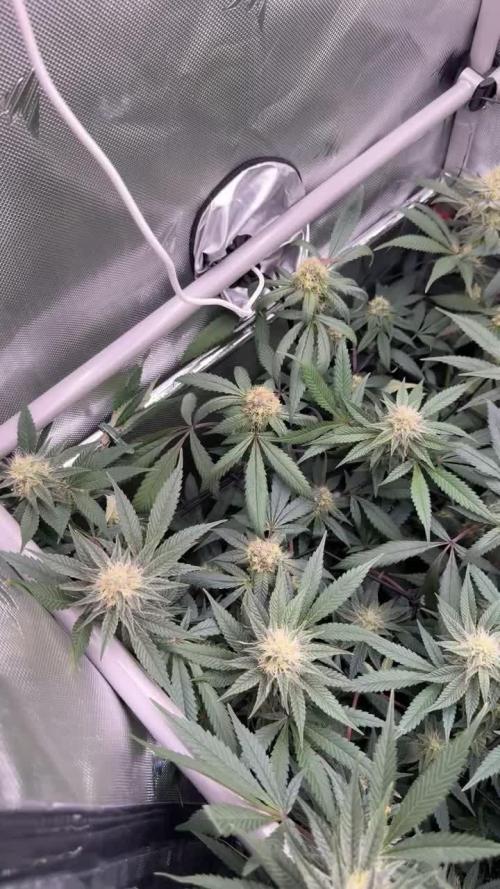
The smell is just gorgeous, ppd favorite for sure like a bag of fresh berries. Guzzlerz starts to purple, whole underside of the leafs are black. Purple Coolies Kush behind of all plants but will be very iced


Processing
Likes
6
Share


@Jack_Greenstalk
Follow
5 out of 6 ended up female, pretty happy with that ratio, last week of 12 hour light 12 hour dark week 3 I change to 11/13 to mimic season ending sooner or island (hawaiin) sun cycle that is supposedly known to help express phenos more and make plant finish quicker. a tip i heard from dj short