Check the winners The Grow Awards 2026 🏆 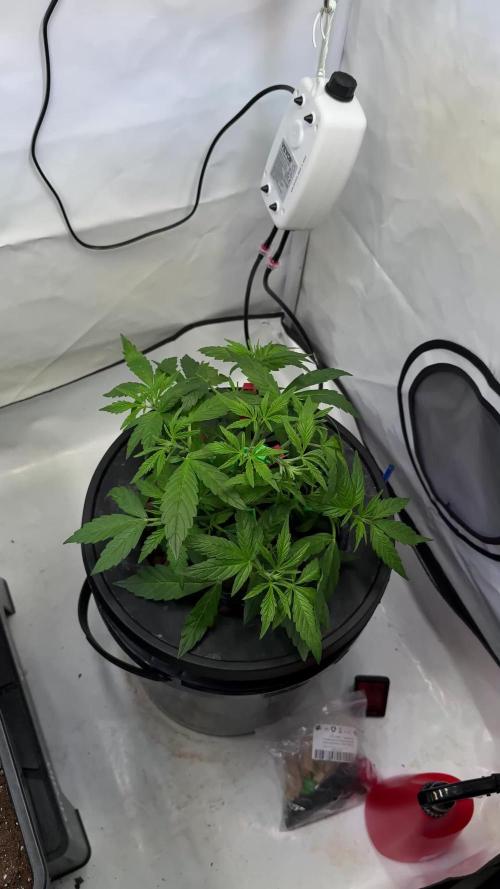












Likes
6
Share
@sedygrows
Follow
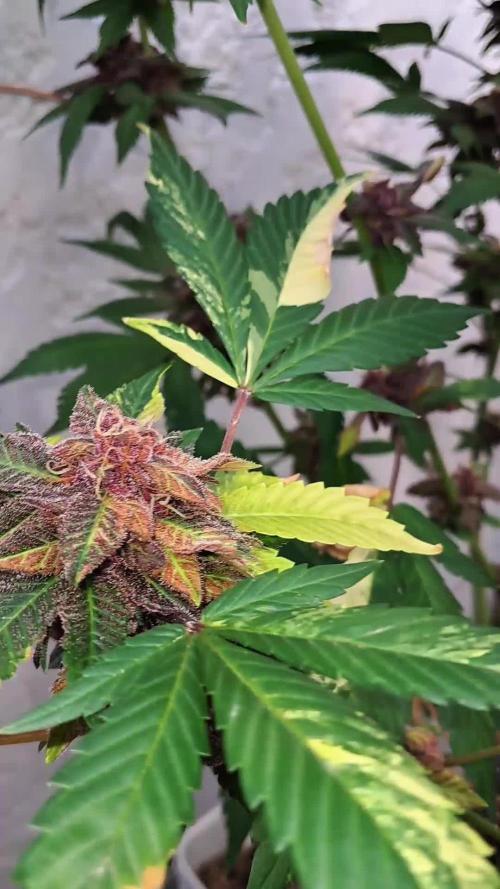
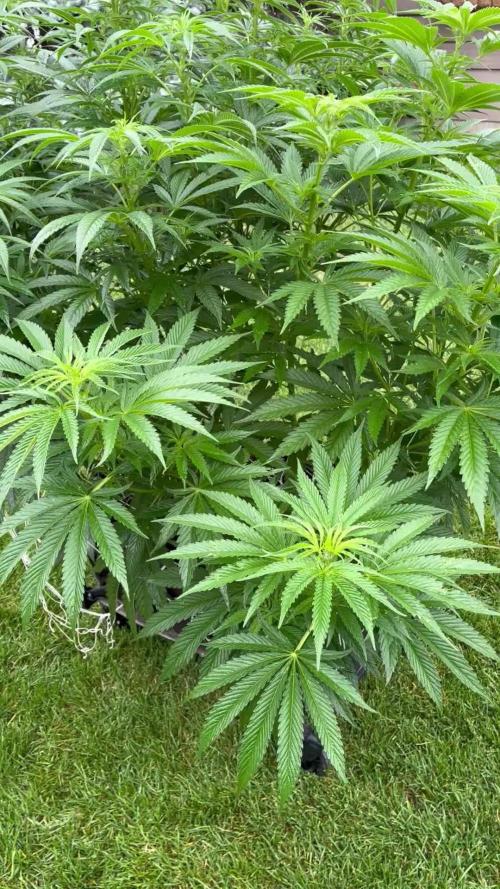
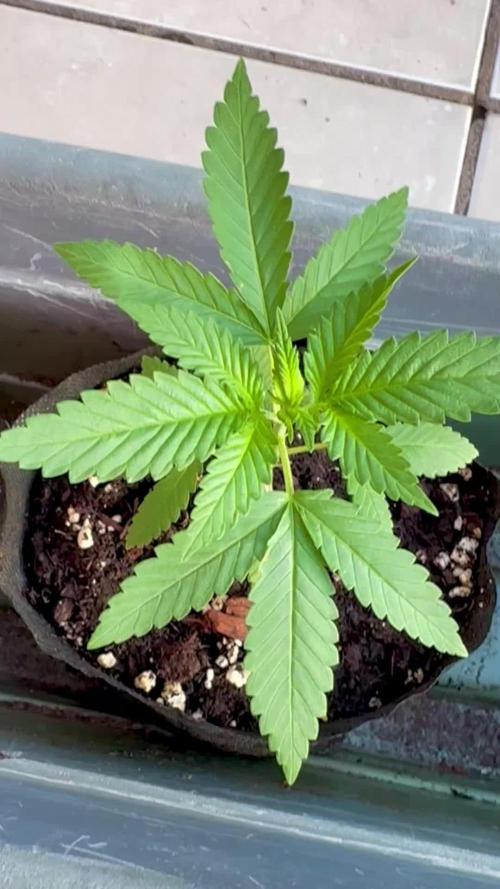
This week i‘m forcing her to bloom.
More nutrients and more ‚Sanlight‘ haha.
Training with the clippers didn‘t really impress her, so she’ll be fine with the new setting. :)

Likes
42
Share
@Ultraviolet
Follow
Thank you. Gave her a cocktail to help with stress. Added 1st net for lateral support, not so much now, but for later. Blue light is absorbed by photoreceptor proteins called phototropins, which trigger a hormonal response that causes cells on the shaded side to elongate, making the plant bend toward the light. Try and fill this side a little. She is quite big already, just needs to find her stride again after the undue torture.
5 apex stems with 20-30 mini cola, let them develop a little, with the apical dominance shattered, all those 20-30 will all compete with each other as soon as that stretch is initiated. Key to a good stretch is making sure the plant is cycling efficiently, with large ATP conversions occurring lights out.
For now, I'm keeping light intensity high. A plant will slow its vertical growth in very high light intensities, leading to a more compact form with thicker stems and leaves. This response is a protective mechanism against light stress, which can damage the photosynthetic apparatus and lead to symptoms like leaf scorching, yellowing, and brittleness. Instead of growing taller, the plant invests its energy into creating a more robust, stress-tolerant structure.
Providing plants with necessary antioxidants helps protect the photosynthetic apparatus by scavenging reactive oxygen species (ROS) that cause damage from excess light.
UV light exposure can impact the xanthophyll cycle by either enhancing its photoprotective role or causing damage, depending on the intensity and type of UV radiation. UV exposure can trigger the synthesis of more xanthophyll cycle pigments to increase the plant's capacity to dissipate excess energy, but it can also cause direct damage, particularly to Photosystem II, and may lead to a decrease in the de-epoxidation state (DEPS ratio) which indicates a reduced capacity to dissipate excess energy.
Plants can respond to UV stress by increasing the synthesis of xanthophyll cycle pigments, such as violaxanthin and zeaxanthin, to improve their photoprotective capacity. UV-induced changes in xanthophyll cycle pigments can be linked to a plant's overall tolerance to high radiation stress. The xanthophyll cycle helps protect against photoinhibition, which is especially important when the plant is exposed to high levels of both UV and visible light. High doses of UV radiation can directly damage photosynthetic components, including the proteins, lipids, and pigments in the thylakoid membranes. Exposure to UV radiation can have a mixed effect on the de-epoxidation state (DEPS ratio) of the xanthophyll cycle pigments. In some cases, UV can inhibit the conversion of violaxanthin to zeaxanthin, resulting in a lower DEPS ratio and a reduced capacity for energy dissipation. However, the total pool of xanthophyll cycle pigments may increase, and this enhanced pool size could provide a greater potential for photoprotection despite a lower DEPS ratio.
The xanthophyll cycle works alongside other mechanisms, such as the accumulation of flavonoids (UV screens), to protect the plant from UV-induced damage.
Blue light repairs 100% UV-induced damage in plants through a process called photoreactivation, which uses a light-dependent enzyme called photolyase. This enzyme uses energy from blue and UV-A light to directly reverse the damaging pyrimidine dimers in the DNA caused by UV-B radiation, a key mechanism for maintaining the plant's genetic integrity.
After carbon, light, water, temperature, and nutrients, the limiting factor of a plant's growth is often its own internal factors or the amount of a key ingredient. Chlorophyll concentration is one such factor, as the amount of this pigment limits how much light can be captured for photosynthesis. Other factors include chloroplast number, respiration rate, and the concentration of carbon dioxide in the atmosphere, as plants are often in a CO2-deficient condition.
60x60x18=64800seconds x 700 = 45,360,000moles. 45DLI
Exposure to 165 µW/cm² of ultraviolet-B (UV-B) light for 3600 seconds = 1 hour, a extremely high, acute dose triggering stress responses and protective mechanisms.
.
The plant's photoreceptor protein, UVR8, senses the UV-B radiation. This triggers a signaling cascade that activates specific genes to protect the plant from damage. In response to the UV-B signal, the plant ramps up the biosynthesis of protective compounds like flavonoids, phenolic acids, and anthocyanins. These compounds absorb UV radiation and accumulate in the epidermal layers of leaves to shield inner photosynthetic tissues. The plant may increase leaf thickness or deposit more cuticular wax, creating a physical barrier to the radiation. The plant will produce more enzymatic and non-enzymatic antioxidants to neutralize the reactive oxygen species (ROS) produced by the UV-B radiation. The plant activates enzymes, including photolyases, to repair DNA damage caused by the UV-B. These repair mechanisms are critical for preventing permanent genetic mutations.
While protective measures are activated, a high dose delivered over a short period can cause stress that overwhelms the plant's defenses.
Photosynthesis is highly sensitive to UV-B. A high dose can inactivate Photosystem II (PSII), damage thylakoid membranes within the chloroplasts, and reduce chlorophyll content, which lowers the plant's overall photosynthetic capacity. Despite repair mechanisms, high UV-B doses can inflict persistent damage on the plant's DNA. One study found that acute, high-dose UV-B had a greater effect on genome stability than chronic, low-dose exposure. The overproduction of reactive oxygen species can cause oxidative stress, leading to the oxidation of lipids and proteins and disrupting cellular function.
Likes
8
Share
@Mo_Powers
Follow
and another week has passed. she is developing very well. she tolerated the FIMing very well and she is getting really bushy. i have changed the fertiliser from biobizz-grow to biobizz-fishmix.
Likes
13
Share
@420DeepGrow
Follow
Gracias al equipo de Royal Queen Seeds, en especial a @james, Marshydro y XpertNutrients y sin ellos esto no seria posible.
💐🍁 Gelato #44:
Los criadores de Tyson 2.0 criaron Gelato 44 a partir de cepas finas. Al cruzar la Sunset Sherbet y la Thin Mint Girl Scout Cookies, crearon un híbrido de dominancia índica que asesta fuertes golpes en el cuerpo y la cabeza.
Su contenido de THC del 22% crea sinergia con terpenos colocantes para ablandar los músculos
Mantenla hidratada y con una dieta constante y pasará por la fase de floración en unas ocho semanas. Las plantas de interior alcanzan una altura máxima de 120 cm y producen 400-450 g/m², mientras que sus homólogas de exterior alcanzan los 180 cm y producen hasta 600 g por planta.
🚀 Consigue aqui tus semillas:
https://www.royalqueenseeds.es/rqs-semillas-cannabis-tyson/663-gelato-44.html
💡FC6500: Eficiencia líder en el mercado: la lámpara de cultivo LED FC-E6500, que ostenta un estatus líder en el mercado, es una solución rentable con un PPE de 2,8 µmol/J y un rendimiento máximo de 2,5 g/vatio. Ofrece un PPF alto de 2026 umol/S y es adecuada para una cobertura de vegetación de 1,50 m x 1,50 m y una cobertura de flores de 1,20 m x 1,20 m.
Iluminación versátil y uniforme.
https://marshydro.eu/products/mars-hydro-fc-e-6500-730w-commercial-led-grow-light/?gad_source=1&gclid=Cj0KCQjw1qO0BhDwARIsANfnkv9IIrYSbmJqz8PqpJOIyWwJfp5bc3SGJgUV68USLQ4tjmXDYwoBuAsaAue3EALw_wcB
🚥 MarsHydro ADLITE UV/IR/RED:
Para lograr un crecimiento óptimo de las plantas y maximizar los rendimientos es un arte simple que depende en gran medida de las condiciones ambientales adecuadas. Reconociendo las limitaciones de la iluminación natural y las soluciones de iluminación tradicionales para satisfacer estas necesidades únicas, lanzamos ADLITE. Estas luces especiales UV, IR y roja están diseñadas para llenar áreas del espectro, proporcionando las altas longitudes de onda que las plantas necesitan para un crecimiento y desarrollo óptimos.
🚀 Consigue aqui tu Adlite:
https://marshydro.eu/collections/adlite-supplemental-lights/
🏠 : Marshydro 1.50 x 1.50 x 1.80, carpa 100% estanca con ventanas laterales para llegar a todos los lugares durante el grow
https://marshydro.eu/products/diy-150x150x200cm-grow-tent-kit
🌬️💨 Marshydro 6inch + filtro carbon para evitar olores indeseables.
https://marshydro.eu/products/ifresh-smart-6inch-filter-kits/
🍣🍦🌴 Xpert Nutrients es una empresa especializada en la producción y comercialización de fertilizantes líquidos y tierras, que garantizan excelentes cosechas y un crecimiento activo para sus plantas durante todas las fases de cultivo.
Consigue aqui tus Nutrientes:
https://xpertnutrients.com/es/shop/
📆 Semana 14:
Después del error que tuve con el horario ha llegado el momento del lavado de raices, los cogollos son tan densos que las ramas no pueden soportar su peso 😱.
Processing
Likes
15
Share
@MG2009
Follow
09/01/2020
Start of week #6 flowering might give a booster shot of OVERDRIVE (I believe it is omri approved).
For any last bit of flowering I can coax out of her.
PW is spotty at best, and conditions should help prevent spreading. She should be done in 3-4weeks🙏
Likes
34
Share
@Damonkey
Follow
So the video shows lights going out at the end of week 2 in the bloom phase. The phantom are developing a little faster than the Sherbert. And likewise those below led are developing faster than those below HPS. Everything looking healthy and growing to plan, well even quicker than that, hopefully week three will bring the spreading of buds and sites and the onset of trichome covering😍😍😍
Update-


Likes
51
Share
@Bones_1986
Follow
Started flowering few days ago and has responded fantastic to some Low stress training on plant #1.
Defoliated plant #2, another 3 fan leafs to let in more light and air, in which these were blocking.
Day 27 they we're thirsty again, still only using half dose.
5 gallon pot took 2 litres
3 gallon pot took 1.5 liters.
Will alternate feed-water-feed from now on.
Using magic evolution foliage spray for the next few weeks.
Made a mistake of using this when lights were on, slight nute burn on a few leaf tips, either from not using in low light or obviously to much nutes, either way pots Felt dry anyway on day 29 so flushed them for the first time with Just Ph'd 6 water.
Just over 3 liters to plant #1 & 2 liters to plant #2.
As you can see leafs are a darker shade of green, been feeding too much N.
I Will be cutting out the grow from now on out and gonna half dose the bloom.
Stems are slightly purple so will use more of cal-mag as possible lack of magnesium. Noticed the temp has been dropping few degrees less than what I like during lights out so contemplating changing light schedule to 24/0 so it doesn't drop below 20.either this or a fan heater.
Day 32 pots felt dry so I fed only ph'd water again to help sort draw out the Nitrogen.
Day 35 nute feed. In a nice routine pots feeling light every 2-3 days

Likes
4
Share


Likes
55
Share
@Roberts
Follow
Fruity Pebbles in blue planet nutrition has grown really nice. She has a good fruity, sweet aroma. Loaded in trichromes, and looks like she will give me roughly a good quarter lb or more in a dry yield. Everything went fairly well in the grow. No major issue I can think of. Thank you Medic Grow, and ILGM. 🤜🏻🤛🏻🌱❄️🌱
Thank you grow diaries community for the 👇likes👇, follows, comments, and subscriptions on my YouTube channel👇. ❄️🌱🍻
Happy Growing 🌱🌱🌱
https://youtube.com/channel/UCAhN7yRzWLpcaRHhMIQ7X4g
Likes
31
Share
@Tonks
Follow
Steady growth this week :) Noticed a funky split branch that looks kinda like it topped itself, though that was pretty cool! Been trying to keep the lower part of the plant clean but since I have space I'm not being too brutal with chopping lower bud sites. The HPS gives good penetration and I'm keen to see if I can maximise the yields - not sure this craziness is the best way to achieve that but gosh darnit I'm gonna do my best

Likes
10
Share
@Grilla
Follow
March 25, 2023 at 1:48 PM
-Ever since I started watering them with lower pH water, 6.0 to 6.3, the 2 BOH’s really started to takeoff. I might do some slight defoliation on all the plants. I’ll takeoff their lower nodes to make it easier to bend them from the main stock. The strawberry crinkle has very close internodes and is really bushy with large and thick fingers. It’s too short to try and bend over so I might have to do more of the defoliation job in order for the lower nodes to get more light.
March 28, 2023 at 5:24 PM
-
March 29, 2023 at 2:01 PM
-I’ve bent over several stems this week. I have only had one small accident with the strawberry crinkle. The top was snapped off somehow but I don’t remember it happening, but it seems to be taking it well. I watered them the day before with some tea with ph at 6.3. so far I could bend over things every day. They are starting to cover the entire pot.
- Today’s the last day of week three.


Likes
Comments
Share
@Kannisho
Follow
Se nota que va acelerada esta variedad que es Fast Versión gracias al cruce de una planta fotoperiodica y una planta autofloreciente, máximo le faltan 2 semanas aún.
Likes
4
Share
@PhatRobs
Follow
A quick update on the king Tut.the slowest of all the Pyramid seeds ive grown. Weeks 4-5 should really show what ill be working with. Im growing 3 other Pyramid genetics and there all 2 ft + in week 5!

Likes
4
Share
@DontStopBelievn
Follow
First full week in 1 gallon pots. They will need to be topped soon, most likely between this weekend and early next week before update.
After the light goes off, I've been foliar feeding with a fine mist of 1:4 dilution of my usual hydro vegetative solution: 3.5 grams of General Hydroponics MaxiGrow, 3mL of Botanicare Cal/Mag, 4mL of Botanicare Hydroguard per gallon. adjusted using General Hydroponics pH down. Solution is stored in an aerated bucket. Will be moving to a 1:1 dilution.


Likes
13
Share
@Kviatech
Follow
Grow is going smoothly. She's growing nicely. Already started smelling quite strong. She gets water every third day still
Likes
3
Share
@BAM_BAM
Follow
The harvest took 5 hours and is really good. I am drying in racks then in the curing bucket for about a month or so then in the freezer.
Likes
38
Share
@Green_Mountains
Follow
Another good week! I fed them once on Monday. A final shot to boost them for finishing up. I am pretty certain they will finish within 2 weeks.I also watered them on Thursday and today (Sunday).
I defoliated both plants earlier this week as well. For one, I needed to open the canopy up to help keep the humidity down but, there were a lot of leaves yellowing and turning brown. I was not feeding them correctly... in the sense that I wasn't watering enough in between feeds. There were excess nutrients built up in the soil and I believe that led to the nutrient burn. Also, this was my first and only feed without the Grow Big due to flushing for week 9. I followed the Fox Farm feed schedule... but, I think I needed to understand my plants better!
I also believe I stunted these girls! One is about 24" tall and the other is 21" tall. Both on the very low end of the growth chart.
Overall, I am very happy!! So much to experience and learn in such a short window of time! I've thoroughly enjoyed this grow!
I look forward to the harvest and experiencing all that is to come!
One last thing... Anyone use GrowBuddy and any word on what is going on with the current download? I've followed the drama around taking so long and all that (the new hardware soon to be for sale for 2.0)... but, the website now says the software is available for free and working on Macs and Windows.... So, I downloaded it last night and I cannot activate an account. Everything has a greyed over kind of look... So, I assume they took some part of their servers offline... Anyone know if this is accurate and has anyone else activated a new account recently? Thanks for any insight!!
Peace!
Likes
6
Share
@Northern_Ent
Follow
July 19: second week of force flowering for Mimosa Shot. She’s doing fine and height wise has mostly caught up to the other plant in the wagon.
Defoliated the understory to remove small buds and most fan leaves. Left some big fan leaves down below but took most out to improve airflow.
July 21: doing fine.
July 22: Foliar spray with Epsom salts and potassium silicate in the morning. The magnesium in the Epsom salts seems to help with the yellowish new growth.
July 23: added another loose Scrog net layer this morning. Tying the net to water bottles to open up canopy to sunlight.
July 25: watered yesterday with some leftover water from steaming beets for dinner. That water likely had lots of N because beets are high in nitrate and the plants look really green today.
